Child-Care

0

No Kiddin’

Someone to watch over them: One in 20 Sonoma County children soon will be unable to find suitable child care–a situation that family advocates say is reaching critical mass. Already there are 36,000 latchkey children ages 5 to 12 in the county.

Facing up to the child-care crisis

By Yosha Bourgea

LAWRENCE WANDERS through the small, crowded play area, picking up a toy that rings like a telephone. A high, wordless yelp comes from his mouth, as if in response. He is constantly in motion, his eyes glancing over the toys and books around him, an artless, toothy grin on his 8-year-old face.

Every so often he looks over the low wall at the rows of grown-ups, seated at a press conference called by Family Action of Sonoma County to discuss a predicted shortfall in child-care services in the county.

Diane Giampaoli, his mother, sits behind a table, talking about him to reporters. “It’s difficult to get consistent day care,” Giampaoli says. “Someone will say they can work with him, and then they meet him, and next week suddenly they can’t do it.”

Lawrence–who goes by the nickname “Lolo”–is autistic, and that makes the problem of finding child care for him especially hard. His mother has tried day-care centers, but none will accept him.

She understands why: her son’s behavior requires special supervision, which most facilities are not prepared to provide.

But understanding the problem doesn’t make it easier to solve.

“Day care for special-needs kids in Sonoma County does not exist,” Giampaoli says flatly.

Indeed, a newly released report shows that special-needs children aren’t the only ones coming up short. The crisis has been growing for years, quietly, out of the sensation-hungry eye of the news media. Hurricanes and shooting sprees are more exciting than the predicament of how to care for children. The new report, “Child Care: A Quiet Crisis in Sonoma County,” shows that the crisis affects everyone, from businesses whose employees are distracted at work, wondering about the safety of their kids, to the 150,000 children who make up a third of the county’s population.

The figures released last week by the Sonoma County Child Care Planning Council and Family Action are alarming. By this time next year, according to a recent report, it’s anticipated that close to 7,500 local children who are in need of full- or part-time care will be unable to find it.

That’s one in 20.

The council’s two-year study is part of a state-mandated review that will be presented to local policymakers throughout the county. On Tuesday, Sept. 21, the agency will deliver its finding to the Board of Supervisors.

“We can’t dodge this issue any longer,” says Suzanne Shupe, director of Family Action of Sonoma County. “We need to address the problem as a community.”

The demand for child care has grown steadily since World War II, when the two-parent, one-breadwinner family model began to decline. Today, only a third of the two-parent families in Sonoma County can afford to leave a parent at home during the day. And single parents, who make up 23 percent of all families in the county, don’t have a choice.

Finding someone to watch their children, let alone take care of them, can be a week-to-week struggle.

Toddlers and infants are especially at risk. A report released last year by the Little Hoover Commission shows that brain development occurs primarily before age 3, and suggests that children who spend their earliest years in a safe and stimulating environment are more likely to grow up to be intelligent, well-adjusted adults.

But the report also shows that 40 percent of infant and toddler care in the country takes place in settings that are unsafe or unhealthy.

“The earlier you can intervene, the less expensive it is to solve a problem,” says Petaluma City Council-member Jane Hamilton. “If you can help a child when they’re 3, then when they’re 15, they won’t tend to be in Juvenile Hall costing taxpayers thousands of dollars.”

Nurturing: Santa Rosa child-care worker LaMona Holt and friends.

ROSE WAYMAN began running a small day care out of her home in 1985, when she was pregnant with her second child. Last month, she got approval from the Santa Rosa Planning Commission to expand her facility from six children to 12. “I’ve always had a waiting list,” Wayman says. “That’s why I expanded. We have a baby starting next week who was on the list before her mom got pregnant.”

Joan (her last name is withheld upon request) has eight clients on the waiting list for her Santa Rosa day care. “We’re booked till next summer,” she says.

Like Wayman, Joan has expanded to meet the growing demand from the community, although she doesn’t advertise. Most of the children in her care belong to friends, and they provide all the business she can handle.

Unfortunately, the demand for child care rarely translates into higher wages for the people providing it, some of whom face stiff resistance from neighbors who argue against day-care businesses in residential areas. An offshoot of the crisis is the shortage of qualified staff in state-licensed child-care facilities, where many employees work for close to minimum wage.

Kenneth Jaffe, executive director of the International Child Resource Institute, says that people who have had years of higher education often find they can’t afford to work in the field.

Many families rely on the public school system as a form of day care. But for parents who work later hours, a school day isn’t long enough. It’s estimated that almost one third of school-age children in the county need after-school care to cover their parents’ working and commuting hours. United Way estimated recently that there are more than 36,000 “latchkey” children ages 5 to 12 in Sonoma County.

Some schools have opened their classrooms to after-hours care providers, but Jaffe guesses that less than half of schools in the county participate in such partnerships. It’s not for lack of trying, he says–the problem is lack of space. The reduction of class size in recent years means that fewer rooms are available, and when space is limited, extracurricular programs are the first to go.

IN THE FACE of the crisis, community organizations are banding together to spread the word and work on solutions. Some school-age children in the Santa Rosa School District are taking advantage of Safe Havens for Youth, a free, federally funded after-school pilot program sponsored by United Way. If it remains successful, Safe Havens could be a model for similar programs throughout the county.

Significant headway already has been made through a new program, SonomaWORKS, which provides federal child-care subsidies for families moving off welfare. Subsidized child care helped close to 1,000 children in Sonoma County last year, but demand still far exceeds the supply. At River Child Care Services and the Community Child Care Council, two local resource and referral agencies, more than 2,000 families are now on the waiting list for subsidies. And low-income working families, who are not even eligible, are the hardest hit of all. Child-care costs can consume up to 25 percent of a family’s budget–and when housing and food expenses compete for dollars, something important has to give.

But financially strapped parents have at least one political ally in Rep. Lynn Woolsey, D-Petaluma, herself a former welfare mother, who recently introduced legislation to increase the availability of child care for children whose parents work non-traditional hours or shifts.

“We’re spending all this money on a missile defense system,” says Woolsey. “You’d think we could spare some for the most important thing–our children.”

From the September 16-23, 1999 issue of the Sonoma County Independent.

© Metro Publishing Inc.

The Bistro

0

Bistro Blast

Hail and hearty: The Bistro chefs are game to give patrons generous portions.

Glen Ellen restaurant puts the din back in dinner

By Paula Harris

TGIF? NATURALLY, but you can express your gratitude for the impending weekend in a couple of ways. Some Fridays you’re raring to hit the town and kick up your heels in search of the nearest raucous shindig. Other times, you can barely drag your mentally fried, physically fatigued carcass through the office door to punch out–even a take-out meal at the day’s end seems too much trouble.

A relaxing dinner in a cozy, tranquil restaurant is your desire. You imagine dreamily unwinding from the torturous work week amid glowing candles and mellow cocktail music, with a sympathetic dinner companion across the table. A fortifying glass of merlot, a plate of energy-replenishing red meat, and a silently efficient bus person with a an engaging smile and a crumb comb to clean up the tablecloth completes the picture.

One recent Friday we went in search of such a culinary comfort zone. The Bistro in Glen Ellen sure looked the part: warm polished wood floor, mottled lemon walls, exposed wood-beamed ceilings, a view of mature trees and a creekside dining area, a corner fireplace, and amber glass lamps casting a soft honey glow over the whole scene. Glorious.

Now if we just had some earplugs!

The Bistro, the latest in a string of restaurants to open in Glen Ellen’s Jack London Lodge, was buzzing this Friday evening. In fact, the decibel level was uncomfortable. Had we known, we would have opted to change our reservations to sit outside in the more peaceful garden area. Still, we decided to make the best of it.

The Bistro’s menu is a mixed bag. It includes Italian, French, Japanese, Thai, and Mexican influences, plus such rotating old-time American blue-plate specials as roast prime rib of beef, buttermilk fried chicken, and Yankee pot roast.

WE WERE EAGER to perk up our exhausted spirits with something rich and hunky, and the wild boar chili appetizer ($4.95) certainly did the trick. A generous extra-deep bowl was filled to the brim with sweet, smoky, spicy meat that had the same tender-flaky consistency as pork ribs. It was topped with cheddar cheese, dollops of sour cream, and chives and was accompanied by a big spongy square of homemade cornbread. Appetizer? This dish was more like a meal and a half.

That said, the butter lettuce salad ($7.95) seemed very overpriced. The average-tasting salad featured pecan-crusted Sonoma goat cheese, dried figs, and orange slices, and was coated with lemongrass vinaigrette. The flavors didn’t harmonize, the lettuce tasted bland, and the goat cheese got lost among the flavors.

The duck liver and merlot-soaked cherry paté with crispy sage cracker bread ($5.95) was far more pleasing. The paté was a smooth, rosy mouthful and came with local bitter greens, snipped chives, little squares of diced red pepper and red onion, and a few capers. We would have preferred warm plain crusty toast to the chiplike accompaniment (obviously not the promised sage cracker bread) that resembled fried wanton.

We enjoyed the roasted vegetable tower ($12.95), which featured layered portobello mushrooms, eggplant, zucchini, red pepper, and couscous, but we hated the accompanying saffron pea sauce, which was too salty.

The chef’s roast tenderloin of beef ($17.95) was hearty fare. The meat was rare, pink, and tender and came with lumpy mashed potatoes infused with truffle oil, and charred ‘n’ chubby asparagus spears.

We ended the heavy meal with tart dried-cherry brioche pudding ($4.95) with butterscotch ice cream and butterscotch sauce. The cherries livened up an otherwise bland, stodgy pudding, although the ice cream tasted light and lovely.

A classic, though undistinguished, crême brûlée ($4.50) featured a wafer cookie, fresh raspberries, and a thick, brittle sugar crust.

The restaurant has a modest wine list with several offerings by the glass. Since it was out of our first choice, a Benziger Imagery Series 1996 petit sirah, we chose the Cline syrah 1997 ($25), which needed some time to open up and lose its initial acidity.

By the end of the meal, the din was so bad we’d given up on any dinner conversation and sat in kind of red meat/red wine/noise­induced stupor. A midsized party celebrating grandma’s birthday nearby had turned the atmosphere into an out-and-out shriek fest, and we knew it was time to leave.

On the way out, we asked a waiter about the extreme noise. He told us that soundproofing may eventually be installed to improve acoustics. We say, the sooner the better.

The Bistro 13740 Arnold Drive Glen Ellen 996-4401 Hours: Lunch, Monday-Saturday, 11 a.m. to 5 p.m.; Sunday brunch, 10 a.m. to 5 p.m.; dinner, Sunday-Thursday, 5 to 10 p.m., and Friday-Saturday, 5 to 11 p.m. Food: Eclectic, including American “old-time favorites” Service: Rushed and a bit frantic one minute, slow the next Ambiance: Loud indoors, more peaceful outdoors Price: Moderate to expensive Wine list: Modest, with several wines by the glass Overall: ** (out of 4 stars)

From the September 16-23, 1999 issue of the Sonoma County Independent.

© Metro Publishing Inc.
Baseball Marriage

0

Home Run

Batting a thousand: Susan and Bob Fletcher, co-owners of the Sonoma County Crushers, are partners on and off the field.

Sonoma County Crushers husband-and-wife team are married to the game

By Bill English

ALTHOUGH baseball has no clock, it happens every day. The relentlessly long season has been known to hobble even the most finely conditioned athletes, but the players aren’t the only ones who feel the pain and tension of summer’s most demanding schedule. Everyone from the owners to the ushers learns to respect the ebb and flow of the National Pastime.

Because baseball can kill you in a million ways.

But it also gives rise to genuine heroes and tales of wonder. The story of the Sonoma County Crushers is one such baseball saga. Five years ago Bob and Susan Fletcher left the insulated corporate world of IBM and embarked on a wild lifestyle detour by becoming the owners of a fledgling professional baseball team. In the beginning, the move seemed audacious, perhaps even foolhardy. The Western Baseball League was new and unproven. The Sonoma County Crushers–who won the league championship in 1998, but got bumped in the first round of the playoffs this year–didn’t even have a name at the time. Amazingly, ex-IBM exec Bob Fletcher didn’t consider himself a risk taker–he felt confident that he knew what he was doing. Looking back now he realizes he was a hapless rookie with a cheap suitcase and a porkpie hat.

Baseball has taught the Fletchers some hard lessons. “We had no idea what an enormous risk we were actually taking when we first got into this,” Bob says as he sits with his wife beside the pristine infield of Rohnert Park Stadium. “Owning a professional baseball team is a deceptively sophisticated undertaking. There are so many micro and macro decisions to be made. And a lot of them have nothing to do with baseball.”

DURING the first season, the thinly veiled terror was evident in both Bob and Susan’s eyes. They were not baseball people. But suddenly they were flung into an alternate universe with a whole new set of rules. Before long, the curves and knucklers were coming at them from all sides.

“The money issue has always been a big concern,” Susan says. “I remember once during the first season when I was facing a payroll of $40,000, and only had $5,000 in the checking account. I’m the one who signs the checks. I had no idea where the money was coming from. Then 10,000 fans showed up over the weekend and the money miraculously was there. But the cash flow through this business was definitely something I had to get used to.”

Flying by the seat of your baseball pants is a harsh reality for all the owners of Western Baseball League franchises. Teams have folded or changed owners with alarming frequency. The Fletchers are the only original owners left standing, and the number of teams has shrunk this year from eight to six.

“Most of the time when you run a small business you’re pretty much in control of your own destiny,” Bob explains. “But in this situation there are a lot of factors you can’t control. We could be the healthiest team in the WBL, but if the league fails there’ll be no one for us to play. Even the weather can cause you problems. This summer has been the coldest we’ve experienced, and even though we didn’t have a single rainout, I think it cost us some attendance.”

Fortunately for the Fletchers, the WBL seems stable at the moment and is set to expand into Yuma and Scottsdale, Arizona, next season.

THE FLETCHERS’ 30-year marriage appears to have blossomed in the hothouse environment of Crushers’ baseball. Clearly, the couple have survived the minor-league baseball wars together and now have the confident air of veterans. They claim they no longer have the horrible doubts that haunted them during the first few years.

“I think Bob is happier than he’s ever been,” says Susan. “When he worked for IBM, nobody asked him for his autograph at the movies. We’ve created something here. And in the long run the fun far outweighs the stress.”

Susan, who’s in charge of finding host families for the modestly paid (around a $1,000 a month) Crushers’ players, has also become well known in the community. “The host families have been great, but I still worry about placing the right player with the right household,” she says. “And how do you tell a child the Crusher living in the guest bedroom has been traded? I’ve had mothers burst into tears when they got the news.”

At the moment, the Fletchers have no intention of selling the team or retiring. They both feel they’re living the life most people can only dream about. But sometimes the relentless baseball chatter becomes too much. “All we do is talk about baseball,” Susan says. “It’s not uncommon for us to work 21 straight days. Sometimes I just have to tell Bob no baseball talk tonight. That’s when I like to be alone with my roses.”

When asked where the Crushers will be in another five years, Bob is quick to reply. “Hopefully, we’ll still own the team. I’d like to have a new stadium somewhere down the line. When you go around the country you can see all the possibilities. There’s a lot of great minor-league ballpark designs out there.”

Bob smiles at his wife as they both stare off down the third baseline.

“You know what would look nice?” he muses. “Maybe we could get the Flamingo Hotel to sponsor pink foul poles with flamingos perched on top.”

Susan smiles broadly. “Bob does the marketing,” she says.

From the September 16-23, 1999 issue of the Sonoma County Independent.

© Metro Publishing Inc.

Sonoma County Authors

Falling Leaves

PICK UP A BOOK, grab a steaming mug of whatever, and cozy up to the fireplace . . . oh wait, you’ve been doing that all summer. Well, maybe the fall will be everything our August wasn’t, in which case you’ll need sunglasses and a pool to lounge beside while exploring the latest offerings from Sonoma County authors, who’ve been hard at work producing everything from poetry to novels to children’s books. Below you’ll find reviews of local lit by Yovanna Eileen Bieberich, Yosha Bourgea, Liesel Hofmann, Shelley Lawrence, Patrick Sullivan, and Melinda Wright.

Shoshana Alexander Women’s Ventures, Women’s Visions: 29 Inspiring Stories from Women Who Started Their Own Businesses (Crossing Press; $14.95)

With feminist Susan Faludi now contending that men have been “stiffed,” Sebastopol author Shoshana Alexander’s book may add fuel to the fire. Alexander offers provocative examples of the sharp, spunky women who have contributed to a revolutionary change in the once male-dominated realm of visionary entrepreneurs. The profiles, based primarily on personal conversations, focus not so much on the types of businesses as on the spirit that nurtured them. The women vary vastly in age, ethnic background, socio-economic class, and geographic location. And among them are former Sebastopol resident Rosemary Gladstar, who in 1971 founded Rosemary’s Garden; and Martha Lindt and Carol Rivendell, who run Sebastopol’s Wild Women Adventures.–L.H.

Children of Sonoma Valley Where Oaks Play Catch with the Sun Poems and art selected and introduced by Arthur Dawson (Kulupi Press; $10)

Two lines of poetry: “Give me the lightning of forever darkness” and “when the world is puddle-wonderful.” Which one is by a famous poet, and which by a grammar school student? One is from some amazing poetry by Sonoma Valley fourth- and fifth-graders who were among hundreds taking part in a two-year series of poetry workshops on the valley’s cultural and natural history. Mercifully unsaccharine, the poems’ imagery evokes such a vivid sense of place that it may transform the reader’s own perceptions of this unique region. (The first line quoted above was written by Stevie Raaka of Sonoma; the second by e. e. cummings.)–L.H. Trane DeVore series/mnemonic (Avec Books; $10)

This slender volume of quietly precise poetry could be read in 20 minutes–but should be savored for much longer. DeVore, who grew up in Petaluma and graduated from Sonoma State University, puts together words in a way that is economical but never stingy. Even his shortest poems have evocative power: “think of orbits/planets and scandal.”–P.S.

Carol Lee Flinders At the Root of this Longing: Reconciling a Spiritual Hunger and a Feminist Thirst (Harper SanFrancisco; $13)

How can a woman be truly independent if she is somewhat dependent on a higher power? With a deep understanding of feminism, mysticism, and world religions, Petaluma author Carol Flinders takes us on her personal journey as she tries to resolve this paradox in her latest book, which is just out in paperback. Drawing on experiences as a mother, academic, teacher–and even as a concerned stranger during the Polly Klaas abduction–Flinders arrives at the conclusion that both feminism and spirituality must coexist for either to be fully realized.–M.W.

L. Frank Acorn Soup (Heyday Books; $7.95)

Billed as “the Gary Larson of the Native American cartoon world,” artist L. Frank here assembles her idiosyncratic line drawings into book form for the first time. Hardly likely to kick up the kind of fuss that “The Far Side” enjoyed in its heyday, Frank’s one-panel cartoons are nevertheless more complex than they seem at first glance. All the writing is backward, an allusion to the artist’s dyslexia that has the effect of forcing the reader to slow down and savor each image.–Y.B.

Gary Gach, Editor What Book!? Buddha Poems from Beat to Hiphop (Parallax Press; $15)

Editor Gary Gash has compiled a set of poems–including contributions by such local authors as Joanne Kyger and Peter Levitt–that puts the Buddha within easy reach even for everyday agnostics. The poems, which range from Beat-style paragraphs to funny haikus to rhyming couplets, manage to hit the spiritual nail right on the head, leaving the reader with both a greater understanding for all things dharmic and a small sigh of contentment.–S.L.

Michael Goddart Bliss: 33 Simple Ways to Awaken Your Spiritual Self (Daybreak Books, imprint of Rodale Press; $18)

According to some, that indelible phrase from the Declaration of Independence–“the pursuit of happiness”–is a no-brainer. For if you seek happiness, it will elude you; it comes only unbidden. Of a different mind is Santa Rosa author and teacher Michael Goddart, who aims to put you on the road to “lasting happiness,” to take you to “the source of all Bliss.” He has crafted exercises and activities to help awaken and develop your relationship with your Higher Power by expressing 33 “essential spiritual virtues,” such as discipline, positive thinking, acceptance, and gratitude. (Caveat: Not for aficionados of the writings of Krishnamurti.)–L.H.

Jonathan London

Baby Whale’s Journey (Chronicle Books; $14.95)

“Moons come, and moons go. Baby Whale grows and grows.” This eloquent tale of a baby whale’s life under the waves is as educational as it is poetic. Illustrator Jon Van Zyle adds a great depth of beauty to the book with his ocean-scapes. Children will enjoy the book’s afterword, which contains fascinating information about the lives of sperm whales.

Froggy’s Halloween (Viking; $15.99)

“Trrrick or trrreat, smell my feet. Give me something good to eat. If you don’t, I don’t care–I’ll pull down your underwear!” Halloween is almost here, and Froggy is hard at work deciding what costume to wear. Will he be a vampire? Will he be a ghost? This latest book in London’s popular Froggy series is a playful tale for young children. The seasonal story is colorfully illustrated by Frank Remkiewicz.

Shawn and Keeper and the Birthday Party (Dutton Children’s Books; $13.99)

It’s been said that dogs are man’s best friends, and Shawn’s best friend is indeed a lovable canine named Keeper. In this delightful story, Shawn and Keeper are both turning 6, but their birthday party takes a mysterious turn when the cake disappears. Where did it go? Hallmark card designer Renee Williams-Andriani illustrates this festive tale.

C. D. Payne Civic Beauties (AIVIA Press; $12.95)

C. D. Payne, author of Youth in Revolt: The Journals of Nick Twisp, strikes again with Civic Beauties, the fictional account of 15-year-old twins whose father has been chosen as the Republican vice presidential candidate (his motto: “putting God back in religion”). The narrative maintains a wicked political wit while alternating between the perspectives of two wise-beyond-their-years middle-class teens, bad-girl Toni and angelic, accordion-playing Cara. The dysfunctional characters occasionally break into song; these absurdly intelligent commentaries are spouted by the girls, various political figures, and hormonally charged teenage boys. A must-read for anyone with a sense of humor.–S.L.

Beth Winegarner Dream Brother (Oyster Publications; $10)

This unusual love story set in the west county focuses on the relationship between a 15-year-old boy and the narrator, a somewhat older woman (we never find out exactly how old). The boy is born under mythic circumstances in a haunted Petaluma farmhouse: “One afternoon the ghost kicked their dog, and soon after they moved to Occidental, where rent was cheaper, the ghosts were friendlier.” As the narrator falls deeply in love, she grapples with the emotional and moral issues involved. Meanwhile, the west county works its fey woodland magic, confronting the couple with unicorns and UFOs and police search helicopters. –P.S.

From the September 16-23, 1999 issue of the Sonoma County Independent.

© Metro Publishing Inc.
Lynda Barry

Tender Age

By Yosha Bourgea

ADOLESCENCE is hell, as any teenager will tell you. It is the least forgiving time of life, combining as it does a heightened self-awareness with the presence of forces beyond our control. The natural order of things shifts, becomes unnatural and unpredictable, and warps us in ways we can’t possibly be ready for. However supportive our families may be, the metamorphosis is always a fearsome test of our being.

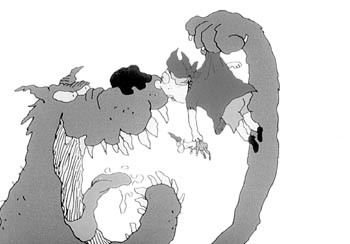
Out of this dark soil comes Cruddy (Simon & Schuster; $23), a shocking, grimly funny novel that tests its readers all the way from the disturbing dust jacket to the haunting final page.

The author, Lynda Barry, is best known for “Ernie Pook’s Comeek,” a nationally syndicated comic strip that runs in many an alternative newspaper. Fans of the strip already know that Barry is a master at evoking teen angst in all its awkward splendor, but even they will be taken aback by the intensity of her illustrated novel.

Cruddy, set in 1971, is the story of Roberta Rohbeson, a 16-year-old girl who lives “on a cruddy street in the cruddiest part of a crudded-out town.” After a bad acid trip that ends at the police station and leaves her grounded for a year, Roberta begins to write an account of what happened five years before on a blood-soaked road trip with her father.

Interwoven with this tale, which unfolds in a series of flashbacks, is the story of the older Roberta’s drug-modified adventures with a loose-knit group of misfits: Vicky, a fast-talking liar; her handsome brother, The Stick; and The Turtle and The Great Wesley, two eccentric escapees from the Barbara V. Herrman Home for Adolescent Rest.

In the pre-PC world of the early ’70s, there is no hint of “Just Say No” propaganda. The primary concern of these kids is getting high, as often as possible and by any means available. Considering their dysfunctional home lives, that’s hardly surprising. The adults of Cruddy are hideous creatures who heap emotional and physical abuse on their children. In an environment devoid of compassion, substance abuse is the least of sins.

Spurred on by a strange drug called Creeper, Roberta tells her friends about the journey she took with her father in search of three suitcases stuffed with inheritance money. Roberta’s father is a terrifying person, an ex-Navy meat-cutter and a violent alcoholic. He disguises his daughter as a mentally retarded boy named Clyde.

The unlikely pair leaves behind a trail of dead bodies and burned buildings as they cross the country in pursuit of the inheritance. Throughout the ordeal, Roberta struggles to maintain her sanity. Though she is subjected to death threats, brutal beatings, and the sexual predations of older men, she is never a victim.

What keeps the novel compulsively readable is Barry’s gift for idiom, her perfect ear for the language of white trash. Roberta/Clyde, the protean narrator, is a fearless observer of her world: “There are rotten porches and slamming doors and constant yelling inside the houses and constant yelling outside the houses,” she says of her neighborhood, “and two doors down there are two little fish-faced girls who just stand in the mud and do contests of who can scream the loudest.”

The subject matter of Cruddy is challenging, and in less capable hands it could have been an overwrought mess. Barry doesn’t pull her punches, but the ferocity of her narrative is never sensationalistic. Each of the 55 short chapters is a left hook driven by purpose. The cumulative effect is draining, but also exhilarating.

Cruddy is a book you have to keep putting down–and then, immediately, pick back up again.

From the September 16-23, 1999 issue of the Sonoma County Independent.

© Metro Publishing Inc.
New Theatre Works

0

Fresh Talent

Royal pain: Rebecca Allington plays Queen Elizabeth in Repertory.

New playwrights light up local stages

By Daedalus Howell

IN SHAKESPEARE’S Hamlet, the melancholy Dane employed a play to confirm the guilt of his fratricidal uncle. Though less grandiose in their goals, two local theater companies–Actors’ Theatre and Sonoma County Repertory Theater–are also courting the skills of playwrights. They won’t catch the conscience of a king, but they do hope to snare the next David Mamet or Tom Stoppard.

Actors’ Theatre’s “New Theatre Works Festival,” which commenced earlier this month, features staged readings of five new works as part of the company’s commitment to putting new voices in front of the footlights.

“The purpose of the New Theatre Works Festival is really simple–to encourage new playwrights,” says associate artistic director Danielle Cain. “Theater history has produced many, many wonderful playwrights, but to keep theater vital and new and part of society you need new playwrights.”

Backed by a play-reading committee culled from AT’s artistic staff, Cain braved the uncharted waters of the dramatist talent pool (the company received 60 submissions) and selected five finalists, one of whom will receive $500 and a possible future production.

AT also appointed three playwrights-in-residence (company alumni Mollie Boice, Brian Bryson, and Eliot Fintushel) to create works for the theater’s Bare Stage Series.

“There are many talented playwrights out there, and this is an opportunity for us to encourage them and provide a venue for them to see their work read out loud by good, strong actors,” says Cain.

AT’s staged-reading process often aids the playwright by testing the cogency of his or her artistic intention.

“We don’t have the playwright present at rehearsals, so that when the playwrights hear their work read out loud they will know pretty clearly whether they were succinct and successful in certain areas of their work–or not,” Cain says.

AT audiences are encouraged to address issues about a play with its writer. Cain recently hosted a reading in which participants vehemently disagreed about a new work.

“That’s great,” Cain says. “That means people felt strongly about it–people should feel strongly about the theater that they see.”

SCRT’s annual “Harvest Festival of New Plays,” the culmination of its year-round “New Drama Works” series of staged readings, features full-scale productions of three selected works, as well as two additional staged readings in its Santa Rosa and Sebastopol venues.

“Those are fully staged, fully costumed and developed productions,” says artistic director Jim DePriest, whose company receives up to five play submissions a week from California writers.

“We’re hoping to find a few playwrights whose work we find exemplary and that we could perhaps engage in a sort of residency as we did this past year with playwright John Moran,” he says.

Eventually, DePriest hopes to find writers who will create new works specifically for his company’s venues.

“As we grow and become more financially secure, we can take more risks on doing new work,” he says.

Indeed, staging works by playwrights who are not name-brand dramatists can stymie box office receipts.

“New plays are risky in some regard, especially when you’re dealing with a larger house, which is essentially our bread and butter,” DePriest says. “With established work, people know what it is. When people accept us for the work we do rather than whose work we do, then we can do more original plays.”

In the meantime, both companies will continue to support new playwrights with their respective festivals.

“It’s almost like a mandate, it’s something we have to do,” says DePriest. “Where else are the new plays going to come from?”

Actors’ Theatre’s New Theatre Works Festival continues through Oct. 6 at the Luther Burbank Center, 50 Mark West Springs Road, Santa Rosa. Performances begin at 7:30 p.m. Tickets are $5. 523-4185.

Sonoma County Rep’s Harvest Festival of New Plays continues through Sept. 25 at two locations: 101 N. Main St., Sebastopol; and 415 Humboldt St., Santa Rosa. Performances begin at 8 p.m. Tickets are $10-$12. 544-7278.

From the September 16-23, 1999 issue of the Sonoma County Independent.

© Metro Publishing Inc.
Susie Bright

Bright Ideas

Local exposure: Susie Bright speaks Sept. 23 at Copperfield’s in Sebastopol.

Susie Bright’s new book brings sex out of the closet

By Patrick Sullivan

“YOU JUST HAVE nothing left to hide, do you?” a shell-shocked stage manager once exclaimed to Susie Bright after the provocative author finished reading to a stunned nightclub audience an erotic account of a wet dream she’d had about Dan Quayle. The malapropism-spouting former vice president had apparently aroused enough genuine desire in Bright to make her fantasy a shocking experience for the crowd. She even knocked over her microphone in the throes of her passionate performance.

But recounting right-wing wet dreams in public is only the beginning for Bright. The Quayle experience, one of many anecdotes that she relates in her new book, Full Exposure (HarperSanFrancisco; $22), is a personal application of the prescription for candor that the sexpert-at-large wants to write for us all. Bright (whose previous books include The Sexual State of the Union) is willing to take her own medicine, and she thinks it’s time the rest of America opened its bulging closets and let long-hidden truths about sex get a nice suntan.

That attitude, of course, raises one obvious question. In a time when the airwaves are saturated with Viagra jokes and stories about fellatio in the Oval Office, are there any musty erotic secrets left to air out? What makes a sexual liberationist like Bright different from, say, Howard Stern?

To her credit, that’s an issue the author comes to grips with in Full Exposure, which purports to be her most personal book to date. Today’s entertainers and advertisers, Bright admits, throw titillation around like colored beads at Mardi Gras. But she argues that there’s something missing from this erotic imagery: “It’s not designed to promote self-enlightenment or human connection, it’s made to get you to do something else–buy something, yearn to buy something–which leaves you erotically nowhere. . . .

Titillation is the American standard: first offer a peek, then slap the hand that seeks to touch.”

In Full Exposure, Bright employs her usual conversational writing style, packed with offhand quips and casual irony. That breezy tone, combined with the book’s brevity, masks the serious goal of this 163-page volume. Bright has long defended freedom of sexual expression against all comers, from the puritanical right to the sexaphobic left. This old rogues’ gallery is given a dutiful slap on the wrist in Full Exposure, but the main villain this time out is the commodification of sex.

That might sound strange coming from a woman who began her career selling vibrators and has gone on to edit well-marketed collections of erotica, but Bright is fully aware of the ambiguities surrounding current attitudes. She’s delighted that people today feel free to write, read, and talk about sex. She’s less happy that they do it all in the language of a Madison Avenue marketing profile–what she calls the ethos of “My sexual preference is my lifestyle is my politics is my record label.”

As always, she makes her point with humor: “If Calvin Klein wants to get behind the Kinky Krusade, if Nike wants to court erotic chic in athletic advertisements, who am I to wax nostalgic over the days when we whispered to ourselves like fugitives?” she writes. “[But] we’re still dealing with sex like it was an eight-crayon box.”

SPEAKING OF MARKETING, there seems to be more than a little bit of it going on with Full Exposure itself. Someone somewhere decided to spin the book, which is subtitled “Opening up to Sexual Creativity and Erotic Expression,” as a kind of self-help title, and maybe it is, albeit in a highly political, in-your-face kind of way. What John Gray book, after all, offers a 16-point list that includes such items as “Decloak right in the middle of fucking”?

And that may be the most heartening thing about Susie Bright. Rigid categories of all kinds–whether from the world of advertising or book publishing–come to grief at the hands of her sharp wit and irrepressible individualism. In a world that seems more standardized by the minute, it’s nice to be able to count on someone for a rational dose of old-fashioned chaos.

Susie Bright appears Thursday, Sept. 23, at 7 p.m. at Copperfield’s Books, 138 N. Main St., Sebastopol. 823-2618.

From the September 16-23, 1999 issue of the Sonoma County Independent.

© Metro Publishing Inc.
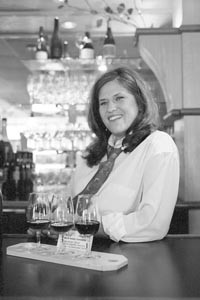
Kathleen McCallum

0

In Focus

Frame game: Camera Art 1 organizer Kathleen McCallum thinks local photographers deserve new venues to display their work.

Local photogs take a shot at exposure with Camera Art 1

By Gretchen Giles

PHOTOGRAPHER Kathleen McCallum is up against a brick wall, camera in hand, patiently doing exactly as she’s told. “Move your head a little to the left. There. That’s good. Raise your arm slightly like . . . that. Excellent. Good. OK. Hold still. Great.”

Flash. Click. Done.

“I don’t mind it,” she says after the snap glare fades. “It’s fun to be outside.”

But McCallum is inside her Santa Rosa studio. What she is outside of is the squint-range of the viewfinder, this time as the subject, not the photographer. As for the shooter, he has no interest in a modeling job.

“I don’t care for it,” he says, packing up his lamps and cameras and departing out the studio door with such haste as to suggest a fear that someone might force him to don a toga and laurel crown for posterity.

“I used to photograph myself a lot in college,” McCallum explains, “because I was my own most accessible model.”

The walls of her basement studio suggest that her luck in finding models has dramatically improved. So, too, have her ambitions.

Owner of the Emotionography photography business, McCallum is working to improve the careers of more than 50 Sonoma County photographers. A former labor organizer, this 41-year-old mother of two small children is now turning her considerable energy to mounting a two-day outdoor festival of photography. Titled “Camera Art 1,” this collective of local talent converges upon Santa Rosa’s Montgomery Village on Sept. 25-26.

“I do have a passion for making things happen,” she says. “I think that change is a good thing, and we obviously have to have it.”

And to hear McCallum plan, two days of the best imagery the county has to offer is only the beginning: “I would like to see some type of permanent venue,” she allows. “Perhaps with sculpture, photography, and furniture art, so that the walls could be devoted to the photos.” She’s got her sights set on establishing a permanent cooperative, possibly in the burgeoning Railroad Square area.

A muffled “Hello!” rings out from McCallum’s upstairs home. Polaroid-emulsion transfer artist Kathleen Thormod Carr has evidently been up there for some time looking for McCallum, admiring the representative works on her walls, resisting the cakes laid out on the living room table, and presumably not rifling through the bathroom cabinets.

Carr makes her way into the studio. “I’m always interested in helping to put photography on the map as a collectible art form and garnering more exposure,” she says, settling herself on the couch. “I’m delighted that [the Barry Singer Gallery] has opened in Petaluma, but in terms of venues for photography in the west county and Santa Rosa–well, there really aren’t any.”

While both artists agree that the occasional photography exhibit at such places as SMOVA and the Soundscape Gallery are clicks in the right direction, both are convinced of the need for an ongoing space. “I think that we need a venue now. Our time is here and everyone is ready,” says McCallum.

Many visions: McCallum’s own Gentle Spirit is one of a wide variety of photos that will be on display at the upcoming Camera Art 1 exhibit.

LIKE MANY good ideas, this one began with a party. During the dreariest stint of last spring’s rainy period, McCallum invited some 40 photographers to gather at a local pub, each bringing a representative sample of work. Ranging along the walls were shots by former Rolling Stone magazine photographer Baron Wolman, acclaimed photographer Sherburn Sanborn, and fantasist Ralph Chubb–who builds elaborate Maxfield Parrish-like sets before photographing his models cavorting in dreamy deco fashion.

Post-party word of mouth and flyers strategically placed at local supply stores swelled the number of applicants to over 60. Unwilling to jury the show, McCallum instead strove for balance, selecting among a wide range of subjects and styles.

“We couldn’t have everyone doing landscapes,” she explains with a laugh.

While the natural beauty of our county is abundantly represented, McCallum’s vision settles mostly on humans. Calling herself a “romantic realist” who also captures the “social landscape,” she documents both the ordinary and the fantastic. A black-and-white image of a gloriously fecund pregnant model is displayed down the wall of McCallum’s home from a creamy documentary shot of a Mexican villager.

“With rare exception, I photograph only people, and that’s because of the emotional content,” she says, adding that she is working toward a master’s degree in art therapy at Sonoma State University. “I look for emotion and interaction with people.”

CARR, on the other hand, uses the Polaroid-emulsion technique to fool with what she terms “the land of happy accidents”–those moments when the images mutate seemingly on their own, leading her willingly behind them. An artist with two well-regarded books in print who has placed her commercial work in many national magazines, Carr attains such a painterly quality with her emulsion transfers that one is compelled to ask why she doesn’t just start with brush and canvas.

“That’s one of the reasons that I started hand-coloring my black-and-white prints,” she explains. “I wanted to express my subjective feelings more than a straight photograph sometimes does. There’s something about the blank canvas and starting with nothing . . . Some people are really good at working with what’s there and composing and arranging that and creating from that–and that’s what I do best.”

With the swath of vision represented for “Camera Art 1” ranging from crystal microscope revelations to rock-star faces to the rounded curve of a tattooed back, to the lightweightedness of synchronized pregnant swimmers, to the daily domesticity of life on the farm, McCallum feels that she is organizing more than just an art fair.

“I think that as artists we have a responsibility to promote art, because it’s disappearing from the school systems,” she says. “Whether it’s our own or someone else’s, we need to keep it a vital part of the community.”

Flash. Click. Done.

Camera Art 1 exhibits Saturday-Sunday, Sept. 25-26, at the Montgomery Village Court Mall, Highway 12 at Farmers Lane, Santa Rosa. Hours are 10 a.m. to 5 p.m. Kathleen Thormod Carr will demonstrate the Polaroid-emulsion technique on-site. Admission is free. 539-1855.

From the September 16-23, 1999 issue of the Sonoma County Independent.

© Metro Publishing Inc.
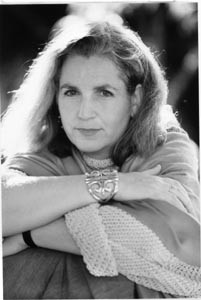
Cesaria Evora

0

Barefoot Diva

Michael Amsler

Sad songs make her feel better: Cesaria Evora

Cesaria Evora sings from her sole

By Greg Cahill

LET’S QUASH A MYTH. World music queen Cesaria Evora is padding around her room in the Hilton Gateway Hotel in Newark, N. J., fielding questions during her third phone interview in an hour. It seems like a good time to ask the 58-year-old singer about the oft-repeated tale that she performs shoeless in solidarity for the impoverished women and children of her Cape Verde islands off the coast of Senegal.

“No, no,” she replies in her hauntingly rhythmic Portuguese-Creole and speaking through a translator. “In Cape Verde, where I lived, I was always barefooted. I walked down the street barefoot. I walked in the house barefoot. Ever since then, and now that I travel around the world, I stay mostly barefoot, though I wear little slippers sometimes so that my feet don’t freeze in cold places.

“I’m barefoot right now.”

And very down to earth.

During the past four years, Evora’s soulful interpretations of her homeland’s traditional morna songs have established her as a world-music sensation. Her 1995 self-titled debut snared a Grammy Award and topped the list of critics’ favorites nationwide. Evora’s newly released major label debut, Café Atlantico (RCA Victor), expands on her sound. The CD, recorded in France and Havana, features Cuban musicians and five arrangements by the Brazilian cellist Jacques Morelenbaum (known for his innovative work with acclaimed composer/performer Caetano Veloso).

The 14 tracks include a tender bolero interpretation of the classic Spanish love song “Maria Elena,” a version of “Beijo de Longe” set to the Cuban danzon rhythm, a rousing account of the Cape Verdean Mardis Gras favorite “Carnaval de São Vicente,” and a haunting performance combining the African kora with Western strings on the sorrowful ballad “Desilsao dum Andjer.”

THE GRACEFUL POWER and soulful passion Evora displays on her recordings and in concert have spurred comparisons to Billie Holiday, Edith Piaf, and other legendary female vocalists. Evora grew up in Mindelo, a port on the island of São Vicente, known as “the Creole Rome,” where passing sailors from Portugal, Argentina, Brazil, and the Caribbean left indelible marks on the local music. Her own musical inspiration comes mostly from the morna, a cousin to the blues sung in Cape Verdean Creole and blending West African percussion with Portuguese fados, Brazilian modhinas, and British sea chanteys.

DURING COLONIAL TIMES, islanders often felt compelled to listen to Portuguese songs. After the 1975 independence of the Cape Verde islands, the local folk music scene underwent a revival. “Then we could listen and sing and express ourselves better through own music,” Evora says. “I sing about colonial times. I sing about politics. Lack of rain. Lack of jobs. How people emigrate to other countries to better themselves.

“That’s how I express myself, through my music.”

Evora was drawn to the art form at age 16 and soon was performing throughout the Cape Verde islands. In the late ’60s, two of her radio tapes were released as albums in the Netherlands and Portugal, but her dream of becoming a professional singer was never realized and in the mid-’70s she gave up music. Then, in 1985, she returned to the stage and traveled to Lisbon to record two songs for an anthology of female Cape Verdean singers. Three years later, producer Jose Da Silva, a Frenchman of Cape Verdean ancestry, invited her to record the album La Diva aux Pieds Nus (The Barefoot Diva). The project led to a long association, including four albums recorded between 1988 and 1992.

Critics loved her. The French magazine Le Monde declared that Evora “belongs to the aristocracy of bar singers.”

As her fame grew, Evora launched her first U.S. tour in 1995. In America, she became an instant hit among the burgeoning legion of world-music fans, and recorded a track with Veloso on the 1997 Red Hot + Rio compilation. “They don’t understand me very much, but I have a lot of fans everywhere I go,” Evora acknowledges. “I guess they just like me.”

Why does she think her songs touch so many souls in foreign lands? “Music is just the universal language,” she says. “Even if you don’t understand the language, and I purchase recordings in languages that I don’t understand, you listen because you like the rhythm of the song.”

Cesaria Evora performs Monday, Sept. 20, at 7:30 p.m., at the Luther Burbank Center, 50 Mark West Springs Road, Santa Rosa. Tickets are $20, $25. A pre-concert dinner costing an additional $28 will be served at 6 p.m. in the Gold Clubroom. For details, call 546-3600.

From the September 16-23, 1999 issue of the Sonoma County Independent.

© Metro Publishing Inc.

Sarah Andrews

Buried Treasure

Notes from the underground: Mystery meets geology in Sarah Andrews’ new book.

Sarah Andrews turns up old bones, new controversies

By David Templeton

“STOP,” SAYS Sarah Andrews. “Wait. I’m being too dramatic. Forget everything I’ve just said.” Matter of factly, Andrews waves a hand through the air, sweeping away the last five minutes of conversation.

The multitalented geologist, author, and educator–she teaches the “Dinosaur Class” at Sonoma State University–has been discussing her latest book, Bonehunter (St. Martin’s Press; $24.95). It’s the fifth novel in a unique and increasingly popular mystery series featuring forensic geologist Em Hansen, a scientist-turned-sleuth whose knowledge of the earth often gives her the edge over all those run-of-the-mill detective types. The Hansen series began with Tensely, followed by A Fall in Denver, Mother Nature, and Only Flesh and Bones.

In Bonehunter, Hansen undergoes a kind of crisis of faith when she finds herself accused of murdering an esteemed Salt Lake City paleontologist. The resulting desert-hopping whodunit–which coincides with a tense local battle between evolutionists and creationists–forces Hansen into dangerous terrain, both ideological and literal, as she begins to fall for a Mormon police officer and ends up fighting for her life in the secret dinosaur bone-fields of New Mexico. Bonehunter makes you think, while remaining a grade A mystery, a kick-in-the pants page-turner.

“My point in writing the book, besides writing a great story, is to open up a discussion of beliefs,” is what Andrews had originally been saying about Bonehunter. “I wrote it as a plea for openness, a plea for kindness, for understanding.”

And this is where she stopped.

“OK, that’s not why I wrote it,” the 48-year-old Graton author confesses, “though I hope it does do those things. The truth is, I wrote it because I was fed up.”

Fed up?

“Fed up,” Andrews repeats, laughing. “As a geologist, I’ve been confronted so many times by people who make these enormous assumptions about me, about what I’m trying to do as a scientist, about what I believe. Assumptions like ‘all scientists are atheists’ or ‘all scientists are trying to disprove the existence of God.’

“I’ve had it with being called an atheist, just because I happen to be a scientist. It’s not true! Being an atheist does not necessarily follow from being a scientist.

“I mean,” she adds, “Albert Einstein used the word God in every other sentence, right?”

It’s true. It’s also true that this happens to be a remarkably good time to unveil a novel that dares grapple with such issues. The Kansas Board of Education’s recent decision to remove the teaching of evolution from the state’s mandatory science curriculum has once more brought the simmering battle between science and religion to a fast boil.

“Yeah, what luck,” Andrews says of Bonehunter’s fortuitous arrival in the middle of this high-profile debate. “Though I admit I set out to write a more commercial book this time, who could have guessed that the timing would be so perfect?”

Descended from a long line of Quakers–“I am Sarah, daughter of Richard, son of Joseph Charles, son of Joseph Charles, son of James, son of James, son of Ezekiel, son of William,” she recites–Andrews was raised with a sense of spirituality but none of the harsh intellectual restraints of a strict religious upbringing.

Without apology, she tells of her family’s intuitive knack for sensing when another family member is about to die, an ability Andrews has experienced firsthand. Such metaphysical flirtations were abandoned, though, when she became a student of geology, tossing the spiritual world aside for a life of hard facts and provable equations.

After graduation, Andrews worked for the U.S. Geographical Survey, then spent several years in the “Oil Patch,” working for various petroleum companies until the price of oil dropped through the floor and she was laid off.

Shortly thereafter, Andrews began to write.

THINKING she’d turn her experiences as a geologist into a memoir, she took a class on autobiographical writing. However, the baffled instructor offered Andrews the following critique:

“You write like the best of the hard-boiled detectives,” she said, “but I must admit I find the voice a bit jarring.”

“It was the best unintentional advice I’d ever received,” Andrews says with a laugh, adding that her teacher’s words inspired her to transform her geological exploits into a mystery novel. Thus was Em Hansen born. With the release of her first novel, Tensely, it was clear that Andrews was on to something: a unique perspective, a one-of-a-kind main character, and the ability to create a good potboiler while actually writing some magnificent, lilting prose.

“In mysteries, traditionally, the story is everything and the writing is secondary,” she acknowledges. “Putting a lot of well-crafted prose into a mystery novel feels a bit like peeing in a dark suit. Who’s going to notice?”

All during this time, Andrews was struggling with the hard separation between provable phenomena and the mysterious events of her youth.

“I was indoctrinated by the stark scientific outlook of the world,” she explains, “but then I was bombarded with daily events that were, for lack of a better word, metaphysical in nature. At one point I finally told my rational mind, ‘OK, I think I’m going to allow myself to consider this stuff now.'”

She’s cagey about confessing too much, however, or being too specific about where her explorations have taken her, referring to her spiritual beliefs as “basic Quaker geologist mysticism.” When asked about her spiritual practices, she simply says, “Writing is my practice.”

She tells of the time she had coffee with Yale paleontologist Edward Lewis, the man who discovered Rama pithecus–which Andrews calls “the early, early man guy,” a manlike fossil once considered to be humankind’s earliest evolutionary ancestor–and having Lewis confess, “I think most geologists are closet pantheists. We see spirits in everything.”

Andrews likes that.

“I find the world deeply inspiring,” she says. “I can’t believe that everything I observe, as a geologist, is not divine.”

Smiling, she adds, “But I leave it to you to guess what I mean by divine.”

From the September 16-23, 1999 issue of the Sonoma County Independent.

© Metro Publishing Inc.

Child-Care

No Kiddin' Someone to watch over them: One in 20 Sonoma County children soon will be unable to find suitable child care--a situation that family advocates say is reaching critical mass. Already there are 36,000 latchkey children ages 5 to 12 in the county. Facing up to the child-care crisis By...

The Bistro

Bistro Blast Hail and hearty: The Bistro chefs are game to give patrons generous portions. Glen Ellen restaurant puts the din back in dinner By Paula Harris TGIF? NATURALLY, but you can express your gratitude for the impending weekend in a couple of ways. Some Fridays you're raring to...

Baseball Marriage

Home Run Batting a thousand: Susan and Bob Fletcher, co-owners of the Sonoma County Crushers, are partners on and off the field. Sonoma County Crushers husband-and-wife team are married to the game By Bill English ALTHOUGH baseball has no clock, it happens every day. The relentlessly long season...

Sonoma County Authors

Falling Leaves PICK UP A BOOK, grab a steaming mug of whatever, and cozy up to the fireplace . . . oh wait, you've been doing that all summer. Well, maybe the fall will be everything our August wasn't, in which case you'll need sunglasses and a pool to lounge beside while exploring the latest offerings from...

Lynda Barry

Tender Age By Yosha Bourgea ADOLESCENCE is hell, as any teenager will tell you. It is the least forgiving time of life, combining as it does a heightened self-awareness with the presence of forces beyond our control. The natural order of things shifts, becomes unnatural and unpredictable, and warps us in ways we can't...

New Theatre Works

Fresh Talent Royal pain: Rebecca Allington plays Queen Elizabeth in Repertory. New playwrights light up local stages By Daedalus Howell IN SHAKESPEARE'S Hamlet, the melancholy Dane employed a play to confirm the guilt of his fratricidal uncle. Though less grandiose in their goals, two local theater companies--Actors' Theatre and Sonoma County...

Susie Bright

Bright Ideas Local exposure: Susie Bright speaks Sept. 23 at Copperfield's in Sebastopol. Susie Bright's new book brings sex out of the closet By Patrick Sullivan "YOU JUST HAVE nothing left to hide, do you?" a shell-shocked stage manager once exclaimed to Susie Bright after the provocative author finished reading to...

Kathleen McCallum

In Focus Frame game: Camera Art 1 organizer Kathleen McCallum thinks local photographers deserve new venues to display their work. Local photogs take a shot at exposure with Camera Art 1 By Gretchen Giles PHOTOGRAPHER Kathleen McCallum is up against a brick wall, camera in hand, patiently doing exactly...

Cesaria Evora

Barefoot Diva Michael Amsler Sad songs make her feel better: Cesaria Evora Cesaria Evora sings from her sole By Greg Cahill LET'S QUASH A MYTH. World music queen Cesaria Evora is padding around her room in the Hilton Gateway Hotel in Newark, N. J., fielding questions during...

Sarah Andrews

Buried Treasure Notes from the underground: Mystery meets geology in Sarah Andrews' new book. Sarah Andrews turns up old bones, new controversies By David Templeton "STOP," SAYS Sarah Andrews. "Wait. I'm being too dramatic. Forget everything I've just said." Matter of factly, Andrews waves a hand through the air, sweeping...
11,084FansLike
4,446FollowersFollow
6,928FollowersFollow
