Usual Suspects

0

Photograph by Janet Orsi

Tangled Web

Child killer Richard Allen Davis gets a home page of his own

By Paula Harris

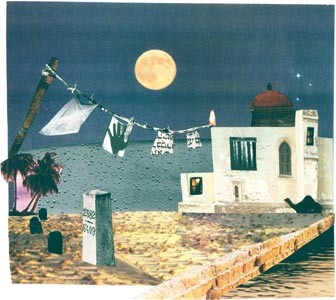
CLICK ON THE WEB PAGE. The scanned photographs of Native American-inspired art and woodwork show nothing remarkable. Clichéd wolves, eagles, buffalo, and Indian tribal riders etched onto plastic cups and Bic lighter holders. Typical Southwestern art show offerings.

What’s not so typical is the artist.

“Greetings with a smile,” states the cheery blurb on the artist’s Web page. “I was just wondering that after going through my trial and all the media statements about myself: Could there be someone out there in the world who would be with an open mind to not take everything that has been said about me? Could there be anyone who could take the time to see for themselves, just who I really am.”

Welcome to the home page of Richard Allen Davis, now on San Quentin State Prison’s death row, convicted of the abduction and murder of Petaluma schoolgirl Polly Klaas.

The murder occurred in 1993, but memories of the case are still vivid. Davis, a state parolee with a long criminal history, invaded Klaas’ quiet neighborhood home during a slumber party. While Klaas’ mother and sister slept nearby, Davis bound and gagged her two school friends and abducted the sobbing 12-year-old at knifepoint.

Two months later, Davis confessed to strangling Klaas and led police to her body buried beneath a scrap heap in Cloverdale. In 1996, he was convicted and sentenced to die. So how is he now able to reach out to the world via the Internet, display his art, and even request pen pals on his own home page? Could the site be a hoax?

“Richard Allen Davis’ page is indeed genuine and is still active,” say Tracy Lamourie and Dave Parkinson, directors of the Toronto-based nonprofit Canadian Coalition Against the Death Penalty, which provides and maintains free Web pages for death-row inmates. “The page was created in April of 1999 when we received a letter from Richard Davis, as we do from many death-row prisoners, in response to this outreach form that is passed from prisoner to prisoner,” they add.

Critics charge that featuring Richard Allen Davis, the high-profile convicted killer of “America’s Child,” is an odd choice for a poster boy for such an organization, which claims to champion human rights. Not so, respond the CCAPD co-founders.

“We offer free Web pages to all death-row prisoners, regardless of whether the perpetrator is high-profile or not, guilty or innocent. We ask one question: Is the person under sentence of death?

“We believe that the government should not be given the power to kill its citizens in the guise of justice. Period,” note Lamourie and Parkinson in a joint statement.

“We don’t feel any one murder is better or worse than any other, or that the life of any victim is more or less valuable than the life of another murder victim,” they add. “Therefore we don’t make any judgments as to which crimes would disqualify the offender from appearing on our pages. If they are sentenced to die, then they are welcome to use our pages to attempt to garner support to attempt to save their lives.”

However, Lamourie and Parkinson admit they’ve received ” a lot of negative response” from individuals outraged by Davis’ page.

One of those outraged Web surfers is Marc Klaas, a full-time campaigner in the cause of preventing violence against children since the kidnapping and murder of his daughter.

“We did receive an e-mail from Mark [sic] Klaas, who was not pleased with Davis having a page. . . . I believe he had been alerted to the existence of the page in December when he was contacted by a local California TV station,” says Parkinson.

He did not elaborate on the communication.

The Davis websites, located at http://members.xoom.com/_XOOM/ccadp/davisart.htm and http://members.home.net/ccadp/richarddavis.htm, are still up and running, complete with recent photographs and a request by Davis to “place me on other countries (sic) death row penpal web hook ups.”

As for Davis’ artwork, it’s for display purposes only, according to the CCAPD. “As far as I know, [the work] was never for sale,” says Parkinson. “At least not on our site . . .”

From the February 24-March 1, 2000 issue of the Sonoma County Independent.

© Metro Publishing Inc.

Measure B

0

Freeway Jam

Big money drives the latest ballot bid for Highway 101 widening

By Janet Wells

WHEN IT comes to money, Yes on Measure B is the Fortune 500 campaign of Sonoma County’s upcoming March primary. Contributions in the first three weeks of January alone read like a Who’s Who of Big Business and include: Agilent Technologies, $50,000; Advanced Fibre Communications and Fireman’s Fund, $25,000 each; Sola Optical, $15,000; and Mead Clark Lumber, Codding Enterprises, North Bay Construction, and Minatta Transport-ation, $5,000 each.

Measure B spokesman and Sebastopol City Councilman Sam Crump puts the campaign resources at more than $400,000 to promote his brainchild, which would raise sales taxes a half-percent for eight years to raise money for turning Highway 101 into a six-lane freeway from Windsor to the Marin-Sonoma county line, where traffic bottlenecks at the so-called Novato Narrows.

The No on B forces are armed with endorsements that look like a Who’s Who of Sonoma County Environmentalists. But support from the Sierra Club, the Environmental Defense Fund, Sonoma County Conservation Action, the Greenbelt Alliance, and the Sonoma County Land Use Coalition hasn’t translated into cash for the cause.

Gayle Goldstone, spokeswoman for Citizens Against Wasting Millions, laughs when asked if the campaign’s coffer–which turns out to hold a grand total of $13,097–is anywhere close to that of Crump & Co.

“We don’t have a campaign war chest filled with contributions from paving contractors and development interests to get our message out,” she says. “The biggest investment comes from those who will benefit the most. There’s no mystery there.”

Measure B has been dubbed “Ghilotti 4 101,” in reference to one of the initiative’s ardent early backers, Jim Ghilotti, whose large Santa Rosa construction company has annual revenues of about $40 million. Caltrans has hired Ghilotti Construction Co. more than a dozen times in the past two years for public works projects totaling more than $13 million.

While Ghilotti has contributed a substantial amount of cash and in-kind services to the Measure B campaign, he declines to discuss the issue, and his assistant refers calls to Crump. However, in published reports, Ghilotti has said that because of the state’s competitive bidding laws, he would “gain nothing from helping this campaign.”

Crump bristles at the suggestion that the measure is a self-serving windfall for paving and construction interests. “Over half our funding is from the high-tech industry. Why don’t you talk about what their motivations might be? They ship goods all day long, and they want to improve the quality of life for their employees,” Crump says.

“They held a high-tech symposium that identified Highway 101 as the biggest concern of doing business up here.”

Opponents criticize the measure as a financial boondoggle, and maintain that the highway will be widened even without Measure B sales-tax funds. “Measure B talks about [improving] 36 miles of freeway. Twenty-four [miles] have already been allocated for funding,” says Sonoma County Conservation Board member Bill Kortum, a Petaluma veterinarian known as the dean of the Sonoma County environmental movement. “Some of the funds are here, others are on the books.

It can’t be on the books unless the Metropolitan Transportation Commission knows the money is forthcoming.”

Crump counters that “on the books” is just a wish list for widening sections of 101. “It’s not funded. It depends on a bunch of contingencies,” he says. “It’s not happening. If you want to sit around and wait for 20 years, go ahead.”

Caltrans North County Office Chief Saaid Fakharzadeh confirms that almost $72 million has been allocated to add a lane in each direction from Wilford Avenue in Rohnert Park to Steele Lane in Santa Rosa, as well as start the environmental review process for rebuilding the Wilford Avenue overpass.

According to Kortum, a 20-year blueprint recently issued by the MTC, includes funding for widening the Novato Narrows, as well as widening Highway 101 from Petaluma Valley to the Old Redwood Highway interchange, and from Steele Lane to River Road in Windsor.

AN INFUSION of sales-tax money might make the process go more quickly, Fakharzadeh says, but Kortum disagrees. “Twenty years is realistic,” he says. “I don’t care how much money you throw at it, it doesn’t speed it up.

“That’s the pace that Caltrans builds things.”

Measure B opponents have long argued that adding more lanes to the freeway will do little to ease traffic congestion, since construction won’t keep pace with growth. Fakharzadeh agrees, citing a study done for the MTC that pegged light-rail transit as a necessary adjunct.

Marin and Sonoma counties, linked by the traffic-choked Novato Narrows, are at loggerheads when it comes to transit (though the counties are working behind the scenes on a rail plan)–and Measure B does nothing but exacerbate the differences, Kortum says.

Marin County voters, says Kortum, will never approve local funds to widen Highway 101, and officials are instead crafting a fall ballot measure that emphasizes rail and bus transit.

“They don’t get any advantage out of [widening the highway]. They would rather have commuters arrive by other means,” he says.

WHILE Sonoma County’s March ballot also has a second transportation initiative seeking an additional Sonoma County sales-tax increase to fund limited rail and bus improvements, few people give Measure C any hope of passing.

If Measure B passes without Measure C, “you sacrifice a rail startup in Marin County,” Kortum says. “Marin County officials are telling me they will fold their tents.”

Meanwhile, Measure B opponents wonder if “three lanes all the way” fans would withdraw their support if they knew that the third lane in each direction would be designated only for car pools during commute hours.

Crump seems anxious to avoid spotlighting the issue, banking instead on a change in the rules requiring all state and federally subsidized highway projects to build high-occupancy vehicle lanes. “The highway will not be built on March 8. It will take several years to get done, and we don’t know what the law will be at the time. There’s a completed study in Sacramento that questions the effectiveness of a car-pool lane,” says Crump, who could not provide a source for such a study.

“I hope they give jurisdiction back to the local level, so the people of Sonoma County can decide whether or not to have [those lanes].”

From the February 24-March 1, 2000 issue of the Sonoma County Independent.

© Metro Publishing Inc.

Stan Pawlowski–Charles Schulz Tribute

0

Puppy love: Stan Pawlowski finished Retirement just before Schulz died.

Bigger Than Life

Sculpture Stan Pawlowski discusses his tribute to Charles Schulz

By Patrick Sullivan

DEATH UNITES US like nothing else. The recent passing of Santa Rosa’s most famous resident, Peanuts creator Charles Schulz, brought millions of faithful fans across the world together in grief and loss.

For half a century, the cartoonist offered the wry and witty Peanuts cartoon to an audience that always seemed hungry for more. But that 50-year artistic career came to an end on Saturday, Feb. 12, when the cartoonist died at the age of 77, just hours before his last cartoon ran in Sunday papers across the nation.

The death of Schulz has lent new poignancy to local efforts to honor his lifetime of accomplishments. On Tuesday, March 7, the Santa Rosa City Council is expected to sign off on a plan to commission a life-sized bronze sculpture of Peanuts characters. The piece, which will be placed in Depot Park in Old Railroad Square, is to be created by Long Beach sculpture Stan Pawlowski, who knew Schulz well and deeply mourns his passing.

“One thing that bothers me is that he’s not going to be here to see the finished work,” says the 47-year-old Pawlowski. “He was a dear friend of mine and a huge inspiration.”

The sculpture has been in the works since shortly after Schulz announced that he had cancer and was planning to retire. The city first considered naming a street after the cartoonist, but then settled on a sculpture instead.

Pawlowski says he collaborated with the Peanuts creator to come up with the concept for the piece, which will feature a 4-foot-tall Charlie Brown and Snoopy standing side by side. A railing featuring scenes and characters from Peanuts will surround the sculpture to deter vandalism. The whole concept may evolve slightly–the artist says he’s now considering adding Woodstock.

“I am hoping that I’ll be able to install it by Oct. 2 and have it dedicated on that day, even though I’ll have to work day and night to get it done,” Pawlowski says.

The sculpture will cost the city $168,000–a bargain for a work by Pawlowski, who would usually charge quite a bit more for such a piece.

“I feel like I’m honoring him, so I wanted to do my part,” he explains.

The sculptor first began crafting Peanuts characters when he was just 17, using the newspaper strips as a model to re-create Schulz’s beloved characters in clay.

“I never imagined that I would someday be creating work for him that would be going into production,” Pawlowski says.

About eight years ago, a Peanuts licensee brought Pawlowski together with Schulz so the cartoonist could see some work the sculptor had done for Disney. The two hit it off immediately, and Pawlowski ended up getting a commission to design the Charles M. Schulz award for cartooning, which featured Snoopy leaning on an inkwell.

“When we first had a meeting he inspired me so much that I turned out five little miniatures in a month,” Pawlowski recalls. “He appreciated the detail work that I do, which inspired me to do better every time.”

Pawlowski went on to do 11 other pieces for Schulz. He says the true impact of the cartoonist’s art on the lives of his fans may never really be known.

“He’s brought such great joy to the entire world and inspiration to people he never knew,” Pawlowski says.

“He’s touched so many people. My life has been greatly enriched from knowing him, and I’m going to miss him as an artistic inspiration and personally.”

A public memorial for Charles Schulz takes place midmorning on Monday, Feb. 21, at the Luther Burbank Center, 50 Mark West Springs Road, Santa Rosa.

From the February 17-23, 2000 issue of the Sonoma County Independent.

© Metro Publishing Inc.

Cookbooks

0

Shelf Life

Local chefs collect cookbooks for inspiration and guidance

By Marina Wolf

WHEN FAMILY or friends come over for the first time, their eyes inevitably go to my cookbooks. I don’t mind. If I did, I wouldn’t have lined all 200 of them up in a 7-foot-high bookcase in the living room. I’m proud of the books I’ve accumulated over the years, from my first, a battered copy of the Moosewood Cookbook, to my latest acquisition, a shiny new book on foie gras (that I will probably never use). And yet, when visitors gasp and make astonished noises, honesty and modesty compel me to say, “Some people have a lot more cookbooks than this, you know.”

People like Bea Beasley, for example, a Santa Rosa caterer whose collection has passed the 3,000 mark. “I don’t think there’s a bad cookbook,” she says in defense of her addiction. “You can learn from the worst books.”

Beasley’s collection might be considered a little extreme–most collections that size are in libraries or have cooking schools attached–but only in scale, not in the impulse.

The food world is full of people who turn to cookbooks to learn, to research, to be inspired.

If that sounds hifalutin, it’s not. While ordinary cooks tend to pick up a few books and follow the recipes slavishly, cookbooks are simply required business reading for most food professionals. Christina Brenner refers to her collection weekly at least. “I try to become aware of what’s out there through my students, when they look at chefs and magazines to pick up patterns,” says the Simi Winery chef and instructor at the California Culinary Academy. “But I need cookbooks to keep up with them and with my own menu development.”

Brenner bought her first books, La Technique and La Méthode by Jacques Pepin, when she suddenly found herself in business as a chef in 1977. “I needed to bring my skill level up as quickly as possible, but I couldn’t afford cooking school.”

Since then, of course, Brenner has gotten enough of her own experience, but she remembers those two tomes fondly as helping her onto the first step.

THESE DAYS consumers are going for the glossy, personality-driven titles that you might hear about first from the companion series on Saturday-morning PBS cooking shows. These books have lots of pictures, so they even read like a TV show. In contrast, most chefs will focus on information-filled items from well-known names, the classics of the genre: Robuchon, Trotter, Child. Chef John McReynolds of Cafe LaHaye in Sonoma stocks up on what might be considered the new American classics, by such chef-authors as Joyce Goldstein and Paula Wolfert. In reality, McReynolds visits his bookshelf, which he estimates holds well over 200 volumes, maybe a couple of times a month. But he’ll spend a whole afternoon just browsing, looking for touchstones, an ingredient or technique or idea.

It’s an immersion workshop with the authors, many of whom he knows only through their recipes. “In lieu of working with them, I can glean information from all of these chefs through their books,” says McReynolds.

Well chosen and in large enough quantities, cookbooks constitute an important reference source. Emily Schmidt, a private chef in Napa County, fields several calls a week from friends who are looking for culinary information and know that she has the materials to help. She also turns to her books to cross-reference.

“I can get five versions of a recipe to check it out and see which one works best,” she says.

Angie Lewis, co-owner of Chez Marie in Forestville, even turns her 1,800-volume library over to customers, encouraging single diners to browse the shelves for dinnertime reading. “I use cookbooks to answer questions a lot,” says Lewis.

“When customers ask what cassoulet is, and I have time, I’ll go get them a book and they can read about it for themselves.”

Lewis’ partner and the chef at the restaurant, Shirley Palmisano, hardly ever opens a cookbook, relying instead on Lewis to supply her with information, which Lewis is usually able to locate quickly, thanks to her self-designed shelving system.

Research questions aside, though, most chefs simply use their books to prime the pump. Gary Jenanyan, executive chef at the Robert Mondavi Winery, has been cooking professionally since 1971; at this point, he says, his cooking is mainly intuitive. But occasionally the well runs dry: “Sometimes I’m just brain-dead. I don’t know what to cook.”

At such moments, Jenanyan sits down with his 300 or 400 cookbooks. He has an additional source of inspiration in a set of cook booklets compiled from visiting chef participants in the winery’s Great Chefs program.

AS MANY TOMES as these chefs have, you’d think that their first books would have crumbled to dust or faded into oblivion by now.

After all, culinary arts have moved on, haven’t they?

But it takes only a little thought, and maybe a quick rummage, for most cookbook connoisseurs to remember their first books; often, they’re still using those books decades later.

Schmidt has kept several seminal books in active use, books that at first glance seem hopelessly out of date. She has the original Time-Life series of cookbooks; the 1954 edition of the Ladies Home Companion Cookbook that came as a freebie with a set of encyclopedias–the encyclopedias now are thick with dust, but she still uses the cookbook.

Then there is the Woman’s Day Encyclopedia from the ’60s.

Schmidt recently bought another copy of the latter for one of her daughters, who expressed her thanks in a manner that any cookbook fan can appreciate: “I thought I’d have to wait until you die to get a set like that.”

From the February 17-23, 2000 issue of the Sonoma County Independent.

© Metro Publishing Inc.

Proposition 21

0

Cracking down on California’s youth. Why are big corporations backing the state’s prison-industrial proposition?

By Carrie Ching

DESPITE NUMEROUS studies that show there has been a sharp decrease in juvenile-crime rates since 1993, the media spotlight on young offenders has created the illusion of a new breed of juvenile “superpredators.” This is particularly true in California–home to one-fifth of America’s 100,000 young prisoners–where a punitive measure called the “Gang Violence and Juvenile Crime Prevention Act” has made it onto the March 2000 ballot. Proposition 21, as it is known, is sponsored by former Gov. Pete Wilson and a host of multinational corporations, including Chevron and Transamerica.

If passed, Wilson’s initiative would “vastly expand the number of children tried as adults in California, maybe even triple them,” says Lisa Greer, a public defender in the Los Angeles juvenile-justice system.

By crowding minors onto court dockets and eventually into prisons, the state’s legislative analyst’s office calculates the initiative could cost California taxpayers more than $5 billion over the next 10 years.

And not a penny of that money would go toward prevention or rehabilitation programs.

Money in Politics

Although Wilson failed to get similar punitive measures past the state Legislature while in office, thanks to California’s unique initiative-petition method, he was able to buy his way into the polls in 1998. With the financial endorsement of a band of petroleum giants and utility companies–organizations with no apparent stake in a state-level juvenile-crime initiative–Wilson was able to garner enough signatures and support for his initiative to qualify for the 2000 ballot. He received donations from Pacific Gas & Electric and Unocal 76, which coughed up $50,000 each, as well as from ARCO and the head of Hilton Hotels.

It’s no coincidence that most of the corporate sponsors of Prop. 21 also contributed to Wilson’s campaign. A Chevron spokesperson reportedly admitted that his company contributed $25,000 to the initiative “at then-Governor Wilson’s request.”

After all, the former senator and governor of America’s most populous state was–at the time–a possible presidential contender.

“Those donations were to Wilson himself, to support his last attempt to run for president,” says Kimi Lee, an organizer for the American Civil Liberties Union’s No on Prop. 21 campaign. “The corporations had no idea what they were supporting.”

But the tide of Wilson’s political career has since turned. Wilson has been out of office for almost two years–he now works for a Beverly Hills-based investment firm. Many of the corporations that originally funded the initiative have washed their hands of it; PG&E publicly retracted its support of Prop. 21 when challenged by protesters late last year.

And although Wilson has been off the presidential bandwagon for over a year, the wheels of his forgotten platform are still spinning toward the polls.

Crime Pays

It seems the groups still urging Prop. 21 forward are those who stand to benefit financially from the legislation: organizations aligned with the prison industry. One of Wilson’s premier campaign contributors, the California Correctional Peace Officers Association, has a vested interest in keeping the prison populations booming. California has built 21 new prisons since 1984 and spends nearly $4 billion a year maintaining them–a drive that has doubled CCPOA membership in the last decade, more than tripling its annual dues.

While according to CCPOA lobbyist Jeff Thompson the prison guard union is itself “not taking a position” on Prop. 21, it has a substantial investment in current Gov. Gray Davis–who received $2 million from the union during his 1998 campaign.

Davis recently announced his support of the initiative.

According to Lee of the ACLU, packing more people into prisons also means more cheap labor for corporations like Chevron–which has utilized prison labor in the past–and a healthy percentage off the top for the Department of Corrections. The California DOC Joint Venture Program allows corporations to lease state land and set up operations within prison walls, promising “state tax incentives, discount rates on Worker’s Compensation Insurance, and no benefit expenses” to corporate employers. As of January 1, 12 California prisons were already participating in the program, and 15 corporate employers were cutting costs with cheap labor.

“There is a direct correlation between the increase in criminal legislation and corporate interests,” says Lee. “Corporations are the driving force behind the ‘prison industrial complex.’ It benefits them to keep the prisons full because it means a cheap, captive workforce.”

The Battle of the Ballot

The financial incentives and political egoism behind Prop. 21 have not gone unnoticed. Opposition to Prop. 21 is spreading across the state like a virus, from youth activists to policy watchdogs to human rights advocates. Among its opponents are the California Parent Teacher Association, the League of Women Voters, the Center for Juvenile and Criminal Justice, the International Longshore and Warehouse Union, the California American Civil Liberties Union, and the California Public Defenders Association.

“This initiative is really unnecessary,” says Deborah Vargas, a policy analyst of the Center for Juvenile and Criminal Justice. “We already have legislation in effect that catches heinous juvenile offenders. Prop. 21 casts a wide net and catches nonviolent offenders as well, which you’d never know without reading the fine print.”

Critics attack Prop. 21 because hidden within its neat packaging and fancy title lie a series of punitive measures that will essentially strip young people of the protections currently granted to them by law. At the discretion of prosecutors, kids as young as 14 could be thrown into adult courts, and if convicted, 16-year-olds could receive life sentences in adult prisons–or the death penalty.

The initiative would also repeal the confidentiality of juvenile records, allowing schools and employers to review past offenses, no matter how trivial, as well as vastly extend the use of the “three strikes law” for young offenders.

But to many opponents, the most unsettling part of Wilson’s plan is the way it targets youth of color with its frontal attack on gangs. Prop. 21 would significantly increase the number of crimes punishable as “gang-related,” while bumping up the severity of sentences for such offenses.

In addition, the minimum damages to qualify for felony vandalism would be reduced from $50,000 to $400–which would mean a kid who spray-paints a bench or writes his name in concrete could be convicted of a felony and sentenced to one year in prison.

Even staying clear of organized gangs wouldn’t necessarily mean kids are out of the red zone, since Prop. 21 expands the definition of a “gang member.”

Police officers would have the authority to assume any suspicious-looking group of three or more young people was a gang and to wiretap their homes.

“This initiative would take us one more step down the road toward living in a complete ‘surveillance security state,’ ” warns Van Jones, director of the San Francisco-based Ella Baker Center for Human Rights.

Since the introduction of Prop. 21, opposition among California’s young people has snowballed into a full-fledged youth movement. Last December, armed with signs emblazoned with the words “Educate, Don’t Incarcerate!” and “Fight the War on Youth!” activists stormed the headquarters of PG&E in San Francisco, demanding a meeting with CEO Gordon Smith.

The result: PG&E agreed to make a public announcement retracting its support of Prop. 21 and donated $5,000 to the youth campaign as a symbolic gesture of the company’s neutrality. Activists also paid visits to corporate heads at Hilton and Chevron late last year, making similar demands.

But the toughest obstacle faced by youth activists and critics of Prop. 21 lies far beyond the offices of major corporate donors. Their primary challenge is to bridge the socioeconomic and racial chasms between the minority youth targeted by the initiative–most of whom are too young to legally vote–and the white, middle-class electorate, the group wielding the most political clout in the polls.

“Young people of color organizing against Prop. 21 are dancing with a contradiction,” says Robin Templeton, a youth organizer who works with the Youth Outlook (YO!) project in San Francisco.

“How [can they] win a campaign that requires swaying the white, middle-class voters who have historically betrayed them at the ballot box and who see them as the ‘superpredator’ generation?”

Their dilemma is particularly daunting in light of polls that indicate people overwhelmingly support initiatives advertised as “tough on crime,” without reading the fine print or comprehending the larger issues at hand.

Cracking Down on Youth

California is not the first to tighten its juvenile-justice system. At least 43 states have taken some sort of stab at juvenile crime in the last two decades, enacting some rather draconian laws.

In 1981, Florida passed a “prosecutional discretion waiver” almost identical to the stipulation in Wilson’s initiative, shifting the power to push juveniles into adult court from judges to prosecutors.

Because of this shift, in 1995 alone Florida prosecutors sent nearly as many juveniles to adult court (7,000) as were tried in the entire United States (9,700). And youth transferred to adult court in Florida were found to be a third more likely to re-offend than those sent to the juvenile-justice system.

A bill currently before Congress also threatens to tighten juvenile-crime legislation on the federal level.

But by eliminating the concept of rehabilitation, California’s initiative takes juvenile punishment in a new direction–and it is likely that other states may follow. “The California initiative process has historically been a trendsetter for repressive campaigns,” says Templeton. “Prop. 21 could conceivably eliminate the concept of rehabilitative juvenile justice in the rest of the nation.”

Yet despite this wave of repressive youth-crime legislation, there is no mistaking the fact that juvenile-crime rates are going down–on both state and national levels. Between 1990 and 1998, California’s juvenile felony rate dropped 30 percent, its juvenile homicide rate down 61 percent.

And nationally, the rate of violent crimes committed by juveniles is lower than it was 20 years ago–a fact that the Office for Juvenile Justice and Delinquency Prevention attributes not to an increase in punitive legislation, but to a decline in homicides by firearms.

People who work closely with juveniles warn of the dangers of a widespread crackdown on young offenders. “After being pushed through the adult-criminal system, kids come out much more hardened and crime-prone,” says Public Defender Greer.

“It’s counterproductive to public safety and to efforts aimed at reforming youth.”

From the February 17-23, 2000 issue of the Sonoma County Independent.

© Metro Publishing Inc.

Usual Suspects

0

Pat Answers

Updates on Thurston, Gray, and Ziemann

By Janet Wells

KSRO-AM RADIO fired outspoken talk-show host Pat Thurston, prompting a protest this week at the station, as well as a flood of phone calls, faxes, and letters from curious and furious local listeners. Station managers Peggy Mulhall and Brian Hudson did not return calls to explain the personnel change, but a KSRO receptionist proffered that Thurston “left on her own.”

“That’s amazing,” Thurston says of the station’s spin. “I got canned. They wanted to say the parting was amicable, and I thought that was OK. But I wanted it clear that I didn’t walk out.”

After finishing Friday’s afternoon show, the often contentious Thurston says Hudson called her into his office and let her go, citing economics and inconsistent ratings. “It is cheaper to have a syndicated show,” says Thurston, a Sebastopol resident who hosted the show for more than two years. “But I wasn’t costing them that much.”

Thurston says she “took a huge pay cut” when her former employer, San Francisco’s KPIX, dropped its talk-show format and she took the $35,000-a-year position at KSRO, which is owned by Amaturo Broadcasting.

The real reason for her ouster, posits Thurston, stems from her aeration of hot-button North Coast issues like the county’s controversial vineyard expansion ordinance and the unsolved Judi Bari bombing case.

“I am outraged . . . that now, right before an election, they yanked her off the air,” says Linda McCabe, a board member for the Sonoma County chapter of the National Organization for Women, and a frequent caller and guest on Thurston’s show. “She raised a lot of issues other people are afraid to touch. She allowed people to get on the air and discuss.”

KSRO apparently does not intend to replace Thurston in a live-broadcast talk-show format, which prompted McCabe to organize protests this week at the station’s Santa Rosa offices. “I just want to embarrass the station and show citizens that [the station managers] don’t even care about their listeners,” she says.

“They are running canned shows that you can’t even call in to.”

Gray Day

SURVEY SAYS? The big thumbs down for Sonoma County Superior Court Judge Patricia Gray, who had filed a complaint charging that the results of a Sonoma County Bar Association judicial qualification survey results were fatally contaminated.

After withholding the results in the race between Gray and challenger Elliot Daum pending an investigation into the complaint, the bar association board voted Monday night to release the survey, in which 72 percent of the 166 attorney respondents gave Daum marks of “exceptionally well qualified” or “well qualified,” compared to 14 percent in those categories for Gray. Fifty percent of those surveyed said Gray is “not qualified,” compared to just 2 percent for Daum.

The survey may represent opinions of a fraction of the 1,348 attorneys who belong to the bar association, but several high-profile judges seem to agree with the results.

In an uprecedented departure from the usual tight ranks of the judiciary, sitting Judges Mark Tansil, Elaine Watters, Lawrence G. Antolini, and Cerena Wong have endorsed Daum, while Gray lists endorsements from Judges Laurence Sawyer, Allan Hardcastle, Robert Boyd, and Raymond Giordano. Judge Raima Ballinger is on Gray’s list, but apparently has withdrawn her support and is now backing Elliot.

Normally low-profile, the contest for Superior Court Office No. 2 has been the most contentious county race of the March primary. Daum says Gray is disqualified three times more often than any other judge, often because of rudeness to attorneys and litigants. Gray counters that Daum is running against her because he didn’t like the tough sentences she has given to some of his clients, including an armed robber who shot Coddingtown jewelry store owner Henri Pierre last year.

Gray’s complaint stemmed from an e-mail sent by Dan Schurman, executive director of the bar association, who used association time and equipment to invite 25 people–including 12 attorneys who also received the judicial survey–to an event he was hosting for Daum. The bar association does not endorse candidates, and Schurman sent a subsequent e-mail stating that the endorsement was his individual choice.

“The issue is the bar association credibility has been tainted. I don’t care about the [survey] results,” Gray says. “The same thing happened in the last race. I was still the top vote getter, even though I was rated at the bottom [of the survey].”

Diocese Debacle

FOR SANTA ROSA Catholics who feel ripped off and betrayed by the sex and finance scandal that toppled Bishop Patrick Ziemann and former diocese Vicar General Thomas Keys last year, Santa Rosa Police Chief Michael Dunbaugh has a bit of bad news: The diocese is the victim, not the parishioners or the schools who lost millions.

Dunbaugh has received calls from several parishioners fuming about the diocese’s misuse of funds donated for various church-related capital expenses. “The way the accounts were set up and the money donated, the church appears to be the victim,” Dunbaugh says. “Once I give you my money, because I’ve donated it, I’m going to trust, and the key word is trust, that you’re going to do right with it. If you don’t, you’ve certainly evaded my trust, but you may not have committed a crime.”

While Ziemann and Keys have both been accused of poor judgment and negligence, neither has been charged with criminal activity. Ziemann remains in seclusion at a treatment center in Pennsylvania, and Keys, who remains as pastor of Star of the Valley Church in Santa Rosa, has been unwilling to talk publicly about his role in the diocese’s finances. “The reality is that money depleted from deposited accounts were used for legitimate diocesan purposes. . . . There is no bogeyman stealing the money. Even lost investments are legitimate investments,” says San Francisco Archdiocese spokesman Maurice Healy. “People can continue to stay fixated or say, ‘We’re in this together. What we can do is to rebuild the diocese.’ ”

Sister Jane Kelly, a Ukiah nun whose revelations about Ziemann broke open the diocese scandal, has some advice of her own: “You make [Ziemann and Keys] come forward and explain all of this, how they spent the money and why they covered up sexual and fiscal misconduct of priests,” she says. “How can you forgive someone who won’t admit they did wrong?”

In the meantime, says Dunbaugh, parishioners can hold the church accountable by working closely with church leaders, and they can await the outcome of state and federal investigations into the diocese’s finances. “And,” he adds, “they can be very, very careful in any money they choose to donate.”

From the February 17-23, 2000 issue of the Sonoma County Independent.

© Metro Publishing Inc.

‘A Perfect Ganesh’

0

A Perfect Ganesh.

Good God!

‘A Perfect Ganesh’ performs theatrical miracles

By Daedalus Howell

IT SETS UP like a blue routine in the Catskills: “Two WASPs are on an airplane going to India. On the wing, there’s this fat guy with an elephant’s head. . . .” But rest assured, Quicksilver II Theater Company’s production of Terrence McNally’s A Perfect Ganesh is a profoundly satisfying evening of theater.

Directed by Michael Fountaine, A Perfect Ganesh opens with middle-aged, upper-class housewives Katharine (Elly Lichenstein) and Margaret (Laura Jorgensen) en route to India for some spiritual housecleaning.

Years prior to their travels, Katharine’s grown son died in a gay-bashing incident–a horror with which the grieving mother feels karmically associated because of her failure to accept her son’s homosexuality. In a rather radical act of atonement, while in India, she intends to kiss a leper.

Meanwhile, catty Margaret has discovered a lump in her breast–a frightening secret that she privately agonizes over.

Present throughout the women’s pilgrimage is the sagacious and gleefully rotund Ganesha (Ross Foti), the shape-shifting, elephant-headed Hindu god who has jurisdiction over all the obstacles and boons that confound or foster one’s earthly endeavors.

From the bustle of airports, midair turbulence, and train compartments to riverside chats with the elephantine deity, director Fontaine reveals his startling ability to transport an audience with the simplest of theatrical effects (watch for Aloysha Klebe’s clever light design when a porter pantomimes opening the Venetian blinds) and deliver them straight into the emotional heart of a scene. He keeps emotions pitched and the gags funny in this taut triumph of a production.

Lichenstein outdoes herself as the amiable chatterbox Katharine, a charming travel enthusiast with more pluck than a string section on a pizzicato jag. Lichenstein proves particularly adept at depicting Katharine’s maternal pains and the self-loathing that belies her otherwise effervescent character (the actress takes a tack that is wonderfully reminiscent of Kate Hepburn). The queasy notion that her son’s violent death was the outward manifestation of her own intolerance looms, while subtle symbols like a stream of lost luggage (qua emotional baggage) suggest that recovery is imminent.

Jorgensen turns in a rich performance as the comically sanctimonious Margaret–one could comb Sunday schools up and down the Eastern seaboard and not find a bigger prig. Like Katharine, Margaret is also a collection of microscopic transformations eventually leading to a revelatory end, a process Jorgensen deploys with subtlety and grace.

Foti does a fine turn as the whimsical Ganesha, dispatching his deific duty without stepping into the schmaltzy tar pits that could ensnare a lesser actor. Owing to Ganesha’s elephant head, Foti must work from behind a large flesh-colored mask, the trunk of which would give porn legend John Holmes penis envy. That notwithstanding, Foti offers an expressive performance that is both humorous and enchanting.

Evidently a man of a thousand faces (or at least as many costume changes), actor David Abad portrays innumerable porters, a couple of dead sons, a benumbed husband, and sundry other ancillary but important characters who provide dramatic ballast throughout the production. Early on, Abad is hilarious as an airport ticket officer whose droll humor rattles old-maidish Margaret. Abad’s most interesting character by far, however, is a gay doctor dying of AIDS who befriends Katharine on the adjoining balcony of their Indian suite. Abad proves that there are no small roles.

Quicksilver II’s A Perfect Ganesh is wonderful, cathartic theater in the very capable hands of a very capable company. Indeed, it is a trip worth taking.

A Perfect Ganesh plays through March 4 at the Cinnabar Theater, 3333 Petaluma Blvd. N., Petaluma. Thursday, March 2, and Fridays-Saturdays at 8 p.m.; Sundays at 3 p.m. $14. 763-8920.

From the February 17-23, 2000 issue of the Sonoma County Independent.

© Metro Publishing Inc.

Art As Business

0

Photograph by Rory Mcnamara

Paint It Green

The starving artist gives way to the artistic entrepreneur

VINCENT VAN GOGH died penniless and unappreciated–and we love him for it. Mozart wrote Don Giovanni, The Magic Flute, and The Marriage of Figaro. Then he died, up to his wig in debts, buried in a mass grave. By the time painter Paul Gauguin shuffled off this mortal coil, he was all but destitute and raving mad, expiring of syphilis in Tahiti.

And we’re so glad he did.

Our culture is oddly attached to the idea of artists who suffer, especially when, having created work of transcendent beauty, the artist dies without so much as a crust of bread to his or her name. In La Bohème, the 1896 opera that all but canonized the noble “starving artist” (and on which the hit musical Rent was based), composer Giacomo Puccini romanticized the masochistic notion that to become a “true artist” one must endure immense suffering and ultimately die with nothing but the knowledge that you never sold out.

Half-baked or not, that 19th-century idea has persisted into our modern age.

“But it’s a myth that no longer has a place in the real world,” says Meg Hitchcock, 38, a painter and sketch artist of some note (she was recently singled out by San Francisco Chronicle art critic Kenneth Baker as one of the best artists in the Bay Area) and the owner of MeSH Art Gallery in Sebastopol.

“I think the suffering artist is a myth that’s fading away. When an artist does use that, it’s sort of an excuse,” she says. “It’s a copout. ‘Oh, I’m an artist and that’s why I’m suffering.’ You can be an artist and be successful.”

Indeed, Sonoma County is full of artists who are, to some degree, making a living at the business of art. And like it or not, the art world is big business. Each year, hundreds of millions of dollars trade hands between artists and collectors. Yet, ironically, there are still a great many artists who are stymied in their pursuit of a full-time art career solely because they haven’t developed the necessary business skills–or because they are too intimidated to take the leap.

“As far as the business side of being an artist goes,” says Gay Shelton of the Sonoma Museum of Modern Art, “I think there is a certain love-hate thing that goes on with artists, a resentment at even having to deal with the business end of things. They find it distasteful and inconvenient.

“But,” she says, “I also think that might be changing.”

For years, most major art schools unintentionally assisted in the propagation of the starving-artist image by avoiding the subject of business skills. They would offer plenty of instruction on the intricacies of color blending and composition and perspective, while never encouraging young artists to develop such mundane abilities as negotiating with a buyer, preparing a portfolio or presentation slides, or even setting up a good filing system.

In the last several years, however, a subtle shift has been taking place. Many schools now offer artists at least a few business-skills classes. There are dozens of guidebooks on the market that are designed to aid emerging artists who dream of dropping their day job in favor of full-time creativity.

Numerous organizations, from museums and galleries to community arts councils, have begun offering nuts-and-bolts business assistance to emerging artists. This assistance ranges from classes–such as the Sebastopol Center for the Arts’ occasional “How to Make Money with Your Art” and the Cultural Arts Council’s “Taking Care of Business”–to open forums where young painters and photographers can pick the brains of established artists.

Artist Robert Fitzgerald of Petaluma has taken the leap by signing onto a high-profile program called “Taking the Leap.” The nine-month course–which costs its hand-picked students $2,700–is the brainchild of artist/author Cay Lang, whose bestselling book, also called Taking the Leap, is considered a kind of bible for emerging artists hungry for solid business information. In return for the hefty tuition, the Taking the Leap program offers students intensive schooling on the ins and outs of the art biz.

“This is the age of marketing. If you don’t know how to market, you’re dead,” says Fitzgerald, 53, a painter and photographer who works as a bookseller to pay the bills. Since beginning the once-a-week program, which takes place in San Leandro, Fitzgerald says he’s experienced a growing sense of purpose and self-confidence.

“I know what to do now,” he says. “I know how to approach a gallery owner. I know how to present my work to a collector. Before, I was always a bit intimidated. I always said, ‘If I only knew how to do the business part of this, I could make it.’ It all appeared so daunting. ‘I don’t have a portfolio, I don’t know what to say.’ Now I know, and it makes a big difference.

“I’m an emerging artist,” he says, finally more than comfortable with the term. “I’m emerging from my artistic cocoon, spreading my wings and ready to fly.”

UNFORTUNATELY, after a few nasty falls, some artists give up trying to put wings on their careers.

“A lot of people don’t know the basics, so they make costly mistakes,” says Barbara Harris, executive director of the Sonoma Cultural Arts Council. “People don’t know that, as an artist, you don’t just walk into a gallery and introduce yourself. You call ahead and request an appointment. There is an etiquette, like in any other business. We have such a wealth of resources here in Sonoma County, artists need to make use of them.”

For instance, she encourages artists to attend other artists’ exhibitions and to compete in countywide shows, which give them an opportunity to meet one another and swap valuable tips.

“There are plenty of established artists who are more than willing to share their experience,” she says. “It’s terrible to fail when you don’t have to.”

“For a new artist who’s never done this before, it’s quite a learning experience,” acknowledges Linda Galletta, executive director of the Sebastopol Center for the Arts. “It’s very difficult. It takes a huge combination of skills.

“As an artist,” she says, “you are producing a product, and you are competing for the discretionary dollar with other kinds of entertainment and with other artists. Not only do your artistic skills need to be impeccable; you have to have strong marketing and promotion skills as well.”

Of course, it’s possible to overdo it.

“You don’t necessarily have to become a superslick business person,” says Shelton, herself an artist. “In fact, there’s always a danger of becoming too marketing oriented, too slick and businesslike. Some people lose sight of themselves as artists, and that can be a turnoff.

“I recommend a balance. An artist really just needs to learn basic, obvious things, like returning phone calls right away and being polite to potential buyers. Those things will go a long way toward building your career. In the end, you’re only as good as your art.”

Lang also recognizes the importance of separating the business side of being an artist from the art side of being an artist. She discourages artists from changing their styles or subject matter in order to make it more marketable–a point she stresses in her books and classes.

“In the Taking the Leap program,” Fitzgerald says, “we’re reminded that when we step into our studios, we are 100 percent artists. We leave the trained marketer on the other side of the door.”

From the February 17-23, 2000 issue of the Sonoma County Independent.

© Metro Publishing Inc.

Proposition 22

0

By Marina Wolf

IN THE OFFICIAL state voter’s pamphlet, the outline of Proposition 22 seems ridiculously short. It is, as its proponents delight in pointing out, just 14 words: “Only marriage between a man and a woman is valid or recognized in California.”

“The religious right was very smart in choosing those 14 words,” says Maddy Hirshfield, spokeswoman for the Sonoma County No on Proposition 22 campaign and the only openly gay person ever to run for the Board of Supervisors. “You can’t read between the lines. You have to read between the words, and boy, is there a lot of room in there.”

Prop. 22–also known as the Limit of Marriage Initiative or the Knight Initiative, after its sponsoring legislator, state Sen. Pete Knight, R-Palmdale–is California’s version of amendments and ballot measures that have flooded the country in the past few years, in response to the federal Defense of Marriage Act, signed into law by President Bill Clinton in 1996. That act eliminated states’ constitutional obligation to recognize other states’ legal contracts with regard to same-sex marriages. In other words, states do not have to recognize same-sex marriages performed in other states.

Since then, 30 states have passed some version of Prop. 22; if the latest polls are accurate, and stay that way (surveys show the usually liberal Bay Area almost evenly split on the issue with many undecided), California may be the next.

Though no state currently recognizes same-sex marriages, the question is far from academic. Hawaii came close last year, and the Vermont Supreme Court last month ruled that the state must either legalize same-sex marriage or find an exact equivalent in some kind of domestic-partnership program.

Not surprisingly, morality and religion are playing a key part on both sides of Prop. 22. The religious right has been quick to respond to what it perceives as a threat to the traditional institution of marriage, and the Church of Latter-Day Saints–with its large, loyal, and easily mobilized membership base–has led the charge. Though donations from individual members cannot be tracked, some estimates say the funds coaxed from California Mormons total at least half of the $5 million raised so far in support of the proposition. Meanwhile, a coalition of moderate and liberal-leaning churches sent a letter on Dec. 23 to leaders of the LDS church leadership, urging them to reconsider their “extraordinary efforts” on behalf of Prop. 22.

But even if the Mormons were to back out entirely, the No on Knight campaign is still facing substantial resistance from otherwise liberal voters. Even in Sonoma County, voters are showing some reluctance to oppose Prop. 22. “Marriage is such a touchy issue, even people who are otherwise totally supportive are not into same-sex marriage,” Hirshfield says. “But when we start educating, when we talk about fairness, people get it.”

From the February 17-23, 2000 issue of the Sonoma County Independent.

© Metro Publishing Inc.

The Clash

0

London Calling. Now the band is back in the spotlight.

Clash Culture

Seminal British politico-punkers still a force to be reckoned with

By Greg Cahill

“HEY, THAT’S Will Smith!” our 11-year-old house guest exclaimed a couple of weeks ago, a perplexed look on his face. Well, he was half right. Actually the song blasting from the stereo was “Rock the Casbah,” the original 1982 hit by the Clash that rapper Smith drew on for his recent end-of-the-century party jam “Will 2 K.”

The Clash are back. Not only do their beats echo on MTV and Top 40 radio, thanks to Smith, but their entire catalog once again is in print (11 newly remastered and restored CDs, including both the U.S. and U.K. versions of the band’s 1977 eponymous debut, were released three weeks ago on the Epic/Legacy label); a live CD, From Here to Eternity, featuring concert dates recorded between 1978 and 1982, hit the racks in October; and the band is the subject of a worshipful video documentary now airing on VH-1.

Indeed, the Clash–vocalists/guitarists Joe Strummer and Mick Jones, bassist Paul Simonon, and drummer Topper Headon–are in the air. For instance, Strummer and his current band, the Mescaleros, have crafted a contemporary version of the street-smart Clash sound on the recently released Rock Art & the X-Ray Style (Hellcat). And the band was cited prominently in “100 Years of Attitude,” an article in the January issue of the British music magazine Mojo (which holds a heavy reverence for ’60s, ’70s, and ’80s bands), in which big-name rockers voiced their views on the most influential musical events of the last century.

In the article, agitprop star Billy Bragg cited the day when the Clash’s White Riot Tour stormed into London in the midst of 1977’s punk rebellion. “This was the moment punk started to go into national consciousness,” Bragg noted. “. . . [The] Clash was a revelation. . . . I went in there a rock ‘n’ roll fan and came out a dyed-in-the-wool Clash fan. That moment changed my whole perception of how you make music, why you make music, and how to deal with the world.”

Emerging at the dawn of the punk era, the band, with its high-energy (often reggae-tinged) grooves, radical stance, and working-class themes, touched a nerve with young fans disenchanted by disco, discouraged by post-Vietnam War apathy, and disaffected by an economic slowdown that soon would spawn the shallow Americanism of the Reagan administration.

While most of the Western world was being lulled into a mind-numbing coma by ABBA, Donna Summer, and the Bee Gees, the Clash provided a snarling soundtrack for Britain’s civil unrest, denouncing police brutality and aligning themselves with the Marxist rebels in Nicaragua–all set to a highly danceable mix of modern rock and Third World beats.

WEANED on middle-class values, squirreled away in the art schools of London, and living on the dole and in squalid squats, the four musicians grew out of a band called the 101ers and a mutual respect for energetic rock ‘n’ roll. The early songs swung from the freewheeling adolescent spirit of “Janie Jones” to the street-fighting anthem “White Riot.”

CBS Records considered the debut LP too crude for American release.

The 1979 breakthrough LP London Calling, which included the classic-rock staple “Train in Vain,” showed the band’s maturing songwriting. The apocalyptic title track served as a call to arms for the punk generation, extolling the death of the counterculture (“phoney Beatlemania has bitten the dust”) and evoking defiance in the face of possible nuclear destruction.

At its best, the album also underscored the band’s emerging and sophisticated pastiche of roots rock, Motownesque pop, ska, reggae (the band teamed up with reggae mixmaster Mikey Dread), and even jazz.

The band’s growing disdain for power gained fervor with 1980’s Sandinista!, an ambitious, yet uneven, three-LP set that boasted some of the band’s best (“The Magnificent Seven,” “The Call Up”) and worst (the calypso-inspired “Let’s Go Crazy”).

By the time the Clash released their final album, 1982’s Combat Rock (produced by pop maven Glynis Johns), the band’s sound had been honed into a steely sharp razor. The album hit the Top 10 and spawned “Rock the Casbah” (an indictment of Iran’s ban on Western rock).

That year, the band split up (owing to drugs or political differences, depending on whom you believe), with Strummer moving on to a solo career (he wrote the theme song for Sid & Nancy and pursued film acting) and Jones heading up the landmark Big Audio Dynamite, which pioneered a rock-reggae-house-hip-hop hybrid years ahead of its time.

Before the latest round of reissues, the band in 1988 was anthologized on the two-CD set The Story of the Clash, Vol. 1, and in 1991 received the box-set treatment with the oddly titled Clash on Broadway. Two of the best representations of the band’s oeuvre remain The Clash: The Singles and Super Black Market Clash, a collection of remixes that sound remarkably contemporary and capture the raw power of one of the punk era’s best bands.

The band left a legacy that few of their contemporaries could match. “Across more than 10 years of listening to [the Clash single] ‘Complete Control,’ ” music critic Greil Marcus opined in 1988 (in an essay reprinted in 1993’s Ranters & Crowd Pleasers: Punk in Pop Music, 1977-92), “one reaction has always come first: disbelief. Disbelief that mere human beings could create such a sound, and disbelief that the world could remain the same when it’s over.”

From the February 17-23, 2000 issue of the Sonoma County Independent.

© Metro Publishing Inc.

Usual Suspects

Photograph by Janet Orsi Tangled Web Child killer Richard Allen Davis gets a home page of his own By Paula Harris CLICK ON THE WEB PAGE. The scanned photographs of Native American-inspired art and woodwork show nothing remarkable. Clichéd wolves, eagles, buffalo, and Indian tribal riders etched onto plastic...

Measure B

Freeway Jam Big money drives the latest ballot bid for Highway 101 widening By Janet Wells WHEN IT comes to money, Yes on Measure B is the Fortune 500 campaign of Sonoma County's upcoming March primary. Contributions in the first three weeks of January alone read like a Who's Who of...

Stan Pawlowski–Charles Schulz Tribute

Puppy love: Stan Pawlowski finished Retirement just before Schulz died. Bigger Than Life Sculpture Stan Pawlowski discusses his tribute to Charles Schulz By Patrick Sullivan DEATH UNITES US like nothing else. The recent passing of Santa Rosa's most famous resident, Peanuts creator Charles Schulz, brought millions of faithful...

Cookbooks

Shelf Life Local chefs collect cookbooks for inspiration and guidance By Marina Wolf WHEN FAMILY or friends come over for the first time, their eyes inevitably go to my cookbooks. I don't mind. If I did, I wouldn't have lined all 200 of them up in a 7-foot-high bookcase in...

Proposition 21

Cracking down on California's youth. Why are big corporations backing the state's prison-industrial proposition? By Carrie Ching DESPITE NUMEROUS studies that show there has been a sharp decrease in juvenile-crime rates since 1993, the media spotlight on young offenders has created the illusion of a new breed of juvenile "superpredators." This is particularly true...

Usual Suspects

Pat Answers Updates on Thurston, Gray, and Ziemann By Janet Wells KSRO-AM RADIO fired outspoken talk-show host Pat Thurston, prompting a protest this week at the station, as well as a flood of phone calls, faxes, and letters from curious and furious local listeners. Station managers Peggy Mulhall and Brian Hudson...

‘A Perfect Ganesh’

A Perfect Ganesh. Good God! 'A Perfect Ganesh' performs theatrical miracles By Daedalus Howell IT SETS UP like a blue routine in the Catskills: "Two WASPs are on an airplane going to India. On the wing, there's this fat guy with an elephant's head. . . ." But rest...

Art As Business

Photograph by Rory Mcnamara Paint It Green The starving artist gives way to the artistic entrepreneur VINCENT VAN GOGH died penniless and unappreciated--and we love him for it. Mozart wrote Don Giovanni, The Magic Flute, and The Marriage of Figaro. Then he died, up to his wig in...

Proposition 22

By Marina Wolf IN THE OFFICIAL state voter's pamphlet, the outline of Proposition 22 seems ridiculously short. It is, as its proponents delight in pointing out, just 14 words: "Only marriage between a man and a woman is valid or recognized in California." "The religious right was very smart in choosing those 14 words," says...

The Clash

London Calling. Now the band is back in the spotlight. Clash Culture Seminal British politico-punkers still a force to be reckoned with By Greg Cahill "HEY, THAT'S Will Smith!" our 11-year-old house guest exclaimed a couple of weeks ago, a perplexed look on his face. Well, he was half right....
11,084FansLike
4,446FollowersFollow
6,928FollowersFollow