‘Tape’

Erase This

‘Tape’ is an aggravating farce

By

It used to be said of Truffaut that every other movie by him was worthwhile. In following the magical Waking Life with the deadly Tape, Richard Linklater upholds that tradition.

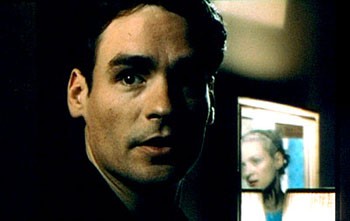
This shot-on-tape picture is set in a room at the Motor Palace Motel in Lansing, Michigan. Johnny (the ever juvenile Robert Sean Leonard), a third-rate independent filmmaker in town for the Lansing Film Festival, drives by to visit Vince (Ethan Hawke), his friend from high school, who has become a half-wrecked drug dealer.

The two men have a bone to pick: Ten years ago, Johnny injured a woman, Amy (Uma Thurman), they both knew. Amy is about to make a surprise visit to the motel, much to Johnny’s discomfort. She’s now an assistant district attorney, so if she wants legal revenge against Johnny, she’s in the position to get it.

Linklater needed a young John Malkovich, or even a Matt Dillon, to play Vince. He got the aristocratic Hawke, as spuriously working-class as the temporary tattoos on his shoulder blades. Also too well-bred is Thurman, the injured woman.

Ah, but was she injured? Is Johnny exaggerating the night in question? Has the drug-addled Vince dreamed up the tale? I hate truth games. Couldn’t we just play Scrabble?

Thurman’s Amy seems like what she is: a celebrity descending into the world of underground film. Grilled by these two men, she gets a dreamy, half-amused-half-contemptuous look, as if she were on the David Letterman show and Dave had just asked her a rude question. Linklater should have hired someone a little less glamorous. (Thurman is Mrs. Hawke; they were a package deal.)

Wouldn’t a DA–assistant or otherwise–have a professional dislike for the kind of lies flying around this dingy room? Even the most inspirationally challenged film director learns some elementary people manipulation skills. Where are Johnny’s? Also, I think your average drug dealer has enough common sense not to invite an assistant DA into a room full of marijuana smoke, no matter what presumption he might have of friendship from 10 years ago.

Linklater keeps the film from being visually claustrophobic; it’s just the acting and the material that make you yearn for fresh air. The film has a clammy, painful subject, just right for some dangerous drama. Ariel Dorfman’s frightening play Death and the Maiden offers almost identical material, for example.

Tape, however, is stifled by its iron-clad concept. For most of the script (written by Stephen Belber and based on his one-act play), Johnny is a guilty man. He’s certain of what happened that fateful night. Wouldn’t it have made more drama if he’d been too drunk and didn’t know for sure?

Tape is essentially a malformed child of Sam Shepard’s True West: the adventures of two brothers (here, best friends) gnawing at each other about their pasts. Tape may be seriously intentioned work, but it’s essentially frivolous. It’s akin to the breed of aggravating farces wherein 15 seconds of conversation would untangle the mess.

‘Tape’ opens Friday, Dec. 7, at Rialto Cinemas Lakeside, 551 Summerfield Road, Santa Rosa. For details, see or call 707/525-4840.

From the December 6-12, 2001 issue of the Northern California Bohemian.

© Metro Publishing Inc.

SMOVA

0

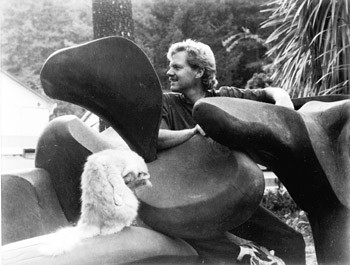
Call me Bruce: Timber Cove sculptor Bruce Johnson is immortalized in a 1995 photo by Genevieve Barnhart.

Creative Confrontation

Artists turn on each other in new SMOVA exhibit

By Paula Harris

Every portrait that is painted with feeling is a portrait of the artist, not of the sitter,” wrote Oscar Wilde in The Picture of Dorian Gray. Assuming Wilde was right, what happens when the sitter also happens to be an artist?

The Sonoma Museum of Visual Art explores this unusual dynamic starting Dec. 12 with “Artists Portraying Artists,” an exhibit of portraits of Sonoma County artists by other Sonoma County artists that highlights the many deep, personal connections in the local art scene.

“The world of art is small in general, and Sonoma County is small in particular,” explains Robert Berg, president of the SMOVA board of directors, who conceived the project and is co-curating the exhibit with SMOVA director Gay Shelton. “The artists showcased don’t all know each other, but there are many associations.”

Many of these relationships were formed in figure drawing classes at the Donkey Barn, which Shelton describes as “a funky old barn in rural Sebastopol.” Other connections were made in the art programs at Santa Rosa Junior College and Santa Rosa High School, or at the Graton Atelier, a former apple processing plant where many artists rent studios.

The 20-piece exhibit showcases ten artists and more than ten subjects. It features a mixture of photographs and paintings, including one print and one watercolor. Wall text describing each artist and subject explains how these friends, peers, mentors, and relatives became inspired by each other.

“When an artist sits for a portrait, they don’t have that vanity thing that you or I may have,” observes Shelton. “It’s not, ‘Am I beautiful?’ or ‘How do others see me?’ They totally get that it’s going to be an expression coming from the other artist.”

Berg notes that there are many different driving forces behind the pieces. “Each work is a sort of collaboration and a confrontation,” he says. “There are interesting dramatic dynamics associated with all of this work.”

Here is a selection of stories behind some of the pieces.

Tuning Up: Painter Claude Smith prepares to make art by playing the stand-up bass in this photo by Maureen Lomasney.

A Saucy Tale

“The feedback from artists is [that] it’s very much like they’re performing,” says photographer Maureen Lomasney describing what it’s like to shoot fellow artists. “The process becomes a performance-art piece.”

Lomasney, 51, a Sebastopol resident who works in the Graton Atelier, an artist studio complex that she calls “an incubator for creativity,” has four pieces in the exhibit.

Rising to Olympus is a portrait of painter Wally Hedrick with his companion Catherine Conlin that Lomasney snapped at the end of a longer shoot and describes as “a God-like loving image.” Portrait of Claude Smith depicts visual artist and musician Smith playing stand-up bass, which he likes to do before painting as part of his artistic process. Lomasney photographed Portrait of Christiane Vincent when artist Vincent needed a standard portrait for one of her shows.

But performance art is most clearly evident in Lomasney’s fourth piece, Chocolate Meg. The work is a collection of photographic images of artist and MeSH gallery owner Meg Hitchcock at work. Lomasney scanned the images and used a desktop publishing program to create simulated film strips bordered with text.

The text tells the story of Lomasney’s experience of going down to Meg’s studio one hot day in 1999 and shooting her. Lomasney recalls it as an almost magical event.

Hitchcock stripped nude, stretched a canvas on the floor, and began to smear and drip Hershey’s chocolate syrup onto both the canvas and her body to create an abstract painting.

“The light was wonderful in the greenhouse that Meg was using as a studio,” recalls Lomasney. “She started the syrup on her face, applying it like suntan lotion.”

Lomasney shot two rolls of film with a hand-held camera in available light using a raid technique she likens to fashion photography.

“I was looking at her–the lines, shadows, the light playing on surfaces and what it does,” continues Lomasney. “The effect was light, active, and delightful. It was a fun shoot and very lively and quick, with two artists moving gracefully through tight quarters.”

However, Lomasney says, when she developed the prints they lost something in the translation. “They weren’t telling the story as I saw it,” she explains. So she printed the story within the piece itself.

This saucy tale has an unexpected end.

“When Meg was hot and sticky and out of syrup, she propped the canvas outside against a car to dry and went in to take a shower,” Lomasney remembers. “I patted Meg’s collie dog Annie on the head and left.”

But Lomasney’s photographs are all that remain from that magical day. After Lomasney left and while Hitchcock was in the shower, Annie licked the canvas clean.

Historic Images

When Sonoma County sculptor and jeweler Genevieve Barnhart goes to visit friends, she has a habit of bringing her camera. Equipped with her 35 mm Pentax or Mamiya 645 and her disarmingly easygoing smile, Barnhart has photographed fellow artists in Sonoma County for some 30 years.

Using an informal technique, Barnhart chats to the artist while clicking away, giving the impression that she is merely taking souvenir pictures. “I don’t try to get creative and artsy,” she says.

Barnhart personally knows or knew many of the most influential artists ever to work and live in the North Bay, having met most of them when she and her late husband, artist Raymond Barnhart, moved to Sonoma County from Kentucky in 1968. Back then, she says, local artists and art teachers were even more close-knit than they are now.

Barnhart’s photography, which captures both the personalities of the artists and the essence of their work, makes her studio a “storehouse of historic importance,” according to SMOVA exhibit organizers.

The exhibit features eight of Barnhart’s photographs, including a 1997 shot of mezzotint engraver and Santa Rosa Junior College instructor Holly Browning, and a shot of sculptor Bruce Johnson taken at Plantation Farms, a Sonoma County children’s camp that is the site of several of Johnson’s large outdoor redwood and copper sculptures.

The active Barnhart, just shy of 79 years old, is still a working sculptor and jeweler, living amid a Sebastopol apple orchard where she has her studio. Earlier this year she took on the demanding role of guest curator for “Passing the Gift,” an exhibition that featured works by nine deceased Sonoma County artists who all served as teachers and mentors.

Barnhart says using fellow artist as subjects is ultimately an easy and enjoyable exercise for her. “Because they’re my friends and I’m around them shooting, they’re relaxed,” she says. “I just try to capture them as I see them.”

A Moment to Feel: Painter Diane Knopf’s work depicts her friend Elfi Chester’s battle with breast cancer.

Art of Survival

Diane Knopf and Elfi Chester became friends in Los Angeles 25 years ago, and both moved with their respective families to Sonoma County in the 1990s.

Knopf, an Occidental artist, used her longtime friend as a subject. However, these are not just straight pictures of an artist posing or being caught at work. Knopf’s work captured her friend in a medical crisis. The two pieces in the SMOVA exhibit, A Moment to Feel and Surrender, depict Chester’s ongoing battle with breast cancer.

A Moment to Feel is a portrait of Chester painted from a photo taken by Robin Johnson after Elfi’s diagnosis of cancer and before her surgery. “Elfi wanted photos taken celebrating who she was before the surgery changed her forever,” explains Knopf.

Knopf interprets this photograph as having captured Chester’s introspection. “The eyes are looking inward rather than looking out. She is taking inventory,” Knopf says.

In Surrender, Knopf interprets that Chester has exhausted herself on a current of emotions. “The moment has come when she learns what children learn when they are playing in the ocean and get tumbled by a wave’” says Knopf. “The idea of ‘Don’t fight it, just ride it through.’ ”

Chester, who also has a portrait featured in the SMOVA exhibit, has had other bouts with the disease and is still fighting it. Speaking for her friend, Knopf says that when Chester is sick, it’s hard for her to look at the portraits, but on better days she feels empowered by them.

Knopf, 50, is grappling with her own health issues. She was born with Crohn’s disease, a digestive tract ailment. Knopf says that all through her life she had dealt with this chronic illness, and in one instant her friend taught her to embrace the lesson rather than fight the disease.

“I found myself much more accepting,” Knopf says. “There was no artist angst in this work, because there was a bigger reason for me doing it.

“There’s a purity in the work, and it has matured me as an artist,” Knopf continues, her voice catching. “Everything I say about Elfi I’m also saying about myself. It’s been a huge lesson for me.”

Father’s Day: Having his son draw his portrait was an eye-opening experience for Sonoma County artist Alan Azhderian.

Father and Son

Imagine yourself as a teenager drawing your own father’s face while he draws yours–and then imagine starkly comparing the results.

In some homes, the fallout from an experiment like that could be positively nuclear.

Not so in the case of Alan and Nathan Azhderian, both artists, who decided to experiment by drawing each other in one sitting.

The exercise happened two years ago when Nathan was 16 and enrolled in the Art Quest program at Santa Rosa High School. His dad, an accomplished artist and an instructor at Santa Rosa Junior College, was 53 at the time.

The two sat on either side of a table and rendered portraits, passing the same set of pastels back and forth. “We were taking turns–40 minutes, 40 minutes, and 10 minutes each to look again,” recalls Alan Azhderian.

“[Nathan] used fewer colors more intensely, and I used more colors, but the overall effect is less intense in terms of expression,” he adds. “Mine was reporting, his was more about expressing a feeling.”

Nathan’s portrait of his father explores extremities and makes use of rough strokes and bold blacks and whites. Alan’s portrait of Nathan concentrates on external features with softer graduations of color and tones.

Being a subject can be quite an eye opener for an artist. “Someone’s perception of who someone is doesn’t always jibe with one’s own perception,” Alan muses, reflecting on his son’s interpretation.

“The piece is pictorially interesting in terms of its color and metaphor, and interesting to see what he did in regard to me,” Alan continues. “I didn’t have any expectation, but I was pleased by the quality. But I don’t know that I necessarily connected it with myself.”

The elder Azhderian says the process was more important than the project: taking the time, sitting down, looking at each other intensely (something that’s normally considered taboo in this culture), and responding.

“The active process is really the important thing,” he says. “It’s a vehicle of communication rather than just a picture.”

He adds that other artists may appreciate different kinds of artistic departure more than a regular sitter would. “It’s like chefs cooking for other chefs,” he says. “The appreciation is about connoisseurship.”

Alan Azhderian and Nathan Azhderian will repeat the exercise when Nathan, who is currently studying art at the Cooper Union School of Art in New York City, comes home for the holidays. The pair will also co-teach a head and portrait demonstration class on Jan. 5 during the SMOVA exhibition.

‘Artists Portraying Artists’ runs from Dec. 12-Jan. 12. A closing reception takes place on Saturday, Jan. 12, from 4-7 p.m. at SMOVA, Luther Burbank Center, 50 Mark West Springs Road, Santa Rosa. For details, call 707/527-0297.

From the December 6-12, 2001 issue of the Northern California Bohemian.

© Metro Publishing Inc.

Brad Carson

Chinese Box

SSU protester arrested in Tiananmen Square

By Patrick Sullivan

Brad Carson has the typical problems of an average college student. His car is on the fritz, he’s juggling theater courses and a job in Sebastopol, and he’s got a tired look in his eyes from staying up late to write a paper.

But unlike his classmates at Sonoma State University, Carson also now has an arrest record in China.

The 20-year-old college junior was one of 35 foreigners (including six Americans) arrested on Nov. 20 for staging a human rights demonstration in Beijing’s Tiananmen Square, the infamous site of a pro-democracy rally in 1989 that ended in the violent death of an unknown number of student protesters.

Carson and his companions were protesting the Chinese government’s violent crackdown on Falun Gong, a Buddhist-like spiritual movement. The protesters–all Falun Gong practitioners–posed as tourists for the demonstration, faking out the Chinese cops who always patrol Tiananmen Square by staging a group photo and then suddenly sitting down and unfurling a banner that read “Truthfulness, Compassion, and Tolerance”–the three main principles of Falun Gong.

Carson says he dropped into a double lotus position, but he didn’t have to wait long for police to respond.

“We sat there for a couple of seconds, and then police vans started surrounding us,” he explains. “[The police] started to pull us into the vans, and that’s when they started beating people. . . . Some girls from Australia were holding up a banner, and they kicked one girl to the ground and started dragging her by her hair.”

Carson was not injured.

A nearby cameraman running a live video feed sent footage of the protest to Europe, and the demonstration was soon major news around the world. “Ten minutes after it happened, it was already on television,” Carson says.

China outlawed Falun Gong as an “evil cult” back in 1999. Since then, tens of thousands of adherents have been sent to prisons and mental hospitals. About 300 have died in custody, according to Falun Gong spokespersons.

Carson and his companions fared much better by comparison. Police took their passports and questioned them. The protesters were held in police custody for more than 30 hours, given a warning for disrupting public order, and then deported. “They brought us to the airport and forced us onto a flight to Vancouver,” Carson explains.

Demonstrations by foreigners are rare in China, which has one of the worst human rights reputations in the world. But Carson, who began practicing Falun Gong a year and a half ago, says his faith kept him from feeling too much fear.

“My purpose wasn’t to go there and get beat, to be a martyr,” Carson says. “My purpose was to tell the police what’s going on. Most of these guys don’t know people are being sent to psychiatric hospitals or crazy work camps. . . . They don’t know that 80-year-old women get beaten to death.

“We were aware of the possible danger,” he continues. “But when I see injustice, when I know good people are dying for someone else’s political gain, I feel like I have to do everything I can to try to stop that. And this was one thing I could do.”

Religious Reconciliation

Given the ongoing violence in the Middle East and the climate of fear here in the United States, can Jews and Muslims have a constructive dialogue? We’ll find out on Monday, Dec. 3, when the Jewish Community Agency of Sonoma County holds “Children of Abraham,” a discussion between Rabbi Alan Lew, the spiritual leader of Congregation Beth Shalom in San Francisco, and Iftekhar Hai, director of the United Muslims of America. The event begins at 7:30 p.m. at Sonoma State University’s Cooperage Building, 1801 E. Cotati Ave., Rohnert Park. For details, call 707/526-5538.

From the November 29-December 5, 2001 issue of the Northern California Bohemian.

© Metro Publishing Inc.
‘Shallow Hal’

0

Head Games

Hollywood hypnotist analyzes ‘Shallow Hal’

Writer David Templeton takes interesting people to interesting movies in his ongoing quest for the ultimate post-film conversation.

Controversy buzzes around Shallow Hal, a new movie by the oft-controversial Farrelly Brothers in which a not nice guy (Jack Black) is hypnotized into thinking that a 300-pound social worker looks like Gwyneth Paltrow. When the hypnosis wears off, the chastened fellow is forced to learn a lesson about inner beauty vs. outward appearance.

The movie is a hit, though a divisive one. Across America, people of large size have been strongly objecting to the movie’s sometimes demeaning slapstick humor–as when the fat girl jumps into a pool and displaces all the water, propelling some swim-suited kid into a tree.

But another oft-maligned segment of our society is also having a strong reaction to the film: professional hypnotists.

“I’ve been getting a lot of calls,” says hypnotist Kevin Stone. “Just today some guy calls up and says, ‘Yeah, I’m looking for a hypnotist to come to our office party and make all the guys think all the girls are good looking, just like in that movie Shallow Hal.’

“I think hypnosis may be getting a big boost from this movie–which is a plus, because most movies make hypnotists look really bad.”

An affable, somewhat mysterious-looking gentleman, Stone is known far and wide as the Hollywood Hypnotist, a somewhat ironic moniker since it is Hollywood, in part, that has given hypnotists the decidedly malevolent image that Stone is eager to reverse.

One of America’s most successful practitioners of hypnosis, Stone holds down a thriving therapy practice in Hollywood. Something of a historian, Stone has amassed a vast collection of movies dealing with hypnosis and hypnotists, from The Cabinet of Dr. Caligari up to more recent efforts such as Stir of Echoes (Kevin Bacon is hypnotized into seeing ghosts) and The Curse of the Jade Scorpion (David Ogden Stiers turns Woody Allen into a cat burglar). Most of these cast hypnosis in a negative light.

Along comes Shallow Hal, a high profile film that Stone first approached with modest amounts of professional fear and trembling. But he was surprised by what he saw.

“It’s an interesting premise,” Stone says. “And for once–unlike in Curse of the Jade Scorpion–they utilized hypnosis in what I feel is a very positive way.”

So he likes it?

“I liked it, sure,” Stone admits. “It’s ridiculous, but it shows that hypnosis can be used to do more than, you know, make people cluck like chickens and rob banks. Which is how movies usually show hypnosis.

“If you really want to see hypnosis performed in a true, positive way,” he continues, “take a look at K-Pax. They’re doing a regression there that is absolutely accurate.”

In K-Pax, Kevin Spacey, as a mental patient claiming to be from another planet, undergoes a spooky, hypnotic regression performed by his doctor, played by Jeff Bridges. Says Stone, “The way Jeff Bridges does the hypnosis, using his voice, and the verbiage he uses, is right on! I thought it was very clean.”

According to Stone, these recent films point to a slight shift in Hollywood’s representation of hypnosis, which may in turn alter the public’s perception about what hypnosis is really capable of.

“The stuff in Shallow Hal is possible, sure, to a degree,” allows Stone. “The stuff in Jade Scorpion, not possible. K-Pax, definitely. That’s true hypnosis.”

So while Stone can expect more requests to make people think they’re seeing Gwyneth Paltrow–“I’m already getting those kinds of requests, absolutely,” he says–his hope is that fewer people will be nervous that he’ll covertly turn them into a criminal–or worse, a duck.

“Honestly,” Stone laughs, “if I had those kinds of powers, do you think I’d still be working for living?”

From the November 29-December 5, 2001 issue of the Northern California Bohemian.

© Metro Publishing Inc.
Ken Kesey

Farewell to the Chief

Ken Kesey’s wild ride comes to an end

By John Allen Cassady

The long, strange trip came to an end for Ken Elton Kesey at 3:45 a.m., Saturday, Nov. 10, 2001, after 66 years and a few hundred lifetimes on this planet. But the Bay Area continues to mourn his death and celebrate his life (for details on one upcoming tribute, see below).

Kesey (author of One Flew Over the Cuckoo’s Nest and Sometimes a Great Notion) was a great friend to my father, Neal Cassady, and almost a second father to me after Neal died in 1968 when I was 16 years old. Ken was one of the kindest and wisest men I’ve ever known, and he was one of my biggest heroes and mentors starting soon after he met Neal in the early ’60s, a feeling that continues in me to this day.

Neal always wanted to be a provider for his family, and little did he know that much of that provision would be accomplished posthumously through doors that were opened to me because of his famous friends like Kesey and the Grateful Dead. Much to the worry of my mother, Kesey and Neal would come collect my sister and me at Saratoga High School, giving the authorities some song and dance about dentist appointments or whatever, then whisk us away to see the Dead play at a Mountain View high school’s prom dance, just after they changed their name from the Warlocks.

After Neal’s death, Kesey would go out of his way to look us up when he was in the Bay Area. He showed up unannounced at my wedding in November of 1975 on his way back from Egypt, while writing a piece for Rolling Stone. That was one heck of a party. I still have pictures of him holding my then 3-month-old son and beaming like a proud godfather.

Another warm memory occurred backstage at a Dead show in Eugene, Oregon, when Kesey’s fellow prankster Zonker ceremoniously presented me with one of two railroad spikes that the Dead’s roadie Ramrod, while on a sacred pilgrimage, had extracted from the tracks where Neal died in Mexico. And again when Kesey and Ken Babbs bequeathed Neal’s black-and-white striped shirt to me that he had worn on the bus trip in 1964, this time during a show we did at The Fillmore in 1997 before bringing the bus to Cleveland, where it was inducted into the Rock and Roll Hall of Fame.

Ken called and asked if I would drive “Further” into Ohio, “because Neal can’t make it this trip.” Although veteran prankster driver and mechanic George Walker wound up at the wheel, Kesey’s heart was in the right place. That road trip was surpassed only by the four-week tour of the U.K. the next year, sponsored by London’s Channel Four studios.

Traveling with Ken in close quarters for that long really made for a lasting bond between us, and he was at his peak as a performer. I last saw him as we said our goodbyes at SFO after that incredible journey, and I was sad to have not been able to do so again before his death.

Ken Kesey was a great teacher and a beautiful soul. He will be missed by all who were touched by his magic.

Bay Area writers (including Marin’s Gerald Nicosia) host a celebration in memory of Ken Kesey on Wednesday, Dec. 5, from 6-8 p.m. at the San Francisco Public Library’s Koret Auditorium, 100 Larkin St., in downtown San Francisco. Admission is free. 415/557-4277.

From the November 29-December 5, 2001 issue of the Northern California Bohemian.

© Metro Publishing Inc.
Mississippi John Hurt

0

Back to Avalon

Concert salutes celebrated blues man

By Greg Cahill

“It was 1968. I was 13 years old. I’d been going through the shelves of the record collection at the local library, looking for some music that would change my life,” producer Peter Case recalls on the liner notes to Avalon Blues: A Tribute to the Music of Mississippi John Hurt (Vanguard), reminiscing about his first encounter with the gentle blues of the legendary Delta musician. “I guess I found it.”

Thirty-three years later, Case–now a respected singer and songwriter in his own right–has returned the favor, bringing together an all-star lineup to celebrate the music of a man that influenced two generations of acoustic folk and blues guitar players.

The roster on this homage to the late Mississippi blues guitarist and singer–known for his precise fingerpicking, gentle ballads, and restrained vocals–reads like a who’s who of American roots music: Taj Mahal, Lucinda Williams, Dave Alvin (in a stellar duet on “Monday Morning Blues” with Case), Steve Earle (who puts the grit back into “Candy Man,” the ode to backdoor lovers), Ben Harper, Alvin Youngblood Hart, Chris Smither, Bruce Cockburn, Gillian Welch, John Hiatt (with a heartfelt solo acoustic version of “Satisfied”), Geoff Muldaur, Bill Morrissey, Victoria Williams, and even the chameleon Beck work their way through 15 tracks that are a fitting tribute to one of the most accomplished performers of the ’60s folk-blues revival.

On Dec. 6, Case, Alvin, and Morrissey bring the West Coast leg of their Avalon Blues Tour to the tiny Sweetwater in Mill Valley for a highly anticipated performance of Hurt’s songs.

The fuss is well deserved. Among Delta bluesmen–known for their wailing vocals and tortured guitars–Hurt was an anomaly, possessing distinctive vocal and fingerpicking styles.

In his book The Best of the Blues: The 101 Essential Albums (Penguin, 1997), music writer Robert Santelli notes, “Of all the Mississippi blues figures who recorded in the late 1920s, it was John Hurt. . .whose music was the most comforting. Charley Patton and Son House sent shivers through a listener with their vinegary voices and combustible guitar styles. Skip James sang with an eerie, haunting falsetto. But Mississippi John Hurt had a voice and a fingerpicking style that soothed the soul rather than terrified it.”

In 1928, Hurt cut 13 sides for the Okeh label–powerful ballads of murder, betrayal, and sex–and then fell strangely silent. For decades, he languished in relative obscurity in Mississippi until 1962, when white folkie Tom Hoskins “rediscovered” Hurt, a sharecropper who seldom ventured from his Carroll County home.

In short measure, Hurt became a highly sought-after figure on the burgeoning folk-blues revival scene, playing festivals and college coffee houses and recording three new albums for the Vanguard label.

During Hurt’s short-lived re-emergence, Bob Dylan, John Sebastian, and a host of other music dignitaries became his disciples. Hurt remained busy until 1966 when he was felled by a heart attack.

“John was not a grandstander as a performer,” remembered John Sebastian, who often played harmonica with Hurt at cramped New York coffee houses. “He wouldn’t seek the audience out, but his warmth just soaked you in. After the first five minutes, you were his. This was different from a performer like Lightnin’ Hopkins, who’d grab you by the collar with his playing and singing.

“With John, it would creep up on you, and you’d go home and think, ‘Did I just hear the genius that I thought I did?'”

Peter Case, Dave Alvin, and Bill Morrissey perform the songs of Mississippi John Hurt on Thursday, Dec. 6, at 9:30 p.m., at Sweetwater, 151 Throckmorton Ave., Mill Valley. Tickets are $15. 415/383-2820.

From the November 29-December 5, 2001 issue of the Northern California Bohemian.

© Metro Publishing Inc.

Cellar Cat Cafe

0

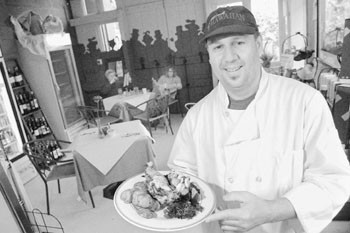
Food to make you purr Chef Arthur Perkins offers a chicken dish at the Cellar Cat Cafe.

The Cat’s Meow

Glen Ellen’s Cellar Cat Cafe is a cozy find

By Paula Harris

Very quietly, without roar or fanfare, Cellar Cat Cafe has slunk onto the dining scene like an inky feline at nightfall and made its cozy home in that picturesque little gourmet gulch known as Glen Ellen.

And it’s a cool addition to Jack London Village, a complex of ramshackle redwood buildings among the oak trees next to Sonoma Creek that houses small shops and artisan’s studios.

The restaurant is fairly modest right now, but owners Holly Evans-White, Jim Evans-White, and Greg Burtt have big plans for Cellar Cat, a small cafe cum wine-beer-and-cider bar with a rotating menu that offers breakfast, lunch, and dinner using mostly organic fare.

In the summertime, the Cellar Cat crew envisions late night alfresco dining (until 11 p.m. during warm weather), which will surely be received with open arms by night owls trapped in a county where restaurateurs tend to lock up and go home by 9 p.m.

Next spring, Cellar Cat owners plan to open a nightclub in the nearby current Carmenet winery tasting room, where they’ll offer live music, dance, and other entertainment.

Right now the cafe is located in a small, long, and fairly narrow rural building with a slanted roof in the midst of a variety of artist workshops. The owners have made good use of their resources, employing a graphic artist to design one wall. The result is a gray silhouette design of bons vivants decked out in top hats and bonnets brandishing wine glasses and bottles.

The decor is white and brown, with splashes of wine-inspired reds and burgundies. There’s a wine bar area at one end with bar stools, and a prominent refrigerated display case exhibiting today’s goodies in the front. Most of the food is already prepared, ready to take out for home or picnic, or else is quickly zapped in the microwave for on-site eating.

Wicker baskets, chairs with cane seats and wrought iron backs, and soft glowing candles in old-fashioned lamps give an old-time bistro feel. The sound system emits nostalgic crooner melodies by the likes of Judy Garland, mixed with a bit of Argentine tango. The one jarring part of the decor is a lighted, glass-fronted refrigerator stocked with bottles and some food, which looks garish.

We snack on slices of warm artisan baguettes served with an extremely fruity olive oil–a great opener. The vegan leek and potato soup ($3 for a cup, $5 for a bowl) is a consommé containing chunks of sunken potatoes. It’s so light that it’s on the verge of being watery. I prefer the simple, fresh fall greens salad ($3.50), which has a slight crunch and is dressed with a subtle herb vinaigrette.

An unusual concoction that looks blah but tastes good is the cucumber, almond, and grape salad ($8.50 a pound). It contains thick, peeled cucumber slices, red onion slices, almond pieces, and red grape halves bound together with a dab of mayonnaise. The effect is cool and creamy, with a pleasing bite.

Roast Rosie range hen ($12) is a great piece of chicken–moist and snowy white inside and perfumed with a hint of lemon, with brown caramelized skin outside. It’s served with good homemade potatoes, fluffy but with a few honest lumps, and green beans (slightly withered from the microwave) studded with pinenuts and pancetta.

Vegetarians can choose from various side dishes, such as a delicate, homemade macaroni and cheese, roasted red potatoes, or roasted fall vegetables, that cost between $2 and $4 per item.

The pineapple upside-down cake ($3.50) is spongy and airy with a vanilla angel food cake flavor. But it’s the outrageous homemade brownies ($2 each)–owner Holly Evans-White describes them as “Death!”–that leave us swooning. These are deeply chocolate and intense and warmed just enough so that the sinfully rich inside is starting to melt a little. Absolute decadence!

The proprietors make you feel right at home, swinging by each table to chat and, if you’re lucky, to offer a taste of wine. Holly Evans-White, who worked at Ravenswood Winery for a decade, favors small, local family wineries on the wine list and keeps prices as close to cost as possible. She plans to offer future wine seminars in the restaurant–which gives you yet another reason to check out Cellar Cat Cafe.

Cellar Cat Cafe Address: 14301 Arnold Drive; Glen Ellen; 707.933.1465 Hours: Winter hours: Sunday-Thursday 9 a.m. to 9 p.m.; Friday-Saturday 9 a.m. to 10 p.m. (in the summer they plan to stay open ’til 11 p.m.) Food: Eclectic mix of local, mostly organic fare Service: Laid-back and friendly Ambiance: Cozy wine bar/deli atmosphere Price: Inexpensive to moderate Wine list: Nicely chosen selection Overall: Three stars (out of four stars)

From the November 29-December 5, 2001 issue of the Northern California Bohemian.

© Metro Publishing Inc.
‘Spy Game’

Running on Empty

Listless ‘Spy Game’ is all over the map

By

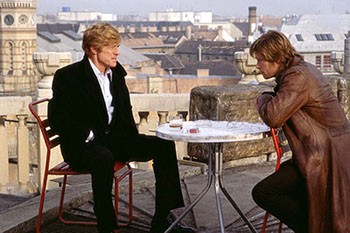
Brad Pitt, as agent Tom Bishop, awaits death in a Chinese prison. He’ll die at exactly 8 a.m. at the hands of the punctual savages, unless his former CIA control, Nathan Muir (Robert Redford) can engineer a heroic plan to bust him out. And Muir himself only has 24 hours until retirement.

So Pitt’s in the jug, being knocked around by evil Maoists; Redford’s stuck at a table, being faced down in all-day debriefings. A little smile plays on Muir’s face as he endures impertinent questions thrown at him by a team of character actors, hand-picked for homeliness to make the weather-beaten-beyond-recognition Redford look boyish again.

In Spy Game, you have a recipe for a stalemated movie, despite any delusions of action the commercials might give. All the spying is in the flashbacks.

There are three episodes in the script by Michael Frost Becker (Cutthroat Island) and David Arata. We revisit the leads first as fellow warriors in Vietnam, right before its fall; later, we join them in Berlin during the Cold War. Last, they team up in Beirut during the worst of the fighting. In these three locales we witness the recruiting, the training, and finally, the betrayal of the young agent by the older professional.

The Beirut segment is of most interest, thanks to the location, though the Berlin sequence has Charlotte Rampling, who turns up unbilled in a too-brief bit as a lady spy. In Beirut, Pitt recruits an “asset”–a female humanitarian aid worker at a refugee camp. The soon-to-be-used woman is Catherine McCormack as Elizabeth, a Londoner with an unlikely backstory. You can call a certain kind of beauty “remote”; to judge by McCormack’s acting, she’s practically in Tierra del Fuego.

Redford’s Muir urges Pitt’s Bishop to seduce her more quickly: “twice the sex and half the foreplay,” he orders. No doubt this is a personal motto for director Tony Scott, one of the 1980s’ most elephantine hard-chargers (Top Gun, Days of Thunder, etc.). All the tricks in the bag are used here: filters, swooping camera work, helicopter worship, pixilated fast-forward and zooming–more gingerbread than a bakery. Occasionally, the film stops dead in its tracks in freeze-frame to remind us that we’re still on the clock (“2:10 p.m.”). It’s a service to anyone doubting that the movie will end eventually.

Spy Game is meant to be of the school of LeCarre. The soundtrack is loaded up with honorable schoolboys keening baroque music in a choir. Photographer Daniel Mindel does his best to coat it all in “realistic” oily, gray light.

Still, LeCarre’s work is scrupulous about history and politics. By contrast, check one sample line in Spy Game: “Hanoi had just fallen,” says a reminiscing Muir, mistaking it for Saigon in 1975. We visit a Lebanese-Palestinian refugee camp, chock-full of bloody amputees, but there’s no sense of who they are or what might have chased them there (vampires? masked wrestlers?).

Mostly, we see that the business of being CIA means mixing it up with cowardly, unreliable foreigners–some of whom selfishly put their open-air fish market right where Brad was trying to drive his car. You could get a clearer picture of the world of espionage from Harriet the Spy.

From the November 29-December 5, 2001 issue of the Northern California Bohemian.

© Metro Publishing Inc.

‘Standing in the Shadows of Motown’

0

By

JavaScript must be enabled to display this email address.

The music world is vast and strange. For every stadium-filling, gold-record-making musical superstar, there are dozens of talented also-rans whose names mean nothing to the average fan. These magnificent musicians spend their lives backing up the big names, doing world-class session work, and always playing in the background.

Among these unsung heroes is a band of musicians who were a major force behind the legendary Motown sound, a group of Detroit-based players who called themselves the Funk Brothers.

Now, they may have finally won their place in the spotlight.

Standing in the Shadows of Motown, based on the book of the same name by Allan Slutsky, is an eye-opening new documentary financed by Paul Elliott and David Scott, a couple of Sonoma County telecom engineers who helped buy and save Petaluma’s Phoenix Theatre two years ago. “The general public doesn’t have a clue who these guys are,” Elliott says. “But they are a significant piece of the Motown story.”

Based on early raves from those who’ve seen it, this film just might become a funky brother to the Buena Vista Social Club. Directed by Paul Justman, Standing in the Shadows of Motown includes moving and sometimes hilarious interviews with the surviving Funks, as well as some smokin’ footage from the Funk Brothers reunion concerts that took place in Detroit last winter, with the Funk Brothers backing up such modern artists as Joan Osborne, Chaka Khan, Ben Harper, Montell Jordan, and Bootsy Collins.

All the film needs now is a distributor. Then, finally, the secret of Motown will be revealed. Says Elliott, “The response we’ve had leads me to believe that the general public will find the Funk Brothers as important and as fascinating as we do.”

For more information on Standing in the Shadows of Motown, check the website at www.valismusic.com.

From the November 29-December 5, 2001 issue of the Northern California Bohemian.

© Metro Publishing Inc.
‘Los Romeros: The Royal Family of the Guitar’

0

Musical Maker: Petaluma filmmaker Bill Chayes pays tribute to the legendary Romero family in a new documentary.

The String Kings

Petaluma filmmaker tells story of guitar’s royal family

Four men. Four guitars. A multicultural musical phenomenon. Two passionate filmmakers. One cool movie. When Petaluma filmmaker Bill Chayes first heard of Los Romeros–the world-class foursome of classical guitarists known for decades as “the royal family of the guitar”–he knew he’d uncovered the subject of his next film.

Chayes and professional partner John Harris had already made one successful movie, the PBS documentary Divine Food: A Hundred Years in the Kosher Delicatessen Trade, and were eager to make another when Harris–a retired Berkeley cookbook publisher, author, and guitar aficionado–mentioned the Romeros.

“When John started telling me these amazing stories,” Chayes says, “the whole Romero family history, their artistic accomplishments, their place in the music world, I said, ‘John, that’s got to be a great film.'”

What got Chayes’ cinematic pulse racing was the story of Celedonio Romero, a poor Spanish guitar teacher who fled the oppression of fascist dictator Francisco Franco and ultimately won fame and fortune in America as the founder of the world’s first classical guitar quartet.

Romero and his three sons, Celin, Pepe, and Angel–all guitar virtuosos of the highest order–became a phenomenon in the early ’60s and ’70s, bringing classical music to a popular audience. The story even has a fairy-tale ending, with Celedonio–and later his three sons–being awarded an honorary knighthood by the king of Spain.

“An amazing group of people,” says Chayes, who works as a curator at the Judah L. Magnes Museum in Berkeley. “Very charismatic. The reason they became so popular in the ’60s was that they brought a flair to the popular stage that hadn’t been there previously. They broke the rarefied air of the classical oeuvre. They broke down the barrier.”

Though Celedonio passed away in 1996, the quartet lives on through Celin and Pepe and includes grandsons Celino and Lito. Angel, who departed the quartet to pursue his own career, is now a renowned symphony conductor. Taken together, the Romero family has produced more than a hundred records and CDs, and continue to perform on concert stages across the globe.

“The Romeros were a phenomenon,” says Chayes. “And they still are. They perform hundreds of concerts a year and are treated like rocks stars in Spain, in Asia, all around the world.”

Harris and Chayes soon learned that KPBS, a public television channel in San Diego–where the Romeros have lived since emigrating from Spain–had once been keen to produce a Romeros documentary, but the project had never made it off the wish list.

With Chayes and Harris eager to make the film, interest at KPBS rekindled, and the station struck a coproduction deal with the two filmmakers.

The most important element of the production, of course, was the Romeros themselves. Fortunately, Harris had already formed an alliance with Angel Romero, from whom the filmmaker had purchased some guitars–“Angel has one of the best guitar collections in the world,” Harris points out–and the whole family soon signed on to the project, inviting Chayes and Harris into their lives for over a year.

“If they’d turned out to be dull people,” Chayes remarks, “the film wouldn’t have worked. Happily, the Romeros are not dull people.”

“They all exude a kind of authentic Andalusian charm,” adds Harris. “This is a very physically demonstrative family. There are more men kissing each other in our movie than in any film ever made.

“As a guitar aficionado myself,” Harris continues, “it was heaven to have such prolonged contact with this family.” They describe the elaborate guitar swapping parties, guitaradas, that are a common occurrence in the Romero household, a prelude to any family business.

“For the Romeros,” says Harris, “doing a deal is a complex ritual that involves days of partying, a definite social process within the Romero family. They play each other’s guitars and pass them around, guitars costing $100,000 or more apiece!”

“That’s the way it is around their house,” agrees Chayes. “At any moment, someone might pick up a guitar and start playing this fantastic, world-class music.”

Aside from the Romeros’ own home movies, such family rituals had never been filmed until Chayes and Harris were allowed into the Romero’s home. As the film project progressed, the family of musicians grew increasingly comfortable with the film crew tagging along and began suggesting new adventures on which to bring the filmmakers.

“The film had an outline,” says Harris, “but some of the things that happened during the filming were totally unexpected. The three sons being knighted by the king of Spain was not something we knew was going to happen, until they sprang it on us.”

Likewise, a trip to Celedonio’s birthplace of Málaga, Spain–where a plaza was to be dedicated in the guitar legend’s name–was mentioned at the last minute. “That almost ended the project,” Harris admits. “At first, KPBS didn’t want to come up with the money to take the production to Spain. But we insisted. We said, ‘How can you make a film about this family and not go to Spain?'”

Ultimately, over 30 hours of film were whittled down to a spare 55 minutes. The result, Los Romeros: The Royal Family of the Guitar–which has already aired on KCBS and a handful of other public television stations–will have its national unveiling soon. The originally scheduled date of Sept. 14 was canceled due to the events of Sept. 11.

For those unwilling to wait, the film is already available in video form on the KPBS website (www.kpbs.org), as well as on www.guitarsalon.com and www.peperomero.com, and will soon be available through Amazon.com.

The finished film is as musically exhilarating as it is sweet and inspiring. While the movie does hint at the Romeros’ volatile personal quarrels–including Angel’s still painful exit from the quartet–Los Romeros keeps its focus on the family’s strengths.

“They argue,” allows Harris, “but they always come together for two things: They come together in a crisis, and they come together for music.”

Chayes is now on to his next project, also music related. The Right to Sing–which he is making with filmmaker Karen Robbins–tells the story of the political protest songs of the ’60s and will feature interviews with Arlo Guthrie, Pete Seeger, Bob Dylan, and Joan Baez.

As for Harris, he’d like to make another movie about the Romeros.

“I miss making the film,” he confesses with a soft laugh. “I miss them. They live in a little Spanish bubble in America. When you go into that bubble with them, you are transformed.”

From the November 29-December 5, 2001 issue of the Northern California Bohemian.

© Metro Publishing Inc.
‘Tape’

Erase This 'Tape' is an aggravating farce By It used to be said of Truffaut that every other movie by him was worthwhile. In following the magical Waking Life with the deadly Tape, Richard Linklater upholds that tradition. This shot-on-tape picture is set in a room at the...

SMOVA

Call me Bruce: Timber Cove sculptor Bruce Johnson is immortalized in a 1995 photo by Genevieve Barnhart. Creative Confrontation Artists turn on each other in new SMOVA exhibit By Paula Harris Every portrait that is painted with feeling is a portrait of the artist, not of the sitter," wrote...

Brad Carson

Chinese Box SSU protester arrested in Tiananmen Square By Patrick Sullivan Brad Carson has the typical problems of an average college student. His car is on the fritz, he's juggling theater courses and a job in Sebastopol, and he's got a tired look in his eyes from staying up late to...

‘Shallow Hal’

Head Games Hollywood hypnotist analyzes 'Shallow Hal' Writer David Templeton takes interesting people to interesting movies in his ongoing quest for the ultimate post-film conversation. Controversy buzzes around Shallow Hal, a new movie by the oft-controversial Farrelly Brothers in which a not nice guy (Jack Black) is...

Ken Kesey

Farewell to the Chief Ken Kesey's wild ride comes to an end By John Allen Cassady The long, strange trip came to an end for Ken Elton Kesey at 3:45 a.m., Saturday, Nov. 10, 2001, after 66 years and a few hundred lifetimes on this planet. But the Bay Area continues...

Mississippi John Hurt

Back to Avalon Concert salutes celebrated blues man By Greg Cahill "It was 1968. I was 13 years old. I'd been going through the shelves of the record collection at the local library, looking for some music that would change my life," producer Peter Case recalls on the liner notes to...

Cellar Cat Cafe

Food to make you purr Chef Arthur Perkins offers a chicken dish at the Cellar Cat Cafe. The Cat's Meow Glen Ellen's Cellar Cat Cafe is a cozy find By Paula Harris Very quietly, without roar or fanfare, Cellar Cat Cafe has slunk onto the dining scene like...

‘Spy Game’

Running on Empty Listless 'Spy Game' is all over the map By Brad Pitt, as agent Tom Bishop, awaits death in a Chinese prison. He'll die at exactly 8 a.m. at the hands of the punctual savages, unless his former CIA control, Nathan Muir (Robert Redford) can engineer a heroic plan...

‘Standing in the Shadows of Motown’

By JavaScript must be enabled to display this email address. The music world is vast and strange. For every stadium-filling, gold-record-making musical superstar, there are dozens of talented also-rans whose names mean nothing to the average fan. These magnificent musicians spend their lives backing up the big names, doing world-class session work,...

‘Los Romeros: The Royal Family of the Guitar’

Musical Maker: Petaluma filmmaker Bill Chayes pays tribute to the legendary Romero family in a new documentary. The String Kings Petaluma filmmaker tells story of guitar's royal family Four men. Four guitars. A multicultural musical phenomenon. Two passionate filmmakers. One cool movie. When Petaluma filmmaker Bill Chayes...
11,084FansLike
4,606FollowersFollow
6,928FollowersFollow