
Director Robert Altman

0

Indie Spirit


Robert Altman blasts Hollywood and discusses his new film, ‘Cookie’s Fortune’

By Nicole McEwan

I DON’T HAVE personality problems,” says director Robert Altman, referring to the notoriously troubled relationship he’s maintained with Hollywood over his long career making such critically acclaimed films as The Player. “I’m no maverick. It’s quite simple. The major studios and I and the business that they’re in are simply incompatible. I can’t make those films they sell, and they can’t sell the films I make with the machinery they have set up. Essentially, they sell shoes, and I make gloves.”

Because our conversation takes place only two days after the Oscars, the talk inevitably turns to that Hollywood institution. The 74-year-old director, speaking by phone from his office in Manhattan, bluntly compares this year’s Best Picture upset to the Holyfield/Lewis boxing debacle.

“It’s so wrong, boring, self-congratulatory, and fixed,” Altman says. “It’s not like someone actually puts money in your pocket to buy your vote; they just assault you with ads, which should be banned. Of course, that’s what Oscar is all about: advertising. It’s not about truth or any real thing. It’s not about the actual craft and it never will be.”

As for Shakespeare in Love, Altman goes on to describe Miramax, the company behind the evening’s biggest winner, as a “scavenger which picks up work when it’s already half-finished.”

In the year when George Lucas is releasing a large, but limited amount of Star Wars prints to ensure long lines at the multiplex, Altman’s cynicism about the economics of the business that has only sporadically embraced him seems less sour grapes and more harsh reality. It’s hard to avoid feeling that American cinema has become much like designer jeans–presold in splashy ads with A-list stars stamped on movie posters like corporate logos.

“This whole trend started in the ’50s,” Altman says. “Studios started telling us how much money they were making. Before then the public never thought about cost, profit, or loss. Now that’s all you hear about. It’s a different type of marketing. I have to laugh–or else I’d cry.”

This weekend, the director’s own new film, Cookie’s Fortune, hits theaters across the country, fresh from its showing in February at the 1999 Sundance Film Festival. Before a cheering crowd at the Utah festival, Robert Redford introduced the director with a heartfelt observation: “When one thinks about the definition of independent film and what it means, in my mind there is no greater example of that than Robert Altman.”

Altman quickly stirred the audience to laughter with his reply: “I was given a great opportunity 30 years ago, at what used to be the best festival, and it’s still OK. They call it Cannes.”

The year was 1970, and the tenacious Kansas City-born director had survived two decades of on-and-off work as a bit actor, writer, and TV series director. His first two films, Delinquent( 1957) and Countdown (1968), bookended that long climb. Then came M*A*S*H, the blissfully irreverent satire of the daily lives of Korean war medics. The film earned him the Palm d’Or at Cannes and an Oscar nomination for best director.

Suddenly the former World War II bomber pilot, ex-engineering student (he invented a machine for tattooing IDs on dogs), and insurance salesman was hot property. Having once said, “Filmmaking is a chance to live several lives,” Altman had already lived at least a dozen.

In the 30 years since, Altman’s output has included modern classics like McCabe and Mrs. Miller and Short Cuts, with numerous small gems, such as The Long Goodbye, strewn along what Altman calls his “journey.”

Cookie’s Fortune, his 31st film, stars Glenn Close, Julianne Moore, Patricia Neal, and Liv Tyler as three generations of women in the antebellum South. Like Ready to Wear, it’s a murder mystery with no murder. It’s also a Southern Gothic comedy of errors that gently spoofs Tennessee Williams while pointing a moralistic finger at “genteel” society.

Hardly a careerist, Altman takes on only those films that interest him. He chose Cookie for the ironic opportunities its setting presented.

“I love to look at these small towns in America where everybody knows exactly what everyone else is doing, yet they all pretend to know nothing,” he explains.

UNLIKE such mad perfectionists as Alfred Hitchcock, Altman has a technique that might best be described as jazzlike in its improvisational quality. Casting, he says, is “90 percent of the job. Once that process is done, I pretty much turn the work over to the actors. I don’t like to get in the way. If a film wound up coming out the way I envisioned it in the beginning, it wouldn’t be a very good film. So it’s a surprise. How can I sit there and ask the audience to be surprised if I myself am not?”

Surprisingly, though his career has spanned five decades and at least three so-called comebacks, the director has few regrets, other than losing Ragtime to Milos Forman in 1980.

“I know that there’s not a filmmaker alive, nor has there ever been, who has had a better shake than me,” Altman says. “I have never been without a project that I chose, [a project] of my own creation.

“Meanwhile, the press will come along and say, ‘Oh, God–the ’80s, where’d you go? Your career just crashed. … Did you have to eat off the street or what?’ My response is, ‘Well, I was doing great stuff, you just didn’t see it.’ To me those films that are dismissed by the general ‘publicity’–I just don’t see them from that negative standpoint, so I really don’t know how to answer those questions.”

Philosophically, he adds: “Really, there’s only one person who can like all my films, and that’s me.”

Relentlessly energetic, Altman is already preparing Mr. T and the Women–a comedy about a “pussy-whipped gynecologist.” He’s also at work producing Alan Rudolph’s follow-up to Breakfast of Champions, which has its U.S. premiere at the Rafael Theater in San Rafael on April 16 (see Film listing in calendar for details).

“The main thing which saves me is that I’m always working,” Altman says. “All that shit disappears and I’m really with the people I love. I’m creating, the actors are exploring, and the whole process is exciting. Overall, it’s a great way to spend one’s life.”

From the April 15-21, 1999 issue of the Sonoma County Independent.

© Metro Publishing Inc.

Michael Quigley of Cafe Lolo

0

Quick & Quigley

Michael Amsler


Cafe Lolo’s chef runs at high-high speed

By Marina Wolf

MICHAEL QUIGLEY is a big, fast man. Even his clipped, rapid-fire voice barrels through conversation. And his stocky frame slips easily between the tiny tables of Cafe Lolo with the ease and rapidity born from the scramble of a dozen hotel kitchens.

Indeed, the busy but relatively peaceful little restaurant he has had in Santa Rosa for six years seems almost antithetical to the Sheraton Hotel kitchens and sprawling spa facilities where Quigley got his chops after graduating from the well-known Johnson & Wayles University on the East Coast. “At one place I worked there were 90 cooks on the schedule,” says Quigley.

Now, between Cafe Lolo and his upscale catering operation, Quigley manages just 10 people. He’s planning to expand into the next-door space for more tables, but the popular restaurant will probably never be more than barely pocket-sized. Quigley seems OK with that. “When I was at the resorts and hotels, I didn’t think I wanted to have a small place,” he says, staring out of the window at the occasional passing car on Fifth Street. “But now that I’m doing this, I prefer it, because I’m my own boss. I can’t imagine going back to work for somebody else now.”

Quigley has always found it a little difficult to work for someone else. He recalls the comment that dogged him throughout high school: “Michael could do so much better if he’d only apply himself.”

“I got good grades because I did well on my tests and quizzes, I raised my hand and knew the answers, I participated in class, but I never did my homework, ever,” he says with not a trace of shame.

Of course, now that Quigley has applied himself, he’s focused like a bullet. Consistently high marks from local and regional press pack the house most days and nights. The catering business takes up slack, too. And even when the restaurant’s theoretically closed, Quigley does not have time to sit down. He’s up and answering the phone, chatting with the kitchen staff, checking delivery notices, getting a chocolate chip cookie for the rug cleaner who espouses the wonders of the recipe between crumb-dropping mouthfuls (talk about job security!).

Quigley’s parents, when they visit from out East, are amazed at his pace; his wife, Lori (aka Lolo), is not. Because she’s working there all day, too. “I know some couples would be, like, ‘Oh my god,’ ” says Quigley about the close and constant proximity. “But we’re actually not doing the same job. She’s in the front and I’m in the back, so it’s not as bad.

“Before we had the restaurant, I used to work so many hours. And the [worst] part, I was like, shit, I miss being around my wife. So now at least we’re working on something together, and even though it’s work, we’re able to spend a little time together.”

BESIDES BEING a gigantic sinkhole for time, the sheer scale of hotel work multiplies all the things that could go wrong. And in a hotel, the problems are that much bigger. Quigley remembers a notable disaster that occurred when he was the banquet chef at the Sheraton Palace in San Francisco. At the final party of the winter holiday season, they served bone-in chicken to a party of 150. “There was just a little bit of pink around the bone, which is common. The chicken was cooked,” says Quigley emphatically. But the woman in charge of the group saw the pink and took drastic action. “She got right on the microphone and said, ‘Nobody eat the chicken. The chicken is raw!’ ”

Quigley shakes his head as he remembers how he and his crew scrambled for 150 replacement entrées. “I was so pissed off,” he says laughingly. “Because I was looking at the chicken, and it was fine. It was cooked!”

EVEN IN food-savvy Sonoma County, Quigley still contends from time to time with people’s misconceptions about how food should be cooked. Take seared ahi, for example. “Some people, they ask for their ahi well done, and then they send it back, and say, this is really dry. Well, yeah!” Quigley snorts in disbelief. “If you see seared ahi on the menu, what do you expect? Seared on the outside, raw on the inside.”

With his innovative California menu and a drive to experiment, one might say that Quigley is just begging for that sort of misunderstanding. He recently reintroduced beef cheeks to the menu. Sounds unlikely, like setting out fish nostrils on the antipasto platter, but Quigley is nuts about the flavor. “[The cheeks] are so tough you have to braise them for hours and hours. There’s a lot of muscle going on there, because the cow’s chewing all the time. But if you braise them for several hours, they have such a beefy flavor. They’re so good. … I’m getting sidetracked here,” Quigley blinks and sits up from his reverie.

Animal faces aside, Quigley retains a fairly uncomplicated attitude about what he puts in his own mouth. He gets breakfast at the Cookhouse, chows down on barbecue at family reunions, hits as many ethnic restaurants as he can, and takes it all in happily. “If I go somewhere for dinner, I only have the expectations of what the restaurant is. I don’t expect that it should be this great, grand, glorious thing. As long as I get what I expect.”

People would be surprised, in fact, about how down-to-earth most chefs really are. Quigley says that the myth that chefs are always “on” gets in the way of his social life sometimes: He’ll get invited for dinner and sit down to a plateful of the cook’s performance anxiety instead. “I hate it when people do that–‘Oh, I can’t cook for you.’ I say, ‘Yes, you can. Please.’ ”

Quigley smiles almost wistfully. “Fix me whatever you’d normally fix. I love home-cooked meals. Make meatloaf. I don’t care. It’s just nice to have somebody else cook for me.”

From the April 8-14, 1999 issue of the Sonoma County Independent.

© Metro Publishing Inc.
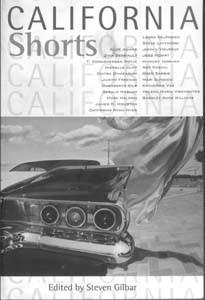
Sonoma County Authors

Fresh Crop

SPRING HAS SPRUNG, and you know what that means. No, we’re not talking about hay fever. The really momentous bounty sprouting up around the county is the latest flowering of books by local authors, who have produced a bumper crop that’s nothing to sneeze at. Reviews are by Shelley Lawrence, Patrick Sullivan, and David Templeton.

Anne Hill with Starhawk and Diane Baker
Circle Round: Raising Children in Goddess Traditions
(Bantam; $25.95)
“CIRCLE ROUND, and I’ll tell you a story.” Thus begin several of the tales and legends in Circle Round, a collaboration between Sebastopol author/ songwriter Anne Hill, Berkeley lawyer Diane Baker, and best-selling author-activist Starhawk. The book–identified in the foreword as a resource the authors wish they’d had years ago–is a compendium of stories, crafts, songs, games, rituals, and recommendations, all designed for parents who are raising their children in the goddess and pagan traditions. Clever, inspiring, and jam-packed with ideas, the book divulges the authors’ own hard-learned parenting lessons, with numerous practical examples and step-by-step instructions on the building of altars, organization of kid-oriented rituals, creation of story circles–even a complete guide through the major pagan holidays of the year. Eye-opening for anyone interested in passing on alternative nature-based knowledge to the next generation of Earth Keepers –D.T.

Daedalus Howell
The Late Projectionist
(Soco Arts & Media; $12.95)
THE SONOMA County Independent‘s own theater critic graces us with his first novel, a torrid tale of angst (both existential and not) set in a surreal little town a bit like Petaluma. Our narrator is a frustrated and slightly delusional would-be film director coping with art, love, and life while searching for a leg up (or at least a crumbling foothold) on his foundering career. Is he condemned forever to small-town Dullsville and his career as a beleaguered movie theater projectionist? Or will he reach the escape velocity attained by his former girlfriend, now a world-class concert cellist? Still, a mere summary of The Late Projectist‘s story line misses the book’s true strength, which is the hilarious interaction among the narrator’s charmingly bizarre circle of slackers, swingers, stymied geniuses, and other miscellaneous malcontents. Howell’s gift for dialogue is this novel’s greatest asset.–P.S.

Morris Turner III
America’s Black Towns and Settlements
(Missing Pages Productions; $12.95)
THIS HISTORICAL reference guide by Sonoma County author Turner offers information on approximately 200 independent communities established by African Americans in nearly all 50 states. Many of these communities were founded during the Black Exodus in the late 19th century, when African Americans sought to escape the racist laws, lynching, and land theft that pervaded the South after the Civil War. Turner’s book seeks to recover the hidden history of these pioneers and their unique communities. There are tragedies here, such as the story of Magala Island in Maine, whose all-black population was declared insane so that whites could grab their land. But there are also extraordinary tales of the triumph of courage and self-reliance.–P.S.


Close Encounters with Deadly Dangers: Riveting Reads and Classroom Ideas
(Libraries Unlimited; $19.50)
KENDALL HAVEN–renowned Sonoma County author and educator (and the only known West Point graduate ever to become a professional storyteller)–has learned an important lesson through his many face-to-face experiences with child-filled audiences: Kids like to be scared. In Close Encounters with Deadly Dangers, Kendall has infused the study of natural ecosystems with the same edge-of-the-seat, scare-them-out-of-their-wits suspensefulness he employs in telling ghost stories around the campfire. For use at home or in the classroom, the marvelously innovative book conveys factual scientific information about 17 different natural habitats of the world–from the South American Amazon to the deep blue ocean to the Alaskan wilds–the highlights of which are Haven’s occasionally bloody, often knuckle-biting not-so-tall tales featuring the ravenous adventures of a porpoise-eating tiger shark (the story is called “Tiger Jaws”), a female anaconda putting the squeeze on a very surprised caimen (“Squeeze Play”), a pack of wolves on the trail of an ox (“Howl of the Hunt”), and my favorite (“Feeding Frenzy”), the tale of three boys testing the waters of their jungle river for the presence of piranhas (I’ll let you in on a secret: The piranhas are there!). Along with other tales about scorpions, cobras, crocodiles, and Komodo dragons, Haven’s ingenious book is highly recommended, for teachers, parents, and scare-happy kids.–D.T.

Tosca Lensi
Beloved Disciple; Daughter of Logos
(LP Publishing; $12.95;
call 933-9077 to order)
AT THE END of the Gospel of John, in the apostle’s account of Jesus’ death on the cross, there is a mysterious pair of verses in which Christ looks down and sees his mother, Mary, and “the disciple, whom he loved.” According to the King James version, Jesus calls out to his mother, “‘Woman, behold thy son!’ Then saith he to the disciple, ‘Behold thy mother!’ And from that hour, that disciple took her unto his own home.” Bible scholars have long assumed that “the disciple” mentioned was in fact John, the author of the gospel. Author Lensi, of Sonoma, has another theory. In Beloved Disciple; Daughter of Logos, Lensi offers her own novelized version of the Gospel, in which “the disciple” turns out to be none other than Magda, otherwise known as Mary of Magdalene. In fact, Lensi’s entire gospel is told more or less from the point of view of the women in Jesus’ life. It’s a valuable and fascinating perspective, as challenging–and certainly as thought-provoking–as it sounds.–D.T.


Marijuana: Not Guilty as Charged
(Good Press; $24.95)
RIGHT OFF THE BAT, Sonoma County author David R. Ford lays out his informative Marijuana: Not Guilty as Charged in a clear and interesting manner. The author provides a strong argument, supported by studies, research, and personal anecdotes from people around the world, in favor of the use of marijuana and hemp. With its discussion of marijuana’s virtual harmlessness compared to other drugs, its validated medical use, and other benefits, the book is an interesting educational reference source that doesn’t turn flaky as so many “legalize it, man” marijuana books are wont to do. Even for those who aren’t positively inclined toward Cannabis sativa, Ford’s book provides a levelheaded look at a controversial issue.–S.L.

Jonathan London
COUNT ON Graton’s best-selling children’s book author to keep the pen rolling and his imagination working overtime. Each season, the hard-working London produces a bevy of new stories that are paired with beautiful illustrations. Here we synopsize his three most recent books.–P.S.

Froggy Plays Soccer
(Viking; $15.99)
FROGGY’S BACK (and so is his underwear) in this story any kid can appreciate. This time out, the ever-popular young amphibian takes on the sporting world, and getting dressed up in his soccer gear and out onto the field is only his first challenge. “Don’t use your hands,” his father reminds him, but that’s no simple matter when the ball keeps coming straight at his head. Can Froggy remember the rules and help win the game? This latest entry in the Froggy series is illustrated by Frank Remkiewicz.

The Waterfall
(Viking; $15.99)
A TOWERING waterfall proves an irresistible challenge to two young brothers on a camping trip with their family. Jill Kastner’s beautifully impressionistic artwork illustrates a simple story about having fun in the outdoors.

Wiggle Waggle
(Harcourt Brace and Co.; $13)
YOUNGER KIDS will enjoy this chance do an “animal dance,” as creatures ranging from elephants to penguins to camels show off their walking styles. The book comes complete with sound effects (“How does an elephant walk? Clomp, clomp, clomp”) and appealingly expressive illustrations by Michael Rex.

From the April 8-14, 1999 issue of the Sonoma County Independent.

© Metro Publishing Inc.

Drug & Suicide Deaths in Sonoma County

0

Ill Health

Local health report card: Drug-related deaths and suicides top state averages

By Janet Wells

REFLECTING A TREND that county health officials call a “major problem,” a report released this week by the California Department of Health puts Sonoma County in the top echelon for the number of deaths from suicide and drugs. Sonoma County ranks 13th highest in the number of drug-related deaths, and 15th highest in number of suicides.

Coming on the heels of the suicide of a Sebastopol teenager whose brother died of alcohol-related causes less than six weeks later, the report’s findings “speak to very complex issues involving social and quality-of-life factors,” says Sonoma County Public Health Officer Dr. George Flores. “If there is not adequate family support or if despondency grows out of lack of housing or a job, substance abuse, or domestic violence, suicide becomes a viable alternative for people who are depressed enough or sick enough,” he says.

Sonoma County’s average of 72 suicides annually in 1995-97 is higher per capita than that of either Marin or San Francisco County because there is a proportionately larger population of retirees, Flores says, and the suicide rate is higher among the elderly.

“This tragedy seems even more compelling when we hear of a young person,” Flores adds, referring to the deaths of 17-year-old Kyle Caldwell by a self-inflicted gunshot wound in February and his brother, Gene, after drinking at a party in March. “Somehow their needs weren’t being met. A situation arose that put them in a position of great tragedy. We need to do better.”

Since last year Sonoma County leapt seven rankings in the number of drug-related deaths. “I’ve been saying for years that we are in an area where things come together for a lot of drug usage,” says Michael Spielman, executive director of the Drug Abuse Alternatives Center in Santa Rosa.

Drug use is directly linked to drug access, Spielman says. The primary drugs that contribute to the death rate are amphetamines, cocaine, and heroin. “You can die 20 different ways from each,” he says.

In Sonoma County the drug of choice for adults is amphetamines, with 55 percent of Spielman’s adult clients stating that it is their main drug problem. Forty percent of the teenagers participating in programs at the center have tried the drug, which is manufactured locally at clandestine labs.

Cocaine and heroin aren’t as prevalent in the county, but increasing purity has contributed to more overdoses.

“Black-tar heroin from Mexico is 50 to 60 percent pure, compared to 5 percent 20 years ago, and it’s relatively cheap,” Spielman says.

The Drug Abuse Alternatives Center offers several treatment and education programs for teenagers and adults. But, says Spielman, the death rates are likely to continue rising unless more money comes available.

“The war on drugs really wasn’t very successful,” he says. “Of the $18 billion spent nationally, $13 billion was spent on cops and just $5 billion on prevention, education, and treatment. Keep spending $13 billion on cops, but spend $13 billion on treatment. The goal is quality treatment on demand for anyone who needs it.”

DRUG-USERS asking for placement at the center’s nine-month 58-bed residential treatment program typically wait six months to a year. Spielman is proud of a recent survey that showed 100 percent of the residential program clients had stopped or significantly reduced drug use.

“When they are waiting, they are either continuing to use drugs, stealing, and doing all the things drug addicts do, or they are waiting in jail, where it costs far more money to keep them,” Spielman says. “If you look at people who have had a drug problem and went to jail, you’re lucky if maybe 20 percent stopped or reduced drug use.”

Dr. Flores also is frustrated by funding priorities. Of the county’s $18 million public health budget, 1 percent is spent on prevention.

“After someone is ill, we’re essentially chasing the cow after it has escaped the barn,” Flores says, adding that he would like to see at least 6 percent of his budget used for prevention. “We can save public resources as well as lives and preserve health if we focus our resources.”

The 1999 County Health Status Profiles report, released to coincide with Public Health Week, also has some good news for Sonoma County, which leads the state in availability of prenatal care and in the fewest number of measles cases. The number of AIDS cases–while still high compared to other counties–decreased since the last state report, and the county improved its rating on other communicable diseases such as tuberculosis and syphilis.

“In the infectious diseases we seem to be doing a relatively good job, but we should not become complacent, because there are emerging infections at the same time,” Flores says.

“There is concern about tick-borne diseases and chlamydia, a sexually transmitted disease with enormous infection rates among teenagers.”

FLORES emphasizes that public health is a community responsibility. “Every time we get these reports we expect that raising the level of awareness of the community about health conditions will encourage people to make efforts to do what is necessary in their own families, schools, neighborhoods to improve health conditions as well as to support programs with these same goals,” he says.

“It’s not simply a matter of expecting the government to do it for you.”

From the April 8-14, 1999 issue of the Sonoma County Independent.

© Metro Publishing Inc.
Musicians Helping Musicians

0

Heart Beat

Love zone: Zone Music Store owner Frank Hayhurst, creator of Musicians Helping Musicians.’

All-star concert benefits ailing guitar wiz

By Greg Cahill

WE’RE GONNA make a T-shirt here that will say: ‘Zone Music–Run and Overrun by Musicians,’ ” says Frank Hayhurst with his tongue planted firmly in cheek. “That pretty much sums it up.”

Indeed, Hayhurst’s Cotati musical instrument store and recording studio have long been regarded as one of the most musician-friendly businesses in the county. That amiability extends to Hayhurst’s brainchild Musicians Helping Musicians, a non-profit charitable organization that helps defray medical costs and other expenses incurred by often uninsured players or their families. In the past four years, the organization has raised nearly $90,000 through benefit concerts and auctions.

It’s a cause close to Hayhurst’s heart.

A few weeks ago, Hayhurst learned that longtime Zone Music vice president Randy Quan–a Santa Rosa guitarist who has toured with the likes of soul legend Booker T. & the MGs–was stricken by a rare inoperable cancer that will require extensive radiation treatment and chemotherapy that may diminish his sight and hearing. While Quan’s medical expenses are covered by health insurance, Musicians Helping Musicians will stage a benefit concert on Sunday, April 11, to offset his living costs during the months he will be recuperating.

Among those scheduled to perform at the shows are Huey Lewis & the News guitarist Chris Hayes, Steve Kimock of the Other Ones, Michael Bolivar, Terry Haggerty, John Allair, Sarah Baker, Stu Blank, Danny Sorentino, and host of others.

Hayhurst founded Musicians Helping Musicians in 1994 when the uninsured wives of two local musicians–both close friends of Hayhurst’s–were diagnosed with breast cancer. In response, the music store owner organized a pair of all-day benefit concerts at the Tradewinds and the Inn of the Beginning, two downtown Cotati nightclubs.

Hayhurst and a horde of musicians–including L.A. rock guitar demigod Michael Lee Ferkins–returned to those venues the following year for a performance benefiting accident victims Bruce Day, former bassist for Pablo Cruise, and Jahn-Erik Jacobsen, a Harmony School student and son of keyboardist and technician Jack Jacobsen, a member of the Huey Lewis & the News road crew.

Ultimately, Hayhurst envisions a non-profit collective that will offer musicians a wide range of professional services. “My idea is to get 200 to 300 musicians, though I also include in this category all edge dwellers who are involved in the arts, and as a pool collectively buy health insurance and then make it affordable to those least able to afford it, by holding quarterly benefits to subsidize costs,” he says.

Production services and equipment for the upcoming benefit concerts will be donated by Zone Music, local nightclub owners and staff, and local musicians and technical staff.

“For some reason,” Hayhurst says, “people really do love music. Everyone is very compassionate and receptive to this idea.”

Zone Love IV, benefiting Randy Quan, will be held Sunday, April 11, from 6 to 11:30 p.m. at the Tradewinds and the Inn of the Beginning in downtown Cotati. Admission to both venues is $10. Additional donations can be made to the Randy Quan Trust at any Exchange Bank, or at Zone Music, 7884 Old Redwood Hwy., Cotati.

From the April 8-14, 1999 issue of the Sonoma County Independent.

© Metro Publishing Inc.
A Funny Thing Happened on the Way to the Forum

Solemn Endeavor

Forum.

Nothing funny happens at the “Forum”

By Daedalus Howell

THIS IS A cruelty-free review. Sonoma County Rep-Santa Rosa’s production of Stephen Sondheim’s infernal musical fantasia A Funny Thing Happened on the Way to the Forum was not harmed in the creation of this article because on opening night it had been mysteriously replaced by an inferior copy. It looked like SCR, but it wasn’t, and eerily, nothing funny happened.

Enter Pseudolus (Gerald Haston), a slave yearning for freedom, who can escape his servitude if he connects mail-order virgin Philia (Trisha Davis) with his lovesick young master, Hero (Matthew Proschold). Complications ensue when Pseudolus discovers Philia is already betrothed to vainglorious gladiator Milos Gloriosus (John Goldman). Moreover, Hero’s lascivious father, Senex (Lyle Fisher), mistakes her for a new housemaid with whom he plans to take liberties.

Lies, fraud, and shtick-in-the-mud antics ensue as Pseudolus’ comic capers lead to an inevitably tidy denouement. Long-lost children are found, bed hoppers are tucked in, marriage looms, and a desultory song and dance number caps what’s left of the evening (the show is nearly three hours long).

Staging a featherweight sex farce to usher in spring seems a natural choice, but the musical, as written, is more baroque than burlesque.Whistles accompany kicks in the ass and pratfalls a-go-go collide with tired puns like “religious cretin” (referring to the pious folks of nearby Crete).

This show is a golem. Despite Haston’s gallant efforts to breath life into it, he is left winded, overcome by the show’s own drafty antics. His Pseudolus hails from the Lou Costello school of rubes and is conveyed with much gusto–yet one can’t help but think that the effort is misspent. Haston is a proven comedic actor, but this role wastes his finer faculties. Instead, he plays a cartoon.

Likewise, Proschold’s serviceably doltish Hero is well complemented by Davis’ sugary Philia, but ultimately the roles seem unworthy of both their talents, and consequently the actors seem rather “outside” the piece.

Jonathan Graham’s Hysterium (head slave) and Tim Hayes’ Marcus Lycus (the hard-nosed flesh peddler), however, appear rooted in the world of the work. This is a credit as much to their acting as to their willingness to submit to oppression.

As the Proteans (transmutable onstage personnel who go from eunuchs to guardsmen), zealous young performers Derek Fischer and Greg Gallagher make a concerted effort to steal the show, though they forfeit what little booty there is with their sledgehammer-subtle stage presence.

Nina Raggio’s choreography during the courtesan dance sequence is a bizarre fusion of I Dream of Jeannie and the weirdo physical seductions found in the mid-’60s James Bond flicks. Neither particularly sexy or comic, the outcome can only be construed as an experimental ode to the ultramodern.

On balance, A Funny Thing Happened on the Way to the Forum is far from a feast but not quite a beggar’s banquet.

Sonoma County Rep-Santa Rosa’s production of Stephen Sondheim’s A Funny Thing Happened on the Way to the Forum plays through May 1, Thursdays-Saturdays at 8 p.m. and Sundays at 2 p.m., at 415 Humboldt St. $12. 544-7278.

From the April 8-14, 1999 issue of the Sonoma County Independent.

© Metro Publishing Inc.
Emma Kallock

0

Wonder Girl

Michael Amsler


Emma Kallok is an athlete, a musician–and a newly published author. But what will she do in the seventh grade?

By David Templeton

FOR EMMA KALLOK, the last couple of days have been unusually, well, unusual. Let’s see. The Sebastopol sixth grader was sent home from school yesterday with a bee sting. Ouch. Her much-anticipated basketball practices have just begun, and she’s, you know, kind of amped up, looking forward to some serious athletic competition. Oh, and her brand-new novel hits the bookstores this week.

They announced it over the loudspeaker at school and everything.

“That was so embarrassing,” Kallok recalls with a shy grin, her eyes widening at the memory. “Everyone in class was staring at me. But I guess it’s pretty exciting.”

You bet it is.

Just today Kallok came home to find a big box waiting for her, crammed with shiny, hot-off-the-press copies of The Diary of Chickabiddy Baby. It’s her “author’s allotment” of the children’s novel she wrote when she was 10, and just last year sold to Tricycle Books, an imprint of Ten Speed Press. This makes Emma Kallok one of the youngest authors to have ever published a novel. The Berkeley publisher, which is releasing the title in both paperback and hardback–the hardbound versions are intended mainly for libraries–has already seen so much bookseller interest in Chickabiddy that it has increased its first printing from 6,600 books to 10,000. On April 14, Kallock will be making her first official bookstore appearance, reading and signing her book at Sebastopol’s Copperfield’s Books.

Now she’s doing her very first interview.

Cradling a copy of Chickabiddy fresh from the box, Kallok gazes down at the book in her hands. There’s her smiling face on the book jacket, beaming back up at her.

“I think I’m a little overwhelmed,” she succinctly remarks.

THE DIARY of Chickabiddy Baby–and the good news is that it’s good–is a first-person account of the summer-long adventures of one Prudence Brinker, whose mother chews with her mouth open while calling her daughter embarrassing names like “Chickabiddy Baby” and whose father, a children’s book writer, always seems to be suffering from writer’s block, which he cures by taking long baths with his clothes on. Prudence has a best friend named Mouse, two annoying brothers (Emma’s own twin sister, Hannah, is credited in the book’s acknowledgments as “my very first editor”), a boy she thinks is cute, and a brand-new neighbor she thinks is even cuter. She also has a mystery on her hands, since someone has been leaving “Ethiopian proverbs” on the magnolia bush she uses as her secret writing place. Continuously funny, well crafted, and well thought out, with some surprising plot twists and an refreshingly honest view of family life, Chickabiddy is truly delightful. It’s an accomplished work, on a par with Paula Danzigger’s Amber Brown books and the Walk Two Moons novels of Sharon Creech.

There is a knock at the door, and Kallok leaps up to hug Jonathan London, the well-known author of numerous popular children’s books who is now her own “career counselor.” Kallok has been friends with London’s son since the fourth grade, and she got to know London better when he began visiting their class last year as part of an ongoing “writer’s workshop” program at the school. It was there that London first recognized Emma’s gift for words.

“I read one short story she’d written,” he explains. “I was blown away. It was really incredible. The language, the dialogue, the setting, the characters were all well beyond her years.” When London asked to see anything else she may have written, Kallok reluctantly volunteered that she’d written a novel the year before.

“As much as I wanted to read her writing, when I heard the word novel, I silently groaned,” the Graton author admits. “I made the mistake of thinking–in spite of knowing what a wonderful writer she was–that a novel written at that age would probably be a chore to read.” It wasn’t until several weeks later, after a number of reminders from London, that Kallok finally produced the manuscript–a big, fat, handwritten stack of pages.

“I’m a slow reader,” London confesses. “But I sat there and read that book in one sitting. It was delightful and real and full of great observations and funny little details.” In short, he loved the book. “I guess I was relieved that it turned out to be so brilliant.”

RECOGNIZING the book’s potential, he assigned Kallok the task of transforming the handwritten pages into a typed manuscript. Acting as her unofficial agent–London’s own agent turned the book down, a decision he says she’s been “kicking herself about” ever since–the established author ultimately landed a publisher for Chickabiddy when he called Nicole Geiger, managing/acquisitions editor at Tricycle Press, and asked to read her the first page over the phone. It made her laugh, so he read another. Then Geiger asked to see the manuscript. Three weeks later, Emma Kallok had her first book deal.

“My first reaction was to jump up and down and scream,” she confesses. “I was pretty excited.” The advance money has already been invested in a new computer, on which she has been working on a sequel to her book. In fact, she’s already written two other books and is preparing to send them out as well.

“I can’t help it,” she explains. “I kind of have to write.”

When London remarks that other kids will likely take inspiration from Kallok’s success, she brightens even more.

“I hope this does inspire other kids to write,” the young author, now 11, asserts. “If they can see that they have stories and poems and books inside of them also, they’ll start writing them down too. Maybe some of them will be published.

“I think that would be exciting,” she says, flashing that shy smile one more time. “Don’t you?”

Emma Kallock will read from her new book on Wednesday, April 14, at 10 a.m. at Copperfield’s Books, 138 N. Main St., Sebastopol. For details, call 823-2618.

From the April 8-14, 1999 issue of the Sonoma County Independent.

© Metro Publishing Inc.
Leslie Cole & Nancy Sasha Long

0

Lust Letters

Seductions.

Michael Amsler


First-time eroticists make a big splash in new anthology of sexy tales

By David Templeton

LESLIE COLE, tucked into a sunny corner of a downtown Santa Rosa coffeehouse, has made up her mind that she’s going to tell a story. She has to think about it a moment, has to consider whether it is an appropriate tale to tell a total stranger.

She apparently decides that it is.

“OK. I was out at the beach, boogie-boarding,” the Occidental teacher and writer begins, leaning forward, hands folded on the table before her. “But I couldn’t catch any waves. Finally, I caught this one wave, a perfect wave. It was incredible! It was fun. It felt great! The only way I can describe it is to say that I was suddenly full of joy.

“Then I looked over,” she goes on, slowly turning her head to demonstrate, “and there was this man. He’d caught the same wave I had–waves are big, right? Lots of room–and there he was, having as much fun as I was. And he looks over at me as we’re both gliding into the shore, and there was this … connection. A strong, strong connection.

“And I had this urge. I suddenly wanted to kiss him.”

Cole pauses, sipping her tea. She lets the big question–did she or didn’t she?–hang in the air for several long seconds.

“But, of course, I didn’t kiss him,” she finally admits, laughing. “He was a total stranger. I’m not going to do that. But I wondered about that for a while: ‘What if I had?’

“Things like that happen to everybody, don’t they?” she adds. “You’re standing in the line at the supermarket and you see somebody really beautiful and you have an urge to do something about it, to say something at least. But you don’t. You just stand there and write out your check.”

What Leslie Cole did do with her urge was write a story, an erotic “what if” that begins with the author’s “same-wave-moment-of-connection” and follows it up with a might-have-been scenario involving saltwater, wet suits, and a certain amount of wet bare skin.

Though Cole has been writing most of her life, the resulting story–“A Conversation about Green Water”–was her first try at erotica. Recently published in Lonnie Barbach’s latest erotic anthology, Seductions: Tales of Erotic Persuasion (Dutton; $23.95), the story is also Cole’s first work to appear in a high-profile book by a major publisher.

Seductions has been receiving a lot of attention of late, with its wide variety of amorous encounters ranging from the humorous kinkiness of a man having sex with his wife’s best friend only to discover it’s really his wife disguised as the friend (or is it the friend pretending to be the wife masquerading as the friend?) to the offbeat supernatural carnality of vampires expressing their surprisingly randy inner selves. With two of its contributors hailing from Sonoma County–that would be Cole and fellow first-timer Nancy Sasha Long–Seductions has been selling so well hereabouts that some local bookstores have had difficulty keeping the book in stock.

As for Cole, her involvement might not have happened at all if not for the intervention of a colleague, Tiny Lights publisher Susan Bono, who’d received a “call for entries” from Barbach, a noted psychologist and author whose books include a number of collections of erotic writings by women.

“The assignment was to ‘write about being seduced,’ ” Cole says. “I treated it like a job. An assignment. I have this many pages to write on this subject.”

Her first few attempts, she says, “were flat as a pancake. I couldn’t get my characters to be explicit enough. It’s like they were too shy to do a sex scene. They weren’t going to play and let me watch.” Eventually, with time running out, she recalled her semi- libidinous adventure in the surf and used it as a starting point.

“I like to begin my stories in the natural world, so two people in the water seemed like a good place to start,” she explains. “I just love water, anyway. I swim and I surf. … Maybe it’s some kind of amniotic thing–we all came from water, the water of life and all that stuff. Being pounded by waves is a pretty accurate metaphor for falling love, too.

“Whenever you are really attracted to somebody, you don’t notice things about that other person. Your friends go, ‘Haven’t you noticed that … ?’ But you don’t, ’cause you’re falling in love. You’re caught in the wave. You’ve been turned upside down like you’re in a big washing machine, and maybe you’re under too long and you feel like you’re drowning, but you come out the other side, or else you get slammed into the shore and get sand shoved up your nose.

“Then again,” Cole adds, bursting into laughter, “judging from my personal life, maybe I’m ready to come up with another metaphor.”


Michael Amsler

Unusual tastes: The darker side of erotic fantasy is the focus of the Seductions story written by Petaluma author Nancy Sasha Long.

NANCY SASHA Long, of Petaluma, tells a different story. “I heard about Lonnie’s ‘call for entries’ from a friend in a writing class in Marin,” she explains, her animated face demonstrating a bit of the nervous anticipation with which she greeted the notion of writing erotica. “I felt very green, but I thought I ought to give it a shot.”

The class Long refers to is a 6-year-old experimental writing workshop, with a core group of eight writer- performers who make up a unique troupe called Writers on the Edge.

“We write our lives, and then we perform our own lives onstage,” she says. “My colleagues encouraged me to send something in for consideration, so I went and looked at everything I’d written over the last several years. I ended up weaving together bits and pieces of several fictional short stories. There is some of me in it, some of my thoughts, but it took on a life of its own. And,” she continues with a laugh, “It turned out to be a much longer process than I’d imagined.”

Long’s story, “A Life of Seductions,” was accepted by Barbach, who suggested a few changes.

“I ended up rewriting it four times over the next 18 months. And I’m quite pleased with it,” she says, laughing again. “For my first attempt it’s not bad at all.”

The story–about an unhappy woman whose richly sexual fantasy life begins to mesh with reality in surprising, increasingly disturbing ways–is certainly among the darker tales in the book.

“There are some very dark images in there,” Long agrees. “Darkness is an important part of sexuality. Even though we’re supposedly in a time where women are free to explore their sexuality, to be sexually healthy and express themselves joyfully, there is still a little bit of darkness in our culture that nobody wants to talk about. Maybe it’s in the psyche of women, some women anyway, to desire some of that darkness and that danger.

“In my story, the main character is confused. She’s not all there. She doesn’t feel good about herself. She’s not healthy. And her sexual fantasies, because she doesn’t know anything different, are dark fantasies. I wanted to explore that darkness a bit, and to look at someone who feels powerless, who allows a seduction to take place because she’s desperate for a sense of power, desperate to make a choice all on her own, to reclaim herself, in this one strange, small way.

“And now that I’ve got that out of my system,” Long adds, laughing once more, “I think I’m ready to write something lighter.” Asked whether she’s interested in writing more erotica, she nods vigorously. “More erotica, certainly, but something playful now, something that explores a more romantic view of lovemaking, maybe even a sense of erotic spirituality.

“It’s hard to tell from ‘A Life of Seductions,’ ” she adds, “but I do realize that sex isn’t all danger and darkness. There’s a lot of joy and playfulness and laughter in sex, too. Now let’s see what I can do with that.”

From the April 8-14, 1999 issue of the Sonoma County Independent.

© Metro Publishing Inc.

Kosovo

0

Bombing the Baby with the Bathwater

The air strikes against Yugoslavia were supposed to stop the Milosevic war machine. The ultimate goal is ostensibly to support the people of Kosovo, as well as those of Serbia, who are equally victims of the Milosevic regime.

In fact the bombing has jeopardized the lives of 10.5 million people and unleashed an attack on the fledgling forces of democracy in Kosovo and Serbia. It has undermined the work of reformists in Montenegro and the Serbian entity of Bosnia-Herzegovina and their efforts to promote peace.

The bombing of Yugoslavia demonstrates the political impotence of US President Bill Clinton and the Western alliance in averting a human catastrophe in Kosovo. The protection of a population under threat is a noble duty, but it requires a clear strategy and a coherent end game. As the situation unfolds on the ground and in the air day by day, it is becoming more apparent that there is no such strategy. Instead, NATO is fulfilling the prophecy of its own doomsaying: each missile that hits the ground exacerbates the humanitarian disaster that NATO is supposed to be preventing.

It’s not easy to stop the war machine once its power has been unleashed. But I urge the members of NATO to pause for a moment and consider the consequences of what they are doing. Analysts are already asking whether the air strikes are still really about saving Kosovo Albanians. Just how far are NATO members prepared to go? What comes next after the “military” targets? What happens if the war spreads? All of these terrifying questions must be answered, although I suspect that few will want to live with the historical burden of having answered them.

The same questions crowded my mind as I sat in a Belgrade prison on the first day of the NATO attack on my country. Whiling away the hours in the cell I shared with a murder suspect, I asked myself what the West’s aim was for “the morning after.” The image of NATO taking its finger off the trigger kept coming to mind. I’ve seen no indication so far that there is a clear plan to follow up the Western military resolve.

My friends in the West keep asking me why there is no rebellion. Where are the people who poured onto the streets every day for three months in 1996 to demand democracy and human rights? Zoran Zivkovic, the opposition mayor of the city of Nis answered that last week: “Twenty minutes ago my city was bombed. The people who live here are the same people who voted for democracy in 1996, the same people who protested for a hundred days after the authorities tried to deny them their victory in the elections. They voted for the same democracy that exists in Europe and the US. Today my city was bombed by the democratic states of the USA, Britain, France, Germany and Canada! Is there any sense in this?”

Most of these people feel betrayed by the countries that were their models. Only yesterday a missile landed in the yard of our correspondent in Sombor. It didn’t explode, fortunately, but many others have in many other people’s yards. These people are now compelled to take up arms and join their sons who are already serving in the army. With the bombs falling all around them nobody can persuade them – though some have tried – that this is only an attack on their government and not their country.

It may seem cynical that I am writing this from the security of my office in Belgrade – secure, that is, compared to Pristina, Djakovica, Podujevo and other places in Kosovo. But I can’t help asking one question: How can F16s stop people in the street killing one another? Only days before the NATO aggression began, Secretary-General Solana suggested establishing a “Partnership for Democracy” in Serbia and the other countries of the former Yugoslavia to promote stability throughout the region.

Then, in a rapid U-turn, he gave the order to attack Yugoslavia.

With these attacks, it seems to me, the West has washed its hands of the people–Albanians, Serbs and others–living in the region. Thus the sins of the government have been visited on the people. Is this just? There are many more factors in the choice of a nation’s government than merely the will of the voters on election day. If a stable, democratic rule is to be established, and the rise of populists, demagogues and other impostors avoided, the public must first of all be enlightened. In other words there must be free media.

NATO’s bombs have blasted the germinating seeds of democracy out of the soil of Kosovo, Serbia and Montenegro and ensured that they will not sprout again for a very long time. The pro-democratic forces in Republika Srpska, the Bosnian Serb entity, have been jeopardized and with them the Dayton Peace Accords. NATO’s intervention has also given the green light for a local war against Montenegro’s pro-democracy president, Milo Djukanovic.

The free media in Serbia has for years opposed nationalism, hatred and war. As a representative of those media, and as a man who has more than once faced the consequences of my political beliefs, I call on President Bill Clinton to put a stop to NATO’s attack on my country. I call on him to begin negotiations which aim at securing the right to a peaceful life and democracy for all the people in Yugoslavia, regardless of their ethnic background.

As a representative of the free media I know too well the need for people on all sides of the conflict to have information. Those inside the country need to be aware of international debate as well as what is happening throughout this country. The international public needs the truth about what is happening here. But in place of an unfettered flow of accurate information, all of us hear only war propaganda–Western rhetoric included. Of course truth is always the first casualty in wartime.

Here and now, journalists are also being murdered.

Radio B92 is continuing its work as much as the circumstances of war permit. It is continuing to broadcast news on the Internet at http://www.b92.net, via satellite and through a large number of radio stations around the world which continue to carry its programs out of solidarity.

Veran Matic is editor-in-chief of Belgrade’s banned Radio B92 and a leading peace activist. He has won many international awards for media and democracy, the latest being last year’s MTV Europe “Free Your Mind” award. Early this year he was named one of this year’s hundred Global Leaders for Tomorrow by the World Economic Forum.

Web extra to the April 8-14, 1999 issue of the Sonoma County Independent.

© Metro Publishing Inc.

Benjamin Britten’s War Requiem

0

War Stories

Sticking to it: Sonoma County Bach Choir director Bob Worth prepares his group of nearly 70 singers for the upcoming performance of Benjamin Britten’s War Requiem, mounted in collaboration with the Santa Rosa Symphony and others.

A local cast of hundreds prepares for Britten’s pacifist opus ‘War Requiem’

By David Templeton

LET’S DO the ‘Agnus Dei’ again,” suggests Bob Worth, addressing an intensely focused chorus of nearly 70 voices. “But this time I want to hear fear, cold, hard fear, just below the surface of the words, just below the surface of your voices. This is war. This is the coming of judgment, and we are all guilty. This is scary stuff.”

Worth demonstrates in his own voice. The chorus–a combined multigenerational force comprised of the award-winning Sonoma County Bach Choir, which Worth directs, and the Santa Rosa High School chorus, under the direction of Dan Earl–attentively listens, watching and nodding.

For months this mixed group of performers has been learning the intricate music of British composer Benjamin Britten’s War Requiem, a legendary and infamously difficult work that merges the traditional requiem mass with the stunning World War I poetry of Wilfred Owens. Composed in 1962, the War Requiem was commissioned for the opening of the newly rebuilt Coventry Cathedral, severely damaged by falling bombs in World War II. (Britten fought to maintain conscientious-objector status during that conflict.)

When the piece is performed in Santa Rosa in mid-April, the chorus will join a company that includes the Santa Rosa Symphony, the Santa Rosa children’s chorus, and a trio of renowned soloists: baritone Thomas Quasthoff, tenor Richard Clement, and soprano Janice Chandler. Under the baton of conductor Jeffrey Kahane, the complete ensemble will number over 250.

“The Agnus Dei is pivotal,” Worth says. “The whole message of the War Requiem is bundled up right here in this one passage. Also, I want everyone on the edge of your seats, literally.” He bounds up the steps, and sits down, showing them how to pivot at the boundary of their chairs. “I guarantee it, if you’re on the edge of your seats, the audience will be on the edge of theirs. Now let’s hear that fear.”

He raises his baton. At his signal, the chorus repeats the all-important passage. “Agnus dei, qui tollis peccata mundi, dona eis requiem.” Lamb of God, that takest away the sins of the world, grant them rest. This time, the fear is audible. A tense, shivering dread, a sense of hushed white-knuckled terror that sends a chill shiver right up the spine, forms an ironic counterpoint to the fervent hopefulness of the ancient Latin words.

“Pretty darn good,” crows Worth. “Pretty darn good.” Then he has the singers do it again. And again.

“There’s going to be a big honking orchestra in front of us during the live performances,” he reminds them. “We’ll have to sing very clearly and powerfully to keep from being swallowed up.” Later in the evening’s rehearsal–after practicing another passage, this one even more technically difficult–someone on the risers gasps, “It’s so hard!”

Worth grins. “Of course it’s hard. The War Requiem has some of the hardest passages I’ve ever done in my life. That’s what performing the requiem is all about.

“Just wait till next week,” he adds. “When all the singers and musicians are in one place next week, and we do this thing all together, when you feel the audience responding to the music, you’ll know exactly why we’ve been working so hard for so long. Believe me, it will be worth it.”

FOR ANY ORCHESTRA this is a massive project,” says Jeffrey Kahane. “For an orchestra like the Santa Rosa orchestra, well, there are people who thought I was crazy to even attempt it, just because of the sheer scope of the work.”

Kahane, who has played piano in past productions of the War Requiem, will be conducting Britten’s masterpiece work for the very first time.

“Britten was one of our greatest composers,” Kahane says, “but he was also a man of the theater. His greatest music involves words and music that have a tremendous visceral visual impact. This is a piece that is conceived very much in terms of its physical space. Wait till you see the whole thing assembled onstage. Oh my God! It’s quite an astounding thing to witness.”

The logistics would terrify anyone. In addition to the complexity of the frequently thrilling, often onomatopoetic, score, Britten provided detailed instructions for how the performers were to be arranged. There is a specific symbolism at work in all of the composer’s demands. The children’s chorus, which must sing from a separate portion of the room than the orchestra and main chorus, stands as a symbol of innocence and purity.

“That,” Kahane explains, “and to be a reminder that these children are the next generation that might be sent out to fight and die. While the War Requiem is really about young men fighting and dying, the children are there as a reminder that the children of every generation are potentially victims of war, not only as soldiers-to-be, but also as innocent victims.”

The male soloists, representing the soldiers, one British, one German, sing the poetry of Wilfred Owen, separately and together, but always with the chamber orchestra, 12 musicians intentionally placed apart from the main orchestra.

“The male soloists personalize the piece,” Kahane says. “They make very intimate and direct the experience of the soldier on the battlefield.”

The chorus, which sings the requiem mass in Latin, is joined by a female soprano soloist, who, according to Kahane, represents the angels and divine nature. This juxtaposition of the ancient and imposing words of the mass with Owen’s vivid poetry, literally written on the battlefield during World War I, conveys a provocative sense of irony as the comforting simplicity of the mass is repeatedly answered by the dying soldiers’ cries of anguish and bewilderment.

For Kahane, Worth, and the entire company, Britten’s intentional ironies have been compounded by current events. It is ironic, certainly, to be singing the words of Owens–who died on the battlefield in “the war to end all wars”–as, simultaneously, atrocities are being committed and bombs are being dropped on the other side of the planet.

“We’ve been thinking about Kosovo a lot over the last few weeks,” Kahane admits. “Whatever each person’s specific belief about what NATO is doing, we all agree it’s a horrifying spectacle.”

Kahane, whose family fled Europe as refugees during World War II, first conceived of doing the War Requiem three years ago, when the war in Bosnia was raging.

“I’ve done a lot of thinking about the First World War,” he says. “It’s become clear to me that if there is any hope of our preventing such things from happening again in the future, we absolutely have to understand what led to them happening in the first place.”

Kahane believes that the War Requiem is an especially powerful bridge to understanding war.

“I think the War Requiem does two things,” he says. “It allows for a very deeply personal experience of the emotions that are associated with war–the fear, the grief, the horror, the shock, the bitterness, the pain–all those things. And it also provides an incredible catharsis. Owens’ poem, the final poem, when the two soldiers meet after death and one says to the other, ‘I am the enemy you killed, my friend,’ and then, ‘Let us sleep now,’ that is the moment when all of the forces join together–the children, the small orchestra, the large orchestra, the soloists, and the chorus–and then there’s this final prayer, which I believe is one of the most cathartic moments in all of music. ‘Requiescant in pace. Amen.’ “

May they rest in peace. Amen.

“Something I told the chorus,” Kahane concludes, “[is that] many of them, and certainly the orchestra and especially the audience, will not even realize the impact or the significance until the end of the performance–and after. That’s what this remarkable piece does.”

The War Requiem will be performed April 14 and 15 at 8 p.m. at the LBC, 50 Mark West Springs Road, Santa Rosa. $17-$35. For details, call 546-8742.

From the April 8-14, 1999 issue of the Sonoma County Independent.

© Metro Publishing Inc.

Director Robert Altman

Indie Spirit Robert Altman blasts Hollywood and discusses his new film, 'Cookie's Fortune' By Nicole McEwan I DON'T HAVE personality problems," says director Robert Altman, referring to the notoriously troubled relationship he's maintained with Hollywood over his long career making such critically acclaimed films as The Player. "I'm no maverick. It's quite simple. The...

Michael Quigley of Cafe Lolo

Quick & Quigley Michael Amsler Cafe Lolo's chef runs at high-high speed By Marina Wolf MICHAEL QUIGLEY is a big, fast man. Even his clipped, rapid-fire voice barrels through conversation. And his stocky frame slips easily between the tiny tables of Cafe Lolo with the ease and rapidity born from the scramble of...

Sonoma County Authors

Fresh Crop SPRING HAS SPRUNG, and you know what that means. No, we're not talking about hay fever. The really momentous bounty sprouting up around the county is the latest flowering of books by local authors, who have produced a bumper crop that's nothing to sneeze at. Reviews are by Shelley Lawrence, Patrick Sullivan, and David Templeton....

Drug & Suicide Deaths in Sonoma County

Ill Health Local health report card: Drug-related deaths and suicides top state averages By Janet Wells REFLECTING A TREND that county health officials call a "major problem," a report released this week by the California Department of Health puts Sonoma County in the top echelon for the number of deaths from suicide and drugs....

Musicians Helping Musicians

Heart Beat Love zone: Zone Music Store owner Frank Hayhurst, creator of Musicians Helping Musicians.' All-star concert benefits ailing guitar wiz By Greg Cahill WE'RE GONNA make a T-shirt here that will say: 'Zone Music--Run and Overrun by Musicians,' " says Frank Hayhurst with his tongue planted firmly in cheek. "That pretty much sums it...

A Funny Thing Happened on the Way to the Forum

Solemn Endeavor Forum. Nothing funny happens at the "Forum" By Daedalus Howell THIS IS A cruelty-free review. Sonoma County Rep-Santa Rosa's production of Stephen Sondheim's infernal musical fantasia A Funny Thing Happened on the Way to the Forum was not harmed in the creation of this article because on opening night it had been mysteriously replaced...

Emma Kallock

Wonder Girl Michael Amsler Emma Kallok is an athlete, a musician--and a newly published author. But what will she do in the seventh grade? By David Templeton FOR EMMA KALLOK, the last couple of days have been unusually, well, unusual. Let's see. The Sebastopol sixth grader was sent home from school yesterday with...

Leslie Cole & Nancy Sasha Long

Lust Letters Seductions. Michael Amsler First-time eroticists make a big splash in new anthology of sexy tales By David Templeton LESLIE COLE, tucked into a sunny corner of a downtown Santa Rosa coffeehouse, has made up her mind that she's going to tell a story. She has to think about it a moment, has...

Kosovo

Bombing the Baby with the Bathwater The air strikes against Yugoslavia were supposed to stop the Milosevic war machine. The ultimate goal is ostensibly to support the people of Kosovo, as well as those of Serbia, who are equally victims of the Milosevic regime. In fact the bombing has jeopardized the lives of 10.5 million people and...

Benjamin Britten’s War Requiem

War Stories Sticking to it: Sonoma County Bach Choir director Bob Worth prepares his group of nearly 70 singers for the upcoming performance of Benjamin Britten's War Requiem, mounted in collaboration with the Santa Rosa Symphony and others. A local cast of hundreds prepares for Britten's pacifist opus 'War Requiem' By David Templeton ...
11,084FansLike
4,606FollowersFollow
6,928FollowersFollow