Iceberg Lettuce

0

Salad Barred

Oh, the joys of iceberg lettuce

By John Bridges

THE OTHER NIGHT, it dawned on me that finally, at age 48, I know what I want in life. I want a head of iceberg lettuce. I am a middle-aged man, and I have not seen a head of iceberg lettuce in years. Of course, I lie when I say that. Just days ago, I saw what had to be cratefuls of the stuff, head piled upon head, each one as big and solid as a green-marbleized bowling ball. Laid out and glistening in a lusterless sort of way, they were getting misted by a computer-timed produce mister.

They were there, right next to the cabbage and the turnips and the rutabagas–all the things that are bought by people who still own pressure cookers.

The bok choy and the daikon radishes and the arugula and the curly endive were on the other side of the store, halogen-lit and surrounded by mounds of sugar snap peas that were selling for something like $7.95 a pound. The iceberg was going for 25 cents a head. If you bought two heads, you got a free puppy to take home.

But this much I can say with certainty: I have not seen anybody actually buy a head of iceberg lettuce since sometime in 1977. The last time I was in a public place and a server actually offered me anything served on a leaf of iceberg lettuce, it was 1973. The best I remember, it was a public place where portions of macaroni and cheese were laid out under a sneeze guard; on the wall there was a B-minus rating from the health department.

The best I remember, the server was wearing a paper hat and pushing day-old Jell-O. She was also wearing rubber gloves.

Nevertheless, I do not believe that any head of iceberg lettuce deserves this sort of treatment just because it wants to be served with Thousand Island dressing. I have been through a lot of cafeteria lines in my time, and I have eaten a lot of cottage-cheese-and-ring-of-pineapple combination salads. I have consumed a lot of things that were served with a maraschino cherry on top. But I cannot think the single leaf of iceberg lettuce poking out from underneath ever did me any lasting harm.

I CAME TO full-grown manhood knowing nothing but iceberg lettuce. Although I existed in a world that did not know baby Bibb from Boston, a world in which anything that had a dressing on it could be called a salad course, I still managed to get through puberty, pass my driver’s license examination, and learn to read French.

I grew fat on a food pyramid that rested on a bed of iceberg lettuce, but I also got to see a lot of Doris Day movies. Looking back on my life, I do not remember a lot of arugula. At the same time, I do not remember feeling deprived.

Instead, I remember feeling the unwavering comfort that can come only from a world that sees no particular reason to offer menu options. It was nice to know that, no matter what diner counter I sat at, there would be only one soup du jour; it would be the same one it had been the day before; it would be tomato, out of a can. It was a relief to know that there would not be a special of the day, no fresh catch, no choice of gourmet pizzas.

There was no such thing as a salad bar. There were only brown plastic salad bowls that wanted to look like slightly under-fired pottery. The salad that was served in them was called “green.” It came with “tomato wedges, radish garnish, and cucumber slices (in season).”

Nobody knew about house dressing. Nobody knew about a caesar. Nobody knew about romaine. It was a world that did not ask me if I wanted freshly cracked pepper. I remember it as a very nice place.

It was, of course, a world in which refrigeration was not everything it was supposed to be. Once in a while, when you cracked open a head of iceberg lettuce, the leaves all had brown edges. Sometimes there was a mushy spot down in the middle, where the whole thing had gone spongy with field rot. Sometimes there was even a wormhole. Sometimes the dream of lettuce wedges, served alongside T-bones and sour-creamed and bacon-bitted baked potatoes, ended up as nothing more than a few salvaged, still-curling leaves that did the best they could to coddle gray, mayonnaisey lumps of tuna fish salad.

It was not, after all, as if this was a world that knew no adventure. It was not as though we were shielded from all disappointment. It was not as though we had nothing to fear.

I have nothing against arugula. Nor against mesclun. Nor against mixed field greens in a snappy vinaigrette. It is not as if I have anything against a bed of watercress and ruffled endive.

I have nothing against salads that mix up toasted pine nuts and whole cloves of garlic and lumps of $27.98-a-pound cheese from Tuscany. I have nothing against a few lumps of Gorgonzola, tossed lightly in balsamico and mixed up with shiitakes and edible nasturtiums. I have nothing against a handful of Kalamata olives thrown together with a few homemade croutons and soaked in a slow-simmered broth of fresh oregano and hand-seeded tomato pulp.

Sometimes, however, I would like something that fights back when I bite into it, something that screams for red French dressing in a bottle that reads “Shake thoroughly before pouring,” something that, even though it is lettuce, seems to scream “Hamburger, fries, and, yes, I’ll have extra cheese on that.”

The other night, while I was watching my friend Nadine arrange mandarin orange slices on a plate of three-quarter-inch-wide spinach leaves, I said, “Do you think you could do that kind of thing with a head of iceberg?”

Nadine put down her mandarin-orange tongs and said, “Why in hell would anybody want to do that?”

I said, “I don’t know. Just, sometimes, I get to thinking about iceberg.”

Nadine said, “That is thoroughly disgusting. It reminds me of my mother.”

I said, “Well, yeah, me too.”

Nadine said, “It has absolutely no nutritional value. I’m not even sure it’s fiber.”

I said, “For fiber, I can take Metamucil.”

Wiping her fingertips on a tea towel and adjusting the cardigan of her sweater set, Nadine said, “Personally, I’m glad we live in a world that is more enlightened, a world in which we do not have to fry things, a world in which we can eat raw fish.”

I said, “It’s just that, sometimes, I still want something that kinda goes crunch in my mouth.”

Nadine said, “Take these plates into the dining room. Put them on top of the chargers. Do not switch anybody’s place card.”

AT THE TABLE, where all the women, like Nadine, were wearing sweater sets, there was candlelight and Harry Connick Jr. was playing on the stereo. There was a brisk Pinot Grigio to go with the salad; crisp homemade rusks of poppy-seed wheat bread were served on the side.

I ate my tiny spinach leaves and tried to look happy, but I was not. I knew that, at any minute, I could discover that, because my tiny spinach leaves were so fresh from the green-grocer, I was swallowing grit. I might discover that I was allergic to something in the dressing. At that very dinner table, on that selfsame candlelit evening, my entire life might very well be changed.

If I had had a head of iceberg lettuce, I wouldn’t have been taking those risks.

From the April 22-28, 1999 issue of the Sonoma County Independent.

© Metro Publishing Inc.

Cookbook Reviews

Something’s Cookin’


Salt & Pepper: 135 Perfectly Seasoned Recipes
By Michele Anna Jordan
(Broadway; $25)

THERE ARE LOTS of niche cookbooks dedicated to everything from tomatoes to tamales, but only a serious foodie would offer up a 238-page tome to those most staple of kitchen staples, salt and pepper. Michele Anna Jordan, a well-seasoned local food writer who has won a James Beard Award and spoken at the annual Pepper and Spice Seminar in Kuching (the capital of one of two Malaysian states on the island of Borneo), knows a thing or two about this ubiquitous culinary duo, having written on the topic first for the Independent and more recently in her role as a columnist with the local daily. Suffice to say, most of us take these spices for granted. But Jordan has a real flair for storytelling, whisking us from the salt mines of Kansas to the pepper farms of Sarikei while dishing up spicy recipes ranging from Asian salt eggs to pepper-spiced cookies.–Greg Cahill

Cooking without a Kitchen
By Peter Mazonson
(MCB Publications; $7.95)

THE SAME PUBLISHERS who brought us The Roadkill Cookbook are back with a cleaner, if still dubious, concept: coffeepot cookery. With Cooking without a Kitchen, author Peter Mazonson steps outside the boundaries of hotel-room edibles–candy bars from the vending machine or overpriced shoe leather from room service–and enters an infinitely more entertaining land of 20-cup steamed salmon and 10-cup soft-boiled eggs. Food in a filter usually takes longer to cook, and the lengthy disclaimer at the front of the book suggests that the road to becoming a coffeepot cookmaster is fraught with danger. But adventurous spirits who find themselves in a strange town with nothing but time and a spare box of mac ‘n’ cheese on their hands will find this a fun way of finagling dinner.–Marina Wolf


Simply Vegetarian
By Sue Spitler
(Surrey Books; $14.95)

PART OF A SERIES of similar books devoted to simple cooking, Simply Vegetarian is blessed with quick and, yes, simple, recipes for everyday entrées or party creations. And anyone who has wrestled with a three-hour vegetarian lasagna recipe from the overrated Green’s cookbook can appreciate that. Spitler has a way with–don’t mind if I say it again–simplicity: mouthwatering 20-minute ravioli, tantalizing one-dish dinners, and beans, beans, beans! (And let’s put in a plug for root vegetables–simply love ’em.) The beauty of these–you got it!–simple recipes is that they often are low-fat, healthy, and cheap. And you’ll have extra leisure time to plan your meals and marvel at all those complicated cooking shows on PBS. It’s as simple as that.–G.C.


Cooking at the Kasbah: Recipes from My Moroccan Kitchen
By Kitty Morse
(Chronicle Books; $22.95)

COOKING in the Kasbah is too pretty to use and too useful to languish on the coffee table. But once you’ve devoured the vibrant photos of the author’s beloved Morocco, you should definitely get the book in the kitchen and risk a few splatters of olive oil. Morocco’s climate is much like California’s–warm and coastal–which means many of the indigenous ingredients should ring a bell: tomatoes, olives, peppers, lemons. But evocative spice blends and sweet-salty notes open up wonderful variations on those traditional Mediterranean themes. Morse’s recipes range from simple (preserved lemons: cut open, stuff with salt, let ’em sit) to charmingly challenging (b’stilla, the logic-defying, cuisine-defining sweet chicken pie). Sit down with a cup of sweet mint tea (the Moroccan national drink) and take your pick.–M.W.


The Healthy Oven Baking Book
By Sarah Phillips
(Doubleday; $17.95)

WHAT THE WORLD needs now is … more desserts! Sarah Phillips understands this and delivers the goods–baked goods that is–made from scratch and with less fat. And for beginners, you get lots of easy-to-understand tips on strengtheners, sweeteners, and fat substitutres–a sort of Low-fat Cookin’ 101. As the creator of Healthy Oven low-fat baking mixes, Phillips for years has been enticing the public to fill up on all-natural, low-fat cake and muffins. Now gourmands just like you and me can cozy up to guilt-free sweet potato cream cheese pie, fudgy chocolate frosting (just 1 gram of saturated fat), and zesty orange-coconut bars. Warning: Sarah does cheat a little by listing her own baking mixes in a few recipes. Hey, she’s health conscious, but she’s no fool.–G.C.


The Millennium Cookbook: Extraordinary Vegetarian Cuisine
By Eric Tucker and John Westerdahl; dessert recipes by Sascha Weiss
(Ten Speed Press; $19.95)

THE HEALTHFUL fusion cooking offered by The Millennium Cookbook and its namesake, the elegantly vegan San Francisco eatery, may be the best thing to hit the vegetarian world since prepackaged tofu. Some of the recipes herein are distressingly lengthy, but that happens in almost any high-glam cookbook. Beginners should start with simpler fare: salads, soups, dips, and desserts, which tend to be simple but not stupid, and rich with the promise of excellent flavor. The directions are always clear, the ingredients are inspired, and the nutritional information prosaically placed at the end of each creation is especially heartening for those who want low-fat with their high-flavor foods. Definitely give The Millennium Cookbook a whirl before Earth’s odometer clicks over (and our Big Mac mines run out).–M.W.

From the April 22-28, 1999 issue of the Sonoma County Independent.

© Metro Publishing Inc.
Classical Pianists

0

Grand Pianists


New generation of classical pianists steps into the spotlight

By George Bulanda

IT’S BECOME almost fashionable to join the chorus of Jeremiahs who lament the passing of the old guard of pianists and wail about today’s lackluster performers. The charge is not without some merit. Conservatories tend to churn out perfect pianists who are imperfect musicians. Few are willing to take risks or put the imprint of personality on their playing. But to hear the whining of reactionaries, no living pianist is worthy of turning the pages of a Vladimir Horowitz or Arthur Rubinstein.

This broad-brush dismissal of today’s pianists just doesn’t wash.

Consider Martha Argerich, whose playing is ferocious, impulsive, and technically astounding. Argerich inspires fireworks the moment she walks onstage. She often cancels concerts, but temperament is tolerable from an artist this good.

Less fiery but equally artistic is Alfred Brendel. His traversal of the complete Beethoven sonatas is exemplary and his Schubert shines. He also plays Schoenberg’s thorny piano concerto with the same depth he brings to the old masters.

When it comes to French impressionism, you can’t ignore the young Frenchman Jean-Yves Thibaudet. His recording of Ravel’s complete piano music is striking for its prismatic shifts of color and sensitivity.

Among younger pianists, no one can hold a candle to Evgeny Kissin, a 27-year-old Russian with the face of an angel and the fingers of a demon. Kissin burst on the scene as a child and has ripened into an artist of the rarest gifts. His technique is so assured that he simply has to focus on artistry–and he does so with a jeweler’s concentration. Last year, Kissin made a memorable solo recital debut, tackling Liszt’s sprawling Sonata in B minor and subduing the Byronic work with the skill of a lion tamer.

Murray Perahia is an aristocratic poet. Elegant but unfussy, his Mozart is pristine. And his recent recordings of Bach, Scarlatti, and Handel prove he’s just as adept in the Baroque literature.

Ivo Pogorelich gained fame at the 1980 Chopin Competition in Warsaw. Martha Argerich, one of the judges, stormed out when the Yugoslav didn’t make it to the finals. His playing is often exaggerated, and his tempos are stretched to the point of wild self-indulgence. But he’s seldom dull.

Among the 30-something pianists, Awadagin Pratt and Stephen Hough are worthy of attention. Pratt may not be the most polished technician, but his playing can border on the sublime, such as in his lovely interpretation of Brahms’ E-flat Intermezzo. Hough takes an intellectual approach that’s never dry or academic. His Liszt is revelatory, but he probes the offbeat literature as well.

For sheer energy, the dexterous Jon Kimura Parker is nearly unbeatable. He’s even been known to play jazz great Art Tatum as an encore.

The young Norwegian Leif Ove Andsnes has a big, brawny sound and the stamina of a bull. His Prokofiev is charged with vitality.

Grigory Sokolov has made a name in Russia, but he’s starting to make waves here. Garrick Ohlsson is rightly praised for his Chopin, but his flawless handling of Liszt, Rachmaninoff, and Busoni is also commendable.

There are some terrific pianists from the past, but there’s no time like the present to appreciate today’s stellar crop.

From the April 22-28, 1999 issue of the Sonoma County Independent.

© Metro Publishing Inc.
Demon Dog of American Crime Fiction

0

Hard-Boiled

Demon Dog of American Crime Fiction.

‘Demon Dog’ explores the life of crime novelist James Ellroy

By David Templeton

ANYONE WHO’S READ the work of James Ellroy already knows that the author labors under the mighty weight of certain psychological peculiarities. While book groups argue antically about whether Ellroy is truly psychotic or merely staving off said psychosis by writing his hard-boiled award-winning novels (L.A. Confidential, The Black Dahlia), the fact is that it doesn’t really matter–because we wouldn’t have him any other way.

True, there are certain timid readers out there who find the imposing Mr. Ellroy to be boiled a little too hard for their tastes. But the rest of us love the machine-gun hyperbole of his prose, the perversely graphic accuracy of his crime-scene descriptions, and the wild-eyed, glowering intensity of his ever-unpredictable exhibitionism. He seems to revel in shocking talk-show hosts and dropping cheerful bon mots about his lingering sexual obsession with his own murdered mother.

The truth is, as good a writer as Ellroy may be–and in the murky, quirky world of crime fiction this guy is second to none–he’s almost too big a personality to stay confined to the printed page. He seems to want to burst into our houses and take us all hostage, alternatively thrilling us with the eccentric, excessive poetry of his thoughts while frightening the hell out of us with his mere presence.

Which is more or less exactly what he does as the central figure in James Ellroy: Demon Dog of American Crime Fiction, the magnificent 1993 Austrian documentary by Reinhard Jud, playing April 16 and 17 at the Sonoma Film Institute. This is not some objective literary exposé; this is a guided tour through Ellroy’s happily sick and twisted mental mindscape, here represented by the streets and alleys of Los Angeles, the City of Dark Angels, and the author’s much beloved, equally hated hometown. Acting as tour guide, Ellroy drives up and down the avenues of L.A. in his big convertible with the top down, pointing out the scenes of notable crimes, expelling an amazing torrent of entertaining descriptions, while tossing in a spate of unexpected autobiographical details.

“That house there,” he gestures, “I knew a girl who lived there. I used to break into her bedroom and sniff her panties. Wherever she is today, God bless her.”

He takes us to the exact spot where the dismembered corpse of the so-called Black Dahlia was found, describing the scene in exact, enthusiastic detail. Admittedly obsessed with the infamous, still unsolved case–later the subject of Ellroy’s first major bestseller–he tells of visiting that sidewalk crime scene repeatedly when he was a child.

Later, Ellroy takes us to another crime scene, the spot where his mother’s own strangled corpse was discovered when Ellroy was just 10, as he recorded in his harrowing memoir My Dark Places. That 1958 crime, clearly the epicenter of the offbeat author’s grim preoccupation with death served bloody and grisly, was, like the Dahlia’s, never solved.

Whatever demons drive Ellroy, he is clearly driven to entertain, and throughout the never-boring 90 minutes of Demon Dog, entertain is what he does, and then some. He stares at the camera, facing us down. He shouts disturbing warnings about the imminent social and structural demise of L.A. He howls like a dog. He frequently addresses us as “hepcats.” But the movie is not just a demented literary freak show; it ultimately unveils disturbing truths about the thin line that sometimes separates madness from genius. We catch a tiny glimpse of the stark, seductive power of darkness.

By the end of the film, the author has taken us somewhere we never expected to go, probably never wanted to go. But as Ellroy’s last chilling howl fades away, we are oddly thrilled to have gone there.

The Sonoma Film Institute’s screening of James Ellroy: Demon Dog of American Crime Fiction plays Friday and Saturday, April 16 and 17, at 7 p.m. at the Darwin Theater, SSU, 1801 E. Cotati Ave, Rohnert Park. Discussion after the Friday show. $2.50-$4.50. 664-2606.

From the April 15-21, 1999 issue of the Sonoma County Independent.

© Metro Publishing Inc.
Tea Room Cafe

0

Tea Time

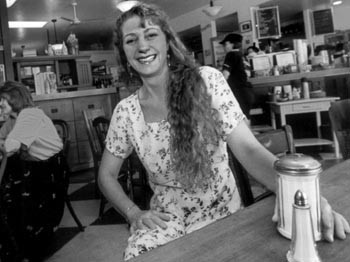
Reading the leaves: Maggie Roth, proprietor of the Tea Room Cafe in Petaluma, has created a welcome alternative to the local java scene.

A brief history of tea leads us strangely to Petaluma

By Gretchen Giles

ON A BALMY DAY in 2737 B.C., Chinese Emperor Shen Nung relaxed under a tree while his servant boiled drinking water. A leaf floated idly down into the steaming liquid, a fragrant scent wafted up, and a pleasant stain seeped throughout. A fearless herbalist, Shen Nung took a sip. With unknowing understatement, he declared it good.

No, wait.

It was year five of the seven sleepless years of contemplation on the Buddha. Bodhidharma, the founder of Zen Buddhism, was seated beneath a tree. With two alarming years yet to go, he began to feel drowsy. He reached up and plucked a smooth, green, camellialike leaf, intending to chew it for distraction. Not only was he pleasantly diverted, but the caffeine inherent in the leaf made two wide-eyed years fly by.

Or so they say.

Whatever the story, the topic is tea. Honored through ceremony, sipped for health, served high, low, and creamed, tea is also responsible for insurrection, unrest, one very wet party, and the explosion of the British shipping and porcelain industries. Many cultures seem to have been built on tea’s watery back, and from culture flows custom.

Replacing gin and whiskey as England’s favored drink, tea as a custom inadvertently aided the early rise of feminism by creating that den of suffragist plotting: the tearoom. A place where a woman could go by herself without male supervision, have a warm drink, a small cucumber sandwich, and perhaps just one slice of strawberry cake. Quietly. Alone. Or, even better–with friends, in a relaxed setting where just for that once she didn’t have to slice the damn cucumbers, bake the damn cake, or do the damn dishes herself.

Because someone very much like Maggie Roth would do it for her. Not that the soft-spoken Roth resembles anyone’s maiden aunt. Nor does she favor the simple black frock and stiff starched pinafore of early tearoom purveyors. As for the dishes, well, on one recent visit it was Roth’s husband, local artist David Best, who donned the rubber apron and bused cold teapots and the odd muffin crust from the tables of her simply named Tea Room Cafe.

But she did open the place.

“I grew up with tea every afternoon. It was something that my mom did with all of us, serve us tea with cinnamon toast–just something that simple after school,” says Roth, seated outside her popular 7-week-old Petaluma establishment. Drinking tea in Ireland is nice too, as Roth has discovered over years of visiting and owning a cottage there. Her parents spend half of each year in a home they purchased 37 years ago near Tipperary.

Opening the favored Bluestone Main, an upscale garden and gift store in Petaluma, 11 years ago, Roth–who sold the store in 1997–is no neophyte when it comes to serving the public. As with Bluestone Main, the Tea Room Cafe has the rural sophistication that is Roth’s signature. Her husband’s work adorns the walls, old Texaco signs have been re-upholstered with glass to spell TEA along the wainscoting, and air, light, and white are the keys.

In short, it’s the kitchen most of us don’t have.

YET Roth’s restaurant experience is limited to ordering a meal and asking for the check. “Basically, I wanted a tearoom, but I inherited a breakfast/ lunch place. It’s more than I expected or wanted, but it’s been fun,” she admits with a shrug.

Inheriting the chef doesn’t hurt, either.

Cathy Fox, who cooks and helps Roth devise the menus, figure the pricing, and portion the servings, has worked on and off at the Tea Room Cafe’s site for the past 18 years, through three different businesses, including Markey’s Cafe. “They just add $500 to the lease price for me,” she jokes merrily, serving an outdoor breakfast.

“I’m basically winging it,” Roth admits. “I haven’t come from any training. I love to cook, and I’ve done catering and everybody has helped me. I don’t know if there is any real science–well, I know there is, but I don’t know it.”

Other than science, what has been the biggest surprise of Roth’s new venture?

“The food,” she bursts out with a laugh. “In retail, you buy something for $1 and stick it on the shelf for $2. It looks good, you check it every once in a while, hopefully it sells. When you buy an onion–you have to chop it, you have to cook it, you have to wash the plates. There’s just this constant movement of work going on.”

Ah, yes. But as Bodhidharma himself might have remarked, it’s lovely to turn over a new leaf.

The Tea Room Cafe’s hours are 7:30 a.m. to 5:30 p.m. weekdays; 8 a.m. to 5:30 p.m. Saturdays; 8 a.m. to 3 p.m. Sundays. 316 Western Ave., Petaluma. 765-0199.

From the April 15-21, 1999 issue of the Sonoma County Independent.

© Metro Publishing Inc.

Aid to Kosovo

0

Sigh of Relief

Editor’s note: A massive international relief effort is underway to assist tens of thousands of ethnic Albanians fleeing the war-torn Kosovo region. The following are among the many relief agencies offering help to those men, women, and children–many in need of immediate medical care–seeking sanctuary in Macedonia, Albania, Turkey, the United States, and the nations of the European Union.

For a more complete list, check the website for InterAction, a coalition of more than 150 non-profit organizations working worldwide on humanitarian assistance projects in Kosovo. Or contact InterAction Disaster Response at 202/667-8227.

Here is a select list of agencies:

American Friends Service Committee, 1501 Cherry St., Phila., PA 19102 (888/588-2372)

American Jewish Joint Distribution Committee, 711 Third Ave., 10th Floor, New York, NY 10017 (212/885-0832 or 212/885-0889)

Islamic African Relief Agency USA, POB 7084, Columbia, MO 65205 (800/298-1199)

American Red Cross International Response Fund, POB 37243, Washington, D.C 20013 (800/HELPNOW)

CARE, 151 Ellis St., Atlanta GA 30303 (800/521-CARE)

Catholic Relief Services, POB 17090, Baltimore, MD 21203 (800/736-3467)

Lutheran World Relief, POB 6186, Church Street Station, New York, NY 10277 (800-597-5972)

Oxfam America, Kosovo Relief Fund, 26 West St., Boston MA 02111 (800/77-OXFAM)

Save the Children Federation, 54 Wilton Road, Westport, CT 06880 (800/814-8765)

United Way Int’l, 701 N. Fairfax St., Alexandria, VA 22314 (703/519-0092)

US Committee for UNICEF, 333 East 38th St., New York, NY 10016 (800/FORKIDS)

Web extra to the April 15-21, 1999 issue of the Sonoma County Independent.

© Metro Publishing Inc.
Steep-Slope Ordinance

0

Grape Gripes

By Janet Wells

IT’S NOT A DONE DEAL, but a landmark ordinance that would place limits on local grape planting won an overwhelming show of support on Tuesday from the county Board of Supervisors. But the topic wasn’t without discussion at a packed public hearing.

After 18 months of negotiations, grape growers and environmentalists had forged the unprecedented agreement to protect stream habitat for threatened coho salmon and steep hillsides from erosion caused by encroaching vineyards. The agreement forms a template for the county’s first land-use regulation for Sonoma County’s increasingly valuable wine-producing acreage. It is similar to a steep-slope ordinance adopted five years ago in neighboring Napa County.

But in turning the negotiated plan into an ordinance that went before the supes, county attorneys made key changes that environmentalists say could weaken the hard-fought agreement. “We are fully in support of the agreement made between the growers and the environmental community. The document in front of the board does not really reflect that agreement,” says Mark Green, executive director of Sonoma County Conservation Action, which spearheaded the negotiation efforts. “We were assured that when county counsel came out with the draft document we would be invited to sit down and talk, and any amendments would be made before it went to the supes. That did not happen.”

More than 60 people packed the supervisors’ chambers Tuesday afternoon, and the board heard from dozens of supporters and critics before giving unanimous support in a straw vote. The board also ordered revisions to the ordinance, which will return for final approval May 11. “You’re getting a lot in the package,” says Bob Anderson, executive director of United Winegrowers for Sonoma County and one of the negotiating team. “I hope the good feeling we had in bringing it to you, we have when you’re done with it.”

While there is some urgency to enact an ordinance before the vine-planting season goes into full swing, the board “wants to get it right,” says Supervisor Mike Reilly. “We’re willing to take the time to make an ordinance that makes sense, is enforceable, and doesn’t create any more of a burden than it has to.”

The basic provisions of the ordinance require growers to obtain and pay for permits to plant grapes and to provide erosion-control plans for steeper acreage. In addition, the ordinance requires that vineyards on the edge of streams, creeks, and rivers abide by a 25- to 50-foot setback, depending on the slope of the acreage, to protect vegetation and wildlife habitat. The ordinance stipulates fines for landowners who ignore the rules.

“It certainly is an additional burden to some people in viticulture and agriculture, no question,” Reilly says. “Is it justified in terms of public good? I believe it is. The Russian River and all its tributaries officially have been classified as an impaired waterway due to sedimentation. That specifically is what this erosion plan addresses.”

THE PROPOSED ordinance reflects the public’s growing concern as the region’s $300 million wine-grape industry expands into erosion-prone hills and fragile riparian zones. In the past few years, several incidents spurred environmentalists to make noise about a ballot initiative to put limits on vineyard development. Gallo Winery was cited for recontouring hills and planting along the edge of Porter Creek, and a vineyard above Warm Springs Dam was fined $50,000 for steep-slope planting that led to an enormous amount of soil eroding into the Gualala River during a severe winter storm.

The conflict between growers and local environmentalists continued more recently with Kendall-Jackson’s proposal to cultivate a new 127-acre vineyard on 189 acres in Graton. Residents say they are concerned about the project’s water supply, pesticides, and potential development.

Rather than pursue a divisive ballot measure, representatives from growers’ associations, the Sierra Club, Friends of the Russian River, and Sonoma County Conservation Action hammered out “a mutually agreeable solution,” Green says.

“It’s a dramatic improvement from the situation we are in now. I don’t pretend it’s everything we wanted, but I’ve had to look at the reality of what’s going to happen over the next few years if this ordinance is not enacted,” he says. “If you can get a 50-foot setback, while it may not meet all the needs of the creek, the reality is that right now an owner can mow down all the habitat right to the edge of the creek. “

For the ag community to agree to regulation when there is none is a major step forward,” he says.

Anderson agrees, albeit reluctantly: “Clearly, any time you have more regulation, the conclusion would be that we’d be better off with less. But we’ve been able to work out, through these negotiations, an approach that we can live with.”

The sticking point now, says Green, are several substantive changes to the agreement, including giving the county ag commissioner the power to exempt landowners from the set-back provisions, as well as a loophole that will allow development of acreage with more than a 50 percent slope.

Sonoma County has about 45,000 acres in vineyard cultivation, up from about 30,000 acres just 10 years ago. The price for land cultivated with premium grapes has doubled in three years, fetching up to $50,000 an acre. In Napa County, where premium acreage fetches even higher prices, growers pay $1,300 to permit a hillside vineyard, regardless of the size.

SEVERAL SPEAKERS encouraged the supervisors to adopt a sliding scale for permit fees, based on the size of the property, as well as high penalty fees to discourage growers from violating the ordinance.

“I think it’s reasonable to give the ag commissioner discretion to fine up to $1,000 a day until the problem is corrected,” Reilly says.

Forestville resident Susan Bryer-Starr says fines should be even higher. “Damage to the environment is irreparable. Fines of $1,000 a day are inadequate,” she says. “Fines should be equal to or greater than the potential profit from the project.”

The proposed ordinance certainly has its critics. While some environmentalists see the ordinance as selling out, others in the agriculture industry see it as going too far. “I’m wondering if I’m a threatened species,” says John Bucher, former Farm Bureau president. “The 50-foot setback is too extreme. I’m concerned that in two years it will become the norm for all agriculture.”

Sebastopol farmer Shepherd Bliss says the proposed ordinance is “very weak.” He would like to see a citizens’ referendum on vineyard development. “As a small-scale farmer, I’m concerned that continuing growth will reduce diversity and we’ll become like Napa,” says Bliss, who grows organic berries and sells free-range chicken eggs. “We’re 40 percent grapes and Napa is 90 percent. Ten years ago we were 30 percent. What we’re experiencing is a movement towards monocrop. I see the wine industry as the biggest problem in the county now. They present themselves as green because they do have vegetation, but it’s not a diverse landscape with redwoods and oaks,” Bliss adds. “We’re being transformed from the Redwood Empire into the Wine Country. It’s such a different metaphor.”

From the April 15-21, 1999 issue of the Sonoma County Independent.

© Metro Publishing Inc.
Thai-Burma Border

0

The Road to Burma

Under threat of military reprisals Sebastopol physician Ben Brown and a cadre of colleagues bring medical aid to refugees on the turbulent Thai-Burma border.

By Janet Wells

WE HOP OFF a flatbed truck in the middle of a dusty rutted road in western Thailand, our faces and clothes clogged with the grit of two hours of open-air travel. As our driver lurches up a hill and out of sight, we turn to look at the low rugged hills rising just beyond the banana fields withering in the heat of the dry season: Burma, our destination, although we are far from any official border crossing.

Lugging bags of cucumbers, tomatoes, catfish, and cabbage, we walk a well-worn path through the fields to the banks of the Moie River, where we find two small bamboo rafts waiting to carry us over to one of the refugee camps dotting the Burmese side of the war-torn border. It takes several trips to ferry 10 people and supplies on the rickety rafts, which sink a few inches in the clear green water. On the other side, children and adults, sheltered by umbrellas against the scorching sun, stand silhouetted against the horizon, watching our arrival.

We are not supposed to be here, and I half expect Burmese soldiers to come bursting out of the jungle, waving guns and shouting in a language inscrutable to Western ears. But the camp is quiet, almost motionless during the sweltering midday hours, and I realize that we are not the ones in danger. When the sun goes down, we get to leave, back to where there are no bombs falling, where soldiers aren’t burning our homes and fields, where there is enough food and water.

The people here, ethnic Burmese forcibly moved from their villages and relocated to this desolate border camp just a stone’s throw from Thailand, have only the luxury of hope.

Sebastopol resident and family-practice physician Ben Brown has been spending his vacations in the battle-scarred villages along the Thai-Burmese border since 1989, when, as a fourth-year medical student, he took off for northern Thailand with the idea of working at one of the refugee camps along the borders of Burma, Laos, and Cambodia. An American doctor sketched a crude map on a napkin, pointing the way to a makeshift refugee medical clinic near Mae Sot, a border town northwest of Bangkok.

Committed and compassionate, with a ribald sense of humor, Ben has a penchant for jumping up onstage to play harmonica or drums. His stories of the Burmese people, the politics, the land are hard to resist. Ben raises thousands of dollars each year for the clinic through his brainchild, the Burmese Refugee Care Project, or BRCP, and when he returns each year to Thailand, he almost always has friends or colleagues in tow.

Veronica Vuksich, a 45-year-old Santa Rosa osteopath and HIV expert, is returning to the clinic for the third time. In 1994, she was part of one of the first mobile medical teams to foray deep into the Burmese jungle to offer treatment in remote villages. Veronica faces more than the usual language barrier of working in an area where little English is spoken. Deaf in one ear and hearing-impaired in another, Veronica relies on lip reading. “But not with the medics here,” she says cheerfully. “They have completely different phonetics.”

Sebastopol photographer and freelance writer Diana Cushing, 46, has known Ben for 10 years. When Ben hit upon the idea of the Burmese Refugee Care Project, Diana offered to extend the non-profit status of her own group, Arete, which she started in 1984 to help orphaned children in Ethiopia. Diana first visited the clinic last year, and is coming back to write a story, she says, “because I love it here.”

Dana Harrison, Berkeley resident and a former Charles Schwab & Co. vice president, is in the enviable position of being retired at age 38.

Ben Brown


Like me, Dana is seeing the clinic and the western border area of Thailand for the first time. It is early March, the beginning of the hot season, and the five of us converge at the Mae Tao Clinic, known to most locals simply as Dr. Cynthia’s out of respect for its chief physician Dr. Cynthia Maung. A bustling, ramshackle compound that sees 20,000 patients a year, the clinic offers the only care in the area for refugees, many of them suffering from jungle malaria. More than a few come in with land-mine and shrapnel injuries.

March is the busy time of year along the border, when the military historically steps up its operations against the ethnic Burmese and pro-democracy groups who oppose its rule. Last year and the year before, the Kway Kaloke refugee camp, located in Thailand only a few miles from the clinic, was shelled and burned.

This year, there are rumors of a March 27 onslaught.

Far from the neon and commercialism of Bangkok or the palm-studded beach resorts of the south, Mae Sot is a town with a frontier feel, the Wild West of Thailand. In this border town ripe for smuggling Burmese gems and drugs, the streets teem with a mixture of cultures and races. The town is accessible by tortuous mountain roads or two short flights from Bangkok, which offer aerial views of patchwork fields surrounded by dense hilly jungle. Brilliant green in the wet season, the rice fields now are seared and brown, the air smoky from seasonal burns.

At the outskirts of Mae Sot, we pull up in front of a motley collection of structures and shacks. Most are open-air, the predominant materials bamboo, broad dried leaves, and concrete floors.

Dr. Cynthia Maung’s house is at the entrance, the front door seemingly always open, people and dogs lounging around the stoop. There’s the old clinic, Ben says, pointing to a large wood house on stilts. Continuing the tour, he points at a thatched roof bungalow: the outpatient clinic. In its three classrooms, the medics conduct immunization, family planning, prenatal, and nutrition sessions. The new inpatient hospital, just completed two weeks ago, much of it funded by BRCP donations, is at the back of the compound. The most high-tech building, the clinic’s cinderblock and corrugated-tin-roof hospital boasts 18 plank “beds” with vinyl covers, and IV fluid bags nailed to bamboo poles. There’s a volleyball net over hardscrabble dirt, a small store, and, impossibly, it seems, a flower garden thriving in the tropical heat.

The sprawling compound represents a major improvement over the clinic’s start in a converted dirt-floor barn with just one medical text. Dr. Cynthia, as everyone calls her, escaped the Burmese capital of Rangoon in 1988 and established the clinic to treat the influx of refugees fleeing Burma’s repressive military regime, the State Peace and Development Coalition. Maung intended to leave for 10 days to protest the mass killing of pro-democracy demonstrators, then return to resume her medical practice.

She has not been back since.

We sit in the shade of the quiet outpatient clinic, closed on Sunday, and enjoy the slight breeze that wafts through every so often. Tacked to the split-bamboo screen are sun-faded posters of Burmese democracy leader and Nobel Prize winner Aung San Suu Kyi and the U.N. Bill of Human Rights. Both are ubiquitous in the border area, in guest houses, and in restaurants–and often are the sole decoration in refugee huts.

We ask Ben about cultural no-noes, and he tells us the basics: Don’t point your feet at anyone, don’t pat babies on the head, don’t wear short skirts if you’re female, and if you’re male, he says, wear the right kind of skirt.

It seems that Ben, eager to fit in with the Burmese men during his first stint at the clinic, decided he would wear a cool saronglike longyi. He bought a subdued grey and black flower-patterned cloth and wrapped it around his waist. “When I came out, one of the medics turned around and literally fell on the ground laughing. He finally managed to squeak out, ‘That’s, that’s a woman’s pattern,'” Ben says, laughing at the memory. “Men’s longyi are checked. But the Burmese give you a lot of leeway because you’re foreign.”

Our first stop is the Kway Kaloke camp, where 10,000 refugees make their home in thatched huts on stilts. An estimated 5 million Burmese are refugees of some sort, most of them from the ethnic Karen, Shan, and Mon tribes. Some are displaced within the country, others are living in camps in Thailand as officially registered refugees, many are living in Thailand illegally. Burma–renamed Myanmar by the ruling military–was once a thriving agricultural nation known as the Rice Bowl of Asia. Now, after more than a decade of civil strife, it is one of the 10 least developed nations in the world.

Ben, like most of the several dozen ex-patriots from Europe and America working in the border area with humanitarian aid groups, tries to stay as far away from the convoluted politics of war as possible. “You have to know the politics, but not give it too much weight, because it’s depressing,” Ben says. “You have to know it so you don’t get killed. You don’t want to go somewhere that’s going to be shelled.”

Kway Kaloke, Ben assures us, is safe during the day. But Westerners all leave by sunset because of the nighttime attack strategy of the DKBA, an ethnic Karen splinter group in alliance with the military regime. BRCP donations built the orphanage at Kway Kaloke and provided funds for art classes and a women’s sewing project, which was destroyed by shelling last year.


Diana Cushing (top and left) and Ben Brown (right)

In country: Caught between feuding factions in a bloody civil war, a Burmese family forced to relocate to a refugee camp bides its time (top); Santa Rosa osteopath Veronica Vuksich and Burmese medic Hmo Motin examine a woman at the camp’s makeshift clinic (left); a young freedom fighter exhibits his grenade launcher (right).

The camp’s Thai police officials, who are watching television in the shade under a hut, allow us in, and we find a lively group of children scissor-kicking over a piece of rope held high by their friends. The kids are barefoot, their faces grimy and clothes stained. They laugh and push each other, every now and then glancing sideways at the tall foreigners clicking pictures.

Ben starts juggling and within seconds is the pied piper of the camp, leading a throng of enthralled boys and girls. He does magic tricks, pulling a coin out of one boy’s ear, a red handkerchief out of another’s. They chatter and giggle, wide-eyed with surprise as things disappear and reappear. Veronica whips out her video camera and is buried under a swarm of kids eager to see their images on the view screen.

We climb a short bamboo ladder into a hut and greet Hser Paw, daughter of the camp’s headman and a resident of the camp since 1984. Wearing a longyi and a blue-striped Nike shirt, she sits on the bamboo slat floor. The roof and walls are made of tightly layered leaves from a teaklike tree. There are two open levels and two small areas sectioned by bamboo screens. There is no furniture; a single door is made of cardboard.

Sweet-voiced, with a luminous smile, 32-year-old Hser Paw struggles with English as she tells the story of running into the fields last year to escape shelling by Burmese troops.

Her mother was hurt by mortar shrapnel, she says, and her family’s hut burned to the ground. Their hut burned two years ago as well when soldiers set fire to the camp.

“Every people are frightened that tonight the Burmese will come,” she says. “Some children when they hear the noise of bullets, they are shaky. We are afraid. But we have to sleep here. We have to sleep.”

Hser Paw translates for her uncle, who displays a poignant faith in international support. “If the United Nations came and took care of us for six months, it will be peaceful in Burma,” he says, speaking Karen. “Because the United Nations stands for the whole world.”

Cool enough for a blanket during the night, it is already getting hot by 8:30 the next morning. I find Dana walking up the road toward Mae Sot. She is grinning hugely. “Mango and sticky rice,” she says, holding out a Styrofoam box procured from a street vendor. “Food orgasm.”

The final component of breakfast nirvana, she says, is Thai iced tea at the River House. I follow her into a cozy restaurant that caters to the ex-pats in town: real coffee, classical music, banana pancakes, Bangkok newspapers. No one minds that we brought our own food; they even offer forks to eat the special rice soaked in sweetened coconut milk, covered with succulent mango slices.

This is not Dana’s first trip to Thailand, or her first contact with the Burmese. She tells of a 1993 trip to Mae Hong Son, a provincial capital in the north, when she met two young men who said they were Burmese Freedom Fighters. “I asked where they learned such good English, and when they said ‘Rangoon University,’ I said, like a hostess, ‘Oh, how nice! And what are you doing now?’ ‘Living in the jungle,’ they told her, trying to evade capture by military soldiers who, they say, usually work the conscripts to death.

Diana Cushing


“I asked them if they would go for amnesty in the United States, and they said if they did their country would never enjoy the freedoms we have,” Dana says. “They were incredibly educated about democratic principles. I felt like I was talking to Patrick Henry and Thomas Jefferson.

“It really struck me,” she adds. “I came back to California, and that year there were a lot of those really stupid ballot measures. We have options and freedom and this is what we’re doing with it? The contrast was tremendous.”

At Maung’s house, Diana is compiling a tongue-twisting list of acronyms representing the 30 non-governmental organizations funneling aid to the clinic. Ben suggests unifying groups that are working in the same areas, and Maung reminds him of the politics of humanitarianism. “It’s difficult to do it without creating conflicts between governments and the NGOs,” she says. “It’s better to keep it small and focused.”

The heart and soul of the clinic, 39-year-old Maung is seemingly unflappable, even in the midst of endless bureaucracy, sick patients, and visitors all wanting a piece of her time. The clinic is much like a small business, requiring more than $150,000 annually in donations and grants to cover medicine, food, rent, lab tests, orphan care, fees to the Thai hospital in Mae Sot, and training for more than 100 refugee medics. Dressed in a green-striped longyi and white T-shirt, her long black hair in a loose ponytail, Maung sits in her “office”–two chairs and a low table separated from the kitchen by metal filing cabinets and bookcases.

Ben has an almost reverential respect for Maung. “She has a quiet confidence, an unconscious caring. She’s like a mother,” he says. Ben helped deliver her first child, a boy she named Nein Chan, which means “peace” in Burmese.

Ben almost canceled his trip this year when he heard that Maung was scheduled to travel to the United States in March to meet with congressional and U.N. leaders. He figured he would be needed more as an escort, easing her foray into the international spotlight. But Maung declined the trip, worried that she would not be allowed back into Thailand since she is a Burmese refugee with no passport.

“I want to see other parts of the world,” she says, her voice quiet. “But it’s risky. And in the dry season on the border, it’s more fragile. The fighting has already started inside [Burma]. People in the camps are not secure.”

In one of the clinic’s bamboo-screened outpatient rooms, Veronica consults with Tamara Horwich, a Columbia University medical student, about a 33-year-old man complaining of pain near his belly button. Tamara feels a mass and wonders if it is some kind of infection.

In the West, says Veronica, doctors would immediately order a blood count, CAT scan, and biopsy. Here the main tools are reasoning skills and experience. Veronica diagnoses a tumor, probably non-Hodgkin’s lymphoma, she says. There is no radiation treatment available, so Veronica, with medic Ah Mang translating, explains the condition and answers questions.

“It’s frustrating sometimes not to be able to give the standard of care [we’re used to in the West],” she says. “But we can help them understand what’s going on and what to expect.”

Veronica sees patients and helps train the medics in everything from rashes and HIV to diarrhea and nutrition. While the clinic has little in the way of technology, there’s a sense of freedom, she says, that Western medicine lacks. “This isn’t diluted with insurance forms, legal ramifications. “There’s not a lot of bureaucratic overlay. It’s very rewarding,” she says. “This is where I can practice real medicine.”

In the cool of the morning we leave the clinic for the refugee camp inside Burma, standing in the truck for much of the two-hour drive. The camp has grown from 200 to 4,500 residents in less than a year. The residents were forced from their homes, but, unlike Burmese refugees in Thailand, they are allowed to walk back to their villages during the day to tend their coconut and mango trees and animals.


Janet Wells

Juggling act: Ben Brown entertains children at the camp.

We cross the Moie River and carry food supplies up to the camp clinic, a single bamboo hut next to a field charred and ashy from recent clearing.

We walk up a scrub-covered hill to the camp’s church-funded school, where the students sing Christian hymns in Burmese. One young boy proudly recites the ABCs for us. Although teaching any language but Burmese in the camp schools is prohibited, students learn a smattering of English, Thai, and Karen. In the distance we hear the sound of drums and cymbals, and catch a glimpse of a colorful parade through trees thick with dust.

Four youngsters, dressed in lace and sequins and gold-trimmed finery, their faces rouged and powdered and shaved heads covered by ornate flowered headdresses, are re-enacting the legend of Siddhartha giving up the riches of royalty.

It is an annual rite of passage for Burmese boys who choose to become Buddhist. Men carry the boys on their shoulders, and a crowd of musicians and well-wishers holding bright umbrellas against the afternoon sun weaves through the camp to a make-shift temple in one of the huts. The boys, dark-eyed and solemn, sit above everyone, drinking juice. The symbolism of sacrifice seems almost jarring in a place where most families have little more than one pot for cooking.

After a traditional Burmese lunch of jungle vines, catfish, and vegetables in an oily curry paste, I walk toward the creek, trying in vain to find a pair of elephants spotted earlier in the fields.

“What’s so incredible is the amount of suffering all these people have gone through,” says Diana, returning from a picture-taking foray. “I look around the camp and think, wow, I can take great photos, it’s beautiful. But their lives have been blown apart.

“My son gets freaked if he has a bad dream or sees a weird movie. These kids are living a weird movie,” she says. Even in the shade with the creek burbling nearby, the air is hot and close, smelling of smoke and sun-baked dirt. Three men work in the sun to fix a waterpipe snaking from the creek to a newly tilled field. “People can go through so much and still smile. You see the depths of the human will come forth,” Diana says.

She muses about returning to Sebastopol in less than a week, to the comfort of her own car, her own house, her family. “The hardest thing about coming back to Sonoma County is how isolated people are,” she says. “It will feel strange to go to Food for Thought, where you roll your little cart down the aisle, instead of the open market where people are wearing colorful clothes, bumping into you, spitting, saying hi.

“It’s important to get out of the bubble in California and wake up to what’s happening in the world,” Diana adds. “Burma is not the only place. There are so many places that have their own unique version of the same situation.”

On the ride home, we all lie down in the truck bed, drained by the day’s heat. Our driver stops to pick up a Thai soldier, and I learn from Ben that our access to the camp is no accident: Maung’s supporters cultivate friendships with Thai authorities. The Thais officially are neutral in the conflict between the Burmese military, the pro-democracy forces, and the ethnic tribes. Wanting to remain on peaceful terms with their neighbor, Thai officials have done little to stop forced relocations or attacks on refugee camps even in Thailand. Many refugees live in fear of being deported.

Ben talks quietly about the day at the camp and about his past trips to the clinic. The sun slowly sinks, a golden glow reflected in the roadside jungle and fields. “There’s always a lesson for me,” he says, his voice mellow and sleepy. “I’m never sure what it’s going to be.”

The next morning I see Dana at the River House, looking very glum. “I had a little situation last night,” she says, leaning forward. “But I don’t want to talk about it here.”

We finish breakfast and walk toward the town’s open market. She explains that she had gone out late in the evening to buy a soda, and started talking to a man in his 50s who spoke excellent English. “He invited me to sit, and I said that I didn’t want to sit because I had been on a long truck ride. He said, ‘Oh, a long truck ride? Where to?’ When I told him about going into Burma, he proceeded to basically grill me.”

Who was she with, what did she see, how many in the group, what were the names of the camp’s teachers, the man asked. “I’m such an American, I was, like, ‘Blah, blah, blah.'”

When the man mentioned that he was a businessman from Myanmar, Dana’s guard went up. “No single other person that we’ve run into has said ‘Myanmar.’ I started being vague, and got the hell out of there. The good news is that I didn’t mention Maung, Ben, any names of organizations,” she adds. “But I did mention the name of the camp, the school, and that they teach Thai, Burmese, Karen, and English. He was all over that.”

Ben had Dana re-create the entire conversation late that night. “This is not good,” he told her.

Diana Cushing


“He didn’t pretend to be Karen, so he’s probably not a Burmese secret agent, but he’s probably high up, and there’s a likelihood of him going and telling someone that there’s an American group that went into the camp,” Dana says. “I just feel so stupid.”

Ben tells Dana that his cover story when visiting Mae Sot is tourist-trekking to border waterfalls and seeing friends. For fear of reprisals, he asks me not to print the name of the refugee camp in Burma or the last names of many of the refugees.

“He felt badly that he didn’t warn us more,” Dana says. “His advice is to treat this as though you were in a spy movie.

“This is a war zone.”

My last night in town we go to Crocodile Tears, where the Thai owner plays American cover songs on the guitar. “This place is like Mae Sot’s Cheers,” says Ben, waving at a group of ex-pats coming in the door. “You walk in and everyone’s like, ‘Hey! Hi!'” The owner’s wife starts playing a large table dulcimer called a Crocodile, the bar’s namesake. Haunting and rollicking at the same time, the music gets everyone clapping and makes me feel good and a bit melancholy, as if there’s a sad story under the chords.

An apt ending to our sojourn to the Burma border, I think, as we all raise our glasses in a toast.

Back in Sebastopol three weeks later, we sit around Ben’s kitchen table, looking at Diana’s photographs. In between bites of stir-fry noodles and tofu, Ben brings us up to date. March passed with no military action, he says. And the BRCP raised an unprecedented $43,000 just in the month he was in Mae Sot.

A man from Boston, who had read about the BRCP on the Internet, showed up with an astounding $10,000 in cash, and some travelers from Oakland who were in the area looking at Burmese antiques dropped by the clinic and plunked down $400.

Then a couple from the East Bay, who are longtime BRCP donors, made their first trip to the clinic. Ben gave them the grand tour, showing them the new hospital, taking them to Kway Kaloke camp, and to a special Burmese dinner.

Dana put together a funding proposal totaling $33,000 for a new computer for the mobile medics program, a microscope for a satellite medical clinic, and two years’ salary for an administrator. “We thought they’d fund just one project,” says Ben. “They funded all.”

As always, Ben says, he receives more than he gives on his trips to the border. “I’ve only been back a week,” he says, blue eyes shining as he looks out the window at sheep roaming in a neighbor’s pasture. “But everything here is so much easier than when I left. I’m feeling a lot of gratitude for simple things–a hot shower, a bed, being able to cook in my kitchen, and having a sink. It’s a real comfort and ease with what I have.

“That’s a gift.”

Dr. Ben Brown will host a slide show to benefit the Burmese Refugee Care Project on Thursday, April 29, at 7, at the Luther Burbank Center. For more information, call 522-9701, e-mail BR**@*****or.net, or check the BRCP website.

Owing to the threat of police retaliation, the exact location of the refugee camp has not been disclosed.

From the April 15-21, 1999 issue of the Sonoma County Independent.

© Metro Publishing Inc.
Talking Pictures

0

Double Take

Life Is Beautiful.

Mary Doria Russell and Peter Carey discuss ‘Life is Beautiful’ and ‘The Last Days’

By David Templeton

Writer David Templeton takes interesting people to interesting movies in his ongoing quest for the ultimate post-film conversation. This column is not a movie review, but a freewheeling discussion of popular culture.

Mary Doria Russell is the best-selling author of The Sparrow and Children of God, a hard-hitting, two-part science fiction epic she gleefully describes as “Jesuits in space.” The winners of numerous awards, Russell’s astonishing extra-terrestrial tragedy is the saga of an intelligent, well-meaning band of priests and scientists from Earth who attempt to make mutually-beneficial first contact with the inhabitants of a distant planet. Peter Carey is the Australian-born author of Oscar & Lucinda. His recent best-seller, Jack Maggs, is an absorbing tale of a convict from the prison colony of Australia who illegally returns to London to (unwittingly) face his own ghosts with the help of a nefarious hypnotist.

What follows is a complete transcript of the Talking Pictures conversation with Russell, Carey and interviewer David Templeton.

Russell: Did you notice the stunned silence in the theater? As if no one could bring themselves to get up and walk out on the credits. It felt as if, to walk out on the credits would have been an insult. That film, to me, should be required for anybody who goes and sees one of these exploitative comedies, like Life is Beautiful. I get angrier and angrier when I think about that film, and The Harmonists and Jakob the Liar [an upcoming Robin Williams comedy/drama set in the Polish ghettos of World War II] and all the rest. If you go to those films you should be required afterwards to see The Last Days.

Carey: [Addressing Russell] I didn’t feel your sense of intense anger about Life is Beautiful when I saw it. But I’m perfectly capable of feeling it now. But when I did see it, I certainly had a lot of reservations, while enjoying a lot of things about it. But there were things that didn’t quite make sense, that were badly done. But I was thinking, there are assumptions that are made about what people know already about the Holocaust. So when you say what you just said–a film like Life is Beautiful is read differently by people who know about the things shown in this film–as opposed to your 13 year-old son, or even someone’s 30-year-old sons and daughters–who have no idea. I don’t know what that leads to, but …

Russell: I was only annoyed before. But after seeing The Last Days … This was an intensely emotional experience, and I was completely unprepared for how enraged I am by use of the Holocaust for entertainment. So there. I’ve really put a damper on this conversation, haven’t I?

Carey: Well, I think the film put the damper on the conversation, really. After watching this, almost everything around us seems trivial.

Russell: Yes.

Templeton: Anything we say would be only restating what the film has already said much better. I’ve seen a number of documentaries about the Holocaust, and I almost always prefer them to fictional films about the same subject, including Schindler’s List, although even that was …

Russell: … based on a true story. Only based on.

Templeton: Right. And yet this film, The Last Days, was among the most powerful I can remember, because it did balance those images, the mountains of bodies, with those very minute, highly personal details of the survivors lives. And those who didn’t survive. By flowing back and forth between the Big Picture and the Small Personal Picture, I think it really got through any emotional barriers people might but up.

Russell: This is the one that I would want people to see. This was made to educate people about the Shoah, as opposed to using the Shoah to educate people. That’s a subtle distinction, but it’s important. You don’t take the Holocaust and make it into a tool to teach people about “man’s inhumanity to man.” Okay? That’s appropriating the Holocaust. It’s using it for a larger purpose. This film was to educate people about this one event in history, an event which belongs to those people who were victims of it, who experienced it, who survived it. I think that’s something that very few people get. The difference between using it to teach, and teaching it. A subtle difference, but extremely important.

Templeton: I think that your anger, your angry reaction to films like Life is Beautiful and The Harmonists is very important. Because anger is something we’re always so uncomfortable with. When people are upset at any cause that is important to them–and they display a sense of anger or outrage–our initial reaction is to calm those people down, make them feel better, and shut then up as quickly as possible. [Turning to Carey] Though it refers to an entirely different situation than the Holocaust, I was struck by something I read in an interview you once gave, where you were talking about reading David Copperfield, and recognized that the character of Magwitch was an ancestor, a convict sent to Australia, and that your reaction was one of anger.

Carey: Well, yes. But let me tell you. The intensity of that anger was not at this level. [He gestures toward Russell.] I mean, they are real feelings, and they’re not manufactured, but it’s not like this. And I feel wary of even getting into that conversation, because it feels like getting into a book promotion chat, and that also feels … sort of inappropriate right now.

Russell: I’ll be very honest with you, and tell you that one of the reasons this hit me so hard, is that my third novel is about the Jewish underground in Genoa during the Nazi occupation of Italy. That’s what I’m working on right now. I’m Italian by heritage, and I’m a Jew by choice. So this brings together two elements of my background to do this.

Templeton: You were raised a Catholic, weren’t you?

Russell: You can’t even go that far. I was raised as a Catholic in a very spotty manner, because my mother happened to have married a Catholic and had to promise to raise the children in that religion. I never saw my parents in a church, outside of weddings and funerals, my whole life. So it’s not like I was ever very Catholic. I was an atheist for many years and … it’s a long story. I’m writing about an era of history, and about a place, where there was an 87 percent survival rate. Okay? The Italian part of me wants this to be known, that there was one place in occupied Europe where the opposite percentage of deaths took place–when compared to the rest of Europe–where the people of the villages where Jews lived, and in the cities and the neighborhoods, where the people did not turn on them when the Nazi’s rolled into town. Where people did simply accept refugees that knocked on their door in the middle of the night. I spoke to one woman who is collecting stories for Steven Spielberg in Northern Italy. One woman talks about when she was a very small child–I’m not sure how old she was–they were from Austria, and they got off the train in Italy and literally went to the one place where there was a light on. And her mother knocked on the door, and the woman who came to the door began to scream at them. ‘I’ll have nothing to do with strangers like you.’ They were very obviously Jewish, of course. ‘I’ll have nothing to do with foreigners.’ And as she’s screaming this, she’s writing an address down. She hands this address to Maryanne’s mother, and they go to this address and 20 minutes later, this woman arrives with milk and blankets for the children, and says, ‘I’m sorry. I had to yell. We have a fascist who lives across the street and we had to make an opera for him.’ For the next 20 months that woman took personal responsibility for making sure that Maryanne Krause’s family lived through one of the most brutal and vicious occupations of World War II. Because they knocked on her door in the middle of the night. Now, I have interviewed Italians on both sides–Italian Jews, and Italians who helped, who became rescuers. And what you hear these Italian rescuers saying, over and over again, is, ‘Oh, I didn’t do anything special. Anybody would have done that.’ We’ve just seen a documentary that shows how few people did help, and how extraordinary the Italian reaction to the occupation was. To know that at the end of those 20 months, they had lost only 10 to 12 percent of their Jewish population–still a terrific die-off rate–but compared to the 90 percent that was occurring elsewhere, it’s extraordinary.

Carey: Yeah.

Russell: Now, where am I going with this? I want to tell the story of people who were decent, who maintained their common humanity during this awful period of time. And who paid a terrible price for it. Villages were leveled when they were found to be harboring Jews. And everyone knew this was the price they’d pay if caught. Early on in the occupation, the Nazi’s would randomly round up and shoot ten Italians for every one German who was killed. They’d be executed in public. So everyone knew what the price was for going against the Germans. So I may be fueling this feel-good aspect of the Holocaust. And I’m appalled by that. So I’ve been mentally rewriting the end of my book, thinking, ‘Damn! I’m going to have to kill all of my characters off, to show that they paid the price.’ I’ll have to have readers invest their emotions in these people, only to kill them all off–and that’s too much like my first two books. [Laughs.] So I’m suddenly saddled with this professional ethical problem. I was horrified when I saw the trailer for The Harmonizers. I thought, ‘Oh my God! Another one.’ All about how, if you only had enough courage back then, you could up and slug a Nazi–and get a way with it. They would have put a bullet through his brain that second. He’d have been spattered all over that dining room. But I’m sure that’s not what happens in the movie. And I doubt very sincerely that particular incident was part of the true story.”

[She pauses, taking a deep breath, then shaking herself as if to shake off the tirade.]

Carey: Well. The thing that I was thinking about, and it’s not so much to do with Great Expectations or Magwitch or any of those things, but I was thinking about the whole business of … I was thinking about myself. And I was thinking about guilt, and about responsibility, and about why Australians are the way they are. The history of Australia is not only that the place was this terrible prison, it was a concentration camp.

Russell: Yes. Absolutely.

Carey: So there are twin things at work here. The first thing being, there’s this horrible concentration camp which effects a country forever. Who we are, how we act, and everything, are to a huge degree determined by that concentration camp experience. Then the other thing that happens is the aspect of genocide. When you’re thinking about Australia, and what’s our moral inheritance, it’s a very complicated thing. Because on the one hand you have these people who are, well, some of them are political prisoners, but for the most part they are a criminal underclass that have been sent away.

Russell: If they’d done anything really serious they would have been hung back in England.

Carey: Well, sometimes they gave them the lesser sentence to be nice to them. So it’s very complicated for we Australians to think about this, that our ancestors were murderers and thieves. But it’s also complicated for us because we’ve done two things with this information. Some of them have just started denying that convicts and imprisonment had anything to do with our past. And then, more recently, others started this thing of thinking it was cool to have a convict ancestor. Australians have to do this really complicated thing, of hating their forebears. There are so many threads of self hatred at play in the Australian personality, and part of it has to do with, well … It’s why, when you’re an Australian and you visit Germany, they’re very interested in talking to you. It’s quite under-the-surface, but it’s there. We have something in common. Our forebears did unspeakable things. That might sound rather glib, but …

Russell: That’s very interesting. I listen to you talking about how there’s this sense of responsibility at war with the notion that we ought to be proud of our ancestors. One of the things that happens when you try to universalize the Shoah, for example, and make it into “a lesson for all mankind,” as opposed to its being its own horrible event–is you begin to develop the notion of collective guilt. That Germans who were born in 1950 are somehow responsible for the things that their grandparents and their parents did. I reject that. I think they are responsible for learning everything that they can to know about it, and to prevent other things that are like it from happening. I think that, partly, it’s why the Germans were in so much agony about Bosnia. To watch the genocide happening again. To see other people being lulled into that sense of, ‘Well, it’s not happening in my country, it’s not about me, it’s a civil war and I don’t have to get involved.’ Until very recently, Germany has been one of the most liberal country’s in Europe about accepting refugees. Because of the their commitment to learning from their past. So I don’t accept collective guilt.

Carey: But there’s guilt and then there’s responsibility.

Russell: You’re responsible for what you can do today, now, right at this moment. You are not responsible for what grandpa did.

Carey: Absolutely.

Russell: My grandfather did time for armed robbery. I do not feel responsible for that.

Carey: Yes, of course. So responsibility is good–and that assumption of guilt is very unhealthy–I agree.

Russell: But, should you choose to follow in your forebears footsteps, you know exactly what kind of guilt you’re getting yourself into.

Templeton: There was an incident that took place here in the Bay Area when Schindler’s List came out. A predominantly black high school had a field trip, and sent an entire class of students to see the movie. The expectation was that these black underprivileged students would identify with the oppressed Jewish people in the camps. What happened was, to the horror of the adults in charge of this event, that the students started laughing at the most brutal moments of the film, even cheering when prisoners were executed.

Russell: I remember when that happened. I think it was simply adolescent nervousness with anything that touches them. Teens are so scared of their own emotions that they laugh to distance themselves from those feelings. But going back to the idea of universalizing the Holocaust and turning it into something different, I’ve heard blacks in this country describe slavery as a holocaust. But it wasn’t a holocaust. It was, in its own way, something equally horrifying, but they didn’t put blacks into ovens. They didn’t shoot them by the hundreds and push them into mass graves. They bred them like cattle. Don’t lose track of that specific particularity, don’t lose sight of that specific inhumanity by trying to equate it with the Holocaust. The Shoah has become the great global metaphor for all inhumanity. When, in order to maintain a sense of the real breadth and depth that our species is capable of, you’ve got to keep in mind what specific things humans have done to one another. To be bred like cattle for four centuries, to be treated as property over that period, is a horror that needs to be understood and remembered on its own terms. In Australia, it wasn’t a holocaust, it wasn’t a genocide …

Carey: It was in Tasmania, but anyway.

Russell: Yes. Well, in Tasmania there were the sweeps. That was a genocide. But on the Australian mainland, the idea was, ‘to make smooth the pillow of the dying race.’ The assumption was that Europeans were obviously the pinnacle of evolution, and the march of progress was such that these poor benighted people were destined to die out. So it was a great surprise to everybody when their numbers actually went up. But the notion was that the aborigines were on their way out and the Europeans would be present to make things nice at the inevitable conclusion of their race. That’s a different kind of particular tragedy that must be remembered and dealt with on its own terms. But not by using the Holocaust as a metaphor.

Templeton: I have to ask, not being up to speed on my Tasmanian history, what happened there?

Carey: There are no native Tasmanians in Tasmania. The last full-blooded aboriginal Tasmanian died, I can’t remember when, in the late 19th century.

Russell: In Tasmania, there were sweeps, very much like through the valleys of Italy during the last months of the war, where the Germans would start at one end of the valley just sweep through looking for Jews. In Tasmania, it was essentially the same thing. There would be lines of hunters, literally beating the quarry, just like they would have done with animals, shooting anyone who came in front of them. Tasmania’s not that big an island, so they’d start at one end, and move across. Now, again, that’s a tragedy that deserves to be remembered in its own way. They were exterminating vermin. The thread here is, that whenever the notion of group superiority raises its head, atrocities of this nature are bound to follow. There’s the commonality. The belief that the Europeans had a right to rid Tasmania of Tasmanians, because they were Europeans. You have the Germans believing that they are the Ubermenschen, so they have the right to rid the landscape of Untermenschen. You have European slave owners in the early Americas, who believed they had the right to use other people’s labor and lives as their property and their tools. The common thread in all of this, is the dangerousness of public belief in their superiority.

Templeton: This is why groups like the Religious Right are so frightening.

Russell: Don’t get me started. Now, here’s a question. How do you take a child and make him believe that he is someone who is superior? And that his superiority gives him permission to rob and rape and kill?

Carey: I don’t know that it even has to do with that.

Russell: There is a cultural element to it.

Carey: Yes, but it’s to do with groups, isn’t it? It’s not to do with, you know, you love your little boy to death, and you give him all this great self esteem and he grows up to think he’s got the right to do anything he wants. What we’re talking about is not the way one person behaves, but how groups behave. It’s how tribes, and groups, and families and everything work. We are we, and the others are other. And then one group strikes out against another. It’s happening all the time. Look at Bosnia. Look at Kosovo. We’ve always done it. It’s horrible.

Russell: Of course. You can’t explain Hitler by saying, ‘It was this,’ or ‘It was this,’ or ‘It was this.’ It was all of those things. It wasn’t either or. It was and, and. It was all of those things at once.

Carey: I think, sadly it’s part of being human. Human beings keep on doing this kind of thing. It’s part of who we are. We are continually, continually, continually doing these things. What is it about us? And how do we stop?

Russell: So it was many things. But I honestly believe that a lot of it was the human equivalent of fear biting.

Carey: Fear biting. Is that a commonly used term?

Russell: It is when talking about dogs. Dogs who bite are commonly called ‘fear biters.’ They are animals that have been abused to the point where their first reaction to any stress is to bite. And I think that when you find people who are fundamentally afraid–and it may be fear of insignificance, fear that they really are at the bottom of the heap, maybe because they deserve to be, or fear of being hit before they have a chance to hit first. There was a great amount of physical violence against children in this generation that came up with Hitler, that was so vulnerable to Hitler’s appeal. I think fear is at the root of a great deal of violence.

Carey: I’ve just been reading this biography of Coleridge, by Richard Hart. It’s an amazing book. And there’s Coleridge traveling around Germany in, what? 1798. And he was talking about the really horrible anti-semitism in Germany and the awful way Jews were being treated–and this was 1798. So anti-semitism was present way back in the time of Coleridge.

Russell: I just did a talk for the Cleveland Archdiocese Catholic women’s group, just before I left. I was their keynote speaker at this spirituality conference, and somebody asked how I felt about Jesus. I had to say, ‘Look, I don’t have a lot or feelings about him, but I do get nervous around Easter.’ And there was this big laugh. And I think the laughter was the assumption that, because I am apostate, having been raised as a Christian and having rejected Christianity, that I was worried somehow about my faith. But the rest of my sentence was, ‘Because that’s when the attacks on the synagogues come.’ And there was just silence in the room. No one knew how to react. And I said, ‘Look. I’m not blaming all anti-semitism on Christians, although God knows you’ve done a lot of it. Anti-semitism goes way back, It was there among the Egyptians, and the Greeks, and the Romans, We’ve pissed a lot of people off through history. In Judaism, I think, there are a lot of things that tend to make people deeply uncomfortable. Probably the central issue is that we seem so clear and sure that the god that other people worship is our God.

Carey: I’d like to suggest that a lot of anti-semitism comes from a certain Christian arrogance, too.

Russell: Sure. They come along and write this book of scripture, appropriate ours, but call it the Old Testament while theirs is the New Testament. The new improved Testament. But anti-semitism is very old, and it goes back long before there were Christians.

Templeton: I’ve been rereading Exodus lately, preparing for a panel discussion nest week on the subject of Moses in the movies.

Russell: Oh God.

Carey: Speaking of Moses, I’ve been thinking a lot about something. I was in Chile, having another harrowing experience everyday, trying not to cry every minute for ten days. It was quite recently–with a South African writer, and Australian writer, and a Chilean writer. It was extraordinary. A life changing experience. We went around doing these series of colloquium, in various cities. We ended up in this one coastal area, where–this is it’s claim to fame–there was the biggest earthquake ever recorded–now, what happened on this day in 1960 something.

[Russell uses her arms to pantomime waters parting.]

Carey: Yes. The waters parted. Yes. That’s exactly what happened. And the local detail is sort of amazing. It’s a place of beautiful rolling green hills, and a harbor and a river. When the earthquake struck, causing huge destruction, and then the sea sucked out, far, far out. And what was revealed? Ancient shipwrecks. Ancient. Now, most of the people, being sensible folk, headed for the hills, because they knew that what goes out comes back in. And indeed, believe me, I saw ships that were picked up when the waters did rush back in, and these ships are now imbedded in the hills way up river. But some people did go down to these old galleons to look for treasure. And then the waters came back in with a rush, and that was that. So when I think of Exodus and the parting of the Red Sea, now I know what it was. It must have been a thing like this.

Russell: You know what’s interesting? There actually is an Egyptian account of what we celebrate as Passover, only it’s from the Egyptians’ point of view. It’s from long ago, picked up from written records over three thousand years old. And their version of the story is that the Jews, while enslaved in Egypt, had been making a lot of converts to monotheism. So the Egyptian gods were getting fewer and fewer followers. People were switching over to a one-god form of theology. So the Egyptian priests rose up against the Jews and threw them out of the country. We didn’t demand to be let go, they threw us out because we were a bad influence. Since so few people were doing sacrifice to the Egyptian gods, those gods were liable to get angry soon, so the Egyptians lives and way of life were at risk. So they tossed us out on our ear.

Carey: I like that story better than the other one.

Russell: I thought it was a wonderful story. ‘Hey, the Egyptians are letting us go. Let’s get the hell out of here!’ And my feeling is: and, and, and. Both are true simultaneously.

Templeton: I’d have liked to have seen that in Prince of Egypt.

Russell: You know, we were talking earlier about our books being adapted to the screen. I took my 13 year old son to see Prince of Egypt.

Carey: You didn’t.

Russell: I did.

Carey: Didn’t.

Russell: Did. And we enjoyed it.

Carey: I’m going to leave.

Russell: Oh stop. So as we were walking out of the theater–and they’d basically made the movie into a buddy picture, not about God and Moses, but about Moses and Ramses looking buff together with California accents–we walk out of this thing, and my son said, ‘Mom. Not even God could get a faithful screen adaptation.’

Carey: That’s marvelous.

Templeton: Talking about generalizing your message, Prince of Egypt fell all over itself to please every religion with some claim to Moses. Have you checked the Prince of Egypt web site? There are study guides posted, “For religious use of the film,” that are available in a dozen different religious flavors. There’s a Catholic study guide, a Mormon study guide an orthodox Jewish study guide, a Islamic study guide. You name it, they’ve got it.

Carey: You mean the studio provided these guides? Ahhh, shit. That’s amazing.

Russell: And you have to ask yourself, how many people ran out after the film and bought the book? That’s the big question.

Templeton: Bought the book. [Laughing]. Well, I went back to the book. I reread Exodus, thinking, ‘Wait a second.’

Russell: [Laughing.] Wasn’t Moses a much older man? And didn’t he stutter? And where’s God? He completely drops out of the movie as a character, but God the main character in our version.

Templeton: Val Kilmer did the voice of God too, just like Charleton Heston did in The Ten Commandments.

Carey: We all know God doesn’t talk like that.

Templeton: What does God talk like?

Carey: Only you would know that.

Templeton: Not anymore. Actually, I’m a former-fundamentalist. Years ago, in high school, I was severely born-again, and remained that way for about seven years. Now I look back on that experience as if I’d belonged to a cult. And when I began to see it in terms of being a “cult survivor,” I was able to put things in perspective.

Russell: Things became clearer to you.

Templeton: Yes. And though my experience was nothing like what happened to the people in this film, I did flash on something during the film. Last year, I traveled back to Southern California, to the church that I’d belonged to, as part of a story I was doing on my experiences as a born-again. I walked through those same doors, and talked to some of the same people. And all these old memories and emotions and even a lot of the pain of that time came flooding back. Like the ocean returning after being pulled away by that earthquake. In the film, The Last Days, we saw the survivors each return to their villages, their homes, and to the camps they’d been held in. And they brought their families, their children, their grandchildren, and showed them those places. I liked that they didn’t go back alone, just they and the camera crew, but that we saw them experiencing this flood of memories with someone they loved, someone they could pass the memories down to.

Carey: I think those were among the most moving moments in the film. To see the children and grandchildren trying to comprehend what had gone on there.

Russell: When I went back to Italy to do research for the third book, I went with a man named Alfred Feldman, who was a nineteen year old Jewish boy when he came across the Alps, in occupied Southern France, in 1943. Southern France was occupied by the Italians, and the feeling was, that if you could get over the Alps and into Italy, the war was over. You were safe, finally. Everybody believed this. But of course, when they got across they woke up on September 9, and realized that they were now an occupied country. Everything had changed. It had all turned on a dime. I was walking with Alfred Feldman, who had come across the Alps with the Italian fourth army, and he took me step by step, through the little villages where he was helped, we found the little seminary where he and his father were hidden, because at the beginning of the occupation they felt that they could get people out of Genoa via the sea, and could get them down below the line. The assumption was that the Americans would be there at any minute. ‘Any minute now. A week or so, It will all be over. The Americans will be here.’ What was interesting to me was, that when Alfred went back to these places where he’d been hidden, what everybody we met said was, ‘Oh. We were so worried for you. We were so worried you hadn’t made it.’ And they pointed to these tiny little caves on the sides of sheer drops of mountains, where they had hidden Alfred and his father while the troops were moving through, going house to house, searching for Jews. Nobody ever said anything about, ‘We were so frightened that we’d be caught. We were afraid we’d be killed for helping you.’ Their focus was entirely on the people they’d been helping to protect. And to see that 55 years later. I watched their eyes. I watched their faces. At no time during any of these conversations did they reveal that they’d been concerned for their own safety. It was just remarkable.

Carey: So, we’ve talked about how anti-semitism has been around forever, all over. I wonder, listening to you before, if the degree of anti-semitism in Italy was considerably less than it was in Germany or other places.

Russell: Absolutely. At the time, there was a Jewish admiral in the Italian navy, there were Jewish generals in the Italian army. Starting from the unification of Italy in the late 1800s, the Italian Jews were given full citizenship. So they are enormous patriots. It was eerie to listen to the Hungarian witnesses talking about how proud they were to be Hungarian citizens. Not just Jews, but Hungarians. And of course they were completely assimilated. They looked like everyone else, there was a lot of intermarriage.

Carey: But what influence did the Catholic Church have. How did the church fit into all of this.

Russell: Okay. Good question. The Catholic Church. Let me tell you, Pope John Paul II is loved by the Italian people. He’s more popular there than anywhere in the world. They love him. But what country has the lowest birth rate in the world? Italy. Obviously, someone in Italy is using birth control. So the Italians love the Pope, but they pay no attention to him at all. The Italian attitude toward authority is very different from the rest of Europe. In Germany, authority figures are almost deified. German respect for authority goes very deep. In Italy, a disdain for authority goes very deep. The last time they were well-governed was what, Emperor Hadrian? You have to go back 1800 years to find a really good government in Italy. Getting around the government is like a national indoor sport in Italy. So one word from the authorities in Rome, and everybody goes on about their business exactly as they please. Italian Jews, by the way, are typically not businessman, as they were in Germany. Italian Jews are typically in civil service jobs, or in the military. Because the Jew’s history in Italy is to have been part of the war for unification, that followed Garibaldi, and so on.

Carey: My son the soldier.

Russell: Exactly. My son the soldier. My son the captain. My son the general. So Italians were in a very different place at the beginning of World War II. They had a Jewish prime minister, and about 20 percent of their population were university professors. So scholarship, civil service and the military was where you found Italian Jews. Even though the Jews were a tiny minority, everybody knew somebody Jewish, respected somebody Jewish. And because there was a lot of intermarriage, every Italian Jew had Catholic relatives. That was the upside of intermarriage. The Jews had somebody to go to for help.

Carey: Yes. Well. That didn’t work out so well in Hungary did it?

Russell: I don’t know if there was very much intermarriage in Hungary though. I’m really not sure.

Templeton: You know what’s disturbing, maybe this tells us something about human nature. We’ve just watched a film jammed with memorable moments, unforgettable stories and people. The woman hiding the diamonds from the guards in the camp. The man almost unable to step forward when he saw what remained of the ovens. The soldier showing the Mennorah made of nails from Auschwitz that had been given to him by one of the prisoners he’d helped. All these amazing images. But still, the face that I’ve flashed on the most often in the last hour, was the face of that Nazi doctor.

Russell: Dr. Munsch. He’s a fascinating character, isn’t he?

Carey: What’s frightening about him is his terrible total ordinariness.

Russell: Yes. I’ve seen him before. He’s rather well known. I do think he deserves some respect though, for how forthcoming he’s been, for the way he’s handled what can only be a devastatingly ugly part of his own personal history. He was a young doctor at the beginning of the “Nazi Vision.” I don’t remember everything I’ve read about him, but I do remember one extraordinary story that he told about being in Auschwitz, where one of the camp cooks had come to him and asked for a pass to go to the place where the bodies were. And the doctor, Dr. Munsch asked why do you want to go there, and the cook said, ‘We’re short on meat.’ And Doctor Munsch said, ‘Surely you don’t feed the prisoners meat?’ and the cook said, ‘Oh no. This is for the officers.’ That was when he asked for a transfer out.

[Dead silence.]

Carey: Well. Who knows what went on there?

Templeton: What I wanted from Dr. Munsch was an apology. When he’s sitting with the one woman survivor, who lost her sister and mother in the camps, I wanted him to say something apologetic. But he was so cold and businesslike.

Carey: This is a guy who’s been tried for war crimes, right? And he’s also agreed to do this thing, he will sit before a camera and answer questions.

Russell: He’s the tame Nazi doctor.

Carey: That’s his job. It’s not his job to apologize. It’s his job to answer questions and to tell stories about what happened in Auschwitz.

Russell: I can’t tell you, from other documentaries I’ve seen him in, if I’ve ever detected any sense of remorse on his part. He does feel that, under the circumstances, he was a moral man, performing harmless experiments on the Jews so that they’d be kept from the ovens. They’d come to him instead for his ‘harmless experiments.’ So he does, in some ways, see himself as a rescuer of Jews. And he may have saved lives. There may even be some ethical reason to accept this.

Carey: There may be. Whichever way it goes. Whether he’s actually saved lives or he’s merely come through this and been acquitted of criminal charges, he doesn’t feel that it’s incumbent on himself to apologize. And that’s very disturbing. When you look at his face, there’s a horrible mystery about that man. What the apology would do is to help diminish that horrible mystery. We’d be able to put it to bed a little more easily.

Russell: He was in another documentary, I think it was called ‘The Nazi Doctors.’ It was about the idea of ‘racial hygiene,’ and the fact that it was doctors who essentially invented Nazism. It meshed with what Hitler wanted to do very well. It took his psychosis and meshed that quite nicely with their biologically-based racism. They thought of what they were doing as public health. And Dr. Munsch, in his various interviews, presents himself as someone who asked for a place to practice medicine outside the cities. He wanted to get out into the country where it was nice. So they offered him this position at Auschwitz. He says he never actually did anything bad to any of the patients. But he admits to have done ‘The paperwork.’ And that, of course, is one of the ways the Nazi’s found to make this all acceptable to people; they divided the murders up into steps. So everyone can say, ‘Oh, all I did was turn a little knob.’ ‘All I did was wave the train through.’

Templeton: Do you believe he’s telling the truth, that he really did only harmless experiments on these people?

Russell: I don’t know.

Carey: See, that’s the truly horrible thing. You really can’t know. So we end up looking at ourselves and thinking, Who am I looking at? What am I capable of?

Russell: In my book, my Nazi doctor is someone who started off practicing medicine, was involved in the euthanasia program, and was eventually transferred to Auschwitz. He comes to a priest to confess, that he has personally killed 9,836 people. What do you do with that? The priest says, ‘What do you expect from me? What penance can I give you?’ Let’s take Dr. Munsch. Let’s say that he did, in fact, find himself being swept along with this tide, and that he did commit atrocities. We have very little concept of what it was like to be a German back then. We know that they were using propaganda. If you are in a world where everyone and everything, from the newspapers to your friends and family, were presenting this as the right thing to do, what do you do? My great fear is that by making my character understandable, I am making him sympathetic.

Carey: I think the most important thing though is to show that the monster is not that other person, you know, the monster is us. And if you are doing that, then you are doing something really important. It’s too easy to merely make them one-dimensionally evil.

Templeton: Evil is never one-dimensional.

Russell: There’s this horrible idea in my mind that they might want to make this new book into a movie. Now that I’ve done it once–I’ve signed a contract allowing my book to be made into a film and seen what they tried to do with it–I’m going to insist on a ‘no-cliché clause’ in my next contract.

Carey: Good luck.

Russell: It will say, ‘The Italians are no Mafiosi, the Jews are not tragic victims waiting to be rescued–in Italy, in fact, they were part of their own salvation–and the Nazis are not psychotic monsters.

Carey: Well, I tell you what. If you get a contract like that, you can publish it, and every writer in the world will buy it just to read it, and you’ll make a fortune.

The Last Days plays Thursday, April 15, at 7 and 9 p.m. at Washington Square Cinema, 219 S. McDowell Blvd., Petaluma; 762-0006. The film plays May 3-6 at the Rafael Film Center, 1118 Fourth St., San Rafael; 415/454/1222.

Web extra to the April 15-21, 1999 issue of the Sonoma County Independent.

© Metro Publishing Inc.
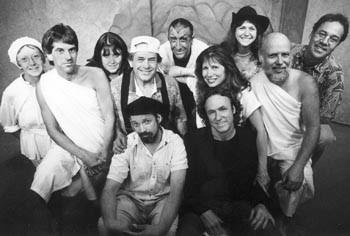
Spins

0

Hot Pop!

Del-Fi label tribute is way cool

Various Artists Delphonic Sounds Today! Del-Fi

The success of the 1987 La Bamba soundtrack sparked an interest in the late rocker Ritchie Valens and rekindled the Del-Fi label that issued his hits. After nearly 30 years of dormancy, this L.A. label is feted by an alt-rock, trip-hop, avant-pop lineup that includes the buzz-saw guitar attack of the Brian Jonestown Massacre, Georgia neo-surfers Man or Astroman?, and the twangy supergroup Los Straightjackets, all plumbing the rich Del-Fi vaults for some of highly underrated ’60s garage rock and pop. Often the results are captivating, particularly the haunting acoustic-based flower pop of Baby Lemonade, who reinvent Barry White’s 1967 hit single “All in the Run of a Day.” Sixties biker-flick mavericks Davie Allan & the Arrows sling stinging guitar licks on their cover of Bobby Fuller & the Fantastics’ instrumental “Our Favorite Martian.” And the Dekes of Hazzard–actually alt-rock guitar slinger Deke Dickerson–lend a psychobilly shiver to “The World’s Greatest Sinner,” an obscure 1963 B-side penned by a record-store clerk named Frank Zappa. And, of course, Ritchie Valens is represented in the teen-prom-night ballad “Donna,” sappily reinterpreted by Powerjive main man Elliot Kendall. GREG CAHILL

Joe Henry Fuse Mammoth

If the idea that a ’90s indie-pop songwriter should try stylish trip-hop production is no longer special, then Joe Henry can at least say he had that idea years ago. But his new disc, Fuse, is still waiting to be lit. Henry’s persona evokes an intersection of Leonard Cohen and Peter Gabriel, where grim, stark, confessional folk balladry meets a modern ambient dance-pop beat. On the plus side, Henry has a hip jazzy chamber music bent; on the down side, he’s soft and lethargic. Just as ’90s trends had Henry poised to seize the moment of folk-pop hybrids, he comes up shy on song and style. KARL BYRN

Kelly Willis What I Deserve Rykodisc

Alt-country journeywoman Kelly Willis has a right to some of the chip that’s on her shoulder–after a shoestring career as a critics’ favorite with no sales. But she’s finally landed on the maverick indie label Rykodisc, where her straightforward country-pop should get some deserved support. What I Deserve is a crisp neo-country study in sincerity, where Willis says all of the right things. What’s missing? The dynamic explosions that might otherwise push the alt-country envelope. K.B.

Various Artists Fish Trees Water Blues Bullseye

Save the world and groove mightily to boot. J. J. Cale, Ani DiFranco, Keb’ Mo’, Robert Cray, Sonoma County bluesman Charlie Musselwhite (with Bob Weir & RatDog), John Lee Hooker, Ruth Brown, and Branford Marsalis are among those contributing to this CD benefiting the Earthjustice Legal Defense Fund’s campaign to save salmon, ancient forests, and wild rivers. And you get a glorious gospel shot on “I’ll Fly Away” from Mavis Staples. Good vibes. Good grooves. Good cause. G.C.

From the April 15-21, 1999 issue of the Sonoma County Independent.

© Metro Publishing Inc.
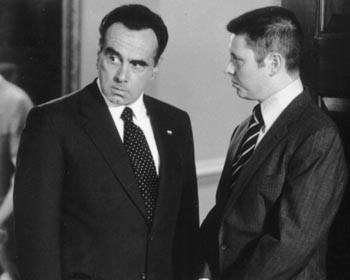
Iceberg Lettuce

Salad Barred Oh, the joys of iceberg lettuce By John Bridges THE OTHER NIGHT, it dawned on me that finally, at age 48, I know what I want in life. I want a head of iceberg lettuce. I am a middle-aged man, and I have not seen a head of iceberg lettuce in years. Of...

Cookbook Reviews

Something's Cookin' Salt & Pepper: 135 Perfectly Seasoned Recipes By Michele Anna Jordan (Broadway; $25) THERE ARE LOTS of niche cookbooks dedicated to everything from tomatoes to tamales, but only a serious foodie would offer up a 238-page tome to those most staple of kitchen staples, salt and pepper. Michele Anna Jordan, a well-seasoned local food writer...

Classical Pianists

Grand Pianists New generation of classical pianists steps into the spotlight By George Bulanda IT'S BECOME almost fashionable to join the chorus of Jeremiahs who lament the passing of the old guard of pianists and wail about today's lackluster performers. The charge is not without some merit. Conservatories tend to churn out perfect pianists...

Demon Dog of American Crime Fiction

Hard-Boiled Demon Dog of American Crime Fiction. 'Demon Dog' explores the life of crime novelist James Ellroy By David Templeton ANYONE WHO'S READ the work of James Ellroy already knows that the author labors under the mighty weight of certain psychological peculiarities. While book groups argue antically about whether Ellroy is truly psychotic or merely staving...

Tea Room Cafe

Tea Time Reading the leaves: Maggie Roth, proprietor of the Tea Room Cafe in Petaluma, has created a welcome alternative to the local java scene. A brief history of tea leads us strangely to Petaluma By Gretchen Giles ON A BALMY DAY in 2737 B.C., Chinese Emperor Shen Nung relaxed under a...

Aid to Kosovo

Sigh of Relief Editor's note: A massive international relief effort is underway to assist tens of thousands of ethnic Albanians fleeing the war-torn Kosovo region. The following are among the many relief agencies offering help to those men, women, and children--many in need of immediate medical care--seeking sanctuary in Macedonia, Albania, Turkey, the United States, and the nations of...

Steep-Slope Ordinance

Grape Gripes By Janet Wells IT'S NOT A DONE DEAL, but a landmark ordinance that would place limits on local grape planting won an overwhelming show of support on Tuesday from the county Board of Supervisors. But the topic wasn't without discussion at a packed public hearing. After 18 months of negotiations, grape growers and...

Thai-Burma Border

The Road to Burma Under threat of military reprisals Sebastopol physician Ben Brown and a cadre of colleagues bring medical aid to refugees on the turbulent Thai-Burma border. By Janet Wells WE HOP OFF a flatbed truck in the middle of a dusty rutted road in western Thailand, our faces and clothes clogged with the...

Talking Pictures

Double Take Life Is Beautiful. Mary Doria Russell and Peter Carey discuss 'Life is Beautiful' and 'The Last Days' By David Templeton Writer David Templeton takes interesting people to interesting movies in his ongoing quest for the ultimate post-film conversation. This column is not a movie review, but a freewheeling discussion of popular culture. Mary...

Spins

Hot Pop! Del-Fi label tribute is way cool Various Artists Delphonic Sounds Today! Del-Fi The success of the 1987 La Bamba soundtrack sparked an interest in the late rocker Ritchie Valens and rekindled the Del-Fi label that issued his hits. After nearly 30 years of dormancy, this L.A. label is feted by an alt-rock, trip-hop,...
11,084FansLike
4,606FollowersFollow
6,928FollowersFollow


