
The Scoop

Insanity Rules


So just what can we do to stop the high school shootings?

By Bob Harris

THE MOST popular movie in America this week is The Matrix. Act 1: Keanu Reeves portrays a friendless young man trapped in a world populated mostly by mindless peers who cannot share his angst and by inhuman authorities deserving only contempt. He spends most of his time surfing the Internet and cultivating a feeling of detachment from reality.

Act 2: Larry Fishburne, who is even more detached and therefore cooler, informs Keanu that his perceptions are fully justified: In fact, he is the One who will eventually destroy the existing order. Keanu, gradually gaining power as he becomes ever more alienated, joins Larry in leading a gang of black-clad rebels in confrontations with and escapes from the bad guys. Betrayals and chases and plot twists ensue.

Act 3: Fulfilling his destiny, Keanu and an accomplice enter the bad guys’ building strapped to the nads with automatic weapons hidden under long black trench coats. Showing little emotion and no mercy, they blithely kill everyone in their path. Lots of people get shot in innovative ways, much of it in slow motion. Keanu, utterly empowered, eventually literally flies to the heavens. Roll credits.

Audiences across the country think this is all really, really cool. The film has been No. 1 in gross receipts for three of the four weeks since its release. Americans have spent almost $120 million to see this movie in a single month. Experts estimate we’ll spend at least $40 million more. Sequels already are planned.

Easily the most memorable line of dialogue in the ads that sold this movie: “We need guns. Lots of guns.”

So now let’s all act so terribly shocked about the kids in Colorado. Let’s all point fingers at each other and wonder how anyone could think of doing such a thing.

Liberals don’t normally like to admit that media images influence human behavior, partly because too often people use that excuse to try to censor stuff they personally dislike, which usually includes anything to the left of Debbie Boone eating American cheese and Spam on Wonder Bread.

But of course media images influence human behavior. If not, the entire concept of commercial media would be completely inoperative. The whole purpose of advertising is to influence your behavior through powerful images. And it works, obviously, or else the entire TV, movie, radio, newspaper, and magazine industries would cease to exist.

So what now? Contrary to standard conservative advice, prohibition of ideas or images simply isn’t an option. It doesn’t work any better than the prohibition of alcohol or drugs has ever worked, and there’s this pesky First Amendment thingy in the way.

Which means, ultimately, either the broadcasters and producers have to stop selling violent images voluntarily–a prospect about as likely as Dennis Rodman becoming a Franciscan monk–or you and I and the rest of us simply have to stop giving people who produce hyperviolent entertainment hundreds of millions of dollars.

WE ALL NEED to teach ourselves again that gratuitous images of human slaughter are the worst form of pornography. Only then can we begin an intelligent dialogue about healing the psychological wounds we’ve already inflicted on ourselves and our children.

Conservatives don’t normally like to admit that the availability of a wide variety of guns leads directly to a wide variety of gun-related deaths. Lots of people sincerely believe that the Second Amendment specifically guarantees an absolute right to bear arms. Many also believe that the problem is with the shooters, and not with the weapons themselves.

But of course gun ownership can be and is widely regulated, with the Supreme Court’s full consent. Saturday night specials are against the law in many communities, as are sawed-off shotguns, fully automatic weapons, and lots of other stuff. If the NRA’s version of the Second Amendment was accurate, these laws wouldn’t have a chance of staying on the books. And as to the shooters, they wouldn’t have done nearly so much damage armed with slingshots and bowie knives.

S o what now? Contrary to standard liberal advice, more laws, by themselves, are not the answer. Many of the weapons in Littleton, Colo., were already illegal. It simply didn’t matter. Enforcement of existing laws, as NRA bigshot Wayne LaPierre has correctly pointed out, would be a start. And so for once the NRA should throw its full weight into lobbying for increased law enforcement resources in this regard.

We all need to work toward gun laws that actually matter, enforced by people we respect. Only then can we begin an intelligent dialogue about outlawing any more weapons in the future. We sure as hell aren’t having an intelligent dialogue now.

Here’s Barbara Wheeler, former president of the National School Boards Association: “That’s one of the great mysteries: How do you identify a student who is going to act out?”

Other than dressing in black, forming a gang, prearranging fights with other students, speaking in German, giving Nazi salutes, and filming a fantasy video in which they kill their fellow students, she means.

Here’s Chicago Sun-Times editor Nigel Wade on why the Columbine story appeared on page 2 instead of the front page: “We’re putting the story where adults will find it … giving parents a chance to decide whether their children will see it. … [The story] could harm or frighten vulnerable children.”

As opposed to a page 1 story they did run, in which Serbian troops machine-gunned a column of Albanian refugees. Much healthier for the kids.

Here’s NRA president Charlton Heston, claiming that the solution is more guns, not fewer: “If there had been even one armed guard in the school, he could have saved a lot of lives and perhaps ended the whole thing instantly.”

Never mind that there was an armed sheriff’s deputy present who got off a handful of useless shots from his sidearm before being forced to flee for his life.

Here’s Colorado governor Bill Owens, blaming the parents merely because some weaponry flotsam was found in plain view in a gunman’s bedroom in the aftermath of the attack: “I think that perhaps charges will be filed and certainly should be filed. … [Police] found in one of the gunman’s homes clear evidence out, sitting in the room, of what was about to happen.”

Let’s get this straight: One of the gunmen fails to clean his bedroom before leaving for school on the day he’s planning to die, so the parents must have had advance knowledge.

And finally, here’s Bill Clinton on the Columbine school shootings: “We must do more to reach out to our children and teach them to resolve conflicts with words, not weapons. … Violence is wrong.”

And then he went back to bombing Yugoslavia.

The insanity in this country goes a lot further than two kids with too many guns.

From the April 29-May 5, 1999 issue of the Sonoma County Independent.

© Metro Publishing Inc.
Opinion

0

Rights and Wrongs

By David Morris

ONE OF THE White House’s priorities is to enact a Patients Bill of Rights that, among other elements, requires health maintenance organizations to develop grievance and appeals procedures. Meanwhile, Sens. Ron Wyden, D-Ore., and John McCain, R-Ariz., have introduced an Air Travelers Bill of Rights that requires airline companies to provide truthful information about flight delays, cancellations, and overbooked flights.

How sad. Both political parties got us into this mess by opening the doors to health care and airline monopolies. Now, instead of confessing their sins and tackling the problem of concentrated power head-on, they’re trying to make nice-nice with the voters by demanding that the new lords of the manor treat their serfs a little more decently.

Health-care conglomerates now dominate medicine. There has been a massive conversion of non-profit hospitals to profit-making entities. The Plutocratic oath has replaced the Hippocratic oath. Stock analysts on Wall Street now refer to patients as “revenue bodies.” Company-owned health insurance subsidiaries are known as “patient feeder systems.”

The federal government let it happen. An analysis of 397 pre-merger notifications involving acute-care hospitals from l99l to 1993 by the General Accounting Office found that only 15 had been challenged by the Department of Justice or the Federal Trade Commission. Neither the DOJ nor the FTC have challenged mergers or acquisitions between managed-care insurers.

THE U.S. Department of Transportation had a “perfect record” of approving every airline merger that came before it in the 1980s. Today, the architect of the federal government’s airlines deregulation strategy, former Civil Aeronautics Board chief Alfred E. Kahn, finds a “disturbing decline” in the average number of carriers per route. He is shocked that “more and more airports are complaining they are at the mercy of a single airline.”

A recent study by Salmon Smith Barney found that 33 of our 50 largest airports have excessive concentrations of airlines; the remaining 17 have moderate levels of concentration.

Concentrated power is the problem, yet neither party is willing to tackle that issue. So we are left with a series of bills of rights.

Not that there aren’t some good in these bills. The White House wants patients to have the right to sue HMOs for malpractice. Astonishingly, 125 million Americans covered under an employer HMO cannot sue their provider for anything more than the costs of care their HMO refused to reimburse, no matter how egregious the malpractice.

Insurers argue that allowing patients to sue would cause medical rates to skyrocket. Hogwash. According to the Congressional Budget Office, costs would rise by 1.2 percent, about $7 per covered employee per year. In 1997 Texas passed legislation allowing its residents to sue HMOs has not seen a flood of lawsuits. Only one malpractice suit has so far been filed. But the threat of a lawsuit has made HMOs in that state more responsive. Notes Time magazine, “Doctors in the state say HMOs seem to have become more inclined to accept suggested treatments and speed the paperwork.”

The passengers bill of rights also contains some interesting components. Wyden and McCain would allow the federal government to fine airlines that cancel flights simply because too few passengers buy tickets. Rep. Bud Schuster, R-Penn., would require an airline holding passengers in an airplane on the runway for two hours or more to repay those passengers twice the value of their tickets, with higher multiples for each additional hour trapped in the plane.

These bills of rights are modest. Yet that doesn’t mean passage is assured. More than 25 states have debated bills that would allow their residents to sue HMOs for malpractice. Only in Texas has such a bill become law. Last year Congress refused to make HMOs liable, and the Republican majority has vowed to fight that provision again this year.

For free-market diehards, concentrated economic power is not a problem. The Investors Business Daily views a passengers bill of rights as downright socialist. “Washington is the only place where people believe courtesy can be legislated,” it thunders. “No one is forced to fly. … If the flying experience were so bad, travelers would choose trains and buses, leaving the airlines with empty seats.”

Oh my.

David Morris is co-founder and vice president of the Institute for Local Self Reliance in Minneapolis.

From the April 29-May 5, 1999 issue of the Sonoma County Independent.

© Metro Publishing Inc.

The Film Cafe

0

Short Cuts

The Film Cafe returns for another quirky summer of quick flicks

By David Templeton

THE EXPECTANT babble of excited art lovers mingles with the clink of forks on plates, while the sky over Santa Rosa slowly darkens. Fresh patrons continue to trickle into the sculpture-dotted outside courtyard at the Sonoma Museum of Visual Art. The newcomers jockey for position at the tables laden with delectables and desserts.

But food is hardly the main course tonight, and as the dusk deepens into darkness, all the patrons hit their chairs for a good view of the conspicuous silver movie screen. The lights need not go down, since Mother Nature has already arranged that. With the stars now beginning to twinkle in the heavens, a projector leaps into action. The screen shimmers, glistens, and bursts into life as everyone leans forward to absorb the sudden image of … dancing eggs?

Sure, that and a whole cinematic array of offbeat visions, animated and otherwise, many lasting less than 30 minutes and most less than five. Welcome to the Film Cafe, a quirky event that premiered last year–for three astonishing Friday nights–only to see attendance more than double, from 75 souls to over 150 between the first and the third unique presentation.

“Apparently there is a pretty big audience in this area for alternative films,” affirms Gay Shelton, director of SMOVA (formerly the California Museum of Art). “There are evidently lots of people eager to see strange, non-narrative, non-commercial … cinema. These films are humorous, they’re fun, they’re irreverent–some of them are pretty weird. People need a little weirdness now and then.”

To feed that need, SMOVA will be expanding the series this summer. Beginning May 7, the Film Cafe will be held on five Friday evenings, once a month through Sept. 3. Many of the filmmakers will be present throughout the series to introduce their work, though not necessarily to explain it.

“There is no way to explain some of these films,” Shelton says. “And most of the filmmakers prefer to have them stand on their own anyway. It’s more interesting this way.”

The cafe setting itself, Shelton says, only adds to the fun.

“We wanted to create an event that existed somewhere between being a cocktail party and a kind of wacky film festival,” she explains. “You can eat cake and have a movie too.”

As for holding the event outside, under the stars, Shelton says she insisted on that: “It’s summer in Sonoma County, dammit,” she says, laughing. “I want to be outside at night.”

The short films, a mix of amateur efforts and professional fare, are mostly the work of California filmmakers, the unique products of a special community of visionary artists whose efforts are often seen only by other experimental filmmakers.

“There’s not a burgeoning market for short films,” Shelton notes, pointing out that she specifically chose not to show feature-length movies at the Film Cafe.

“We’re all used to having a certain kind of experience at the movie,” she says. “You go to the theater, you buy your popcorn, you sit in your seat–and you psychologically live this one drama for 90 minutes or a couple of hours. What we offer at the Film Cafe is more like going to a poetry reading than like going to the movies. There are several films made by several different filmmakers–so you are exposed to many different voices.”

The opening event this year will be “different” indeed. In addition to the premiere of Stupor Mundi by Monte Rio artist Rock Ross, an assortment of animated shorts will be shown, with live musical accompaniment provided by San Francisco’s Sprocket Ensemble, a high-energy team of concert musicians who specialize in live performance to short films. On June 11, Liz Keim, film director for the renowned Exploratorium in San Francisco, will present a selection of visual treasures from the science museum’s archives.

SONOMA COUNTY filmmakers will take over on July 9, as Healdsburg’s Toney W. Merritt plays host. Among the offerings that evening will be the very funny two-minute romp Lonesome Cowboy, and a special screening of J. Rosenblatt’s Human Remains, a disturbing 30-minute work that explores the banality of evil by employing “outtake” footage from the everyday lives of five infamous historical figures, including Hitler and Stalin.

Aug. 6 will feature San Francisco father-and-son filmmakers Michael and Eli Rudnick. The elder Rudnick will show a number of offbeat shorts by Bay Area experimenters–including several of his own, stunningly poetic pieces. Eli (age 10, and, according to Shelton, “already an ingenious, accomplished filmmaker”) will show his own work. After the intermission, the audience will be treated to a selection of audacious–and “rather adult”–animated shorts by Baltimore filmmaker Martha Colburn, whose work includes such titles as There’s a Pervert in My Pool. (Colburn is a self-taught filmmaker, but her work is accomplished enough to have been featured at such venues as the Museum of Modern Art.)

The season wraps up on Sept. 3 with an evening of hyper-surreal, elaborately costumed fantasies by one-of-a-kind director Relah Eckstein (creator of last year’s Film Cafe hits Eggy Time and Oatmeal), who will screen her new work, Lucy’s Dream, along with a hand-picked bouquet of shorts from prominent Los Angeles artists.

Asked to choose one adjective to describe the films patrons will see this season, Shelton insists on two. “They’re wacky films,” she chuckles, “but they’re quite sublime. And isn’t that a wonderful combination? At the Film Cafe, we offer a peek into a world that most people never get to see. You get to come and view amazing art being done by artists purely for the sake of making art.

“It is,” she concludes, “a very cool thing to do on a warm summer night.”

The first Film Cafe opens at 8 p.m. May 7; films begin screening at dusk. Order tickets in advance by calling the museum office at 527-0297. Ticket prices vary: single-night tickets are $12 for museum members, $15 for non-members, and season tickets (for all five nights) are $50 for members, $60 for non-members. Tickets will also be available at the door.

From the April 29-May 5, 1999 issue of the Sonoma County Independent.

© Metro Publishing Inc.
Medical Decisions

Risky Business

Forget the supermarket health-care delivery system. What your doctor doesn’t know could kill you

By Michael L. Millenson

IN EDGAR ALLAN POE’S “The Purloined Letter,” the protagonists overlook the crucial clue that is sitting right in plain sight: a letter left casually on a desk. Today, a similar near-willful blindness prevails among those who present the managed-care industry as the leading threat to the quality of American medicine. Implicitly, this view defines high-quality care as consisting of immediate access to treatment. While that is obviously important, the critics ignore a separate issue whose equal significance should be glaringly obvious:

What happens to the patient once he or she actually reaches the doctor or hospital?

It would be nice if good medical care simply consisted of preferring the physician’s judgment over that of “insurance company accountants,” as President Clinton put it in his 1998 State of the Union address. Indeed, the argument that the public is faced with a choice between medical decisions made by “good” doctors or “bad” bureaucrats (albeit private-sector bureaucrats) has been sounded by everyone from anti-managed-care politicians to (surprise) indignant representatives of various physician organizations. Preserving physician freedom is presented as the way to “preserve” high-quality care; any other path leads inexorably to ruin.

Unfortunately for the health of patients, this story line is a gross oversimplification. There’s no question that the business ethic of some health plans can dangerously distort medical decision-making and has sometimes done so. Yet the larger truth about our health-care system is at once more complicated and much more unsettling.

From ulcers to urinary tract infections, tonsils to organ transplants, back pain to breast cancer, asthma to arteriosclerosis, scores of thousands of patients are dying or being injured every year because the best scientific information on how to care for them is not being put into practice by physicians. If one counts the lives lost to preventable medical mistakes, the toll jumps even higher.

In the scientific literature, the struggle to put medical theory into practice goes by the genteel term “evidence-based medicine.” Kenneth I. Shine, president of the Institute of Medicine, phrases the problem this way: “If we asked the question of whether physicians have based their practice on scientific principles,” he says, “it is clear that the profession has been sorely lacking.” Put in Clintonian campaign terms, however, the problem is easy for a layperson to understand: “It’s the doctors’ decisions, stupid.”

What Doctors Don’t Do

Most patients would be surprised to know what their doctors don’t know–or don’t put into practice. Even the best-trained doctors go about their work with an astonishingly shallow base of knowledge concerning the link between what they do and how it affects a patient’s health.

For instance, more than half of all medical treatments, and perhaps as many as 85 percent, have never been validated by clinical trials. But even when there is scientific evidence about what works best, large numbers of doctors don’t apply those findings to actual patient care.

A prime example of the latter problem is the treatment of ulcers, a common and painful condition that will afflict an estimated 25 million Americans at some point in their life. Back in 1988, the prestigious British journal The Lancet published the results of a clinical trial that showed that most ulcers were actually caused by a bacteria called H. pylori. Patients didn’t have to spend their lives taking anti-ulcer medications to control acidic secretions; the bacteria could be eradicated and the ulcer cured.

A study replicating this research appeared in a major American journal in 1991. A consensus panel from the National Institutes of Health endorsed the anti-bacteria ulcer treatment in 1994. Yet today, half of all U.S. doctors still aren’t testing their ulcer patients for H. pylori and prescribing the right therapy, according to the federal Centers for Disease Control and Prevention. Managed-care financial incentives have nothing to do with this problem. Indeed, if anything they should work in the opposite direction–it’s cheaper to cure a patient than to keep paying for maintenance drugs.

But to truly understand the consequences of failing to apply evidence to practice, one need only look at treatment of heart disease, the No. 1 killer of both men and women in the United States. Heart disease is common, and it is expensive (total health care costs for cardiovascular disease are more than $150 billion annually). To listen to the managed-care debate, one might think the most pressing problem in cardiac care is getting people directly to the hospital emergency room without waiting for pre-approval from their health plan. (And forget for a moment that only one of every nine visits to the emergency room for chest pain results in a confirmed heart attack.) The medical literature, however, paints a very different story than the one heard on the nightly news. It’s a tale of wasted money and of unnecessary patient deaths and complications that has nothing to do with health plans. To give just a few examples:

Inappropriate invasive procedures are distressingly prevalent. Harvard University researchers found that one quarter of the heart bypasses, angioplasties, and catheterizations (measuring blood flow and blood pressure in the heart) performed on elderly heart-attack victims have no effect on patient survival. In other words, thousands of these expensive treatments–which pose a significant risk of complications or death–could probably be eliminated.

Proven drug therapies, meanwhile, go unused. A New Jersey study found that just one fifth of eligible heart-attack victims received beta blocker therapy that could have increased their chances of survival by as much as 43 percent. Other studies have found much the same problem. By one estimate, 18,000 people die each year from heart attacks because they did not receive effective interventions. Meanwhile, one third of heart attack survivors in one study left the hospital without their doctor telling them to take an aspirin a day to help prevent another attack.

Some hospitals are performing heart surgery even when their doctors haven’t performed the operation often enough to keep their skills up. There is a long and well-documented connection between a hospital’s performing a high volume of bypass surgeries and increased patient survival. Yet nearly one third of the 1,023 U.S. hospitals performing open-heart surgery in 1994-95 performed fewer than the 200 cases per year that groups such as the American Heart Association recommend as a minimum, according to Medicare data. In California, 56 percent of the hospitals were below the 200-case minimum, a recent study found. It makes a difference. In New York State in 1995, one hospital that performed only about half the recommended number of bypasses had a morbidity rate over twice the state average. Traditionally, bypass surgery has traditionally been a prestigious and highly profitable service. That may or may not explain why the profession has not enforced its own standards.

Reports like these led the prestigious National Academy of Sciences’ Institute of Medicine to make a damning indictment of the quality of care. The IOM report, in the Sept. 16 issue of the Journal of the American Medical Association, cited some of the above examples and concluded that “serious and widespread quality problems exist throughout American medicine. Very large numbers of Americans are harmed as a direct result.” The IOM consensus report added pointedly, “Quality of care is the problem, not managed care.”

The Making of a Non-Scandal

One would think that the glaring disconnection between research-based medicine and everyday practice would be a national scandal. The evidence, after all, is in plain sight. Moreover, some big names in the policy world are even starting to talk about the problem.

Earlier this year, the presidential Advisory Commission on Consumer Protection and Quality issued an extraordinary indictment. The commission wrote: “Exhaustive research documents the fact that today, in America, there is no guarantee that any individual will receive high-quality care for any particular health problem.” American medicine, it added, was plagued by “overuse, underuse and misuse.” In other words, the heart disease examples cited earlier are the rule, not the exception.

The press, however, glued to the politically hot “patient bill of rights,” has virtually ignored other causes for the wildly varying quality of patient care. The reaction to reports on deaths due to preventable medical mistakes has been ho-hum. Earlier this year, when the Centers for Disease Control and Prevention released a report stating that 50,000 people die each year from infections caused by their hospitalization, the New York Times put the story on page A12. A close reading of the story revealed that the last time the CDC looked closely at infections in hospitals was nearly 25 years ago! What went unstated in the report is that no governmental or private agency requires hospitals either to have a standardized definition of an infection or to report on its infection rate to anyone.

So where is the outrage? In large part, the absence of scandal may be owing to the equal absence of identifiable victims. The classic medical exposé is about “bad” doctors. A man who has had the wrong foot amputated by a surgeon or a woman who has been sexually molested by her internist knows something went wrong. And, indeed, incompetent or impaired doctors remain a problem. The Public Citizen Health Research Group estimates that 1 percent of doctors nationwide “deserve” some disciplinary action each year, yet Federation of State Medical Boards data show an average of just 3.84 actions per 1,000 physicians in 1997. Moreover, patients in a state like Florida may wait as long as two years for their complaint even to be heard.

Similarly, health-plan members with access problems often know when they’ve been mistreated, as was the case with the Washington representative of a health-care organization who was told that being taken unconscious to the ER was no excuse for not getting pre-authorization approval.

By contrast, the heart-attack patient who doesn’t receive beta blocker therapy or isn’t told to take an aspirin on discharge most likely won’t have a clue that his life was put at risk. That’s particularly true if some sort of therapy is prescribed and the doctors and nurses appear to be working hard and doing their best. (Of course, a few patients don’t take any chances. An older physician I know who lives in a rural area carries beta blockers and aspirin in his wallet, along with instructions to the hospital on their use, just in case.) Similarly, the patient who receives an unnecessary angioplasty has no way of knowing that it was unneeded–except, perhaps, when some health-plan reviewer objects, and the patient becomes outraged that the HMO is rationing care. And in the case of hospitals doing a low volume of bypass surgery, it’s hard to prove that any individual patient was harmed.

Perhaps the best example of a quality lapse where the victim is unlikely to complain involves autopsies. A recent JAMA study of autopsy results found that doctors failed to diagnose cancer properly in a shocking 44 percent of cases. Yet the frequency of autopsies is at a record low, in part because an unperformed autopsy is likely to generate a grateful family, not a dissatisfied one ready to complain to its local TV news team.

But it’s not only the lack of easily identifiable victims that’s kept evidence-based medicine off the public radar screen. There are also political and economic reasons. Take the American Medical Association, which for a time actively sought out HMO horror stories for the media and Congress. While the AMA’s scientific arm is a leader in the fight for evidence-based medicine, its political arm is devoted to protecting doctors’ autonomy. Sometimes that’s pro-patient, as when the AMA battles unreasonable managed-care rules. Other times it’s pro-pocketbook of doctors, as when the AMA defines quality of care as forcing plans to contract with “any willing provider.”

That kind of arrangement takes away a plan’s ability to compete on quality, because it’s no longer free to decide which doctors will be part of the plan.

Public discussion of evidence-based medicine might lead some to wonder whether unchecked physician autonomy is really such a good thing. Those whose memories stretch back more than two news cycles might even remember that the Health Maintenance Organization Act of 1973 emerged out of widespread public disgust with a fee-for-service system then run by doctors.

Indeed, in 1976, a time when less than 10 percent of the population belonged to an HMO, the New York Times ran a five-part, page-one series about medical errors, overprescribed drugs, and other failings of American medicine. The date of those articles should be noted by the nostalgia-mongers who loudly contrast today’s system with the days of “Marcus Welby-style medicine,” for 1976 was the year that Marcus Welby, M.D. finally left the prime-time TV airwaves. Even at that time, Marcus Welby-style medicine was not a reality for patients; it was just a TV show.

While the physician groups have an economic agenda that can cause them to slight evidence-based medicine, some consumer groups have a political one. Liberal organizations like Public Citizen seem to want to discredit managed care in order to pave the way for Canadian-style national health insurance. While that’s a worthy goal, it’s unlikely to succeed in the current climate. More to the point, addressing the legitimate problem of access to care by the millions of Americans without health insurance says nothing about the quality of care received once access is assured.

Conservative groups such as the National Center for Policy Analysis are as obsessed as the liberals with access and financing issues. But unlike the liberals, they want to replace managed care with a national system of medical savings accounts, another policy fantasy.

Given these ideological and economic interests, today’s medical scandals follow a predictable script. For example, the refusal of some health plans to allow some breast-cancer patients to stay in the hospital overnight after a mastectomy created a national uproar. Yet there is persuasive medical evidence that suggests a one-night stay can be perfectly safe–if health plans and hospitals choose the patients carefully and put the proper support services in place. More to the point, if breast-cancer victims are the real concern, then we should consider the lack of attention given a study appearing about the same time as the “drive-through mastectomy” debate erupted.

This study, by Dartmouth Medical School researchers, found that “geography is destiny” when it comes to care for breast cancer (as well as a number of other conditions). For example, fewer than three out of every 200 breast-cancer patients in Rapid City, S.D., received breast-conserving surgery vs. a mastectomy, while in Elyria, Ohio, 96 out of 200 did. The two procedures have roughly equal therapeutic efficacy.

Which is worse: being given a too-short hospital stay after a mastectomy or unnecessarily losing a breast to surgery in the first place? To even pose that question exposes the shallowness of viewing high-quality care as synonymous with deference to individual physician judgment.

Since women’s health issues are so politically attractive, here’s another example of practice variation every woman will understand. When family practitioners in Washington State were asked about treating a simple urinary tract infection, one of the most common of female complaints, 82 physicians came up with an extraordinary 137 different strategies! It defies common sense to believe that every patient of each of those doctors is receiving equally high-quality care.

(Speaking of non-scandals: Why is hospital “dumping” of poor patients without insurance–which once made front-page news–now relegated to the trade publications? Are the only certifiable “victims” the victims of health plans?)

The good news is that there are, in fact, some successes by health plans, hospitals, and doctor groups in implementing science-based medical practice. The efforts of United HealthCare, a national for-profit plan, were even profiled recently in the Wall Street Journal. There are others. In Boston, for instance, Harvard Pilgrim Health Care has pioneered a program to involve asthmatic children, their parents, and the plan’s doctors in applying “best care.”

The program cut inpatient admissions and emergency room visits by kids by more than three quarters. Not only that, the children reported a significant increase in their ability to function at school or home.

Yet many organizations hesitate to share their successes at making use of medical procedures that are already on the books. A moment’s thought makes it obvious why: A hospital or doctor who excels at using scientific advances that have already been in the medical literature risks being greeted by the question, What were you doing before this? The questioner might even be a lawyer.

Despite these barriers, I’ve seen a number of hospitals that are dedicated to operationalizing better care. In Pittsburgh, for instance, Forbes Regional Hospital used evidence-based clinical guidelines to improve the recovery time of seriously ill pneumonia patients and dramatically cut the death rate of those who were less ill. In South Carolina, changes in heart-attack care at the Anderson Area Medical Center saved the lives of an estimated two patients a month who previously would have died. In Los Angeles, Cedars-Sinai Medical Center’s systematic review of the medical literature on a heart condition in infants called tetralogy of Fallot found that one treatment meant to prevent respiratory infections in these newborns actually increased the infection rate!

The common thread in all these improvement stories is this: There are no “bad guys.” The doctors involved were neither evil nor incompetent. They are your doctor and mine –which may be the most powerful explanation of all for why the problem of evidence-based medicine has attracted so little attention. Whatever the failings of doctors in general, “to distrust one’s [own] doctor is to be vulnerable in the most fundamental and undesirable of ways,” as one medical sociologist wrote. “The image of the doctor in America continues in large part to be an idealization that reflects people’s hopes rather than their actual experiences.”

Yet “good” doctors don’t follow best practice for a variety of reasons. There is a failure to keep up with an overwhelming flood of medical literature, a reluctance to get caught up in new therapies that may be fads, and uncertainty over which patients are best suited for which therapy. Certainly, financial incentives can play a part in overuse, underuse, and misuse. But ideologues who believe there is a perfect payment system that guarantees high-quality care will be disappointed.

The problem of medical mistakes and a failure to practice evidence-based medicine is international. And, of course, there remains the problem of treatments where the evidence is ambiguous or simply unavailable.

A Better Way

When it comes to protecting patients, the same kind of pressures being brought on health plans should also be applied to the actual providers of care. While President Clinton has declared that passing a patient bill of rights will be a top 1999 priority, legislation that focuses only on speedy access to care will ultimately fail to truly protect patients. Providing every patient with the most appropriate and effective care–“doing the right thing and doing the right thing right”–must be just as much a priority as guaranteeing access to that care.

Those physicians who are working hard to bring change to our present system need financial and political encouragement, just as those who are reluctant to change need a mixture of financial and political incentives to rethink their position. Take, for instance, the connection between low volumes of surgery and higher mortality rates. If the patient bill of rights guarantees the right to go to the emergency room without delay, then how about the right to know, before the anesthesia takes effect, how many times the hospital or an individual surgeon has performed heart surgery?

Medicare rule-making could go a long way to encourage this type of disclosure.

Similarly, what about a system of disclosing hospital infection rates that parallels the ratings used by health departments for restaurants? Right now, hospital lobbies across America display a certificate of accreditation from the Joint Commission on Accreditation of Healthcare Organizations, a group whose workings few patients understand.

On the other hand, the difference between an “A” and a “C” grade on a certificate rating infection control would be an instant conversation-starter for patients and their doctors.

At the same time, legislators must be careful not to undermine internal hospital-improvement efforts. Organizing information in a more systematic way, particularly through the use of computers, will both give doctors useful data at their fingertips and allow outside overseers to control better. Software now available can provide doctors with treatment protocols based on the latest science or a database of drug interactions designed to protect patients against possibly deadly adverse reactions. Other software, involved in electronic medical records, can help doctors and hospitals track the outcome of care in different groups of patients and continuously improve it. Unfortunately, the news stories highlighting legitimate worries about privacy of electronic medical records have not given equal play to the improvements in patient care that electronic medical records can bring.

Meanwhile, those researching how to apply evidence more effectively to practice could use far more funding than their present few crumbs. While Congress and the president heap billions more onto NIH’s plate, the little-known Agency for Health Care Policy and Research makes do with a budget in the $100 million range. Funding applications work in medicine is like buying bullets and boots for the military; it’s not glamorous, but it can mean the difference between success and failure.

Evidence-based medicine may be moving toward a higher profile. The Washington-based National Coalition on Health Care and the Boston-based Institute for Healthcare Improvement has just launched a quality initiative called Accelerating Change Today (ACT) for American Health. The explicit aim is to put best practices into common practice. Similarly, several corporate coalitions, including some of the most prominent names in American business, have quietly been holding talks about coordinating their efforts in a national effort to upgrade standards of care.

As the cost of medical care starts to accelerate again, it is becoming more urgent than ever to provide only that care which is the most appropriate and most effective. The alternative is grim: buying whatever care is cheapest. It’s about time we started measuring the performance of health professionals and of health plans alike–and insisting that both groups be held accountable for results.

This article originally appeared in the Washington Monthly.

From the April 29-May 5, 1999 issue of the Sonoma County Independent.

© Metro Publishing Inc.

Spins

0

Legends & Such


Neil Young tribute: a downbeat homage

By Greg Cahill

Various Artists
This Note’s for You, Too!
Innerstate)

NEIL YOUNG is a slippery character. Or at least his songs have proved slippery in the past for those attempting to put their own stamp on them (Joni Mitchell and Roxy Music being the notable exceptions.). After all, for 30 years the idiosyncratic singer/songwriter has straddled the fence between acoustic warrior and grunge god, ranging lyrically from lonely country boy to angst-ridden avenger and delivering high, frail vocals that defy imitation (though they have proved ripe for parody). He’s an original, no doubt about it. He’s also a huge influence on a horde of alternative rock and country acts.

This two-CD anthology isn’t the first time the music world has paid tribute to this visionary. And the results this time around are uneven at best, often downbeat, with few of these artists managing to reinvent Young’s compositions in the same way that Young himself is able to from time to time. Still, This Note’s for You, Too! can kick some serious butt, thanks to a plethora of great guitar work by the likes of former Television axeslinger Richard Lloyd, ex-Dream Syndicate and Gutterball honcho Steve Wynn, Chris Cacavas of Green on Red, and Eric Ambel of the Del Lords.

The discs are organized chronologically and run from the Treble Spankers twangy cover of 1969’s instrumental “Aurora” to Slobber-bone’s faithful rendition of 1994’s anti-commercial anthem “Piece of Crap.” Former Occidental neo-folkie Sonya Hunter dishes a rich, dirgelike “Expected to Fly.” Among the many other contributors are Lee Renaldo of Sonic Youth; Matt Piucci of Rain Parade teaming with Crazy Horse’s Billy Talbot; sometime REM collaborator Peter Holsapple and Vickie Peterson of the Bangles; and Russ Tolman and Richard McGrath of True West.

Unfortunately, most of the 37 tracks here lean on Young’s heavier material, overemphasizing the longing that colors much of the songwriter’s work while masking his sometimes playful side. In the end, all this concentrated sadness, angst, and irony leaves you craving the country charm of “Till the Morning Comes” or the naiveté of “I am a Child.”

Hearing a collection of covers based mostly on Young’s exhilarating rockers and dark-side dispatches makes you appreciate just how much depth and breadth Young shows in his own work–and that may be the best tribute of all.

Milt Jackson
Explosive! Milt Jackson Meets the Clayton-Hamilton Jazz Orchestra
Qwest

WHAT A BLAST! At the tender age of 76, vibist Milt Jackson–a veteran soloist and pivotal member of the Modern Jazz Quartet–has delivered one of the finest recordings of his illustrious career. From the familiar melody of the opening track, his signature song “Bag’s Groove,” to the whimsical closer “Recovery,” Jackson performs a dazzling balancing act, finessing his way between soulful swing arrangements and lush ballads. Not since MJQ’s 1988 Grammy-winning Ellington tribute has Jackson displayed so much sensitivity and unbridled romance in his playing. A lot of the credit for this dynamic CD goes to bandleaders and arrangers John Clayton Jr. (bass), brother Jeff Clayton (lead alto sax, flute, and clarinet), and drummer Jeff Hamilton. John Clayton and Hamilton have collaborated with Jackson since the ’70s, and they have a real affinity for the elder jazzman’s revolutionary approach to his instrument. You could say this project was 25 years in the making. Payday seldom sounded so sweet.

Big Bill Morganfield
Rising Son
Blind Pig

THEY SAY imitation is the sincerest form of flattery, but no one can fault Big Bill Morganfield for sounding like the legendary Muddy Waters, a man Big Bill just called dad. This recording debut drips with gritty South Side Chicago blues energy, thanks to a backup band that includes former Muddy Waters Band members Pinetop Perkins, Willie “Big Eyes” Smith, Bob Margolin (who doubles as producer), and Paul Oscher. Five strong originals in the Chicago blues style and a respectable flair for bottleneck slide affirm that Big Bill’s living up to his genes, even if he can’t growl like his dad.

Doc and Richard Watson
Third Generation Blues
Sugar Hill)

POWERHOUSE folk-guitar flatpicker Doc Watson runs through a comfortable front-porch session of classics with grandson Richard filling for the first time the role of second guitarist. Richard’s father, Merle–a brilliant guitarist and five-string banjo player–died in a 1985 tractor accident. Richard doesn’t display his dad’s brilliance, but holds his own with one of the world’s greatest guitarists. Overall, the session is informal, and Merle’s spirit looms large as this trio (rounded out by bassist T. Michael Coleman) rework material that Doc and Merle visited on many a day.

From the April 29-May 5, 1999 issue of the Sonoma County Independent.

© Metro Publishing Inc.

Charles Bukowski

Bukowski Lives!


America’s gritty literary voice will never be silenced, thanks to Black Sparrow Press

By Patrick Sullivan

TUCKED AWAY in Santa Rosa’s tiny warehouse district, not far from the St. Vincent de Paul dining room and the homeless camps by the railroad tracks, is a small tan building that might just be the perfect monument to the late author and professional hellraiser Charles Bukowski.

Cross the gravel parking lot, pass the neat row of cat dishes on the front porch, step through the glass door with the distinctive logo, and you’ve entered Black Sparrow Press, a tenaciously independent publishing company that continues to flourish in the increasingly treacherous world of book publishing, much as Bukowski himself survived against all odds and expectations.

Beat writers lived hard, and Bukowski lived harder than most. No teaching gig or writing workshops for him: Bukowski’s rough-and-tumble exploits in the non-academic fields of drinking, fighting, and gambling were almost as much a part of his legend as his gritty writing. He went from a brutal childhood to a hardscrabble working-class existence to a profoundly uneasy relationship with fame and fortune. But despite all the rough stuff, for more than 50 years Bukowski wrote and wrote hard, publishing more than 45 books of poetry and prose during his lifetime, including such novels as Post Office and Hollywood, to sustained popular demand and growing critical acclaim. The ink finally stopped flowing upon his death in 1994.

The Black Sparrow offices, which are inhabited by more cats than people, seem like a place where Bukowski, who himself lived with nine felines, would feel at ease. That’s no surprise. After all, the company was born out of a deep affinity between the eccentric writer and Black Sparrow owner John Martin. In 1966, Bukowski was discovered laboring unhappily and writing in obscurity in Los Angeles by Martin, who promptly founded Black Sparrow to publish the author’s work.

Thirty-three years after this unique relationship began, Martin is hardly shy about rating his top writer’s importance to the literary world. As he points out, most fiction and poetry does not stand the test of time. But how about Bukowski? Will his writing still be read in 2050?

“Damn right,” Martin replies firmly. “He’s the equivalent in today’s world of Walt Whitman, who was accused in his own day of all the things that Bukowski was, of being a ruffian and uncouth. When you read Whitman now, there’s nothing like that at all in his work.”

It’s easy to be overwhelmed merely by Bukowski’s incredible output. This is the man who wrote his first novel in a month, who sat down nearly every night of his life to write for hours (after a long day at the racetrack, naturally), who could not be kept from his craft by advancing age or a terminal leukemia diagnosis. Even after he got the worst possible news from his doctor in 1993, Bukowski kept on working. A few months before his death at the age of 73, he managed to finish his final novel, Pulp, a surreal detective story starring a hard-boiled private eye who bore a striking resemblance to his dying creator.

“It was kind of his farewell to his readers and friends,” Martin explains. “They’re all in there under different names. And then he kills himself off at the end of the novel.”

Bukowski is dead, but that doesn’t mean you’ll stop seeing previously unpublished work by him. Martin says that the poetry the author left behind is enough to fill five more fat volumes. (See sidebar, page 23, for one of these previously unpublished pieces.) Black Sparrow is also set to publish a third volume of the author’s letters. All this begs a question that may also take us to the heart of Bukowski’s unique talent: Why was he so prolific?

“‘Cause he didn’t mess around with his own head and ask himself a lot of stupid questions,” Martin replies. “You know what a natural is in baseball? A guy who can just pitch, who pitches so well that his coaches don’t mess around with his delivery, though it may not be orthodox. Bukowski knew how to write and he knew what he wanted to say. … He didn’t do anything that would make him stop and think about the mechanics of what he was doing, because he had that down from day one.”

Or, as the author himself once put it, “Writing chooses you, you don’t choose it.”

THE STYLE that Bukowski employed was deceptively easy-looking. It seems almost lazy, right up to the moment it knocks you on your butt with a hard right hook that you never saw coming. Martin calls that prose “clear” and “straightforward” and “powerful.” But that, he adds, is not really why he admires Bukowski’s work.

“I don’t give a rat’s ass about style,” he growls. “There are a lot of people who can write circles around each other, who are beautiful stylists. I prefer people like Bukowski or [Theodore] Dreiser. Bukowski became a very good writer in his prose. But his desire was to communicate, and if you communicate a genuine emotion or something really important, it will have much more effect on the reader than a lot of pretty prose.”

Biographies of Bukowski seem almost redundant next to his work, which was focused sharply on his own life. That was the subject matter that Martin, along with millions of other readers, found so compelling. Bukowski wrote with graphic directness about experiences that many people have every day–working hard, drinking hard, being disgusted by a world that is apparently determined to disgust and annoy you. Post Office, the novel about the brutal world of postal work that has sold more than a million copies in a dozen languages, may be one of the most compelling works American literature has to offer about working-class life. As another example, Martin offers the classic Bukowski poem “Shoelace.”

“It’s about how you’re having a bad hair day, and everything is going wrong, and the one thing that just snaps and plunges you into an abyss of despair is if, when you’re tying your shoes, you break your shoelace,” Martin says. “People can relate to that.”

It was on this firm foundation that Bukowski built his literary career and John Martin built his publishing company. As Bukowski’s star rose, he attracted an often uncomfortable amount of attention. Two movies–including Barfly, starring Mickey Rourke and written by Bukowski himself–were made about his life. Madonna asked him to be in her Sex book. Fans and groupies sought out his house from all over the globe, sometimes masquerading as journalists to get a few minutes with their hero. Did all of this frantic hype change the plainspoken working man?

“Not at all,” Martin says. “Me neither. We just got better cars.”

Of course, even that process wasn’t without complications, as Martin relates. Even after he became successful, the author continued to dress plainly in flannel shirts with pocket protectors. So when Bukowski walked into a Lexus showroom looking for a new ride, the salesman barely looked up from his desk. He only reluctantly came over at Bukowski’s explicit request. But the salesman’s day perked up quite a bit when the author explained that he’d be paying in cash.

The only other change Martin notes was that Bukowski’s wild lifestyle calmed down as he got older.

“He drank because he was unhappy,” Martin says. “When he stopped being unhappy, he drank less. And then he finally drank nothing but very fine wine, which is not as bad for you as the stuff he was drinking prior to that.”

Bukowski may have been Black Sparrow’s most prolific writer, but he’s not the only talent on the team. Martin has published everyone from Joyce Carol Oates to Andrei Codrescu to Wanda Coleman. The 68-year-old publisher, who has not taken a day of vacation since 1974, still personally selects all of Black Sparrow’s books. And his criteria haven’t changed since his first big discovery.

“I’m looking for the same reaction I got when I read Bukowski or Paul Bowles, whom I publish now–just that kind of ‘here it is, in your face’ quality,” Martin explains.

In the vast ocean of paper pulp that modern publishing has become, it’s Martin’s willingness to take a chance that may do the most to distinguish Black Sparrow.

“You just publish what you like and hope that there are a few thousand people out there who will agree with you,” Martin concludes.

Bukowski Poetry Contest: WINNERS WILL BE announced, poetry will be read, and prizes will be awarded in the second annual Bukowski Poetry Contest on Friday, April 30. The event–which is co-sponsored by Copperfield’s Books, Black Sparrow Press, and the Sonoma County Independent–begins at 7 p.m. at Copperfield’s Books, 650 Fourth St., Santa Rosa. For details, call 545-5326.

From the April 22-28, 1999 issue of the Sonoma County Independent.

© Metro Publishing Inc.
Remain Seated/Best Little Whorehouse in Texas

0

Acting Up

Best Little Whorehouse in Texas.


‘Remain Seated’ is delightful; ‘Whorehouse’ is frightful

By Daedalus Howell

WHEN AN ACTOR bellows, “I do a terrific Stephen Hawking impersonation,” you know a play is taking a left turn. The Bodega Theatre Company’s production of Remain Seated, playwright Lois Meltzer’s farcical romp through the physical rehabilitation wing of a corrupt hospital, is rife with such sudden serves, but it definitely heads in the right direction.

A goulash of mistaken identity, romance, phallic balloon animals, ex-cons, and frank humor about the challenges faced by those using wheelchairs, Remain Seated is perhaps the most unlikely and delightfully bizarre comedy to hit local floorboards this season. If Lenny Bruce penned screwball comedies, the result would bear a close resemblance to this irreverent, door-slamming, trouser-dropping deconstruction of the well-made play.

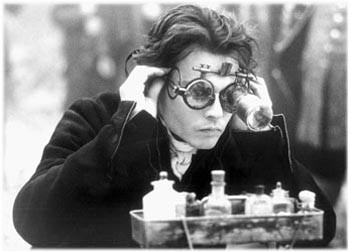
Nebbishy reformed safe-cracker Artie (Dan Vaneck) and cigar-chomping malcontent Marty (John B. Everett) are out-of-work vaudevillians who finagle a gig as “laugh therapists” in a hospital’s physical rehabilitation wing. There they befriend the recently paralyzed Glenda (Nicole Kamens), who is in the process of settling a lucrative lawsuit with her shyster lawyer Shelley (Mark Martini). The vaudevillians also uncover the fiendish deeds of ne’er-do-well care-providers Dr. Gold (Gordon Stubbe) and nurse Bernice (Luana Presler), who bill Medicare for services performed on the dead.

Despite a handful of flat notes, Remain Seated is a hilarious, albeit surreal, laugh-fest at times as quaint as the theater’s digs (the back of the Casino, a country tavern off Bodega Highway). Director Richard Track keeps the show taut and briskly paced without creating a lot of audience-exhausting clamor. Vaneck and Everett are well matched as the bumbling but lovable duo on the dole.

Throughout, the two reflect that “when it comes to comedy, ‘funny’ isn’t everything,” the half-assed Zen mantra they intone when their various schemes fizzle. With Remain Seated, the platitude has weight. Though the playwright’s gags are often extremely witty, and her shtick and patter precise, it is ultimately the sincerity and earnestness transmitted by the cast that sells this work. Their onstage jollity is contagious, and their willingness to submit fully to the work’s absurdity is truly heartening.

Expect more interesting work from the Bodega Theatre Company.

Remain Seated plays at 8 p.m., Thursdays, Fridays, and Saturdays, through May 1 at the Casino, 17050 Bodega Hwy. $8. 876-3185.

SOMETIMES the lights dim, the curtains part, and your deity gives you a glimpse of what lies at the end of your profligate life. Pacific Alliance Stage Company’s production of The Best Little Whorehouse in Texas, directed by Michael Grice, provides many such moments, and for this reviewer, the view wasn’t of heaven.

Miss Mona (Meg Mackay) has run a whorehouse catering to Texas bumpkins and power brokers for eons. But suddenly, with little more motivation than the need to advance the plot, televangalist Melvin P. Thorpe (Craig Jessup) decides it’s time to put the kibosh on the operation. Hanging in the moral balance is Sheriff Ed Earl Dodd (Bob Parnell), who is torn between his duty as a lawman and his devotion to the charismatic madam.

Innumerable song and dance numbers roll on and off the stage with little more energy than a dead battery (Lawrence Pech’s choreography has all the originality of an aerobics class), and the performances, in general, are tired.

Despite Mackay’s estimable talents (she has a wonderful voice and an engaging stage presence), the production remains terribly slack and listless, and suffers greatly from the overacting of minor cast members constantly “re-acting” at full-bore in the background. Sin has never been so dull.

The Best Little Whorehouse in Texas plays through May 2 on Thursdays at 7:30 p.m., Fridays and Saturdays at 8 p.m., and Sundays at 2:30 p.m., at the Spreckels Performing Arts Center, 5409 Snyder Lane, Rohnert Park. $14. 588-3434.

From the April 22-28, 1999 issue of the Sonoma County Independent.

© Metro Publishing Inc.
Cooking with Beer

0

Beer Cookery

Try some suds in your favorite recipe

By Joe George

MY INTRODUCTION TO beer cookery was somewhat unconventional–it came while I was camping. While sautéing steaks in a cast-iron skillet over an open fire and wanting to deglaze the pan, I used the only liquid I had at the time … the beer I was drinking. The outcome was delicious. After my achievement, friends and I tried the same method again, only substituting vodka–the high alcohol content and open flame almost blew us up. I decided then that cooking with beer was a lot more fun–and safer–than cooking with vodka.

Beer as a beverage can be so satisfying and flavorful that it is often overlooked as a cooking liquid and baking ingredient. While wine is most often thought of as the optimum fermented cooking liquid, beer, too, has its place.

And like wine, beer has been used in this manner since the beginning of civilization.

Interestingly, beer and bread–both of which are based on natural fermentation–originated simultaneously in the Southern Levant more than 10,000 years ago. As with bread, the first beer, however crude, was most probably an accident. Leavened bread originated when a primitive dough or gruel was left to stand for too long and natural yeast cells found their way into the mix. And some culinary historians claim the same happened with beer, that it was most likely a bowl of barley and water that began to ferment or some excess liquid containing yeast ran off a dough.

Thus it’s no coincidence that in ancient civilizations bread and beer were usually made in the same area; in Ancient Egypt slaves were paid a salary of salt, bread, beer, and garlic. (I wonder if they received a holiday bonus.)

With this knowledge it surprises me that beer is not thought of as a food as well as a drink. The famed Parisian boulanger, Lionel Poilâne, whose bakeshop uses a sourdough starter that has been in his family for three generations, often refers to his bread as “solid beer.” Now there’s a subject to silently contemplate.

There is one gentleman in particular that I know who abides by the claim that beer is a form of food, and that one can actually be sustained on the fermented liquid alone. He did prove this fact, consciously or unconsciously, for a while. Though he did become somewhat pallid in complexion, he also survived the rigorous treatment of ingesting only beer. He has since been consuming a more normal diet, so I am told.

As with any cooking liquid that contains alcohol, cooking with beer takes some thought and experience. Beer naturally has a slightly bitter flavor–it comes from the hops–and if too much is used in any recipe it could easily overpower the entire dish. Food cooked properly with beer will contain only mild nuances of the beverage. If too much beer is added or it becomes too concentrated, the result will carry an unpleasant bitter flavor. Thus said, beer makes a perfect braising liquid for beef or pork, where the strong flavors of the meat mingle with, and can stand up to, those of the of beer.

The area of cooking where beer is truly suited is baking; the natural yeast flavor in the liquid pairs well with baked goods. And while it may sound odd to incorporate beer into a recipe such as chocolate cake, the sweetness of the sugar and slight bitterness in the chocolate marry well with the flavor of beer.

To assimilate beer into some of your favorite recipes begin by replacing just a portion of the liquid in the recipe with beer, lest you end up with a bitter concoction.

And remember to save some beer to sip while you relax and ponder what’s cooking.

Chocolate Beer Cake

3/4 cup plus 1 tbsp. unsalted butter 2 3/4 cups all-purpose flour 2 tsp. baking powder 1/2 tsp. baking soda 3/4 tsp. salt 4 oz. semi-sweet chocolate chips 4 eggs, separated 1 1/2 cups sugar

Preheat oven to 375 degrees. Grease cake pan lightly with 1 tbsp. butter and dust it with 1/4 cup flour. Tip pan in all directions to coat it with the flour, then tap out any excess.

In a medium bowl, combine the remaining 2-1/2 cups flour with baking powder, baking soda, and salt. Melt chocolate by stirring it in a small bowl over a simmering pot of water.

In bowl of an electric mixer, combine egg whites and 2 tbsp. sugar and whip on high until stiff peaks form. In a separate bowl of electric mixer, combine remaining 3/4 cup butter with remaining sugar and beat on high speed until thoroughly creamed and light in texture. Add egg yolks and whip for another couple of minutes, or until light and airy. Lower speed and add melted chocolate. Mix until combined. Continue mixing while gradually adding flour mixture to creamed butter and sugar. Mix until thoroughly combined.

Remove bowl from mixer and, using a rubber spatula, carefully fold egg whites into batter until just combined. Gently pour batter into the prepared cake pan and smooth the surface with a spatula.

Bake cake in middle rack of oven for approximately 40 minutes, or until a wooden skewer inserted into the center of cake pulls out clean. Remove cake from oven and turn out onto a sugared board or counter. Allow to cool before eating or frosting. Makes one 12-inch cake.

Chocolate-Lager Sauce

1 cup lager 14 oz. semi-sweet chocolate chips

Place lager in a small saucepot over medium-high heat and bring to a simmer. Place chocolate chips in a small bowl and set aside. When beer simmers, pour it over chocolate. Stir chocolate sauce with a wooden spoon until chocolate is completely melted. Allow sauce to cool to room temperature before using. This sauce is an ideal accompaniment when drizzled over chocolate beer cake and served with vanilla ice cream. Makes 2 3/4 cups.

From the April 22-28, 1999 issue of the Sonoma County Independent.

© Metro Publishing Inc.

Laguna de Santa Rosa

0

Duck & Cover

Nature’s way: Docent chief Bob Evans identifies wildlife living in the newly restored Laguna de Santa Rosa–one of the county’s conservation success stories.

Sebastopol’s Laguna de Santa Rosa goes from wasteland to wetland

By Janet Wells

DON’T TAKE a picture of that bird!” yells Bob Evans, waving his arms at a photographer getting ready to capture the serene twilit scene of a duck skimming along a pond in Sebastopol’s Laguna de Santa Rosa. “It’s a farm duck. It’s not native,” says an indignant gray-bearded Evans.

Evans, carrying a well-worn Field Guide to Birds that seems to be an extension of his hand, is understandably territorial about the laguna. Head of the new preserve’s docent program, Evans sees a place transformed by community donations and countless volunteer hours from a trash heap to a thriving riparian wetland that plays a crucial part in the area’s ecology and cultural history.

Bragging like a proud father, Evans says that the pond–covered in a startlingly bright green scum called duckweed–is one of the best refuges in the country for migratory diving ducks.

“It’s right on the [Pacific] flyway,” says Evans, eager to showcase the laguna’s potential as magnet for native flora and fauna. “You want a list? Ring-neck, ruddy, grebes, common loon, scaup–that’s s-c-a-u-p–redhead, American widgeon.”

Evans interrupts himself to grab his binoculars and peer at a flock flapping overhead. “The nice thing about taking people into the laguna for the first time,” he says, “is their eyes get wide with the beauty.”

Most people, Evans, adds, have seen the laguna only as they drive along Highway 12 into Sebastopol, through grassy fields that flood every winter. But those fields are only a small part of a waterway 14 miles long stretching from River Road to Cotati, the largest tributary of the Russian River.

Depending on the time of year, the laguna is wetlands, stream, or floodplain, providing habitat for nearly 300 species of plants and more than 250 kinds of birds. For years the city of Sebastopol used the land for sewage treatment ponds and as a dumping ground. Then, 20 years ago, the laguna was recognized as a resource worth restoring when Sebastopol’s general plan identified the 75-acre city-owned site as a potential park and efforts started to protect it from development.

The Laguna de Santa Rosa Foundation received a jump start from retired builder Emmett Blincoe, who donated $200,000 to make improvements to the park, including the just completed mile-long trail in memory of his late wife Loretta, and the planting of more than 1,500 trees and shrubs, and debris cleanup.

This week, Blincoe announced that he is giving an additional $200,000 for further restoration and improvements, including a bridge and a path along the east side of the laguna. The 71-year-old nature enthusiast is intensely private, bestowing his gifts through his attorney.

“Most of us have never met him. We talk to him only through his lawyer,” says Jeffrey Edelheit, a board member of the Laguna de Santa Rosa Foundation. “His wife loved it here. We gave him a tour and he said, ‘This is it.’ ”

BLINCOE ISN’T the only laguna fan. More than a few people, it seems, are downright zealous about the place. “When you come out here, you’ll feel the essence of the laguna,” Edelheit says. “You have to feel her. All of the wildlife is nurtured by her.”

Even stoic scientists start to wax poetic when it comes to the laguna. “There’s an expansiveness to it, and I don’t want to get soppy about it, but there’s a sense of peace,” says hydrogeologist Kim Cordell, director of the Laguna de Santa Rosa Foundation. “The appeal is the same as the ocean. There’s a consistency, but every time you go it’s different.”

This time of year the laguna looks like a waterway in the Deep South–a swampy, slow-moving river, trees and shrubs hanging over the banks and trailing in the brow-green water.

Himalayan blackberries, growing eight feet tall along the banks, have been ripped out, replaced by native trees and bushes. Volunteers salvaged native bunch grasses from the Walmart construction site in Windsor, replanting more than 500 little clumps of green grass along the laguna path. Benches line the path, offering sweeping views of willows and valley oaks reflected in the water, Mt. St. Helena visible in the distance across fields bright with yellow mustard.

The laguna is central to the area’s Native American history, its abundant natural resources sustaining settlements for more than 8,000 years. “That laguna is so important: it supported a village that went from Palm Drive Hospital to the apple cannery. That was a large community of people,” says Foley Benson, coordinator of Native American studies at Santa Rosa Junior College. “It was a major trade route to the coast.”

The park’s first group of docents is going through an extensive training program, with the goal of providing classroom education and trail experience for elementary school classes in the region. In addition to spotting green egrets and bunch grass, kids who have Evans as a tour guide will be sure to pick up some tips on wastewater and its role in the laguna’s restoration. First lesson: Don’t call it sewage.

“It’s tertiary treated,” Evans barks. “It’s clean. It would be potable in 99 percent of the countries of the world.”

The water quality of the laguna has improved enough in the past 10 years that the bird population count and number of species are dramatically up, Evans says. But the restoration efforts are far from complete.

“We’re all looking for the yellow-billed cuckoo,” he says, opening up his Field Guide. “It’s a riparian bird and lives in waterways with thick growth. When we have our first yellow-billed cuckoo back, that will mean we were successful. We’ll have a huge party.”

The Loretta Blincoe Trail will be dedicated at the second annual Laguna de Santa Rosa day, Sunday, May 2, starting at 9 a.m. For more information, call 823-9428.

From the April 22-28, 1999 issue of the Sonoma County Independent.

© Metro Publishing Inc.

How Chefs Create

0

Great Plates

Reaching for inspiration: Richard Strattman of Chalk Hill Winery often wanders the oak-studded hills of Healdsburg when working up new menus.

How chefs create–Helpful hints on inventing new dishes

By Marina Wolf

WHEN CHEF Richard Strattman works up menus for the Chalk Hill Winery, he’s usually out biking or wandering the oak-studded hills northeast of Healdsburg looking for wild mushrooms or spring nettles: anywhere, in other words, but the dining rooms where his creations are served up. Today, though, he’s agreed to sit still and do it, to break down the process for a visitor who hopes to learn something, anything, to make her cooking at home more creative.

In the quiet sunlit room at the winery, the session starts out encouragingly enough. Strattman pulls out a blank menu template for a lunch that will be served to a small visiting trade group to show off the newly released 1997 wines. Strattman has also brought up printouts from his recipe database, sorted by season and wine affinities, and a great flapping foldout listing ingredients from past springs: green garlic, asparagus, lamb.

The manifesto, or “cheat sheet,” is clearly used. “I need a lot of cheating,” he says. “If I need a real light seafood dish for sauvignon blanc, I can think of maybe six off the top of my head. But with the databases and manifestoes I can come up with dozens.”

Great. Make a photocopy, buy a recipe database. That’s easy enough. But when Strattman begins jotting down dishes and techniques, and amending, things speed up. He explains why most of what he puts down isn’t difficult: a light seafood salad based on whatever he finds on the market that day, tamales filled with rabbit, which was braised in quantity for another group of visitors two days beforehand. Deliberate leftovers, in other words, a tactic many families are familiar with. But where the home cook might have sweated over cookbooks for hours, Strattman has plucked out his elegant little lunch in less than 15 minutes; it probably would have taken him five if he weren’t explaining as he writes.

The sheer volume of his repertory, whether in his head or on a cheat sheet, accounts in large part for Strattman’s speed, and it’s one key difference between the professional and home cook. But often what’s called culinary creativity is in fact a highly trained attention to external factors–product availability and quality, the diners’ tastes, the purpose and tone of the event–and a flexibility in incorporating them into the meal.

Cal Uchida, executive chef for the Sonoma Moment grape-growing and olive oil estate, is renowned for his innovative responses to the challenge. And even a more casual occasion, such as a recent dinner at his pastor’s home, gets the same basic approach. “The people are more casual, I’m meeting his family; I don’t know their likes and dislikes,” relates Uchida, who eventually decided on a simple grill menu and a group-effort dessert.

But winery chefs such as Strattman must deal with an even larger set of constraints, says Mary Evely, the executive chef at the Simi Winery and author of The Vintner’s Table. For wine chefs, everything revolves around wine. In a restaurant, Evely decides what wine she wants to drink and then finds a dish to go with it. “Wine is a fixed item,” she explains firmly. “You can’t ask the winemaker to run up and put together a nice little wine to go with the dish that’s on the table. But you can change things in the food preparation.”

Fortunately, making those changes in the food preparation and adapting dishes and menus is something that can be learned. “Most people have a much better [cooking] talent than they’re aware of, and they just don’t pay attention,” Evely says. “You have to put some thought into it if you want to be able to go a little crazy in the kitchen. You have to at least think about, you know, categories of food. … If you’ve never tasted basil and you’ve never tasted cilantro, you won’t have a clue as to what will happen if you substitute cilantro for basil. So it does require paying attention when you’re tasting things and remembering what they taste like.”

Strattman advises home cooks to take the time and think about what they are doing. “Sautéing, roasting, braising–these techniques are in any book, so get a handle on the basics,” he says, flipping through his books. “It’s like music. Learning one recipe at a time is like learning one song at a time. But if you understand some chromatic scales, then you can read any music.”

THE ASPIRING artiste also needs a muse, which, like beauty, can be found in anything. Evely frequents farmers’ markets all over the county to see what the season and weather bring. Books and magazines are another way to get inspired. Rather than whipping up a recipe exactly according to spec–from, say, the March issue of Food and Wine–many chefs use the text and pictures to spark new creations or tangents from the original idea, or to dig up support for their concepts. Uchida heads straight for the books when he’s planning a new menu for an event.

“I love to look at pictures, cookbooks, recipes,” he says excitedly. “Things will just start popping up off the pages.”

Michael Quigley of Cafe Lolo reads books and magazines, too. But like all chefs, Quigley is perpetually on the run, so more often than not the ideas and images and flavors go into his head and, well, stew for a while. “I have all of these ideas orbiting around in my head all of the time, and I just grab one down once in a while,” says Quigley. “Like I have this one that’s been orbiting around in my head for seven years, and I’m finally going to do something with it on our next menu.”

Quigley might take his creation into the kitchen and test a little bit if he gets a chance. But mainly he works off the cuff. “To be honest, I’ve had dishes that I haven’t even made until we start the new menu. And nine times out of 10, that works the best.”

Bea Beasley of Beasley Catering and Event Management agrees: “Many things I’ve never made before in my life, but I can feel it. I can taste in my head, or I can see something, or maybe I’ve tasted it in a restaurant, and I can re-create it.” She says it’s a gift, which is a depressing thought for those cooks who yearn for a little of that spark in their own kitchen.

Is there any way to warm oneself on the fire of culinary creativity, without having to go to cooking school? Short answer: yes. Long answer: yes. And here’s how:

Set aside the measuring spoons. “You have to slavishly measure if you’re baking, because there’s chemistry involved,” says Evely. “But for dishes that you’re just throwing together, a pasta sauce or something like that, you don’t need to.” She recommends adding ingredients a little at a time and tasting. Instead of dumping in a half teaspoon of salt all at once, add just a pinch and see if you like it.

Be organized. It sounds like a contradiction in terms, but Beasley swears it’s the best way to have fun. Get all your ingredients laid out ahead of time, and clean up as you go along (“Put that in big print,” she says).

Get out of the house. You can stay inside and look at cooking magazines all day, but in a county such as ours, where the food and the environment are so closely intertwined, it’s a shame not to work with that ambiance in your own culinary endeavors. “Just go out on the front lawn and see what the day is telling you,” says Richard Strattman.

From the April 22-28, 1999 issue of the Sonoma County Independent.

© Metro Publishing Inc.

The Scoop

Insanity Rules So just what can we do to stop the high school shootings? By Bob Harris THE MOST popular movie in America this week is The Matrix. Act 1: Keanu Reeves portrays a friendless young man trapped in a world populated mostly by mindless peers who cannot share his angst and by inhuman...

Opinion

Rights and Wrongs By David Morris ONE OF THE White House's priorities is to enact a Patients Bill of Rights that, among other elements, requires health maintenance organizations to develop grievance and appeals procedures. Meanwhile, Sens. Ron Wyden, D-Ore., and John McCain, R-Ariz., have introduced an Air Travelers Bill of Rights that requires airline companies to...

The Film Cafe

Short Cuts The Film Cafe returns for another quirky summer of quick flicks By David Templeton THE EXPECTANT babble of excited art lovers mingles with the clink of forks on plates, while the sky over Santa Rosa slowly darkens. Fresh patrons continue to trickle into the sculpture-dotted outside courtyard at the Sonoma Museum of Visual...

Medical Decisions

Risky Business Forget the supermarket health-care delivery system. What your doctor doesn't know could kill you By Michael L. Millenson IN EDGAR ALLAN POE'S "The Purloined Letter," the protagonists overlook the crucial clue that is sitting right in plain sight: a letter left casually on a desk. Today, a similar near-willful blindness prevails among...

Spins

Legends & Such Neil Young tribute: a downbeat homage By Greg Cahill Various Artists This Note's for You, Too! Innerstate) NEIL YOUNG is a slippery character. Or at least his songs have proved slippery in the past for those attempting to put their own stamp on them (Joni Mitchell and Roxy Music being...

Charles Bukowski

Bukowski Lives! America's gritty literary voice will never be silenced, thanks to Black Sparrow Press By Patrick Sullivan TUCKED AWAY in Santa Rosa's tiny warehouse district, not far from the St. Vincent de Paul dining room and the homeless camps by the railroad tracks, is a small tan building that might just be the...

Remain Seated/Best Little Whorehouse in Texas

Acting Up Best Little Whorehouse in Texas. 'Remain Seated' is delightful; 'Whorehouse' is frightful By Daedalus Howell WHEN AN ACTOR bellows, "I do a terrific Stephen Hawking impersonation," you know a play is taking a left turn. The Bodega Theatre Company's production of Remain Seated, playwright Lois Meltzer's farcical romp through the physical rehabilitation wing...

Cooking with Beer

Beer Cookery Try some suds in your favorite recipe By Joe George MY INTRODUCTION TO beer cookery was somewhat unconventional--it came while I was camping. While sautéing steaks in a cast-iron skillet over an open fire and wanting to deglaze the pan, I used the only liquid I had at the time ... the beer I...

Laguna de Santa Rosa

Duck & Cover Nature's way: Docent chief Bob Evans identifies wildlife living in the newly restored Laguna de Santa Rosa--one of the county's conservation success stories. Sebastopol's Laguna de Santa Rosa goes from wasteland to wetland By Janet Wells DON'T TAKE a picture of that bird!" yells Bob Evans, waving his arms at...

How Chefs Create

Great Plates Reaching for inspiration: Richard Strattman of Chalk Hill Winery often wanders the oak-studded hills of Healdsburg when working up new menus. How chefs create--Helpful hints on inventing new dishes By Marina Wolf WHEN CHEF Richard Strattman works up menus for the Chalk Hill Winery, he's usually out biking or wandering the...
11,084FansLike
4,606FollowersFollow
6,928FollowersFollow
