Sculpture Jam

0

Photograph by Michael Amsler

Free Form

Sculpture Jam turns 3-D art loose on Sebastopol

By Patrick Sullivan

THE THIRD DIMENSION is, by definition, vital to the art of sculpture. You can’t hang most of the work produced by Rodin or Calder conveniently up on a wall behind your couch, and The Kiss or Gate of Hell will never seem like discreetly decorative accessories. Sculpture sticks up, bulges out, and thrusts its way forward into the world.

In short, the art form tends to take up space.

Now, thanks to the Sebastopol City Council, it has all the room it could want. Just in time for the Sebastopol Center for the Arts’ second annual Sculpture Jam, the council has approved four city-owned sites to publicly display six works to be produced by 22 local sculptors during the event.

Sculpture Jam, which takes place this year from Oct. 7 to Oct. 9, features six groups of artists, including such luminaries as Ron Rodgers and the event’s founder, Warren Arnold, wielding their hammers,chisels, and PVC pipe in full view of the curious public.

The event, which last year drew some 1,200 people over three days to the old Diamond Lumber Yard on the plaza, is intended to give observers a chance to watch sculptors at work, to give folks a better idea of the how and the who behind the art of sculpture.

But Sculpture Jam also gives normally solitary artists a rare opportunity to collaborate with others–which apparently takes a little adjustment in some cases, according to Linda Galletta, executive director of the Sebastopol Center for the Arts.

“It’s been a challenge for the sculptors because they are such an individual lot,” Galletta says. “They spend a lot of time in the studio by themselves and they normally create by themselves, so to work with other artists is a challenge.”

But it’s apparently a challenge they enjoy: One of the participating sculptors told Galletta that solitary work had left him “feeling like a caveman” and that Sculpture Jam had given him an opportunity to “come out of his cave and work with other people.” Perhaps that’s why, of the 11 artists who participated in last year’s event, nine have returned.

“They’re very energized by it,” Galletta says. “They love having the public watch them work and learn about the process. They have developed wonderful friendships that lasted beyond [last year’s] event, and now many of them are sharing ideas and techniques.”

But this time out, the event will look different in one crucial respect: more women will be participating. Last year, there was only one female artist working among the cavemen. This year, there are two teams of women sculptors on the job.

“We made a real concerted attempt to broaden our horizons and make sure that women sculptors knew that they were invited to participate,” Galletta says. “They were last year, but they seemed to hang back a bit.”

Sites for the placement of the six sculptures–which will range from four to 14 feet in height–include the downtown plaza; a corner in front of Sebastopol Cinemas; the Sebastopol Fire Department; and Spooner Park, the triangular piece of land near Palm Drive Hospital where the four pieces created last year are now on display.

SUPPORT FOR THE EVENT comes from a variety of sources: The sculptors contribute time and materials, Sebastopol Redimix donated concrete for bases, and the Sonoma County Community Foundation helped underwrite the cost of materials and installation.

But it’s the City Council’s commitment to providing public space that may be the most crucial. The idea, Galletta says, is for the Sculpture Jam, which will return next year, to become the city’s major public art program.

“[The council has] encouraged us to continue looking for sites in Sebastopol both public and private to continue this program,” Galletta says. “They are excited about having art in Sebastopol and having it be an interesting place to visit and linger and think about.”

Sculpture Jam takes place Thursday, Oct. 7, from 1 to 7 p.m., and on Friday and Saturday, Oct. 8 and 9, from 10 a.m. to 5 p.m. at the old Diamond Lumber Yard on Sebastopol Plaza. Admission is free. Call 829-4797.

From the October 7-13, 1999 issue of the Sonoma County Independent.

© Metro Publishing Inc.

Missile Intercept Technology

0

More useless missiles. Guess who pays?

By Bob Harris

LAST SATURDAY NIGHT, I was walking to a comedy gig here in L.A. when suddenly I was stopped cold by the sight of something truly out of the ordinary. (Which, in West Hollywood, is saying something.) A whole chunk of the northwestern sky was suddenly filled with what looked like an enormous jet contrail. And as night began to fall, the plume dispersed into bizarre shapes, lit in rainbow colors by the setting sun.

And it was a little disturbing.

Enough so that dozens of people called the police, asking if they were seeing a prelude to war, some weird secret technology, or possibly even the beginning of Armageddon.

What we were all watching was the launch of a refurbished Minuteman II missile (made by Lockheed Martin), outfitted with both a dummy warhead and a decoy. The Pentagon says that 3,000 miles away, a prototype missile defense system eventually destroyed the dummy warhead–meaning that supposedly the world is now a little safer for democracy, and so we taxpayers should pony up another $28 billion to keep the project alive.

Yet over the years, expectations for success in such tests have become so low that the original mission of such weapons has been abandoned entirely, and the Pentagon openly admits that even a failure would have been called a success, if the reason for the failure were merely known.

On March 23, 1983, Ronald Reagan announced the Strategic Defense Initiative, a satellite-based anti-ballistic missile system to shield the United States from nuclear attack.

Fortunately for world peace, much Star Wars technology proved to be remarkably little more than a waste of money. Eventually, even the Pentagon conceded that a comprehensive nuclear umbrella was an impossibility. In other words, even if the SDI had worked, it wouldn’t have worked.

In 1993, the SDI was renamed the Ballistic Missile Defense, but the BMD still sucked up only about $4 billion a year. However, in 1994, the GOP won control of Congress, and Newt Gingrich became Speaker of the House. The largest employer in Newt’s home district? Lockheed.

Unsurprisingly, the budget for Star Wars began again to increase, even as the Office of Technology Assessment was defunded out of existence.

The new Star Wars–now conceived around ground-based missiles–is designed not to shield the U.S. from all-out attack, but merely defend against a mere handful of missiles hypothetically launched by terrorists or by what the media call “rogue states.”

But is this a legitimate rationale for continuing BMD? Not according to our own government.

Quoting from a September 1999 report of the National Intelligence Council: “The Russian threat . . . will continue to be the most robust and lethal, considerably more so than that posed by China, and orders of magnitude more than that potentially posed by other nations.”

Countries or non-state actors could pursue non-missile delivery options. And even if a “rogue state” did decide to go the ICBM route (again, to quote the NIC’s own report), “We assess that countries developing ballistic missiles would also develop various responses to U.S. theater and national defenses. Russia and China each have developed numerous countermeasures and probably are willing to sell the requisite technologies.”

How many times should a system be tested before the taxpayers spend billions of dollars on it? Many relatively simple weapons receive dozens of tests. Before its next review in June, the BMD program is receiving exactly three–only two of which it is required to pass (and remember that an understood failure is considered a success).

So come summer, will it gain approval? Of course. Get real.

June of 2000 will be at the peak of the presidential campaign. No candidate will want to look “weak” on defense. Neither can any candidate resist the soft-money campaign donations that major defense contractors can provide.

A SIMILAR MISSILE intercept technology, Lockheed Martin’s THAAD (Theatre High Altitude Area Defense) system, failed six straight tests over the last four years while going billions of dollars over budget. However, last August, after a mere two successful tests in tightly controlled conditions, the Pentagon announced it would skip further prototype testing and begin final development of the project.

THAAD’s total cost is estimated at only $15.4 billion, with 2007 as the projected implementation date. And BMD is ready to cost us $28 billion more. Since 1983, between $50 billion and $100 billion has been spent. Yet Star Wars turned out to be impossible, and the current scheme of BMD doesn’t even address the most likely scenario for attack.

Will the new Star Wars do the job?

If we’re talking about maintaining the flow of billions of dollars of taxpayer money to high-tech defense corporations, the answer is: yes.

If we’re talking about defending the United States from ballistic missile attack, the answer is: no.

From the October 7-13, 1999 issue of the Sonoma County Independent.

© Metro Publishing Inc.
Vineyard Development Ordinance

0

Sign of the times: Supervisor Mike Reilly sat in front of a protest sign at a recent forum called by activists to oppose encroaching vineyards.

Feeling the Crush

New vineyard-planting ordinance–is it a smart compromise or a sellout?

by Yosha Bourgea

A CONTROVERSIAL new erosion-control ordinance that regulates the planting of vineyards on sloped land has been reworded once again by the Sonoma County Board of Supervisors, but some environmental activists in the community claim that the ordinance still gives far too much leeway to local grape growers.

A much-anticipated public hearing, scheduled for Tuesday, Oct. 12, will provide a forum for citizens to express their concerns to the board on what has become one of the most emotionally charged issues in local politics: the impact of the wine industry on Sonoma County.

The Vineyard Development Ordinance, formerly known as the Vineyard Planting and Replanting Ordinance, grew out of an agreement reached between environmentalists and grape growers after one and a half years of intense negotiation. It was designed to establish riparian setbacksÑor minimum distances from the edge of streams, creeks and riversÑto prevent soil from muddying waterways and degrading fish habitats during winter storms.

The new revisions on the heels of two recent meetings at which hundreds of west county activists and residents gathered to discuss ways to curtail the effects of vineyard developments, including increased pesticide use, damage to native oak forests, the reduction of apple orchards and other farmlands, and the depletion of local aquifers.

The original ordinance, adopted June 15, included references to standards for erosion and sedimentation control, but didn’t specify them. At the time, the board planned to have the county agriculture department develop and adopt those standards separately later in the summer. The ordinance was supposed to go into effect on Oct. 1.

But as that date grew closer, it became clear that the standards would not be in place by the deadline. Sonoma County Conservation Action president Mark Green, who was involved in the negotiation process, says that red tape and inexperience were partly to blame. “Government sometimes takes a while to do things,” Green says.

“I will say that I’m disappointed, but I understand that it’s a new program for the agricultural office. They need to find a staffer to do this job, and that person has not been hired yet.”

On Sept. 21, the board, led by Supervisor Mike Reilly, voted to postpone the ordinance again, this time until Dec. 2. In the interim, a moratorium has been placed on new vineyard development with the exception of Level I vineyards–those planted on land with a predevelopment average slope of less than 10 percent (for erodible soils) or less than 15 percent (for non-erodible soils), though local activists have claimed that there is a rash of planting on steeper slopes in an effort to beat the deadlines.

“Functionally, the odds are good that [growers] won’t plant anyway, because it could rain any day now,” Green says. “Water Control and Fish & Game fines could be considerable if [the soil from] vineyards ends up in creeks.”

Photograph by Michael Amsler

BUT the ordinance continues to draw fire from environmentalists who contend that its wording is biased in favor of the wine industry. Sebastopol activist Ann Maurice says that a loophole in the ordinance allows growers to tweak the average slope percentage in order to qualify their vineyards as Level I.

“The new ordinance is more obscene than the other,” Maurice says. “This thing is so preposterous you want to just tell them to stick it.”

In addition, Maurice says, the ordinance puts too much power in the hands of the county agricultural commissioner, a position held by John Westoby. Under the ordinance, growers are required to notify the commissioner in writing before they begin work on a site, so that he can determine whether the vineyard qualifies as Level I. But if the commissioner has not made that determination within 30 days, the vineyard is automatically classified as Level I and the grower is free to develop the site.

As Maurice points out, the commissioner is not legally obligated to make an official determination. If a grower’s notice sits on his desk for 30 days, for whatever reason, the vineyard is approved by default. What makes this especially repugnant, she says, is that the ordinance makes all the commissioner’s decisions final, and not subject to appeal.

“We want to protect the ag commissioner from having to take bribes,” Maurice says with a blunt laugh.

Reilly, who has worked closely on the shaping of the ordinance, says that the intent of the 30-day limit was not to foster bribery or cronyism, but to protect growers from having to wait indefinitely for government approval. Like any crop, wine grapes are time-sensitive, and Reilly says growers wanted assurance that there would be action within a reasonable time.

“I’m going to ask for the ag commissioner to report back to the board if he can’t make a determination,” Reilly says. “If he doesn’t act within the time frame, that needs to be public knowledge. If there’s a pattern of underevaluation, it can be addressed.”

Of greater concern, Reilly says, is the wording that classifies any replanting as Level I. “Replanting can mean tearing out 100 percent of [an existing] vineyard,” he says. “If the purpose [of the ordinance] is erosion control, replantings could pose as serious a threat as new plantings.”

ALTHOUGH environmental activists are less than satisfied with the provisions of the ordinance, many regard it as a two-steps-forward, one-step-back situation.

“This is an incremental gain,” says Friends of the Russian River representative Joan Vilms, also a member of the committee that negotiated with growers to create the original ordinance. “It puts something on the books for the first time.”

The riparian setbacks and slope limitations may be insufficient, she says, but they’re better than nothing.

Meanwhile, the wine industry continues to thrive. As demand for Sonoma County wines increases, more and more farmers are giving up less profitable crops to take advantage of soaring grape prices. And industry giant Kendall-Jackson’s recent purchase of a 500-acre dairy ranch on the Marin/Sonoma border –once considered unsuitable for grapes–highlights the aggressive expansion of vintners into undeveloped areas of the county–and the potential for new impacts on a marginal industry that may not be able to withstand the onslaught of vineyards.

“This area has been changed more in five years than it has in the last 100,” local activist Kurt Erickson says. “The postcards will soon be out of date.”

From the October 7-13, 1999 issue of the Sonoma County Independent.

© Metro Publishing Inc.
Susan Faludi

Man Trouble

Author Susan Faludi says American men are an endangered species

By Patrick Sullivan

“BOOK TOURS are strange things,” says author Susan Faludi with a weary laugh. “Every 15 minutes you’re starting over again.” But it may be a while before Faludi gets any respite from the besieging ring of interviewers. The Pulitzer Prize-winning journalist and feminist, perhaps best known as the author of the best-selling Backlash: The Undeclared War against American Women, is in high demand once again, sailing from television talk shows to news magazines and back again with a provocative new message that the mainstream media seem both helpless to ignore and deeply reluctant to accept.

Back in 1991, Backlash generated howls of outrage in some circles for its argument that women’s struggle for equality was running up against a political and social counterattack of monstrous proportions and effect. Now, in Stiffed: The Betrayal of the American Man (Morrow;$27.50), Faludi is back with a startling new thesis: Men, says the feminist author, are also getting a raw deal.

The book, which was some six years in the making, is built around Faludi’s in-depth interviews with a wide range of American guys, from downsized aerospace engineers to Waco-obsessed militia members to Cleveland Browns’ fans to gangbangers from South Central. Even Sylvester Stallone, Details magazine, and a visit to the set of a porn movie make it into the mix.

Despite the diversity of her interview subjects, Faludi–who speaks on Oct. 15 at Sonoma State University–found that American men seem to have at least one thing in common: a painful identity crisis.

“The theme I heard struck again and again was ‘I don’t feel useful in society,’ ” says the 40-year-old Faludi, speaking by phone from a hotel room in New York City. “And that sense of social utility, where you make a meaningful contribution to your family, to your community, where you work with other men–that’s historically where manhood’s been grounded.”

But that source of masculine identity, the author argues, is increasingly uncertain in a contemporary America beset by layoffs, deindustrialization, and–perhaps most significantly in Faludi’s eyes–a cultural shift toward the glittery new world of media spectacle, a world populated by superathletes, action heroes, and Viagra studs.

“What’s happening is that we’re becoming more and more of a commercially driven consumer culture that’s all about celebrity and image and being a winner all by yourself,” Faludi says.

“So many of men I talked to,” she adds, “felt that there was no middle ground anymore. Either you were this winner on display who just dominated everything and was larger than life and had the biggest muscles and drove the biggest car, or you were a nobody, a loser.”

American men, in short, have been betrayed–neglected by their emotionally distant fathers, sold short by a celebrity-obsessed media culture, and sucked down by the treacherous quagmire of the postmodern economy.

If only Nixon could go to China, then maybe only a certified feminist like Faludi could write Stiffed. Certainly a man making these arguments could easily sound like a whiner, a sore loser, or an Angry White Male. But, then again, Faludi’s credentials haven’t shielded her from intense criticism.

“This woman is clearly on a mission: Find a soft place in the collective male self-esteem and drive at it until the lance runs red,” declared one writer in an Esquire article, before going on to add that he didn’t feel stiffed and didn’t know any men who did.

“Well, that guy hadn’t even read the book!” Faludi says indignantly. “You know, that’s part of the problem with our culture, where we have people writing reviews of books they have not seen. I mean, that’s a little bizarre, I think.”

But the author has encountered similar criticisms during her frequent forays into the male-dominated world of the TV talk show. One of her pet peeves is interviewers who explain to her that a quick survey of their male colleagues in the green room didn’t turn up anybody who felt betrayed by American culture.

“You just can’t take a man on the street survey and expect to get anything particularly revealing,” Faludi says. “One has to really know the men you’re talking about, and the men have to feel comfortable talking before you get any kind of honest grappling with what’s really going on with them.”

That kind of immersion served as Faludi’s primary method of collecting the material for Stiffed. She began by plunging deep into the fractured world of a group of Southern California men in financial and emotional crisis, spending hours, days, even years talking to them and tracking their progress through unemployment centers, Promise Keepers’ meetings, and domestic-violence counseling groups.

She hung out with the adolescent members of the Spur Posse, a high school gang that won a fleeting media notoriety by competing for points in a contest focused on who could have sex with the most girls. She went down to the shooting range to fire off a shotgun with Michael McNulty, an unemployed insurance salesman who was one of the creative forces behind the documentary Waco: The Rules of Engagement. And she talked extensively with actor Sylvester Stallone, trying to unravel the knotty riddle of his troubled relationship with both his movie career and his abusive father.

“I actually spent a fair amount of time with him, because it was at a moment where he was really questioning his persona as an action hero and was trying to retreat from the action market for a while,” Faludi says. “He was quite open and interested in talking about masculinity.”

Some readers may be surprised by the amount of empathy–even affection–that Faludi clearly has for most (though not all) of these men. Combining finely honed reportorial skills with graceful prose, she lays out their troubled lives in largely sympathetic terms.

That very sympathy has opened Faludi to another kind of criticism. Some reviewers have said that she’s too soft on men, that she’s letting the perpetrators of domestic violence off the hook, or even that Stiffed amounts to a betrayal of feminism. But the author urges anyone who believes that to take another look.

“It’s a very feminist book. It’s attempting to apply feminist analysis to men,” Faludi says. “I mean, I understand the impulse among women to say, ‘Oh, boo-hoo. Men–who cares about their pain? But it’s not a very productive response. It comes out of the frustration a lot of women feel in the workplace where they see that all the top spots are taken by men, or at home, where they feel that their husbands are not carrying their fair share of the domestic load. But the truth is that . . . most men are in quite a powerless position in society.”

STILL, FALUDI SAYS she does take the issue of male violence very seriously. Indeed, she points to the long list of recent killing sprees in America’s public schools and office buildings as perhaps the most lethal consequences of the male identity crisis.

“One thing that interests me is that so many of the discussions about schoolyard shootings are about ‘What are we providing that may be inciting this violence? Is it video games? Is it dirty movies? Is it action flicks?’ ” Faludi says.

“When maybe,” she concludes, “what we should be asking is ‘What are we not providing?’ And that’s a society for young men to grow up into where they feel they have a real stake and something of substance to offer.”

But make no mistake: Faludi has no desire to return to some mythical ’50s paradise of white picket fences and rigid gender roles.

As she writes in Stiffed, “Because as men struggle to free themselves from their crisis, their task is not, in the end, to figure out how to be masculine–rather, their masculinity lies in figuring out how to be human.”

Susan Faludi appears on Friday, Oct. 15, at 8 p.m. at SSU, Evert Person Theatre, 1801 E. Cotati Ave., Rohnert Park. Tickets are $10 and are available at Copperfield’s Books. For details, call 664-2353.

From the October 7-13, 1999 issue of the Sonoma County Independent.

© Metro Publishing Inc.

‘Jakob the Liar’

0

Rabbi Naomi Levy pans ‘Jakob the Liar’

Writer David Templeton takes interesting people to interesting movies in his ongoing quest for the ultimate post-film conversation. This column is not a film review; rather, it’s a freewheeling, tangential discussion of life, alternative ideas, and popular culture.

“HAVE YOU ever heard of the Chelm stories?” asks Rabbi Naomi Levy, in a gentle, lilting voice so soft and quiet I have to press the telephone against my ear to hear it.

“Um, Helm stories?” I ask.

“Chelm,” Levy repeats. “They’re very famous, very humorous stories in the Jewish folkloric tradition. Chelm is a little European town made up entirely of simpletons, and the stories tell about the funny, foolish things the townspeople do.”

“Chelm,” I repeat. It’s a warm word, like a mouthful of fresh dough. I jot a quick note to myself, in the paperback margin of Levy’s best-selling, wonderfully autobiographical “guidebook” To Begin Again: The Journey toward Comfort, Strength, and Faith in Difficult Times (Ballantine; $12.95).

“Check out Chelm,” I write, anticipating the rich post-conversation Internet-search that will follow our post-film conversation.

Rabbi Levy is the former rabbi of Temple Mishkon Tephilo, in Venice, Calif. She was the first female Conservative rabbi to lead a congregation on the West Coast, stepping down from the pulpit only last year to raise her two children.

We’ve reached out and touched each other this afternoon, long distance, to discuss the new Robin Williams film Jakob the Liar, a manic-depressive Holocaust comedy-drama (uh huh, a Holocaust comedy, like Life Is Beautiful, only with Robin Williams).

Critically vilified–and not a great performer at the box office, either–Jakob is about the starving, suicidal denizens of an unnamed Nazi-enforced Jewish ghetto, somewhere in Poland in the last days of World War II, who miraculously regain a glimmer of hope and dignity after Jakob, a widowed pancake-maker played by Williams, begins to spread little white lies about an imminent arrival of Allied troops. It is assumed that Jakob must have a secret illegal radio from which he receives his “news.” As the lies build to absurd levels–Jakob claims he can hear the approach of Allied tanks on his fictional radio, insisting that they must be American tanks because Benny Goodman’s orchestra is also heard, sent along to play as the forces engage the German Army–the ghetto’s suicide rate sees a sudden dramatic drop.

Levy didn’t like it.

“It was part Life Is Beautiful and part Good Morning Vietnam,” she says, “and by the end it had turned into Braveheart.”

A strange mix indeed.

“I agree with the idea,” she continues, “that it’s important to retain hope, and that even in the darkest circumstances, even when your hope is based on a lie, it can literally save lives.

“But I thought it was executed in a way that made the people seem simple-minded.”

It is here that Levy invokes the name of Chelm, with its beloved population of simpletons. This, I have since learned (I did do my research), is a group of people so fundamentally unwise that once, after dragging a thousand fresh-cut logs from the top of a nearby mountain–and after hearing that they might have done better by rolling the logs down instead of dragging them–the people of Chelm all banded together to drag the logs back up top of the mountain so that they could properly roll them back down again.

Then there’s the one about the addled fellow who, accidentally turned around on a trip to Warsaw, mistakenly ends up back home in Chelm–and assumes that Warsaw is an exact copy of his hometown, right down to the mysterious strangers who look just like his wife and children.

“To me, Jakob the Liar was almost as absurd as that,” says Levy, “only it was the victims of the Nazi ghettos that were being portrayed, not the people of Chelm. The people who ended up believing Jakob’s lies ended up looking silly and foolish.

“It turned the victims into fools,” she softly murmurs, “and turned the nightmare of the Holocaust into a fairy tale.”

IN LEVY’S BOOK, mingled with inspiring stories of people she’s known, the author describes her own nightmare. At the age of 15, she lost her father when he was shot by a thief on the streets of New York. It was a loss she reacted to by distancing herself from her father’s faith in God.

“On the day my father died,” she writes, “God died too.”

Rabbi Levy’s journey back to God is the story of harsh despair turned eventually back into hope.

“To live in this world, to carry on, we all need a degree of hope,” Levy acknowledges. “Hope that people are basically good, hope that things are going to be OK, hope that there is something worth striving for, hope that there’s a reason to get out of bed in the morning.”

“The irony of Jakob,” I remark, “is that the all-important, life-sustaining hope turns out to be a lie.”

“I think hope is often a lie,” Levy replies. “It didn’t bother me that hope was a lie. What bothered me was that hope was such a blatant lie.”

“Wait,” I interject. “Hope is often a lie?”

This hardly sounds, well, scriptural.

“We deny our mortality all the time, in order to go on living,” Levy explains. “A certain sense of denial is required to live in this world. If we were looking at the statistics realistically, we’d never drive another car, or cross a street, or get married, or do anything.

“In a way, all hope is a denial of reality, so that we can maintain our faith in something, faith in the beauty of this existence, faith in love, faith in God,” she adds. “I do think that life is cruel. I also think it’s our job to enjoy life anyway.”

“And how do we do that?” I ask.

“We do it the way the heroic people in the real ghettos and camps did it,” she answers.

“We hold on to hope, any hope, even the simple hope that somehow tomorrow will be better than today.”

From the October 7-13, 1999 issue of the Sonoma County Independent.

© Metro Publishing Inc.

‘Watermelon Nights’

Watermelon Nights is pulling author Greg Sarris back to his native Santa Rosa.

Photograph by Janet Orsi

Live Action

Word for Word stages Greg Sarris’ ‘Watermelon Nights’

By Patrick Sullivan

“IT’S LIKE GOING BACK to a family, or back to an old lover, where all the emotions are raw again,” says acclaimed novelist Greg Sarris. “Santa Rosa to me is full of ghosts. . . . All of the stuff that’s buried under all those subdivisions rises up and talks to me.”

Though he grew up in Sonoma County, Sarris now lives and works in Los Angeles, where he teaches at UCLA. But an upcoming theatrical staging at Santa Rosa Junior College of Watermelon Nights, his critically acclaimed 1998 novel set in Santa Rosa, is pulling Sarris back to his childhood home.

Of course, the author–perhaps best known for Grand Avenue, his 1994 collection of interwoven short stories that became an HBO movie–visits the county often. But seeing his work put before a local audience is something different, an experience that Sarris finds both gratifying and terrifying.

“Santa Rosa was my home until I was 19,” he says. “What I write about comes from those first years of my life, so I go back and wonder if those folks will like it.”

Director Leslie McCauley and Word for Word, the San Francisco-based theatrical troupe that is preparing to stage a chapter from Watermelon Nights, would have been hard-pressed to find a more dramatic portion than the one they chose.

“Does anybody know what love is?” asks John, the chapter’s narrator. “Can a person know before he’s smashed like an almond in the jaws of a nutcracker?”

Johnny is a young man in conflict over his family, his sexuality, and his relationship with the Indian community in which he lives. He is one of the novel’s three main characters, each from a different generation of a Pomo Indian family that takes an eventful (and often heartbreaking) ride through the 20th century.

Before Chapter 5 is over, Johnny gets an answer to his plaintive question, albeit not the one he wants, after a devastatingly painful series of events that turn his world upside down. The chapter’s passion and the conflict offer dramatic possibilities that are hard to miss, and so does the author’s brutally honest dialogue.

“I’m writing about people who don’t particularly give a damn about standard English and propriety,” Sarris says. “The concerns of my characters are very different.”

But dramatic possibilities and frank language aside, staging a chapter from a novel seems like a hard thing to get right, especially when you do it the way Word for Word does–literally word for word. Indeed, the first time the troupe adapted a work by Sarris (they staged his short story “Slaughterhouse”), the author himself had his doubts.

“I kind of had my heart in my throat,” Sarris says. “I didn’t know what to expect. I thought it might be kind of corny. But I was blown away. They pulled it off brilliantly.”

Pleased by the results, Sarris went on to grant the troupe permission to stage another of his stories, “Joyride,” a production that ended up winning a Bay Area theater award.

So, what’s next for Sarris? The author–who continues to serve as chairman of the Federated Coastal Miwok Tribe–says he has been working on another novel that takes place in Santa Rosa.

But he’s put that project aside for a while to work on the script for a made-for-Showtime movie directed by Alfonso Arau (Like Water for Chocolate). The movie will tell the story of several generations of a family descended from the union of an Indian and a Spanish priest. The production begins filming in January of next year and may air in May.

As for the upcoming Word for Word performances, Sarris expects to be pleased by the results. Indeed, the author can’t seem to say enough about the troupe. “They are teaching literature in what many of my colleagues are calling a post-literate society,” he says. “They literally make literature come to life.”

Word for Word performs Watermelon Nights: Johnny–Chapter Five on Oct. 8-9 and 13-16 at 8 p.m. and Oct. 16 at 2 p.m. at the Burbank Auditorium, SRJC, 1501 Mendocino Ave., Santa Rosa. A gala reception for Sarris–at which the author will sign copies of his novel–takes place Oct. 8 at 6:30 p.m. at the Jesse Peter Museum at SRJC. Tickets for the play are $7; gala admission is $10. Call 527-4342.

From the September 30-October 6, 1999 issue of the Sonoma County Independent.

© Metro Publishing Inc.
Little Tin Frog

0

It’s a happening: Little Tin Frog tune into the Velvet Underground on Oct. 16.

Velvet Touch

Little Tin Frog pay homage to Velvet Underground

By Greg Cahill

IT’S GOOD TO KNOW that there are some things in life you can depend on. Case in point: the inane nature of pop culture. For instance, there’s now an entire website devoted to the banana that graced the Andy Warhol-designed album cover of the Velvet Underground’s first LP. You get not only the original cover art cybernetically enhanced to allow the user to peel the banana (oooh la la!), but also a function that permits you to gaze upon this pink splendor in mid-peel.

And that’s not all!

There’s also an “alternative” banana–a fuzzy yellow critter that looks like a genetically modified fruit crossed with Furby genes.

Now that’s livin’.

Little did Rolling Stone know a few years back, when it declared the Velvet Underground to be the most influential band of the past 20 years, that a whole new medium would evolve to carry the torch–albeit in a decidedly goofy fashion.

As for the band’s musical influence, that’s very much in evidence as the millennium ebbs–or flows, or whatever. The resonance of the Velvet’s distorted folk-rock rhythms and street level lyrics–an amalgam of Lou Reed, John Cale, Moe Tucker, and Sterling Morrison–spiked with references to drug experimentation and sexual abandon, can be heard in the music of David Bowie, R.E.M. (who covered a couple of Velvet Underground songs on their Dead Letter Office CD), Sonic Youth, Yo Lo Tango, Galaxy 500, Luna, Television, Bauhaus, the Jesus & Mary Chain . . . and the list goes on.

Local alt-rockers Little Tin Frog not only worship at the proverbial shrine of the Velvets, they’re gonna actually build a shrine in their honor.

On Oct. 16, the Petaluma-based band will host a tribute to the quintessential New York art-rock group, transforming the rustic Inn of the Beginning into a replica of “The Exploding Plastic Inevitable,” a 1966 art happening hosted by Velvet’s mentor and pop artist Andy Warhol.

“We initially came up with the idea as a way to draw people with an interest in alternative music into coming out to see local bands for the first time,” says event organizer Owen Otto of Little Tin Frog. “We chose the Velvet Underground over a lot of more popular bands because they were hugely influential and embodied the ideas of musical integrity in rock.”

The tribute will include an army of local musicians–including Little Tin Frog, Dave Hudson, Karry Walker, James Combs, 20-Minute Loop, Seven, and the Youth Symphony (formerly Orisha)–all performing covers of VU songs.

The Velvet Underground tribute will be held Saturday, Oct. 16, at 8 p.m. Inn of the Beginning, 8201 Old Redwood Hwy., Cotati. Tickets are $7 at the door, $5 in advance, and are available at Red Devil Records in Petaluma, the Last Record Store in Santa Rosa, and Zone Music in Cotati.

From the September 30-October 6, 1999 issue of the Sonoma County Independent.

© Metro Publishing Inc.
Second Annual Indy Awards

0

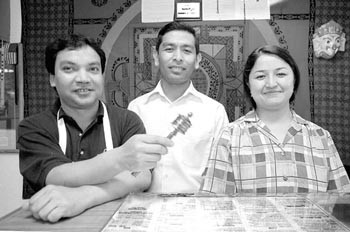
The Artifacts: Diggin’ those grooves–Karen and Steven Tamborski, and Dorian Irving.

For Arts’ Sake

The 2nd annual Indy Awards, celebrating the spirit of the local arts community

Edited by Patrick Sullivan

IT’S BEEN SAID that Sonoma County harbors more artists per capita than any other place in California. Strictly accurate or not, it’s a claim that feels right to those of us who live here. How else to explain the wellsprings of creativity that bubble up all over the area, even in the most unexpected places? In every field of creative endeavor, from music to theater to the visual arts to the dedicated administrators who pull it all together, talented folks throughout the county are offering innovative art to the community–and pulling the community into the arts.

Unfortunately, these efforts don’t always get the recognition they deserve. And in other cases, an artistic endeavor grabs plenty of attention at the time, but its lingering effects on the community are not widely known. So, to celebrate that bountiful creativity, the Sonoma County Independent is once again shining the spotlight on local artists who have made outstanding contributions to the cultural scene.

The second annual Indy Awards honors eight individuals and institutions, from folks who labor in relative obscurity to others who make headlines on a regular basis. The recipients–selected by the newspaper’s editorial board, including editors, staff writers, and contributors–are an eclectic group of established figures and unsung heroes. What they all have in common is their drive to make a difference in Sonoma County–to show us something new, something innovative, something important that we might otherwise miss.

So, without further ado, here they are, up close and personal.

Music makers: The folks at the Bodega-based Institute for the Musical Arts–(clockwise from the back, left) artists-in-residence Janelle Burdell and Ferron, and artistic director June Millington and executive director Ann Hackler–have created a unique space that helps women learn the ropes of the music biz.

Sound Garden

Institute for the Musical Arts June Millington & Ann Hackler

For June Millington and Ann Hackler , it began as a dream–a dream of providing a school where women could go and be treated seriously as musical artists or learn the ropes of the male-dominated recording business. In 1987, that dream became a reality when the two founded the Institute for the Musical Arts, creating a haven for musicians in search of inspiration, teaching, and friendship.

In 1991, the IMA found its home at the Old Creamery in Bodega, an artist’s colony founded by the late painter Bill Moorehouse. Since then, many local musicians, including such notables as Copper Wimmin, have had their talents nurtured there, and the organization boasts an advisory board that includes blues/pop great Bonnie Raitt.

When it comes to the music industry, Millington had plenty of personal experience to draw upon. In 1969, she and her sister Jean founded Fanny, the first all-female rock band, which went on to score a recording contract with Warner Brothers. After leaving the band, Millington became involved with the women’s music movement and later met Hackler, who was running a women’s center. It wasn’t long before they decided to open a school especially for women working their way into the music industry.

These days, IMA offers a variety of workshops–on subjects ranging from writing and composing to recording–that are open to women as well as men.

“We had been doing bimonthly concerts and workshops, but the fire marshal came in and we had to cut back on them,” Hackler says.

The IMA now has several projects in the works, including women’s-music star Ferron’s soon-to-be-released album Inside Out. A portion of the proceeds from that album will go toward the IMA. Other projects include a new solo album by Millington and an album by Sonoma County artist Megan McElroy.

“We really work hard at encouraging new artists to start recording,” Hackler says.

The future of the IMA, however, is on sinking sand these days, since the school is being evicted from its home at the Old Creamery. Hackler and Millington had been raising funds to purchase the building, but now they’re struggling to find a new permanent location for the IMA.

“We’re in a precarious place,” Hackler says. “It’s very costly for us to find another spot. We would need $150,000 just to put down on another place. As Sonoma County gets more and more developed, artist spaces and lofts have become subject to code and permit violations.

“The lack of affordable artist space is an issue that needs to be looked at and thought about.” —Yovanna E. Bieberich

Photograph by Michael Amsler

Center Stage

Lennie Dean Studio Be

When someone tells Lennie Dean how “inspirational” she’s been, or informs her that she must have “a very big heart”–and trust us, this happens rather often to Dean–the legendary local director and improvisational acting instructor just smiles and enjoys it, showing nary a twitch of discomfort or self-deprecation.

“I think it’s true. I do have a big heart,” she says with a laugh. “I love inspiring people! I seem to have no trouble seeing the full beauty of all my students’ spirits.”

The effusive Dean is the founder of Studio Be, part theatrical studio and part acting school, an increasingly vital part of the county’s alternative theater scene since she opened shop in January of 1994. An adherent of the Method-based Eric Morris performance technique–“It’s about acting,” she says, “but it’s mainly about learning to become a full human being”–Dean has acted in and directed numerous shows throughout the United States.

She is a fervent believer in experimental, often unknown playwrights, with a fondness for unusual, out-of-the-way performance spaces. She operates Studio Be from the 35-seat, engagingly named Romantic Tea Room, located at 208 Davis St. in Santa Rosa’s Railroad Square. Studio Be’s newest project is a monthly series of modern vaudeville performances called “ELIXIR.”

After many years, Dean’s career took a dramatic turn when she abandoned acting in order to teach. “For years, people told me I should teach,” she recalls. “But I resisted. ‘Those who can’t do, teach,’ I thought. But finally I surrendered to it–and the minute I did, amazing opportunities began to fall into my lap.”

That experience might sum up Dean’s philosophy of stagecraft. “Learning to act is about learning to take risks,” she says. “And to do that we must have the willingness to claim all the colors we have within ourselves.

My job,” Dean says, “is to show people their colors.” —David Templeton

War Requiem.

Photograph by Michael Amsler

Good Conduct

Jeffrey Kahane Santa Rosa Symphony

Let’s face facts: There’s no shortage of excuses for bestowing awards on Jeffrey Kahane. The multitalented Santa Rosa Symphony conductor, music director, and world-class pianist has a long list of accomplishments to his credit.

In a time when the national appetite for classical music is widely perceived to be shrinking, the symphony Kahane conducts attracts both a growing audience and enough community support to enable it to be preparing to move into the $47 million concert hall now in the works at Sonoma State University.

But for Kahane’s biggest fans, it’s not the ticket sales or the building projects that matter most. Both, after all, are erected on the solid foundation of Kahane’s innovative musical programming. And that programming depends on the conductor’s trademark combination of personal skill and desire for community involvement–a mix perfectly exemplified by the recent War Requiem project.

This past April, Kahane led a vast array of musical talent–the full symphony and a chamber orchestra, along with three local choirs (including one from Santa Rosa High School) and three renowned soloists–in performing English composer Benjamin Britten’s famous pacifistic work, written in 1961 to commemorate the tragedy of war.

It was, Kahane said at the time, the most ambitious project he’d ever undertaken. But the 43-year-old conductor and his many collaborators pulled it off in high style, garnering headlines around the Bay Area, and even receiving national attention.

“I think it was the most fulfilling and most powerful experience I’ve ever had as a musician,” Kahane says now. “Not only was it was the fulfillment of a very long-cherished dream to perform it, but it also did something I love to see happen: it brought young people into the orbit of the symphony.”

The project was financed in part by a rare grant from the National Endowment for the Arts, which was delighted with the results. Now the project is being talked about by classical-music people all over the country as a model for partnerships between arts organizations and local communities.

But Kahane is hardly one to rest on his laurels. Among other things, he’ll be spending a week on tour with folk-rocker James Taylor in November. And he’s already planning a follow-up to the War Requiem, another collaborative project with local schools that springs from his passion for educating young people–and everyone else–about classical music.

“I think outreach is essential,” Kahane says. “One of the things that the War Requiem emphasized is that we are trying to destroy the idea that classical music is an elitist thing.

“I hope that it’s a new model for reaching out to a community and providing artistic nourishment for everyone.” —P. S.

Photograph by Michael Amsler

Musical Madness

Roger Tschann Producer/proprietor, Grizzly Studios

Grizzly Studios proprietor Roger Tschann wants you to know one thing about his Petaluma-based recording facility: It “smells like butt.” The 29-year-old Tschann features that fact prominently when advertising Grizzly Studios, which has become the de rigueur locale among emerging bands for cutting an album in the North Bay.

Tschann–who is also the co-founder of Petaluma’s Flying Harold Records–opened the studio in 1996 after realizing there were few cheap venues for young musicians who wanted to record.

“Five years ago, there weren’t a lot of options for affordable recording. It was much harder for a band to make a record back then,” says the affable Tschann, who has recorded hundreds of bands from Sonoma County and beyond, including Cropduster, Eric Lindell, the Wonder Years, and Skitzo.

Tschann’s music rack displays an arm-span’s length of CDs tracked at Grizzly Studios, which he operates at his Petaluma home. “It shortens the commute and it beats working,” laughingly says Tschann, who has been laboring on a studio remodeling project that has languished in recent months.

Wall beams are exposed and the recording room itself is covered in the detritus of band culture–beer cans, microwavable food wrappers, and back issues of local music magazines. “I’m essentially a very lazy person and a procrastinator–that’s really it,” Tschann says. “It’s obviously not a calculated scheme to entice people into the studio. It’s just reality, no frills.

“The fact is I have five guys with amplifiers and three cases of beer coming over every day who sit on my couch and watch TV while another guy does overdubs,” he says. “My whole house, including my bedroom, has become overtaken by the studio. There’s no hope of ever having my house clean.”

Indeed, it all fits the self-deprecating tack Tschann takes with Grizzly Studios, which is colloquially known simply as “Roger’s.”

So, here’s the big question: Does Grizzly Studios really smell like butt?

“It depends on whose butt,” Tschann responds sagely. —Daedalus Howell

Photograph by Michael Amsler

Growing Concern

Sebastopol Center for the Arts

Eleven years is something of an eternity for a community arts organization. But since its inception in 1988, the Sebastopol Center for the Arts has not only endured but thrived.

The SCA’s energetic promotion of the arts in Sebastopol has made it a model for organizations in other local communities–especially considering that the center has never been in the red financially.

Executive Director Linda Galletta, after taking a moment to knock on wood, says that the center’s financial stability comes from its board of directors.

“The board is half business people and half artists, and they work well together,” Galletta says. “The artists provide the creative spark, and the business people provide the savvy.”

The diversity of the center’s endeavors is astonishing. This year, the SCA organized the selection of Sonoma County’s first-ever poet laureate, Don Emblen of Santa Rosa. A chapbook of poetry by local entrants in the SCA’s annual writing contest will be published in the next few months by the Literary Arts Council. The Summer Music Series, sponsored by SCA and held in the downtown plaza, has just concluded; about to begin is Sculpture Jam II, featuring 20 sculptors who will collaborate on six pieces of public art to be placed in various locations through Sebastopol.

And through a grant from the Sonoma County Community Foundation, this year the center will initiate an “artists in schools” program that brings sculptors into Sebastopol classrooms to work with students.

The biggest project, though, is the center’s pending relocation to the now-vacant Diamond Lumber Yard building. The move is still “very much in the planning stages,” Galletta says, but–depending on the success of fundraising efforts–she expects SCA to take occupancy in the new digs by the fall of 2000. —Yosha Bourgea

Photograph by Michael Amsler

Free Verse

David Amador Sonoma County Poetry Slam founder

There’s a sort of Clark Kent cast to David Amador and his work with the Poetry Slam. By day, he’s a mild-mannered employee of a local health insurance company. But once a month, on Monday nights, he becomes the mild-mannered coordinator of the county’s rowdiest poetry reading.

The 37-year-old Amador set up the slam in April of 1998 as a program of Actors’ Theatre and has been running it ever since. Under his guidance, the monthly mosh pit draws an average of 50 people a month–though sometimes it’s standing room only–to the theater at the Luther Burbank Center. But Amador is quick to praise the local poetry community and would rather give credit for the event to all the local poets who participate.

“I don’t do anything but give them an excuse to get together,” he says modestly. “They make the evening go.”

Of course, where the evenings go is almost entirely a matter of chance. Other than a guest reader, the itinerary of a slam depends on who shows up. It’s like an open mike, only with an applause-o-meter. Participants sign up at the door, and then one by one recite their works to the hooting, hollering crowd and the panel of judges in the front row.

Finalists get to compete in the newly instituted refrigerator-magnet round–on an actual refrigerator door–which puts a final ’90s twist on an age-old tradition of public poetry that Amador is pleased to help preserve.

“Poetry slams return poetry to its roots,” he says, “where a poem was a collective event of dramatic proportions.” —Marina Wolf

Photograph by Michael Amsler

Pick and Grin

Tom Ribbecke, Charles Fox, Todd Taggart Co-founders of the annual Healdsburg Guitar Festival

In the space of four years, the Healdsburg Guitar Festival has blossomed from a small, informal gathering of guitar enthusiasts into one of the most highly anticipated and eagerly attended events of its kind in the world.

In its second year, the festival’s success prompted The Economist, the notable London magazine, to dub Healdsburg the center of the acoustic guitar universe. And with luthiers (that’s guitar builders, for the uninitiated) coming from as far away as Korea and Iceland to display their handicraft at the Villa Chanticleer each summer, not to mention musicians giving lessons and impromptu concerts, the title seems likely to stick.

The nexus of Healdsburg’s acoustic revival is Moore Lane, where the American School of Lutherie stands next door to Luthiers Mercantile International. At the school, master builders like Tom Ribbecke instruct students in the art of making guitars by hand, while the store provides them with supplies to do so. The festival sprang up out of the partnership between Ribbecke, luthier Charles Fox, and LMI owner Todd Taggart.

“It was cooked up as a luthier’s picnic,” Ribbecke says of the festival’s origins. “One thing led to another, and it became a public exhibition.”

Since that first year, the event has taken off like Celtic folk-jazz innovator John Renbourn on a good night.

“[This year’s festival] went better than we possibly could have hoped,” says festival manager Leslie Hall.

In addition to the Gallery of Guitars, where handmade instruments fetch anywhere from $1,000 to $20,000 apiece, the festival features a variety of concerts in styles ranging from classical to flamenco, country to jazz. This year, a free concert in the downtown plaza featured such musical luminaries as national fingerstyle champion Todd Halliwell.

So successful is the festival that more than 100 exhibitors had to be turned away this year for lack of space. Despite the pressure to expand, however, organizers are committed to keeping the event the way it is: fun, informal, and relatively low-key.

“One of my biggest fears in doing this festival was that we would be contributing to the touristy quality of Healdsburg,” Ribbecke says.

Leslie Hall agrees.

“The ambiance [of the festival] is really derived from the beauty of the Villa Chanticleer location,” Hall says.

“We would prefer to limit the ticket sales and keep it small and beautiful.” —Y. B.

Photograph by Michael Amsler

Literary Escape

J. J. Wilson and Karen Petersen Co-founders of the Sitting Room

Once upon a time (several years before the avaricious ’80s), two Sonoma County women wrote a book on female artists. To their surprise–and cautious delight–the book, titled Women’s Art, took off and the pair suddenly found they’d made a little cash.

“We weren’t used to that, so we thought we’d better get rid of [the profit] and plow it back into the community,” recalls J. J. Wilson, one of the authors, with a warm laugh.

Wilson, an English professor at Sonoma State University, and co-author Karen Petersen, a librarian at Santa Rosa Junior College, used their book profits to found the Sitting Room, a common person’s lending library and reading room.

And a community gem was born.

For 18 years, the privately funded Sitting Room, with its collection of more than 6,000 donated volumes and many magazines and small-press books, has been a welcoming place of solace and comfort in a brash and busy world. While the Sitting Room is open to all members of the community, it emphasizes the creativity of women.

Housed in a Cotati storefront, the three cozy, slightly untidy rooms that make up this library offer a quiet place to browse, read, research, type, write, and converse. Or to just sink into a soft-worn chair and dream.

The Sitting Room has some very radical policies. This is a library where you can do the two things everyone always yearns to do in a public library–eat and talk–with no reprimand. Library users can check out books themselves. Plus, keys to the facility are routinely given out to “anyone who doesn’t have ‘vandal’ printed on their T-shirt,” says Wilson. And the public has embraced this self-governing policy. “It’s an honor system, like a community of friends. It’s our space,” says co-founder Petersen. “It seems Sonoma County values and nurtures these small community ventures.”

The Sitting Room also sponsors special events, like readings and conversations with writers, and hosts many ongoing activities, such as writers’ and readers’ groups. However, the resource is always particularly welcoming to individual readers and writers searching for a refuge.

“People come to the Sitting Room and they can have a little uninterrupted time to themselves,” says Wilson. “That’s what we need more of.” —Paula Harris

JOIN US for the second annual Indy Awards, and pay homage to some of the many artists who enrich our lives each and every day. This year’s event begins with a reception and sneak preview of ARTrails, featuring works by 100 Sonoma County artists, followed by an awards ceremony, and a dance concert featuring the Artifacts, the popular Petaluma-based eclectic acoustic-oriented trio.

Also performing are African drumming master Kwaku Daddy with a percussionensemble,plus a classical duo.

Sonoma County Independent writer David Templeton, host of the Talking Pictures column, will emcee. Enjoy local cuisine, desserts, wines, and microbrews.

The second annual Indy Awards will be held Wednesday, Oct. 6, from 6:30 to 9:30 p.m. at the Sonoma County Museum, 425 Seventh St., Santa Rosa. Admission is free. For information, call 527-1200.

From the September 30-October 6, 1999 issue of the Sonoma County Independent.

© Metro Publishing Inc.
‘American Beauty’

0


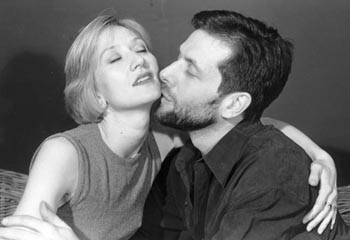
Lolita du jour: Mena Suvari captures Kevin Spacey’s attention in American Beauty.

Photograph by Michael Amsler

True Beauty

‘American Beauty’ draws a masterful portrait of quiet desperation

By Nicole McEwan

FILM CRITICS can be cruel. We get paid to complain and frequently we do. But then a film comes along that stands apart. In this demographic-driven age, in which every studio script is worked over like a celebrity triage victim, we rejoice for the survivor, the masterpiece that evades the process. It’s then that a critic takes on the persona of an evangelist, preaching the power of the anointed film like religion.

Our zeal operates in direct proportion to the project’s advance notoriety. Spielberg doing World War II? Of course, it’ll be good–possibly great. But the real joy is in the discoveries: A relatively unknown British theater director painting a potent, yet nuanced portrait of contemporary American life? That’s special. And what about its uniformly sublime performances, shot by a master cinematographer from a script so laser sharp you want to preach it like the Gospel?

In his directorial debut, Sam Mendes offers a film that operates and succeeds on every creative level, in perfect unity. It somehow combines a deadpan timeliness with the classic bile of Billy Wilder and the tear-inducing humanity of Frank Capra, yet is inimitably Mendes’ own blend of caustic wit and visual jocularity. American Beauty is as powerful and transcendent as it is difficult to describe.

Kevin Spacey plays Lester Birnbaum, a 40-something ad man who lives a tastefully appointed life of quiet desperation. His wife, Carolyn (Annette Bening), is a money-grubbing real estate rep whose stringent ideals of aesthetic perfection consume her; neither Lester nor their only child measures up.

At 16, Jane (an amazing Thora Birch) is insecure, confused, and petulant–in other words, perfectly normal.

So she will remain throughout the film, until finally her normalcy renders her freakish among the borderline lunatics that surround her.

At work, Lester is about to be downsized. Two things keep him going: a Lolita-like obsession with his daughter’s best friend Angela (Mena Suvari), and the pharmaceutical-grade marijuana he buys from Ricky (Wes Bentley), the creepy boy next store, a teen so carefully detached from the real world that he obsessively views and records life with a digital palmcorder.

When we meet his clinically depressed mother and gun-crazy military man father we understand his peculiarities–if only slightly.

Meanwhile, Jane suffers the indignities of having a narcissistic dick-tease for a best friend. An aspiring model, Angela’s biggest fear is to be ordinary. Moreover, she actually enjoys Lester’s ill-concealed gawking. Disgusted, Jane finds refuge in Ricky, a soulmate nearly as sensitive as herself.

This is the setup.

These are the players. Their fate cannot be diverted–and just when we feel we have sorted the good from the bad, a bizarre misunderstanding shakes everything apart, and when the pieces fall back together, they’ve been rearranged, and no one is exactly whom we thought they were.

THE FILM’s tag line is “Look closer,” and ace cinematographer Conrad Hall’s technique of continual slow zooms guides the way, aided by his meticulous and evocative use of reflective surfaces, which facilitates close examination.

There’s a lot to study. In one film Mendes and screenwriter Alan Ball take on guns, homophobia, suburban sprawl, conspicuous consumption, lookism, agism, sex, lies, videotape, and the infinite beauty that exists on this earth, if only we took the time to seek it.

With Oscar-caliber performances from Bening and Spacey, and a mesmerizing debut from Bentley, American Beauty is a film critic’s equivalent of a modern-day miracle–and an excellent candidate for inclusion in a millennial time capsule, along with a TV Guide, a New York Post, a pair of khakis, and the Starr Report.

From the September 30-October 6, 1999 issue of the Sonoma County Independent.

© Metro Publishing Inc.

‘Yellow Submarine’

0

Yellow Submarine is back.

Yellow Fever

Two animators train their wild brains on the ‘Yellow Submarine’

Writer David Templeton takes interesting people to interesting movies in his ongoing quest for the ultimate post-film conversation. This is not a film review; rather, it’s a freewheeling discussion of life and popular culture.

THOUGH IT’S SURELY not mentioned in either fellow’s résumé, it must be noted that Phil Robinson–vice president and co-founder of San Francisco’s Wild Brain animation studio–can pull off an uncannily accurate impression of ex-Beatle Ringo Starr, while his associate George Evelyn–one of Wild Brain’s insanely prolific animation directors–can do a mean Blue Meanie.

“Glove, nice glove,” Evelyn purrs, squeezing his upper-range baritone into an eerie, skyrocketing falsetto, then suddenly shrieks, “Destroy them! Destro-o-o-o-o-y-y-y the-e-e-e-m-m-m!”

Robinson–who was about to say something–instead erupts into a warm lava-flow of appreciative laughter. “Good Meanie,” he remarks.

Robinson, a self-described “hard-bitten animation director,” and Evelyn–who have been enjoying a good time as Wild Brain Inc. steams through its fifth straight year of growth–have just been to see a rare big-screen exhibition of Peter Max’s 1968 film Yellow Submarine.

The legendary animated phantasmagoria–a bizarre, nearly plotless trip beneath the waves to the “unearthly paradise” of Pepperland, recently invaded by music-hating Blue Meanies–has just been released in video for the first time in over a decade and a half, and a handful of theaters and film festivals across the county (including the upcoming Mill Valley Film Festival) are celebrating with theatrical showings of the one-of-a-kind film.

Robinson and Evelyn caught a screening in San Francisco, not far from the ever-expanding Wild Brain studios where the two seasoned animators–along with co-founders Jeff Fino and John Hays–have made a name for themselves as one of the most energetic and versatile animation houses in the world. They’ve quickly become the premier independent animation studio in the United States, making cutting-edge commercials while building a massive client list that includes Microsoft, Disney, Nike, and Levi Strauss.

At the same time, Wild Brain is providing high-profile services to the major movie studios, having recently produced the feature-length film Ferngully 2: The Magical Rescue (Robinson was the director), several episodes of HBO’s Spawn series, and the computer-animated characters for the upcoming The Adventures of Rock and Bullwinkle. Wild Brain is also preparing to launch an animated TV series called Poochini’s Yard.

At the moment though, Robinson and Evelyn are taking a break to discuss their somewhat disparate views of Yellow Submarine.

Evelyn–he’s the director of MTV’s infamous cartoon short Doktor Zum and the Forbidden Mysteries of the Unknown and the Forbidden–first saw the psychedelic Beatles film while a freshman in college and hasn’t seen it since. Until now.

“I loved it all over again,” he says. “The main thing I liked was that weird ’60s, hippy, Peter Max kind of whatever. It was so totally different from any animated film I’d seen previously. I liked the idea of using animation in a totally fantastic way. Yellow Submarine is so totally off the scale. I mean, where the hell is Pepperland? That appealed to me, and still appeals to me–using animation to the Max.” So to speak.

Robinson, on the other hand, had just seen the film for his first time–strange, but true–and he found it far less delightful than his associate did.

“I certainly recognize all of the groundbreaking aspects of what Yellow Submarine did when it first arrived,” he says. “But it still falls flat for me. The facial details of the characters were so stylized that it made it very difficult for the animators to show a range of emotions. They felt very much like paper cutouts.”

“I found the physical flatness of the characters to be quite appealing,” counters Evelyn. “To me, that was quite a Beat-alic thing. They were never the world’s most active personalities. They were always a pretty deadpan quartet.

“So that flatness worked for me.”

ROBINSON has another point to make. “A few years after Yellow Submarine–which probably did feel pretty revolutionary at the time–we suddenly saw the release of Fritz the Cat,” he points out, refering to Ralph Bakshi’s infamous X-rated feature film. “To me, that was far more of an underground, groundbreaking film.”

“Yeah, in terms of its gritty reality and its R. Crumb-ness, Fritz the Cat was pretty daring,” Evelyn agrees.

“What’s interesting to me,” he continues, “for all this talk of Yellow Submarine’s revolutionary standing, it’s really still a one-of-a kind thing. The animation industry is still locked into the semi-realistic, Disney model of animation.

“As far as films go that are designed to be pure fantasy, pure imagination, pure color and design and graphics–there’s only movie, and that’s Yellow Submarine.

Talking to this pair of innovative animation pioneers, one can’t help but wonder if the re-release of Yellow Submarine will have any inspirational effect on the films of tomorrow or the artists of today?

“I hope it does,” Evelyn says. “If Yellow Submarine kicks ass in video and makes a lot of money, then there might be some kind of fantastic Yellow Submarine clone or even a Yellow Submarine 2 or something like that.

“Actually,” he says with a chuckle, “I wouldn’t mind taking on that project myself.”

At any rate, there’s one area in which Yellow Submarine is almost sure to make a conspicuous impact.

Says Robinson, “There are definitely going to be a lot of Blue Meanies on the streets this Halloween.”

Yellow Submarine screens Oct. 18-21 during the Mill Valley Film Festival at 6:45 and 8:45 p.m. at the Sequoia Theatre, 25 Throckmorton Ave., Mill Valley. $7.50. 415/380-0888.

From the September 30-October 6, 1999 issue of the Sonoma County Independent.

© Metro Publishing Inc.
Sculpture Jam

Photograph by Michael Amsler Free Form Sculpture Jam turns 3-D art loose on Sebastopol By Patrick Sullivan THE THIRD DIMENSION is, by definition, vital to the art of sculpture. You can't hang most of the work produced by Rodin or Calder conveniently up on a wall behind your couch,...

Missile Intercept Technology

More useless missiles. Guess who pays? By Bob Harris LAST SATURDAY NIGHT, I was walking to a comedy gig here in L.A. when suddenly I was stopped cold by the sight of something truly out of the ordinary. (Which, in West Hollywood, is saying something.) A whole chunk of the northwestern sky was suddenly...

Vineyard Development Ordinance

Sign of the times: Supervisor Mike Reilly sat in front of a protest sign at a recent forum called by activists to oppose encroaching vineyards. Feeling the Crush New vineyard-planting ordinance--is it a smart compromise or a sellout? by Yosha Bourgea A CONTROVERSIAL new...

Susan Faludi

Man Trouble Author Susan Faludi says American men are an endangered species By Patrick Sullivan "BOOK TOURS are strange things," says author Susan Faludi with a weary laugh. "Every 15 minutes you're starting over again." But it may be a while before Faludi gets any respite from the besieging ring of interviewers. The...

‘Jakob the Liar’

Rabbi Naomi Levy pans 'Jakob the Liar' Writer David Templeton takes interesting people to interesting movies in his ongoing quest for the ultimate post-film conversation. This column is not a film review; rather, it's a freewheeling, tangential discussion of life, alternative ideas, and popular culture. "HAVE YOU ever heard of...

‘Watermelon Nights’

Watermelon Nights is pulling author Greg Sarris back to his native Santa Rosa. Photograph by Janet Orsi Live Action Word for Word stages Greg Sarris' 'Watermelon Nights' By Patrick Sullivan "IT'S LIKE GOING BACK to a family, or back to an old lover, where all the emotions are...

Little Tin Frog

It's a happening: Little Tin Frog tune into the Velvet Underground on Oct. 16. Velvet Touch Little Tin Frog pay homage to Velvet Underground By Greg Cahill IT'S GOOD TO KNOW that there are some things in life you can depend on. Case in point: the inane nature...

Second Annual Indy Awards

The Artifacts: Diggin' those grooves--Karen and Steven Tamborski, and Dorian Irving. For Arts' Sake The 2nd annual Indy Awards, celebrating the spirit of the local arts community Edited by Patrick Sullivan IT'S BEEN SAID that Sonoma County harbors more artists per capita than any other place in...

‘American Beauty’

Lolita du jour: Mena Suvari captures Kevin Spacey's attention in American Beauty. Photograph by Michael Amsler True Beauty 'American Beauty' draws a masterful portrait of quiet desperation By Nicole McEwan FILM CRITICS can be cruel. We get paid to complain and frequently we...

‘Yellow Submarine’

Yellow Submarine is back. Yellow Fever Two animators train their wild brains on the 'Yellow Submarine' Writer David Templeton takes interesting people to interesting movies in his ongoing quest for the ultimate post-film conversation. This is not a film review; rather, it's a freewheeling discussion of life and...
11,084FansLike
4,606FollowersFollow
6,928FollowersFollow


