
Open Mic

Jar Star

FOURTEEN YEARS ago this August, I masturbated into a baby food jar. Doctor’s orders. Honest. Approximately 10cc of semen went into that jar, my momentous first spurt after undergoing–a few weeks before–the vasectomy that had ceremoniously rendered me joyfully spermless. Of course, sperm are merciless–and have a way of finding loopholes (not the technical term)–so my doctor required a semen sample. Having somehow misplaced the little plastic container I’d been given for that purpose, I was informed that any clean jar would do.

As testament to the natural ability of my sperm up to that moment, there was no shortage of Gerber baby-food jars in the house. To my delight, I found that baby-food jars make perfect semen receptacles: not only are they small and tightly sealable; they hide easily in a coat pocket.

Half an hour later, I surrendered my sample to a poker-faced lab technician.

“Hmmmmm,” she murmured, swirling the jar’s slippery contents, gazing past the famous baby face on the label. “This is kind of poetic.” What it was not, however, was original. The things she’d received in Gerber jars included urine samples, blood samples, skin samples. I shouldn’t have been surprised.

The Gerber jar is a beloved icon of American ingenuity, an elegant symbol of creative reuse. Washed and de-labeled, it is the perfect container for powdered paint, freshly shed baby teeth, or dried lizard parts. Over the years, empty Gerber jars have been used to hold nails, washers, sequins, ration stamps, tacks, aspirin, beetles, broken wedding rings, shoestrings, and pennies. The Gerber jar has been made into everything from a classroom snow globe to the coffin of the family pet mouse.

Sadly, last week, Gerber Products Inc. announced the immediate discontinuation of its famous glass baby-food jar. A new plastic version, square-shaped for easier stacking, will soon be unvelied. What is important, the Gerber people say, is that the new jars will contain the same quality baby food when they take the place of the glass jars on supermarket shelves.

But will they take the same place in our hearts? Of course not. When it is gone, we will mourn the glass Gerber jar, significant to millions, not so much for what came out of them, but for the bits and pieces of our lives that we’ve so willingly placed into them afterward.

From the July 12-18, 2001 issue of the Northern California Bohemian.
© Metro Publishing Inc.

‘Ghost World’

0

Global Visions

‘Ghost World’ kicks off Wine Country Film Festival

By Patrick Sullivan

WHEN HOLLYWOOD goes running to the world of comic books for ideas, it’s usually a very bad sign. Most creative marriages between the silver screen and the “graphic novel” result in exactly what you might expect: pure crap. Think Batman Forever. Think (oh god no!) Howard the Duck.

But your thinking may be about to change. A film is headed our way that some critics are already calling the perfect high-IQ antidote to a summer filled with brainless blockbusters. And it’s adapted from one of the most popular alternative comic books on the shelves.

Ghost World, which jumpstarts a month of offbeat flicks at the Wine County Film Festival, is no super-hero slugfest. Forget those muscle-bound goofballs strutting around in tight costumes. The main characters in Dan Clowes’ graphic novel, published by Fantagraphics, are two eccentric young women who have just graduated from high school and are wondering what to do with the rest of their lives.

In the film, the pair are played by Thora Birch (of American Beauty fame) and Scarlett Johansson. Indie film stalwart Steve Buscemi co-stars. The creative duo behind the project is hard to beat: Dan Clowes teamed up with Terry Zwigoff (director of Crumb) to write the screenplay, and Zwigoff directs.

The result is big-screen magic, at least according to the few critics (including Peter Travers of Rolling Stone) who have seen it. Ghost World opens around the country on Aug. 3, but North Bay residents can catch it on Thursday, July 19, when the film screens at 7 p.m. at the Sequoia Grove Vineyards in Rutherford. Admission is $20.

Of course, the Wine Country Film Festival has more to offer than just Ghost World. Now in its 15th year, the festival has made a name for screening an offbeat assortment of features, shorts, and documentaries from around the world, with a strong emphasis on politics and social commentary. This year’s festival offers scores of films from around the world, beginning with screenings July 19-29 in Napa County and continuing Aug. 2-11 in Sonoma County.

Big names and famous faces are another distinguishing trademark of the festival. Last year, it was Richard Harris. This year, it’s Nobel Peace Prize winner José Ramos Horta, who will be appearing before the screening of the film The Diplomat.

The Diplomat, which screens Aug. 8 at 9 p.m. at Jack London State Park, is an Australian documentary focusing on Horta and his efforts to bring an end to Indonesia’s bloody occupation of East Timor. It’s a fast-moving, compelling film featuring an irresistible David vs. Goliath struggle and a very human figure at its center. Horta is a passionate advocate for his beleaguered homeland, but he’s also a colorful character with a salty vocabulary and a flair for the dramatic.

Talent from abroad is a mainstay of the festival. For instance, Polish filmmaker Jarek Kupsc appears in person to introduce Recoil, a gritty story about a mercenary from the Bosnian war who settles in San Francisco under false pretenses. The film screens Saturday, July 21, at 4 p.m. at the Native Sons Hall in St. Helena.

Filmmakers from Northern California are also well represented. The Last Stand, a documentary from San Francisco filmmaker Todd Wagner, screens Aug. 4 at 7 p.m. at Jack London State Park. And Exodus to Berlin, a documentary about Jewish immigrants in Germany co-directed by Bodega Bay resident Peter Laufer, screens Aug. 5 at 3 p.m. at the Sebastiani Theatre in Sonoma.

Of course, all that’s just a taste of what’s on offer. For more information, call 707-996-2536, or log on to winecountryfilmfest.com.

From the July 12-18, 2001 issue of the Northern California Bohemian.

© Metro Publishing Inc.

Spins

0

World Class

New CDs groove to a global beat

By Greg Cahill

Afrocelt Sound System Volume 3: Further in Time (Realworld)

SINCE 1995, this tightly woven group of musicians–which includes whistle player James McNally of the Pogues, Irish vocalist Iarla O’Lionard, and a revolving troupe of African artists–has been fusing the traditional music of West Africa and Ireland while wowing crowds on the annual WOMAD tour, Peter Gabriel’s world music showcase. This third outing delivers percussion-heavy techno-based sounds and features Gabriel singing on “When You’re Falling” and Robert Plant’s vocals on “Life Begins Again.” Energized, ebullient, and incredibly contagious.

Anourag Anoushka Shankar (Angel)

Ravi Shankar Bridges: The Best of Ravi Shankar (Private Music/BMG)

AT THE TENDER AGE of 19, the daughter of sitar legend Ravi Shankar delivers the follow-up to her impressive 1999 debut, teaming up with her famous father on several ragas. Pops once said it takes several lifetimes to master the complicated Indian instrument the sitar, though Anoushka shows a lot of mastery and maturity. These father-and-daughter duets are often intense and show that Anoushka is filled with promise. As for dad–who did, indeed, build a formidable bridge between East and West with his tutelage of Beatle George Harrison (who appears on this Best of Ravi package)–this new collection of material culled from the Private Music years is a mixed bag, centering around a variety of nontraditional cross-cultural projects that include his late-’80s collaborations with Philip Glass. These experimentations often were hit or miss, but when Shankar scores the results are memorable.

Various Artists Gardens of Eden (Putumayo)

THIS WORLD-music label has built a following by placing its festively decorated CDs on the counters of cafes and bookstore–sort of an eco-tourist guide to the sounds of the planet. These releases have become so ubiquitous that it’s sometimes easy to take them for granted. Gardens of Eden, a collection of ethno-pop songs focusing on the mystical, suggests that it’s best not to ignore these little gems. From Papua New Guinea to Tibet, it’s a most pleasant trip–a veritable magical mystery tour.

Trilok Gurtu The Beat of Love (Blue Thumb)

FOR SOMEONE who tortures his children by watching Namaste America (the low-budget Indian film showcase on KTSF/cable channel 26) each and every Sunday afternoon, this is second heaven. Percussionist Trilok Gurtu (who performs this week at the Justice League in San Francisco) is the son of a popular Indian light classical singer and has collaborated with the likes of Bill Laswell and Pat Metheny. On his latest CD, Gurtu is five steps above those up-tempo and hokey Bollywood videos, having pulled together a talent-laden conglomeration of top-ranked Indian and African musicians that include sitar player Ravi Chary and Benin-born Afro-pop singer Angelique Kidjo. “Ola Bombay,” indeed.

Spin du Jour

Centuries of displacement in Eastern Europe have created a deep sense of longing and a rich folk-song tradition that laments the plight of the Hungarian Roma. On I Left my Sweet Homeland (Rounder), the Okros Ensemble gathers songs from Transylvania and Hungary that beautifully evoke this wayward Gypsy culture and features the virtuoso violin of Aladar Csiszar. The title track was first collected by Béla Bartók in his early field recordings.

From the July 5-11, 2001 issue of the Northern California Bohemian.

© Metro Publishing Inc.

Open Mic

World of the Work

By Gretchen Giles

A GROUSE is what I intended to write, but I’ve grudgingly had to reconsider. I wanted to complain about the state of the Petaluma River–that turgid, silt-heavy trickle pushing stickily against turd-colored banks studded with shopping carts, old bikes, and rusty unidentifiables. But a group of volunteers recently got together and cleaned much of that junk up. I wanted to dis the lack of Petaluma bike trails, but darned if another gang of neighborhood residents didn’t mass themselves last month to clear weeds and debris from an Eastside trail.

Sure, it’s too bad that no one’s volunteered to personally renovate the Lucchesi Park swimming pool, needed by area youth for meets and practice, or to change the sorry truth that the second largest city in Sonoma County drearily exists without a cinema. Certainly someone should volunteer to return my video rentals on time and save me the late fee.

Because what this grouse has secretly morphed into is actually a salute to volunteerism. One son wouldn’t have art class without it. Another wouldn’t have attended the opera. Even I force a thin weekly smile and lead a fifth-grade book club, always glad to arrive and always glad again to leave. I guess dumb runs thick in my blood: I didn’t even notice that taking an hour from work each week–to terrify a group of 11-year-olds into understanding the graduate-school term “world of the work” as applied to author Judy Blume’s juvenile literature–was volunteering. I thought that it had more to do with ensuring that my own 11-year-old doesn’t become an illiterate heroin addict, as per those studies indicating that parental involvement in schools equals a drug-free Harvard graduate, guaranteed. Selfish, I believe, is the term.

But I don’t even see my son when I drop in on his classmates each week. I see and hear them. We fight about why I never bring treats. We commiserate over the terrible cover illustrations that clearly have nothing to do with the story. We discuss metaphor and character arc. We applaud large type and frequent pictures. And yes, we submerge in the world of the work. Apt and neat and finally winning on the grouse, isn’t that exactly what volunteerism is–world, work, we?

Perhaps, during summer break, I’ll take it upon myself to build a pool with a cinema.

Bring the popcorn–you’re all invited.

Gretchen Giles, a frequent ‘Bohemian ‘contributor, works plenty hard when she’s not volunteering or just fooling around.

From the July 5-11, 2001 issue of the Northern California Bohemian.

© Metro Publishing Inc.

‘The Anniversary Party’

0

On a Binge

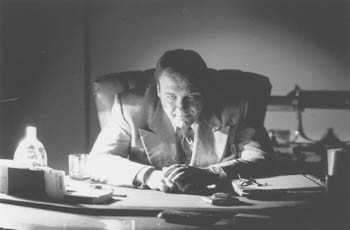
Recovering film critic tests resolve at ‘The Anniversary Party’

Writer David Templeton takes interesting people to interesting movies in his ongoing quest for the ultimate post-film conversation. This is not a review; rather, it’s a freewheeling, tangential discussion of art, alternative ideas, and popular culture.

BARBARA Shulgasser-Parker doesn’t do criticism anymore. She’s given it up. Cold turkey. After nearly two decades as a movie critic, Shulgasser-Parker has kicked the critical habit.

All those long nights spent huddled in darkened rooms with hollow-eyed strangers (her fellow critics), all those years devoted to cool, objective cinematic appraisals, and of course all those lousy movies–they’re finally things of the past.

“And now you show up,” she grouses, “and ask me to weigh in on a movie. Right when I’m trying to quit.”

Even so, Shulgasser-Parker, a novelist now–a good one, as Funny Accent (Picador; $22), her debut novel, proves–has consented to go to the movies. Her book demonstrates a keen understanding of aberrant human behavior–it’s a funny story about a brilliant young woman with a not-so-brilliant attraction to older men. So I suggest we see The Anniversary Party, a veritable orgy of aberrant human behavior.

Shulgasser-Parker agrees, but there’s one catch. She’ll talk about the film in terms of its sociopsychological perspectives, but she won’t offer any critical opinion. “Though naturally,” she adds coyly after seeing the movie, “I do have an opinion.” What critic wouldn’t?

A spectacularly uneven effort from Alan Cumming and Jennifer Jason Leigh, The Anniversary Party takes place at an all-night Hollywood shindig attended by loathsome, self-deluded people who drop a lot of Ecstasy.

I know, I know. Inviting a recovering film critic to a movie like that is a bit like sneaking the Bush twins into a bar for a cup of coffee. The Anniversary Party is a film that demands to be trashed. Even so, Shulgasser-Parker’s cinematic sobriety seems to be holding. For now.

In response to my comment that the movie’s central characters–a novelist and his actress wife (Cumming and Leigh), just reunited after a trial separation–might have a happier life if they had different friends, Shulgasser-Parker laughs.

“What any intelligent person beyond the age of 30 begins to realize,” she says, “is that if you’re going to live a happy, productive life, then you have to get rid of certain kinds of behavior around you. . . . Everybody has friends who they ought to get rid of.” Especially in Hollywood. Unhappy people, the movie would have us believe, are particularly abundant in L.A., where suffering for one’s art is everyone’s favorite sport.

“But you don’t have to suffer for your art,” insists Shulgasser-Parker. “Not all your life. Maybe suffering does provide some fuel for your art–when you’re younger–but it’s much better to be happy, and happiness is also fuel for art.”

She mentions the moment in the film when Leigh compares herself to a character in her husband’s latest novel. “‘She’s obsessive, controlling, jealous, and neurotic. She’s obviously me!'” quotes Shulgasser-Parker. “And she says it as if she’s boasting. I think that, past the age of 30, that’s no longer charming.

“And that,” she adds, “is why this is such a childish movie.”

A childish movie? Uh oh. Was that criticism? “While the filmmakers seem willing to show the dark, neurotic underside of Hollywood,” she continues, “It’s clear they’re not too upset about it. They’re proud to be neurotic. It’s a big turnoff.”

Well, it’s all over now. After a valiant effort to resist, Shulgasser-Parker has plunged into a critical binge. In rapid succession, she tears into the film’s most egregious flaws: over-the-top acting, numerous loose ends, and bad editing.

All in all, it’s a magnificent purge. “For the actors involved in this,” she says, “I’m sure it’s a very expensive home movie that they all will cherish. But for a stranger to sit through it, it’s just a trial.

‘So. Thank you,” the ex-critic concludes. “I enjoyed this, very much.”

From the July 5-11, 2001 issue of the Northern California Bohemian.
© Metro Publishing Inc.

Jimmy Santiago Baca

Language on the Line

Poetry as the ultimate act of self-creation

By Louise Brooks

IT’S CLEAR from Jimmy Santiago Baca’s voice that he hasn’t done an interview in a while. Talking on the phone from his home-office in Albuquerque, N.M., the poet seems happy to talk, is constantly laughing along with his comments, and expects an interviewer not only to ask questions, but to answer them as well.

Baca–who will be in town July 14 for a reading at the Sonoma Valley Poetry Festival–has been sticking close to home in recent years, passing up teaching opportunities in order to “live among the coyotes and the horny toads, and track down a roadrunner to see where its nest is.

“That gives me pleasure,” he explains. “I can write about that. So that’s what I do. I try to not distract myself with Madonna’s newest CD.”

Over the past two decades Baca has gained recognition, numerous literary awards–including the American Book Award–and chairs at Yale and Berkeley for his lyrical volumes of poetry (Immigrants in Our Own Land, Martín & Meditations on the South Valley, Black Mesa Poems). His vision focuses on the arid, impoverished, searingly beautiful Southwestern landscape of his youth.

Much of his poetry and autobiographical writing (Working in the Dark: Reflections of a Poet of the Barrio) also focuses on his continual rebirth through poetry. He does not describe an easy, blissful emergence, however. His is a wrenching, painful birth from which the poet emerges, ragged, bloody, and squinting in the light.

“It really is beautiful to encounter pain,” Baca says, “because right behind the pain is God waiting, you know? . . . But we gear this whole society, everything we have, and everything we do, to go away from pain.”

Pain has not been rare in Baca’s own life, as he makes clear in his long-awaited memoir, A Place to Stand: The Making of a Poet, out this month from Grove Press, which is also publishing a new collection of his poems, titled Healing Earthquakes.

Baca grew up in New Mexico, largely by himself, spending some time in an orphanage. He points out, however, that his self-sufficient childhood gave him a huge freedom of imagination and exploration. “Left to the resources of a child’s innocence,” he says, “I think it’s really amazing what can happen.”

But his life took an ugly turn. Hitting the streets as a teenager with few resources and no education, Baca soon ended up in prison on drug charges. It was in prison that Baca stole a book of Romantic poetry and taught himself to read and write. It was a process he compares to putting on glasses for the first time and discovering he’d needed them his whole life. He remembers the first poem that he wrote during this time.

“I was naked in the shower,” he recalls. “I was in prison, and I think I was reading Turgenev. I soaped myself up, and all of a sudden I got hit with a lightning bolt. You know how they call it the ‘muse’? I call it the ‘Mohammed Ali left hook.’ These lines came to me, and I ran out of the shower naked, and the guard hit the alarm button, because you can’t run, you know?

“Besides, there goes a naked Mexican running down the hall, so what are you going to do?” Baca continues. “He hit the alarm button, and I ran into my cell with soapy hands and stuff, and wrote down these six lines of poetry. And then of course, the soap got in my eyes and reality came back and I had to rush back to the shower to wash the soap off. But at that point I think I was classified as a nutcase.”

The poem was a response to a group of senators who had come touring through the prison the previous day, examining the aftermath of a riot. Baca’s first poetic refrain was: “Did you tell them, that hell is not a dream, that you’ve been there, did you tell them?”

If prison was hell, then poetry was Baca’s salvation. In fact, as his new memoir makes clear, poetry literally saved him from becoming a murderer. As Baca tells it in A Place to Stand, he was standing over another convict with a weapon, ready to finish him off. Suddenly he heard “the voices of Neruda and Lorca . . . praising life as sacred and challenging me: How can you kill and still be a poet?”

These days, Baca is almost as well known for his work with at-risk youth as he is for his poetry. He’s given workshops to homeless teens, to prison inmates, and to kids in a juvenile detention center. Partly, Baca believes that poetry gives voice to individuals who might otherwise remain silent.

He writes about the silence that he witnesses in the Latino community, a silence he terms “protective.” He argues that when Latino kids grow up hearing that their community is filled with nothing but drugs and crime, and they know this not to be true, they learn to mistrust and remain silent around the society that tells them this.

Baca says his work with kids also keeps his own voice strong.

“There’s dead languages that you study in classical-language departments that are never used,” he says by way of explanation. “And then there’s the language that you hear on the street corner, or the language that you hear on Wall Street, or the language that you hear during the Beat generation, or the rappers, or techno people. You have all these different kinds of languages that are immediately describing the lived experience of people that are [living] now.

“I don’t dismiss the academic and scholarly sectors of society,” he continues. “I go listen to what they say, and I read what they write. But it’s not near as exciting as hearing language invented from experiences that have truly been lived, almost, in many cases, on the verge of dying.

“I’ve never heard a professor stand up and say, ‘I’ll give my life for this,’ ” Baca continues. “And yet I listen to these kids and they say, ‘I’ll give up my life, I put my life on the line with this poem about my mom.’ And I’m like, ‘Wow.’ That keeps educating me about where my poetry should be.”

ULTIMATELY, for Baca, poetry becomes a personal process of representation and creation. Through the act of writing, Baca constantly re-creates himself; he becomes a man capable of healing some wounds and humble enough to accept that others cannot be healed.

“You can’t write poetry and be an asshole,” Baca claims. “Not while you’re writing it. You can be an asshole after you write it. I’ve heard some really bad poems in my time, but I’ll bet you the person felt like a saint when he or she was writing it. So I’m saying that the act of writing poetry is a beautiful act.”

He starts to laugh. “It’s like seeing a dog pee on a fire hydrant. It’s just so natural, so normal, it’s just the way it goes.”

Jimmy Santiago Baca reads on Saturday, July 14, at 7:30 p.m. at Readers’ Books, 130 E. Napa St., Sonoma. The Sonoma Valley Poetry Festival continues through July 29 at various venues. For details, call 707/280-4696.

From the July 5-11, 2001 issue of the Northern California Bohemian.

© Metro Publishing Inc.

Elvis Costello

0

Photograph by James Minchin

Classical Rock

Elvis Costello provides torch-song settings for diva Anne Sofie von Otter on ‘For the Stars’

By Gina Arnold

THOSE SEEKING the newest Elvis Costello album, For the Stars, shouldn’t go to the “C” bin in the rock/pop section at the local record store. They should head instead for the “V” section in classical music, where their record will sit behind the card marked “Anne Sofie von Otter.” Strange to say, former punk songwriter Costello and Swedish mezzo-soprano von Otter have just collaborated on an album of pop songs written by Costello, Tom Waits, Brian Wilson, Lennon and McCartney, Ron Sexsmith and Abba (to name a few), and the results are at times quite painfully beautiful.

For the Stars (Deutsche Grammophon) is a genre-breaking record that should charm anyone who likes Costello’s verbosity and the pristine sound of the female voice, since von Otter–best known for singing roles in works by Berlioz (Faust, etc.)–possesses a voice considered by many to be one of the most gorgeous in opera.

As a pop instrument, however, it comes off slightly different: unlike more untrained voices, von Otter’s is cool, perfectly accurate, and slightly unemotional (at least by pop standards). She’s no Odetta or even a Christina, but then, the music that Costello has written–or chosen or fashioned–for her is quietly effective anyway.

For the Stars contains 18 tracks, about half of which are newly written but sonically old-fashioned torch songs. The rest are covers of standards that have been transformed into something wholly other by this extremely subdued, orchestral treatment.

COSTELLO’S ability to write for different genres is well known, but some of these songs sound downright Merchant-Ivory. On the opening track, “No Wonder,” for example, Von Otter sings against a background of piano and cello that has more in common with Lieber and Stoller than with the angry author of “Pump It Up”: “I dreamed I stood as you were passing/ Just as the horse-drawn carriage sped away/ Of petticoats in puddles dragging . . . and my high-button boots were splashed with clay.”

“Baby Plays Around” is even quieter and more orchestral, as are many of the lost-my-love songs on the record. A real high point comes with “Broken Bicycles” by Waits, which is sung in exactly the opposite manner from Waits’-but which sounds just as good, especially when Costello and von Otter’s voices mesh for the finale.

And what von Otter does with two different Pet Sounds-era Brian Wilson songs–“Don’t Talk (Put Your Head on My Shoulder)” and “You Still Believe in Me”–proves to be really quite astonishing.

For the Stars is all about interpretation. Costello’s own voice is sparingly used (although it appears on occasion). There are several covers that are almost unrecognizable, while on the original numbers Costello collaborates with a number of other diverse musicians, including Ruben Blades, Burt Bacharach, Svane Henryson, his latest group, Fleshquartet, and his wife, former Pogue Cait O’Riordon.

You wouldn’t know from the seamlessness of this record, however, that it wasn’t the work of one artist, which is a tribute to von Otter’s vocal power.

THE ALBUM does not represent Costello’s first foray into classic forms by any means. In 1993, he collaborated with the Brodsky Quartet on The Juliet Letters. Costello has also made music with an eclectic group of folks, including jazz guitarist Bill Frisell, Burt Bacharach, the Chieftains, Paul McCartney, and many others, in addition to creating soundtracks for British TV shows like Jake’s Progress and G.B.H. and a PBS special called The Irish in America, and even making a recent appearance on Third Rock from the Sun.

In fact, Costello seems to do everything but rock music these days, and that is to his credit. Compared to his more successful contemporaries–Tom Petty, say–his repertoire is far more sophisticated and interesting; one can’t help but imagine that his daily life is probably all those things as well. No rock-star clichés–drug ODs, ugly divorces, or the consequent Behind the Music episode–for him; instead he has pursued a career that has much more scope in it for aging.

But Costello’s interest in all types of music is one thing. The trick is training one’s own taste in music to embrace a palette as wide as his. Luckily for him, those of us who really enjoy mid-tempo rock in 4/4 time are having a hard time staying interested in pop stars these days–and hip-hop, country, and metal are even more commercial and less fulfilling. No wonder everyone’s looking backward at classic rock, oldies, and now (judging by Costello) classical music for inspiration.

Costello’s venture is only the latest in a long line of projects by artists who’ve searched out new media to inform their old ones: Metallica now works with the San Francisco Symphony, members of Primus have joined the Blue Man Group, and Steve Earle, Britney Spears, and Paul McCartney all have published books–and the list goes on.

Given the profusion of such projects, one can’t help but feel that these are signs that artists are frustrated with the confines of rock. They find straight-ahead pop music a fallow field, and so do many listeners. Hence, records like For the Stars, which have almost no contemporary cultural relevance or contextuality, but which are at least exciting and fun to listen to: accessible, pretty, and yet totally unique.

From the July 5-11, 2001 issue of the Northern California Bohemian.

© Metro Publishing Inc.

Kenneth Cleaver

Consumer Correspondent

Idaho Department of Fish and Game 600 S. Walnut P.O. Box 25 Boise, ID 83707

Dear Idaho Department of Fish and Game,

Please excuse my ignorance, as I am uncertain as to your jurisdiction over the following matter. I am interested in a position as an Ursus horribilis, more commonly known as a grizzly bear. While I have never worked as a bear before, I nevertheless feel that my 26 years as a human being–including a weeklong stint as the Easter Bunny at a local mall–will only enhance relations between our embittered species. I love the outdoors, eating copious amounts of salmon and berries; and I hibernate nightly. I require only a modest salary and can start immediately. I should mention that I am not interested in a position as a black bear, as the habitual forays of black bears into the human realm reflect the inherent despotism of their race.

I look forward to hearing from you.

Sincerely, Kenneth H. Cleaver

Dear Ken,

In response to your letter, I have the following information. You are correct: the Idaho Fish and Game Department does not have any jurisdiction over grizzly bears. They are a federally listed species, so the U.S. Fish and Wildlife Service manages them.

However, I find your wishes to work as a grizzly bear rather admirable, and perhaps someday there will be an opening. But one must remember that human beings routinely shoot them or destroy their habitat.

One could enjoy eating salmon and berries, but you should be aware that the entire run of Salmon in the Columbia basin is in trouble. Without the public getting involved, greed and a profit motive will allow the human species to cause these magnificent fish to go extinct in the next 20 years.

What can you do? Get educated on the salmon issue, and then become involved in saving them. Then if and when you get a job as a bear you will still have something to eat.

My secretary, Donna, said she would like to have a picture of you in your Easter Bunny outfit, so if you have a good one, could you please send her a copy?

Sincerely, Pat Cudmore

From the July 5-11, 2001 issue of the Northern California Bohemian.

© Metro Publishing Inc.

Lutecia

0

Spin doctors: Co-chef Scott Snyder and co-owner/chef Christophe Préyales of Lutecia in Sebastopol.

Twist & Shout

New eatery offers French cuisine with a Sonoma spin

By Paula Harris

SINCE VETERAN local restaurateur Michael Hirschberg sold Mistral and left that biz last month, changes reign at the Santa Rosa restaurant. As Mistral now attempts to find its footing amid fussier food and a new and seemingly less attentive staff, regular diners there will be hard pressed to find a familiar face among the hosts, servers, and bus people.

The reason? Some devoted Mistral patrons have migrated to Lutecia, a new Sebastopol-based restaurant featuring French food with a local twist.

Lutecia (its moniker reflects the ancient name for Paris) is owned by Barbara and Christophe Préyale, who have roots both in Paris and Sonoma County–hence the interesting blend in cuisine.

The Préyales have nabbed former Mistral chef Scott Snyder (who is now co-chef along with Christophe Préyale), and former Mistral dining room manager Laura Kudla (who now runs Lutecia’s dining room), various other ex-Mistral staff members.

The new restaurant is housed in the site that used to be the Sebastopol Grill. It’s a large house with two dining rooms and prominent windows overlooking an expansive grassy area surrounding the restaurant. Seated by the window on a summer evening at dusk gives the impression of dining in a more rural setting.

Since the place is newly opened and freshly painted, it lacks a bit of softness (a few more pieces of artwork or other wall decorations, and subtle window treatments would do wonders.) Still, the overall effect is pleasant; smart without being overly formal.

The menu changes daily, and it simply features two sections: Les Hors d’Oeuvres and Les Plats. The appetizers are heavy on specialty salads; there are four on the menu tonight. These include a salade maison ($4.25), a classic with mixed baby greens, cherry tomatoes, cucumber, celeriac, and mustard vinaigrette; and a salade de mer ($9.50) featuring scallops, shrimp, mussels, red peppers, and croutons over arugula and butter lettuce.

The salade Landaise ($9.50) is a brimming plateful of savory treats. It starts with a layer of fresh butter lettuce and is heaped with haricots verts, thin slivers of smoked duck breast, and warm confit of duck, crowned with a small triangle of luscious foie gras. Grab a hunk of crusty bread and this could be a meal in itself.

The salade de chèvre chaud ($8.57) is also very flavorful, featuring warm and tangy crottin goat cheese smeared onto toast and surrounded with tender baby spinach and endive.

Vegetarians can gorge royally on the satisfying pissaladière aux cèpes ($10.50), an intricate porcini mushroom tart with gold tomato coulis, truffle oil, and sautéed mixed vegetables on the side.

Following Kudla’s recommendation, I order the escobar forestière ($15.75). It’s a Hawaiian fish with the meaty texture of salmon and the clean taste of halibut. This dish is complex in flavor, melding the earthiness of the accompanying forest mushroom risotto and the brightness of a citrus-and-herb butter with the mellow fish. The combination works well, and the flavors are further heightened with a glass of 2000 Murphy Goode sauvignon blanc ($5.25).

Though the wine list is relatively small, the staff will work with you to select the best match (shades of Mistral’s popular food and wine pairing dinners here).

Desserts are prepared by co-owner Christophe Préyale, and though we only can manage one–it’s a champion. It’s a sublime crème brûlée au Grand Marnier ($4.50) that slides down the throat, leaving behind happiness and energizing traces of orange.

With its terrific service and high-quality food, Lutecia is a great addition to the Sebastopol downtown dining scene.

Lutecia Address: 1015 Gravenstein Hwy., Sebastopol; 707/829-7010 Hours: Dinner, 5:30 to 9 p.m., Monday-Friday; 5:30 to 9:30 p.m., Saturday-Sunday. Food: French with a Sonoma spin Service: Attentive and knowledgeable Ambiance: Relaxed Price: Moderate to expensive Wine list: Small but well-chosen selection Overall: 3 stars (out of 4)

From the July 5-11, 2001 issue of the Northern California Bohemian.

© Metro Publishing Inc.

North Coast Abalone

Shell Game

Fish and Game stock may threaten North Coast abalone

By Maria Brosnan Liebel

THE MULTIMILLION-dollar North Coast abalone industry is navigating some rough waters over a debate about a potentially deadly bacterium. For 13 months, the California Department of Fish and Game identified a Crescent City abalone farm as being the only source north of San Francisco of a bacterium known to cause Withering syndrome, a disease that has decimated the wild abalone stocks in Southern California. But it was only after Abalone International Inc. owner Chris Van Hook agreed to have his abalone stock destroyed did he and some Fish and Game Aquaculture Disease Advisory Committee members learn that the department itself, with marine biologists at Bodega Bay, may have unknowingly infected wild North Coast red abalone with the bacterium.

North Coast red abalone–which extend from the Marin and Sonoma coasts to the Oregon border–are believed to be some of the richest wild abalone beds in the world. Sport divers contribute millions of dollars annually to the economy through tourism.

The exact threat to the species is unknown. While Fish and Game officials say Withering syndrome itself has not been found north of San Francisco, a few wild animals have tested positive for the bacterium at Crescent City and at a Fish and Game-supported out-planting site at Van Damme State Park, near Fort Bragg.

The situation has sparked a bitter war of words within the North Coast abalone industry. Van Hook claims the department deliberately withheld the information so that it could point to his business as the cause if Withering disease became a problem. But Fish and Game officials insist there was no cover-up, and it is unlikely the department-sponsored out-plants were a source of the bacterium.

Now state and municipal officials are beginning to look into the matter. The Fort Bragg City Council is concerned enough about the threat to ask Assemblywoman Virginia Strom-Martin, D-Duncan Mills, for an independent investigation to determine the status of the disease.

Withering syndrome causes the foot of the abalone to shrink, making it unable to cling to rocks and forage for food. The mollusk eventually starves to death. It was discovered in the mid-1980s among black abalone in Southern California. Since then, black and white abalone populations in the region have declined an estimated 99 percent.

IN 1998, Carolyn Friedman, a Fish and Game pathologist at the UC Davis/Bodega Marine Laboratory, discovered that the rickettsia-like procaryote, or RLP, bacterium was the causative agent of Withering syndrome.

But three years earlier, in October 1995, some 50,000 cultured-abalone seeds were planted in six sites from Half Moon Bay to Fort Bragg, including Bodega Bay, as part of a University of California research project assisted by Fish and Game biologists. Some of the seed came from Bodega Farms. According to Fish and Game officials, seed from that facilty had previously tested positive for rickettsia, then thought to be a naturally occurring, benign bacterium.

Bodega Farms President Roy Gordon sits on the Disease Advisory Committee that recommended a ban on shipments to Van Hook’s farm in 1998 and, later, the destruction of his stock. But Van Hook and other committee members say they were never told about those out-plants during the hearings on what to do about Van Hook’s farm.

“Nobody mentioned that before recently,” says Dallas Weaver, vice chairman of the Fish and Game Disease Advisory Committee. “I do believe some of the decision making may have been different if we had more information earlier.”

The out-plants were part of a study to determine if wild stocks could be enhanced with farmed abalone. It was conducted by Laura Rogers-Bennett and Professor Emeritus John S. Pearse for the Institute of Marine Sciences at UC Santa Cruz.

The project was funded by abalone-fishing tax money managed by the department and overseen by Fish and Game senior biologist Kon Karpov.

The abalone seed was planted at Caspar Reserve, Van Damme, Salt Point, at two locations within the Bodega Marine Life Refuge at Bodega Head, and Half Moon Bay.

However, the scientists say the animals were never fully examined. It is unknown if any of the out-planted abalone were infected with rickettsia. But at the time, it was unknown that RLP caused Withering syndrome.

The bacterium was first found in wild North Coast abalone in August 1999, a year after Fish and Game implemented a shipment ban of rickettsia-positive abalone seed to farms.

Van Hook’s farm was the only business affected, since Bodega Farms was no longer raising the mollusk. He says he lost more than $300,000 because his farm could receive only younger seed that took longer to grow.

Under Van Hook’s urging, Fish and Game went to a privately funded out-planting site at Crescent City where five of 31 abalone tested positive for RLP. Van Hook said the seed from the out-plant came from Fish and Game’s Granite Canyon Marine Laboratory and other sources south of San Francisco.

However, Abalone International was still looked at as a source of the bacterium. On Sept. 21, 1999, the Disease Advisory Committee, at Van Hook’s request, recommended that his crops be destroyed. Van Hook says it would have cost the department $700,000 to reimburse him for the loss. Van Hook agreed to the destruction because “if we were the only point source, heck, we don’t want to be a part of it.”

After that meeting, Van Hook received a phone call from Fish and Game Senior Marine Biologist Fred Wendell. They were going to check another out-plant site at Van Damme. Six weeks later, Wendell e-mailed Van Hook about the other 1995 out-plants. Researchers then conducted two separate dives at Van Damme and found two abalone out of 134 were positive.

IN JANUARY 2000, the Disease Advisory Committee lifted the shipment ban to Van Hook’s farm and rescinded its recommendation to destroy his crops. Because RLP was found in Van Damme, and because of information researchers have learned about the disease, Wendell says he now believes, “It is more likely out-planted abalone than those from the Crescent City facility” that has infected the wild.

Van Hook accuses Friedman, Gordon, and others who knew about the out-plants of hiding the information. “Within 30 days of them acknowledging the Rogers-Bennett out-plants, the department was writing to me about lifting the ban,” Van Hook says. “That was how critical the information was.”

“I don’t think the disease committee would have recommended Chris’ stocks be destroyed, or that the ban have the immediacy that it did, had they known about the out-plant of the animals,” says Robert Hulbrock, Fish and Game aquaculture coordinator, who works as a liaison between the industry and the department.

Gordon and Friedman say they did tell the committee about the out-plants.

There was “certainly no cover-up,” Gordon says.

“Nobody is trying to hide anything,” Friedman adds.

Other Fish and Game officials agree information was not deliberately withheld. And they say the fact that the out-plantings were investigated only after Van Hook agreed to have his stocks destroyed was a coincidence.

Wendell and Friedman said lack of money prevented earlier testing of the out-planted areas, with each research dive costing approximately $650.

“The focus was on ongoing activities, and whether or not those ongoing activities were a representative risk to natural resources,” causing the department to look at Van Hook’s farm, Wendell said.

RLP, however, has not been found at other out-planting sites north of San Francisco, including Bodega Bay. Approximately 60 abalone from a third dive at Van Damme this January have also tested negative for the bacterium. Results from a fourth dive at Van Damme and seven other sites are not yet available.

Rogers-Bennett says the source of the Van Damme bacterium could have also been from other, undocumented out-plants, and not necessarily her project.

Wendell says that the low numbers of positive abalone after more than four years since the out-plants is encouraging, especially in Bodega Bay, as the bacterium seems to spread in warmer temperatures. “Just because they are infected doesn’t mean there will be mortality in Northern California,” he says.

The department will continue to monitor the out-planted areas annually or more often as funding allows, he adds.

But Pearse, of the Institute of Marine Sciences at UC Santa Cruz, says he was startled to learn that rickettsia was found in North Coast abalone. He notes that less than 1 percent of the out-planted abalone in the study survived, so the chances of it spreading is low. Still, he adds, the fact that approximately 1 percent of the Van Damme abalone tested positive is cause for concern. “If it’s anything like black abalone, it can sweep the population,” he says. “It may take some time.”

LAST YEAR, under Strom-Martin’s leadership, the state Assembly approved $500,000 for research to determine if there is a problem along the North Coast and to settle a claim filed by Van Hook. But the funding was rejected by the state Senate, says Mary Morgan, Strom-Martin’s senior consultant to the Joint Committee on Fisheries and Aquaculture.

On April 26, the Fort Bragg City Council, worried about the effect Withering Disease could have on the local economy, asked Strom-Martin for an independent study on the status of the disease on the North Coast. Mayor Jere Melo says the request is not a “head-hunting mission” about the out-plants themselves. But he is concerned about the potential effect of warm El Niño currents that could distress North Coast abalone and foster the disease. He also wants to know if there are any management decisions that can be applied to eliminate the threat.

“Or if we can’t, we just have to grit our teeth and say ‘bad move,’ ” Melo says.

“Given the abalone resource on the North Coast and given the impact on our economy from tourism, it is critically important” to conduct the research, says Morgan.

But with the state’s energy crisis rapidly eating up the budget surplus, she adds, funding is unlikely.

“I hope this event didn’t lead to permanent infection of these areas,” says Karpov, who notes that the best science practices were used at the time of the out-plantings.

“Right now, the best we can see, it’s been asymptomatic, no evidence of withering animals,” he concludes. Then he adds, “Keep our fingers crossed.”

From the July 5-11, 2001 issue of the Northern California Bohemian.

© Metro Publishing Inc.

Open Mic

Jar Star FOURTEEN YEARS ago this August, I masturbated into a baby food jar. Doctor's orders. Honest. Approximately 10cc of semen went into that jar, my momentous first spurt after undergoing--a few weeks before--the vasectomy that had ceremoniously rendered me joyfully spermless. Of course, sperm are merciless--and have a way of finding loopholes...

‘Ghost World’

Global Visions 'Ghost World' kicks off Wine Country Film Festival By Patrick Sullivan WHEN HOLLYWOOD goes running to the world of comic books for ideas, it's usually a very bad sign. Most creative marriages between the silver screen and the "graphic novel" result in exactly what you might expect: pure crap....

Spins

World Class New CDs groove to a global beat By Greg Cahill Afrocelt Sound System Volume 3: Further in Time (Realworld) SINCE 1995, this tightly woven group of musicians--which includes whistle player James McNally of the Pogues, Irish vocalist Iarla O'Lionard, and a revolving troupe of African...

Open Mic

World of the Work By Gretchen Giles A GROUSE is what I intended to write, but I've grudgingly had to reconsider. I wanted to complain about the state of the Petaluma River--that turgid, silt-heavy trickle pushing stickily against turd-colored banks studded with shopping carts, old bikes, and rusty unidentifiables. But a group of volunteers...

‘The Anniversary Party’

On a Binge Recovering film critic tests resolve at 'The Anniversary Party' Writer David Templeton takes interesting people to interesting movies in his ongoing quest for the ultimate post-film conversation. This is not a review; rather, it's a freewheeling, tangential discussion of art, alternative ideas, and popular culture. ...

Jimmy Santiago Baca

Language on the Line Poetry as the ultimate act of self-creation By Louise Brooks IT'S CLEAR from Jimmy Santiago Baca's voice that he hasn't done an interview in a while. Talking on the phone from his home-office in Albuquerque, N.M., the poet seems happy to talk, is constantly laughing along with...

Elvis Costello

Photograph by James Minchin Classical Rock Elvis Costello provides torch-song settings for diva Anne Sofie von Otter on 'For the Stars' By Gina Arnold THOSE SEEKING the newest Elvis Costello album, For the Stars, shouldn't go to the "C" bin in the rock/pop section at the local record store....

Kenneth Cleaver

Consumer Correspondent Idaho Department of Fish and Game 600 S. Walnut P.O. Box 25 Boise, ID 83707 Dear Idaho Department of Fish and Game, Please excuse my ignorance, as I am uncertain as to your jurisdiction over the following matter. I am interested in a position as...

Lutecia

Spin doctors: Co-chef Scott Snyder and co-owner/chef Christophe Préyales of Lutecia in Sebastopol. Twist & Shout New eatery offers French cuisine with a Sonoma spin By Paula Harris SINCE VETERAN local restaurateur Michael Hirschberg sold Mistral and left that biz last month, changes reign at the Santa Rosa...

North Coast Abalone

Shell Game Fish and Game stock may threaten North Coast abalone By Maria Brosnan Liebel THE MULTIMILLION-dollar North Coast abalone industry is navigating some rough waters over a debate about a potentially deadly bacterium. For 13 months, the California Department of Fish and Game identified a Crescent City abalone farm as...
11,084FansLike
4,446FollowersFollow
6,928FollowersFollow