‘Spy Game’

Running on Empty

Listless ‘Spy Game’ is all over the map

By

Brad Pitt, as agent Tom Bishop, awaits death in a Chinese prison. He’ll die at exactly 8 a.m. at the hands of the punctual savages, unless his former CIA control, Nathan Muir (Robert Redford) can engineer a heroic plan to bust him out. And Muir himself only has 24 hours until retirement.

So Pitt’s in the jug, being knocked around by evil Maoists; Redford’s stuck at a table, being faced down in all-day debriefings. A little smile plays on Muir’s face as he endures impertinent questions thrown at him by a team of character actors, hand-picked for homeliness to make the weather-beaten-beyond-recognition Redford look boyish again.

In Spy Game, you have a recipe for a stalemated movie, despite any delusions of action the commercials might give. All the spying is in the flashbacks.

There are three episodes in the script by Michael Frost Becker (Cutthroat Island) and David Arata. We revisit the leads first as fellow warriors in Vietnam, right before its fall; later, we join them in Berlin during the Cold War. Last, they team up in Beirut during the worst of the fighting. In these three locales we witness the recruiting, the training, and finally, the betrayal of the young agent by the older professional.

The Beirut segment is of most interest, thanks to the location, though the Berlin sequence has Charlotte Rampling, who turns up unbilled in a too-brief bit as a lady spy. In Beirut, Pitt recruits an “asset”–a female humanitarian aid worker at a refugee camp. The soon-to-be-used woman is Catherine McCormack as Elizabeth, a Londoner with an unlikely backstory. You can call a certain kind of beauty “remote”; to judge by McCormack’s acting, she’s practically in Tierra del Fuego.

Redford’s Muir urges Pitt’s Bishop to seduce her more quickly: “twice the sex and half the foreplay,” he orders. No doubt this is a personal motto for director Tony Scott, one of the 1980s’ most elephantine hard-chargers (Top Gun, Days of Thunder, etc.). All the tricks in the bag are used here: filters, swooping camera work, helicopter worship, pixilated fast-forward and zooming–more gingerbread than a bakery. Occasionally, the film stops dead in its tracks in freeze-frame to remind us that we’re still on the clock (“2:10 p.m.”). It’s a service to anyone doubting that the movie will end eventually.

Spy Game is meant to be of the school of LeCarre. The soundtrack is loaded up with honorable schoolboys keening baroque music in a choir. Photographer Daniel Mindel does his best to coat it all in “realistic” oily, gray light.

Still, LeCarre’s work is scrupulous about history and politics. By contrast, check one sample line in Spy Game: “Hanoi had just fallen,” says a reminiscing Muir, mistaking it for Saigon in 1975. We visit a Lebanese-Palestinian refugee camp, chock-full of bloody amputees, but there’s no sense of who they are or what might have chased them there (vampires? masked wrestlers?).

Mostly, we see that the business of being CIA means mixing it up with cowardly, unreliable foreigners–some of whom selfishly put their open-air fish market right where Brad was trying to drive his car. You could get a clearer picture of the world of espionage from Harriet the Spy.

From the November 29-December 5, 2001 issue of the Northern California Bohemian.

© Metro Publishing Inc.

‘Los Romeros: The Royal Family of the Guitar’

0

Musical Maker: Petaluma filmmaker Bill Chayes pays tribute to the legendary Romero family in a new documentary.

The String Kings

Petaluma filmmaker tells story of guitar’s royal family

Four men. Four guitars. A multicultural musical phenomenon. Two passionate filmmakers. One cool movie. When Petaluma filmmaker Bill Chayes first heard of Los Romeros–the world-class foursome of classical guitarists known for decades as “the royal family of the guitar”–he knew he’d uncovered the subject of his next film.

Chayes and professional partner John Harris had already made one successful movie, the PBS documentary Divine Food: A Hundred Years in the Kosher Delicatessen Trade, and were eager to make another when Harris–a retired Berkeley cookbook publisher, author, and guitar aficionado–mentioned the Romeros.

“When John started telling me these amazing stories,” Chayes says, “the whole Romero family history, their artistic accomplishments, their place in the music world, I said, ‘John, that’s got to be a great film.'”

What got Chayes’ cinematic pulse racing was the story of Celedonio Romero, a poor Spanish guitar teacher who fled the oppression of fascist dictator Francisco Franco and ultimately won fame and fortune in America as the founder of the world’s first classical guitar quartet.

Romero and his three sons, Celin, Pepe, and Angel–all guitar virtuosos of the highest order–became a phenomenon in the early ’60s and ’70s, bringing classical music to a popular audience. The story even has a fairy-tale ending, with Celedonio–and later his three sons–being awarded an honorary knighthood by the king of Spain.

“An amazing group of people,” says Chayes, who works as a curator at the Judah L. Magnes Museum in Berkeley. “Very charismatic. The reason they became so popular in the ’60s was that they brought a flair to the popular stage that hadn’t been there previously. They broke the rarefied air of the classical oeuvre. They broke down the barrier.”

Though Celedonio passed away in 1996, the quartet lives on through Celin and Pepe and includes grandsons Celino and Lito. Angel, who departed the quartet to pursue his own career, is now a renowned symphony conductor. Taken together, the Romero family has produced more than a hundred records and CDs, and continue to perform on concert stages across the globe.

“The Romeros were a phenomenon,” says Chayes. “And they still are. They perform hundreds of concerts a year and are treated like rocks stars in Spain, in Asia, all around the world.”

Harris and Chayes soon learned that KPBS, a public television channel in San Diego–where the Romeros have lived since emigrating from Spain–had once been keen to produce a Romeros documentary, but the project had never made it off the wish list.

With Chayes and Harris eager to make the film, interest at KPBS rekindled, and the station struck a coproduction deal with the two filmmakers.

The most important element of the production, of course, was the Romeros themselves. Fortunately, Harris had already formed an alliance with Angel Romero, from whom the filmmaker had purchased some guitars–“Angel has one of the best guitar collections in the world,” Harris points out–and the whole family soon signed on to the project, inviting Chayes and Harris into their lives for over a year.

“If they’d turned out to be dull people,” Chayes remarks, “the film wouldn’t have worked. Happily, the Romeros are not dull people.”

“They all exude a kind of authentic Andalusian charm,” adds Harris. “This is a very physically demonstrative family. There are more men kissing each other in our movie than in any film ever made.

“As a guitar aficionado myself,” Harris continues, “it was heaven to have such prolonged contact with this family.” They describe the elaborate guitar swapping parties, guitaradas, that are a common occurrence in the Romero household, a prelude to any family business.

“For the Romeros,” says Harris, “doing a deal is a complex ritual that involves days of partying, a definite social process within the Romero family. They play each other’s guitars and pass them around, guitars costing $100,000 or more apiece!”

“That’s the way it is around their house,” agrees Chayes. “At any moment, someone might pick up a guitar and start playing this fantastic, world-class music.”

Aside from the Romeros’ own home movies, such family rituals had never been filmed until Chayes and Harris were allowed into the Romero’s home. As the film project progressed, the family of musicians grew increasingly comfortable with the film crew tagging along and began suggesting new adventures on which to bring the filmmakers.

“The film had an outline,” says Harris, “but some of the things that happened during the filming were totally unexpected. The three sons being knighted by the king of Spain was not something we knew was going to happen, until they sprang it on us.”

Likewise, a trip to Celedonio’s birthplace of Málaga, Spain–where a plaza was to be dedicated in the guitar legend’s name–was mentioned at the last minute. “That almost ended the project,” Harris admits. “At first, KPBS didn’t want to come up with the money to take the production to Spain. But we insisted. We said, ‘How can you make a film about this family and not go to Spain?'”

Ultimately, over 30 hours of film were whittled down to a spare 55 minutes. The result, Los Romeros: The Royal Family of the Guitar–which has already aired on KCBS and a handful of other public television stations–will have its national unveiling soon. The originally scheduled date of Sept. 14 was canceled due to the events of Sept. 11.

For those unwilling to wait, the film is already available in video form on the KPBS website (www.kpbs.org), as well as on www.guitarsalon.com and www.peperomero.com, and will soon be available through Amazon.com.

The finished film is as musically exhilarating as it is sweet and inspiring. While the movie does hint at the Romeros’ volatile personal quarrels–including Angel’s still painful exit from the quartet–Los Romeros keeps its focus on the family’s strengths.

“They argue,” allows Harris, “but they always come together for two things: They come together in a crisis, and they come together for music.”

Chayes is now on to his next project, also music related. The Right to Sing–which he is making with filmmaker Karen Robbins–tells the story of the political protest songs of the ’60s and will feature interviews with Arlo Guthrie, Pete Seeger, Bob Dylan, and Joan Baez.

As for Harris, he’d like to make another movie about the Romeros.

“I miss making the film,” he confesses with a soft laugh. “I miss them. They live in a little Spanish bubble in America. When you go into that bubble with them, you are transformed.”

From the November 29-December 5, 2001 issue of the Northern California Bohemian.

© Metro Publishing Inc.
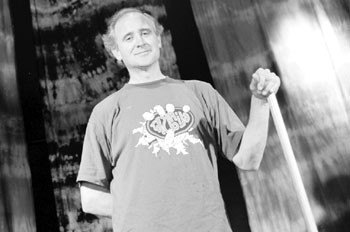
John Robbins

0

Turning the Tables

Author John Robbins advocates ‘Food Revolution’

By Patrick Sullivan

When author John Robbins sits down to dinner with his family on Turkey Day, there’ll be one thing missing from the table–the turkey. “I do want to celebrate Thanksgiving by giving thanks for what we have,” Robbins says. “But I don’t need to sacrifice a bird to do that.”

Maybe remarks like that bug the hell out of you. Or maybe you couldn’t agree more. And, of course, there’s a strong third possibility: Perhaps you couldn’t care less.

But agree, disagree, or shrug your shoulders, you aren’t likely to be terribly surprised by that sort of pro-turkey sentiment. Over the past few decades, the United States has gone from a meat-and-potatoes monoculture to a society that scrutinizes its food choices with growing concern.

Of course, the change is particularly noticeable in Northern California, where it’s a rare restaurant menu indeed that doesn’t sprout a few phrases like “free-range” or “organic” or “vegetarian.”

No one person can take full credit (or blame, depending on your view) for that change. But John Robbins has surely played a major role. The only son of the founder of the Baskin-Robbins ice cream empire, Robbins rejected his family’s money in favor of a life of advocacy–the kind of advocacy that must have really pissed off his dad.

Starting in 1987 with the publication of his best-selling Diet for a New America and continuing with his new book, The Food Revolution (Conari Press; $17.95), Robbins has led a high-profile campaign to convince Americans to reduce or eliminate meat and dairy products from the table and move towards a plant-based diet.

Why? For Robbins, who speaks Nov. 30 at Sonoma State University, it’s simple.

“I do spend a fair amount of time talking about the environmental and health implications of modern factory farming because the consequences are so dire,” he says. “And there are positive and healthy alternatives.”

The 54-year-old Santa Cruz author marshals a vast array of facts and figures in support of the idea that animal agriculture causes tremendous environmental harm, wastes food resources needed by a hungry world, involves horrific cruelty to animals, and has caused an epidemic of heart disease, strokes, and other medical problems that cut short the lives of millions of people.

One of the best ways to solve problems in every one of these areas, he says, is for people to change their diets.

If that seems a bit too simplistic to you, you’re not alone. Robbins is a constant critic of the meat and dairy industry–and frankly, they don’t think very much of him, either.

Groups like the National Cattlemen’s Association have directed withering general criticism at Robbins. They have also taken specific issue with some facts presented in Diet for a New America, particularly Robbins’ claims about the large amount of water and feed grains needed to raise cattle.

Robins says such controversy comes with the territory. He points out that his new book has over 1,000 footnotes from accredited, peer review journals.

“Never ask a barber if you need a haircut, and don’t ask the meat and dairy councils for valid information about a healthy diet,” Robbins says. “You’re going to get a biased view.”

Other critics may wonder why Robbins needs to write another book. After all, The Food Revolution covers much of the same ground trod in Diet for a New America.

Robbins says he had to address pressing new agricultural issues: “So much has happened in the last 14 years,” he explains. “For instance, genetic engineering for food crops did not exist when I wrote Diet for a New America.”

In fact, the new book offers five chapters on genetic engineering, as well as Robbins’ views on issues like mad cow disease and the popular Atkins diet.

But one thing has stayed the same. Robbins tries hard to fight the popular notion that vegetarians are smugly self-righteous. He says his goal is simply to get people thinking about the food they eat.

“I’m not about having people signing a purity pledge,” Robbins says. “I’m just interested in pointing out the benefits of moving in the direction of a plant-based diet.

“We can make choices that are healthy for our bodies and our planet,” he continues. “Or we can make choices that are convenient and cheap in the short term but very costly in the long term.”

John Robbins speaks Nov. 30 at 7 p.m. at Sonoma State University’s Cooperage, 1801 E. Cotati Ave., Rohnert Park. Tickets are $10. For details, call 707/664-2382.

From the November 22-28, 2001 issue of the Northern California Bohemian.

© Metro Publishing Inc.
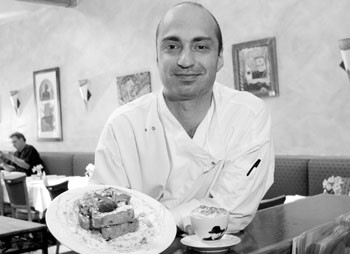
Lily Burana

An exotic dancer takes a farewell tour in ‘Strip City’

By Monica Drake

According to Lily Burana, strip bars are all about creating permissive space, “a place where I can wear spandex with impunity,” as the stripper-princess explained at a recent reading of her new memoir. “Connection without consequence.”

In the opening pages of Strip City: A Stripper’s Farewell Journey Across America (Talk Miramax Books; $23.95), Burana has already met her rodeo cowboy prince, a “muscled and obviously macho” man who’s “low-grade trouble.” Here looms the claustrophobia of a premature happily-ever-after.

But Burana saves herself from domesticity by inventing an impediment: before planning the wedding, she’ll tour the country alone, working as a stripper in as many bars as possible, dedicating herself to soliciting the male gaze and revisiting the wildness of an unexamined youth. A final fling on the strip circuit is necessary to Burana’s pursuit of self-knowledge–at least, that’s what she tells readers and the cowboy prince who waits patiently back home.

The difference between pursuit and flight, seeking and escaping, is negligible. Either way, the outside appearance is the same: constant motion, autonomy, intuition, and indulgence. Both justify a road trip in service of highly personal goals.

To her credit, Burana states those goals up front: “I want to fall in love, but I don’t want my life to be subsumed. My independence is the key to my sanity. . . . I’ve seen countless smart, inspired women slip under their mates’ feet . . . and I’m scared of that happening to me.”

Taking a cue from Mae West–her precursor in the brainiac-tart trade–Burana is respectful of marriage as an institution, but she’s not necessarily ready to be institutionalized. The real story here becomes an inverted fairy tale, gracefully shedding the presumption that every woman out of high school is tired of traversing the world alone.

As she considers marriage, Burana optimistically writes, “I almost had to fetishize home life, approaching it as either a weird experiment or a role-playing game. . . . But inside the irony. . .is a little silvery burble of joy at the realization that I can be fully adult and still be me. I’m learning that what seemed like an ongoing struggle between freedom and domesticity was really just a style conflict, and I’m better off having a solid home base than living untethered and spastic in the vain pursuit of edge.”

The book considers that solid home base only briefly, mostly drawing on Burana’s untethered movements. It’s a roving, intellectual bachelorette party, a good time sprinkled with a few weary days, a glimpse of possible “stripper damage,” the psychological toll of the pursuits. It’s also a broad look at all the men Burana could be engaged to, but isn’t, from Alaska to Texas, Florida to California.

Stripping as we know it today is heir to the burlesque tradition. The original burlesque performances were brought to Puritan America by a troupe of English women in the 1800s who worked with an all-female cast and crew. The burlesque stage thrived on bawdy bedroom tales; women scandalized puritanical crowds by making light of marriage, sex, fidelity, and venereal disease.

Then, in the 1900s, burlesque degenerated into striptease–titillation without social commentary. The dancer was relegated to muse rather than artist. With Strip City, Burana bridges the gap between dancer as muse, or object, and burlesque performer as outspoken social critic.

Burana’s voice is conversational and smart. She’s funny, analytical, and candid, using words the way burlesque performers used their bodies, songs, and skits to lay bare unexamined social mores.

She writes: “The real scandal in my working as a stripper is that I can’t dance. . . . When I was in grade school, I took an afterschool course that offered instruction in all the dance steps from the movie Grease, and I struggled in vain to learn a basic cha-cha.” The exotic dancer becomes as lovely and nonexotic as the girl next door.

Now Burana has moved from stripping tour to book tour. The cowboy and the wedding, she tells her crowd–that resolution of happily ever after–is called off.

From the November 22-28, 2001 issue of the Northern California Bohemian.

© Metro Publishing Inc.
Bebel Gilberto

0

Royal Talent: Bebel Gilberto hails from bossa nova’s first family.

Goin’ South

Samba superstar Bebel Gilberto steams into the river city

By Greg Cahill

Purists lured by the sultry siren song of Brazilian samba singer Bebel Gilberto may want to steer clear of the rocky shoals of Tanto Tempo Remixes (Six Degrees), the electronica reworking of her acclaimed U.S. debut album. However, if they do, they’ll miss one of the most refreshingly soulful dance albums of the year.

Tanto Tempo, Gilberto’s first full-length CD, became “the most ubiquitous coffee house album since Portishead’s Dummy,” Flaunt magazine once opined. Since its release in 2000, the disc has sold more than 500,000 copies and burned up the world music charts for a year and a half.

The new CD, issued last month on a small San Francisco-based label, features Gilberto’s dreamy bossa nova remixed by some of the world’s top studio artists. The dozen tracks feature contributions by such studio wizards as Austrian producer Peter Kruder, UK soul kingpins Rae and Christian, Truby Trio, Da Lata, and King Britt.

Gilberto, the daughter of Brazilian music legend João Gilberto, makes her much-anticipated North Bay debut on Nov. 27 at the Mystic Theatre in Petaluma.

She recently added to her touring band A Guy Named Gerald, the British dance-music meister responsible for the anthemic hits “Pacific State” and “Voodoo Ray.” Gerald has collaborated with everyone from David Bowie and Tricky to Finley Quaye and Roy Ayers.

Before her solo career, Gilberto appeared on albums by Brazilian composer and arranger Caetano Veloso (Circulado), David Byrne (David Byrne), João Gilberto (dueting on “Chega de Saudade” from Prado Pereira de Oliveira), and Chico Buarque (Francisco).

On her first solo effort, a self-titled 1986 EP, Gilberto collaborated with one of the greatest Brazilian composers and performers of the day, Cazuza. She later sang “The Girl from Ipanema” on Kenny G’s platinum-selling Classics in the Key of G and made several contributions to the bossa nova-infused film score for the 1999 sleeper hit Next Stop, Wonderland.

But most Americans first became aware of Gilberto in 1994 from the Cazuza collaboration “Preciso Dizer Que Te Amo,” which closed the popular 1996 AIDS benefit compilation CD Red Hot & Rio.

Gilberto is, simply put, royalty. Her father, guitarist João Gilberto, is the most revered musician in Brazil and regarded as the man responsible for popularizing bossa nova. Her mother, Miucha, is one of Brazil’s finest singers, and one of only three vocalists to share an entire album with legendary Brazilian singer/songwriter Antonio Carlos Jobim (Elis Regina and Frank Sinatra are the two others).

It was Bebel’s mother who taught her the tricks of the trade, instructing Bebel in improvization and harmony. At age nine, Gilberto appeared at Carnegie Hall with her mother and jazz saxophonist Stan Getz (who introduced bossa nova to the American mainstream with the 1964 hit “The Girl from Ipanema,” featuring Astrud Gilberto, also married to Bebel’s father at one time), as part of the Newport Jazz Festival. Around the same time, she was appearing on children’s television shows in Brazil.

By the time Gilberto left Brazil, she already had amassed an impressive list of credits that included acting, soundtrack work, and guest vocal appearances. Her 1986 debut EP, Bebel Gilberto, led to one of the biggest Brazilian pop hits of the 1980s.

In 1991 she moved from Rio, where she grew up, to the city where she was born, New York. There, she began working with a far-ranging mix of America pop, experimental, and world-music artists, including David Byrne, Arto Lindsay, Nana Vasconcelos, and Romero Lubambo. When Lindsay and producer Roberto “Beco” Dranoff sought out fresh voices for the Next Stop, Wonderland soundtrack, they teamed Gilberto with Vinicius Cantuaria for updated takes on bossa nova classics.

Tanto Tempo and the new remix CD feature a molten mix of old and new songs, from obscure samba hits to classics. You’d have to have ice water in your veins not to melt away at the sound of Gilberto cooing “Samba e Amor.”

Bebel Gilberto performs Tuesday, Nov. 27, at 8 p.m., at the Mystic Theatre, 21 Petaluma Blvd. N., Petaluma. Tickets are $25. 707/765-2121.

From the November 22-28, 2001 issue of the Northern California Bohemian.

© Metro Publishing Inc.
‘The Kids Are All Right’

Kids & Chaos

Three writers compare notes on hippie childhoods

By Patrick Sullivan

Every childhood has surreal moments. But for sheer jaw-dropping astonishment, the memories of Micah Perks are hard to beat. For instance, there was the time her father took a group of his young female students on a clothing-optional boating trip.

“Twelve bare-breasted rowers and my father their commander, drunk and meandering on the flat, green waters of Lake Champlain, the Adirondacks on one side, the Green Mountains on the other,” writes Perks in Pagan Time (Counterpoint), her new memoir. “Fishermen and ferryboat tourists stare, shade their eyes, pick up their binoculars. A new day has dawned.”

Perks’ mom skipped this trip, for some reason.

On another occasion, Dad passed out guns and knives to his students (who included juvenile delinquents and drug addicts) and told them to hunt in the woods for their supper. Another day, Dad divided the commune into two warring camps who fought a pitched battle using bags of cow shit, firecrackers, and a football full of gunpowder.

Hard to imagine now, perhaps, but this was business as usual during the author’s childhood on her family’s ’60s-era commune, a radical school for troubled children run by her parents in the Adirondack wilderness.

Perks was hardly alone in her unorthodox childhood. On Nov. 29, she will take part in “The Kids Are All Right,” a discussion panel featuring two other women–Lisa Michaels of Healdsburg and Joelle Fraser of Portland, Oregon–who have written memoirs about growing up in the chaotic whirlwind of the ’60s counterculture.

This panel will not get the David Horowitz seal of approval. Perks and Michaels have written frank but mostly sympathetic accounts of their parents. (Fraser’s The Territory of Men won’t be published until 2002.) Their books offer far more wide-eyed wonder than bitterness–and just about zero self-pity or neoconservative recrimination.

“I don’t judge my parents,” says Perks, now 38, speaking by phone from Santa Cruz, where she teaches fiction writing at the University of California. “I think they were passionate people who tried really hard. They made some mistakes, but they also did some great things.”

Of the three panelists, Lisa Michaels may be the best known. Her 1998 memoir, Split: A Counterculture Childhood (Houghton Mifflin), was named a New York Times Notable Book for its vivid account of a childhood spent in the antiwar movement.

Her mother–a daughter of privilege determined, as Michaels puts it, to “spit out the silver spoon”–was once arrested at a protest on the steps of the White House. Her father joined the Weathermen and eventually received a two-year prison sentence for his part in an antiwar protest.

As a little girl, Michaels toured the country in a customized mail truck, was captured in a Life magazine photo waving the North Vietnamese flag at protests, spent time in communes, ate whole sticks of butter, and generally grew up “as wild as a baby goat,” as she writes in Split.

Now 35 and living in Healdsburg with her spouse and twin one-year-old boys, Michaels recalls meeting other counterculture kids while touring bookstores with Split. Fashionable women wearing Gap clothes would approach her after readings to discuss childhoods much like hers. “To look at them, you’d never guess they were once snarl-headed toddlers living in a van,” Michaels says with a laugh.

“I was surprised to find out how much we had in common, how many things rang a bell for them,” she says. “When they grew up, they wanted a lot of stability. But they still shared many of their parents’ core values.”

“There was a real sense of gratitude for the freedom and respect they were given as tiny children,” she continues. “And that is certainly true of me.”

Perks says children of the radical ’60s have some distinguishing characteristics. “They tend to be slightly cautious, slightly ironic, and also a little morally anguished,” she says. “But also I find them really–ironically, maybe–responsible.”

In conversation, both Michaels and Perks return repeatedly to the advantages and pleasures of growing up in relative freedom.

“I think I felt really powerful and happy most of my childhood,” Perks says. “The problem was that my childhood put me at odds with the rest of society. . . . So we who grew up with that experiment had to transition into a very different world, and that culture shock was very difficult, at least for me.”

Michaels tells a story that, for her, sums up her mom’s approach to parenting. Once, on a family trip through the mountains of Santa Cruz, Michaels was allowed to put on her best dress–a chiffon outfit that she’d recently worn to a family wedding–and run wildly through the redwoods.

“My mother let me run around in the woods until it was ripped and muddy. I knew even at that age what a generous thing that was to do,” Michaels says. “Some parents would have been obsessed with saving that dress for the future. But she was more interested in letting me have my fantasy of being the fairy princess in the redwoods.”

Memory is a notoriously tricky thing. Writing a memoir is even trickier: Publicly exposing the intimate workings of family life tends to be hard on everyone involved.

“My dad had a hard time with the book,” Michaels says. “He found it really painful to be made into a character. I think both parents might have, on some level, come to a point where they regretted putting so much emphasis on letting me express myself.”

Perks says writing Pagan Time took five years of often painful effort.

“It was difficult and also exciting,” Perks says. “It was really a transformative experiment. I think I’d fetishized my childhood, made it overly important. I thought it made me different from everyone else. In writing, I kind of exploded that childhood. I realized my childhood was in some ways a quintessential American childhood.”

The quintessential childhood? That seems guaranteed to raise eyebrows. Yet Perks maintains it’s true. Her childhood, she says, was just an exaggerated version of a story that’s always occurred in this country.

“What came together in the ’60s wasn’t some weird, anomalous moment in our history,” she says. “It’s something that’s happened over and over in America, a desire for utopia. From the colonial period to the religious communities of the 19th century to the ’60s, this is a movement that rises up again and again.

“We want to form the perfect community and also escape into the wilderness like Huckleberry Finn.”

Both women are now mothers themselves, and both say they’re trying to combine the advantages of their own childhoods with more order and stability.

For Michaels, whose parents were separated by prison and then divorce, one of the most important things she offers her twin boys is the gift of two loving parents. The author–whose new novel, Grand Ambitions, has just hit the bookstores–says her dad and mom did a remarkably good job of parenting. But she felt the pain of their separation.

“There’s something about raising the children that you’ve made together that’s breathtaking to me,” she says. “I don’t take that for granted at all.”

‘The Kids Are All Right’ panel discussion takes place Thursday, Nov. 29, at 7 p.m. at Copperfield’s Books, 138 N. Main St., Sebastopol. 707/823-2618.

From the November 22-28, 2001 issue of the Northern California Bohemian.

© Metro Publishing Inc.

Charities Seek Cash

0

Times Are Tight: Helga Lemke says charities are feeling the pinch.

Sweet Charity

Local causes go begging after cash goes to New York

By Paula Harris

As the season of giving approaches, local charities are bracing for a potentially serious reduction in donations during what is traditionally their most productive time. The unprecedented outpouring of contributions to support victims of the Sept. 11 terrorist attacks on the East Coast–an estimated $600 million has been raised for disaster relief nationwide–is putting a myriad of North Bay causes in jeopardy.

Some say donations are drying up.

This “9-11 effect,” coupled with the accelerated downturn in the economy in recent months, could deal a powerful blow to those already seeking assistance.

And knowledgeable observers say the looming recession will likely bring even more individuals into food banks, church food pantries, soup kitchens, and shelters seeking help.

Maureen Shaw, executive director of Catholic Charities of the Diocese of Santa Rosa, says her organization’s homeless shelter is currently full. But the group’s coffers are not. “From the perspective of the September 11 tragedy, we’ve noted a reduction, not in the size, but in the number of gifts,” she explains. “It’s about a 15 percent decrease over last year.”

Still, Shaw says she is cautiously optimistic that Catholic Charities, a multiservice organization with 25 different programs serving the needy in six counties throughout the Redwood Empire, can continue to garner financial support. But she admits that the economic slowdown is “frightening” and could cause a trickle-down effect, creating more homelessness.

Helga Lemke, executive director of Sonoma County People for Economic Opportunity, says it’s still too early in the holiday season to accurately gauge donations, but she is definitely concerned.

Those most immediately affected were charities engaged in pledge drives when the attacks hit. “We sent out an appeal just before September 11 and got very little response,” Lemke recalls. “I guess it was understandable because everyone’s minds were elsewhere. But clearly the combination of the economic slump and the fact that people have been very generous on behalf of the needs of New York may have some impact.”

SCPEO runs a variety of housing, health, and youth programs, including Head Start. Lemke adds that lots of local families are hurting financially and that many individuals have suffered layoffs, which in turn is making it harder for charities to snag corporate donations that used to be a slam dunk.

David Goodman, executive director of the Redwood Empire Food Bank, a local hunger relief organization, agrees. “It’s a bit more challenging for corporations to justify layoffs and then give to charities,” he explains.

Goodman subscribes to the theory that the real culprit is not the terrorist attacks. “A lot of nonprofits have attached the current challenge to September 11, but it’s much more about the economy than about September 11,” he comments, adding that the REFB does most of its fundraising in the holiday season. Had the attacks happened Nov. 11, he says, the organization would have been in dire straits.

“It’s always challenging to fundraise and do the work we do,” he concludes. “We stretch and pull to make ends meet every year.”

Meanwhile, Lemke believes the tragedy may help revive a tradition of philanthropy. “The biggest message we can take from September 11 is that the ensuing response shows how generous we can be,” she says. “I hope people are now reaffirming their priorities and will continue to be generous.”

From the November 22-28, 2001 issue of the Northern California Bohemian.

© Metro Publishing Inc.

The Gift Guide

0

Give It Up for the Holidays

A gift guide with something for everyone

Edited by Davina Baum and Patrick Sullivan

It’s time to take down last year’s New Year’s resolutions from the fridge and put up a new list: “Ways for Others to Stimulate the Economy on My Behalf.” This holiday season, the sound of jingle bells is “cha-ching”–in other words, it’s the season to spend.

For our part, we offer this guide to ways you can please your loved ones without emptying your wallet. The key? Buy gifts that keep on giving–cultural objects that pack an entertaining wallop. For examples, see the following list of music CDs, high-value movie DVDs, and the ridiculously cheap offerings of Cheapass Games.

So unwrap the love. Free the dove. Santa ain’t got nothing on you, baby.

Heads or Tails

Consider the following philosophical puzzle. If God were a game player and our lives were merely the stuff of some giant board game, how much cash would God have had to pony up to buy the game in the first place?

Ready for the answer?

Well, if you suspect that your own personal game of life rates up there with such competitive classics as Trouble, Monopoly, Battleship, Clue, or even (ouch) Operation, then God probably paid between 15 and 30 bucks.

On the other hand, if your thrill-packed life more closely resembles being chased up a building by a satanic rabbit, or being stuck among brainless zombies in the fast-food restaurant of the damned, two things are almost certain: God forked over a paltry five dollar bill, and your life was manufactured by Cheapass Games of Seattle, Washington.

Founded in the early ’90s by a gleefully low-rent entrepreneur named James Ernest, Cheapass Games is a tiny, five-employee company that has made a huge name for itself by producing great little games–often with perversely catchy names like Unexploded Cow, Devil Bunny Needs a Ham, and Give Me the Brain–at a fraction of the cost of those other games with the sweeter names.

The motivating force behind Cheapass Games is Ernest’s two-part belief that board games have become too expensive, and that, at a basic level, all games are alike.

While most board games come in classy, colorful boxes and offer shiny, new dice and fake money and nifty plastic playing pieces, Cheapass’ games, to put it succinctly, don’t. Providing only the parts that are uniquely specific to his own games, Ernest designs his creations with the assumption that, if needed, players can borrow all that run-of-the-mill stuff from some other game.

“Part of the appeal of Cheapass Games,” says Ernest, with a sly chuckle, “is that we take such pride in our cheapness.”

Indeed. While some Cheapass games do come in boxes–if you can call those wraparound cardboard cases “boxes”–most of them come in simple 7-by-10 inch envelopes. If the game includes a board, it comes on card stock, printed on separated pieces that must be assembled.

Instructions–the heart and soul of the Cheapass experience–are single sheets of nonglossy paper, with clear and simple text wrapped around some very R. Crumb-style illustrations. When the game involves playing cards, they always come bound with strips of paper cut from magazines and stuck together with scotch tape. These things aren’t called Cheapass for nothing.

All of which adds up to very affordable products. Cheapass games rarely run more than $7, and most of them cost closer to $5. They even have a new line of stocking-sized card games in little ziplock bags that run a mere $4. Those are pretty attractive numbers to savvy gamers with limited pocket money, not to mention economical gift givers with game-oriented loved ones on their list.

Ernest, though, prefers not to think of it that way. “A Cheapass game is a hallmark of intellectual distinction, not tightfisted gift-giving,” he says. “Everyone should play and display their Cheapass games with pride.”

Insisting that cheapness is not the only secret to Cheapass Games’ success, Ernest says, “I think that story sells games. That’s proved by the fact that some of my games flop and some don’t, all at the same price point. The better the story, the better they sell.”

By story Ernest means the premise on which the game is based. In the case of Cheapass Games, these stories incline toward the bizarre. In the best-selling Give Me the Brain, players are zombies attempting to make it to the end of their shift at the fast-food place from hell, but have only one brain to share among the whole crew. In Unexploded Cow–which combines mad cow hysteria with France’s unexploded mine problem–players, using detailed cards and dice, parade infected bovine across live bomb fields.

Not all of Ernest’s game stories are so grisly. U.S. Patent No. 1 imagines competing inventors of the time machine attempting to register their invention with the patent office by moving further and further back in time.

“My favorite trick is to find a well-known situation and look at it from a novel perspective,” Ernest explains. “Sherwood Forest has Robin Hood and poor people in it, of course, but if these poor people get irregular infusions of cash, then logically there must also be traveling salesmen. That could be the basis of a Cheapass game.”

Sounds like another bestseller.

But back to God for a minute. If the Big Guy really were a gamer, and our lives the machinations of the ultimate Cheapass game, does Ernest have an idea what that game would be titled? Of course he does: “Don’t Make Me Come Down There.”

You’ll find Cheapass Games on the web at www.cheapass.com.

–David Templeton

Christmas DVDs

Why buy DVDs? Let’s hope it’s not just for the bells and whistles. It can be downright dismaying to watch an actor stumble over his words in a “Special Features” interview. Better visual resolution, though another plus, is not completely important; crisper images won’t transform a dumb movie into a smart one.

The most attractive DVD feature is permanence, which is why, when collecting DVDs, it’s best to pick up films you’ll want to watch over and over again.

Citizen Kane: The Special Edition ($29.99), on DVD, is the visually cleanest copy from a recently discovered positive. Considering the original negative was lost in a fire about two decades ago, the film looks much better than we could ever have hoped. The new edition carries two commentaries, one by Roger Ebert, and one by director Peter Bogdanovich. There is another, slightly more expensive two-DVD set ($35) that includes the documentary The Battle for Citizen Kane, Thomas Lennon and Richard Ben Cramer’s study of the making of the film.

My advice? Go cheaper. The Battle for Citizen Kane is well researched, but it clings to a doubtful premise. Cramer and Lennon portray Kane as a collision between an irresistible artist, young Orson Welles, and an immovable media baron, old William Randolph Hearst.

Whether Welles was ruined by Hollywood or by his capacity for self-destruction is a matter film critics will be mulling over until the end of cinema. Yet–and this is ignored in The Battle for Citizen Kane–Welles had an impressive career after his masterpiece flopped. His vandalized second feature film, The Magnificent Ambersons, is more important than the entire careers of several brand-name classic directors.

No one since Welles has had the vigor or the freedom to complete a film like Citizen Kane. All the more reason to own a copy–and to mull over, on frequent viewings, the corrosive effect of wealth on politics and the communications business, and the question: “What shall it profit a man if he shall gain the whole world and lose his own soul.” In a lesser movie, say, Jerry Maguire, these matters can look inane. But when a man has a soul like the soul of Charles Foster Kane. . .

Only The Godfather DVD collection (listing at $105.90; on sale for around $80) approaches the ambition of Kane as a study of vast power and dashed hopes. (Indeed, Welles wanted the part of Godfather Vito Corleone, says his biographer David Thomson.)

The DVD set includes a disc of addendums providing real life backstory for the film. These DVDs chart out Coppola’s grand yet intimate history of the immigrant Vito Corleone and his heir Michael (Al Pacino). Michael saves the family’s fortunes but ends up ruling in isolation. Marlon Brando’s warmth in the role of Old Vito spurs insane emotion in more than one viewer: “God, I really wish my dad had been there for me like Don Corleone.”

For years, director Francis Ford Coppola has been debating making The Godfather IV. But really, the sequel already exists. The first two years of the HBO series The Sopranos is available on DVD (list price $99.98; available for as low as $75). The Sopranos is the first important inquiry into the questions raised by Coppola’s epic. David Chase’s continuing TV series portrays the new generation of gangsters not as operatic figures of tragedy but as players in a comic opera, with a rock/pop music score.

From the vantage point of the bleak 1970s, The Godfather looked at how postwar America had all gone wrong. The butterball anti-hero Tony Soprano (James Gandolfini), Mafia chief of New Jersey, doesn’t pester himself with such matters. . .until panic attacks reveal that the trouble’s in him. Why else can’t the usual remedies–the sweets and the sex and the luxury–ward off the terrors as they once did?

Tony’s immigrant grandfather was a master mason. Tony is in the trash business, an idle king, surrounded by an untrustworthy court of overgrown boys. The Sopranos is a continuing moral drama, counterpointed by the evil comedy of decline.

We love Tony because he’s suspicious of sham, and these qualities connect his criminal career with the hero of another must-have on DVD, The Big Sleep ($19.98). Howard Hawks’ 1946 detective film makes an appealing virtue out of its own pointlessness. Like The Sopranos, the film divides the world into likable and disagreeable characters. The former are careless and without hypocrisy; the latter are passionate bores about something or other: their power, their cuteness, their moral fiber, or their toughness. Detective Philip Marlowe (Humphrey Bogart) plays our none-too-hardworking hero (“Don’t you know better than to wake a man up at 2 in the afternoon?”).

The Big Sleep makes a more impressive present when bundled with The Humphrey Bogart Collection (listing at $79.99). This package includes Bogart in four films: three of them classic, one of them minor, the preachy Key Largo. Another in the set is The Maltese Falcon, Dashiell Hammett’s ornate tale of San Francisco corruption, performed by a rich cast of supporting actors.

Casablanca, also included, of course, needs no description. You must remember this: these are movies, like the DVD discs themselves, that are made to last for decades.

–Richard von Busack

Mixing Up Christmas

Clip this list and present it to gift givers, along with a pleading look that conveys the idea that if only one gift is to be gifted this season, let it be music. Recently released or soon to be released, these albums are a sonic quilt that you can blanket yourself with over the cold, wet months to come.

DJ Spooky, Under the Influence; Six Degrees

Paul D. Miller, otherwise known as DJ Spooky “That Subliminal Kid,” is a post-modern sculptor, whittling away at careful soundscapes. This avatar of turntablism has elevated the art into an intellectual pursuit. But while his art may be abstract and conceptual in theory, in practice it succeeds on a more basic, aesthetically delightful level. Under the Influence is the first release in a series from Six Degrees that features Spooky remixing influential works–a tribute of sorts. Spooky’s choices–from dance-floor mainstays Moby and Mix Master Mike to Japanese composer Ryuichi Sakamoto and Iranian-born vocalist Sussan Deyhim, to avant rockers Sonic Youth–are a testament to the diversity of his inspirations, and meld on the album into an eminently listenable product. The 26 tracks bounce and bump with lively yet intricately controlled abandon.

–Davina Baum

Bebel Gilberto, Tanto Tempo Remixes; Six Degrees

Da Lata, Songs from the Tin; Palm Pictures

Si*Sé , Si*Sé; Luaka Bop

Forget Ricky Martin. Twenty-first century Latin music comes directly out of the electronica scene: layered, richly-produced music infused with house beats. This house element complements Latin music’s inherent lounge-y sophistication in a truly euphoric way. At the forefront of the scene is Bebel Gilberto, daughter of the famous Brazilian musician João Gilberto. Bebel’s 2000 debut album, Tanto Tempo, set her up as the voice of bossa nova; with this month’s Remixes, studio producers such as Peter Kruder (of Kruder and Dorfmeister), King Britt, and 4 Hero shake up the original tracks with love and inspiration, creating less of a remix album than a tribute. Then there’s Da Lata, comprised of two Latin music outsiders, Christian Franck and DJ Patrick Forge. Da Lata put out Songs from the Tin last year, inspired by bossa nova and tempered with lush orchestration. Every song sounds like a rain forest. Lastly, the New York-based group Si*Sé’s self-titled debut, out on David Byrne’s Luaka Bop label, takes bossa nova to a truly cosmopolitan level. The group, headed by heady vocalist Carol C and DJ U.F. Low, produces gorgeous mixes with strings soaring over drum machines. Together, all three albums will spice up the holidays for someone you love.

–Traci Vogel

Kittie, Oracle; Artemis Records

The fur flew when Kittie ripped a hole in the male-dominated world of metal with its aggressive debut album, Spit, a vicious, snarling attack fueled by fierce female fury. Despite a dispute that caused former guitarist Fallon Bowman to sever ties with the band, these dark metal maidens power on with their new effort, Oracle, released Nov. 13. With sisters Morgan and Mercedes Lander on lead vocals/guitars and drums, respectively, and Talena Atfield on bass, Kittie’s latest demonstrates a sharp and matured progression of the band’s abrasive style. The first single, “What I Always Wanted,” delivers raw, throat-skinning, death metal rage and choking, guttural screams tempered by almost-sweet melodic brutality.

–Sarah Quelland

Mates of State, My Solo Project; Omnibus Records Our Constant Concern; Polyvinyl Records

Kari Gardner and Jason Hammel are in love. They’re married. They make beautiful music together. A keyboard/organ (Kari), drums (Jason), and two soaring voices are all that’s needed for such a deceptively simple endeavor. The duo, which started out in Lawrence, Kansas and now makes its home in the Bay Area, perform with the brilliant fervor of a thousand bright stars, marrying lovely boy-girl harmonies to a sound that tickles like the elegant bubbles of a fine champagne. Mates of State’s second effort (which doesn’t release until January 22 but will make a lovely post-holiday gift, because everyone needs gifts in the late winter months to allay the effects of post-holiday malaise) includes songs like “I Know, and I Said Forget It,” which opens with a tingly keyboard riff and then drops layer upon precise layer of delicate pop.

–Davina Baum

No Doubt, Rock Steady; Interscope Records

It took less than a year for No Doubt to write and record this upbeat party album–a bouncy, synthed-up blend of pop, New Wave, rock, rap, and reggae that serves as the perfect support for glamour girl Gwen Stefani’s sexy cotton-candy vocals. The eclectic Southern California band’s new effort boasts an impressive cast of collaborators including Prince, Ric Ocasek, and William Orbit. The group even spent time in sunny Jamaica with renowned producers Sly Dunbar and Robbie Shakespeare who twiddled knobs for the first single, “Hey Baby,” a hot dancehall number featuring rapper Bounty Hunter. Described as the happiest No Doubt album to date, Rock Steady hits stores on December 18.

–Sarah Quelland

Jill Scott, Experience: Jill Scott (826 +), Hidden Beach Records

Thank God for the resurgence of soul. How would we ever get our groove on without a Maxwell or Angie Stone CD? Another must-have for the turn-the-lights-down-low collection is Experience: Jill Scott (826 +), a soothing, sugary double-disc compilation from singer Jill Scott. Scott, whose debut album, Who is Jill Scott? Words and Sounds, Vol. 1 went multiplatinum, gives us a live rendering of songs plucked from her debut album as well as six new songs. Experience features her hits “Gettin’ in the Way,” “Do You Remember,” and “A Long Walk,” as well as an uptempo mix of “He Loves Me.” Scott says Experience, which was recorded live from her performance August 26 at Constitution Hall in Washington, D.C., is a gift to fans who couldn’t be there to catch the D.C. show. It’s an aural testament to her blend of spoken word and jazzy balladeering in the tradition of ancestral torch singers Billie Holiday and Ella Fitzgerald. Give someone the Experience tonight.

–Genevieve Roja

From the November 22-28, 2001 issue of the Northern California Bohemian.

© Metro Publishing Inc.

‘Without a Trace’

On the Run

‘Without a Trace’ is an enchanting but tough road movie

By

Many critics who have seen Sin Dejar Huella (Without a Trace) compare it to Thelma and Louise. But the comparison is unfair: director Maria Novaro has delivered a much better movie than Thelma and Louise, that supposed feminist classic, with its shaky sense of working-class life, its slumming big-name actresses, and its finale dripping with old-school masochism.

Without a Trace is an adventure tracing the length of Mexico, but it’s also an engaging, joking film about the prevailing conditions there. Maybe it’s not as tormented as the social-realist films you expect to cross the border, but neither is it blind to the plight of Mexico.

There are two heroines. One is a Juarez single mom, fleeing life on the border. Aurelia (Tiare Scanda), a friendly but tough girl with a taste for beer, is moving to Cancún. She’s leaving behind a no-good boyfriend in the drug trade, work in the maquiladora factories, and the still-uncaught serial killer suspected of the deaths of countless local women.

At a roadside diner, Aurelia picks up a woman bumming a ride. Traveling under the name Ana (Aitana Sanchez-Gijon), she’s a fancy, Spain-educated woman with a Castilian accent. The two head south, keeping their secrets.

Aurelia doesn’t mention that she’s lifted her boyfriend’s stash of drugs and money to help pay for the relocation. Ana is also being dogged. A federale named Mendizabal has trumped up charges against her for selling fake pre-Columbian artifacts to Yanqui museums.

Jesus Ochoa, who reaches Wayne Newton levels of ickiness, plays the cop. He wears snakeskin boots and boot-shaped sideburns; he has a bulging belly that he likes to enhance with a big silver belt buckle, skin-tight cowboy shirts, and, of course, bribes.

As the two women and their pursuers head for the resorts, the Caribbean coast is photographed in luscious wide-screen 35 mm. The coast is paradise, yes, but it’s always seen warts and all, with small-town garages, muddy streets, boisterous stray-dog packs, pro-Zapatista graffiti, and the petrochemical plant here and there.

The soundtrack music builds the atmosphere: defiant ranchero protest songs in the north, plaintive Vera Cruz harps in the interior, and Yucatán string bands when the women arrive in the tropical south.

Director Novaro, who also did the dance-hall romance picture Danzon, slows down the film when the women arrive on an antique plantation that’s been recycled into a hammock-hotel. The movie stalls there. Novaro refuses to provide a time line for the adventure–the running gag is that she cuts away whenever we’re supposed to find out the date.

Maybe objecting to the slow pace in this plantation segment is like being a North American fretting about schedules when south of the border. Without a Trace lingers because it’s passionate about the road south: the people, the land, and the public art. Indeed, the film is practically a companion piece to Helen Escobar’s diverting picture book, Mexican Monuments: Strange Encounters. Like Escobar, Novaro is very fond of Mexico’s unique public statuary.

Note that the adventure turns briefly bloody, but never sadistic. The blood is used as an object lesson. Women like Aurelia may never spill blood, but they have to clean up a lot of it.

Without a Trace is at the Rafael Film Center only for a week, unfortunately. Sanchez-Gijon’s “cute little bandit face” (as Mendizabal says)–not to mention what an old-time advertising hack might call Tiare Scanda’s “scanda-lous” body–should have been enough to get distribution for Without a Trace. And the studios are angling for a Latin audience, too–they’re quite pious on that count. Yet Without a Trace didn’t get a distributor–and look, in the name of God and Griffith, at what does!

‘Without a Trace’ screens Nov. 16-22 at the Rafael Film Center, 1118 Fourth St., San Rafael. For details, see or call 415/454-1222.

From the November 15-21, 2001 issue of the Northern California Bohemian.

© Metro Publishing Inc.

Holiday Guide

0

Gift Wrapped!

Wander through a winter wonderland of holiday events

By Paula Harris

Mistletoe, menorahs, and mariachis will all be out in full force to help make your holidays a little merrier this year. So don’t shut yourself in with the TV Guide and your special, lethal version of eggnog. Get out and experience some of the festive sights and sounds collected in this selective sampling of holiday events.

Parties & Gatherings

Holiday Victorian Tea You don’t have to be British to have a hankering for dainty sandwiches and tea in china cups. The Woman’s Club of Petaluma will be transformed into an elegant Christmas setting for a genuine tea with costumed servers as the Museum Association sponsors this annual holiday tradition. Tea will be served at three seatings on Dec. 2 at 11 a.m., and 2 and 5 p.m. 518 B St., Petaluma. $25. 707/778-4247.

Bob Burke’s Christmas Party Do you think the holiday should mean more than an opportunity to stuff yourself with sweets and drown yourself in eggnog? So does Forestville’s Bob Burke, the founder of a 28-year-old program that offers free year-round support groups and fun events to children with cancer and other serious illnesses in Sonoma County. Revenues for the program come from donations made during events such as Burke’s annual Christmas Party. This year’s party, hosted by the Gonnella Family, will be held at the Union Hotel Restaurant in Occidental. Dec. 5, 5 to 9 p.m. Free, but donations appreciated. 707/887-2222.

Santa Sightings

Downtown Santa Parade Bummer! After 17 years, Santa Rosa’s whimsical annual Downtown Santa Parade has been canceled, apparently due to lack of volunteers and funds. We’ll miss it! However, Santa Rosa has some other holiday events to get you in the seasonal spirit.

Holiday Open House Santa Claus rolls into Santa Rosa on a fire truck during an afternoon of holiday festivities on Nov. 24. Other attractions include a merchants’ open house, carolers, musicians, food, and children’s activities. Santa comes by at 5 p.m., and at 6 p.m. is the VNA Hospice Foundation’s annual Lights of Life celebration. Old Courthouse Square, downtown Santa Rosa. 707/523-3728.

Santa & Mrs. Claus in Petaluma The Jolly Man and his missus give old Rudolph et al. a break and come to Petaluma via water. This year, they will arrive on the deck of their usual decked-out tugboat at high noon on Nov. 24. The cheery couple will then distribute candy canes as they take a ride through downtown Petaluma aboard an antique horse-drawn sleigh. 707/769-0429.

Dickens of a Holiday Next, Santa swings by Novato for the Dickens of a Holiday event. Stroll down Sherman Avenue in downtown Novato amid live music, carolers, and horse-drawn carriages. Dec. 1, 11 a.m. to 6 p.m. Santa shows up at 5 p.m. 415-892-1516.

Parade of Lights Carols, candles, and 100,000 pounds of real snow for sledding are the high points of downtown San Rafael’s Parade of Lights. Nov. 23. Call for times. Downtown San Rafael. Free. 415/457-2266.

Tinsel & Lights

Light Up a Life This annual tree lighting–sponsored by Hospice of Petaluma–has become a major focal point of the community over the years, as hundreds gather to cheer on the lighting of the enormous Christmas trees in the old downtown and to remember the dearly departed. Dec. 7, starting at 6:30 p.m. Petaluma Blvd. N. and B St. For information or to sponsor a tree light in the name of a loved one, call 707/778-6242. The Friends of Sonoma Hospice also holds its Light Up a Life celebration Dec. 2 at 6 p.m. Southwest corner of the Plaza in Sonoma. A $10 donation will illuminate a light in honor or remembrance. 707/935-7504.

Flotilla on Parade Ogle in awe as dozens of lighted and decorated boats transform the Petaluma River Turning Basin into a light show. Visitors can view the boats all evening at the Turning Basin (Petaluma Boulevard North and B streets, behind the Great Petaluma Mill) with local entertainment on the dock. This watery parade sets sail on Dec. 8 at 6:30 p.m. 707/769-0429.

Yountville Festival of Lights An all-day street fair on Nov. 23 kicks off the month-long Festival of Lights celebration. The party offers food, wine, strolling musicians, entertainment, and a tree- and town-lighting extravaganza that will set the entire town aglow with thousands of lights. Festivities run from 2 to 9 p.m. along Washington Street in Yountville. The always dramatic town lighting is at 5 p.m. Free. 707/944-0904.

Holiday Lights Parade This parade of lights features more than 100 floats, horses, antique cars, trucks, marching bands, and more–all decked out in Christmas lights. This year’s theme is “Candyland Fantasy.” Dec. 1 at 7 p.m. Main Street, Guerneville. 887/664-9001.

Community Christmas What’s Christmas without a festive tractor parade? Calistoga has this and more during the Calistoga Community Christmas Bazaar and Parade Celebration. Dec. 1. The fun starts at 9 a.m. with an old-fashioned crafts bazaar in the fairgrounds at 1439 North Oak St. The decorated tractors roll down Lincoln Avenue from 6 to 7 p.m., to be followed by a tree lighting with carols and refreshments at the Washington Street Community Center. 707/942-6333.

Seasonal Tours

Christmas Parlor Tour Tour four stunningly decorated Victorian parlors in Petaluma, plus the Petaluma Museum, this year for Petaluma’s annual Heritage Homes Christmas Parlor Tour. Organizers ask you to dress warmly, wear soft-soled shoes, and bring a flashlight. Dec. 2, 6 to 9 p.m. $10. 707/769-0429.

Candlelight Tour Wander through nine historic Victorian homes, mingle with costumed docents and strolling carolers, and partake of chocolate delights and more during Napa Landmarks’ 13th annual Holiday Candlelight Tour. Dec. 8, 3 to 8 p.m. Fuller Park and Napa Abajo historic districts in Old Town Napa. $22 in advance; $25 on the day of the event. 707/255-1836.

Holiday Crafts

Holiday Fair Wanna buy presents but sick to death of shopping malls? The 29th annual Gifts ‘n’ Tyme holiday fair in Napa has tons of booths crammed with arts and crafts that will make great gifts. Find everything from wind chimes to sweatshirts. Food available. Nov. 16-18. Friday, 11 a.m. to 8 p.m.; Saturday, 11 a.m. to 6 p.m.; Sunday 11 a.m. to 5 p.m. Napa Valley Exposition, Chardonnay Hall, 575 Third St., Napa. Free. 707/255-0902.

Dickens Fair Pick out some unique hand-crafted gifts while immersing yourself in seasonal good cheer. A Dickens of a Holiday Crafts Fair will warm your heart with music, song, crafts, and even roving minstrels. Dec. 1 and 2. Call for times. Finley Community Center, 2060 W. College Ave., Santa Rosa. Free. 707/543-3737.

Spirit of Christmas Crafts Faire The 25th annual Spirit of Christmas Crafts Faire is the largest holiday gift show in the North Bay, with more than 200 booths offering handmade goodies to delight even the pickiest person on your Christmas list. Minstrels, carolers, and a variety of local bands will be there to spread musical cheer. Among the headliners: the Pulsators serve up Christmas rock on Nov. 23; Sourdough Slim rocks the accordion on Nov. 30; and Grammy-nominated harmonica master Norton Buffalo gets the blues on Dec. 9. The fair is open three weekends: Nov. 23-25, Nov. 30-Dec. 2, and Dec. 7-9. It’s open Fridays from noon to 9 p.m., and Saturdays and Sundays from 10 a.m. to 6 p.m. Sonoma County Fairgrounds, 1350 Bennett Valley Road, Santa Rosa. $4. Fridays are half price. 707/575-9355.

Christmas Bazaar Petaluma United Church of Christ holds an alternative Christmas Bazaar featuring gift ideas from Third World artisans. Nov. 17, 10 a.m. to 4 p.m. 825 Middlefield Drive, Petaluma. Free admission. Proceeds go to artists and charitable organizations. 707/763-2454.

Center Stage

Santa Rosa Symphony The symphony celebrates the holiday season with a program full of Spanish flair and fire. Guitarist Paul Galbraith will perform Concierto de Aranjuez by Joaquín Rodrigo, and harpist Michael Rado will offer Alberto Ginastera’s Concerto for Harp. Debussy’s Iberia rounds out the program. Dec. 15 and 17 at 8 p.m.; and Dec. 16 at 3 p.m. Luther Burbank Center, 50 Mark West Springs Road, Santa Rosa. $15-$40. 707/546-8742.

Scrooge: The Musical The Santa Rosa Junior College Theater Arts department presents an enchanting musical adaptation of this classic tale at the Luther Burbank Center for the Arts. Nov. 16-25. Call for days and times. LBC Main Theatre, 50 Mark West Springs Road, Santa Rosa. $12. 707/527-4263.

Snoopy on Ice Snoopy and the gang continue with their popular holiday ice show. Get your tickets early, because this show sells out very quickly. The visual feast also stars champion skaters, extravagant costumes, and holiday scenery. Dec. 8-22. Most shows start at 3 and 7 p.m. Redwood Empire Ice Arena, 1667 W. Steele Lane, Santa Rosa. $10-$45. 707/546-3385.

Christmas Comes to Wildwood The lovable characters from the children’s classic The Wind in the Willows come alive when the Cinnabar Theater presents Christmas Comes to Wildwood. For the young and the very young at heart. Nov. 30-Dec. 9. 3333 Petaluma Blvd. N., Petaluma. $10 for adults and $6 for children. Call for times. 707/763-8920.

It’s a Wonderful Life The Cinnabar Theater presents the holiday classic. Dec. 13-22, Thursdays through Saturdays (with one Sunday performance on Dec. 16). 3333 Petaluma Blvd. N., Petaluma. $10 for adults and $6 for children. Call for times. 707/763-8920.

Winnie the Pooh Sonoma County Repertory Theatre presents kids’ favorite honey-lovin’ bear in Winnie the Pooh’s Christmas Tail. Dec. 1, 8, 15, and 22. Call for times and prices. 707/823-0177.

The Elves and the Shoemaker California Theater Center presents this adaptation of a classic Brothers Grimm fairy tale at the Luther Burbank Center for the Arts. Following the performance, join the cast for the annual tree-lighting ceremony in the lobby. Dec. 2 at 3 p.m. LBC Main Theatre, 50 Mark West Springs Road, Santa Rosa. $14 for adults and $12 for children and seniors. 707/546-3600.

Dance Dreams

Nutcrackers Galore Dancing mice, dazzling costumes, fairy-tale kingdoms–The Nutcracker has it all. Indeed, as far as we can tell, this timeless holiday classic has only one drawback. Nearly every dance company in the North Bay stages a version, so it’s tough to decide which one to see. We can’t make that decision for you, but here are your options.

As usual, Ballet California offers a jam-packed holiday season. First, meet the characters and view a mini-performance at the company’s annual Nutcracker breakfast on Dec. 2 from 9:30 a.m. to noon at the Sonoma County Hilton, 3555 Round Barn Blvd., Santa Rosa. Tickets are $22 for adults and $15 for children (aged 10 and under). 707/537-0140.

Then it’s on to a full performance as Ballet California offers the only Nutcracker in Sonoma County with a full live orchestra, featuring guest conductor Gabriel Saketeeny of the Cotati Philharmonic Orchestra. Catch the production on Dec. 7 at 8 p.m., Dec. 8 at 2 and 7 p.m., and Dec. 9 at 2 p.m. at the Luther Burbank Center, 50 Mark West Springs Road, Santa Rosa. Tickets are $21-$24 for adults and $16 for children, students, and seniors. 707/546-3600.

Ballet Califa also present Tchaikovsky’s classic with choreography by David McNaughton. Dec. 14 at 8 p.m., Dec. 15 at 2:30 and 8 p.m., and Dec. 16 at 2:30 p.m. Codding Theatre, Spreckels Performing Arts Center, 5409 Snyder Lane, Rohnert Park. Tickets $16 for adults and $12 for kids and seniors. 707/588-3400.

The Petaluma City Ballet and the Petaluma School of Ballet team up to present the city’s 15th production of The Nutcracker. Dec. 7 at 8 p.m., Dec. 8 at 2 and 8 p.m., Dec. 9 at 2 p.m., and Dec. 11 at 2 and 8 p.m. at the Evert B. Person Theater, Sonoma State University, 1801 E. Cotati Ave., Rohnert Park. Tickets are $17 for adults and $11 for children and seniors. 707/765-2660.

The Marin Ballet presents its 29th seasonal production of the holiday classic, offering the lavish full tale, complete and uncut, followed by a candy cane party. Dec. 8 and 9 at 1 and 4:30 p.m. Marin Memorial Auditorium, Marin Center, Avenue of the Flags, San Rafael. $17-$25 for adults and $14.50 for seniors and youth. 415/472-3500.

Stapleton School also presents a full-length version of this holiday treat, featuring a cast of 5 to 18-year-olds, plus returning alumni. Dec. 21-22 at 3 and 7:30 p.m., and Dec. 23 at 1 p.m. Marin Memorial Auditorium, Marin Center, Avenue of the Flags, San Rafael. $19 for adults and $13.50 for seniors and youth. 415/472-3500.

Uplifting Dance The NOMAD Dance Company of Sausalito teams with the Alchemia Theater for Life, a performing arts program for adults with developmental disabilities to present Belonging. The uplifting performance will showcase the talents of both groups. Dec. 8 at 7 p.m. The United Methodist Church, 410 D St., Petaluma. Donations of $5 suggested. 707/775-3794.

Ballet Story Under the direction of Teresa Lubarsky Schork, the students of Healdsburg Ballet perform a full-length Night Before Christmas. The characters in Clement B. Moore’s story come to life as they dance to the music of Bizet and Tchaikovsky in this three-act ballet. Dec. 15 at 7:30 p.m., and Dec. 16 at 2:30 p.m. Jackson Theater at Sonoma Country Day School, 4400 Day School Place, Santa Rosa. $10.50 in advance; $15 at the door. 707/431-7617.

Sophie & the Enchanted Toy Shop Marin Dance Theatre’s enchanting ballet, created by two award-winning local choreographers, features a cast of 90 characters. The toys come to life on Dec. 15 at 1 and 5 p.m. Marin Memorial Auditorium, Marin Center, Avenue of the Flags, San Rafael. $25-$20 for adults and $14 for children. 415/499-7687.

World Dance Cultural music and dance exhibition of many cultures, including Irish, Mexican, Caribbean, and Native American. Nov. 30 at 6 p.m. Guerneville Veterans Hall, Guerneville. Free. 707/869-3533.

Songs of the Season

Carols in the Caves Multi-talented local musician David Auerbach celebrates his 16th year of performing traditional Christmas music from America and beyond on rare instruments in the cask-lined caves of local wineries. His vast collection includes the Celtic harp, hammer dulcimer, pan pipes, and bowed psaltery (an ancestor of the violin). Auerbach plays on Nov. 24 at 7 p.m. and Nov. 25 at 2 p.m. at the Clos Pegase Winery, 1060 Dunaweal Lane, Calistoga; on Dec. 1-2 at 2 p.m. at the Hans Fahden Vineyards, 4855 Petrified Forest Road, just west of Calistoga; on Dec. 15-16 at 2 p.m. at the Folie à Deux Winery, 3070 St. Helena Hwy. N., St. Helena; and on Dec. 22 at 7 p.m. at RMS Carneros Alambic, 1250 Cuttings Wharf Road, Napa–not a cave, but amid the cognac stills. $35. 925/866-9559.

Chanticleer Christmas The Chanticleer Men’s Chorus performs traditional carols and medieval and Renaissance sacred music that brings the holidays to life. Dec. 18, at 6 and 8:30 p.m. St. Vincent de Paul Church, 35 Liberty St., Petaluma. $32-$22. 415/392-4400.

Winter Concert The Occidental Community Choir celebrates Christmas, Hanukkah, and the winter solstice at its annual Winter Holiday Concert. Dec. 1 at 8 p.m. at the Church of the Incarnation, 550 Mendocino Ave., Santa Rosa; Dec. 2 at 7 p.m. at the St. Phillips Center, Occidental; Dec. 8 at 8 p.m. at the Sebastopol United Methodist Church, 500 N. Main St., Sebastopol; Dec. 9 at 4 p.m. Clos Pegase Winery, 1060 Dunaweal Lane, Calistoga. Tickets are $7 ($12 for Calistoga). Kids under 18 get in for free. 707/547-0204.

Magical Harp Napa Valley Museum’s Music in the Gallery series continues with a performance of soothing harp music by local harpist Colleen Carter, who has been playing Celtic harp for years but recently added concert harp to her repertoire. Dec. 8, 2 p.m. Napa Valley Museum, 55 Presidents Circle, Yountville. Call for price. 707/944-0500.

Petaluma Sings! This talented local choir presents the songs of the season in what has become a much-loved holiday tradition. Dec. 15 at 8 p.m. St. Vincent Church, Bassett and Liberty streets, Petaluma. Call for price. 707/763-8920.

‘Tis the Season Choral Singers of Marin will help you catch the spirit of the season and lead you in a rousing burst of caroling. Everyone, even the flat-voiced, can join in! Dec. 16 at 4 p.m. Marin Memorial Auditorium, Marin Center, Avenue of the Flags, San Rafael. $15-$28 for adults or $10 for students and children. 415/472-3500.

Sing-Along Messiah Join the West Marin Festival Singers and Orchestra in a sing-along of this glorious choral piece. Dec. 16. Call for time and prices. Dance Palace, Fifth and B streets, Point Reyes Station. 415/663-1075.

Dickens Celebration Step back in time when Falkirk Cultural Center presents a Victorian Holiday Benefit and Dickens Celebration. The evening will spotlight Caroling Kids, the Starlight, characters in Dickens attire, and Father Christmas. Dec. 7, 6 to 9 p.m. 1408 Mission Ave., San Rafael. $8. 415/485-3328.

Vivaldi Sing-Along Flex those vocal cords when the River Choir–accompanied by the Coffee Concert Chamber Ensemble–hosts the fourth annual Vivaldi’s Gloria sing-along Christmas tradition. Dec. 16 at 7 p.m. Newman Auditorium in Elliot Hall, Santa Rosa Junior College campus on Elliot Ave., Santa Rosa. $12. 707/869-0516.

Happy Hanukkah

The North Bay offers a plethora of opportunities to celebrate Hanukkah. Here are a few.

Beth Ami Congregation/Santa Rosa Jewish Community invites families to a dinner, dancing, music, and a play on Dec. 11 at 5:30 p.m. Friedman Center, 4676 Mayette Ave., Santa Rosa. $6 for adults and $4 for kids. 707/545-4334.

Petaluma’s Congregation B’nai Israel holds a Hanukkah dinner (chicken or vegetarian) on Dec. 9 at 5:30 p.m. Bring your own menorah and candles for a special lighting ceremony. Call for prices and reservations. 707/762-0340.

Keeping the holiday humming, the River Choir, directed by Sonia Tubridy, performs “O Magnun Mysterium.” Dec. 9 at 7 p.m. Guerneville Community Church, 14520 Armstrong Woods Road. Call for prices. 707/869-0516.

Other Traditions

Winter Powwow The American Indian Cultural Education Committee presents its fourth annual one-day intertribal celebration of American Indian culture. The event features traditional music, drumming, food, arts and crafts, and several kinds of dancing, including Pomo dancers, Aztec dancers, and gourd dancing. Dec. 1, 10 a.m. to 10 p.m. Veterans Building, 1351 Maple Ave., Santa Rosa. Admission is free. 707/869-8233.

Las Posadas Traditional and classical songs are combined to create an interpretation of old California’s culture during Las Posadas. The Mother Lode Musical Theatre presents this bilingual concert version of the traditional early California procession of music and dance. Las Posadas is a holiday ceremony in which local people act out a musical version of the biblical story of Mary and Joseph seeking shelter for the birth of infant Jesus. Dec. 15 (call for time). Dance Palace, Fifth and B streets, Point Reyes Station. Free. 415/663-1075.

Kwanza Celebration The Bay Area Discovery Museum celebrates African-American heritage in this fourth annual event. Families will make traditional African crafts and watch live entertainment. Dec. 16, 11 a.m. to 4 p.m. Fort Baker, 557 McReynolds Road, Sausalito. Free. 415/487-4398 or 415/289-7266.

Fiesta Navidad A Mexican Christmas fiesta comes to the Luther Burbank Center for the Arts, complete with colorful regional dances from Ballet Folklórico Mexicano de Carlos Moreno. Dec. 5 at 7 p.m. Luther Burbank Center, 50 Mark West Springs Road, Santa Rosa. $14. 707/546-3600.

Magical Miscellany

Ice Art Gawk as world-class ice carvers transform up to half a ton of ice into glistening works of art during the Napa Valley Ice Art Championship. This cool event is warm-up competition for the 2001 Ice Art Championship, which is scheduled to be a qualifying event for the 2002 Winter Olympics in Salt Lake City. Nov. 23, 2 to 5 p.m. in downtown Yountville. Free. 707/944-0904.

Chocolate Sampling Get a massive endorphin fix at this sweet little event, which is part of the Napa Valley Museum’s program of events. Among the attractions: learning how chocolate can be made right in our own backyard using 25-year-old recipes. Dec. 14 at 2 p.m. Vintage Sweet Shoppe, Browns Valley, Napa. Call for prices and reservations. 707/944-0500.

New Year’s Eve

First Night Santa Rosa This drug- and alcohol-free New Year’s Eve celebration in downtown Santa Rosa is slated to be a bit smaller this year, but it will still feature a myriad of musicians, performance artists, poets, dancers, food vendors, and activities for kids. This year the focus is on interactive projects and venues, including a community sing-along, a journey through a labyrinth, a hands-on art project, and dancing in the streets. Dec. 31, starting at 4 p.m. Entry badges (available at Copperfield’s bookstores) are $7 in advance and $10 at the gate. 707/577-6448.

Best of the S.F. Comedy Competition The long-running standup competition that’s discovered the likes of Dana Carvey, Sinbad, and Robin Williams offers a year-end “best of” event featuring performances by four alums of previous contests. Dec. 31 at 9 p.m. $25. Marin Memorial Auditorium, Marin Center, Avenue of the Flags, San Rafael. 415/472-3500.

Will Durst Just before New Year’s Eve, the political satirist labeled a “modern-day Will Rogers” by the Los Angeles Times caps off this long, strange year with two performances. Dec. 29 at 7:30 and 10:45 p.m. Mystic Theatre, 23 Petaluma Blvd. N., Petaluma. $17. 707/765-2121.

From the November 15-21, 2001 issue of the Northern California Bohemian.

© Metro Publishing Inc.

‘Spy Game’

Running on Empty Listless 'Spy Game' is all over the map By Brad Pitt, as agent Tom Bishop, awaits death in a Chinese prison. He'll die at exactly 8 a.m. at the hands of the punctual savages, unless his former CIA control, Nathan Muir (Robert Redford) can engineer a heroic plan...

‘Los Romeros: The Royal Family of the Guitar’

Musical Maker: Petaluma filmmaker Bill Chayes pays tribute to the legendary Romero family in a new documentary. The String Kings Petaluma filmmaker tells story of guitar's royal family Four men. Four guitars. A multicultural musical phenomenon. Two passionate filmmakers. One cool movie. When Petaluma filmmaker Bill Chayes...

John Robbins

Turning the Tables Author John Robbins advocates 'Food Revolution' By Patrick Sullivan When author John Robbins sits down to dinner with his family on Turkey Day, there'll be one thing missing from the table--the turkey. "I do want to celebrate Thanksgiving by giving thanks for what we have," Robbins says. "But...

Lily Burana

An exotic dancer takes a farewell tour in 'Strip City' By Monica Drake According to Lily Burana, strip bars are all about creating permissive space, "a place where I can wear spandex with impunity," as the stripper-princess explained at a recent reading of her new memoir. "Connection without consequence." In the...

Bebel Gilberto

Royal Talent: Bebel Gilberto hails from bossa nova's first family. Goin' South Samba superstar Bebel Gilberto steams into the river city By Greg Cahill Purists lured by the sultry siren song of Brazilian samba singer Bebel Gilberto may want to steer clear of the rocky shoals of...

‘The Kids Are All Right’

Kids & Chaos Three writers compare notes on hippie childhoods By Patrick Sullivan Every childhood has surreal moments. But for sheer jaw-dropping astonishment, the memories of Micah Perks are hard to beat. For instance, there was the time her father took a group of his young female students on a clothing-optional...

Charities Seek Cash

Times Are Tight: Helga Lemke says charities are feeling the pinch. Sweet Charity Local causes go begging after cash goes to New York By Paula Harris As the season of giving approaches, local charities are bracing for a potentially serious reduction in donations during what is traditionally their...

The Gift Guide

Give It Up for the Holidays A gift guide with something for everyone Edited by Davina Baum and Patrick Sullivan It's time to take down last year's New Year's resolutions from the fridge and put up a new list: "Ways for Others to Stimulate the Economy on My Behalf." This holiday...

‘Without a Trace’

On the Run 'Without a Trace' is an enchanting but tough road movie By Many critics who have seen Sin Dejar Huella (Without a Trace) compare it to Thelma and Louise. But the comparison is unfair: director Maria Novaro has delivered a much better movie than Thelma and Louise, that supposed...

Holiday Guide

Gift Wrapped! Wander through a winter wonderland of holiday events By Paula Harris Mistletoe, menorahs, and mariachis will all be out in full force to help make your holidays a little merrier this year. So don't shut yourself in with the TV Guide and your special, lethal version of eggnog....
11,084FansLike
4,446FollowersFollow
6,928FollowersFollow