Talking Pictures

0

Cells and Culture


Lorey Sebastian

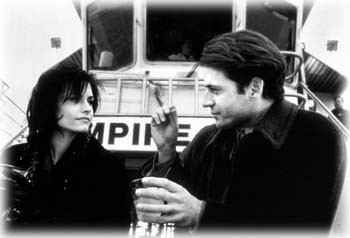
Thou Shalt Not: The coveted Courtney Cox and bad-boy Aiden Quinn.

An agnostic physician ponders death, love, and ‘Commandments’

By David Templeton

Writer David Templeton takes interesting people to interesting movies in his ongoing quest for the ultimate post-film conversation. This week, he meets up with Yale Professor Dr. Sherwin Nuland to see the offbeat biblical comedy ‘Commandments.’

AFTER MY FIRST 10 minutes with Dr. Sherwin B. Nuland, I know I would happily go under his knife should I ever have need of a surgeon. By the time we leave the theater and sit down to discuss the film Commandments, I’ve all but decided to run home and sire another child just so I can ask Dr. Nuland to be its godfather.

According to reliable sources, this is a relatively common response to the man–a clinical professor of surgery at Yale–whose best-selling book, How We Die (Knopf; 1994), which won the National Book Award, and astonishing, brand-new The Wisdom of the Body (Knopf; $26.95) have earned him such labels as “wise,” “sensitive,” and “unsparingly compassionate.” Even more to the point is this description I received from the lips of one who knows him: “He’s really smart, and he’s really nice, too.”

May the same be said of us all.

And would that it were true of Commandments, the odd, disorganized tale of a man (Aiden Quinn) so angry with God he vows to break all of the Ten Commandments. Nuland enjoyed the basic idea, but not much more.

“I think we are dealing with a screenwriter [David Taplitz, who also directed] whose essential insistence is that there is a greater, stronger power,” he sums up afterwards, his white hair slightly wind-tousled as we sip coffee at a sidewalk cafe. “What this screenwriter is doing is indulging himself in the need to say, ‘My God, there must be a God.’

“And I would argue,” he says, “that that is just our cells telling the rest of our body that we need order.

“We need unity,” Nuland continues, “we need to believe there is a prime mover written in our bodies just as people used to think there was one up in the celestial sphere.

“You look at these 75 trillion cells,” he says, patting his arm, his shoulder, his leg, “with all their massive number of reactions. But what prevents chaos, what prevents death, is that order is almost suffused through it so that every little irregularity is corrected.”

“Are you saying,” I ask, slightly incredulous, “that the cultures we’ve created, our religions, the way we come together as people, all of that is an impulse that comes from our bodies?”

“That’s exactly what I’m saying,” he nods. “It’s impossible to study cellular biology without being staggered by the analogy between what’s going on in cellular life and our entire attitude toward life and living.”

“And the Ten Commandments?”

“One way of creating order,” he replies. “What is ‘goodness,’ after all? Goodness is predictability. If people are uniformly good, their behavior is predictable, there is order in society, and we continue to live.”

“So when people ask the big questions about the meaning of life,” I wonder, “is the answer in our cells?”

“In our cells?” he repeats, pausing to consider this. “Here’s what I think: I think life has no meaning. I think that in essence we’re a bunch of chemicals driven by the instinct for survival. But we have become–because of our brain–much, much greater than that. We have achieved the ability to give meaning to life. We give it, God doesn’t. It’s largely our aesthetic sense, the constant improvement of our aesthetic sense, always based on the need for harmony and order.

“But I think it’s more than that. This may sound corny but I’m absolutely convinced of it. I think that it’s love that makes the world go around.

“There are certain anthropologists,” he explains. “who believe that the moment that child is [born] it is already conditioned to the awareness that the relationship with mother is not the only relationship, that close relationships are what count. Its brain still has to develop, so from the beginning there is a dependency on others to survive. Everything about our nature and nurture, I think, militates in favor of the necessity of love.”

“Some say God is love,” I throw out.

“Yes, they do,” he smiles, fully at home in his own agnosticism.

The one drawback to agnosticism, however, is its preclusion of life after death. Dr. Nuland, who has been present at the last moments of numerous lives, admits that he’d prefer to believe that death is not the end.

“It would be lovely to be wrong,” he laughs. “It would be lovely if there were an afterlife and my consciousness could continue. Because it does make me panicky to think that someday my consciousness will disappear.

“But I think it will.” He opens both eyes wide with wonder. “Oh well,” he laughs.

From the May 22-28, 1997 issue of the Sonoma County Independent

This page was designed and created by the Boulevards team.
© 1997 Metrosa, Inc.

Wine Reviews

0

Triple Play


Michael Amsler

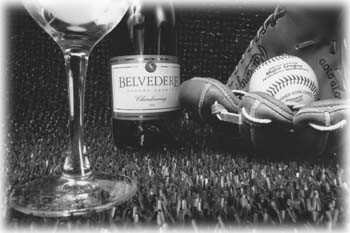
Take Me Out to the Ballgame: Belvedere 1995 Chardonnay has a taste of ash that’s perfect for that post-game BBQ.

Three winners in the cheap-chard league

By Steve Bjerklie

LONG AGO, when tolerance and patience had not yet come into my life–this goes way, way back, to just before George Steinbrenner’s unlikely New York Yankees won the World Series last October and restored my faith in baseball–the idea of cheap chardonnay, like the split-finger fastball, seemed a perversion. Split-fingers ruin good pitching arms and elevate home-run totals to unnatural levels; cheap chard prostitutes an elegant grape. Why do this?

Money’s the reason, of course. Like ballplayers–or, more accurately, like ball-team owners–winemakers are seduced by the ching-ching of easy cash. God knows anyone can sell chardonnay these days. Selling water’s more difficult. Chardonnay outsells every other varietal by far, and the public’s taste for the pale gold seems to only be growing. Last March a new survey of restaurant wine sales showed chardonnay still occupying first place–just as it has for the last 10 years. Make no mistake: This is the Atlanta Braves of wine. It (and that accursed, racist “chop”) won’t ever go away.

But like the Braves, even value-priced chardonnay has its virtues. It sells big in restaurants because the varietal, in the right hands, is capable of producing flavorful, full-bodied wines without full-bodied price tags. As a food accompaniment it rarely disappoints, especially with seafood and poultry. True, some cheap chards are flavored with oak chips rather than aged in oak barrels (some, in fact, are “aged” in railroad tank cars), and most that are designated “California” contain poor-quality grapes from the overcooked vineyards of the Central Valley. But for eight or nine bucks you expect to go all the way?

Here are three cheap but sturdy chards from Sonoma County vintners and vineyards that left me damn impressed–and just a little more tolerant:

Lyeth 1994 Sonoma County Chardonnay

This chardonnay immediately reminds me of one of the great chardonnay values of all time, the “Clair de Lune” wines from Hacienda in Sonoma back when Steve Macrostie, who has since gone independent, was making Hacienda’s chards. Silvery white, nearly platinum in color, oaky and crisp on the tongue. With food, this Lyeth (like the old Haciendas) won’t clamor for your attention, which is both its charm and drawback: choose mildly sauced pastas or lightly dressed salads so the wine isn’t overwhelmed. Also, drink this wine cold; I noticed that its flavor declined as it warmed. Two and a half stars. $8.99 (on sale).

Il Cuore 1995 Sonoma County Chardonnay

Tart and juicy. Drier than the Lyeth, which means it’ll go better with cheese and cheese sauces. Two swallows, though, provoked me into a real craving for fresh crab and warm sourdough. And though I usually prefer cabernet sauvignon with caesar salad, this wine’s dry enough to sing harmony with the dressing and dance with the anchovy. Heavy but short-lived oak was my first impression; golden summer hills in late afternoon light was my second. Two stars. $9.50.

Belvedere 1995 Sonoma County Chardonnay

Your kid’s team goes 0-15 for the season, and you’re in charge of the picnic. While the coach explains that good pitching always beats good hitting, pour him or her a glass of this succor-giving wine. As burger smoke rises sadly from the grill and the glass of chard glints like a World Series ring in the sun, perhaps the coach (and you) will be reminded that it is, after all, only a game, and of course there’s always next year. I smell outfield in the nose and taste the ash of Mark McGwire’s bat in the flavor, with just a touch of horsehide in both. This wine is so good that one glass will have you taking batting practice, two glasses and you’re talking contracts, and three glasses will make you think you’re Babe Ruth. Three stars. $9.49.

From the May 22-28, 1997 issue of the Sonoma County Independent

This page was designed and created by the Boulevards team.
© 1997 Metrosa, Inc.
Sonoma Valley Shakespearean Festival

0

Inside Out


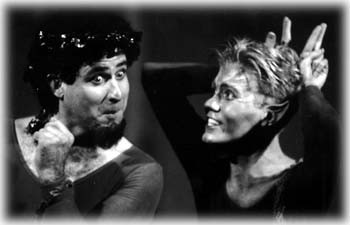
A Midsummer Night’s Dream: Sonoma Valley Shakespearean Fest returns.

All the world’s a stage in summer

By Gretchen Giles

THE PLAY’S the thing in the soft gloamings of the warming season, and theatergoers come in droves when the stage is built of sweet-smelling fresh planks and the walls are, well, when there are no walls at all.

Because, by and large, in a Sonoma County summer the acts play best outside. With the exception of the outstanding season offered by Summer Repertory Theatre at the Santa Rosa Junior College and Santa Rosa High School auditoriums, it is the parks and wineries that ring out with wordplay, swordfights, and passion.

The Sonoma Valley Shakespeare Festival begins the season with a scamper and a bang, starting all three of its repertory pieces on the same weekend, June 20-22. Leading off on the 20th with A Midsummer Night’s Dream the day before the solstice proper, the fest next explores the dark-blooded wisdom of Hamlet on the 21st, and then cracks the whole thing up with the Reduced Shakespeare Company’s version of The Complete Works of William Shakespeare (Abridged) on the 22nd.

Sonoma Valley’s artistic director, Carl Hamilton, has flirted in the past with mounting non-Shakespearean plays for his annual Bard bashes. However, he plays it relatively straight this year, throwing only the Abridged zinger–which he double-zings by casting three women in the main roles. What is actually unusual is Hamilton’s choice to produce the classic Hamlet, a play best savored in deep winter moods redolent of Elsinore itself.

“This will be our fourth tragedy,” says Hamilton. “I just throw them in there.” Belying the notion that summer audiences want only laughter and cross-dressing, Hamilton is confident that a big chewy play with plenty of dead bodies strewn limply across the final scene will work for the picnic crowd, particularly since the recent release of actor Kenneth Branagh’s fine interpretation of Hamlet is still lingering on the big screen.

These three productions will chase one another through the summer, playing well through the end of September and being produced mainly on the stage abutting the graded slopes of the Gundlach-Bundschu winery (the Fieldstone Winery will also serve as a short-term venue). Wine will be available by the glass or bottle, and it’s highly recommended that you bring a hamper full of goodies to accompany it.

The Avalon Players continue to snatch food off of patrons’ plates in mid-soliloquy at the Buena Vista Winery. Players’ director Kate Kennedy ensures that plenty of tomfoolery crops up in her lively productions–they may not always be faithful to the text, but they’re always faithful to the sense of fun intended. This year they assay the shipwreck-and-separated-twins comedy of Twelfth Night, a play whose characters include one Sir Toby Belch and the venerable Sir Andrew Aguecheek, guaranteeing that there won’t be a dry eye in the house–too much laughter. The Players move off the hillside and ring their production around Buena Vista’s fountain this year, their season beginning July 19 and running through the end of September.

Over in Sebastopol, Main Street Theatre’s annual Shakespeare in Ives Park is also staging Twelfth Night. As with last year, when both Main Street and the Valley of the Moon company did The Tempest, these two productions promise to be vastly different. Main Street executive director Jim dePriest is breaking his own rules this year, restaging the play not at his Santa Rosa­based Sonoma County Repertory Theatre as in years past, but at Santa Rosa’s Finley Park for the end run to the inside season.

With his usual forthrightness, dePriest admits that his reasoning for this change is that “the run just becomes too damn long for the actors” if the Shakespeare production is restaged for a full slate of performances inside SCR.

Performances begin Aug. 15 in Sebastopol, running for almost two weeks before moving to Finley Park Aug. 27.

Among dePriest’s regular stable of fine actors for Twelfth Night is Eric Thompson, who has been responsible for the smashes over at the Valley of the Moon Shakespeare company in Glen Ellen, a troupe that is bowing out of the Bard battles for this summer. Losing Thompson (who directed last year’s fine Tempest and out-Pucked the competition in A Midsummer’s Night Dream the year before) was blow enough for VOM director Kathleen Mason, but losing their space in the glorious Dunbar Meadow proved really disheartening. Finding temporary staging at the Sonoma Developmental Center, Mason and company finally decided to pack it in when providing actors for the roles proved too difficult.

The Avalon Players, Buena Vista Winery, 18000 Old Winery Road, Sonoma; 996-3264. The Sonoma Valley Shakespeare Festival, Gundlach-Bundschu Winery, 2000 Denmark St., Sonoma; 575-3854. Sebastopol Shakespeare Festival, Ives Park, Hill Street; 823-0177.

From the May 22-28, 1997 issue of the Sonoma County Independent

This page was designed and created by the Boulevards team.
© 1997 Metrosa, Inc.
Courthouse Square

0

Square Deal?


Shadow of a Doubt: In the ’40s, Alfred Hitchcock used it as a film location. Now Courthouse Square is becoming a political hot potato.

Not everyone is sold on the Courthouse Square reunification plan

By Paula Harris

BERNIE SCHWARTZ envisions a green haven. A friendly, safe, and accessible downtown park. Maybe something modeled on the homey plazas in Sonoma and Healdsburg, with diagonal footpaths and level terrain, and bustling with such community activities as live performances, art shows, a winter ice rink, and chess games under thin-limbed canopy trees.

“Unless downtown can become an attractive place to seniors and families, we’re never going to revitalize,” Schwartz says. “We want to enrich and enliven downtown so it works for the community and then becomes irresistible as a tourist attraction.”

Right now, according to the 17-year owner of California Luggage on Fourth Street, Courthouse Square is sprawling, difficult to navigate, feels unsafe, and is underused because it’s “isolated, not integrated.”

As part of the Coalition to Restore Courthouse Square, a group pushing to reunify Santa Rosa’s Old Courthouse Square, Schwartz wants to create a recreational gathering place and increase shopping and downtown parking by adding 80 parking spaces.

But the controversial project is generating not only hopes, but fears. Some local merchants think that after investing big bucks in the ’60s to split Courthouse Square, the city should leave well enough alone.

As planned, the $1.9 million project would eliminate the sunken areas, redwood trees, some fountains, and other “visual blockades.” The plan also calls for unifying the east and west halves of the square by closing the one-block cobblestoned segment of Santa Rosa Avenue, between Third and Fourth streets, that bisects the square and links to Mendocino Avenue.

The study was put together for the Coalition to Restore Courthouse Square by local civil engineering firm Carlile, Macy, Mitchell & Heryford. When asked about funding for the study, civil engineer Dick Carlile, who was recently appointed to the Santa Rosa Planning Commission, says the work was done on a “mainly volunteer” basis.

There’s no question how Dave Madigan feels about the project. The message emblazoned in large black letters on the storefront windows at Madigan’s Stationery store at Mendocino and Fifth reads: “Just say no . . . to the reunification of Courthouse Square.”

Father and son owners Tom and Dave Madigan say cost is a big concern. “We’ve just finished paying for the downtown design plan from 1981, the rents are high, and then there’s the cost of earthquake remodeling–they should give us some breathing room,” complains Tom Madigan.

“Essentially half our taxes go to supporting downtown bureaucracies,” says Dave Madigan, who this week sent out letters to the downtown community on behalf of the Downtown Business Association, decrying the project, “and taxes are added into rent.

“Look at the number of empty stores downtown to see a direct result.”

Traffic congestion is another concern, with detractors pointing out that there’s more traffic in Santa Rosa than in Healdsburg or Sonoma. “The [architectural] illustration looks very nice, but the traffic flow will cause the worst bottleneck you ever saw,” claims Tom Madigan.

“Then, the diagonal parking means cars will have to back out into the traffic flow. It’s going to be bedlam.”

Sid Dadeghian, owner of both the Sonoma Coffee Co. and Squeezers on Fourth Street, says the city’s priorities should be building a multistory parking lot in the area and adding foot patrol officers for better security. “The change in the square isn’t going to help anyone. Ninety-nine percent of the businesses are against it, and the only merchants who want it are those who’d benefit directly,” he claims. “This makes no sense. By the time construction is finished, there may not be many businesses left here.”

Pete Mogannam, an owner of the 4th Street Market and Deli at Fourth and Mendocino, says he supports the plan 100 percent, but only “if it stays clean with no loitering, panhandling, and drug dealing, if it portrays a good image for downtown, and doesn’t turn into another Juilliard Park [where loitering, drug dealing, and random violence discourage visitors].”

Schwartz says Courthouse Square has a “dead zone”–empty buildings and tree groves that induce lurking, and costly vandalism that the new design would counteract. “We need to overwhelm this vacuum for undesirable activity with desirable, legitimate activity,” he observes.

Supporters of the reunification see it as a revenue maker that will fill now vacant retail spaces and attract swanky stores like Crate and Barrel and the Z Company. “If you increase the business vitality, you increase the coffers,” says Schwartz.

“I think the whole town would enjoy [the new square], not just the downtown merchants,” says Bonnie Lyon, a downtown psychotherapist. “It’s unfair when the benefit accrued by all Santa Rosa should be a burden on the merchants.”

However, Chris Facas, general manager of the Santa Rosa Plaza mall and chair of the Downtown Partnership Committee, an advisory panel appointed by the council to explore ways to revitalize downtown, says that although the committee embraces the concept of reunification, it’s far from a done deal.

“We’ve requested the City Council to provide us with assistance to see what economic benefits would be gained and assistance developing strategies for financing,” he says. “We have not asked the city to spend $2 million.”

From the May 22-28, 1997 issue of the Sonoma County Independent

This page was designed and created by the Boulevards team.
© 1997 Metrosa, Inc.
Disney and McDonald’s

0

Hi Ho, Hi Ho, Indeed

By Jim Hightower

“Disney Makes Dreams” goes an old advertising pitch for the maker of Cinderella, Snow White, and Fantasia, along with Mickey, Goofy, Pluto, and all those other loveable Disney characters. But for the young workers in Vietnam, Disney is a nightmare, a company far more abusive than the wicked old step-sisters who kept Cinderella in bondage.

In Vietnamese sweatshops, hundreds of young women who are only 17, 18, 19 years old, spend their youth making little giveaway toys that are based on cute characters from Disney movies. These little toys are part of the “Happy Meals” that McDonald’s fast-food restaurants sell.

A McDonald’s spokesman is thrilled with the success of these children’s meals, recently gushing that, “Our new global alliance [provides] unbeatable family fun as customers enjoy ‘the magic of Disney’ only at McDonald’s.”

He should check the magic of the toy factory in Da Nang City, where the women toil 10 hours a day, seven days a week, plus mandatory overtime. They are paid six cents an hour. Lest you think that’s real money in Vietnam, it costs 70-cents there just to buy, not a “Happy Meal,” but the most basic meal of rice, vegetables and tofu. A breakfast, lunch and dinner would cost the workers $2.10 a day … yet they are paid only 60-cents a day.

No one sings “Hi-Ho, Hi-Ho, It’s off to Work We Go” on that starvation pay. Plus, it’s a dangerous place to work, with poisonous fumes filling the sweatshop. In February, 200 women fell ill, and three were hospitalized by over-exposure to acetane, a chemical solvent. Despite such incidents, the Disney/McDonald’s factory refuses all appeals to have the simple decency to improve the ventilation system.

To help stop this abuse by Disney and McDonald’s, contact the National Labor Committee at 212-242-3002.

Web exclusive to the May 22-28, 1997 issue of the Sonoma County Independent

This page was designed and created by the Boulevards team.
© 1997 Metrosa, Inc.

World Music

0

Global Beat


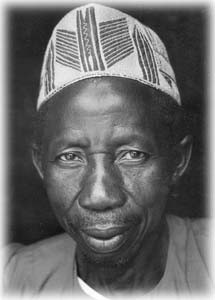
Every Picture Tells a Story: Kora master and griot Karunka Suso.

Photo by Daniel Laine


North Bay labels make strong showing
in world-music market

By Greg Cahill

WHEN PETER BUCK went searching for a hip hook on which to hang his latest side project–Tuatatara’s Breaking the Ethers (Epic)–the REM guitarist found the goods in the exotic marimba-driven gamelan sounds of Bali, which colors this darkly sumptuous instrumental recording.

It’s no surprise. In a year that has seen sagging CD sales among pop, rap, and rock acts, an unusually strong tide of global beat releases offers safe passage to weary music fans. Indeed, it’s fitting that Warner Brothers has just reissued a visually enhanced anniversary version of Paul Simon’s landmark Graceland, the 1987 disc that launched world music into the mainstream with its South African, Tex-Mex, and Cajun influences.

Ten years down the road, the far-flung sound of world music is still a welcome port of call.

Amid this renaissance, two tiny North Bay recording labels–the fledgling Rohnert Park­based Tinder Records and acclaimed mandolinist David Grisman’s San Rafael­based Acoustic Disc–recently issued several heart-stopping recordings that explore a variety of rich musical styles from around the globe.

Official page for Tinder Records.

Official page for Acoustic Disc label.

Official page for Ellipsis Arts label.

Official page for Rounder Records.

Enrique Coria’s evocative Latin Touch (Acoustic Disc) is a masterful link to the Rioplatense guitarists, hailing from the Rio de la Plata (“River of Silver”) region between Uruguay and Argentina. He lays claim to an unusually warm, mellifluous tone. In a series of acoustic solo, duet, and trio settings, Coria deftly moves through the works of Astor Piazzolla, Heiter Villa-Lobos, and other South American composers. Along the way, he ranges from sweet Gypsy-inflected melodies to Bach-influenced fugal arrangements of Brazilian folk motifs.

If you buy one world-music release this year, consider Coria.

Also from Acoustic Disc: Rudy Cipolla: Portrait of an American Original, a spirited tribute to the legendary, albeit obscure, 96-year-old mandolinist and world-music composer who wrote behind the counter of his San Francisco bookstore and didn’t record until age 83. It features the David Grisman Quintet, Evan Marshall, the Modern Mandolin Quartet, and the late Jim Boggio.

Meanwhile, the locally based Tinder Records offers an impressively diverse catalog, ranging from the raw, percussive field recordings of Eat the Dream: Moroccan Reveries and the delightfully romantic anthology The Soul of Cape Verde (featuring the amazing singer Cesaria Evora) to the buoyant French salsa of Fatal Mambo’s contagious Rumbagitation–a potent blend of flamenco, salsa, cumbia, and ska–and the powerful chants of Petru Guelfucci’s Corsica.

A small label with a lot of promise.


Cosmic Cowboy: Tuvan musician Kongar-ool Ondar.


On the East Coast, industry leader Ellipsis Arts is making huge waves with a series of gorgeously packaged (in stiff cardboard jackets and 64-page full-color booklets) and extensively annotated recordings from the four corners of the globe. Klezmer Music: A Marriage of Heaven & Earth traces the evolution of this Eastern European Jewish/Gypsy hybrid, from traditional wedding songs to the post-bop stylings of Naftule’s Dream. In a similar vein, Jali Kunda: Griots of West Africa & Beyond blends traditional African griot music (the roots of American blues) and contemporary collaborations, featuring avant-classical composer Philip Glass, jazzmen Pharoah Sanders and Bill Laswell, and kora master Foday Musa Suso.

Fans of Central Asian throat singing and polyphonic overtones (and you know who you are) shouldn’t miss Deep in the Heart of Tuva: Cowboy Music from the Wild East, a haunting collection from the recently opened Mongolian republic. The region, and its strangely powerful music, came centerstage in the ’80s (Folkways Records did release a hard-to-find sampler of crude Tuvan folk singing in the ’60s), thanks to the efforts of the late American physicist Richard Feynman, who died just before becoming eligible to realize a lifelong dream of traveling there.

This meticulously annotated recording comes with everything you need to know about slaughtering sheep according to the laws of Genghis Khan (don’t forget to say a prayer for its soul) and the numerous complex techniques that compose an other-worldly art that until recently was thought by Western musicologists to be impossible–namely, that one individual can sing a three-part harmony and a haunting melody.

No overdubs–just heaps of soul.

Also recommended: If I’d Been Born an Eagle (Shanachie) by Huun-Huur-Tu, a spellbinding ensemble of Tuvan throat singers.

For the socially and politically conscious, Divine Divas: A World of Women’s Voices (Rounder) offers a chance to savor 37 of the worlds most fascinating female singers while donating a few bucks to the United Nations Development Fund for Women. This three-CD companion to last year’s stunning Global Divas: Voices of Women from the World is a seamless survey of styles from Appalachia to Zimbabwe.

Musically, it’s, er, all over the map.

What’s amazing–besides punk-folkie Ani DeFranco’s reinvention of that gospel classic “Amazing Grace”–is the ease with which these tracks segue, from the rhythmically complex, Cuban sexteto-style bolero son of Colombia’s Toto la Momposina to the simple elegance of Navajo folk singer Sharon Burch to the dazzling West African soukous rave-up of Nayanka Bell, Tshala Muana, and Djanka Diabate.

There’s so much excitement, in fact, that you’ll want to settle down with the sexy Cuban stylings of Boleros (Corason) by Armando Garzon, the man the Cuban press has dubbed “the black angel with the velvet voice.”

Eat your heart out, Eddie Vedder.

From the May 22-28, 1997 issue of the Sonoma County Independent

This page was designed and created by the Boulevards team.
© 1997 Metrosa, Inc.
Joel Simon

0

On the Border

By Christopher Weir

THEY DON’T TREAT people like this in San Diego or El Segundo,” says a border-town activist in Joel Simon’s Endangered Mexico: An Environment on the Edge (Sierra Club Books; $27). “Well, we are human beings too.”

These human beings, Simon reveals, are the losers in Mexico’s dangerous game of environmental roulette. Forced from their native landscapes by desiccated farmlands, cultural disintegration, and entrenched ecological mismanagement, many find themselves working in American-owned border factories, earning 55 cents an hour and living in shantytowns haunted by their employer’s toxic detritus.

Is it any wonder, Simon asks, that these human beings should cross the border to seek a better life brokered by agricultural and industrial fat cats gunning for cheap, illegal labor?

Still, Endangered Mexico is not about placing blame but rather about facing grim realities. From the jungles of southern Mexico to the slopes of the Sierra Madre, from the sun-addled shores of Cancún to the acrid industrialism hedging the U.S. border, Endangered Mexico deftly navigates a land on the brink of ecological implosion and illustrates how the foreshocks already affect the United States.

Strangely, Simon’s otherwise comprehensive work sidesteps a central question: What role does population growth play in Mexico’s environmental conundrums? Only near the very last page does Simon really engage the population dynamic, and even then he quickly dismisses it as relatively insignificant. If Mexico’s population explosion–from 25 million people in 1945 to more than 90 million today–is indeed a comparatively minor factor within the context of the country’s general environmental mismanagement, then Simon should have proved that point much earlier–and with more compelling discussion about the cultural, religious, practical, or medical forces behind Mexico’s population trends.

Nevertheless, Simon’s journalistic prowess makes Endangered Mexico an insightful, incisive, and instructive exposé. His reporting is balanced, but not to the point of indecision or spinelessness. His sympathies and passions never descend into illogic, and he is honest about the cultural and socioeconomic currents to which Mexico’s ecological emergencies are wired.

Endangered Mexico ultimately dismantles our collective assumptions to reveal a world teeming with complexities, riddles, and contradictions, a world in which increased border patrols and free-trade agreements are mere fingers in the bursting dikes of economic chaos and ecological bankruptcy.

If the United States wants to develop effective immigration and trade policies with regard to Mexico, Simon argues, then it must eventually confront the tough questions posed by Mexico’s No. 1 problem: environmental dysfunction.

“The border is too vast and the migrants too determined for enforcement to have more than a limited effect,” Simon writes. “The integration between the developed and developing world is not unique to the United States and Mexico. It is part of a global trend. That is why the United States needs to take a greater interest in Mexico’s environmental crisis.”

Because while it may be nearing midnight in the once-fertile garden of Mexico, it’s not too late to turn back the clock. “Nature, like hope,” writes Simon, “does not die so easily.”

From the May 22-28, 1997 issue of the Sonoma County Independent

This page was designed and created by the Boulevards team.
© 1997 Metrosa, Inc.

Free Range Chicken

0

Fowl Play

Hunt and Peck: Rocky’s birds range free, but they’re almost the only ones.

Ruffling feathers over labels

By Steve Bjerklie

PASSED IN 1906 on the heels of the national outrage following publication of Upton Sinclair’s The Jungle, the Federal Meat Inspection Act was given a parallel act for poultry in 1957, and was itself revised in 1967. But when it comes to the words natural, organic, and free range–in fact, even fresh and frozen–the federal law is and always was toothless. It doesn’t guarantee a thing.

Just ask Allen Shainsky, Petaluma’s inventor of “Rocky the Range Chicken.” “Free range,” he says with a combination of bitterness and irony, “doesn’t mean anything.”

You’d never know it from Shainsky’s poultry. Thousands of birds meander in one of Petaluma Poultry Processors’ chicken houses like cocktail guests waiting for something interesting to happen. On occasion, if the time and temperature are right, a bird will lead a march outdoors for a bit of sun. The birds look fat and happy–the very definition of “free range.”

Indeed they are. Shainsky’s chickens, sold under the “Rocky the Range Chicken” label were the first to be designated “free range” back in 1986. But while Shainsky has continued to define the parameters of the term at his company, he’s seen other poultry companies use “free range” strictly as a marketing gimmick. Legally, the phrase means nothing. There is no law or regulation defining “free range.”

That’s not the worst of it. “Free range” has come to mean in the consumer mind any bird allowed to roam uncaged. After all, isn’t that why they’re juicier? But all chickens raised for meat are allowed to roam freely; only egg-layers are typically kept in cages. True, only Rocky chickens and a few others have regular access to the out-of-doors, but most consumers don’t know that nearly all commercially raised turkeys also have access to the outside, including the Butterballs scorned by foodies as the very definition of a “chemical bird.”

Another myth: if a package of chicken in a supermarket’s cooler is labeled “fresh,” that means it isn’t frozen, right? Wrong. A campaign by California poultry companies that persuaded the state government three years ago to ban the use of “fresh” on chicken shipped rock-hard frozen from out of state was eventually nullified in court on grounds of federal pre-emption. A “fresh” chicken can still be stiff as steel.

Another misnomer: poultry labeled “hormone-free.” Of course. Hormones have been illegal for all poultry since passage of the original poultry inspection act 40 years ago. Yes, Rocky the Range Chicken is quite hormone-free–and so is Foster Farms chicken, Safeway chicken, Tyson chicken, and all the rest. What sets Rocky apart is that this foodstuff is also antibiotic-free, unusual in the industry.

“Natural” is another meaningless term. USDA’s legal definition of “natural” for federally inspected meat and poultry products (which is all meat and poultry destined for interstate commerce) is “no artificial ingredients, and only minimally processed.”

That covers just about all fresh meat and poultry, and so Foster’s, Tyson’s, and Safeway’s chickens qualify for this word, too–not to mention fresh steaks from anywhere. Heck, by USDA’s standards a Burger King Whopper is natural.

“‘We raise our animals without antibiotics or hormones, which is how I define ‘natural,’ but USDA seems to think it has no labeling jurisdiction over animal production. So consumers are confused, and I don’t blame them,” says Mel Coleman, founder of Coleman Natural Products, the pioneer processor of natural meat and by far the largest-volume processor of natural meat.

“I feel just like Mel,” says Shainsky. “Conventional chicken can use ‘natural,’ and that’s totally ridiculous. Right now anyone can say almost anything on a label about their chicken. They’re just hoodwinking the public.”

But while Shainsky at this point can only fume when he sees “free range” or “natural” on a poultry label from a company he knows provides little or no outside access (“I mean, in Pennsylvania they’ve got snow on the ground from November to May; no chicken’s going to go outside in that!”), the federal government may soon clear up the wording on that tricky term “organic” — for which the Feds have no set standard, not even for fruits and vegetables.

The Organic Food Act of 1990 set into motion the process of developing a national standard for the word; the proposal now rests on the desk of Secretary of Agriculture Dan Glickman and at the Office of Management and Budget.

Meanwhile, fat and happy chickens continue to make their home on Rocky’s range nearby in Petaluma. In the poultry houses, they walk in and out of the shadows like a convention of carnival barkers. The battle over what words legally describe them seems to concern the murmuring convention not in the least.

Steve Bjerklie was editor of Meat & Poultry magazine for 15 years.

From the May 15-21, 1997 issue of the Sonoma County Independent

This page was designed and created by the Boulevards team. © 1997 Metrosa, Inc.
Pepper Spray

0

Canned Heat

Did police pepper spray kill
Dustin Harley Clark?

By Greg Cahill

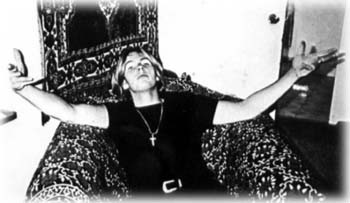
Hot-wired to his crackling nervous system by cheap crank and two hits of low-grade blotter acid, Dustin Harley Clark could feel his demons closing in. It was shortly after 3 o’clock in the morning on Sept. 6 when neighbors in the Roseland district of Santa Rosa first phoned 911 to report a white, blonde-haired male stripping off his clothing, behaving bizarrely, and howling in the night.

Two patrol units from the Sonoma County Sheriff’s Department responded to the calls. Deputy Joe Quinn found Clark, 23, standing in the roadway on Tara Drive. Clark was wild-eyed, stark naked, screaming that he was God, and insisting that he was being chased by the devil. Strung out from a “hard run” of methamphetamines, Clark had complained a couple of days earlier to his sister–at whose house he was staying in the area–that he feared for his sanity. Shortly after midnight, Clark and a friend dropped a couple of hits of LSD.

It took just 20 minutes for Clark’s demons to emerge.

Squaring off on Tara Drive, Quinn ordered Clark to lie on the ground. According to police reports, Clark stopped in front of Quinn’s patrol car, flailing his arms and yelling incoherently. Clark lunged at the deputy then turned and ran. Quinn hopped in his car and gave case, followed closely by a K-9 unit driven by Deputy Dave Smith.

At the intersection of Schlee Way and Tara Drive, Clark stopped and turned to face the deputies. Once again Quinn ordered Clark to lie down. Instead, Clark sat on the pavement, his mind reeling from powerful hallucinatory drugs and adrenaline.

Quinn pulled a canister of pepper spray from his utility belt and ordered Clark to lie down as Smith let his leashed police dog out of the back seat of his patrol car. Clark saw the dog, panicked, shrieked, and pushed himself up off the ground. Quinn discharged the pepper spray, hitting Clark squarely in the face. Clark wiped the hot fluid from his eyes and charged Quinn in a rage, kneeing him in the right thigh.

Naked and drenched in sweat, Clark wiggled from Quinn’s grasp. He charged the police dog and turned again on Quinn, who struck a couple of “glancing blows” to the suspect with a service flashlight, hitting Clark on the right shoulder and left side of the head. Clark broke away and turned to face the deputies again. Smith unleashed his snarling dog, which bit Clark several times.

Finally, Quinn and Smith wrestled Clark to the ground, lying on top of him. Quinn put Clark in an “arm bar” restraint; Smith bent Clark’s legs back in a hog-tie position. Clark fought back violently and then suddenly calmed down. That’s when Quinn noticed that Clark’s face had turned blue as he went into cardiac arrest. Paramedics arrived within moments and attempted to resuscitate Clark, who already had slipped into a coma.

Six hours later, doctors at Memorial Hospital pronounced Clark dead.

Lingering Doubts

The Sheriff’s Department asked the Santa Rosa Police Department to investigate the case, a customary procedure when a law enforcement agency is involved in the death of a suspect. Since Sonoma County Sheriff Mark Ihde also acts as the county coroner, the SRPD contracted with the San Francisco medical examiner to perform the autopsy on Clark’s remains. The conclusion: methamphetamine poisoning.

Case closed.

Yet questions about Clark’s fatal run-in with police linger. Clark’s mother, denied compensation in October in her county claim, has retained Santa Rosa attorney Michael Fiumara to file a wrongful death lawsuit in the case. Though toxicology results show that both speed and LSD were present in Clark’s bloodstream, the circumstances surrounding his death closely fit the profile of those who stand a good chance of dying in custody after struggling with police and being pepper-sprayed.

In California, law enforcement personnel use pepper spray once an hour. Once a month–or in one out of every 600 cases–a person dies after being pepper-sprayed by the police. In most of the cases, the victims are obese (at five-foot-nine and 205 pounds, Clark was slightly heavy for his height), middle-aged, under the influence of speed or cocaine, and engaged in frenzied and often bizarre behavior. Some are experiencing a psychotic episode that has nothing to do with drugs. Often the victim is placed on his stomach and hog-tied by police. In almost every case, the victim has a heart attack. Usually the victim stops breathing just as he begins to calm down.

“We are finding that in a large percentage of these deaths individuals may have a significant amount of drugs in their system–cocaine, methamphetamine, whatever,” says John Crew, American Civil Liberties Union police procedures expert. “But the toxicology reports come back suggesting that the levels [of these drugs] aren’t at a point normally thought to be lethal. These are excited individuals suffering either from mental illness [or from drug-induced psychosis], so police come upon someone acting in a very bizarre fashion–sometimes even violently–and usually either naked or partially disrobed, an indication of increased body temperature often because of the drugs.

“In 100 percent of these cases police use the pepper spray and it doesn’t work.”

Hot Stuff

The active ingredient of pepper spray is oleoresin capsicum, or OC, an oily substance derived from the dried extracts of chili or cayenne pepper. The resin is blended with a water or oil and mixed with some form of alcohol base. It is injected into a canister and dispensed with the help of an inert gas in short bursts in the form of a stream or fog.

When a person is dosed with pepper spray, the eyes swell and close instantly; mucous membranes become inflamed; coughing, choking, or shortness of breath accompany the excruciating pain. It is reportedly much more potent than tear gas or Mace.

It also is a hot item in the growing law enforcement arsenal. Since the mid-’80s, the man most responsible for pitching pepper spray to the police is FBI Special Agent Thomas Ward, ex-chief of chemical weapons training at the FBI Academy in Quantico, Va. He zealously urged federal, state, and local law enforcement agencies to buy the stuff–especially the Cap-Stun brand–assuring them that it is 100 percent safe.

Last February, Ward abruptly resigned from the FBI and pleaded guilty to taking nearly $600,000 in payoffs from the company that made Cap-Stun.

Despite claims that pepper spray is safe, there never has been a comprehensive health study of its effects. The chemical is not regulated by any federal drug or consumer product agency. In California, one of the last states to approve the use of pepper spray, a Cal-EPA Office of Environmental Health Hazard Assessment survey into the possibly lethal effect of pepper spray has succumbed to budget cuts.

Yet, OEHHA Director Carol Henry already had seen enough preliminary data to inform state Attorney General Dan Lungren in August 1993 that her agency was “concerned that in each [in-custody death] incident, untoward reaction to [pepper spray] may be the contributing cause of death, or may have exacerbated underlying conditions such as pre-existing disease or drug use to cause cardiac or respiratory failure.”

Lungren did not heed her warning. Instead, three weeks later, he approved certification of pepper-spray products for civilian use.

No Guidelines

A 1995 ACLU report, “Pepper Spray Update: More Fatalities, More Questions,” examines 26 fatal cases between 1993 and 1995. It notes that state scientists have warned for several years that so little is known about the residual effects of pepper spray that medical examiners may not know what to look for during an autopsy, a real problem since there is no red flag indicating its role in a death.

The major manufacturer of pepper spray for California law enforcement has advised that police use just a single one-second burst of the chemical or no more than two half-second bursts. “Anything more than that, according to the manufacturer, is creating a health hazard,” says Crew.

While the Sonoma County Sheriff’s Department has set guidelines for the use of pepper spray, those guidelines lack any details about the amount of the gas that may be administered. “There’s nothing specific [in the guidelines] about the length or burst,” says Sonoma County Sheriff’s Lt. Dan Dragos, who has provided chemical weapons training to deputies. “No set guidelines. A two- or three-second burst or a three- to five-second burst. … It hinges more on what you’re dealing with.

“If you’re fighting for your life, you may use half a canister.”

It’s impossible to know exactly how much pepper spray Quinn used on Clark, but police records obtained by the Sonoma County Independent show that the blast fired from his canister most likely exceeded the dosage recommended by manufacturers. In an interview with SRPD investigators, Quinn said he decided to use pepper spray because Clark appeared to be high on drugs and the deputy “didn’t want to go physical on him. … It was a good steady shot. It should have incapacitated him, but he just let out a scream, wiped his face, and got up.”

How dangerous is prolonged exposure to pepper spray? “You have people who die after they have been sprayed,” Steven Beazer, president of Advanced Technologies, a manufacturer of pepper spray devices, told the Los Angeles Times in 1995. “Does pepper-spray have a role in some of those deaths? I will say yes. It is going to have an effect.

“These are weapons,” he added. “Clearly this is not a breath freshener or an underarm deodorant.”

Changes Proposed

In San Francisco, where police are at the center of a couple of high-profile in-custody deaths involving pepper spray, District Attorney Terence Hallinan had enough questions about the weapon to ban its use by his investigators.

The ACLU has stopped short of calling for a ban on pepper spray. However, the organization has proposed model policies. For instance, those guidelines recommend that pepper spray not be used on excited, overweight individuals exhibiting signs of possible psychosis or drug abuse; and that officers should not place a subject who has been sprayed on his or her stomach or side for a period longer than needed to apply handcuffs.

“We have called for careful, strict policies controlling how the weapon is used and mandating how a suspect should be handled after pepper spray has been used,” Crew says. “We also are calling for a thorough study on the health ramifications of this weapon–health studies that have not been done. We recognize that it’s a challenge for law enforcement and that these individuals are the most difficult to bring under control.

“On the other hand, from an officer’s safety standpoint, if as we believe there is substantially less of a chance that pepper spray is going to be effective in these kinds of situations, then it’s in the officer’s best interest not to think it’s going to work.”

Reporter Paula Harris contributed to this article.

From the May 15-21, 1997 issue of theSonoma County Independent

This page was designed and created by the Boulevards team.
© 1997 Metrosa, Inc.
Swing Time

Cocktail Notion


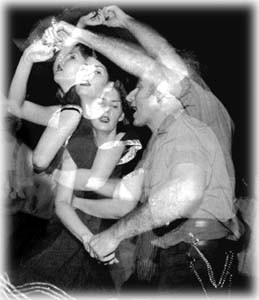
Jitterbugs: These young whippersnappers really cut a rug.

Photo by Chris Gardner


Ballroom dancing, vintage fashions, cocktails– are we becoming civilized again?

By Christian M. Chensvold

THE FEDORA SITS on my head with a supercilious tilt. My shoes are black and white two-tones visible from a block away. A pair of polka-dot suspenders holds up my check trousers. Ruby answers the door, her beaming face framed by bangs cut straight across her brow, her hair cut in a Louise Brooks­styled bob. Her painted lips are a deep luscious red. A vintage dress strewn with flowers hugs her shapely figure, and her dainty purse is covered with beads whose shine has grown dull with the passing of time.

We look happily at each other. We look like our grandparents.

An hour later, my jacket off and sleeves rolled up, we’re on the dance floor stomping out an East Coast swing at the Moonlight Restaurant and Bar in downtown Santa Rosa. Tiny James and the Swing Kings are pounding out their mixture of uptown swing at a blitzkrieg pace.

A pair of pretty young women join us, improvising dance moves and giggling at the roomful of staring eyes. But the spark catches fire, and suddenly the joint is jumpin’. A half dozen more–all in their 20s–crowd themselves into the minuscule dancing space. They appear to have no idea what they’re doing, twirling and spinning to clashing rhythms in a fit of dancing discord. But they’re swing dancing, and if their feet aren’t in the right place, at least their hearts are.

SCIENCE PREACHES that for every action there is an equal and opposite reaction. So after years of barbaric fashions, melody-deprived alt-rock, and the swilling of beer, numerous young people are paving a gilded path back to sartorial elegance, swing music, and that great American institution–the cocktail. From Manhattan nightclubs to Bimbo’s 365 Club, Cafe du Nord, and the Essex Supper Club in San Francisco, everywhere there is a fog bank of cigar smoke, a deluge of martinis, and a stampede of ballroom dancing. Dubbed the “Swing Scene,” “Lounge,” and “Cocktail Culture,” retro is back with a vengeance.

Times change, and for now the pendulum swings.

Ever since Tony Bennett performed on “MTV Unplugged” in 1995, Generation Xers have slowly trickled into stores seeking out music that was once a target of mockery. Swing, says Karl Byrn, music manager at Copperfield’s Annex in Santa Rosa, is “the alternative to alternative. It catches people falling through the cracks. It has a kitschiness to it, and it’s part of a scene, which gives it more appeal than classic jazz.”

Twentysomethings are more likely to buy new bands rehashing the old than Miles Davis, says Byrn. He cites the Squirrel Nut Zippers, who play June 12 at the Luther Burbank Center, as an “immensely popular” example. The North Carolina­based band offers an intense form of danceable jazz played by musicians just out of a 12-step program for punk rockers. Byrn has also noticed a growing interest in tango music, fueled in part by Madonna’s retro role in Evita.

Though several years old in the Bay Area, the swing scene is just getting on its feet in Sonoma County. Dedicated ballroom dancers have always been here, but now what was once seen only in the dance hall can be glimpsed in the nightclub: people engaged in the intimate union of partner dancing.

One by one terpsichore neophytes under 40 are signing up for classes and showing off their moves whenever a jazz or blues band plays a local club.

More tips on swingin’ fashions, dances, and drinks.

JAMES SANDERS, aka Tiny James, really is tiny–at least in years. The 26-year-old Santa Rosa guitarist, vocalist, and songwriter is one of many young whippersnappers fed up with what he sees as the artificiality and insincerity of contemporary music. Sanders believes that most postmodern pop has no soul, and has opted instead to pay homage to such jazzy musical forefathers as Count Basie and Benny Goodman. The Swing Kings play primarily in San Francisco at the Hi-Ball Lounge, Coconut Grove, and other venues where swing sycophants put on the ritz and show off their dance moves, though you can occasionally catch them at the Moonlight or Petaluma’s Mystic Theater. Sanders quietly laments that swing hasn’t caught on as much in the county, citing a lack of familiarity with the music and a shortage of venues as the reason.

After a quick break at the Moonlight, the Swing Kings jump into another set. Sanders’ white shoes kick in the air as he gives his guitar strings a vigorous massage, while trumpet player Kendall Holstein waits patiently for his solo, decked out in a fedora, vest, and pocket watch.

MEANWHILE, over at Santa Rosa’s Finley Hall, the dance floor is bathed in an atmospheric darkness dappled with colored lights and the sparkling scintillations of the silver ball that hangs from the ceiling like a shiny moon. On stage the DJ, a hierophant on a stereo altar, cues the tunes. The whole effect is painfully disco.

The dancing, however, is strictly ballroom. It is the third Friday of the month and about 100 people spanning three generations have gathered for this city-sponsored dance. On the stereo, Dion and the Belmonts are crooning “The Wanderer” while couples follow along with a lively West Coast swing. Dress is stylish but not formal, and there is no drinking. Here it’s dancing for dancing’s sake.

Ruby and I arrive in the middle of a cha-cha and rush to the floor to finish the number. Latin music always seems to create the most excitement at a ballroom dance, as if a warm tropical breeze were wafting from the speakers along with the music.

As a rumba begins to softly throb its Cuban rhythm, 29-year-old Peter Zimmerman sits beside the dance floor watching the action with a curious fascination. Dressed in jeans and a plain cotton pullover, but sporting brown wing-tip shoes, Zimmerman has dropped by with a group of 20-something friends, some of whom can dance. However, Zimmerman is a wallflower: having bought the shoes, he doesn’t know a single step. But he wants to learn–badly. “I think it’s essential for courting a woman,” he says.

“This is a lost art,” he shakes his head. “To lead a woman–wow, that’s a beautiful thing.”


Michael Amsler

Glitter Ball: Ryan Noble and Jessica Capitani wend their way around the floor at the Finley Center’s monthly do.

ALL THIS is a world away from the postmodern nightclub scene, where techno music blares at deafening decibels while the horny and overperfumed writhe to a pornophonic beat. Here dancers have little or no physical contact with each other and neither succeed nor fail at standard steps because, of course, there aren’t any. Instead, men and women bump and grind like isolated molecules in a kind of kinetic solipsism, and the result is chaos.

Some say that once you’ve tasted ballroom, you’ll never go back, but there is a subtle strain of melancholy beneath retro’s return. For a culture to be in the throes of the past presupposes the belief that to take another step forward–to embrace the new millennium–is to fall into an abyss.

And so we stumble backward through the decades as if searching for something we’ve lost, like Orpheus plunging the underworld to recover his beloved Eurydice.

Could American have reached a point where the only sentiment left is nostalgia?

A Zeitgeist haunts the attic of our collective unconscious, where all our old things lie heavy with dust. Dad’s hi-fi is there, along with Sinatra on vinyl. Mom’s prom dress rests in an old trunk, along with pictures of grandma and grandpa when they were courting, dressed to the nines and dancing the jitterbug.

We dust off these old things to amuse ourselves, our sentiments vacillating between irony and fond remembrance.

Cocktail culture has been called a return to the phallic order, the revitalization of rituals that remind us of a time when life was more predictable because men and women knew what was expected of them. The swinging club where a guy in a suit buys a martini for a doll in a dress is romanticized as a social sphere where for a few hours everything is all right in the world. And when the guy leads his doll to the dance floor, the two retreat into a life- and love-affirming sanctuary far from the bombastic invective, the thrust and parry of blame, and the numbing shell-shock of our contemporary gender wars.

It’s after midnight. The night is over, and the music is but a memory. My date and I linger on her doorstep. After an awkward moment I kiss her on the cheek. Then I whistle my way back to the car. She blows me a kiss before closing the front door.

And I laugh when I realize that not only do we look like our grandparents, we are acting like them.

From the May 15-21, 1997 issue of the Sonoma County Independent

This page was designed and created by the Boulevards team.
© 1997 Metrosa, Inc.

Talking Pictures

Cells and CultureLorey SebastianThou Shalt Not: The coveted Courtney Cox and bad-boy Aiden Quinn.An agnostic physician ponders death, love, and 'Commandments' By David TempletonWriter David Templeton takes interesting people to interesting movies in his ongoing quest for the ultimate post-film conversation. This week, he meets up with Yale Professor Dr. Sherwin Nuland to see the offbeat biblical comedy 'Commandments.'AFTER...

Wine Reviews

Triple PlayMichael AmslerTake Me Out to the Ballgame: Belvedere 1995 Chardonnay has a taste of ash that's perfect for that post-game BBQ.Three winners in the cheap-chard leagueBy Steve BjerklieLONG AGO, when tolerance and patience had not yet come into my life--this goes way, way back, to just before George Steinbrenner's unlikely New York Yankees won the World Series last...

Sonoma Valley Shakespearean Festival

Inside OutA Midsummer Night's Dream: Sonoma Valley Shakespearean Fest returns.All the world's a stage in summerBy Gretchen GilesTHE PLAY'S the thing in the soft gloamings of the warming season, and theatergoers come in droves when the stage is built of sweet-smelling fresh planks and the walls are, well, when there are no walls at all. Because, by and large,...

Courthouse Square

Square Deal?Shadow of a Doubt: In the '40s, Alfred Hitchcock used it as a film location. Now Courthouse Square is becoming a political hot potato.Not everyone is sold on the Courthouse Square reunification planBy Paula HarrisBERNIE SCHWARTZ envisions a green haven. A friendly, safe, and accessible downtown park. Maybe something modeled on the homey plazas in Sonoma and Healdsburg,...

Disney and McDonald’s

Hi Ho, Hi Ho, IndeedBy Jim Hightower"Disney Makes Dreams" goes an old advertising pitch for the maker of Cinderella, Snow White, and Fantasia, along with Mickey, Goofy, Pluto, and all those other loveable Disney characters. But for the young workers in Vietnam, Disney is a nightmare, a company far more abusive than the wicked old step-sisters who kept Cinderella...

World Music

Global BeatEvery Picture Tells a Story: Kora master and griot Karunka Suso.Photo by Daniel LaineNorth Bay labels make strong showing in world-music marketBy Greg CahillWHEN PETER BUCK went searching for a hip hook on which to hang his latest side project--Tuatatara's Breaking the Ethers (Epic)--the REM guitarist found the goods in the exotic marimba-driven gamelan sounds of Bali, which...

Joel Simon

On the BorderBy Christopher WeirTHEY DON'T TREAT people like this in San Diego or El Segundo," says a border-town activist in Joel Simon's Endangered Mexico: An Environment on the Edge (Sierra Club Books; $27). "Well, we are human beings too." These human beings, Simon reveals, are the losers in Mexico's dangerous game of environmental roulette. Forced from...

Free Range Chicken

Fowl Play Hunt and Peck: Rocky's birds range free, but they're almost the only ones. Ruffling feathers over labels By Steve Bjerklie PASSED IN 1906 on the heels of the national outrage following publication of Upton Sinclair's The Jungle, the Federal Meat Inspection Act was given a parallel act...

Pepper Spray

Canned HeatDid police pepper spray killDustin Harley Clark?By Greg CahillHot-wired to his crackling nervous system by cheap crank and two hits of low-grade blotter acid, Dustin Harley Clark could feel his demons closing in. It was shortly after 3 o'clock in the morning on Sept. 6 when neighbors in the Roseland district of Santa Rosa first phoned 911 to...

Swing Time

Cocktail NotionJitterbugs: These young whippersnappers really cut a rug.Photo by Chris GardnerBallroom dancing, vintage fashions, cocktails-- are we becoming civilized again?By Christian M. ChensvoldTHE FEDORA SITS on my head with a supercilious tilt. My shoes are black and white two-tones visible from a block away. A pair of polka-dot suspenders holds up my check trousers. Ruby answers the...
11,084FansLike
4,606FollowersFollow
6,928FollowersFollow

