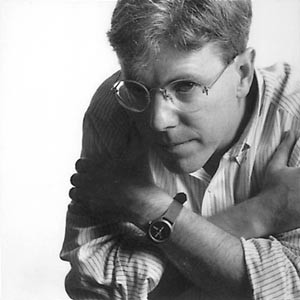
Forest Aid

0

Forest Aid


Do-right Woman: Pop star Bonnie Raitt will rock the Luther Burbank Center.

Photo by John Casado


Rockers rally to save the redwoods

By Greg Cahill

CALL IT A LAST REQUEST. Shortly before her March 2 death from cancer, Earth First! activist Judi Bari–seriously injured, along with fellow activist Darryl Cherney, in a mysterious 1990 car bomb blast–called for 10,000 demonstrators to make the trek this year to the gates of Pacific Lumber headquarters in Humboldt County to demand the preservation of the Headwaters Forest, a 3,000-acre grove of virgin redwoods.

“In order to achieve that goal,” says Cherney, founder and project coordinator for Environmentally Sound Promotions, “we felt that a series of Northern California concerts would help get the word out.”

So far, so good. The announcement last week that pop star Bonnie Raitt, ex­Grateful Dead guitarist Bob Weir and bassist Rob Wasserman, and rocker Graham Nash will perform three shows–including a sold out Sept. 8 concert at the Luther Burbank Center in Santa Rosa–to benefit the Coalition to Save Headwaters Forest has attracted a lot of attention.

This is the second annual Forest Aid concert. Last year, Weir and his Rat Dog band headlined a single show in Eureka. His participation is just the latest in a long-standing commitment to the environment. In the late ’80s, the Grateful Dead worked through the United Nations to raise awareness about endangered South American rain forests. Also Weir authored a 1990 children’s book, Panther Dreams, that describes the plight of indigenous people living in that region.

In the past, Bonnie Raitt, a part-time Mendocino County resident, has performed benefits for the Headwaters Forest coalition. Last year, she was arrested during a demonstration outside Pacific Lumber headquarters in Carlotta. “In a sense, the redwoods are her home ecosystem,” says Cherney.

The main thrust of the concerts is to focus on the lingering threat to the Headwaters grove. A year ago, federal and state negotiators cut a deal with Pacific Lumber to trade the grove for cash and public properties. That tentative deal has fallen by the wayside, as Maxxam–the Pacific Lumber parent company bought by financier Charles Hurwitz with junk bonds–pushes for a larger cash offer. Environmentalists instead support a “debt-for-nature” swap, writing off part of a $1.6 billion debt incurred by Hurwitz in a failed S&L deal in exchange for Headwaters.

Last year, about 8,000 protesters demonstrated their support for that plan. Of those, 1,033 were arrested in the largest single display of non-violent civil disobedience in Northern California history.

“Despite the fact that the company wants to sell, environmentalists want to preserve it, and both Democrats and Republicans support the preservation of the Headwaters Forest, the government has been completely inept at achieving that protection,” says Cherney. “It seems like the only voice that’s going to be heard is that of the people. The more voices we bring to Headwaters, the louder that message will be.”

Tickets are still available for the Forest Aid concerts on Saturday, Sept. 6, at the Sacramento Community Theater, and Sunday, Sept. 7, at the Santa Cruz Civic Auditorium. For tickets, call 546-BASS. For rally information, call 510/835-6303.

From the August 21-27, 1997 issue of the Sonoma County Independent.

© Metro Publishing Inc.

Sweet’s River Grill

0

Sweet ‘n’ Sour

By Steve Bjerklie

SITTING OUTSIDE with good company and good food on a warm evening is one of life’s graces, a definition of dining bliss. And with so much of our weather this summer imported from Saudi Arabia, the number of evenings affording such blissful opportunity is high. At Sweet’s River Grill in downtown Guerneville, a fixture site on Main Street with a pleasant outdoor patio, the downtown tabby enjoys peering down at diners from the restaurant’s roof. Keep your eyes on the cat and your company. They’re better diversions than the disappointing food and poor service.

Or maybe it’s just that the food is adequate. Guerneville’s rebirth as a gay resort town has revitalized downtown to the point where excellent cuisine isn’t required to draw a crowd. Over the “Bear Days” weekend in late July–a truly only-in-California event celebrating the appeal of big, hairy men–the town was jammed, as were the restaurants.

“I felt like a fly,” admitted our diminutive waiter at Sweet’s a couple nights later. “I mean, this one big man came right in here and ate six hamburgers–six big hamburgers!” He pointed wildly, as though he’d seen a flight of UFOs. “Right over there! Six!” Jeez, sorry I missed that.

Sweet’s menu sounds enticing. “Wings from Heaven,” for example, buffalo wings in a “mahogany” ginger sauce served with a Moroccan carrot salad. Feeling nasty? Try heaven’s counter, “Wings from Hell,” which open up possibilities for all kinds of theological discussions because they’re basically just a spicier version of the heaven tray.

We opted for the toasted walnut brie, served with sliced apples, strawberries, and oranges–a catholic approach, to be sure. Except that the walnut crust on the brie was chewy, too thick, and tasted little of walnut, and the slices of baguette toast were so stale as to cause the invocation of Beelzebub.The soup-and-salad course fared only a bit better. A “burgundy beef” soup had a pleasing creaminess, but the beef was stringy and the flavor one-dimensional. On the salad, a tasty creamy vinaigrette dressing couldn’t quite cover a moldy flavor in the lettuce.

Though “Bear Days” are officially over for another couple of years, the Grill’s entrée list remains heavily weighted on the meat side. Steak, ribs, fried chicken, a “barnyard combo” (ribs, chicken), and pasta occupy most offerings. Four basic sandwiches–hamburger, chicken breast, fried chicken, and garden burger–are all available plain or in four variations.

I kept wondering if the six-burger bear had ordered the “Michelangelo” version with melted gorgonzola or the “Smokehouse” with bacon, jack cheese, and barbecue sauce. Possibly the “Russian” with mushrooms and sour cream-horseradish sauce; doubtful the “Monte Rio,” with jack and pico de gallo salsa. Real men don’t eat little roosters.

The day’s special, a shellfish pasta bowl, nicely presented, turned out to be a stew of overcooked penne and clams and mussels that tasted like . . . what?

“They taste old,” my companion finally surmised. Exactly. A musty flavor inhabited the entire bowl.

The fish in the fish-and-chips entrée was supposed to come from fresh red snapper. While the dish was not overbattered or oily, I couldn’t detect the freshness. On the other hand, the plate’s steak fries were delectable–fried to a perfect firmness without loss of the potato’s fluffy inner texture.

Chocolate silk pie for dessert–made on-premises, promised our waiter–was, after the appetizer and entrées, surprisingly excellent, smooth, and light. I could complain about the size of the portion–more bear-effect, I guess: the wedge was as big as an anvil–but appropriate chocolate intake on any given day is such a personal matter.

An adequate, moderately priced wine list offers standards–Fetzer Sundial chardonnay, Kendall-Jackson merlot, etc. Everything, however, is available by both the bottle and glass, a thoughtful touch.

Few resort towns on the scale of Guerneville offer big-city cuisine, so Sweet’s River Grill must be taken in context. The food is, if not memorable, at least satisfying for the most part and filling. But the restaurant must do something about the service, which is inexcusably bad. Our friendly, trying-hard waiter was hampered by real backroom ineptness. The restaurant’s last bottle of the type of wine we ordered got opened and served to someone else. The busboy didn’t notice that he dripped water onto our appetizer from his pitcher. And a bread plate didn’t show up until the entrées were served.

Our total for one large appetizer, salad, soup, two entrées, one dessert, a glass of Listerine-flavored Lost Coast ale, and a bottle of Davis Bynum chardonnay came to $71 with tip. About right for the food and atmosphere, but way too much for the service.

Sweet’s River Grill

16251 Main Street, Guerneville; 869-3383
Hours: Monday through Thursday, 11:30 a.m. to 9:30 p.m.; Friday, Saturday, and Sunday, 10 a.m. to 10:30 p.m.; no reservations
Food: Standard resort-town fare: burgers, sandwiches, seafood-oriented specials, some poorly prepared, some OK
Service: Friendly but undertrained and careless
Ambience: Inside, tiles and blond woods; outside, green plastic; occasional snooping from the roof by Guerneville’s downtown cat
Price: Moderate
Wine list: Serviceable, but a toast for offering all wines by the glass; cheapest–house red and white for $14 a bottle; most expensive–Armida pinot noir, $26
Overall: One and a half stars

From the August 21-27, 1997 issue of the Sonoma County Independent.

© Metro Publishing Inc.

A Midsummer’s Night Dream

0

Dreamy Night


Photo by Betsy Bruno

Bottoms Up: Honey Grace Roberts and Bob Ruiz shine in ‘Midsummer’s Night.’

Shakespeare in the dark a hit

By Daedalus Howell

WHAT HEMPEN HOMESPUNS have we swaggering here . . . ?” asks the deviant sprite Puck. The answer, happily, would be River Repertory Theater company’s outdoor production of William Shakespeare’s A Midsummer’s Night Dream under the deft direction of Michael Tabib.

Shakespeare’s fantastical romantic comedy about love-sick Athenian youth hampered by the meddling of warring preternatural sweethearts, finds a good home at the Monte Rio Amphitheater.

Director Tabib has successfully resisted the infernal Renaissance Faire trappings that most amateur Shakespeare companies use as their default setting.

Instead, Tabib’s production attempts to invoke a decidedly Athenian aesthetic–after all, A Midsummer’s Night Dream is set in Athens. Costume designer Craig Wilkinson rises to the challenge, expertly interpreting Grecian chic with broad strokes from a kaleidoscopic palette borrowed from Walt Disney. Women are resplendent in brightly colored sateen togas and teeming tresses; male actors wade knee-deep in sandal straps and are crowned with garlands.

Though a tad Road Warrior-ish, with his long spider-webbed cape, 18-inch horns, cloven feet, and platoons of fur, Oberon (Jim Loughborough) is a daunting and emblematic spectacle.

With this newly revamped River Repertory company, Tabib has assembled a crackerjack cast of some two dozen performers, with 11-year-old Michael Spector as the impish, gallivanting Robin Goodfellow (aka Puck), stealing much of the spotlight; this kid is a prodigy.

Spector delivers Shakespeare’s lines so fluidly that, at times, he seems to have fallen down the wrong English well (circa 1600) into a wormhole that jettisoned him through time and space to the Monte Rio Amphitheater. A Midsummer Night’s Dream is Spector’s theatrical debut and heralds the arrival of a significant talent.

Also offering a prodigious performance is 15-year-old Honey Grace Roberts as Titania, Queen of the Fairies. The winsome Roberts effortlessly evokes both supernatural regality and the role’s requisite sexual politicking without venturing into the shopworn commedia dell’arte treatment lesser actresses may have given the part.

Roberts’ Titania makes a good foil for the preenings of Robert Michael Ruiz’s well-conceived, vainglorious Bottom. The two milk most of the scenes’ comic potential without forfeiting the writing’s inherent poignancy and are sweetly underscored by the fine acting of Titania’s lovely fairy attendants.

Young Liz Foster-Shane’s portrayal of the scorned lover Hermia is so emotionally vivid that when one’s comprehension of Shakespeare’s frequently cryptogrammic text fails, whole subplots roll off her furrowing brows.

Wendy Cornelius (choreographer, actor, and music director) is this production’s secret weapon. Having studied with modern-dance visionaries Martha Graham, Alvin Ailey, and Merce Cunningham, Cornelius leads the cast in several well-executed dance sequences accentuating the play’s otherworldly scenes.

Audiences are encouraged to bring picnics, their own seating, and warm clothing, as the breeze off the Russian River can get chilly at night.

“Oh weary night, oh long and tedious night”–this most certainly is not.

A Midsummer Night’s Dream plays Aug. 14-15, 22-23, and 28-31 at 8 p.m.; Aug. 24 at 2 p.m. Monte Rio Amphitheater, 9925 Main St. Tickets are $8-$10. 865-2905.

From the August 14-20, 1997 issue of the Sonoma County Independent.

© Metro Publishing Inc.
Missions Amiss

0

Model Behavior


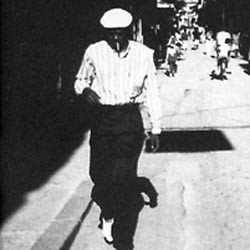
On a Mission: Even in stocks, this enslaved Indian manages a smile.

Photo by Michael Amsler; illustration by David Rickman, courtesy Dover Publications, Inc.


The author wonders: Is it time to burn down the mission?

By David Templeton

IN THE YEAR 1769, beneath the gaze of Father Junipero Serra and under the guns of Spanish soldiers, a great number of stunned, baffled, and recently Christianized Indian laborers began construction on a giant wood and clay structure that was to be their new home. Called Mission San Diego de Alcala–part church, part farm, and part military installation–it was the first of 21 such installations.

Fifty-three years later, the mighty missions stretched all the way to Mission San Francisco de Solano in Sonoma. Catholic missionaries had introduced not only Christianity to the Indians, but smallpox, pneumonia, and venereal disease as well; by 1850 the native populations had been reduced from 30,000 people to a mere 3,000, and the missions–now a potent symbol of cultural contact gone bad–had been abandoned by the padres and lay in ruin.

But that is not the end of the mission story.

Over a century later, the building began again, at a rate never dreamed of by Father Serra. To date, literally millions of the baffling edifices–hundreds of thousands per year–have been obediently built, abandoned, and forgotten as part of a massive state-funded program. Last year alone, an estimated quarter of a million native Californians were forced to build missions, with only the faintest glimmer as to why. The reason?

Try the fourth grade.

MOST ADULTS who received their education in the public schools of California can recall their fourth-grade mission model project. A hard-and-fast tradition from Redding to Chula Vista, the annual building of mission models is as much a part of going to school in this state as are earthquake drills and smog alerts.

No one knows how the tradition began, or why it became so fashionable. The state curriculum–which has ordained fourth grade as the year that students learn the history of California–only says, “Teachers should emphasize the daily lives of the people who occupied the ranchos, missions, presidios, haciendas, and pueblos. Reading literature, making trips to a mission, singing songs . . . will bring this period alive.”

A sensible requirement. The mission era, and its dramatic clash of cultures, is among the most exciting and significant periods in the history of our nation. But what do the students learn about that history by building desk-sized replicas of one of these missions?

“Um,” says recent local fourth-grader Kayleigh McGinn, when asked the same question. “Was I supposed to learn something?” Adds her mother, Georgia McGinn, “We learned we shouldn’t have waited till the last minute. Other than that, the project was pretty much a nightmare.”

“The kids do learn something important,” explains one cynical school district employee from Chino after requesting anonymity. “They learn how to make marshmallows stick together.”

Aw, she’s just being nostalgic, remembering a time when the models were made of simple household items: shoeboxes, corrugated cardboard with glued-on noodles, sugar cubes, and graham crackers stuck together with marshmallows.

Though such low-budget versions still land on the teacher’s desk each year, an increasing number of mission models have gone upscale.

MADE OF not-inexpensive foam coreboard, painted with special coatings made to simulate the look of whitewash over adobe, with prefabricated sheets of plastic roofing that resemble the terra-cotta shingles of the missions, these models make the simple, quaint, old graham-cracker mission look like underfed distant cousins.

Not surprisingly, whole industries have sprung up to support the yearly mission-building tradition. Create A Mission–a subsidiary of the cryptically named P.C.F. & C. in Modesto–has come up with an entire line of miniature wagon wheels, mission bells, brooms, saddles, and crucifixes that lend an air of miniature realism to any kid’s project for “only” $1.99 per item.

A number of cardboard, punch-out-and-assemble pattern books are available, with prices ranging from $5.99 to $15. Canyon Foam Design in Ontario has even trademarked the term California Mission Kit as the name of its prefab styrofoam missions, available in the exact shapes of all 21 layouts for only $32.99.

According to Isabel Martinez, manager of Petaluma’s All Model Supply International, the average mission model can run up to $75. “I always know when it’s mission time,” she says. “The store is suddenly full of frantic parents and kids wanting to know how to make bushes and realistic roofing.” Asked what her own son, who recently completed his own model–in lieu of writing a report–had learned about the significance of his mission on the history of California, she said, “Honestly? Not one darn thing. No. That’s not true. He learned he can start something and finish it. But history? Not a thing.”

At this point it would appear that the educational value of this ritual of the mission model –assuming it ever was an effective tool for teaching history to children–has diminished so much over the years that it now exists mainly to support the mission-model industries. Some teachers now refuse to assign them, preferring to engage their students with other, more time-consuming methods.

Jim Silverman of the California History Project encourages teachers to have students make a quick study of the architectural facts of the missions, then choose a single mission to build as a class. Meanwhile, the classroom is transformed into a politically correct mission environment as the children take on the roles of the Indians, the padres, the soldiers, etc., and act out the culture clash with improvisational theater.

“Model building is fine. Anything you use to get their attention is fine,” says author Greg Sarris, a professor of literature at UCLA and the leader of the Coast Miwoks. “As long as you use it as an entrance into your students’ minds. Do you ask the students to imagine the missions being built by the Indians, and to imagine its effect on them? Do you ask them to examine the motives of the padres and all the other players?

“After establishing the mission period as an example of destructive culture contact, do you ask them to imagine how it might have occurred differently, with each culture giving to the other, instead of one choosing simply to dominate?

“That, I think, is what’s important.”

It is clearly time to rethink the mission-model tradition. But it may be too soon to trash the whole idea along with the countless dumpster-bound models produced each year. At any rate, it seems obvious that the powerful history of the mission era cannot be made to seem exciting merely by forcing a child to assemble a model according to some photocopied diagram.

But perhaps by relating the true story–with all of the riveting, complicated, philosophically complex, and undeniably bloody details–the annual building of a little model might indeed become an experience that fourth graders will never forget.

From the August 14-20, 1997 issue of the Sonoma County Independent.

© Metro Publishing Inc.

Chef Marcus Samuelsson

0

Hot Stuff


Man with a Plan: Chef Marcus Samuelsson mapped out his road to success.


Top black chefs get cooking

By Gretchen Giles

PATRICK CLARK is one. A nationally known chef, Clark turned down a job few could refuse: cooking in the kitchen of that building known simply as the White House. The reason? New York’s renowned Tavern on the Green restaurant had made him a better offer.

Marcus Samuelsson is also one. Orphaned at the age of 3 when a tuberculosis epidemic swept through his Ethiopian homeland, Samuelsson and his younger sister were adopted into a Swedish home. At age 26, Samuelsson is now the executive chef and co-owner of Manhattan’s Aquavit restaurant, a three-star establishment that serves Scandinavian food and is known as one of the top 10 restaurants in the city.

What least concerns these professionals is some commonality of skin tone. What they definitely share is the distinction of being among the most respected chefs in the country.

Santa Rosa chef Bea Beasley gives a short laugh. “For 400 years,” she says, “blacks have been cooking. It’s just now in the ’90s that we’ve started hearing about these chefs and they’ve started to get key positions in places other than in hotels and country clubs, which is historically where they’ve been tucked away.”

As they have for the past three years, the 100 Black Men chapter of Sonoma County honors top black chefs–such as past winners Clark and Beasley–with a dinner and auction to raise funds for its scholarship and mentorship campaigns. Honoring Samuelsson as well as Capistrano Depot restaurant chef/owner Dennis Burrage and Wayne Gibson of Rhode Island’s Castle Hill Inn, this year’s dinner is slated for Aug. 23.

More about 100 Black Men.

AFTER THREE ROUNDS of phone tag with a publicist, one aborted call to New York (“Chef is not taking calls at this time”), and a rescheduled appointment, Chef Samuelsson finally has time to talk. Nominated this year for a prestigious James Beard award, Samuelsson is as hot as a searing pan these days, and the screening surrounding him reminds the reporter of trying to secure an interview with a rock star. He normally does four such media events a week.

Which only makes sense, because in today’s restaurant scene the personality behind the stove is almost as important as the food produced.

“I look into other entertainers very often to get inspiration,” Samuelsson accedes, his English superbly punctuated by a slight Scandinavian accent. “I’m interested in how they keep ahold of the whole PR machinery, and what made someone like Michael Jordan [go] from being a basketball player into an icon.

“In America, it’s suddenly hip to be a chef,” he says. “We’ve gone from the hospitality business to being hospitality/entertaining. It started with theme restaurants. Even fine dining rooms in a restaurants such as ours–we now have to think about four elements to being a nice dining experience.

“What the Hard Rock Cafe has,” he says, citing that franchise as an example, “is beer, burgers, music, and high-tech decor. What we have is four different elements: we have to have service, food, decor, and entertainment. In Europe, eating has always been about food, maybe wine. If you can get the two together, great. If the service clicks, that’s three out of four. But now here in America, the revolution is that you have to have a tight concept. That’s the only way to survive in a competitive society.

“Now, everything is a story,” he continues. “Chefs have bios. There’s nothing that is bad about it, it’s great. But it’s not just about being a chef and cooking, you’ve got to spread the word, and be a personality. I think that’s fantastic. And Americans are friendly, they’re the nicest people in the world. I mean, in Europe, no one would have the guts to come up and say ‘I read your story, and I thought that it was fantastic.’ That’s when you get into the realm of entertaining. If you can’t pick up on that and answer their questions, then I don’t think that you belong in this business.”

Young, brash, and determined to succeed, Samuelsson decided upon a career in the kitchen when he was 16, fed by years at his grandmother’s side learning the Northern arts of preparing seafood and game, as well as pickling and preserving. Together, he and his father mapped out a plan as strenuously ambitious as would be followed by an aspiring doctor or attorney.

“Everything that I do is a reflection on my parents,” Samuelsson says straightforwardly. Culinary study in Switzerland was chosen to force the young man to learn to speak German and because the rigors of the program determined that if he didn’t shave, iron his own clothes, and arrive exactly on time for each lesson, he would be expelled.

He then studied in Austria to learn pastries, and in France for the language and classical technique. Three years of cooking on a Swedish luxury liner consolidated his skills. And when his mentor at Aquavit died suddenly, Samuelsson suddenly found himself, at the tender age of 25, as executive chef.

“I don’t like to use the word never,” he says. “Anything is possible. As a person, I’m all about seeing how far I can take something, how far I can push my talents, how far I can take my staff with me. Five years ago, my goal was to be an executive chef. I’m doing that now, but maybe now my goal is to be a global chef or how I can help other people [whom]I see have talent. Now that we’re a three-star restaurant, of course my goal is to be a four-star restaurant.”

While Samuelsson is quick to point out that he is honored to be tapped by the 100 Black Men for the black chef award, he stints at terminology.

“I just don’t like the term ‘black chef.’ I’m a chef who happens to be black, and I think that we focus too much on color. I’m a great talent and whether I’m white, black, or Asian, my talent would come out. And I think that it’s such an old, tired topic to talk about. I just don’t have time for it.

“But hey,” he says, “there are a lot of young African American chefs, and a lot of women–not enough, but with me being positive and kicking ass, I think that a lot of people [will] get motivated, and a lot of people [can] come and join me.”

The 1997 America’s Top Black Chef Awards cooks on Saturday, Aug. 23, from 5:30 p.m. Sonoma Coast Wine Center (formerly the Chateau de Baun), 5007 Fulton Road, Santa Rosa. Tickets are $150. For reservations, call 996-6492.

From the August 14-20, 1997 issue of the Sonoma County Independent.

© Metro Publishing Inc.

Sonoma Valley Film Festival

0

Feeling Festive


Dennis Ziemienski


A new film festival is added to county

By Gretchen Giles

THERE SEEMS TO BE some law governing the direct proportion of big-budget bloaters being released on an unsuspecting moviegoing public to the amount of innovative film festivals acting to offset that bloatage.

For example, the Wine Country Film Festival has just completed a successful four-week, two-county run, and the Mill Valley Film Festival–which last year screened two of its films in Petaluma–is set to celebrate its 20th year.

And take the Sonoma Valley Film Festival. Haven’t heard of it? That’s because this is its first year, and what a year this promises to be.

Chaired by BASS Ticketron president Jerry Seltzer, and with an advisory board comprised of such marquee names as director Francis Ford Coppola, actors Danny Glover and Mare Winningham, comedian Tommy Smothers, audiophile Bernie Krause, and filmmaker John Lasseter, the Sonoma Valley Film Festival–organized to flare up Oct. 17-19–promises to stay in lights for some time to come.

Organized partly as a benefit for the venerable Sebastiani Theatre, this festival also bolsters the effort to underwrite the ambitious Sister Cities program instituted nationally under the Eisenhower administration and implemented locally in 1987, when Sonoma got sororal with cities in Italy, the Ukraine, and Mexico.

Screening all films at the 63-year-old Sebastiani, the Sonoma Valley Film Festival kicks off on Friday, Oct. 17, with a blast from the past, reinventing the ’50s as well as perhaps only a venture that involves Coppola could.

With plans to take over the Plaza area across from the Sebastiani, festival organizers will host a hot-rod car show, a barbecue dinner with food of the era (“Jell-O molds?,” we inquire. Publicity chair Katherine Krause just laughs), a sock hop in the middle of the street, and of course, actual films being shown in the theater.

Saturday opens with the video Just Kids, a project undertaken by Tony Barbera of Barbera Film Works, a truly by-, for-, and with-kids effort. Featuring the work of local children who auditioned to write, produce, act in, and provide costuming and sets for the short film, Just Kids is locally filmed and will screen in conjunction with a behind-the-scenes film detailing their efforts.

Other plans for Saturday morning include jugglers, magic and musical events, and even valet parking for those youngsters who arrive pedaling their own two- (or three-) wheelers.

Saturday proper features a directors’ panel discussion on the arts of filmmaking and the FX particulars of special effects, with movies screening all day. Saturday night is a benefit gala with a dinner dance at the historic Sonoma-Solano Mission aimed at re-creating the platinum-blonde glory days of early Hollywood.

Showing that night is a rarity, a film produced solely for a film festival. With the cash backing of festival chairman Seltzer and others, writer, filmmaker, and actor William Richert is producing his version of Dumas’ classic The Man in the Iron Mask. Begun filming this summer, Iron Mask has 55 speaking parts and yet is being made on a $300,000 shoestring budget. The actors and crew are helping back this inexpensive project in hopes of recouping a substantial profit after its festival debut.

Sunday is the festival’s finale, with screenings all day. Films are still being chosen, and event producers are yet attending other festivals to glean choices.

Celebrities are promised, but Krause demurs when pressed to name names. Those who wish their own name in lights may opt for the softened lighting the Sebastiani shines before the films, as individual chairs may be “bought” for refurbishment, the donor’s name plaqued onto the seat afterwards.

“This event,” says Krause with satisfaction, “involves the whole community directly.”

For details on the Sonoma Valley Film Festival, call 939-0306 or 939-2784.

From the August 14-20, 1997 issue of the Sonoma County Independent.

© Metro Publishing Inc.
Junior High Hell

0

Teen Terror


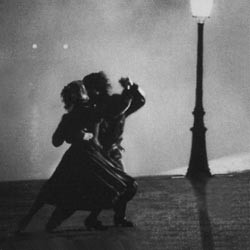
Blur: After the relative calm of elementary school, junior high can present a confusing range of experiences.

Hazing. Harassment. Guns on campus. Welcome to the strange, stressful world of junior high school. What’s a poor kid to do?

By Paula Harris

JUNIOR HIGH. Two simple words that can strike terror into the heart of an elementary school student–and parents. It’s the first day of school at a typical junior high, and the scene is feverish. Some students stride with confidence, but others hang back uncertainly in classroom doorways, clutching their schoolbags. Others dash blindly like beheaded chickens, in a lost panic, searching for the correct classroom. A few cling to mournful-faced parents in the parking lot, their stomachs swirling with butterflies.

Feeling lost, scared, and ignorant, parted from longtime friends who have been assigned different classes, they undergo trauma that can manifest itself in tears, sickness, and anxiety. New students find they must shift from the familiar and protected nucleus of elementary school into the “big leagues” of a sprawling junior high campus filled with both promise and peril.

That can be coupled with sudden increased responsibility and independence–carrying money, taking care of lunches, preparing gym kits, taking on more homework, changing classrooms, and coping with new teachers–all at a time when kids are dealing with internal and external biological changes.

It can be overwhelming.”Going from elementary school to junior high is one of the biggest transitions there is, even more than going from high school to college,” says Sonoma County Schools Superintendent Tom Crawford. “And the problem is as significant for parents as for students.”

According to Crawford, who was an elementary school principal for 18 years, parents are often loath to let their vulnerable children leave a perceived “safe” environment for a more hostile setting. “Too often, there are so many rumors about junior high–how big and dangerous and how bad the eighth graders are,” explains Crawford. “Parents see it as their child going into a big new world, their baby going into an unprotected environment.”

Still, Crawford adds that a lot of older students want to put the word out to new students that “you better walk softly, or you’ll be in trouble.”


Photo by Eric Reed, courtesy of the Argus Courier

Helping hand: Learn to know the warning signs about classroom stress.

AT JUNIOR HIGH, students may encounter for the first time in their young lives a panoply of real-world problems, everything from sexual harassment to gang violence. Crawford admits that current issues, such as gangs, are serious concerns. “Our society in general is more prone to violence,” Crawford says. “Junior high is a reflection of the community.”

Barbara, a public school instructional aide, says her family experienced teen hostility last year when her soft-spoken, gentle-mannered 12-year-old son became a student at Petaluma Junior High School. “My son was a happy McNear Elementary School student, the top dog in a secure, insular environment,” she explains. “Then, on the first day of junior high school, his status plummeted to the lowest place in a pecking order that is established by preying on the new kids.”

His scary experiences included being smacked and pushed into lockers by a group of “skinhead-type eighth graders,” says Barbara. “Suddenly there was physical confrontation and a level of intimidation which was invisible, but something he could rely on every day.”

While this was going on at school, Barbara says, her son would clam up when he came home. When prompted, however, he would describe the incidents “with little quivering smiles” and try to tell his mom it “wasn’t so bad.”

Within days of starting the new school, the youth became the target of an extortion attempt by a group of 14-year-olds. “A favorite hat was stolen from my son’s backpack. Later, a boy approached him threateningly and said, ‘Pay me $5 and get your hat back or get beaten up,'” Barbara recalls.

It turned out that the intermediary kid also was under threat of being roughed up if he didn’t secure the money. “There was a chain of intimidation,” marvels an astonished Barbara. “It’s like there are these Mafia organizations within junior high.”

Though her son, like many youths, didn’t want to talk about the problem, Barbara says the boy’s “numbed-out,” expressionless face and sudden predatory behavior toward his younger sister clued her in that something was wrong.

“It’s like sexual abuse cases: The children don’t speak directly about having someone hurt them–you have to tune into their behavior, their coping mechanisms, and whether they are lashing out,” says Barbara. Eventually her family solved the problem by discreetly going to school administrators, though she warns protective parents not to go charging into the school office, because that will only brand and humiliate the child.

While boys are picked on physically in junior high, the pattern with girls is that they are intellectually stymied, say some experts. “In junior high, a boy’s status becomes clear, but girls discover their status and begin to go downhill,” says Linda Purrington, mother of a 14-year-old daughter and a member of the Petaluma-based Parents for Title IX, a group that advocates for gender equality in public schools.

“If this happens, girls never recover ground. “

Trish Hallenbeck, a local marriage, family, and child counselor, and teacher of a “Parenting in the ’90s” course, agrees. “All of a sudden girls are shut down intellectually. For example, research has shown girls aren’t called on [as often as boys] in math and science classes. They’re derailed, or can be.”

Hallenbeck says girls who were feeling terrific about themselves in sixth grade suddenly become self-conscious and their self-esteem plunges. According to Cheyenne Purrington, 14, who attended Twin Hills Union School in Sebastopol, one friend found the transition so hard to deal with, she eventually developed anorexia. “Now she’s being home schooled,” says Cheyenne.

“Junior High is a big step, if you’re secure and you know who you are and what you want, you really come out well. But if you get in trouble, you drop back and your grades fail,” she adds

Parents must make sure girls are getting all the classes they need, Hallenbeck adds, and parents of all kids should be aware of the necessary requirements to get into state colleges.”

ACCORDING TO EDUCATORS, how students fare at the junior high level can make or break their futures. “If the child has an academically disastrous junior high experience, in most cases recovery is not good,” says Superintendent Crawford. “The more responsible students fare better than those who need more structure.” He adds that this new responsibility comes at an especially difficult time of life when a student is more apt to be worried about what he or she wore yesterday than about what’s on today’s test. While it’s a healthy development for junior high students to begin to exert their individuality and spread their wings, educators agree that parents need to be just as involved with their kids during adolescent and preadolescent years.

“Knowing where your child is, knowing whom they’re involved with at school, knowing the teachers and what the homework assignments are is so valuable,” says Crawford. “Some areas need to be addressed–these kids are neither fish nor fowl; they are searching socially for their identity. They don’t want their parents looking over their shoulder, but it’s just as or more important for parents to be actively involved.”

Hallenbeck echoes that sentiment: “It would be naive of any parent to think their [junior high­aged] child doesn’t have at least some working knowledge of drugs and not to know that the age for having sex is now down to 13.”

She advises parents to help kids become resilient and let them try to solve their own problems first, but to know when to step in if need be. “Keep communication open–children need a strong supportive home environment, as we all do when undergoing huge changes,” she says. “But don’t let lesser issues upset you. Sporting green hair isn’t the end of the world; starting to use drugs could be.”

Many schools prepare ahead of time to make the transition run more smoothly with such activities as principal/counselor visits to elementary schools, student shadow sessions–in which elementary students follow junior high students for a day, then report back–and pre-class orientation sessions.

“It’s such an important time,” says Hallenbeck. “I often think, if kids can get themselves through junior high, they can get themselves through life.”

From the August 14-20, 1997 issue of the Sonoma County Independent.

© Metro Publishing Inc.
Commemorative Quarters

0

Drawn and Quartered

By Mad Dog

There is something about being an elected government official that gives a person the uncontrollable urge to mess around with our money. Maybe it is a part of the job description. You know, right after “Must like to argue with colleagues, eat free lunches with lobbyists who want to make fried pork rinds the new national symbol, and take money from anyone who is breathing (and a few who aren’t).”

I suspect it is a matter of exerting their influence. Like climbing mountains, sailing solo across the Atlantic, and sitting through a whole Chris Farley movie, people do it simply because they can. Face it, if you knew you could raise taxes, increase spending, finance the construction of a snail darter euthanasia center where 2,000 year-old trees once stood, and change the look of the money we wish we had more of, don’t you think you would?

Well, Congress does all this and less. Not content with slowly making our paper money look like the Reader’s Digest Enlarged Type currency of the world, now they’re thinking about turning our quarters into trading cards. That’s right. Representative Michael Castle, chairman of the House Banking monetary policy subcommittee (motto: “If we had anything better to do, don’t you think we’d be doing it?”), is pushing an idea to mint a series of quarters commemorating the fifty states in the hopes that–and I quote from an Associated Press story here, “Kids will scramble to look at the coins. For $12.50 they can collect them all.”

Like many kids, I once collected coins. I also collected stamps, baseball cards, bra and girdle ads from the New York Times Sunday magazine section, and broken arms, but that doesn’t mean I’d recommend these as hobbies either. There were four blue fold-out albums, one for pennies, one for nickels, one for dimes, and one for quarters. I spent hours that first day, searching through the family’s change for coins with different years and marks of the mints that made them, carefully putting my finds in the appropriate holes. The next day I woke up, yanked the coins out of the albums, and bought all the Twinkies and Cokes I could. Coin collecting can be a very rewarding experience.

Apparently Representative Castle thinks these new quarters would be a good way to honor the different states. He plans on having the U.S. Mint (motto: “We make more money than you do.”) issue five designs a year. At that rate it would take ten years to honor all the states. Longer if Puerto Rico gains statehood. Less if Montana secedes. That’s if anyone notices.

It would be up to each state to submit their proposed design. George Washington would stay on the front but the American eagle on the back would be replaced by, well, whatever the state thought would best represent it. The last time they put something different on the back of a quarter was during the bicentennial when they slapped a Kodak ad on it. Just kidding. Actually it was a colonial drummer and it was paid for by the Colonial Williamsburg Foundation.

Already the states are thinking about what they want on their quarter. The speaker of the House in West Virginia thinks the state seal would be appropriate and predicts they might spend weeks debating it. Imagine that! Jack McEneny, a New York Assemblyman, thinks the Statue of Liberty or Niagra Falls might work for his state. And the Chicago Tribune has already proposed that Michael Jordan be on theirs. Really.

Although each state would submit their suggested design–and two (count ’em, 2!) federal panels would have to approve it–there are no guidelines at this point for what can and can’t be on the quarter. Just think, Maine could put a picture of their state capital on theirs–if anyone remembers what it is. New Jersey could have their motto, “The Garden State”, on theirs along with a map of the Jersey Turnpike. Nebraska could put an ear of corn on their quarter, Nevada could opt for an image of Evander Holyfield’s ear, and Rhode Island, well, they could put a life-size map on theirs.

While the people who are pushing this idea can give us all the reasons they want for putting out these quarters–it will teach kids about history, it is a way to instill state pride, and it is something more interesting to talk about in Congress than who’s being indicted today–the truth is it is just another way for the government to make money. Tired of the old standbys like taxes, national park entrance fees, and FCC bake sales, they figure they stand to make as much as $5 billion dollars by putting out these limited edition collector’s quarters.

The Treasury Department (motto: “Guarding your money because we have it all.”) figures that since it only costs a few cents to make a quarter, every time someone stashes a set in their sock drawer the deficit will be reduced faster than Newt Gingrich’s waistline. If this plan works, maybe we can expand it to include American cities. Imagine how much money the government will make each time someone hordes a set of those! Anyone want to trade two Detroits for one San Francisco? I didn’t think so.

Web exclusive to the August 14-20, 1997 issue of the Sonoma County Independent.

© Metro Publishing Inc.
The Boneshakers

0

Rock Hard


Theo Fridiziius

Dynamic Duo: Singer Sweet Pea Atkinson and guitarist Randy Jacobs.

Boneshakers ready to rattle the Mystic

By Greg Cahill

OKAY, so the Boneshakers aren’t a household name, but rest assured that this hard-rockin’ R&B band’s upcoming show at the Mystic Theater in Petaluma probably will stand as a benchmark on the local club scene this year.

How good are these guys? Let’s just say that few musicians have the courage even to attempt to record an audacious cover of soul brother No. 1 James Brown’s “Cold Sweat,” complete with visceral funk grooves and mind-numbing Hendrix-esque guitar lines, all wrung through the funk filter to reshape this soul classic into something that is distinctly their own as the Boneshakers did on their 1996 debut Book of Spells (Virgin/Pointblank).

Sculpted around the creative core of guitarist Randy Jacobs and vocalist Sweet Pea Atkinson–both alumni of the eclectic pop band Was (Not Was)–the Boneshakers deliver a beguiling bitch’s brew of soul sorcery.

For some, it’s almost unsettling because, hey, African Americans aren’t really supposed to play rock, right? “I feel a lot of different times that people are almost shocked that I’m a rocker,” admits Jacobs, 40, during a phone interview. “I mean, the band is an R&B rock band–like the old Bar-kays or Rick James or Prince. It’s a hard thing to pull off, and sometimes people almost have to see it to understand what it is.

“Even now, when they see Sweet Pea walk on stage in his hat and silk suits, they think, ‘Oh, Bobby Blue Bland,’ but when you hear the music, it’s a lot more modern than that.”

You could say that rock is very much in Jacobs’, ah, bones. Growing up in Detroit, he started playing guitar at age 13. “I used to put my Fender super-reverb amp and Sears guitar in a little red wagon to go play around the corner,” he recalls with an infectious laugh that punctuates much of his conversation. “Older guys would stop me and ask, ‘Hey, can you really play that thing?’ And I’d set up and show them.

“That’s how I got a lot of my first gigs.”

It wasn’t long before he’d left those childish pursuits behind. In the early ’70s, the Motor City was fertile musical ground, ranging from the gonzo guitar rock of proto-headbanger Ted Nugent to the rockin’ soul of singer Mitch Ryder. “It was fairly diverse,” says Jacobs, whose stinging guitar licks signify his Detroit roots. “When you played at a fraternity or a sorority on one of the local campuses, you’d play ‘In-A-Gadda-Da-Vida’ by Iron Butterfly, but then you might also play ‘Chocolate Buttermilk’ by Kool and the Gang.

“I had to play a little bit of everything.”

It wasn’t long before Jacobs earned a reputation as an ace session guitarist. Unfortunately, that led to some fairly forgettable gigs. For instance, he backed Detroit boxer Tommy Hearns on a dreadful take on Queen’s “We Are the Champions”–Hearns lost to champ Sugar Ray Leonard. It sparked a burning desire to front his own band.

In 1981, he met Atkinson when they both began recording with Don Fagenson and David Weiss, the studio wizards behind Was (Not Was). “We hit it off right away,” Jacobs says of Atkinson. “I think we just shared musical tastes and styles.”

During his tenure with Was (Not Was), Jacobs honed his songwriting talents, co-writing the band’s only Top 10 hit, 1987’s novelty tune “Walk the Dinosaur,” a playful dance song that started out as a lament about nuclear Armageddon.

Four years later, the band split up. Atkinson and the other Was (Not Was) singers inked a deal with Fagenson’s MCA-distributed label. Jacobs joined John Butcher’s Axis and toured with Australian rocker Paul Kelley. “I learned a lot from Paul and that made me all the more want a band of my own,” he says, “because I had spent too much time just collecting a paycheck.”

He returned to the States and backed everyone from rapper Coolio to pop star Elton John, from punker Iggy Pop to Yemenite dance hall queen Ofra Haza. In 1995, Jacobs and Atkinson reunited, blending groove-heavy R&B and hard-rock riffs. The next year, Fagenson–who has produced acclaimed albums for Bonnie Raitt, Bob Dylan, and Willie Nelson–left to produce the Rolling Stones, leaving his home studio to Jacobs and Atkinson to work on Book of Spells.

For Jacobs, the Boneshakers are a dream come true. “This is a great band–no guys showing up late or unprepared,” he enthuses. “They all care; I’ve cut them in for a piece of the album, so that they have a vested interest because I want them to feel like they’re working for themselves, too. If there’s enough money to be made, fine, if not, hey, we weren’t gonna make any anyway.

“But it’s good–it’s a really fresh feeling. Sometimes when we’re playing, I just get chills because it’s so funky and it’s so hard.”

The Boneshakers perform Friday, Aug. 15, at 9 p.m. at the Mystic Theater, 21 Petaluma Blvd. N., Petaluma. Tickets are $3. Call 765-6665 for details.

From the August 14-20, 1997 issue of the Sonoma County Independent.

© Metro Publishing Inc.

California Art

0

Art History


Golden State: The work of painter Millard Sheets, such as “Burns Bros., 1936,” above, documents California as it was.

“California Scenes” exhibit paints the state

By Gretchen Giles

SURELY THERE ARE MANY of us left who remember those times, in the 1930s and ’40s, when California was still an unmolested land of yellow hills, green oaks, and golden promise. The Depression was bending the nation at the knees, but California remained relatively untested, booming still with land developers, timber harvesters, farmers, speculators, filmmakers, and the tidal bounties of the ocean.

That time is not lost for those with memories or life too short to recall it, captured yet in the paintings of the era. “California Scenes,” an exhibit of some of these works opening Aug. 21 at the Sebastopol Center for the Arts, evokes that decade before the Second World War when young painters such as Millard Sheets armed themselves simply with a set of watercolors and an eye for the land.

Curated by Sheets’ son David Stary-Sheets, a Laguna Beach gallery owner who formerly had a gallery in Gualala, “California Scenes” features the work of Sheets and 26 contemporaries. After leaving Sebastopol, the exhibit will travel to the Orange County Museum of Art and the Ventura Museum of History and Art, not dismantling back into the collectors’ homes from which it was culled until early next summer.

“I think that the important thing from the standpoint of a show like this is that [the artists] are portraying a period of time in history. They are a commentary on that time, and in relationship to that time. It was two of the roughest decades that this country’s ever been through,” says Stary-Sheets by phone from his Southern California gallery.

“They portrayed it in the sense of how they lived it, and luckily for Californians, it wasn’t so bad as the rest of the country, so there’s an optimistic quality to the works.

“Art is as important in describing historical events as all of the articles in all of the papers of all time,” he continues. “For centuries, art was the communicative force, and now it’s TV and radio and newspapers, which I think are very important, but we’ve lost the sense of the importance of communication through the arts.”

Communicating is paramount to the works shown in “California Scenes.”

“They were early American impressionists,” Stary-Sheets says of the artists. “They were painters who were painting real life, and what was happening in city streets and the construction of buildings and those kinds of views were much more interesting to this young group of artists.

“Now, it wasn’t just in California where the idea of the American scene was being recorded,” says Stary-Sheets, who is an expert on this era. “It was a national movement. It just happened that in California there was this absolute fascination with watercolors.”

Long considered useful for sketching, for containing quick ideas, and for grading out color concepts, watercolors are often the sneered-at sister of the painting media. For Sheets and his contemporaries, they were pure magic.

According to Stary-Sheets, the work of his father–who was also a renowned architect, known for his murals and for the brilliance found in his designs for over 40 Home Savings and Loans buildings statewide–“brought watercolor to national recognition as a finished form of art. When I say that, I’m not ignoring the fact that [painter] Winslow Homer had done that almost a century before, but he was an individual who only served himself and his art; he didn’t cause watercolor to be accepted nationally.

“Millard and his contemporaries brought watercolor to the masses,” says Stary-Sheets, who refers to his father formally in conversation as ‘Millard Sheets.’

More masses may become familiar with these watercolors if a plan to house a permanent collection of Sheets’ work is successful. A donor stands poised to bestow some 55 of the painter’s works on the center if matching funds to build a separate housing for them can be raised. Inspired in part by Tony Sheets, Millard’s Sebastopol-based son, and an artist who sits on the center’s board, this endowment could prove very significant to the center and to the county as a whole.

IRONICALLY, Sheets is best known for his oil paintings, in which medium he painted a yearly exhibit; the watercolors generally languish in drawers. “His watercolors are in every museum in the country; you just never get to see them,” says Stary-Sheets shortly.

Not slid away, however, are his wartime works, paintings done in Burma depicting the brutality of the war and the terrific injustices of life, such as children starving outside of restaurants while rich people dined richly. They are on permanent display at the Department of Defense in Washington, D.C.

“It’s probably going to be recognized as one of his most important contributions,” says Stary-Sheets, “but it’s very tough stuff. And the pictures that I’ve picked for the exhibit in Sebastopol are not the starvation pictures. I want people to come in and enjoy the show and gain knowledge, but not turn people’s stomachs.”

Millard Sheets lived for almost 82 years, not an inconsiderable time. “He had a heckuva a life,” says his son. “I wish that he was still here, but he was pretty well satisfied that he had met the challenge.”

And like his life, his work lives on. “Properly cared for, just like any work of art, watercolor is as durable as time. After all,” says Stary-Sheets, referring to tomb and cave paintings, “the oldest paintings known to man are watercolors.”

California Scenes” shows Aug. 21 through Sept. 28 at the Sebastopol Center for the Arts. A public reception is planned for Thursday, Aug. 21, from 6 to 7:30 p.m. Tony Sheets gives a special presentation on Thursday, Sept. 4, at 7 p.m. 6821 Laguna Park Way. 829-4797.

From the August 14-20, 1997 issue of the Sonoma County Independent.

© Metro Publishing Inc.
Forest Aid

Forest AidDo-right Woman: Pop star Bonnie Raitt will rock the Luther Burbank Center.Photo by John CasadoRockers rally to save the redwoodsBy Greg CahillCALL IT A LAST REQUEST. Shortly before her March 2 death from cancer, Earth First! activist Judi Bari--seriously injured, along with fellow activist Darryl Cherney, in a mysterious 1990 car bomb blast--called for 10,000 demonstrators to make...

Sweet’s River Grill

Sweet 'n' SourBy Steve BjerklieSITTING OUTSIDE with good company and good food on a warm evening is one of life's graces, a definition of dining bliss. And with so much of our weather this summer imported from Saudi Arabia, the number of evenings affording such blissful opportunity is high. At Sweet's River Grill in downtown Guerneville, a fixture site...

A Midsummer’s Night Dream

Dreamy Night Photo by Betsy BrunoBottoms Up: Honey Grace Roberts and Bob Ruiz shine in 'Midsummer's Night.'Shakespeare in the dark a hitBy Daedalus HowellWHAT HEMPEN HOMESPUNS have we swaggering here . . . ?" asks the deviant sprite Puck. The answer, happily, would be River Repertory Theater company's outdoor production of William Shakespeare's A Midsummer's Night Dream under...

Missions Amiss

Model BehaviorOn a Mission: Even in stocks, this enslaved Indian manages a smile.Photo by Michael Amsler; illustration by David Rickman, courtesy Dover Publications, Inc.The author wonders: Is it time to burn down the mission?By David TempletonIN THE YEAR 1769, beneath the gaze of Father Junipero Serra and under the guns of Spanish soldiers, a great number of stunned,...

Chef Marcus Samuelsson

Hot StuffMan with a Plan: Chef Marcus Samuelsson mapped out his road to success.Top black chefs get cookingBy Gretchen GilesPATRICK CLARK is one. A nationally known chef, Clark turned down a job few could refuse: cooking in the kitchen of that building known simply as the White House. The reason? New York's renowned Tavern on the Green restaurant had...

Sonoma Valley Film Festival

Feeling FestiveDennis ZiemienskiA new film festival is added to countyBy Gretchen GilesTHERE SEEMS TO BE some law governing the direct proportion of big-budget bloaters being released on an unsuspecting moviegoing public to the amount of innovative film festivals acting to offset that bloatage. For example, the Wine Country Film Festival has just completed a successful four-week, two-county run, and...

Junior High Hell

Teen TerrorBlur: After the relative calm of elementary school, junior high can present a confusing range of experiences.Hazing. Harassment. Guns on campus. Welcome to the strange, stressful world of junior high school. What's a poor kid to do?By Paula HarrisJUNIOR HIGH. Two simple words that can strike terror into the heart of an elementary school student--and parents. It's the...

Commemorative Quarters

Drawn and QuarteredBy Mad DogThere is something about being an elected government official that gives a person the uncontrollable urge to mess around with our money. Maybe it is a part of the job description. You know, right after "Must like to argue with colleagues, eat free lunches with lobbyists who want to make fried pork rinds the new...

The Boneshakers

Rock HardTheo FridiziiusDynamic Duo: Singer Sweet Pea Atkinson and guitarist Randy Jacobs.Boneshakers ready to rattle the MysticBy Greg CahillOKAY, so the Boneshakers aren't a household name, but rest assured that this hard-rockin' R&B band's upcoming show at the Mystic Theater in Petaluma probably will stand as a benchmark on the local club scene this year. How good are these...

California Art

Art HistoryGolden State: The work of painter Millard Sheets, such as "Burns Bros., 1936," above, documents California as it was."California Scenes" exhibit paints the stateBy Gretchen GilesSURELY THERE ARE MANY of us left who remember those times, in the 1930s and '40s, when California was still an unmolested land of yellow hills, green oaks, and golden promise. The...
11,084FansLike
4,606FollowersFollow
6,928FollowersFollow