
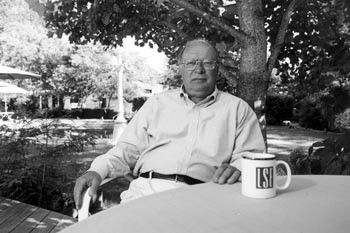
God’s Country

0

‘The Order’

God’s Country.

Charlie Dotti


SCRT arrestingly depicts hate crimes in docudrama ‘God’s Country’

By Daedalus Howell

WHENEVER I HEAR the word culture, I reach for my revolver,” Hermann Göring, Hitler’s despotic second- in-command, reportedly once remarked. The arch-Nazi had every reason to disdain culture since it is, in large part, the product of intellectual and artistic activity–elements notorious for revealing the vacancy of racists’ brainpans.

Local like-minded dogmaticists, the Ku Klux Klan (recall the sheet-freaks’ recent pilfering and insertion of hate propaganda into Santa Rosa’s Classified Gazette), are certainly due for some culture. Sonoma County Repertory Theatre’s absorbing production of God’s Country, Steven Dietz’s condemning docudrama of a neo-Nazi crime wave, would more than suffice.

Constructed from actual court records, news archives, and witness interviews, God’s Country (expertly directed by Jim dePriest) chronicles the felonious deeds of an ill-fated cadre of white supremacists ominously dubbed “The Order.”

In the early ’80s, “The Order” assassinated public figures thought detrimental to their atrocious cause, among them the loquacious, Denver-based talk-show host Alan Berg (memorably portrayed on SCRT’s stage by Eric Thompson).

Operating as an ad hoc crime syndicate in order to fund their hate activities, the group also committed innumerable acts of larceny, pirating $3 million alone from a Brink’s truck in Ukiah.

A farrago of docudrama and news commentary, Dietz’s play interestingly sidesteps traditional narrative structure for a pastiche of impartially delivered reports interspersed with dramatic examinations of real incidents. The theatrical effect is tremendous, though the play’s dense verbiage often errs on the side of didacticism (a phenomenon de Priest’s bright players do attempt to mitigate, however).

SCRT’s 11-player ensemble brims with talent and does well with what are surely emotionally tasking roles; by turns, nearly all the actors portray some order of white supremacists–composing a veritable chorus of gross hubris and insidious hatred.

Rendering his monologue with an arresting poignancy, Tim Hayes offers an especially moving and indicting performance as a rueful father witnessing the cumulative effects that casual household racism have had on his adult son.

Likewise, Sandra Ish consummately deploys a nightmarish monologue that imperceptibly evolves from a parody of a ne’er-do-well to a ghoulish account of a child being sealed in a time capsule. Here and elsewhere, Ish convincingly makes the subtle turn from black comedy to heart-stabbing horror, nimbly setting the traps of Dietz’s emotional minefield among the way.

Eric Thompson’s Alan Berg provides the few (and necessary) comic respites during the often oppressing drama. Thompson’s chain-smoking, manic-mouthed rendition of the talk-radio personality is deftly underscored with a palpable warmth, a distinct humanity that persists even as he brays irascibly into his microphone. It is apparent in Thompson’s performance that he respects the fact that the victimized Berg was a real person, a man rather than merely a character. The products benefits greatly from this choice.

Kudos are also in order for set designer Michael Mingoia. The floor is decorated with a large-scale reproduction of the Constitution’s calligraphic script–an apt symbol for the degradation the document endures under the hooves of those who use it as a red carpet from which to propagate hatred.

God’s Country closes with a recitation of W. B. Yeats’ poem “The Second Coming,” but to heighten the poem’s relevance to his work, Dietz abbreviates the verse to a tell-all passage: “The blood-dimmed tide is loosed, and everywhere/ The ceremony of innocence is drowned;/ The best lack all conviction, while the worst/ Are full of passionate intensity.”

SCRT’s estimable production of God’s Country, however, has both conviction and passionate intensity.

God’s Country plays May 21-23 and 28-30 at 8 p.m., and May 24 and 31 at 7, at the Sonoma County Repertory Theatre, 415 Humboldt St., Santa Rosa. Tickets are $12; senior, student, and group discounts available. 544-7278.

From the May 21-27, 1998 issue of the Sonoma County Independent.

© Metro Publishing Inc.
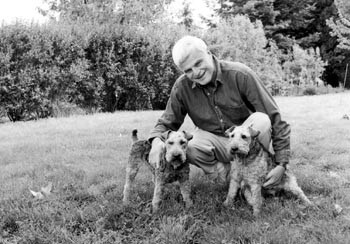
Steve Tyler

On the Grill

Michael Amsler


BBQ chef Steve Tyler aids backyard bunglers

By Christopher Pomeroy

THE TASTE OF summertime is soft and sticky baby-back ribs slathered in honey-sweet sauce, hickory-smoked chicken breasts, and grilled hamburgers. For carnivores, these flavors go with sunshine the way white wine goes with baked salmon.

That is, if you know what you’re doing.

I don’t.

Seems that every time I get near a grill something goes terribly wrong. I cause an explosion by lighting the charcoal with gasoline. I hyper-cook the hamburgers, so that they’re blackly burnt on the outside, cold and raw on the inside. Or I ladle so much ill-conceived homemade sauce on the dinner that everything tastes like a coffeehouse full of patchouli-wearing nouveau hippies (and gasoline, of course).

It simply doesn’t seem right that a young American male–one from the South, I might add–can’t whip up a decent feast in his own backyard. Barbecue, grilling, backyard cookin’, whatever you want to call it, is as American as baseball or McDonald’s hamburgers, or even sex scandals. It is the last surviving outpost of ’50s machismo. In all other aspects of modern life, men are expected to be thoughtful and sensitive, but not on the grill. There man becomes an anachronism, dating farther back even than the days of Leave It to Beaver, a prehistoric hunter searing his meat for the betterment of his tribe, braving the fierce fires to provide sustenance for his family.

Sure, the hunt has been replaced by a quick jaunt to the meat section at the local grocery store, but on a subconscious level (psychologist Carl Jung would babble about archetypes, I suppose), it’s as manly as modern life gets.

In desperation, I turned to Sonoma County barbecue guru Steve Tyler for some tips. Tyler, who has written a cookbook on the subject (On the Grill: The Backyard Bungler’s Barbecue Cookbook), as well as a bimonthly column for On the Grill magazine) agreed to have me over for an afternoon of instruction and great grilled food.

When I arrive at his home, Tyler, a kind man with ruddy cheeks and a ready smile, shakes my hand. “I didn’t graduate from a culinary academy,” he says, soothing my worry. “Most people on the grill are bunglers, not gourmets.”

Bunglers? I can relate.

However, though fun is the goal, outdoor cooking is serious stuff to Tyler. In addition to writing about the subject, he owns Grill and Gourmet, an all-purpose Santa Rosa store for outdoor-cooking enthusiasts. There you can purchase everything from high-quality gas grills to those inexpensive doodads you stick into the sides of hot, buttery corncobs.

Tyler says most people have misconceptions about his favorite subject. For instance, the terms “barbecue” and “grilling” really aren’t interchangeable. “Most people in Califor-nia don’t barbecue,” he explains. “People in California grill. Barbecue is a long-term process over low heat.”

It also always involves beef, pork, chicken or lamb. Grilling, on the other hand, is done over high heat for a short time and includes fish and vegetables.

Bent over his grill, Tyler expertly prepares our feast: blackened catfish and stir-fry madness, recipes from his book. As he constantly adjusts the levels of the coals beneath the food, he describes the differences in regional cooking styles. For instance, in South Carolina, the meat of choice is almost always pork flavored by a vinegary barbecue sauce, while in Texas it’s beef briskets in a sweet tomato- and molasses- based sauce, which during big barbecues is lathered on with kitchen mops.

“They’re clean,” he says of the mops. Pauses. “I think.”

The thrust of Tyler’s cooking philosophy is served up in an acronym he likes to throw around: KISAKE–keep it simple and keep experimenting. He avoids complex culinary trickery and spices. “I hate it when a recipe calls for an ingredient that costs $18 for a small bottle, and which you only use once,” he says. Instead, he relies on basic recipes and household herbs.

However, Tyler warns, “It is still pretty easy to screw it up.”

The main problem novices encounter is cooking food too long over too high a heat (i.e., burning it). Tyler demonstrates a sure-fire method for determining the heat of your grill. Holding his hand about an inch above the coals, he explains, “If you can only keep this up one to two seconds, that’s high heat.”

Four to five is medium; six or more is low.

TOOL PURCHASES are another way novice barbecuers/grillers often go wrong. For one thing, the utensils you have in your kitchen are virtually useless, unless you like your forearms scalded. Long-handled, heat-resistant tongs, spatulas, forks, and brushes are a necessity, Tyler insists. Also important, naturally, is grill selection. If you only plan to cook the occasional hamburger or hot dog, a simple kettle-style charcoal grill will do. But if you plan to do serious grilling, it is best to buy a high- quality wagon grill. Expect to pay between $500 and $3,000 for one of these.

Also, to assure that your food has the characteristic smoky flavor of grilling, Tyler suggests charcoal over gas grills.

Later, as we sit and savor the wonderful catfish dinner, enjoying the sharp, clear sunlight, Tyler points out that the reason people grill isn’t merely because of the taste. It isn’t even about being macho (though he’s the first to make jokes about that himself). “Cooking outside is enticing,” he says simply. “In the kitchen you are restricted. Outside you are in beautiful surroundings; you have the flavor of the fire.

“It’s an experience you cannot match inside.”

Dorado-Baja

The dry rub on this fine Mexican game fish is tangy to the tongue.

6 Dorado (mahi-mahi) fillets, about 10 oz. each
2 tbsp. olive oil
1 tbsp. dried cilantro
1 tsp. garlic powder
1/2 tsp. cayenne pepper
1/2 tsp. ground black pepper
1 tsp. dried leaf thyme

Wash fillets, brush evenly with olive oil, and set aside. In a food processor or blender, combine dry ingredients. Rub mixture over both sides of fillets. Grill over medium-hot fire for 8 to 10 minutes, turning once or twice. Remove from grill and serve at once. Serves 6.

Tyler’s book can be purchased at his store, Grill and Gourmet, in the Larksfield Center, 4754 Old Redwood Hwy., Santa Rosa; 528-4702.

From the May 21-27, 1998 issue of the Sonoma County Independent.

© Metro Publishing Inc.
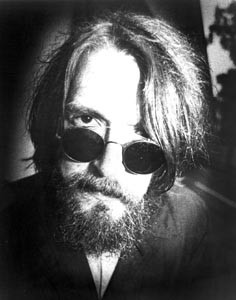
Ray Davies

0

Kinda Kinks

Michael Amsler


Ray Davies’ one-man show rolls into LBC

By Greg Cahill

RAY DAVIES sounds shagged. He’s midway through a hectic U.S. tour to perform The Storyteller at a series of one-night stands and to promote the just-released CD version of the acclaimed performing arts piece–a sometimes touching, often humorous one-man show in which the frontman for the Kinks tells of his early rock career while accompanying himself on solo acoustic guitar–and all the press attention clearly is taking its toll.

For this 54-year-old singer and songwriter, it’s almost like living the frenzied rock ‘n’ roll life.

“Actually, rock ‘n’ roll was easier going than this,” says a weary Davies from an Arizona hotel room, his sense of humor holding up after four phone interviews in two hours. “As I remember it, you’d just get out of your brain during the day and pull it together at night for the show.

“This thing I’m doing now, I have to be on at seven in the morning.”

Now on his third tour of the states with The Storyteller, Davies has racked up rave reviews. New York Times critic Neil Strauss has lauded the piece as “surprisingly intimate, honest, and well staged,” and marveled that Davies’ voice is still “capable of hitting the sweet high notes that can turn detailed observation into perfect pop.”

Like his contemporaries Paul McCartney of the Beatles and Pete Townshend of the Who, Davies–one of the most accomplished songwriters to emerge from the 1960s British rock invasion–has stretched out artistically in recent years. He has worked as a filmmaker, an actor, a theatrical writer and producer, a composer for musical theater, and an author.

The idea for the one-man show came while Davies was writing his autobiography, X-Ray (Overlook Press, 1994). “The book made me realize the links between my life as a musician–and even my life before I became a musician–and the subtext of what I’d been writing about all those years as a songwriter,” he says. “The lyrics uncannily paralleled things that were going on in my life, much more so when I was newer at it, because I was only writing about those things I knew about from direct experience. There was a sort of innocence and naiveté, but somehow it was very truthful to me.

“So it was logical that the story of the band and growing up in North London worked with some of the old songs.”

While many rockers express bitterness about their upbringings–complaining that their dysfunctional families fueled their angst-driven music–Davies’ recollections possess a sweet charm, a nostalgic look at a post-World War II society.

Nowhere does that sentimentality for the past–which permeates such classic Kinks social satires as The Village Green Preservation Society, and reflects the wistfulness of a declining empire– become more obvious than in Davies’ tales about the Front Room, the family parlor that provided shelter from the storm of societal changes sweeping across England in the early to mid-’60s.

“Once upon a time there was a room in our house called the Front Room,” he recounts in his autobiography. “It was so named because it was the front of the house, by the street. It was reserved for special occasions: Christmas parties, wedding receptions, birthdays, christenings, and funerals all took place in the Front Room. Important visitors were always shown into it… . People laughed, cried there. My sisters courted their boyfriends in there. Every special time and occasion was celebrated in the Front Room. The first time that I, Raymond Douglas, saw David Russell, my baby brother, was in the Front Room just after he had been born.”

THE REST, as they say, is musical history. Ray and Davey went on to form the nucleus of the Kinks. In the Front Room, Ray Davies first hammered out on the family piano the opening chords of the band’s first pop hit, “You Really Got Me,” and brother Davey set up his distortion-heavy guitar amp dubbed the Green Monster.

Within months, Ray Davies, then 19, and his bandmates were thrust into the international spotlight. Yet, Davies had no idea that he had crafted a sound that would reverberate for three decades. Now he’s regarded as the Godfather of Power Pop and a hero to a whole new generation of British and American rock bands influenced by the Kinks’ punkish garage rock. “I’m sure they all have their own varying heroes,” he laughs. “But it does seem that a lot of folks do like the Kinks and the songs I wrote for them.

“It’s interesting to look back at what very modest ambitions I had. At the time we recorded those songs, really, we just wanted to do well with them. But what an impact they had.”

Today, Ray Davies has little time to dwell on past glories, despite his retrospective show. “There are a few things on the boil,” he quips. “For the past two years, we’ve been working on a musical version of [the Kinks’ hit homage to 1950s dance palaces] ‘Come Dancing’–we’ve done the script, we’ve completed the first act with music, and we’re very pleased with that. So that could see the light of day next year,” he says. “I’m supposed to be writing a small orchestral piece for an arts festival in England in the fall.

“And I’m getting ready to go in to record my first solo studio album, which I’m really excited about.

Will he retire The Storyteller, now that it’s been recorded for posterity? “Well, it’s something of a work in progress,” he concludes. “It really only tells my life up until the recording of ‘You Really Got Me,’ so that’s less than half my career.

“There are always more stories to tell.”

Ray Davies performs The Storyteller on Friday, May 22, at 8 p.m. Luther Burbank Center for the Arts, 50 Mark West Springs Road, Santa Rosa. Tickets are $21.50. 546-3600.

From the May 14-20, 1998 issue of the Sonoma County Independent.

© Metro Publishing Inc.

The Orchard Inn

0

Ripe Pickins


Michael Amsler

Post-modern bistro: The Orchard Inn in Santa Rosa boasts a stylish decor, Middle Eastern music, a cozy dining area, and intriguing German and French culinary influences.

Family business bears sweet fruit

By Paula Harris

THE FIRST TIME we dined at the Orchard Inn a few months ago there was, for whatever reason, a severe shortage of servers. The wait was so long that one impatient couple gave up and left just moments before the lone waiter finally emerged from the kitchen proudly holding their steaming plates aloft, only to be greeted by the sight of two crumpled napkins tossed onto the empty table.

Happily, that’s all changed.

Our latest visit to this small Santa Rosa bistro (a former bar tucked away off Old Redwood Highway near Cardinal Newman and Ursuline high schools) was a very enjoyable experience. The family-run eatery, which opened in November, is a partnership between Julya and David Franco (who are new to the restaurant biz, but owned five bierkellers in Berlin during the 1960s), and daughter Adelle (who masterminded the distinctive interior design and landscaping). French-trained chef Chris Pusich, who logged seven years at Equus Restaurant, runs the kitchen.

On this night the friendly staff, now well versed in the needs of hordes of customers rushing to dine before curtain call at nearby Luther Burbank Center, greeted us warmly and immediately showed us to our seats.

We were fortunate enough to nab one of the four tables in a cozy, cocoon-like dining area that has a low copper-tiled ceiling, warm ambient lighting, and a large ornate wall mirror. Harlequinesque elongated diamonds painted in soft greens and deep roses decorate the walls. Wooden tables hold golden-beaded tea lights and arrangements of fresh calla lilies. The seating includes wrought-iron chairs that are pretty, but need cushions.

A central bar with hanging glasses, several beers on tap, and wooden beams on the ceiling enhances the comfortable atmosphere. Sophisticated jazz tapes alternating with soft Middle Eastern music play gently in the background.

We kicked off our meal with eggplant bruschetta ($3.75), which featured crisp toasted rustic bread piled generously with a savory relish of grilled eggplant, capers, roasted red bell peppers, garlic, and parsley. The ingredients were good and fresh and it was all very flavorful, but the relish had a strange, almost off-putting, tanginess that felt almost effervescent on the tongue.

The hummus appetizer ($3.25) came with fluffy triangles of thick pita (the bread would have been even better heated) that surrounded a ramekin of hummus accompanied by tomato slices, black olives, and a scattering of parsley. It made a colorful presentation on the white plate, but the chickpea purée desperately needed more seasoning and a heavy-handed spritz of lemon juice. Alas, there was no lemon slice on that plate, and it would have made all the difference.

Things got back on track with the citrus spinach salad ($6.75), which was a delight. A bed of immensely fresh baby spinach leaves in a mild citrus dressing, topped with crunchy sweet pecan halves, crumbles of creamy sharp Gorgonzola cheese, and juicy sweet tangerine segments made an exciting combo. These crisp greens with a side dish of the Orchard Inn’s au gratin potatoes (see below), some crusty bread, and a glass of beer or wine would make a great light meal.

Another success was the barbecued ribs ($9.50), which boasted tender morsels of pork falling off the bone, enveloped in a clingy bourbon-honey sauce. The ribs were served with firm matchsticks of carrots cooked in beer, butter, and dill. But the real star was the second side dish– an expert potatoes au gratin– meltingly hot and creamy scalloped potato slices enhanced by melted cheese and fresh herbs. Yum.

GRANDMOTHER’S chicken ($8.75) was indeed just like grandma used to make–if she lived in Lyons or Lille. A small but richly flavored portion of chicken was cooked in white wine sauce and topped with tarragon, thyme, mushrooms, tiny pearl onions, and bacon, which infused the flavor, making it taste as opulent as Christmas dinner. The chicken was also served with the carrots and more of those praiseworthy potatoes.

The disappointment in the entrée lineup was the daily special: a lackluster vegetarian lasagna ($10.50) featuring an unimaginative spinach filling smothered with an abundance of cheese, pasta, and tomato sauce.

The restaurant has a fair-sized wine list covering most local varietals. The 1995 Clos du Bois merlot ($26) recommended by our helpful server was mellow but strong enough to stand up to the zesty sauce in that lasagna, and also made a pleasing accompaniment to the ribs.

Desserts feature a rotating selection of sorbets, gelatos, and fresh-baked daily specials. The house-made chocolate caramel walnut torte ($4.25) was a dense concoction with hard gobs of caramel hiding within that could lead to some serious dental work. Far better was the house-made almond cheesecake ($4.25), which surprised us with an initial huge hit of intense almond flavor that mellowed in the mouth and subsided into a silky smoothness.

If you’re looking for a casual but chic restaurant serving moderately priced, bistro-style comfort food, this is the place. The owners plan to open an outdoor patio dining area this summer, and hope to expand the kitchen to serve breakfast by fall.

Orchard Inn
4404 Old Redwood Hwy., Santa Rosa; 526-3096
Hours: Open Mondays-Saturdays 11:30 a.m. to 9:30 p.m.; Sundays 4 p.m. to 9:30 p.m.
Food: Bistro-style with German and French influences
Service: Friendly, hospitable
Ambiance: Stylish but casual
Price: Low to moderate
Wine list: Inexpensive selection of wines; several beers and ciders
Overall: ***(out of four stars)

From the May 14-20, 1998 issue of the Sonoma County Independent.

© Metro Publishing Inc.
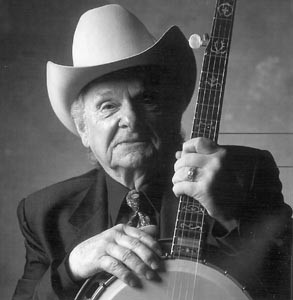
Homegrown

0

Cash Crop

Homegrown is in local theaters.

Janet Orsi


Jonah Raskin’s pot flick finally hits the big screen

By David Templeton

AS OLD BOB DYLAN once observed, “The times, they are a-changin’.” Consider the case of Sonoma State University communications professor Jonah Raskin and the new film Homegrown. When the former minister of education for the radical ’60s Yippies first visited Hollywood in 1980, he was seen, perhaps understandably so, as a gifted but misguided radical, moviewise. His undeniably intriguing pitch–to do a comedic remake of Treasure of the Sierra Madre, significantly retooled by Raskin to now take place inside the vast and secretive marijuana fields of Northern California–was met with a mixed reaction.

No one denied the intrinsic whimsy of the idea itself. Raskin’s tale of hapless pot cultivators fighting the elements, the feds–and each other–while attempting to bring the greens in on time, was a darn good read and would probably make a good film. But to put that up there on the screen for impressionable youths to see? The studios just had to say no.

“‘There will be protests!’ they warned me,” recalls Raskin, with an ever-so-slight smile appearing across his face. “‘There will be angry parents. It’s too much trouble.’ So everyone was nervous about it to begin with.” It was not the drug aspects of the story that scared the suits so much as Raskin’s morally ambiguous viewpoint–and the film’s audacious, everybody-must-get-stoned conclusion.

“The growers don’t get punished,” Raskin reveals. “That was a problem. But then, they don’t profit, either.”

Despite these initial hesitations, the story did eventually sell. A modestly budgeted independent production–around $3 million–commenced last year in Santa Cruz, with a remarkable big-name cast that features Billy Bob Thornton, Hank Azaria, Kelly Lynch, John Lithgow, Jamie Lee Curtis, and Ted Danson. Now, after successful screenings in Washington and Oregon, the film’s distributor is preparing Homegrown–as it came to be called–for national release.

“What’s so funny about it,” observes Raskin, “is that the movie is being directly marketed, at least somewhat, to 16- to 23-year-old pot smokers. Demographically, that’s a pretty huge market.” Indeed. The movie’s advertising displays Zig Zag-like art, with the slogan “Millionaires today. Fugitives tomorrow. Buds forever” and the kicky tagline “Homegrown: the comedy that goes to your head.”

“I suppose,” Raskin ponders, “that with the medical marijuana issue being in the mainstream now, with [similar] initiatives on the ballot in several states, and with cannabis buyers’ clubs sprouting up all over, they felt there was no reason to soft-peddle the fact that this is a movie about pot.

“It’s interesting to see the shift in attitude,” he adds.

Raskin has observed many shifts in attitude since the roiling broiling days of the ’60s, when he and fellow radical/social critic Abbie Hoffman engineered countless political “publicity” stunts, all intended to hurry along the hoped-for revolution against archaic moral oppression and governmental injustice. Hoffman recognized that the media–television, radio, books, records, and even movies–were a powerful tool that had been used by the powers-that-be to boost militarism and consumer greed, and could be used by the political left to poke holes in the posturing of the right. Though some will glibly insist that the revolution never came, it can be argued that it is still under way, making slow methodical progress step by step, book by book–and film by film.

Raskin has examined this shift in national consciousness in his autobiography, Out of the Whale (Links, 1974)–itself to become a film soon–and the recent, well-received biography For The Hell of It: The Life and Times of Abbie Hoffman (University of California Press, 1997). His popular college classes include an examination of film noir and an in-depth exploration of groundbreaking films from the ’60s and ’70s.

When it comes to Homegrown, Raskin’s enthusiasm seems personal rather than political. If there is any subversive social agenda at work here, it is buried beneath an unabashed artistic pride–and a palpable sense of relief–that he displays when questioned about the film.

“I feel a lot of excitement,” he acknowledges. “It’s hard to believe it. There were times in the last–how many years has it been? 20 years?–that I didn’t believe this would ever really happen. I also feel some trepidation.

“I haven’t even seen the finished product yet,” he confesses with a nervous grin. “I’ll be seeing it with some friends on opening night. It will be hard to just sit back and watch it, since I know the story so well. I know what I’ve hoped it would be.”

Thus the trepidation.

RASKIN DID SERVE as script consultant on Homegrown during the long rainy days that filming took place last year. “Sometimes they listened, sometimes they didn’t,” he laughs. “Sometimes they did the exact opposite of what I suggested.

“I call it my movie,” he ponders, “because the idea started with me. But I know that it’s really not mine anymore. It was my story, but other people wrote the script, the director [Steve Gyllenhaal] contributed his own ideas, the actors brought their own things to it. It was a very collaborative process, so there are a lot of other voices in the story now.”

But Raskin isn’t complaining. “It was great!” he continues. “Collaboration is fantastic! I loved it. Billy Bob Thornton sat down with me when I got there and told me all about the background of Jack, his character in the movie. I’d never thought much about where Jack’s roots were, and here was Billy Bob, saying, ‘He comes from a poor family in Arkansas, and his family never finished anything. They started building a house, but they never finished it. Nothing they started ever panned out. So his whole motivation is to bring this crop in. To finish something for the first time in his life.'”

Similar backstories were developed by other actors, including a long-faded love affair between Thornton and Jamie Lee Curtis, who plays the spiritual leader of the tiny rural community to which the pot growers belong.

“It was a good experience,” Raskin summarizes. “I was treated with respect by the actors. They appreciated working on a story that was different.”

With a reluctant shrug, Raskin admits that there was some attention given to his radical past, to the very personal story that has taken him up to this curiously uncertain moment in history.

“I think I may have told a few Abbie Hoffman stories,” he grins.

Homegrown is now playing at Pacific’s Northgate Cinemas in San Rafael (7000 Northgate Mall; 415/491-0608).

From the May 14-20, 1998 issue of the Sonoma County Independent.

© Metro Publishing Inc.
Pirate Radio

0

Rebel Radio

Michael Amsler


Local pirate-radio broadcasters are electrifying the airwaves, much to the chagrin of licensed stations

By Dylan Bennett

Frank Black’s radio program has it backwards. Instead of brief talk segments punctuated by commercials, news, and station identification, the Frank Black Cocktail Party on West Pole Radio (88.1FM), features about 30 minutes of wide-ranging, irreverent conversation interrupted by a few underground pop songs, followed by another long rap session. The signal from this illegal 12-watt transmitter, located in a hush-hush studio on the edge of Santa Rosa, reaches only about 10 miles. But given the luxury of time, Frank Black chews on some big subjects.

Like oral sex.

“That’s disgusting,” says Black flatly, standing at a microphone beside a table full of audio gear. “If a girl absolutely insists I go down there I will, but I won’t stay a second longer than I have to. It’s not clean, man. I mean, I don’t want to get sick. It’s not healthy.”

Is this man crazy or just kidding?

Ask Black’s guests. On this evening, they are the Wind Goddesses, that’s Star and Venus. And they’ve come to counterbalance just this kind of chauvinistic pap coming from Black. “Frank is coming from a place of paranoia and fear,” concludes Star. In the one-room studio, the guests sit on an old lumpy couch, wearing sensual loose dresses. Flowers adorn their cascading black and auburn hair. The air in the cramped, closet-sized studio is a little stuffy, but the atmosphere is warm and familiar. Sitting next to Star is Black’s sidekick, Cougar, a hard-bodied young jokester not far out of high school. Monkey Boy sits on the floor against the wall and chimes in whenever the topic gets boring or strays too far afield.

At the moment, that’s not a problem. “The problem is most men don’t know what a woman likes,” says Star. “They use their tongues like some sloppy washcloth. The clitoris is stimulated by consistent, gentle pressure. So don’t change what you’re doing when she starts to like it.”

There are no commercials, but this definitely isn’t National Public Radio.

Because West Pole is pirate radio, Frank Black commits a federal crime by broadcasting without a license. Borrowing the local nickname for the small west county town of Occidental, the station began broadcasting from a clandestine Sebastopol location in January and moved to Santa Rosa last month.

Other pirates have operated in the Redwood Empire over the last year, and West Pole’s emergence in Sonoma County’s largest city marks the local ripening of the nation’s most dynamic and democratic trend in mass media. West Pole is one of an estimated 500 to 1,000 low-power radio stations operating illegally in the United States, broadcasting to local listeners without the sanction of the Federal Communications Commission.

The result is an unregulated, radically populist medium that provides a platform for common citizens to distribute their politics and culture to their own neighborhoods and beyond.

The movement provokes no uncertain opposition from the FCC and the National Association of Broadcasters. Radio pirates universally regard these two agencies as the bad guys. The FCC, they say, is the government enforcer of that monopoly rather than a fair regulator of the public airwaves. The NAB is an influential lobbying organization for the mostly corporate broadcast industry that pirates believe hold a monopolistic cartel over the radio dial.

Across the country, free-radio stations are known to broadcast everything from working-class and environmental politics to high school football games, city council meetings, and interviews with political candidates. Such stations serve housing projects, small towns, rural counties, and big-city neighborhoods. The pirate community cuts across ideological lines, and includes a network of Black Liberation stations and plenty of conservative Christian radio as well as extreme right-wing elements. And as at West Pole, pirates typically broadcast an eclectic mix of music not found on the current hit parade.

In California, pirates flourish and skirmish with the FCC in San Rafael, San Francisco, Fresno, San Jose, Santa Cruz, and Salinas, beaming out left-wing politics to folks in Berkeley, traditional Latin music and labor politics to migrant workers in Salinas, new history in Lake County, and bilingual programming in San Francisco’s Mission District.

In addition to West Pole, Sonoma County is home to several other self-styled underground radio stations, including River Rat Radio in Monte Rio and KSRF 96.9FM in Sebastopol, run by local teenagers on the weekend. Others broadcast in Petaluma, Bodega, and Rohnert Park. West Pole Radio runs from 5 p.m. to midnight on weekdays, but many pirate stations operate on unpredictable schedules–and frequencies–to elude detection.

“Our plan is to push the limits of pirate radio as far as we can get away with,” says Black. At first, West Pole doesn’t appear to push the limits very far. Black and his collaborators say they are not political. They don’t use their real names. Programs like co-founder Brown Jenkin’s Bachelor Pad, featuring “beer, bikes, and music,” don’t seem like much of challenge to the status quo.

Yet, in that instance, the music is fiercely independent, underground rock, funk, and jazz; the bicycles are a new ethic in transportation. Even the Frank Black show, in its ongoing exploration of “the mysterious mating rituals of human beings,” confronts a vital menu of social politics, poses prickly philosophical questions, and talks openly about sex and drugs.

Black, while often indulging in cheap male belligerence, is actually a skillful journalist. He forces listeners to evaluate their own thoughts. Isn’t the schoolboy who sleeps with his teacher just getting lucky? Is the journalist who distributes child pornography while infiltrating that underworld industry to get the scoop guilty when he’s caught in a police sting?

“This Frank Black character, this alter ego, is just an expression to entertain people but bring somewhat serious topics to the light,” says Black. “But I do it in a humorous manner to get people thinking about certain things that are, for the most part, taboo subjects, or subjects that aren’t discussed but should be discussed.”

Unlicensed broadcasting is a federal crime punishable by a year in jail and a $100,000 fine from the FCC. So how are so many people getting away with it?

Low-power radio transmitters are small, portable items about the size of a textbook. They are the most affordable form of mass media. For as little as $500, a station can get started, and for an average of $1,500 pirates can broadcast over a 10-mile radius. This availability lends a powerful organizing tool and political forum to even the most poorly funded voices of opposition and activism.

“It’s a low-tech crime with old-school technology,” says Black, who thinks the chances of getting busted are nonexistent. By strength of numbers, pirate stations constitute a guerrilla media army performing electronic civil disobedience in open defiance of the existing law and commercial media.

Pirates call on a higher law of free speech, he adds, due process, and fairness under the law.

“I have vowed to put 10 stations on the air for every one the FCC shuts down,” says Stephen Dunifer, founder of Free Radio Berkeley and unofficial figurehead of the free-radio movement. “The government doesn’t have the resources to shut everyone down.”

To meet his goal, Dunifer markets a catalog of low-cost products needed for setting up a microradio station.

In California, all eyes are on the FCC’s bellwether case against Free Radio Berkeley. Last November, federal Judge Claudia Wilkin rejected the FCC’s latest request to shut down the station that Dunifer started five years ago. Until the case goes to trial in a year or two, some consider unlicensed low-power broadcasting to be virtually legal.

“It’s not illegal until Dunifer goes to trial,” asserts pirate broadcaster Bonnie Perkins of Lake County Radio (88.1/90.3FM). For her weekly program, titled “Censored History,” she proudly says that some locals call her “the Noam Chomsky of Lake County.” Perkins, a self-described “housewife,” says, “Nobody has been touched since the Dunifer case–in California.

“They hit in Arizona and Florida, that we know of. They were horrible raids. [The feds] destroyed everything, just like in Waco.”

Well, not just like Waco, and pirate radio is not exactly legal.

FCC spokesman David Fiske says any notion that unlicensed broadcasting is legal is “simply not true.” The FCC starts with warning notices, followed by seizure of equipment and fines. Ninety pirate stations “voluntarily” shut down in 1997, after receiving warnings from the FCC, and seven were physically closed by federal marshals. In several cases in which pirates have refused to turn off the mike, FCC policy has translated into a SWAT-like team with machine guns bursting through the front door.

Last November in Tampa, Fla., heavily armed cops reportedly busted down the front door of radio pirate Doug Brewer’s house, held Brewer and his wife on the floor at gunpoint, seized his equipment, and ransacked the house. “I had absolutely no political agenda–at least not until they came in here with guns,” Brewer told the Los Angeles Times. “I just thought Tampa radio sucked and we had to do something to improve it.”

This year 65 stations have closed after getting warnings, according to the FCC. Arthur Kobres, also of Tampa, was convicted in late February on 14 counts of broadcasting without a license. He faces up to 28 years in jail and a $3.5 million fine. His conviction is thought to be the first of its kind in many years.

At the center of the free-radio world is Dunifer, a self-described anarchist, member of the radical Industrial Workers of the World, and a veteran of resistance politics, from the Vietnam War to old-growth redwoods. A tireless crusader for free radio, Dunifer manufactures and sells transmitters from his home, and offers assistance to all comers, including communities in Mexico and Haiti.

Dunifer found his inspiration in such pirate radio pioneers as Mbanna Kantako, a legally blind man living in a Springfield, Ill., housing project who started broadcasting Black Liberation Radio in 1987 on a one-watt transmitter. At first ignored by the FCC, Kantako was fined $750 and found himself the subject of harassment after he addressed police brutality in Springfield. Regarded as the father of the microradio movement, Kantako still broadcasts Human Rights Radio in Springfield.

In the early days, the 46-year-old Dunifer on occasion transmitted from a car, sometimes even a backpack in the Berkeley hills. He wears long straight gray hair, a foot-long beard, glasses, and a blue denim jacket. He shakes hands gingerly because of a degenerative form of arthritis, but he speaks with the strength of deep conviction.

“The status quo is the corporatization of our lives, like when a kid gets kicked out of school for wearing a Pepsi shirt on Coke Day,” Dunifer recently told a Sonoma State University media law class at which the students were peppered with Nike logos. “The yoke of the new feudalism sits on the neck of every person on the planet.”

Behind the battle between the pirate radio and the FCC lies the core issue of media ownership. Free-radio advocates argue that the concentration of media ownership in the hands of just a few giant media conglomerates, along with the enormous cost of licenses, makes broadcast media the exclusive activity of the very rich.

“The FCC has raised the barrier so high that only the wealthy and well-endowed have a voice,” argues Dunifer. “The real pirates are the corporations who stole the airways. At the very worst, we can be portrayed as attempting to return stolen property.”

In April, at the NAB’s Las Vegas convention, Louis Hiken, one of eight attorneys providing pro-bono services to Free Radio Berkeley, presented a position paper titled “Broadcasting, the Constitution, and Democracy.”

Notes Hiken: “Let’s look at radio, the media sector most thoroughly affected by the recent Telecommunications Act. The act relaxed ownership restrictions so that one company can own up to eight stations in a single market. In the 20 months since the law came into effect, 4,000 of the nation’s 11,000 radio stations have changed hands, and there have been over 1,000 radio company mergers. Small chains have been acquired by middle-sized chains, and the middle-sized chains have been gobbled up by the few massive companies that have come to dominate the industry.

“This sort of consolidation permits the giant chains to reduce costs by downsizing their editorial and sales staffs, and running programming out of the national headquarters. According to Advertising Age, by September 1997 in each of the 50 largest markets, three firms controlled over 50 percent of advertising revenue [and programming]. In 23 of the top 50, three companies controlled more then 80 percent of the ad revenues. CBS alone has 175 stations, mostly in the 15 largest markets.”

Ben Bagdikian, author of Media Monopoly, Pulitzer Prize-winning journalist, and professor emeritus at the UC Berkeley School of Journalism, says that 12 major corporations dominate the mass media, down from 50 just a few years ago.

“The significance of the whole movement of the pirate stations is, while it is obviously against the law, a symptom of the failure of the FCC to demand of local stations that they allot a certain amount of time to local groups,” says Bagdikian. “And they used to do that. In the last 30 years or so they have failed to do it.

“The present trend is to worsen things,” he adds, “moving toward more and more consolidation of national chains in radio. More and more limitation to a few fixed formats that have very little place for local access. And especially in the major markets. Local community groups, including quite significant ones–ethnic groups, civic action groups–have almost no access to those stations. And that used to not be the case. It used to be that if you had a radio license, or a TV license for that matter, when the renewal time came up, the FCC wanted to know how much you had served your own community.”

Dunifer agrees. “Mainstream radio does not reflect diversity,” he says. “Microradio is very diverse, which speaks to the whole issue. The great appeal is the culture to be expressed. People gravitate to it because the regular outlet is denied. Microradio is not just a bunch of crazy anarchists from Berkeley, but an incredible diversity that promotes civil discussion across the spectrum of ideas.”

FCC officials say that pirate radio endangers the public by interfering with aviation and public safety frequencies; and that pirates interfere with licensed stations and don’t participate in the Emergency Alert System.

John Earnhardt, spokesman for the NAB, representing 5,000 radio stations and 12,000 TV stations, echoes the FCC policy concerns about air traffic safety and frequency interference. “It’s serious,” he says. “Not just because it’s illegal, but because it gets to putting some lives in danger.”

Mitch Barker, p.r. representative of the Federal Aviation Administration, says the FAA has documented five cases of interference with aviation frequencies, including a Sacramento case in which a poorly constructed transmitter interfered with airplane traffic. The FCC’s Fiske says an airport in Puerto Rico was nearly forced to shut down owing to extensive interference before authorities nabbed the guilty pirate station.

In Seizing the Airwaves: A Free Radio Handbook, edited by Dunifer and Ron Sakolsky, Dunifer agrees that interference is a legitimate concern and explains how pirates can study their local radio dial to avoid interfering with traffic control signals. Usually, he says, there are plenty of available slots in the radio spectrum to accommodate low-power community radio. “The whole point is to be a community asset, not a community nuisance,” says Dunifer. “It’s ludicrous for the FCC to stand in the way of a community to start its own voice for $1,500.”

In Sonoma County, licensed broadcasters express mixed feeling about rebel radio outfits like West Pole Radio. “If it’s one or two stations it’s not relevant, because there are 60 choices on the dial,” says Lawrence Amaturo, whose family owns local stations KMGG, KXFX, KMGG, KFGY, and KSRO, and two more radio stations in Southern California.

“But if it’s 20 stations,” continues Amaturo, “it becomes very relevant to our ability to maintain a level of quality because our revenues would be measurably impacted by that sort of proliferation. Every broadcaster in this town works extremely hard, and we have the privilege of serving our community–and a responsibility. Pirate radio has none of that. It’s just about themselves. They just play what they want. They’re not constrained by any FCC regulations. They have no watchdog to watch for them broadcasting inappropriate material.

“And that’s problematic.”

Brent Farris, the gregarious vice president of programming for KZST, spoke, along with Dunifer, to the SSU media law class. “I’m very sympathetic to pirate radio,” says Farris, noting his credentials as a former practitioner of “free-form hippie radio” in the 1970s. “My only concern is that anybody can do it. Which means that the people with good intentions can do it and the people with bad intentions can do it. That’s why you regulate it. Doesn’t matter if you’re right-wing, left-wing, fanatic, conservative, liberal. Does that scare you? It scares me.

“And I believe in free speech.”

At KRCB public radio, program director and acting station manager Robin Pressman considers the non-commercial station to be a pirate station with a license. “I certainly understand the movement because of what’s happened in the world of radio, the conglomeration of radio stations, so that something like eight companies own all of the radio stations in the United States,” says Pressman. “There are very few locally owned stations anymore. [The big companies] are ruining radio in dictating play lists from a central office so that the same things are being played on every radio station. It’s a very narrow band, what’s available… .

“We are definitely simpatico with the people who are doing pirate radio.”

But Maria Fincher, station manager of Santa Rosa’s KBBF-FM–the first bilingual public radio station in the nation, now celebrating 25 years on the air–opposes the pirates on principle. “I don’t approve, because you have to find the right channels and follow the rules. I’m public radio. And I don’t have the money that commercial radio does. I can’t do the things they do. If I can’t do that, then I just can’t do it.

“I can see their point, but it’s an easy way to get what you want.”

Media law attorney Hiken has proposed that low-power stations be allowed to occupy unused frequencies, formally register with a simple application form, keep their signal under 50 watts, and follow basic technical criteria. His proposal envisions one station per organization, no commercial sponsorship, and no content requirements.

Such calls for the legalization of low-powered community stations appeals to some at Lake County Radio. However, the diversity of the movement also imprints itself on this question. “The day we have a license, we won’t be able to do any of this,” says Frank Black.

I don’t think that’s the route to take,” says Bagdikian. “The necessity is for the FCC to take cognizance of the fact that low-powered stations have a real community function and that there should be a demand that stations provide significant time to local groups. What I hope is that the legal cases of the pirate stations, whatever their outcome, will dramatize the fact that, though they’re illegal, they reflect a need that the government has not provided.”

Meanwhile, at the new West Pole digs, Black enjoys a little elbow room, even a window, and a growing list of sponsors: Punch Street Wear, Flying Goat Coffee, Slice of Life vegetarian restaurant, Bohemian Cafe, Box Office Video, and Village Bakery.

Apparently somebody is listening.

“I think they’re doing a great thing,” says David Burns, owner of Slice of Life. “There’s room and a need for people doing things like that. There’s a lot of people who have some good information and other, alternative types of entertainment that would never ever be heard because not everyone can afford an FCC license. Why just leave it to all these people with big corporate bucks?”

From the May 14-20, 1998 issue of the Sonoma County Independent.

© Metro Publishing Inc.

Talking Pictures

0

Love Bird


Peter Iovino

Fine feathered friends: Hallie Eisenberg and co-star Paulie.

Jeffrey Masson shares a few words on talking birds and the movie ‘Paulie’

By David Templeton

In his ongoing quest for the ultimate post-film conversation, David Templeton discusses interesting movies with interesting people. This week he phones up Dr. Jeffrey Masson to discuss the offbeat new talking-bird movie Paulie.

WHEN JEFFREY Masson went to see Paulie–a strange, low-profile adventure about a talking parrot on a quest to find his way back to the little girl he loves–the renowned author’s expectations may have been unrealistically high.

As demonstrated in his best-selling books When Elephants Weep (Delta, 1996) and Dogs Never Lie About Love: Reflections on the Emotional World of Dogs (Crown, 1997), Masson maintains a notably rich appreciation of all animals. After years of research and study on the inner lives of beasts and birds, one could say that he has come to feel their pain–as well as their joy, love, anger, frustration, petty jealousies, and the occasional fit of existential angst. So when a movie pops up claiming to offer a peek into the hopes and dreams of a homesick parrot, Masson knows exactly how potent that movie could be.

Paulie, alas, falls short of Masson’s mark.

“They weren’t telling me anything I didn’t already know about birds,” he good-naturedly grouses, speaking by phone from his home in Berkeley. “Though some of the bird scenes were remarkable.”

“There is something magical, isn’t there,” I tentatively suggest, “in the ‘talking animal’ genre of movies, with Francis the talking mule wandering up and spouting flawless Midwestern vernacular?”

“I think that’s why movies like Babe get under our skin,” Masson replies. “We love talking animals.”

“And isn’t that part of why we are so taken by parrots?” I further probe. “With parrots we can almost believe that animals could start to talk.”

“But animals can talk,” Masson playfully chides. “They just don’t speak English.

“You know, I was reading one of the great books on parrots recently,” he suddenly recalls. “It’s called Parrots of the World, a huge, magnificent volume, the best work ever written about parrots. In a very short introduction, the author says, ‘People don’t know that much about the behavior of wild parrots, but one thing we do know is that parrots do not imitate sounds in the wild.’ And I thought that was fascinating.

“Here we have a type of bird that is famous, in our world, for imitating human sounds, and yet in the wild, the parrot never does that. It doesn’t imitate other species. So it really makes you think, what is a parrot doing then, in captivity, when it imitates human speech?”

“What do you think it’s doing?” I wonder.

“Well, I think they are trying to communicate with us,” he says, matter-of-factly . “I don’t believe they are merely imitating us. I think they are trying to figure out how to talk! Thanks to Irene Pepperberg, who’s a very great scientist, scientists now know that certain parrots–African grays in particular–are indeed capable of understanding words. They can learn the meaning of up to 50 words. They can count. They can tell the difference between a round object and a square one. And if you ask them certain simple questions, they can answer yes or no and always be correct. So it turns out that parrots are not just ‘parroting’ us, as we’ve always thought. They actually know something.”

One example–prominently featured in When Elephants Weep–is Alex, Pepperberg’s African gray, a parrot with a nasty fear of veterinarians.

“Alex had to be left at the vet for an operation once,” Masson retells the tale. “When Irene started to leave, Alex screamed out, ‘Stop! Please! Don’t go! I love you! Come back!’

“She says there’s no way Alex knew those individual words–he didn’t know the word ‘I,’ he didn’t know the phrase ‘come back’–but somehow he managed to piece that together, and he got both the words and the music correct. What he was really trying to say was something emotional: ‘Don’t leave me, don’t abandon me, I need you.’ And that was unmistakably his message.

“I had a parrot that used to bite my girlfriend’s toes,” I offer. “He was insanely jealous. He’d chew up her shoes when she wasn’t looking.”

“Parrots are among the most emotional of animals,” he affirms, appreciatively. “They can be very jealous, they can get embarrassed, they can be humiliated, they can be lonely. They get nostalgic and pine for lost loved ones.”

OF HIS OWN parrot experience, Masson says, “My parrot would routinely fly away from our balcony. We lived up above Tilden Park in Berkeley. About once a month he would suddenly decide, this is it, he was leaving, and off he’d go into the hills. The first time it happened I thought, ‘Oh my god, there’s one gone parakeet,’ but about 2 in the morning, I heard this incredible screaming. It was my parrot. I jumped up and ran out, and down in the middle of some valley, screaming his head off, there he was. It was clear to me that he was calling me, so I ran down and found him, and brought him back. He did that three or four more times.

“Eventually he did disappear,” he notes with a hint of sadness.

“That’s the theme of the movie, isn’t it?” I point out. “Lost bird trying to get home.”

“And that’s perfectly legitimate,” he agrees, “that that kind of bond could form between a parrot and a person. A parrot probably would try to find its way home.

“But back to the notion of parrots talking,” he skillfully segues. “It would be a good idea if we spent more time trying to understand what parrots–animals in general– are already saying to each other, rather then trying to teach them our language.

“Nobody, as far as I know, though, has ever lived with a pack of birds,” he admits. “There are myths of people being raised by packs of wolves, but it would be harder of course to join a flock of parrots. How would we keep up with them?

“It’s not impossible, though,” he brightly adds.

“And it would make a pretty good movie,” I mention.

“It would,” he laughs. “In fact, I think people would flock to see that one.”

From the May 14-20, 1998 issue of the Sonoma County Independent.

© Metro Publishing Inc.

Urban Growth Boundary

0

UGB Blasted


Michael Amsler

Field of dreams: Sonoma County politicos and conservationists, including Christa Shaw of Greenbelt Alliance, held a press conference last week, branding a new Rohnert Park growth measure “a cynical attempt to confuse voters.”

Chorus of critics assails proposed developer-friendly Rohnert Park urban growth boundary

By Paula Harris

WHILE THE DEBATE simmers about whether urban growth boundaries curb sprawl and allow a community to retain its charm, or whether UGBs unfairly hinder economic development by placing a blanket restriction over expansion, local voters could encounter three distinct growth-curbing measures on upcoming ballots.

In one of those instances, a new UGB has sparked allegations that Rohnert Park officials and local developers are teaming up to steamroll growth limits adopted two years ago. In 1996, Rohnert Park, Sebastopol, Healdsburg, and Santa Rosa gave the nod to UGBs, and voters countywide agreed to a measure that requires the county to respect municipal UGBs. The latter three cities adopted the first voter-approved, 20-year urban boundary initiatives in the United States; Rohnert Park’s UGB was supposed to stand for four years.

Now that sprawling suburb is the first city in the nation to face what critics say is “a cynical” challenge to the law by development interests.

The newly proposed UGB that has found its way onto the June 2 ballot in Rohnert Park–Measure A–raised the hackles of some environmentalists. Greenbelt Alliance representatives claim that the new measure actually will repeal the earlier voter-approved UGB and contains a loophole that gives the City Council authority to expand the boundaries of the growth limit without voter approval.

Greenbelt Alliance’s North Bay field director Christa Shaw, who works for the non-profit Bay Area conservation group that has spearheaded or supported every UGB measure in Northern California, warns that Measure A is a sham that ultimately will benefit big developers. “Other cities that have passed UGBs carefully constructed exceptions to make sure they could provide state-mandated low-income housing,” she explains. “On the other hand, [because of a loophole in the resolution] Rohnert Park’s City Council can expand the boundary without voter approval for any kind of housing. It’s really misleading, and it gives people a blueprint on how to destroy every other UGB.”

Others agree. “Other cities passed UGBs after a lot of public input. Here in Rohnert Park, the City Council majority is putting the cart before the horse,” says Rohnert Park City Councilman Jake Mackenzie, one of the council minority that opposes Measure A and has formed a group called Citizens United for Urban Boundaries, or CURB.

“The real plan is to increase the population of Rohnert Park by 13,000 over the next 20 years, which would require about 5,000 more houses,” he contends.

He recalls that the Rohnert Park council members who are pushing Measure A were adamantly against UGBs 18 months ago. “It’s an amazing conversion to this religion,” Mackenzie dryly observes. Rohnert Park City Councilman Armando Flores, who sponsored the ballot initiative, did not return calls for comment this week, but he has publicly stated that the measure is intended simply to encourage economic vitality and provide space for population growth.

This does not bode well, according to some community leaders and elected officials, who last month gathered to voice their concerns at the edge of a grassy Rohnert Park field, that is slated for development should Measure A pass. “Voters in Sonoma County have stated clearly and repeatedly that they want to control growth,” said Leah Gold, chairperson of the Healdsburg Urban/Rural Boundaries Committee, as she gazed at the pastoral backdrop of undulating hills. “[Measure A] is a cynical attempt to confuse voters.”

UGB INITIATIVES are riding a wave of popularity locally. In January, 72 percent of Windsor voters passed a 20-year growth measure, making it the largest such vote getter in the county to date. “Windsor was the fastest-growing community in the county,” says Windsor City Councilwoman Lynn Morehouse. “Voters told us to slow down.”

While Greenbelt Alliance’s Shaw says it is still too new to show immediate impact, she is very optimistic about the Windsor measure. “The UGB will give Windsor room to grow, but not to jump over boundaries,” she says.

This public acceptance of the county’s first urban boundaries is inspiring conservationists to wage a continuing fight for slow growth. “This is a big deal,” says Shaw. “It’s why we’re fighting Measure A. We demand high standards for UGBs. We’d like to think we’ll get a real urban growth boundary measure on the ballot for Rohnert Park by November [if Measure A fails in June]. If Measure A passes, we’ll still work to overturn it, but probably not in November.”

Meanwhile, the trend is accelerating. With a new environmentally friendly city council majority, Petaluma–Sonoma County’s second-largest city–is busy drafting a growth measure for the November ballot. Mark Green, director of the Sonoma County Conservation Action Committee, has been canvassing the sprawling riverfront city. He says the majority of Petalumans favor such a moratorium.

“Our field staff walked two thirds of the city and found an overwhelming support for UGBs,” Green says. “The only negative feedback we got was that it should have happened a long time ago. [The idea of] urban growth boundaries is not difficult to communicate or get people to buy into.”

The Cotati City Council may follow Petaluma’s lead by placing a UGB measure on the November ballot. Cotati Mayor Richard Cullinen says the matter is under discussion (at press time, the council was scheduled to consider adopting the wording of the measure), noting that council members unanimously favor placing a UGB on the November ballot.

“If the council takes action and gets the necessary support from planning to draw this up, we could qualify for the November ballot,” he says. “We’ve all longed for a strong UGB around the city of Cotati contingent on completion of the general plan.”

From the May 14-20, 1998 issue of the Sonoma County Independent.

© Metro Publishing Inc.

The Scoop

Strange Customs

Plush-toy cavity searches and TV blues

By Bob Harris

AT LAST, I SAY it’s high time that our government finally decided to crack down and seal our borders from the harmful contraband affecting the lives of our kids. No, I’m not talking about cocaine. Or marijuana. Or heroin, or tamales, or Tijuana Bibles. I’m not even talking about the Mexican border. I’m talking about our northern boundary with Canada, thousands of miles of unprotected frontier now facing a never-ending stream of … contraband Beanie Babies.

That’s right. Our kids are addicted. Canadian kids aren’t. So in response to the unequal demand, Beanie Baby smugglers are now muling the cuddly contraband into our great nation.

But fear not, fellow citizens, for the brave-hearted men and women of the U.S. Customs Department are on the case. Customs policy now states that “a consumer is allowed … one beanie … for personal use every 30 days.” This is compassionate use, indeed, allowing addicted children a maintenance fix of Beanie Baby methadone.

So as you read these words, customs agents are searching incoming vehicles from Bellingham to Calais, seizing the scourge on sight. Two Beanies for your daughter’s newborn? Sorry, Grannie, out of the car and up against the wall.

And some of the tiny plush toys aren’t even genuine, but knock-off Beanie Babies, presumably cut with baking soda. But rest easy, citizens. As one customs official explained (and this is for real): “If we think it’s a phony, what we can do is detain the Beanie Baby and submit it for verification.”

Hallelujah. Here’s yet another stirring example of our tax dollars working to keep America safe: You and I are actually paying government officials to protect a private corporation’s trademark by stopping plush toy puffins at the border and demanding, “Your papers, please.”

If you’ll excuse me now, I’m going to go lose my mind just so I can blend in around here.

OK, so the other day this guy stops traffic in Los Angeles and waves a shotgun around, so of course the TV stations drop everything and go live to the scene. Eventually the guy points the shotgun at himself, and suddenly a couple of thousand school-aged kids viewing at home have something new to ask mom and dad about.

And then afterward we have this huge debate: Should TV stations have covered the whole thing, especially during an hour when school kids are just getting home? And if the answer is yes, then should the TV guys have cut away before the suicide?

And if the answer is yes, then did they have enough time to see he was suicidal? And if the answer is yes, then what do we do in the future to keep all this from happening again?

All of which is a bunch of rubbish, since this whole TV debate is always accompanied by even more clips of the guy about to kill himself, which, if they’re actually concerned about the questions they’re asking, they wouldn’t even be showing. And still, there’s one thing missing in this whole debate: the guy. Remember him? The actual human being here?

Why’d he pull the trigger?

Oh, yeah, he spread out a big message about HMOs being in it only for the money–this just in!–and a smaller message about safe sex. Apparently life taught the guy some lousy lessons, and he wanted to share them with us on his way out.

Y’know what? Just for a second, let’s take the guy at face value. I don’t know anybody who’s happy with their HMO. Wouldn’t it be nice if, in the aftermath and debate, somebody on TV bothered to report on what’s happening right now in managed care, and what sort of alternatives might exist? And safe sex is something worth talking about anytime a whole group of kids are about to become teenagers. Which is every single month.

In the middle of all of the media fuss about all the media fuss, wouldn’t it be nice if for just one minute we pretended that maybe this guy might have been an actual human being, and not just a money shot?

Granted, some folks worry that all the TV coverage glamorized the thing so much that now we’re gonna have a whole bunch of other people staging spectacular exits, just to get 15 minutes for their own little causes.

Not to worry. Nobody’s going to repeat the show to make a point. It obviously wouldn’t work. The guy on the highway might have erased himself, but the media’s complete self-absorption managed to erase the reason he did.

From the May 14-20, 1998 issue of the Sonoma County Independent.

© Metro Publishing Inc.

Meg Hitchcock

0

Shock of the Few


Michael Amsler

Icky art: Meg Hitchcock glues together one of her unusual candy works.

New emerging artists’ exhibition has a lot on its mind–and its head

By Gretchen Giles

SOME ARTISTS are lauded for the beauty of their design, concept, brushstrokes, color work, their proficiency with stone, marble, steel, or wood. Others are hailed for the technical virtuosity of their video images; the scenes that they cull from the darkness of the human soul; the gorgeous quality of the paint; the ineffability of the light captured on canvas; the inimitable rendering of the human form in silver gelatin.

Santa Rosa artist Meg Hitchcock’s compliment came the other way.

“I walked into her studio,” remembers Guerneville artist Harley with a chuckle, “and I said, ‘These are icky! These are really icky!’

“Her little face just fell, so I said, ‘No! Don’t worry! These are icky in a good way.'”

What could be so icky about Hitchcock’s work, paintings that, after all, are done by a highly skilled and well- trained artist? The human hair. Oh, yeah–and the candy.

Possibly producing the grandchildren of the surrealist fur cup that left a shocking taste in the mouths of Parisian aesthetes some 70 years ago, Hitchcock has a regular deal with two local salons to visit weekly and get her hair done. That is, done up from the scraps on the floor and scooped into bags to take home to her studio and wax onto canvases.

Hitchcock is among the six artists featured at the California Museum of Art’s upcoming “Ingress” show, spotlighting those local artists whom CMA director Gay Shelton and co-curators Harley and arts writer Sandy Thompson feel deserve more attention.

Joining Hitchcock are Healdsburg painter Susan Preston, who works on such found paper as those heavy waxed boxes that house the frozen ravioli her husband particularly favors; Santa Rosa photographer Deirdre Favreau, who contributes an installation based on the rigors of childhood; Santa Rosa tapestry artist Annette Kaplan, whose computer-designed works will be shown in both physical and conceptual form; Petaluma abstract painter William O’Keeffe, whose work centers on the gorgeous qualities of color and of the paint itself; and Santa Rosa painter Mark Jacobson, whose work Shelton hesitantly describes as “humble,” for lack of a better word.

“It’s very beautiful,” she asserts. “It’s not overblown.”

But we’re talking to Hitchcock, whose paintings are certainly not icky, except in a good way. Take “Orthodox Gummies” for example, one of the pieces she’s contributing to “Ingress.” This large canvas painted with a light cross hangs in her rural studio. It is covered with regularly spaced candy gummy worms, each surrounded by a complete halo of human hair. The effect is both humorous and visceral. From a distance, the image is that of devout paramecia, yet one knows the feel of the slick smoothness of the gummies in the mouth, a feeling that is surmounted by the remembrance of that shock when both the car window and your mouth are open and your own hair comes flying onto your tongue like a horde of unwelcome caterpillars.

Add some wet worm-shaped candies to the mix and you’ve got … ick.

Hitchcock is getting used to this. Recently exhibiting at the Meridian Gallery in San Francisco, she was shocked to learn from the gallery owner that visitors’ reactions were so negative.

“I guess that it really disturbed people,” says Hitchcock, a petite woman with terrific brown hair of her own that was a whole bunch longer until she decided to produce “Self-Portiat” (sic), a mandala of tresses waxed onto silk canvas, last fall.

“It’s so innocuous,” she shrugs, “it’s just hair. But I guess that there are a lot of associations that people just made.”

Hitchcock firmly declines these connections, all the while acknowledging that viewers may see sexual, corporeal, and possibly even fascist metaphors in her work. “If I defined it, and if I said that this is what it means, it wouldn’t go any further,” she says strongly. “This way, it can be anything that people want it to be. Anything. And that’s true of so much in life. As soon as it’s defined, it just stops. I’m doing it because it’s what I do. For the pleasure of it.

“And what anyone would like to read into it is just fine.”

Hitchcock is used to going her own way. Right-handed by birth, she paints with her left hand. Proud of her spelling and writing abilities, she finds nonetheless that her left hand can’t make use of either. Trained for years in her art, she deliberately paints like a child. Brainy and aesthetically driven, she listens to talk radio and empties her mind of all thoughts as she paints.

“I spent a lot of years studying, and all of my work was really dry and boring to me,” Hitchcock admits. “I wasn’t having fun doing it. At some point, I made a conscious effort to forget all the rules, and every time a rule came into my head to let it go. Then I did a series of drawings that were very childlike, and it felt really good. You’re always told, ‘Never use acrylics on top of oils.’

“So, I thought,” she says with a mischievous smile, “‘that’s a good reason to try it.'”

“Ingress” exhibits May 27 through July 19 at the California Museum of Art. A reception and gallery talk with the artists is scheduled for Friday, May 29, from 5 to 8 p.m. Luther Burbank Center, 50 Mark West Springs Road, Santa Rosa. Admission is $2 for non-members. For details, call 527-0297.

From the May 14-20, 1998 issue of the Sonoma County Independent.

© Metro Publishing Inc.

God’s Country

'The Order'God's Country.Charlie DottiSCRT arrestingly depicts hate crimes in docudrama 'God's Country'By Daedalus HowellWHENEVER I HEAR the word culture, I reach for my revolver," Hermann Göring, Hitler's despotic second- in-command, reportedly once remarked. The arch-Nazi had every reason to disdain culture since it is, in large part, the product of intellectual and artistic activity--elements notorious for revealing the vacancy...

Steve Tyler

On the GrillMichael AmslerBBQ chef Steve Tyler aids backyard bunglersBy Christopher PomeroyTHE TASTE OF summertime is soft and sticky baby-back ribs slathered in honey-sweet sauce, hickory-smoked chicken breasts, and grilled hamburgers. For carnivores, these flavors go with sunshine the way white wine goes with baked salmon. That is, if you know what you're doing. I don't. Seems...

Ray Davies

Kinda KinksMichael AmslerRay Davies' one-man show rolls into LBCBy Greg CahillRAY DAVIES sounds shagged. He's midway through a hectic U.S. tour to perform The Storyteller at a series of one-night stands and to promote the just-released CD version of the acclaimed performing arts piece--a sometimes touching, often humorous one-man show in which the frontman for the Kinks tells of...

The Orchard Inn

Ripe PickinsMichael AmslerPost-modern bistro: The Orchard Inn in Santa Rosa boasts a stylish decor, Middle Eastern music, a cozy dining area, and intriguing German and French culinary influences. Family business bears sweet fruitBy Paula HarrisTHE FIRST TIME we dined at the Orchard Inn a few months ago there was, for whatever reason, a severe shortage of servers. The wait...

Homegrown

Cash CropHomegrown is in local theaters.Janet OrsiJonah Raskin's pot flick finally hits the big screenBy David TempletonAS OLD BOB DYLAN once observed, "The times, they are a-changin'." Consider the case of Sonoma State University communications professor Jonah Raskin and the new film Homegrown. When the former minister of education for the radical '60s Yippies first visited Hollywood in 1980,...

Pirate Radio

Rebel RadioMichael AmslerLocal pirate-radio broadcasters are electrifying the airwaves, much to the chagrin of licensed stationsBy Dylan BennettFrank Black's radio program has it backwards. Instead of brief talk segments punctuated by commercials, news, and station identification, the Frank Black Cocktail Party on West Pole Radio (88.1FM), features about 30 minutes of wide-ranging, irreverent conversation interrupted by a few underground...

Talking Pictures

Love BirdPeter IovinoFine feathered friends: Hallie Eisenberg and co-star Paulie.Jeffrey Masson shares a few words on talking birds and the movie 'Paulie'By David TempletonIn his ongoing quest for the ultimate post-film conversation, David Templeton discusses interesting movies with interesting people. This week he phones up Dr. Jeffrey Masson to discuss the offbeat new talking-bird movie Paulie.WHEN JEFFREY Masson went...

Urban Growth Boundary

UGB BlastedMichael AmslerField of dreams: Sonoma County politicos and conservationists, including Christa Shaw of Greenbelt Alliance, held a press conference last week, branding a new Rohnert Park growth measure "a cynical attempt to confuse voters." Chorus of critics assails proposed developer-friendly Rohnert Park urban growth boundaryBy Paula HarrisWHILE THE DEBATE simmers about whether urban growth boundaries curb sprawl...

The Scoop

Strange Customs Plush-toy cavity searches and TV bluesBy Bob HarrisAT LAST, I SAY it's high time that our government finally decided to crack down and seal our borders from the harmful contraband affecting the lives of our kids. No, I'm not talking about cocaine. Or marijuana. Or heroin, or tamales, or Tijuana Bibles. I'm not even talking about the...

Meg Hitchcock

Shock of the FewMichael AmslerIcky art: Meg Hitchcock glues together one of her unusual candy works.New emerging artists' exhibition has a lot on its mind--and its headBy Gretchen GilesSOME ARTISTS are lauded for the beauty of their design, concept, brushstrokes, color work, their proficiency with stone, marble, steel, or wood. Others are hailed for the technical virtuosity of their...
11,084FansLike
4,606FollowersFollow
6,928FollowersFollow