Fall Films

Fall into Film

Eye spy: Johnny Depp plays an 18th-century cop chasing a killer in Sleepy Hollow.

The new season offers everything from big bombs to cinematic shooting stars

By

LOOKS LIKE Halloween came early this year. It’s no secret that the one independent movie that earned studio respect this year was The Blair Witch Project. So, naturally, the upcoming season features many excursions into the October Country, to use Ray Bradbury’s phrase.

Gabriel Byrne works the muscles of his weary puss as a Vatican troubleshooter investigating a case of demonic possession in Stigmata (Sept. 10). Byrne also plays the devil to Arnold Schwarzenegger’s Satan-hunting cop in End of Days (Nov. 24). Dogma–if it is ever released–is Kevin (Clerks) Smith’s cosmology, which has angered Catholics enough to persuade Miramax films to sell it off to another studio. The casting of Alanis Morissette as God has especially piqued Catholic groups.

In more Satan-related cinema: Lost Souls (Oct. 8) with Winona Ryder and Ben Chaplin as a couple hunted by the devil, and Ride with the Devil (Nov. 12), a Civil War drama starring the best-selling American poet alive, Jewel. (But I cheated putting this here: Jewel doesn’t play Satan.) Stir of Echoes (Sept. 10) is a supernatural thriller set in Chicago, based on Richard Matheson’s 1958 novel, in which a blue-collar guy (Kevin Bacon) finds himself with unwanted psychic powers.

Tim Burton’s elegant horror film Sleepy Hollow (Nov. 19) features Johnny Depp as Ichabod Crane, an investigator hunting decapitation murders in New York’s Hudson Valley during the 1700s. The film has only a casual relation to Washington Irving’s humorous sketch about a scrawny schoolmaster, a country bully, and a creamy-skinned heiress named Katrina–played here by Christina Ricci.

Horror of a different sort lurks in the season’s most exciting offering: Bringing out the Dead (Oct. 22), the new Martin Scorsese/Paul Schrader effort, starring the husband and wife team of Nicolas Cage and Patricia Arquette. Cage works too-long night shifts as a New York ambulance driver, losing his mind as the hours go by. A vintage punk-rock soundtrack overlays Cage’s odyssey.

The Fight Club (Oct. 15) is the new film from David Fincher (Seven, The Game). Fincher is one of the few directors today whose morbid mood and strength of composition can transcend an uneven script. The story sounds repellently faux-macho. It’s about a city club where bare-knuckle amateur fighters meet to slug it out. Also, The Fight Club stars Brad Pitt, who has proved himself over the years as the worst kind of screen blight–the pretty-boy deluded into thinking of himself as a cutting-edge artist. Thus, a long career of miscasting. But Fincher’s deadly visions of rotting downtown splendor have been compelling in the past. And The Fight Club might be the film in which Fincher has found a story as good as his imagery.

For comedy, two promising efforts are Man on the Moon (Nov. 5), with Jim Carrey playing the ’70s comedy-of-cruelty comedian–or was he a performance artist?–Andy Kaufman. And Tom Hanks and Tim Allen return in Toy Story 2 (Nov. 24). Ace comedienne Joan Cusack does the voice of Cowboy Woody’s gal-pal from his ’50s cowboy TV show.

Mumford (Sept. 24), shot in Sonoma County, concerns a psychiatrist who weasels his way into the lives of a small town. It’s directed by Lawrence Kasdan, the co-scriptwriter of the only good Star Wars movie, The Empire Strikes Back.

Eric Rohmer’s Autumn Tale (September) wasn’t shot in our own wine country  . . . but only the subtitles really make the difference. Rohmer’s effort could easily be set in any of the less-wealthy pockets of Sonoma or Napa. Autumn Tale is the story of a handsome, hippie-ish middle-aged single woman (Beatrice Romand) in charge of an unpopular Côte du Rhône vineyard. This droll, delicate, but tough-minded romance touches on more than just love: it also studies the ugly development of farmland, and a young girl’s determination to never let her heart rule her head. How French, you’d say. But really, how Northern Californian. Autumn Tale makes the recent Hollywood versions of the search for older love (such as You’ve Got Mail) look even more puerile.

THE SEASON offers two other big-budget vintage-lovers romances: The Story of Us (Oct. 15), starring Michelle Pfeiffer and Bruce Willis, directed by Rob Reiner (When Harry Met Sally); and Random Hearts (Oct. 8), with Kristin Scott-Thomas and Harrison Ford. Too mainstream? Try Patricia Rozema’s adaptation of Jane Austen’s Mansfield Park (Nov. 5).

This fall also includes some disturbingly underbuzzed efforts from filmmakers who provide some of the best works of the last 10 years: Atom (The Sweet Hereafter) Egoyan’s Felicia’s Journey (Nov. 12) is a harrowing tale starring Bob Hoskins as a “befriender” of homeless girls in grim Birmingham, England. David Lynch’s eccentric The Straight Story (October) is the uncharacteristically wholesome (!) story of an elderly man crossing Iowa on a rider-mower. Director Steven Soderbergh, whose Out of Sight was one of the best of ’98, returns with The Limey (Oct. 8), a gangster revenge story with Terence Stamp as a British ex-con outsmarting L.A. thugs. Lastly, there’s Holy Smoke (Oct. 22), Jane (The Piano) Campion’s tale of the affair between an older man (Harvey Keitel) and a younger woman (Kate Winslet), to be released sometime this fall.

Next we’ve got James Bond blowing up the Bohemian Club to foil a Republican madman’s plot to hoard the world’s supply of Viagra  . . . and then I woke up. Actually, the soap-opera title The World Is Not Enough (Nov. 19) is an inside reference–it’s the Bond family motto. In the newest episode, an injured 007 (Pierce Brosnan) travels from Bilbao to Central Asia to Istanbul, tracked by an assassin (Robert Carlyle, the dangerous Begbie from Trainspotting). There’s also a bigger role for Judi Dench as M, and John Cleese turns up for a cameo as Q’s successor, R.

Naturally, the Bondian madness is also grounded with fall-season horror–the threat of the usual nuke in the usual worst place possible. And that certainly won’t be the only bomb we’ll see in the next few months.

From the August 26-September 1, 1999 issue of the Sonoma County Independent.

© Metro Publishing Inc.

A’Roma Roasters

0

Smell the Coffee

By Janet Wells

A’ROMA ROASTERS cafe in Santa Rosa no longer serves food or drink on its front sidewalk after 8 p.m. A small thing, perhaps, in a city where zealous development, church scandals, and nightmare traffic rule the headlines. But for a city that seems desperate to revitalize its near-desolate downtown, it’s a significant–and demoralizing–sign.

When the sun is still barely going down, A’Roma Roasters’ little tables and chairs are stacked inside, and the usually teeming front sidewalk, like everywhere else in downtown Santa Rosa, just seems to roll up.

In June, owners Kay and Dayna Irvine clamped down on the crush of people hanging around outside their doors in the evening. Patrons of the Hotel La Rose across the street, where room rates top $200 a night, were complaining, as were patrons of the cafe, who had to wade through the throng for a latte. City police nagged the owners to do something about the unruly-seeming crowd.

“It’s not just 70 or 80 people, and it’s not our customers,” says Kay Irvine. “It’s hundreds and hundreds of kids. It’s all the kids who got kicked out of every other coffee shop.”

Irvine clearly is pained by the decision. Most of the kids are “wonderful, darling,” she says. It’s not the kids who “dress in black and look scary,” she says. It’s not the transients who have adopted Railroad Square as home. It’s not those who take up table space playing chess by the hour, or even the 75 people a day who use the bathroom and buy nothing. The last straw came from people who asked for a glass of water, grabbed a spoon, and headed for the bathroom.

“We found a needle in the bathrooms. They were shooting up,” says Irvine.

CITY POLICE advised a mandatory dress code to keep out the “undesirables.” But Irvine, a very-out lesbian whose motto is “A’Roma’s is for everyone,” is loathe to discriminate. So she and partner Dayna decided on a blanket rule.

“We so much wanted to not resort to this,” she says. “But we’re not a teen center or a homeless shelter or a public bathroom or a public phone. We’re a business, and we’re trying to make money. We have 33 employees trying to support their families.”

The draconian measure doesn’t seem to be working, however, as the party continues a few feet away, in the adjacent parking lot located, ironically, next to the Santa Rosa Visitors Bureau.

“It’s so heartbreaking. Kids need a place to go,” Irvine says. “These kids have no options.”

Why should A’Roma Roasters–one of the only lively evening attractions remaining downtown–bear the brunt of Santa Rosa’s social ills?

“We don’t get good help from the city,” Irvine allows.

Public bathrooms and pay phones would be a good first step, says Irvine, who also hopes that the long-awaited youth center at the renovated Lena’s across the way will give teenagers a place of their own.

As for the transients who contribute to the Railroad Square image problem, Gov. Gray Davis’ extension of the use of armories during the winter has given the city a reprieve from negotiating with NIMBYs who abhor the idea of a homeless shelter in their neighborhood. But the city needs to do more to effectively tackle the issue locally. The new panhandling ordinance may lead a few souls to social services, but it does nothing to replace the grassy plots of Railroad Square as a convenient place to lay a bedroll.

So A’Roma Roasters, trying to walk the fine line between serving the community and being a community service, has to take the life out of its front stoop.

“If anyone can come up with a solution,” Irvine pleads, “tell them to come down and talk to us.”

From the August 26-September 1, 1999 issue of the Sonoma County Independent.

© Metro Publishing Inc.
Rosewood Hotel

0

Last Resort

Fighting for the high ground: Sonoma City Councilman Ken Brown, left, and Dave Williams of Citizens for Measure A perch on land where developers want to build a large luxury hotel. On Sept. 21, voters decide the fate of the project.

Luxury hotel plan raises hackles in Sonoma

By Yosha Bourgea

SONOMA’S downtown plaza is an oasis of shade. On an early August afternoon, tourists and residents alike gather beneath the leafy, spreading oaks to escape the heat that withers the rest of Sonoma Valley. A toddler chases a well-fed rooster across the grass. Across the sidewalk, battered pickup trucks rub shoulders with glossy Miatas and Eclipses. And in the distance, rising behind city hall, are the Mayacamas Mountains.

Against this backdrop, 60 acres of city-owned land overlooking the town have become the focus of a struggle between those who want to see a luxury resort built there and those who prefer the hillside as it is. The matter comes to a head on Sept. 21, when the citizens of Sonoma will decide whether or not to approve Measure A.

If approved, Measure A would prevent the building of any hotel or resort on the land. If it doesn’t pass, Rosewood Hotels will be allowed to submit a proposal to the city for construction of a $62 million, 105-room resort.

In the interim, the issue has become a hot topic in Sonoma. In a town that many residents say is being loved to death–where tourists fuel the local economy but increasingly are blamed for high rental prices, traffic congestion, wear and tear on the plaza, and related issues–the proposed luxury hotel is the last resort. Supporters of the proposed project, equipped with deep pockets, have paid for numerous advertisements in the Sonoma Index-Tribune. In a statement released last Friday, the Sonoma Police Professionals Association has expressed support for the “No on A” campaign, calling the measure “shortsighted.”

But Sonoma County Conservation Action, the county’s largest environmental organization, has endorsed the ballot measure. In the window of Sage Marketing, just off the plaza on First Street, is a bumper sticker that reads NO ROOM FOR RO$EWOOD.

“We feel that this is just another example of how large economic interests will move in on a small city and dangle tax revenues in front of them,” says Mark Green, executive director of Conservation Action. “It’s unfortunate that the City Council wasted taxpayers’ money by putting this to a vote.”

Rosewood supporters agree that an election should not have been necessary. Nick Tibbetts, a Santa Rosa political consultant hired by the hotelier, believes that Measure A is a bad idea regardless of whether the city chooses to accept Rosewood’s offer.

“The problem with Measure A,” Tibbetts says, “is that it doesn’t allow the city and citizens to look at a proposal down the line that has merit.”

THE MONEY behind the Rosewood project comes from Javier Burillo Azcarraga, a member of one of the richest and most powerful families in Mexico. Burillo owns another Rosewood resort, Las Ventanas, in Cabo San Lucas; from his grandfather, he inherited the Ritz Hotel in Acapulco. In addition, Burillo owns 18 restaurants throughout Mexico.

It is not without irony that the land Burillo wishes to purchase from Sonoma was originally given to the city by another prominent Mexican, General Mariano Guadalupe Vallejo. Today, more than a hundred years later, the general’s grave is among those on the hillside in Mountain Cemetery, California’s first “official” graveyard. But the graveyard takes up only a small part of the land, and because of the rocky soil, expansion of the cemetery is not cost-effective.

For now, more than 55 acres of the property remain undeveloped open space, occupied only by local flora and fauna. City Councilman Ken Brown says there is evidence of an extremely diverse wildlife population on the hillside. Though the area is now closed to the public and marked with “No Trespassing” signs, hikers still make the trek up through the oaks to the summit, where, on a clear day, they can see San Francisco.

Brown, a self-described “strong proponent” of Measure A, wants to protect the last significant open space within city limits from falling into the hands of private ownership. There’s nothing wrong with making use of the land, he says, as long as it remains public property.

“[Measure A] in no way precludes anything but a hotel and a resort from being built there,” Brown says.

One alternative, which community volunteer organizations have been planning for the last three years, would be to incorporate the site into a 400-mile network of hiking trails throughout the Bay Area. The price tag is $10,000 per mile, and 2.2 miles of trail have been proposed for the site.

“We have enough volunteers and money to build this trail and maintain it,” Brown says.

But concerns about the safety of the site persist. In the recent past, the Sonoma Ecology Center had sponsored nature walks in the area. Despite being guided by experts, one woman slipped on the trail and broke an arm. At that point, says City Manager Pam Gibson, the area was declared off-limits. “Until an expert tells me it’s safe again, the area will remain closed,” she says.

There is also the matter of the waste dump. In the first half of the century, a site on the land was used as a transfer station for hazardous waste. Although the dump has not been in use since the 1950s, the county continues to inspect it on an annual basis. So far, according to Gibson, officials have not declared the site hazardous.

But not everyone agrees. “We like to say that it’s a great concern,” Tibbetts says. “The dump is dangerous because of scavengers who might be injured and because of the possibility of toxic waste.” And Michael Hove, a Sonoma resident who backs the proposed resort, calls the dump a ticking bomb.

“Right now it’s very dangerous,” Hove says. “It’s a 60-acre plot of land which is inaccessible.”

IF THE HOTEL is built on the property, cleaning up the dump would be Rosewood’s responsibility. According to Hove, the management would be more than happy to do it. Not only that, he says, but the hotel’s backers have offered to create and maintain a trail system in the area, as well as a public park.

The No on A campaign maintains that the resort would have a minimal visual impact on the hillside, and that the year-round revenue generated by the hotel would more than offset the impact of traffic on the city.

“One of the things the opposition doesn’t mention much is that the resort would create about 250 staff jobs,” Hove says. “For every person that finds a job at Rosewood, it means that much less traffic leaving town.”

And if Rosewood builds within city limits, Sonoma will reap the benefits of the 10 percent Transit Occupancy Tax that applies to hotels. If Measure A passes, says Hove, Rosewood won’t disappear; it will simply move to a more favorable location in the area. That could leave Sonoma burdened with more traffic, but little to no financial gain.

“There will be a Rosewood hotel in the Sonoma Valley,” Hove says emphatically.

The only question, it seems, is where.

From the August 26-September 1, 1999 issue of the Sonoma County Independent.

© Metro Publishing Inc.

Sonoma County Theater Companies

0

High Drama

Face the fall: Jereme Anglin stars in La Bête at the Cinnabar in September.

Sonoma County theater companies pile on the productions

By Daedalus Howell

ACTRESS Tallulah Bankhead once remarked, “It’s one of the tragic ironies of the theater that only one man in it can count on steady work–the night watchman.” Ha! If Bankhead had only seen the bounty of theater work to be had in Sonoma County, she might have reconsidered her words.

Scores of local productions are afoot this fall–not to mention the ancillary staged-reading series and other theater-related programs that will fill local stages this season.

Playwright Ken Ludwig’s Moon over Buffalo, a comic riff on a theater company’s foibles, marked a rousing opener last month for Actors’ Theatre’s 1999-2000 season. A string of sold-out performances has led to an extended run that ends on Sept. 4.

The company has also just completed installation of a new lighting system on its main stage, as well as new seats in its ancillary “Bare Stage,” which will play host to the five finalists in AT’s New Theater Works Festival, beginning Sept. 4 with Scott Munson’s The Order of Key West.

Upcoming fall productions include Shakespeare’s portrait of Scottish mayhem, Macbeth (opening Sept. 17), and Tony Kushner’s Angels in America: Part One: Millennium Approaches (opening Nov. 12).

“We were really lucky to get Angels in America–it was a real coup. We didn’t have to fight for the rights to Macbeth, which is kind of nice,” says AT publicist Sherri Lee Miller with a laugh.

Petaluma’s Cinnabar Theater opens its 26th season with David Hirson’s verse comedy La Bête, a period piece set among a 17th-century French acting troupe whose patron insists that a young street performer be admitted into their stodgy ranks. Rivalry leads to ribaldry with numerous comic turns.

“Theater about theater can sometimes be dangerous–it can become too self-referential, too inside,” says artistic director Elly Lichenstein. “What I like about La Bête is that the bottom line asks, ‘Why do we do life?,’ not ‘Why do we do art?’

“The play has won a million awards, but it’s relatively unknown. It’s a crazy gem–it’s over-the-top wacky,” says Lichenstein.

The Cinnabar celebrates its 26th birthday with La Fête pour la Bête, a dinner and theater extravaganza on Sept. 24.

Subsequent Cinnabar productions include the return of both solo theater artist Fred Curchack and the Eclectic Theatre Festival (opening Nov. 4). The Cinnabar will also stage ’50s comic musical Forever Plaid in December.

Coming up on the latter half of its January-to-January season, Sonoma County Repertory Theatre (boasting houses in both Santa Rosa and Sebastopol) continues its run of Shakespeare’s A Midsummer’s Night Dream in Santa Rosa’s Courthouse Square at 7 p.m., Aug. 27-29.

Upcoming productions include seasonal family favorites You’re a Good Man, Charlie Brown (opening Oct. 15) and A Christmas Carol (opening Nov. 19) and a smattering of original works, including playwright-in-residence John Moran’s Jimmy Waits and his Elizabethan farce Repertory, as part of Sonoma County Repertory’s New Drama Works festival (which runs Sept. 16-18 and 22-25).

Santa Rosa-based theater impresario Lennie Dean has resurrected Studio B, her briefly defunct theater and performing arts learning center, in the Romantic Tea Room (formerly the House of Atreus).

To inaugurate the venture, Dean is producing a “modern vaudeville” dubbed ELIXIR: A Curious Mixture of Word, Music, Dance and Theatricality on Aug. 28 at 7:30 and 10 p.m. at the new location, 208 Davis St. Featured performers include spoken-word artists Karen Penuelos and Patti Trimble. Other Elixir events are set for Sept. 25, Oct. 23, Nov. 20, and Dec. 18.

Pacific Alliance Stage Company (the resident company at Rohnert Park’s Spreckels Performing Arts Center) begins its season at 7:30 p.m., Sept. 23, with the West Coast premiere of O’Carolan’s Farewell to Music, a one-person musical theater piece starring performer Patrick Ball as Tulough O’Carolan, purportedly Ireland’s most beloved musician. Next on the PASCO playbill is November’s production of Sam and Bella Spewack’s My Three Angels, a play about a triad of ex-convict gone-good who help a family put the kibosh on meddlesome relatives.

Also making a West Coast premiere is the Santa Rosa Players’ production of Big: The Musical, which continues through Sept. 12.

Inspired by the Tom Hanks movie about a young boy trapped in a man’s body, the production kicks off a fall season that also features the backstage comedy Noises Off and Arthurian musical Camelot.

FALL WILL ALSO offer some unusually daring college theater. Santa Rosa Junior College will present the world premiere of a staged version of Watermelon Nights, author Greg Sarris’ epic tale of Indian life in Sonoma County. Actors will perform one chapter from the book word for word. Sarris will appear at the gala opening on Oct. 8.

Sonoma State University offers two fall productions: a children’s play about prairie dogs titled Peril on the Prairie (opening Oct. 16) and another local production of the controversial Angels in America (opening Nov. 12).

The Bodega Theater Company is both an undiscovered theatrical gem and diamond in the rough. Since moving to its new home in the rear of the Casino, a honky-tonk in Bodega, the company has seen a rapid escalation in both popularity and beer revenue.

“We’ve been doing this about six years, but since we’ve moved in the Casino the word has started getting around,” says director Lee Rhoads.

Though the Bodega Theatre Company has yet to finalize its fall schedule, Rhoads says the company plans a reprise of Remain Seated, Lois Meltzer’s farcical romp through a corrupt hospital, Jean Giradoux’s The Apollo of Bellac, and a return of its ever-evolving variety and sketch comedy show Bodega, Saturday Night.

Not to harp on ye olde “quality versus quantity” debate, but let’s hope Sonoma County’s full theater calendar fulfills the promise of its fall season rather than turning into the winter of our discontent.

From the August 26-September 1, 1999 issue of the Sonoma County Independent.

© Metro Publishing Inc.

Melting Pot

0

Melting Pot

There’s room at the table for everyone

By Marina Wolf

MY SISTER Monika is one of the millions of Americans who think “gourmet” is an insult. She can’t help it. She married a good Mormon boy from Idaho, where “meat and potatoes” is the unofficial state motto.

Anyway, she’s been flinging the G-word at my brother Marty with serious intent to scorn, and why? Because he married a good Mormon girl from Japan, and learned to make a killer sukiyaki. Of course, sukiyaki isn’t gourmet to Marty and his family, anymore than the miso soup that they sometimes have for breakfast, but there’s something that Monika, along with the rest of middle America, finds threatening about it.

She should have seen it coming at a Sunday dinner 15 years ago, when he proudly presented a new salad dressing, made primarily of soy sauce and orange juice. And in the later context of a college degree in Japanese and a church mission to Japan, Marty’s earlier attempts at fusion cuisine made perfect sense.

Now two of my three other brothers have followed suit–with both the missions and the wives, talk about sibling rivalry!–which means that my parents have more Japanese in-laws than they do Anglo ones.

It’s kind of cool, actually. Our family gatherings have developed a certain Pacific Rim-meets-Betty Crocker flavor. If you count my father and his Dutch eccentricities, we have become a tricultural family, with menus to match. We are as likely to have cooked salmon sushi, set and stirred with lemon zest in a bamboo basket, as we are to have deli sandwiches or some stick-to-the-ribs Dutch pea soup.

In this we are yet another family that finds itself dipping its toes into America’s melting pot. History shows that immigrants to these United States hold on to their home cultures’ foodways long after everything else has faded, even while picking up other traditions when convenient or necessary.

For example, my dad immigrated from the Netherlands when he was a teenager; one of the first jobs he took in the New World was as a line cook in Las Vegas, frying up the foods of his new homeland for tables full of compulsive gamblers. But somehow he held on to the food of his youth. We children never picked up a word of Dutch, except for a few of the choicer swear words, and of the culture we only knew Delft-blue tile paintings of windmills and girls in flappy hats.

But the food, sent over in CARE packages from our aunts in the Netherlands or picked up on rare occasions from a Dutch store near the city, remained a vivid part of our childhood table: good cheese, strange cookies, pickled herring, salt licorice.

My brothers’ children are getting an equally vivid spread, with miso soup and Campbell’s soup duking it out for primacy. Even their linguistic fate is up in the air: for now they’re bilingual–their toddler conversations are a lively blend of Japanese baby talk and the occasional random English utterance–but the oldest nephew, not even 6 years old, is already losing his interest in his mother’s native tongue. Marty tells me of fourth- or fifth-generation Japanese Americans in the central Californian town where he lives who know exactly the names of dishes they need to make for a holiday, but they can’t read the packages at the Asian food store.

I can’t tell how he feels about this fate for his own children, but it seems to be what they’re headed for.

THERE ARE OTHER casualties of the meeting of various generations and cultures in our family. Marty is losing the Dutch New Year tradition of sweet fritters in favor of the complex Japanese preparation of packed meals for the week following New Year’s Day. And even I, the open-minded wine country gourmet, flinched at my first encounter with okonomiyaki (pancakes with meat and vegetables). It would have gone better if the traditional topping of bonito flakes hadn’t seemed quite so animated as they fluttered in the hot air of the grill.

But some interesting juxtapositions have also emerged. For example, the high incidence of lactose intolerance among people of Japanese descent has not deterred Marty’s wife, Nanae, from competing with our dad for the title of maker of the best hot chocolate. The two have heated conversations about whether to buy ground or powdered, whether or not to stir the chocolate with the milk all at once or temper it bit by bit. The two agree on one thing only: Dröste–a Dutch brand.

After that, it’s all up to the inevitable taste test.

For the most part, though, the merger is going smoothly. I remember a day last winter when we made o-nigiri, or rice balls, and decorated them with seaweed. My newest sister-in-law, Yuko, shyly instructed me in sprinkling salt on my moistened palms and patting a ball of rice into the traditional form. My results were lumpy and too tightly pressed, compared to Yuko’s clean elegant triangles, and the seams stuck out in sharp corners where my palms didn’t quite meet, because I picked up too much rice.

But we forged ahead and made a plateful of o-nigiri, wrapping some in nori and sprinkling the others with furikake, a salt/seaweed blend.

Five-year-old Erikun (even my mother uses the Japanized form of his name, Elliott) had been watching the operation intently, even patting his own miniature o-nigiri, with Yuko giving him cute little baby directions in Japanese. But when the cartoon came on in the next room, he could have just as well been rolling a Ho-Ho. Like any kid who wants the TV, he blindly grabbed a piece and was off like a shot.

Frankly, if this is a “gourmet” kid, I don’t think middle America has much to worry about.

From the August 26-September 1, 1999 issue of the Sonoma County Independent.

© Metro Publishing Inc.
Fall Arts in Sonoma

0

Full Season

Pluck of the Irish: Master storyteller and musician Patrick Ball delivers a one-man musical and theatrical show about Ireland’s most famous bard, Turlough O’Carolan, starting Sept. 23 at Spreckels Performing Arts Center.

Fall puts big stars and local talent into the spotlight

Edited By Patrick Sullivan

TO EVERYTHING there is a season, as somebody or other once famously remarked. Judging from the action-packed schedules at local arts venues, fall is the season for star-watching. But, of course, we’re not talking about the celestial bodies twinkling in the sky. We’re referring to those fascinating individuals who sing, play, dance, paint, or write their way into our hearts and minds, illuminating dazzling new worlds right here on earth. The next few months on the Sonoma County arts scene offer star-power to suit every taste, but if you don’t know, you can’t go, so below you’ll find our selective guide to the fall arts, compiled by Yosha Bourgea, Greg Cahill, Paula Harris, Liesel Hofmann, and Patrick Sullivan.

September

Sausalito Art Festival

Sonoma Film Institute Enjoy quirky offerings of hard-to-find films (from independents to foreign language to the classics) when SFI opens its doors again for the fall season. First up: The Distraction, a low-budget story of a devoted young husband who strikes up a friendship with an attractive stranger, on Sept. 3 -4. Next: A tribute to the late Stanley Kubrick featuring Killer’s Kiss and Dr. Strangelove on Sept. 10-11. Darwin Theatre, Sonoma State University, 1801 E. Cotati, Rohnert Park. $4. 664-2606.

Gualala Arts Studio Discovery Tour As if the Sonoma and Mendocino coast wasn’t inspiration enough all by itself, the North Coast Artists Guild once again is sponsoring a tour of 27 artists’ studios along that evocative stretch of turf. Visitors will be able to meet the artists, view works in progress, and learn more about the making of Celtic emblems, stained glass, and chain-saw sculpture. Some artists will also be showing at the new Gualala Arts Center near the Gualala River. The tour is held Sept. 4-5 and 11-12 from 10 a.m. to 5 p.m. It’s free, but affords plenty of opportunities to purchase original local artwork. For a brochure including a map and photo index, call 884-1608.

University Art Shows An exhibit that explores the use of color in three-dimensional art kicks off the season at the University Art Gallery. “Chromaform: Color in Contemporary Sculpture,” which opens with a reception on Sept. 9, features the work of 13 emerging and established artists, including the quirky sculpture of Chris Finley of Penngrove, Sept. 9-Oct. 17 (Sonoma State University, 1801 E. Cotati Ave., Rohnert Park; 664-2295.) The Petaluma campus of Santa Rosa Junior College offers “All Souls: Photographs and Installations by Renata Breth,” Nov. 1-24 (Mahoney Library, 680 Sonoma Mountain Parkway; 778-2410)

Chamber Music Santa Rosa Junior College’s chamber concert season begins in its Newman Auditorium on Sept. 10 at 8 p.m., with the Swensen-Herch trio performing a program of Beethoven, Kodály, and Mendelssohn. Season tickets to the six-concert series are $80/general and $55/students and seniors. Individual tickets are $15/general and $10/students and seniors. 527-437 . . . . The Sunday Chamber Music Series at Sonoma State University kicks off Sept. 19 at 4 p.m. with the Navarro Trio performing music by Beethoven and Tschaikovsky; and on Oct. 17 at 4 p.m. it will feature a guest artist yet to be announced. On Nov. 14 at 4 p.m., the Navarro Trio will perform music by Schumann and Beethoven. All performances are in the Ives Concert Theater. $10/general, $8/faculty, staff, and alums, $6/students. In addition, there will be two free chamber music workshop concerts on Nov. 9 at noon, and on Dec. 7 at 7:30 p.m. 664-2353 . . .

Four on the floor: The Lark Quartet with Peter Schickele kick off an action-packed season at the Russian River Chamber Music Society on Oct. 9.

The Redwood Arts Council The Redwood Arts Council kicks off its 20th concert season Sept. 25 with the Amherst Saxophone Quartet. Other performances: Oct. 23, Geoff Hoyle; Nov. 20, Orion String Quartet; Dec. 3, the Aulos Ensemble. All performances are at 8:15 p.m. Locations vary. $17/general, $16/seniors, $10/students. 874-1124 . . . .It’s an action-packed season full of big names at the Russian River Chamber Music Society. Among the fall highlights: the Lark Quartet with Peter Schickele on Oct. 9; the St. Lawrence String Quartet on Nov. 13; and the Los Angeles Guitar Quartet on Dec. 4. (Plus, although it’s not in the fall, KITKA performs April 9–count on tickets to go fast.) Federated Church, 1100 University Ave., Healdsburg. $16. 524-8700 . . . . A chamber music series for the Spreckels Performing Arts Center features Santa Rosa Symphony music director Jeffrey Kahane and other symphony members. They’ll perform Johann Sebastian Bach’s Brandenburg Concerti–six works featuring various soloists, including Kahane on harpsichord. Nov. 4 at 8 p.m., First Presbyterian Church, 1550 Pacific Ave., Santa Rosa; Nov. 5 at 8 p.m. at St. Vincent de Paul Church, 35 Liberty St., Petaluma; Nov. 6 at 8 p.m. at the Raven Theater, 115 North St., Healdsburg. $22. 546-8742.

Opera Guild Another season of the Sonoma County chapter of the San Francisco Opera Guild’s popular preview lectures gets under way next month, with all proceeds benefiting Opera à la Carte, an education program that brings San Francisco Opera singers to Sonoma County schools. Lectures begin Sept. 10, at 10 a.m., with a presentation on Louise. Other lecture topics: Sept. 20 at 2 p.m., La Favorite; Oct. 7 at 7 p.m., Lucia di Lammermoor; Oct. 28 at 7:30 p.m., Wozzeck; Nov. 8 at 10:30 a.m., Idomeneo; Nov. 15 at 10:30 a.m., Nabucco. Locations vary. Meals are often packaged with the lectures. Annual membership is $15. $8 for a single ticket; $40 for the series of six (season tickets are for chapter members only). 546-4379.

Richard Thompson Hailed as one of the world’s greatest guitarists (by Eric Clapton, no less), Celtic rocker Richard Thompson wears his heart on his sleeve and his intelligent songs under a smart beret. Sept. 10 at 7:30 p.m. Luther Burbank Center, 50 Mark West Springs Road, Santa Rosa. $25. 546-3600.

Art in the Park Stroll beneath the shady trees in one of the county’s most quaint Victorian neighborhoods while enjoying works by more than 50 exhibiting artists. The Petaluma Arts Association presents this 42nd annual event, featuring live music in the bandstand. Sept. 11 and 12, from 10 a.m. to 5 p.m. Walnut Park, between Fourth Street and Petaluma Boulevard at D Street, Petaluma. Free. 763-2308.

The Thrill of Brazil coxinha de galinha and pao de queijo. 5409 Snyder Lane, Rohnert Park. $25 and $50. 588-3400.

Russian River Jazz Festival

Art for Life Compassion is still in style, as the ongoing success of the Art for Life Exhibit and Auction demonstrates. Now in its 12th year, the annual silent auction–a benefit for Face to Face: Sonoma County AIDS Network–thus far has raised more than $700,000 for AIDS services in Sonoma County. Featuring more than 250 works of art donated by Bay Area artists, this year’s free exhibit runs Sept. 15-17, from noon to 7 p.m. on Wednesday and Friday, and noon to 4 p.m. on Thursday. The auction is held Sept. 18 from 3:30 to 7 p.m. and includes food, wine, and live music, as well as a great opportunity to help people in need. $39. Friedman Center, 4676 Mayette Ave., Santa Rosa. 544-1581.

José Carreras This Spanish tenor is one hot ticket–his upcoming show sold out in near record time and at near-record rates (up to $250). Mortgage the house, sell the Lexus, and search for a scalper. Black tie is optional. Sept. 16 at 8 p.m. Luther Burbank Center, 50 Mark West Springs Road, Santa Rosa. At 10 p.m., a pricey post-concert reception will set you back another $150. 546-3600.

Day of the Dead Exhibit Celebrate the memory of your deceased love ones at this exhibit based on Día de los Muertos. “A Tribute to Our Ancestors” includes altars made by Latino community groups; children’s art projects; watercolors; a sand painting by Oaxacan artists; and bronze sculptures by Mill Valley artist Ronald Garrigues. Sept. 16-Nov. 2. Sonoma Museum of Visual Art, Luther Burbank Center, 50 Mark West Springs Road. 527-0297.

Dragonfly Cultural Unity Festival A wide variety of musicians and performance artists provide entertainment at this three-day event benefiting the Dine Nation of Big Mountain, Ariz., and the Mayan Zapatistas of Chiapas. The featured bands include Spiral Bound, Cohesion, and Third I Posse. Sept. 17-19. On a 300-acre ranch in west Sonoma County; call for location. $40. 869-3114.

Something’s Brewing Sample the suds at the Sonoma County Museum’s 14th annual Something’s Brewing beer-tasting fundraiser, Sept. 17 from 5:30 p.m. to 8 p.m. The event features unlimited tastings of hop-infused nectar from more than 25 Northern California specialty breweries. Delicacies from local restaurants and groceries will be available for those who wish to clear the palate between tastings. Prizes including free dinners and special tripswill be raffled off. Santa Rosa Veterans Building, 1351 Maple Ave. $20/advance, $22 at the door. 579-1500.

Smuin Ballets/SF Nutcracker shtick. Smuin’s pièce de résistance will be Chants d’Auvergne, a whimsical and witty romantic ballet set to lushly orchestrated French folk music. To see this terpsichorean treat, point your toes to 5409 Snyder Lane, Rohnert Park, on Sept. 18 at 8 p.m. or on Sept. 19 at 2:30 p.m. $26/general, $23/youth and seniors. 584-1700.

River Appreciation Festival The seventh annual River Appreciation Festival, co-sponsored by Friends of the Russian River, the Russian River Environmental Forum, and the Sonoma County Conservation Council, is a perennially popular blend of fun and education. This year, the event will be emceed by Supervisor Mike Reilly. Along with a presentation by state Secretary of Resources Mary Nichols and appearances by other elected officials, the event includes a barbecue, winetasting, readings of essays about the river, and live music. Sept. 18 from 3 p.m. to 6 p.m. $25/advance; $30/at the door (the event routinely sells out ahead of time). Hop Kiln Winery, 6050 Westside Road, Healdsburg. 433-6491.

Glendi International Food Festival Greek treats and more await at this two-day ethnic food fest. The 11th annual Glendi celebration will include Balkan music by Anoush ‘Ellas and Debela Machka, folk dancing, crafts, books, and a children’s games area. Delicacies from around the globe include Greek gyros, Russian piroshki, and sweet-‘n’-sticky baklava. Sept. 18. from 11 a.m. to 9 p.m.; and Sept. 19 from noon to 6 p.m. Holy Virgin Orthodox Church, 90 Mountain View Ave., Santa Rosa. $5/adults; free for kids under 12. 584-9491.

Kenny Rogers He knows when to hold ’em, and also when to fold ’em. Country star Kenny Rogers is comin’ to town to perform from his new Top 10 country-hit album She Rides Wild Horses. Sept. 19 at 7 p.m. Luther Burbank Center, 50 Mark West Springs Road, Santa Rosa. $69, $59, and $49 (includes a country barbecue that begins at 5 p.m.). 546-3600.

Petaluma Poetry Walk A journey of a million words takes its first step at Deaf Dog Coffee, 134 Petaluma Blvd. N., on Sept. 19 at high noon with a reading by poets Gillian Conoly, Trane DeVore, Diana O’Hare, and others. So begins the fourth annual Petaluma Poetry Walk, an eclectic (and electric!) series of readings by acclaimed poets that also serves as a trip through seven downtown shops. Among the highlights: a reading at 4 p.m. featuring Suzanne Lummis, director of the L.A. Poetry Festival, and Joyce Jenkins, editor of Poetry Flash, at Copperfield’s Books, 140 Kentucky St. The day concludes at 6 p.m. with a reading by several poets, including event coordinator Geri Digiorno, at Andresen’s Tavern, 19 Western Ave. Free. 763-4271.

Cesaria Evora This acclaimed Cape Verdes singer brings her elegantly mournful songs back to the North Bay on Sept. 20 at 6 p.m. Luther Burbank Center, 50 Mark West Springs Road, Santa Rosa. $28 (includes a special buffet-style dinner). 546-3600.

Susie Bright Full Exposure, her most personal book to date. Sept. 23 at 7. Copperfield’s Books, 138 N. Main St., Sebastopol. Free. 823-2618.

Loretta Lynn Everybody’s favorite coal-miner’s daughter brings her country stylings on Sept. 23, at 7:30 p.m., to the Luther Burbank Center, 50 Mark West Springs Road, Santa Rosa. $45, $39.50, $35, and $29.50 (includes a country barbecue at 5 p.m.). 546-3600.

Patrick Ball One of the world’s most renowned storytellers and Celtic harp players, Sebastopol resident Patrick Ball presents the West Coast premiere of “O’Carolan’s Farewell to Music.” This one-man musical theater piece fleshes out the life, turbulent times, and captivating music of one of Ireland’s most celebrated and beloved musicians, Turlough O’Carolan, a blind 18th-century bard with a colorful past. This Pacific Alliance Stage Company production will be presented Sept. 23-26, Sept. 30-Oct. 3, and Oct. 7-10 at the Spreckels Performing Arts Center, 5409 Snyder Lane, Rohnert Park. $10/general on Thursdays at 7:30 p.m.; $15/general and $12/youth and seniors on Fridays and Saturdays at 8 p.m.; and $12/general on Sundays at 2:30 p.m. 588-3400.

Sebastopol Celtic Festival Celts in kilts invade the Sebastopol Community Center Sept. 24-26 for the fifth annual Sebastopol Celtic Festival. Beginning Friday at 8:15 p.m., the festivities kick off with a concert by Johnny Cunningham, Susan McKeown, and Distant Oaks. The rest of the weekend will feature a variety of traditional and modern music, including the ever-popular Celtic guitarist John Renbourn on Sunday, as well as workshops, dancers, microbrews, children’s activities, and feats of athletic prowess. 390 Morris St., Sebastopol. Friday night concert: $15/advance, $17/door. Saturday night concert: $23/advance, $25/door. Saturday and Sunday daytime events: $17/advance, $20/gate; free for children 10 and younger. 823-1511.

Pete Escovedo

Cabaret! Life is a you-know-what when international performers Lynne Jackson and Mike Palter bring a revue of their favorite Broadway and Hollywood melodies to Sebastopol on Sept. 25 at 8 p.m. The duo, who made their debut on the Dinah Shore Show and have performed at the Palladium and Carnegie Hall, will appear at the Sebastopol Masonic Center, 373 N. Main St., in a concert sponsored by the Sebastopol Center for the Arts. Tickets may be purchased at such outlets as the Quicksilver Mine Co. and Copperfield’s Books. $12/advance, $15/door. 829-4797.

Divafest

Horseplay: Corrie McCluskey’s White Horse will be displayed at the Camera Art 1 exhibit on Sept. 25-26 at the Montgomery Village Shopping Center in Santa Rosa.

Camera Art 1 Fifty known and emerging Sonoma County photographers–including such luminaries as Baron Wolman–display their most innovative work in this two-day festival. Sept. 25-26. Montgomery Village Shopping Center, Highway 12 and Farmers Lane, Santa Rosa. Free. 539-1855.

Festa Italiana Mama mía! It’s the ninth annual Festa Italiana hosted by the North Bay Italian Cultural Foundation to celebrate the cultural contributions of Italian Americans. Coro Allegro performs Italian folk songs in the afternoon. Plus dancing, Italian dishes prepared by local restaurateurs and chefs, art exhibits, vendors, a raffle, bocce ball, and a kiddies’ corner for the bambinos. Sept. 26 from 11 a.m. to 7 p.m. at the Veterans Building at 1351 Maple Ave. (across from the fairgrounds), Santa Rosa. $4/advance, $5/door. 522-9448.

Ellingtonia

October

Comedy Competition The San Francisco International Stand-Up Comedy Competition returns for its 23rd year. The prestigious competition has helped launch the careers of Robin Williams, Dana Carvey, Marsha Warfield, and many others. Oct. 1 at 8 p.m. at the Luther Burbank Center, 50 Mark West Springs Road, Santa Rosa. $24.50 and $21.50. 546-3600.

ARTrails Open Studio Tour Investigate the haunts and lairs of 117 Sonoma County artists during this 14th annual studio tour, which encompasses all sections of the county and an incredible variety of artists, from photographers to painters to printmakers. A good place to start the tour is at a preview exhibit running from Oct. 1 to Nov. 1 at the Sonoma County Museum, 425 Seventh St., Santa Rosa. (A gala reception will be held at the museum on Oct. 8 from 6 to 8 p.m.) The tour itself takes place on two weekends: Oct. 16-17 and Oct. 23-24. A catalog with maps is available. 579-2787.

Cotati Philharmonic Le Tombeau de Couperin, and Brahms’ Symphony No. 2. Hear Cotati’s new musical treasure at St. Joseph Catholic Church, 150 St. Joseph Way. Free. 762-4600.

Kid Extravaganza! The man himself–comic Tom Smothers–will perform yo-yo tricks at a variety show that also features extreme BMX riders, teen mariachi sensation Mayra Carol, mimes, hog callers, Frogzilla, and lots more. Oct. 6 at 6:30 p.m. at the Luther Burbank Center, 50 Mark West Springs Road, Santa Rosa. $7-$10. 546-3600.

Sculpture Jam II Twenty sculptors work in teams to create art while the public watches. This year the artists (including Warren Arnold and Ron Rodgers) will craft six pieces around the theme of “Portals of Time.” Oct. 7-9. The old Diamond Lumber Yard, next to the Sebastopol Center for the Arts (which sponsors the event), on the plaza, Sebastopol. Free. 829-4797.

Suzy Bogguss This country singer stole the show a couple of years ago on the all-star Buddy Holly tribute CD, and has shown there’s plenty more where that inspired performance came from. Oct. 8 at 8 p.m. at the Luther Burbank Center, 50 Mark West Springs Road, Santa Rosa. $24.50, $22.50, $20.50, and $18.50. 546-3600.

World Wristwrestling Championship It’s all in the wrist at the 39th annual World Wristwrestling Championship, held this year on Oct. 9 from 1 to 7 p.m. at the Mystic Theater in downtown Petaluma. Contestants from across the globe will gird their biceps to compete for cash prizes in 26 divisions, including novice and master, male and female, and, of course, left- and right-handed. $10 covers the entire day’s competition and the finals. Information and entry forms are available at 875-8879 or 778-1430.

Art Access ’99 For the ninth consecutive year, the artists of the Sonoma Valley open their studios to the public. Oct. 9-10 and 16-17. Free maps available. 938-1729.

Tangueros The suave and sexy tango revue that turned New York on its jaded head will appear Oct. 9 at 8 p.m. Luther Burbank Center, 50 Mark West Springs Road, Santa Rosa. $27.50, $25.50, and $22.50. 546-3600.

Open Studios at Atlier One Meet some of Sonoma County’s most innovative artists and see where they work their creative magic during this open house at the Atlier One artists’ collective. Oct. 9-10. 2860 Bowen St., Graton. 829-1966.

Santa Rosa Community Concerts This community-based music series begins Oct. 10 at 7:30 p.m. with the Boston Brass Quintet performing an eclectic selection ranging from baroque to pop. On Nov. 7 at 3 p.m., the Jacques Thibaud String Trio will perform a varied program. Other upcoming concerts include the Moscow Chamber Orchestra in February, and the Los Angeles Opera Quartet in April. Luther Burbank Center, 50 Mark Springs Road, Santa Rosa. $17.50/concert, $55/all six (Oct. 10 is the deadline for season tickets). 542-2032.

Don Giovanni This Mozart opera–presented by the San Francisco Western Opera Theater–has it all: a Casanova, a trio of slighted women, a vengeful ghost, and plenty of spine-tingling drama and sublime music. Oct. 13 at 8 p.m. Luther Burbank Center, 50 Mark West Springs Road, Santa Rosa. Tickets are $35 and $25 (English super-title monitors will not be visible from cheap, limited-view seats). A separate dinner buffet, beginning at 6:30 p.m., is an additional $30. 546-3600.

Susan Faludi The Pulitzer Prize-winning feminist author (Backlash) reads from her new book, Stiffed: The Betrayal of the American Male. Oct. 15 at 7 p.m. Sonoma State University, Person Theater, 1801 E. Cotati Ave., Rohnert Park. Price to be announced. 578-8938.

Santa Rosa Symphony

Mary Black

The Mastermind Word for Word performs this imaginative Alison Lurie children’s story in conjunction with SMOVA’s Mexican Day of the Dead art exhibition. Oct. 21 at 6:30 p.m. Luther Burbank Center, 50 Mark West Springs Road, Santa Rosa. $5-$8. 546-3600.

Cabaret queen: Andrea Marcovicci performs Oct. 23 at the LBC.

Andrea Marcovicci The celebrated cabaret star and actress (remember her as Woody Allen’s brainy girlfriend in the blacklisting drama The Front?) returns with a whole new batch of heart-rending torch songs. Oct. 23 at 8 p.m. Luther Burbank Center, 50 Mark West Springs Road, Santa Rosa. $24.50, $21.50, and $19.50. Buffet style dinner, served at 6:30 p.m., is available for an additional $28. 546-3600.

Wild moves: The Savage Jazz Dance Company performs Oct. 23-24 at Spreckels.

Savage Jazz The Bay Area’s only all-jazz dance company celebrates the 100th birthday of Duke Ellington with two programs featuring a full band on stage. Oct. 23-24. Spreckels Performing Arts Center, 5409 Snyder Lane, Rohnert Park. $18/general, $15/youth and seniors. 588-3400.

Hubbard Street Dance Chicago This talented troupe, which offers what Fred Astaire once hailed as “some of the greatest dancing I’ve seen in years,” employs a wide variety of forms, including jazz, modern, ballet, and theater dance. Oct. 24. Marin Center, Avenue of the Flags, San Rafael. $25-$30. 415/472-3500.

Howie Mandel The comedian presents his skewed take on life and love on Oct. 29 at 8 p.m. Luther Burbank Center, 50 Mark West Springs Road, Santa Rosa. $40, $35, and $30. 546-3600.

J. K. Rowling The popular British children’s author reads from the latest book in her best-selling Harry Potter fantasy series. Oct. 29 at 7 p.m. Co-sponsored by Copperfield’s and Readers’ Books. Location and price to be announced. 578-8938.

November

Double Delight II This family-oriented world music and dance show features award-winning Lakota hoop dancer Kevin Locke, a 40-member Greek dance troupe, and the Minoan Dancers. Nov. 3 at 6:30 p.m. Luther Burbank Center, 50 Mark West Springs Road, Santa Rosa. $7-$10. 546-3600.

Masters of the Steel String Guitar Renowned musicians explore the diverse traditions of guitar music in this traveling show produced by the National Council for the Traditional Arts. Nov. 12. Marin Center, Avenue of the Flags, San Rafael. $18-$22. 415/472-3500.

Festival of the Harps Heavenly sounds abound at this eclectic 10th annual event, featuring Clairseach with Celtic harp great Ann Heymann, German harp virtuoso Rudiger Oppermann, and a newly formed harp orchestra performing a program of early music directed by medieval harp master Cheryl Ann Fulton. Nov. 13 at 2:30 and 8 p.m. Spreckels Performing Arts Center, 5409 Snyder Lane, Rohnert Park. $18/general, $15/youth and seniors. 588-3400.

Tom Jones

Perla Batalla This sublime Latin singer has performed with k.d. lang, Iggy Pop, the Gypsy Kings, and many others. Her latest CD, Mestizak, is a musical pilgrimage through the myths, colors, and cultures of Mexico. Nov. 16 at 7:30 p.m. Luther Burbank Center, 50 Mark West Springs Road, Santa Rosa. $18, $15, and $12. 546-3600.

Balinese Shadow Play Prepare to be tantalized by this evening of evocative Indonesian puppetry and music Nov. 23 at 7:30 p.m. Luther Burbank Center, 50 Mark West Springs Road, Santa Rosa. $15 and $12. 546-3600.

December

Explosive music: Steve Earl is part of the star-studded lineup at the Concert for a Landmine-Free World on Dec. 2 at the LBC.

Concert for a Landmine-Free World Emmylou Harris, Steve Earl, Nanci Griffith, Bruce Cockburn, and Patty Griffin headline this all-star lineup of socially conscious country and folk artists. Dec. 2 at 8 p.m. Luther Burbank Center, 50 Mark West Springs Road, Santa Rosa. $85, $65, and $45 (on sale Sept. 3). 546-3600.

From the August 26-September 1, 1999 issue of the Sonoma County Independent.

© Metro Publishing Inc.

Five Local Restaurants

0

Cookin’ It Up

Country comfort: Sally Spittles, owner of Willow Wood Market Cafe in Graton, has created a cozy country-store feeling at her west county eatery.

Five local restaurateurs who’ve broken the mold

By Paula Harris and Marina Wolf

OUR TASK SEEMED simple enough: Spotlight five restaurateurs who’d emerged on the burgeoning Sonoma County dining scene and made a distinct impression. Piece of cake, right? Well, it wasn’t so easy.

We enthused about some recent restaurant openings, and we lamented the loss of old favorites. Who can forget the perfect pasta at the deliciously homey Mama Angelina, the eclectic Samba Java with its jazzy islands decor, the inexpensive, exotic, and totally authentic Himalayan Sherpa Cuisine, and, of course, the county’s costly gastronomic crown jewel Babette’s?

So, we pondered the current possibilities, jotted down lists, blackened our fingertips scouring the Indy archives, and grilled local residents on the topic.

The conclusion was surprising. Sure, plenty of excellent new eateries have fired up their ovens in recent years and made wonderful use of the local bounty of produce, but how many have made an impact because of their sheer uniqueness?

In this grape-sated county, it seems that the pricey, upscale wine country cuisine, pioneered more than a decade ago by John Ash and Lisa Hemenway, is becoming more ubiquitous by the moment. You could eat out at a dozen such fine local restaurants and be forgiven for confusing one meal with another.

When a couple of the trendiest new restaurants even named themselves after grape varietals, we couldn’t help but wonder if our eateries are overly catering to the zin-swillin,’ tourist contingent who hunger for the total Wine Country Experience.

We wondered about other mysteries, too. Why haven’t restaurateurs whet our appetites with more new and unusual ethnic eateries of late? And, seeing as we’re so close to the coast–with a bounty of fresh fish, crab, and farmed oysters–why hasn’t someone opened a decent seafood place?

It’s something to think about. . . .

Meanwhile, toques off to the following creative cooks who have made their unique mark on the local food scene in the past five years. May you continue to provoke our palates!

Sally Spittles & Matthew Greenbaum, Willow Wood Market Cafe

Willow Wood Market Cafe has word of mouth that many fancier restaurants would kill for. With lines that go out the door for its killer polenta, lovely seafood, and great dinner plates, the cafe has become a sleeper hit over the past four years as a destination for satisfying California bistro fare.

But owner Sally Spittles says she never intended for the Graton eatery to be as much of a restaurant as it has become. “If we had tried to serve filet mignon at the beginning, we would have been laughed out of town!” she says.

Instead, Spittles and her partner, chef Matthew Greenbaum, focused on good basic food–sandwiches and chalkboard specials–and on keeping the space welcoming to residents.

In that, too, the little country-store cafe has succeeded wildly.

Local art on the walls and Sunday night poetry readings (to be resumed later this fall) make it a magnet for west county culture seekers. Cartons of milk and loaves of bread, plus all the little fiddly British groceries you could put out for tea, support the “market” designation. And good coffee and a comfortable view of Graton’s main street make it a great place to just sit.

So in spite of the weekend crowds, the Willow Wood Market Cafe remains a hangout.

“Out-of-towners don’t understand the ambiance,” says Spittles. “They don’t really appreciate the core idea that it’s set up around community.”–M.W.

Willow Wood Market Cafe, 9020 Graton Road, Graton. 823-0233.

Manuel Azevedo, LaSalette

NOT EVERYTHING on the other side of the pond is French, just as not every restaurant in Sonoma serves wine country cuisine. Until you’ve been to LaSalette, you may not believe it, but once you’ve washed down a few spoonfuls of the briny cataplana (a Portuguese tomato-based seafood stew) with a mouthful of healthy young Portuguese red, you’ll know it’s true. When chef Manuel Azevedo opened LaSalette a year and a half ago, he was unsure how the area would take to his Portuguese-inspired cuisine: he was afraid that some people might find it a little rustic. But the response has been favorable enough to shift the menu to almost entirely Portuguese offerings.

In a few weeks, Azevedo will be adding theme nights as an excuse to serve up not just tapas, but Brazilian and other Portuguese colonial dishes.

Azevedo, with his Portuguese-speaking wait staff and a full menu of hearty Portuguese fare (not to mention a grand selection of port), is filling a huge gap in the county’s ethnic dining options–and that’s drawn attention from critics and food fans throughout the Bay Area. We’ve got some great longtime family restaurants, but very little new has emerged over the past five years that doesn’t have California cuisine written all over it. And even if he doesn’t start a trend in Portuguese cuisines, Azevedo is attracting the right folks to his place.

“Portuguese and Brazilian people will make day trips from out of town to have their food, and some locals are interested in the ethnic experience,” says Azevedo of his unexpected response. “They each get what they want.”–M.W.

LaSalette, 18625 Sonoma Hwy. (Hwy. 12), Sonoma. 938-1927.

Ray Tang, Mariposa

THE FIRST THING chef/owner Ray Tang did to shake up the local food scene last summer was open Mariposa, an upscale eatery in the county’s youngest town. Windsor was hitherto regarded as a culinary wasteland–now it’s definitely on the map. Then Tang created a menu filled with unfussy but sophisticated French country and wine country dishes, some with subtle Asian influences. While Tang does not want Mariposa to be known as an Asian restaurant (one reason, he says, is that Asian food doesn’t pair well with most local wines), he does acknowledge that some of those culinary influences are present. “Yes, those flavors are there, but don’t be afraid,” he says with a laugh. “You’re not going to find wasabi mashed potato on the menu.”

Tang, who worked at Postrio and Boulevard in San Francisco, and Lespinasse in New York, says he wants to put “fun” items on the menu and establish Mariposa as a wine country restaurant. Still, it’s his striking dishes, such as the sizzling black mussels with a sweet pepper curry and sautéed pea sprouts, and the delicately spicy lemongrass and cardamom crème brûlée with a flavor reminiscent of chai tea, that really stand out in a crowded field.–P.H.

Mariposa, 275 River Road, Windsor. 838-0162.

John Gillis & Gina Armanini of Cin Cin, formerly of the Girl and the Fig

IN 1997, opening chefs Gillis and Armanini worked with owner Sondra Bernstein to create the Girl and the Fig in Glen Ellen, a restaurant that was unusual in several ways. First, there was the Rhone-oriented wine list, which eschewed the ever-popular cabs and chards, and instead featured viogniers, marsannes, syrahs, and mourvedres–long before these became the trendy tipples they are today.

The restaurant, which seemed determined to be different, also offered flights of wines and ports, an artisan cheese menu and cheese-tasting bar, and a variety of dishes featuring Bernstein’s passion: figs in all their fleshy, chewy guises. “Sondra threw out the basic ideas and we ran with them,” recalls Gillis.

“We started with ingredients at the peak of their season and let their individual characteristics shine through. We didn’t like to manipulate the food too much.”

The creation of which Gillis is most proud is the restaurant’s signature fig salad with arugula, goat cheese, and pancetta in a port-wine vinaigrette. “It’s definitely a favorite among customers,” he says.

This summer, Gillis and Armanini left their Sonoma County digs and opened Cin Cin, a new Italian-inspired bistro in neighboring downtown Calistoga. Meanwhile, the Girl and The Fig’s new chef, John Toulze, is successfully continuing that restaurant’s distinctive traditions.–P.H.

The Girl and the Fig, 13690 Arnold Drive, Glen Ellen. 938-3634.

Michael Hirschberg, Mistral

IN A SENSE, every restaurateur and winemaker in the county is an educator, showing winers and diners the limitless range of possibilities for gustatory greatness. But when veteran Michael Hirschberg assumed ownership of the restaurant now known as Mistral, he took the concept of edible education to a new level.

With his new chef, Scott Snyder, Hirschberg offers a solid and well-advertised program of theme nights and tasting dinners for both wine and food; the current Mistral calendar is an 11-by-17-inch sheet filled to the edges with notes on upcoming events, including a merlot seminar on Monday, Aug. 23, a Tour de France dinner on Sunday, Aug. 29, a chardonnay supper on Sept. 19, and a Select Sonoma County fundraising supper on Sept. 28.

These are not idle ploys to get rid of overstock, but carefully planned events designed to introduce diners to the specialties of our region. With his background with Select Sonoma County and other local agricultural ventures, Hirschberg knows, almost better than anybody, how to acquire and showcase those specialties.

Mistral’s prices are reasonable, especially considering how much education you get, not to mention the great food, and the atmosphere can’t be beat for keeping the intimidation factor low.

Extra feng shui points for creating a Mediterranean haven in the middle of a business park.–M.W.

Mistral, 1229 N. Dutton Ave., Santa Rosa. 578-4511.

From the August 19-26, 1999 issue of the Sonoma County Independent.

© Metro Publishing Inc.

Counterculture books

Cover Tunes

Nobody’s fool: Flavor Fav of Public Enemy knows what time it is.

New books focus on hip-hop nation, Mexican counterculture

By Greg Cahill

Refried Elvis: The Rise of the Mexican Counterculture (University of California Press; $18.95)By Eric Zolov

THE RECENT EMERGENCE of Latin pop sensations Ricky Martin and Jennifer Lopez has the media all aflutter. It’s a Latin cultural revolution! some say. No, it’s just a couple of Latin singers performing typical pop songs with an exotic flourish, others respond.

Let Entertainment Tonight settle the debate about the Next Big Thing. Author Eric Zolov–an assistant professor of Latin American History at Franklin and Marshall College who has impeccable timing–has delivered an in-depth book that traces the history of rock ‘n’ roll in Mexico and the rise of the native counterculture movement known as La Onda (The Wave).

It’s a fascinating and little-known story that in many ways parallels the close ties between the protest music of the ’60s and the turbulent anti-Vietnam War demonstrations in the United States.

But south of the border, student-led protests in 1968 resulted in a government-orchestrated massacre that successfully quashed the movement.

Zolov offers scrupulous detail and research but never bores us with academics. He deftly explains the ways in which imported U.S. rock and chart-topping Mexican bands like Los Teens and Los Locos del Ritmo sparked Mexican youth to question their middle-class values in a movement that fueled the greatest crisis ever in that nation’s post-revolutionary period.

In the process, Zolov uses La Onda as a keyhole into modern Mexican society, a phenomenon that remains largely a mystery to most gringos.

Move the Crowd: Voices and Faces of the Hip-Hop Nation (MTV Books; $16.95)By Gregor and Dmitri Ehrlich

TWENTY YEARS after Grandmaster Flash & the Furious Five recorded the seminal “Rapper’s Delight,” hip-hop has given voice to the urban black experience, and then some. ThWriters brothers Gregor and Dimitri Ehrich have teamed with talented photographer jesse Frohman to create a visually stunning poackage that includes sound-bite remarks by most of the genre’s super stars–Chuck D, Queen Latifah, Chubb Rock, Ice Cube, Busta Rhymes, Cypress Hill, et al.–into a Gen X coffee-table book. You get lots of angry polemic about cruel cops, exploitative white folks, and the need to spread the gospel according to rap.

But read between the lines. A sort of cumulative effect of all these MTV-short-attention-span snippets is that Move the Crowd ultimately offers insight into the fabric of the street life that spawned the hip-hop nation, especially in the savvy, street smart, and independent female performers who stand head and shoulders above their cover-girl counterparts in the rock and pop worlds.

And while you may suffer white-boy rapper Vanilla Ice boasting that “most white people don’t have rhythm,” you also get this more thoughtful sentiment from Orlando Patterson on the white hip-hop connection: “For better or worse, the Afro-American presence in American life and thought is today pervasive. A mere 13 percent of the population, Afro-Americas dominate the nation’s popular culture: its music, its dance, its talk, its sports, its youth fashion; and they are a powerful force in its popular and elite literatures. So powerful and unavoidable is the Afro-American popular influence that it is now common to find people who, while remaining racists in personal relations and attitudes, nonetheless have surrendered their tastes, and much of the their viewing and listening time, to Afro-American entertainers, talk-show hosts, and sitcom stars. . . .

“The typical rap fan is an upper-middle-class Euro-American suburban youth.”

From the August 19-26, 1999 issue of the Sonoma County Independent.

© Metro Publishing Inc.

Five Stories

0

Signposts

Aftermath: Marc Klaas paused the day after police found the remains of his missing 12-year-old daughter, Polly. The highly publicized murder led Klaas to push for stringent sentencing laws.

5 underreported stories that marked our times

By Greg Cahill

OVER THE PAST five years, Sonoma County has seen phenomenal growth. Traffic congestion and frustration, friction between the rural and urban elements, the burgeoning grape-growing industry and its impact on the environment, the skyrocketing cost of housing, the threat of street gangs, and the travails of local government and public officials–all of these events challenge us, spurring a search for answers.

As the community comes to grips with those changes, the Independent has sought to provide a broader voice in the community–though the newspaper has not always danced to everyone’s tune. Our news and features have resulted in a boycott by progressives, a lunchtime picket by angry gender crusaders, and more than a few threatening phone calls from irate gun owners, all reinforcing that old journalistic adage that if you’re not pissing someone off, you’re not doing your job.

There was no shortage of stories over the past five years that mirror this patch of flawed paradise we call home. The threat of the ever-encroaching mall culture. The inadequacy of local law enforcement’s response to domestic violence, rape, and sexual assault cases. The globalization of the local wine industry. The environmental degradation of the Russian River. The endless quest to flush Santa Rosa’s wastewater. The challenge of learning to live with HIV. The creation of a sane legacy for our children0.

Here are five stories published between 1994 and 1999–and revisited for updates–that serve as signposts for that nebulous thing called quality of life–the way we live, who we are, what we make of this world.

The Selling of Marc Klaas

“It’s almost too difficult to talk about all of this,” says Marc Klaas, picking through a plate of Belgian waffles and blueberries at a noisy Petaluma café across the street from the storefront that served as the first Polly Klaas Volunteer Search Center.

“We miss her more than ever,” he adds, his voice cracking with emotion and barely audible above the din of clattering dishes and Baroque music booming from the sound system. “It doesn’t get any easier–not at all. She’s just this little memory that’s always going to be 12 years old now.

“God almighty–it’s so fucked up.” . . .

That was the scene a couple of weeks shy of the first anniversary of the ill-fated night when a knife-wielding bearded stranger–later identified as ex-con Richard Allen Davis–carried Klaas’ daughter barefoot and sobbing from the bedroom of her quiet westside Petaluma home into the moonlit night on Oct. 1, 1993.

For nine sorrowful weeks, the world had focused its attention on Petaluma, where an army of volunteers and police searched in vain for the girl who became known as America’s Child. In a media frenzy, hordes of reporters and film crews from around the globe converged on this usually quiet community.

By the time police discovered Polly’s body on Dec. 4 beneath a pile of debris at an old sawmill just south of Cloverdale, Marc Klaas was a media star–an angry man crying for justice. His ordeal earned him a front-row seat in a legal battle for tougher sentencing laws that social justice advocates–and later even Klaas himself–would regard as a draconian nightmare.

In an exclusive 1994 interview, Klaas discussed with the Independent all the ways that he and others manipulated the media to keep Polly in the public eye, only to be manipulated in return by image-savvy news hounds and struggling politicians–including President Clinton and Gov. Pete Wilson–all looking for Three Strikes to boost their careers.

With the Three Strikes law already adopted by the state Legislature, Klaas argued in vain during the interview against a then-impending state ballot initiative that would make it even tougher to rescind statutes that sent any three-time felon to jail for 25 years to life, even for non-violent offenses. “I just don’t happen to think that stealing a basketball, which is considered a serious non-violent crime . . . should be held over somebody’s head for the rest of their life,” he said at the time.

The first legal challenge for the new state law came months later–a Sonoma County case in which Superior Court Judge Lawrence J. Antolini had refused to throw the book at a transient convicted of stealing cigarettes. The higher courts overruled Antolini, declaring that judges had almost no discretion in these matters.

Since then, 80 percent of the 50,000 felons sentenced under Three Strikes (now in effect in 23 states) were convicted for non-violent crimes, fueling a prison-construction boom that critics say has undermined funding for public education and threatens to stall the state’s high-tech economic engine.

As for Klaas, he is living in Sausalito and still involved in child-safety issues, but for the most part he has dropped out of the limelight.

Mean Streets

Bam-bam. Bam-bam-bam-bam. Two bursts. Six shots. The piercing snap of gunfire in the night is routine for Santa Rosa resident Kathy Ferrell, and so is fear. “Of course I’m scared,” she says. “What goes through your head is: ‘I just hope a bullet doesn’t come up here and hit my daughter.’ I pray every night that it doesn’t hit one of my children.

“Why doesn’t somebody do something about it?” she asks. “I mean, the police are down here all the time, but always after the fact. I guess that’s the way it is with crime. I, myself, as a person, am fed up.” . . .

Back-street boys: Apple Valley Lane/Papago Court area teens posed in 1996 for an article about an area deemed “the most dangerous neighborhood” in Sonoma County. Gangs are still a problem, but things have improved, police say.

That was March 1996. After reading a three-inch item tucked in the back of the local daily describing a gang-related shooting and noting that local police had dubbed the Apple Valley Lane/Papago Court neighborhood that Ferrell and a few hundred other Santa Rosans called home “the most crime-ridden neighborhood in Sonoma County,” an Independent contributor set out for an in-depth examination of the situation. What he discovered was high crime and social decay exacerbated by absentee landlords, official neglect (the Santa Rosa City Council had promised low-interest loans to homeowners but failed to follow through on the pledge), a community wracked by ethnic differences, and police frustrated by limited resources.

Three years later, it’s still a rough neighborhood, but things have changed for the better. “There are still significant issues, but there is some neat stuff, too,” says Santa Rosa Police Chief Michael Dunbaugh. In 1998, the SRPD received a community crime-resistance grant that funds two patrol officers in the area. The 7-Eleven Corp. donated space for a police substation; local Asian, Hispanic, and Eritrean residents formed a multicultural center to help foster greater understanding and ease tensions; and a new neighborhood youth center is set to open soon.

“There are still problems associated with absentee landlords and gang issues, but there also is a lot of great dialogue underway in that neighborhood,” says Dunbaugh. “The neighborhood definitely is beginning to demonstrate a greater ability to push the gangs out.”

Sour Note

It just didn’t feel right. From the start, Raoul Goff, his three brothers, and their colleagues–with their “BMWs, cell phones, and cartel ponytails,” as one local describes them–stood out starkly amid the slow pace and quaint Victorian storefronts along the quiet streets of Occidental, the small west county town best known for its Italian restaurants and as a refuge for old-time hippies.

But it wasn’t just the newcomers’ stylish dress or their sometimes arrogant manner that seemed out of place to folks hanging around the popular Union Hotel saloon. There also were persistent rumors that Goff, a 35-year-old Sonoma County native, and some of his cohorts–who last year bought into a non-profit public trust that includes a kids’ camp, ecology center, redwood groves, oak woodlands, and grassy ridge tops–are devotees of the Hare Krishna faith, a secretive sect with a checkered past.

Some grumbled that Ocean Song’s new partners had concealed that fact. . . .

In July 1996, the Independent broke the story that Goff, the head of a San Francisco-based environmental organization called EcoCorps, had ambitious plans to transform the Ocean Song Farm and Wilderness Center into a busy religious retreat–a direct violation of the purchase agreement. Staff members at the beloved coastal retreat complained that EcoCorps had played a major role in the financial collapse of the organization and that the San Francisco partners had plans to take over the project altogether.

The story disclosed Goff’s connections to the Hare Krishna sect through past associations with a renegade Krishna leader who in the 1980s had created an armed camp outside of Hopland and with which Goff’s far-flung publishing interests had close ties.

As a result of the investigation, community members redoubled their effort to find partners to purchase Ocean Song and return the center to its original mission. These days, the supporters of Ocean Song are singing a happier tune. Former Green Bay Packer-turned-businessman Andrew Beath, 54, paid $800,000 of the $1.3 million paid to the Goffs for the coastal hillside property. But the fix is only temporary. Former staff members, who have raised $500,000 toward an option to purchase the land from Beath, have just 18 months to complete the deal. If they fail, Beath can resell the property.

Timber Wars

Upstream from everywhere in the Sonoma County basin, the evergreen mountains of Alpine Valley are home to spotted owls, towering Douglas firs, spawning salmon, and privacy-loving humans. St. Helena Road winds like a serpent through the valley. . . . In recent months, this idyllic forest setting has become a volatile battleground. . . .

Under a growing number of complaints from local residents frustrated by bureaucratic roadblocks in the efforts to deal with the plethora of logging underway in the county–much of it by vineyards coveting lucrative hillside plots prone to erosion and environmental degradation–the Independent in November 1997 presented the anatomy of a timber harvest plan, laying out in detail how the local logging industry had pushed hard on an Alpine Valley neighborhood northeast of Santa Rosa. At the time, E&J Gallo, Kendall-Jackson, and other North Coast vineyards were slicing through the county’s forests with little or no resistance from state and federal regulators, who virtually turned their backs on catastrophic timber harvests as long as the cuts were made to further agriculture.

The problem of “urban interface,” when quiet country living and the roar of chain saws collide, is still common, despite the adoption of a new hillside-planting ordinance advocated in the article and worked out over this past summer by growers and conservationists. Indeed, with implementation of the new county regulations just weeks away, vineyard developers–including those at pristine Quail Hill in rural Freestone–have redoubled their efforts to beat the October deadline and are bulldozing hilltops into local creeks at an alarming rate.

Meanwhile, former county Supervisor Ernie Carpenter stunned supporters earlier this year when he announced that he is working as a consultant for a proposed 4,000-acre vineyard conversion project–part of a massive 10,000-acre project that extends through west county into Mendocino County–that would lop down forests for the largest coastal winery in Northern California.

Jailhouse Blues

Joan McMillan’s journey “through hell and back” started last April [1998] on a short bus ride from the honor farm near the Santa Rosa Airport to the Sonoma County Jail’s main adult detention facility. Six months pregnant and busted for supplementing her welfare income, the 44-year-old faced jeers from male inmates sharing the ride. “I started having contractions,” she recalls. “I already had some [pregnancy] complications.”

It was a bad omen. At the jail, correctional officers placed McMillan in a tiny holding cell for nine hours, she says, and her physical condition began to deteriorate. “After eight hours I was experiencing dizziness and almost blacking out,” McMillan recalls. “My body was going into some kind of weird shock. I was sweating and I lay on the floor, freezing and shaking. . . .

“The next thing I knew, a female guard was kicking me on my hips and thighs, calling me ‘drama queen’ and ‘bitch.'”

That night the county jail staff moved her to an infirmary cell, but things didn’t improve, McMillan says. “I was throwing up, dehydrated, a total wreck,” she remembers.

“The medical treatment was horrible. I would ring the emergency buzzer when I was having contractions, but the guards, especially the younger ones, seemed preoccupied at the computers. They would ignore the buzzers as long as they could.”

The harrowing tales of neglect and alleged abuse at the Sonoma County Jail published in July of 1998 questioned the treatment of inmates and revealed that the health-care provider at the facility had an ugly past.

The two-part series earned the Independent the 1999 Lincoln Steffens Award for investigative reporting, and culminated three years of articles chronicling in-custody deaths, rampant sexual harassment of female sheriff’s deputies and correctional officers, and a porn scandal involving on-duty guards.

But change comes slowly at the beleaguered institution.

Assistant Sheriff Sean McDermott recently announced his plans to step down as jail chief as soon as a replacement is found. And the county Board of Supervisors has pledged to place the health-care provider’s contract renewal on the agenda next year for public debate.

New allegations continue to pour in to the newspaper from inmates.

Yet the public has shown little interest in the way inmates are treated or whether tax dollars are spent on possibly inadequate medical services.

As Abolition Road activist Charla Greene told the Independent last year, “Public opinion is against inmates.

“The feeling is they did something bad, so let them be treated bad.’ ”

From the August 19-26, 1999 issue of the Sonoma County Independent.

© Metro Publishing Inc.
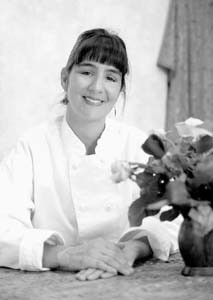
Peter White

0

Dream Time

Hep cat: String slinger Peter White paid his dues with pop-lite star Al Stewart.

Guitarist Peter White straddles the pop and jazz worlds

By Bob Johnson

GUITAR PLAYER and composer Peter White would prefer to be known as a good musician, rather than being lumped into the genre known as smooth jazz. “I have nothing personally against the term,” he says, “but I understand how it might disturb some pure jazz players. Remember, musicians didn’t come up with the term; it was invented by radio station guys. Some people say what I play is not really jazz, and my response is: ‘I never said it was.'”

If one were required to categorize White’s music, it would fall somewhere between instrumental pop and R&B. Listening to his seven solo albums to date (save for his 1997 Songs of the Season Christmas album), one can hear a steady progression toward more R&B-tinged tunes.

Nineteen years of backing English folk/rock legend Al Stewart has infused White’s playing with a smart pop sensibility. His skills on the Spanish guitar were showcased on the popular song “On the Border,” part of Stewart’s epochal Year of the Cat album. White’s first two solo albums, Reveillez-Vous in 1990 and Excusez-Moi in 1992, included tunes that White originally wrote for Stewart but that never saw the light of day, and perpetuated the unique interplay between acoustic guitar and saxophone made famous on Stewart’s Year of the Cat and Time Passages albums. In fact, White wrote the 1992 hit “Dreamwalk” specifically with Stewart’s sax man, Phil Kenzie, in mind.

“It takes the right players to make the guitar and sax sounds work together,” White says. “It doesn’t work well with a guy who plays loud and raucous. It works great with a guy like [jazz-pop star] Boney James, who plays a little softer but still with a lot of dynamics. He always leaves a space in his playing; he sort of slides into a phrase and fades out in the end, so it’s easy for me to slide the guitar in.

“It’s never jarring.”

WHITE PLAYED a great many jazz festivals in the early years of his solo career, and says being exposed to such musicians as James, Kirk Whalum, and David Sanborn motivated him to lend R&B touches to subsequent albums, including 1996’s Caravan of Dreams and last year’s Perfect Moment.

“I loved R&B when I was growing up–the Temptations, Four Tops, Spinners, Barry White,” he says. “It was a style I never broached with Al, but it works nicely, I think, with my type of playing.”

Amazingly, White never has taken a guitar lesson. He was motivated to learn the instrument after listening to a group of some repute from his native England–the Beatles.

What was it that attracted White to John, Paul, George, and Ringo?

“Their trousers,” he quips without missing a beat. “No, seriously, it was that the guitar was so prominent in their music. And then watching the video of their appearance at Shea Stadium with all the screaming girls . . . I thought, ‘That looks like fun.'”

So White went about learning the instrument “one string at a time, starting with the lowest string. Later, I remember watching Eric Clapton playing all these really high notes up at the top of the neck, and I didn’t even know you could do that.”

Other influences included Jimi Hendrix and Jimmy Page, and when White visited America for the first time on Al Stewart’s 1975 tour, the first thing he did was purchase a Les Paul guitar “because I wanted to be like Jimmy Page.” Coincidentally, within a week, White–with his new Les Paul in hand–ran into Page in a hotel elevator.

“All I could do was look at him and say, ‘You’re Jimmy Page,'” he recalls.

White’s basic shyness caused him to be “scared to death” when he first stepped out of the background to front his own band. But, he says, he enjoys it now, especially when his music motivates an audience to dance. “I don’t take that as an insult at all,” he says.

“In fact, it’s a great compliment. It’s the ultimate in audience participation because you know your music has gotten through to them.”

Peter White co-headlines with trumpet player Rick Braun on Sunday, Aug. 22, at 3 p.m., at Rodney Strong Vineyards in Healdsburg. For details, call 433-0919.

From the August 19-26, 1999 issue of the Sonoma County Independent.

© Metro Publishing Inc.
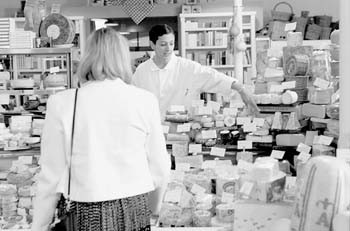
Fall Films

Fall into Film Eye spy: Johnny Depp plays an 18th-century cop chasing a killer in Sleepy Hollow. The new season offers everything from big bombs to cinematic shooting stars By LOOKS LIKE Halloween came early this year. It's no secret that the one independent movie that earned studio respect this year was...

A’Roma Roasters

Smell the Coffee By Janet Wells A'ROMA ROASTERS cafe in Santa Rosa no longer serves food or drink on its front sidewalk after 8 p.m. A small thing, perhaps, in a city where zealous development, church scandals, and nightmare traffic rule the headlines. But for a city that seems desperate to revitalize its near-desolate...

Rosewood Hotel

Last Resort Fighting for the high ground: Sonoma City Councilman Ken Brown, left, and Dave Williams of Citizens for Measure A perch on land where developers want to build a large luxury hotel. On Sept. 21, voters decide the fate of the project. Luxury hotel plan raises hackles in Sonoma By...

Sonoma County Theater Companies

High Drama Face the fall: Jereme Anglin stars in La Bête at the Cinnabar in September. Sonoma County theater companies pile on the productions By Daedalus Howell ACTRESS Tallulah Bankhead once remarked, "It's one of the tragic ironies of the theater that only one man in it can count...

Melting Pot

Melting Pot There's room at the table for everyone By Marina Wolf MY SISTER Monika is one of the millions of Americans who think "gourmet" is an insult. She can't help it. She married a good Mormon boy from Idaho, where "meat and potatoes" is the unofficial state motto. ...

Fall Arts in Sonoma

Full Season Pluck of the Irish: Master storyteller and musician Patrick Ball delivers a one-man musical and theatrical show about Ireland's most famous bard, Turlough O'Carolan, starting Sept. 23 at Spreckels Performing Arts Center. Fall puts big stars and local talent into the spotlight Edited By Patrick Sullivan TO...

Five Local Restaurants

Cookin' It Up Country comfort: Sally Spittles, owner of Willow Wood Market Cafe in Graton, has created a cozy country-store feeling at her west county eatery. Five local restaurateurs who've broken the mold By Paula Harris and Marina Wolf OUR TASK SEEMED simple enough: Spotlight five restaurateurs who'd emerged...

Counterculture books

Cover Tunes Nobody's fool: Flavor Fav of Public Enemy knows what time it is. New books focus on hip-hop nation, Mexican counterculture By Greg Cahill Refried Elvis: The Rise of the Mexican Counterculture (University of California Press; $18.95)By Eric Zolov THE RECENT EMERGENCE of...

Five Stories

Signposts Aftermath: Marc Klaas paused the day after police found the remains of his missing 12-year-old daughter, Polly. The highly publicized murder led Klaas to push for stringent sentencing laws. 5 underreported stories that marked our times By Greg Cahill OVER THE PAST five years, Sonoma County has...

Peter White

Dream Time Hep cat: String slinger Peter White paid his dues with pop-lite star Al Stewart. Guitarist Peter White straddles the pop and jazz worlds By Bob Johnson GUITAR PLAYER and composer Peter White would prefer to be known as a good musician, rather than being lumped...
11,084FansLike
4,446FollowersFollow
6,928FollowersFollow


