Eva Norvind

Lust for Life

Blonde bombshell: Eva Norvind began her career in Mexican cinema, but her unconventional life has taken a few strange turns since then, as a new biopic reveals.

The outrageous story of starlet Eva Norvind

By Diane Anderson-Minshall

WHEN SHE WAS still a teenager, Norwegian-born Eva Norvind took a bus from New York to Mexico with a mere 10 bucks in her pocket. Within months she was transformed into Mexico’s version of Marilyn Monroe–a flamboyant and buxom blonde starlet who appeared in numerous ’60s-era films, including Juan Pistola, Blood Pact, and Este Nocho No.

But Norvind didn’t stop there. She turned tricks, she introduced birth control to Mexico’s Catholic women, she smuggled electronics, she had a daughter out of wedlock, she worked with Mother Teresa, and she became one of America’s leading dominatrixes.

However, the cultural chameleon’s true starring role comes in the new First Run Features art-house biography Didn’t Do It for Love, recently released to video, which chronicles the now gray-haired 54-year-old grandmother’s sexual compulsions as well as her eclectic sources of fame.

Filmmaker Monika Treut shows viewers why Norvind was and still is an unconventional sexual pioneer. Treut, a German feminist filmmaker whose explorations into the erotic life of women include Virgin Machine and Female Misbehavior (which featured interviews with the likes of author Camille Paglia and performance artist/porn star Annie Sprinkle), takes an unflinching look at Norvind’s obsession with sexuality.

While it’s clear that the filmmaker views Norvind with some degree of admiration, Treut never lets her subject’s rather intimidating personality off the hook. Viewers may experience a basic sentimentalism as Norvind talks with some family members, but they’ll feel squeamish at other personal interactions Norvind has in the film.

In one scene, for instance, Norvind berates her younger black male lover so harshly that the man is left tongue-tied and stammering. In another, she lasciviously caresses a limbless male harmonica player. In yet another, she recounts a lesbian S&M scene that went awry. The scenes are not played full tilt with too much emotion; they’re actually recounted very matter of factly.

While the frantic pace of Didn’t Do It for Love may make the film seem like an assemblage of talking heads, it’s the fact that Norvind has lived so many different lives that makes the film seem disjointed.

Tough stuff: Eva Norvind became one of America’s leading dominatrixes.

She was born Eva Johanne Chegodayeva Sakonskaya, the daughter of an émigré Russian prince (who now spends his days collecting bottles) and a Scandinavian sculptress (who blithely paraded her 15-year-old daughter nude past French filmmakers). Norvind, who currently runs a dominatrix dungeon in midtown New York, has reinvented herself at least five times and is heading for the next career change. She speaks 11 languages. She sat next to Hillary Clinton at the Beijing Women’s Conference. She had an entourage in the ’80s that included Nancy Friday, Erica Jong, and Milos Foreman. She is estranged from her own daughter, who ran away at 12 and now calls mom a “whore.”

The film (whose video-to-tape transfer actually improves on the small screen) may be provocative to some; a whiff of fresh air to others. Treut passes up pop psychology and lets Norvind speak for herself without analysis. It’s clear Norvind has her demons to deal with. Her anger with her own mother is hardly concealed, and it doesn’t take Sigmund Freud to surmise that the root of Norvind’s hypersexuality may lie somewhere close to the surface of that maternal relationship.

Like any good documentarian, Treut turns the camera on Norvind’s family and on the actress-cum-dominatrix’s inner monologues (which, for Norvind, appear to never end). Norvind is frank and free of guilt, and Treut’s view of her makes for a fascinating addition to the oeuvre of a transgressive female filmmaker who defies easy categorization.

Treut sets out to explore the banality of perversion in all her films, and Norvind makes for a good pop-culture subject. So what if she dreams of urinating next to Madonna? When the aging Norvind turns to the camera and asks, “What the heck am I doing?,” one thing, at least, is clear. The answer to that question is a very interesting one indeed.

Didn’t Do It for Love is available locally on video at Bradley Video in Santa Rosa (538-7752). Or buy it directly from First Run Features (for $39.95) by calling 800/488-6652.Note: The film offers very complex adult themes and one scene of actual S&M; it’s not for the kiddies.

From the September 2-8, 1999 issue of the Sonoma County Independent.

© Metro Publishing Inc.

Violent Femmes

0

Femmes Fatale

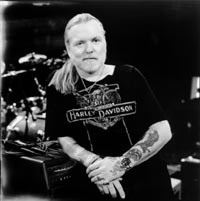
Preaching to the choir: The Violent Femmes, including Gordon Gano, center, are set to perform Sept. 7 at the Mystic Theater in Petaluma.

Violent Femmes put career back on track

By Greg Cahill

“WHY CAN’T I get just one fuck?” Gordon Gano pondered on the Violent Femmes’ landmark 1982 self-produced indie single “Add it Up.” The rhetorical answer to that remark: “Guess it’s got something to do with luck.”

Lucky or just plain clever, that angst-ridden comment struck a chord. The song became a staple on the then-fledgling college radio circuit and attracted frustrated teens by the scores. It also launched the career of one of the most original trios–and best live bands–of the ’80s.

Since then, these Milwaukee-based post-punk phenoms have scored plenty and lost more than their share during a roller-coaster ride that until recently had stalled after a major label for four years refused to release any of their new recordings.

Now the Violent Femmes–whose 1983 revenge-of-the-nerds DIY debut album sold a million copies without ever charting or receiving a lick of promotion–have re-emerged on a pair of soundtracks: South Park: Bigger, Longer & Uncut, and Mystery Men, on which the band plays a stellar cover of the Stranglers’ “No More Heroes.”

“We’re a group that plays all the time and goes all around the world,” explains Violent Femmes singer/guitarist/songwriter Gano, during a phone interview from his New York home, “but about once a week I run into somebody who asks, ‘Yeah, so what’s up with you guys? Do you play anymore ever?’

“The answer is, ‘Yeah, that’s what I do.'”

TO SAY that the Violent Femmes–who blend choppy guitars and bare-bones arrangements, punchy riffs, and self-effacing lyrics with often Captain Beefheartesque experimentalism–have had an up-and-down career is an understatement. Gano, the son of a preacher, has flirted with Christian messages in such tunes as “Country Death Song” and “Jesus Walking on the Water,” a seeming contradiction to his penchant for penning teen anthems dealing with masturbation, rebellion, and chicks (“36-24-36”).

Critics often scratched their heads in confusion over the band’s musical direction and issued some quite unkind assessments of Gano’s religious inclinations. “A lot of people have a hard time with different viewpoints or different ideas coming from the same writer,” says Gano, chronicler of a twisted Americana–like Aaron Copland on acid. “In rock, songwriters are supposed to be speaking to you from their heart, meaning what they truly believe. Critics like artists to be simple and straightforward.

“That’s a problem we constantly have with this business.”

Still, the Violent Femmes have had their share of success. Their eponymous 1983 debut LP on Slash/Warner stands as one of the first and most successful alternative rock releases. Its 1984 follow-up, Hallowed Ground, while critically panned, is a post-punk classic. Producer Jerry Harris of the Talking Heads produced the band’s third and most commercially successful album, 1986’s The Blind Leading the Naked, before the band split temporarily, with Gano and bassist Brian Ritchie releasing a series of solo projects. The band regrouped three years later only to crash and burn with 1989’s stylistically jumbled 3 and 1991’s nostalgia-fueled Why Do Birds Sing?, which included an insipid cover of Culture Club’s insipid “Do You Really Want to Hurt Me?”

A 1993 greatest hits and live rarities compilation, Add it Up (1981-1993), is a strong representation of the band’s most creative output.

AT ELEKTRA RECORDS, the band gained more artistic freedom, releasing a pair of darker discs that died on the racks. A subsequent deal with Interscope Records–home to Primus and Limp Bizkit–looked promising, but for four years the label declined to release any of the band’s tapes.

The Violent Femmes languished in rock-‘n’-roll oblivion.

“We got away from there,” Gano explains. “It wasn’t with any nastiness, which was nice, but it just wasn’t working. And we were able to take the recordings with us.”

Those long silent tapes will finally get an airing in February on the smaller Beyond label. And a live concert CD, Viva Wisconsin, is due out in November.

“If that all works, it will be great,” Gano adds. “It will start to make up for all the years of not having anything come out when we were doing a lot of good work.”

Meanwhile, the vagaries of the music business have done nothing to dim Gano’s enthusiasm for his craft. “From day one, the band had a ‘sound’ that is still recognizable,” he says. “But we are better musicians, and we keep finding more and more ways as a trio to bring more colors and more instruments into the live shows.

“We’re always looking for ways and places to bring in other colors.”

As for what excites Gano after all these years: “The improvisations,” he says without hesitation. “We keep getting better at it. We have sections of certain songs that are set aside for free improvisation, where anything can happen anytime we play it. Hopefully, you play and listen at the same time, and each person is connected to the others, to a degree that you don’t know who’s leading and who’s following.

“And that’s something that is very exciting.”

The Violent Femmes perform Tuesday, Sept. 7, at 9 p.m. at the Mystic Theater, 23 Petaluma Blvd. N., Petaluma. Tickets are $24. For info, call 765-2121.

From the September 2-8, 1999 issue of the Sonoma County Independent.

© Metro Publishing Inc.
NudeFest ’99

0

Get Naked

Hangin’ out (literally) at NudeFest ’99

By Chris Wright

I’m leaning my elbows on a bartop, sipping Fosters Lager from a plastic cup. Nothing unusual about that. Two middle-aged guys beside me are having a boisterous conversation: “He shoulda kept his damn mouth shut!” Just regular guys talking regular guy stuff. Less regular is the fact that the two guys are naked. Come to that, so am I. Usually this realization would mark the point where I’d wake up, sweat beading my brow. But not today.

The really strange thing is, it’s OK.

By this point, I’ve already been hanging out (literally) at Berkshire Vista for a good few hours. Berkshire Vista is a nudist resort located in the mountains of Massachusetts; I’d arrived early that morning, eagerly anticipating NudeFest ’99, the 52nd annual convention of the Eastern Sunbathing Association .

What I hadn’t anticipated was my initial discomfort at the sight of the teeming, tawny nakedness all around me–or having to stand around waiting for my hosts, studiously averting my eyes, making small talk with a partly clad T-shirt vendor.

“Are those T-shirts for sale?” I ask. The vendor smiles and nods. After 10 excruciating minutes, my hosts arrive: Susan Weaver, public-affairs chair for the American Association for Nude Recreation, and Linda Pace, AANR marketing director. Both are wearing sarongs.

The big question comes almost right away: “Do you want to take your clothes off?”

In the interest of journalistic integrity, I’d already decided to say yes. So I do it–shirt, socks, shorts–and there I am, standing in the middle of a field, wearing nothing but a pair of red Converse sneakers and carrying a black briefcase. As if I don’t already feel awkward enough, a passing woman points at my ass, proclaiming, “Look! A cottontail!” Great.

Laughing, Weaver and Pace strip, and the three of us jiggle down a small hill, on our way to my first stop of the day. I’d been hoping for something a bit racy to start with–the conven-tion agenda includes Olympic training, a seniors’ swim, and nude bacon and eggs breakfast–but those had taken place earlier.

What I get is an ESA membership-committee meeting.

About 50 people in various stages of undress sit and stand under a wooden structure in a section of the resort known as the Ghetto. I honestly don’t know where to look–or, more important, where not to. Particularly unsettling, for some reason, are the guys who aren’t quite nude, their todgers peeking out below the hems of their T-shirts.

As Susan introduces me to the meeting, announcing that I am a “first-timer,” the delegates give me a big round of applause, which is actually more disconcerting than the cottontail incident. Clutching my briefcase before me, I scamper to the nearest table and settle down to watch the proceedings.

For the next hour I nod thoughtfully, gaze intently into the face of each speaker, and scribble notes such as “the power of public advertising” and “Jesus, they’re huge.”

When I think nudism, I generally tend to think nude beach. So how did I come to find myself in the middle of the mountains, attending a legislative assembly, listening to talk of budget proposals and outreach strategies?

Since its inception in 1931, AANR has grown into a massive organization boasting 50,000 members, 236 clubs, and seven regional branches. In fact, the organization is experiencing growing pains. At the meeting, discussions about where to put the proliferating legions of nudists generate almost as many solutions as there are delegates.

The task of bringing all this diversity together falls to Greg Smith, the AANR’s national president. Smith has something of a young Hunter S. Thompson look about him. Slim, tanned, with a shaven head and sunglasses, he serial-smokes mini cigars and presides over the meeting with cool authority. Even though I am still in the omigod stage, when Smith speaks it’s quite possible to forget the pecker beneath the mike. And Smith speaks quite a lot.

At one point, as the president takes center stage yet again, a delegate sings under his breath: “Here he comes to save the day!”

AFTER THE MEETING, Smith sits across from me, rests his elbows on the table, and says, almost immediately, “I have nothing to hide.”

Quite.

A retired naval officer, Smith currently drives a school bus in Bethel Park, Pa. He’s less interested in talking about his professional life, however, than in touting an annual nudist volleyball tournament he arranges. “Last year,” he says proudly, “we had 95 to 100 teams, 2,000 people.”

As with many of the people I meet today, nudism is not merely an interest for Smith, nor even a lifestyle. It’s a vocation, a creed. He seems particularly proud of his record as AANR’s leader, speaking of how nudism is “becoming more and more mainstream every day,” of how he has helped the organization “enter into the 21st century,” of the constant barrage of e-mail and faxes he receives, the twice-weekly meetings he must attend.

Smith admits that the logistical headaches of bringing a nation of nudists together can make the president’s role a tough one. “You can’t afford to get upset,” he says. “If you do, you’re in the wrong job.” The AANR has presidential elections slated for the year 2000, and I ask Smith who his main challenger is.

“When the president is doing a good job, there is no competition,” he says, lighting up another cigar. “I expect to be re-elected.”

And so there we are: two men, buck-naked, discussing institutional politics. At one point, Marci Lott, Smith’s fiancée, glides over. The couple are planning a nude wedding sometime this year, they say (“at least the bridesmaids will all match”). Lott–a trainee flight attendant–is blond, large-breasted, and wears a sheer white wrap around her waist. I am mortified–helplessly so–to note that she is very sexy.

Sex, however, plays little part in your average nudist camp. And that’s not only because many nudists resemble your grandparents.

When you come down to it, the symbolic link between nudity and sexual intercourse rests on a pretty banal concept: I’m ready. But when everyone is nude, that link is somehow broken. Sex has no place at a nudist resort precisely because the guests are naked.

As the saying goes: “We’re nude, not lewd.”

Indeed, the only hint of prurience I get the whole day is from a guy who admits to having gotten interested in nudism when, in his teens, he bought a copy of Sunshine & Health. Which doesn’t necessarily mean that sex is far from the minds of nudists–at least in an institutional sense. While the terms respect, acceptance, and wholesome are thrown about by AANR representatives like rice at a wedding, the word sex is tirelessly avoided.

But, as always, it looms all the larger for its absence.

Aware that many people view organized nudity with a suspicious eye (or worse, think Wey-hey-hey!), the organization goes to extreme lengths to project a socially responsible, clean-living image. It organizes blood drives, clothing drives, and beach cleanups. So conscious is the organization of its public image that Weaver runs media-training sessions during which AANR workers learn to fend off salacious and cynical media inquiries with quotable epigrams (“Shed your cares with your clothes”).

Weaver will also turn down media requests from potentially unfriendly sources.

“Why would we deal with someone who’s going to make fun of us?” she asks.

WHAT IS MOST surprising about today’s gathering, however, is that despite all the wholesomeness, most of the nudists are far from being the crunchy, touchy-feely bunch I had anticipated. When I arrived at Berkshire Vista, I tucked my cigarettes away, fearing a lynching if anyone saw them.

But fellow smokers abound, and the clubhouse bar does a thriving business. There’s barely a hint of sanctimony.

Indeed, rubbing elbows with the guys in the bar feels like being back in the city–that is, if elbows were all we were rubbing. Some of the nudists even indulge in saucy banter when Linda Pace gingerly steps into the club’s swimming pool. “It’s cold!” she says. “Love those bumps.”

“So do we,” replies one man, arousing bursts of laughter all around. To say that Linda Pace is a good sport would be to understate the matter. A full-figured woman far too young-looking to be the mother of three 20-something children, Pace is energetic, witty, and as prolific a smoker as I am. As a group of us sit on a deck having lunch, Pace laments the fact that she can’t finish her burger. “My eyes were bigger than my stomach,” she says. Then, without skipping a beat, she looks at her stomach and says, “I guess you can only say that when you have clothes on.”

PACE used to run a halfway house for troubled teens; now she is a full-time nudist. I knew I was at ease with the AANR’s marketing director when I stopped not noticing her breasts, when I was able to run my eyes over them as easily as I would a lapel. Many people espouse the old “body acceptance” nugget during my time at the convention, but Pace really brings it home for me.

“As a woman who has three kids,” she says, “my body is a road map that leads back to my children. Me without clothes on is not going to make the cover of Cosmo, but with this group I feel beautiful.”

So do I.

As one who enjoys the odd pint, my body is a road map that leads back to the Sam Adams brewery. But here–and not only because the majority of the people are in worse shape than I am–I feel completely comfortable. Or at least I’m beginning to. Most of the time.

Nearly.

During a game of volleyball, every now and then I think, “Hey, that person who just spiked me is naked.” Or worse, when saying hello to a passing kid: “Hey, I’m naked.” At one point, a guy says something about the government being “hard on” nudists and I think, “Hard on!” as if the very words could trigger a disastrous bout of tumescence. And it does feel a little weird to be showering beside Susan Weaver. Then again, after you’ve soaped up beside a publicist, you’re pretty much ready for anything.

As the day draws to a close, I’m very nearly at ease, dangling my tackle in a variety of settings as if it’s the most natural thing in the world.

And, of course, it is.

As I prepare to leave my newfound nudist friends, a poolside wine-and-cheese reception is in full swing, and I feel a little stab of regret. Later tonight they’ll be having a disco dance, complete with DJ. I have visions of a hundred nudists doing the Macarena. But I have stuff to do back in the city and a long drive ahead of me, so I decamp.

People I’ve met over the day hug me, give me little presents, assure me we’ll meet again.

I’m a sentimental guy–I hate goodbyes–but there’s something else bothering me. It’s strange, but after a day in the buff, I am appalled by the prospect of putting my clothes back on. Then again, maybe it’s not such a bad idea.

As I stand beside the pool, a guy comes over to inspect my backside, bending slightly for a better look, and inhales sharply through his teeth.

“Put some tea bags on that,” he says. “Or some vinegar. You’re going to need it.” I twist and take a look. He’s right. According to people I’ve met today, Thoreau was a nudist. Ben Franklin was a nudist. FDR was a nudist. Jesus was a nudist. Now, it seems, so am I.

And I have the sunburned butt to prove it.

From the September 2-8, 1999 issue of the Sonoma County Independent.

© Metro Publishing Inc.
John Hawley

0

Hands On

Enjoying the fruits of his labor: Winemaker John Hawley used his skills to bolster Clos du Bois and to catapult Kendall-Jackson into the viticultural stratosphere. Now he’s returned to hand-crafting his own wines.

John Hawley helped industrialize the wine biz. Now he’s happy to be a craftsman again

By Bob Johnson

JOHN HAWLEY has attained a winemaker’s equivalent of scaling Mt. Everest, swimming the English Channel, winning a Super Bowl. After graduating with honors from the University of Vintners, otherwise known as UC Davis, Hawley served a one-harvest apprenticeship at Preston Vineyards before being hired as the first winemaker at Clos du Bois.

During the ’80s, he oversaw the growth of the Healdsburg-based Clos du Bois from fewer than 20,000 cases to more than 200,000, picking up a ton of wine competition hardware along the way. In 1990, he accepted the position of chief winemaker for Kendall-Jackson, and over the next six years led K-J’s expansion from around 600,000 cases to more than 2.5 million cases annually.

Hawley is largely responsible for what has been called the “industrialization of winemaking,” and as he looks back on the 16 years he spent transforming wines into mega-brands, he admits to experiencing some pangs of regret. “I don’t think the people doing the work in the big wineries have the kind of fun that those in the little wineries have,” he says. “In the little wineries, it’s a different job every day. When you get in the highly mechanized places, it becomes an assembly-line procedure, and those people don’t get to enjoy the diversity or feel like they’re in the wine business. They’re just working a factory job.”

Hawley describes his tenure at K-J as “exciting,” but also “stressful.” And after a while, he adds, the long days and tremendous responsibility began to take their toll. “I had a lot of fun, dealt with virtually every grape variety from multiple appellations, learned all about the different barrel types, and was part of a dynamite team,” he says. “But I got tired of managing paper and people, and really wanted to get back to hands-on winemaking.”

Crafting his own wine had been Hawley’s lifelong goal, but he never had the wherewithal to make it happen. Not until he started earning the big bucks at K-J and holing away as much of each paycheck as possible.

Finally, in 1996–after 16 years of working for others–Hawley was ready both mentally and fiscally to take that giant step.

Goodbye, Kendall-Jackson. Hello, Hawley Wines.

A few words on Hawley wine.

UP FROM HIS OWN 10-acre vineyard a thousand feet up Bradford Mountain in Dry Creek Valley, as well as those owned by a handful of other local farmers, Hawley released his first pair of bottlings: a viognier and a merlot.

For the 1997 vintage, those two varietals were joined by a cabernet sauvignon. Total case production for all three wines: 1,928. Or, approximately 29,976,864 fewer bottles than he had been making at Kendall-Jackson.

Hawley says he enjoys being able to once again take a “hands-on approach” to winemaking. “It’s going back to my roots–to what I did at Preston and even before that with my home winemaking,” he asserts. “I’m working closely with my vineyard manager, crushing the grapes, racking the barrels every three months, tasting every step of the way, and making decisions at various intervals to make an individual wine the best it can be.”

It is akin to the difference between prints rolling off a press and an artist’s original painting. Or shoes assembled in a factory vs. those formed to one’s unique foot dimensions by a cobbler.

“It’s about attention to detail and levels of control,” Hawley says. “The bigger you are, the more levels of control you lose. I was never comfortable with delegating duties, and now I don’t have to be. I enjoy doing it all myself, and I can have the confidence that each step is being done the way I want.”

And that, Hawley adds, translates into a greater degree of inner peace with the process and personal satisfaction with the final product. While working for Clos du Bois and then Kendall-Jackson, Hawley developed and adhered to a number of rules designed in large part to protect the owners’ huge investments.

Now on his own, Hawley says he doesn’t miss the regimentation. He answers only to himself, and follows only one rule. “The only rule,” he says, “is to make the best wines that I can.”

From the September 2-8, 1999 issue of the Sonoma County Independent.

© Metro Publishing Inc.

Elena Lappin

Pride of Brides

By Sarah Coleman

AS FANTASIES GO, the idea of shacking up with an exotic foreigner ranks high in the imaginations of many people. There’s always something alluring about a different culture, and the idea that love is strong enough to cross international borders is a powerfully romantic one. Just ask Cleopatra, or Ivana Trump.

In her debut collection of short stories, Foreign Brides (Farrar, Straus & Giroux; $22), author Elena Lappin takes the fantasy and runs with it. The 12 stories feature women who have made marriages across cultures, often leaving their native countries in the process. Some are seduced by a lover’s difference from them; others are merely attempting to escape drab lives. And–perhaps inevitably–none of them gets quite what she envisaged.

One of the problems, for Lappin, is the hidden cost of exile: “All émigrés have the same basic story to tell,” says a character in one story. “There is that small death when they leave their home country . . . that short-lived euphoria when it looks like they’ve been blessed with a chance to rewrite their script in a free society, and then comes the life-long sadness once they realize that they have made an irreversible choice to cut themselves off from their roots.”

For most of Lappin’s women, the transition to “life-long sadness” comes all too quickly, as a promising-seeming marriage burns out or a loved one’s death alters an already unfamiliar landscape. But these women are fighters. Instead of giving up, they wrestle with their disillusionment and adopt creative ways of coping.

In the sparkling first story, “Noa and Noah,” Israeli Noa is two years into her marriage to British Noah before her English improves enough to realize that he’s not a glamorous businessman–rather, he’s a debt collector whose “sexy” mutterings in bed are actually bits of soccer trivia. Noa regroups, then gets her revenge by serving orthodox Noah meat that’s treyf (non-kosher) and by getting herself a piece of the hunky butcher.

Likewise, Russian mail-order bride Vera finds herself in hot water when she goes to London to meet English Charles in “Peacocks.” Having been seduced by his posh Kensington Gate address (“the first word reminded her of Diana’s funeral”), Vera is devastated to learn that Charles is only the butler at the mansion where he lives. She stays with him anyway, and when Charles gets fired, it’s Vera who turns the tables and takes charge of the couple’s future.

Lappin, who was born in Moscow and has lived in places as far afield as Israel, England, Germany, and Canada, is alive to the humorous aspects of cross-cultural unions. She’s also particularly good at analyzing the power imbalances that determine how a relationship is run–and by whom.

THAT ANALYSIS APPEARS in “Peacocks,” when Charles meets Vera at the airport. He sees her as “a kinky dream come true,” whereas Vera notes only that Charles is “shorter than she had imagined, and rounder too.”

In “Framed,” a German woman reluctantly accepts her Hebrew teacher’s obsessive love, and we’re told that her feelings for him are those of “a tender friendship,” while his love for her is “a life’s passion let loose, like a tulip breaking into height and colour after a long winter in frozen ground.”

You don’t have to be Dr. Ruth to predict the trajectories of these relationships.

Although she is a skillful humorist, Lappin doesn’t always go for easy laughs. A darker tone inflects several of the stories. In “Michael Farmer’s Baby,” the distressed feelings of an abandoned woman surface as a phantom pregnancy. None of Lappin’s characters stay gloom-ridden long, though; most of the stories end on an appealingly upbeat note. Nor are the stories repetitive, even though they all riff on the same basic theme. Lappin has come up with that rare thing: a concept-driven collection that also works on a story-by-story level.

But not every story is a gem–both “Bad Writing” and the very short “Unguarded” feel thin, and many stories end with a too-neat twist–but Lappin’s snappy prose is a pleasure to read, and her lively heroines are memorable.

They may lose out in big ways, but these globetrotting women prove that there is life after disappointment.

From the September 2-8, 1999 issue of the Sonoma County Independent.

© Metro Publishing Inc.
Vintage Apple Orchards

0

Core Values

Bitter harvest: A steam shovel destroys vintage apple orchards at the Dutton Ranch to make way for vintage wine grapes, a trend that apple growers say is endangering a way of life.

Livelihoods wither for local apple growers in the wake of Vacu-dry plant closing

By Janet Wells

TAKE A DRIVE down Graton Road in Sebastopol, open the car windows, and take a nice deep whiff. The sweet fragrant smell lingering in the balmy evening air is unmistakable: apples. The trees, leafy and full, are laden with pale green and rosy-skinned fruit. It’s a scene that, for decades, has defined the west county, with its signature apple products, apple blossom fairs, and apple harvest celebrations.

But focus on the scenery in between the orchards, and apples start to look like an endangered species.

Rows and rows of wine grapes, stately green and elegant, seem to be marching right over the apple trees. Why? Wine grapes take less water and bring in more than 10 times the money per ton. And, say local apple growers who gathered at a recent meeting, the future of their time-honored tradition is looking even bleaker.

The local apple industry was thrown a curve in addition to changing economics this summer with apple processor Vacu-dry’s abrupt decision to close after more than 25 years as a mainstay of the Sonoma County industry. While there are market opportunities for varieties such as Gravenstein, Red Delicious, and Macintosh, almost all of the county’s Rome apples–totaling about 13,000 tons last year–were processed at the Sebastopol plant. Another 6,000 tons of apples of different varieties were bought and processed by Vacu-dry as well.

The apple harvest is in full swing now, and many local growers still have no home for the apples they expected to sell to Vacu-dry.

“I think there will be some apples rotting this year,” says 77-year-old Bill Braga, who farms 125 acres of apples in Sebastopol. “What Vacu-dry did to us, it wasn’t quitting that was so bad. We could have dealt with that. But to do it so late in the season. They caught us at the time that we were about to harvest.”

Vacu-dry was the main outlet for grower Warren Dutton’s 50 acres of Rome apples. “We have a big crop this year. We need to sell somebody a lot of fruit,” says Dutton, whose orchards produce about 30 tons of apples per acre. “It’s definitely possible that we’ll have trouble selling Romes.”

Dutton is one of many local growers feeling the pinch, and several thousand tons of apples could end up with no buyer this year. “They’ll just rot away on the ground,” Dutton says. “In California there really is no processor that can absorb as much as Vacu-dry was taking.”

At a recent meeting at Dutton’s Sebastopol ranch, worried growers crowded around folding tables set up in the tractor shed. Industry buyers and advisers joined in the discussion of finding an outlet for this year’s crop, as well as the future of apples in Sonoma County.

The prevailing mood is not optimistic.

TOM MELLOW from Amy’s Kitchen, a growing Santa Rosa company that packages frozen organic meals, is straightforward. “We’re not big on apples, unfortunately.”

Jeff Haus, owner of the new Sebastopol cider pub, Ace in the Hole, tells the group that he could use more organic Gravensteins. But his business–the first hard-cider pub in the United States–has just opened, and, while he hopes to become a major buyer of apples, he won’t make a dent in this year’s harvest.

Mark Fitzgerald of the Barlow Co., which makes apple juice and sauce, says they are going to use twice as many apples as last year. But at 1,500 tons, it isn’t enough to take care of this year’s Vacu-dry orphans.

“Good luck to everybody,” Fitzgerald tells the crowd. “Every time I think about this, my heart bleeds. You really got screwed.”

Most of Sonoma County’s 40,000 tons of apples are sold for juice, with less than 10 percent ending up in the produce section of the supermarket.

“People tend to buy apples by how they look, and our apples don’t look as good,” says Sonoma County horticulture adviser Paul Vossen.

IN THE PAST several years, cheap apple concentrate from China has severely undercut the county’s juice market. Washington state apple processor Tree Top, which bought out competitor Vacu-dry, offers about $20 a ton for juice, which isn’t enough to cover costs for Sonoma County growers.

There is a savior of sorts for local apple farmers, says Vossen–wine grapes.

“Anyplace that has potential for wine grapes . . . it’s crazy not to think about it,” he says. “There are a few very select places with 55- to 60-degree temperatures at night, nice warm sunny days. The same thing that gives wonderful taste in berries and apples, that’s in grapes.

“There’s only one commodity that pays a premium based on that taste,” Vossen continues.

“That’s wine grapes. Thank god there’s an alternative.”

Wine grapes, according to the county’s 1998 Agriculture Crop Report, fetched about $1,740 a ton, up from $1,589 in 1997. Apples, by comparison, sold for $156 a ton, down from $179 the year before. Even though apple orchards produce more than twice the tonnage of fruit than vineyards, wine grapes clearly net the big bucks.

Dutton has pulled out more than 100 acres of apples to plant grapes in the past four years. His ranch now has 900 acres of grapes and 250 acres of apples. Sonoma County’s apple orchard acreage has dropped more than 20 percent since 1995, while vineyard acreage has blossomed.

“I have orchards I never want to take out. They are beautiful orchards,” Dutton says. “But the very best wines are being made from grapes from Sonoma County. I sell to 37 different wineries.

“If you can’t sell the fruit and make money, you have to take the orchards out,” he adds. “Grapes are one of the things you should think about.”

At a cost of about $20,000 an acre to plant grapes, replacing apple orchards with vineyards doesn’t come cheap.

And for some growers, apples are a way of life that goes beyond economics.

“This apple business is like a yo-yo,” says grower Braga, tanned and feisty, the picture of a hard-working farmer in worn pants and baseball-style cap. “You’ll have good years and bad. The secret is to survive.

“Let’s get buyers in here,” he tells the crowd of growers. “If we can’t do that, I say pull ’em out and plant grapes. It’s a tough deal, we’re up against the wall.”

But Braga himself is not one to take his own advice–which just may provide a glimmer of hope for apples in Sonoma County.

“I’ve been in the apple business all my life. It’s in my blood,” he says. “Those of us that can survive, we’ll never get rich, but we’ll be glad.

“I enjoy watching the trees bloom, pruning them, taking care of them,” he adds.

“I’ve never had knowledge of grape growing, and I’m not going to start now.”

From the September 2-8, 1999 issue of the Sonoma County Independent.

© Metro Publishing Inc.

The Distraction

0

Bad Bad Thing

The other woman: Jennifer Pruitt and Dean Bukowski star in The Distraction.

‘The Distraction’ offers a tepid tale of sexual misbehavior

By David Templeton

OK. There’s this young married couple, and everything seems to be going fine with their marriage. Then the husband learns that, once upon a time, baby did a bad, bad thing. Suddenly the husband can’t stop imagining his wife flopping around naked with some other guy. Unable to deal with it, he begins a long journey into a weird world of temptation, obsession, and seduction. Ultimately, he comes home and cries.

Sounds like Eyes Wide Shut, right?

It’s not. The Distraction, by South Bay filmmaker Greg Tennant, is a low-budget 16mm drama starring a cast of unknowns, filmed in 29 days last year. The story of newlyweds Paul and Ally (played by Dean Bukowski and Elora Hayes), the film follows Paul through his workplace infatuation with an unstable woman named Leslie (Jennifer Pruitt), an infatuation that grows into love and obsession, threatening his marriage and his sanity. It’s a small film, a well-intentioned effort made by people who care about the way real people interact with each other.

And it’s awful.

It actually made me pine to go back and see Eyes Wide Shut again, a movie that was among the worst films of the year but was at least intermittently entertaining. Painful as it was to sit through Kubrick’s bloated final work, that two-hour-and-40-minute torture session was a walk through an orgy compared to The Distraction‘s 87 minutes of clumsy discomfort.

If I sound a bit like a bully, I confess that I feel like one. Small independent films should be cut some slack, if for no other reason than that they grant us a view of the world that mainstream Hollywood seldom allows us to see. They let us to take in new ideas–and there are a few good ideas in The Distraction, which places it ahead of many mainstream Hollywood films.

But even small films have a responsibility to do more than give us one or two things to think about; they still need to make sense, and they should be at least moderately entertaining.

What ideas Tennant does have are obliterated by his cast’s strained and unsure performances. The bizarre script tries so hard to reflect realistic speech patterns and behaviors that it frequently comes off as simply absurd.

We know Paul and Ally are newlyweds because they do silly things like roll around playfully feigning cannibalism: “No eating people,” Ally scolds as Paul tries to consume her forehead. “But that’s the only way you’ll be any closer to me,” he murmurs.

Later, unable to handle Ally’s long-ago affair with his best friend, Paul makes friends with Leslie: “She makes me feel nice,” Paul explains to his wife. “The fact that someone makes you feel nice is nice.”

Yes, it is, Paul, and yes, real people are seldom very eloquent. The problem with basing a script on such stuff is that realistically stupid dialogue eventually begins to be just plain stupid. Just ask Stanley Kubrick.

The Distraction screens Friday and Saturday, Sept. 3-4, at the Sonoma Film Institute. The film begins at 7 p.m. at Darwin Hall, Sonoma State University, 1801 E. Cotati Ave., Rohnert Park. $4. 664-2606.

From the September 2-8, 1999 issue of the Sonoma County Independent.

© Metro Publishing Inc.
‘The Blair Witch Project’

0

“Unknown Curator” Mickey McGowan on movie-addiction, the ‘Blair Witch’ craze, and the growing trend toward really bad camera work

By David Templeton

Writer David Templeton takes interesting people to interesting movies in his ongoing quest for the ultimate post-film conversation. This column is not a film review; rather, it’s a freewheeling, tangential discussion of life, ideas, and popular culture.

Mickey McGowan is a movie addict. Hard-core. So am I. That’s why we’re friends. We understand each other’s addictions, having shared countless cinematic trips, abandoning our responsibilities on sunny weekday afternoons to sneak into matinee screenings of films most other intelligent adults over 40 wouldn’t even bother with. We start with the good films, but when the celluloid worm is crawling in our psyches, we will settle for almost anything.

“I’ve tried to swear off of bad movies before, of course,” McGowan is saying today, “but it never lasts very long. I’ll say, ‘That’s it. No more crap. I’m going to be more selective from now on.’ But after a few days, If no decent films are out, I get to missing the dark theater and the smell of popcorn. Today’s a good example. It’s Wednesday. I haven’t seen a movie since Bowfinger on Friday, and I’m beginning to feeling edgy. But there’s nothing good out that I haven’t seen two or three times. It’s terrible.”

Tell me about it.

Fortunately for us, McGowan and I each have a socially acceptable defense for our behavior: while I write about popular culture, he observes, organizes and catalogues it. McGowan is the curator of the phenomenally curious Unknown Museum, a mysterious repository of “artifacts” from ’50s, ’60s, and ’70s. Currently, the UM’s vast collection of Gumby’s, Lincoln Logs, and Bozo-the-Clown lunch boxes, long located in Northern California, is being warehoused right here in McGowan’s secret Marin County bunker, pending his upcoming move to a new, as yet undisclosed location.

A wall of rare records–Pee Wee King and the West Coast Swing Band, Eartha Kitt, the Banana Splits–stands floor to ceiling around us. Scattered around the record room are cases bulging with Babe Ruth model kits and other oddments. Overhead, an enormous sign–acquired from an old book store–proclaims the words SCIENCE FICTION.

“Have a seat,” McGowan offers, moving a stack of old Frank Sinatra LPs.

“The worst thing,” he says, taking a seat himself in front of a table scattered with old magazines in plastic slip covers, “is that movies seem to be getting worse. I’m no snob, but in a year where the best film might be The Blair Witch Project, you know that quality is slipping.”

Yikes. He’s mentioned the B-word. Blair Witch, if you a scrape away the hype and the hyperventilating praise, may in fact be the worst good movie to come along in years. The ultra-spare “mockumentary”–three amateur filmmakers get lost in the woods, something’s out to get them, and they won’t stop filming–has now reached Titanic levels of hype, and a backlash is now brewing.

I’ve seen it once. McGowan’s seen it three times.

“The primary importance of Blair Witch lies in the inspiration it’s given to young filmmakers and wannabes,” he points out. “Kids all over are out buying digital cameras right this moment, even as we speak, because of this film.”

“Yeah, and most of them will make lousy films,” I remark.

“Well, sure,” he laughs. “We’ll see a lot more shaky camera work at film festivals. There will be more people throwing up from motion sickness.”

“What? You didn’t like the wobbly camera work in Blair?” I ask.

McGowan rolls his eyes. “Even if you’ve never held a camcorder before in your life,” he says, “you’d be hard pressed to pick one up and shots as bad as some of the shots in The Blair Witch Project. Those kids could have gotten hold of a Steadycam, couldn’t they? There’s no real reason for all that shaky stuff on the screen, all that bobbing and weaving and sudden drops of the camera. I couldn’t stand it in Breaking the Waves and Husbands and Wives–and I can’t stand it in NYPD Blue.

“There’s no excuse for the camera to be aimed at Jimmy Smits or Dennis Franz, and then have the shot drop for no reason whatsoever–to aim at some ashtray or a corner of the desk or out the window, whatever–and then back up. It’s always disturbed me greatly. I don’t like it.”

“I like it,” I confess, “because it simulates what my eye does optically.”

McGowan just stares at me, so I continue: “Right now, my eyes are pointed at you as we speak back and forth, but every so often, something will catch my eye in the room–over there, down on the floor, up on the shelf–and my gaze will shift up there for a second, my brain will register that thing, and then my focus will shift back to you. It’s the way people see and interact. It puts me in the room with Jimmy Smits. I like it.”

“Okay,’ he says, raising his hands in surrender. “Your point is well made. In NYPD Blue, there might be a reason for it. But would you want to see it all the time?”

“Um, no,” I agree.

“But you’re going to,” he nods, “because of this one movie.”

Fortunately, The Blair Witch Project is significant for more than just the trend-setting sea-sickness of its visual style. According to McGowan, who just yesterday saw INV-BS–that’s Invasion of the Body Snatchers–for his thirty-sixth time, Blair Witch may signal a return to a simpler form of storytelling.

“Today, we’d never be scared by anything as subtle as an overgrown bean pod bubbling away in a greenhouse,” he says of INV-BS’ once shocking imagery. “Or by something as simple and innocent as a big blob of Jell-o rolling down the street in The Blob. Blair Witch is a throwback to the days when we were easily frightened, when the merest suggestion of a threat was enough to have us on the edge of our seats.

“It’s a primal need,” he continues. “It’s ghost-stories-around-the-campfire, it’s spooky-faces-made-with-our-flashlights. It’s a wonderful thing to be scared by so little.”

“That’s the real reason Blair Witch is so important., in spite of its flaws,” he says. “It’s a much needed flashback to a kinder, gentler time. On the other hand, 20 years from now people will be laughing at themselves for having been scared by this. You watch.”

We stand up. The matinees will be starting soon. McGowan checks the listings, mumbling that we might have to sink to seeing Mystery Men.

“Gee,” I mention as we head for the door, “maybe we should try to just kick the movie habit altogether. Cold turkey.”

“Of course not,” McGowan shrugs away the thought. “I’ll put up with a few bad movies, but I’d never quit movies altogether. And either will you.

“Really,” he laughs, “why would we punish ourselves like that?”


From the date-date, 1999 issue of the Sonoma County Independent.

© Metro Publishing Inc.
Flameco Arts

0

Passion Afoot

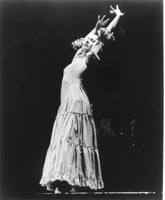
Dance fever: FlamecoArts’ Elena Marlowe pounds the boards.

Flamenco dance unleashes the Gypsy soul

By Paula Harris

A GHOSTLY CLOUD of white dust and rosin rises from the well-worn dance floor around my ankles, as my feet, encased in black suede flamenco shoes embedded with tiny nails on the heels and toes, pound out a driving beat that shakes the building.

The FlamencoArts dance studio in Santa Rosa’s Lincoln Arts Center is backdrop to today’s advanced dance class, but the sounds of flowing guitar music, emotionally charged singing, and rhythmic hand clapping transports me to Andalusia. I can almost smell the orange trees and taste the sherry.

Legendary dancer Carmen Amaya, a fiery vision with her flowing Gypsy curls and amused dark lips, gazes down benignly from a black-and-white poster on the studio wall, like a sacred flamenco deity. We dance students silently pray to her whenever the we lose our beat or when the footwork gets too complicated.

Photographs of José Galván, our imperious maestro from Seville, who annually visits Santa Rosa to perform and teach flamenco dance workshops, decorate another wall. He seems to be urging me to stomp “Más fuerte!”

The guitar music builds and other dance students join the punishing exercise, spellbound by the intense driving compýs (rhythm) of a siguiriya. A wall of open windows and a feeble electric fan on the floor do little to dispel the heat. A dozen sweat-soaked bodies clad in stretchy leotards and full flouncy skirts execute a dance sequence in front of the wall mirror, which masquerades as the audience.

“I think our students are so absorbed by flamenco because it challenges them physically, intellectually, and emotionally,” explains Flamenco-Arts teacher and artistic director Elena Marlowe, adding that the art form permits creativity while demanding conformity to its structures and rhythms. “It’s a life study that one can never master,” she concludes.

The true origins of flamenco have been lost over time, but there are indications that it’s a folk form that grew up in Andalusia, thanks to the influences of the various cultures that settled there throughout the centuries–including Moors, Hebrews, and Gypsies.

“Flamenco is a compelling art form with an appeal far beyond its home in southern Spain,” says Marlowe. “It speaks to the universal human condition–the themes of its songs are love, loss, death, and exile. Its statement is direct, open, and personal.”

The passionate songs and dances can be dramatic, flirty, tragic, jaunty, graceful, powerful, or jokey, or they may be simply festive regional styles often performed with castanets.

Although you can never fully master flamenco, you can certainly become addicted to the rhythms, music, and various aires (“flavors”). One dance student boasts of wearing her sexy flamenco shoes around the house, “mostly for drinking coffee or light dusting,” she says. Another is compelled to rap out the different beats as she types or as she chops zucchini. Still another practices dance steps whenever she waits for the green light to cross the street.

Practice pays off. I am surprised by the steely strength in my toned legs and by how I can now, after some years of study, painlessly strike the floor–sans blisters, bunions, or black toenails. Used to dancing en pointe, willowy ballet dancers who take up flamenco are often horrified by the pounding footwork. If ballet was born of the air, then flamenco was surely conceived of the earth. The feet become percussive instruments. Clear, sharp, and delicate like manicured fingernails tapping on fine crystal, or loud and violent like explosives.

For female dancers, the legs are strong and the feet fly, but the upper body is often proud, cool, and composed, with curved arms stretched out while hands and fingers trace the air with elaborate curlicues, accomplished by rotating the wrists and slowly working the hand muscles.

The extra-full skirt is swathed tightly around the hips and flares out in a frothy cascade of tiered ruffles–“Use [your skirt] like a weapon!” instructs one teacher. The flounces can be grabbed savagely in bunched fistfuls, pinched delicately between two fingertips, or elaborately drawn across the body like a bullfighter’s cape.

TECHNICAL SKILL is only part of the equation. Flamenco also demands the ability to transmit emotion and surrender to the elusive duende (or demon spirit) of the art form–the readiness to spill your guts.

“It’s a way of going back to what is primitive,” explains Lola Cascales, a Seville high school teacher and anthropologist, who’s currently checking out the Bay Area flamenco scene as fieldwork for her doctorate on this art form. “Modern-day activities are too isolating, but flamenco is a communal effort that requires a guitarist, singer, dancer, and other participants to clap their hands and give shouts of encouragement.”

Cascales finds it encouraging that other parts of Europe, the United States, and Japan are currently experiencing a surge of interest in Spain’s hot-blooded art form.

“Flamenco will spread out and be further enriched and will develop connotations of each new place,” she observes. “[Flamenco] has come out of a mixture, so why shouldn’t this continue into the future?”

José Galván & FlamencoArts Co. will perform three shows in the North Bay: Sunday, Aug. 29, at 3 p.m. at the Marin Center, Avenue of the Flags, San Rafael (415/472-3500); Sunday, Sept. 5, at 2:30 p.m. at the Sebastiani Theatre, 476 First St. E., Sonoma (996-9756); and Friday, Sept. 10, at 8 p.m. at the Sebastopol Community Center, 390 Morris St. (823-1511). Tickets for all shows are $20 in advance, $25 at the door. 544-0909.

On Nov. 13, the musicians and dancers of Sangre Brava return for the third annual “Night of Flamenco” (which also features Mediterranean cuisine) at 6 p.m. at the Sebastopol Community Center. Tickets are $16 in advance (from Copperfield’s Music) or $18 at the door. 823-1511 or 823-ROSE.

From the August 26-September 1, 1999 issue of the Sonoma County Independent.

© Metro Publishing Inc.

Fall Films

Fall into Film

Eye spy: Johnny Depp plays an 18th-century cop chasing a killer in Sleepy Hollow.

The new season offers everything from big bombs to cinematic shooting stars

By

LOOKS LIKE Halloween came early this year. It’s no secret that the one independent movie that earned studio respect this year was The Blair Witch Project. So, naturally, the upcoming season features many excursions into the October Country, to use Ray Bradbury’s phrase.

Gabriel Byrne works the muscles of his weary puss as a Vatican troubleshooter investigating a case of demonic possession in Stigmata (Sept. 10). Byrne also plays the devil to Arnold Schwarzenegger’s Satan-hunting cop in End of Days (Nov. 24). Dogma–if it is ever released–is Kevin (Clerks) Smith’s cosmology, which has angered Catholics enough to persuade Miramax films to sell it off to another studio. The casting of Alanis Morissette as God has especially piqued Catholic groups.

In more Satan-related cinema: Lost Souls (Oct. 8) with Winona Ryder and Ben Chaplin as a couple hunted by the devil, and Ride with the Devil (Nov. 12), a Civil War drama starring the best-selling American poet alive, Jewel. (But I cheated putting this here: Jewel doesn’t play Satan.) Stir of Echoes (Sept. 10) is a supernatural thriller set in Chicago, based on Richard Matheson’s 1958 novel, in which a blue-collar guy (Kevin Bacon) finds himself with unwanted psychic powers.

Tim Burton’s elegant horror film Sleepy Hollow (Nov. 19) features Johnny Depp as Ichabod Crane, an investigator hunting decapitation murders in New York’s Hudson Valley during the 1700s. The film has only a casual relation to Washington Irving’s humorous sketch about a scrawny schoolmaster, a country bully, and a creamy-skinned heiress named Katrina–played here by Christina Ricci.

Horror of a different sort lurks in the season’s most exciting offering: Bringing out the Dead (Oct. 22), the new Martin Scorsese/Paul Schrader effort, starring the husband and wife team of Nicolas Cage and Patricia Arquette. Cage works too-long night shifts as a New York ambulance driver, losing his mind as the hours go by. A vintage punk-rock soundtrack overlays Cage’s odyssey.

The Fight Club (Oct. 15) is the new film from David Fincher (Seven, The Game). Fincher is one of the few directors today whose morbid mood and strength of composition can transcend an uneven script. The story sounds repellently faux-macho. It’s about a city club where bare-knuckle amateur fighters meet to slug it out. Also, The Fight Club stars Brad Pitt, who has proved himself over the years as the worst kind of screen blight–the pretty-boy deluded into thinking of himself as a cutting-edge artist. Thus, a long career of miscasting. But Fincher’s deadly visions of rotting downtown splendor have been compelling in the past. And The Fight Club might be the film in which Fincher has found a story as good as his imagery.

For comedy, two promising efforts are Man on the Moon (Nov. 5), with Jim Carrey playing the ’70s comedy-of-cruelty comedian–or was he a performance artist?–Andy Kaufman. And Tom Hanks and Tim Allen return in Toy Story 2 (Nov. 24). Ace comedienne Joan Cusack does the voice of Cowboy Woody’s gal-pal from his ’50s cowboy TV show.

Mumford (Sept. 24), shot in Sonoma County, concerns a psychiatrist who weasels his way into the lives of a small town. It’s directed by Lawrence Kasdan, the co-scriptwriter of the only good Star Wars movie, The Empire Strikes Back.

Eric Rohmer’s Autumn Tale (September) wasn’t shot in our own wine country  . . . but only the subtitles really make the difference. Rohmer’s effort could easily be set in any of the less-wealthy pockets of Sonoma or Napa. Autumn Tale is the story of a handsome, hippie-ish middle-aged single woman (Beatrice Romand) in charge of an unpopular Côte du Rhône vineyard. This droll, delicate, but tough-minded romance touches on more than just love: it also studies the ugly development of farmland, and a young girl’s determination to never let her heart rule her head. How French, you’d say. But really, how Northern Californian. Autumn Tale makes the recent Hollywood versions of the search for older love (such as You’ve Got Mail) look even more puerile.

THE SEASON offers two other big-budget vintage-lovers romances: The Story of Us (Oct. 15), starring Michelle Pfeiffer and Bruce Willis, directed by Rob Reiner (When Harry Met Sally); and Random Hearts (Oct. 8), with Kristin Scott-Thomas and Harrison Ford. Too mainstream? Try Patricia Rozema’s adaptation of Jane Austen’s Mansfield Park (Nov. 5).

This fall also includes some disturbingly underbuzzed efforts from filmmakers who provide some of the best works of the last 10 years: Atom (The Sweet Hereafter) Egoyan’s Felicia’s Journey (Nov. 12) is a harrowing tale starring Bob Hoskins as a “befriender” of homeless girls in grim Birmingham, England. David Lynch’s eccentric The Straight Story (October) is the uncharacteristically wholesome (!) story of an elderly man crossing Iowa on a rider-mower. Director Steven Soderbergh, whose Out of Sight was one of the best of ’98, returns with The Limey (Oct. 8), a gangster revenge story with Terence Stamp as a British ex-con outsmarting L.A. thugs. Lastly, there’s Holy Smoke (Oct. 22), Jane (The Piano) Campion’s tale of the affair between an older man (Harvey Keitel) and a younger woman (Kate Winslet), to be released sometime this fall.

Next we’ve got James Bond blowing up the Bohemian Club to foil a Republican madman’s plot to hoard the world’s supply of Viagra  . . . and then I woke up. Actually, the soap-opera title The World Is Not Enough (Nov. 19) is an inside reference–it’s the Bond family motto. In the newest episode, an injured 007 (Pierce Brosnan) travels from Bilbao to Central Asia to Istanbul, tracked by an assassin (Robert Carlyle, the dangerous Begbie from Trainspotting). There’s also a bigger role for Judi Dench as M, and John Cleese turns up for a cameo as Q’s successor, R.

Naturally, the Bondian madness is also grounded with fall-season horror–the threat of the usual nuke in the usual worst place possible. And that certainly won’t be the only bomb we’ll see in the next few months.

From the August 26-September 1, 1999 issue of the Sonoma County Independent.

© Metro Publishing Inc.

Eva Norvind

Lust for Life Blonde bombshell: Eva Norvind began her career in Mexican cinema, but her unconventional life has taken a few strange turns since then, as a new biopic reveals. The outrageous story of starlet Eva Norvind By Diane Anderson-Minshall WHEN SHE WAS still a teenager, Norwegian-born Eva Norvind took a...

Violent Femmes

Femmes Fatale Preaching to the choir: The Violent Femmes, including Gordon Gano, center, are set to perform Sept. 7 at the Mystic Theater in Petaluma. Violent Femmes put career back on track By Greg Cahill "WHY CAN'T I get just one fuck?" Gordon Gano pondered on the Violent Femmes' landmark...

NudeFest ’99

Get Naked Hangin' out (literally) at NudeFest '99 By Chris Wright I'm leaning my elbows on a bartop, sipping Fosters Lager from a plastic cup. Nothing unusual about that. Two middle-aged guys beside me are having a boisterous conversation: "He shoulda kept his damn mouth shut!" Just regular guys talking regular...

John Hawley

Hands On Enjoying the fruits of his labor: Winemaker John Hawley used his skills to bolster Clos du Bois and to catapult Kendall-Jackson into the viticultural stratosphere. Now he's returned to hand-crafting his own wines. John Hawley helped industrialize the wine biz. Now he's happy to be a craftsman again By...

Elena Lappin

Pride of Brides By Sarah Coleman AS FANTASIES GO, the idea of shacking up with an exotic foreigner ranks high in the imaginations of many people. There's always something alluring about a different culture, and the idea that love is strong enough to cross international borders is a powerfully romantic one. Just ask Cleopatra,...

Vintage Apple Orchards

Core Values Bitter harvest: A steam shovel destroys vintage apple orchards at the Dutton Ranch to make way for vintage wine grapes, a trend that apple growers say is endangering a way of life. Livelihoods wither for local apple growers in the wake of Vacu-dry plant closing By Janet Wells ...

The Distraction

Bad Bad Thing The other woman: Jennifer Pruitt and Dean Bukowski star in The Distraction. 'The Distraction' offers a tepid tale of sexual misbehavior By David Templeton OK. There's this young married couple, and everything seems to be going fine with their marriage. Then the husband learns that, once upon a time, baby...

‘The Blair Witch Project’

"Unknown Curator" Mickey McGowan on movie-addiction, the 'Blair Witch' craze, and the growing trend toward really bad camera work By David Templeton Writer David Templeton takes interesting people to interesting movies in his ongoing quest for the ultimate post-film conversation. This column is not a film review; rather, it's a freewheeling, tangential discussion of life,...

Flameco Arts

Passion Afoot Dance fever: FlamecoArts' Elena Marlowe pounds the boards. Flamenco dance unleashes the Gypsy soul By Paula Harris A GHOSTLY CLOUD of white dust and rosin rises from the well-worn dance floor around my ankles, as my feet, encased in black suede flamenco shoes embedded with tiny nails...

Fall Films

Fall into Film Eye spy: Johnny Depp plays an 18th-century cop chasing a killer in Sleepy Hollow. The new season offers everything from big bombs to cinematic shooting stars By LOOKS LIKE Halloween came early this year. It's no secret that the one independent movie that earned studio respect this year was...
11,084FansLike
4,446FollowersFollow
6,928FollowersFollow

