Soul Food

0

Soul Food

Feeding your heart out

By Marina Wolf

EVERYONE KNOWS about “emotional eating”–that is, eating for any reason other than hunger. Personally, I’m more interested in the underresearched phenomenon of emotional feeding: feeding people for any reason other than the fact that it’s mealtime. The question I have is, is it something I can change, or do I just have to live with it?

I just wouldn’t mind the urge if it wasn’t so intense. How shall I put it? Next to me, the heroine in Like Water for Chocolate looks like a bored fry cook at a truck stop. Giving a dinner party, even for my closest friends, is like ripping my heart out and serving it up on a platter with a nice parsley pesto. I might as well rip my heart out, because it always stops when my guests take their first bite. I hover and press for reactions, but usually I don’t even need a verbal response. To a skilled and dedicated emotional feeder such as myself, their faces are a dead giveaway, rippling with subtle shifts and tics that mark the difference between ecstasy and mere politeness.

The world is full of other folks with this, well, not disorder, exactly, more of a penchant for really feeding people, body and soul. We’re the ones who came up with the post-funeral procession of casseroles. We’re the ones who don’t throw potluck parties; we want to cook everything ourselves. We bury our feeding impulses in gentle nagging at the dinner table–“Eat, eat, there’s plenty more where that came from”–or extravagant holiday packages of homemade banana bread.

Chefs are lucky. They get paid to obsess about what other people are putting in their mouths. They’re striving for a total dining experience, and they don’t necessarily mean finger bowls and gentle background music. They aim for utter rapture, a digestive trance. They don’t know you, but they want your bliss. In some circles this would be considered a pathetic desire for the approval of others, but I’d prefer to think it reflects a generous and giving spirit (better that than seeing a therapist for codependence issues).

Anyway, if I did ever go to a therapist for emotional feeding, we’d have to go back a long way back to get to the root. At age 5, I was already stripping the yard clean in search of ever-more exotic dishes for my beloved dolls–dandelion pie with a delicate mud sauce, tree-bark stew (that I got soundly spanked for my harvesting practices did not deter me from further experimentation). As I grew up, I found more socially acceptable outlets for my feeding frenzies, such as the occasional preteen slumber parties, which were the focus of months of menu planning.

I WASN’T REALLY aware of what I was doing until I threw my first dinner party, at the tender age of 15. I made lasagna, the most luxurious main course I could think of. For a teenager with Dairy Queen wages and cooking skills, it was positively extravagant, and tricky, too, full of things that hadn’t really hit the mainstream yet, like ricotta cheese and homemade tomato sauce. The ribbons of pasta stuck together, and the oregano in the sauce seemed way too strong. But when I pulled the bubbly casserole pan out of the oven and set it in front of my friends, it had become something beyond the sum of its ingredients ($36.43).

My desire to love and be loved rose off of the lasagna in great pungent clouds. When my guests took their first bite and groaned, I knew they could taste my affection, and they ate it up.

Every relationship is two-way, of course, and every feeder needs a devoted eater who values the display of love and respect even as he or she works it to pieces and wipes bread in the sauce. In college my best friend turned out to be my best and most reliable symbiont. She ate everything I made. She particularly loved my lentil stew, no matter how often I brought it to potlucks, and when I made borscht from a Russian cookbook she gave me one Christmas, she talked about it for months afterward. We lived either together or near enough not to matter, so even our grocery shopping had a certain synergistic blissed-out feel to it: she knew that I would feed her, and I knew that she would eat my food and love me.

I mean, it.

Obviously I’m not really trying to get away from this feeding habit. If I was, I wouldn’t have fallen in love with someone who used to run a restaurant. It’s a perfect match. She can barely stand being in the kitchen, and any size of can larger than 28 ounces makes her nervous, but she loves my food. One of the ways I know the relationship is going strong is that I will still spend hours obsessively charting meals for just the two of us.

Hey, if I’m going to wear my heart on a platter, I want it served just right.

From the September 9-15, 1999 issue of the Sonoma County Independent.

© Metro Publishing Inc.

Russian River Celebration

0

Go with the Flow

Russian River celebration planned

by Yosha Bourgea

IT’S MUDDY, it’s floody, but it’s ours and there’s nothing quite like it. The Russian River has been the troubled, beautiful heart of Sonoma County since long before big business and environmental activism have coexisted here. Winding snakelike from its source in Redwood Valley to its mouth at Jenner, the river carries in its coils the evergreen conflict between the forces of conservation and progress.

But for nine days this month, the focus will turn from discord to gratitude with the second annual Celebration of the Russian River and Its Watershed.

Initiated last year by Occidental resident Kay McCabe, the celebration encompasses a variety of activities that range in tone from educational to spiritual to just plain fun. The common thread is appreciation for what the river has to offer.

The first event is a quiet one. Saturday, Sept. 18, at 9 a.m., a small gathering will take place at the headwaters of the Russian River for the opening ceremony. After a period of spiritual reflection, a container of water will be drawn from the source of the river and given to a bicycle messenger. Over the next nine days, the water will be relayed by foot, bicycle, canoe, and kayak down the length of the river, to be uncorked and poured into the ocean at Jenner on Sept. 26. The closing ceremony will be from 3 to 5 p.m. and will include picnicking followed by a sunset paddle.

A sampling of other events follows. For a complete list of activities, call 874-2871. Art at Duncans Mills, Sept. 18-26, 11 a.m. to 5 p.m. (except Tuesday). River artists exhibit at Christopher Queen Gallery. 865-1318.

The Green Man, Sept. 18-26, noon to 1 p.m. Singing, music, poetry, and storytelling at various parks. Bring a bag lunch. 433-2121.

Coastal Cleanup, Sept. 18, 9 a.m. to noon. Teams of volunteers will clean beaches and catalog the debris in order to identify sources of pollution. A barbecue, sand castle contest, and “most unusual debris” contest will follow at Doran Beach. Meet at the Salmon Creek State Park ranger station. For details, call 800/CLEANUP.

Forest Protection Workshop, Sept. 18, 10 a.m. to 1 p.m. Learn how you can use the law to protect the river’s forest watershed. Guerneville Public Library. 632-6070.

Sixth Annual Russian River Appreciation Festival, Sept. 18, 3 to 6 p.m. A popular benefit for river advocacy groups, featuring live music, a barbecue, an auction, presentations, and an optional river hike. $25/advance, $30/at the door. Hop Kiln Winery, Healdsburg. 433-6491.

Memories That Linger, Sept. 19, 4 to 6 p.m. A reception to honor local history: historical videos and film, no-host bar, barbecue, and dancing. For the ‘cue and dance, $12.50; for the dance only, $6. Rio Inn, Rio Nido. 874-2871.

Living Waters, Sept. 22, 5 to 7 p.m. Interfaith ritual “Blessing of the Waters” at the Hop Kiln Winery, Healdsburg. Wear walking shoes; it’s a 20-minute walk. 573-3160.

The Logging and Wildlife Horror. Picture Show, Sept. 23, 6 to 8 p.m. Not in your backyard yet? Coming soon, maybe. A display of Sonoma County’s worst forestry, along with pictures of good forestry to show it can be done. Presented by Russian River Residents Against Unsafe Logging. 632-5124.

Russian River Cleanup, Sept. 25, 9 a.m. Meet at a location yet to be determined. Select a 4- to 8-mile stretch of the river to clean either by canoe or by foot. Register by Sept. 10, at 577-7151.

Festa Italiana, Sept. 26, 11 a.m. to 7 p.m. A salute to Italian heritage along the Russian River, this event features food, wine, beer, espresso, art and exhibits, Italian autos, bocce ball, and cooking demos. $4/advance, $5 at the door. Santa Rosa Veterans Hall. 522-9448.

Circling of Elders Celebrating the River, Sept. 26, 1 to 3 p.m. Bring poems, stories, and memories for sharing. In the meadow behind the Jenner Inn. 542-3120.

From the September 9-15, 1999 issue of the Sonoma County Independent.

© Metro Publishing Inc.
Cannibal Films

0

A fearless fan of cannibal culture dreams of the ultimate movie-date

By David Templeton

Writer David Templeton takes interesting people to interesting movies in his ongoing quest for the ultimate post-film conversation. This column is not a review; rather, it’s a freewheeling, tangential discussion of life, alternative ideas, and popular culture.

It’s late. Aside from all those enormous Vikings in the back row, the movie theater is practically deserted. I assume I am dreaming. In the dream, I am waiting for the movie to begin, swapping tasteless cannibal jokes with my guest, Dr. Hannibal Lechter.

Evidently, I’ve invited Dr. Lechter–AKA, “Hannibal the CannibaI,” the flesh-eating, pun-loving übershrink from The Silence of the Lambs –to see The Thirteenth Warrior, the same ultra-bloody Norse gore-fest (it’s based on Michael Crichton’s novel The Eaters of the Dead.) that I saw last night, thoroughly enjoyed, and is clearly the reason I’m now dreaming about great big Vikings and famous cannibals.

Dreams like this have become something of an occupational hazard of late. After six-and-a-half years of taking “interesting” people to movies, it seems unsurprising that I now take people to movies in my dreams. Last week I saw To Kill a Mockingbird with dead author Truman Capote and live folk-singer Jewel. Truman kept interrupting the film to go to the bathroom and Jewel just sat in her seat, muttering, “Bummer. Wow. Bummer!” Earlier this summer I saw Tea with Mussolini, with Mussolini. As I recall, he didn’t like the film, but he wanted Cher’s home phone number in the worst way.

Back in my current dream, however, Dr. Lechter has another joke.

“Why won’t cannibals eat clowns?” he asks.

“I don’t know,” I reply, as he sits upright, smiling across the dimly-lit gloom of the theater. At least, I think he’s smiling. It’s hard to tell, actually, since he’s wearing that weird, protective face mask from the movie–the one with the little iron bars in the mouth-piece. In fact, my guest is full restrained, strapped tightly to his chair. “Why won’t cannibals eat clowns?” I repeat the joke.

“Because they taste funny,” he replies.

Actually, I knew that one. It seemed unwise to snatch the punch-line away from a guy like Hannibal Lechter, though, so I let him it. But I know more.

“What game do cannibal children like to play the most?” I ask.

“Swallow the leader, of course,” Lechter answers quickly, stealing my punch-line, then charging ahead with, “Did you here the one about the cannibal who was expelled from college for buttering up his teacher?” Hey. Good one.

“Did you hear about the cannibal who passed his brother in the woods?” I toss right back.

“Did you hear about cannibal who arrived late for dinner and got the cold shoulder?” he continues.

And so it goes. All night long. All because Antonio Banderas decided to make a movie about a dozen brawny Vikings–accompanied by one Arabian poet–all clashing swords with an army of cannibalistic cultists at the dawn of time, and I decided to go see it.

“What’s a cannibal’s favorite fast food?” my guest is saying, as one of the Vikings in the back row suddenly produces a loudly ringing alarm clock. “Pizza with everybody on it,” I hear Dr. Lechter say as the dream fades and the lights come up.

Ouch. The sun is shining. Birds are singing.

“Hey, I dreamed I was at the movies with Hannibal Lechter,” I cheerily inform my wife, who is expertly silencing the clock with a single karate chop to the snooze alarm.

“Serves you right for watching awful movies like that,” she mumbles, slipping away into sweet slumber.

Hmmm. She’s right of course.

My odd fondness for that offbeat sub-section of pop culture that is devoted to all things cannibal–call it “cannibal culture”– is not an easy thing to defend, and I’m not about to try. There’s no excuse for having so many cannibal jokes locked away in my unconscious, or for memorizing songs like Tom Lehrer’s I Hold Your Hand in Mine, Dear (“I hold your hand in mine, dear; I press it to my lips; I take a healthy bite from your dainty fingertips; The night you died, I cut it off; I really can’t say why; for now each time I kiss it I get bloodstains on my tie.”).

I’m also sure it’s unhealthy to know the titles of films like these: How Tasty was My Little Frenchman; Eat the Rich; Parents; Eating Raoul; The Cook, the Thief, His Wife & Her Lover; Hotel Hell; Soylent Green; A Boy and His Dog; Sweeny Todd–the Demon Barber of Fleet Street; Cannibal–the Musical (Yes, that’s a real movie), Cannibal Campout (Yes, that’s also a real movie); Cannibal Women in the Avocado Jungles of Death; and Fried Green Tomatoes. People tend to forget that last one–starring nice old Jessica Tandy–is a full fledged cannibal movie, but it is (“The secret’s in the sauce!”).

So it’s true. There’s no good reason for being amused by any of this.

I agree. And yet, as I pull the pillows up close, and begin to slip back into dreamland, I begin to smile, then to laugh.

I just remembered another one.

A cannibal from one island was visiting the cannibals on another island. He went to the market and noticed a sign that said “Fresh People: $2 dollars a pound. Politicians: $25 dollars a pound.” The cannibal asked the salesperson, “Hey–how come politicians are so expensive?” The salesperson answered, “Are you kidding? Do you have any idea how hard it is to clean one of those?”

Web extra to the September 9-15, 1999 issue of the Sonoma County Independent.

© Metro Publishing Inc.

Richard Thompson

0

The Real Deal

Craftsman: Richard Thompson returns to LBC on Sept. 10.

Richard Thompson builds a better CD

By Alan Sculley

RICHARD THOMPSON has been known for many things three decades in music. He is regarded as one of the finest songwriters of the rock era, a writer of uncommon intelligence and wit. He is recognized as a distinctive guitarist who can be mentioned in the same breath with virtuosos such as Eric Clapton or Mark Knopfler. Thompson is also known for his humility–a valuable virtue for someone who has been one of the most praised artists of his generation.

So it was a bit startling to hear Thompson’s assessment of his newly released CD, Mock Tudor (Capitol)–even if there wasn’t even a hint of boastfulness in his voice. “I think this is a really consistent record,” Thompson says. “I think it’s as good as anything I’ve done, really. I think it’s as good as Shoot out the Lights or Rumour & Sigh in terms of being a consistently realized record. There are so many factors there–just subtle things like sequencing can make or break a record.

“So you just try every time. And sometimes you do and sometimes you don’t.”

Those familiar with Thompson’s past will realize this is no small statement from the 50-year-old native of London. Shoot out the Lights, recorded in 1982 with his ex-wife, Linda, just prior to their divorce, was a riveting work that seemingly reflected the tension of their disintegrating marriage. It was included in Rolling Stone‘s top 100 albums of the past 30 years.

And 1991’s Rumour & Sigh is generally considered the finest of what has been a consistently strong string of nine solo albums that Thompson has made since parting ways with Linda. Time will tell if Mock Tudor becomes a Thompson classic, but it’s hard to imagine the album being considered as anything less than one of his better.

That career began in the late ’60s when Thompson became a founding member of Fairport Convention, the British band that helped pioneer the folk-rock form with a seamless blend of Celtic music, rock, and folk. In his five years with that band, Thompson was an integral force behind such seminal Celtic-rock records as Liege and Leaf and Unhalfbricking, both released in 1969.

After his 1972 solo debut Henry the Human Fly, Thompson married Linda Peters and began a rich musical partnership that produced six albums, including the aforementioned Shoot out the Lights and 1974’s I Want to See the Bright Lights Tonight, another work that Rolling Stone included among its Top 100 albums.

His solo career resumed with 1983’s Hand of Kindness. Thompson, known in concert for his fierce acoustic and electric guitar playing and urbane wit–has stayed on top of his game ever since, maintaining his place as one of the most consistently inventive and satisfying artists of the past two decades along the way.

THE MUSICAL STYLES that have always defined Thompson’s music find a home within Mock Tudor, as do more than a few references to Thompson’s own life in music. Lyrically, Mock Tudor is, at least in a loose sense, a theme album based around Thompson’s life and his feelings for his hometown of London.

“It’s stories set in London,” Thompson says. “Some of it’s about me, some of it isn’t about me. Some of it’s just stuff I picked up from watching other people. Basically, the theme is the setting, really. The location of the songs is the city of London and its suburbs.”

The London connection is obvious in such songs as “Sights and Sounds of London Town,” “Cooksferry Queen” (inspired by a club manager whose brush with the late-’60s psychedelic culture transformed him from a mafioso type into a peace-loving hippie) and “Walking the Long Miles Home” (which was inspired by the many evenings when Thompson would finish a gig, miss the last bus, and need to hoof his way home).

Other songs are more intimate. For instance, “Hard on Me” is a bitter and angry look at a relationship (“Hard on me, hard on me/ Why do you grind me small?”), while “Sibella” seems merely to be a tale of mismatched love. But as Thompson explains, both songs have more of a connection to his life and times than might be immediately apparent.

“You know, ‘Hard on Me’ is really about my father, rather than a love relationship, which is the way it’s kind of been perceived already,” Thompson says. “And ‘Sibella’ is a very naive love song. It’s a song about early romance, which is the idea. This is kind of my early experience, trying to get a grip literally and figuratively on the opposite sex.”

The dozen songs on Mock Tudor are separated into three sections, with the first five songs subtitled “Metroland,” the next four “Heroes in the Suburbs,” and the final three “Street Cries and Stage Whispers.” Each of these groupings is tied to a particular period of Thompson’s life.

Some will be tempted to view the three segments as relating to the three phases of Thompson’s career, with the first covering the Fairport Convention years, the second relating to the Richard and Linda Thompson period, and the last devoted to his ongoing solo career. Thompson says that would be a mistake.

“I mean, I think that’s probably a little pedantic,” he says. “It has more to do with a certain feeling, a development rather than a commercial overview.”

Richard Thompson performs Friday, Sept. 10, at 7:30 p.m. at the Luther Burbank Center, 50 Mark West Springs Road, Santa Rosa. Tickets are $25. For info, call 546-3600.

From the September 9-15, 1999 issue of the Sonoma County Independent.

© Metro Publishing Inc.
Sonoma Museum of Visual Art

0

Last Call

Bone deep: Sculptor Ronald Garrigues’ Dr. Frankenloner is part of the upcoming Día de los Muertos exhibit at the Sonoma Museum of Visual Art.

Death is the life of the party at the new SMOVA art exhibit

By Paula Harris

“WE MUST remember them,” say the Zapotec elders about the Dead. “They want us, they love us. See how that flame danced high before it died? It is the Dead, letting us know we are not to forget them.”

Benjamín Lopez, 56, an artist and seasonal vineyard worker, holds these ideas dear as he crouches forward to drape and smooth a snowy linen cloth across an expansive altar, which he will soon decorate with small angels, flickering candles, and garlands of fresh white flowers.

Lopez, who migrated to the United States in 1977 and now resides in Healdsburg, learned the art of altar-making and decorating as a teenager growing up in a tiny village in the Mexican state of Oaxaca.

“When I was 16 years old, my godfather, who was a decorator in my village, asked me to be his assistant without compensation just to learn the trade,” recalls the shy artist in Spanish, communicating with the assistance of a translator.

Using colorful tissue paper, card stock, foam boards, fabrics, natural woods, and fresh or dried flowers, Lopez created nativity scenes, floats for parades, funeral altars, and decorations for weddings and birthday parties in his village.

“Each occasion was different, a different fiesta,” he explains. “I really enjoyed making different representations of biblical and cultural themes.”

Now widely recognized as an artist, Lopez created an elaborate, multitiered altar for the Oakland Museum of Art last year in memory of the more than 180 people who died crossing the U.S.-Mexican border in 1998.

His latest work, Homenaje a los Angelitos (Tribute to the Little Angels), a community altar dedicated to children and infants who have passed away, will be featured in the Sonoma Museum of Visual Art’s upcoming Día de los Muertos (Day of the Dead) exhibition.

During the annual Day of the Dead festival, embraced by many Latin American cultures, death’s morbid side is buried under a joyous celebration that includes feasting, frivolity, and fond remembrances.

According to ancient tradition dating back to the Aztecs, who believed death was merely a portal to another existence, departed souls journey back from the netherworld each year to visit loved ones. Hailing from Heaven, Hell, and Purgatory, the Dead descend upon their families, and for two days–Nov. 1 and 2–everyone rejoices together.

“In Mexico’s indigenous cultures, we firmly believe that our relatives and friends who have passed away come back to earth in early November,” explains Lopez. “The altars I make are an expression of art, an extension of me. . . .When I make altars now I have great memories of my youth and my village.”

The altars are often elaborately embellished with an array of earthly delights in the hope of luring departed spirits. Ofrendas (offerings) may include bottles of beer or tequila; platters of rice, beans, chicken, or meat in mole sauce; candied pumpkin or sweet potatoes; and the traditional sweet loaves. It is widely known that the Dead love sugar. The offering may also include a pack of cigarettes for the after-dinner enjoyment of former smokers, or a selection of toys and extra sweets for deceased children.

Lopez’s altar for the children will be one of three community altars featured at the SMOVA Day of the Dead bilingual exhibition titled Homenaje a Nuestros Antepasados (A Tribute to Our Ancestors). Other altars will pay tribute to the ancestors of this community and to those who have died in the struggle for equality. The SMOVA presentation is a collaboration between local schoolchildren, Latino artists, and community groups.

“The exhibition becomes so much richer with all this input rather than if one person just sits down and tries to figure out what we’d show,” says museum director Gay Shelton.

THE EXHIBITION WILL also feature a 10-foot octagonal sand painting sprinkled with colorful pigment created by Zapotec artists from Oaxaca as an homage to their deceased teacher, bronze skull sculptures from the Endangered Species series by Mill Valley artist Ronald Garrigues, a silk-screening demonstration by Calixto Robles of Oaxaca, and Saturday afternoon puppet shows.

The Dead will be full of life–frolicking, in fact. Shelton says original skeleton puppets (such as a shopkeeper with her rib cage exposed above her full skirt, and a skeleton mama and her bony baby) will clatter about poking fun at death. Art by local schoolchildren will include Barbie dolls painted like skeletons and ceramic bones dangling from the ceiling.

Clearly, certain Latino cultures have no qualms about getting up close and snugly with the Grim Reaper. In fact, the inevitability of death is accepted rather than feared.

“It’s really interesting–the whole tradition is about making friends with death,” says Shelton, adding that, during Day of the Dead, Latino children often crunch down on candy skulls inscribed with their own names.

“You imagine yourself as a skull,” she says with a laugh. “It’s a friendly approach to death–it’s nothing about fear and denial like we experience in our culture.”

The Homenaje a Nuestros Antepasados exhibit opens Thursday, Sept. 16, and continues through Nov. 2 at the SMOVA, Luther Burbank Center, 50 Mark West Springs Road. Puppet shows will take place each Saturday at 3 p.m. On Oct. 3, Calixto Robles demonstrates the silk-screening process. On Oct. 30, the public is invited to contribute to a community altar. Regular exhibit hours are Wednesdays and Fridays, 1 to 4 p.m., Thursdays, 1 to 8 p.m., and Saturdays and Sundays, 11 a.m. to 4 p.m. Admission is $2/general; free for those under 16. For details, call 527-0297.

From the September 9-15, 1999 issue of the Sonoma County Independent.

© Metro Publishing Inc.
Spins

0

Ramblin’ Man

Voice of America: Singer/songwriter Woody Guthrie.

New box set celebrates folk icon

By Greg Cahill

Woody Guthrie The Moses Asch Recordings, Vol. 1-4 Smithsonian Folkways

BRITISH AGIT-POP singer Billy Bragg scored one of 1998’s surprise hits with Mermaid Avenue, his rousing collection of lost Woody Guthrie songs, tunes written by but never recorded by the prolific folk singer and songwriter.

This exceptional specially priced four-CD box set, recorded between 1944 and 1949 for Folkways label chief Moses Asch, makes a convincing argument that Guthrie–the man who reinvented the American folk ballad as a vehicle for social comment and protest, and whose “This Land Is Your Land” is the unofficial anthem for many Americans–should top any list of the century’s most influential musicians.

While Guthrie performed extensively starting in 1929 and throughout his wayward travels, not until 1940 did the Oklahoma native sit down with Alan Lomax to make his first recording, several hours of talking and singing for the Library of Congress. But it was Asch who recorded 85 percent of Guthrie’s material, the bulk of that during a marathon session in March-April of 1944, while Guthrie was on shore leave from the merchant marines.

Guthrie died in 1967 after a long and debilitating bout with Huntington’s chorea, a degenerative nerve disease. Since then, many have sung Guthrie’s legacy: Everyone from Bob Dylan to Bruce Springsteen has worshiped the man who rode the rails as a hobo during the Great Depression, chronicling the dust-bowl era, and who was denied membership to the Communist Party for refusing to renounce his religion.

The songs themselves–still bristling with a rustic vitality that echoes the hopes and dreams of a nation–bear testimony to Guthrie’s extraordinary skills as a folk artist. Here, the Smithsonian Institution has split these 105 tracks into a series of themed anthologies that reflect the spirit of his times.

“This Land Is Your Land” features 27 of Guthrie’s best-known songs, including a version of the title track with never-before-issued lyrics.

“Muleskinner Blues” is comprised of 25 tracks from the original 160 songs that Guthrie recorded with his friend Cisco Houston and other musicians for Asch in 1944. The CD focuses on non-original songs that Guthrie covered, including American folk standards, many of which became a part of the folk music canon through Guthrie’s influence. It includes three previously unreleased tracks

“Hard Travelin'” presents 27 mostly topical songs written by Guthrie. Written during the 1930s and 1940s, the songs serve as a musical time capsule, commenting on the war, the dust bowl, labor martyrs, and other topics. The tracks range from such well-known Guthrie ballads as “Mean Talkin’ Blues” to more obscure and unfinished projects like his remaking of the “Rubaiyat of Omar Khayyam.”

“Buffalo Skinners” delves into Western themes, 26 recordings that emphasize Guthrie’s Oklahoma roots and the restless sprit that sparked the great Western expansion shortly before and after World war II.

In the end, the man that many American officials despised for his ability to express the feelings of the broke and downtrodden, may be the best friend America ever had.

From the September 9-15, 1999 issue of the Sonoma County Independent.

© Metro Publishing Inc.
Hellraiser

0

Hellraiser

Meet the feisty nun who rocked the Diocese of Santa Rosa

By Janet Wells

SISTER JANE KELLY is a most unlikely whistle blower. With her flowered skirt, simple blouse, white huaraches, and wedding finger sporting a ring with a cross stamped into the gold, she looks every inch the gentle nun. She’s a bespectacled woman with a halo of short, wavy, gray hair who can be found outside in the heat of Ukiah’s blistering summer watering the flowers at St. Mary of the Angels School. But don’t be fooled by appearances.

Sister Kelly also ripped the lid off the Santa Rosa Diocese recently, opening the local Catholic administration to national scrutiny in the face of a far-flung scandal involving allegations of embezzlement, sexual misconduct, and coverups.

In the wake of Kelly’s unrelenting questions, outraged letters, and feisty opinions, the powerful have fallen far: Bishop Patrick Ziemann resigned in July, and the Santa Rosa police are investigating him for charges of criminal sexual misconduct involving another diocese priest, Jorge Hume Salas. Salas himself is under a black cloud, after admitting to stealing from the St. Mary’s parish collection. The latest casualty is Monsignor Thomas Keys, who resigned two weeks ago as vicar general, the No. 2 position in a diocese that ranges over six Northern California counties, ranging from Petaluma to the Oregon border.

And now the diocese itself is under fire, facing charges from Salas of defamation and infliction of emotional distress, as well as longtime allegations of financial impropriety involving the use of church donations to settle sexual misconduct cases.

To some, Kelly is little more than a troublesome gossip, used by the diocese as a mouthpiece to blab about a priest and deflect attention from the deeper questions involving the bishop and the diocese.

But to far more people she is a hero, a brave beacon willing to stand up to the male-dominated Catholic church hierarchy.

“For this lady to do what’s she’s done is mind-boggling,” says Don Hoard, whose son is one of several local youths who were sexually molested by a local priest in a scandal that rocked the diocese a couple of years ago. “If you don’t have a Catholic background, I don’t think you can conceive of the amount of courage it took.”

Or, as Tanya Brannan of the Purple Berets says, “Sister Jane Kelly for bishop!”

AT AGE 17, while a Catholic schoolgirl in Oakland, Kelly decided to enter the Convent of the Sisters of the Presentation of the Blessed Virgin Mary in San Francisco. Now 69, Kelly just celebrated her golden anniversary in the church, with 26 of those years as a nun in the Ukiah parish.

Kelly spent her years quietly working with students at St. Mary of the Angels school and the Plowshares Community Dining Room, which offers food services, as well as health and psychiatric counseling to the poor and homeless in Ukiah.

Kelly admits that she heard stories over the years about local priests having sex with young boys, even before the hundreds of cases nationwide exploded onto newspaper headlines and court dockets in the early 1990s. But that was before the era of California’s mandatory reporting laws, which now requires anyone–including clergy–with information about child sexual abuse to report it to law enforcement officials. That law was passed two years ago in the wake of the child molestation cases in Santa Rosa.

It wasn’t until a young Costa Rican, Jorge Hume Salas, came on the scene that Sister Kelly started down the path of rabble-rouser. In 1992, Bishop Ziemann asked Kelly to be Salas’ supervisor while he trained for the priesthood.

“I said, ‘No, I don’t understand Spanish, and I don’t know how much English he understands,'” recalls Kelly, sitting in her Ukiah office, surrounded by student artwork and shelves of Catholic educational videos and religious prints. “[Ziemann] pressed me, so I did. Then I began to see things happening.”

While most men training for the priesthood have at least four years of graduate-level schooling, Salas had no records of theological or seminary study, Kelly says, adding that Salas did not undergo the rigid psychological screening for would-be priests.

Kelly was never sure how much Salas understood during their weekly sessions to discuss his spiritual journey. Nevertheless, he was ordained to the priesthood in a practically unheard-of 15 months.

Once a priest, Salas suddenly had an expensive new car with custom license plates, a personal computer, and a TV set, notes Kelly. She says she heard from parishioners unhappy that the new priest apparently was profiteering from his position, demanding a minimum payment of $20 for himself to perform baptisms, confirmations, and weddings, and then allegedly failing to report the income. There were allegations that he had young men in his room overnight and complaints from several parishioners of sexual molestation, Kelly says.

Pastor Hans Ruygt and Bishop Ziemann confronted Salas about the alleged sexual misconduct, says Kelly. In 1996, when Kelly and Ruygt noticed that money was missing from the parish collections, and suspected it was going toward Salas’ lavish purchases, the two set up a sting.

“Jorge was caught in the act,” Kelly says. “Hans [Ruygt] had a policeman at the rectory to arrest Jorge. He begged and cried, so Hans called Bishop [Ziemann], who came up and said we couldn’t prosecute because there wasn’t enough evidence.”

In a letter to the bishop that August, Kelly asked that Salas make public restitution for his alleged theft, which she estimates at $10,000 from her parish alone. “Bishop,” the letter said, “I believe that Jorge is a pathological liar and was ordained under false pretenses.”

The bishop’s reply? To let Salas fade from view for almost two years, then quietly reassign him to St. John’s parish in Napa, she says. Aghast, Kelly admonished the bishop in a March 1998 letter. “Appointing Jorge to another parish is only perpetuating the real possibility of repeating his scandalous actions,” she wrote. “I am still of the opinion that Jorge is a ‘con artist’ and will steal again if he has not already done so.”

Indeed, Santa Rosa Police Sgt. Brian Davis says that as part of their criminal investigation, they are looking into allegations against Salas involving theft and sexual misconduct in the Napa parish. Salas has not been charged of any crime.

Salas’ transfer was the last straw, Kelly says.

“For two and a half years I have had to live with this. I tried to get him removed,” she says. “I lost weight, I couldn’t sleep.”

No quarter: Sister Jane Kelly is taking on the Diocese of Santa Rosa after charging that the church is using school funds to pay off settlements stemming from sexual misconduct cases involving North Coast priests.

SALAS WASN’T the only priest on Kelly’s mind. She thought of Gary Timmons, who is serving an eight-year jail sentence for repeated sexual abuse of boys in the Diocese of Santa Rosa. Four other local priests have been publicly implicated in similar sordid cases.

“If Gary Timmons had been prosecuted 20 years ago, how many people would not have been hurt?” Kelly wonders.

“We’re all human, we’re all weak, we all give in sometimes to temptation,” she says. “The biggest sin is not necessarily in the action of a priest who is a pedophile, stealing money, or having sex with women. The biggest sin is that it was covered up, that it was allowed to go on.”

In January, Kelly, frustrated by the lack of response from diocese officials, contacted a local reporter. “It was the hardest, scariest decision I made in my life,” she says. “I couldn’t live with my conscience if I didn’t.”

Kelly says that at the time, she knew nothing of Ziemann’s sexual relationship with Salas, although she suspected that the priest “had something on the bishop.”

The bishop wasn’t ensnared by the scandal until Salas dropped a bomb this summer in the form of a lawsuit. Months of secret talks between attorneys for the diocese and Salas had failed, and, in July, Salas filed a complaint in Sonoma County Superior Court charging that Ziemann forced sexual favors in exchange for silence about the theft.

The lawsuit, which misspells the bishop’s name throughout, is full of salacious claims, with Salas accusing Ziemann of arranging repeated–and unwanted–sexual encounters. One particularly bizarre allegation describes a 1996 visit Ziemann made to St. Louis, where Salas was undergoing two weeks of psychological evaluation following the discovery of his embezzlement from St. Mary’s.

“Zeimann forced Salas to engage in sexual activity with him at the hotel where Zeimann was staying (after which Zeimann bought him an ice cream and tucked $80 in Salas’ pocket despite Salas’ attempts to refuse it),” the lawsuit charges.

Salas alleges in the suit that the sexual harassment started just after he was removed from St. Mary’s for taking collection funds.

“Zeimann summoned Salas to his home under the pretense to talk about how Salas was feeling,” the suit alleges. “During this private meeting Zeimann grabbed Salas and began to kiss him, to remove his clothes and to fondle his genitals. When Salas told Zeimann to stop and asked him what he was doing Zeimann told him that it was not wrong and that he should just relax because, he said, ‘We are brothers.'”

Days after the lawsuit was filed, Ziemann resigned, first denying all charges, then, one day later, admitting to a consensual sexual relationship with Salas. Ziemann and Salas both remain in seclusion, refusing to grant interviews. Just after Ziemann’s resignation, his attorney, Joseph Piasta, issued a statement lambasting Salas’ allegations as “motivated solely out of greed.”

“It is unfortunate that Father Salas and his attorneys are now using this consensual relationship as a weapon against Bishop Ziemann and the Diocese,” Piasta said in the statement. “We are confident that the Bishop will be fully exonerated.”

Salas’ attorney, Irma Cordova, proffers an interesting twist in defending her client: Kelly, she says, simply was a pawn in the diocese’s plan. “Although Sister Jane Kelly gets credit for bringing this out into the open, the diocese actually orchestrated this,” Cordova says.

“Sister Kelly had never in the past been permitted by the bishop to even speak of this. She may have had private grumblings about it, but either through action or inaction, the bishop allowed her to speak to the press,” Cordova says. “The diocese and the bishop allowed this information to go out to smear Father Jorge and put the kibosh on his complaining.”

While the headlines have focused on Salas’ allegation of sexual coercion, the lawsuit also charges the diocese with defamation of character “because of the [church’s] allegations that [Salas] molested three men,” Cordova says.

“These allegations apparently were made back in 1996 . . . but it’s not until 1999, after we have gone through five months of negotiations and we are telling [the diocese] that they need to do something, that they decide they are going to make it public and smear Father Jorge. And they use Sister Jane Kelly to do it.”

“These allegations of molestation were never proven,” Cordova adds. “My client denies any of this.”

A look at radical Catholic reform solutions

KELLY IS CRITICAL of Salas, but she reserves her harshest words for Ziemann and former Vicar General Keys, for perpetuating what seems to be the Church’s entrenched code of collusion regarding priestly misconduct.

“For someone like the bishop, the shepherd of the flock, to allow a wolf into the sheep’s fold, then when the wolf starts to devour the lambs, he takes the wolf and puts it into another sheepfold to do the same thing . . . ,” Kelly’s voice trails off, then becomes indignant.

“The scandal lies with a bishop or archbishop who would cover up the misconduct of the priest.”

Attorney Piasta refutes the idea of a coverup conspiracy. “It’s not true,” he says. Salas was transferred to another parish as part of the Church’s tenet of forgiveness. “For priests who have made a mistake, if they go through the right rehabilitation,” Piasta says, “they can have a second chance if they show that they can perform.”

Kelly says that last fall she revealed her concerns about Salas to Keys, who assured her that he would personally talk to the bishop. “He had no intention of doing so,” she concluded after waiting three weeks for a response.

“It’s a male chauvinistic denial hierarchy,” she says. “They feel they are above the law.”

IN AN AUG. 6 letter to San Francisco Archbishop William Levada, who has taken over temporary stewardship of the Diocese of Santa Rosa, Kelly complained about Keys remaining in the post of vicar general, in charge of the diocese’s finances.

“Tom Keys . . . seems to have no conscience regarding the victims of the priests who have sexually abused boys, young men and women; not to mention those priests who have stolen large sums of money from church collections,” she wrote. “Tom Keys would settle with the injured parties so that they would not prosecute.”

Keys’ resignation Aug. 25 seemed to vindicate Kelly’s charges, while intensifying speculation that diocese money was the funding source to settle local cases involving child and adult sexual abuse.

Mirroring church officials nationwide, Keys and other Diocese of Santa Rosa administrators have repeatedly denied that operating funds and parishioner donations were ever used to cover the local share of what some experts estimate to be $1 billion in sexual misconduct settlements nationwide.

Kelly scoffs at the denials. “Any money in the diocese is church money,” she says.

In an astounding admission two weeks ago, Keys’ replacement, Monsignor John Brenkle of St. Helena Church in Napa, agreed.

In his first day on the job, Brenkle stated in published reports that the diocese is in a financial crisis, in part because of cash outlays to settle sexual misconduct cases involving priests.

Keys remains as chief executive officer of the National Scrip Center, the $450 million annual program for funding church and other non-profit programs. A clearing-house for merchandise gift certificates bought at discounted prices, Santa Rosa’s scrip program is the largest such money-making plan in the country, and is legally separate from the diocese. However, most of the center’s board members are affiliated with the diocese. Rumors continue to swirl that scrip money has also been used to cover settlements, although diocese officials have continued to deny that. Keys did not return calls for comment.

REMOVED from the inner turmoil of the diocese, Sister Kelly is busy in Ukiah preparing for the new school year at St. Mary’s. Popping out of her office to offer a hug to returning students and volunteers, she comes back in to confide her prediction that the scandal will only deepen with the conclusion of the Santa Rosa Police Department’s criminal investigation, now in its third month.

But in the end, she adds, forcing the diocese into the glare of the spotlight is a “very good thing.”

“Evil survives because good people don’t speak out,” she says. “Like anything that is painful, like lancing a boil, once you get all that poison out, we can start healing.”

From the September 9-15, 1999 issue of the Sonoma County Independent.

© Metro Publishing Inc.
Spins

0

Legends

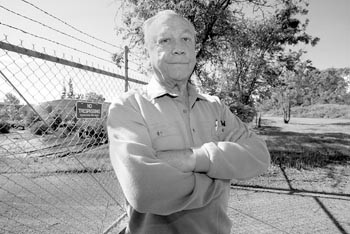
Soft-spoken: Iggy Pop commits the cardinal sin of rock–he’s gotten boring.

New CDs by Iggy Pop, Stevie Ray

By Greg Cahill

Iggy Pop Avenue B Virgin

Those who know Iggy Pop as the proto-typical punker may be turned off by his subtle side. Iggy teams up with Gen-X soul-jazz stars Medeski, Martin, and Wood, and intersperses several spoken-word pieces into the fabric of this convoluted recording, which ranges from the gloomy “Nazi Girlfriend” to the B-grade Zappa-esque musings of “Ya Yo Habla Español.” The highlight is Iggy’s cover of the Who classic “Shakin’ All Over.” Otherwise there’s not much memorable material on the mellow side of the Iggy’s street. Unless you’re a diehard Iggy fan, steer clear of Avenue B . . . .

Albert King with Stevie Ray Vaughan In Session Stax

Sixty-four minutes of pure blues bliss from two late blues legends. Recorded in 1984, just a year after then-rising star Stevie Ray Vaughan debuted his hot solo album Texas Flood, this newly released CD finds veteran axeslinger Albert King in a mentoring role–and loving every minute of it. At one point, during a pep talk, King even tells Vaughan, “You’re good, but you aren’t that good  . . . yet!” For fans thirsty for something new from Stevie Ray (Epic Records has been incredibly stingy about emptying its vaults), this is a welcome surprise.

The John Sebastian Band Chasin’ Gus’ Ghost Hollywood

During the ’60s, folk-rock star and Lovin’ Spoonful head honcho John Sebastian led his jug band to the Top 40 with a series of pop hits, including “Summer in the City” and “Do You Believe in Magic?” Those songs are now car commercials, but Sebastian has returned to his jug-band roots with one of the season’s sleeper hits. Blues legend Yank Rachell joins in for a couple of tracks, and overall the result is a laid-back front-porch jug-band jam among friends–not a care in the world and all of those Top 40 pressures are a world away.

Fleetwood Mac Shrine ’69 Rykodisc

Before Stevie Nicks and company set the pop world on fire with their witchy ways, Fleetwood Mac–guitarist Peter Green, drummer Mick Fleetwood, bassist John McVie, guitarist/pianist Jeremy Spencer, and guitarist/vocalist Danny Kirwan–were one of England’s top white-boy blues bands (McVie and Fleetwood were the rhythm section for John Mayall’s Bluesbreakers during Eric Clapton’s tenure). On the road, roadie and sound engineer Stuart “Dinky” Dawson taped this 1969 date at the Shrine Auditorium in Los Angeles. And thank the rock gods that he did. This first in a planned series of similar releases featuring other ace British Invasion bands finds guitarist Green in top form–his lamenting interpretation of Little Willie Johns’ “Need Your Love So Bad” is simply sublime. Stunning stuff that has held up well over the years.

Spin of the Week:

Bill Monroe Live from Mountain Stage Oh Boy!

Bluegrass pioneer Bill Monroe unleashes that high, lonesome sound for which he became famous in this 1989 live recording from the popular American Public Radio show. The father of bluegrass music and his Bluegrass Boys cover all the bases in an inspired set that is the sweetest sound this side of tomorrow. As writer Jim Rooney notes, this disc contains what the Irish term “the pure drop,” a distillation of 50 years of shows by the recently departed country legend. Drink liberally from this fiery draft.

From the September 2-8, 1999 issue of the Sonoma County Independent.

© Metro Publishing Inc.

Ecoburials

0

Ecoburial

Heaven’s gate: Sebastopol funeral-rights activist Karen Leonard.

Recyling dem bones: The Jessica Mitford Memorial Project

By Stephanie Hiller

HOME TO SO MANY visionaries, idealists, and New Age alternatives, Sonoma County would seem to be an appropriate setting for life’s last innovation: ecoburial, a controversial plan that calls for the use of biodegradable caskets and an end to the practice of embalming. But it’s not a transformation that the funeral industry is likely to embrace. This radical approach to the disposition of our beloveds’ remains has been initiated by none other than Karen Leonard, Sonoma County’s tireless advocate for the grieved, and no friend to the mortician.

Leonard has been calling funeral home directors on their abuses since 1992 when she founded the Redwood Funeral Society to protect the public from exploitation by an industry whose high prices and misrepresentations are endemic despite the late Jessica Mitford’s brilliant 1963 exposé of its excesses, The American Way of Death, recently revised and republished in 1998 as The American Way of Death Revisited (with Leonard’s assistance).

And, indeed, it is in her name that the new Jessica Mitford Memorial Project has been conceived.

Now dominated by three international corporations, the mortuary industry controls every aspect of death care from transportation to cemetery lawn maintenance. And costs keep rising. Although the society had found one independent funeral director whose services were reasonable, Leonard encouraged people to avoid morticians altogether by caring for their own dead, a movement which Jeri Lyons’ Natural Deathcare Project has done much to foster here. Families saved money in the process, but even then, they had to use standard facilities for cremation or burial.

“Then we started seeing a ‘non-funeral director handling fee’ showing up on the price lists,” Says the indomitable Leonard.

“We didn’t know how to protect consumers in the future unless we entered the market ourselves,” she says, and so they have undertaken to “create that which is not“–simple services in a park setting, with low fees.

ASTANDARD AMERICAN funeral with the sleek brass-handled coffin can cost $10,000 or more, and the environmental costs are also high. Packed graveyards with stone markers and vaults clutter the landscape. Embalming, contrary to what we have been told, does not preserve the body so much as extend its decomposition; the process releases the blood-borne pathogens into the sewer systems, while the disintegrating remains eventually drip down through the soil toward the water table. Even cremation, which saves space, releases pollutants into the air, especially when the body has been embalmed and placed in a casket, as morticians are prone to insist.

The alternative is simple, as Leonard and friends explained at an Aug. 22 gathering in the San Francisco home that Mitford shared with her husband, Bob Treuhaft. To bring it to fruition, the society has teamed up with Jeri Lyons and a new company, Memorial EcoSystems. The project will offer reasonably priced burial and cremation services in a lovely setting–a private nature preserve–without embalming, using simple, biodegradable caskets and small markers identified with the use of a global positioning system, to create a “living legacy” that preserves and restores the surrounding landscape for generations to come.

In the process, they hope to transform our attitudes about death, for “death is a part of life,” says Funeral Society board president Ann Tompkins. The memorial park will be a place people visit to attend theatrical performances and concerts in the Memorial Theater, or even a wedding, and enjoy a stroll along park trails, for 90 percent of the land will not be used for burials.

According to Leonard, “Those fortunate to choose to be buried there will be leaving a living legacy to their inheritors. Only the relatives of these people will be able to hike the trails, wade the streams, climb the rocks, and picnic on land that will be forever preserved in its natural state.”

LIKE SO MANY good ideas–organic farming, home birthing, herbal medicine–this new approach is as ancient as it is revolutionary. As Dr. Billy Campbell, owner of the Memorial Ecosystems, reminds us, the biblical “dust to dust” did not include embalming. His South Carolina-based company already has one memorial park back home, the Ramsey Creek Preserve. Campbell, a family doctor, started thinking about death care back in medical school, where he often found himself “hanging out with cadavers for eight hours at a time.”

Dedicated to land preservation, he realized that “if we spent half the money we spend right now in this wasteful industry, we could save a lot of land.” And if people were linked to that land by the bones of their ancestors, “it would become a sacred space,” as burial grounds have always been for native peoples.

Memorial Ecosystems, a for-profit company, will not be the owner of the preserve. To ensure its protection, the company hopes to team up with the Nature Conservancy, which has expressed interest in this endeavor as a way to support land stewardship. They are looking at 420 acres in Franz Valley (between Calistoga and Santa Rosa), but negotiations have not yet begun. Says Leonard excitedly, “We could be up and running within a year.”

All agree that Jessica Mitford would have loved it.

From the September 2-8, 1999 issue of the Sonoma County Independent.

© Metro Publishing Inc.

Eva Norvind

Lust for Life

Blonde bombshell: Eva Norvind began her career in Mexican cinema, but her unconventional life has taken a few strange turns since then, as a new biopic reveals.

The outrageous story of starlet Eva Norvind

By Diane Anderson-Minshall

WHEN SHE WAS still a teenager, Norwegian-born Eva Norvind took a bus from New York to Mexico with a mere 10 bucks in her pocket. Within months she was transformed into Mexico’s version of Marilyn Monroe–a flamboyant and buxom blonde starlet who appeared in numerous ’60s-era films, including Juan Pistola, Blood Pact, and Este Nocho No.

But Norvind didn’t stop there. She turned tricks, she introduced birth control to Mexico’s Catholic women, she smuggled electronics, she had a daughter out of wedlock, she worked with Mother Teresa, and she became one of America’s leading dominatrixes.

However, the cultural chameleon’s true starring role comes in the new First Run Features art-house biography Didn’t Do It for Love, recently released to video, which chronicles the now gray-haired 54-year-old grandmother’s sexual compulsions as well as her eclectic sources of fame.

Filmmaker Monika Treut shows viewers why Norvind was and still is an unconventional sexual pioneer. Treut, a German feminist filmmaker whose explorations into the erotic life of women include Virgin Machine and Female Misbehavior (which featured interviews with the likes of author Camille Paglia and performance artist/porn star Annie Sprinkle), takes an unflinching look at Norvind’s obsession with sexuality.

While it’s clear that the filmmaker views Norvind with some degree of admiration, Treut never lets her subject’s rather intimidating personality off the hook. Viewers may experience a basic sentimentalism as Norvind talks with some family members, but they’ll feel squeamish at other personal interactions Norvind has in the film.

In one scene, for instance, Norvind berates her younger black male lover so harshly that the man is left tongue-tied and stammering. In another, she lasciviously caresses a limbless male harmonica player. In yet another, she recounts a lesbian S&M scene that went awry. The scenes are not played full tilt with too much emotion; they’re actually recounted very matter of factly.

While the frantic pace of Didn’t Do It for Love may make the film seem like an assemblage of talking heads, it’s the fact that Norvind has lived so many different lives that makes the film seem disjointed.

Tough stuff: Eva Norvind became one of America’s leading dominatrixes.

She was born Eva Johanne Chegodayeva Sakonskaya, the daughter of an émigré Russian prince (who now spends his days collecting bottles) and a Scandinavian sculptress (who blithely paraded her 15-year-old daughter nude past French filmmakers). Norvind, who currently runs a dominatrix dungeon in midtown New York, has reinvented herself at least five times and is heading for the next career change. She speaks 11 languages. She sat next to Hillary Clinton at the Beijing Women’s Conference. She had an entourage in the ’80s that included Nancy Friday, Erica Jong, and Milos Foreman. She is estranged from her own daughter, who ran away at 12 and now calls mom a “whore.”

The film (whose video-to-tape transfer actually improves on the small screen) may be provocative to some; a whiff of fresh air to others. Treut passes up pop psychology and lets Norvind speak for herself without analysis. It’s clear Norvind has her demons to deal with. Her anger with her own mother is hardly concealed, and it doesn’t take Sigmund Freud to surmise that the root of Norvind’s hypersexuality may lie somewhere close to the surface of that maternal relationship.

Like any good documentarian, Treut turns the camera on Norvind’s family and on the actress-cum-dominatrix’s inner monologues (which, for Norvind, appear to never end). Norvind is frank and free of guilt, and Treut’s view of her makes for a fascinating addition to the oeuvre of a transgressive female filmmaker who defies easy categorization.

Treut sets out to explore the banality of perversion in all her films, and Norvind makes for a good pop-culture subject. So what if she dreams of urinating next to Madonna? When the aging Norvind turns to the camera and asks, “What the heck am I doing?,” one thing, at least, is clear. The answer to that question is a very interesting one indeed.

Didn’t Do It for Love is available locally on video at Bradley Video in Santa Rosa (538-7752). Or buy it directly from First Run Features (for $39.95) by calling 800/488-6652.Note: The film offers very complex adult themes and one scene of actual S&M; it’s not for the kiddies.

From the September 2-8, 1999 issue of the Sonoma County Independent.

© Metro Publishing Inc.

Soul Food

Soul FoodFeeding your heart outBy Marina WolfEVERYONE KNOWS about "emotional eating"--that is, eating for any reason other than hunger. Personally, I'm more interested in the underresearched phenomenon of emotional feeding: feeding people for any reason other than the fact that it's mealtime. The question I have is, is it something I can change, or do I just have to...

Russian River Celebration

Go with the Flow Russian River celebration planned by Yosha Bourgea IT'S MUDDY, it's floody, but it's ours and there's nothing quite like it. The Russian River has been the troubled, beautiful heart of Sonoma County since long before big business and environmental activism have coexisted here. Winding snakelike from its source in...

Cannibal Films

A fearless fan of cannibal culture dreams of the ultimate movie-date By David Templeton Writer David Templeton takes interesting people to interesting movies in his ongoing quest for the ultimate post-film conversation. This column is not a review; rather, it's a freewheeling, tangential discussion of life, alternative ideas, and popular culture. It's...

Richard Thompson

The Real Deal Craftsman: Richard Thompson returns to LBC on Sept. 10. Richard Thompson builds a better CD By Alan Sculley RICHARD THOMPSON has been known for many things three decades in music. He is regarded as one of the finest songwriters of the rock era, a writer of...

Sonoma Museum of Visual Art

Last Call Bone deep: Sculptor Ronald Garrigues' Dr. Frankenloner is part of the upcoming Día de los Muertos exhibit at the Sonoma Museum of Visual Art. Death is the life of the party at the new SMOVA art exhibit By Paula Harris "WE MUST remember them," say the Zapotec...

Spins

Ramblin' Man Voice of America: Singer/songwriter Woody Guthrie. New box set celebrates folk icon By Greg Cahill Woody Guthrie The Moses Asch Recordings, Vol. 1-4 Smithsonian Folkways BRITISH AGIT-POP singer Billy Bragg scored one of 1998's surprise hits with Mermaid Avenue, his rousing collection of lost Woody Guthrie...

Hellraiser

Hellraiser Meet the feisty nun who rocked the Diocese of Santa Rosa By Janet Wells SISTER JANE KELLY is a most unlikely whistle blower. With her flowered skirt, simple blouse, white huaraches, and wedding finger sporting a ring with a cross stamped into the gold, she looks every inch the gentle nun....

Spins

Legends Soft-spoken: Iggy Pop commits the cardinal sin of rock--he's gotten boring. New CDs by Iggy Pop, Stevie Ray By Greg Cahill Iggy Pop Avenue B Virgin Those who know Iggy Pop as the proto-typical punker may be turned off by his subtle side. Iggy teams up with...

Ecoburials

Ecoburial Heaven's gate: Sebastopol funeral-rights activist Karen Leonard. Recyling dem bones: The Jessica Mitford Memorial Project By Stephanie Hiller HOME TO SO MANY visionaries, idealists, and New Age alternatives, Sonoma County would seem to be an appropriate setting for life's last innovation: ecoburial, a controversial plan that calls for...

Eva Norvind

Lust for Life Blonde bombshell: Eva Norvind began her career in Mexican cinema, but her unconventional life has taken a few strange turns since then, as a new biopic reveals. The outrageous story of starlet Eva Norvind By Diane Anderson-Minshall WHEN SHE WAS still a teenager, Norwegian-born Eva Norvind took a...
11,084FansLike
4,446FollowersFollow
6,928FollowersFollow