‘Goddess on a Payroll’

0

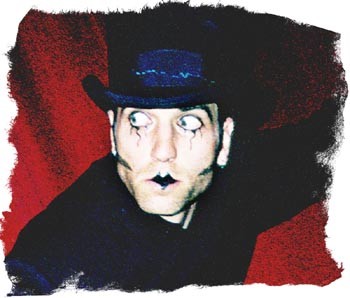
Divine intervention: Monica Grant co-stars in Goddess on a Payroll.

Simply Divine

‘Goddess on a Payroll’ serves up smart sketch comedy

By Daedalus Howell

PHILANTHROPIST Andrew Carnegie was once asked how he could afford to pay his staff so well. He replied, “I can’t afford to pay them any other way.” Those interested in entertainment beyond the stock options often offered by local theater can’t afford to miss Goddess on a Payroll, which cashes in its run at the Romantic Tea Room this weekend.

Featuring the awesome talents of comediennes Monica Grant and Teresa Chandler, Goddess on a Payroll (admirably directed by Stephen Drewes from an original script penned by Grant) is such a knee-slapper that your patella will crumble.

Two parts literate sketch comedy and one part seriocomic “Portrait of the Artist as a Young Lesbian,” the show delivers from the moment the vivacious Grant squawks out a couple of notes of Gershwin on her enviro-horn (a garden hose affixed to a funnel). In under 90 minutes, Grant and Chandler (sounds like a Golden Age comedy duo if there ever was one) rifle through a piquant cavalcade of sketches, monologues, and songs expertly crafted by the Dramalogue-winning Grant.

Its hilarious lifestyle humor and obvious appeal to a specific fan-base (hardly a Y chromosome could be found in the audience on opening night) notwithstanding, Goddess on a Payroll is not a “special interest” show, and Grant and her cohort are not “niche” performers. The show is ultimately an examination of love and loss, relationships and art, that will appeal to audiences of all persuasions. That Grant is able to create simultaneously a very personal yet universally appealing show testifies to her estimable talents as a writer.

Among her standout sketches is a brilliant (nay, divine) parody of the ’70s prison documentary Scared Straight. Redubbed Scared Single, the skit features two hard-boiled lesbians “doing 25 to life in bad relationships.” Booked on such charges as “assault with a deadly ego and accessory to drama” as well as “martyr in the first degree,” these hardened gals are easily as fierce as anyone from Scorsese’s stable of goombahs. They take several comic turns while tough-talking preventive counseling to the audience. And the skit closes with a doo-wop song.

Later, Grant and Chandler prove themselves masters of the sight gag during a bit where one lover begins to confide in another while waving incrementally larger “red flags” over her head as she “discloses inappropriately.” The visual pun is devastating.

The duo takes another crowd-pleasing turn with a rollicking lampoon of pop culture goddess Xena, Warrior Princess, and her sidekick Gabriella. Devised as a flashback, the skit details the relationship’s romantic back-story while Grant gallivants across the floorboards in full-tilt Xena regalia.

“Lesbian subtext? Is that all it is to you?” she asks skeptically.

Throughout, Grant makes several asides chronicling the gradual loss of a friend who is stricken with AIDS. Grant effectively uses these moments to illustrate the resilience of the human spirit and the necessity for art in the face of emotional peril. The poignant result is one of many examples of the show’s ability to shift modes with finesse.

Goddess on a Payroll is an inspired and energized evening of comedy, highly recommended to anyone who has been in love or knows the toils of the creative life. The show has sold out on the fringe circuit and will certainly do so locally, so audiences are encouraged to reserve tickets now. These women should be on salary!

Goddess on a Payroll plays March 31 and April 1-2 at 8 p.m. at the Romantic Tea Room, 208 Davis St. (at Third Street), Santa Rosa. $10. Reservations required. Call 887-0409.

From the March 30-April 5, 2000 issue of the Sonoma County Independent.

© Metro Publishing Inc.

Town Hall Coalition

Sonoma style: “People’s feeling about land is a deeply emotional matter,” says Jerry Birnhaut of the Sonoma Town Hall Coalition.

The Kids in the Hall

Grassroots movement grows in opposition to vineyard expansions

By Stephanie Hiller

“THE OPEN MIKE is such a powerful thing,” says activist Kurt Erickson, a member of the Town Hall Coalition, an ad hoc group of west county residents who have taken local grape growers to task over recent vineyard expansions. “People haven’t had a feeling they can at least have a voice in what happens in this county.

“The Board of Supervisors, they’re all higher than you–you have to stand up at the podium with your butt to the audience. It’s a terrible format!”

Apparently others agree.

In the past six months, town hall meetings have popped up all over the county. From Sonoma to Guerneville, Healdsburg to Penngrove, local folks have been coming out of their houses on weekday nights–even in the pouring rain–for hours of discussions on issues that arouse strong opinions: groundwater, grapes, growth and its consequences.

Has all this grassroots organizing been birthed by that mother of all meetings, the Town Hall Coalition? Since its debut last September, the THC has put a new face on rural democracy, with e-mails flying from desktop to desktop and well-attended meetings at which neighbors line up at the microphone to share their concerns.

Since THC began, supervisors’ meetings on the controversial hillside vineyard ordinance and proposed groundwater regulation have been packed with vocal opponents, and articles about their concerns have appeared in all the local newspapers.

Suddenly the prosperous darlings of the Redwood Empire–the grape growers–have found themselves on the defensive.

Certainly, the THC has put a well-timed match to a smoldering heap of discontent. THC participants are described as articulate and highly skilled, and no one seems to doubt the sincerity of their commitment to our shared future. In any case, it is clear that something is happening here, and the real target is not the farmer, but the exclusionary style of governance exemplified by the Board of Supervisors.

Lynn Hamilton, the former mayor of Sebastopol and onetime community organizer in South America, who with her husband, Don Frank, started the big boulder that is the THC rolling downhill, compares the situation in Sonoma County with a banana republic. She made her intentions clear at the first meeting: “We should begin to identify new candidates to run against these terrible supervisors–the worst Board of Supervisors we have ever had–tonight.”

Santa Rosa City Councilwoman Noreen Evans, who recently failed in her bid to unseat Supervisor Tim Smith, stepped up to bat in time to get THC’s full endorsement. She too wants to put the brakes on growth.

“The Town Hall Coalition is really about inappropriate growth,” Don Frank says. “Of course there’s going to be growth–we’re still having babies and our children will need places to live. But we’ve got a Board of Supervisors planning for more growth when they haven’t fixed the problems they’ve already got.”

He takes a fatherly attitude toward all the new grassroots organizations that have sprung up throughout the county. He points to the recent community meeting on the Russian River Redevelopment Plan, held March 9 in Guerneville, as evidence of the THC’s influence. But activist Brenda Adelman, while voicing her approval of the coalition’s progress, is quick to note gently that people on the Russian River have been organizing for 20 years.

“We’ve been here a lot longer than the Town Hall Coalition,” she says.

MEMBERS of the THC feel that they have provided “a catalyst for things that are going on by giving a voice to concerns and suggesting ways to become active,” as Stephen Fuller-Rowell puts it. He’s been active on the THC water committee, which has succeeded in pressuring the county to do a groundwater study to allay fears that vineyards may be depleting the wells. Water is a complex subject that is becoming increasingly urgent, he says, “and nobody is monitoring this.”

Fuller-Rowell has been monitoring his own well on Furlong Lane and is now offering instructions to others interested in the problem.

The THC has been effective in other ways as well.

“We’ve actually changed the semantics. Our words, like ‘industrial vineyards,’ are showing up in the Press Democrat,” Erickson says happily.

“And Kendall-Jackson has made big changes because of community concern.”

While he suggests that Kendall-Jackson decided to stop cutting vintage oaks before the THC came into existence, Robert Hopkins, a Healdsburg grape grower for 25 years, agrees that, thanks to the dialogue and the new vineyard ordinance, “people are changing the way they do things. There’s more scrutiny by Fish and Game, and many regulations that have been loosely enforced are getting more attention now.”

But he’d like “all of us to really look at the science and see what we can agree on.”

That’s what Nick Frey is looking for. As the executive director of the Sonoma County Grape Growers Association, he is concerned about a widening gap between growers and the public. He sees a lot of emotion at the meetings and some “veiled or overt threats” to turn people in to law enforcement without “talking to your neighbor first.”

Frey comes from Iowa, where 60 percent of the land is used to cultivate soybeans and corn, and no one has the money to worry about erosion problems.

“By comparison, the things that are being done here are phenomenal–and the residents think we’re ruining the environment,” he says.

Frey wants to see a change in the tenor of the conversation. “I think if we started relating to each other as people, as neighbors, we might find those problems aren’t as great as some of us think,” he says.

JOHN KING of Penngrove has a great deal to say about the work of his group, the Penngrove Area Plan Advisory Committee, which put on their first town hall meeting this month. They are primarily concerned about the potential threat to the water supply posed by Rohnert Park’s new expansion plans. But King hastens to say “we are not affiliated in any way, shape, or form with the THC.”

However, he did attend one meeting held in Sonoma and was very impressed with the level of presentation. But, for him, it’s not about grapes, it’s the water.

“A movement like this doesn’t spring up out of nothing,” says Jerry Birnhaut, one of the leaders of the Sonoma Town Hall Coalition, which came together five years ago to stop development near Jack London State Park, and succeeded.

Now grapes are at the forefront.

“People’s feeling about land is a deeply emotional matter,” he observes.

For him, the issue comes down to “whether market forces are going to control us and whether there’s no opportunity for public interest to have some say in the radical transformation of the landscape.”

Keith Abeles of the Community Alliance of Family Farmers feels that the spotlight on the vineyard situation “gets into all the issues.”

An organic farmer, Abeles is worried that farmers who grow other crops are “getting marginalized because they can’t compete with grapes.

“Our county is changing,” he says. “The rural character is evolving, and a lot of people are concerned.”

This is part of an ongoing series of articles about the public response to increasing vineyard development and to other local environmental issues.

From the March 30-April 5, 2000 issue of the Sonoma County Independent.

© Metro Publishing Inc.

Homemade Food

0

Lost Arts

Rediscovering the art of making your own food products

By Marina Wolf

THE GERMAN Bread Museum in Ulm, Germany, takes up an entire seven-floor building. Included in the facilities are a library, archives for researchers, and a collection of more than 10,000 objects relating to the cultural, social, and technological history of bread. But you’ll have to step outside if you want a loaf of bread. As the website for the Deutsches Brotmuseum is careful to note, “No bread is collected, as it is not a museum object but daily fresh food.”

So simply put, but to mainstream Americans, “daily fresh food” might as well be a museum object. Our food is fast or junk, usually both. Our shopping carts fill up with powders, cans, and redi-pak pouches. Our meals are seasoned with extracts, essences, or just “natural flavorings.” Our bread takes about two minutes to acquire (and tastes every second of it). The ancients would hardly recognize as sustenance some of America’s most notable contributions to gastronomy: Velveeta, California olives, wine in a box.

When you consider that in some parts of France and Italy bread starter is still passed down like an heirloom; that there are barrels of balsamic vinegar in Italian attics that have been around for hundreds of years; that even in America, not 100 years ago, wines were a basement operation, brewed up in careful batches by a very attentive uncle . . . well, it becomes clear that in America the food arts have been if not altogether lost, then seriously misplaced.

The reasons for the transformation in our food production are many, not the least being technology and the Industrial Revolution. Just like the clothes washer, frozen-food technology and safe canning processing meant a giant leap forward for women. They could shrug themselves free of many of the household arts that once were their sole and entire provenance. But since food arts, unlike fine arts, have ceased to be studied in school or written down, these skills and processes have fallen by the wayside.

THE LAST 20 OR 30 YEARS have seen a groundswell of cooks and writers who are revisiting these ways and making them new again. The latest addition to the genre: Lynn Alley’s Lost Arts (coming out from Ten Speed Press on April 15). This lively, eclectic little volume isn’t actually new, but an enlarged version of the book that originally came out in 1995 (Alley added wine and jam to the short list of what makes the most sense to make from scratch). The sustained interest in foods that are homegrown, homebrewed, homemade–everything, in short, that runs counter to middle-American foodways–suggests that there are still people willing to look for those lost arts.

Lynn Alley started her search in the late ’60s and early ’70s, when she attended college in Berkeley. A new generation had gathered there, hungry for revolution in food as in everything else. “It was so wonderful,” Alley recalls in a breathless voice. “It was all around us. There was Peet’s Coffee and the Cheese Board [a gourmet cheese shop and bakery] and amazing produce stores. And Alice Waters’ restaurant [Chez Panisse] opened just around the corner. We’d never been exposed to that kind of food, but we knew it was something very special.”

The young Alley, stirred by the possibilities of this fresh, real food, dug up her yard and planted vegetables. Her first experiment with culinary herbs–a rosemary bush in a pot–died from overwatering, but Alley continued undaunted. Now she grows herbs in the back of her suburban condo in San Diego County and makes cheese in the guest bathroom. For a while she even kept chickens in her backyard. Far from objecting, she says, her neighbors covered for her. “A few well-placed eggs will do wonders.”

Alley’s focus has since expanded to encompass a cornucopia of good food from ancient oral traditions. Lost Arts contains pointers on curing olives, grinding mustard, infusing vinegars, and milling wheat for bread. She’s gathered the recipes–more guidelines, in keeping with the continuance of the oral “a handful of this and that” tradition–from handwritten notes, old source books, and friends of the family.

The traditions come from all around the Mediterranean, but they share more than a shoreline. For starters, these foods all take time to reach their full flavor. It isn’t really active time; for the most part the cook just needs to mix the ingredients and let gravity, time, and the naturally occurring yeasts do their work.

Still, the premise behind Lost Arts is a radical one in a land where time is money, and therefore time is a commodity that we never have enough of. Then along comes Alley and her like, with breads that take hours to rise and cheese curds that must drain overnight–never mind olives that will take months to leach away their bitterness and wine that might not reach its peak for a year or two. Who has time for that?

“Well, make the time or don’t do it,” retorts Alley sternly. “That’s part of the whole charm of it, setting aside some time to come into close contact with the earth and real ingredients. We have to pick and choose what we make time for.”

From the March 30-April 5, 2000 issue of the Sonoma County Independent.

© Metro Publishing Inc.

‘Titus’

0

Titus.

Pie-Eyed

A renowned wine expert matches wits–and wines–with ‘Titus’

By David Templeton

Writer David Templeton takes interesting people to interesting movies in his ongoing quest for the ultimate post-film conversation. This is not a review; rather, it’s a freewheeling discussion of life, alternative ideas, and popular culture.

“IF I HAD TO SELECT a wine to go with a human-head pie,” muses Dennis Overstreet, “which wine would I choose?” An unusual problem, to be sure, and one that Overstreet, an expert at matching the perfect fine wine with a particular food and event, has never been asked to solve. Until now.

As the owner/proprietor of Beverly Hills’ landmark 21-year-old store The Wine Merchant, Overstreet has won the nickname “wine consultant to the stars,” with a clientele ranging from Johnny Carson to Mick Jagger. These names and others, along with wine tips galore, appear in Overstreet’s hip and helpful book Overstreet’s New Wine Guide: Celebrating the New Wave in Winemaking (Clarkson Potter, 1999).

In this sharp and witty book, the sly-humored author ably demonstrates his encyclopedic knowledge of all the world’s wines.

With this in mind, Overstreet has agreed to a little experiment. Having just seen the awe-inspiring film Titus–in which the aforementioned human-head pie figures rather prominently–the master is now prepared to suggest the appropriate libation.

“I’ve considered this carefully,” says Overstreet, a tall, Gary Cooperish fellow with a deep, authoritative baritone. “I’ve picked the wine that I think is the perfect metaphorical companion for this entire film. I’d suggest a Mouton Cadet.”

A Mouton Cadet, for those unfamiliar with such things, is a light-bodied red wine from the Bordeaux region of France–and not an expensive wine at that.

In fact, there are those who would cringe at calling Mouton Cadet a wine at all, just as there are those literary purists who would cringe at linking Titus–a truly sensational film, starring Anthony Hopkins and Jessica Lange and adapted from William Shakespeare’s ultra-obscure Titus Andronicus–to William Shakespeare.

True, Titus remains faithful to the story and text of the Bard’s bloodiest play–packed to the sinews with murders, beheadings, amputations, orgies, rapes, mutilations, and cannibalism. But director Julie Taymor has tossed poor Titus Andronicus (Hopkins), general of the Roman army, into a phantasmagorical stew of shifting times and eras, with Hopkins wearing battle-scarred armor in the early scenes and a white chef’s coat and hat for the climactic pie scene.

Lange (as the vengeful Queen of the Goths) appears in a cage on a horse-drawn cart, wearing heavy-metal S&M duds, while her paramour, the new emperor (Alan Cumming), has a thing for black lipstick, dresses, and classic cars. The film opens, inexplicably, with an agitated boy wearing a helmet made of a brown paper bag, trashing his kitchen as he plays with creepy action figures.

“Maybe if Titus Andronicus was adapted differently, I’d pick a different wine,” says Overstreet, “but the way the movie was envisioned, that bit with the little boy wearing a brown paper bag on his head–to me it right away suggests Mouton Cadet. This is a wine that really belongs in a brown paper bag.”

Ouch. “It’s the perfect metaphor to go with that ending scene,” he adds, laughing delightedly. “If you’re more into tricks than treats, Mouton Cadet would be the defining wine.” Another ouch. But there’s more.

“Because it is a pie–it isn’t something that is dished up alongside some interesting garnish–this is going to demand a very simple wine, a wine you’d want to just take a goblet full of, rather than swilling it around and sniffing at it,” he adds. “Because it’s a pie you’re going to enjoy it with, you’ll want to just grab that goblet and let yourself become a giraffe. You’ll want to just swallow the wine and let it go down your throat, bypassing your stomach and cascading right down to your liver.”

Which (come to think of it) is more or less what the film does.

“I really didn’t know what to expect,” says Overstreet. “I was left bewildered and sick, annoyed and amused, but somewhat deeply reflective. It’s the kind of movie that makes you sit and go ‘Wow!'”

Indeed. And those “wows” are not limited to the banquet scene; wows and gasps and squeals and jolts are equally distributed throughout the film. Take the eye-opening orgy scene, where the Goth queen and the emperor preside over a sprawling entanglement of writhing bodies, decadent food . . . and plenty of wine.

“This seems like more of a Burgundian event,” Overstreet observes. “I do see a Burgundy for this orgy, something akin to a Corton or a Volnay. Something very fresh and full of pinot noir, just gobs and gobs of fruit. It should be a very young Burgundy, a Burgundy so youthful that even Roman Polanski wouldn’t like it.

“Because a Burgundy is an orgy,” he elaborates, “an orgy of delicious fruit. Imagine a million raspberries all dropped in your mouth at once. If you press your cheeks the fruit’s going to explode in a wonderful, wonderful, delightful Burgundian orgy of flavors. Imagine it running down your wrists as you wipe it from your mouth.

“That,” he says, “would be very appropriate for an orgy. At an event of this nature you could even flash the label.”

Overstreet seems to be stuck on red wines at the moment. When that’s pointed out to him, he agrees, saying, “It just seems like a red-wine movie to me. Or maybe I simply want to get Anthony Hopkins away from the Chianti and fava beans.”

Overstreet, fully inspired, has one final suggestion.

“There should be a requirement that theaters be allowed to serve some sort of alcoholic beverage with this film, before, during, and after,” he suggests. “In fact, alcohol should be required during the orgy scene and the banquet scene. Just to smell these wines and swallow these flavors at all those key moments–it would add so much to the magic.”

From the March 30-April 5, 2000 issue of the Sonoma County Independent.

© Metro Publishing Inc.

Spins

0

Slippin’ and slidin’: Eels head honcho E returns.

Sound Advice

An avalanche of aluminum and acrylic for your entertainment pleasure

The Eels Daisies of the Galaxy (DreamWorks)

THE SNIPPET of a funeral march at the opening of this disc signals a new beginning for Virginia-born singer/ songwriter E and his ever-shifting band. The much anticipated follow-up to the Eels’ 1998 CD, Electro-Shock Blues, finds E slowly wriggling out of the funk that marked that acclaimed CD, largely inspired by the suicide of his sister and the long illness and imminent death of his mother. Presenting an unblinking look at mental illness and death, that disc concluded with the words “maybe it’s time to live.” On Daisies, E acts like a slacker Mr. Rogers, leading a tour around the neighborhood, sometimes dark and brooding, sometimes merry in a the-meds-have-finally-kicked-in sort of way. There’s a goofy but endearing quality to this off-center alt-pop (as in the metaphorical twists of the whimsical “I Like Birds”). It’s not at all edgy or driven like the college radio hit “Novocain for the Soul” or the hip-hop-inflected urban tragedy of “Susan’s House,” from the band’s 1996 breakthrough debut. Peter Buck of R.E.M. and Grant Lee Phillips of Grant Lee Buffalo round out the band. But this is very much one man’s vision, and E’s skewed take on life has a way of creeping into your psyche. Greg Cahill

The Rev. Horton Heat Spend a Night in the Box (Time Bomb)

FRONTMAN Jim Heath (a.k.a. the Rev. Horton Heat) seems hell-bent on conjuring up the devil with his scorching brand of rockabilly: a raucous, rebellious country stew of Johnny Cash honky-tonk souped up with more than a pinch of swamp, surf, and blues. He made a name for himself on the juke-joint circuit for songs about beerin’ and boozin’ and seems proud there are only six songs about drinking on the band’s seventh album. “Sue Jack Daniels” does blaze with the hard-drinkin’ style that made the trio a rowdy favorite, but other songs take a different angle, like the kick-in-the-pants “The Girl in Blue” and the racy “Whole Lotta Baby” and “I’ll Make Love.” “The Bedroom Again” tackles divorce, while “It Hurts Your Daddy Bad” is Heat’s take on fashion models who sell their souls for the glamour of the fast lane. Spend a Night in the Box was produced by Butthole Surfers guitarist Paul Leary and recorded at Willie Nelson’s Pedernales Studios; the title pays tribute to Cool Hand Luke. Sarah Quelland

The Bloodhound Gang Hooray for Boobies (Geffen)

THESE TWISTED weirdos write silly, stupid, and irreverent songs with obnoxious lyrics, deviant humor, and expert pop-culture references (including Pac Man, Shrinky Dinks, Falco, and Pee-wee Herman). The music ranges into punk, pop, metal, New Wave, rap, hip-hop, and honky-tonk; the only common thread is a severe punk-rock attitude. The aggressively adolescent band incorporates clever samples, including a junky Casio beat and a snippet from The Simpsons. The Bloodhound Gang often appropriates famous songs and lyrics for its own use, incorporating Frankie Goes to Hollywood’s “Relax” into “Mope” and rewriting lyrics from Pink Floyd’s “Another Brick in the Wall, Part II” into “Right-Turn Clyde.” The band’s single “The Bad Touch,” with the lyrics “You and me baby ain’t nothin’ but mammals/ So let’s do it like they do on the Discovery Channel,” is getting play across the country. S.Q.

Rollins Band Get Some Go Again (DreamWorks)

THE NEW ROLLINS BAND has punk/spoken-word icon Henry Rollins leading the L.A. blues-rock power trio Mother Superior, and Hank says it’s the first time he’s really been in a “rock” band. That’s not quite accurate, in light of Rollins’ stint as vocalist for the seminal L.A. hard-core act Black Flag and the arty metal-jazz of the original Rollins Band. But that does give an idea of the vigor Rollins feels in his fresher, more streamlined material. His lyrical targets are no surprise (critics, weak-ass rockers, the image establishment), but Mother Superior is brick-hard and searing, with a sound so loud and clear that on some solos you can actually hear the pre-distortion sound of the pick hitting the string. As if to humble himself, Rollins brings in guest guitar gods Scott Gorham (of Thin Lizzy, for a cover of that band’s “Are You Ready?”) and Wayne Kramer (of the MC5, for a 14-minute hidden-track chicken-scratch ‘n’ sax rant). Rollins’ first rock band? Hardly, but one of his best. Karl Byrn

Dogs on Valium Something for Everyone (ALM)

ROHNERT PARK-BASED rockers Dogs on Valium have lots going for them–a strong pop-rock sound, a second release, industry connections, a Bay Area fan base–but perhaps the band should consider a new name. Their sound is nothing like the perverse wackiness and punkish humor implied by their moniker; instead, D.O.V.’s strengths are melodic soft-rock hooks, emotion-laden choruses, sincere lyrics, and tight professionalism. Something for Everyone lives up to its promise and includes Latin sounds and live material, and yet, with their sweet, crisp echoes of Chicago and Elton John, it’s hard to imagine . . . Dogs on Valium? K.B.

Spin du Jour: Penelope Houston Once in a Blue Moon (Innerstate)

SINCE HER DAYS as the lead singer/songwriter for the seminal ’70s San Francisco punk band the Avengers, Penelope Houston has whiled away her days at her day job with the public library and eeked out a critically acclaimed career as a critic’s darling. The New York Trouser Press Record Guide has proclaimed her “the archetypal indomitable rock ‘n’ roll woman.” This decidedly tender rarities collection offers intensely personal demos, outtakes from Houston’s recent flirtation with a major label, and reworkings of punkish folk material that find the onetime punk firebrand wistfully contemplating gardening and life. Hey, we all knew that the punk generation was going to hit middle age, but who knew it would sound this introspective? G.C.

From the March 30-April 5, 2000 issue of the Sonoma County Independent.

© Metro Publishing Inc.

Julia Butterfly Hill

Forest guardian: After two high-profile years in a giant redwood, Julia Butterfly Hill has hit the ground running, determined to save all of America’s ancient trees.

Butterfly Blues

Julia Butterfly saved her beloved redwood, but her struggle is just beginning

By Patrick Sullivan

SHE’S SPENT the last two years living high among the branches of an ancient redwood tree, so you might think Julia Butterfly Hill would need time to find her land legs. Instead, the 26-year-old activist has hit the ground running.

In December of 1999, Hill triumphantly ended her high-profile struggle to save her beloved Luna, a 1,000-year-old redwood tree in Humboldt County, by reaching a landmark protection agreement with Pacific Lumber and then climbing tearfully down to solid ground amid international media attention.

But her fight is far from over. Armed with Legacy of Luna, her frank new book about her experiences, Hill has launched a national crusade to keep forest protection in the national spotlight.

On Friday, March 31, she arrives in Sebastopol to give a sold-out talk at the Vets Memorial Building.

However, the world’s most famous tree-sitter is finding her quest complicated by both her own fame and controversies over the deal she made to end her high-profile tree sit. All told, it seems a lot to handle for someone still getting used to life on solid ground.

“Two days out of the tree I found myself on the ground in New York City,” Hill explains in her pleasant, slightly breathy voice. “So I have definitely been on a fast track of learning and transformation since coming down.”

Speaking by phone from an office in Marin’s Muir Woods where she is meeting with ABC News, Hill passionately discusses a range of topics, from the Headwaters Forest deal to the intense public scrutiny she’s experienced since coming down from Luna to the growing power of grassroots environmental activists.

Above all, however, she wants to talk about ancient trees and irresponsible logging.

“Ninety-seven percent of the original ancient forests are gone,” she says. “Of the remaining 3 percent, only 1 percent is protected. Our government and corporations are failing us, so we as citizens have to get involved.”

You couldn’t get involved much more quickly than Hill, a preacher’s daughter who took on the name Butterfly when she first began her famous tree-sit in 1997. Having discovered during a cross-country vacation the beauty of the redwoods and the danger confronting them, Hill returned home to Arkansas, sold most of her belongings, and returned to Humboldt County determined to help stop the pell-mell logging operations being conducted by Pacific Lumber.

Hill plunged almost immediately into the thick of the struggle. After casually embarking on her tree-sit, Hill displayed remarkable tenacity in the face of El Niño storms, lightning strikes, and harassment by Pacific Lumber helicopters and security guards.

Her feat of endurance and her natural charisma turned her into one of the world’s most famous environmentalists, leading her publisher (HarperSanFrancisco) to call her “the Rosa Parks of the environmental movement.” But talk like that seems to make Hill a little uncomfortable.

“I have a hard time being compared to other people. I’m just me,” she says. “I followed my heart and my spirit, and I did what I felt I had to do. I think for Rosa Parks it was the same.

“At the same time, I don’t want people to think that I’m different from them,” she continues. “I’m a human being who is doing her part, and I ask that other people do their part too.”

There are, of course, some people who think Hill falls far short of being a hero. Timber company supporters call her two-year sit a dangerous stunt. More surprisingly, some radical environmentalists have criticized the details of the deal that saved Luna–even going so far as to heckle Hill during speaking engagements for agreeing to pay $50,000 to Pacific Lumber.

Hill notes that the money was actually turned over to the forestry department at Humboldt State University. She also points out that hers was one of the few tree-sits that actually ended with the tree still standing.

“If we can use money to protect the environment, that’s what we’ll do,” she says. “Our government should get involved and protect these forests, but until that happens, we have to use the tools available to us.”

You might expect such controversy to discourage Hill. But she seems to take it comfortably in stride.

“It’s a rule of activism that for every action there’s an equal and opposite criticism,” Hill says. “Because we are all different people, we all have different ways of looking at the world. I don’t expect everyone to agree with me. But if we all get up every morning and do what we think is right to help save the earth, we will succeed.”

Of course, some of her critics may be further incensed by her book, which offers a frank account of the difficulties Hill sometimes had with unnamed members of the radical environmental organization Earth First!, which organized the occupation of Luna.

But in her phone conversation, Hill insists that her account is simply honest. “Nowhere in the book does it attack anyone,” she says. “The book is only about being truthful about what I went through, because so many people had such romantic notions about what I was doing.”

Still, Hill does admit that relations with Earth First! were not always easy.

“I love and respect many people in Earth First!” she says. “I also had many, many difficulties with the organization.”

What does the future hold for Hill? She says she plans to remain in Humboldt County and continue her crusade through a wide variety of means, from walking the halls of Congress to engaging in direct action. But will she embark on another tree-sit?

“Every day I wake and I say, ‘Creator, how can I best be of service?'” she says.

“If that guidance leads me up another tree, then I’ll go.”

From the March 30-April 5, 2000 issue of the Sonoma County Independent.

© Metro Publishing Inc.

‘The Road to El Dorado’

0

The Road to El Dorado, a new animated film that features the talents of Santa Rosa-born animator Rick Farmiloe.

Road Warrior

Santa Rosa-born animator lands a leading role in ‘The Road to El Dorado’

By David Templeton

TO RICK FARMILOE, an animation whiz kid with an eye-popping résumé, his latest film–DreamWorks Pictures’ The Road to El Dorado–marks not one but two important milestones.

This isn’t just Farmiloe’s 10th consecutive animated flick. It’s also the movie in which he moves from drawing sidekicks to animating one of the show’s major stars. Farmiloe played a major role on the team that brought to life Tulio (voiced by Kevin Kline), a semi-incompetent 16th-century scoundrel who, along with his equally unlikely partner, Miguel (Kenneth Branagh)–accidentally discovers El Dorado, the mythic City of Gold, hidden in the mysterious jungles of the New World.

Farmiloe, a Santa Rosa native, found his own New World among the animation studios of Hollywood. Unlike Tulio and Miguel, however, this adventurer had always known what he was looking for–and where he would find it. Farmiloe, 43, was dreaming of becoming a big-screen animator as far back as 1971, when he first began attending Montgomery High in Santa Rosa.

“I was just a little kid when I knew I wanted to draw cartoons,” he says. “Some of my first high school art teachers, unfortunately, seemed to think that cartoons were a waste of time.”

Unable to persuade Farmiloe to pursue a fine-arts career, his instructors finally gave in and supported his fledgling attempts at animation.

“Montgomery High ended up being a great experience,” he says. “I got a lot of encouragement and support.”

After attending SRJC and then the California College of Arts and Crafts in Oakland, Farmiloe landed a job in Southern California, animating a series of television shows, including Fat Albert, Mighty Mouse, and Heckle and Jeckle.

Eventually he moved all the way up to Walt Disney Studios, where his first feature was the infamous failure The Black Cauldron.

“Ouch,” Farmiloe says, cringing at the mention of that film. “I’d hoped people would forget all about The Black Cauldron someday.”

Farmiloe got into a groove animating goofy sidekick characters: Einstein, the lovable Great Dane in Oliver & Company; Scuttle the seagull in The Little Mermaid; the clumsy albatross airline pilot in The Rescuers Down Under; and the inept Le Foo Beauty and the Beast.

“I like doing sidekicks,” says Farmiloe. “So that’s what they always gave me.”

Any such large-scale character, he explains, has a team of several animators assigned to it. They learn the character’s moves and facial expressions, getting to know him or her literally upside down and inside out.

“It gets to where you know exactly how that character would react to any given thing that happens,” Farmiloe says.

After leaving Disney in search of more creative freedom, he briefly freelanced, working on The Swan Princess for Rich Studios, before finding a new home at the brand-new DreamWorks studios, where his sidekick status continued. “I did the camel in Prince of Egypt,” he says. “But he was a really fun camel.”

Then came The Road to El Dorado, a fast-paced, swashbuckling buddy comedy set in an ancient Mayan wonderland. The main characters, two goodhearted rogues, are mistaken for gods and decide to go on playing the part–until they can make their escape with bags filled with gold.

Under constant threat of discovery, and certain death by ritual sacrifice, Tulio and Miguel look as if they might get away with their scheme. But then the partners each fall in love: Tulio with the alluring Chel (Rosie Perez), and Miguel with the city of El Dorado itself.

The songs, by The Lion King‘s Elton John and Tim Rice, are tuneful, though a bit intrusive at times, and the subject matter–including Tulio and Chel’s amorous romp in bed–have earned the film a PG rating.

“Chel originally invited Tulio to take a bath with her,” Farmiloe reveals, “but we decided that was going too far.”

Though not as consistently visually awe-inspiring as Prince of Egypt, the new film nevertheless marks a significant step forward in animation characterization. From Tulio’s and Miguel’s distinctive body posturing to their amazingly realistic (and funny) facial expressions, Farmiloe and his many collaborators (who include another Sonoma County born artist, Ruben Hickman of Sonoma) may have created the best-acted animated humans in memory.

“There’s a lot of pretty sophisticated acting done by the characters in Road to El Dorado,” Farmiloe says proudly. “In the old days it would have been ‘Here’s the scared face, here’s the happy face, here’s the sad face’–and now we have a wider range of subtle emotions, so the audience can always tell what poor Tulio is feeling and thinking.”

Too bad animated characters can’t get Oscars. Thanks to Farmiloe and DreamWorks, “poor Tulio” would be a shoo-in.

From the March 30-April 5, 2000 issue of the Sonoma County Independent.

© Metro Publishing Inc.

‘Ghost Dog’

0

Exhausted author Donald Antrim on the nature of ambivalence, psychopathic samurai, and Jim Jarmusch’s ‘Ghost Dog’

Writer David Templeton takes interesting people to interesting movies in his ongoing quest for the ultimate post-film conversation. This is not a review; rather, it’s a freewheeling, tangential discussion of life, alternative ideas, and popular culture. He welcomes comments at ta*****@********us.net.

Donald Antrim stares across the coffee counter, taking in the vast assortment of beverage opportunities that now stand before him. Espressos. Mochas. Cappuccinos.

“I’ve had so much coffee in the last 36 hours,” he sighs.

Momentarily considering some sort of tea, he goes on to recognize the existence of decaffeinated coffee drinks as well. Then there’s the whole question of hot drinks vs. iced drinks. It’s quite a problem, made all the more difficult by the fact that Antrim–the inventive and audacious Brooklyn-based author of such wonderfully weird and idiosyncratic novels as Elect Mr. Robinson for a Better World, and The Hundred Brothers–is clearly exhausted.

He’s been going almost nonstop for weeks, city-hopping across the country to promote his latest book, The Verificationist (Knopf). The novel is a brilliant, comical, tongue-tripping tour de force about a pancake-house meeting of psychoanalysts that becomes a surreal rite of passage for Tom–a likable shrink with ambivalence issues (he suffers an anxiety attack when he can’t decide whether to order pancakes or eggs)–who inexplicably floats to the roof of the restaurant and stays there for the rest of the (exhilarating and odd) book.

The words “odd and exhilarating” could also describe the movie Antrim and I have just seen. Ghost Dog–The Way of the Samurai, the striking new film by innovative movie-meister Jim Jarmusch, tells the story of a mysterious hit man (Forest Whitaker) who lives by the ancient code of the Japanese samurai. Whitaker’s character has made himself the “retainer” of a low-level mob goon who uses Ghost Dog to even his family’s many scores.

It is a tribute to Jarmusch’s genius that Antrim–who, by the way, has resolved his own libation ambivalence by ordering an iced-decaf coffee–was able to stay awake through the entire film in spite of his sleep-deprived state.

And now he’s ready to talk.

“It’s interesting. Ghost Dog, in effect, is a stalker,” submits Antrim, sipping his drink on the semi-sunny outside patio. “His attachment to the mobster has a pathological quality to it. He’s devoted his life to this samurai code–and to this mob character–in a way that, in the absence of that code, would seem pathological in the extreme. But with the code, I don’t know . . . it almost seems moral.”

“We’re somewhat programmed to appreciate sacrifices made in the name of a code, aren’t we?” I say. “Think of all the stories we hear about the American Revolution, ‘Give me liberty or give me death,’ and all that. We’re taught from kindergarten to honor people who follow a strict code–even when others call it madness.”

“Well, it’s very powerful rhetoric,” Antrim agrees. “But there’s a way in which rhetoric, taken out of context–or even in the context–of its original utterance, can become quite crazy-sounding. ‘Give me liberty or give me death’ is not a choice that most sane people, were they faced with that choice, would really want to make. Most people won’t say, ‘Give me liberty or give me death.’ They’ll merely stay alive, then somehow struggle to regain their liberty.”

“So, then, is Ghost Dog is some kind of psychopath?” I ask.

“He’s a cold-blooded killer,” Antrim reminds me. “He murders without remorse, like James Bond and Dirty Harry. I’d call him a psychopath.”

Among the many rules that Ghost Dog lives by is the sacred admonition to “Make every important decision in the space of 7 breaths.”

Consequently, he makes some fairly desperate decisions–like storming single-handedly into a mob boss’ fortress–without a lot of internal agonizing or debate.

It’s kind of cool. But is that a reasonable way to live a life?

“The question might be, Is it a reasonable way of life to life by a strict code of any kind?” Antrim muses. “I can’t say whether it’s a good idea to make decisions quickly. In fact, I think that living outside of ambivalence–which is what Ghost Dog does–might be another kind of pathology.

“This is a very high-functioning, efficient character because he’s given over his own though-making process to this ancient instruction manual. This is a character who’s not operating with ambivalence.

“And really,” he continues, “have you ever known anybody in real life who’s operating without ambivalence? It can be an very upsetting thing to watch people making rash decisions and change their lives quickly.

“Ambivalence is something that protects us. It’s something that gives us time, time to consider and weigh alternatives, to think about how our decisions will affect our lives and the lives of other people.”

“I think your pancake psychologist would have appreciated a bit less ambivalence,” I suggest.

“Maybe,” nods Antrim. “But maybe not. Ambivalence is not an inability to make a choice. Ambivalence is a struggle that results from the consideration of many possibilities. Ambivalence, as a state in a world that wants to be high-functioning, in a culture in which we clearly value getting things done, getting them done quickly and well–in the space of seven breaths, as it were–is something that is quite underrated.”

“If I were a samurai I might disagree with you,” I tell Antrim.

“Not if you were a thoughtful samurai,” Antrim replies. He mentions Akira Kurosawa’s Yojimbo, a film that ends–like a John Ford western, or Ghost Dog, for that matter–with a sense that these violent men, by the self-sacrificing nature of their own moral code, will eventually destroy themselves.

“To actually follow a code to the letter–to free yourself of choice, and your own ambivalence over choice–can have very destructive consequences,” he says.

“And besides,” he adds, rattling his ice as he absorbs the last gulp of his decaf, “while holding to a fixed idea might offer you some freedom, it’s also just a very tiresome way to live.”

From the March 30-April 5, 2000 issue of the Sonoma County Independent.

© Metro Publishing Inc.

Usual Suspects

0

Priest Charged

Ex-Santa Rosa priest to face rape charge

By Greg Cahill

A FORMER SANTA ROSA priest surrendered to local court officials on Wednesday to face charges that he raped a 14-year-old girl under his care. Donald Wren Kimball, 56, is charged with a four-count felony complaint alleging that in 1977 the ex-Resurrection Parish priest raped and committed lewd and lascivious acts on an unidentified girl while he worked as a youth group leader.

It is further alleged that Kimball sexually assaulted a second teenage girl in 1981, and that he may have abused as many as 11 boys and girls over several decades. In a published statement, Deputy District Attorney Gary Medvigy said, “There is an endless number of people [Kimball] is alleged to have touched.”

On Wednesday, Kimball returned from a vacation and surrendered to a Sonoma County judge. His attorney, Chris Andrian, says Kimball has denied all wrongdoing and will fight the charges. If he is convicted, Kimball could serve up to 15 years and would become the second Santa Rosa priest sent to prison in recent years for sexual misconduct.

The case is the latest sex scandal to rock the Diocese of Santa Rosa. Last summer, Bishop Patrick Ziemann resigned when it was revealed that he had a relationship with the Rev. Jorge Hume Salas. Ziemann has maintained that the relationship was consensual; Salas has alleged that Ziemann pressured him into the relationship. On Monday, Ziemann invoked his constitutional right against self-discrimination when he refused to testify during a scheduled weeklong deposition in San Francisco for the sexual coercion lawsuit filed by Salas.

The diocese has been rocked by a $16 million fiscal crisis as well, stemming in part from efforts by diocese officials to pay off several million dollars in settlements brought in sexual misconduct cases.

The newly filed felony charges against Kimball resulted from evidence submitted in a civil suit in which Kimball is alleged to have molested two girls and two boys during the ’70s and ’80s. In that case, a tentative $1.6 million settlement has been reached between the plaintiffs and the diocese.

The California Supreme Court has ruled that California law can eliminate the statute of limitations for certain sex offenses, allowing district attorneys to file charges in cases if there is independent corroboration.

Turnabout Is Fair Play

JUDGE-ELECT Elliot Daum, who defeated incumbent Sonoma County Superior Court Judge Patricia Gray in a bitter election race, has filed a complaint with state election officials charging that Gray violated judicial ethics with a controversial “Cop Killer” campaign mailer.

The campaign literature–mailed just days before the March 7 election–characterized Daum, a respected public defender, as caring more about the rights of violent criminals than about the rights of victims.

The mailer led four judges who had endorsed Gray to distance themselves from her campaign.

Daum filed the complaint with the state Commission on Judicial Performance. Gray, who won her position on the bench in 1995, has nine months left in her term. The commission has the authority to remove, censure, or admonish a sitting judge.

Ironically, on election night, Daum had this to say about Gray when asked to comment on allegations that he had run a negative campaign: “When you go up against an incumbent, you have to bring out negative things–you can’t say, ‘Hey, I’m a good guy, vote for me.’ I got into this race because I was very unhappy with our incumbent. This is the way you have to run a campaign. It would be ridiculous to do it otherwise.”

Editorial assistant Shelley Lawrence contributed to this article.

From the March 30-April 5, 2000 issue of the Sonoma County Independent.

© Metro Publishing Inc.

Best of Napa County

Photograph by Charles O’Rear

Bon Vivant

‘Best of ‘ Napa County (Staff Picks)

“Through the trance of silence
Quiet breath
Lo! for there, among the flowers and grasses
Only the mightier movement sounds and passes
Only winds and rivers
Life and death.”

–Robert Louis Stevenson

Best Place to Hobnob with Old Money

Since the 1920s Meadowood, in the heart of the Napa Valley, has been catering to the whims and desires of the wealthy with quiet elegance. This resort is so exclusive it doesn’t even bother to post a sign on the Silverado Trail to announce its presence. Most people in Sonoma County have never even heard of the place. Still, if you’re looking for a spot to get away from it all and work on your tennis or golf–and you’ve got around $500 a night for the tariff–then Meadowood might well be worth checking out. Even if you’re not rich, you can still dine in the restaurant or grill and maybe have a shot at meeting that well-heeled potential spouse you’ve been praying for. Meadowood also features a world-class croquet field. Throughout the year Meadowood’s Wine School offers wine and food courses. An elaborate menu of health and fitness activities, along with full spa services and well-being programs, is offered. 900 Meadowood Lane, St. Helena, 963-3646; 800/458-8080.–B.E.

Best Place to Learn How to Write for a Living

A writer’s life can be difficult, so it’s good to know there’s help out there. Now in its 19th year, the Napa Valley Writers’ Conference runs July 23-28. Open to participants in poetry and fiction, the conference will feature two Pulitzer Prize-winning novelists: Michael Cunningham and Jane Smiley. Lose yourself in poetry workshops led by Forrest Gander, Brenda Hillman, Claudia Rankine, and David St. John. Not only will this talented bunch read their work and lecture to the public, but they’ll teach you how to bring out the muse in yourself. The conference also includes fiction workshops, and scholarships are available. The conference is held at the Upper Valley Campus of Napa Valley College in St. Helena. Cost is $500. Call Anne Evans at 253-3188.–S.L.

Best Place to Get Down ‘n’ Dirty

Sure, your mama told you never to play in it, but you’re going to anyway. So slide into a tubful of bubbling brown muck and wallow to your heart’s content in the thick earth-scented mud at Dr. Wilkinson’s Hot Springs in Calistoga–the volcanic-mud capital of Northern California. An attendant will shovel the heavy glop over your torso so you feel as if you’re suspended under a filthy wet blanket. The basis for the traditional mud bath used at Dr. Wilkinson’s is volcanic ash left over from the eruption of Mt. St. Helena. It’s mixed with the boiling mineral water from the gurgling geothermal well on the property, with a little peat moss added for texture. Top off the relaxing treatment with a warm, tangerine- and lavender-scented mineral whirlpool bath, a steam bath, a shower, and a brief nap, swaddled in cozy blankets. Whether or not you subscribe to the ancient curative powers of soft wet earth, you’ll come away believing a little mudslinging sure does a body good. 1507 Lincoln Ave., Calistoga. 942-4879.–P.H.

Best Place to Eat on the Run

Hop on board the gloriously restored vintage beauty of the Napa Valley Wine Train for a 21-mile tour through the Napa Valley. As if the velvet swag curtains, etched glass, and polished mahogany weren’t enough, 1999’s Chef of the Year, Patrick Finney, offers a prix fixe dinner menu as well, which begins in the lounge car with appetizers of herbed cheese, truffle mousse, and other delights. Once in the dining car, guests can select from one of four or so dinner entrées. The wine list is solid (of course, this is the Napa Valley), with many selections available by the glass as well as the bottle. The three-hour excursion doesn’t come cheap, though; expect to spend around $150. Reservations are required. 1275 McKinstry St., Napa. 800/427-4124.–S.L.

Best Local Rock Climb

As you drive up to Mt. St. Helena’s Robert Louis Stevenson State Park, a stunning band of cliffs emerges in the distance: The towering dark gray columns look like a climber’s paradise. Don’t get too excited, since upon closer inspection it’s a pile resembling mud more than rock. The park’s quality crags are tucked out of sight, some more than an hour’s walk from the parking lot. Fortunately, the best climb on Mt. St. Helena is also the most accessible: no bushwhacking through the ubiquitous poison oak; good bolts for setting anchors. “The Bubble” formation is on the Mt. St. Helena hiking trail, where the fire road makes a sharp turn. The formation’s namesake 60-foot climb is a wild ride of overhanging andesite rock, with bucket-sized handholds and scooped-out shallow caves that seem almost big enough to sit in and rest those pumped-out biceps. Once you’ve pulled your way to the top, be sure to turn around and take in the sweeping view of the Napa Valley.–J.W.

Best Place to Pretend You’re in Italy in 1689

THE CEILING OF CARLO MARCHIORI’S Ca’Toga Galeria d’Arte reminds one of the Sistine Chapel, with its representations of constellations, continents, and mythological figures. The terrazzo floor depicts the complete lunar cycle with the earth in the middle, into which is deeply carved “HIC ES,” or “You Are Here.” The gallery itself is a work of art with its painted walls, large sculptures, artfully placed windows, and tile work in the walls. The piece that really catches my eye is a 16-square tile work of a parrot painted in a lovely cerulean blue, which is selling for $2,000. Maybe I’ll get the postcard instead. Outside, the courtyard is painted salmon, aged stonework abounds, and the pillared portico sets the building back from its overlook of the Napa River. 1206 Cedar St., Calistoga. 942-3900.–S.L.

Best Place to Get Good and Bloated

Roaming the streets of downtown Calistoga with a fine beer, ale, cider, or mineral water (all locally made) in one hand and a plump sausage product (also from roun’ these hyar parts) in the other is a form of bliss that one cannot often experience outside the Strassenfests of southern Germany, but the annual Calistoga Beer and Sausage Festival captures the feeling and adds a little wine valley flair, too. Vendors, live music, and displays are part of the added fun. $20 gets you in the gates, rain or shine; $10 if you’re the designated driver (how PC!). This year’s annual festival is slated for Sept. 30, from 11 a.m. to 5 p.m., rain or shine. Napa County Fair Association, Calistoga. 942-6333.–S.L.

Best Place That Isn’t a Winery to Learn about Wine

So, you want to be a wine snob? If you’re a rank beginner, the first thing to know about wine is that you don’t know much. Sniffing the cork and speaking through your nose about the piquant quality of the bouquet gets you only so far. When you’re ready to do some quiet study to back up that big attitude, head over to the Napa Valley Wine Library. Located in the back of the St. Helena Public Library, in front of wide windows overlooking expansive vineyards, this broad collection offers a bit of everything for the studious grape groupie, including such primers as Wine for Dummies, reference books on the science of wine making, and practically every published periodical about wine, including Wine X, American Vineyard, and Wine Spectator. Also on offer: a bevy of wine-related novels and a special 200-volume collection of wine labels from around the world. Finally, if all this leaves you feeling a bit sodden, just crack the covers on the collection’s copy of Alcohol and the Addictive Brain. 1492 Library Lane, St. Helena. 963-5244.–P.S.

Best Unabashed Drinker’s Guide to the Wine Country

Slavering booze hounds drool over tasty cocktails while others guzzle thirstily from giant jugs of wine. The clip art alone tells you The Unofficial, but Honest Guide to the Napa Valley is not your average wine-country newsletter. The eight-page Rutherford zine is full of alcohol-sodden reminiscences, odd little essays by such writers as Dean Martini and Rip Diddley, and fake restaurant ads lampooning the wine country’s tendency toward hauter-than-thou cuisine. Alas, you may have a bit of trouble finding it, though. But you can pick it up in coffee shops around Napa County, or contact the publication at P.O. Box 40, Rutherford, CA 94573.–P.S.

Best Romantic Fish Story

Love pops up in the most unexpected places. For example, take the Old Faithful Geyser in Calistoga. The stalwart tourist attraction, which shoots a giant plume of hot water into the air every 30 minutes or so, may seem an unlikely spot for romance. But back in 1994, local tropical-fish enthusiast Troy Thompson had a special problem. One of his beloved fish, a Pseudeotropheus zebra female, was not adapting well to captivity. Noticing that the shallow pool around Old Faithful was remarkably similar to the environment of his pet’s native home in an African lake, Thompson decided to release his fish into the shallow water. Almost immediately, the zebra disappeared and was presumed dead. Undaunted, Thompson tried again with a male Zebra. As soon as the second fish was released, the female reappeared, apparently full of health. Within a few weeks, the newly vigorous fish had produced a school of baby zebras that were spotted flitting about the pool under the geyser’s warm shower. Unfortunately, like many love stories, this one has an unhappy ending. When the management at Old Faithful discovered the pool was now home to an alien species, Thompson was ordered to go fishing and remove both his old pets and their new family. Still, the fishy aura of romance lingers. 1299 Tubbs Lane, Calistoga. 942-6463.–P.S.

Best Place to Find a Special Recipe for Any Occasion

IT’S NO SECRET that when the politicos in Washington, D.C., want to know what’s going on with governmental bodies and holders of high office around the globe, they call upon the CIA. Likewise, when wine country dinner hosts want to serve a truly special dish to guests, they, too, think CIA. Only in the case of the dinner hosts, CIA stands for Culinary Institute of America, housed in what was once a sprawling Napa Valley winery. The CIA Marketplace covers 3,100 square feet of the historic stone building that was constructed in 1889, and it draws chefs from near and far for its selection of cooking tools and cookbooks. More than 1,500 cookbooks and reference books are available, and as one staffer put it, “If you can’t find a recipe here, it probably doesn’t exist.” 2555 Main St., St. Helena. 967-2309.–B.J.

Best Place to Pork Out on Pork Loin

Oakville Grocery no longer is a simple country store situated along the Napa Valley wine trail. In recent years it has become a brand and a chain, with no fewer than five locations now dotting the landscape. Still, many thousands of people make annual or more frequent pilgrimages to the original store because of its heritage and the down-home attitude of its staff. This is where picnic-bound visitors stop for fuel of the edible variety (the selection of cheeses and breads is mind-boggling) and where locals stop for the wine country’s version of “fast food.” Among the inventive sandwich offerings is the house-roasted pork loin with barbecue sauce, red onions, and baby greens on sourdough; it is unlike any sandwich you’ve ever tasted. 7856 St. Helena Hwy., Oakville; 944-8802.–B.J.

From the March 23-29, 2000 issue of the Sonoma County Independent.

© Metro Publishing Inc.

‘Goddess on a Payroll’

Divine intervention: Monica Grant co-stars in Goddess on a Payroll. Simply Divine 'Goddess on a Payroll' serves up smart sketch comedy By Daedalus Howell PHILANTHROPIST Andrew Carnegie was once asked how he could afford to pay his staff so well. He replied, "I can't afford to pay...

Town Hall Coalition

Sonoma style: "People's feeling about land is a deeply emotional matter," says Jerry Birnhaut of the Sonoma Town Hall Coalition.The Kids in the HallGrassroots movement grows in opposition to vineyard expansionsBy Stephanie Hiller"THE OPEN MIKE is such a powerful thing," says activist Kurt Erickson, a member of the Town Hall Coalition, an ad hoc group of west county residents...

Homemade Food

Lost Arts Rediscovering the art of making your own food products By Marina Wolf THE GERMAN Bread Museum in Ulm, Germany, takes up an entire seven-floor building. Included in the facilities are a library, archives for researchers, and a collection of more than 10,000 objects relating to the cultural, social, and...

‘Titus’

Titus. Pie-Eyed A renowned wine expert matches wits--and wines--with 'Titus' By David Templeton Writer David Templeton takes interesting people to interesting movies in his ongoing quest for the ultimate post-film conversation. This is not a review; rather, it's a freewheeling discussion of life, alternative ideas, and popular culture. ...

Spins

Slippin' and slidin': Eels head honcho E returns. Sound Advice An avalanche of aluminum and acrylic for your entertainment pleasure The Eels Daisies of the Galaxy (DreamWorks) THE SNIPPET of a funeral march at the opening of this disc signals a new beginning for Virginia-born singer/...

Julia Butterfly Hill

Forest guardian: After two high-profile years in a giant redwood, Julia Butterfly Hill has hit the ground running, determined to save all of America's ancient trees. Butterfly Blues Julia Butterfly saved her beloved redwood, but her struggle is just beginning By Patrick Sullivan SHE'S SPENT the last two...

‘The Road to El Dorado’

The Road to El Dorado, a new animated film that features the talents of Santa Rosa-born animator Rick Farmiloe. Road Warrior Santa Rosa-born animator lands a leading role in 'The Road to El Dorado' By David Templeton TO RICK FARMILOE, an animation whiz kid with an eye-popping résumé, his...

‘Ghost Dog’

Exhausted author Donald Antrim on the nature of ambivalence, psychopathic samurai, and Jim Jarmusch's 'Ghost Dog' Writer David Templeton takes interesting people to interesting movies in his ongoing quest for the ultimate post-film conversation. This is not a review; rather, it's a freewheeling, tangential discussion of life, alternative ideas, and popular culture. He welcomes...

Usual Suspects

Priest Charged Ex-Santa Rosa priest to face rape charge By Greg Cahill A FORMER SANTA ROSA priest surrendered to local court officials on Wednesday to face charges that he raped a 14-year-old girl under his care. Donald Wren Kimball, 56, is charged with a four-count felony complaint alleging that in 1977...

Best of Napa County

Photograph by Charles O'RearBon Vivant'Best of ' Napa County (Staff Picks)"Through the trance of silenceQuiet breathLo! for there, among the flowers and grassesOnly the mightier movement sounds and passesOnly winds and riversLife and death."--Robert Louis StevensonBest Place to Hobnob with Old MoneySince the 1920s Meadowood, in the heart of the Napa Valley, has been catering to the whims and...
11,084FansLike
4,446FollowersFollow
6,928FollowersFollow