Earth Day

0

Spring Cleaning

Biggest Earth Day ever demands ‘Clean Energy Now!’

By Sally Deneen

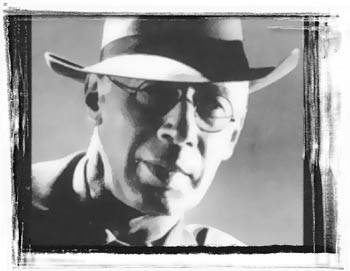
DENIS HAYES is back. The menace he’s stalking this time: dirty energy, which contributes to global warming and befouls the air in the world’s cities. The last time Denis Hayes organized Earth Day, in 1990, 200 million people turned out–and a recycling craze swept America. Before that, Hayes and then U.S. Sen. Gaylord Nelson, D-Wisc., made history by getting 20 million people to rally for clean air and water for the first Earth Day in 1970, a groundswell credited with spurring Nixon-era passage of the landmark Clean Air Act, the Clean Water Act, and the formation of the federal Environmental Protection Agency.

Now Hayes has returned for a third time to put on what promises to be the world’s biggest environmental event ever. Earth Day 2000–the 30th anniversary of Earth Day on April 22–is expected to rile up 500 million people on all continents and in more than 160 nations. People from hugely divergent backgrounds all seem to be getting involved somehow, from Chicago college kids devising ways to avoid trash problems at what they hope will be the first sustainable rock concert, to Afghani refugees learning about better wastewater disposal in their temporary refugee camps.

Working for a Watershed

Will the 2000 Earth Day change history, as did its predecessors? From schoolkids to priests, lots of people have their own hopes about that and have already started the Earth Day countdown with intriguing energy-saving projects sprouting up around the nation. Given that every time we turn on a light switch, car ignition, lawn mower or electric can opener we contribute to the greenhouse gases going into the atmosphere, this Earth Day message hits close to home for consumers as much as for politicians and businesses. The event’s rally cry: “Clean Energy Now!”

Environmental deep thinkers are saying that the next big trade and business revolution could be sparked if the United States and other nations would only ratify the Kyoto Protocol, the 1997 treaty hammered out in Kyoto, Japan, to get countries to agree to take specific steps to reduce the output of greenhouse gases. In a not-so-subtle nudge to federal legislators, Earth Day festivities host and actor Leonardo DiCaprio is to walk onstage at the nation’s main Earth Day event in Washington, D.C., wearing a T-shirt that reads simply, “Kyoto.” Meanwhile, Hayes, a mild-mannered man who seems an unlikely ringleader, is on a mission to combat global warming, person by person. He is pushing the Earth Day 2000 Clean Energy Agenda, a document developed by a consortium of major environmental organizations, including the Natural Resources Defense Council. It demands what some call “The Four Cleans”–clean cars, clean power, clean air, and clean investments.

Consumers should be able to buy sport-utility vehicles and pickup trucks, for instance, that are subject to the same air pollution standards as cars, adherents say. New cars and trucks should get an average 45 miles per gallon by 2010 and 65 miles per gallon by 2020. And instead of spending tax dollars subsidizing coal, oil, and nuclear power, there should be a fourfold increase in federal investments in renewable energy and energy efficiency over the next five years. A good goal, they say: By 2020, at least one-third of the nation’s energy should come from the sun, wind, or other renewable sources (excluding hydro power, which has caused damage to wild rivers and fish populations).

And while we’re at it, say Earth Day organizers, let’s clean up the air by setting progressively tighter pollution limits on power plants. A current loophole lets old coal-fired plants pollute much more than newer plants. Organizers are asking the public to jump aboard the Clean Energy Now! campaign by endorsing it at www.earthday.net or signing up at Earth Day events. “No issue is more critical to our future than global warming,” contends John Adams, president of the Natural Resources Defense Council and a board member of Earth Day Network. “That’s why our campaign focuses not only on the problem of global warming, but also on the solution–clean energy.”

“Global warming is [a problem] we know how to solve,” adds Hayes, who was a Harvard Law intern working in the office of Sen. Nelson when Nelson tapped him to organize the first Earth Day in 1970. Now, 30 years later, Hayes is chair of the Earth Day Network, based in Seattle.

“At this point, all we need is the determination to do it,” says Michelle Ackermann, Earth Day Network spokesperson. “Let’s not get held up by what elected officials will or won’t do; let’s just start doing it. If we want more fuel-efficient cars, we can start asking American car manufacturers to go ahead and make those fuel-efficient cars available to us.” (Japanese carmakers don’t need that message: they’re selling both the Honda Insight and Toyota Prius, highly fuel-efficient “hybrid” cars with both gas and electric motors, on the U.S. market this year.)

Happenings: Highlights of local Earth Day events.

A Broad Coalition

Changing the world one person at a time is an appealing idea that so far has attracted at least 3,200 green-minded religious, government, or other organizations worldwide to jump aboard the Earth Day 2000 bandwagon. Taking to heart the idea of being God’s good stewards of the earth, the Rev. Sally Bingham hopes to entice Episcopal congregations all over California to switch to green power by Earth Day 2000, just as her Grace Cathedral in San Francisco has.

“The cathedral is saving money,” says Bingham, who is also co-director of a program she started called Episcopal Power and Light. The cathedral shaved at least 10 percent off its power bill with energy-saving efforts such as installing sensors that automatically switch off lights when a person leaves the room. Too warm? She opens windows instead of turning on the air conditioner. Regular light bulbs are gone. Cool-burning, energy-saving compact fluorescent bulbs have taken their place. Plus, renewable energy costs 1 to 2 percent less than regular electricity, Bingham says.

When she preaches on her bully pulpit, though, cost savings aren’t her overriding concern. Encouraging the new green-power industry also creates jobs. This way, she says, people “walk a little lighter on the land. You wouldn’t love God and destroy what God created. . . . Our parishioners can save money, save the world, and create green jobs, all by making a phone call.” At first, however, Bingham adds, “We certainly did have lots of skeptics–people we called the Doubting Toms.”

Global warming isn’t an issue, some of these skeptics counter. Others simply resist change. Still others fear that a breakup of the electricity industry would result in a confusing consumer morass, the way the telephone industry’s breakup has. But Bingham–who takes her consciousness-raising slide show from church to church, just as a compatriot does in Pennsylvania churches–has a ready reply.

“I’ve only had one case where people decided they didn’t want to switch power companies,” she says, adding that 25 Bay Area churches switched by December.

Verdant Chicago

Chicago Mayor Richard M. Daley is preaching from a bully pulpit of his own, backing efforts to clean up the city’s dirty air and testing ways to lessen the heat-island effect by greening rooftops–including that of City Hall. By Earth Day, 21,000 different plants, including two oaks, are to take root atop the 11-story building’s black-tar roof. Most are low-maintenance ground-cover plants rooted in four-inch-deep soil. Butterflies are expected to eventually flutter amid shrubs and prairie grass planted in deeper soil. The city expects to save $4,000 a year in heating and cooling costs from the 20,000-square-foot garden, since plants are better insulators than merciless black tar.

According to Hashem Akbari, a scientist at Lawrence Berkeley National Laboratory in Berkeley, Chicago could save even more money, considering the square-foot cost of $10 to $20 to plant gardens, if it simply painted the roof white, which would cost 60 cents to $1 per square foot. Cheaper yet–listen up, homeowners–the city could wait until it’s time to reroof, then order a white roof instead of dark. “At that time, you won’t pay anything extra,” Akbari says.

But pleasant green rooftops make a statement in a high rise-dominated downtown. Greenery also does a better job insulating during the fabled blustery winters and reducing storm-water runoff (easing the load on sewers), argues Bill Abolt, Chicago’s environment department commissioner. Plus, “it makes the point about air quality–cities are getting hotter.”

Business considerations are driving Chicago’s zest to slow down its smoggy contribution to global warming. Air pollution is so bad that the federal government calls the Windy City a “severe nonattainment area for ozone,” which translates into bigger hurdles for industries that want to relocate to the city. Compliance–including the cost of hiring consultants–costs as much as 50 times more and takes at least twice as long if a factory wants to relocate in a brown field in Chicago instead of head to virgin land just outside the zone, says Abolt. Hoping also to shake an unhealthy, smoggy image in order to attract more white-collar jobs, the city is working on several ideas to clear the air–including a lawnmower buy-back program to remove notorious carbon-belching polluters. Residents ideally would switch to easy-care natural landscaping.

Creative Approaches

Yet Earth Day is about empowering everyone, big and small, and an amazing array of folks are jumping aboard with unusual projects. Take the tens of thousands of Clevelanders who will learn en route about Cuyahoga River pollution on a walk/run that ends at a huge EarthFest at the zoo.

But Earth Day is no longer solely an American event. Around the world, celebrations take unique cultural coloration. In Great Britain, for instance, the Rainforest Foundation-UK is taking over a commercial space in central London for a renewable energy fair, complemented by exhibits that tie together environmental and human rights issues. The Conservation Foundation is organizing Australia’s energy-related event, while New Zealand’s Department of Conservation is focusing on recruiting women to work on natural resource conservation projects.

Perhaps because it’s one of the world’s leading carmakers, Japan will create a car-free zone in Tokyo on Earth Day, with parades and fairs around the renowned Rainbow Bridge. Earth Day Japan is campaigning to end production of ozone-damaging chlorofluorocarbons in the country. In India, a women’s group will use solar panels to create crafts on Earth Day. Tel Aviv, Israel, was the site of a huge event in 1999, and Green Action there promises that the 2000 festival will be much bigger. In Jordan, Queen Noor herself is heading an Earth Day celebration coordinated by the Royal Society for the Conservation of Nature. And in Hanoi, Vietnam, a bird-watching club is being organized.

Some 30,000 students will plant trees in Mexico City, and schoolchildren in Brazil will decorate U.N. buildings with woven cloth gathered from other classrooms around the world. In environmentally threatened Madagascar, a concert will be coordinated with a cleanup of the capital city and the release of a special film. In Ghana, a three-day workshop will focus on medicinal plants, conservation of fresh water, renewable energy, and desertification. And in what is surely a sign of our times, Afghanis in refugee camps will learn about wastewater management, an important topic for people living in crowded conditions.

Greening Schools

Passion is evident. Erin Porter did an environmental audit of the photography lab at her Pittsburgh High School in California as part of her environmental club’s schoolwide green audit for Earth Day 2000. Porter aimed to find out if the fixer was recycled and chemicals properly handled. “The teacher was slightly hesitant at first,” says Porter. But for naught. If the green survey were a report card, she says, the lab would get an A. What Porter really noticed, however, was how she started to view chemicals back home. Now, she says, “I’m much more conscious of what I’m dumping down the sink.”

Students across the country are sleuthing around schools to see if they’re using the right light bulbs for energy efficiency or recycling to save landfill space. They’re doing it with help from Earth Teams, a program based in Contra Costa, Calif., that provides teachers with relevant, fun projects for what they already need to teach while jumping aboard the Earth Day theme.

Kids can chat online about what they’re learning and get materials at www.earthteam.net. “It is going beautifully,” Earth Teams founder Sheila Fish says, happy about the demand. “It is almost more than I can handle because people are loving the project.” Kids don’t consider it painful work. Instead, she says, “they’re eager.”

“What they really like is the fact that it’s tied to other students at other high schools,” notices Dan Hanel, science coordinator for the Pittsburgh Unified School District. Not that the Clean Energy Now! message of Earth Day is a slam dunk, an event certain to change all our lives. While nearly nine out of 10 Americans say they are concerned about the nation’s environment, the question is whether they’re willing to make changes personally. Roper’s “1998 Green Gauge Report” found that consumers at both ends of the green scene–the activists and the unconcerned–say they won’t pay a premium for greener goods. Activists who use more Earth-friendly products don’t think they should pay extra to do so, and people who couldn’t care less about the environment don’t see why they should pay more for products, according to the poll reported in American Demographics magazine. All this suggests that products had better be competitively priced if greenhouse gases are to be curbed.

“We’re not out of the woods,” says David Brower, 87, dean of America’s modern environmental movement. Fearing that he spent his years at the helm of the Sierra Club, Earth Island Institute, and Friends of the Earth simply “slowing down” destruction instead of stopping it cold, Brower nonetheless says we may be on the verge of an initial turnaround. The best sign, he says, is the new alliance of labor and environmentalists protesting publicly together at Seattle’s World Trade Organization meeting in November. “That started something that I think is catching power,” says Brower, who predicts the WTO protests will be looked on as a watershed event. Echoing the battle cry of the Alamo, he now tells people: “Remember Seattle.”

Organizers hope people will also be saying, “Remember Earth Day 2000”–a happier, let’s-put-on-a-show kind of event. Hayes sees Earth Day as a catalyst to encourage people to incorporate what they’ve learned during the event in their daily lives throughout the year. As a guy who rides his bike to work and uses compact fluorescent bulbs at home, Hayes practices what he preaches. He figures changing the world starts with each of us. Him. You.

Asked what single personal action would help the most to lessen the greenhouse gases sent into the atmosphere, Hayes and actor DiCaprio mull over a few of the thousands of ways people impact the earth. “The obvious answer is buy the right car,” says Hayes. Honda’s new two-seat, 80-miles-per-gallon Insight, for instance, sells for less than $20,000. And for slightly more money, there’s the four-seat, 60-miles-per-gallon Toyota Prius, which claims to cut gas consumption and carbon dioxide emissions by half, plus slice pollutants by 90 percent.

DiCaprio already knew about hybrid cars, and by the end of the conversation he has promised to buy one within the year. DiCaprio made his intentions clear in an online chat last November. “You fill it up at any service station [and] it gets 60 miles per gallon,” he told Yahoo fans. That’s a start.

For Hayes, that’s one person down, millions more to go.

From the April 6-12, 2000 issue of the Sonoma County Independent.

© Metro Publishing Inc.

Usual Suspects

0

Supervisors select temporary replacement for county administrator

By Greg Cahill

COUNTY supervisors and staff mourned the death this week of Sonoma County Administrator Tom Schopflin, who shot himself Saturday at his Santa Rosa home.

On Monday, Supervisor Tim Smith, a close friend, disclosed that Schopflin had battled alcoholism and depression.

The Board of Supervisors met in a special session earlier that day and selected Deputy Administrator Mike Chrystal, 57, to take over Shopflin’s responsibilities temporarily.

Schopflin, 50, had served in his post since 1985. He was a respected public official who operated outside the limelight while supervising the county’s $680 million budget and 3,700 employees.

Friends and colleagues were stunned to learn of Shopflin’s death, describing him as being in good spirits the day before at a weekly Empire Breakfast Club gathering.

At about 6:15 p.m. on Saturday, Schopflin went to a back bedroom and shot himself with a .38 caliber handgun. His wife, Sondra, reportedly was working on an upholstery project at the time, and one of his two teenage sons was working on a truck.

Supervisors postponed their regular public hearing on Tuesday morning and bumped agenda items to next week, convening instead an often emotional special meeting that permitted friends and co-workers to pay tribute to Schopflin.

Funeral services were tentatively scheduled for Thursday, April 6, at the First Presbyterian Church in Santa Rosa.

Activist Must Pay Hurwitz $110,000

IN A BIZARRE TWIST, a federal appeals court last week ordered longtime North Coast environmentalist Bob Martel to pay the owner of Pacific Lumber Co. $110,000 in legal fees after agreeing that a lawsuit Martel filed had been frivolous.

Martel and an army of activists have sought to link Charles Hurwitz’s takeover of Pacific Lumber to a failed 1988 Texas savings and loan that resulted in a $1.6 billion taxpayer bailout. The allegation is at the heart of a so-called debt-for-nature swap in which environmentalists propose that Hurwitz and Maxxam, Pacific Lumber’s parent company, turn over timberland to the public in exchange for the S&L payment.

A 12-year-old claim by the federal Office of Thrift Supervision is pending against Hurwitz and Maxxam.

Martel had claimed that Hurwitz defrauded the federal government by allegedly hiding his role in the failed S&L so that taxpayers would have to pay the bailout.

A trial court dismissed the original lawsuit, ruling that Martel knew there was no legal basis for it.

Last week, the three-judge panel found Martel guilty of “regurgitating politicized half-truths” in his lawsuit.

Martel has said he will not pay Hurwitz. “I have nothing. I practice poverty,” he said in a published report.

“You can’t get blood out of a stone.”

Diocese Denies Logging Linked to Sex Scandal Debt

CATHOLIC CHURCH officials have denied a claim by local activists that a plan to log 62 acres of redwoods in Occidental is connected to a move to repay $16 million in debt incurred after sex scandal payments sparked a fiscal crisis in the Diocese of Santa Rosa.

The land, adjacent to ecologically sensitive fish spawning grounds on Salmon Creek, is owned by the San Francisco diocese, officials say, and has no connection to the Santa Rosa diocese.

The plan calls for loggers to thin 30 percent of the trees at the Catholic Youth Organization’s McGucken Center, a summer camp and environmental program serving 7,000 children each year. The area is an important habitat for threatened salmon and steelhead species.

Local environmentalists say any logging on the property will promote erosion and damage the creek.

Public comments on the plan, which still must be approved by state forestry officials, are being accepted until Tuesday, April 11.

From the April 6-12, 2000 issue of the Sonoma County Independent.

© Metro Publishing Inc.

‘The Closer You Get’

0

The Closer You Get.

Black Irish

Blarney-filled ‘The Closer You Get’ doesn’t even come close

By Nicole McEwan

IN 1997, a wee British import took the world by storm, grossing many millions, garnishing four Oscar nominations, and adding a new catch phrase to the international lexicon. Male stripping, once solely synonymous with the Chippendales, now became known as doing the Full Monty.

A certifiable phenomenon, Peter Cattaneo’s comedy with a social conscience made Robert Carlyle a star and proved to general audiences that British cinema didn’t have to wear a hoop skirt and a bustle to be good.

Because show business is just that–a business–any overnight cinematic sensation creates a slew of half-assed spinoffs and watered-down imitations. This explains why we’ve been watching Tarantino-esque films ever since Pulp Fiction went huge.

This idea is one reasonable explanation for Aileen Ritchie’s mediocre The Closer You Get, produced by The Full Monty‘s Uberto Pasolini.

This featherweight comedy (with a social conscience, natch) details the all-too-precious exploits of five quirky Irish guys who also go to extremes–not to get paid but to get laid.

Horny, shy, daft, and just plain tired of relying on the luck of the Irish, five pub regulars hatch a plan to place an ad in a Miami newspaper. Led by Kieran (Ian Hart)–a man who punctuates every sentence by adjusting his wanker–they hope their inflated promises will attract a bevy of hot-blooded all-American beauties to their tiny village, which is a little low on sun-kissed calendar girls. And, with a bit of coaxing, the sleepy town agrees to throw a party to celebrate the babes’ anticipated arrival.

It’s not the guys’ fault, really. They’ve been stranded by fate in County Donegal, in a place where the sheep see more action than the population. The priest has never officiated at a wedding, and the local girls have minds of their own.

The ad posted, the gents go about their preparations, and some of the film’s most successful humor comes from their efforts, which range from pushups to hair dye to sex manuals (one sorry lad is a virgin).

The women, some jaded by failed romance, some buoyed by common sense, simply watch and wait. Besides, when you live in a town this incestuous, any stranger’s face is a friendly one. And who knows? Maybe American women really are dumb enough to fall for a goofy smile and an Irish accent.

The film’s central idea–that contemporary men often overlook real-life quality women to chase media-derived centerfold fantasies–was explored with greater depth and insight in the Ted Demme gem Beautiful Girls.

Indeed, Closer holds very few surprises. Because William Ivory’s script is such a paint-by-numbers affair, the movie conveys only a sad sense of what might have been. The potential for a savvy exploration of transcontinental stereotyping is hinted at in Closer’s opening scenes, but never developed.

The Closer You Get delivers about what you’d expect if you and your glass of green beer got stranded next to a drunken Irish-American on St. Patrick’s Day: roughly 90 minutes of occasionally entertaining blarney.

‘The Closer You Get’ screens at Sebastopol Cinemas and in Santa Rosa at Rialto Cinemas Lakeside. For details, see Movie Times, page 40, or call 829-3456.

From the April 6-12, 2000 issue of the Sonoma County Independent.

© Metro Publishing Inc.

Gatmo Studio

0

Moanin’ Parade have released a self-produced CD of experimental music, featuring Tom Waits and recorded at Knowlton’s Gatmo Studio.

Parade Rest

Tom Waits joins local bands for a wild experimental ride

By Karl Byrn

WALKING INTO Gatmo Studio, a 12-by-20-foot home studio operated by west county resident Gary Knowlton, a musician’s eyes settle on familiar items: a small PA system, a 16-track mixing board, mike stands, extra guitars, and shelves full of tapes. But the most visible and intriguing items aren’t found in typical studios: experimental instruments like the Bug, the T-Rodimba, the Water Harp, the Buffoon-a-phone, and a wall of hubcaps.

“The Cadillac and the Olds sound the best,” Knowlton quips enthusiastically.

Since the late ’80s, the 52-year-old multi-instrumentalist has hosted jam sessions at Gatmo with a number of like-minded local musicians–primarily collectors and inventors of rare and strange instruments, artists who are driven neither by the machinery of touring and hits nor even by formal songwriting, but by a thirst for improvised sonic experiments. The highlights of some stellar sessions from 1993 to 1997 are now out on disc as Moanin’ Parade (The Gatmo Sessions, Vol. 1), available at local music stores or on the Internet through the Santa Rosa-based label Jackalope.

Moanin’ Parade features two groups. One is Knowlton’s own trio, Petit Mal, with his brother Michael and former neighbor Richard Waters, inventor of the waterphone (a device sometimes used for eerie deep-sea sound effects in films). The other is the quartet C-Side (or California Sonic Instrument Designers Ensemble), which includes Waters and other inventors, like Marin musician Bart Hopkin, who is best known for assembling the acclaimed 1996 Ellipsis Arts compilation Gravikords, Whirlies & Pyrophones and its 1998 follow-up, Orbitones, Spoonharps & Bellowphones.

Both Waters and Sonoma County resident Tom Waits appear on the Hopkin CDs; Waits also wrote the foreword to Gravikords.

Several guest improvisers also appear on the Moanin’ Parade disc, including Waits, who adds vocals or keyboards on all the tracks. Indeed, the CD is reminiscent of Waits’ more experimental recordings, circa 1993’s The Black Rider.

“When I first moved here, I started hearing these really weird sounds,” Knowlton says of the opportunity that brought him to meet Waters. The sound turned out to be his neighbor’s amplified waterphone, and recording experiments at Gatmo Studio began. Knowlton’s background in bluegrass and blues-rock expanded to follow the ideas that “you can get a sound out of anything” and that “there’s no right or wrong way to play.”

Knowlton owns more than 30 experimental instruments, but Petit Mal will feature conventional instruments like the trumpet or the bass guitar. C-Side explores the inventors’ own unusual percussive and humming devices, like Hopkin’s kelp saxophone, Darrell DeVore’s wind wands, and Tom Nunn’s huge xylophonelike wood and metal sculptures. C-Side members owe a debt to the 1950s instrument inventor Harry Partch, while they echo influences of African and Asian music. Petit Mal jam around sounds pulled from free jazz, Dixieland, and field hollers.

“I know our music isn’t for everyone,” Knowlton says of the disc’s atonality, shifting shapes, and nonlinear rhythms. “To some people there’re parts [of this music] that may be annoying. But if there’re things that can be taken as funny, or if the listener can go ‘Wow, that’s interesting’ or ‘Wow, that’s different,’ then there is an audience for [this music].”

Indeed, Doug Jayne of Jackalope (and the Last Record Store) says the label has seen brisk Internet sales, owing in part to a mention of Moanin’ Parade on Waits’ official Web page. “We’ve been selling 10 or 20 a day” over the Net, he says, “and [at the store] we never sell 10 or 20 of anything in a day.”

With this strong response, Knowlton is already planning to release Swarm Warnings (The Gatmo Sessions, Vol. 2) by late spring or early summer.

THE CUTS ON Moanin’ Parade and Swarm Warnings were entirely improvised with no post-recording overdubs, as Knowlton designed Gatmo in a way that dampens louder sounds and accentuates quieter ones. Apart from occasional small contact mikes on the instruments, the acoustic sessions were recorded simply with two room mikes running through a pre-amp to DAT. As for composition, the pieces began as “concepts.” For example, Knowlton mentions a concept such as sustain, where all notes must be held rather than struck or plucked, and a concept of starting with no rhythm, working toward a basic pulse and shifting to a new and distinct rhythm.

“I can go back in [when editing] and say, ‘Yeah, right there it really starts brewing,'” Knowlton says, adding that “I try to use other people’s ears as much as possible.” It’s part of the Gatmo philosophy that one should “never do the same song the same way twice.”

Knowlton notes that the C-Side and Petit Mal musicians still have to work for a living. His own day job as a special-education instructor at the Sonoma Developmental Center reflects a generosity and imagination that help make his Gatmo sessions a true and pure alternative music. While he’s not impressed with so-called alternative rock, he cites Beck as a current wonder, admires the energy that punk brings to pop, and respects the technical arts of sampling and mixing.

After Swarm Warnings, Knowlton plans to match various guests for a series of odd and unpredictable duo and trio recordings. “Music doesn’t have limits,” he says. By chasing the edges of chance, Knowlton and his companions have created what a graffito on Gatmo’s ceiling calls “alien folk music.”

From the April 6-12, 2000 issue of the Sonoma County Independent.

© Metro Publishing Inc.

Spins

0

Pop Life

New CDs by Madonna (sort of), Disturbed, plus Harry Nillson reissued

Madonna The Next Best Thing (Maverick Records)

BEST DESCRIBED as “looking for love in a hall of mirrors,” Madonna and producer William Orbit’s gambit on this soundtrack is to surround real Madonna vocal tracks –“American Pie,” “Time Stood Still”–with mimicked ones. At the start, you get princess Christina Aguilera in a warble-strut mode, resembling something off Madonna’s Like a Prayer LP. Right after “Pie” is Mandalay’s sexy-as-hell synth-housescape tune “This Life,” with whispers and eroticized huffing all in their proper places. This begs the question: How much could Madonna win in court for self-plagiarism? Edward Crouse

Disturbed The Sickness (Giant)

THIS HEAVY four-piece band from Chicago would go over well on the metal scene. Although Disturbed lift from bands like Korn, Tool, Ministry, and Static-X, the result is reasonably distinctive and cleanly produced. Vocalist David Draiman barks out abrupt, screaming vocals full of stream-of-consciousness lyrics and metal-rap verse. From the fast-paced “Voices”–a metal assault full of electronic swirls, pulses, and scratches–Disturbed take detours into Orgy-styled dance beats (“The Game”), ghetto synths (“Fear”), and tribal rhythms (“Down with the Sickness” and “Conflict”). The most striking song is the twisted “Meaning of Life,” with the repetitive lyrics “wanna get psycho.” The band also covers Tears for Fears’ “Shout” (“Shout 2000”). Disturbed are consistently heavy on bass, percussion, and guitar, and their complex songs are full of melody. Though it’s not doing anything revolutionary, the band is a solid addition to the neo-industrial rock-metal movement. Sarah Quelland

Nilsson Nilsson Sings Newman (Buddha Records)

NSN’S 30TH-ANNIVERSARY reissue edition finds both Randy Newman’s early songs and Harry Nilsson’s decathlete voice ageless. Newman’s piano playing is quiet and spare, and can’t help but sound humbled by the labyrinthine multitracked vocals. “I’ll Be Home,” for instance, has Harry singing plaintive lead while acting as his own call-and-response gospel squad. But hearing him growl like Mahalia Jackson is just half of the matter. While the vocal personalities are densely webbed, their beauty transcends their status as whirligig gimmicks. Nilsson’s team of voices peel away at Newman’s firm, almost filmic sensibility (“The milk truck hauls the sun up/ the paper hits the door/ and the subway shakes my floor/ and I think about you”). It’s still luscious. E.C.

From the April 6-12, 2000 issue of the Sonoma County Independent.

© Metro Publishing Inc.

The Compleat Wrks of Wllm Shkspre (Abridged)

The Compleat Wrks of Wllm Shkspre (Abridged).

Bad Bard

Santa Rosa Players shortchange Shakespeare

By Daedalus Howell

THE SANTA ROSA Players’ production of The Compleat Wrks of Wllm Shkspre (Abridged) is like a bad date on which one still miraculously manages to get laid. It’s all about the last 15 minutes.

The three-player cast (Cheri Dumay, Jon Vissman, and David Templeton, who is a freelance writer for the Sonoma County Independent) shoots through a distilled, extremely silly version of Shakespeare’s canon at breakneck speed while deploying a barrage of slapstick numbers.

The shtick-filled script, written by Daniel Singer, Adam Long, and Jess Borgenson with liberal smatterings of Shakespeare’s original text, has some flaws, though it has worked well for other companies.

But in this production, directed by Carl Hamilton, the premise is more interesting than its execution. In part that’s because the actors careen through text after text at a desperately fast pace. The trio often speak so quickly that they’re hard to understand. Moreover, the cast leans toward a hard delivery, perhaps hoping that a big voice would deliver big laughs. Usually, though, subtlety would have been more appropriate.

The breakneck pace slows down a bit to an enjoyable speed when the tumbling troika launches into an abbreviated Hamlet. The players first do the Dane abridged and then perform a second, faster version, followed by a incredibly brief third version. Finally, they perform Hamlet backward, proving that “bard” spelled backward isn’t always “drab.”

After the dopey shtick of the first act, this payoff is profoundly satisfying. Unfortunately, many audience members in opening night’s half-capacity house will never know this because they exited during the intermission. Those with a heartier constitution, however, received these last-minute high jinks with roaring laughter.

Highlights include Templeton’s bombastic tirades (which often reach deafening volumes) and his comic turn as a kvetching actor qua Hamlet who becomes overwhelmed with his “To be or not to be” speech and descends into a fractured monologue about making guacamole for dinner guests.

Dumay and Vissman are humorous in a gender-bent redux of the famed balcony scene in Romeo and Juliet. Oddly, one will be reminded of Shakespeare’s own parody of this material in the “Pyramus and Thisbe” sequence in his A Midsummer’s Night’s Dream— which is far superior.

The production takes a misstep with a Grand Guignolesque scene that reimagines Titus Andronicus as a Julia Child cooking show, complete with flowing blood and a sign-off in which two recent amputees try to high-five but miss on account of their fresh stumps (the audience diminished somewhat during this scene).

Not to wax too politically correct, but the script’s call to have Othello performed as a rap ditty (the all-white cast dons ski caps and sunglasses) eerily reminds us that Shakespeare and contemporary culture have very different definitions of the term “minstrel show.”

The show’s most entertaining moment comes when the players ask audience members to help execute Ophelia’s final exit in Hamlet. The scene offers a Freudian deconstruction that requires one audience member to represent the character’s ego by repeatedly running up the set, while other playgoers chant various mantras.

What really redeems The Compleat Wrks of Wllm Shkspre is the fact that kids really seem to dig it–all the pratfalls and inanity amount to a stage idiom not unlike a cartoon. The production draws constant giggles from the preteen set. Indeed–aside from its often suggestive language and situations–this show may prove a wonderful on-ramp to get kids into Shakespeare’s daunting oeuvre. Otherwise, theatergoers may want to prune this engagement from their calendars.

‘The Compleat Wrks of Wllm Shkspre (Abridged)’ plays at 8 p.m. on April 7-8 and 13-15, and at 2 p.m. on April 9 and 16 at the Lincoln Arts Center, 709 Davis St., Santa Rosa. $11-$13. 544-7827.

From the April 6-12, 2000 issue of the Sonoma County Independent.

© Metro Publishing Inc.

Carneros Quality Alliance

0

Border Crossing

Carneros wine appellation is a tale of two counties

By Bob Johnson

He’s a real nowhere man Living in a nowhere land . . .

JOHN LENNON and Paul McCartney were not conjuring a vintner from the Carneros wine-growing region when they penned their 1965 hit single “Nowhere Man.” But they could have been. The Carneros district straddles the extreme southern reaches of Sonoma and Napa counties, following San Pablo Bay from east to west. Viewed from the south, it begins some 40 miles north of San Francisco.

Flatlands and gently sloping hills define the terrain. Unlike the gentrified tourist magnet that Napa Valley has become, Carneros has no swank boutiques or trendy trattorias. Heck, it doesn’t even have a town.

What this agricultural area does have is row upon row of grapevines–some 6,500 acres of vineyard land, at last count. And Carneros grapes are among the most sought-after in all of California, because they make wines that are consistently adjudged among the finest in the state.

According to the Carneros Quality Alliance, a group of vintners dedicated to defining and perpetuating the special character of the region, 48 percent of Carneros grapes are chardonnay, 32 percent are pinot noir, 6 percent are cabernet sauvignon, 5 percent are merlot, and 9 percent are various other varietals.

Grapes have been grown there since the mid-1800s, and the first real spurt of planting came after the repeal of Prohibition, when pioneer North Coast winemaking families like Martini and Beaulieu undertook significant vineyard projects.

At that time, it wasn’t unusual for grape growers to have cattle ranchers and sheepherders as neighbors. In fact–and perhaps providing the answer to the question, Which came first, the grape or the sheep?–carneros is the Spanish word for sheep.

While grapes have been grown in the area for decades, the first winemaking facility to be constructed there since Prohibition was Carneros Creek Winery, founded in 1972.

The largest estate grower is Buena Vista Winery, which planted its vineyards during the 1970s. Acacia Winery was founded in 1979 as an appellation-specific winery–four years before Carneros gained its official appellation status.

What attracted these and other winemaking concerns to the region?

According to Anne Moller-Racke, Buena Vista’s vineyard director, two things: its unique microclimate and topography.

“Perhaps the two most important influences on [Carneros vineyards] are the soil and the proximity of San Francisco Bay and the Pacific Ocean,” she says.

“The soil is shallow and dense with high clay content, which makes it harder for a vine to establish a root system, so it yields smaller, more flavorful grapes. The ocean breezes keep our summers cooler and our winters more mild than other parts of Napa and Sonoma.”

Through the work of Carneros Creek co-founder Francis Mahoney and researchers from UC Davis, clonal selections best suited for Carneros were identified and planted, thus establishing the area as prime pinot noir territory.

Mahoney had much earlier developed an affinity for the wines of Burgundy, so it was no surprise that he would gravitate to an area ideally suited for growing Burgundy’s two noble grapes: pinot noir and chardonnay.

IN 1986, A STUDY conducted by UC Davis’ viticulture and enology department revealed characteristics common to virtually all Carneros pinots: “high cherry, fresh berry, and spicy components.” Growers and winemakers describe the primary flavor as “red berry–either strawberry or raspberry–jam.”

Ten years later, an exhaustive study by the Carneros Quality Alliance revealed typical characteristics of Carneros chardonnays: “citrus, fruity green apple, and pear.”

While most appellations are known for a certain spectrum of aroma and flavor components, Carneros wines tend to be much more consistent across the board and thus more readily identifiable.

Pinot noir, in particular, thrives in Carneros because it is a varietal that enjoys hardship. When the soil is shallow, the climate is cold, and fog shelters the sun for hours at a time, the delicate pinot grape responds by transforming into wine with layers of subtle flavors and refined elegance.

Because climatic conditions allow for full ripening of the grapes, Carneros pinots also tend to be perfectly balanced, making them enjoyable in their youth but also capable of long-term aging.

Since chardonnay and pinot noir are the most common varietals, it should come as no surprise that Carneros is also known for its sparkling wines.

Champagne Taittinger president Claude Taittinger visited Carneros as a young man and made note of the area’s potential for sparkling wines. In 1989 he founded Domaine Carneros, then and still considered one of the jewels of the region.

Codorniu Napa, Gloria Ferrer, Domaine Chandon, and Mumm Napa Valley are other makers of sparkling wine that have set up shop in or purchase grapes from Carneros.

And what better beverage than sparkling wine to accompany our opus-ending toast? So:

Here’s to a place unspoiled by urban sprawl, a place with no borders, a place you won’t find on a map.

Here’s to Carneros.

Here’s to nowhere.

From the April 6-12, 2000 issue of the Sonoma County Independent.

© Metro Publishing Inc.

Gardening

0

Getting Ready to Garden

Tips on starting a new garden

By Meg McGowan

THE PASTORAL IDEAL is alive and well at the dawn of the 21st century. Weary of our paved-over paradise, we believe that given hoes and trowels we can excavate Eden, at least in our own backyards. Martha Stewart and an armful of spring gardening magazines encourage such dreams. Our imaginary garden often focuses on the finished product as presented on a glossy page, on a table, or in a bouquet. But gardening is all about process, not product. Beginning a garden, like beginning a marriage, requires the grower to examine expectations; indeed, gardening is essentially about the relationship between the gardener and the earth.

What do you expect to grow: flowers, herbs, vegetables, or a cottage-garden combination? That’s the first question to ask. The requirements for each are a bit different. Examine the garden in your mind. Gather the elusive images you cherish and put them down on the page. If you like, combine words with pictures clipped from magazines or catalogs. If you’re a new gardener, you may not have the words to express what you like, but you’ll recognize it when you see it. Be sure to include any descriptive information that is provided with the pictures, as it will save you time later. Identify the elements that attract you.

Do you prefer a look that is formal or informal? Neat or untamed? Brilliantly colored or a soothing interplay of textures and hues? A tiny nook or a sweeping expanse? Defining your desired direction will provide you with a framework for evaluating the space you have to work with.

Whatever you choose to grow, remember that your initial feelings of satisfaction and success are likely to be inversely proportional to the initial size of your garden. Like children, gardens require the greatest concentration of time in the first years of life. This is particularly true for your first garden, when everything is new to you. Consider that you are changing what the earth is in the habit of growing in this space. Many of those habits have deep roots–literally.

True change is gradual. A plan that is too ambitious often results in a mindset in opposition to nature, a war pitting gardener against pests, weeds, and unyielding earth. Ideals tend to get lost in the heat of those battles. When overwhelmed, you might consider chemical reinforcements, thinking that the means may appear to justify the end. That’s not true. Gardening is all about means, about process, about working with the earth.

There is no end.

BY BEGINNING small you allow yourself time to gauge what your garden will require from you. Remember, you will be changing too, altering your own routines to make room in your life for a garden. If you dig up more space than you actually plant, the bare earth will soon be covered with weeds, and you will be mired in frustration. Starting small allows you to become intimately acquainted with the plants you are growing and increases, rather than diminishes, your rewards.

By controlling the area of your garden and the initial size of your plantings, you also control the size of any mistakes you may make. With that worry out of the way, you are freer to experiment and enjoy the process of gardening.

In selecting a site, you begin to take into account the expectations of your partner, the earth. If you have a particular area where you want to plant, the light and soil conditions will dictate a range of plant choices. If you are flexible as to where your garden will be placed, you can consider first what you wish to grow and then where those plants will grow best. Concentrating your first efforts close to the house, preferably in an area that you pass by daily, allows you to continually enjoy your creation. A word of caution: If you have small children, you may want to avoid planting flowers that attract bees close to play areas. Also, be aware that some plants have toxic properties.

Vegetables require at least six hours of direct sunlight each day. Many traditional culinary herbs also are sun-loving and make excellent companion plants for your vegetables. Herbs also contribute to a healthy garden plot by repelling pests. Many herbs, such as basil, thyme, fennel, and dill, attract beneficial insects as well.

A southern or western exposure is best for vegetable and herb gardens. A neatly tended vegetable garden may be placed anywhere, but if follow-through is not your forte, you may want to tuck the garden toward the side or back of your house. A rectangular shape is practical for vegetables, allowing for neat rows and maximization of space. If you choose to use lumber to define a raised vegetable bed in your yard, make sure that the wood is untreated. Chemicals used to treat lumber will leach into the soil and find their way into your harvest.

If your focus is on flowers, you’ll want to know the difference between annual and perennial plants. Annuals must be planted every year. Though they occasionally drop seeds and surprise you with a reappearance, annuals almost always complete their life cycle in one growing season. Once annual flowers begin blooming, they tend to bloom until frost, providing almost constant color.

Perennials, on the other hand, have a specific period of bloom. They can help you create a garden that will change throughout the growing season. Most perennial plants die back to the ground each winter, but the roots remain alive underground. When spring comes, the plants emerge from the soil, sending up new shoots from old roots.

You can, of course, plant both annual and perennial flowers together. Familiarizing yourself with the characteristics of both types of plants, however, allows you to make informed choices that will suit you and your site.

Without making large structural changes, there is little you can do to affect the amount of sunlight that falls on a particular area of your yard. Matching plant material with the amount of available light is key to whether the plants thrive or languish. The best way to determine how much light a garden gets is to check it hourly. Our perceptions of what is sunny and what is shaded are often based on limited observation. Full sun is considered to be six hours of direct sunlight. The afternoon sun is stronger than the morning sun, which gives it a bit more weight in the equation. Generally speaking, the more sunlight a garden has, the more bloom you will get. Perennial plants for the shade tend to produce their showiest blooms in the spring, before the trees fully leaf out, or late in the year, as the trees begin to lose their leaves. There are some exceptions–notably hostas, astilbe, and day lilies–but much depends on the amount and quality of light available. For a continuous show of color in a shaded location, pockets of annual flowers are essential. Few plants will bloom in the deepest shade, but you still can create a native woodland garden or a restful setting with contrasting foliage colors and textures.

Curved lines are most pleasing for defining a flower bed. The idea is to draw the eye along the planting in a natural flow. If the garden is placed so that it is viewed from only one or two sides, the tallest plants should be set at the back, with heights tapering toward the front. If the garden is to be viewed from all sides, the tallest plants should be grouped in the middle, with plants tapering toward the edges of the bed all the way around. If your tastes run toward orderly and refined rather than cottagey and casual, look for words like “compact” and “low-growing” in plant descriptions. Avoid plants that require staking. Perennial plants are best planted in odd numbers for a natural look. For a more refined look, try using fewer varieties and planting in larger groups. Repeating color unifies any design.

WHATEVER YOU DECIDE to plant, food or flowers, try to include as much variety as possible. Monocultures invite pests, disease, and the potential for failure on a large scale. Diversify. Plant cherry tomatoes, plum tomatoes, and beefsteak tomatoes. Look for heirloom varieties that have not been overhybridized for uniformity. Many perennial plants are grown from cuttings; try to include some that are grown from seed to support an expanding gene pool. And include some native species in your flower garden.

With woodland wildflowers it is extremely important to buy from a reputable source that has not pillaged its plants from the forests.

Good soil is essential to the success of all gardens, so before planting anything, be sure to tend to your soil. You may want to have your soil tested to identify potential problems, especially if you are planting edibles or are doing extensive plantings or if previous plantings in an area have failed to thrive.

Look for earthworms as a sign of healthy soil; the good drainage they provide is an essential component of good soil. Mushroom compost (well-rotted manure in which mushrooms have been grown) and peat are good additions to almost any planting bed, along with any offerings from your own compost pile. Digging organic matter into a garden bed not only improves drainage, but improves the overall structure and adds nutrients to the soil.

Don’t overdo on manure or mushroom compost, though; adding two inches for every six inches you dig down is sufficient.

Knowing when to dig also helps preserve soil structure. Digging when it is too wet or too dry is not advisable. To avoid compacting the soil, perform this test: dig when a clump of soil holds together in the palm of your hand, without being so wet you can squeeze water from it.

Planning the garden so that you can reach all areas without stepping into the beds or off of the paths reduces the amount of soil compaction as well.

BY DELIVERING water where it is needed and reducing the amount of water that evaporates, soaker hoses encourage correct watering practices. Soaker hoses laid while planting can be covered with mulch and will soon be obscured by flourishing plants. Covering exposed earth in between plants with organic mulch also helps the soil retain water, adds nutrients, and discourages weeds. Again, use moderation; overwatering can be as deadly as underwatering. Sprinkling a garden lightly each day causes plants to develop undesirably shallow root systems concentrated only in the top few inches of soil.

This leaves the plants highly susceptible to drought if watering is not continued, or to rot if the soil has no chance to dry between waterings.

Deep, less frequent waterings cause plant roots to reach down into the ground in search of water. This is particularly important for perennial plants, whose winter survival depends on developing hardy root systems. Perennial plants, therefore, require less water than annual plants and vegetables.

An invaluable resource for beginning gardeners is other gardeners. Gardeners tend to be passionate about their love and are usually as happy as matchmakers to help guide you down the garden path. Talk to your friends. Talk to people whose gardens you admire. Find a greenhouse or nursery with a knowledgeable staff and talk to them. Then go home to your own patch of land and listen.

Listen to the earth, which is to be your partner in creating life; observe the nuances that make your situation unique; resolve to keep the lines of communication open; and celebrate with a garden.

From the April 6-12, 2000 issue of the Sonoma County Independent.

© Metro Publishing Inc.

Chez Marie

0

Chez Comfort

Forestville’s Chez Marie: a welcome find

By Paula Harris

WHILE OUR TABLE is prepared, we sit in a little waiting room inside the house that is the Chez Marie restaurant in Forestville. The parlor is very homey, with small tables topped by shiny Mardi Gras trinkets and chairs arranged in a semicircle. We stretch out our chilled feet toward the small radiator and enjoy the short wait.

Just beyond is the dining room, and it’s a cozy one. A glowing fireplace, an assortment of decorative copper pots and pans, and soft lighting conspire to mellow out even the most rushed diners.

Chez Marie brings to mind one of those unpretentious cafes in the French countryside where the menu is chalked on a board, the tablecloths are checked gingham, the wine is local, and the food is straightforward and fresh.

On Fridays, Saturdays, and Sundays, the focus here is country French-Continental cuisine, including escargots, cassoulet, and bouillabaisse. But on Wednesday and Thursday evenings, Chez Marie transforms itself into “Marie’s Mardi Gras Café” and celebrates down-home Cajun and Creole foods–like fried green tomatoes, red beans and rice, and gumbo–from New Orleans, the chef’s home town.

That explains all the festive beads and other decorations hailing from the Big Easy that adorn the dining room. It’s Mardi Gras every week here. On hot summer evenings, the Cajun music plays and there’s a big washtub of iced beer right at the front door.

OWNED AND OPERATED by chef Shirley Palmisano and her partner, Angie Lewis, Chez Marie (named after their mothers, May and Mary) is housed in an unassuming building. There’s a collection of cookbooks inside and a kitchen garden out back.

It’s a west county hidden gem.

The two women have created a warm, welcoming ambiance in true family-run country style, and they make a good team. Palmisano darts around the look-in kitchen, which she seems to run single-handedly and in which she almost effortlessly turns out dish after dish of impressive, made-from-scratch goodies.

Meanwhile, Lewis works the dining room, serving the patrons. She’s always quick with a friendly joke or a maternal arm around the shoulder as she recites the day’s specials.

Even though the place is packed when we’re seated, the dining room is (amazingly) not at all noisy. It’s a “country French night,” and classical music spills from the sound system. The mood is serene but not stuck-up.

Lewis brings the bread. It causes quite a stir at our table. Here are not just a few wimpy slices in a delicate basket, but huge hunks of warm baguettes drizzled very generously with olive oil and topped equally generously with shredded asiago cheese. We hungrily demolish one plateful and it keeps on coming!

WE TRY A SELECTION of appetizers. Ail et olive roti ($5.50) are warm-roasted Kalamata olives cooked with rosemary and plump buttery cloves of garlic and then seasoned with Parmigiano-Reggiano cheese. Delicious.

The pâté du maison ($5.50) is a smooth, rosy pâté made from chicken liver and port wine pâté. It’s served with a handful of cornichons, mustard, and bread.

A rich cream of tomato soup is enlivened with a sprinkle of toasted pistachios.

Eggplant Marie ($12.95)–grilled eggplant seasoned with oregano and layered with caramelized onions and mozzarella cheese in a wispy, papery filo shell, then baked golden–is a good bet for vegetarians.

We’re pleased to see that some of the Cajun-Creole items are being served as specials tonight. The Louisiana jambalaya ($11.50) is a hot and hearty blend of ham, chicken, Louisiana hot links, and peppers in rich brown gravy served over rice. There’s just enough spice to make those sweat pearls break out on the forehead.

One disappointment is the duck à l’orange ($15.95). The sweetish orange demiglacé sauce is fine, but the half duck has a stringy, dry texture that’s quite unappealing. It’s served with white rice and asparagus spears.

The scampi picatta ($16.95) are large prawns in a delicate white wine, parsley, and garlic butter sauce with artichoke hearts and hints of lemon and capers. It’s fresh and light–a good springtime dish.

A small but selective wine list features local offerings.

All desserts are $4.50, including a lightly caramelized vanilla-loaded crème brûlée, an old-fashioned pecan pie scented with bourbon, and an intense bittersweet-chocolate custard.

It’s all very relaxing, like eating at a friend’s comfy home. Palmisano and Lewis want you to settle back in your chair, loosen your belt, and even slip off a shoe. “Come enjoy the music and the smell of good food cooking in the kitchen,” they coax in the restaurant’s newsletter. “The pot is bubbling with down-home stuff just for you.”

Chez Marie Address: 6675 Front St. (Hwy. 16), Forestville; 887-7503 Hours: Dinner from 6 p.m., Wednesday-Sunday Food: Country French-Continental, Friday-Sunday; Cajun and Creole comfort food, Wednesday and Thursday Service: Friendly, casual, and maternal Ambiance: Relaxing bistro atmosphere–like eating in a friend’s home Price: Moderate Wine list: Short but selective list of wines from Sonoma and Mendocino counties Overall: 3 stars (out of 4)

From the April 6-12, 2000 issue of the Sonoma County Independent.

© Metro Publishing Inc.

Designer Randolph Johnson

0

Living by Design

Sonoma County designer Randolph Johnson brings classical romanticism to home furnishings

UNDER the watchful eye of Randolph Johnson, a small army of skilled workers and local artisans four years ago converted a vacant storefront on Santa Rosa’s Fifth Avenue into a spectacular showroom for custom-made crafts and home furnishings that is replete with inlaid marble and limestone floors, a brick fireplace, and handmade furniture.

“It’s like walking into a Mediterranean villa,” says Johnson, 59, who sells his works around the globe.

The longtime Sonoma County artist and designer–who had operated out of a small Forestville workshop/studio with an eight-person staff–has created a unique design house that acts both as a source for interior decorators and homeowners looking for heirloom-quality pieces and as an outlet for local artisans specializing in handmade furnishings and home fixtures.

Johnson, who often assists architectural and garden designers, is renowned for his stunning wall murals, trompe l’oeil paintings, and innovative use of materials. There is a classical-romantic element to much of his work, though it also reflects a contemporary feel.

The design showroom features pieces designed by Johnson, ranging from handblown glass vessels to bronze sculptures to handcrafted wooden lamps. In addition, the business provides mosaic floor designs, decorative glass, custom lighting, upholstery, and custom-made window coverings, all created by Johnson and fashioned by a bevy of top Sonoma County artisans and craftspeople.

The design emporium also offers rugs, lighting fixtures, bronzes, and other works.

Randall Johnson Designs, 608 Fifth St., Santa Rosa. 577-8196.

From the April 6-12, 2000 issue of the Sonoma County Independent.

© Metro Publishing Inc.

Earth Day

Spring Cleaning Biggest Earth Day ever demands 'Clean Energy Now!' By Sally Deneen DENIS HAYES is back. The menace he's stalking this time: dirty energy, which contributes to global warming and befouls the air in the world's cities. The last time Denis Hayes organized Earth Day, in 1990, 200 million people...

Usual Suspects

Supervisors select temporary replacement for county administrator By Greg Cahill COUNTY supervisors and staff mourned the death this week of Sonoma County Administrator Tom Schopflin, who shot himself Saturday at his Santa Rosa home. On Monday, Supervisor Tim Smith, a close friend, disclosed that Schopflin had battled alcoholism and depression. ...

‘The Closer You Get’

The Closer You Get. Black Irish Blarney-filled 'The Closer You Get' doesn't even come close By Nicole McEwan IN 1997, a wee British import took the world by storm, grossing many millions, garnishing four Oscar nominations, and adding a new catch phrase to the international lexicon. Male stripping, once solely...

Gatmo Studio

Moanin' Parade have released a self-produced CD of experimental music, featuring Tom Waits and recorded at Knowlton's Gatmo Studio. Parade Rest Tom Waits joins local bands for a wild experimental ride By Karl Byrn WALKING INTO Gatmo Studio, a 12-by-20-foot home studio operated by west county resident Gary Knowlton, a...

Spins

Pop Life New CDs by Madonna (sort of), Disturbed, plus Harry Nillson reissued Madonna The Next Best Thing (Maverick Records) BEST DESCRIBED as "looking for love in a hall of mirrors," Madonna and producer William Orbit's gambit on this soundtrack is to surround real Madonna vocal tracks...

The Compleat Wrks of Wllm Shkspre (Abridged)

The Compleat Wrks of Wllm Shkspre (Abridged). Bad Bard Santa Rosa Players shortchange Shakespeare By Daedalus Howell THE SANTA ROSA Players' production of The Compleat Wrks of Wllm Shkspre (Abridged) is like a bad date on which one still miraculously manages to get laid. It's all about the last 15 minutes....

Carneros Quality Alliance

Border Crossing Carneros wine appellation is a tale of two counties By Bob Johnson He's a real nowhere man Living in a nowhere land . . . JOHN LENNON and Paul McCartney were not conjuring a vintner from the Carneros wine-growing region when they penned their...

Gardening

Getting Ready to Garden Tips on starting a new garden By Meg McGowan THE PASTORAL IDEAL is alive and well at the dawn of the 21st century. Weary of our paved-over paradise, we believe that given hoes and trowels we can excavate Eden, at least in our own backyards. Martha Stewart...

Chez Marie

Chez Comfort Forestville's Chez Marie: a welcome find By Paula Harris WHILE OUR TABLE is prepared, we sit in a little waiting room inside the house that is the Chez Marie restaurant in Forestville. The parlor is very homey, with small tables topped by shiny Mardi Gras trinkets and chairs arranged...

Designer Randolph Johnson

Living by Design Sonoma County designer Randolph Johnson brings classical romanticism to home furnishings UNDER the watchful eye of Randolph Johnson, a small army of skilled workers and local artisans four years ago converted a vacant storefront on Santa Rosa's Fifth Avenue into a spectacular showroom for custom-made crafts and home furnishings that...
11,084FansLike
4,446FollowersFollow
6,928FollowersFollow