Open Mic

0

Open Mic

Ride Anxiety

By C. D. Payne

SPRING IS THE TIME when a young (or not so young) person’s fancy turns to . . . motorcycles. What a pleasure to zip along our rural roads in the warm sunshine. Only one thing spoils the fun. Cars.

Get on a motorcycle and now even a passing Pinto seems like a menacing beast of prey. Will that Volvo pull out in front of you? Will that SUV change lanes right on top of you? Will that truck smack you from behind when you’re stopped at a light?

Cruising at 50 on a motorcycle you have no seat belt, air bags, crumple zones, or side impact reinforcements. It’s your body vs. large, multi-ton vehicles. A minor fender-bender in a car can be a major bone breaker on a bike.

One solution is to spend several thousand dollars on a helmet, boots, gloves, and an abrasion-resistant riding suit loaded with space-age armored pads. In theory you could take a spill at freeway speeds and walk away with only a few bruises. But for every fun jaunt across town you must suit up like a medieval knight.

None of that for your usual Harley rider, often seen in T-shirt, jeans, and barely legal minimalist helmet. Macho, to be sure, but I’m still traumatized by the story I read about the biker who took a curve too fast and ricocheted through some roadside shrubbery. His riding buddies spent the next half hour looking for his ears which had been neatly excised by the straps of his “beanie” helmet.

For years my approach was to tool around lonely roads at modest speeds on embarrassingly low displacement scooters and mopeds. I rode bikes that even wheels-desperate 14-year-olds would sneer at. No satisfying throb of a big vee twin for me. I preferred the whine of a 50 c.c. single straining to hit 25 mph.

It didn’t help.

Cars, I discovered, are even scarier when you can’t keep up with them. Impatient drivers were all too ready to pull around you on a blind curve, or blow right on by with their side mirrors whizzing past your ears like bullets.

So I sold my flame red Honda Spree. I unloaded my cherry 1978 Vespa moped. I even ditched my Zap electric bike.

Still, it’s spring and I’ll be out on the roads. I’m the guy in the big green F-250 blowing diesel exhaust in the faces of passing bikers.


Licensed driver C.D. Payne is the author of ‘Youth In Revolt.’


From the May 3-9, 2001 issue of the Northern California Bohemian.

© Maintained by .


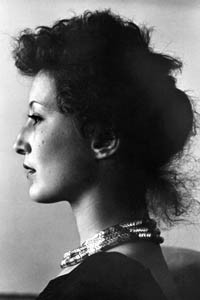
Sheila Metzner

0

Immortal Images

Sheila Metzner exhibits her early photos in Petaluma

By Maja Wood

LIKE MOST parents, Sheila Metzner took many pictures of her seven children. One day she was snapping photos of the kids, the next day Warren Beatty was calling her at home, asking to have his picture taken.

Then the editors of Vanity Fair and Vogue, as well as companies such as Chanel, Victoria’s Secret, and Ralph Lauren started throwing photo assignments and contracts at her. And let’s not forget all those museums, such as the Museum of Modern Art and the Metropolitan Museum of Art, which began adding her prints to their collections.

“Life can be surprising and amazing,” Metzner muses, speaking on her cell phone from Utah, where she’s on assignment for Condé Nast Traveler.

Metzner launched her career 23 years ago with a New York gallery show that, not surprisingly, included many pictures of her favorite models–her children. Since then, she’s become an internationally known photographer, a contemporary master of the art form with a unique style and a dazzling diversity of subjects.

Now, after nearly a quarter of a century, those early photos will be exhibited for the first time since that premiere showing. Many of the prints are the only ones available outside of Metzner’s personal collection, but they’ll soon be on exhibit in downtown Petaluma.

The exhibit opens with a talk by Metzner on Saturday, May 5, at the Barry Singer Gallery, a gallery known among photography aficionados for its collection of work by the likes of George Rodger and Lloyd Ullberg. The gallery has now moved to larger quarters in a street-level location just around the corner from the former site.

“I wanted to inaugurate the new space with a blockbuster exhibit,” owner Barry Singer says. “I wanted a strong show, something that would make a big impact. And this is it.”

Metzner, 62, is also excited about the new exhibit, explaining that the photographs hold many memories for her.

“Back then, when I was taking those shots, I was hoping that someday I could work as a photographer, but I never dreamed all this would happen,” she explains.

Building a career, plus raising five children of her own, plus helping with two children from her husband’s previous marriage, left Metzner with barely any time to sleep.

“I learned that I could shoot even if I wasn’t fully awake and even if the kids were pulling my hair,” Metzner says. “So, during the day, I’d take photographs with the kids. And then around 9:30 at night, when they were asleep, I’d take a shower and get dressed up in high heels and lipstick so that I wouldn’t feel like it was the end of the day. And then I would go in the darkroom and make the prints until about 3 or 4 in the morning.”

Many of the shoots included outings to nearby areas of upstate New York. “The kids were young, and I wasn’t able to travel,” she recalls. “So I would take them somewhere close to home to do a shoot, somewhere that was somehow symbolic of an exotic place, such as Egypt, and we’d pretend to be there.”

Metzner was very particular about her photographs, and at the end of nine years she had 22 prints that she felt were worthy of being shown. She went to a gallery and spread her 22 photos on the floor, and the owner agreed to do a show on the spot.

During that show, a picture of Metzner’s stepdaughter, titled Evyan, Kinderhook Creek, caught the eye of John Szarkowski of the Museum of Modern Art. Szarkowski included it in his famous and controversial exhibit “Mirrors and Windows: American Photography since 1960.” There, it was noticed by powerful New York Times art critic Hilton Kramer, who devoted an entire page to Metzner’s picture. (This print is included in the upcoming exhibit at the Barry Singer Gallery.)

On the heels of that success, Metzner was given a solo show, which garnered a half-page review in the Sunday New York Times Magazine section. All those raves caught the attention of a Vanity Fair editor, who called Metzner and hired her to do a photo shoot of French actress Jeanne Moreau. The editors of Vogue noticed that photograph and signed Metzner on to an exclusive contract for the next eight years.

“The whole progression was just shocking,” Metzner says. “Things just started coming together.”

For example, early in her success she was interviewed by the New York Daily News and was asked her future plans. “I said I wanted to photograph the Chrysler Building and some vases and Warren Beatty,” she says. “A few weeks later, I was at home and my daughter answered the phone and yelled out, ‘Mom, Warren Beatty wants to talk with you.’

“I got on the phone and, sure enough, it was him, and he said, ‘So, I hear you want to take my picture.’ ” Metzner recalls. “Just like that. Things just became simple.”

In addition to her celebrity shots, fashion photography, and other commercial work, Metzner has always maintained a parallel career in fine art photography. Several of her more recent works, as well as the early prints, will be on exhibit at the Barry Singer Gallery. Among these are landscapes, photos of New York buildings, and some Fresson color photographs of flowers.

Invented in 1895, the Fresson method uses a carbon printing process utilizing pigments instead of dyes, which not only renders the color photos archival, but also leaves the colors looking very rich and textured. The process is a family secret that was passed down from the inventor, and now his grandson and great-grandson are the only ones who know how to do it. Metzner is one of only about 11 photographers worldwide with whom the Fresson family has chosen to work.

Many of Metzner’s fine art and commercial photos can be seen in her fourth book, Form and Fashion (Arena; $60), which was released last month. Her landscape photographs can be found in Inherit the Earth (Bulfinch; $75), which came out in October.

Metzner says that one of the main perks of her job is that she is given assignments around the globe, and that’s when she takes the landscape photos for herself.

Two of her photographs in Inherit the Earth are of the pyramids in Egypt. But this time, it’s the real Egypt.

Sheila Metzner gives a talk on her work on Saturday, May 5, at 5 p.m. A reception follows from 6 to 8 p.m. The exhibit of her photographs continues through June 23 at the Barry Singer Gallery, 7 Western Ave., Petaluma. For details, call 707/781-3200.

From the May 3-9, 2001 issue of the Northern California Bohemian.

© Metro Publishing Inc.

Food Studies Movement

0

Food for Thought

Food-studies scholars pursue truth at the table

By Marina Wolf

THE ACRONYM FSM once meant the Free Speech Movement, the wave of student demonstrations that covered universities in the mid-’60s. These days FSM may be developing a second meaning, one that’s taking campuses from the inside out: Food Studies Movement. “I hear it all the time, the Food Studies Movement with a capital M, and we’re right on the vanguard of it in classic revolutionary terms,” says Marion Nestle, chair of New York University’s department of nutrition and food studies. “We’re trying to establish food studies as a completely legitimate academic field of study, with very high standards, that people will take seriously.”

Gaining academic credibility has been the primary task of food studies, which, like other cross-disciplinary studies such as women’s studies or black studies, suffered from being diffused throughout disparate departments. Food studies bore the added onus of being about, well, food, a subject that has been disdained in academia with more than a hint of sexism. “It’s quotidian, too trivial, too housewifey,” says Nestle. “We constantly heard that advisers don’t want to see studies on food.”

But Nestle and other food-studies professionals are excited by recent signs that the Food Studies Movement is on the rise. Respected academic presses such as Oxford and Cambridge releasing highly acclaimed food history tomes, and the University of California Press has come out with Gastronomica: A Journal of Food and Culture. The inaugural issue includes poetry on a peach and an essay in favor of convenience foods, as well as an art historian’s research on letter cookies in 17th-century Dutch still lifes and a seriously convoluted deconstruction of a postmodern menu.

This bewildering mix is a suitable representation of the state of the Food Studies Movement. Indeed, diversity may be the new discipline’s draw, as scholars studying food seek a haven from their own department’s indifference. As students become aware of the possibilities in food studies, individual courses, scattered throughout the course catalog in literature or anthropology or agriculture, fill up as quickly as they appear.

Outside the ivory tower, consumer magazines such as Saveur are cultivating a certain socioculinary tone, bringing elements of food studies to the masses that don’t always know what they’re eating, says Gastronomica editor Darra Goldstein. “Take Thai food. People have a lot of familiarity with it. We can order pad thai and things we like. We’re knowledgeable about it on some level, but how much do we really know about how foods are served in Thailand?” asks Goldstein.

“Do they have any ritual importance? What is their historical importance? How have they changed over the centuries? We know something and that is good, but it isn’t necessarily a deep knowledge.”

Barbara Haber, curator of books at the Schlesinger Library at the Radcliffe Institute for Advanced Study at Harvard University, knows from her reshelving carts that food studies are alive and well. The library is actually dedicated to women’s history and women’s studies, but it’s the culinary collection, containing over 16,000 volumes, that is the real magnet for the public. Even Martha Stewart showed up recently to film a segment at the library, which has been a repository for cookbooks since its beginnings in 1943. “Whoever the director was then, [he or she] understood that books on household management had a place in women’s history,” says Haber.

“They give you a sense of what the expectations are.”

THAT FOOD studies and women’s studies are a natural match has not always been a popular opinion. “It was a forbidden subject in the earlier years of women’s history,” says Haber. “Anything to do with cooking and food was seen as retrograde and bad for business.” Haber credits scholars in multicultural studies for showing that food is a fast track to the heart of a culture, and women’s studies scholars soon began returning to cookbooks for insight into women’s culture.

These days the materials in the Schlesinger Library are used for a wide range of projects. Haber herself is working on a paper on cookbooks as texts for understanding radical feminism, and she has assisted, or reviewed works by, dozens of scholars, whose subjects range from the transmittal of recipes in colonial America to cookbooks as historical documents of the Cold War.

Generalists at an undergraduate level have also found food to be a naturally compelling tool for examining culture. “It’s something that people deal with daily, and at the same time they don’t always think about it,” says Warren Belasco, professor in American studies at University of Maryland Baltimore County. “It’s very much undervalued, particularly in rich countries like ours. People don’t realize what an amazing miracle the food system is.”

Predictably, scholars are finding some hidden weaknesses in the food-studies boom. Since the field is so new, it is still very open to writers. But usually these writers go on to other subjects after one book, rather than developing their expertise in the field of food. “Food is used as a case study in a particular dynamic, and then they move on,” says Belasco. “I think that indicates a certain weakness in the field.”

Other people are late for the train and have too much baggage, according to Haber. “I remember the early days of women’s history, when historians who had been traditionally trained jumped in and claimed to be involved in women’s history. Yet they talked as if women were just one monolithic whole,” says Haber. “I must now make that same assessment of academics who come traditionally from cultural criticism, deciding they are going to work on food. They approach food with a theoretical framework tightly in place, but they don’t recognize that food in itself is a subject, that it has a history, that it has a set of meanings.”

Not only that, she says, but some food-studies people don’t even know how to cook. “I’m concerned that some academics will corrupt food studies, because some of them are just too arrogant to realize that they need to know something about cooking. How else would you know what’s involved really in the creation of a dish, how long it takes? How do you pick up clues?”

From the May 3-9, 2001 issue of the Northern California Bohemian.

© Metro Publishing Inc.

Christian Religious Art

0

Wrap Act

Reflections on a religious icon and the art of dying

I ROSE EARLY on Easter Sunday, shortly after daybreak. With a thermos full of coffee and a few well-chosen medical supplies, I left the house and headed for the cemetery. I had a date with Jesus. Our rendezvous had been planned since last fall, ever since I bumped into Mary’s favorite son while strolling through the graveyard’s peaceful mausoleum. He was a statue, almost life-size, carved in wood, propped up at the end of the corridor. The arms were outstretched, hands upturned to display the famous gaping nail wounds, painted Day-Glo red for maximum shock value. Though the artist obviously meant for Jesus to appear transcendent, God-like, reaching out to beckon us all lovingly to his side, to me he looked like some poor guy saying, “Hey, man, can I borrow a Band-Aid?”

I’m serious. And I truly mean no disrespect.

My first impulse when I saw the thing was to jog home for some gauze and surgical tape.

I’m 40 years old. At various times I’ve been an Episcopalian, a Methodist, a Baptist, and a “nondenominational Born-Again.” In short, I’ve seen my fill of bleeding Jesuses. The only thing they have ever inspired in me–beyond a certain revulsion–is sympathy. So gazing upon this one, all I wanted to do–and I really wanted to do this–was to bandage those hands.

But I resisted the urge. Still, I couldn’t get the notion out of my mind. I kept thinking of those mangled wooden hands, imagining them all wrapped and bandaged, safe and sound. Yet the very idea of a bandaged Jesus, a healed Jesus, runs counter to our expectations. It’s abnormal. It’s spooky. “A triaged Jesus! What the hell is this? Hey, where’re the damn nail holes?” It’s obvious that, with or without the whole sacrifice-and-salvation view of the crucifixion, a lot of people just plain like to see Jesus bleeding.

The history of Christian religious art is, in many ways, one long odd tribute to our fascination with the bloodstained corpse of the poor carpenter from Galilee. The crucifixion, clearly, ranks among the most powerful and oft-repeated images in Western art. From Hieronymus Bosch and Michelangelo to El Greco and Rembrandt, from Paul Gauguin and Pablo Picasso to Andres Serrano and Salvador Dali, few major artists seem able to resist doing Jesus on that cross.

Whenever artists dare to tinker with the sanctified symbol of the gleefully murdered Christ, a hailstorm of controversy inevitably rains down on them. But these are often the most daring and, one could argue, spiritually transforming images of Jesus that we have. In Man of Sorrows: Christ with AIDS, painter W. Maxwell Lawton transposes Jesus’ suffering into modern terms by taking him off the cross and showing him shirtless and silent, his nail wounds replaced by telltale body sores. Arthur Boyd’s Crucifixion, Shoalhaven gives us a cross erected in the midst of a flowing river, and its naked, crucified Savior breaks tradition by daring to be a woman, thus insisting that Jesus truly represented all humans. These works are controversial, to say the least. Serrano’s Piss Christ is perhaps the best, and least understood, example of what happens when an artist throws the cross into a different light. So incensed were Christians by the infamous photograph of a crucifix floating in urine that they never bothered to ponder the deeper meaning of the work–or recognize its visual beauty–calling vehemently for an end to the National Endowment of the Arts funds that helped pay for the exhibition.

Perhaps a crucifix floating in a vat of blood would be more to their tastes.

Even back in the days that I believed Jesus died as a sacrifice for the sins of the world, I was uncomfortable about our obsession with the gory exhibitionism of so many Christ images. I preferred the laughing Jesuses, the meditating Jesuses, the living Jesuses, to the battered, blood-drenched ones. Even resurrected, Jesus always seemed to be leading with his wounds. Whenever I found a crucified Jesus that did not repel me, it was usually one that minimized the wounds and maximized the humanity. My favorites include Gauguin’s Yellow Christ–a jaundiced Jesus draped on the cross, breath-stopping despite its lack of oozing wounds–and Dali’s Corpus Hypercubus, showing Jesus floating before the cross in a crucified pose, not a sign of nail prints–or even nails–to cast the ghastly shadow of sadism onto the otherwise heightened beauty of Jesus.

Yes, I understand that the idea of salvation, as symbolized by those ever- clotless, public execution-made lacerations, is itself a meaningful and powerful and beautiful thing to many. So what? If we love Jesus, why would we want to keep the guy crucified?

AS I THOUGHT of the statue in the mausoleum, I couldn’t avoid thinking that the crucified Jesus, as art, is a symbol of more than salvation and sacrifice. It’s a symbol of psychological damage on the human species.

A friend of mine who’s done a lot of traveling once remarked that while passing through some of the world’s most impoverished, disease-ridden, politically oppressed countries, she began to notice that the local religious artworks, in and around the churches and chapels, tend to be stunningly gory. The images of Jesus–whether they show him in mid-crucifixion, being laid to rest in the tomb, or right after the Resurrection–are positively dripping in blood. As she continued through the tiny villages of central Mexico, it became clearer and clearer: The worse off the people have it, the worse off their Jesus is.

The reason is fairly obvious. According to Christian tradition, Jesus came to offer comfort. Even the thought of Jesus’ death–an event the early church spinmeisters turned into a metaphysical blood-for-sin exchange, bringing salvation to the world–offers comfort to those worried about what happens after death. If certain cultures are subconsciously moved to put their paint-and-plaster saviors through the artistic Cuisinart, it’s clearly because doing so makes them feel better. So they erect crucifixes bearing corpses so pummeled that they barely look human. In the face of a Jesus so unimaginably brutalized, their own suffering diminishes in comparison.

But what’s our excuse?

Are things so tough in America that we need to make our statues bleed just to feel more whole? Is the stock market so bad, are the crime rates so high and the high school test scores so low that we need to find comfort by running into a sculpture with its hands and feet punched full of holes? Is this a tradition we really need? I don’t.

So this year, I initiated a new tradition. While others were sleeping, or scattering Easter eggs on their lawn, or gathering on mountaintops for sunrise services, I found Jesus, I touched those twin faux nail-prints painted on those hand-carved hands–and I wrapped the hands carefully in clean white bandages.

Standing back to look upon my handiwork, I experienced what can only be called a religious experience. A mix of emotions moved through me as I looked at Jesus, his arms outstretched, his scars invisible beneath the soft, soothing gauze. And that’s how I left him.

While I have only the wispiest illusions that my little act of philosophical performance art could ever become a national movement on a par with tying yellow ribbons on trees during times of international strife, I like to imagine that my act may be repeated in years to come by those who, like myself, were moved by the unexpected sight of a bandaged Messiah, and are inspired, on future Easters, to make their own offer of comfort to a champion comforter. The way I see it, Jesus has been bleeding for 2,000 years.

It’s time to let the man heal.

From the May 3-9, 2001 issue of the Northern California Bohemian.

© Metro Publishing Inc.

Kenneth Cleaver

Consumer Correspondent

Mr. Brian Fox Virgin Megastore 1540 Broadway, Level 2 New York, NY 10036

Dear Mr. Fox,

Forgive my departure from the Queen’s English. Those who know me are sure to affirm a tenet of my character that forbids me from doing things half-assed. Seeing Star Wars was not enough. No, I proceeded to view The Empire Strikes Back, Return of the Jedi, and that overhyped catastrophe The Phantom Menace. Ditto for The Godfather, Karate Kid, and Porky’s trilogies.

I was dismayed to spend $4.25 for a 12-oz. bottle of Stewart’s Root Beer at your Virgin Mega Store Cafe in Times Square. I am not disputing the price of the beverage, but that it leaves me only marginally exploited. If I am going to be ripped off, I want to go all out, push the limits, and attain new heights of suckerdom. Enclosed please find my receipt and $2 cash. That brings the total of my soft drink purchase to $4.50. Now that’s highway robbery!

I would be obliged if you could recalibrate my receipt to reflect the cost increase.

Sincerely, Kenneth Cleaver

Kenneth Cleaver P.O. Box 810 Bedford, NY 10506

Dear Mr. Cleaver,

I am sorry that you didn’t enjoy your experience here in our cafe. However, I cannot accept your payment, and I am going to return it to you with a coupon for two dollars off towards the purchase of a non-sale priced CD, DVD, video, or book.

Sincerely,

Clinton Green, Shift manager

From the May 3-9, 2001 issue of the Northern California Bohemian.

© Metro Publishing Inc.

‘Chopper’

Lend Me Your Ears

Chopper Read sliced way to fame

By

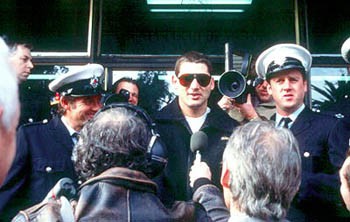
CHOPPER Read earned his nickname for an act of self-directed mutilation. One day, he persuaded a fellow inmate to slash the tops of his (Read’s) ears off to demonstrate to the authorities that he was sick enough to be transferred to the psycho ward. Seems that life in the general prison population had become too dangerous for him.

Director Andrew Dominik’s Chopper–the first adults-only No. 1 box-office hit in Australian history–shows us Read’s double-Van Gogh moment in gory detail. The film then follows the slightly less disgusting latter half of Read’s career after his release from prison in the 1980s.

The outside world also proves hazardous to Read: he has a barbed relationship with both his father and his prostitute girlfriend. Eventually, a shooting outside a nightclub in the early hours of the morning brings him back to prison as well as national fame.

Thanks to the fierce but ingratiating acting of Eric Bana, Chopper is, on one level, a well-told sick joke. Read, who went on to write nine books, could be described as a creation of the media, for whom he loved to grandstand. There’s evidence that Read was bright, or at least bright enough to get himself into trouble. And he seemed to be well-mannered under the usual circumstances until the switch got flipped.

As Bana plays him, Read is a man dismayed by his own violence, with a pitying streak for the people he hurts. Gangster films are full of swaggerers, and it’s uncommon to see the life of that more typical type of violent man–the kind who doesn’t know what’s going to come out of the bottle until it’s too late to put it back.

If his story seems cloudy, that’s apt, since the various lies that help keep Read out of jail are persuasive enough that he believes them himself. This movie–inevitably–has been accused of glorifying violence; and there’s a certain class of viewer who’ll take it as such. Indeed, director Dominik enjoys the material, playing with it, goosing the film speed during a coke-snorting scene. In treating various approaches to the killing of a minor gunman named Sammy the Turk, one version is recited in rhymed couplets.

Chopper could have been slick, but thoughtfulness steals into it. Consider the sympathetic glimpses of the prison authorities, who turn pale and sick when they see the violence that Read precipitates. Unlike most movies about natural-born killers, Chopper successfully has it both ways. It shows us a steel-toothed antihero who was cold-blooded, sardonic, and untouched by pain. It also shows us an unenviable, lamentable sick man turned bestselling author, who, as he gloats, can’t spell. (Bana’s Read repeats the boast about being a bestselling illiterate one too many times, so it gets on your nerves. This isn’t just a movie for the Chopper Fan Club.)

Dominik sensibly leaves the question open about what it is about human wrecks like Chopper Read that’s so fascinating. Few of us are killers, but a lot of us are con men, with a dirty, secret envy for a murderer’s one-level method for dealing with the aggravations of the world.

‘Chopper’ opens Friday, May 4, at Rialto Cinemas Lakeside, 551 Summerfield Road, Santa Rosa. For details, see or call 707/525-4840.

From the May 3-9, 2001 issue of the Northern California Bohemian.

© Metro Publishing Inc.

Kenneth Cleaver

Consumer Correspondent

Consumer Affairs SmithKline Beecham 100 Beecham Drive Pittsburgh, PA 15205

I enjoy your drug Paxil very much. While I occasionally hanker for the tart, fruity flavor of a Flintsones vitamin, I infinitely prefer the alleviation from desperate rumination your product offers. Despite the thousands of Americans who regularly take antidepressants, considerable stigma still surrounds their use.

The unspoken sentiment regarding antidepressants is that there is something wrong with the user. Failure to achieve happiness, or even a sustainable satisfaction with life, is anathema to a culture so passionate about success in both the personal and professional arenas. In an effort to provide succor and community to Paxil users, I think it would be great to organize social activities. My initial thought, I will confess, is a selfish one as it coincides with my favorite recreational activity: softball!!!

There might be enough Paxil users in certain areas to form a league. However, interdrug play will be inevitable with friendly rivalries between the Paxil Panthers and the Prozac Pirates. I would be delighted to organize a team and would very much like it if you could provide me with a list of other users to contact. I don’t think it imposing to ask SmithKline Beecham to defray uniform and equipment costs. I look forward to hearing from you.

Sincerely, Kenneth Cleaver

Kenneth Cleaver POB 810 Bedford, NY 10506

Dear Mr. Cleaver,

Breaking down the stigma on anxiety disorders is a challenge we face each day. We agree that it is a formidable task to change societal beliefs that anxiety disorders are not diseases of the individual psyche, but rather clear, definable medical conditions. Society’s need to blame the sufferer is intolerable and must change.

We are pleased to hear that Paxil has helped you feel better about yourself and gain control of your life. You are one of the many survivors who can help society understand that anxiety is indeed a true medical condition. Unfortunately, we must decline your request for assistance in building an antidepressant softball league. While we cannot provide you with a shirt, I thought you might like a sample of some Paxil promotional items.

We wish you many “home runs” in every and all games you play.

Warmest regards, Barry Brand Project Director, Paxil

From the April 26-May 2, 2001 issue of the Northern California Bohemian.

© Metro Publishing Inc.

Miles Davis

0

Miles to Go

Flurry of activity on Miles Davis’ 75th anniversary

By Greg Cahill

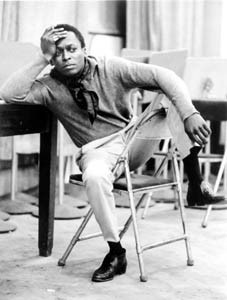
KEN BURNS be damned. In his recent marathon documentary series Jazz, the PBS wonder-boy filmmaker fixated on the swing era, shamelessly deifying jazz pioneer Louis Armstrong while relegating trumpet legend Miles Davis to a historical footnote. Yet, despite Burns’ unswerving support of the traditionalists, Armstrong never contributed any major musical innovation after the mid-1930s, whereas Davis ushered in many of the genre’s most sweeping changes in the modern era.

For Burns, Davis was no more than a charismatic bandleader with a bad heroin habit, flashy lifestyle, and a love of fast cars and faster women, a man who supposedly “sold out” to the rock audience. But others find a shining brilliance in Davis’ lonely lyricism, seeing him as a liberating figure who freed the musicians of his day and beyond from the limiting confines of traditional jazz as it had evolved in the first half of the 20th century. And Davis–who died in 1991–did it over and again with a series of influential recordings that served as creative signposts: the quintessential Birth of the Cool sessions, recorded in 1949 and 1950, codified cool jazz; 1959’s landmark Kind of Blue (which has been examined meticulously in no less than three behind-the-scenes books in the past year) broke free of the chord-based improvisations of the bop era and introduced a modal, or scale-based, framework; and 1969’s In a Silent Way heralded the beginning of jazz/rock fusion.

In his excellent book Jazz: America’s Classical Music (Spectrum, 1984), Marin jazz educator and author Grover Sales hailed Davis as “the dominant influence” in the genre after his ascendancy in the mid-1950s. Sales rightly lauds Davis as a trumpet stylist, “a best-selling recording star who broadened the audience for authentic jazz, as a leader with an uncanny gift for launching important new trends and for introducing innovative musicians who were to help the future course of jazz.”

Among those musicians were John Coltrane, Bill Evans, John McLaughlin, Ron Carter, Wayne Shorter, Chick Corea, Herbie Hancock, Joe Zawinul, John Scofield, Keith Jarrett, and Tony Williams.

Indeed, Davis emerged in the ’50s as a high priest of cool, one of the holy trinity of modern jazz, along with John Coltrane and Thelonious Monk. He possessed all the traits of a great artist–fearless, always reaching for new ground, and unaffected by the commercial trends of the day.

“With his ‘clean as a motherfucker’ custom-tailored suits, his Picasso-like ‘cold flame,’ his ‘take no prisoners’ approach to his work,” Lewis MacAdams writes in his new book Birth of the Cool: Beat, Bebop, and the American Avant-Garde (Free Press; $27.50), “Davis came to epitomize [the period’s] art.”

In celebration of the 75th anniversary of Davis’ birth, and in commemoration of the 10th anniversary of his death, a flurry of new books, CD anthologies, previously unreleased recordings, and reissues are hitting the stores. This ambitious salute to the jazz legend will culminate later this year when Warner Bros. Records releases what is expected to be a monumental six-CD compilation, featuring unreleased live material in addition to tracks recorded with Prince and jazz singer Shirley Horn (who persuaded Davis to once again begin performing and recording ballads shortly before his death).

Miles, 1; Wynton, 0: There was no love lost between Davis and Marsalis.

IN HIS NEW BOOK Miles Beyond: Miles Davis, 1967-1991 (Guptill Publications; $24.95), music critic Paul Tingen takes on those who contend that Davis “sold out” and abandoned jazz in the late ’60s when he recorded In a Silent Way, which returned Davis to the pop charts. The album, which will get the royal treatment in September when Epic/Legacy releases a three-CD boxed set The Complete In a Silent Way Sessions, was the forerunner to the Top 40 album Bitches Brew and launched the jazz/rock fusion-era that helped carry the genre through the otherwise creative doldrums of the early ’70s.

Tingen faithfully traces Davis’ often-denigrated fusion experiments and makes a compelling argument that his electric jazz was a serious attempt to incorporate the idioms of contemporary African-American music into his vocabulary. The Kirkus Review has praised the book as “a valuable revisionist look at one of the key figures of modern American music.”

To underscore the incredible vitality of that period, Epic/Legacy in May is releasing Live at the Fillmore East, March 7, 1970: It’s about That Time–a driving session that supports Tingen’s claim. The two-CD set contains previously unreleased material recently unearthed and featuring the original Bitches Brew lineup (a different lineup than on 1970’s Miles Davis at the Fillmore: Live at the Fillmore East, which was recorded several months later than the newly released concert sessions). Four weeks after this March 1970 concert date, saxophonist Wayne Shorter left Davis’ band to co-found with pianist Joe Zawinul the influential fusion ensemble Weather Report.

Meanwhile, Epic/Legacy has released a 75th-anniversary series that includes the two-CD anthology The Essential Miles Davis, the first Davis compilation drawn from all seven of the major labels for which the trumpeter recorded. The 23-track retrospective serves as a monument to Davis’ genius, from the rollicking blues of “Walkin’ ” (oddly missing from the new Prestige compilation Miles Davis Plays the Blues) to the lyrical cover of Gershwin’s “Summertime,” from the white-hot sensuality of “Nefertiti” to the West Indian fusion on “Black Satin.”

The Miles Davis Series, inaugurated in 1997, also includes new reissues of three classic 1950s Columbia recordings with bonus tracks or extended performances–‘Round about Midnight, Milestones, and Miles Davis at Newport–plus the never-before-released-on-CD 1958 live sessions Jazz at the Plaza, Vol. 1 and Miles Davis & John Coltrane: The Best of the Complete Columbia Recordings, 1955-1961, a nine-song sampler from last year’s acclaimed box set.

In addition, Berkeley-based Fantasy Records has reissued two classic Prestige albums that predate the aforementioned Columbia material. Relaxin’–featuring Davis, Coltrane, pianist Red Garland, bassist Paul Chambers, and drummer Philly Joe Jones–was drawn from two marathon 1956 sessions that resulted in four albums. It is widely regarded as one of the strongest works by this great quintet. Bag’s Groove, recorded in 1954 at the dawn of the post-bop era, features Davis, tenor saxophonist Sonny Rollins, vibes player Milt Jackson, pianists Horace Silver and Thelonious Monk, and the celebrated rhythm section of bassist Percy Heath and drummer Kenny Clarke. Music critic Scott Yanow has called the eminently soulful Bag’s Groove “timeless music that defies easy classification [and that] belongs in every jazz collection.”

Both Prestige reissues are digitally remastered, repackaged, and available as limited editions (10,000 copies of each were pressed).

AS A WHOLE, these Fantasy and Columbia recordings chart the explosive growth of a towering jazz giant–an often defiant and heroic figure really–whose cutting-edge music blazed a path for generations of musicians. “Miles became a kind of existential hero, insisting always on making his own choices, always finding his own route, and committed to being the exact person and artist that he strove to be without making allowances for the expectations of others,” Eric Nisenson wrote in The Making of Kind of Blue: Miles Davis and his Masterpiece (St. Martin’s, 2000).

“If he was an innovator, it was always in the service of his effort to understand who he was and who he was becoming, and to create the music that reflected his own evolution.”

From the April 26-May 2, 2001 issue of the Northern California Bohemian.

© Metro Publishing Inc.

Pikes Peak

0

Peak Experience

Much suffering, much enlightenment on Pikes Peak

By John Sakowitz

WHEN MY FRIENDS back East talk about me, they usually say things like, “He’s been in a slowly deteriorating state for years,” or, “He’s a dropout now and a total loser,” or, “He’s this superaloof hippie guy who lives in the mountains with his dogs.”

All this is true.

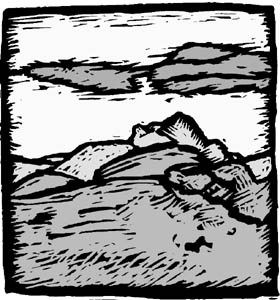
For the last three years, I have managed a campground called the Crags for the U.S. Forest Service. The Crags is on the backside, or the western face, of Pikes Peak, which is called “America’s Mountain” for a couple of reasons. Catherine Lee Bates wrote her song “America the Beautiful” from the summit of Pikes Peak. Also, “Pikes Peak or Bust” was the slogan emblazoned on the covered wagons of westward-bound pioneers crossing the Great Plains. Pikes Peak was the first big landmark that these pioneers saw after crossing a thousands miles of fruited plains and amber waves of grain.

At an elevation of about 8,200 feet, the Crags is located below Devil’s Playground and above the Rocky Mountain Mennonite Camp. The irony of living in a place between the Devil and Mennonites has not been lost on me.

I used to work on Wall Street. I used to be a lawyer. I used to be a bigger asshole than I am now. But I made myself sick. The noisy and busy dynamics of my life made me sick. I had a cocaine problem and a gambling problem and got divorced three times.

In 1997, I reassessed a 14-year period of ambition, consumerism, excess, and waste, and moved to the mountains. I took it all to the mountains.

I took it all to Pikes Peak.

And on Pikes Peak, I found great herds of elk and deer, and small herds of mountain goats and bighorn sheep grazing at the timberline. I found jays calling out from thickets of mountain mahogany and their mates answering from tree to tree. I found old cabins built by gold miners. I found an old railroad grade. I found a long, narrow railroad tunnel blasted through a sheer granite face. I found a trestle bridge that had collapsed 150 feet into a creek. I found gorges where Ute Indians burnt out the brush every year and made their summer camps until the white man came. I found gravel from old placer diggings. I found an old ax handle. I found breezes that smelled sweet and that I could feel stirring something in my heart and that swelled against the hills. I found the remains of mountain lion kills . . . splintered bones and sour-smelling carrion waiting for the coyotes and crows and other scavengers. I found scats and feathers. I found the complex, halting, delayed pathways of small nervous animals with one-second attention spans and the detritus that they left behind. I found mice in the goose down of my sleeping bag and marmot holes and squirrel nests. I found thunderstorms every afternoon in the summer, and, more than once, I found myself lost in a maze of lightning bolts. I found a great boreal forest of pine and spruce and fir that closed in on me and held me. . . and held me tight. I found remoteness . . . no towns, no buildings, no people, one road.

I found anonymity. And I found my own puny and pathetic insignificance in the whole scheme of things.

And in the summer, I gazed for hours into a tapestry of wildflowers. A curtain of columbines and lupines hid me from the world that I had left behind in New York.

And in the winter, from my RV, I looked out on the steep ridges that are the Crags, and they bristled with skinny pines covered with snow. The sky would always be perfectly clear . . . miles of cobalt blue. And the sun would be enormous and would seem close to me because I was so high up in the mountains and so close to the sun. And the snow would be clean and deep. And the footprints and tracks of small animals would be everywhere.

And at night in the winter, the mountains would be just a shade darker than the sky . . . just one shade darker. The sky would be indigo black, and the mountains would be one shade darker. The great monoliths of the mountains would heave into view only if I squinted my eyes.

This was the Crags. This was the world of the timberline. This was the world between heaven and earth.

I have a friend who looks like a society girl from the Broadmoor but who is really a witch, and when she visited the Crags, she gripped a tree and fell to one knee and told me that “GodSourceCreator lives here.”

After paying my dues at the Crags campground for three years, I was elated when I got the telephone call asking me whether I wanted to try out for the caretaker position at Barr Camp on the other side of Pikes Peak. Barr Camp is the big time.

Barr Camp is on the eastern face of Pikes Peak. It is the side that faces Colorado Springs and the Great Plains of Nebraska and Kansas. It is the popular side of Pikes Peak that everybody hikes. The Pikes Peak Marathon is run up Barr Trail on the eastern face, and the world-famous Pikes Peak Auto Climb, which was broadcast this year on ESPN, is raced up the Pikes Peak Highway, also on the same side of the mountain as Barr Trail.

Barr Camp receives about 15,000 to 20,000 visitors every year–most of them in the summer–compared to 1,000 to 2,000 annual visitors at the Crags. Barr Camp was built by the U.S. Army Corps of Engineers in the 1920s. It’s really well built, solid construction. Barr Camp has a sort of formal mountain-lodge look: logs and granite and mortar with high ceilings and cross beams. I’ve admired its solidness and square lines for a long time. And, for a long time, I’ve wanted to be its caretaker.

The caretaker lives at Barr Camp year round and gets paid around $300 to $400 a month. The only real amenity is the search-and-rescue radio, and it’s lonely and colder than shit in the winter.

To get to Barr Camp, you have to hike halfway up Barr Trail. That’s about a 4,500-foot gain in seven miles. The summit is another 4,500-foot gain in six miles. Hikers celebrate Barr Trail’s difficulty.

Except for a few signs for Barr Camp, there’s nothing on Barr Trail that is very inviting. You can’t camp off the trail. Camp and shelter conditions suck. Barr Camp is it.

As you hike up Barr Trail, you pass through several ecosystems. At the lower elevations, you find quaking aspen, larch, mountain ash, mountain mahogany, and the other softwoods of the foothills or lowlands. Higher up, you pass through the boreal highlands of pine, spruce, and fir. At even higher elevations, you find only bristlecone pines, which are scarred from centuries of lightning. Bristlecone pines can be a thousand years old.

Barr Trail is a tremendously scenic trail. Again, signage, camps, and shelters don’t dot and clutter the trail as at a lot of other places in Colorado. Barr Trail isn’t a happy place as in “happy trails.” No way. It is a difficult trail, and, as I said before, it ascends a total of 9,000 feet in 13 miles. Barr Trail traverses steep switchbacks, jagged ridgelines, rock ledges, ravines, a dank bog or two, a couple of foaming creeks, slippery algae-coated cobbles, root-riddled miles, and a vegetation-choked forest . . . and that’s just at the lower elevations. At higher elevations, you’ve got to cross boulders, taluses, scree, puncheons, and ladders of rock. And Barr Trail doesn’t yo-yo in elevation: it goes straight up Pikes Peak–straight up.

I’ve always thought that Barr Trail is like a good psychotherapist. It listens without interrupting your bitching and moaning. Whether or not Barr Trail is a compassionate listener is an entirely different question.

Like a psychotherapist, the mountain can take two people in a bad marriage and cause them to finally break up. They’ll fight and argue and complain the whole time that they are hiking until they finally get sick of each other and throw in the towel. Likewise for two people in a good marriage, the mountain can make them fall in love all over again. They’ll want to make love at the summit . . . and some couples actually do exactly that. I’ve caught them butt naked behind the Summit House.

I think of Barr Trail as a good psychotherapist, and you can’t ask more from a mountain trail than that.

The telephone call to try out for the caretaker position at Barr Camp came from a guy named Bill Slaughter, who is president of the Barr Camp Foundation. The foundation operates Barr Camp under a special use permit issued to the foundation by the U.S. Forest Service. The Forest Service is too broke and too understaffed to manage Barr Camp on its own. I was told that if the foundation didn’t manage Barr Camp, the U.S. Forest Service would tear Barr Camp down . . . heartless motherfuckers.

The foundation does a good job managing the camp, as does the Barr Trail Coalition that maintains the trail. Both groups deserve a pat on the back for impressive coordination.

The U.S. Forest Service does very little on Pikes Peak, but that’s OK because it’s a federal bureaucracy and is not quick to respond to anything, especially because it answers to a higher authority in Washington. When the U.S. Forest Service finally decides to do something, either the Barr Camp Foundation or the Barr Trail Coalition has already done it.

When Bill Slaughter called me, I was living in Ukiah. There’s a woman I know out there, and I thought that maybe we could have a life together, blah, blah, blah.

Barr Camp called, and I came running.

WHEN I returned to Colorado, I was so impatient to get to Barr Camp that I hiked Barr Trail all night to get there for my interview. I wanted to be early and make a good first impression. I almost killed myself hiking, but I felt like a Sherpa.

As I hiked, I could hear bucks skirmishing in the night. I could hear the light, playful rattle of their antlers, and a couple of times, in a circle of moonlight, I saw them dancing and pushing and stamping.

I knew I was home. I wondered what was happening on the other side of Pikes Peak . . . at the Crags. Were bears sleepwalking in the night, dreaming of blackberries? Were the green leaves of quaking aspen starting to turn yellow and rattle in the wind? Were the grasses brown yet? Were the Corn Maidens and Autumn Gods walking hand in hand? Had the winter winds started to bear down on the Crags–spiraling, whistling, blue-white winds blowing down from Canada?

I knew that later in the season, these very same winds would not be spiraling, whistling winds. Instead, they would be groaning and heavy. Even later in the season, the winds would be hoarse. And they would wear a silver mask. The boundless world of ice that is winter in the mountains would open up, and the Crags would be swallowed by the world of ice, and all things at the Crags would sleep in peace together.

I hiked through the night. When I finally got to Barr Camp, it was sunrise. I surprised the staff members, who were expecting me later in the day. There are actually three caretakers at Barr Camp who take turns managing the place. I would be replacing one of them. All three caretakers were there to meet me. And so was Bill Slaughter. They served me instant coffee and powdered eggs.

I remember that we talked a lot about gear the morning of my interview. Winter would be upon us soon, and we talked a lot about gear because gear can mean the difference between life and death at Barr Camp.

Our first priority is outerwear, closely followed by mountain-climbing equipment.

Outerwear, of course, is not simply outerwear: it is technical wear built for the demanding sports of alpine hiking, mountaineering, and ice climbing.

My own outerwear is a Prada parka that I bought secondhand in Aspen from a guy I know who went broke playing the NASDAQ 100. My parka has a Gore-Tex double layer pongee with Teflon nylon lining and 120-gram padding, and a hood with 80-gram Thermore padding and raccoon trim.

And outerwear is only just the start of an esoteric language. Climbers have an esoteric language all their own, and a lot of it has to do with their climbing equipment: grappling hooks, cliffhangers, talons, ibises, cam hooks, Logan hooks, keyhole hangers, rap rings, bird beaks, mallards, toucans, peckers, RURPs, Fifi hooks, angles, lost arrows, bugaboos, and knifeblades. And this list doesn’t even include basic items like pitons, bolts, drills, drill bits, carabiners, and quickdrawls, plus your real basics like helmets, hammers, ice axes, ropes, harnesses, and crampons.

CLIMBERS–and the caretakers at Barr Camp may consider themselves to be expert climbers–are a special breed. They’re aloof but they’re not arrogant. Arrogance would tempt fate and cause accidents and death. And mind you–make no mistake about it–climbers are not yuppie campers and day hikers. Climbers are spiritual seekers. For climbers, the mountain is a stone tablet upon which God writes secret messages. The wisdom of the ages and all a climber needs to know is written on the mountain.

Who are these climbers? Climbers are like long-board surfers back in the 1950s in Santa Cruz when it wasn’t necessarily cool to be a beach bum because the world didn’t know what a beach bum was yet. It was simply enough to be stylin’ in the surf. Climbers, surfers, river guides, and all like-minded spirits know this much: the ride is everything. Life is not so much a journey as it is a ride. The ride is that one hot minute that you’ll remember when you’re sitting in a nursing home sipping your puréed meatloaf and peas through a straw. Climbers just take the ride a little higher and a little farther.

Mountain climbers climb to a place where you can hardly breathe and your muscles are burning and you don’t want to look down. Mountain climbers climb to a place inside of themselves called Fear.

And when they finish the climb, mountain climbers don’t end up at the top of the mountain . . . not really. They don’t end up at the summit. Mountain climbers end up at the sky. But it’s a sky like no other . . . no birds . . . no clouds. Just the wind and ice. And ice layered over ice. And stronger winds. There is no scenery up here. There is only fear and panic and muscles burning from pulling arm-over-arm for hours as the sun starts to set and the temperatures drop and the winds get stronger.

Why do they do it, these mountain climbers? The mountain offers splendor and solitude, for sure, but that’s not why mountain climbers climb.

I think, rather, the reason that climbers climb has something to do with a Buddhist proverb I saw once on a bookmark in the gift shop at the City of 10,000 Buddhas in Talmage, Calif. That proverb goes, “Much suffering, much enlightenment.”

Another proverb that may explain something is a graffito I saw on a stupa in Tibet: “If you can use your cell phone here, you’re not there yet.”

These proverbs have given me pause.

I think that I may tell Bill Slaughter that I’m not up to this Barr Camp gig. I am just too much of a pussy. I’m a total pussy. It is bitter cold at Barr Camp and windy and lonely. Plus, I get altitude sickness.

I am not a hermit. I am a pilgrim. I’ll hike up to Barr Camp, but I don’t want to live there.

Nor am I a monk. Monks are long-suffering, and I am many things, but I am not long-suffering. I don’t want to live on instant coffee and powdered eggs. I don’t want to be celibate. I don’t want to live on $300 to $400 a month. And I don’t think that I can live up to the code that mountain climbers and long-board surfers have in common–you know, that the ride is everything. Live for the one hot minute.

I am a baby boomer, and like most baby boomers I know, I am a big baby.

I’m not ready for a lot of suffering, which means that I’m probably not ready for a lot of enlightenment. I’m the low man on the spiritual totem pole. And I couldn’t live a whole winter without HBO.

The Crags is more my kind of gig. I can drive to the casinos in Cripple Creek for a 99¢ breakfast. My girlfriends can visit. My cell phone works. And the satellite dish on my RV can pick up HBO.

So, I think I’ll stay at the Crags for another year–lower elevation and not as cold or lonely. And the Devil and some Mennonites are nearby to keep me company.

Whenever I hear about gigs like Barr Camp, I ask myself, “Hardship, discipline . . . yeah, but to what end?”

It’s the wrong question.

John Sakowitz received an award from PEN USA West for his writing about the AIDS epidemic. He lives in Talmage, Calif.

From the April 26-May 2, 2001 issue of the Northern California Bohemian.

© Metro Publishing Inc.

‘Shadow Magic’

0

World Wise

Pondering a few cultural blunders

Writer David Templeton takes interesting people to interesting movies in his ongoing quest for the ultimate post-film conversation. This is not a review; rather, it’s a freewheeling, tangential discussion of art, alternative ideas, and popular culture.

EDIE MEIDAV isn’t talking. Not much. Not yet. “I’m always a little tongue-tied right after watching a movie,” she confesses in a half-whisper, as the lights come up in the theater where we’ve just seen Ann Hu’s captivating Shadow Magic. Keeping our conversation at the chit-chat level–favorite movies, favorite books–we make our way out of the theater and initiate a search for a quiet coffee shop.

A few minutes later, double mocha in hand, Meidav is ready to talk.

She’s anything but tongue-tied about Shadow Magic.

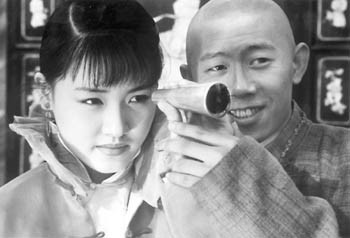
A word-of-mouth, art-house hit about culture shock in early 20th-century China, the film stars Xia Yu as Liu Jinglun, a shy young photographer with an eager fascination with Western inventions, and Jared Harris as Raymond Wallace, a shabby English showman who arrives in Peking to introduce the first moving pictures. While the city-folk are initially resistant, Liu is instantly captivated by the amazing silent movies–mainly footage of French people cavorting in bathing suits–and soon persuades Raymond to make him his business partner, thus alienating himself from his father, his co-workers, and ultimately his own deepest traditions.

Edie Meidav knows a thing or two about alienation and culture shock.

The multilingual poet-dancer-author-adventurer, raised in Berkeley, has traveled throughout the world, living at various times in Canada, France, Scotland, Ireland, India. At 34, Meidav–who now lives in a small town on the Mendocino coast–already has racked up enough travel miles to impress Marco Polo. In West Africa she danced with a local dance troupe, and in Spain she lived in a cave for several months with a band of Spanish Gypsies. In Sri Lanka (formerly Ceylon)–a tear-shaped Island off the southeast coast of India–Meidav monitored local elections, learned the Sinhala language, studied dance–and hatched the idea for her first novel. The Far Field, newly released by Houghton Mifflin, is a vast poetic epic of 1930s Ceylon, following idealistic journalist Henry Fyre Gould on an ultimately disastrous mission to free the people of Ceylon from English colonialism by establishing a Buddhist utopia on the island.

Bad things happen, increasingly worsening, but they do so in sensual, handcrafted prose that has won the work of Meidav comparisons to the writings of Barbara Kingsolver and Michael Ondaatje.

In The Far Field, Henry’s overidealized view of the Ceylonese leads him into trouble. And in Shadow Magic, Raymond’s simplistic expectations of the Chinese are ultimately confounded. According to Meidav, this is exactly the kind of education that awaits the Western world traveler.

“I started out with such a utopian ideal of other cultures,” she explains, cradling her warm coffee cup as we sit outside while the sun sets. “Even as a child. As a little girl I collected Unicef dolls. I had a poster of this woman from Addis Ababa. I had this intense desire to learn all the world’s languages and to have incredible friendships abroad. So when I did begin traveling, and learned that people in these countries weren’t all milk and honey, I was so disappointed.

“My heart was broken, and it was broken repeatedly.”

In the film, while Raymond’s quest for fame and fortune ends in disappointment, it is the Chinese people who stand to suffer the most from the cultural chaos caused by the Western movie machine. We see how the suddenly popular moving picture provokes a decline in attendance at the Chinese opera. Meidav has her own perspective on that. “Did the Noble Man’s opera get lost because of the rise of moving pictures?” she asks. “Has Western progress undermined Eastern tradition? Even the question is a Western one. It’s a very Western equation to assume there’s such a linear, finite substitution: movie comes, opera goes. It’s not so simple.”

Not that the West hasn’t done its share of damage to other cultures. On the contrary. “I think it’s evil what we’ve done,” she says. “The unthinking, blundering aggression that we bring to other countries. America, with the personality of a 2-year-old, thinking it can have anything it wants. That’s evil. That’s part of what I wanted to write about in my book.”

ONE OF Shadow Magic‘s most powerful scenes demonstrates how easily even a well-meaning outsider can slip up when attempting to slip into other cultures. When Raymond goes to the opera, he is so enraptured by what he sees on the stage that he fails to applaud along with the other patrons. This is seen as a terrible insult to the performers. To make matters worse, when Raymond realizes he’s somehow upsetting the others, he chooses to slip out of the theater in mid-performance, an even greater insult.

Meidav knows how easily such blunders can occur.

“I was housesitting in Sri Lanka for a couple of weeks in this American embassy mansion,” she tells, wincing at the memory. “It was early on in my stay, and I still didn’t fully understand how stratified the culture was. I had those very utopian ideals, all that American egalitarianist stuff.” A poor Tamil man guarded the house during the day, sleeping at night on a straw mat in the garage. The embassy couple for whom Meidav was sitting hadn’t explained the caste system protocol.

“It really upset me that I was in this intensely beautiful mansion, and this guy had to sit out there in the burning heat.” She started talking to him, then bringing him food when she brought her own dinner home from town. At first, the man refused to eat at the same time or place that she did. “But finally,” she says, “it progressed to where we were having what I believed was a fine, egalitarian relationship, sitting at the table talking together over dinner. And I thought, ‘This is great. I’ve achieved my goal. I’ve made him feel like a human being.’ ”

But in fact, she’d committed a major cultural faux pas–and was finally told so by an upper-caste teacher she’d befriended.

“She said, ‘You’re sowing discontent. You think you can come here with all of your American ideas. You think you can come here and give this guy a breeze of freedom, but he’s going to go back to the same way of life anyway.’ It was very upsetting to me. And he felt the cultural disconnect also. It was a shameful thing, and he ran away for a while. So that was my first big experience in Sri Lanka.”

Edie Meidav pauses a moment. “We Americans are so in love with the flavor of democracy,” she says. “The hardest thing about traveling in other cultures is learning to accept all the flavors that come at you.”

From the April 26-May 2, 2001 issue of the Northern California Bohemian.

© Metro Publishing Inc.
Open Mic

Open MicRide AnxietyBy C. D. PayneSPRING IS THE TIME when a young (or not so young) person's fancy turns to . . . motorcycles. What a pleasure to zip along our rural roads in the warm sunshine. Only one thing spoils the fun. Cars.Get on a motorcycle and now even a passing Pinto seems like a menacing beast...

Sheila Metzner

Immortal Images Sheila Metzner exhibits her early photos in Petaluma By Maja Wood LIKE MOST parents, Sheila Metzner took many pictures of her seven children. One day she was snapping photos of the kids, the next day Warren Beatty was calling her at home, asking to have his picture...

Food Studies Movement

Food for Thought Food-studies scholars pursue truth at the table By Marina Wolf THE ACRONYM FSM once meant the Free Speech Movement, the wave of student demonstrations that covered universities in the mid-'60s. These days FSM may be developing a second meaning, one that's taking campuses from the inside out: Food...

Christian Religious Art

Wrap Act Reflections on a religious icon and the art of dying I ROSE EARLY on Easter Sunday, shortly after daybreak. With a thermos full of coffee and a few well-chosen medical supplies, I left the house and headed for the cemetery. I had a date with Jesus. Our rendezvous...

Kenneth Cleaver

Consumer Correspondent Mr. Brian Fox Virgin Megastore 1540 Broadway, Level 2 New York, NY 10036 Dear Mr. Fox, Forgive my departure from the Queen's English. Those who know me are sure to affirm a tenet of my character that forbids me from doing things...

‘Chopper’

Lend Me Your Ears Chopper Read sliced way to fame By CHOPPER Read earned his nickname for an act of self-directed mutilation. One day, he persuaded a fellow inmate to slash the tops of his (Read's) ears off to demonstrate to the authorities that he was sick enough to be...

Kenneth Cleaver

Consumer Correspondent Consumer Affairs SmithKline Beecham 100 Beecham Drive Pittsburgh, PA 15205 I enjoy your drug Paxil very much. While I occasionally hanker for the tart, fruity flavor of a Flintsones vitamin, I infinitely prefer the alleviation from desperate rumination your product offers. Despite the thousands of Americans...

Miles Davis

Miles to Go Flurry of activity on Miles Davis' 75th anniversary By Greg Cahill KEN BURNS be damned. In his recent marathon documentary series Jazz, the PBS wonder-boy filmmaker fixated on the swing era, shamelessly deifying jazz pioneer Louis Armstrong while relegating trumpet legend Miles Davis to a historical footnote. Yet, despite...

Pikes Peak

Peak Experience Much suffering, much enlightenment on Pikes Peak By John Sakowitz WHEN MY FRIENDS back East talk about me, they usually say things like, "He's been in a slowly deteriorating state for years," or, "He's a dropout now and a total loser," or, "He's this superaloof hippie guy who lives...

‘Shadow Magic’

World Wise Pondering a few cultural blunders Writer David Templeton takes interesting people to interesting movies in his ongoing quest for the ultimate post-film conversation. This is not a review; rather, it's a freewheeling, tangential discussion of art, alternative ideas, and popular culture. EDIE MEIDAV isn't talking....
11,084FansLike
4,606FollowersFollow
6,928FollowersFollow