Jack Kerouac

New version of “Book of Dreams” offers wild ride

By Patrick Sullivan

FOUR LONG DECADES of strange dreams and stranger realities have passed since Jack Kerouac took readers on a whirlwind tour of the vast, bizarre landscape roamed by his sleeping mind. First published in excerpted form in 1961, Book of Dreams (City Lights; $17.95) is now out in a new, uncut version that opens a wide window onto the inner life of one of 20th-century American literature’s most extraordinary personalities.

But for Christ’s sake, don’t listen to anyone who tells you to read this book because, like oat bran, it’s good for you.

Of course, Book of Dreams can be read for insights biographical, psychological, and literary. The author of On the Road reveals much about himself in these brutally honest accounts of his dreams, which were jotted down almost immediately after he woke. Sometimes the results were too revealing for his own comfort, as Kerouac explains in his preface: “But an hour later, over coffee, what shame I’d feel sometimes to see such naked revelations so insouciantly stated.”

Readers will meet Kerouac’s withdrawn and disapproving father and ponder the author’s insight that fellow Beat Neal Cassady reminds him of his dad.

Amateur psychologists will enjoy exploring the links between the author’s misogyny (revealed often here) and his anxious relationship with his mother. Beat fanatics will scramble frantically to decode the dreamworld pseudonyms given by Kerouac to such famous friends as William Burroughs and Allen Ginsberg.

But you’ll get more insight into such matters from picking up a good biography of Kerouac–like Memory Babe by Marin County’s own Gerald Nicosia.

No, Book of Dreams is best enjoyed like a fast flight above the clouds, a headspinning trip over a sprawling, shifting mental world of towers and mountains drifting in a great blue emptiness or suddenly darkening into a nightmare of black thunderheads and killer lightning.

Most of Kerouac’s dreams are only a few paragraphs long, usually starting with a sentence like this: “My mother is pregnant and she’ll have to go to Chicago for an abortion.” They go on to offer vivid images of horror, humor, and delight, with events proceeding in the peculiar logic of the dreamworld, which Kerouac captures perfectly. The author becomes unstuck in time and space as places and people real and imagined jumble together in fantastic forms.

See Jack smoke weed. See Jack run from the cops, or hang out with President Eisenhower, or hitch rides on freight trains with his elderly mother. Watch as he finds himself in the dreamworld version of boot camp in the Navy–which he was kicked out of in real life after being labeled a “schizoid personality.”

Sex pops up with the regularity of a stroke book, from fairly explicit passages to encounters like this one: “Then I asked Bertha for a sandwich, considered sex with her, thought of her big figure on the couch.”

There is also plenty of fragmented poetry here: “warm April night–mystery of the West End Bar, the corpse in the Hudson, Edna in a Russian darkness over the campus–I’m almost afraid of marauders in this gloom, look around–Timeless the world waits–I wake up–wondering.”

Particularly poignant are Kerouac’s dreams of ending up a failed writer, a dismally washed-up “beat brother” living back at home. Indeed, nightmares of longing, bitterness, fear, and regret are common in Book of Dreams–and yet this was before the King of the Beats had turned into the movement’s version of an aging Elvis Presley.

But even knowing the end of Kerouac’s saga, the sad death of the dreamer, doesn’t spoil the peculiar beauty and raw excitement of these nocturnal adventures.

From the August 9-15, 2001 issue of the Northern California Bohemian.

© Metro Publishing Inc.

Kenneth Cleaver

Consumer Correspondent

Intel Corporation, Jones Farm 2111 NE 25th Street Hillsboro, OR 97124

Dear Intel:

While most management consultants model their techniques after history’s great purges and inquisitions, I employ a subtler approach for greater effectiveness. Utilizing Stanislavskyian method-acting technique, I do not simply assess the structure of a company, but labor clandestinely to alleviate its imperfections. What follows is an overview of two stock characters I portray for strategic results.

Kenneth Cleaver: The Serial Novel

In every company there exists a department whose essential work is brutal monotony. Within the employees’ hallowed cubicles can be heard the slurping sounds as the very marrow of life is sucked from their numbed souls. It also happens to be the stage for my most inspired work! Exploiting my ambiguous boyish sexuality, I function as a one-man pulp novel for the various pleasures of my colleagues. Even those who profess their disdain never fail to miss the latest installment of my scandalous life. By permitting me to rage against the machine on behalf of your workforce, management provides a punching bag for employees who would otherwise spontaneously combust. Decrease in absenteeism and increases in morale and productivity are what you can expect from this role.

Kenneth Cleaver: Hate Object

The role of hate object is guaranteed to cleanse the air within fiercely competitive departments laden with young workers who still believe they are “going somewhere.” From font choice to policies to workspace cleanliness, I have a comment for everything, which I deliver with the pomposity of a Sotheby’s auctioneer. Initially I’m pegged as a brown nose, but my shameless kowtowing soon earns me such monikers as “suck ass” and “scumbag.” Discordant individuals and cliques quickly shed their long-standing grudges to unite against a common foe: me! By working together, the group exposes my whorish and deceitful ways, and when I resign in a frenzy its sense of collective power and unity transcends the emotional gerrymandering of New Age corporate retreats.

My fee varies with the role and scope of assignment. I hope you will contact me at your earliest convenience for a strategy session.

Sincerely, Kenneth Cleaver

Dear Kenneth:

Enclosed is part of my brain, some pocket lint, scrapings from my left shoe, fungus I found growing on a bowling pin, and my last remaining baby tooth. After reading your letter, I no longer have a use for them.

Forgot my name Mark Gorman Department of Nothing Else to Do

From the August 9-15, 2001 issue of the Northern California Bohemian.

© Metro Publishing Inc.

Arts Etc.

0

By Paula Harris

Winning Words

THE MANHATTAN-based Fund for Poetry has surprised Sebastopol poet David Bromige with a hefty check in his mailbox–a $10,000 grant in recognition of his contribution to poetry. Bromige, 67, a former Sonoma State University English professor, has authored more than 30 tomes and is associated with Avec Books (a Penngrove publishing house run by Cydney Chadwick). The Fund for Poetry Foundation is an anonymous group of funders who award grants to poets whose writing makes a significant contribution to poetry and the literary arts. “No one really knows how the Fund for Poetry Foundation selects authors nationally; there’s no application process,” says Chadwick, who is also one of Bromige’s former students. “I’m just pleased he’s getting the recognition he deserves.”

Fish Tale

IT MAY LOOK like something from the sushi menu, but the big grinning fish decorating a wall at Santa Rosa’s Railroad Street and Prince Greenway depicts a giant rainbow trout returning to Santa Rosa Creek. The mural, titled “Breakthrough,” was painted during a four-week project that teamed professional artist Mario Uribe with six teenage artists from Sonoma County. Check it out!

From the August 9-15, 2001 issue of the Northern California Bohemian.

© Metro Publishing Inc.

Old Vic

0

Authetic pub grub: Old Vic co-owner Maude Stokeld pampers lunch patrons.

Spuds ‘n’ Suds

Old Vic keeps tummies full and throats lubricated

By Paula Harris

“I WAS A GUEST on the Jerry Springer Show today,” boasts this guy in a battered denim hat, a Love Sucks T-shirt, and a gold hoop through his nose, leaning tipsily across the old wooden and etched-glass bar in Santa Rosa’s Ma Stokeld’s Old Vic pub. “I swear to God I was on Jerry Springer!”

Whether his revelation is true makes no difference–a customer buys him a pint.

Meanwhile, a jazz quintet blares from the adjoining room. The live music, which features some mean trombone playing, is like the atmosphere here, a little jumpy, a little raw, and little unkempt.

We’re attempting to stay upright on what has to be the most uncomfortable restaurant seat in the North Bay. A leather sofa that looks like the ultimate cushy people-watching nook, until you sit down and the beast sends waves of broken springs painfully under your backside.

The well-worn pub is a longtime community hangout and watering hole. On a Wednesday night after the downtown Santa Rosa farmers’ market, the place is hopping with a mostly young, jeans-clad crowd, as a couple of admirable servers rush back and forth across the scuffed yellow floor. On Saturdays there’s a dinner theater, costing $24 for a three-course meal and a good giggle.

The pub has two areas: one a sort of narrow walkway with a few wooden chairs and tables flanked by the big old bar where a row of beer drinkers sit cradled on their barstools; the other a darkened dining room with the stage, a green carpet, and carnations on the tables. The decor runs to such curiosities as an old poster of Winston Churchill declaring, “We shall go forward together!”

I soothe a dry throat with a half pint of cool Bass Ale ($2 a half-pint, $3.50 a pint), selected from an impressive list of 17 lagers, ales, stouts, and cider that includes Boddington’s Pub Ale, Fuller’s London Pride, Murphy’s Irish Stout, and Newcastle Brown Ale. There’s also a small, but varied and inexpensive wine list.

The food is British pub-grub style, with fish and chips, steak pie (where are the kidneys?), and bangers and mash. A daily soup ($3.35 a cup, $4.45 a bowl) is thick and lusty with puréed tomatoes and basil.

The garlic fries ($4) make great beer buddies: a plateful of these crisp spuds–unskinned, cut medium thick, and bathed in pungent garlic butter, with a couple of fat garlic cloves visible–is heavy on the stomach and downright sinful.

The Ploughman’s Lunch ($6) seems to have a Sonoma County spin rather than being the traditional British standby. The Huntman’s Cheese mentioned on the menu is a hefty slice of Cheddar interspersed with Stilton. It comes with Sonoma greens, a pickle from a jar (rather than the pickled onions mentioned on the menu), bread, and (horrors!) two big strawberries. In the England I grew up in, no self-respecting ploughman would replace his tart green apple with sweet strawberries.

The roast chicken pastry ($7.50) is a disappointment. Although the pastry (which is heavy rather then puffy) contains large moist pieces of roast chicken, plus peas and carrots, it is really overseasoned, the sweet taste of fresh tarragon in the dish being almost overpowering.

The shepherd’s pie ($8), with sautéed spicy ground beef topped with fluffy mashed potatoes, which in turn are topped with melted Cheddar cheese and fresh green beans, is very good. Great British comfort food. But I would hold the shiny orange cheese and pop the dish under the grill to make the potatoes golden and crunchy on the top instead. The dish comes with a choice of chips, cole slaw, green salad, or that British delicacy–mushy peas.

Today’s dessert is strawberry-blueberry crisp ($4.25) with whole blueberries, thick slices of strawberries, and not much crisp. It comes with vanilla ice cream.

Entertaining and inexpensive is how we sum up the evening, although not perhaps as inexpensive as for the Jerry Springer guy–as we leave, someone is handing him a package containing a free pie.

Ma Stokeld’s The Old Vic 731 Fourth St., Santa Rosa; 707/571-7555 Hours: Daily, 11:30 a.m. until around 2 a.m. Food: Pub grub Service: Informal and rushed but attentive Ambiance: Loud and intense, crowded during weekends Price: Inexpensive to moderate Wine list: Inexpensive selection; go for the beers Overall: 2 stars (out of 4)

From the August 2-8, 2001 issue of the Northern California Bohemian.

© Metro Publishing Inc.
Petaluma Summer Music Festival

0

Triple Time

Petaluma Summer Music Festival ups the tempo

“EVOLUTION is such an imperceptible thing,” says Elly Lichenstein enthusiastically. “Things evolve so naturally, you don’t even notice it’s happening until you stop and look back at where you started.

“Then you think, ‘When did this happen? How in the world have we come so far?’ ”

Sitting at a patio table in the cozy courtyard of the Cinnabar Theater, Lichenstein is talking this morning about the Petaluma Summer Music Festival, a three-week-long annual event that has been evolving for 14 unpredictable years.

Cinnabar Theater, where Lichenstein serves as both artistic and executive director, is the sponsor of the ever-evolving festival. What started as a cheeky plot to slip classical music under the unsuspecting noses of folks who’d never paid it much attention has now become a world-class endeavor.

This expectation-challenging collage of interwoven musical events, performances, operas, and recitals now boasts a small army of visiting musicians from around the globe and our own backyard.

The first Petaluma Music Festival was launched with the best of intentions, recalls Lichenstein, a longtime member of Cinnabar who took the reins at the theater in 1999 when founder Marvin Klebe passed away.

“Our goal was to open people’s minds to our kind of music,” Lichenstein says with a mock-painful grimace. “By which I mean classical, opera, world music. So we brought classical musicians into Petaluma’s bars and drinking spots, hoping to hit a brand-new audience unawares.

“It was a noble failure,” she admits, laughing.

Though the barroom concerts were unceremoniously dropped from the schedule, every festival since has maintained the missionary fervor of that initial impulse. By using various performance venues around the city, the festival continued to pursue its goal of bringing music to unusual places. The Music in the Mansions series, in which local homeowners allowed their houses to be used for recitals, was the evolutionary offspring of the Concerts in the Bars idea.

The evolution continues.

This year’s festival, running Aug. 4-25, is significantly different from festivals past. For the first time ever, all events will take place at Cinnabar’s headquarters, the renovated schoolhouse that has been the theatrical company’s home base since 1974. While some may mourn the end of the multiple-venue approach, Lichenstein says the move was necessary.

“The Music in the Mansions was very well loved,” she says, “but over the years, fewer and fewer people were willing to open up their houses to us, and festival-goers made it clear that they no longer wanted to attend concerts in the same few mansions, year after year.”

Lichenstein affirms that future audiences will likely see a return to the mansions–or some new version of it.

For now, though, she’s confident that bringing the festival home to Cinnabar is the best move.

“From a musical point of view,” she says, “most of those venues weren’t acoustically to our advantage. We’re working on plans to create new venues in the future, but for now, music sounds best in our space.”

A PEEK at the list of the acts lined up to perform in that space–a charming old place that has evolved quite a bit itself, architecturally speaking, over the last 27 years–reveals a singularly ambitious summer season.

Opera is well represented, starting on Sunday, Aug. 5, with Seymour Barab’s lively children’s opera Chanticleer, based on Chaucer’s tales of the famous rooster and his troubles with foxes.

The festival’s highlight, which Lichenstein rises from her seat to animatedly describe, is a pairing of two operas by Igor Stravinsky: Mavra–which Lichenstein calls “a satiric curtain-raiser”–and The Nightingale, based on Hans Christian Andersen’s classic fable.

“It’s Stravinsky at his lushest,” Lichenstein says. “And this production takes song and dance to a level not before seen here.”

The Nightingale, she adds, speaks to what she regards as a serious social problem.

“Technology is expanding so rapidly, so seductively, that we are losing our connection to what is real,” Lichenstein says. “Like the emperor who could choose to listen to the music of this gorgeous nightingale, but opts for the synthetic music of a mechanical bird, we are losing something vital and beautiful and necessary.”

The two Stravinsky operas are performed together and can be seen on three consecutive Fridays and Saturdays: Aug. 10 and 11, 17 and 18, and 24 and 25.

The rest of the festival is populated by artists representing musical styles from around the planet and across the ages: local soprano Eileen Morris (Aug. 7), classical pianist Christopher Weldon (Aug. 14), Baroque ensemble the Jefferson Chamber Players (Aug. 21), Celtic duo the Men of Worth (Aug. 22), East-West music-dance group MusicAeterna (Aug. 9), cellist Jill Rachny Brindel and pianist Marilyn Thompson (Aug. 16), Second Avenue Klezmer Ensemble (Aug. 12), and a repeat performance by last year’s thunderously well-received Melody of China ensemble (Aug. 8).

Lichenstein glows with excitement as she describes each performer, taking special delight in admitting that last year’s appearance by Melody of China exploded her expectations of what Chinese music could sound like.

“This music,” she says, “is so lush and enchanting, I’ll never think of China’s music in the same limited way again. Which, of course, is what the Summer Music Festival is all about to begin with.”

Lichenstein is similarly elated about bringing jazz singer Shane Kelly to the Cinnabar stage on the festival’s opening night. A recent transplant to Sonoma County from Atlanta, Ga., Kelly has been a vital part of the Chicago and Atlanta cabaret scenes. Since moving to California, she has been making a name for herself in San Francisco and the Bay Area.

“She breezed in here one day and blew us away,” Lichenstein recalls. “Before we heard a second of her music we were already in love, thinking, ‘Who is this amazing human being, with this rich head of long red hair and sparkling blue eyes, and this smile from here to Poughkeepsie, New York?'”

Kelly’s music is laid-back jazz blues, with a taste of gospel and a dash of Southern spice that will be appropriately highlighted on opening night by a Southern-style summer dinner inspired by Kelly’s own Southern family recipes.

“I can’t wait [for the concert],” Kelly says, pointing out that a percentage of her CD sales that evening will go to providing scholarships for Cinnabar’s successful youth arts programs.

Asked to describe her music, Kelly laughs.

“Honey, I guess you’d have to call me a traditional jazz singer,” she says, “but with a certain showy flavor all my own. I like really getting inside the lyric of a song, interpreting it as if it was its own story–which, of course, every song is.”

The Petaluma Summer Music Festival runs Aug. 4-25 at the Cinnabar Theater, 3333 Petaluma Blvd. N., Petaluma. Times and ticket prices vary. For details, call 707/763-8920.

From the August 2-8, 2001 issue of the Northern California Bohemian.

© Metro Publishing Inc.
‘The Closet’

Gay Ride

‘The Closet’ is a French sex comedy that’s actually funny

By

IT SOUNDS like the plot you never wanted to see again. The Closet concerns a reticent straight man posing as a homosexual to save his job. One can laugh at just about any kind of movie, but there’s no substitute for the satisfaction delivered by a brisk, well-built farce, and The Closet, for a change, is one.

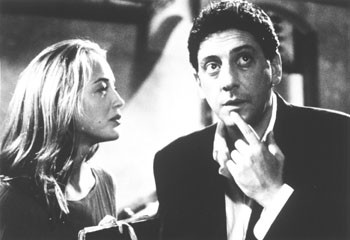
Daniel Auteuil, that outstanding emoter of existential despair, plays François Pignon, a despised little accountant so boring that his wife and his son both abandoned him. He’s learned that he’s going to be fired from the condom company where he works.

Terminating Pignon is a pleasure to the human-resources manager, Santini (Gérard Depardieu), who has never forgiven the man for his poor performance on the company’s lunchtime rugby team. Facing suicide, the accountant is rescued by a grumpy but benign next-door neighbor (Michel Aumont), a gay retired psychologist. He decides to mail Pignon’s boss Photoshop-fabricated pictures of Pignon in leathers, kissing another man. Since the condom company has a number of gay clients, it is terrified that firing Pignon will look like sexual discrimination.

Being seen as a gay man makes the meek Pignon a kind of star. Those who previously ignored him now feel there’s something sinfully fascinating about him. In an American movie, Pignon would overreach himself, but this French import makes Pignon’s special privileges a clear case of retroactive justice.

Director Francis Veber (the original La Cage aux Folles) passes up some good opportunities for Jacques Tati-style wit at the company’s garish modern headquarters. Still, Veber keeps the tale crisp enough that there’s room for the occasional discursion, as in a scene of a couple of lummoxes discussing the plot (uncredited) of the 1991 Volker Schlöndorff movie Voyager. (What really moved them to tears was Julie Delpy’s cleavage.) Auteuil’s hangdog defeatism works as well for comedy as it has many times for drama; seeing this actor, born to demonstrate the bitter side of life, trying to smile ingratiatingly at his boss is funny in itself.

Depardieu, apparently neckless, and stuffed into a business suit as tight as the skin on a sausage, gives the best caricature this year of a burly pédé-[fag-]hating macho bastard. Michele Garcia has just the right amount of time onscreen as the jealous Mrs. Santini, a martyr’s martyr.

But best of all–because the tradition of elegant comediennes is nearly dead–is Michele Laroque as Pignon’s boss Mlle. Bernard. She’s the first to see through Pignon’s pose and the first to act on the knowledge. Laroque, who has the swank of Simone Signoret and the weary slyness of Chico Marx, is one eloquent argument for heterosexuality.

‘The Closet’ opens Friday, Aug. 3, at Rialto Cinemas Lakeside in Santa Rosa and at Sebastopol Cinemas in Sebastopol. For details, see .

From the August 2-8, 2001 issue of the Northern California Bohemian.

© Metro Publishing Inc.
‘Legally Blonde’

0

Blonde on Blonde

Law-school nerds, serious shaving, and ‘Legally Blonde’

Writer David Templeton takes interesting people to interesting movies in his ongoing quest for the ultimate post-film conversation. This is not a review; rather, it’s a freewheeling, tangential discussion of art, alternative ideas, and popular culture.

“I WAS HOPING my newborn would wake up in time to breastfeed,” announces Ayelet Waldman, warmly shaking my hand as we meet in front of a large theater in downtown Berkeley. “But of course, she didn’t wake up until three minutes before I had to leave, and all she got was a snack, so if I start leaking all over the place during the movie, we’ll both just pretend we don’t notice it. Deal?”

“Um. Deal,” I reply, somehow maintaining my poker-faced professional composure while inwardly chanting to myself, “Yes! Yes! It appears that the rumors are true.”

Indeed. Ayelet Waldman–her first name is pronounced I-yell-it–really is the refreshingly unembarrassable person she is reputed to be.

A former lawyer, former law professor (at Loyola Law School in L.A.), and former public defender, this power-packed redhead, this outspoken mother of three, is also the author of a popular mystery series.

Published by Berkeley Prime Crime, the Mommy Track books–Nursery Crimes, The Big Nap–are an entertaining series of whodunits. The third, A Play Date with Death, is due out next year. Each book revolves around Juliet Applebaum, a sleep-deprived stay-at-home mom and former public defender who solves crimes between naps and afternoon feedings.

Like Juliet, whose husband is a Hollywood screenwriter, Waldman is also wed to a man of letters. He’s Pulitzer-winning author Michael Chabon (Wonder Boys, The Amazing Adventures of Kavalier and Clay), and he’ll be looking after the kids this afternoon while his wife takes a much-deserved break to go see the law-school comedy Legally Blonde.

Starring Reese Witherspoon, the film is a charming little froth-fest about Elle, a bouncy, blonde, pink-obsessed sorority queen–even her job résumés are pink–who enrolls at Harvard Law School in hopes of impressing her snob-job of an ex-boyfriend.

Waldman liked the movie, although she admits that it took her a while to get used to seeing a pink-clad sorority girl in the role of the heroine.

“Growing up as the girl who would never, ever have been allowed into the sorority,” Waldman confesses after the show, “I must admit that I have a slightly jaundiced view of that whole sorority world. College and law school were definitely the place where nerds like me were snubbed by girls like that.”

“So, what exactly was a nerd like you like?” I ask.

“I wore a lot of black,” she begins, spinning a list of law-school-nerd identity markers that include the tendency to take oneself very seriously and a fierce eschewing of superficial social events in lieu of political protests and picketing parties.

Furthermore, according to Waldman, she found herself adopting numerous political causes while at Harvard, the varying importance of each symbolized by whether or not she was shaving under her arms at that moment.

“You can gauge my whole political arc,” she says, “by the length of my underarm hair.”

As much as I enjoy talking about underarm hair, I decide to lob a hair question of another kind.

“Elle isn’t taken seriously at first,” I say, “partly because she’s always surrounded in pink, but mainly because she’s a blonde. Is it true that blondes have trouble in law school?”

“Depends on the blonde,” Waldman replies. When I ask if she knew many blondes at Harvard, she grins.

I was a blonde in law school,” she says with a smile. “A big old blonde. And while I did get more dates as a blonde, I can’t say that people took me less seriously. I was too serious for that. And later, when I had a whole lot of blonde law students at Loyola–lots of them–people seemed to take them pretty seriously.

“Of course,” Waldman adds, “none of them wore that much pink.”

From the August 2-8, 2001 issue of the Northern California Bohemian.

© Metro Publishing Inc.
Street Racing

Full Throttle

Age-old problem of street racing gets a new look

By Christian M. Chensvold

THIS IS NOT your father’s Oldsmobile. This is a sporty Toyota Supra modified with a sequential, twin-turbocharged 3.0L DOHC 24-valve EFI inline-six, an air-to-air intercooler with 720cc injectors, and a titanium cat-back exhaust.

If it had wings, it would go to the moon.

Known as “sport-compact cars” or simply “imports,” these souped-up-beyond-recognition Japanese economy cars form the basis of a fast-growing subculture in which thrill-seeking youths one-up one another with the speed and style of their “rides.” The import street-racing trend is a new, high-tech, and multicultural incarnation of America’s age-old obsession with the automobile, an eternal problem of young people pushing the throttle of their newfound independence.

At the tender age of 18, Scott already has the dubious distinction of having sped into a 360-degree spin at Santa Rosa’s Fourth and Mendo at 3 a.m.–right in front of a pack of cops. They shined a bright light in his face and gave him the Kafka treatment for four hours (at least he knew what he’d done). Scott’s thin frame supports a shaved head, dual earrings, and facial hair that doesn’t grow in evenly yet. He’s also rolled two cars. His friend Stacy (not her real name), 22, has raced her Acura Integra on the streets of Rohnert Park and says there’s a rapidly growing number of girls in the local import-racing scene.

They recount the tale of an exhaust-filled night this summer: 400 cars gathered on a Sonoma County street for some high-octane jousting. Street races, like the oldest-established, permanent floating crap game in Guys and Dolls, tend to be at different spots that are revealed only at the last moment, spread by cell-phone word of mouth. Scott has spoken to the law many times about street racing. Once, he says, a CHP officer was happy to turn the other cheek. “A lot of cops I’ve talked to say they don’t care if we race, as long as everyone’s safe about it and it’s a country road where there’s no traffic,” Scott says.

While street races ending in fatalities can make national news (in a well-publicized case recently, a Lamborghini and Corvette collided with another vehicle while racing down an East Coast street, killing three; another recent collision killed a Fremont mother who happened to drive head-on into a racer), those inside the scene say accidents are rare and most are caused by pedestrian revelers getting in the way of the cars. And today’s import fanatics are mostly interested in cultivating a cool, edgy image, not in automobile performance, contends Miles Hechtman, 23, of tuning and logo shop Epic Images in Santa Rosa. The former Southern California native says he grew up in the scene, which he traces to the Asian community in Long Beach about a decade ago. “High school punks today are doing it for the image,” says Hechtman. “Before, it was about the cars; now it’s like what jeans you’re wearing.”

JAPANESE compact cars are an obvious choice for young racers. They’re reliable, relatively inexpensive, and incredibly easy to modify. Honda Civics and Mitsubishi Eclipses are popular project cars. With a little turbocharging and “chipping” (increasing air and gas intake with computer chips), these cars can soon have Porches eating their Japanese dust. After-market parts for Japanese compact cars are now a $1.6 billion industry, up 150 percent over last year.

Import tuning has exploded in California, Texas, and Florida–states with sunny skies, open roads, and multicultural populations. The look is the street equivalent of a race car: bright colors, tail fins, and product logos standing in for sponsors’ names.

Kids in the import scene are not the only ones who jump at the chance to street-race. Middle-aged men with restored American muscle cars can easily be tempted to relive the drag days of their youth. Seventeen-year old Ian, who drives a 2000 Pontiac Trans-Am, says a balding guy in a Shelby Cobra pulled alongside him in a remote area and floored it when the light turned green. “When you get into American cars, it’s all these guys who grew up in the ’60s and have their Sunday cars,” he says. “When they see another Sunday car [the race will be] just a short little thing, and then they’ll pull over and talk about it.”

But when rival bucks pull up at a stoplight together, the race takes a different course. “[The import guys] just don’t stop racing; you stop and they go off at 100 mph. And if you meet them at the next light, they don’t want to have a friendly chat, they want to race again.”

Even on busy Santa Rosa Avenue on a weekend afternoon, any male in a sporty car can expect to hear the howling invitation of a foolhardy racer, flexing the muscles of his engine and pointing his eyes toward the red light about to change hues.

Wednesday Night Drags at Sears Point Raceway offer people a place to drag-race legally, and law enforcement and racing supply stores encourage the kids to take it to the track. However, on July 25, the track closed for remodeling, possibly launching an exodus onto the streets. Most of the kids say they’ve given up on Railroad Avenue in Cotati, long a racing hot spot for its long straightaway and remote location. Crackdowns by local law enforcement have sent the serious scurrying all the way to Ukiah or San Jose, where Silicon Valley’s empty business parks make the perfect setting for late-night drags, which can draw hundreds who scatter like mice when someone on the lookout spots a cop.

IT’S SATURDAY, June 23, the day after opening night of The Fast and the Furious, a Hollywood flick that taps into the street-racing subculture. And the Opak Racing shop in Rohnert Park looks like a bustling Cairo street market. Kids fresh from the cinema stand shoulder to shoulder all demanding one thing: NOS.

That’s Nitrous Oxide Systems, a company that makes do-it-yourself kits with which for $600 you can be cruising at 60 and in two heartbeats be going 100. Just don’t install it wrong or you’ll ruin your engine–or blow yourself up.

Nitrous oxide plays a pivotal role in this new action film. It’s the ace up everyone’s sleeve. In SCUBA-like canisters discreetly placed under the seats, operated James Bond-style by secret buttons, and monitored by laptop computers plugged into the cigarette lighter and cranking complex algorithms, NOS is what makes imports cease being automobiles and more closely resemble the Millennium Falcon making the jump to light speed.

In a summer of blockbusters that went bust, The Fast and the Furious is the biggest surprise hit of the summer. And while the film’s website strongly admonishes viewers to always drive safely, even the most staunch devotee of public transit can’t help but be seduced by the film’s adrenaline-packed depictions of high-speed driving in a bright orange, logo-splattered “rice rocket,” street slang for a modified Japanese import.

Even film critic Roger Ebert had to raise his thumb.

Opak Racing owner Edmun X–a bright, congenial man who reminds you of your high-school math teacher (the cool one)–says business has steadily risen since the movie opened. Opak is the retail face of a larger, New York-based distribution company. X, who has a background in high-tech marketing, says they might launch a chain of Opak Racing stores. He drives a Mercedes Benz sedan, by the way.

With its shiny, bright-colored products lining the shelves, X calls Opak a toy store for big boys. Here any tune-happy gearhead with a monkey wrench and a few hundred bucks can create his own “kandy-kolored, tangerine-flake streamline baby.”

“These are the new high-tech muscle cars,” says Hechtman of Epic Images. “Older guys can’t believe how you can get 800 horsepower out of four cylinders, but it’s all in the technology.”

Lt. David Frazer of the Rohnert Park Police Department says police records show that on Friday, June 22, opening night of The Fast and the Furious, police hunted for a pack of Hondas and Camaros that raced around city streets for two hours. Chalk one up for the media’s influence on society: “Sure, movies influence people,” Lt. Frazer says. “The kids were all jacked up [from the film] and wanted to race.”

Also, some imports recently pulled over have been found to have nitrous oxide hooked up to their engines.

If officers catch a pack of kids dragging on a desolate road, they are cited for “exhibition of speed.” The amount of the fine is up to the judge, but is likely to be around $100 to $300. The citation allows officers to impound the vehicles for the night, which costs several hundred dollars more. If the racing occurs over multiple streets and yellow lines are crossed and red lights violated, officers can cite for reckless driving, a misdemeanor. Bystanders at street races are not cited, though they may have their cars inspected for infractions.

But the more things change, the more they stay the same. Lt. Frazer admits that juvenile street racing goes back to the 1950s, the golden age of American car culture. The era that gave birth to cruising, drive-ins, and parking at Inspiration Point may have even been worse: In 1954’s Rebel without a Cause, the kids not only steal the cars they race; they race them off the edge of a cliff.

“Heck, I even did it,” says Lt. Frazer of street racing. “I had a ’65 Pontiac GTO with three carburetors.”

Then he accidentally lets escape, though not without a certain pride, “I got five tickets in one year when I was 17. I’m surprised they still let me drive.”

The Cost of Cool

2002 Acura RSX (the new Integra): $23,000 Five years at 15 percent: $440 per month Insurance for 22-year-old male with several speeding tickets: $400 per month Budget for upgrades of engine, body, and sound system: $500 per month Premium gas: $2.09 per gallon

Then and Now

Scratch that notion that the more things change, the more they stay the same. The more they change, the more they change. Consider: American Graffiti vs. The Fast and the Furious.

American Graffiti     The Fast and the Furious

From the August 2-8, 2001 issue of the Northern California Bohemian.

© Metro Publishing Inc.

Open Mic

0

Building Blots

By C.D. Payne

HOW DO YOU FIND the school of architecture at American universities? Simple. Just look for the ugliest building on campus and there you are. I’m not sure when architecture in this country hit the downside of the roller coaster (1945? 1960?), but all around us is evidence that the decline is accelerating. From garish McMansions along the ridgetops, to sprawling tract developments, to the latest asphalt-girdled strip malls and big-box stores, the landscape is disappearing under a sea of instant eyesores.

Developers face so much opposition these days because the public cynically (and, alas, rightfully) assumes that what is being proposed is more of the same visual blight.

Two recent developments in Sebastopol illustrate this trend.

On the south end of town, a hill was bulldozed to make way for a grotesque barn of a hotel, planted cheek to jowl with a warren of ersatz Victorians overlooking the hotel’s parking lot. Now the last remaining open space on the property is being filled with what looks like military housing.

On the other end of town, an old apple orchard has given way to a ski chalet run amuck–apparently designed as a showcase for acres of black-asphalt roofing shingles. One can only wonder if the architect designed those stupendous, steeply raked, and in-your-face gables to shed Sonoma County’s anticipated winter snow loads.

The same aesthetic myopia has struck our home builders.

Once houses for the affluent (and the less affluent) aspired to a certain sober dignity. Now Las Vegas-style grandiosity is the name of the game, as cheap truss-framed roofs convolute crazily, windows of all shapes and sizes multiply at random in the facade, faux Greco-Roman porticos rise from spindly 4x4s, and ceilings reach heights formerly considered appropriate only for airport terminals. All that’s lacking is a whooping slot machine in the “great room.” Welcome to your local developer’s vision of the good life in Sonoma County circa 2001.

Thousands of new homes and buildings will be going up here in the next few years. How many of them will add to the beauty and quality of life of Sonoma County? Is anyone asking that question–say, for instance, the Rohnert Park city officials now hustling through the proposed new Costco?

Ah, yes, yet another architectural gem to look forward to.

C. D. Payne, a Sebastopol resident and author of the Nick Twisp novels and other books, has strong opinions about the structure of things.

From the August 2-8, 2001 issue of the Northern California Bohemian.

© Metro Publishing Inc.
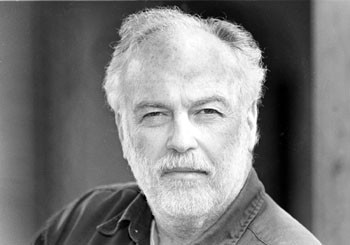
Kenneth Cleaver

Consumer Correspondent

Wonderbra Attn: Customer Service P.O. Box 5100 Winston-Salem, NC 27113-5100

Dear Wonderbra:

Getting to know my girlfriend was a short road to her underwear drawer. What I have found there should be of use to your business and hopefully curtail the inevitable turbulence that comes with most new relationships.

I happened to notice that her not infrequent mood swings coincide with the donning of three different Wonderbras. Sifting through her arsenal, I notice that with other bra manufacturers she was consistently a C cup, while Wonderbra ranked her only a B. While breast size cannot explain mood swings and should in no way affect self-esteem, social standards of aesthetics too often transcend common sense. Witness the proliferation of Access Hollywood and Katie Couric.

Perhaps this appears ridiculous, but I truly believe my girlfriend merits a C cup. And it is not just because she’s a beautiful, intelligent, and delicious human being. Out of respect for her, I cannot stoop to the descriptive prose necessary to describe her breasts. Trust that my request is not fueled from the fires of locker-room badinage or simple perversion, but astute observation and analysis; we have been together for almost three months!

I hope you will investigate the parameters of your sizes and consider “upgrading” my significant other. She is not aware of this correspondence, as my plan is to secretly swap her B’s for C’s upon Wonderbra’s implementation of my plan. Please keep me informed, and I will do the same.

Sincerely, Kenneth Cleaver

Dear Mr. Cleaver:

Thank you for contacting our Consumer Service Department. We are always glad to hear from our consumers and welcome the opportunity to address any questions or concerns you may have regarding our products.

Thank you for taking time out of your schedule to share your thoughts, which have been noted.

Please find enclosed the self-addressed stamped envelop that was enclosed with your correspondence.

Should you need further assistance, please call our Consumer Services’ toll-free number, 1-800-225-4872.

Sincerely,

Katrina Gray Consumer Services

From the August 2-8, 2001 issue of the Northern California Bohemian.

© Metro Publishing Inc.
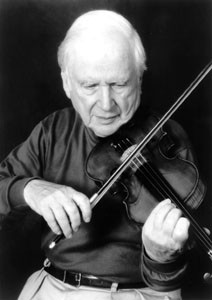
Jack Kerouac

New version of "Book of Dreams" offers wild ride By Patrick Sullivan FOUR LONG DECADES of strange dreams and stranger realities have passed since Jack Kerouac took readers on a whirlwind tour of the vast, bizarre landscape roamed by his sleeping mind. First published in excerpted form in 1961, Book of Dreams (City...

Kenneth Cleaver

Consumer Correspondent Intel Corporation, Jones Farm 2111 NE 25th Street Hillsboro, OR 97124 Dear Intel: While most management consultants model their techniques after history's great purges and inquisitions, I employ a subtler approach for greater effectiveness. Utilizing Stanislavskyian method-acting technique, I do not simply assess the structure of a...

Arts Etc.

By Paula Harris Winning Words THE MANHATTAN-based Fund for Poetry has surprised Sebastopol poet David Bromige with a hefty check in his mailbox--a $10,000 grant in recognition of his contribution to poetry. Bromige, 67, a former Sonoma State University English professor, has authored more than 30 tomes and is associated with Avec Books (a Penngrove...

Old Vic

Authetic pub grub: Old Vic co-owner Maude Stokeld pampers lunch patrons. Spuds 'n' Suds Old Vic keeps tummies full and throats lubricated By Paula Harris "I WAS A GUEST on the Jerry Springer Show today," boasts this guy in a battered denim hat, a Love Sucks T-shirt,...

Petaluma Summer Music Festival

Triple Time Petaluma Summer Music Festival ups the tempo "EVOLUTION is such an imperceptible thing," says Elly Lichenstein enthusiastically. "Things evolve so naturally, you don't even notice it's happening until you stop and look back at where you started. "Then you think, 'When did this happen? How...

‘The Closet’

Gay Ride 'The Closet' is a French sex comedy that's actually funny By IT SOUNDS like the plot you never wanted to see again. The Closet concerns a reticent straight man posing as a homosexual to save his job. One can laugh at just about any kind of movie, but there's...

‘Legally Blonde’

Blonde on Blonde Law-school nerds, serious shaving, and 'Legally Blonde' Writer David Templeton takes interesting people to interesting movies in his ongoing quest for the ultimate post-film conversation. This is not a review; rather, it's a freewheeling, tangential discussion of art, alternative ideas, and popular culture. ...

Street Racing

Full Throttle Age-old problem of street racing gets a new look By Christian M. Chensvold THIS IS NOT your father's Oldsmobile. This is a sporty Toyota Supra modified with a sequential, twin-turbocharged 3.0L DOHC 24-valve EFI inline-six, an air-to-air intercooler with 720cc injectors, and a titanium cat-back exhaust. ...

Open Mic

Building Blots By C.D. Payne HOW DO YOU FIND the school of architecture at American universities? Simple. Just look for the ugliest building on campus and there you are. I'm not sure when architecture in this country hit the downside of the roller coaster (1945? 1960?), but all around us is evidence that the...

Kenneth Cleaver

Consumer Correspondent Wonderbra Attn: Customer Service P.O. Box 5100 Winston-Salem, NC 27113-5100 Dear Wonderbra: Getting to know my girlfriend was a short road to her underwear drawer. What I have found there should be of use to your business and hopefully curtail the inevitable turbulence that comes...
11,084FansLike
4,446FollowersFollow
6,928FollowersFollow


