Java Jive 7 Winners

0


Illustration by Kelly Doren

Past Imperfect

Java Jive 7 winners give angst for the memories

Edited by Patrick Sullivan

DOES THE PAST burn away like a lit fuse? Or does it pile up behind us like unwashed laundry? Does it haunt us like a vengeful spirit? Or does it just irritate, like a popcorn kernel stuck in a molar? Speak, memory, we urged–and it roared like a lion in Java Jive 7, the seventh edition of the Bohemian‘s annual coffeehouse writing contest.

This year, we asked local scribes to demonstrate their talent by delivering 500 words or fewer on this year’s theme: “Angst for the Memories.” The result was a deluge of prose and poetry about personal histories real and imagined. There was pathos. There was parody. There was a letter from a cow.

Somehow, with the aid of our esteemed judges, we picked three winning pieces and two honorable mentions. You’ll find these visions of the past imperfect below. And you’ll get a chance to see the winning writers read their work in person on Sunday, Oct. 28, from 3 to 5 p.m. at Copperfield’s Books, 140 Kentucky St., Petaluma. That’s also where we’ll award this year’s prizes: Copperfield’s gift certificates, big bags of coffee, and even a copy of Dostoyevsky’s Notes from the Underground.

Admission is free.

At this reading, you’ll also meet our able Java Jive judges: Guy Biederman, a local writing instructor; Susan Bono, editor of Tiny Lights, a journal of personal essays; and Jonah Raskin, a professor of communications at Sonoma State University. Our thanks to them. And thanks, also, to every writer who entered this year’s contest.

First Place

Bus Stop
By Jim Arnold

I still think about it, years later. I was in back of a Golden Gate bus, riding down 101 to the city. It was that eerie blackness before sunrise, everybody either sleeping or fitful. Except me and one other guy reading our newspapers. He’d open his arms wide, turning pages and slapping creases under those rude little lights. I did it much quieter.

There was a woman sitting on the aisle, about half way up. All of a sudden, she threw off her neck pillow and just started singing in this big deep voice, a gospel sound with silly words. Then she stood up in the aisle, singing, swaying, and laughing loud. Pretty soon everyone else was up too, just as if it was natural. Singing and swaying, and somehow they all knew the words.

No way was I getting up. I was the only one who didn’t, and it was actually embarrassing just sitting there. I’m not much of a singer or dancer. And I was wearing a suit. I didn’t know the song anyway.

People were laughing like crazy. The lady who started it was loudest, and she’d pitch a high note the way big ladies do. They started rocking the bus, their arms pulling on the overhead racks, swaying in time with the song. I can’t remember the tune now. Just something about “bluebirds and blueberries,” and the chorus had “who cares about the kitchen.”

The driver was laughing too hard to sing. Big belly laughs, his head thrown back as if somebody else was driving. Then he stopped the bus on the shoulder, turned on the inside lights, and opened the door.

Everybody oohed and ahhed when they saw the door open, and they started dancing to the front. They looked a little silly, singing, giggling, and wiggling their bottoms in time. That’s the image that’s stuck with me most. Each one grabbed the hips of the next person in line, dancing out the door, then on up the ravine in the dark. You probably know the spot. On the west side of 101, down the hill toward the bridge. Pretty soon they’d disappeared into the fog, still dancing, holding the next person’s hips, wiggling and shuffling as if they knew where they were going.

I sat there for a long time. The traffic kept passing by, so I got up and turned off the lights. The transit people came, then the CHP. I didn’t mind all their questions, really. But they weren’t very nice, and they made me miss my meeting.

The 7:32 bus was canceled after that, and I heard there’s a new fence at the ravine. I haven’t actually been on the bus again. I’ve been trying some “make money in the privacy of your home” thing.

I think about it. I’d had some chili the night before. I wasn’t feeling too good, so maybe that’s why I didn’t catch on. I’m not much of a follower, anyway.

Second Place

In Sight of Land
By Judith Stephenson

With me, it’s Venus envy. Just look at her–if

Botticelli was right, she floated to shore on the smallest, curling waves, standing on her pearled half-shell, glorious, unafraid, self-aware–symbol of the new woman, drawn in by evolution’s tide from that black water farther out. I’m only a human, just hoping to walk on dry land some day. Seems like I’ve been swimming hard, weathering storms, coughing up salt water for too long. I’m weary of these leaky dinghies, of fishing boats that never reach the pier. My yachts turn into Flying Dutchmen; my yawls founder; my surfboards wipe out. I can’t get to shore. So maybe this deep place is my home. Maybe here’s where I learn to stand up and walk.

Third Place

Fourth of July
By Leonore Wilson

I’m out on the lawn, Veterans Home. Families wait, anticipating the routine in heaven– wad of sparks: red blue white yellow blue white red, bop bop bop and the shirr-rr of whistles. One little Green Beret, dead drunk, asks for a part of my blanket. How can I refuse as the bombs begin while his head rests on my shoulder? He looks up at me with that big smile, tells me he fought in four wars. Ah ah another cracker hits the stars.

Name’s Cricket, he says. What’s yours? Cricket’s four-eleven in a tidy suit; fat wine stain on the crotch. He’s drunk too much, he knows that, apologizes, tells me, You have a beautiful face. Can I touch it? Yes, I say, and he starts to sob, tells me the story of the sheets, how his mother couldn’t tolerate his bed wetting so she hung his soiled sheets up on the front porch for the entire town to see. He begins to weep, Why’d she do that? he asks. Why? And I shake my head. I don’t know either, he says. I ran away, joined the army at 16, becoming the best damn Green Beret in the entire fuckin’ nation, and he sobs again saying, How could my mama be so cruel? You wouldn’t do something like that, would you? Would you? Cricket Cricket? the voice of another vet chimes in. Did you see that? See what? A burst of yellow crosses the sky followed by red white and blue.

Cricket tells me he got his name for jumping out of airplanes invisible behind the enemy lines and before I know it the show’s over and Cricket has his head in my lap saying he’ll leave me everything that he’s a rich man really and could I escort him back to his room, he’s afraid, ready to fall. I’m a millionaire, lady, really a millionaire. He takes my hand in his, says. Can I kiss you please, can I?

Out of pity or duty, I let him and we hold hands across the lawn in front of all the families. Why am I doing this, I think. Why? And he takes me to his room where his deaf-mute roommate looks up from the TV and starts to laugh, a boisterous laugh and Cricket shows me old photographs stuck to his wall, all three of his brothers, each one perishing in a different war, and the deaf-mute is still laughing while Cricket tells me he got the man to speak the other day only one word–water–but he knows he’ll get more. All he needs is a little nurturing, the guy is shell-shocked. Will you sit on my bed?

Cricket says, I’ll get you a cold one, I say No, that’s OK, some other time. My heart says, other time? And he says, Ma’am, thank you thank you, and he weeps.

Honorable Mention

Us
By Brandina C. Ely

Yeah, I remember you. I remember us and that is what makes me chuckle real soft. Real slow, I’m so very aware of that foreign sound coming from my own throat. Bet you never thought of me and yourself put together like that. Because if you did, that sound from your throat would come out just as odd and unbalanced as my chuckle and that would scare you.

Us. It wasn’t something we chose, so I don’t blame you so much anymore. It was a need fulfilled on your part, and my part? I was there, so it couldn’t have very well been anybody else, could it? Us. You know I used to feel special lying beneath you. Up close, your brown sideburns reminded me of your tightly kinked pubic hair. I could always smell the salt and driveway’s dust in your hair. Thick, delicious hair I would have loved to drink, had there been more time. When it was us, there was always that urgency to our lovemaking. Our lips pressed closed in determination to get the job done quick. To this day I still don’t know what your breath smells like, only what it sounds like. Our nostrils flared as the farm’s acres and acres of dead grass formed a crackling sea around us. Our breathing labored as the manure beneath your knee gave way to dust and you’d scramble for a better foothold in which to jut into me.

God, we were so young. You were so fierce and you burned so strong in your pride. Your anger made my skin sear against yours and nothing hollow was ever carved from between us. I smelled your masculinity before you entered me and I took sweet secure solace watching your muscles harden every thrust you bore upon me. I never once looked toward your eyes as you recklessly drove yourself up inside me. The slap, slap of your wet belly against mine always made me blush, as you worked above and within me. Your buttocks so taut and concave in their furious rhythm. Your hips so slim they barely held up a pair of low-slung Levis. Your skin so arrogant in its unblemished youth while you drilled my very spine into unheeded rock and hot dirt.

When it was just you and I, my mind would drift beside us and make shapes of the scars we burned together. My soul always remained beneath you, bruised and pinpricked until bitterly consumed by your seed. Now, I think of us and wonder what I would have seen had I looked into your eyes just once? My selfish lover’s eyes, born from the same womb as mine.

Honorable Mention

A Millennium Cow Ruminates
By Lucy Aron

Dear Mr. Spielberg:

Have you heard about the Maglev? It’s a train that runs on a magnetic field and can top 250 mph. One of your senators rode a Maglev in Germany and wants to buy one for his state. He said everything goes by in a blur, but it’s exhilarating. Yikes! Does that sound like life nowadays or what?

Cows aren’t known for their smarts–most of us are going to wind up as some guy’s hamburger for God’s sake–and we don’t read the New York Times or Vanity Fair, so how hip can we be, right? But we’ve been watching you, and it’s scary out there.

Everything’s going faster–cars and catamarans and the Concorde and computers, then there’s Jiffy Lube, Insta-Soup, Quick Smog (don’t ask). I’m not suggesting they ought to slip Nembutal into the cornflakes, and this probably sounds retro what with the speed gods they worship every morning at Starbucks, but instead of the Yellow Brick Road doesn’t all that bustle make you think Twister meets Titanic? And we haven’t even talked road rage, fossil fuel, bovine growth hormone (if it makes us grow faster, what’s it doing to you?).

I know movies won’t change the world, but what about a movie with a cow hero? You’re into critters–that over-the-top-grumpy guy with all the teeth in Jaws, and that ET who looks like a turtle. Anyway, people would see creatures who don’t whine if the bus is 10 minutes late or fight over who got there first–or over anything for that matter, but that’s another movie–and take time to smell the weeds and aren’t stressed out and maybe there’s a connection.

Not a message movie where you bludgeon people over the head with some Universal Truth, but a subliminal feel-good ride that eases overwrought brains down to a civilized alpha. By the time people amble out of the theater they’ll look at each other and go, “Whoa, I think I’ve just had a Zen moment. Maybe those cows are on to something.”

Instead of another clichéd couple of hours watching Bruce or Keanu chase bad guys around the place and all that gloom and mayhem, there’d be Guernseys, Jerseys, Dutch Belteds! Isn’t that refreshing? We dawdle and plod incomparably. Pretty scenery, too. We’re green freaks, so you could even bill the movie as an eco-flick. The studio’s promo department would love that. Appeal to the environmentalists. And while we’re talking demographics, the movie would be a natural for the ranchers. Get the tree-huggers and cowboys together for a change.

I wouldn’t dream of telling you how to do your job, but I see fading in on some cows grazing on a hill, while on the soundtrack the Eagles are singing “Peaceful, Easy Feelin’,” maybe dissolve to a two-shot of cows contemplating a field of daisies. . . . The mind reels.

Yours udderly,
A. Holstein

From the October 25-31, 2001 issue of the Northern California Bohemian.

© Metro Publishing Inc.

Monsters, Inc.

0

Fear Factor: Antipathy is mutual in ‘Monsters, Inc.’


Eye Scream

Pixar mastermind lets loose the monsters

By David Templeton

“THIS,” REMARKS PIXAR’S John Lasseter, trying and failing to stifle a yawn, “has been a pretty long day.” It’s shortly before sunset on a warm Friday evening, and Lasseter– Toy Story-teller turned full-fledged monster maker–is still at his Emeryville office, where he just can’t stop yawning.

Not that anyone could blame him. With the imminent release of the new computer-animated film Monsters, Inc., and his hands-on involvement in this weekend’s big charity premiere of the Pixar-Disney release in Santa Rosa, Lasseter is quite the busy guy. So no one will begrudge him a little weariness.

After all, it won’t be yawns that Lasseter and company are spreading once Monsters, Inc. hits the theaters on Nov. 2. The Pixar people are confident that the only contagious parts of the eye-popping adventure will be the laughs–and the screams.

Monsters marks the first Pixar feature not directed by Lasseter himself. But as Pixar’s vice president of creative development, the Sonoma resident still put some long hours into the film.

Based on an idea by director Pete Doctor, the film takes us deep inside the world of monsters. Monsters, Inc. introduces audiences to a big, hairy, purple thing named Sully (voice by John Goodman), who works with his one-eyed assistant Mike Wozinsky (Billy Crystal) to frighten sleeping children and collect their screams. Those high-voltage sounds are then converted by the pair’s parent company, Monsters, Inc., into the energy that powers the monsters’ cities.

“We had so much fun creating the monster world, the monster buildings,” says Lasseter.

“We knew we wanted to have monsters of all sizes, so the buildings in the monster world would have to take that into consideration,” he explains. “Much like the public buildings in our world are handicapped accessible, in the monster world the buildings have to be similar, in the sense that there would be door handles at different heights, and little doors within bigger doors.

“Thinking up things like that make my job more fun,” he adds, then lets loose another yawn.

Adding to the fun of making Monsters, Lasseter says, was the simple-but-ear-shattering process employed in creating the screams that Sully and Mike inspire in their young “clients.”

To get the actual recordings, the Pixar filmmakers brought in their own children to help out. “You put a kid in front of a mike and tell him to scream,” Lasseter reports, “and you don’t have to do anything else.”

To create realistically screaming faces for the onscreen characters, Lasseter reveals that the animators frequently resorted to copying their own faces in mid-scream. There is a special room at Pixar–the “Mirror Room”–just for that purpose.

“One thing about animators,” Lasseter admits, “they’re always looking at themselves in mirrors.”

When not looking in mirrors, Lasseter is looking ahead to Oct. 27, when North Bay humans will receive an early peek inside the Monster world–and more besides–at the Santa Rosa benefit screening of Monsters, Inc.

Including an auction of 10 closet doors painted by Sonoma County artists and a rare live performance by Randy Newman (a longtime Pixar collaborator, Newman wrote the movie’s score), the whole event will benefit Valley of the Moon Children’s Foundation (www.vomchildrensfoundation.com), which provides a safe haven for abused children. A similar event premiering Toy Story 2 raised over $200,000 for the organization, which is now raising money to build a larger facility.

“This event, we hope,” says Lasseter, still yawning, “may put them over the top.”

After that, before moving on to other films, Lasseter plans to get some sleep.

One can only hope there are no monsters in the closet to disturb him.

The ‘Monsters, Inc.’ benefit takes place Saturday, Oct. 27, at 4:30 p.m. at Sonoma Country Day School, Jackson Theater, 4400 Day School Place, Santa Rosa. Tickets are $200 or $500. 707/528-8497.

From the October 25-31, 2001 issue of the Northern California Bohemian.

© Metro Publishing Inc.
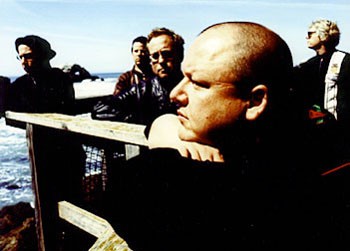
News Bites

0


Mug Shot: District Attorney Mike Mullens

Trial Begins

Plaintiff testifies in DA harassment trial

By Greg Cahill

THE PLAINTIFF in a high-profile civil trial took the stand on Monday and told the jury in a Petaluma courtroom that she was “shocked, angry, and upset” when a colleague in the Sonoma County District Attorney’s Office allegedly joked about killing his wife and running away with the plaintiff.

April Chapman, a top investigator at the DA’s office, claims that she was sexually harassed by prosecutor Bruce Enos, with whom she shared an office and who reportedly made unwanted sexual overtures. In the complaint, Chapman further alleges that District Attorney Mike Mullens retaliated against her by demoting her.

Mullens, who is preparing to run for his third term in the March 5 election, has declined to comment on the case. On Monday, the first day of the trial, attorney Michael Senneff, who is representing Mullens, said the DA took prompt action to protect Chapman when she reported the harassment and requested a transfer.

“[Mullens] made the decision that he immediately needed to transfer her to protect her,” Senneff told the jury.

Chapman and her attorney, Gary Moss, contend that the transfer was tantamount to a demotion and constituted undue retaliation for blowing the whistle on Enos. As a result of the transfer, Chapman–a former sheriff’s deputy with a reputation as a top criminal-fraud investigator–was sent back to the front office to handle case-prep work, maintaining her salary but exposing her to humiliation in an entry-level position handling paperwork and serving subpoenas.

“We consider that to be an adverse business decision,” Moss told the Bohemian earlier this month, “the equivalent of a demotion.”

In a published report, Enos’ attorney, Gail Flatt, admitted that her client made “stupid off-the-cuff remarks” about killing his wife, but denied that her client had harassed Chapman.

This is not the first time Mullens has been on the firing line over his terse management style and his handling of women’s issues. The DA’s office has been criticized repeatedly in the past for its mishandling of cases related to women’s issues, specifically the investigation and prosecution of rape, sexual assault, and domestic violence cases.

In 1999, a deputy district attorney was removed from a rape case after the Women’s Justice Center of Santa Rosa complained about “lying,” “demeaning” behavior, and “prosecutorial misconduct” in the handling of the case. In 1996, Maria Teresa Macias, a Sonoma Valley mother, was murdered by her estranged husband after the DA’s office and Sheriff’s Department failed to act on numerous complaints and botched the woman’s restraining order. The family of Macias has filed a wrongful death suit against Sonoma County law enforcement agencies that were involved in the case.

That trial is scheduled to begin next spring.

Moss, who has deposed more than two dozen witnesses in the Chapman case, said he will present evidence that shows Mullens’ mishandling of the Chapman complaint is consistent with his past management decisions.

“His management style is very much an issue here,” Moss said. “His decision was made very impulsively, in almost a rash manner. And we have other evidence that it is not unusual for him to make ill-considered decisions without conferring with staff.

“He’s a strong-willed person and that serves him well as a DA in the types of decisions he has to make, but it certainly worked against him and my client in this instance.”

From the October 25-31, 2001 issue of the Northern California Bohemian.

© Metro Publishing Inc.

Donnie Darko


School Daze: Jake Gyllenhaal plays an unbalanced student.

Bad Bunny

Unbalanced ‘Donnie Darko’ forestalls the end of the world

By Richard von Busack

NOW IT CAN be revealed. The end of the world on Nov. 1, 1988, at 6 a.m. was prevented by the actions of an emotionally troubled upper-class high school student named Donnie Darko.

Donnie (Jake Gyllenhaal) is given a four-week advance notice of doom for the earth. The messenger is Frank, the bunny in the mirror. This phantom from the future is a sneering 6-foot-tall monster, invisible to all others, bearing the same relation to Harvey the Rabbit as James Stewart does to Jack Palance.

Despite medication, therapy, and the obliviousness of his family, Donnie carries out the tasks Frank gives him. He owes the time-traveling bunny gratitude for its first tip to leave the house and go out all night: Donnie was spared when a jet-engine turbine crashed into his bed through the roof of his house.

Now Donnie must cope with his secret knowledge, his life in high school, and a flirtation with similarly troubled Gretchen (Gena Malone), a girl whose mother is in the witness protection program.

Donnie Darko is mostly assured filmmaking from 26-year-old director Richard Kelly. Kelly’s sensitivity and imagination make this ultimately familiar fantasy tale work, though his visual skills are very uneven.

Early on, there’s a smart scene of a high school arriving for its day accompanied by the Tears for Fears hit “Head over Heels.” Kelly doesn’t take the usual cheap shot about how corny an old song was–he makes the glancing images match the uneasy minor chords of the tune. The scene is a reminder of how untouchable even the recent past is.

In closed spaces, like a bedroom or a psychiatrist’s office, Kelly is at home. In other moments, like a run-on scene of little girls dancing for a pageant, it looks as if he set the camera up and forgot to shut it down.

Mary McDonnell plays Donnie’s mother, and it’s never really clear if she’s in denial about her son’s increasingly eccentric behavior. Her sketchy reactions get stranger as the film goes along–you ask yourself, what drug is this woman on? Drew Barrymore, who executive produced, is awkward playing an English teacher. No sore thumb ever stood out like a slumming film star in an indie film.

And Maggie Gyllenhaal, Jake’s sister in real life, is slighted playing Donnie’s sister. (Anyone who remembers her as Raven, the pert Satanist in Cecil B. Demented, will be a little unhappy that she didn’t get more scenes.)

In the lead, Jake Gyllenhaal is on the emotionally wet side; as if he’d had a swim in Dawson’s Creek. He does all the reacting for you. He’s more pleasurable in the sneaking amusing moments, as when Donnie embarrasses his psychiatrist with the power of his sexual feelings.

Still, Donnie Darko doesn’t cheat. The film explains its mysteries, and Kelly has brought out the poetry in a weird but not uncommon tale. One doesn’t want to drown a new talent in praise, but the signs are very good. You don’t need to be a visitor from the future to see that Kelly’s going places.

From the October 25-31, 2001 issue of the Northern California Bohemian.

© Metro Publishing Inc.
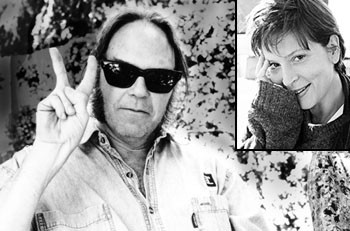
‘Hearts in Atlantis’

0

Author Francesca Lia Block on going to the movies in spite of everything

Writer David Templeton takes interesting people to interesting movies in his ongoing quest for the ultimate post-film conversation. This is not a review; rather, it’s a freewheeling, tangential discussion of art, alternative ideas, and popular culture.

“Until recently,” reveals author Francesca Lia Block, her voice adopting a tone of sincere confession, “I’ve never been able to focus all that much on world events–to a fault, I think. But September 11 turned it around. Now, all I can do is think about world events.” She pauses, then nearly whispers, “I can’t stop watching the news.”

Tell me about it.

I myself am a hopeless movie-addict, the kind of guy who prefers the popcorn-scented insides of a darkened movie theater to almost every other earthly environment. But ever since the events of Terrorist Tuesday, my appetite for TV news and radio talk shows has nearly eclipsed my enthusiasm for the movies.

And apparently, I’m not alone. Box-office revenues, though finally beginning to rebound a bit, are still below average. As a nation, we’re just not in the mood for the movies. Which is why I’m feeling guilty this afternoon, sitting here talking with Francesca Lia Block after forcing her to go see the new Anthony Hopkins tear-jerker, Hearts in Atlantis.

Like me, Block would have rather been home, channel surfing with her loved ones.

“The timing,” she remarks with a gentle laugh, “was definitely not ideal.”

Oh, mea culpa. Mea culpa.

Francesca Lia Block is the best-selling, Los Angeles-based author of Weetzie Bat, Dangerous Angels, The Rose and The Beast, and the brand-new novel Echo (Joanna Cotler Books, $14.95), in which a lonely, emotionally neglected girl grows to adulthood in a world peopled by wandering spirits, mournful angels, and self-mutilating vampires.

It is because of Block’s celebrated knack for modern magical-realism, in fact, that I’ve asked her to discuss Hearts in Atlantis, adapted from a Stephen King tale in which the supernatural mingles easily with the commonplace.

Hearts tells the story of a middle-aged man (David Morse) who learns of the death of a childhood friend. The death propels him into a bittersweet reverie of a certain summer back in 1960, when he was befriended by a stranger (Anthony Hopkins), a haunted, hunted mystery man with psychic powers he’d rather not have been blessed with. The unlikely friendship between these two yielded unexpected rewards and painful losses for each of them.

“I like the line in the movie,” Block recalls, “when Anthony Hopkins says, ‘When you’re a child’–I’m paraphrasing, obviously–‘the world is magic, as if you are living in Atlantis. Then you grow up . . . and your heart breaks in two.’ That really touched me.”

“Do you believe that’s true?” I ask. “Is adulthood the time when our innocent hearts are all irreparably broken?”

“No. No,” Block replies firmly. “I do believe that people have that conception–that childhood is care-free and adulthood is pain-filled–and at times I know I’ve felt that. But I really feel that it works both ways. The division’s not so clear.”

We’ve hit upon an issue she’s deeply familiar with. As an author with broad appeal to, literally, readers of all ages, she’s accustomed to seeing her books be slotted into strict categories that don’t quite fit. Take her new book for instance. Though you’ll most likely find it on the Young Adult shelf of your bookstore, don’t let that fool you: Echo is a work of stunning maturity, gleaming with fierce beauty.

“I’ve got a lot of young readers, but I’ve also got a lot of adult readers,” she says. “I don’t believe you can divide people so easily that way, ‘Young people feel this way. Adults feel this other way.’ Maybe that’s the reason I feel at odds with that ‘broken hearts’ line–because I don’t divide the world up the way some people do.

“Children do perceive the world as a very magical place,” Block continues. “But so do many adults. I know I do. And as an adult, I also see the pain and the darkness around us, but I also know that children carry so much of the pain of the world.”

As evidence, Block describes the daughter of a friend, a two-year-old whose vocabulary, ever since September 11, has included the oft-repeated word, ‘Attack!’ She mentions seeing plenty of children of late drawing pictures of planes going toward buildings.

But unlike certain pundits who’ve suggested that children be completely shielded from knowledge of current events, Block feels that wrestling with sadness is an important part of childhood. Like the grown-up boy in Hearts in Atlantis, Block believes that sadness is as important a part of growing up as joy and wonder.

“I believe in the importance of expressing and acknowledging the darkness inside us,” she explains. “Maybe this also goes back to something about the world events right now, but sadness, the kind of sadness we’ve been collectively experiencing–sadness and horror and just pure grief–is so profound. Because it makes the everyday sadness of life seem–I don’t want to call it trivial, because it’s not. That everyday sadness, if anything, is even more precious to me now.”

“This movie,” I remark, “In many ways is about the loss of innocence. Do you think it somehow touches what we’ve all been feeling as a nation?”

“I think so. Yes,” Block replies. “Through losing, not only our closest ones, but friends of friends of friends–even complete strangers–we’ve lost a kind of innocence. In watching people die, over and over, on TV, we’ve definitely lost an innocence.”

Her words trail off and the conversation lapses into a heavy silence. After a few seconds, Block breaks the silence with an unexpected laugh.

“Actually, I should thank you,” she says. “Maybe it was good to be forced to go to the movies–just so I’d stop watching the news for a few short hours.”

I suppose I agree.

And, Francesca Lia Block–you’re welcome.

From the October 18-24, 2001 issue of the Northern California Bohemian.

© Metro Publishing Inc.

My First Mister


Heavy Metal: Leelee Sobieski exhibits tackle-box face in ‘My First Mister.’

Mister Wrong

‘My First Mister’ backs away from piquant romance

By Richard von Busack

From Cary Grant and Audrey Hepburn to Nellie and Monsieur Arnaud, movies have a long tradition of relationships between older men and younger women. But a post-Lewinsky terror of such stories still prevails. Just when the comedy My First Mister starts to get interesting, it hightails away in panic, turning a piquant subject edgeless and soppy.

I understand that young girls sometimes aren’t sure if they’re looking for a father or a boyfriend, and that an unprincipled older man might take advantage of their confusion. Nevertheless, in a possible match-up between Leelee Sobieski and Albert Brooks, obviously it isn’t Sobieski who needs looking-out for.

Christine Lahti’s film posits that Sobieski’s Jennifer is an innocent 17-year-old from L.A.–no matter how serious a case of tackle-box face she exhibits from multiple piercings. Sobieski looks like what the New Ageists call “an old soul.” Gothed-out and mad about cemeteries, she radiates the most potent youthful wickedness since Louise Brooks. It’s a measure of how wrong My First Mister goes in its second half that I can’t recommend the movie even for her performance.

Looking for a job, Jennifer settles on an unlikely position at an upscale men’s haberdashery run by 49-year-old Randall (Albert Brooks), who sportily decides to hire Jennifer on the condition that she pull out her facial jewelry. Afterward, Jennifer becomes a mostly tame employee who tries to warm up the very stodgy man. At the point where she seems to have succeeded, the film veers into heartbreak.

Lahti loves L.A., and this helps, as in passing scenes of a group of mariachis entertaining some Hasidic Jews near Olivera Street, or of a man installing 6-foot-high wooden French fries into a Playa del Ray hamburger-joint billboard. And in the beginning, the script by Jill Franklyn, a former writer for Seinfeld, is sweet and tart, suggesting–as Seinfeld always did–that maybe what we look for in a partner is someone whose fears sync up with ours.

As divine as Seinfeld was, it was a sitcom. And in My First Mister, Jennifer’s parents are sitcom wackos: Carol Kane playing Carol Kane; John Goodman in a few terrible bits as her father, a ’60s-inebriated loafer.

As for Brooks, he’s uproarious at first, dry and dignified, lecturing Jennifer on overuse of the word fuck by telling her about the boy who cried wolf. But even Brooks ends up playing straight the kind of material that he used to deride.

Once upon a time, Brooks urged budding comedians to find a disease they could adopt for a telethon. Now he’s the one suffering through a bad case of Hollywood Movie Disease.

My First Mister opens Friday, Oct. 19, at Rialto Cinemas Lakeside, 551 Summerfield Road, Santa Rosa, 707/525-4840.

From the October 18-24, 2001 issue of the Northern California Bohemian.

© Metro Publishing Inc.

Life During Wartime

0

Mixed Messages

Trying to make sense out of life during wartime

By Greg Cahill

We dress like students, we dress like housewives, or in a suit and a tie. I changed my hairstyle, so many times now, I don’t know what I look like!

“Life during Wartime,” by the Talking Heads

WAR IS HELL. A nebulous and protracted war fought by an invisible enemy armed with common items turned into tools of terror and waged against an MTV nation that has the attention span of a gnat is nothing short of delirious. I fell asleep last night to Hieronymus Bosch-like visions of anthrax spores mixed among the mound of mail–poorly written press releases, marketing surveys, cheap promotional gimmicks, and free CDs–that litters my office desk each day.

That’s what a diet of late-night news will do to you.

I awoke in the morning with the Talking Heads’ 1979 song “Life during Wartime” dancing in my head. You might know the rap on the Talking Heads: Rhode Island art-school punks under the tutelage of eccentric musical genius David Byrne; alumni of the fabled class of ’77, those innovative New Wave and punk artists that reclaimed rock and roll from the bloated dinosaur bands of that era. The band’s sparse pop, the All Music Guide has opined, “was all nervous energy, detached emotion, and subdued minimalism . . . too intellectual for their own good.”

Or maybe just smart enough, as that chillingly timeless tune testifies.

The song and the current state of affairs give me pause to think about the paradoxical plea by the government and the media that we Americans should hunker down for a long war yet return to our normal routines. If America is to return to a sense of normalcy in these post-terrorist days, then evidently we are expected to rise above that paradox (and here’s the tricky part), ignore the anthrax scare, the armed military patrols at the nation’s airports, and the pre-Sept. 11 economic downturn with its own threat to our financial security, and spend like there’s no tomorrow (despite a rash of layoffs and pay cuts).

Somehow we must arm ourselves for a life during wartime.

All that dancing around is going to require a good soundtrack.

Same as It Ever Was

In 1979, the Talking Heads released the breakthrough album Fear of Music (Sire), which put New Wave into the Top 40 and the musical mainstream. The standout track was “Life during Wartime,” a psychodrama-cum-dance hit best remembered for the catchy refrain “This ain’t no party, this ain’t no disco, this ain’t no foolin’ around.” But the song’s lyrics portray a dark vision of apparently foreign terrorists living underground in America’s suburbs.

At the dawn of the Reagan era, it was a seemingly paranoiac nightmare–little did we know that it described today’s reality.

At a time when folks are reaching for songs with meaning–waxing nostalgic over Whitney Houston’s newly reissued pyrotechnic Gulf War blast of the “Star-Spangled Banner,” recasting the anti-establishment rock of John Lennon as patriotic anthems, and misinterpreting such scathing anti-war songs as John Fogerty’s “Fortunate Son” or Bruce Springsteen’s “Born in the U.S.A.,” just because they might contain a red, white, and blue reference–“Life during Wartime” is a funky cautionary tale that feels custom-made for these dangerous times. It reminds us that America needs artists to step forward to express our fears, doubts, and sorrows or just to help make sense of current events in a manner that doesn’t kowtow to jingoism and knee-jerk patriotism.

In short, we need artists to rise to the challenge of life during wartime.

Kill Your TV: The news networks are spewing a flood of paranoia and propaganda.

Inspiration within the fine arts for that mission is everywhere. There’s no need to retreat into a banal blast of mediocrity–the preening pop princesses and emasculated boy bands of the last five years were banal enough. Remember that bad times spawn great art. Think Guernica, Picasso’s cubist depiction of the Nazi-backed air war against civilians during the Spanish Civil War–the first time planes had been used against noncombatants. Or the profound sense of disconnection evoked by painter and sculptor Max Ernst, a leader of the Dada movement and founder of surrealism, after witnessing firsthand the horrors of war while serving as a German soldier in the haunted trenches of the French countryside during World War I.

And there are many other examples, all so much more inspiring than Mariah Carey desecrating “God Bless America.”

In 1991, during the Persian Gulf War, the great classical violinist Isaac Stern was performing a concert in Tel Aviv when a worried attendant rushed onstage to announce that the Iraqis had launched a Scud missile attack. As sirens wailed outside, the concert halted and audience members were instructed to remain seated but to don their gas masks in case the warhead contained biological or chemical agents. Stern later recalled how eerie it was to gaze at the orchestra and hundreds of impeccably dressed concertgoers, now clad in tuxedos, evening gowns, and military-issue gas masks. Since there were still several minutes before the missile struck, Stern stood his ground, declined a gas mask, raised his violin, and played a majestic classical solo selection to ease the tension in the hall.

His action was in keeping with a rich Jewish tradition: During World War II, the beleaguered Jews in the teeming Warsaw ghetto kept their sanity by holding underground cabarets, singing songs of resistance and thinly disguised radical anthems right under the watchful eyes–and menacing guns–of the Nazis.

That powerful need to rise above the worst that mankind has to offer and nurture the best of the human spirit, even in the midst of war, nobly manifested itself again during the epic six-month siege of Stalingrad in the winter of 1942, a conflict that spelled the first major defeat of Hitler’s forces, at the terrible cost of 1.1 million Russian lives. While the bloody house-to-house street fighting raged, a unit of Russian ground troops one night risked their lives by staging a decoy assault on the encircling German army so that the Stalingrad symphony could perform unhampered at the opera house.

Can we muster that kind of mettle?

Warning Sign

Meanwhile, the threat of bioterrorism raises the ante on those trying to maintain normalcy in life during wartime. In the absence of any objective war coverage or thoughtful news analysis, the mainstream media are reaping a ratings coup this week with the anthrax scare. (Did you ever imagine in your wildest dreams that you’d feel genuine sympathy for the staff of the National Enquirer, where the first anthrax victim worked?)

But before moving lockstep into the perpetual war machine, let’s put this one in perspective. Your chance of exposure to anthrax as the result of a terrorist communiqué delivered by your friendly postal carrier (a scenario that gives a whole new meaning to the term “going postal”) as of this writing is about one in 25 million. In other words, statistically, you have a better chance of winning the Super Lotto (and that is a snowball’s chance in hell) than becoming exposed to a bioterrorist weapon.

The fear is palpable. Osama bin Laden has pledged that Americans will never again know peace. And certainly the events of Sept. 11 have changed us forever. But how shall we shape this new world, and how shall we allow it to shape us? For many, the threat of terrorism has all but paralyzed their life: Actor James Wood, for example, said this week that he no longer attends large sporting events or goes to a movie theaters out of fear for his safety.

Of course, it’s easy to slip into a sense of apocalyptic angst–the Sept. 11 suicide plane attacks killed thousands, saddened millions, scared the Western world, and spurred a massive military response that, in turn, has sparked a storm of angry and potentially destabilizing protests throughout the Muslim world. The impact of these foul acts is pervasive. In the past five weeks, prescriptions for anti-anxiety drugs have increased more than 40 percent, doctors are scribbling 17 percent more scripts for antidepressants, and New York bartenders are reporting a 30 percent increase in alcoholic beverage consumption among patrons.

If there ever was a time to invest in the prescription drug and vice markets, this is it.

One possible investment: Those bright yellow chemical suits favored by the 1970s New Wave band Devo (accessorized with a matching medical-grade respirator, of course) are back in vogue and now available in a range of spiffy colors.

So, are these the fabled end times, those dark biblical moments of Armageddon that mark the gathering of the forces of good and evil, or just an unlucky streak in the relatively short history of Western civilization?

Road to Nowhere?

“Sometimes the world is a load of questions,” David Byrne once sang, “sometimes it seems that the world knows nothing at all.” Plenty of pundits offer answers. But these days, most of the folks seem uncertain about the future and unclear about the meaning of the bizarre events unfolding around us. Many are ricocheting between a dark sense of dread and a guarded optimism that things won’t get too bleak.

To some extent, the truth depends on your point of view and whether you think the cup is half empty or half full.

The argument for half empty: I’m not given to an overly optimistic outlook. After all, it’s easy for someone who spent his childhood practicing duck-and-cover drills in a darkened kindergarten cloakroom in anticipation of an atomic bomb attack to suspect that the world has gone to hell in a hand basket. Those survivalist impulses, so strong during the environmental and social chaos of the early ’70s–when escalating tensions between the nuclear superpowers, the apocalyptic aura of the Vietnam War, and an overabundance of psychedelic drugs contributed to a sense of impending doom–are reawakening. Purchase a patch of land. Plant a garden. Dig a well. Buy a gun. Make a stand.

You may or may not want to cave in to those primal urges, but it’s wise to stock up on emergency food and water–this is earthquake country after all (gas masks, anti-biotics, and a 12-gauge pump-action shotgun with child-proof trigger lock are optional).

In a society geared for life during wartime, it’s best to be prepared.

The argument that the cup is half full: On the other hand, life has a way of pleasantly surprising you. During the Middle Ages, European peasants–in addition to subsistence rations, squalor, overcrowding, and cruel masters–had to live with a mean malady that came to be known as the Black Death. Now we know it as the bubonic plague, a highly contagious bacterial infection characterized by fever, delirium, and buboes (thus the term “boo-boo”) and spread by the bite of fleas carried on rats. As a result of the plague, one in three Europeans died (compare that with your one-in-25 million chance of being targeted with an anthrax-laden greeting card). Still, your average European peasant–aided by an enthusiastic clergy–spent a fair amount of time deep in thought about sin and death.

So much for the Dark Ages.

Fast forward to the 1980s (and please note that the Black Death did not end civilization as anticipated) and the modern plague known as AIDS. At the time, there was a widely held fear that this incurable virus ultimately would annihilate mankind. HIV has taken its toll, no doubt about that. In Africa, one in four villagers in some infected areas have succumbed to the disease. In the affluent United States and European countries, expensive drug therapies and public health campaigns for the most part have kept the disease in check. But why hasn’t everyone exposed to HIV contracted AIDS? The lunatic fringe argues that this is proof that HIV isn’t the agent that causes the disease. But a couple of years ago, genetic researchers discovered that about one in 10 people exposed to the virus–all of whom are of European descent–have a natural immunity to HIV first developed during the Black Death.

Life has a way of winning–not for everyone but for mankind as a whole.

Don’t Worry about the Government

So where do we go from here? The mixed messages of the mainstream media–watch out for suspicious characters, unusual activity, and possible bioterrorism, on the one hand; dust off your credit cards and recharge the beleaguered business sector, on the other–offers no solutions, only more conflict and uncertainty.

This isn’t business as usual–these are extraordinary times that should invite self-reflection and social criticism. The racial and political intolerance unleashed by the Sept. 11 attacks smacks of the old Pogo adage: we have seen the enemy and they are us.

Don’t panic, be cautious, take your lessons where you find them.

And, in the spirit of the democracy, open your mind to other views. While wrapping oneself in the flag might be comforting to some, it is not unpatriotic to get fired up once again about civil rights, environmental piracy, affordable healthcare, social injustice, and all the other problems that faced this nation before the suicide attacks.

For example, President Bush is pushing ahead with an energy plan that calls for oil exploration in the ecologically sensitive Arctic National Wildlife Refuge. Before Sept. 11, Bush faced overwhelming opposition to the drilling of the ANWR. Now, the administration has made oil exploration there part of its anti-terrorist plan, arguing that domestic oil production makes us less beholden to foreign energy supplies. How safe would that ANWR oil supply be from terrorist attack? Last week, some drunken idiot fired a rifle round into the pressurized Alaskan oil pipeline, temporarily shutting down the supply from existing Arctic fields and causing 300,000 gallons of crude to spill onto the pristine tundra.

One bullet, one dollar.

If the government wants to encourage energy independence, it should establish fiscal incentives for wind, biomass, solar, and other noncentralized alternative energy sources. It’s true that the president’s friends at Exxon won’t benefit, but the nation will be stronger.

Meanwhile, White House officials are seeking tougher antiterrorist legislation that would allow authorities to detain foreigners indefinitely, contrary to constitutional protections now in place. The Clinton administration’s previous anti-terrorist policies went through largely unchecked, allowing the federal courts to use secret evidence and undisclosed witnesses against alleged terrorists.

It dishonors the memory of the thousands of innocent victims of the Sept. 11 attacks–including many Arab Americans–if we relinquish the freedoms that they cherished, or if we give in to racial profiling and intolerance of political dissent.

Life during wartime?

It should look a lot like life during peacetime, but with a lot more passion for the people, values, and things we hold close to our hearts. The terrorists in Byrne’s prophetic 1979 tune would say, “No time for dancing, or lovey dovey, I ain’t got time for that now.”

That’s fine for fanatics. But maybe we should draw the opposite conclusion: In a nation at war, our private passions are more important than ever.

From the October 18-24, 2001 issue of the Northern California Bohemian.

© Metro Publishing Inc.

Living Well Is The Best Revenge

0


Photograph by Rory MacNamara

A Feeling of Connection: Dining out is a way of finding solace in times of tragedy. John Volpi of Volpi’s Ristorante and Speakeasy in Petaluma will even provide the soundtrack.


Living Well Is the Best Revenge

Our columnist slaps around anyone who’s not dining out these days

By Christina Waters

“WHAT’S THE POINT?” many of us felt after the morning of Sept 11. Why bother trying to do anything productive? How could we possibly indulge in simple pleasures–laughter, a good movie, or a favorite meal?

Well, how could we not? The point is that not to engage in these quintessential human expressions reduces our value system to something unrecognizable. To limit the space of our enjoyments, even those enjoyments that might be argued as nonessential, is to have been terrorized twice. Our collective sense of survivor guilt might lead us to a vital transformation, the next stage in the post-postmodern American Dream. Or it could perhaps more easily lead to a denial of that attitude of expansiveness, that spirit of shared enrichments that quite simply makes life worth living.

Life, liberty, and the pursuit of happiness. It’s that “pursuit of happiness” part that often gets ditched, seen as somehow too self-involved, too trivial to maintain when things become breathtakingly real and mortal. Certainly I’m talking about that “quality of life” thing. Merely drawing breath isn’t anyone’s idea of living. But I’m also suggesting something more than making sure we don’t sacrifice the full spectrum of experience in the name of fear and uncertainty.

A fundamental expression of our humanity is the seeking out of each other’s company. The handshakes, yes, the embraces that have multiplied over the past few weeks. But also, simply, that solid, silent running sense of community. It got us through the earthquake a decade ago, this coming together as if to show one another that we were all still here, still alive and ready to craft a future. The feeling of connection and mostly the vibrant feeling of social communion that happens when you’re dining in a room filled with people–these are not frivolous or unimportant concerns.

It is surely camaraderie that sustains many uncertain passages on the big river of life. Last week, we went out to eat at a small cafe. The sense of relief was palpable. We were relieved to see other people sitting and ordering dinner, raising glasses of wine, smiling over plates of freshly made food.

And the other diners, as well as the waitstaff and kitchen workers, were also relieved. They were relieved to see us. People still had appetites. Expectations were still in place. It was still important to show up and do a job. These are the deeply embedded patterns of community that keep us sane during even wildly unpredictable circumstances.

If anything, suddenly it all matters so much more. This showing up, greeting, allowing pleasure to unfurl, meeting social agreements.

As you might have guessed, the meal we enjoyed last week tasted better than it might have in a world where every act is taken for granted. That world doesn’t exist anymore. Now the very idea that a tomato could be so ripe, or that someone would greet a stranger at the next table, is priceless and incalculably reassuring.

My friend Angela, a sophisticated observer who works at a popular Bay Area restaurant, told me that it was very like after the 1989 earthquake.

“People come together. They seem to need the camaraderie that a familiar restaurant gives them.”

That is happening now. And yet a recent lunch in Palo Alto made me worry that too many people might be staying away in droves–out of fear. As sci-fi prophet Frank Herbert once observed, fear is the mind killer–the little death. Fear is that worst of adversaries. It can’t be seen, it refuses to take any clear, crisp shape.

But it haunts and taints everything it touches.

Afraid there will be no tomorrow, we stay at home, complain, and vegetate. Afraid that our money will run out, we grasp and hoard what we have. Afraid that we will appear frivolous, we stick to pious pleasures–watching TV and watching TV. Nothing is wrong with any of these things, save that they cause us to abandon our neighbors. And our identities.

The math is fairly simple; even I can do it. America–growing fearful that lightning will strike twice, and in the same way–stops flying. The results are simple and devastating. Airlines fold. Airport concessions fold. People, lots of them, lose their jobs. Every single layoff over the 10 days after the terrrorist attack carried six other jobs with it–the taxi driver, the bus person, the skycap, the parking-lot attendant, the hotel maid, and on and on.

And just as terribly we lose our freedom to move, to connect, to conduct business, to carry out long-made plans. The same can easily happen with restaurants, bakeries, cafes, butchers, farmers, shippers, wineries, field hands, truck drivers, the interlocking chain of people and businesses supporting food service.

When this is all over, this emotional blackmailing, this psychic kidnap we’re all suffering–and it will be over–we’ll be overjoyed and ready for some sensual pleasures. But will those restaurants, cafes, and bakeries still be around?

Some will. Some won’t. My point is simple. And, I hope, obvious. Now is not the time to stop going out to eat. If you fail to support the friend and neighbor who works hard as restaurateurs do, they simply will not be able to stay in business.

The quality of life matters. The quality of the future is in your hands.

From the October 18-24, 2001 issue of the Northern California Bohemian.

© Metro Publishing Inc.

Spins

0

Hard Rockin’ Daddy: Wayne “The Train” Hancock


Hillbilly Heaven

A trio of alt.country gems

By Greg Cahill

Wayne Hancock
A Town Blues (Bloodshot)

Kelly Hogan
Because It Feel Good (Bloodshot)

Robbie Fulks
13 Hillbilly Giants (Bloodshot)

Any alt.country fans worth their faded No Depression T-shirt have a stack of CDs in their library from the good folks at Bloodshot Records, the Chicago-based home to some of the hottest–and weirdest–roots music acts (including Split Lip Rayfield, Neko Case, and the Waco Brothers). This trio of new releases will set you back 45 or 50 bucks and they’re well worth a piece of your hard-earned paycheck. North Bay hillbilly hounds know that Wayne “The Train” Hancock, a Texas-born country swing artist imbued with the spirits of Hank Williams and Bob Wills, is a helluva good rockin’ daddy with one of the most distinctive voices in roots music. The 14 tracks on A Town Blues, a dozen originals and covers of Jimmy Rogers and Fats Waller recorded in Austin and produced by Lloyd Maines (Wilco, Joe Ely), is a swingin’ collection of whacked-out hillbilly barn burners, dusty desert ballads, and dance floor warmers worthy of Hank Sr. It’s as Hancock likes to say: “If you like music that moves and the trash on the radio can’t satisfy your wanderlust,
then try this CD and burn a thousand miles.”

Wanderlust and sweet abandon are what singer Kelly Hogan is all about. Her sluttier label mate Neko Case gets more of the media attention, but Hogan’s angelic, country-drenched vocals and restrained approach haven’t been lost on the critics. The Washington Post recently gushed that Hogan “sings with persuasive passion.” Billboard branded Hogan “one of the most irresistible singers to appear in some time.” And the Chicago Tribune opined that Hogan “has every bit of the vocal power of a Whitney or an Alanis; the difference is she knows how to sculpt a song and build a moment.”

Catch her live on Nov. 10 at the Bottom of the Hill in San Francisco.

As for Robbie Fulks, he ain’t exactly a household name but listeners of KRSH and KRCB radio know that this is one guy who knows what the heart of country music is all about. On his wryly titled new CD 13 Hillbilly Giants (recorded by engineer Steve Albini of Nirvana fame), Fulks delivers a baker’s dozen of cool country covers–novelty tunes, weepers, story songs, and rave-ups. All are obscure songs by famous country artists like Dolly Parton and Porter Wagoner or should-be-famous songs by obscure artists like the Carlisles. Fulks–the creator of such latter-day honky-tonk classics as “The Buck Starts Here” and “She Took a Lot of Pills and Died”–sounds like Dwight Yoakam without the
pop pretensions.

The publicity folks at Bloodshot call Fulks’ latest “an excellent bromide” for what passes as country music these days. Drink liberally from this jug.

Spin Du Jour

Move over, Supernatural, make way for a spiritual immersion. Long before his rebirth as a multi-Grammy Award-winning MTV star who built a new audience by linking up with the likes of pop star Rob Thomas of Matchbox 20 and rapper Wyclef Jean, guitarist Carlos Santana startled fans by recording a pair of pioneering jazz-fusion albums, 1972’s Love Devotion Surrender–on which then Devadip Carlos Santana joined forces with fellow Sri Chimnoy devotee and guitar heavyweight Mahavishnu John McLaughlin–and 1974’s Illuminations, a free-jazz exploration of John Coltrane themes that was the first Santana album not to go gold in the United States. Now bassist/alchemist/producer Bill Laswell has gone into the studio to create Carlos Santana: Divine Light, a Reconstruction and Mix Translation (Epic/Legacy), which reinvents nine tracks from those recordings through studio wizardry. The CD is the follow-up to Laswell’s similar 1998 remix project Panthalassa: The Music of Miles Davis 1969-1974 (Columbia). The new CD is a nice way to revisit some of the most adventurous and most maligned work by this Marin musician who at the time had the courage to put spiritual values and stream-of-consciousness artistry ahead of mainstream commercial success. Such a rarity today.

From the October 18-24, 2001 issue of the Northern California Bohemian.

© Metro Publishing Inc.

Heavier Than Heaven

We Hardly Knew Ya: Kurt Cobain – calculating, crazy, and cruel?

All Apologies

New bio besmirches Cobain legacy

By Gina Arnold

IN ADDITION to being a month of treachery and angst, September marked the 10th anniversary of the release of a record called Nevermind by a rock band called Nirvana. The anniversary doesn’t seem to have been especially marked by very many people–unlike all anniversaries to do with the Beatles–but it meant a lot to me.

Unfortunately, what it reminded me of most is the line I consider the most profound in all rock and roll. It comes from Bob Seeger’s “Runnin’ Against the Wind” and it goes, “I wish I didn’t know now what I didn’t know then.”

That phrase applies to all kinds of people, from JFK to Gary Glitter, and judging by Heavier than Heaven (Hyperion; $24.95), the amazingly detailed new biography about rock and roll’s premier suicide of the ’90s, it applies to no one more than Kurt Cobain.

To read this book is to become disenchanted not only with Kurt–who is portrayed as petulant and calculating, crazy and cruel–but with Nirvana, grunge, and rock itself. That being the case, it’s hard to imagine who would want to open it.

This is not to say, however, that Heavier than Heaven is a bad biography. If anything, it suffers from being too good; a phenomenally well-researched account of Cobain’s 27 years. Author Charles Cross has done an almost mind-boggling amount of digging, offering everything from excerpts of Kurt’s own journals to interviews with his elementary school teachers.

Cross is not a dry stylist in the least. But he sometimes errs on the side of exaggeration: it takes him exactly two paragraphs to use the term “rock & roll salvation.” Cross is convinced that Nirvana was one of the most important bands–and Cobain the most important songwriter–of his era. And yet his argument is that Cobain, far from being the saintly outsider he made himself out to be, was deeply into being a rock star, determined from the start to “make it big.”

This doesn’t change the fact that Nevermind and Live Unplugged in New York are two of the best records of the decade, but it does ruin some of the mythic aspects of the Nirvana legend–and not to any good end.

Heavier than Heaven also suffers the same fate as many biographies. In spite of the incredible detail, there is no real explanation either for Kurt Cobain’s genius or for his deep unhappiness at the end of his life (although his miserable marriage, which may have accounted for a lot of it, is sugarcoated by Cross’ unabashed kindness to his main source, the Mrs.).

In the book, Cobain goes from your classic dumb redneck to arty punk-rock philosopher in about one second flat. This is partly because Cross omits a detailed description of the Washington town of Olympia, where Kurt moved after high school, and its peculiar hippie-punk-indie-rock ethos.

The hole is also there because that leap is unknowable, both in Cobain and in every other genius of his order: Dylan, Lennon, Gandhi, whoever. What made them what they are? We’ll never know, and I find the exploration of their origins highly distasteful. I didn’t want to know that Kurt killed a cat when he was a teenager. It doesn’t improve my understanding of Nirvana’s music.

No doubt everyone who ever met Kurt had been hoarding–and embroidering–their stories, waiting to tell them to Cross. But does that make them true? Not only are some of the narrators here as unreliable as Tristram Shandy, but there are some things about these times and this person that I remember differently–nights I spent in Nirvana’s company that shine like pure goddamn gold.

Maybe I’m just in denial. But not only do I wish I didn’t know now what I didn’t know then, but I wish I’d never read this book.

From the October 18-24, 2001 issue of the Northern California Bohemian.

© Metro Publishing Inc.

Java Jive 7 Winners

Illustration by Kelly DorenPast ImperfectJava Jive 7 winners give angst for the memoriesEdited by Patrick SullivanDOES THE PAST burn away like a lit fuse? Or does it pile up behind us like unwashed laundry? Does it haunt us like a vengeful spirit? Or does it just irritate, like a popcorn kernel stuck in a molar? Speak, memory, we urged--and...

Monsters, Inc.

Fear Factor: Antipathy is mutual in 'Monsters, Inc.'Eye ScreamPixar mastermind lets loose the monstersBy David Templeton"THIS," REMARKS PIXAR'S John Lasseter, trying and failing to stifle a yawn, "has been a pretty long day." It's shortly before sunset on a warm Friday evening, and Lasseter-- Toy Story-teller turned full-fledged monster maker--is still at his Emeryville office, where he just...

News Bites

Mug Shot: District Attorney Mike MullensTrial BeginsPlaintiff testifies in DA harassment trialBy Greg CahillTHE PLAINTIFF in a high-profile civil trial took the stand on Monday and told the jury in a Petaluma courtroom that she was "shocked, angry, and upset" when a colleague in the Sonoma County District Attorney's Office allegedly joked about killing his wife and running...

Donnie Darko

School Daze: Jake Gyllenhaal plays an unbalanced student.Bad BunnyUnbalanced 'Donnie Darko' forestalls the end of the worldBy Richard von BusackNOW IT CAN be revealed. The end of the world on Nov. 1, 1988, at 6 a.m. was prevented by the actions of an emotionally troubled upper-class high school student named Donnie Darko. Donnie (Jake Gyllenhaal) is given a four-week...

‘Hearts in Atlantis’

Author Francesca Lia Block on going to the movies in spite of everything Writer David Templeton takes interesting people to interesting movies in his ongoing quest for the ultimate post-film conversation. This is not a review; rather, it's a freewheeling, tangential discussion of art, alternative ideas, and popular culture."Until recently," reveals author Francesca Lia Block, her voice adopting...

My First Mister

Heavy Metal: Leelee Sobieski exhibits tackle-box face in 'My First Mister.'Mister Wrong'My First Mister' backs away from piquant romance By Richard von BusackFrom Cary Grant and Audrey Hepburn to Nellie and Monsieur Arnaud, movies have a long tradition of relationships between older men and younger women. But a post-Lewinsky terror of such stories still prevails. Just when...

Life During Wartime

Mixed Messages Trying to make sense out of life during wartime By Greg Cahill We dress like students, we dress like housewives, or in a suit and a tie. I changed my hairstyle, so many times now, I don't know what I look like! "Life during...

Living Well Is The Best Revenge

Photograph by Rory MacNamaraA Feeling of Connection: Dining out is a way of finding solace in times of tragedy. John Volpi of Volpi's Ristorante and Speakeasy in Petaluma will even provide the soundtrack.Living Well Is the Best Revenge Our columnist slaps around anyone who's not dining out these days By Christina Waters "WHAT'S THE POINT?" many of us felt...

Spins

Hard Rockin' Daddy: Wayne "The Train" HancockHillbilly HeavenA trio of alt.country gemsBy Greg CahillWayne HancockA Town Blues (Bloodshot)Kelly HoganBecause It Feel Good (Bloodshot)Robbie Fulks13 Hillbilly Giants (Bloodshot)Any alt.country fans worth their faded No Depression T-shirt have a stack of CDs in their library from the good folks at Bloodshot Records, the Chicago-based home to some of the hottest--and weirdest--roots...

Heavier Than Heaven

We Hardly Knew Ya: Kurt Cobain - calculating, crazy, and cruel? All Apologies New bio besmirches Cobain legacy By Gina Arnold IN ADDITION to being a month of treachery and angst, September marked the 10th anniversary of the release of a record called Nevermind by a rock band called...
11,084FansLike
4,446FollowersFollow
6,928FollowersFollow