Sonya Hunter

0

Ring the Bells, Blow the Whistles: Sonya Hunter comes home to Sonoma County

Sonya in Mind

Folk-pop artist Sonya Hunter’s songs run deep

By Heather Seggel

Sun in Mind, Sonya Hunter’s sixth and latest album, came awfully close to tasting like a cup of Earl Grey tea. “I was going to call it Bergamot,” she says over the phone from her San Francisco home. The citrus fruit is one in a tumble of sensory delights named in the album’s third song, “Bells and Whistles.” “Then I came upon this picture on my friend’s website [artist Michael Wertz], and I immediately fell in love with it.” One of the pieces was titled Sun in Head. A minor word shift, et voilà–cover art and title in one.

The sun is in effect on the album. “A lot of these songs are warm, or they’re hopeful,” says Hunter. “I was almost worried, ‘Oh, no! There’s not enough unrequited love songs on this record!'” While those have been staple items in her repertoire, the sting of rejection is less a theme than an occasional thorn-stick in this garden of tunes.

From the buttery, upright bass that kicks off the album’s first track, “Aquamarine,” to the cool, night-sky feel of “Dance,” there are moments of longing, hesitation, or looking back, but they’re bridged on all sides by colors, sounds, and details from nature so vivid they’re liable to drive you out of doors.

With so many lovely natural accents on Sun in Mind, maybe it’s not surprising that Hunter, who currently lives in the Mission district, traces her roots back to Sonoma County. She grew up in Sebastopol and began playing guitar while a student at the independent Nonesuch School. Weaned on live shows at long-gone local institutions like the Cotati Cabaret, River Theatre, and the original Inn of the Beginning, at 19 she moved to San Francisco to jump-start her own musical career, breaking down genre distinctions to create a sound that’s difficult to define, even for her.

“Lately I’ve been [calling myself a] ’60s-infused folk-pop singer-songwriter,” she laughs. That’s certainly accurate–her folk sensibilities and ear for perfect turns of phrase are evident, and the album’s uptempo numbers have hooks that stay with you for days.

But there’s also plenty of jazz in the mix here. The horn introduction to “Have You Ever Seen” (performed by Kaleidophone) gives the song the pace of human breath, opening up into hushed harmonies that Hunter describes as “hypnotic and chanty.” There are also glimpses of country, forays into world-beat rhythms, and some moments that just plain rock. The heart, though, does seem to be folk and its collaborative nature.

Recorded half in Brooklyn (Hunter lived and worked in New York for two years) and half in San Francisco, Sun in Mind doesn’t so much depart from her styles and skills as expand on them. Hunter’s been involved with production on all her albums, but here, she says, “I was definitely the producer,” with the result that it “feels the most crafted. I really took my time in the studio and did a lot of experimenting.”

Helping the process along were both recording engineer Desmond Shea (who adds percussion on one track) and co-producer and musical collaborator Erik Pearson, described by Hunter as “integral to my sound.” Pearson brings not only his voice, but electric 12-string guitar, toy piano, banjo, and a producer’s ear for looping to the mix, which gives many of the songs additional richness without ever seeming over-handled. The spontaneity of the performances is preserved (the Brooklyn tracks were all recorded “in a couple of hours, [but] there was a beautiful chemistry with the people I played with that day”), and that gives the album additional strength.

Considering her multigenre musical approach, Sun in Mind stands as a great example of organic substance uniting a variety of styles and production techniques. “It’s hard to describe what I’m doing,” Hunter says. “I love folk music and I love jazz, and I’m just trying to do something that’s original and honest and real.” That’s an ambitious mission statement, one this album seems thoroughly steeped in.

As we move toward a rainy Sonoma County winter, Sun in Mind is worth keeping in mind.

Sonya Hunter opens for Richie Havens at the Mystic Theatre on Oct. 4. She also appears at the Starry Plough in Berkeley (3101 Shattuck Ave., 510.841.2082) on Oct. 18. For more information and upcoming shows, check www.sonyahunter.com.

From the September 26-October 2, 2002 issue of the North Bay Bohemian.

© Metro Publishing Inc.

Laguna Vista

0

Open space vs. affordable housing: Will the proposed Laguna Vista site stay empty for long?

Poles Apart

Sebastopol progressives square off over environment, affordable housing

By Tara Treasurefield

“If I had it to do over again, I’d vote against the Laguna Vista project,” says Linda Kelley, Sebastopol planning commissioner and city council candidate. Kelley is juggling two mainstays of the progressive agenda: affordable housing and environmental protection.

Because the Laguna Vista project includes 40 affordable rental units, Kelley voted in favor of it when it came before the planning commission in June. But out of concern for the environment, she conditioned her approval on changes to the environmental impact report. “I lobbied against the project’s problems starting over 1-1/2 years ago, when it began as an upscale senior project,” she says. “I continued lobbying against the project’s problems and have never stopped.”

On Sept. 3, the Sebastopol City Council also expressed reservations about Laguna Vista, and asked developer Schellinger Brothers to revise the current plan. But the project pitted progressive against progressive over the issues of affordable housing and the environment.

Environmentalist and Bohemian contributor Shepherd Bliss says, “The city council was following the people. What we have here is a new mass movement to preserve the laguna. Humans simply do not have the unlimited right to take the homes of other creatures and life forms in order to meet their needs. In my opinion, this is not a moral high ground.”

While environmentalists rejoiced over the decision, other progressives, such as Paul Carol, are disappointed. A field representative with Service Employees International Union, Carol represents union workers for Sebastopol Unified School District.

“The average daily attendance for the school is dropping,” Carol says. “There aren’t enough kids.” As attendance drops, classes are canceled. Consequently, the jobs of teaching assistants, clerical workers, janitors, and teachers are at risk. Carol believes that the Laguna Vista project would protect these jobs by increasing school enrollment. “I think you’d find people with children moving in,” he says.

Gene Nelson, senior minister at the Community Church of Sebastopol and active member of the Sebastopol Housing Coalition, is another disappointed progressive. “Ultimately, affordable housing in Sebastopol is a justice issue,” he says. “A year from now, I’m going to go to a city council meeting and say, ‘All right, folks, what’s happened in a year?’ My suspicion is that nothing will happen in a year. We talk, talk, talk, and that’s all we’re doing, from my perspective.”

The Reverend John Simmons, coordinator of the Sebastopol Housing Coalition, says, “The reasons for turning [Laguna Vista] down are without a lot of merit. What they really don’t want is a housing mix. There’s a tremendous amount of opposition against low-income housing in Sebastopol.”

But sustainability and affordability go hand in hand, says Daniel Solnit, executive director of the Leadership Institute for Ecology and the Economy in Santa Rosa. “We have to find that fine balancing point between protecting the laguna and building housing that will make sense over the long-term. The health of a community is based on diversity. When the person who cuts your hair or bags your groceries can’t afford to live in your community, there’s something wrong.

“The answer,” Solnit continues, “is not ‘Don’t build anything anymore’ or ‘Keep building the same awful, badly designed stuff we’ve been building, with no regard for the local or global ecosystem.’ There is a third alternative: to build sustainably, to build a really green building that honors the land it’s built on.”

A good example of a sustainable housing development is Village Homes in Davis, says Solnit. However, as Simmons points out, Village Homes is by no means affordable. Steve Beck, coordinator of the ecodwelling program at New College of California in Santa Rosa, explains why. “One reason our housing is so expensive is that most people are so disconnected from the whole process of creating the housing they live in. Straw bale, cob, and rammed earth are materials and building systems that are being rediscovered now.

“One of the most important pieces is enough people wanting an alternative,” Beck adds. “If it starts to become clear that there really and truly is a market for alternatives that are genuinely sustainable, affordable, and solar-energy self-reliant, it’s possible to do.”

Solnit agrees that there are many obstacles to holding out for ecohousing and that doing so is well worth the effort. “It’s very hard to get a planning commission or city council to [build housing developments] the right way, if they can’t see somewhere it’s already been done,” he says. “Nobody wants to be the first, and Sebastopol is probably the most likely place for that to happen. It’s a very enlightened community. If we could build the shining example in Sebastopol, other Bay Area cities would follow our lead.”

Schellinger Brothers will present a new revised plan for Laguna Vista to the city council in October. “We are still looking hard at what we might be able to do to respond to some of the concerns that were raised,” says Chris Costin, Schellinger Brothers’ attorney.

In the meantime, the search continues for other sites for affordable housing, especially in the downtown core, where residents could bike or walk to markets, shops, and services. Sebastopol planning director Kenyon Webster says, “The city has supported several affordable developments in the past and continues to look for appropriate sites that might accommodate development.”

Helen Shane, former planning commissioner and member of the Laguna Advisory Board, says, “My goal is to put together a program that includes incentives–such as deferred or discounted impact fees, tax breaks, low interest loans, and grant money–to build affordable housing downtown, and to approach developers and property owners with the program. I hope to rally the people who came out to protest [Laguna Vista] and who understand that we have an obligation to have affordable housing.”

Though keeping all the balls in the air is challenging, Linda Kelley is optimistic. “Laguna Vista has brought up many issues that are very timely,” she says. “I think there’s incredible stuff on the other side of this, if we use it as an opportunity to create the changes we want to see.”

On Sept. 30 at 7pm, the Sebastopol Housing Coalition will meet at the Community Church, 1000 Guerneville Highway. The Reverend John Simmons and Gene Nelson stress that all are welcome but that the focus will be on affordable housing, not the environment.

From the September 26-October 2, 2002 issue of the North Bay Bohemian.

© Metro Publishing Inc.

Petaluma Film Series

0

Film Forum

The Petaluma Film Series brings film to movie-starved Petalumans

By Davina Baum

The Petaluma Coffee Cafe’s seats fill up fast. Patrons arm themselves with their chai or nonfat decaf latte or mocha, and scan the room for an open seat. On this Friday night, the opening night of the Petaluma Film Series’ fourth season, seats are hard to come by. The highly coveted couch up front is taken quickly, errant stools and low tables are co-opted for buttocks, and as the sun sets and the film starts–the Thich Nhat Hanh documentary Peace Is Every Step–people are even standing outside the cafe’s big open windows, and they remain there for the duration of the film.

Every Friday night during the season (which runs September through July), movieless Petaluma gets a movie. A collaboration between Sustainable Petaluma Network, Petaluma Progressives, and a group of independent filmmakers, the series has been showing films at locations in Petaluma since 1999. The series sprang from the imaginations of Sustainable Petaluma Network’s Beth Meredith and independent filmmaker John Bertucci, both of whom have moved on to other projects.

The Petaluma Film Series is now run by a cohort of volunteers from the three organizations, and each organization sponsors one film a month. Since Meredith phased out of the project in June, Karen Schell of Sustainable Petaluma Network has been choosing their films. Jonathan Blease and Peter deKramer choose the films for the Independent Filmmaker nights; Chuck Sher does the deed for Petaluma Progressives. The fourth (and, if there is one, fifth) Friday is left open for other groups.

“It’s really a great setup–an entire weekly film series, and each group only has to pick one film per month,” says Schell, sitting at Petaluma Coffee Cafe with volunteer Paul Johnson a few weeks before this year’s series started.

“We started at city hall,” says Schell, “because it was the only place that had a projector and chairs.” The series moved on to the Petaluma Arts Council space next to Copperfield’s, until that was swallowed by the bookstore.

The series has been at the Petaluma Coffee Cafe since April, and organizers are pleased with the venue, though where to hold the series is “always a big issue. We really like this place, but we’re always hoping something will pop up. In our ideal world, we’d find a downtown venue accessible to the public,” says Schell.

Schell adds, “We’re hoping to get enough of a crowd that we have to find a new place.” If the overflowing Sept. 13 showing is indicative of this season’s appeal, a new venue is necessary.

Like the series put on by New College and the Sonoma Film Institute, the Petaluma Film Series showcases a carefully selected batch of films that aim for an edifying, entertaining experience. The goal in booking the films, according to Johnson and Schell, is to “mix it up a bit.”

“They’re all fairly artistic,” Schell continues, “movies you probably won’t see in the mainstream.”

Schell puts great stock in the diversity of the series ensured by having three different groups choose the films.

Past seasons have seen screenings of Green Design: The Next Industrial Revolution; Oil, Drugs, and the Future of Afghanistan; and Cocteau’s Beauty and the Beast. The Petaluma Arts Council, which has shown The Passion of Joan of Arc, often takes advantage of the fourth open Friday, though others have participated also.

“It’s a good way for a random group to plug into an established series,” says Schell, and it also helps to ensure that treasured diversity.

In the coming weeks, the series tackles everything from visual art to medicinal plants. On Sept. 27, SPN screens Fat of the Land: Biodiesel as an Alternative Fuel, which follows two women and their French-fry-fat-fueled car, exploring along the way the viability of alternative fuels.

Oct. 4 brings an Independent Filmmaker offering, Isamu Noguchi: Stones and Paper. The film’s director, Hiro Narita, will be on hand for this discussion. The film documents sculptor and designer Isamu Noguchi–he of the ubiquitous paper Akari lanterns.

The series continues with a film that screened in the Wine Country Film Festival (and was lent to SPN for the film series), called The Shaman’s Apprentice, a documentary about ancient healing wisdom.

The series is offered for free; a donation jar is passed around–a little nudge to give, “but not so [patrons] feel all weird about it,” according to Schell. The program runs with almost no expenses, although sometimes there are licensing fees for using the films. “But we do it anyway,” Schell smiles.

Over its four seasons, the series has managed to acquire its own chairs and sound system, and a new projector is in the works. “We’re digging into our pockets and hoping to recoup the expenses,” says Schell.

A significant part of the allure of the series is the discussions that usually follow. Though the filmmaker of Peace is Every Step could not make it to the recent screening, people lingered after the film ended, talking and sipping their coffee.

Many of the screenings do have a filmmaker or local expert to expound on the film, making the experience that much more valuable. As Schell says, “At most theaters, there isn’t that option.”

It’s certainly not a multiplex experience–and in theaterless Petaluma, the comparison must be drawn. The Petaluma Film Series doesn’t take the place of a movie theater, and it doesn’t aspire to mass market appeal.

Speaking after the series opening, Schell notes that there were “lots of new people I didn’t recognize.” How many movie theater owners could say that? Or rather, what movie theater owner would say that as if it were a surprise?

The Petaluma Film Series screens films on Friday nights at 7:30 at the Petaluma Coffee Cafe, Second and H streets, Petaluma. See the website for the full schedule: www.sustainablepetaluma.net/filmseries.html.

From the September 26-October 2, 2002 issue of Metro Santa Cruz.

© Metro Publishing Inc.

North Bay Bohemian’s Indy Awards

0

The Indies

The North Bay Bohemian’s fifth annual arts awards

Art is life, isn’t that what they say? Someone says it. Such a generalization becomes even wider when applied to “the arts,” then. Encompassing vague terms like culture and entertainment, the arts cut a vast swath across our lives. Where would we be without them? Bored and lonely, no doubt.

Luckily for us in the North Bay, we are never without arts. Choosing worthy recipients for this year’s Indy Awards was a monumental task. There were a lot of candidates on the table (and a lot of bottles of wine there too). Our dedicated editorial board debated each and every one–and each conversation turned up new candidates, complicating matters further.

In the end, it’s reassuring to know that this is a yearly event, and the chance will arise again next year. Speaking of next year, and last year and the year before, since this is a marker of sorts–five being a number of distinction–we look back at some Indy winners past and discover that while not all our past recipients are doing what they started out doing, they are keeping those lively arts alive.

For Art’s Sake Khysie Horn, Quicksilver Mine Company

Forestville’s Front Street Gallery may be little more than wood framing and rough cement and sticky scraps of insulation padding today, but this time next year it aims to be a local landmark. Standing in the remodel rubble, owner Khysie Horn yells over the shrill drills in evident delight, “That’s my heating and cooling system!”

Horn has spent almost half her life preparing to run the exhibition space that the 1,300-square-foot Front Street Gallery promises to be. Currently maintaining a small dedicated gallery in the back of her Sebastopol gift store, the Quicksilver Mine Company, Horn showcases different area artists every six weeks, hanging only that which pleases her, be it abstract, conceptual, or just plain amazing.

Since 1983, when she began hanging art in the hallway of her first store, then in Guerneville, Horn has exhibited the work of over 450 artists.

“I’m always so amazed and flabbergasted by what people do,” she explains. “I have no [fine arts] training, I have no background; I’ve learned from the people I’m around.”

Horn certainly does have a background–it’s just in alternative education and human services. While driving all over the Bay Area in the early ’80s to complete a master’s degree, she was coaxed by friends to open a shop instead. “I had always had this idea that I would love to have a store that would be all locally made things.”

To this day, the Quicksilver Mine Company is gloriously countycentric, selling only that which is made within Sonoma County lines. Horn plans to eventually close the Sebastopol shop and make the Front Street Gallery her only project. While there might be some “higher-end fused glass and some nice ceramics,” her focus will be on the fine arts, gathering artists together, helping them to find buyers, hosting events, and just generally acting as her own ad hoc, community-serving nonprofit.

“If I took all the time and energy I put into the gift shop and put it into and outside of these four walls and linking with artists,” she says, gesturing around the dust of the Forestville space, “it seems to me that it’s a possibility that I could make it work.”

Given Horn’s track record, that’s a very good possibility. (GG)

Bucket of Charm Roger Rhoten, Sebastiani Theatre

It is impossible to compare the Sebastiani Theatre to all those sad, soulless, compartmentalized megaplexes that have quietly become the moviegoing mainstream. The multiplexes are just boxes, streamlined serving troughs for the mass distribution of slickly slapped-together product.

The Sebastiani, on the other hand, is a neon-encased bubble of art deco happiness. Located on the square in Sonoma, the 69-year-old movie palace is a trip back in time–but also a step forward, with its devotion to showing the best of non-Hollywood, independent, and foreign cinema.

“It’s a charmer,” says Sonoma’s Roger Rhoten, who has owned, operated, and championed the theater for almost 10 years.

It’s also a link to our past. It’s what the theaters used to be like, back when movie houses were grander in style than they are today. “It’s the difference between going to a fine restaurant and going to McDonalds,” adds Rhoten. “Sure, you can get a meal at McDonalds, but the place hasn’t got all that much ambiance or magic.”

Well, the Sebastiani has plenty of ambiance. And its fair share of magic too–literally. As a part-time professional magician, Rhoten’s been known to take the stage before a show to pull a rabbit or two out of thin air.

Which is nothing compared to the miracle of keeping the Sebastiani up and running. Rhoten has done that and more.

Ever since Rhoten, several years back, began screening small-budget independent and foreign films exclusively–with a side helping of live music and theater acts featuring local groups and touring acts from abroad–the venerable Sebastiani has become more than just a cool place to catch a film; it’s become a vital community institution.

“That’s the special thing about this theater,” Rhoten says. “It’s the kind of place where you can do a variety of different things. . . . We like to provide a space for local community theater groups and young people who are trying to make their statements in music and the performing arts.

“I feel real lucky that I’m able to be a part of so many different aspects of the theater arts world,” says Rhoten. (DT)

Rock and Roll David Fischer, Luther Burbank Center

The pop singer Pink brought out the 12-year-old girls, whose liberal use of pink hair spray must have wreaked havoc in bathrooms across the county. Sexy crooner Al Green brought out an older crowd, lacking in hair on which to apply pink hair spray. And comedian Ellen DeGeneres’ crowd was so regaled in rainbow-splashed clothing that pink hair spray would have gone unnoticed.

But these three acts don’t even begin to exemplify the diversity that the Luther Burbank Center for the Performing Arts has brought to Sonoma County. For that, one would have to include theater productions, modern art, literary stars, and Latin jazz greats. Also Hall and Oates.

Executive director David Fischer points to this hybrid approach–part highbrow university theater, part large arena venue–as one of the distinguishing features of the LBC, and in the venue’s 21 years, the strategy has been refined and polished to a high shine.

The past 14 months–since Fischer took the job–have seen the LBC focus and further define its mission.

He credits his team–Allan Edelstein, Peggy Mulhall, Mark Morrisette, Nancy Farber, Gay Dawson, and Rick Bartalini–for helping the LBC cover that distance. But he’s quick to point out that much more is needed.

The 125,000-square-foot facility, which sits on 53 acres, is supported partly by programming and partly by contributions. Popular programming ekes out a profit, which then helps to fund cultural events. Thanks to fans of Natalie Merchant and Jewel and David Sedaris, the LBC can also underwrite educational activities.

“We’re the largest arts education service provider in Northern California,” says Fischer. “We see that as a crucial piece to our mission.”

Six resident companies make their home within the burgundy brick walls of the LBC: the Santa Rosa Symphony, Actors Theater, the Santa Rosa Players, the Santa Rosa Concert Association, Ballet California, and the Golden Gate Geographic Film Society. All receive subsidies from the LBC.

Fischer calls another of the center’s linchpins, the Sonoma Museum of Visual Art, “a real jewel.” Plans are in the works to triple the museum’s square footage by taking over part of the mall and creating a new gallery space and entryway.

Over the next three years, Fischer hopes to expand programming, keeping diversity, quality, and consistency in mind. This year’s literary series is a first in the community–look forward this winter to seeing not one but two poets laureate on the LBC stage. Within these walls, the arts flourish. (DB)

Book Sense Copperfield’s Books

Most successful bookstores manage to carve a niche out for themselves, but Copperfield’s has secured an identity by not only sponsoring frequent literary events, but by growing stronger as large national chains like Barnes & Noble and Borders stake their territory in the North Bay.

Beginning in a 750-foot square Sebastopol storefront, Copperfield’s had “a vision of having a full-service independent bookstore that [would also become] a place for community events,” says co-owner Paul Jaffe, who, with partner Barney Brown, opened Copperfield’s in 1981. “We wanted to set up the bookstore as a place that would welcome literary events. We decided to take that vision and open it up into some other local areas.”

Paul’s brother Dan Jaffe, who passed away in March, was integral to that vision and served as a third co-owner for 16 years.

Now, Copperfield’s has additional stores in Santa Rosa, Petaluma, Napa, and Calistoga, with both the Petaluma and Sebastopol locations expanding.

Copperfield’s in-store events are particularly strong, thanks to the work of Events Coordinator Jane Love, who regularly brings in both local and internationally known authors. When big-caliber writers–Chuck Palahniuk, Barbara Kingsolver–come to town, Copperfield’s tries to turn their appearances into larger events that benefit the community and not just the store itself.

“We’ve been able to fill enormous halls and funnel money to different groups–Face to Face, literacy groups,” says Jaffe.

Copperfield’s has also taken the initiative to showcase works by Northern Californian writers in The Dickens, their annual literary review. Pulitzer Prize- winning poets laureate Billy Collins and Robert Hass are judging the poetry submissions for this year’s edition. “It’s really getting substantially better every year,” Jaffe says. “I think it provides a forum for our local writers. . . . It’s become an important part of the literary community here at Copperfield’s, and we’re very proud of it.” (SB)

Staging Area Jim dePriest, Sonoma County Repertory Theatre

The logistical confines of an 81-seat, 25-foot-wide theater have not squeezed Sebastopol’s Sonoma County Repertory Theatre into narrowing the breadth of their season’s offerings or shedding longtime programs such as New Drama Works or Young Actors Conservatory. Begun 13 years ago as the Nova Theatre Company, Sonoma County Repertory has kept a steady stream of lively drama flowing into the North Bay cultural waters in times both thick and thin, and continues to run strong in the region’s present dismal climate for live theater.

“We run off the repertory idea in the sense of regional theater,” says Jim dePriest, SCR’s artistic director for 11 years. “We’re not married to any particular type of theater. We do the classics, we do Shakespeare in Ives Park. That’s pretty much in our mission statement–to do a wide range of plays, to encourage the new playwrights, to find a forum for their voices.”

That forum is New Drama Works, which this year received 300 entries from all over the country. (Red Herring, this year’s winner, runs through Sept. 28.) “It’s a very active program, and something we’re really dedicated to,” says dePriest.

Five years ago, SCR closed its second theater on Humboldt Street in Santa Rosa and had been looking to consolidate all of its operations under one (larger) roof. “It’s not really easy to find a building that has 12,000 square feet. We have all the equipment from the other theater, plus the theater we have now, and three or four storage units, which are packed to the gunnels.

“It’s my hope that this next year, we’ll find us a home,” he continues. “If we can broaden our base and reputation, we can broaden the type of work we do. It can extend to dance, music.”

DePriest credits Sonoma County Repertory’s longevity to the strength of the company itself. “You get to know people real well. It becomes a family. We’ve got actors who have been with us for seven or eight years. Now they’ve been there so long, people look forward to coming to see them. All these people have families and work, but they are terribly, terribly devoted actors and technicians.

“If we find a building and it’s really glorious, that’s great. But it’s a building. The people who work there, that’s our strength. It goes beyond just the creative process.” (SB)

Fogged In Gallery Route One

Gallery Route One’s Betty Woolfolk credits the fog with helping their success. In chilly Point Reyes, “people can spend only so much time at the beach before they turn around and come back to town.” The town she’s referring to is little Point Reyes Station–one S-curve of many on Route One along the Point Reyes National Seashore.

Out in West Marin, there is a lot of fog, and artists breed like mold. Gallery Route One provides a focal point–a warm, moist place–for a lot of them. With almost 20 years of focusing on environmental art, Gallery Route One knows its environment.

Mary Mountcastle Eubank, director of the gallery’s project space, and Woolfolk, who is the gallery’s director of membership, speak in the patois of two women who have known each other a long time. The two of them, along with Toni Littlejohn and Zea Morvitz, are the organization’s sturdy legs, providing a table for a “wonderful group of artists,” according to Eubank.

Sitting in the bright, airy space, one doesn’t have the sense that Gallery Route One has aged much in its 20 years; it’s still a youthful, playful place, with a serious side.

The current show, “Turning the Tables,” (open through Oct. 20), for example, features everything from a flying cow and a food-chain board game to a condemnation of the chemicals used in dry cleaning.

The gallery, which is run as a nonprofit membership arts organization, isn’t limited by its four walls. The Artists in the Schools component gets local kids out of their world and into another, perhaps wilder world, where they complete projects such as creek restoration.

Woolfolk, who manages the gallery’s store and its yearly fundraiser, the Box Show, notes that those two components, plus patrons and membership dues, have given them “a pretty solid financial base.” Eubank adds grant support and a “fabulous board of directors” to the financial puzzle. That gives them the freedom to be creative and to show work that might not otherwise find gallery space.

They’re looking to expand, if they find the right place, but they will stay in West Marin. After all, they need the fog. (DB)

Carving a Niche The Jarvis Conservatory

The Jarvis Conservatory isn’t just unique among North Bay performance institutions; it’s unique on a national level. In opting to devote most of its energy to the production and study of uncommon theater arts in its yearly workshops (particularly the all-but-forgotten Spanish Zarzuela), the conservatory not only provides an artistic and educational opportunity for performers, but it also stages world-class cultural events that cannot be found elsewhere in the Bay Area–or in the United States.

William Jarvis, proprietor of Napa’s Jarvis Winery, and his wife, Leticia, founded the nonprofit Jarvis Conservatory in 1973 to support the study of fine arts. In 1994 Jarvis purchased a building in downtown Napa.

The conservatory’s Zarzuela Festival brings to life tragicomic Spanish operettes that incorporate elements of opera, dance, slapstick, and romance. Singers from New York to San Francisco audition for the workshop, and the 24 selectees, plus four dancers from Spain, live in Napa for a month. “From 8am to 8pm or 9pm, they are here doing rehearsals. It’s very intense,” says Kim Anenson, the conservatory’s manager.

The conservatory’s other programs include the Puppet Festival and Workshop, which brings in nationally renowned puppeteers, and a chorale concert with three local high schools, where all of the proceeds go to the schools for their music programs.

On the first Saturday of each month, some of the area’s finest vocal talent takes an open invitation to sing in an informal setting at the Saturday Opera Night. “They are all trained singers, and most of them want to sing one of the pieces of a show that they’re doing. There is some fabulous talent. It’s amazing. You’d never know that there are that many talented people where we live.” (SB)

A Tale of Indies Past

With five years and 28 past recipients now under our belt, the Bohemian looks back at some faces of the past. As expected, some are flourishing while others have fallen prey to economic woes or other calls to duty.

1998: Nan Washburn, Orchestra Sonoma

Innovative young conductor Nan Washburn, then 42, was awarded an Indy in 1998 for her dedication to new music and to female and minority composers, and for shaking up more in the North Bay than just the string section. Washburn was then the conductor and music director of the Orchestra Sonoma (formerly known as the Rohnert Park Chamber Orchestra), and no one could have foretold that her Sonoma County experiment had only a year left to go.

But go it unfortunately did, a typical casualty of arts underfunding. Also typically, Washburn landed firmly on her feet. One of those feet now straddles the map to Michigan, where she is the music director and conductor of the 57-year-old Plymouth Symphony Orchestra. The other taps away on warmer ground as the artistic director and conductor of the three-year-old West Hollywood Orchestra in Southern California.

“It’s a little schizophrenic,” she admits with a laugh by phone from her West Hollywood home. Having jumped a plane that morning from Michigan, where chilly breezes and coloring leaves warn of autumn, she alit in L.A. just hours later to surgically enhanced bikinis and top-down convertibles.

Begged to comment on how hugely she must surely miss Sonoma County, Washburn graciously replies, “I still think that [the Orchestra Sonoma] should have worked, but we did some really exciting things. I still hear from musicians and audience members who miss it.”

Still dedicated to less traditional programming, she has developed a program around Eastern European music to please her new patrons, continues to play the hugely popular Island of the Blue Dolphins piece commissioned by the then-named Rohnert Park Chamber Orchestra, has just secured Academy Awards gag writer Bruce Villanch to narrate her November program of Peter and the Wolf, and has produced a symphony orchestra piece based on the Japanese art of taiko drumming.

Yet the weirder she makes it, the more that they love it in Michigan. “The innovative things have always been the biggest draw,” she says, with only slight wonderment. “I affectionately call Plymouth–which is a very sweet town–‘Pleasantville.’ It’s a very, very sincere, very conservative Midwestern town–and you know what? They love me.”

So did we, Nan. So did we. (GG)

1999: IMA

Even back in the fall of 1999, when Ann Hackler and June Millington–cofounders of Bodega’s groundbreaking Institute for the Musical Arts–stood at the podium to accept the Indy Award, everyone knew that the IMA’s fairy-tale facility on the Sonoma coast was in serious jeopardy.

Still, nobody ever thought IMA was in real danger of disappearing, did they? In spite of losing the lease to the ultracool former creamery where IMA had held lively concerts and effectively birthed dozens of remarkably talented female writer-player-singers, Hackler and Millington were committed to finding a new facility to continue their work.

The good news is they found the perfect place. The bad news: It’s thousands of miles from Sonoma County.

“It’s just too hard to rent a place here,” says Hackler, “and even harder to buy one.” That is not the case on the East Coast–Northampton, Mass., to be precise–where IMA has just purchased a 25-acre farm.

While continuing to operate a stripped-down version of IMA from Sonoma County the dynamic duo has made several strong moves toward establishing IMA’s presence on the other coast.

Soon they will move operations to the new site, and IMA’s West Coast studio space in Bloomfield will be taken over by local musician Jane Clark. Still, says Hackler, since their roots are in Sonoma County, they hope to stay locally involved, staging occasional events such as Sept. 23’s DivaFest in Guerneville.

But one can’t help feeling the loss.

“It feels like a lot of doors just slammed shut,” Hackler says. “Fortunately for IMA, new doors opened up somewhere else.” (DT)

2000: Rene di Rosa

When the 84-year-old founder of the Di Rosa Preserve in Napa stepped down as the institution’s director earlier this year, there were those who thought he would use his newfound free time for much-deserved rest and relaxation. Those people don’t know Rene di Rosa.

Since then, the 2000 Indy recipient has started working with independent filmmaker Les Blank to create a documentary about Northern Californian artists and the preserve. Also during that time, the preserve opened a new gallery called Off the Preserve in downtown Napa.

Plus, di Rosa has been involved in coordinating special events like the upcoming silent auction fundraiser on Oct. 12. And through it all, di Rosa has continued doing what he loves best: searching for outstanding regional art and bringing it to the public at his 53-acre preserve.

The collection, the largest of its kind, has grown to about 2,000 works in all media and represents over 750 artists from the San Francisco Bay Area. Di Rosa says he has bought art from “aliens” a couple of times. “But almost everything here has been created by artists from the area or those who once lived, taught, or worked here,” he adds.

Not only has di Rosa worked to bring art to the people in a physical sense, he’s been adamant in creating nonpretentious galleries that are accessible on a psychological level too. “I never did like all those stuffy galleries,” he says. Those types of places put out the message that people “can’t understand art without . . . help. And that’s bull.

“[Art isn’t] some high ideal or educational experience. It’s just a part of life. It’s that simple and that complex.” (MW)

2001: Ky Boyd and Ian Price, Rialto Cinemas Lakeside

A year ago, when Rialto Cinemas Lakeside in Santa Rosa was awarded an Indy for its commitment to small independent and foreign films, the owners of the theater were cautiously optimistic about their future–and the future of nonmainstream film. One year later, it turns out that their optimism was right on the money.

“Business is up 40 percent from last year,” proclaims Ian Price, the six-screen theater’s jubilant co-owner. “Things are definitely moving in the right direction.”

That’s good news for movie fans who prefer fare like Enigma, Y Tu Mamá También, and In the Bedroom to blaring blockbusters.

When Boyd and Price took ownership of the once declining theater a few years back, they caused a bit of a sensation with their plans to run the place as an art house. Until then, that kind of programming was hard to find in Sonoma County. So while the idea was enticing and appealing, plenty of critics expected the endeavor to fail.

Today, the Rialto is a bona fide North Bay institution. The theater has undergone total renovation, with one vital final piece expected to go in place in October: all new, state-of-the-art theater seats.

“It’s taken a while, but this is the kind of situation we were counting on from the beginning,” Price says. The Rialto’s success reflects a rising demand for edgy independent and foreign films. That success is mirrored by positive growth reported by the similarly inclined San Rafael Film Center and by this year’s Indy Award-winning Sebastiani Theatre in downtown Sonoma.

“I think as our population ages, the desire for these kinds of films will only increase,” says Price. “We’ll continue to book great product, and I know people will continue to show up to see it.” (DT)

Authors: Davina Baum, Sara Bir, Gretchen Giles, David Templeton, M.V. Wood

From the September 26-October 2, 2002 issue of the North Bay Bohemian.

© Metro Publishing Inc.

Meat Substitutes

0

Beat the Meat: The shelves of Whole Foods in Sebastopol are bulging with faux meat products.

The Soy Parade

Among a new supermarket crop of meat replacements, the test is in the taste

By Sara Bir

You could be catty and say that a vegetarian eating meat substitute is like a monk having sex with a blow-up doll. Besides sharing the obvious implied ethical quandaries, both acts can also impart an aftertaste of plastic. But you could also be an optimist and note that the past few years’ proliferation of widely available meatless yet meatlike products points to a growing faction of vegetarians and quasi vegetarians who are increasingly aware of both their own health concerns and the huge environmental impact of raising meat.

Burger King offers a veggie burger (the BK Veggie), and McDonald’s has introduced a McVeggie Burger in Canadian markets. Large chain markets from Safeway to Whole Foods are devoting cases in their frozen sections and shelves to tofu dogs, Gardenburgers, and unpepperoni–which is great news for vegetarians who love junk food. But are these highly processed, highly packaged meat alternatives any more noble or healthful than their fleshy counterparts? And, just as importantly, do they taste good?

The proof, in this case, is in the protein, and that’s how the Fabulous Meat Substitute Tasting Party came about. While facing down a fake salmon fillet in the grocery store and wondering who eats this stuff and why, I decided that there was one very good way to find out: become the person who eats this stuff.

So I invited a fairly open-minded crowd of devout vegetarians, curious omnivores, and certified meat lovers over one night for an intimate soiree starring a spread of brand-name soy, gluten, and other products, most of them of frozen origin. Items were served simply prepared according to package directions, unless they were recipe-ready products (such as ground beef replacements) that were not intended to be eaten plain, in which case they were whipped up into typical party grazing fodder.

It was all very unscientific. Products were identified and labeled with brand names very clearly for all to see, so everyone knew exactly what they were eating. Testers filled out comment cards which were then submitted with utter anonymity into a tightly sealed cardboard box with a slot cut into the top. The following is what those cards read. Sometimes it’s pretty, and sometimes it’s not. Here’s the straight beef . . . er, soy.

Yves Veggie Cuisine Veggie Salami Deli Slices, $2.99/package

A mixed response, from “almost edible” to “I could munch a whole pack of this stuff easily, accompanied by some Coke and a Lifetime movie.” Most tasters noticed its visual and textural similarity to bologna. “Doesn’t not remind me of salami–would enjoy more on a sandwich,” said one. In general, not loved but not hated.

Lightlife Gimme Lean! Sausage Style, $3.39/box

Since it’s pretty uncommon to serve naked sausage patties as finger food, Gimme Lean! Sausage Style (which comes packaged in a tube, like bulk sausage or cookie dough) traveled in the guise of that lowbrow cocktail-party classic, sausage and cheese balls. Because Gimme Lean! is fat-free, some found it to be “not so heavy–tastes better than real sausage.” But others disliked its texture, calling it “slimy” and “like eating glue.” Consensus on flavor was divided. Half praised its “sausagelike flavor,” though one claimed it “tries to compensate for lack of tasty grease with insane amount of sage. It’s not working.” Most agreed that sausage- cheese balls were perhaps not the ideal vehicle for Gimme Lean!

Morningstar Farms ChikNuggets, $4.19/box

“A bit chalky but bearable” and “nongreasy, but a bit dry . . . sorta bland.” “Like fast food that’s good for you,” quipped one skeptic. A few liked these for just that reason, though: “Like you’re at McDonald’s minus the clown guy with the big red shoes.” An interesting footnote: Morningstar products are manufactured by Kellogg.

Quorn Chicken-style Nuggets, $3.79/box (see below)

The hit of the evening, these were gone in a flash. All but one taster commended Quorn’s texture as “juicy, almost real,” “lifelike, delightful,” and “amazingly moist, like a hunk of chicken breast.” “I could eat these all night . . . nice, deep-fried sort of unhealthy thing going,” raved one. “Reminds me of fish sticks,” said the lone dissenter.

Health is Wealth Chicken-free Nuggets, $4.99/box

Hated as much as Quorn was loved. “Too dry” and “yucky . . . tasty cardboard” say it all. “Just the creepy name is off-putting, and besides, these look like cat turds.” “Nothing good as Quorn things,” lamented one.

Veat Vegetarian Fillet, $3.99/10.5 oz.

This “new alternative to salmon” provoked lots of curiosity, mostly because of its bright pink shade and odd shape (“looks like an old shoe”). No one really liked this, but we were all impressed that it was edible in the first place. “Slightly spongy and chewy” and “wasn’t half bad” were this product’s greatest compliments. “Like super-low-grade salmon.”

Veat Vegetarian Breast, $3.99/breast

This came in a plastic tray that looked like a chicken-shaped jello mold. “I feel like I’m eating a Fisher-Price toy,” said one. A lot of people skipped this “chewy, synthetic, bland piece of poo-poo” altogether, though someone felt it would be nice to “use in any chicken dish.”

White Wave Seitan Traditionally Seasoned Wheat Gluten. $3.25/package

Served as minced “chicken” in lettuce cups, this went over pretty well: “reasonable texture,” “a bit mushy, one of the better tasting substitutes,” and “more like ground beef.” An enthusiastic fan cheered, “This is the hottest thing since sunburn.” “Seitan is way better when it’s deep-fried,” said another taster, “but then again, what isn’t?”

By the time we got to the veggie dogs, everyone was too full to continue. Overall, everyone’s expectations did not seem to be met, although some of the products we tried would be good in small doses, as part of a meal or well-disguised as a component in something like stew or lasagna. An entire buffet of fake meat is pushing it.

Meat substitutes can be convincing and can, in capable hands, be very tasty. But what’s wrong with just sticking to eggplant, for instance, which tastes like eggplant because it is eggplant? In our rushed society, vegetarians are not exempt from needing to put meals together in a hurry, and, like every good American citizen, vegetarians are indeed entitled to enjoy the giddy, guilty pleasures of junk-food indulgence.

But there are many low-cost, hearty, high-protein foods (tofu, legumes, nuts, and grains) that are meatless by nature. Perhaps the best meat alternative of all is to factor more of those into our diets. Anyone who’s had that “salmon” thing before will probably agree.

Thanks to all of the people who took part in the Fabulous Meat Substitute Tasting Party.

The Quorn Conundrum

Yes, Quorn–the “mushroom-based” newcomer to the U.S. meat-replacement market–does taste pretty good. Marlow Foods, a division of the pharmaceutical company AstraZeneca, makes Quorn, which they claim is the “number one global retail brand for meat-free foods.”

But what the heck is Quorn, anyhow? Actually, it’s a fungus called Fusarium venenatum (Marlow Foods calls it “mycoprotein”) that was discovered in a British soil sample. The mycoprotein/fungus is grown in huge vats using a controlled fermentation process. Marlow Foods claims that “Quorn foods are made from all-natural ingredients and are not produced using modern biotechnology.”

So even if it is a little creepy, Quorn sounds like an ideal product: tastes good, meatless, low environmental impact. Some groups, though, such as the Center for Science in the Public Interest, have concerns about Quorn’s labeling. They are asking the FDA to require Quorn to clearly disclose the product’s fungal origins on its packaging.

Another concern raised by the CSPI is that some of the novel proteins in the mycoprotein might cause allergic reactions. Severe vomiting and diarrhea have been reported by some who have eaten Quorn, both in Britain and the United States. For the time being, Quorn is on U.S. grocery store shelves, and it’s up to consumers to draw their own conclusions.

For more information, visit www.quorn.com and www.quorncomplaints.com.

From the September 26-October 2, 2002 issue of the North Bay Bohemian.

© Metro Publishing Inc.

‘A Home on the Range’

0

Shalom on the Range

‘A Home on the Range’ explores Petaluma’s Jewish chicken-ranching community

By Sara Bir

In a word association game, the most common response after “Jewish” and “chicken” would probably be “matzo ball soup,” not “Petaluma.” But, as Bonnie Burt and Judith Montell’s documentary A Home on the Range: The Jewish Chicken Ranchers of Petaluma demonstrates, there was once a vibrant, close-knit, and hard-working group of Jews who came to Petaluma to build new lives–and raise chickens.

In the 1920s, Petaluma’s hospitable climate drew a group of progressive Jews to learn agriculture before leaving for a kibbutz in what is presently Israel. Some, however, never left California, and this group planted the seeds of the Jewish community there.

Word began to spread back East, and, coupled with the lure of Jack London’s writings and a new life, families came. “Jews couldn’t own land in the old country,” says Burt, “so it was an honor and something miraculous that they could own land here. They were very tied to the land. I think it symbolized a freedom that they had never known.”

Most of the ranchers had no agricultural background at all, and making a living raising chickens was labor-intensive. Besides simply trying to make ends meet, they also faced prejudice. Part of the film tells a little-known, dark blip on Sonoma County history, when a group of Jews who were trying to unionize apple pickers were kidnapped from their homes by a prominent Sonoma County businessman and tarred and feathered.

The community stuck together, for a while at least. “They were immigrants, the first generation, and a lot of them didn’t speak English well. They needed each other in a way that current generations do not,” says Burt.

“What was so beautiful about the community is that they were so helpful to newcomers,” continues Montell. “They would loan them money to rent a ranch, they would collect furniture. It was a very loving group, but at the same time it was very critical of everything and everybody.”

Chicken ranching began to decline in the early ’60s when agribusiness took over, and the identity of the community likewise began to fade. “You have to recognize that these were immigrants, and as they got older, their children were interested in becoming more Americanized,” Montell says. “That’s what I think is so interesting about this story–that it parallels many immigrant communities’ experiences, that the first generation is there and very tied together . . . and then the second, third, and fourth generations start to dissipate as they become Americanized.”

A Home on the Range screens with Burt’s short video Song of a Jewish Cowboy, which profiles Scott Gerber, a descendant of left-wing chicken ranchers. An introspective rancher with the swagger of a genuine cowpoke, Gerber sings cowboy and Yiddish songs. “I met Scott, and I thought that he was so intriguing and charming, and what he was doing by carrying on the culture was admirable and unique,” says Burt.

‘A Home on the Range’ screens Friday, Sept. 27, at 7pm and Sunday, Sept. 29, at 4pm at the Sonoma Film Institute, Darwin 108, 1801 E. Cotati Ave., Rohnert Park. Filmmakers Bonnie Burt and Judith Montell will appear at the Sunday screening. $4.50 general admission. 707.664.2606.

From the September 26-October 2, 2002 issue of the North Bay Bohemian.

© Metro Publishing Inc.

Fork

0

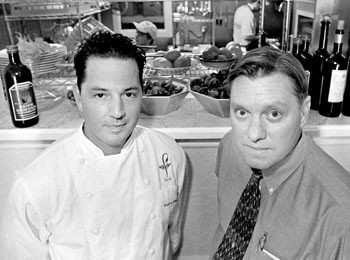
Lighten Up: Scott Howard (left) and Charles Low, proprietors of San Anselmo’s Fork, take their business very seriously.

Small Plates, Big Tastes

Fork’s jewel box of a menu offers gems (and a few clunkers)

By Sara Bir

The whole point behind going out to eat at a fine restaurant is to enjoy things that you would normally not find at home. Artfully planned surroundings and smoothly choreographed front-of-the-house pageantry are all an elaborate background for a comparatively tiny stage: the plate of food on the table in front of you. The sensual pleasure of tasting exotic, intense flavor combinations always peaks with the first few bites, and after that it’s just tasty food. The more you eat, the less of its nuances you register.

But it’s those nuances–the mystery and the recognition–that make a well-executed dish an elating experience, so it makes sense to maximize this sensation of initial discovery with many small, carefully composed courses. It’s that philosophy that’s driven the proliferation of tapas bars and tasting menus the past few years. San Anselmo’s Fork is hardly breaking ground with their “small plates” focus, but their appealingly well-rounded and thought-out menu excuses them from pandering to fancy food fads.

It’s a small space, intimate yet uncluttered and open, with minimal decorative touches–abstract photographs register deep green against lightly colored walls. On a humdrum Tuesday night, the dining room was impressively half-full.

Our waitress explained the Fork ordering strategy to us–not that ordering at Fork is challenging enough to require a strategy. Courses tend to be 25 percent to 50 percent smaller than those of other restaurants, so it takes three or four to add up to a full dinner. Chef Scott Howard’s prix fixe “Signature Menu” ($46), which changes daily and offers a vegetarian option, has six courses, not counting the amuse-bouche. There’s also an à la carte tasting menu, divided into “Raw-Smoked-Cured,” “Next,” “Seafood,” “Meats,” and “Sides.”

The 50-bottle wine list offers plenty of food-friendly varietals and blends, and is dominated by French and California wines. Wines by the glass are limited but well-chosen. The sprightly and acidic 2001 Spy Valley Sauvignon Blanc from New Zealand ($6.50) sidled up nicely to many of the “Raw-Smoked-Cured” items on the menu, and the 2000 Clos du Caillou Vieilles Vignes “Cuvée Unique” Côtes du Rhône ($9) paired well with the meatier dishes without overpowering them.

The preliminary courses were promising. Striking to look at, the seafood tartare trio ($8) arrived with small mounds of tartare in three ceramic spoons arranged in a triangle on a plate speckled with fennel seeds and peppercorns. The tuna-artichoke and salmon-shiitake tartares were curiously bland and indistinguishable, but the luscious scallop-hazelnut tartare was a standout, the tender scallops and the crunchy toasted hazelnuts creating playfully dueling textures and nuttiness mingling with the scallops’ umami.

The simple presentation of the seared foie gras with black mission figs and aged balsamic ($12) allowed the quality of its ingredients to shine unencumbered. A salad of butter lettuce, orange imperials, sliced almonds, and blue cheese ($7) was light and refreshing, though not anything that couldn’t be ordered from any caliber of restaurant with decent salads.

Sometimes Fork’s tines hit the mark and sometimes they missed, but those hits and misses usually end up sharing the same plate. The star anise-crusted tuna with red curry sauce ($14), for instance, had meaty little cross-sections of tuna whose flavors were totally bludgeoned by the clumsy and overpoweringly one-dimensional curry sauce, which resonated of the stuff from a generic Madras Curry Powder can.

Fork’s signature soup–carrot broth with chervil sabayon and truffle oil ($6.50)–also suffered the fate of over-curry. The sabayon was moderately foamy–more of an airy mayonnaise–and its delicate essence of chervil and pungent truffle aroma all but collapsed under the dominating weight of the curry. A light purée rather than a broth, the soup itself carried little pure carrot flavor but was still pleasing.

Likewise, the truffled egg salad with smoked trout and a chiffonade of baby spinach on a crostade ($3.75) had its own self-contained highs and lows. The pedestrian egg salad would have been delectable on a deli sandwich, but with its discernible lack of truffling, it too quickly faded into the background under the salty, dense, and divine smoked trout crowning it. If ever a tiny slab of smoked trout was worth $3.75, this was it.

As the courses progressed, the kitchen seemed more sure of itself, and the dishes were overall more harmonious. The duck confit with shiitakes, roasted peaches, and baby turnips ($14) was amazingly satisfying. The skin on the duck confit was crisp, the duck was meltingly savory, and the peaches–whose bite had been mellowed in roasting–perfectly complemented it. The goat cheese and potato flan ($3.75) was like an entire savory flan reduced to a single ramekin, dense with richness and redolent of goat cheese.

Sure, the amount of food per course may be smaller, but flavorwise they are not small at all. The meat and seafood dishes are more like scaled-down entrées than “small plates.” For the amount of food on the plate, it seems fairly reasonable to pay $13 for the lamb chop (singular, mind you) with spinach, pine nuts, and apricot and green peppercorn sauce, when at another restaurant a similar full-sized entrée with two lamb chops would go for around $26. We came out spending about as much as we would have for dinner at most other fine-dining restaurants.

Both of the desserts we tried were good in theory but didn’t follow through in reality. The brioche French toast with crème anglaise and bananas ($6.50) was generous enough to compose an actual breakfast, which is far too big for a dessert. The slices of underripe bananas would have been more flavorful had they been roasted or sautéed, while the French toast itself was similar to what you might whip up yourself casually on a Saturday morning, not the custardy delight a decadent French toast can be.

The cardamom crème brûlée ($6) flaunted a faultless texture, rich and smooth, but the pastry chef had been too heavy-handed with the cardamom, imparting an astringent, medicinal taste that spoiled the whole affair.

Fork’s service was uninterruptive and courteous, but not spot-on timely. Courses arrived and hovered in expectant server’s hands while others scurried in to clear finished plates, and waiters bearing clean forks did so just after the new courses were in front of us, rather than before. (I should note that this is a fairly common problem, and that after sitting helpless with no utensils in sight at more than one restaurant, Fork’s wait staff is comparatively doing a smash-up job of utensil management.)

Our salt and pepper were also gracefully whisked away before the dessert menus were presented, another elegant touch I have not seen in quite some time. Little things like that, even if you don’t consciously notice them, add up to a big impression.

It was that overall impression that made eating at Fork what it was, illuminating the kitchen’s strokes of perfection and muting the less-inspired ones. Fork’s culinary approach is perhaps too ambitious for its own good, which is a bit frustrating, because the potential for it to be a standout establishment is palpable.

With so many diminutive courses to flirt with, you can easily focus on the stronger components and wait until the next plate arrives. It’s almost like a flavor scavenger hunt in every course–which sounds fun, until you stop to think that, ideally, for an average of $8 per pint-sized plate, everything should be stupendous.

As it is now, Fork is a charming, if uneven, delight that’s worth a visit. Which may be too finicky a statement in the long run, because what is OK at Fork is pretty good, and what is good there is excellent. I am still thinking about that smoked trout. A diner there can expect many more miniature flavor explosions than they can overpriced clunkers.

Fork is open for dinner Tuesday-Saturday. 198 Sir Francis Drake Blvd., San Anselmo. 415.453.9898.

From the September 19-25, 2002 issue of the North Bay Bohemian.

© Metro Publishing Inc.
Sonoma County Book Fair

Poets and Writers

Lit comes to light at the Sonoma County Book Fair

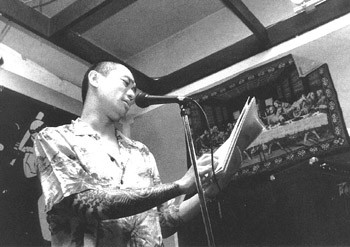
From 10am to 6pm on Sept. 21, the Sonoma County Book Fair brings a veritable treasure trove of literary lights to Santa Rosa. In addition to Justin Chin and Daniel Coshnear, readers include Susan Hagen and Mary Carouba, Dorothy Allison, Joelle Fraser, Robert Mailer Anderson, David Bromige, and Dana Gioia.

Strong Dose

From the first, Justin Chin defines himself as an outsider. From the quote that opens the first section of poems in his newest collection, 2001’s Harmless Medicine (Manic D Press; $13.95), Chin defines his role as subjective observer thrown from paradise: “And at the ninth hour, Jesus cried with a loud voice saying, ‘Eloi Eloi, lama sabachtani?‘ which is interpreted, ‘My God, my God, why hast thou forsaken me?'”

In lucid, often brutal language herded into the loose strictures of free verse, Chin continues to barrage the reader with impressions from his world–from our world. Illness, homophobia, and xenophobia are frequent visitors, from the first poem in the collection, which imagines “a battle in my body” where “Everyday, a small bit / of myself dies / in that chemical battle,” to the last, which details the plight of animals in a zoo, whose one false move could lead to tiger’s penis “served / in a bamboo steamer, bones brewed for aphrodisiac / strength elixir, brand-name medicine sold / under counters while World Wildlife Fund monitors / shop for chinky souvenirs.”

When asked if he considers himself an outsider, Chin delves into semantics, saying, “I guess the question would be ‘outsider’ to whom? How did the mainstream decide it was the mainstream and who were the outsiders?”

Chin speaks of his “affiliations and identities,” noting that “some [are] more contested than others, and the way I look at things, how I write, is filtered through them and more. Do I feel bound by them? Not at all. Having said all that, how others choose to read my work is another thing altogether.”

Choosing to read his work is the first step. His work is sprinkled liberally with a sly humor: “Neo Testament” imagines a world in which Jesus is a great break dancer but his twin brother Ted Christ outshines him in all matters of miracle making: “[Ted] taught his mother how to appear on sides of buildings, in tortillas, bearclaws and other breakfast pastries. He learned how to multiply fishes and loaves of bread . . . and he invented nouvelle cuisine.”

Prose poems like this one beg to be spoken aloud, and Chin is known for his slam credentials. He has toured with Beth Lisick and Thea Hillman, both high priestesses of the San Francisco slam scene. Chin, a priest in his own right, sings the clear gospel.

–Davina Baum

Literary Labor

It’s every undiscovered writer’s fantasy. You spy an ad for a literary contest in the back pages of Poets and Writers. You submit your manuscript. You score top honors, get your book published, and garner glowing reviews.

For most writers, it remains a daydream. But it all went down for Sonoma County author Dan Coshnear, whose short-story collection Jobs & Other Preoccupations ($12.95), won the Willa Cather Fiction Prize and was then published to favorable reviews by Helicon Nine Editions in 2001.

The funny thing is, though, a year after Coshnear’s book hit the shelves, his life looks pretty much the same. He still has his day job, or rather, his night job: Coshnear works the graveyard shift as a counselor in a mental-health group home in Guerneville.

Is he disappointed? Is he disillusioned? Is he jealous of Jackie Collins? He is not. “I was very happy when it was published, and I’m still very happy,” says 41-year-old Coshnear. “It’s a very nice thing to have a book and get attention for it.”

Jobs has only sold a few hundred copies to date, in part because of distribution problems. But readers who do discover the book seldom walk away unscathed from the compelling stories within. As the collection’s title implies, many of Coshnear’s tales offer thoughtful, vivid explorations of the tragicomic world of modern work.

The publication of Jobs has had at least one lasting effect: it has lent new urgency to Coshnear’s literary efforts. He’s hard at work on new stories, and he’s determined to complete another book.

And he’s returning to his favorite theme. “You’re paid by someone, but you’re in service to someone else,” Coshnear says. “That contradiction is interesting and dramatic to me.”

–Patrick Sullivan

Chin’s reading is at 4pm at the Old Vic, 751 Fourth St., Santa Rosa. Coshnear reads at 4:30pm at Copperfield’s Books, 650 Fourth St., Santa Rosa. For the complete schedule, see www.sonomacountybookfair.org or call 707.544.5913.

From the September 19-25, 2002 issue of the North Bay Bohemian.

© Metro Publishing Inc.

Petaluma Poetry Walk

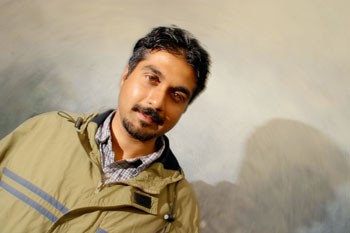
All Tomorrow’s Poets: Pranzal Tiwari, third-place winner in the Jaffe Memorial Poetry Contest, is encouraged by the honor.

Dead Letters

Can Sonoma County’s young poets rekindle a flickering art form?

By Patrick Sullivan

Remember how it was? For a while there, poetry was sizzling like an egg dropped on Georgia asphalt. Never mind the quiet classroom, the secluded garret, or the dusty bookshelf. Sick of being scorned or ignored, the maiden aunt of literature kicked off her sensible shoes, put on her red dress, and ran down to join the party. All of a sudden, poetry was cool, poetry made money, poetry could change your life.

And it wasn’t just middle-aged intellectuals like Bill Moyers fooling with words. Everybody from hip-hop kids and poetry slam scenesters to indie filmmakers and pop musicians got in on the act.

Cultural moods are a tricky thing to gauge, but that moment of poetic euphoria seems over now, gone the way of the Clinton economy. “A day! Help! Help! Another day!” Emily Dickinson once wrote, and in these darker days, poetry slams are disappearing faster than 401K plans, while poor Bill Moyers is more concerned with avoiding DUI charges than freeing verse from the bony clutches of the ivory tower.

But poetry’s revolutionary impulse lives on. After all, poets and their supporters are a famously tenacious lot, particularly on the local level. Case in point: the Dan Jaffe Memorial Poetry Contest, an ambitious attempt by friends of the recently deceased co-owner of Copperfield’s Books to entice the next wave of talented local poets into stepping forward and unveiling their work.

Hefty cash prizes were handed out to three winners in the contest, which was open to all Sonoma County poets under the age of 35. “The idea was not to give money to a great poet, but to encourage beginners to make poetry,” explains organizer Laura Reichek, a longtime friend of Jaffe, who died of heart problems in March.

The results of the contest are in and the winning poems have been up in the window of the Petaluma Copperfield’s store for several weeks now. But the real climax of the affair comes on Sept. 22, when the winning poets give the first public reading of their work during the Petaluma Poetry Walk, a seven-year-old event that offers a day’s worth of readings by dozens of poets at a host of downtown venues.

The contest’s age limit sprang in part from Jaffe’s deep interest in seeing beginners get involved in the arts and social issues. “He was very interested in young people,” Reichek explains. “He really thought that if there was any hope of creating a humane society, the focus had to be on the young.”

Younger poets need every drop of encouragement they can get, according to former Sonoma County Poet Laureate Don Emblen, who teamed up with local poet Terry Ehret and Petaluma Poetry Walk organizer Geri Digiorno to judge the contest. Poetry, Emblen says, is the last thing many young people are thinking about.

“For a kid looking at our society and watching TV, he sees dollar signs all over the place,” says the 83-year-old Emblen. “And poetry isn’t a money-making proposition. Why should they fool around with poetry or music or art or anything else that doesn’t make a lot of cash?”

The desire may be lacking, but the basic tools for making poetry are more common than ever. Robert Hass, the former U.S. poet laureate, has noted that there are more literate people in Kansas City today than there were in Shakespeare’s London. “There’s no reason every American city should not produce a writer of great interest to the rest of us,” Hass wrote in the introduction to The Best American Poetry 2001.

That makes the number of valid entries to the Jaffe contest seem disappointingly low: a mere 36 poems competed for $1,000 in prize money. But Emblen is heartened by the fact that the winners demonstrate a promising degree of talent.

The contest attracted work in a wide range of styles, skill levels, and subjects. There are plenty of good poems that didn’t win, and a few others that make a casual reader pity the judges. There is a three-page poem about racism. There is a four-line ode to curly fries. There is an excellent poem about a poet biking across town to buy a burrito with his last two dollars.

“The quality of the entries ranged from zero to 10, as is usually the case in contests,” Emblen says. “But all three of the winners had something interesting to say, and they all exhibited a real skill in handling the language and making what they had to say come forward without holding up a sign.”

First place winner Brent Hagen of Santa Rosa chose domestic discontent in fairy-tale land for the subject of “A Few Things.” Humor is the guiding principle here: “Snow White sighed at the stack / of stew-stained dishes. / ‘The little bastards,’ she muttered.”

“Industrial laundry/dahlia”–which won third place in the contest–was composed by 22-year-old Petaluma writer Pranzal Tiwari while he was in the midst of working with United Students Against Sweatshops to support workers striking against a laundry in Philadelphia.

“The only person I’ve really told about winning the contest is my girlfriend, because I’m really shy about this stuff,” Tiwari explains. “But I’m definitely motivated to write more poetry now that I see that people will actually read it.”

Santa Rosa poet Cynthia McCabe, who scored second place with “Coming Home,” says the experience has been a big ego boast. “It gave me a little more hope,” she says. “I write poetry for myself, and I hadn’t really thought that anyone would appreciate it other than myself and my select audience.”

The 31-year-old McCabe regularly attended the monthly poetry slam at the Luther Burbank Center. That event is now defunct, and McCabe says she has noticed what she calls “a bit of a recession” in poetry circles. That downturn, she says, is only natural in a society that habitually relegates poetry to the margins.

As a child, McCabe often fell asleep to the clacking sounds of her mother writing poetry on the typewriter. She regrets that not everyone gets that kind of early exposure to the art form. “I think that maybe poetry is somewhat daunting to people,” McCabe says. “It’s not taught as something that’s fun in school. People don’t read pulp poetry the same way they read pulp fiction. It’s not usually up at the supermarket counter along with the thrillers.”

What does the contest reveal about young Sonoma County poets? Among other things, Emblen says it confirms something that he’s seen before when working with younger poets–and noticed in looking back over his own work from younger days.

“I’d say younger poets tend to rely more on their enthusiasm and emotions than do the older ones,” Emblen says. “The older ones rely more on their skill with language. . . . It’s like the difference between Walt Whitman with all of his wild enthusiasm and someone like Emily Dickinson.”

This contest is far from the only chance Emblen has to work with younger poets. He has become famous in local literary circles for running the Clamshell Press, which prints attractive broadsides featuring work by talented poets of all ages, including many young poets who have never before been in print.

But those broadsides are no substitute for a significant poetry journal, and Emblen argues that’s what Sonoma County needs if it really wants to encourage young poets. “I think the biggest obstacle they face is lack of recognition,” Emblen says. “Young poets find it hard to be recognized in any way. Yet some of the best ones I know just go on writing anyhow.”

History underscores that point. Whitman was first published at the age of 36. Robert Frost had to wait until he was nearly 40. And Sylvia Plath bitterly lamented the long delay in finding any outlet for her work.

Ultimately, that may be the most important lesson for young poets laboring in a society that only sporadically gives a damn about their work. Don Emblen puts it this way: “They look around and they don’t see a lot of people very excited about poetry,” he says. “And neither do I.

“But I could care less,” he continues. “I go on doing it anyway. That’s what they have to do–keep doing it anyway.”

The seventh annual Petaluma Poetry Walk takes place on Sunday, Sept. 22, at various venues in downtown Petaluma, including Copperfield’s Books and the Apple Box. The winners of the Dan Jaffe Memorial Poetry Contest will read at 4pm at Copperfield’s Book, 140 Kentucky St., Petaluma. For details, call 707.763.4271.

From the September 19-25, 2002 issue of the North Bay Bohemian.

© Metro Publishing Inc.

The Carter Family

The Legend Unbroken

Carter Family bio assures that influential trio is gone but not forgotten

By Sara Bir

The Carter Family influenced country music to the extent that Maybelle Carter is acknowledged as “the Queen Mother of Country Music,” and Bob Dylan, upon meeting Johnny Cash for the first time, immediately asked him, “Did you ever meet A. P. Carter?” Their music may have been honest and simple, but, as Mark Zwonitzer and Charles Hirshberg tell us in Will You Miss Me When I’m Gone? The Carter Family & Their Legacy in American Music (Simon & Schuster; $25), the Carters’ lives were far from uncomplicated.

Sara Dougherty was just 16 when she married Alvin P. Carter, an agitated, enterprising man from southern Virginia. A. P. had gained a wife, but also a project; he saw great potential in Sara’s rich, powerful voice. Eck Carter, A. P.’s brother, later married Sara’s cousin Maybelle, whose virtuosity at playing the guitar was such that she developed her own style, the “Carter scratch,” which allowed her to play lead notes and accompaniment at the same time.

Always a man with a plan, A. P. formed the three into a group: Maybelle on guitar, Sara playing autoharp and singing lead, and A. P. pitching in bass vocals now and then. More than anything else, though, A. P. was the Carter Family’s visionary, booking shows and going on long trips through the Southeast to dig up gospel standards and long-forgotten Victorian parlor songs to add to the Carter’s repertoire.

In the late 1920s, when “hillbilly music” was taking off with the public, the Carters recorded some songs in Bristol, Va., for roots-music impresario Ralph Peer. By the early ’30s, they were the most successful country music group in America.

The Depression led to dwindling sales for the Carters, but their fortunes changed once they got a contract to perform “The Good Neighbor Get-Together” twice daily on the Mexican border radio station XERA, just south of Del Rio, Texas. XERA’s broadcasting range was so mighty that it blanketed America, and the Carter’s immensely popular show drew in thousands of listeners, many of whom grew up to be country music greats: Tom T. Hall, Waylon Jennings, and Chet Atkins.

Maybelle’s daughters, Helen, June, and Anita, began appearing on the show every now and then, and when Sara left the group, Maybelle and her brood started a new and equally fruitful Carter Family. The tireless Maybelle continued performing until her arthritis made it impossible to do so.

Rather than spouting lofty ramblings that testify to how influential the Carters were, Zwonitzer and Hirshberg simply let their story tell itself. Culled from hundreds of interviews with neighbors, descendants, and colleagues, the result is an intimate account that’s both immensely evocative and completely engrossing.

While there are some dishy details to cover, all is recounted with dignity and nonchalance, just as the Carters themselves dealt with the tribulations in their lives. (Still, it’s fun to discover crazy tales, like the time Hank Williams almost shot June Carter.)

The one drawback to Will You Miss Me When I’m Gone? is its lack of auxiliary information. With multiple generations in tiny towns in southern Virginia and beyond, it gets difficult to keep ancestors straight without a family tree. Likewise, a discography, even if it only listed key recordings, might help guide those new to the Carter Family’s catalogue.

The renewed interest in roots music spawned by the popularity of the O Brother, Where Art Thou? soundtrack has brought on a second coming of hunger for “old-timey” bands, and the first half of Will You Miss Me When I’m Gone? will doubtlessly draw in readers for this reason. But the Carter’s legacy stretches on into the highly commercial glory days of Nashville in the ’50s and the folk revival of the ’60s–which just goes to show how timeless their appeal is.

Even though they made such an indelible imprint on the shape of country music, the Carter Family’s songs transcend genres in the most enduring and groundbreaking way, taking folk, gospel, and blues to help create something totally new.

From the September 19-25, 2002 issue of the North Bay Bohemian.

© Metro Publishing Inc.

Sonya Hunter

Ring the Bells, Blow the Whistles: Sonya Hunter comes home to Sonoma County Sonya in Mind Folk-pop artist Sonya Hunter's songs run deep By Heather Seggel Sun in Mind, Sonya Hunter's sixth and latest album, came awfully close to tasting like a cup of Earl Grey tea. "I was...

Laguna Vista

Open space vs. affordable housing: Will the proposed Laguna Vista site stay empty for long? Poles Apart Sebastopol progressives square off over environment, affordable housing By Tara Treasurefield "If I had it to do over again, I'd vote against the Laguna Vista project," says Linda Kelley, Sebastopol planning...

Petaluma Film Series

Film Forum The Petaluma Film Series brings film to movie-starved Petalumans By Davina Baum The Petaluma Coffee Cafe's seats fill up fast. Patrons arm themselves with their chai or nonfat decaf latte or mocha, and scan the room for an open seat. On this Friday night, the opening night of the...

North Bay Bohemian’s Indy Awards

The Indies The North Bay Bohemian's fifth annual arts awards Art is life, isn't that what they say? Someone says it. Such a generalization becomes even wider when applied to "the arts," then. Encompassing vague terms like culture and entertainment, the arts cut a vast swath across our lives. Where would we be...

Meat Substitutes

Beat the Meat: The shelves of Whole Foods in Sebastopol are bulging with faux meat products. The Soy Parade Among a new supermarket crop of meat replacements, the test is in the taste By Sara Bir You could be catty and say that a vegetarian eating meat substitute...

‘A Home on the Range’

Shalom on the Range 'A Home on the Range' explores Petaluma's Jewish chicken-ranching community By Sara Bir In a word association game, the most common response after "Jewish" and "chicken" would probably be "matzo ball soup," not "Petaluma." But, as Bonnie Burt and Judith Montell's documentary A Home on the Range:...

Fork

Lighten Up: Scott Howard (left) and Charles Low, proprietors of San Anselmo's Fork, take their business very seriously. Small Plates, Big Tastes Fork's jewel box of a menu offers gems (and a few clunkers) By Sara Bir The whole point behind going out to eat at a fine...

Sonoma County Book Fair

Poets and Writers Lit comes to light at the Sonoma County Book Fair From 10am to 6pm on Sept. 21, the Sonoma County Book Fair brings a veritable treasure trove of literary lights to Santa Rosa. In addition to Justin Chin and Daniel Coshnear, readers include Susan Hagen and Mary Carouba, Dorothy Allison,...

Petaluma Poetry Walk

All Tomorrow's Poets: Pranzal Tiwari, third-place winner in the Jaffe Memorial Poetry Contest, is encouraged by the honor. Dead Letters Can Sonoma County's young poets rekindle a flickering art form? By Patrick Sullivan Remember how it was? For a while there, poetry was...

The Carter Family

The Legend Unbroken Carter Family bio assures that influential trio is gone but not forgotten By Sara Bir The Carter Family influenced country music to the extent that Maybelle Carter is acknowledged as "the Queen Mother of Country Music," and Bob Dylan, upon meeting Johnny Cash for the first time, immediately...
11,084FansLike
4,606FollowersFollow
6,928FollowersFollow