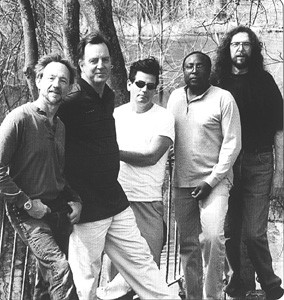
Judo

0

Gently Kicking Ass

The gentlemanly sport gets a new recruit

By M. V. Wood

In Japanese, the word “judo” means “gentle way.” Brute force is shunned. Instead, it’s a sport where strength merges with grace, a gentleman’s game emphasizing character and honor. So it didn’t help the reputation of Graton’s Lance Lameyse one tiny bit when he broke all official rules and social mores by attempting to pummel his opponent’s face during the 2000 Senior Nationals.

The outburst seemed to cement Lameyse’s standing as a ruffian who would never amount to much. It comes as some surprise, then, that he’s not only returning to compete in the 2002 Senior Nationals, April 12 and 13 in Cleveland, but he’s playing with the blessings of the sport’s upper echelons. As the newest judo recruit at the Olympic Training Center, the former black sheep is stepping onto the mat as an insider.

“I thought the 2000 Nationals was going to be the end of my judo career. But it turned out to be my lucky break,” Lameyse says.

The 26-year-old athlete started taking lessons at age five, in his hometown of Graton. Back in those days, Graton was still considered a seedy area full of outlaws and hillbillies, and surrounding communities referred to the young, local males as “the Graton Boys.” It wasn’t the type of place you’d expect to find judo classes. But one day an assistant chief at the local volunteer firehouse parked the fire engines outside, placed a bunch of mats on the station floor, and announced that class was in session.

“What can I say–we were a bunch of outback hillbillies doing judo,” Lameyse recalls. “But we had a blast.”

After three years at the firehouse, Lameyse started training in Berkeley with judo champion David Matsumoto. He became a skilled athlete in his 10 years there, but eventually quit taking lessons. “I was young, and I thought I could do it all on my own,” he says. “I figured I was good, and I just had to show up at the tournaments and do my best.”

Although Lameyse was talented enough to place nationally, he didn’t have enough knowledge of the game’s strategy to win gold or silver. And slowly his dreams of playing in the Olympics started to fade.

“I wasn’t going far with the judo,” he said. “I’d get third place here and there, but I couldn’t break into the top level. Plus, I was a total outsider. I didn’t even have a coach; I was totally out of the loop. I had always dreamed of going to the Olympics, but I couldn’t even get an invitation to train at the [Olympic Training Center]. And while I was putting all my energy into this dream that I couldn’t grab hold of, I was letting all the other parts of my life slide. I wasn’t working on a career. I wasn’t starting a family. Nothing.”

Those childhood taunts of how Graton Boys never amount to anything were ringing in his ears long before he stepped onto that mat during the 2000 Nationals.

As usual, the match started off with the two opponents trying to get a good grip on each other’s collars. A firm, well-placed grip is all-important to a favorable outcome, and the top players are very aggressive about getting just the right hold. It’s against the rules to punch. But if in the process of trying to get a good grip, your opponent’s face happens to get in the way of your fist, well, that’s just part of the game.

Still, it’s a gray area of the sport. The referee has to not only judge a player’s actions, but he must also try and interpret the player’s intent. And for someone from the wrong side of the tracks–a Graton Boy accustomed to having his actions misinterpreted–it’s a great luxury to have the confidence to step into such a gray area. So Lameyse avoided it.

But then there was his opponent, a student at the Olympic Center. And at his side of the mat, yelling out instructions and encouragement, was Edward Liddie, one of the country’s most respected judo coaches. To Lameyse, it seemed his opponent didn’t hesitate a split second in trying to get a good grip, even though that meant hitting Lameyse in the face repeatedly. There was no hint of fear in his eyes that maybe, just maybe, the referee might think he was cheating and trying to sneak in a punch.

Perhaps it was this very aplomb with which his opponent stepped into the gray zone that taunted Lameyse the most. In his eyes, this adversary was a privileged son who had the confidence to fight full-force in the knowledge that his actions would always be viewed with the benefit of a doubt. At that moment, Lameyse felt he would never have that privilege, nor that fighting edge. And it was probably at this very moment that Lameyse attempted to punch his opponent in the face.

None of the punches even connected. So, although Lameyse was disqualified from the match, he was allowed to continue competing in the tournament.

Though he placed third, Lameyse says, “I wasn’t very proud of my performance that night. The only reason I got the bronze was because I happened to catch the other guy off guard. I trudged through that entire tournament. I showed no finesse, I didn’t feel in control. I just sweated it out. After that competition, I felt beaten.” Lameyse was ready to give up on his dreams. That’s when he received a call from Sandro Mascarenhas.

A judo player in San Francisco, Mascarenhas always considered Lameyse to be a good guy at heart–just a little misunderstood. And when he heard the stinging rumors following the 2000 Nationals, he wanted to help. So he talked things over with nationally renowned coach Mitchell Palacio, who heads the largest judo club in the country and was ranked one of the country’s top three judo athletes for 20 consecutive years. The two offered to take Lameyse under their wing and give him individualized training and guidance.

“[Lameyse] was making a lot of mistakes because he didn’t have any guidance for this elite level,” explains Palacio. “At this stage, everyone has the basic skills, so what it comes down to is strategy and a game plan. And that’s what he lacked. But Lance has raw talent. And that raw talent alone would put him in the top three, without any strategy.”

Lameyse’s game improved so dramatically that he soon won silver at an international tournament and was recruited by the Olympic Center. He’s been there since January.

Lameyse says that Palacio and Mascarenhas taught him more than new skills and strategy. “They showed me how my attitude was getting in the way of my game, and my life. Let’s just say they made it clear that people didn’t have a problem with where I was from. They had a problem with how I was acting.

“Before all this happened, I didn’t really believe in altruism. But Sandro and Mitchell went out of their way to help me. Ever since I was little, I heard that judo is more than a sport; it’s a way of life . . . it’s a gentleman’s game. I guess those guys like to teach by example.”

From the April 4-10, 2002 issue of the North Bay Bohemian.

© Metro Publishing Inc.

Ellen DeGeneres

0

Kind and DeGeneres

Ellen takes the show on the road

By Davina Baum

Some people think that cow tipping is pretty damn funny. Others might get all giggled up from a bumper sticker that says “I Break for Lunch” or a poster of a kitten hanging from a branch with a “Hang In There” tag line. Jokes about priests and rabbis usually go over pretty well at the water cooler, whereas dumb-blonde jokes seem to have lost the sheen they once had.

We like to laugh. We even make up little words for laughing, such as “ha” and “tee-hee.” Comedy is a marvelous thing. Remember the first time you saw a Monty Python movie? Remember bonding with someone over episodes of Laverne and Shirley. Remember Gallagher? I’m not sure he was so funny, but he certainly wasted a lot of watermelons. Watermelons are funny. Tee-hee.

It’s hard to write an introduction to an interview with Ellen DeGeneres, because–sadly, despairingly–I am not as funny as she is. From her early standup routines to the breakout hit Ellen to the more recent (and less of a hit) The Ellen Show, she has carved out a niche in the funny world.

Isn’t it hard to be funny all the time? This might have been a question to ask Ellen (yeah, I call her Ellen), but I didn’t ask it. I also didn’t ask about Anne Heche, Ellen’s ex-girlfriend who now has a husband and a baby and a memoir. I was gently steered away from such questions. You will also not find much mention of Rosie O’Donnell and the shocking declaration that she is gay. Yeah, she’s gay. Is it really news?

Here’s news: Ellen DeGeneres does not want to be an astronaut. Also, she might be losing her mind. You heard it here first.

I’ve been struggling with whether I should show due respect and call you Ms. DeGeneres, or whether I could go with my gut and call you Ellen.

Ellen, just Ellen.

In the same vein, can you comment on the familiarity that comes with the cult of celebrity?

Actually, I’m kind of more surprised, I guess, when people call me Ms. DeGeneres. I kind of understand a little bit, but I rarely call anybody by their last name.

I think that what I do for a living is to try to represent everybody and say that we’re all basically the same. I mean, we all have our differences, but there’s a core to all of us. So it’s fine that everybody calls me Ellen and feels that they know me. I think they do know me; when I’m onstage doing whatever I do, I’m pretty much myself. I mean, they certainly don’t know all aspects of me; there’s a lot more that they don’t see. But I think that pretty much I am who I appear to be, so people do feel like they know me.

What about other celebrities? I mean someone like Sean Penn, for example, who obviously wants to hide a lot.

First of all, he’s not a comedian. I think that when you’re a comedian it’s different, because–and especially if you do observational things about life–it’s really important to your material, to you as an artist, to stay as grounded and as in touch with reality as you can. One of the reasons I’m coming back on the road is that I had gone too long without being on the road before my last tour two years ago, and I find that you can really isolate yourself when you’re in this business; it certainly takes you to another level and what your experiences are–do you go to the grocery store, do you fill your own gas tank. … I mean, most people have assistants who do everything for them.

I think it’s important, especially as a comedian, to get your material from life experiences. When you get to be famous, when you have a lot of money, you’re more and more in a bubble. So Sean Penn–I know him somewhat and he’s a really nice guy, but he’s a very private person and also he’s not a comedian–all of his roles are really different; he’s more of a blank slate. I’ve learned my lessons the hard way, that sometimes that’s really the best thing. The audience wants to perceive you the way they want, they want to make you their fantasy, and as soon as you start labeling yourself and identifying yourself as gay or Democrat or vegetarian or whatever, you start narrowing down people because they have opinions of you. I understand the privacy issue completely. It’s a little too late for me.

Can you me what’s going on with The Ellen Show?

I’m willing to wager it’s not going to come back, and so if that happens I have a second position, something that I’m going to do if the show doesn’t come back, but I can’t talk about it yet. I’m starting the tour in Santa Rosa, so I won’t have the information then, but somewhere in the middle of the tour I will [be able to] reveal it.

And why do you think the show, if it isn’t continuing–what it is about it that hasn’t allowed it to be successful?

Well, I don’t think Friday night was a good night for me. My show is a little edgier and a little hipper. Most shows on CBS are family shows, and although my show, in my opinion, is a family show–it’s about going home again and living with your mom and sister–it’s not the same kind of thing as the shows that are on now. So I think that would probably be the reason for it.

It’s hard, it’s so hard to get a good cast together, a good idea. I thought we had that: Cloris [Leachman] was great, everybody on the show was great. When you have a first-year show, you definitely have a lot of work to do. You find out what works, what doesn’t. Look at any show. The first year is always rough. So there are definitely things I would change, and if we come back I’ll change those things and I’ll make it funnier and better and just keep working harder. But if it doesn’t, I gotta keep moving.

As far as your tour goes, how do you develop your material?

Originally, I just wanted to get back on the road, and I just thought, ‘Why am I worried about doing new material?’ There are a lot of comedians who go out and just kind of do a combination of a lot of old stuff. There’s some of that stuff that I really love doing and I miss doing. So that was my initial idea, just going on the road and doing a combination of the last [HBO] special, which was The Beginning, and then older material that people still come up to me and say, you know, that airline stuff or that hunting stuff, or whatever it was. I’m also trying to write some new stuff and blend it in.

I’m my worst critic. I tear things apart before they even get down on paper. So I’m a really slow writer, and the process for me is torture. It’s not like when you’re writing music: You get together with a band and you jam and play back and forth and come up with what the song is. With me, to be by myself and just all of a sudden go, ‘What’s the deal with shoes?’–you know, it just doesn’t come out like that; I have to be around people and expand as I start talking about the subject. I have that horrible procrastination thing that I’m sure you can identify with–any writer can–and I’ve learned to just accept it; it’s baking in there somewhere.

And that’s sort of what the beginning of this tour [will be like]. I don’t know if they’re lucky people or unlucky. The beginning of the tour is basically going to be me on stage with a notebook trying to remember my stuff. Because even my stuff from The Beginning, the last HBO special–I haven’t done it since I did it, and that was all brand new stuff. I wrote that and did it in 35 cities, and then filmed it in New York for HBO and that was it–I just walked away from it. I only did it 35 times.

I’m getting onstage here at the Knitting Factory [in Los Angeles], which is a really tiny club that I’ve actually never even been to, to just get onstage and really try to rough it out. And then I’m coming to Santa Rosa. And the lucky folks in that audience will see the birthing process. Most comedians get onstage at the Improv or the Comedy Club and just do a few minutes to try stuff out. I don’t do that. I trust my gut enough to know that it’s good enough to be in front of 3,000 people.

What do you think is funny? What makes you laugh?

Right now, Liza Minnelli and her new husband. They make me laugh. It’s not so much make me laugh–I am just in awe. I cannot get over that whole situation, and I would love to be a fly on the wall and just see what the hell is going on there.

Were you at the wedding?

No, I don’t know her. I mean, I’ve said hello to her, but I don’t know her. And I imagine if I had been in New York and run in to her just recently, I would have been invited because they were just trying to get every celebrity they could there. And I keep forgetting to ask Rosie [O’Donnell]. I keep talking to Rosie, and I keep forgetting to ask her because she went.

But what makes me laugh is the stuff that I do–obviously I wouldn’t do it if I didn’t think it was funny. I like observational things, human behavior; it just doesn’t get any funnier than that. And the hard part of it is to see the humor, because sometimes human behavior is just plain cruel. There’s a part of me that is just so extremely sensitive to all of life, whether it’s people chopping trees down or the stuff you see on the news, the violence, and what obviously is happening to our world since Sept. 11. There’s a part of me that’s so sensitive that I am kind of paralyzed with finding humor in any of it; it’s just not funny. Then I go to the absurd things like, ‘What if I’m out of cheese, and they’re out of cheese.’

Like today, I got out of my car–I left the keys in it because I was in one of those parking garages you have to leave the keys in–and I got out of the car and I hadn’t put it in park and it started rolling, and the guy was screaming, running, it was going right into his Harley-Davidson. So the two of us are trying to stop my car. And I don’t know what is funny about it yet. . . . Maybe it’s that I was on my way to the gym, and so my heart was racing so fast I felt like I really didn’t need to do anything, my cardio was just fine.

And that may be something I talk about onstage in Santa Rosa. That was bad. I am losing my mind. I just notice that I’m doing more things like that, and I think at what point do I start worrying about myself; when is it not comedy material but [time to] see a doctor.

Where do you draw the line, or do you draw the line, between activism and comedy? Do you consider yourself an activist?

No, not at all. No. My mother’s more of an activist than I am. I think in the beginning, when I first came out, I thought I was going to save the world, I’m going to do whatever I can because I’m aware of these horrible atrocities. And I tried. It’s interesting, because I got criticized from a lot of extreme gay groups–who do I think I am, I’m not doing anything–and it was just outrageous. I just was trying to do what I could.

And I got attacked by a lot of heterosexual people for changing so drastically, and suddenly I wasn’t funny anymore–everything was gay this and gay that. It’s a really hard line to walk. I certainly never turn my back on anything that I can help with and I definitely do my part and show up at events and charities, but I certainly know that there’s a price to pay if you really trying to entertain people–which is really my priority, it’s what I got into this business for.

I really love to make people laugh. To me, that feels like a contribution. I think it’s so important and it’s one of the reasons I wanted to get back on the road, because not only does it get me back to who I am but also it’s healing. I think we need to laugh, and I love that I can do that. And on the other hand, I feel like there’s a very unfair, unbalanced world out there, and it’s not just against gays: It’s against people of color, it’s against all kinds of people who aren’t considered the “norm.” It’s a really hard thing to try to balance both.

I think what everyone wondered the last time–I hadn’t done standup since I came out–is, was I going to be political. It didn’t change me in that way, it didn’t change my sense of humor, it didn’t change me onstage and as a performer. It changed me as a person to come out, but it certainly didn’t change what I find funny and who I am. And I think that’s what people had a hard time with–to think suddenly I’m a different person. I really wasn’t but people saw me getting involved. And shortly after that Matthew Shepard was killed, and there was a lot of stuff I was speaking out against. It gets you in trouble.

So I think there are a lot of people who do far more political work and they’re great at it. And I think that what my gift is, what I’m supposed to do, is entertain people and be funny, and at the same time stand up and be proud that I happen to also be a gay person, and I’m going to represent that as a funny person.

Who are your role models?

Oprah. I think that Oprah is god. I don’t know, I think that there are others that I’ll think about later. Like at three in the morning, I’ll wake up and think, ‘Why didn’t I say that?’

Just give me another call, any time.

At 3am?

Yeah, well, hopefully I won’t be at work then. How do you see your career progressing? Where do you want to go from here?

Well, I know where I want to go, but I can’t talk about it yet.

Like be an astronaut? Is that what it is?

That’s right, I want to go to space! Yeah, I don’t think I want to be an astronaut. But I do know what I want to do, and unfortunately I can’t reveal it yet. But it seems like when you hear it you’ll say, that’s the obvious progression, that’s obviously what she’ll do.

Ellen DeGeneres performs at the Luther Burbank Center for the Arts on April 22, 23, and 24. Tickets are available at the LBC box office, 50 Mark West Springs Road in Santa Rosa. You can also call 707.546.3600 or get them online at www.lbc.net or www.tickets.com. Tickets are $35-$65.

From the April 4-10, 2002 issue of the North Bay Bohemian.

© Metro Publishing Inc.

San Francisco Gay Men’s Chorus

0

Regal Rock

San Francisco Gay Men’s Chorus queens pay homage to Queen

By Sara Bir

Tomatoes and basil, Sauternes and foie gras, Fred Astaire and Ginger Rogers . . . and now, finally, the San Francisco Gay Men’s Chorus and Queen. Yes, that Queen, the anthematic, operatic ’70s rock monsters whose impact extends far beyond joyrides in Wayne’s World and triumphant football teams singing “We Are the Champions.” With the April 7 Tribute to Queen and Freddie Mercury preview concert at the Jackson Theater in Santa Rosa, the music of Queen will come alive through . . . queens.

“There aren’t that many bands you can sustain for a whole concert. Queen lends itself to that,” says Dr. Kathleen McGuire, artistic director of the Gay Men’s Chorus, who also arranged and conducts the tribute.

Queen combined arena rock and glam to its ultimate ends, thanks in no small part to its flamboyant frontman, Freddie Mercury, who said he wanted them to be “the Cecil B. DeMille of rock.” Mercury died in 1991, the first major rock-star casualty of AIDS.

“Someone said we should do a Village People show, but you need the Village People to do that. Queen translates well to a men’s chorus,” says McGuire. The most obvious example is “Bohemian Rhapsody,” which Mercury did 180 vocal overdubs for in the studio. With the 200-strong San Francisco Gay Men’s Chorus’ performance, this effect will be produced in concert for the first time ever.

McGuire, who is now in her second season with the chorus, initially tossed around the Queen tribute idea when she became artistic director. “What we are trying to do is reproduce what Freddie Mercury wanted to do,” she says. “I didn’t realize just how effective it was until we sang it the first time. It’s not easy–it’s not something you can whip up. You need to have an exceptionally talented group of voices, and we do.”

In keeping with the spirit of the music, the chorus is bringing along a pianist and a drummer for Sunday’s preview performance, plus some multimedia surprises, such as outlandish Mercuryesque costumes and a performance of the Flash Gordon theme song featuring special effects. Eventually, the “Flash’s Theme” segment will include a short B-grade movie that one of the chorus members is producing. And McGuire promises audience participation, adding, “I know a lot of people sing along to Queen on the radio.”

The Queen tribute is the most rock-oriented show for the chorus yet. “We did ABBA a few years ago,” says McGuire, “though that is more pop.” And while Queen’s music is more classically rooted than, say, Van Halen’s, there were still challenges in adapting it to a choral format. “Freddie Mercury sang a lot of high falsetto, and I had to add a fifth line for countertenor, which we don’t usually do. And so much is built around Freddie, who had a tremendous voice.” McGuire says.

Even though Freddie Mercury became a gay icon, some members of the chorus were not familiar with Queen. “They all love it now,” says McGuire. “Some went out and bought all the Queen CDs.” McGuire first became aware of Queen when she was 10 and turned on the TV to be greeted by the video for “Bohemian Rhapsody.” “My jaw hit the floor. I said, ‘What is this?’ Opera is one of my great passions, and I think Queen had a lot to do with that.

“Queen stands the test of time. When bands were sticking to a three-minute formula, ‘Bohemian Rhapsody’ was five and a half minutes long, and they made a video to sell the song. No top-10 bands did that in 1975. Freddie was a real innovator–his influences were vast.”

The legacy of Freddie Mercury for the gay community makes the tribute a poignant one for the chorus. “The evolution that Queen went through is what some of the members of the chorus have gone through,” McGuire says. Mercury suffered through several painful years with AIDS, though he bravely continued to dedicate himself to his music–which the San Francisco Gay Men’s Chorus, who have lost over 200 members to AIDS in their 24-season history, can relate to all too well. It’s no small coincidence that April 7, the day of the preview concert, is World Health Day. Funds raised will benefit Face to Face/Sonoma County Aids Network.

The Gay Men’s Chorus plans to record a CD of the tribute, tentatively due in June, depending on when they get sponsorship. Following the preview concert, there will be two performances in San Francisco, both with full rock bands and expanded visual extras. Despite the flashiness, McGuire reassures that it’s not just a big glam show. “The music itself is what makes this.”

The San Francisco Gay Men’s Chorus performs at Sonoma Country Day School’s Jackson Theater, April 7, 5pm. $20. 707.544.1581.

From the April 4-10, 2002 issue of the North Bay Bohemian.

© Metro Publishing Inc.
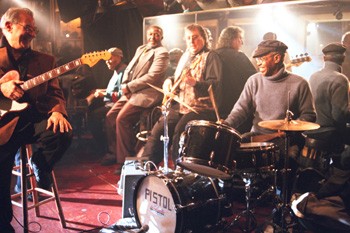
‘The Rookie’

0

A big-league ‘life coach’ looks at dreams, disappointments, and ‘The Rookie’

Sally Walton is a big fan of dreams.

Not the kind of dreams we all have at night, tucked away in our beds while our eyes do that weird, rapid-movement thing beneath our deeply-sleeping lids. Walton–an internationally popular lecturer and author, also a sought-after “Life Coach”–is an aficionado of those other dreams, the kind that occur while we’re awake, the ones we hold in our guts and carry in our hearts and think about all the time–but frequently lose hold of when our lives take turns in other directions.

Such stuff is at the heart of the inspirational new Disney film The Rookie, and that pretty much sums up why Walton loved it. The film stars Dennis Quaid as Jim Morris, a real-life, 35-year-old science teacher who gave up his dream of pitching Major League baseball after hurting his arm in the minors. After impulsively making a deal with the high school baseball team he coached–he agreed to try out for a major ball club if they won the Championship–Morris’ dreams were improbably resurrected, and he ended up pitching for the Tampa Bay Devil Rays, becoming the oldest Major League rookie in over 30 years.

“I don’t usually go to baseball movies,” admits Walton over dinner, shortly after catching an afternoon matinee of The Rookie. “But I am glad I saw it. It’s a remarkably moving film.” Walton (www.dancinggypsycoach.com) lives in Petaluma, has been known to race sled dogs across Minnesota in her spare time, and is the author of several books including I Almost Slept Through My Dream Come True: Strategies of Staying Awake (Book Partners, 1997) and the brand-new Steps on the Way. As a professional life coach–think of a personal trainer who helps buff up your soul–Walton counsels clients who, like Morris, need the shock of a well-aimed cattle prod in order to get out and reclaim some of those faltering hopes and dreams.

“Dreams come true little bit by little bit,” says Walton. “Sometimes it happens by accident. Jim Morris had given up on his dream until– by accident–these kids woke him up, and he found himself pursuing those dreams again.” While plenty of us abandon some dream or other, Walton observes that what makes Jim Morris unique is what he did after his big league dreams were all snuffed out.

Says Walton, “He didn’t just give up and say, ‘Okay. I’m done. Now I’m going to have kids, and teach science, and coach the school baseball team. Yes, he did all those things, but he also went out there, however many nights a week, and he pitched balls at that chain-link fence. He kept at it, even when on the surface–to anyone you might have asked, including him–it wasn’t going to go anywhere. It wasn’t like he was going to get something out of it. He wasn’t practicing to get into the majors, or even to get back into the minors. He was pitching because he loved to pitch.”

And because of that, when his opportunity did come along, he was ready for it.

“That’s how dreams happen,” she says, her face evolving into a radiant beam. “Suddenly, one day, your team says, ‘Hey, if we win, will you try out?’ and you’re already there, because you’ve been pitching against a fence every night for no reason. You’ve been working toward it all your life. Now the environment that you’ve created is setting you up to succeed.”

“So many people say, ‘Oh, it’s too late for me,'” Walton says. “And, yes, maybe some things are too late–and then the question is, ‘So what’s your next dream?’–but sometimes people just make excuses for themselves when they say that it’s too late. This movie–based on a true story–should give hope to anyone who thinks it’s too late for their dreams.

“I hope when people walk out of this movie they say, ‘That guy did it. So maybe it’s not too late for me.”

Web extra to the April 4-10, 2002 issue of the North Bay Bohemian.

© Metro Publishing Inc.
Joey Ramone

0

Ahead of the Pack

Joey Ramone keeps the rock alive

By Sara Bir

The casual Ramone fan tends to view the band as one Ramones-y mass, a monster with four identical sulking heads. Even though they shared the same assumed last name, the same torn-up blue jeans, the same black leather jackets, and haircuts that were not the same but equally awful, the Ramones, like the Beatles, had distinct and individual personalities grouped together under a collective mission and aesthetic. Joey was infamously left-wing; guitarist Johnny was infamously right-wing; bassist Dee Dee was infamously insane. What they shared was a dynamic scrappiness, the stuff of true punk.

It is Joey’s extraterrestrial praying-mantis physique and nasal Queens accent that most people latch on to and identify with the hoodlum image. Lyrically and musically, though, Joey was always the most sentimental Ramone. He adored boppy pop music and three-minute teenage love symphonies as much as the gritty rock and roll and metal that worked its way onto Ramones albums. Joey-penned songs became increasingly upbeat and radio-slick: “She’s a Sensation,” off 1981’s super-bubblegummy Pleasant Dreams, can easily hold its own against a bona fide Jeff Barry/Ellie Greenwich-penned oldie.

With Don’t Worry about Me, Joey’s long-awaited posthumous solo album, this love of classic pop rock shapes almost all of the 11 tracks. Not a carbon copy of a Ramones record, it sounds like a record the Ramones would put out if all of them were Joey. Spirited, accessible, catchy, and ultimately uplifting, it glows with the indomitable drive and surly positivity that was Joey Ramone. From the rock and roll-injected cover of “What a Wonderful World” the album rolls right into the best track, “Stop Thinking about It.” Punctuated with Phil Spectoresque piano jolts and Joey’s inimitable oh yeahs in spades, this is the song that should be the elusive big hit Joey always yearned for.

Proving it is possible to create a chorus that simply repeats a CNBC news anchor’s name, “Maria Bartiromo” finds Joey giving us his most offbeat–and dangerous–love song; one listen and you are destined to spend the rest of the day bellowing “Maria Bartiromo! Maria Bartiromo!” to the ponderous glares of random passers-by.

“I Got Knocked Down (But I’ll Get Up)” sees Joey, discouraged but determined, facing the lymphoma that recently took him from us: “Sitting in a hospital bed / I want my life / It really sucks.” Classic Ramones tradition saw the boys battling all that is crummy–typically, a soggy hamburger or late ’70s radio or Tipper Gore–only this time, in a sadly ironic twist, it is Joey’s own painful terminal illness.

My own favorite Ramone has always been the enigmatic Dee Dee, whose lyrics had a dark, brooding depth; even so, I would not buy any of his solo albums–Dee Dee is scary to the core. Scary on the outside but cradling a heart of gold inside, Joey was the proletarian Ramone, always happy to bask in his hard-earned fame, devoting himself to making sure the world would not have to brave the 21st century without honest rock and roll.

Happily, Don’t Worry about Me contains only good songs and several excellent ones; Joey has skirted the dreaded “Oh, the Ramones are broken up and Joey’s dead, which is too bad, but his solo album really stinks.” Vibrant with positive energy, handclaps, sing-along choruses, and hummable singles, the bittersweet release of Joey’s solo album is good enough to be the swan song for pop music’s definitive ugly duckling.

From the April 4-10, 2002 issue of the North Bay Bohemian.

© Metro Publishing Inc.
Ruth Bernhard

0

Body Conscious: Bernhard encouraged her students to find beauty close to home– this close? Shown: Perspective II, 1967

Lust for Light

Photographer Ruth Bernhard’s work illuminates

By Gretchen Giles

Consider the artichoke, and perhaps a piquant dipping sauce springs to mind. Consider the artichoke as captured by Edward Weston, and the difference between making pictures and making art becomes lucid. Or so it was for San Francisco-based photographer Ruth Bernhard.

Bernhard had already been successfully supporting herself with her camera for years when she first spied Weston’s black-and-white study of this dinnertime thistle in 1935. Describing her chance meeting with him on a Santa Monica beach as “transformative,” Bernhard had an epiphanic understanding that she too could access this slide from the commercial to the artful. “On that day,” she recounts in Illuminations, a documentary film about her work, “I became a photographer.” She moved from New York to California to study under Weston, titled her next piece Creation, and from this new start her real creations began.

Bernhard, now 96, no longer suffers interviews. But at a recent gallery reception for her exhibit “The Body Eternal”–showing with Nancy Wilson-Pajic’s “Falling Angels” series through May 4 at Petaluma’s Barry Singer Gallery–she sat patiently, eye makeup flawlessly applied, hair redly coifed, cradling a glass of wine while greeting family, friends, former students, and one pushy journalist.

“That artichoke had the essence of life,” she says, a German accent still flavoring her speech after 71 years in the United States. “And Edward was wonderful with vegetables. It has to do with passion and intensity. It’s normal for me to bring an intensity and passion to my own work, that’s why I’m a photographer.” A nephew comes smiling forward from the crowd. “That’s a Bernhard!” she says proudly as she turns to greet him.

If she’s not talking much now, that’s OK because Bernhard has already completed a lifetime of smart conversation. Lauded almost as much for her work as a teacher as for her work as an artist, she is proud to have shepherded several generations of photographers from her home studio in San Francisco. Teaching classes in her living room, Bernhard was famous for insisting upon intuition and feeling above formal concerns. She also demanded that her students restrain their search for beauty within a one-block radius of their homes. “If they can’t find it there,” she says in Illuminations, “they won’t find it anywhere.”

Beauty is within easy reach of Bernhard’s chair at the Singer Gallery. Featuring her voluptuous black-and-white still lifes and nude studies (Ansel Adams once praised her as being the best photographer of the nude, period), the gallery’s back walls reflect a calm appreciation for the unclothed female form. A maverick in her use of nude models from as early as 1934, Bernhard’s figures are sometimes almost unrecognizable as human, their bodies transformed (as with Sand Dune) into a sinuous run of line and hip and waist and shoulder and nape limned with light and defined by shadow.

Acting with the authority of a sculptor when arranging her models, Bernhard favors hands above faces. “I feel that this makes the universality of the splendid anatomy more emphatic,” she explains in Ruth Bernhard: The Collection of Ginny Williams. While certainly concerned with bone and skin and the play of white and light, she nonetheless wreaks an ecstatic eroticism in her images that is rarely just objective. Wet Silk, for example, reveals a woman’s bare torso draped in the damp fabric, the silk dropping off one shoulder like a truncated arm. Rather than driving the boys at Hooters wild, it instead reflects the gorgeous dignity of the Venus de Milo.

“The most beautiful object is not beautiful unless the light reveals what is there,” Bernhard once said, and the revelation afforded by illumination has indeed been her life’s work, her Doorknob photograph being a tremendous case in point. The story goes that this glass knob, affixed to her garden gate, struck her one May morning for the riotous halo of refraction it displayed. She made a note to photograph it the next day around the same time. But revolving around the sun as we do, the knob refused to glow in just that way the following morning. Bernhard made a notation on her calendar and exactly one May later was at the ready when the knob did its annual ray-dance. This time she caught it, as is her preference, in one take.

Whether making photographs of minutely discerned seashells, LifeSavers stood on end, rain-soaked window screens, garden hoses fired with sun, sprays of straws, or a nude dancer lounging unconcernedly in an oversized cardboard box, one languid arm trailing (In the Box Horizontal), Bernhard’s images readily divine the magic between an artichoke and a thistle. She attributes her own thriving force and ability to discover and show to an ineffable curiosity and an adoration for every single thing on this good, green Earth.

In Illuminations, she merrily mouths her own epitaph. “She loved life–that’s how I’d like to be remembered,” she says. “I don’t care if I’m remembered for my photographs. I do love life–to the very last day.”

How lucky for us, then, that she chose to photograph. Because it shows.

‘Ruth Bernhard: The Body Eternal’ and ‘Nancy Wilson-Pajic: Falling Angels’ show through May 4 at the Barry Singer Gallery. 7 Western Ave., Petaluma. Gallery hours are Tuesday-Saturday, 11am to 6pm. Free. 707.781.3200.

From the March 28-April 3, 2002 issue of the North Bay Bohemian.

© Metro Publishing Inc.

Open Mic

0

We say a sad goodbye to the ‘Mother Teresa of bookstore owners’

By David Templeton

Behind the squeaky-clean glass of the storefront window at Copperfield’s Books in Petaluma is a growing, evolving, curiously organic, overwhelmingly personal memorial. There are flowers, candles, and photos, notes on business cards, notes on liner paper, poems, prayers, and books on jazz. All of these artifacts surround a simple sign reading, “Dan Jaffe, 1951-2002. Peace on Earth.”

Dan Jaffe, who was found dead in his home on Tuesday, March 19–apparently the victim of a heart attack–was, with his brother Paul and Barney Brown, the co-owner of the Copperfield’s Books chain, a North Bay institution for over 20 years. Lesser known but no less important was his work as a supporter of countless humanitarian causes around the North Bay and in Petaluma, the town he’d called home since joining Paul in the bookstore business 16 years ago. Dan’s death was sudden, unexpected, and devastating to those who knew, loved, and respected him, this writer included.

On Tuesday afternoon, not long after news of Dan’s death was reported, the Petaluma store closed up for the rest of the day. Within an hour, the flowers and notes and poems began to appear, originally placed neatly in front of the door–or taped to the glass–before being moved the next day to the window that looks out on Kentucky Street.

It is there on Kentucky Street that I picture Dan whenever I think of him now, because it was there that I so often encountered him, a cup of coffee in one hand and a cigarette in the other, stopping to engage in passionate, unpredictable conversation–and often suggesting some new and unusual story idea he was sure I should consider. Though it is painful to stand there now, gazing into that window, knowing I won’t be seeing him there again, I feel a shock of pleasure at the words that now appear behind the glass just under Dan’s name.

Peace on Earth.

Those were among his favorite words. It was Dan who first decided that “Peace on Earth” would appear at the bottom of every Copperfield’s receipt, year-round. When enterprising employees tried to replace the phrase with witty literary quotations, Dan was quick to put “Peace on Earth” back where it belonged. For Dan Jaffe–one of the original founders of Petaluma’s hard-working homeless aid program, COTS, and a participant in numerous other philanthropic efforts–being alive was all about bringing peace to the planet. He showed that in the way he lived his own life.

“He was there–spiritually and emotionally–for his employees, his friends, everyone,” says Art Kusnetz, manager of the Petaluma Copperfield’s used and rare department. “You couldn’t count how many people Dan has helped,” he adds. “Seriously, he was the Mother Teresa of bookstore owners.”

“Dan was such an amazing person,” adds Christy Silacci, a longtime friend who describes Jaffe as the perfect synthesis of capitalist businessman and practical communist. “He was very generous with his money, when he had money,” she says. “His real spirit was one of giving.”

When Barry Lazarus opened up Petaluma’s Red Devil Records down the street from Copperfield’s, Dan was there within days to buy a giant stack of CDs, just to help out the new kid on the block.

“Every week after that he’d come in and buy more CDs,” says Lazarus. “It amazed me that he did that because he paid me retail when he could have just bought them at wholesale through his own store.” Adds Lazarus, “Dan was one of the biggest jazz buffs I’ve ever known in my life. He was very passionate, very knowledgeable about jazz.”

He was also very passionate about the sound system he used to play all those jazz CDs on. He had theories about sound and the flow of electricity. He often told me that he had perfect hearing (“You’ve heard of 20/20 vision?” he once said. “I have 20/20 hearing.”) and spent fifteen years acquiring the components for a perfect sound system. According to Kusnetz, it was only a few months ago that Dan announced he’d finally achieved his dream. He finally had a perfect sound system.

It was, in fact, in front of his stereo, sitting in his favorite chair, that Dan was found a week ago Tuesday morning. Though we are all grieving to let him go, it’s some comfort to know that he went out the way he’d have wanted to. That’s partly why there are books on Thelonius Monk propped up in the window along with all those flowers. Because our friend would have wanted that.

So rest in peace, Dan.

Peace on Earth.

From the March 28-April 3, 2002 issue of the North Bay Bohemian.

© Metro Publishing Inc.
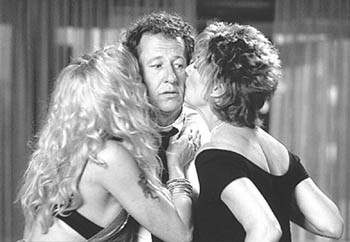
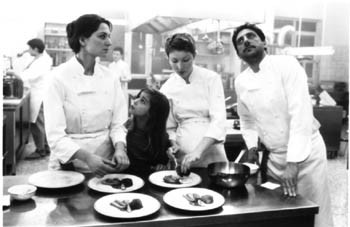
‘Pauline and Paulette’

A Real Scrapper: Pauline spends her free time creating scrapbooks.

Piece of Mind

‘Pauline and Paulette’ is an affecting little movie from Belgium

By

Often onscreen, as in Rain Man or the more recent and even more deplorable I Am Sam, the mentally challenged exist to teach us lessons about kindness and sensitivity. These films don’t always stress the taxing side of dealing with someone with a childlike mind–how they can insist on having their own way, how they need constant attention. Pauline and Paulette, an honestly touching piece from Belgium, marries a nostalgic surface to a sometimes wounding study of four sisters, one of them with a mental age of about five. The film is set in the present, but it emphasizes a world that is passing away, exemplified in such images as the florid artificial colors of the silks and satins in the dressmaker sister’s shop. Balancing the saturated sweetness is the traditional Flemish fascination with faces so homely that they’re beautiful.

At the beginning of Lieven Debrauwer’s short (78 minute) study, the elderly Pauline (Dora van der Groen) is living a trouble-free life with her unmarried sister Martha in the town of Lochristi. Pauline waters the flowers and makes scrapbooks; she’s so simple-minded that she can’t tie her shoes or cut her own sandwiches. In her spare time, she loves to visit her sister Paulette, the dressmaker, whom she worships.

Paulette’s dress store has the outlandish colors of 1950s haute couture and Technicolor musicals; the lady in charge has certainly been thinking pink. Pauline is drawn as if by a magnet to the frills of the store, particularly the rose-patterned gift-wrapping Paulette uses. Pauline’s appearances at her store are an annoyance that Paulette endures. The dressmaker sister is old, very stout, and rather sour, and she has an all-consuming hobby: appearing in amateur operettas. The movie is full of froufrou music that matches Paulette’s decor: a selection from The Nutcracker Suite, Strauss’ “Tish-Tash Polka,” and others.

Then one morning Martha dies, leaving Pauline without a keeper. The rest of the story concerns the arrival of a sister from Brussels, Cecile (Rosemarie Bergmans), the only one of the four sisters who seems to have found a slight amount of romantic happiness. Her plan to bring Pauline to the city is overruled by her impatient, middle-aged French boyfriend. (Shaved-headed and seriously eyebrowed, actor Idwig Stephane would have once made a nice spy-movie villain.) His dictate leaves Paulette with sole custody of the sometimes mischievous, sometimes unruly Pauline.

At times, Debrauwer’s mood is more effective than the acting. The director is overly charmed by van der Groen. She’s described in the press kit as “Belgium’s national treasure”–well, no one likes to see wealth flaunted. Whenever the film gets cute, whenever it moves away from almost Fassbinderian moments of examining forlorn, lonely lives, the scene-stealing old lady’s to blame.

Still, Pauline and Paulette is a fine reverie on the way idealized places pass away and grow more vivid in the memory. In this way, the movie stings you, reawakening thoughts of family snubbed in favor of work or status or simple peace of mind.

‘Pauline and Paulette’ opens Friday, March 29, at the Rafael Film Center, 1118 Fourth St., San Rafael. For details, see or call 415.454.1222.

From the March 28-April 3, 2002 issue of the North Bay Bohemian.

© Metro Publishing Inc.

AB 1763: The Emergency Health Powers Act

0

Photograph by Michael Amsler

Paranoid California

Can civil liberties survive a public health emergency?

By Tara Treasurefield

In January, California assemblyman Keith Richman introduced Assembly Bill 1763, the Emergency Health Powers Act. Though AB 1763 is designed to eliminate confusion in public health emergencies, it appears to be creating more confusion.

Existing California law already does much of what AB 1763 proposes to do. Right now, the governor can declare a state of emergency, commandeer private property, and call out the National Guard. Public health officials can quarantine, vaccinate and isolate people, and seize and destroy contaminated property. Current statutes also release designated authorities from liability, except in cases of gross negligence or willful misconduct.

Under normal circumstances, AB 1763 won’t affect existing statutes at all. But in a public health emergency, the effects could be profound. If passed, AB 1763 will require the governor and legislature to appoint a Public Health Emergency Planning Commission. In turn, the Commission will develop a Public Health Plan that, in a state of emergency, will supersede existing statutes.

Mary Maddux-Gonzalez, Sonoma County’s public health officer, says that AB 1763 is a good idea. But she’s concerned about the loss of local control. “Because we’re such a large state, it’s likely that a bioterrorism attempt would be identified on a local level,” she says. “It’s important for local health officers to be able to declare a local health emergency.”

Besides supplanting existing statutes, AB 1763 would also authorize any public health authority to perform unlimited medical examinations and testing, relax the privacy of health information, and allow the Public Health Emergency Planning Commission to select and train “emergency judges” to hear appeals of forced quarantine and isolation.

Jeff Hergenrather, M.D., of Sebastopol raises another concern. Assembly Bill 1763 defines a “public health emergency” as an “occurrence” or “imminent threat” of bioterrorism, an infectious agent or biological toxin, a natural disaster, a chemical attack or accidental release, or a nuclear attack or accident. Hergenrather says, “You could paint a public health emergency with a broad brush and include things that would be really inappropriate to deal with in this fashion.”

Then there’s the fact that vaccines aren’t always safe. “About 25 years ago, the public was urged to get the swine flu shot because there was concern that we may be on the brink of another 1918-like flu pandemic,” says Hergenrather. “The program was cut short after millions of Americans had rushed to get immunized. . . . People were getting a rare form of paralysis that was traced back to the new vaccine.”

It’s also suspected that vaccines used during the Gulf War contribute to Gulf War Syndrome. “It’s impossible to know what will happen in the population when large immunization programs are undertaken without well-planned clinical trials,” says Hergenrather. “The U.S. public should not be subjected to experimentation against our will.”

Maddux-Gonzalez agrees that vaccinations can be risky. “Some people have suggested that we return to vaccinating for smallpox, but there are complications with smallpox vaccinations,” she says. “In public health, we’re always balancing risk and benefit. We inform people of risks.”

As if questionable vaccine safety weren’t distressing enough, some worry that authorities may use a “health emergency” as an excuse to inject microchips encoded with their identifying information under their skin. If that sounds farfetched, consider this: Microchip implants are already used to track parolees, pets, and people with life-threatening conditions.

Assembly Bill 1763’s handling of those who refuse both quarantine and vaccination is also drastic. “They’ll throw you in jail,” says Dan Pellissier, Richman’s chief of staff, and AB 1763 leaves it up to the Public Health Emergency Planning Commission to decide for how long.

Addressing fears of vaccination, quarantine, and incarceration, Maddux-Gonzalez says, “The response to bioterrorism will be very specific to the infectious agent.” Vaccinations and quarantines aren’t always appropriate and, she says, “in some situations, we may be asking people to stay home.”

But for those who are seriously paranoid about the Emergency Health Powers Act, Howard Urnovitz, Ph.D., of Chronix Biomedical in Berkeley has an idea. “I am in Europe now,” he writes, “trying to get citizenship here because of such nonsense.”

The Assembly Health Services and Government Organization committees will consider AB 1763 in April.

From the March 28-April 3, 2002 issue of the North Bay Bohemian.

© Metro Publishing Inc.
Full ‘Circle’

0

It was 1972, and America found itself in the throes of a cultural civil war. It’s easy to forget the tenor of those turbulent times or just how extraordinary it was that the Nitty Gritty Dirt Band’s seminal Americana album, Will the Circle Be Unbroken–a triple-LP set featuring the cream of the country and bluegrass crop–broke down the barriers between hicks and hippies to become one of the year’s biggest-selling records.

Thirty years later, in the wake of the multiplatinum sales of the O Brother, Where Art Thou? soundtrack, Capitol Records is commemorating the Circle project with the release this week of an expanded, digitally remastered anniversary edition featuring four previously unreleased tracks and new session photos. “I thought it was so nice for the O Brother people to time the peak of their project right around the 30th anniversary of Circle,” laughs John McEuen, the former Dirt Band guitarist, fiddler, and mandolin player who supervised the reissue. “It’s the perfect album for those people that bought O Brother to find out more about that music and the people who created it.”

How significant was the landmark Circle project? The All Music Guide ranks the Dirt Band with the Byrds for their role in transforming folk rock into country rock and laying the foundation for such progressive country and bluegrass acts as Steve Earle and Gillian Welch. At the time of the album’s release, the Dirt Band was riding high on the hit 1970 country-rock single “Mr. Bojangles.”

The safe career move would have been more of the same. Instead, band members approached Merle Travis, Earl Scruggs, Maybelle Carter, Roy Acuff, Norman Blake, Doc Watson, and other musical heroes about joining the Dirt Band for a straight-ahead country and bluegrass album. The Circle project–a picker’s paradise known for its spontaneity and country charm–took just eight weeks from conception to completion, during which time the band and their guests recorded 33 songs in six days.

“The thing that set us at ease right off was that most of these people had never worked together,” recalls McEuen during a phone interview from his Hollywood home. “They had a lot of mutual respect for one another and wanted to record together. We just happened to be the vehicle that put it all together. That became apparent when Doc was meeting Merle Travis and we saw Doc fawning over Merle in the same way that we were fawning over Doc.”

The resulting album sold a million copies and made music history. “The opening number, ‘The Grand Ole Opry Song’ [with singer Jimmy Martin and fiddler Vassar Clements], set the tone for the album,” the AMG notes, “showing that this band–for all of their origins in rock and popular music–was willing to meet country music on its terms, rather than as a vehicle for embellishment as rock music. Not only did this album result in new exposure to a new and wider audience for the likes of Doc Watson and Merle Travis and others, but this was the first real country album that a lot of rock listeners under the age of 30 ever heard. Thus, it opened up pathways and dialogue in all directions, across several generations and cultural barriers . . . .”

McEuen, who will reunite with the Dirt Band for a Circle tour this summer, thinks that the runaway success of O Brother and renewed interest in the Circle album shows that mainstream audiences respond to authenticity. “To me, it says that there’s a lot of people out there who, once they see where to go for this kind of music, flock there,” he muses. “I think that, as with the Circle album, the O Brother soundtrack is music that’s listener friendly. You feel like it’s made by people and you feel closer to the music. You know, it’s not overworked, synthesizer-laden, electronic vocal tuning–it’s more real.”

And if there’s one thing society has learned in the post-Sept. 11 era, he adds, it’s that people return to their core values in troubled times.

“This music is a safe place to go,” he says. “With the Circle album, there was no comment about Republicans or Democrats or hippies or rednecks or longhairs or the Vietnam War. None of that came into play; the album was simply a reflection of real good parts of Americana.”

From the March 28-April 3, 2002 issue of the North Bay Bohemian.

© Metro Publishing Inc.
Judo

Gently Kicking Ass The gentlemanly sport gets a new recruit By M. V. Wood In Japanese, the word "judo" means "gentle way." Brute force is shunned. Instead, it's a sport where strength merges with grace, a gentleman's game emphasizing character and honor. So it didn't help the reputation of Graton's Lance...

Ellen DeGeneres

Kind and DeGeneres Ellen takes the show on the road By Davina Baum Some people think that cow tipping is pretty damn funny. Others might get all giggled up from a bumper sticker that says "I Break for Lunch" or a poster of a kitten hanging from a branch with a...

San Francisco Gay Men’s Chorus

Regal Rock San Francisco Gay Men's Chorus queens pay homage to Queen By Sara Bir Tomatoes and basil, Sauternes and foie gras, Fred Astaire and Ginger Rogers . . . and now, finally, the San Francisco Gay Men's Chorus and Queen. Yes, that Queen, the anthematic, operatic '70s rock monsters whose...

‘The Rookie’

A big-league 'life coach' looks at dreams, disappointments, and 'The Rookie' Sally Walton is a big fan of dreams. Not the kind of dreams we all have at night, tucked away in our beds while our eyes do that weird, rapid-movement thing beneath our deeply-sleeping lids. Walton--an internationally popular lecturer and...

Joey Ramone

Ahead of the Pack Joey Ramone keeps the rock alive By Sara Bir The casual Ramone fan tends to view the band as one Ramones-y mass, a monster with four identical sulking heads. Even though they shared the same assumed last name, the same torn-up blue jeans, the same black leather...

Ruth Bernhard

Body Conscious: Bernhard encouraged her students to find beauty close to home-- this close? Shown: Perspective II, 1967 Lust for Light Photographer Ruth Bernhard's work illuminates By Gretchen Giles Consider the artichoke, and perhaps a piquant dipping sauce springs to mind. Consider the artichoke as captured...

Open Mic

We say a sad goodbye to the 'Mother Teresa of bookstore owners' By David Templeton Behind the squeaky-clean glass of the storefront window at Copperfield's Books in Petaluma is a growing, evolving, curiously organic, overwhelmingly personal memorial. There are flowers, candles, and photos, notes on business cards, notes on liner paper, poems, prayers, and books...

‘Pauline and Paulette’

A Real Scrapper: Pauline spends her free time creating scrapbooks. Piece of Mind 'Pauline and Paulette' is an affecting little movie from Belgium By Often onscreen, as in Rain Man or the more recent and even more deplorable I Am Sam, the mentally challenged exist to teach us...

AB 1763: The Emergency Health Powers Act

Photograph by Michael Amsler Paranoid California Can civil liberties survive a public health emergency? By Tara Treasurefield In January, California assemblyman Keith Richman introduced Assembly Bill 1763, the Emergency Health Powers Act. Though AB 1763 is designed to eliminate confusion in public health emergencies, it appears to be...

Full ‘Circle’

It was 1972, and America found itself in the throes of a cultural civil war. It's easy to forget the tenor of those turbulent times or just how extraordinary it was that the Nitty Gritty Dirt Band's seminal Americana album, Will the Circle Be Unbroken--a triple-LP set featuring the cream of the country and bluegrass crop--broke down the barriers...
11,084FansLike
4,446FollowersFollow
6,928FollowersFollow