
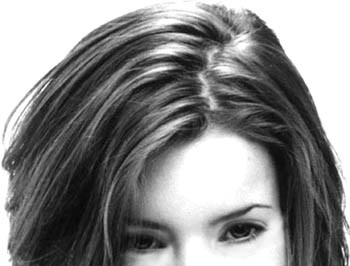
Fiddlers 4

0

Fiddlin’ About

String-driven supergroup takes a bow

By Greg Cahill

It began the way all good traditional music projects should: sitting around with good company and a full belly after a day of performing old-time fiddle tunes at a rural bluegrass festival. Master fiddlers Michael Doucet, Darol Anger, and Bruce Molsky knew of each other’s work last summer as they settled in for an impromptu jam session after dinner at the Fiddle Tunes Festival in Port Townsend, Wash., but the trio had never had a chance to collaborate–until then. “The chemistry worked pretty good,” recalls Doucet, during a phone interview from his home in Lafayette, La. “We just sat down together and started playing stuff. It felt good. If someone came up with something we all liked, we wrote it down.”

Later that summer, the trio–joined by 22-year-old cellist Rushad Eggleston–reunited in Colorado for an intensive two-day session, “trying to figure out how this thing was going to work.”

One year later, the recent release of Fiddlers 4’s eponymous album–which Strings magazine has hailed as the debut of a “a true American vernacular string quartet”–already is garnering acclaim. Believe it, this is a fiddle supergroup to be reckoned with. Fiddlers 4 make their North Bay debut on April 11 at the Mystic Theatre and perform the following night at Freight & Salvage Coffee House in Berkeley.

Cajun fiddler Doucet is the driving force behind the Grammy-winning Beausoleil, the world’s premiere Cajun band, and the Savoy-Doucet Cajun Band, who helped bring Louisiana regional folk music into the mainstream in 1986 with the Belizaire the Cajun soundtrack. Anger–violinist, fiddler, composer, educator, and producer–is a veteran of the David Grisman Quintet and a founding member of the jazz-oriented Turtle Island String Quartet. He also contributes to the virtuosic chambergrass groups Psychograss and Newrange. Molsky, dubbed the Rembrandt of Appalachian fiddling, is a brilliant old-time fiddler and living repository of mountain fiddle tunes. Eggleston, the first student admitted on a full scholarship to the Berklee College of Music string program, is a skillful improviser with an easy command of fiddle styles.

“He’s the best bluegrass cellist in the world,” Doucet boasts, adding with a laugh, “Oh, heck, he’s the only bluegrass cellist in the world.”

On their debut CD, Fiddlers 4 roam through a wide range of styles, from 1920s-era jazz to traditional Cajun tunes. But at their most adventurous, Fiddlers 4 transcend genre and fuse these far-flung influences into a complex mélange that merges chamber music and traditional American folk styles. That is perhaps best illustrated by Anger’s original composition “African Solstice,” a nod to the West African nation of Mali, birthplace of the blues. In the song (which Molsky describes as “a cycle of tensions”), the strings weave an arabesque puzzle, moving back and forth from a simple melody line to a quadruple counterpoint, and from elegant chamber-style playing to an edgy scratching sound before resolving in a breathy sigh.

“I think it’s a very interesting project because everyone basically adapts to the other’s style when they are playing or leading or whatever,” says Doucet. “It’s very different for me because I don’t have a whole band to worry about like I do in Beausoleil. It’s a very subtle kind of approach. There are more nuances; it’s more expansive, and you get to play with time. I saw it as a way to honor some of the people who I learned from and to show the beauty and the potential of it in so many different layers.

“The beauty of Fiddlers 4 is that our motivation is very sincere, and it just works so well.”

Fiddlers 4 perform Thursday, April 11, at 8pm at the Mystic Theatre, 23 Petaluma Blvd. N., Petaluma. Tickets are $15. Lorin Rowan opens the show. 707.765.2121.

From the April 11-17, 2002 issue of the North Bay Bohemian.
© Metro Publishing Inc.

Sonoma Valley Film Festival

0

Also Playing

The Bread, My Sweet

An emotionally taxing film about a Pittsburgh community dealing with the terminal cancer of Bella, the family matriarch (a very sweet Rosemary Prinz). While the pulling of heart strings is unabashedly bold (bring Kleenex), the performances are raw and genuine. Scott Baio–forever trying to live down the Chachi stigma–plays Dominic, the family’s semiadopted son who will do anything to ensure that Bella dies happy–including marrying Bella’s lovely wild-child daughter (played by Kristin Minter of ER). Dominic–who runs the family bakery but has a day job as a ruthless and high-powered executive and drives a very fancy car–finds solace in the simple ingredients of his biscotti. Add a grumpy old man with a heart of gold as Bella’s husband and a developmentally disabled pie baker as Dominic’s brother, and the table is set for a rather heartbreaking meal. (Screens Thursday, April 11, at 7pm at Sebastiani Theatre, and Saturday, April 13, at 7pm at Sonoma Cinemas.) –Davina Baum

Face to Face

The second Scott Baio film to play at this year’s festival follows three working-class Italian cousins, each suffering from debilitating “father problems.” Desperate for some quality time with their well-meaning but emotionally distant dads (Alex Rocco, Dean Stockwell, and Joe Viterelli), the cousins resort to parental kidnapping, drugging their fathers’ spaghetti sauce and smuggling them off to a cabin in the woods for a weekend of father-son bonding. The smart, sensitive one is Richie (Baio, who also wrote the script), whose plot goes wrong in numerous ways. While Face to Face is decidedly rough around its indie-film edges–a bar-room brawl set in a strip club is especially awkward and clumsily filmed–the script is nevertheless consistently funny, with lots of clever dialogue and a sweet, emotionally believable core. Director Ellie Kanner coaxes first-rate performances out of the entire cast, especially Rocco, Stockwell, and Viterelli, three wonderful actors who don’t usually get to play such good guys. (Screens Friday, April 12, at 11am at Sonoma Cinemas, and Sunday, April 14, at noon at Sebastiani Theatre.) –David Templeton

The Road to Broadway

Hope Wurdack, founder and artistic director of St. Louis’ Theatre Factory, directed this affable documentary of “theater people”–the unknown, hard-working folk who are the workhorses of summer stock revues and touring Broadway companies. Following the pavement-pounding careers of about a dozen professional actors, The Road to Broadway sweeps away the glamour and strips it down to the grease paint and sweat. These are nonstop Actors, the kind of people who can’t help but perform the most mundane activities of life–like ordering pizza or hailing a cab–without injecting charisma. What we wind up with is a DIY documentary spliced with A Chorus Line and Waiting for Guffman. Although awash in Hallmark sentimentality and blind reverence for the acting life, there’s a bittersweet edge to the film: Ultimately, you know that the lure of footlights that so enraptures the film’s subjects will never fully illuminate them with fame. What’s poignant about the film is that they don’t seem to care; it’s the enchanting spell of the Great White Way that they cherish. (Screens Friday, April 12, at 11am at Sonoma Cinemas, and Saturday, April 13, at 11am at Sonoma Cinemas.) –Sara Bir

Liberty, Maine

A grown son goes back to his boyhood home and faces a childhood demon: an emotionally abusive father who romps around in medieval garb on his birthday and runs a halfway house of sorts for the town’s wayward boys. The son’s on-again, off-again fiancée comes along too; she is willing to help her husband-to-be make amends, knowing that the family woes are at the root of her beloved’s inability to commit. But when his father falls ill, the son must take on more than he bargained for to save the family house, facing angry wayward kids plus a surprise half-sister. Slow-paced but worthwhile, Liberty, Maine meanders through terrain wrought by honest emotions. (Screens Friday, April 12, at 12:30pm at Sebastiani Theatre, and Saturday, April 13, at 4:30pm at Sonoma Cinemas.) –Davina Baum

Queen of the Whole Wide World

Put a camera in front of a drag queen, and entertainment is almost guaranteed. Put cameras in front of a world’s worth of drag queens competing for the crown, à la Miss Universe, and it’s fairly impossible to go wrong. This documentary follows competitors like Miss Ireland (named Connie Lingus) and Miss Antarctica (who is snow blind and was raised by animals) through the whole process, from precontest preparations to the talent competition and the crowning. The men underneath all the makeup give running commentary (including jokey cattiness–“Miss Antarctica, well, she’s just a cuntinent”). Comments from competition judges such as Julia Louis-Dreyfus, Kristen Johnston (who both look remarkably drag-queeny themselves), and Eric McCormack add star flavor to the mix, while the requisite coming-out stories and homophobic relatives add dimension, somehow avoiding hokiness. (Screens Thursday, April 11, at 9:30pm at the Sebastiani Theatre, and Sunday, April 14, at 4pm at the Sonoma Cinemas.) –Davina Baum

From the April 11-17, 2002 issue of the North Bay Bohemian.
© Metro Publishing Inc.

Spring Book Faire

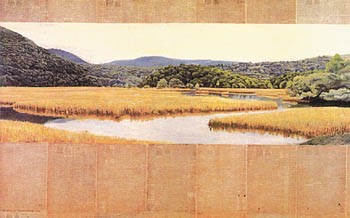
Stacked: Judy Weber and Jerry Benson of Friends of the Santa Rosa Libraries prepare for the annual Book Faire.

Photograph by Rory McNamara

The Secret Second Life of Books

The Santa Rosa Library’s Spring Book Faire has readers bookin’

By Sara Bir

A constant ebb of patrons navigate through the shelves on the main floor of downtown Santa Rosa’s Central Library, but few know that beneath their feet lies a vast, unseen deposit holding thousands of other people’s books. This is the headquarters of the Friends of the Santa Rosa Libraries, and those books–enough to comprise a library themselves–are all waiting to be sold at the Friends’ 38th annual Spring Book Faire taking place April 12-15, the “biggest and best in the North Bay.”

“All of us are volunteers, and the thing that holds us together is that we all love books. We’re definitely not a bunch of ladies who lunch. It’s a hard-working group,” says Judith Weber, the Friends’ publicity chair. It’s a sunny Tuesday morning, but the tight rows of bookshelves and stacks of cardboard boxes lining the walls in the dim light of the Friends’ subterranean book vault cast a secret, otherworldly feel. Tuesday is the Friends’ most dynamic time of the week, when a crew of ten to fifteen volunteers gather to sort and price book donations that have amassed.

“It becomes another community, and people look forward to seeing their friends among the Friends,” says Jerry Benson, the Friends’ resident pricing expert and once a book dealer himself. “One of the problems with our volunteer base is [that] working people really can’t come in and help on a Tuesday morning. We’re hoping to attract more volunteers. We’ve had a lot of turnover in the last few years, where this older guard is getting to the age where they really can’t work in this environment.”

The Friends’ work is physically demanding in nature; a box of books can easily weigh forty pounds, and the daily scope of donations handled at the Central Library is immense. On the loading dock in the alley behind the library (the designated donation drop-off), a new cluster of bulging boxes will show up as soon as the last one was hauled away.

“Sometimes people donate things that have been in a basement or a garage forever,” Weber says. “People just don’t like the idea of throwing books away–it makes them very upset.” Every donation is sold, consigned, or recycled.

Even given the volume of donations dropped off at the library, the Friends pick up about half the donations themselves. “We get a lot of business from elderly people moving into smaller quarters,” says John Crabbe, a towering, barrel-chested retired professor who does the pickups. “Probably three or four a week, occasionally very big. I’ve picked up as many as 40 boxes.”

Not all donations are books. “We are starting to get more and more books on tape . . . and LP records,” says Crabbe. A few DVDs have also made their way downstairs and, two years ago, even a bust of Abraham Lincoln, which resided for a while in the former library director’s office.

Not all quality donations are hot items at sales, so the Friends have learned to utilize alternative methods. “A whole archive of comic books came in. We sold them at one of our fairs, individually marked, and there really was not that much of a market for it,” says Weber, “so we put them on eBay.”

The week of the Book Faire, the Friends rent their space at the Sonoma County Fairgrounds so they can set up. Starting first thing Tuesday morning, movers make countless trips from basement to loading dock, their dollies burdened with towers of densely packed boxes. On Wednesday, volunteers unload the books and the transformation begins. “It takes right up to the time the doors are open to get things set up,” says Weber.

And that’s when the floodgates open. “People line up like crazy–it’s opening day, our best attended and most frenetic part of the sale,” Benson says. (“Like the Oklahoma land rush,” as one crew member put it.) “People will buy up to $1000 worth of books.”

Hardback books are sold by the inch, while paperbacks–whether five inches wide or 10 pages long–are 75 cents each.

Collectible or rare books are priced individually and sold in the “Board Room,” an area set aside from the fair’s main floor. In the ’60s, the first fairs were held in the library’s courtyard, and when the fair moved into the library, the individually priced books were sold in the Board Room upstairs. The term stuck through the years, and though the name may sound intimidating, the prices are not. “These are low-priced books, the median price about three dollars. Some art books that originally cost $75 we might price at $25. We might have a first edition Mark Twain for $125 that you’d see on the Internet for $250. We try to keep them just about the cost a book dealer would pay,” Benson says. “Pricing level is one of the things that has made our show so successful.”

In the corner of the basement stands a table spread with books waiting for prices–some rare, some lavish, some hardly opened. Benson sifts through the piles, thumbing through the books and penciling prices inside their covers. “We have to steer a careful course on how we price books, because a part of our mission is to get books back into the community, as well as make money for the library.”

On “bag day,” the last day of the fair, browsers can fill a shopping bag for $4. “A couple of years ago this woman was just loading up–she wound up with something like fifty bags of books. I finally asked her, ÔWhat are you doing with all of these books?’ She makes lamp bases out of them, stacks them up and drills through them. You see, there’s a book for everyone,” Weber laughs.

The biannual book fairs are the Friends’ primary fundraiser. In 2001, the Friends raised an all-time high of $76,000. “It’s just amazing that we come up with the amount of profit that we do, and all of it, except for our expenses, is turned over practically immediately to the library.”

Funds raised by the Friends do not go to extravagances, Benson says. “What often happens to library systems is there are unexpected costs that aren’t provided for in the budget. You have to cut back on everything–which means the book budget gets smaller and smaller.”

“We try to insist that the money we turn over is used for books,” Weber says. “We are not trying to take the place of the funding that is provided by the community; we’re augmenting the money that would fall through the cracks otherwise. People may not realize what a profitable nonprofit we are . . . but the bigger our sales are, the more we are able to hand over directly to the libraries.”

The Friends of Santa Rosa Libraries’ Spring Book Faire begins with the Collector’s Preview on Friday, April 12, 4-8:30pm. Admission is $5. Admission is free the remaining days: Saturday April 13, 10am-5pm; Sunday, April 14 (half-price day), 10am-5pm; Monday, April 15 ($4/bag day), 2-7pm. Finley Building, Sonoma County Fairgrounds, Bennet Valley Road and Brookwood Avenue, Santa Rosa. 707.545.0831.

From the April 11-17, 2002 issue of the North Bay Bohemian.
© Metro Publishing Inc.

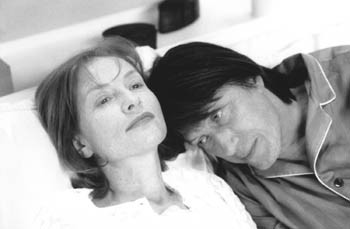
Jeff Probst

0

Cinema Survivor

Jeff Probst tackles the adventure of a lifetime–directing a movie with James Earl Jones

There is a definite “dream come true” vibe emanating from the phone this morning. An ebullient Jeff Probst–best known as the khaki-clad host of TV’s hit show Survivor–is driving through Los Angeles, talking to me on his cell phone about a recent life-changing event, and the giddy, boyish exuberance with which he speaks is thick enough to chew.

The event Probst is describing did not take place on some exotic island in the South China Sea or the Marquesas, nor in Australia or even Africa–the picturesque locations where Survivor has been filmed over the last couple of years. On the contrary, this particular event took place on a tiny movie set in Canada over the course of a 17-day shoot on a little drama called Finder’s Fee, which is featured at the Sonoma Valley Film Festival’s special Tribute Night on Friday, April 12. The low-budget thriller stars James Earl Jones, Robert Forster, and a cast of up-and-coming actors including Erik Palladino and Matthew Lillard, and–get ready for the “dream come true” part–it also marks Jeff Probst’s debut as a motion picture writer-director.

“That’s how I’ve always seen myself,” he says with a laugh. “I’m a writer-director. A student of the human condition. And most people only know me as the guy on Survivor. But that’s all right. The time will come when it comes.”

Finder’s Fee itself will be coming this weekend as a main event of the fifth annual Sonoma Valley Film Festival. Probst will be on hand as well, where he’ll be receiving an award as Best Breakthrough Director. By his side will be Forster (The Black Hole, Jackie Brown), honored with a Lifetime Achievement Award, and Matthew Lillard (Hackers, Serial Mom), picking up the prize for Best Breakthrough Actor. Finder’s Fee had its official debut earlier this year at the Seattle Film Festival, where it captured the Audience Award for Best Film, but it’s been screened only rarely since then, while Probst works hard–in between Survivor shoots–to find the movie a national distributor.

“Honestly, I can’t wait to see Finder’s Fee with an audience again,” he says, almost shouting, as the buzzing hum of traffic whizzes by in the background. “I haven’t had that many opportunities to see it on the big screen yet, really, so this weekend will be very exciting.”

Finder’s Fee is a pitch-dark psychological thriller with a roller coaster of a plot, and–skeptics take note–it’s good. The story follows one night in the life of Tepper (Palladino, better known as Dr. Malucci on ER), a young guy with a good heart and some baffling relationship problems. On his way home to a weekly poker game with his friends, Tepper finds a lost wallet and brings it into his apartment. After leaving a message at a phone number found in the wallet, Tepper discovers that it also contains a winning lottery ticket worth $6 million. Before he has time to think, Tepper’s poker friends start showing up, followed quickly by Avery (James Earl Jones), the owner of the wallet.

Acting impulsively, Tepper switches the winning ticket for his own losing ticket, but before he can show Avery to the door, the apartment building is locked down by the police, who, represented by a grouchy cop played by Forster, are conducting a door-to-door search for an escaped criminal. With no other choice but to stick it out inside, the younger men, spurred on by the verbally aggressive Fishman (Lillard), invite Avery to join their poker game, setting off a whole series of mental games and double crosses as the guys come to suspect that something is up. All the while, Tepper–desperate to get away with his crime–begins to wrestle with a growing sense of guilt, and Avery calmly watches the events unfolding unpredictably around him. The whole thing is disturbing, claustrophobic, remarkably tense–and great fun.

“I could not be more proud of Finder’s Fee“, says Probst. “We made a good little movie with great people, and I was the benefactor of all of it because I was clearly the weak link in this project.”

Probst says a lot of things like that. He clearly relishes the fact that his first movie was a labor of love for a large group of people, and he seems to think nothing of portraying his own contributions as those of just another player in a game–a game he’s loved every minute of.

“That this experience was a dream come true was never lost on me during the filming of the movie,” he continues. “Even when I was wetting my pants on the set, trying to keep my brain out of panic mode, there was definitely another part of my brain going, ‘How cool is this? To have this problem? How cool that I actually have to figure out how to cut a scene because I’m behind on time?’ It was never lost on me, just as it’s never lost on me every time we do a tribal council on Survivor either. I always think, ‘How cool that I have such a great job.’ So many people would love to have this job, but somehow I’m the idiot that fell into it.”

Also Playing: Selected films screening as part of the Sonoma Valley Film Festival.

While there are undeniable parallels between Finder’s Fee and Survivor–a small group isolated together, deceit, backstabbing, alliances, betrayals, and a big cash prize for the ultimate winner–the script for Finder’s Fee was actually written a full year before Probst had ever heard of Survivor. The movie was then shot in 2000 in between filming the first and second Survivor seasons. On the strength of the edgy, little script, Probst was able to persuade the cast to spend three weeks in Canada working for next to no money, trusting a game-show host who’d never directed a feature film and who, in fact, had recently become famous for intoning lines prone to parody, such as “Fire represents life” and “The tribe has spoken.”

Probst allows that his first few days on the set were spent mostly just trying to find his footing, to begin to feel comfortable in his long-dreamed-of role as director. And while he clearly warmed to the part, Probst admits there were moments that all but took his breath away.

“Imagine walking onto the set the day we shot the scene with Robert Forster and James Earl Jones,” he says. “My jaw was hanging open most of that day. That was probably my best day in terms of memories. I’m sitting there watching Forster interrogate James Earl Jones and inside I’m thinking, ‘Oh my God! These guys are both in my movie!'” Probst relates his thoughts in a high-speed, high-pitched squeal of mock hysteria. “I can’t believe this! I wrote those words! James Earl Jones is saying my words!'”

James Earl Jones, in fact, gives one of his best performances in the last 15 years in Finder’s Fee. When asked how much of that was due to Jones and how much was do to Jones’ director, Probst remains humble.

“With an actor like James Earl Jones, it’s all him,” Probst says. Joking only slightly, he adds, “My direction consisted mainly of my asking, ‘Do you want me to put the sugar in before the cream, or do you want your coffee straight?’ I suppose it’s true that part of his performance came from the script, but beyond that it was all James Earl Jones.”

For Probst, this is the perfect time to share a favorite story from the set of Finder’s Fee.

“We’d been shooting for three days,” he says, “and the young guys were all flitting around the room, flexing their muscles, and feeling very confident. Then, on day four, James Earl Jones shows up.” According to Probst, the mood on the set instantly switched from informal to formal. “Suddenly, nobody’s talking,” he laughs. “The lippy grip in the corner has even shut up. I’m sitting there thinking, ‘Oh, man. This is a disaster. I’ve been a movie director for exactly three days. There’s no way in hell I know what to do here.’ And no sooner said than done, James Earl Jones, with no setup, leans across to Ryan [Reynolds] and says in that famous deep voice, ‘Luke, I am your father . . . motherfucker.'”

That was all it took to slice through the tension. Says Probst, “The guy brought the house down. We all got to hear the one line we most wanted to hear James Earl Jones say–‘Luke, I am your father’–and in the bargain, we also got to hear James Earl Jones say ‘motherfucker.’ And that was it. Everything went back to normal.

“That was James Earl Jones aware of the impact he has on a room, being able to bring things down to a workable level so we could just get to work. So one of the best anecdotes I have in my life came from James Earl Jones helping me out. Hell, if it wasn’t for his agreeing to make the movie, it might not have happened at all.”

As a reminder of this, Probst explains, he carries a little metal angel in his car. “It’s right here,” he says. “Whenever I look at it, I know–my angel was James Earl Jones. I don’t know why that makes sense. But it does.”

Probst says that whether Finder’s Fee ends up with a distribution deal or not, his next step is to keep the energy flowing and to one day help make someone else’s dream come true.

“First, we have to make another movie,” he says, “then a third movie. Then we have to keep the cycle going. We have to go find a young filmmaker and start mentoring them, to help them get going. That’s how you keep this thing spinning.”

‘Finder’s Fee’ screens on Friday, April 12, at 6:30pm at the Sebastiani Theatre, Sonoma, as part of the Sonoma Valley Film Festival’s Tribute Night Program. Robert Forster, Jeff Probst, and Matthew Lillard will be in attendance. Tickets are $100 for the event. The film also screens on Sunday, April 14, at 5pm at the Sebastiani. See www.sonomafilmfest.org for a full program schedule.

From the April 11-17, 2002 issue of the North Bay Bohemian.
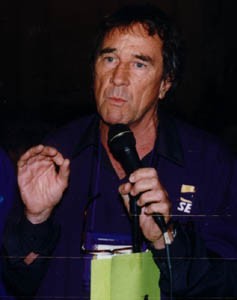
© Metro Publishing Inc.

Hemp Foods

0

Felony Foods

The war on drugs extends to your granola

By Jim Washburn

If you buy illegal drugs, you may be supporting terrorism, the Bush administration tells us in a $10 million ad campaign. Now, if you buy granola, you may be buying illegal drugs, according to a barely reported Drug Enforcement Agency ruling made last Oct. 9 that reclassifies your larder’s hemp granola, waffles, oil, or other hemp food products as a Schedule I narcotic. Since then, the budding American hemp foods industry has been fighting for its life, waging an even less-reported legal battle that took a dramatic turn recently.

Under Bush appointee Asa Hutchinson–the defeated ex-congressman who previously helped rescue our republic from Bill Clinton’s errant semen–the DEA made an “interpretive ruling” on the Controlled Substances Act of 1970, determining that the law now covers any ingestible product that may contain any measurable amount of THC (tetrahydrocannabinol, the psychoactive compound in pot), however minute.

In announcing the ruling in October, Hutchinson said, “Many Americans do not know that hemp and marijuana are both parts of the same plant and that hemp cannot be produced without producing marijuana.” He might also have mentioned that the poppy seeds in your bagel contain trace amounts of opium and that the level of THC in industrial hemp or in hemp food products is so negligible that you’d be more likely to get high from reading the word “hemp” than you would from consuming pounds of hemp foods.

Most hemp products sold in America are grown in Canada, where government testing assures there are no psychoactive levels of THC present. Most American hemp food companies adhere to a standard of no more than 1.5 parts per million, while the concentration needed to even begin getting you high is some 10,000 times that. The DEA ruling, however, requires that there can be no discernible amount of THC whatsoever in the foods. At the DEA’s website, the list of suspect products includes veggie burgers, snack bars, salad oil, beer, cheese, or other items made with hemp–this from the same administration that attempted to ignore studies about unsafe arsenic levels in our drinking water.

No studies have suggested that there may be health or psychological problems related to consuming hemp foods; rather, hemp foods are found to have considerable nutritional value. According to Paul Holden, director of operations at southern California’s Mother’s Market, “Hemp oil contains the highest concentration of essential fatty acids of any oil, as well as a complete protein and other valuable nutrients. That’s why people buy it. It’s not a drug. This is an utterly nonsensical ruling.”

The October ruling, which allowed a grace period for stores and consumers to dispose of their stocks, went into effect Feb. 6, but within a couple of days a new grace period was allowed, until March 18, possibly to preempt an emergency stay requested in the 9th District Court of Appeals by the Hemp Industries Association. That stay was indeed granted on March 7 and should remain until the court can rule on the validity of the DEA ruling. A spirited emergency hearing took place on April 8 with both sides arguing their case. The appeals court did not indicate when it would rule on the matter.

Though hemp foods were briefly illegal on Feb. 6, many local stores, including Mother’s Market and Trader Joe’s, continued to stock them. That is no trivial matter, according to DEA spokesperson Will Glaspy, contacted at the DEA’s Washington, D.C., headquarters. Reached before the stay was granted, Glaspy said, “THC is a controlled substance, and any detectable amount of it is illegal. The burden is on the seller and buyer to make sure they’re dealing in a legal product. Technically, it could be a criminal matter.”

That extends to you, the consumer, and to me who just finished a tasty Govinda’s Hemp Bar while writing this. (It’s Ziggy Marley-approved! Come and get me, Copper!) While Glaspy said that the feds rarely prosecute simple possession cases–“I don’t anticipate someone getting thrown in federal prison for possession of a granola bar with a minute amount of THC in it”–the fact remains that it would be their call whether or not to prosecute you as a felon for that hunk of hemp cheese in your fridge.

“It’s a real Catch-22,” said David Neuman, vice president of sales and marketing for Nature’s Path in Blaine, Wash., which markets Hemp Plus waffles and granola. “They’re saying, ‘You can sell your hemp food product if there’s no THC, but we’re not giving you the standards for saying there’s no THC, and it’s a class one felony controlled substance.’ Many of our customers’ attorneys are insisting on written assurance from us that there is no THC in our product, and there isn’t down to one part per million, which is as far as our testing goes. But if the DEA has some test that can show smaller amounts than that, then we’ve perjured ourselves or falsified documents.”

Prior to the court’s stay, Neuman said Nature’s Path was going out of the hemp foods business, at a cost of income and jobs. “And why?” he asked then. “No one has ever been intoxicated by hemp foods, ever. So what is the basis for this very radical action? There is none.”

Reached at a health foods convention in Anaheim after the emergency stay was declared, he was in a more upbeat mood, having just posted a sign at the company’s booth reading: “Hemp Plus wins, DEA defeated . . . now taking orders.”

“Trader Joe’s placed a truckload order today, and two days ago we wouldn’t have been able to fill that without fear of reprisal,” Neuman said. “Our lawyers tell us to expect a summer-long debate, and we’re confident we’ll win in the end, so we’re getting back into production. The court has granted an emergency stay and has scheduled an emergency hearing, which they typically only do when they realize that rights are being infringed.”

“The DEA ruling was entirely a political decision. It’s not a scientific one,” claims David Bronner, president of Dr. Bronner’s Magic Soaps and chair of the HIA’s Food and Oil Committee. He said that many HIA organization members have continued to make and sell their products on the presumption that, lacking a clear scientific standard from the DEA, it is sufficient that their products are THC-free by Canadian standards.

Bronner’s product lines aren’t affected, as soaps, shampoos, and other nonconsumables don’t fall under the ruling. He’s an ardent opponent of it nonetheless.

“As a company, we engage in a lot of ecological or socially progressive causes. Industrial hemp has so much potential to substitute for polluting petrochemicals or threatened timber stocks [hemp also grows readily without pesticides or herbicides]. And the food markets are really the near-term market driver for industrial hemp. The nutritional profile of the seeds is so high that there’s a lot of potential there to ramp up the economies of scale so that hemp fiber can compete pricewise with timber and petrochemical processes. That’s what motivates us,” he said.

Like Neuman, he’s confident the HIA will prevail in court. Meanwhile, there is another challenge to the ruling via an unanticipated medium: NAFTA. Kenex, a leading Canadian hemp producer, has filed an arbitration claim arguing that the U.S. ruling amounts to an unfair restraint of trade.

Bronner explained: “Under NAFTA, if the U.S. government is going to institute something that’s going to effect trade, it has to have some defensible reason, a scientific rationale. The DEA failed to conduct any sort of risk assessment or science-based analysis justifying a ban on trace THC in foodstuffs. Meanwhile, the industry can demonstrate that there are no health concerns or interference with drugs tests or anything else. So they’re arguing through NAFTA that the U.S. is closing their markets and raising a barrier to trade without following the NAFTA or WTO provisions.”

Even prior to October’s ruling, the DEA had busied itself by interdicting tons of sterilized hemp birdseed at the Canadian border, at least saving our birds from becoming felons. Unless the HIA prevails in court or NAFTA overrides the law (as it already has in instances usually detrimental to the environment or workers), beware of what you eat: It may contain a felony.

To find out more on the issue or to become involved, check out www.votehemp.com and www.dea.gov.

From the April 11-17, 2002 issue of the North Bay Bohemian.
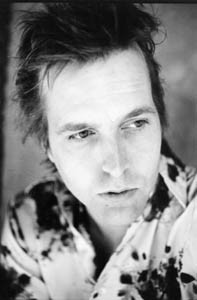
© Metro Publishing Inc.

Home Improvements

0

Shoddy Chic

A step-by-step guide on how to out crate Crate & Barrel

By Sara Bir

Alas, we cannot all reside in the house of our dreams–but we can personalize the humble home we occupy already. Decorating trends have shifted to emphasize realism, with a comfortably lived-in look that still maintains a sense of refinement. Such an approach finds its stride here in our idyllic Northern California wine country setting, melding so naturally with our casual lifestyles and appreciation for culture and fine things.

But–alas again!–not all can afford those fine things, particularly in these thin times. A slimming bank account does not mean you must settle for life in an unadorned shoebox: a lack of funds can be compensated with a surplus of creativity. Finding that the cost of assembling standard household needs outreached my budgetary limitations, I was left with no option but to strap on my thinking cap and keep a watchful eye on the curbside for treasures come garbage day.

Here are three examples of how–with little to no budget–to furnish yourself and your home in your own unique style. The following sets of instructions truly do work, as I developed them myself and every day find joy in using and enjoying the small touches of luxury they have brought to my life.

Rustic Furniture

1. Work as cook in commissary of catering business. Liberate two empty wooden asparagus crates from caterer.

2. Visit friends in San Francisco. Admire their Nob Hill apartment while feeling thankful for your own apartment, which is less than half the rent for more than twice the space. Spy ugly framed print in Nob Hill neighbor’s garbage. Thank friends for visit. Take framed print home with you.

3. Using images clipped from backlog of Wine Spectator, Saveur, and Food & Wine magazines, assemble wine-themed collage over ugly print. Replace print in frame.

4. Place frame, collage side up, over asparagus crates. Admire new coffee table.

5. Crack glass in frame by using coffee table as footstool one too many times. Realize your furniture is dangerous. Go to TAP Plastics (in Santa Rosa: 707.544.5772; in San Rafael: 415.454.6393) and purchase large sheet of unbreakable clear plastic. Cut to fit with heavy-duty scissors and replace glass.

Total cost: $8.99 for plastic, one trip to San Francisco, and several messy evenings cutting pictures out of magazines.

Classy Window Treatments

1. Landlord apologizes for your bedroom’s total lack of window treatment and tells you that if you change in the closet, passers-by will not see you naked.

2. Landlord selects cheesy, unsturdy curtain rod from hardware store and installs it while you are at work. Landlord hangs pair of mint-green velvet drapes, which clash horribly with desired rock and roll aesthetic.

3. Landlord sells house and takes drapes. New homeowners too overwhelmed by duct tape holding shower tiles in place to worry about tenant’s privacy.

4. Dig through blankets in storage. Find harvest-gold-toned bedspread that belonged to parents circa 1966 and in subsequent years evolved into picnic blanket and painting tarp. Wash bedspread. Examine for holes. Mend hole. Find another. Mend. Find another. Decide hole is too small to matter.

5. Measure window. Measure much-mended bedspread. Cut bedspread in half and hope it fits.

6. Drag out sewing machine. Discover it is broken, probably because it predates bedspread. Take to repair shop.

7. Call repair shop. Ask why you have not heard from them in four weeks.

8. Pick up repaired sewing machine two weeks and $140 later. Convert halved bedspread into drapes with five, easy minutes of sewing.

9. Decide drapes are boring and attach shiny strands of beads made for decorating Christmas trees. Locate forgotten spool of tiny silver plastic beads and edge drapes to echo Christmas garland theme. Drink tea, hum to self, feel cozy.

10. Hang up drapes. Realize you have just created ugliest window treatment in history of home decoration. Decide newfound privacy feels too good to care. Close drapes, get naked, and jump around room.

Total cost: $140, plus phone call to mother bragging about earth-friendly recycling of bedspread, plus rental of video to keep self entertained while sewing tiny plastic silver beads around edge of drapes.

Fragrant Herb Knot

1. Admire rosemary shrubs in neighbor’s yard. Rub fingers against them every time you walk past to release pungent perfume. Think about yummy rosemary focaccia. Return at twilight with scissors and remove a few branches. Enjoy homemade rosemary focaccia with herb-rubbed loin of lamb for dinner next night.

2. Survey own yard. Notice that gigantic top-heavy cactus can hardly support its weight. Decide this is nature’s way of pruning. Ignore yard.

3. Hear ominous thud against bedroom window in middle of night. Work up courage to go outside and check out situation, only to discover that cactus collapsed and fell on window. Return to bed.

4. Notice yard looks empty without Volkswagen-sized cactus. Devise plan to plant pretty grouping of herbs in front yard, which will both beautify and flavor life.

5. Take trip to garden center. Purchase parsley, cilantro, thyme, and sage plants. Justify cost because upcoming bounty of home-grown herbs at fingertips will save money on grocery bills.

6. Clear mulch away from not too shady, not too sunny spot in yard. Visualize arrangement of herbs. Try to locate trowel. Discover you do not own one.

7. Locate sturdy stick. Violently stab shallow holes in dirt. Plant herbs.

8. Curse feral neighborhood cats for eating cilantro plant.

9. Curse feral neighborhood cats for eating parsley plant.

10. Notice sage is dying. Pick off its three remaining spotty leaves and add to bean soup.

11. Realize thyme plant is not anywhere to be found. Wonder what happened to it.

12. Opt to decorate yard in manner that requires less maintenance. Find pottery piggy bank from Mexico in friend’s garage. Place pig in yard over former herb knot and name “Javelina.”

Total Cost: around $10 for herbs, trowel optional.

From the April 11-17, 2002 issue of the North Bay Bohemian.

© Metro Publishing Inc.

Annapurna

0

Nepalese Auld Lang Syne

Annapurna means more than good eats

By Maria Wood

In the West, the New Year is traditionally celebrated by staying up very late and getting stinking drunk. But for the Nepalese New Year, which falls this year on Sunday, April 14, people “get up early in the morning and read a good book or clean up the house, or something like that,” according to Dikendra Maskey, recalling his youth. “People there believe that if you start off the first day by doing something good, then the rest of the year will be good for you as well.”

Perhaps the childhood lessons of New Year’s stuck with Maskey, because he seems to be doing good deeds all the time even though they sometimes appear to be at the expense of his own self-interest.

For instance, when Maskey was a small boy growing up in a village outside of Kathmandu, his father journeyed seven days to buy a radio for the household. Maskey was so curious about the big, singing box–and so worried about the poor, tiny people he imagined trapped inside–that he dismantled the new radio to set them free.

“I had to hide from my father for several days after that,” he says with a laugh.

It seems this combination of curiosity and compassion has guided Maskey’s life from the time he was a child. Now, as owner of Annapurna Restaurant in Santa Rosa, Maskey remains inquisitive about the ways of society and likes to share his concerns. So it’s not uncommon for him to talk to customers about the fate of women in Nepal.

“Over there, life is not fair toward women,” he says. “They still do most of the work, and they’re kept in the dark. It’s a hard life. I feel I need to tell people here about it, that they need to know. I believe that knowledge leads to a better world.”

But Maskey is not one to lecture. And he realizes that people come to his restaurant to have a good meal and a good time, and they might not be in the mood to discuss human rights. But then again, they might. If diners choose to begin a dialog, Maskey is more than willing to comply. And luckily, the restaurant is full of little conversation starters.

For example, if customers ask what the name “Annapurna” means, they could be opening the door to an extended discussion. Maskey will first explain that in Nepalese “anna” means grain and “purna” means food, and Annapurna is the goddess of plenty. It’s a fitting name for a restaurant. But Annapurna is also the name of a mountain range in Nepal, which was scaled by an American woman in 1978 during International Women’s Year.

“That was a big event in my life, to see that women can travel on their own and do things they want to do,” Maskey says.

Right around the same time, American hippies were filing into Kathmandu, where Maskey was attending boarding school. The hippies’ exotic dress and lifestyle and strange philosophies mesmerized the teenager. He was especially enamored by the idea that a woman could be a life partner and not just a servant. Little by little, he says, “I stopped going to classes and I started learning to play guitar.”

Eventually, Maskey went back to school to get a Ph.D. in social anthropology. He also found work as an instructor for the Peace Corps. It was his job to teach the new volunteers everything from personal safety to the language and customs of Nepal. And that’s where he met Julie Sabbag, an independent young volunteer from Palo Alto. The two eventually married and had a child. Three years later, they would have another daughter.

Maskey needed to return to his hometown to finish his dissertation. He and his wife planned to stay only three months; they ended up living there for five years.

When he went back to the village with his wife and baby daughter, his “eyes became wide open” to the plight of women, Maskey recalls. “They were the ones cutting the wood and working in agriculture and raising the children. They spent all their time working, but the men didn’t. It wasn’t right. But there was little [the women] could do, because they were kept in the dark. They didn’t even know how to read. So every day I would spend 5 to 10 hours talking to people in the village, trying to change things.”

At first, Maskey says, everyone was resistant. “The men would say, ‘Why are you doing this? Things are good the way they are.’ But I don’t believe things are good for men or for women when women are kept down.”

Eventually, Maskey was able to start teaching a literacy class that included health and general education topics to the village women. A picture of one of his first graduates can be found on a wall near the back of the restaurant. At the same time, Maskey served as headmaster for the area school, which enrolled about 800 students. “It was the only high school around, and some of the children had to walk two to three hours just to get there,” he says. A picture of three of these boys hangs next to the photograph of the woman. (The pictures are two more of the many conversation starters in the restaurant.)

Maskey’s educational programs started garnering more and more popular support. But his popularity and resulting power brought on the ire of politicians. “The government was very corrupt, and I had no desire to be involved,” he says. “But that didn’t make a difference. They still didn’t want me around. I just kept doing what I was doing.”

But when a political tide turned the populace against America, Maskey decided it was time to leave. “The only American for miles around was my wife,” he says, “and I was afraid someone stupid might hurt her or our children.”

So the family moved to California and opened Annapurna a year and half ago. Maskey believes that eating the foods of different cultures helps people relate to one another. “The more knowledge and communication there is between cultures, the better it is for us all,” he says.

Annapurna’s menu represents many foods unique to Kathmandu. In most of Nepal, Maskey says, the food is a simple, peasant’s diet. But the main city evolved a “high-class, complex cuisine for the royal families.” The fare was influenced by India from the south and China from the north, but, he adds, “there’s nothing else really like it.”

He points to two dishes on the menu as typical foods eaten in Nepal at this time of year. The chhuela is an appetizer of barbecued lamb cubes, marinated in mustard oil, green onions, ginger, garlic sauce, and Himalayan spices. And the aloo kauli is a vegetable entrée featuring cauliflower and potatoes cooked in mild spices.

“Summer is monsoon season in Nepal, so spring is the time when everyone goes out for picnics,” Maskey says. And since New Year’s Day is a national holiday, many people take advantage of it by picnicking with family and friends. Reading and cleaning are worthy New Year’s activities, Maskey says, “but it’s also a good thing to get together with people you care about and have a good meal.”

Annapurna. Lunch, Monday-Saturday, 11:30am-2:30pm; dinner daily, 5-9:30pm. 535 Ross St., Santa Rosa. 707.579.8471.

From the April 11-17, 2002 issue of the North Bay Bohemian.
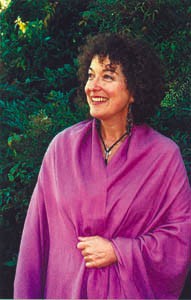
© Metro Publishing Inc.

North Bay Music Clubs

0

Caught in the Act

Adventures in club land

By Greg Cahill

Is it too early to celebrate? For the first time in three years, the North Bay has an honest-to-God club scene–featuring a wide range of local and touring acts–that looks like it might sustain itself at least through the summer.

Until recently, things were pretty bleak. Santa Rosa–where the city council and police department had managed to quash the nightlife–was a virtual ghost town. The closure last year of the venerable Inn of the Beginning in Cotati seemed like an ill omen, and the 1996 demise of Magnolia’s, the longtime Railroad Square rock club, had left Sonoma County music fans scrambling; only Petaluma’s Mystic Theatre and the Powerhouse Brewing Co. in Sebastopol held down the fort, so to speak. Pretty slim pickin’s for a county that boasts a half million residents.

What a difference a year makes. The opening last year of the Last Day Saloon in Santa Rosa marked the return of top classic rock, folk, and roots bands to the otherwise sleepy county seat. And, more recently, crowds are spilling out of Jessie Jean’s Coffee Beans on Mendocino Avenue near Santa Rosa Junior College, where alt-rock and indie bands from Los Angeles, Sacramento, San Francisco, and Oakland perform on weekend nights.

In Petaluma, the Phoenix Theatre–the city’s celebrated punk emporium–has forestalled foreclosure and is staying one step ahead of the law.

In Healdsburg, the recently opened Healdsburg Bar and Grill is now hosting top blues and R&B acts, as does the outstanding Bear Republic Brewing Co. And Felix and Louie’s restaurant recently has started serving up an impressive menu of jazz by notable Bay Area musicians.

In Marin County, things are jumping. The Fourth Street Tavern in San Rafael, Sweetwater in Mill Valley, and Rancho Nicasio in West Marin are continuing to offer everything from alt-rock to top touring folk artists to country swing. And 19 Broadway nightclub in Fairfax now regularly features some of the best world music, reggae, jazz, and R&B acts around. Look for a five-night stint by legendary reedman Sam Butera, widely regarded as one of the innovators of R&B sax and the longtime band leader for Las Vegas lounge king Louie Prima. Butera appears for five nights and 10 shows from April 17-21.

Meanwhile, New George’s in San Rafael–which in recent years had scaled back to Mexican banda performers–once again is booking top ’80s rock, pop, and ska acts, in a move that harks back to the days when such bands as Chris Isaak and Silvertone, the Neville Brothers, Robert Cray, and Los Lobos graced the stage there. Among the acts scheduled this spring are quirky singer-songwriter Jonathan Richman of Something About Mary fame (April 12), San Francisco drum-and-organ duo Mates of State (April 18), the English Beat with the General Public’s Dave Wakeling (April 27), Gene Loves Jezebel (May 4), the Specials (May 18), and Missing Persons (May 28).

Hey, it’s never too early–or too late–to celebrate.

Waiting Room

Can’t wait for Tom Waits’ two new albums due next month? Sit tight. You can whet your appetite with the newly released Big Bad Love (Nonesuch) soundtrack, to which the suddenly prolific Waits contributes two new tracks. Alice and Blood Money are due for release May 7.

From the April 4-10, 2002 issue of the North Bay Bohemian.

© Metro Publishing Inc.

‘E.T.: The Extra-Terrestrial’

0

E. Tease

Curator responds to the revisionist tinkerings of Steven Spielberg

Writer David Templeton takes interesting people to interesting movies in his ongoing quest for the ultimate postfilm conversation.

Mickey McGowan is pissed off. “I am. I’m pissed off,” he admits, his voice rising ever so slightly as his mouth forms the words and tosses them out like a pair of old tennis shoes hitting the garbage can–not that Mickey McGowan would toss out a pair of old tennis shoes. Or anything else for that matter. But he is pissed off. “And I don’t get pissed off that often,” he adds.

The focus of McGowan’s infrequent yet sizable ire is Steven Spielberg’s E.T.: The Extra-Terrestrial. The classic 1982 fantasy starring Henry Thomas and Drew Barrymore–the story of a little lost alien and his unlikely friendship with three suburban siblings–has, in celebration of its 20th anniversary, been messed with. As widely reported, Spielberg has gone and tinkered with his sentimental blockbuster, enhancing the special effects with new digital technologies, adding formerly deleted scenes, and–here’s where McGowan gets especially miffed–altering several key moments to make the film more palatable to what Spielberg believes are the newly evolved attitudes of modern moviegoing audiences.

Remember the famous scene where the boys on bikes fly over the heads of pistol-waving policemen? The guns are now gone, digitally replaced with walkie-talkies. Then there’s the Halloween scene in which the mom tells her son he can’t go trick-or-treating dressed as a terrorist. In the new post-9-11 version, mom now objects to his going out as “a hippie.”

“It’s confusing and unnecessary, and these changes rankle me,” says McGowan, 55, artist and curator of the legendary (though currently closed) Unknown Museum, a Marin County landmark showcasing McGowan’s staggering collection of abandoned pop-culture toys and artifacts from the 1950s to the early ’80s. E.T. stands as one of McGowan’s favorite cinematic icons.

But that’s only part of the reason he’s so annoyed by the new E.T.

“Movies are like mirrors of the times they were made in,” argues McGowan. “If you start changing things 20 years later, you risk changing the way we think of the past, you do a disservice to history. Taking the guns away is so … I mean, gee whiz, every Spielberg movie but Close Encounters has guns in it.”

The core issue, of course, is that in E.T. the guns are in the same shot with kids. Spielberg has publicly stated that in a time when we are still reeling from events like Columbine and Littleton, movies that show kids and guns together make him uncomfortable.

“So he should stop making those kinds of movies,” says McGowan. “I have no problem with that. But E.T. wasn’t made in the age of Columbine. So for history’s sake, we should just leave well enough alone.”

Celluloid Snipping

Since movie directors themselves no longer seem to see their films as historical documents, then why not take a high-tech paintbrush to everything that either offends us or has become too dated and out-of-touch. After all, we have the technology, so why waste it? To that end, a select sampling of movie fans were asked to fantasize about what substitutions, additions, or deletions they’d like to see made in classic films. Here are some of the results.

“To begin with, changes could be made in the film version of Woodstock,” says historian David Allyn, author of Make Love, Not War–The Sexual Revolution: An Unfettered History. “All those 20-year-olds should be given digital nipple and bellybutton piercings to make them look more ‘today.’ And Casablanca could be recut to get rid of all those scenes of people smoking. We wouldn’t want kids getting the wrong message, would we?”

“Why not wash the blackface from the faces of Mickey Rooney and Judy Garland in Babes in Arms,” suggests San Jose cineaste Leslie Thorne, in reference to the 1939 film in which the stars get funky with an old-fashioned minstrel show. “While you’re at it, someone should digitally alter Terminator 2 so that Arnold puts a legally required safety helmet on the underage Edward Furlong during the dangerous motorcycle sequence.”

The most daring suggestion of all comes from Josh Kornbluth, the actor, writer, and director of the indie cult-comedy Haiku Tunnel. Says Kornbluth, “Could someone please take all of Adam Sandler’s movies and digitally replace him with Ben Stiller?”

Of course someone could. And probably will. It’s only a matter of time.

From the April 4-10, 2002 issue of the North Bay Bohemian.
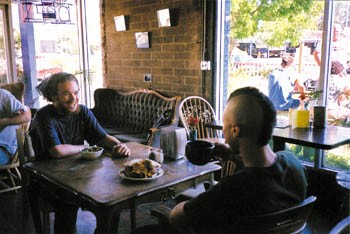
© Metro Publishing Inc.

Reel Chocolate

0

Message For You: What do you get when you guzzle down sweets? Happiness.

Chocolate Heaven

A trio of chocolatiers join Willy Wonka for a wild confectionary extravaganza

Willy Wonka must be salivating with envy. That legendary, literary candy maker–the star of two popular children’s books by Roald Dahl, made famous by Gene Wilder in the classic movie-musical Willy Wonka and the Chocolate Factory–has become an icon of confectionary invention and chocolate-making ingenuity, a creator of chocolates so rich and delicious they reportedly were imbued with magical qualities. It’s unlikely, however, that even Mr. Wonka could have reached the same mouth-watering heights achieved by the dream-sweet chocolates of Veronica Bowers, Condra Easley, and Guy Daniels, three of Sonoma County’s most celebrated chocolatiers.

For one thing, Wonka’s goodies were all, ahem, factory made (no slight intended to the Oompa Loompas), while the chocolatey miracles whipped up in the kitchens of Bowers’ La Dolce V, Easley’s Patisserie Angelica, and Daniels’ Gandolf’s Fine Chocolates are all made–lovingly and expertly–by hand. And while none of these celebrated North Bay chocolate wizards admits to using a chocolate river, as Wonka does, to mix their creamy chocolate into fine, frothy perfection, the methods they do use have nevertheless inspired scores of customers to swear off famous-name factory chocolates forever.

Poor Willy Wonka.

Fortunately for those who’d rather not choose sides, local chocolate lovers will have the rare opportunity to enjoy both Mr. Wonka and some of the finest chocolates in the North Bay. On Sunday, April 7, Santa Rosa’s Rialto Cinemas will be hosting a special, one-night event dubbed Reel Chocolate. The brainstorm of Paul Schwartz and Jim Lawer–a pair of Sonoma County chocolate connoisseurs–Reel Chocolate is envisioned as a grand, gustatory celebration of fine chocolate and chocolate-themed movies, featuring a screening of Willy Wonka and the Chocolate Factory preceded by an appetite-whetting reception at which Bowers, Easley, and Daniels will all be offering samples of their tastiest inventions.

“We’re all passionate about chocolate,” says Easley, who’s only just recovered from having made hundreds of chocolate Easter eggs in the swoon-inducing kitchen of Santa Rosa’s Patisserie Angelica. “Chocolate is not just chocolate,” she says. “And with the Reel Chocolate event, we’re hoping to help elevate people’s tastes as to what good chocolate really tastes like.”

As for the sample she’ll be serving, Easley is planning to bring a delectable-sounding tea-infused truffle.

“There are a lot of ways to infuse flavors into chocolate,” explains Easley, who first honed her dessert-making skills in Paris. “A cold infusion,” she says, “involves taking the cream and infusing the tea into it, then letting it steep in the cold for a day. We use a fruity, floral tea from Mariage Frères, a famous Parisian teahouse, and the sweetness of the tea is brought out by the cold infusion process, creating a wonderfully mellow flavor.” The finished truffle, describes Easley, is “buttery and silky and smooth on the tongue. These are not gobbling chocolates. These are chocolates that are meant to be savored.”

Savoring the experience, it seems, is what Reel Chocolate is all about.

“Most people have only tasted mass-produced chocolate and have no idea what they’re missing,” says Schwartz, a teacher of video production who developed the idea for Reel Chocolate with fellow chocolate fan Lawer. “We started talking about how people have lost touch with what chocolate is meant to be, and the idea sort of hit us to combine a night of fine chocolates with the screening of a great movie.”

As for which movie to show, the choice of Willy Wonka and the Chocolate Factory seems natural. Count Veronica Bowers of La Dolce V among those for whom Willy Wonka is a favorite.

“It’s a yearly tradition, actually” she admits. “Every Thanksgiving I watch it again.” Bowers–proclaimed by Chocolatier magazine as one of the top ten chocolate makers in the country–has not yet decided which goody to offer at Sunday night’s event.

“We have so many unusual combinations going right now,” she laughs, “it’s hard to decide on just one.” Likely candidates are her banana flambé–“If you’ve ever gone to the fair,” she says, “and had a frozen banana dipped in chocolate, it’s like that, only better”–or a malted milk ganache, introducing the flavors of an old-fashioned malted milk shake into traditional ganache, a creamy mixture of cream, butter, and chocolate.

Guy Daniels, the founder of Gandolf’s Chocolates in Graton, has narrowed his choices down to two strong possibilities: a nipple of Venus–a hand-shaped ganache covered in rich, dark couverture chocolate–or a dark chocolate truffle with minced pieces of cranberry. “It’s like an upscale Raisinette,” he laughs, “only bigger and better. A tangy feeling of dried fruit in the chocolate complements the flavor. They’re delicious.”

Daniels is a self-taught chocolatier. “I am to chocolate what Hunter S. Thompson is to journalism,” he says. A former IBM and Charles Schwab executive who left the rat race to make candy, Daniels quickly became a celebrated blender of unusual flavors. His appearance at Reel Chocolate is part of his devotion to telling the world that fine chocolate is within everyone’s reach.

“Even a person of very modest means can afford to buy the best chocolate there is,” he says, “if they can find it. But first they have to learn to appreciate it.”

Even Willy Wonka would agree with that.

Reel Chocolate takes place Sunday, April 7 at 7pm at the Rialto Cinemas Lakeside, 551 Summerfield Road, Santa Rosa. Tickets are $20 at the door.

From the April 4-10, 2002 issue of the North Bay Bohemian.

© Metro Publishing Inc.

Fiddlers 4

Fiddlin' About String-driven supergroup takes a bow By Greg Cahill It began the way all good traditional music projects should: sitting around with good company and a full belly after a day of performing old-time fiddle tunes at a rural bluegrass festival. Master fiddlers Michael Doucet, Darol Anger, and Bruce Molsky...

Sonoma Valley Film Festival

Also Playing The Bread, My Sweet An emotionally taxing film about a Pittsburgh community dealing with the terminal cancer of Bella, the family matriarch (a very sweet Rosemary Prinz). While the pulling of heart strings is unabashedly bold (bring Kleenex), the performances are raw and genuine. Scott Baio--forever trying to live down the...

Spring Book Faire

Stacked: Judy Weber and Jerry Benson of Friends of the Santa Rosa Libraries prepare for the annual Book Faire. Photograph by Rory McNamara The Secret Second Life of Books The Santa Rosa Library's Spring Book Faire has readers bookin' By Sara Bir A constant ebb of patrons navigate...

Jeff Probst

Cinema Survivor Jeff Probst tackles the adventure of a lifetime--directing a movie with James Earl Jones There is a definite "dream come true" vibe emanating from the phone this morning. An ebullient Jeff Probst--best known as the khaki-clad host of TV's hit show Survivor--is driving through Los Angeles, talking to...

Hemp Foods

Felony Foods The war on drugs extends to your granola By Jim Washburn If you buy illegal drugs, you may be supporting terrorism, the Bush administration tells us in a $10 million ad campaign. Now, if you buy granola, you may be buying illegal drugs, according to a barely reported Drug...

Home Improvements

Shoddy Chic A step-by-step guide on how to out crate Crate & Barrel By Sara Bir Alas, we cannot all reside in the house of our dreams--but we can personalize the humble home we occupy already. Decorating trends have shifted to emphasize realism, with a comfortably lived-in look that still maintains a sense...

Annapurna

Nepalese Auld Lang Syne Annapurna means more than good eats By Maria Wood In the West, the New Year is traditionally celebrated by staying up very late and getting stinking drunk. But for the Nepalese New Year, which falls this year on Sunday, April 14, people "get up early in...

North Bay Music Clubs

Caught in the Act Adventures in club land By Greg Cahill Is it too early to celebrate? For the first time in three years, the North Bay has an honest-to-God club scene--featuring a wide range of local and touring acts--that looks like it might sustain itself at least through the summer....

‘E.T.: The Extra-Terrestrial’

E. Tease Curator responds to the revisionist tinkerings of Steven Spielberg Writer David Templeton takes interesting people to interesting movies in his ongoing quest for the ultimate postfilm conversation. Mickey McGowan is pissed off. "I am. I'm pissed off," he admits, his voice rising ever so...

Reel Chocolate

Message For You: What do you get when you guzzle down sweets? Happiness. Chocolate Heaven A trio of chocolatiers join Willy Wonka for a wild confectionary extravaganza Willy Wonka must be salivating with envy. That legendary, literary candy maker--the star of two popular children's books by Roald Dahl, made...
11,084FansLike
4,446FollowersFollow
6,928FollowersFollow

