Carol Setterlund

0

Solitary Standing: ‘La Primavera’ by Carol Setterlund.

Photograph by Lenny Siegel


Alone in a Crowd

Sculptor Carol Setterlund’s soul totems

By Gretchen Giles

The ancient academic school of formalism dictates that a work of art should stand apart from the artist. Biographical concerns, personal habits, and documented quirks should remain resolutely banished from the mind while in the presence of the artist’s work. That’s all very well and good for the high, sere aerie of academia, but when viewing the heavy-headed beachwood sculptures of Cloverdale artist Carol Setterlund, formalist strictures give way to the simple jaw drop.

Standing perhaps five feet tall and weighing perhaps 100 pounds after Thanksgiving dinner, Setterlund nonetheless snaps on a heavy protective helmet and wields a chain saw to make her figures. She tramps Jenner beaches alone, canny-eyed with a rope, to find her massive logs. And then–like a 21st-century pyramid builder, a crafter of Stonehenge, or a Mayan architect–she somehow manages to get these huge, water-soaked burdens across the sand, up a slippery trail, and loaded into the car home, where she’ll drag them into the studio to create tall, secretive busts of incredible solitude.

Walking into a Setterlund exhibit–which is easy to do, as her “Recent Works” shows through June 23 at the Erickson Fine Art Gallery in Healdsburg–is to be reminded of the ineffable loneliness sometimes found in a crowd. Working from a mythology both private and profound, Setterlund peoples the Erickson’s elegant space with nothing less than 21 relics of the soul.

Primitive, totemic, and brutal, Setterlund’s figures are often tall piled spindles of wood discs built upon each other, topped with a block and towering over six feet. But the “bodies” are useless; it’s the heads that command. Seeming to emphasize the raw intellect of taste and smell and touch over sight and sound, her pieces sport oversized noses and gaping, soiled mouths. Many are blind; their ears, blocked and ineffectual.

However, the sense of sight is most rewarded in meeting these pieces. While the long stretch of Alberto Giacometti’s figures spring to mind upon viewing Setterlund’s sculptures, his work was purportedly made to be seen from a nine-foot perspective–evidently the distance at which he sat from his models when working. Setterlund’s are best seen from the intimate distance of an inch.

Appearing bleached and whitened at first, in close proximity her works are riotously colored, the white pushed back to reveal blues, purples, oranges, pinks–the pulsing hues of the corporeal. The wood is meticulously pitted and worked, hand-knifed into order and then gently salved with putty. One feels an immense empathy for such pieces as Charade, a Buster Keatonesque figure with haywire hubcap hat in mawkish makeup. In fact, one feels an enormous empathy for each of these solitary figures, so like us in their isolation, defects, and beauty.

Above all, Setterlund’s pieces bespeak our basic human desire to reproduce, to leave behind a process, be it progeny or statuary. Like the mysterious heads on Easter Island, her works seem to be mute testaments to–if nothing else–at least making a mark on the good green earth during one’s too-brief sojourn. We haven’t much evolved, she seems to report, when beach-drowned wood is still dragged ashore to be fashioned with meticulous roughness into representations of . . . just plain old us. Setterlund furthers this by adding crowns and wings and breastplates to her figures made from scrap metal and nautical rope and stiffened kelp and old rusty wire. Others’ castoffs and nature’s brusque actions coalesce in human hands to form–more humans?

Drawing from history (Ajax, Minos, Ptolemy, Anacreon), opera (Capriccio), wordplay (Epigram), and fancy (Pirouette), Setterlund creates her own visual vocabulary peopled with fools, freaks, elders, the sainted, the sane, and the sage. Yes, indeed–back to us.

‘Carol Setterlund: Recent Works’ shows through June 23 at Erickson Fine Art Gallery, 324 Healdsburg Ave., Healdsburg. Gallery hours are 11am to 6pm, Thursday-Monday. 707.431.7073.

From the June 6-12, 2002 issue of the North Bay Bohemian.

© Metro Publishing Inc.

‘The Cunning Little Vixen’

0

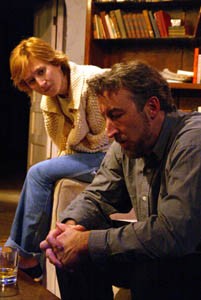
Human Nature: L-R: Molly Haas, Hannah Haas, and William Neely.

Photograph by Sandra Speidel


Fox Tales

‘The Cunning Little Vixen’ weaves a powerful tale

By Julia Hawkins

In The Cunning Little Vixen, Czech playwright Leos Janácek composed a paean to nature and its consolations for mortality. Under Elly Lichenstein’s direction, the Cinnabar Theater’s production captures much of the magic, humor, and mood of the opera–a product of Janácek’s old age and passionate, one-sided love for a younger woman. Supported by Nina Shuman’s musical direction of Donald Pippin’s new English adaptation, the Cinnabar Theater deserves much praise for mounting a difficult and challenging work and for bringing it off so well.

The opera was inspired by an illustrated 1920s newspaper serial that depicted the adventures of a young vixen (a female fox) raised by a forester. Janácek created both an allegory and parable out of a simple tale of comical misbehavior, transforming juvenile caricature into pantheistic celebration.

In Janácek’s version, the vixen suffers from lack of love, desiring its transformative power. The vixen (a kittenish and mischievous Wendy Loder) rejects the family dog’s advances, attacks the farmer children who torment her, and, when threatened with a beating for killing the chickens, bites through her leash and escapes into the forest. Once free, she appropriates a badger’s hole, finds a proper fox mate (the elegant and eloquent Eileen Morris), and happily raises a family. A poacher (sympathetically portrayed by Kevin Simmons) kills her for stealing his chickens, and in the final scene, her pups reappear on the forest floor in a reprise of the opera’s opening act.

Janácek had earlier set to music Ozef Kalda’s “Diary of One Who Vanished,” a poem about a farmer’s son fatally enticed into the forest by a gypsy girl, away from the parents he loves and the settled future to which he was born. To Janácek, the gypsy image is the link between town and forest; she is civilized man’s connection with Eros and represents the fulfillment of love.

In The Cunning Little Vixen, a gypsy named Terynka–discussed but never shown onstage–becomes the romantic focus of three aged friends drinking themselves into candor in a tavern: the parson (a stolid, thick Stan Case, doubling humorously as the badger), the schoolmaster (made woeful and clueless by David Phillip, who doubles as the submissive family dog), and the forester (an assured William Neely).

The parson sheltered the gypsy and is being driven away by the angry villagers who believe he impregnated her. The schoolmaster adores her from afar and wants to marry her. The forester, numbed by a stale marriage, recognizes the gypsy in the vixen he captures and as the visitor in his dreams. She embodies amoral love and primordial earthiness, two qualities necessary to these men’s souls. In the end, only the forester will win her–philosophically speaking–and then only through renunciation of his will. The two females who do appear on stage–the morally lax bar maid and the forester’s shrill wife (Bonnie Brooks’ exaggeration of these stereotypes is appropriately dismaying)–represent the inadequate range of female succor.

“The story of the vixen is a forest idyll,” Janácek wrote to his publisher in 1927, “only a hint should surface of the sameness of our cycle and that of animal life. That is enough.” Janácek has made it enough. The airy and otherworldly quality of the opera is the creation of the Cinnabar Young Repertory Theater, dressed and dancing as insects and animals. Megan Watt’s choreography and Greek chorus of a dance as the dragonfly complement the music. The costumes, designed by Lisa Eldredge, are extraordinarily imaginative, and the makeup (also by Elly Lichenstein) is genius. Special note must be made of the forester’s wife’s comical chickens (members of Petaluma Sings!) who toddle down a ramp to ridicule the vixen for not being productive, as they are.

The most effortless-seeming works of art are often the result of years of enormous and painful development. This opera was Janácek’s swan song, the culmination of years of unceasing efforts to transpose human and nature’s sounds into their musical equivalents. It was inspired by his love of the forest of his childhood, his folkloristic interests and humanistic sympathies, as well as by his wide readings in aesthetics and psychology.

But above all, it was ignited by passionate love. He requested that the last act be performed at his funeral, and the forester’s concluding song–“When evening arrives / I welcome the rays of the setting sun / Spring comes once again . . . / and flowers will drink the tears of May-time . . . / and all the joy of Heaven will unfold”–summarizes the composer’s ethos and consolation.

‘The Cunning Little Vixen’ plays June 7-9 and 14-15 at the Cinnabar Theater, 3333 Petaluma Blvd. N., Petaluma. 707.763.8920.

From the June 6-12, 2002 issue of the North Bay Bohemian.
© Metro Publishing Inc.

The Waybacks

0

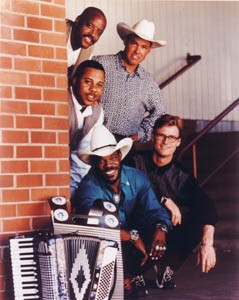
New-Grass Bluegrass: The Waybacks play “that high, loathsome sound.”


Smart Pickin’s

The Waybacks ride back to the North Bay

By Greg Cahill

Their shows are legendary, and that legend just keeps on growing. Fresh from their first date at the largest bluegrass festival in the United States–where the band shared the stage with new-grass greats Darol Anger and Mike Marshall and was introduced by the festival announcer at an encore performance as “the hottest debut band at Merlefest”–the San Francisco-based Waybacks are back with a new album (Burger after Church) and an upcoming date at the Rancho Nicasio.

This quirky acoustic quintet, dishing up what they like to call (with tongue planted firmly in cheek) “that high, loathsome sound,” is an irreverent round-up of “crabgrass” music, countrified humor, and virtuoso licks that has led to a cult following coast to coast. It’s all about virtuosic flatpicking, fingerstyle, fiddle, and mandolin, sowed with an exuberant joie de vivre.

“The group’s air-tight arrangements swing with fervor and intensity, spotlighting spine-tingling vocal harmonies and some of the hottest instrumental playing you are likely to hear on either side of the Rockies,” opines Steve Barker of the Freight & Salvage nightclub in Berkeley.

While their stage antics are all about fun and their albums are rife with irreverence (their 2000 CD Devolver–which Acoustic Guitar magazine hailed as “an album that no fan of modern string bands should miss”–chronicled the descent of man), the Waybacks are strictly serious about their sound. Lead guitarist, mandolin player, and singer James Nash, who also plays with Lane and the Badass Chicken Bones, studied with Nashville session regular Jerry Kimbrough.

Fiddler, mandolin player, guitarist, and singer Chojo Jacques is a longtime contributor to various new-grass bands and honed his chops playing with the Lost Highway Band, who recorded their first album on Augie Meyer’s Texas Record label. He has performed or recorded with Ramblin’ Jack Elliott, Frank Wakefield, Johnny Paycheck, Michael Hedges, and others.

Guitarist Stevie Coyle taught himself to fingerpick while touring with the Royal Lichtenstein Circus. He is a TV commercial actor, a standup comic, and former member of the Foremen (a satirical folk group that fired well-placed barbs at the nation’s leaders circa 1994).

Standup bassist Joe Kyle Jr. has contributed to the amazing Hot Club of San Francisco (the Django Reinhart-Stephane Grappelli-inspired ensemble), as well as the North Bay-based Trailer Park Rangers and Bone Cootes and the Living Wrecks.

Drummer Chuck Hamilton, an ex-member of the Lost Highway Band, has performed with musicians as diverse as blues great Clarence “Gatemouth” Brown and champagne music king Lawrence Welk.

“The Waybacks are a string band that long ago surpassed the pinnacle of technical prowess on their respective instruments,” noted online guitar-music magazine Minor 7th (www.minor7th.com), “thereafter ‘devolving’ to a point that their music is so free and natural that the most primitive brain centers of the Homo sapiens listener goes into electrical storm.”

Kinda gives ya goosebumps–a remarkable assemblage of traditional musicians, to be sure.

The Waybacks perform Father’s Day, Sunday, June 16, at 6pm, at Rancho Nicasio, on the town square, Nicasio. Tickets are $10 for adults and $5 for customers under age 10. 415.662.2219.

From the June 6-12, 2002 issue of the North Bay Bohemian.

© Metro Publishing Inc.

Pepe’s Mexican Restaurant

0

Belly Up: Co-owner Fernando Barragan of Pepe’s on Fourth Street prepares platters full of steaming goodness.

Photograph by Michael Amsler

Best Burritos in Town?

Pepe’s says so, and they just might be right

By Sara Bir

I’m from Ohio, where there are no taquerias. There are Mexican restaurants, usually decked out in velvet sombreros and airbrushed murals, with a wait staff of local college kids who serve indistinguishable entrées that get washed down with giant pitchers of Slurpee-like margaritas.

No wonderful carnitas, no savory al pastor, no tender lengua, and no way will you find cabeza or sesos. Menudo is the teen band Ricky Martin used to be in, not tripe soup. Mole is a thing you go to the dermatologist to get removed.

When I moved out to California, it was a revelation to discover that the Mexican food here is actually Mexican. To novices, the sheer volume of taquerias in most California towns can be dizzying, and neighborly advice is often the best place to start. My boyfriend, who had graduated from Sonoma State, raved about one taqueria in Rohnert Park that he claimed was the best he knew. I went there and was sadly unimpressed. I came to prefer a joint closer to home, on Mendocino Avenue. When I lived in Sonoma, my favorite place was on Arnold Drive, a mere few minutes’ walk from my apartment.

That’s when it struck me: the criteria for best taqueria may have as much to do with where the taqueria is in relation to your house as it does with overall quality. Rolling a block home–the comalike effects of a burrito setting in–is far preferable to (and probably safer than) stepping into a car.

In Ohio, the closest thing to a taqueria in the whole state was La Bamba’s in Columbus, where you could buy a “burrito as big as your head.” California burritos are always as big as your head. The point is, in Ohio you had to go out of your way to get good Mexican food; here, you often just have to cross the street.

Pepe’s Mexican Restaurant in Santa Rosa has just added a Fourth Street location to their original joint on Sebastopol Road, and I’ve found that they have a more legitimate claim to the best taqueria in town: the food is standout taqueria fare. Their sign boasts the “best burritos in town,” and I felt this needed testing.

Pepe’s new location is in what was once Quinley’s Drive-In, a place replete with chrome styling, black-and-white tile floors, and red vinyl booths that scream out “diner!” Instead of tearing out the Mel’s look, Pepe’s simply strung festive banners and stuck a few standard cheesy Mexican knickknacks up on the bright, white walls. It’s a bit disarming to step in there and see the classic American diner counter with its stools stretching out before you under the fluorescent lights. But it’s a fun juxtaposition.

Burritos come in regular and super sizes, the difference being that super has additions of guacamole, lettuce, cheese, and sour cream. A minimalist, I opted for a regular burrito al pastor (spicy barbecue pork–what burritos were made for!). The pork was superb, richly seasoned, not gristly, and it had just enough grease to be moist and appetizing without being greasy.

The ratio of meat to beans and rice in the filling leaned way to the side of meat, another plus–no one wants to dig into a rice burrito. (Pepe’s does offer a veggie burrito, which is slightly misleading as it contains no additional veggies, save salsa, lettuce, and guacamole; it’s essentially a regular burrito with no meat and more rice for the same price.) As pleased as I was with the seasoning of the al pastor, I promptly dumped both types of house-made taco sauce (surprisingly mild) all over it and dug in.

Next visit I tried a torta. I’m surprised these joyful bundles of gluttony are not more popular. A torta is kind of like a burrito rearranged in sandwich form on a soft white roll. I ordered the grilled steak torta, which at $6.50 was kinda spendy, but the generous amount of steak spilling off the bun served as redemption. Also plopped on my torta was shaved lettuce, slices of avocado and tomato, and pickled jalapeño. Sadly, the steak was a bit bland, and though I doctored it up just fine with salt and taco sauce, I felt let down (al pastor tortas are the way to go). A tasty, sloppy, filling dinner, overall.

Pepe’s offers dinner plates as well as à la carte options. I tried a combination with one chile relleno and one tamale, thinking it would be a reasonable amount of food. I think I am still full. For $9.95, you get a platter laden with copious piles of rice, beans, salsa, guacamole, and sour cream. The chile relleno, its delicate batter smothered under a mild tomato sauce, oozed with a gooey, barely tangy cheese filling. The whole affair was a treat, but so very rich that it was tough to finish (such is the nature of a good chile relleno). The chicken tamale was good, but the chile relleno’s filling gushed all over it bloblike, and after that, discerning separate flavors and textures was a lost cause.

In true diner fashion, Pepe’s is open all day, breakfast to dinner. A breakfast burrito is $6.95, more than either a regular or a super burrito, but still cheaper than an omelette in most local breakfast places. I ordered a chorizo burrito one morning (sausage in keeping with the breakfast theme) and found myself face-to-face with a bulky burrito of earthshattering proportions. Inside were tiny bits of egg, a small handful of rice, some beans, a scattering of melted cheese, and about one pig’s worth of chorizo. The only way I could have burned off the caloric count of the breakfast burrito would have been to scale Mt. Shasta or build myself an impromptu log cabin. I ate the burrito (well, most of it) at nine in the morning and did not feel stirrings of hunger until seven that night.

For a taqueria, the prices at Pepe’s seem a little high–until you actually get your food and realize how much of it there is. As you may have gathered, they don’t skimp on the meat. Those of you into the takeout thing can easily squeeze two meals out of one dinner. Tacos, at $1.95 each, are on the cheap side, but if you want more elaborate fare, you’re going to have to pay for it. And salsa fresca is 60 cents for a side!

Pepe’s new Fourth Street location seems to be doing pretty brisk business so far, and it has more than a few nearby taquerias downtown to contend with. Pepe’s, however, unlike its local competitors, has lengua, sesos, cabeza, and all that good stuff (real taquerias offer offal), plus breakfast, plus big, roomy booths, plus parking. And they sell beer. So even though Pepe’s is not as close to my house as a few other taquerias are, I am happy to overlook this technicality and proclaim it my new favorite taqueria.

Pepe’s Mexican Restaurant, 1079 Fourth St., Santa Rosa. Open daily for breakfast, lunch, and dinner, 8am-9pm. Order in and takeout. 707.571.7478. (Also 2000 Sebastopol Road, Santa Rosa. 707.545.7425.)

From the May 30-June 5, 2002 issue of the North Bay Bohemian.

© Metro Publishing Inc.

‘Star Wars: Episode 2 – Attack of the Clones’

0

“Boondocks” cartoonist Aaron McGruder strikes back at Star Wars and George Lucas

Writer David Templeton takes interesting people to interesting movies in his ongoing quest for the ultimate post-film conversation. This is not a review; rather, it’s a freewheeling, tangential discussion of art, alternative ideas, and popular culture.

What was that? What did the voice on the phone just say about Annakin Skywalker?

“Annakin Skywalker,” repeats Aaron McGruder, laughing, “is a whiny little bitch.”

McGruder, the controversial cartoonist and social critic behind the popular hip-hop comic strip The Boondocks, has a wicked, rocky rumble of a laugh, a deep, sharp-edged baritone–that is also quite melodious and disarming. Which is kind of nice, considering he just called Annakin Skywalker–the future Darth Vader, the saber-slashing Lord of all Evil, the ultra-potent progenitor of both Luke Skywalker and Princess Leia–a whiny little bitch.

Shortly after catching George Lucas’ Star Wars: Episode 2–Attack of the Clones, McGruder’s on the line. working his way down a lengthy list of critical observations. According to the self-described “near-fanatical Star Wars enthusiast,” the film is too long by at least 30 minutes; It labors under a surplus of forced comic-relief; Much of the plot is repetitious and boring. The list goes on. But in regards to poor Annakin (played moodily by Hayden Christensen), McGruder admits that the guy’s thin-skinned whininess is not really inconsistent with the whole Star Wars story.

“Luke Skywalker,” he says, “was also a whiny little bitch.”

If you’re among the millions of readers who routinely follow The Boondocks–arguably the best, most politically-tenacious comic strip since Doonesbury went all soft and floppy on us–you probably already know what McGruder thinks of George Lucas. Through the character of Huey Freeman–the adolescent, African American intellectual at the heart of his strip–McGruder’s been lobbing comic hardballs at Lucas for weeks, taking him to task for the Jar Jarring-racism of The Phantom Menace. “George Lucas has offended me as a black man and ruined his franchise,” Huey recently said, proclaiming, “I am no longer a “Star Wars” fan! Period!” That said, Huey’s moral resolve rapidly waned as the movie opened–and all of his friends rushed out to see it. Yet, by the middle of the next week, Huey was still holding his ground.

McGruder, on the other hand, has now seen the movie twice.

“I haven’t decided yet how Huey is going to respond to the movie,” he admits, “but I know I liked it. It didn’t make me mad like the last one did.” While agreeing that Episode 2 is much better than Episode 1, McGruder adds that that isn’t really saying much. “Episode 1,” he reminds me, “was one of the worst movies ever made.”

This one, insists McGruder, was basically a good movie.

Unlike a lot of other critics, he didn’t even mind Hayden Christensen.

“The guy really felt half-crazy,” he says. “Early on you’re thinking, ‘Wow! This guy’s really not all there.’ And I liked that.” He also gives thumbs up to Sam Jackson, as Jedi leader Mace Windu. “Yeah, he was great. You only wish you got to see him whup more ass.”

Nobody, though, gives a better performance in that movie than Yoda, he says.

“Yoda stands head and shoulders above everyone else,” laughs McGruder, “no pun intended. I was just mad that he had a green light-saber, because, you know, if Mace Windu gets a purple light-saber, Yoda should have gotten his own color, too. It should have been yellow or orange. Other than that, Yoda was fantastic!”

The film’s major failures, he says, are mainly in the storytelling and the editing.

“If Lucas was a better storyteller in terms of all this political stuff he really wants to do, maybe it would be different,” McGruder says, “but as it stands now, he’s telling a very simple story in the clumsiest way possible.” In less than 15 seconds, McGruder succinctly sums up the political story of Episode 2. “There’s an external threat to the Republic. The President, Palpatine, is using this as an excuse to expand his powers, and ultimately we find out that they’re all in the same league with each other. This is an incredibly simple thing. It’s not unlike many of the conspiracy theories surrounding 9-11.”

As an illustration of that (literally), he mentions the June issue of The Nation, for which he drew the cover. It’s an Episode 2 parody portraying President Bush as the Emperor and Bin Laden as his clandestine accomplice, Count Dukoo–with Huey as a Jedi. “And the Clone Troopers all have FBI written across their chests,” he says, “because it’s easy to make the connection to what’s happening today. But that said, Lucas uses the clumsiest ways of putting that across. It’s a big, big mess. It’s bad storytelling.”

McGruder is most annoyed at Lucas’ habit of cramming those sight gags–and giant crabs and long “Mission Statement” speeches–into the middle of things right when the action is getting good.

“These conversations about fucking Democracy–nobody wants to hear that shit,” he says. “Not in a Star Wars movie! Here’s the thing. It’s so simple. We want to see Jedi with light sabers cutting shit apart. It’s literally that simple. You give me two hours of that, I’m happy. I’m real happy. But Lucas keeps giving me ‘humorous sight gags'”

He mentions a major fight scene in a giant stadium.

“There are 40 Jedi with light sabers in that scene,” he says, “and for some reason I’m looking at C3PO acting silly. Get the robot off the screen and show me a Jedi knight killing something. Or like, Mace Windu is about to go head to head with the bad guy–and here comes this alien bull creature. I don’t want to see a bull right now. There are important things happening. Why am I looking at a bull? Yes, it’s a very big bull, but it’s a bull. It’s not interesting.

“So, here’s the formula, George,” McGruder concludes. “Mace Windu with Light Saber–interesting. Bull–not interesting. Learn that, George Lucas, and I guarantee you, Episode 3 will be even better!

“But, I’m not counting on it.”

From the May 30-June 5, 2002 issue of the North Bay Bohemian.

© Metro Publishing Inc.

Howard Lyman

Bovine Compassion: Howard Lyman’s 1998 book continues to make waves.

Meat and Greet

The ‘Mad Cowboy’ rides again

By Kimberly Arnold

It has been six years since Howard Lyman and Oprah Winfrey won the Texas lawsuit against them for slandering the meat industry. Appearing on Oprah’s talk show, Lyman claimed that the industry’s practice of grounding up the remains of dead cows and feeding them to live cows could cause the spread of mad cow disease across the United States. This method of forced cannibalism prompted Oprah to exclaim, “It has just stopped me cold from eating another burger.” While this gruesome practice ended several years ago, Lyman’s message has stood the test of time with an increasing number of converts and, like any true activist worth his salt, an increasing number of challengers.

His controversial statements, such as “meat kills. It kills us just as dead as tobacco kills us, but far more frequently,” have brought out more than just the Texas cattlemen millionaires. At one time, there were five lawsuits pending against Lyman. But he continues to pound the pavement in defense of vegetarianism. As recently as March, Lyman was put to task on Bill Maher’s talk show, Politically Incorrect, for his 1998 book Mad Cowboy: Plain Truth from the Cattle Rancher Who Won’t Eat Meat (cowritten with playwright Glen Merzer).

On the show, outdoor enthusiast, hunter, author, and freelance journalist Humberto Fontova asserted that “we are omnivores. . . . Our stomachs secrete hydrochloric acid. No herbivore does this. The only reason it does that is to digest meat because our ancestors did it for three million years.” Nonplussed, the cowboy from Montana shot back, “If you believe that, you’re smoking the number one crop out of California.”

Such dry wit belies the strong scientific basis for Lyman’s argument against the consumption of meat. Mad Cowboy documents numerous studies that read like science fiction. For instance, his description of John Kurtz’s FDA-monitored experiment of the recombinant bovine growth hormone (rBGH) used to increase milk production seems too bizarre to be real. In an act of willful ignorance, the chemical company that hired Kurtz refused to accept the boxes of data he shipped to them, the very conclusions they had gone to such expense to investigate. Infertility, a symptom called “downed cows” (cows who couldn’t stand up due to drained calcium from their bones), and increased and accelerated death rates plagued rGBH-fed cows.

Lyman’s compelling book cites other studies investigating the effects of meat consumption. The Council on Environmental Quality in 1975 revealed that 95 percent of the human intake of DDT came from meat and dairy products. His claims are further supported by a study done by The Journal of the American Medical Association from as early as 1961, which concluded that “a vegetarian diet can prevent 97 percent of our coronary occlusions.”

Most vegetarians are familiar with standard arguments that people like Fontova pose: “The longest-lived people on Earth are carnivores. The shortest-lived people are the Hindu vegetarians. The Northern Indians eat nothing but meat. Not just meat, but blubber and organs. And they have a lower cancer rate.” Lyman is quick to counter: “Totally wrong. You should learn to read before you start spreading all this stuff out. And they live to be 50 years old.”

While longevity may not be a compelling enough reason for most people to give up their beloved beef, the gross-out element might be the deciding factor. Consider the effects of mad cow disease on the animals stricken by this merciless killer. Brain tissue develops holes, looking much like a sponge, which causes dementia in the cow and eventually kills it. In sheep, the disease is called “scrapie” due to the tendency of infected sheep to stagger around and scrape against things. In humans, this spongy-brain condition is referred to as Creutzfeldt-Jakob disease. People can contract Creutzfeldt-Jakob through the consumption of infected meat. As a fatal disease that is transmittable from species to species, this has truly frightening implications.

Lyman wasn’t raised by left-wing liberals or idealistic vegetarians. He was a hard-working, fourth-generation dairy farmer and cattle rancher. It took a medical crisis–a spinal tumor almost paralyzed him–before he took pause and looked at what the chemicals he was using and the meat he was ingesting were doing to his body. His conversion to vegetarianism isn’t just the story of one man’s transformation; it is the story of a movement in the making. But don’t be fooled. For all its innocence, Mad Cowboy could cause radical changes in your life that may revolutionize the culinary habits of not only your own world, but of the whole world.

Howard Lyman appears at the Health Extravaganza on June 2, 3-6pm, at the Napa County Fairgrounds, Tubbs Bldg., 1435 N. Oak St., Calistoga. $10 donation. 707.978.3995.

From the May 30-June 5, 2002 issue of the North Bay Bohemian.

© Metro Publishing Inc.

Music To Listen To While Reading Ralph Ellison

0

Lady Day: Billie Holiday was one of Ralph Ellison’s essay subjects.

Collection/Archive Photo by Frank Driggs

Back Tracks

Music to read Ralph Ellison by

By Greg Cahill

Live with music, or die with noise,” author Ralph Ellison once wrote. His own choice was clear. Music–and especially jazz music–provided a wellspring of inspiration for a writer whose influential 1953 novel Invisible Man marked a turning point in American literature and exposed a side of the black experience that few whites understood at the time. Jazz not only informed his writings (providing titles for his works, motivation for characters, and even the beat of the dialogue), it also served as a topic for some of his best-known nonfiction writing compiled in a recent book and set to music on a newly released CD.

Case in point: Ellison’s story “Cadillac Flambe.” It tells the tale of Southern jazzman LeeWillie Minifees, who embarks on a road trip to Harlem, listening to jazz on the radio and hoping to study the phrasing of regional players while enjoying the drive. Instead, he hears a senator call the Caddy he cherishes a “coon cage.” Angered, Minifees careens onto the senator’s lawn and ceremoniously sets the car ablaze. “You can have it, Mister Senator,” says Minifees, “I don’t want it.” Then, quoting from the Billie Holiday song “All of Me,” he booms, “You have taken the best . . . so, dammit, take all the rest! Take all the rest!”

Eight years after his death, after being snubbed in the ’60s and ’70s for failing to meet the expectations of black radicals, Ellison is now comfortably ensconced–along with Richard Wright, Langston Hughes, and James Baldwin–in the pantheon of great black writers.

These days, Ellison is enjoying renewed popularity. Last month, PBS aired an hour-long documentary by filmmaker Avon Kirkland on Ellison’s life, coupled with a dramatized production of his classic essay “King of the Bingo Game.” Those nonfiction jazz writings–which include essays on Charlie Parker, Billie Holiday, Charlie Christian, Louie Armstrong, Jimmy Rushing, Duke Ellington, and Mahalia Jackson, among others–can be found in the book Living with Music: Ralph Ellison’s Jazz Writings (Random House; $19.95), and a newly released companion CD, Ralph Ellison: Living with Music (Columbia/Legacy), features 13 tracks that provide a backdrop for those essays, as well as a rare five-minute excerpt from a 1964 Ellison lecture titled “A Writer’s Experience in the U.S.”

In the CD liner notes, Robert G. O’Meally (who also edited the compilation of jazz essays), writes: “This collection echoes the work of Ellison the trumpet player and composer-in-training who became a writer and offers Ellisonian equipment for those deciding not only to shun the noise but to live with the momentum implied in jazz music: To live a life that swings.”

In his writings, Ellison–who spent the last 40 years of his life writing a second novel, published posthumously–returned over and again to the swing life. His 1986 collection, Going to the Territory, draws its title from a Bessie Smith song and refers to the early jazz and swing bands that plied their trade on the Plains. And, O’Meally points out, Ellison’s 1944 story “Flying Home” (included on the CD) took its title from the popular wartime theme song recorded by Benny Goodman, Lionel Hampton, and Charlie Christian–one of the first multiracial jazz bands–in which the players trade solos and background riffs.

“Try hearing the notes as statements by characters in a story,” O’Meally writes. “‘Each melodic line,’ Ellison wrote in Invisible Man, ‘stood out clearly from the rest, said its piece, and waited patiently for the other voices to speak.'”

Taken together, Living with Music, the book and CD, provide a glimpse into one man’s lifelong pursuit of the muse, his determined quest, as Ellison said, “to capture the textures and colors of experience.”

From the May 30-June 5, 2002 issue of the North Bay Bohemian.

© Metro Publishing Inc.

‘The Sum of All Fears’


Photograph by Ron Diamond

Win Sum, Lose Sum: Ben Affleck as Jack Ryan, facing bombs over Baltimore

Ryan’s Hope

‘The Sum of All Fears’ goes boom, but it’s OK

By

It’s not easy to retrofit an expensive Tom Clancy property, especially when the great man himself is looking over your shoulder as executive producer. So one makes allowances for the scattered quality of Phil Alden Robinson’s thriller The Sum of All Fears. In this heavily rewritten version of the bestseller, a conspiracy to hatch World War III is halted by Jack Ryan (Ben Affleck), who, despite his days played by Harrison Ford in earlier Clancy vehicles (Patriot Games, Clear and Present Danger), is now just a minor clerk without wife or children–but with a seemingly casual girlfriend (Bridget Moynahan). The film has chunks of the novel’s slightly addled mix of East German scientists, weakling American politicians, and Saudi extremists, and it tries to scare us with the notion of an atom bomb in the hands of a Commu-Nazi conspiracy.

The trouble begins when a couple of Arab peasants stub their toes on a derelict nuke misplaced by the Israeli army. These simple, backward folk, thinking it’s a jardinière or something, peddle the weapon to real villains. The America-hating mastermind is a Vienna millionaire (Alan Bates, no relief) with a swastika engraved on the inside of his watch. (Sample rant: “They called Hitler crazy. He wasn’t crazy.”)

I can’t give the film the dignity it seeks (or, rather, that it borrows) from Morgan Freeman, who plays President James Cromwell’s main advisor. Freeman can perform this kind of thing in his sleep, as he may have here. As in Spy Game, Fears is loaded with hushed staff meetings in bunkers and plate-glass chambers, clerks peering at screens, urgent e-mails and teleconferences. To make matters worse, we’re tantalized with a few scenes of a field agent played by Liev Schreiber (Kate & Leopold, Pay It Forward), whose career is far more exciting than anything Ryan gets up to. You don’t get to follow Schreiber’s character, though–that would be too escapist, God forbid.

If the film displays any particular timeliness, it’s that it compliments the Bush consensus that such a bombing is inevitable and we might as well get used to it. The Sum of All Fears does go a step further than the average spy effort. The audience has been teased endlessly by the warhead that almost goes off in the Bond films. Here, the bluff is called, as you can see from the previews. The fireball puts a pall over the adventure, even though the film, using a holocaust for entertainment, makes the claim that an atomic bombing of Baltimore really wouldn’t be that big a deal. We see some burnt cars and an overburdened emergency room as Ryan tries to get to a telephone to forestall world war.

It’s not giving away the ending to say there’s no permanent damage; we overhear a conversation to the effect that the fallout blows out to sea (that’s a relief!), and we end on a solemn but upbeat note. This film, which begins dull, ends lunatic. The Sum of All Fears, which flaunts its realism, is crazier than the craziest James Bond movie.

‘The Sum of All Fears’ opens Friday, May 31, in the North Bay.

From the May 30-June 5, 2002 issue of the North Bay Bohemian.

© Metro Publishing Inc.

Amy Smith

0


Photograph by Bob Stender

Crowning Glory: Amy Smith, shown here dying her hats, throws open her studio doors to the public for Sebastopol’s Art at the Source.

Head Shop

The source of Amy Smith’s art is a topper

By Gretchen Giles

Amy Smith is glad to have a visitor, even if it means cleaning up. She proudly points out that the brightly colored threads in her West County studio are spooled by hue, that her scraps of silk and velvet are tidied away in plastic boxes, her feathers are categorized, and that her large collection of blind, bulbous heads is arranged on new shelving.

The heads, rest assured, are wooden. Some are carved to cunning brims, others bear deep creases in the crown, a few could put the stove in Lincoln’s pipe, and one flirts up at the side, presumably to better allow a flapper’s neat bob to peek out beneath.

Smith practices the old-fashioned art of millinery, or hat making, creating artistic headwear in the airy brightness of her newly neat studio while classical music quietly plays, her ancient dog pants in a stream of sun, and the iron steams its clean, familiar scent.

Exhibiting her work as part of the Sebastopol Center for the Art’s eighth annual Art at the Source open studio tour, running June 1-2 and 8-9, Smith has good reason to straighten up.

According to Sebastopol Center for the Arts executive director Linda Galletta, an estimated 3,000 people took this self-styled tour of artist’s studios last year, resulting in more than $177,000 in total sales over one weekend for the 66 participating artists. This year, the event stretches to two weekends with some 91 souls willing to throw open their doors, pour some cheap wine into plastic cups, and invite hordes of complete strangers into their most private spaceÑwhere they create art. What’s more, once the strangers have arrived, sipped, and looked, they’re going to want to talk about it.

All of which is cheery fun for Smith, who, like most visual artists, works in complete isolation.

“I like having feedback and having visitors in my space,” she insists. “I’ve been trying to find a way not to work so alone.”

But working in a crowd, albeit an underage one, is what led Smith to millinery in the first place. As a young textile artist with two babies underfoot, she quickly realized that printing 100 yards of cloth at a time, hand-painting lingerie, or working with the wet mess of tie-dye was hard to do with curious toddlers threatening to upend the works. “I needed something I could do up here,” she says, patting the large padded worktable where she sits to block her hats. “It’s what wacky female artists did during the turn of the [19th] century. And,” she smiles, “you can finish a hat during naptime.”

A petite, smiling-eyed woman in her 40s, Smith grew up in a family of crafty women. Her mother had her own small hat-making business, and an entrepreneurial aunt had two retail stores devoted to handicrafts. “While my aunt would show my sisters or cousins how to make something, she’d just give me a pattern and hand me the wool,” Smith remembers. “I don’t even remember learning how to knit; it was just something I could always do. If I needed money in college, I’d crochet someone a bikini.”

Pulling a favorite mold down from her line of heads, Smith chats while she casually fashions a hat. Taking an undyed Panama from a bag, she pushes it firmly down upon the faceless mannequin. “I make vintage-style hats, so I use vintage molds,” she says as she squirts the brim quickly with water. “But I also make my hats larger. People seem to have bigger heads these days.”

The water settled into the leaf-frond weave of the Panama, Smith sprays the brim with such ordinary starch as would stiffen a shirtfront. Working quickly as she talks, she rolls the brim over in a small curl all the way around, pinning the roll deftly in place before it rebounds. “I don’t so much block a hat as sculpt it,” she explains, scrunching the crown with both hands so that three finger-made ridges appear. “I love the process of sculpting; it’s working with materials and moving them into shape. You have to get into a different mindset for finishing. Hand-sewing the edges, adding the ribbon . . . ,” she drifts off. Those are clearly chores. Making the entity that will grace a face is her pleasure.

And Smith is all for pleasure. Having previously created 700 to 800 hats a year, sitting, spritzing, starching, and sculpting as a one-woman sweat shop all alone in the studio, she’s now content to produce only 200 annually. “It’s been nice to introduce myself to my kids again,” she says. Retailing for between $75 and $250, Smith’s hats are favored by gosh-dang unnamed celebrities as well as local clients and are generally sold in art galleries, rather than clothing stores, across the country. Her own husband, however, has to wait. “Every time I finish his hat,” she smiles, “someone buys it.”

More seriously, Smith explains that her work is important to her because “those of us who baked ourselves in the sun are now being told that we need to cover up. I think we should do it in style.” She’s also developing a line of hats specifically for those who have lost their hair to the ravages of chemotherapy. “People want to stay looking beautiful.” She explains that she watches old movies for inspiration, considering indeed such soft, close-fitting beauty as the word “cloche” conveys.

Almost as many men as women purchase Smith’s work, so she has developed two steady lines, “Joe” and “Maria”Ñmore like old friends than headwear. “People come to me for that chic-but-casual look,” she says, modeling Joe, a handsome, straw, gardening-to-jazz-festival model. “Mine aren’t as crisp as store-bought hats, because I don’t lacquer them. They feel better that way and you’re not afraid to put them on.”

Taking Joe off, she turns again to the Panama. Gripping the brim edge tightly, she grimaces with effort and begins to crank the straw into a rosette. The rest of the hat pulls into shape, attaining a high haughty back and a dipped front, the finger-ridges of the crown deepening dramatically. Working swiftly, Smith pins the rosette into place and spritzes it with starch. “Everyone looks good in a hat,” she assures.

“This,” Smith chuckles as she cocks her head to admire her fast-drying work, “is the first time I’ve ever stuck with anything long enough for it to come back in style.”

Art at the Source runs Saturday-Sunday, June 1-2 and 8-9, 10am-5pm. Various locations. Free.
Amy Smith’s studio is at 5300 Denver Lane, Sebastopol. For map and complete details, contact the Sebastopol Center for the Arts at 707.829.4797.

From the May 30-June 5, 2002 issue of the North Bay Bohemian.

© Metro Publishing Inc.

Waterkeeper Alliance And Organic Valley Partnership

0

Flush With Success: Environmentalist Robert F. Kennedy Jr. speaks with conviction.

Pure Earth, Pure Water

Robert Kennedy Jr. announces a step toward healthier waterways

By M. V. Wood

Healthy food promotes clean water; clean water promotes healthy food. This reciprocal relationship is about to get codified, as a leading environmental group and a leading organic farm cooperative join hands. On June 8, Robert F. Kennedy Jr., president of Waterkeeper Alliance, will announce the organization’s new partnership with Organic Valley, North America’s largest cooperative of organic farmers, during his talk at the Health and Harmony Festival in Santa Rosa.

“The Waterkeeper Alliance and Organic Valley partnership is designed to highlight the crucial link between pure farms and pure waters,” Kennedy said, commenting on the first formal partnership the organization has entered into since its creation in 1966. Details of the partnership will be released at a press conference prior to the speech. “All organic farmers should be recognized for the contribution they make to protecting our environment,” Kennedy added during a recent phone interview from his New York office. “Our partnership with Organic Valley will help to expand the market for all sustainable farmers.”

Waterkeeper Alliance is best described as an environmental “neighborhood watch” program. Its philosophy holds that the protection and enjoyment of a community’s natural resources require the daily vigilance of its citizens. Community members keep an eye out for polluters in their local waterways with one person designated as the riverkeeper for that area. Equipped with some type of boat, hip boots, vials for water tests, and a working knowledge of environmental law, the riverkeeper patrols neighborhood waterways. The local groups can turn to the umbrella organization for legal help in suing violators.

There are currently 87 international organizations in Waterkeeper Alliance, mostly in North America and several in Central America. Local groups include the Petaluma Riverkeeper, the Russian Riverkeeper, and the Tomales Baykeeper.

The alliance’s main concern is to protect waterways, and in order to do that, the organization has turned to promoting organic farming as well, said Jeffrey Odefey, staff attorney for Waterkeeper Alliance. “Many of our riverkeepers, especially those in South Carolina, kept finding large amounts of pollutants in the water due to nearby agricultural industries, mostly hog farms,” Odefey explained. These industrial hog factories have become one of the country’s biggest environmental hazards, he added.

Thousands of hogs are squeezed into tiny pens in giant warehouses. In order to prevent epidemic levels of disease amid such overcrowding, the hogs are fed antibiotics in addition to growth hormones. According to statistics disseminated by the alliance, up to 80 percent of antibiotics administered to hogs pass unchanged through the animal.

The waste from these hogs is then flushed into open-air pits. Animal waste is rich in phosphorus and nitrogen and can be used as fertilizer when applied in appropriate amounts. But the thick brew of feces and urine in the pits is too concentrated to be effectively used as fertilizer by most crops, so the untreated waste simply runs directly into public waterways, carrying with it the antibiotics and the high levels of nitrates.

Once antibiotics enter waterways, they spread through the environment in low concentrations, killing susceptible bacteria and leaving resistant survivors to multiply. Those bacteria can then infect people who swim in lakes and rivers or drink well water. Diseases that were once easy to treat with routine antibiotics are becoming difficult to cure.

What caught the attention of the riverkeepers in the Carolinas were the millions of fish in North Carolina that were dying because their skin was dissolving. It turns out that nutrient-rich waters spawn outbreaks of Pfiesteria piscicida, a microscopic predator that secretes toxins fatal to fish. Waterkeeper Alliance representatives believe that these same toxins cause fishermen, swimmers, and others to suffer respiratory distress, mental impairment, and body sores.

In hopes of cleaning up their waters, the riverkeepers turned to organic farmers to form symbiotic relationships. For example, Waterkeeper Alliance has trumpeted the work of farms–such as Marin County-based Niman Ranch–that do not use antibiotics or growth hormones. Additionally, in these small farms, the animals are able to engage in natural behaviors such as roaming the land, building nests, and socializing.

And now the alliance is forming a partnership with Organic Valley, the only national organic brand owned and operated by farmers. It was organized 15 years ago by a half-dozen family farmers who believed in sustainable agricultural. Now it’s made up of 450 farmers throughout the United States.

George Siemon, founder and CEO of Organic Valley, will speak at the upcoming festival along with Kennedy.

“We are pleased and honored to have been invited to participate in this year’s Health and Harmony Festival,” Kennedy said. “The success of the festival over the years makes it an ideal place to launch our partnership with Organic Valley. Knowing that many of the people who attend the festival are committed to protecting the environment makes it even more special for us.”

The event, consistently voted the best area festival by Bohemian readers, is now in its 24th year. Celebrating all that is good, healthy, and harmonious in life, the festival has a long-standing relationship with Organic Valley. “Bobby Kennedy doesn’t usually speak at venues such as festivals, but Organic Valley really went to bat for us to bring him here,” said Jeanne Friedland, one of the festival organizers.

Robert F. Kennedy Jr. will announce the organization’s new partnership with Organic Valley at 2pm, June 8, at the Health and Harmony Festival’s Eco-Village stage, Sonoma County Fairgrounds, Santa Rosa. Kennedy will also present the keynote address at the festival’s main stage at 2:45pm. 707.547.9355. For more information, visit www.harmonyfestival.com.

From the May 30-June 5, 2002 issue of the North Bay Bohemian.

© Metro Publishing Inc.

Carol Setterlund

Solitary Standing: 'La Primavera' by Carol Setterlund.Photograph by Lenny SiegelAlone in a CrowdSculptor Carol Setterlund's soul totemsBy Gretchen GilesThe ancient academic school of formalism dictates that a work of art should stand apart from the artist. Biographical concerns, personal habits, and documented quirks should remain resolutely banished from the mind while in the presence of the artist's work. That's...

‘The Cunning Little Vixen’

Human Nature: L-R: Molly Haas, Hannah Haas, and William Neely.Photograph by Sandra SpeidelFox Tales'The Cunning Little Vixen' weaves a powerful taleBy Julia HawkinsIn The Cunning Little Vixen, Czech playwright Leos Janácek composed a paean to nature and its consolations for mortality. Under Elly Lichenstein's direction, the Cinnabar Theater's production captures much of the magic, humor, and mood of...

The Waybacks

New-Grass Bluegrass: The Waybacks play "that high, loathsome sound."Smart Pickin'sThe Waybacks ride back to the North BayBy Greg CahillTheir shows are legendary, and that legend just keeps on growing. Fresh from their first date at the largest bluegrass festival in the United States--where the band shared the stage with new-grass greats Darol Anger and Mike Marshall and was introduced...

Pepe’s Mexican Restaurant

Belly Up: Co-owner Fernando Barragan of Pepe's on Fourth Street prepares platters full of steaming goodness. Photograph by Michael AmslerBest Burritos in Town?Pepe's says so, and they just might be rightBy Sara Bir I'm from Ohio, where there are no taquerias. There are Mexican restaurants, usually decked out in velvet sombreros and airbrushed murals, with a wait staff...

‘Star Wars: Episode 2 – Attack of the Clones’

"Boondocks" cartoonist Aaron McGruder strikes back at Star Wars and George Lucas Writer David Templeton takes interesting people to interesting movies in his ongoing quest for the ultimate post-film conversation. This is not a review; rather, it's a freewheeling, tangential discussion of art, alternative ideas, and popular culture. What was that? What did the voice on the phone just...

Howard Lyman

Bovine Compassion: Howard Lyman's 1998 book continues to make waves. Meat and GreetThe 'Mad Cowboy' rides againBy Kimberly ArnoldIt has been six years since Howard Lyman and Oprah Winfrey won the Texas lawsuit against them for slandering the meat industry. Appearing on Oprah's talk show, Lyman claimed that the industry's practice of grounding up the remains of dead...

Music To Listen To While Reading Ralph Ellison

Lady Day: Billie Holiday was one of Ralph Ellison's essay subjects. Collection/Archive Photo by Frank Driggs Back Tracks Music to read Ralph Ellison byBy Greg CahillLive with music, or die with noise," author Ralph Ellison once wrote. His own choice was clear. Music--and especially jazz music--provided a wellspring of inspiration for a writer whose influential 1953 novel...

‘The Sum of All Fears’

Photograph by Ron DiamondWin Sum, Lose Sum: Ben Affleck as Jack Ryan, facing bombs over BaltimoreRyan's Hope'The Sum of All Fears' goes boom, but it's OKBy It's not easy to retrofit an expensive Tom Clancy property, especially when the great man himself is looking over your shoulder as executive producer. So one makes allowances for the scattered quality of...

Amy Smith

Photograph by Bob StenderCrowning Glory: Amy Smith, shown here dying her hats, throws open her studio doors to the public for Sebastopol's Art at the Source.Head ShopThe source of Amy Smith's art is a topperBy Gretchen GilesAmy Smith is glad to have a visitor, even if it means cleaning up. She proudly points out that the brightly colored threads...

Waterkeeper Alliance And Organic Valley Partnership

Flush With Success: Environmentalist Robert F. Kennedy Jr. speaks with conviction.Pure Earth, Pure WaterRobert Kennedy Jr. announces a step toward healthier waterwaysBy M. V. WoodHealthy food promotes clean water; clean water promotes healthy food. This reciprocal relationship is about to get codified, as a leading environmental group and a leading organic farm cooperative join hands. On June 8,...
11,084FansLike
4,446FollowersFollow
6,928FollowersFollow