20th Century Fashion Overview

0

You’ve Come a Long Way, Baby!

A century of fashion innovation, novelty, and faux pas

By Dara Colwell

While fashion largely remains in the eye of the beholder, clothing has always served its purpose–be it social, sexual, cultural, or individual. Since man evolved from his naked-ape status (and because nudity is often perceived as a threat), he has cloaked himself in threads, accentuated this, minimized that, tucked those neatly away and managed to avoid sitting on cold surfaces unprepared.

Now that we’ve arrived at the early 21st century, fashion will no doubt take new, unexpected turns. But one thing remains certain: Western fashion has gone through such rapid changes and bizarre extremes that looking back inevitably evokes morbid fascination.

What better time to start than at the turn of the last century. The popular figure at the time was the “Grecian bend”–a pigeon-breasted bosom, tiny corseted waist, and full swayback hips.

The corset itself had appeared in the late 19th century and caused considerable debate. The popular practice of tight-lacing and the inward-curving busk at the corset’s front raised the question whether it was harmful to the wearer’s health. (Pretty much a no-brainer.) Dress was, of course, exceedingly formal and reflected social status.

The 1920s was a decade notorious for scandalous changes in fashion, drinking habits, and Mafia activity. It was the era of the streamlined, curveless figure. Skirts fell sordidly short, between the knee and mid-calf depending on the season, and formal clothes hardly differed from casual ones. Clothing was straight, hairstyles were tomboyish, and fashion was much less restrictive, giving both sexes ample room to run when the cops crashed the local speakeasy.

Let’s skip to the bouncy and bubbly ’50s (the previous two decades everyone dressed like their parents), a time when cardigan twin-sets were all the rage. Full-length, shawl-collared coats and furs draped glamorously across the shoulders of starlets. Women waltzed into rooms in full, wide skirts layered in taffeta, while men–who still dressed like their fathers–wore casual sweaters. Of course there were also the incredibly engineered bullet bras, which will likely cause us to mix metaphors, so we’ll mention them only in passing.

The ’60s signaled a time of fashion innovation: PVC designs, straight Nehru jackets, shapeless capes, tweed reversible coats, and–who can forget–the miniskirt.

Because ’70s retro fashion is currently en vogue, there’s little need to go into polyester three-piece suits, platform shoes, floral muumuus and free-flowing bell-bottoms. Just watch That ’70s Show.

As for the ’80s slew of grotesque fashion–skinny leather ties, ripped sweatshirts, suburban punk fashion, and bandannas–some things deserve to be forgotten by history.

Today, fashion seems influenced more by advertising and our television screen than, say, those bra-burning episodes of yesteryear. But it’s also more fun. There are fewer constraints dictating what is formal or casual, office wear or leisure.

So whatever the fashion era, the next time “What could they have been thinking?!” flits through the unschooled mind, just remember: Decades from now, you might have to explain that those sausage-casings you donned in the ’80s were actually jeans.

From the October 3-9, 2002 issue of the North Bay Bohemian.

© Metro Publishing Inc.

‘The Banger Sisters’

0

Groupie Hug

The world’s most famous rock and roll muse sizes up ‘The Banger Sisters’

Writer David Templeton takes interesting people to interesting movies in his ongoing quest for the ultimate postfilm conversation. This is not a review; rather, it’s a freewheeling, tangential discussion of art, alternative ideas, and popular culture.

Pamela Des Barres is awake. Sort of. “Um, can you call me back in 15 minutes? I just got up,” she yawns, all husky-voiced. I’ve called her at the pre-arranged time of 10 in the morning to talk about The Banger Sisters, in which Goldie Hawn and Susan Sarandon star as one-time rock and roll groupies doing the Big Chill thing after 20 years.

Former groupie Des Barres–the free-spirited author of I’m with the Band: Confessions of a Groupie–managed to score an invitation to last night’s big Hollywood premiere of the film and clearly she has yet to fully recover from the postfilm party. “Yeah, I guess I had one too many free drinks last night,” she laughs, and we agree to try it again in, say, a half hour.

That should give time for the caffeine to kick in.

Des Barres–whose numerous fluid exchanges with famous rockers are related in juicy detail in her book–is without question the most famous groupie alive, right alongside the infamous Cynthia Plaster Caster. Cynthia’s the one you may have heard of, who made plaster molds of rock-star genitalia–and who, it so happens, was Des Barres’ thoroughly appropriate date at last night’s party.

Still based in Los Angeles, Des Barres was once a member of the legendary GTOs, Frank Zappa’s pet-project girl group. Now something of an icon, she’s written extensively about the rock and roll scene of the ’60s and ’70s, and contributes a regular column to E! Online. She’s even established her own slightly eccentric and characteristically unabashed website (www.pamelades-barres.com). The way Des Barres sees it, the groupies of the ’60s were not mere sex partners for testosterone-poisoned guitar players; they were groundbreaking, chance-taking muses, selflessly nurturing the creative impulses of the world’s up-and-coming musical geniuses.

And that’s pretty much how they are remembered in The Banger Sisters.

“I have no complaints about the way the music scene and the groupie situation was depicted,” she enthusiastically proclaims after we’ve reconnected later in the morning. “In this movie,” she says, “there was no guilt and no shame attached to having been a groupie; there was no sense of naughty-naughty-naughty going on.”

Barely stopping to take a breath–caffeine, it’s a wonderful thing–Des Barres says, “A groupie was more than just some girl who wanted to get laid by any member of the band. Sure, it may have been like that in the late ’70s and the ’80s, but when we were doing it, it was more about being a part of the scene. It was about being embraced by the group, like we were embraced by all of Led Zeppelin–who, I must say, adored me.

“Eventually,” she continues, “the word groupie became so tarnished. That’s why this particular film will be very uplifting for the real groupie. It definitely takes some of the stigma from the word groupie.”

To hear Des Barres describing the good old groupie days, it almost makes one wish The Banger Sisters wasn’t set entirely in the present. Aside from one wistful montage of footage from the ’60s–beautiful people cruising Sunset Boulevard, blissful crowds surrounding the Whisky-a-Go-Go, dancing in the streets–the film never attempts to recreate the past.

“But that footage was great, wasn’t it?” Des Barres almost shouts. “I kept looking for myself in that footage. It was so incredible. It was such a nostalgic moment for me, sitting there watching that. I went, ‘Oh, my God! Oh, my God!’ I’d almost forgotten what it looked like. It was like watching some mythological era spring to life. It stunned me.”

“But isn’t it hard to look back at the ’60s,” I ask, “without also thinking of all those dark pieces in the picture? Vietnam? Altamont? Manson?”

“It turned dark eventually,” she allows, “but there was so much incredible optimism at first–the Beatles era and all that. And that’s important to remember. Also, musically, the 1960s was the most profound moment in history. So let’s think about that. It was a revolutionary time. I truly believe that in hundreds of years, people will look back on the ’60s and see it as a great musical renaissance. And Frank Zappa will be revered as a kind of Beethoven.”

“And how about you and Cynthia?” I ask. “How will you be viewed by future generations?”

“Oh. Well,” Des Barres laughs, “I think people will see us as the pioneer women of the rock and roll world.”

From the October 3-9, 2002 issue of the North Bay Bohemian.

© Metro Publishing Inc.

Osmosis Spa

0

Spa-Go

Absorbing well-being at Osmosis

By Davina Baum

There’s always a new, hip spa treatment just aching to garner all the attention. Hawaiian this, aromatherapy that–there are plenty of divine luxury treatments out there to spend a lot of hard-earned money on. Japanese enzyme baths perhaps sound like the next fad to hit the cover of Spa Life magazine–but Osmosis has been providing this soothing treatment in Freestone for 17 years, ever since proprietor Michael Stusser came back from Japan entranced by the magic of the baths.

“I was so captivated by it. I was totally convinced it was my mission to bring it back to the United States,” says Stusser, a lithe salt-and-pepper-haired man with kind eyes. Stusser was a gardener at the Occidental Arts and Ecology Center before he left for Japan, where he wanted to learn how to create a meditative environment–“an important missing piece in our culture.”

He discovered the baths, which are used in Japan for therapeutic treatment, and decided to introduce the treatment to Americans as a spa experience. Osmosis is still the only place in the United States that offers an enzyme bath. Now visitors come from all over the country–spa junkies and vacationers–though Stusser feels that locals are strangely underrepresented.

Everything about Osmosis promotes meditation and wellness. Entering the building, I am escorted into a tea room that looks out on a small Japanese garden. A bath attendant, Leah, shows me the changing room, where I change into a robe, then return to the tea room.

After a few minutes, Leah brings a tray of tea. In the cup is a white substance, an enzyme powder, Leah explains, to aid in digestion before I enter the bath. She pours peppermint tea over it, mixes it, and answers my questions while I sip.

I’m given more time alone in the tea room, until Leah takes me into the bath room, which is dominated by a large, square tub filled with what looks like finely cut wood chips. It’s light brown in color. Leah has dug out a spot for me, and I disrobe and step into the bath, settling down into the hollowed-out area while Leah covers me with the material.

The tub contains a bioactive blend of cedar fibers, rice bran, and plant enzymes, which are in a process of fermentation–thus the warmth. It’s strange. It feels like I’m sitting on a straw mat: not itchy but not smooth. It’s spongy, soft. I’m covered up to my neck, and I can move my hands and feet, although I don’t really want to. I don’t ever want to move again.

The weight of the material on top of my body is soothing, like a very heavy blanket. The smell is intense, the scent of cedar, but more earthy, alive. I try not to imagine Night of the Living Dead zombies reaching their hands up through the sawdust.

Leah comes in every once in a while to put a cold compress on my face and feed me water through a straw–it’s hot. I can feel that my heart rate is up, although I’m not moving. The enzymes don’t just clean pores; the bath is said to be soothing for the nervous system and good for digestion.

When 20 minutes are up, I rise from the tub and stand so that Leah can help me brush the material off. Then I step into the shower and rinse off–the material gets everywhere.

Back into the robe I go, and into clogs that Leah has put out for me. She leads me outside, to one of the massage pagodas. There Leah leaves me, passing me on to Janice, my massage therapist.

It’s bliss. For 75 minutes, all I hear is leaves falling, birds calling, lavender oil rubbing. When Janice is done, I make my way back to the main house, straight to a facial with Roberta. Osmosis uses Jurlique products, which are entirely organic. The facial is 75 minutes long and includes a foot spa and a neck and shoulder massage. I am limp.

After the treatment, I walk with Michael Stusser out to the meditation garden, which is Osmosis’ latest addition. A huge pond is at the center of the garden, and around it landscaping provides ample space for walking or sitting after a treatment. It’s a beautiful place to finish the experience, and there I sit for a while, reluctant to reenter the real world.

An enzyme bath at Osmosis is $75 (includes tea room and blanket wrap); bath with massage is $150. Aromatherapy facials are $90. Osmosis, 209 Bohemian Hwy., Freestone. 707.823.8231 or www.osmosis.com.

From the October 3-9, 2002 issue of the North Bay Bohemian.

© Metro Publishing Inc.
‘The Stone Trilogy’

0

Peace Talks

‘The Stone Trilogy’ tells stories about peace and conflict

By Davina Baum

Guns are rarely destroyed. They migrate–finding the closest hatred, the most willing buyer–from conflict to conflict, getting passed through hands like gardeners might pass on valuable heirloom seeds.

One smoking gun is what links the three episodes in The Stone Trilogy, a play by Ian Walker being staged at the Luther Burbank Center on Oct. 5. The performance benefits CONTACT Africa.

“I think of it as an intimate epic,” says Walker, who wrote the play “from ideas that had been pushing around in my head for a while about conflicts and repeating histories and what’s common about them.” The three pieces are set in 1999 and follow the gun from Ireland to South Africa to San Francisco. The underlying element, says Walker, “has to do with love in the face of societal or racially motivated conflict.”

Though the play was not written in conjunction with the activities of CONTACT Africa, Walker notes that it does deal with the “issues that create the conflicts that CONTACT Africa is trying to deal with.” And as Rick Brown, a managing partner with the Results Group in Santa Rosa and a founding member of CONTACT Africa, points out, the first step to “conflict transformation” is understanding the root histories that can lead to dehumanizing the “other.”

CONTACT Africa grew from the CONTACT program (Conflict Transformation Across Cultures) at Vermont’s School for International Training. There on a sabbatical last summer, Brown met a group of people, mostly from Africa, who were interested in seeing CONTACT’s methods applied to the countries of Africa.

CONTACT’s approach has grown largely from the theories and experience of Dr. Paula Green, executive director of the program and one of the key leaders internationally in developing this conflict transformation notion.

“The notion of conflict transformation is something that has emerged in the peace-building field in the last 10 to 15 years,” says Brown, sitting in his Santa Rosa office. “The primary focus,” he says, “is on taking people . . . who are interested in not just stopping conflict but actually using conflict situations as a foundation for building the capacity for societies to be more peaceful.” This means exploring the conflict’s history and the mythologies that lead to it.

Mythologies play a large role in the conflict transformation process. In Africa, as in many places, conflicts have arisen based on the mostly arbitrary lines drawn by the colonial powers. Brown points to the Tutsis and the Hutus in Rwanda as an example. “Genetically, they’re no different; culturally, they have the same basic value systems, but in order for the Belgians to control Rwanda during colonialism, the basic technique was divide and conquer. So they created the mythology of being different. People come to believe these things; they become the truth.”

CONTACT Africa’s method breaks down this mythology by using deep listening and really understanding the roots of subconscious prejudices–rehumanizing the “other.”

Participants tell stories–positive and negative–about themselves and others. “Deep analysis” is the next step, in which assumptions that come up in the listening and the telling are analyzed. The point, says Brown, is that you see and hear the other person “through the lens of that assumption set. The act of that dehumanizes them, which makes it more likely that you can commit violence against them.”

This listening and analysis goes both ways–between listener and teller–because “it’s one thing to see how what they’ve done to you has formed your impression of them, but to get to the level where you see what you did to them–what your people did to them–and to accept that responsibility, that’s where you get the transformational aspect.”

CONTACT Africa is working to support people who are doing this kind of peace-building work in Africa. The goal is to “build a critical mass of leadership who promote this model,” Brown says.

Saturday’s performance will raise much needed funds for the project, and in a time when peace building is waylaid in favor of war mongering, The Stone Trilogy offers thoughtful alternatives.

‘The Stone Trilogy’ will be performed on Saturday, Oct. 5, at 8pm at the LBC, 50 Mark West Springs Road, Santa Rosa. $25. 707.546.3600.

From the October 3-9, 2002 issue of the North Bay Bohemian.

© Metro Publishing Inc.
Peter Tork

0

For Pete’s Sake

No Monkees business for Peter Tork

By Greg Cahill

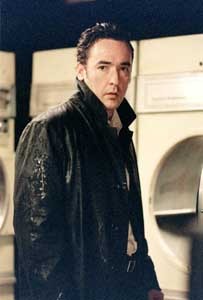
Back in the day, Peter Tork graced prime-time television, helped sell millions of records to adoring teens, and partied with the Beatles. Now he’s got the blues–the Shoe Suede Blues Band, to be precise–and he’s having the time of his life.

For the most part, the new band is a straight-ahead blues review in which Tork and friends play everything from Louis Jordan-style jumpin’ jive to Southside Chicago classics popularized by Muddy Waters to recent Bob Dylan tunes to a handful of originals. “And we do play a couple of Monkees songs,” he adds. “You can’t get away from those.”

Tork–an L.A. resident who lived for five years in San Anselmo after he quit the Monkees in 1968–returns to the North Bay on Sept. 28 for a show at the Mystic Theatre. Shoe Suede Blues started out as a casual gig. It’s still casual–and occasional–but the band’s shows and CDs are drawing critical acclaim.

Tork first got involved in the new project a few years ago, he explains, when a friend’s wife asked him to play at a church charity dance. “It used to be something we did once or twice a year, but eventually we realized this is sounding good,” he says during a phone interview from his home. “There’s something special here–there’s a real quality to it.

“We just love that blues bag. I always wanted to play the blues, and now I’m doing it,” adds the former pop star. “I get to play a scorching lead guitar, and there’s not much that’s more fun than that. Of course, what’s really fun is the interaction with the other band members. It’s just glorious. I don’t think I could be happier.”

Happiness is foremost on Tork’s mind these days. Born Peter Halsten Thorkelston, Tork is a Washington, D.C., native who grew up as a home-schooled child proficient on banjo and guitar. During the early ’60s, he moved to Greenwich Village, jammed with members of the Lovin’ Spoonful, and dated Mama Cass Elliot. He later fled to the West Coast in search of fame and fortune. He found both.

In 1966, TV producers Bert Schneider and Bob Rafelson hoped to cash in on the popularity of the Beatles with a TV show that would capture the madcap zaniness of the Fab Four’s musical comedy film A Hard Day’s Night. The producers placed an ad in Variety calling for musicians.

Legend has it that all four band members–bassist Tork, singer Davy Jones, guitarist Mike Nesmith, and drummer Micky Dolenz–answered the ad. Actually, only Nesmith saw the ad; the remaining members heard about the auditions through word of mouth.

The Monkees first aired on NBC in September of 1966 and ran for three seasons. The high-spirited shows featured simple, humorous plots, a light-hearted take on teen rebellion, and pre-MTV musical segments. It didn’t take long before the band was riding high on the charts with songs penned by Gerry Goffin and Carol King, Neil Diamond, Harry Nilsson, and Tommy Boyce and Bobby Hart, the kings of bubblegum pop.

At first, the band members contributed only vocals to their chart-topping singles but eventually gained more control over their own music while crafting a catchy garage-pop sound. It all came to a crashing close after the band’s ambitious 1968 experimental film Head, co-written and co-produced by Jack Nicholson.

Tork, just 23 when he signed on with the Monkees, gives a measured response when asked to sum up his experience with the band. “I did as well as I knew how and have nothing to be ashamed of,” he says. “The most significant thing about the Monkees as a pop phenomenon is that we were the only TV show about young adults that did not feature a wiser, older person. We were out to throw off the shackles of an outmoded authoritarianism that was full of lies–and still is.

“Our music may not have been daring, but the TV show was and deserves at least a footnote in history on that account.”

In recent years, the world has seen the inevitable Monkees reunions–five in the past 15 years. Meanwhile, Tork has appeared in numerous TV shows and films (including The Brady Bunch Movie) and released a couple of well-received solo albums. While he still enjoys working with the Monkees, clearly the new project is his main focus.

“This is definitely a step up because it’s the kind of music I want to do,” Tork says. “The humor and the heart are all there.”

Shoe Suede Blues with Peter Tork perform Sat., Sept. 28, at 9pm at the Mystic Theatre, 21 Petaluma Blvd. N., Petaluma. Tickets are $15. 707.765.2121.

From the September 26-October 2, 2002 issue of the North Bay Bohemian.

© Metro Publishing Inc.
North Bay Bohemian’s Indy Awards

0

The Indies

The North Bay Bohemian’s fifth annual arts awards

Art is life, isn’t that what they say? Someone says it. Such a generalization becomes even wider when applied to “the arts,” then. Encompassing vague terms like culture and entertainment, the arts cut a vast swath across our lives. Where would we be without them? Bored and lonely, no doubt.

Luckily for us in the North Bay, we are never without arts. Choosing worthy recipients for this year’s Indy Awards was a monumental task. There were a lot of candidates on the table (and a lot of bottles of wine there too). Our dedicated editorial board debated each and every one–and each conversation turned up new candidates, complicating matters further.

In the end, it’s reassuring to know that this is a yearly event, and the chance will arise again next year. Speaking of next year, and last year and the year before, since this is a marker of sorts–five being a number of distinction–we look back at some Indy winners past and discover that while not all our past recipients are doing what they started out doing, they are keeping those lively arts alive.

For Art’s Sake Khysie Horn, Quicksilver Mine Company

Forestville’s Front Street Gallery may be little more than wood framing and rough cement and sticky scraps of insulation padding today, but this time next year it aims to be a local landmark. Standing in the remodel rubble, owner Khysie Horn yells over the shrill drills in evident delight, “That’s my heating and cooling system!”

Horn has spent almost half her life preparing to run the exhibition space that the 1,300-square-foot Front Street Gallery promises to be. Currently maintaining a small dedicated gallery in the back of her Sebastopol gift store, the Quicksilver Mine Company, Horn showcases different area artists every six weeks, hanging only that which pleases her, be it abstract, conceptual, or just plain amazing.

Since 1983, when she began hanging art in the hallway of her first store, then in Guerneville, Horn has exhibited the work of over 450 artists.

“I’m always so amazed and flabbergasted by what people do,” she explains. “I have no [fine arts] training, I have no background; I’ve learned from the people I’m around.”

Horn certainly does have a background–it’s just in alternative education and human services. While driving all over the Bay Area in the early ’80s to complete a master’s degree, she was coaxed by friends to open a shop instead. “I had always had this idea that I would love to have a store that would be all locally made things.”

To this day, the Quicksilver Mine Company is gloriously countycentric, selling only that which is made within Sonoma County lines. Horn plans to eventually close the Sebastopol shop and make the Front Street Gallery her only project. While there might be some “higher-end fused glass and some nice ceramics,” her focus will be on the fine arts, gathering artists together, helping them to find buyers, hosting events, and just generally acting as her own ad hoc, community-serving nonprofit.

“If I took all the time and energy I put into the gift shop and put it into and outside of these four walls and linking with artists,” she says, gesturing around the dust of the Forestville space, “it seems to me that it’s a possibility that I could make it work.”

Given Horn’s track record, that’s a very good possibility. (GG)

Bucket of Charm Roger Rhoten, Sebastiani Theatre

It is impossible to compare the Sebastiani Theatre to all those sad, soulless, compartmentalized megaplexes that have quietly become the moviegoing mainstream. The multiplexes are just boxes, streamlined serving troughs for the mass distribution of slickly slapped-together product.

The Sebastiani, on the other hand, is a neon-encased bubble of art deco happiness. Located on the square in Sonoma, the 69-year-old movie palace is a trip back in time–but also a step forward, with its devotion to showing the best of non-Hollywood, independent, and foreign cinema.

“It’s a charmer,” says Sonoma’s Roger Rhoten, who has owned, operated, and championed the theater for almost 10 years.

It’s also a link to our past. It’s what the theaters used to be like, back when movie houses were grander in style than they are today. “It’s the difference between going to a fine restaurant and going to McDonalds,” adds Rhoten. “Sure, you can get a meal at McDonalds, but the place hasn’t got all that much ambiance or magic.”

Well, the Sebastiani has plenty of ambiance. And its fair share of magic too–literally. As a part-time professional magician, Rhoten’s been known to take the stage before a show to pull a rabbit or two out of thin air.

Which is nothing compared to the miracle of keeping the Sebastiani up and running. Rhoten has done that and more.

Ever since Rhoten, several years back, began screening small-budget independent and foreign films exclusively–with a side helping of live music and theater acts featuring local groups and touring acts from abroad–the venerable Sebastiani has become more than just a cool place to catch a film; it’s become a vital community institution.

“That’s the special thing about this theater,” Rhoten says. “It’s the kind of place where you can do a variety of different things. . . . We like to provide a space for local community theater groups and young people who are trying to make their statements in music and the performing arts.

“I feel real lucky that I’m able to be a part of so many different aspects of the theater arts world,” says Rhoten. (DT)

Rock and Roll David Fischer, Luther Burbank Center

The pop singer Pink brought out the 12-year-old girls, whose liberal use of pink hair spray must have wreaked havoc in bathrooms across the county. Sexy crooner Al Green brought out an older crowd, lacking in hair on which to apply pink hair spray. And comedian Ellen DeGeneres’ crowd was so regaled in rainbow-splashed clothing that pink hair spray would have gone unnoticed.

But these three acts don’t even begin to exemplify the diversity that the Luther Burbank Center for the Performing Arts has brought to Sonoma County. For that, one would have to include theater productions, modern art, literary stars, and Latin jazz greats. Also Hall and Oates.

Executive director David Fischer points to this hybrid approach–part highbrow university theater, part large arena venue–as one of the distinguishing features of the LBC, and in the venue’s 21 years, the strategy has been refined and polished to a high shine.

The past 14 months–since Fischer took the job–have seen the LBC focus and further define its mission.

He credits his team–Allan Edelstein, Peggy Mulhall, Mark Morrisette, Nancy Farber, Gay Dawson, and Rick Bartalini–for helping the LBC cover that distance. But he’s quick to point out that much more is needed.

The 125,000-square-foot facility, which sits on 53 acres, is supported partly by programming and partly by contributions. Popular programming ekes out a profit, which then helps to fund cultural events. Thanks to fans of Natalie Merchant and Jewel and David Sedaris, the LBC can also underwrite educational activities.

“We’re the largest arts education service provider in Northern California,” says Fischer. “We see that as a crucial piece to our mission.”

Six resident companies make their home within the burgundy brick walls of the LBC: the Santa Rosa Symphony, Actors Theater, the Santa Rosa Players, the Santa Rosa Concert Association, Ballet California, and the Golden Gate Geographic Film Society. All receive subsidies from the LBC.

Fischer calls another of the center’s linchpins, the Sonoma Museum of Visual Art, “a real jewel.” Plans are in the works to triple the museum’s square footage by taking over part of the mall and creating a new gallery space and entryway.

Over the next three years, Fischer hopes to expand programming, keeping diversity, quality, and consistency in mind. This year’s literary series is a first in the community–look forward this winter to seeing not one but two poets laureate on the LBC stage. Within these walls, the arts flourish. (DB)

Book Sense Copperfield’s Books

Most successful bookstores manage to carve a niche out for themselves, but Copperfield’s has secured an identity by not only sponsoring frequent literary events, but by growing stronger as large national chains like Barnes & Noble and Borders stake their territory in the North Bay.

Beginning in a 750-foot square Sebastopol storefront, Copperfield’s had “a vision of having a full-service independent bookstore that [would also become] a place for community events,” says co-owner Paul Jaffe, who, with partner Barney Brown, opened Copperfield’s in 1981. “We wanted to set up the bookstore as a place that would welcome literary events. We decided to take that vision and open it up into some other local areas.”

Paul’s brother Dan Jaffe, who passed away in March, was integral to that vision and served as a third co-owner for 16 years.

Now, Copperfield’s has additional stores in Santa Rosa, Petaluma, Napa, and Calistoga, with both the Petaluma and Sebastopol locations expanding.

Copperfield’s in-store events are particularly strong, thanks to the work of Events Coordinator Jane Love, who regularly brings in both local and internationally known authors. When big-caliber writers–Chuck Palahniuk, Barbara Kingsolver–come to town, Copperfield’s tries to turn their appearances into larger events that benefit the community and not just the store itself.

“We’ve been able to fill enormous halls and funnel money to different groups–Face to Face, literacy groups,” says Jaffe.

Copperfield’s has also taken the initiative to showcase works by Northern Californian writers in The Dickens, their annual literary review. Pulitzer Prize- winning poets laureate Billy Collins and Robert Hass are judging the poetry submissions for this year’s edition. “It’s really getting substantially better every year,” Jaffe says. “I think it provides a forum for our local writers. . . . It’s become an important part of the literary community here at Copperfield’s, and we’re very proud of it.” (SB)

Staging Area Jim dePriest, Sonoma County Repertory Theatre

The logistical confines of an 81-seat, 25-foot-wide theater have not squeezed Sebastopol’s Sonoma County Repertory Theatre into narrowing the breadth of their season’s offerings or shedding longtime programs such as New Drama Works or Young Actors Conservatory. Begun 13 years ago as the Nova Theatre Company, Sonoma County Repertory has kept a steady stream of lively drama flowing into the North Bay cultural waters in times both thick and thin, and continues to run strong in the region’s present dismal climate for live theater.

“We run off the repertory idea in the sense of regional theater,” says Jim dePriest, SCR’s artistic director for 11 years. “We’re not married to any particular type of theater. We do the classics, we do Shakespeare in Ives Park. That’s pretty much in our mission statement–to do a wide range of plays, to encourage the new playwrights, to find a forum for their voices.”

That forum is New Drama Works, which this year received 300 entries from all over the country. (Red Herring, this year’s winner, runs through Sept. 28.) “It’s a very active program, and something we’re really dedicated to,” says dePriest.

Five years ago, SCR closed its second theater on Humboldt Street in Santa Rosa and had been looking to consolidate all of its operations under one (larger) roof. “It’s not really easy to find a building that has 12,000 square feet. We have all the equipment from the other theater, plus the theater we have now, and three or four storage units, which are packed to the gunnels.

“It’s my hope that this next year, we’ll find us a home,” he continues. “If we can broaden our base and reputation, we can broaden the type of work we do. It can extend to dance, music.”

DePriest credits Sonoma County Repertory’s longevity to the strength of the company itself. “You get to know people real well. It becomes a family. We’ve got actors who have been with us for seven or eight years. Now they’ve been there so long, people look forward to coming to see them. All these people have families and work, but they are terribly, terribly devoted actors and technicians.

“If we find a building and it’s really glorious, that’s great. But it’s a building. The people who work there, that’s our strength. It goes beyond just the creative process.” (SB)

Fogged In Gallery Route One

Gallery Route One’s Betty Woolfolk credits the fog with helping their success. In chilly Point Reyes, “people can spend only so much time at the beach before they turn around and come back to town.” The town she’s referring to is little Point Reyes Station–one S-curve of many on Route One along the Point Reyes National Seashore.

Out in West Marin, there is a lot of fog, and artists breed like mold. Gallery Route One provides a focal point–a warm, moist place–for a lot of them. With almost 20 years of focusing on environmental art, Gallery Route One knows its environment.

Mary Mountcastle Eubank, director of the gallery’s project space, and Woolfolk, who is the gallery’s director of membership, speak in the patois of two women who have known each other a long time. The two of them, along with Toni Littlejohn and Zea Morvitz, are the organization’s sturdy legs, providing a table for a “wonderful group of artists,” according to Eubank.

Sitting in the bright, airy space, one doesn’t have the sense that Gallery Route One has aged much in its 20 years; it’s still a youthful, playful place, with a serious side.

The current show, “Turning the Tables,” (open through Oct. 20), for example, features everything from a flying cow and a food-chain board game to a condemnation of the chemicals used in dry cleaning.

The gallery, which is run as a nonprofit membership arts organization, isn’t limited by its four walls. The Artists in the Schools component gets local kids out of their world and into another, perhaps wilder world, where they complete projects such as creek restoration.

Woolfolk, who manages the gallery’s store and its yearly fundraiser, the Box Show, notes that those two components, plus patrons and membership dues, have given them “a pretty solid financial base.” Eubank adds grant support and a “fabulous board of directors” to the financial puzzle. That gives them the freedom to be creative and to show work that might not otherwise find gallery space.

They’re looking to expand, if they find the right place, but they will stay in West Marin. After all, they need the fog. (DB)

Carving a Niche The Jarvis Conservatory

The Jarvis Conservatory isn’t just unique among North Bay performance institutions; it’s unique on a national level. In opting to devote most of its energy to the production and study of uncommon theater arts in its yearly workshops (particularly the all-but-forgotten Spanish Zarzuela), the conservatory not only provides an artistic and educational opportunity for performers, but it also stages world-class cultural events that cannot be found elsewhere in the Bay Area–or in the United States.

William Jarvis, proprietor of Napa’s Jarvis Winery, and his wife, Leticia, founded the nonprofit Jarvis Conservatory in 1973 to support the study of fine arts. In 1994 Jarvis purchased a building in downtown Napa.

The conservatory’s Zarzuela Festival brings to life tragicomic Spanish operettes that incorporate elements of opera, dance, slapstick, and romance. Singers from New York to San Francisco audition for the workshop, and the 24 selectees, plus four dancers from Spain, live in Napa for a month. “From 8am to 8pm or 9pm, they are here doing rehearsals. It’s very intense,” says Kim Anenson, the conservatory’s manager.

The conservatory’s other programs include the Puppet Festival and Workshop, which brings in nationally renowned puppeteers, and a chorale concert with three local high schools, where all of the proceeds go to the schools for their music programs.

On the first Saturday of each month, some of the area’s finest vocal talent takes an open invitation to sing in an informal setting at the Saturday Opera Night. “They are all trained singers, and most of them want to sing one of the pieces of a show that they’re doing. There is some fabulous talent. It’s amazing. You’d never know that there are that many talented people where we live.” (SB)

A Tale of Indies Past

With five years and 28 past recipients now under our belt, the Bohemian looks back at some faces of the past. As expected, some are flourishing while others have fallen prey to economic woes or other calls to duty.

1998: Nan Washburn, Orchestra Sonoma

Innovative young conductor Nan Washburn, then 42, was awarded an Indy in 1998 for her dedication to new music and to female and minority composers, and for shaking up more in the North Bay than just the string section. Washburn was then the conductor and music director of the Orchestra Sonoma (formerly known as the Rohnert Park Chamber Orchestra), and no one could have foretold that her Sonoma County experiment had only a year left to go.

But go it unfortunately did, a typical casualty of arts underfunding. Also typically, Washburn landed firmly on her feet. One of those feet now straddles the map to Michigan, where she is the music director and conductor of the 57-year-old Plymouth Symphony Orchestra. The other taps away on warmer ground as the artistic director and conductor of the three-year-old West Hollywood Orchestra in Southern California.

“It’s a little schizophrenic,” she admits with a laugh by phone from her West Hollywood home. Having jumped a plane that morning from Michigan, where chilly breezes and coloring leaves warn of autumn, she alit in L.A. just hours later to surgically enhanced bikinis and top-down convertibles.

Begged to comment on how hugely she must surely miss Sonoma County, Washburn graciously replies, “I still think that [the Orchestra Sonoma] should have worked, but we did some really exciting things. I still hear from musicians and audience members who miss it.”

Still dedicated to less traditional programming, she has developed a program around Eastern European music to please her new patrons, continues to play the hugely popular Island of the Blue Dolphins piece commissioned by the then-named Rohnert Park Chamber Orchestra, has just secured Academy Awards gag writer Bruce Villanch to narrate her November program of Peter and the Wolf, and has produced a symphony orchestra piece based on the Japanese art of taiko drumming.

Yet the weirder she makes it, the more that they love it in Michigan. “The innovative things have always been the biggest draw,” she says, with only slight wonderment. “I affectionately call Plymouth–which is a very sweet town–‘Pleasantville.’ It’s a very, very sincere, very conservative Midwestern town–and you know what? They love me.”

So did we, Nan. So did we. (GG)

1999: IMA

Even back in the fall of 1999, when Ann Hackler and June Millington–cofounders of Bodega’s groundbreaking Institute for the Musical Arts–stood at the podium to accept the Indy Award, everyone knew that the IMA’s fairy-tale facility on the Sonoma coast was in serious jeopardy.

Still, nobody ever thought IMA was in real danger of disappearing, did they? In spite of losing the lease to the ultracool former creamery where IMA had held lively concerts and effectively birthed dozens of remarkably talented female writer-player-singers, Hackler and Millington were committed to finding a new facility to continue their work.

The good news is they found the perfect place. The bad news: It’s thousands of miles from Sonoma County.

“It’s just too hard to rent a place here,” says Hackler, “and even harder to buy one.” That is not the case on the East Coast–Northampton, Mass., to be precise–where IMA has just purchased a 25-acre farm.

While continuing to operate a stripped-down version of IMA from Sonoma County the dynamic duo has made several strong moves toward establishing IMA’s presence on the other coast.

Soon they will move operations to the new site, and IMA’s West Coast studio space in Bloomfield will be taken over by local musician Jane Clark. Still, says Hackler, since their roots are in Sonoma County, they hope to stay locally involved, staging occasional events such as Sept. 23’s DivaFest in Guerneville.

But one can’t help feeling the loss.

“It feels like a lot of doors just slammed shut,” Hackler says. “Fortunately for IMA, new doors opened up somewhere else.” (DT)

2000: Rene di Rosa

When the 84-year-old founder of the Di Rosa Preserve in Napa stepped down as the institution’s director earlier this year, there were those who thought he would use his newfound free time for much-deserved rest and relaxation. Those people don’t know Rene di Rosa.

Since then, the 2000 Indy recipient has started working with independent filmmaker Les Blank to create a documentary about Northern Californian artists and the preserve. Also during that time, the preserve opened a new gallery called Off the Preserve in downtown Napa.

Plus, di Rosa has been involved in coordinating special events like the upcoming silent auction fundraiser on Oct. 12. And through it all, di Rosa has continued doing what he loves best: searching for outstanding regional art and bringing it to the public at his 53-acre preserve.

The collection, the largest of its kind, has grown to about 2,000 works in all media and represents over 750 artists from the San Francisco Bay Area. Di Rosa says he has bought art from “aliens” a couple of times. “But almost everything here has been created by artists from the area or those who once lived, taught, or worked here,” he adds.

Not only has di Rosa worked to bring art to the people in a physical sense, he’s been adamant in creating nonpretentious galleries that are accessible on a psychological level too. “I never did like all those stuffy galleries,” he says. Those types of places put out the message that people “can’t understand art without . . . help. And that’s bull.

“[Art isn’t] some high ideal or educational experience. It’s just a part of life. It’s that simple and that complex.” (MW)

2001: Ky Boyd and Ian Price, Rialto Cinemas Lakeside

A year ago, when Rialto Cinemas Lakeside in Santa Rosa was awarded an Indy for its commitment to small independent and foreign films, the owners of the theater were cautiously optimistic about their future–and the future of nonmainstream film. One year later, it turns out that their optimism was right on the money.

“Business is up 40 percent from last year,” proclaims Ian Price, the six-screen theater’s jubilant co-owner. “Things are definitely moving in the right direction.”

That’s good news for movie fans who prefer fare like Enigma, Y Tu Mamá También, and In the Bedroom to blaring blockbusters.

When Boyd and Price took ownership of the once declining theater a few years back, they caused a bit of a sensation with their plans to run the place as an art house. Until then, that kind of programming was hard to find in Sonoma County. So while the idea was enticing and appealing, plenty of critics expected the endeavor to fail.

Today, the Rialto is a bona fide North Bay institution. The theater has undergone total renovation, with one vital final piece expected to go in place in October: all new, state-of-the-art theater seats.

“It’s taken a while, but this is the kind of situation we were counting on from the beginning,” Price says. The Rialto’s success reflects a rising demand for edgy independent and foreign films. That success is mirrored by positive growth reported by the similarly inclined San Rafael Film Center and by this year’s Indy Award-winning Sebastiani Theatre in downtown Sonoma.

“I think as our population ages, the desire for these kinds of films will only increase,” says Price. “We’ll continue to book great product, and I know people will continue to show up to see it.” (DT)

Authors: Davina Baum, Sara Bir, Gretchen Giles, David Templeton, M.V. Wood

From the September 26-October 2, 2002 issue of the North Bay Bohemian.

© Metro Publishing Inc.
Laguna Vista

0

Open space vs. affordable housing: Will the proposed Laguna Vista site stay empty for long?

Poles Apart

Sebastopol progressives square off over environment, affordable housing

By Tara Treasurefield

“If I had it to do over again, I’d vote against the Laguna Vista project,” says Linda Kelley, Sebastopol planning commissioner and city council candidate. Kelley is juggling two mainstays of the progressive agenda: affordable housing and environmental protection.

Because the Laguna Vista project includes 40 affordable rental units, Kelley voted in favor of it when it came before the planning commission in June. But out of concern for the environment, she conditioned her approval on changes to the environmental impact report. “I lobbied against the project’s problems starting over 1-1/2 years ago, when it began as an upscale senior project,” she says. “I continued lobbying against the project’s problems and have never stopped.”

On Sept. 3, the Sebastopol City Council also expressed reservations about Laguna Vista, and asked developer Schellinger Brothers to revise the current plan. But the project pitted progressive against progressive over the issues of affordable housing and the environment.

Environmentalist and Bohemian contributor Shepherd Bliss says, “The city council was following the people. What we have here is a new mass movement to preserve the laguna. Humans simply do not have the unlimited right to take the homes of other creatures and life forms in order to meet their needs. In my opinion, this is not a moral high ground.”

While environmentalists rejoiced over the decision, other progressives, such as Paul Carol, are disappointed. A field representative with Service Employees International Union, Carol represents union workers for Sebastopol Unified School District.

“The average daily attendance for the school is dropping,” Carol says. “There aren’t enough kids.” As attendance drops, classes are canceled. Consequently, the jobs of teaching assistants, clerical workers, janitors, and teachers are at risk. Carol believes that the Laguna Vista project would protect these jobs by increasing school enrollment. “I think you’d find people with children moving in,” he says.

Gene Nelson, senior minister at the Community Church of Sebastopol and active member of the Sebastopol Housing Coalition, is another disappointed progressive. “Ultimately, affordable housing in Sebastopol is a justice issue,” he says. “A year from now, I’m going to go to a city council meeting and say, ‘All right, folks, what’s happened in a year?’ My suspicion is that nothing will happen in a year. We talk, talk, talk, and that’s all we’re doing, from my perspective.”

The Reverend John Simmons, coordinator of the Sebastopol Housing Coalition, says, “The reasons for turning [Laguna Vista] down are without a lot of merit. What they really don’t want is a housing mix. There’s a tremendous amount of opposition against low-income housing in Sebastopol.”

But sustainability and affordability go hand in hand, says Daniel Solnit, executive director of the Leadership Institute for Ecology and the Economy in Santa Rosa. “We have to find that fine balancing point between protecting the laguna and building housing that will make sense over the long-term. The health of a community is based on diversity. When the person who cuts your hair or bags your groceries can’t afford to live in your community, there’s something wrong.

“The answer,” Solnit continues, “is not ‘Don’t build anything anymore’ or ‘Keep building the same awful, badly designed stuff we’ve been building, with no regard for the local or global ecosystem.’ There is a third alternative: to build sustainably, to build a really green building that honors the land it’s built on.”

A good example of a sustainable housing development is Village Homes in Davis, says Solnit. However, as Simmons points out, Village Homes is by no means affordable. Steve Beck, coordinator of the ecodwelling program at New College of California in Santa Rosa, explains why. “One reason our housing is so expensive is that most people are so disconnected from the whole process of creating the housing they live in. Straw bale, cob, and rammed earth are materials and building systems that are being rediscovered now.

“One of the most important pieces is enough people wanting an alternative,” Beck adds. “If it starts to become clear that there really and truly is a market for alternatives that are genuinely sustainable, affordable, and solar-energy self-reliant, it’s possible to do.”

Solnit agrees that there are many obstacles to holding out for ecohousing and that doing so is well worth the effort. “It’s very hard to get a planning commission or city council to [build housing developments] the right way, if they can’t see somewhere it’s already been done,” he says. “Nobody wants to be the first, and Sebastopol is probably the most likely place for that to happen. It’s a very enlightened community. If we could build the shining example in Sebastopol, other Bay Area cities would follow our lead.”

Schellinger Brothers will present a new revised plan for Laguna Vista to the city council in October. “We are still looking hard at what we might be able to do to respond to some of the concerns that were raised,” says Chris Costin, Schellinger Brothers’ attorney.

In the meantime, the search continues for other sites for affordable housing, especially in the downtown core, where residents could bike or walk to markets, shops, and services. Sebastopol planning director Kenyon Webster says, “The city has supported several affordable developments in the past and continues to look for appropriate sites that might accommodate development.”

Helen Shane, former planning commissioner and member of the Laguna Advisory Board, says, “My goal is to put together a program that includes incentives–such as deferred or discounted impact fees, tax breaks, low interest loans, and grant money–to build affordable housing downtown, and to approach developers and property owners with the program. I hope to rally the people who came out to protest [Laguna Vista] and who understand that we have an obligation to have affordable housing.”

Though keeping all the balls in the air is challenging, Linda Kelley is optimistic. “Laguna Vista has brought up many issues that are very timely,” she says. “I think there’s incredible stuff on the other side of this, if we use it as an opportunity to create the changes we want to see.”

On Sept. 30 at 7pm, the Sebastopol Housing Coalition will meet at the Community Church, 1000 Guerneville Highway. The Reverend John Simmons and Gene Nelson stress that all are welcome but that the focus will be on affordable housing, not the environment.

From the September 26-October 2, 2002 issue of the North Bay Bohemian.

© Metro Publishing Inc.

Sonya Hunter

0

Ring the Bells, Blow the Whistles: Sonya Hunter comes home to Sonoma County

Sonya in Mind

Folk-pop artist Sonya Hunter’s songs run deep

By Heather Seggel

Sun in Mind, Sonya Hunter’s sixth and latest album, came awfully close to tasting like a cup of Earl Grey tea. “I was going to call it Bergamot,” she says over the phone from her San Francisco home. The citrus fruit is one in a tumble of sensory delights named in the album’s third song, “Bells and Whistles.” “Then I came upon this picture on my friend’s website [artist Michael Wertz], and I immediately fell in love with it.” One of the pieces was titled Sun in Head. A minor word shift, et voilà–cover art and title in one.

The sun is in effect on the album. “A lot of these songs are warm, or they’re hopeful,” says Hunter. “I was almost worried, ‘Oh, no! There’s not enough unrequited love songs on this record!'” While those have been staple items in her repertoire, the sting of rejection is less a theme than an occasional thorn-stick in this garden of tunes.

From the buttery, upright bass that kicks off the album’s first track, “Aquamarine,” to the cool, night-sky feel of “Dance,” there are moments of longing, hesitation, or looking back, but they’re bridged on all sides by colors, sounds, and details from nature so vivid they’re liable to drive you out of doors.

With so many lovely natural accents on Sun in Mind, maybe it’s not surprising that Hunter, who currently lives in the Mission district, traces her roots back to Sonoma County. She grew up in Sebastopol and began playing guitar while a student at the independent Nonesuch School. Weaned on live shows at long-gone local institutions like the Cotati Cabaret, River Theatre, and the original Inn of the Beginning, at 19 she moved to San Francisco to jump-start her own musical career, breaking down genre distinctions to create a sound that’s difficult to define, even for her.

“Lately I’ve been [calling myself a] ’60s-infused folk-pop singer-songwriter,” she laughs. That’s certainly accurate–her folk sensibilities and ear for perfect turns of phrase are evident, and the album’s uptempo numbers have hooks that stay with you for days.

But there’s also plenty of jazz in the mix here. The horn introduction to “Have You Ever Seen” (performed by Kaleidophone) gives the song the pace of human breath, opening up into hushed harmonies that Hunter describes as “hypnotic and chanty.” There are also glimpses of country, forays into world-beat rhythms, and some moments that just plain rock. The heart, though, does seem to be folk and its collaborative nature.

Recorded half in Brooklyn (Hunter lived and worked in New York for two years) and half in San Francisco, Sun in Mind doesn’t so much depart from her styles and skills as expand on them. Hunter’s been involved with production on all her albums, but here, she says, “I was definitely the producer,” with the result that it “feels the most crafted. I really took my time in the studio and did a lot of experimenting.”

Helping the process along were both recording engineer Desmond Shea (who adds percussion on one track) and co-producer and musical collaborator Erik Pearson, described by Hunter as “integral to my sound.” Pearson brings not only his voice, but electric 12-string guitar, toy piano, banjo, and a producer’s ear for looping to the mix, which gives many of the songs additional richness without ever seeming over-handled. The spontaneity of the performances is preserved (the Brooklyn tracks were all recorded “in a couple of hours, [but] there was a beautiful chemistry with the people I played with that day”), and that gives the album additional strength.

Considering her multigenre musical approach, Sun in Mind stands as a great example of organic substance uniting a variety of styles and production techniques. “It’s hard to describe what I’m doing,” Hunter says. “I love folk music and I love jazz, and I’m just trying to do something that’s original and honest and real.” That’s an ambitious mission statement, one this album seems thoroughly steeped in.

As we move toward a rainy Sonoma County winter, Sun in Mind is worth keeping in mind.

Sonya Hunter opens for Richie Havens at the Mystic Theatre on Oct. 4. She also appears at the Starry Plough in Berkeley (3101 Shattuck Ave., 510.841.2082) on Oct. 18. For more information and upcoming shows, check www.sonyahunter.com.

From the September 26-October 2, 2002 issue of the North Bay Bohemian.

© Metro Publishing Inc.
Petaluma Film Series

0

Film Forum

The Petaluma Film Series brings film to movie-starved Petalumans

By Davina Baum

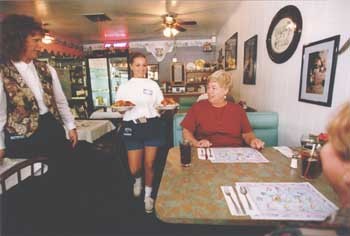
The Petaluma Coffee Cafe’s seats fill up fast. Patrons arm themselves with their chai or nonfat decaf latte or mocha, and scan the room for an open seat. On this Friday night, the opening night of the Petaluma Film Series’ fourth season, seats are hard to come by. The highly coveted couch up front is taken quickly, errant stools and low tables are co-opted for buttocks, and as the sun sets and the film starts–the Thich Nhat Hanh documentary Peace Is Every Step–people are even standing outside the cafe’s big open windows, and they remain there for the duration of the film.

Every Friday night during the season (which runs September through July), movieless Petaluma gets a movie. A collaboration between Sustainable Petaluma Network, Petaluma Progressives, and a group of independent filmmakers, the series has been showing films at locations in Petaluma since 1999. The series sprang from the imaginations of Sustainable Petaluma Network’s Beth Meredith and independent filmmaker John Bertucci, both of whom have moved on to other projects.

The Petaluma Film Series is now run by a cohort of volunteers from the three organizations, and each organization sponsors one film a month. Since Meredith phased out of the project in June, Karen Schell of Sustainable Petaluma Network has been choosing their films. Jonathan Blease and Peter deKramer choose the films for the Independent Filmmaker nights; Chuck Sher does the deed for Petaluma Progressives. The fourth (and, if there is one, fifth) Friday is left open for other groups.

“It’s really a great setup–an entire weekly film series, and each group only has to pick one film per month,” says Schell, sitting at Petaluma Coffee Cafe with volunteer Paul Johnson a few weeks before this year’s series started.

“We started at city hall,” says Schell, “because it was the only place that had a projector and chairs.” The series moved on to the Petaluma Arts Council space next to Copperfield’s, until that was swallowed by the bookstore.

The series has been at the Petaluma Coffee Cafe since April, and organizers are pleased with the venue, though where to hold the series is “always a big issue. We really like this place, but we’re always hoping something will pop up. In our ideal world, we’d find a downtown venue accessible to the public,” says Schell.

Schell adds, “We’re hoping to get enough of a crowd that we have to find a new place.” If the overflowing Sept. 13 showing is indicative of this season’s appeal, a new venue is necessary.

Like the series put on by New College and the Sonoma Film Institute, the Petaluma Film Series showcases a carefully selected batch of films that aim for an edifying, entertaining experience. The goal in booking the films, according to Johnson and Schell, is to “mix it up a bit.”

“They’re all fairly artistic,” Schell continues, “movies you probably won’t see in the mainstream.”

Schell puts great stock in the diversity of the series ensured by having three different groups choose the films.

Past seasons have seen screenings of Green Design: The Next Industrial Revolution; Oil, Drugs, and the Future of Afghanistan; and Cocteau’s Beauty and the Beast. The Petaluma Arts Council, which has shown The Passion of Joan of Arc, often takes advantage of the fourth open Friday, though others have participated also.

“It’s a good way for a random group to plug into an established series,” says Schell, and it also helps to ensure that treasured diversity.

In the coming weeks, the series tackles everything from visual art to medicinal plants. On Sept. 27, SPN screens Fat of the Land: Biodiesel as an Alternative Fuel, which follows two women and their French-fry-fat-fueled car, exploring along the way the viability of alternative fuels.

Oct. 4 brings an Independent Filmmaker offering, Isamu Noguchi: Stones and Paper. The film’s director, Hiro Narita, will be on hand for this discussion. The film documents sculptor and designer Isamu Noguchi–he of the ubiquitous paper Akari lanterns.

The series continues with a film that screened in the Wine Country Film Festival (and was lent to SPN for the film series), called The Shaman’s Apprentice, a documentary about ancient healing wisdom.

The series is offered for free; a donation jar is passed around–a little nudge to give, “but not so [patrons] feel all weird about it,” according to Schell. The program runs with almost no expenses, although sometimes there are licensing fees for using the films. “But we do it anyway,” Schell smiles.

Over its four seasons, the series has managed to acquire its own chairs and sound system, and a new projector is in the works. “We’re digging into our pockets and hoping to recoup the expenses,” says Schell.

A significant part of the allure of the series is the discussions that usually follow. Though the filmmaker of Peace is Every Step could not make it to the recent screening, people lingered after the film ended, talking and sipping their coffee.

Many of the screenings do have a filmmaker or local expert to expound on the film, making the experience that much more valuable. As Schell says, “At most theaters, there isn’t that option.”

It’s certainly not a multiplex experience–and in theaterless Petaluma, the comparison must be drawn. The Petaluma Film Series doesn’t take the place of a movie theater, and it doesn’t aspire to mass market appeal.

Speaking after the series opening, Schell notes that there were “lots of new people I didn’t recognize.” How many movie theater owners could say that? Or rather, what movie theater owner would say that as if it were a surprise?

The Petaluma Film Series screens films on Friday nights at 7:30 at the Petaluma Coffee Cafe, Second and H streets, Petaluma. See the website for the full schedule: www.sustainablepetaluma.net/filmseries.html.

From the September 26-October 2, 2002 issue of Metro Santa Cruz.

© Metro Publishing Inc.

Meat Substitutes

0

Beat the Meat: The shelves of Whole Foods in Sebastopol are bulging with faux meat products.

The Soy Parade

Among a new supermarket crop of meat replacements, the test is in the taste

By Sara Bir

You could be catty and say that a vegetarian eating meat substitute is like a monk having sex with a blow-up doll. Besides sharing the obvious implied ethical quandaries, both acts can also impart an aftertaste of plastic. But you could also be an optimist and note that the past few years’ proliferation of widely available meatless yet meatlike products points to a growing faction of vegetarians and quasi vegetarians who are increasingly aware of both their own health concerns and the huge environmental impact of raising meat.

Burger King offers a veggie burger (the BK Veggie), and McDonald’s has introduced a McVeggie Burger in Canadian markets. Large chain markets from Safeway to Whole Foods are devoting cases in their frozen sections and shelves to tofu dogs, Gardenburgers, and unpepperoni–which is great news for vegetarians who love junk food. But are these highly processed, highly packaged meat alternatives any more noble or healthful than their fleshy counterparts? And, just as importantly, do they taste good?

The proof, in this case, is in the protein, and that’s how the Fabulous Meat Substitute Tasting Party came about. While facing down a fake salmon fillet in the grocery store and wondering who eats this stuff and why, I decided that there was one very good way to find out: become the person who eats this stuff.

So I invited a fairly open-minded crowd of devout vegetarians, curious omnivores, and certified meat lovers over one night for an intimate soiree starring a spread of brand-name soy, gluten, and other products, most of them of frozen origin. Items were served simply prepared according to package directions, unless they were recipe-ready products (such as ground beef replacements) that were not intended to be eaten plain, in which case they were whipped up into typical party grazing fodder.

It was all very unscientific. Products were identified and labeled with brand names very clearly for all to see, so everyone knew exactly what they were eating. Testers filled out comment cards which were then submitted with utter anonymity into a tightly sealed cardboard box with a slot cut into the top. The following is what those cards read. Sometimes it’s pretty, and sometimes it’s not. Here’s the straight beef . . . er, soy.

Yves Veggie Cuisine Veggie Salami Deli Slices, $2.99/package

A mixed response, from “almost edible” to “I could munch a whole pack of this stuff easily, accompanied by some Coke and a Lifetime movie.” Most tasters noticed its visual and textural similarity to bologna. “Doesn’t not remind me of salami–would enjoy more on a sandwich,” said one. In general, not loved but not hated.

Lightlife Gimme Lean! Sausage Style, $3.39/box

Since it’s pretty uncommon to serve naked sausage patties as finger food, Gimme Lean! Sausage Style (which comes packaged in a tube, like bulk sausage or cookie dough) traveled in the guise of that lowbrow cocktail-party classic, sausage and cheese balls. Because Gimme Lean! is fat-free, some found it to be “not so heavy–tastes better than real sausage.” But others disliked its texture, calling it “slimy” and “like eating glue.” Consensus on flavor was divided. Half praised its “sausagelike flavor,” though one claimed it “tries to compensate for lack of tasty grease with insane amount of sage. It’s not working.” Most agreed that sausage- cheese balls were perhaps not the ideal vehicle for Gimme Lean!

Morningstar Farms ChikNuggets, $4.19/box

“A bit chalky but bearable” and “nongreasy, but a bit dry . . . sorta bland.” “Like fast food that’s good for you,” quipped one skeptic. A few liked these for just that reason, though: “Like you’re at McDonald’s minus the clown guy with the big red shoes.” An interesting footnote: Morningstar products are manufactured by Kellogg.

Quorn Chicken-style Nuggets, $3.79/box (see below)

The hit of the evening, these were gone in a flash. All but one taster commended Quorn’s texture as “juicy, almost real,” “lifelike, delightful,” and “amazingly moist, like a hunk of chicken breast.” “I could eat these all night . . . nice, deep-fried sort of unhealthy thing going,” raved one. “Reminds me of fish sticks,” said the lone dissenter.

Health is Wealth Chicken-free Nuggets, $4.99/box

Hated as much as Quorn was loved. “Too dry” and “yucky . . . tasty cardboard” say it all. “Just the creepy name is off-putting, and besides, these look like cat turds.” “Nothing good as Quorn things,” lamented one.

Veat Vegetarian Fillet, $3.99/10.5 oz.

This “new alternative to salmon” provoked lots of curiosity, mostly because of its bright pink shade and odd shape (“looks like an old shoe”). No one really liked this, but we were all impressed that it was edible in the first place. “Slightly spongy and chewy” and “wasn’t half bad” were this product’s greatest compliments. “Like super-low-grade salmon.”

Veat Vegetarian Breast, $3.99/breast

This came in a plastic tray that looked like a chicken-shaped jello mold. “I feel like I’m eating a Fisher-Price toy,” said one. A lot of people skipped this “chewy, synthetic, bland piece of poo-poo” altogether, though someone felt it would be nice to “use in any chicken dish.”

White Wave Seitan Traditionally Seasoned Wheat Gluten. $3.25/package

Served as minced “chicken” in lettuce cups, this went over pretty well: “reasonable texture,” “a bit mushy, one of the better tasting substitutes,” and “more like ground beef.” An enthusiastic fan cheered, “This is the hottest thing since sunburn.” “Seitan is way better when it’s deep-fried,” said another taster, “but then again, what isn’t?”

By the time we got to the veggie dogs, everyone was too full to continue. Overall, everyone’s expectations did not seem to be met, although some of the products we tried would be good in small doses, as part of a meal or well-disguised as a component in something like stew or lasagna. An entire buffet of fake meat is pushing it.

Meat substitutes can be convincing and can, in capable hands, be very tasty. But what’s wrong with just sticking to eggplant, for instance, which tastes like eggplant because it is eggplant? In our rushed society, vegetarians are not exempt from needing to put meals together in a hurry, and, like every good American citizen, vegetarians are indeed entitled to enjoy the giddy, guilty pleasures of junk-food indulgence.

But there are many low-cost, hearty, high-protein foods (tofu, legumes, nuts, and grains) that are meatless by nature. Perhaps the best meat alternative of all is to factor more of those into our diets. Anyone who’s had that “salmon” thing before will probably agree.

Thanks to all of the people who took part in the Fabulous Meat Substitute Tasting Party.

The Quorn Conundrum

Yes, Quorn–the “mushroom-based” newcomer to the U.S. meat-replacement market–does taste pretty good. Marlow Foods, a division of the pharmaceutical company AstraZeneca, makes Quorn, which they claim is the “number one global retail brand for meat-free foods.”

But what the heck is Quorn, anyhow? Actually, it’s a fungus called Fusarium venenatum (Marlow Foods calls it “mycoprotein”) that was discovered in a British soil sample. The mycoprotein/fungus is grown in huge vats using a controlled fermentation process. Marlow Foods claims that “Quorn foods are made from all-natural ingredients and are not produced using modern biotechnology.”

So even if it is a little creepy, Quorn sounds like an ideal product: tastes good, meatless, low environmental impact. Some groups, though, such as the Center for Science in the Public Interest, have concerns about Quorn’s labeling. They are asking the FDA to require Quorn to clearly disclose the product’s fungal origins on its packaging.

Another concern raised by the CSPI is that some of the novel proteins in the mycoprotein might cause allergic reactions. Severe vomiting and diarrhea have been reported by some who have eaten Quorn, both in Britain and the United States. For the time being, Quorn is on U.S. grocery store shelves, and it’s up to consumers to draw their own conclusions.

For more information, visit www.quorn.com and www.quorncomplaints.com.

From the September 26-October 2, 2002 issue of the North Bay Bohemian.

© Metro Publishing Inc.
20th Century Fashion Overview

You've Come a Long Way, Baby! A century of fashion innovation, novelty, and faux pas By Dara Colwell While fashion largely remains in the eye of the beholder, clothing has always served its purpose--be it social, sexual, cultural, or individual. Since man evolved from his naked-ape status (and because nudity...

‘The Banger Sisters’

Groupie Hug The world's most famous rock and roll muse sizes up 'The Banger Sisters' Writer David Templeton takes interesting people to interesting movies in his ongoing quest for the ultimate postfilm conversation. This is not a review; rather, it's a freewheeling, tangential discussion of art, alternative ideas, and popular...

Osmosis Spa

Spa-Go Absorbing well-being at Osmosis By Davina Baum There's always a new, hip spa treatment just aching to garner all the attention. Hawaiian this, aromatherapy that--there are plenty of divine luxury treatments out there to spend a lot of hard-earned money on. Japanese enzyme baths perhaps sound like the next fad...

‘The Stone Trilogy’

Peace Talks 'The Stone Trilogy' tells stories about peace and conflict By Davina Baum Guns are rarely destroyed. They migrate--finding the closest hatred, the most willing buyer--from conflict to conflict, getting passed through hands like gardeners might pass on valuable heirloom seeds. One smoking gun is...

Peter Tork

For Pete's Sake No Monkees business for Peter Tork By Greg Cahill Back in the day, Peter Tork graced prime-time television, helped sell millions of records to adoring teens, and partied with the Beatles. Now he's got the blues--the Shoe Suede Blues Band, to be precise--and he's having the time of...

North Bay Bohemian’s Indy Awards

The Indies The North Bay Bohemian's fifth annual arts awards Art is life, isn't that what they say? Someone says it. Such a generalization becomes even wider when applied to "the arts," then. Encompassing vague terms like culture and entertainment, the arts cut a vast swath across our lives. Where would we be...

Laguna Vista

Open space vs. affordable housing: Will the proposed Laguna Vista site stay empty for long? Poles Apart Sebastopol progressives square off over environment, affordable housing By Tara Treasurefield "If I had it to do over again, I'd vote against the Laguna Vista project," says Linda Kelley, Sebastopol planning...

Sonya Hunter

Ring the Bells, Blow the Whistles: Sonya Hunter comes home to Sonoma County Sonya in Mind Folk-pop artist Sonya Hunter's songs run deep By Heather Seggel Sun in Mind, Sonya Hunter's sixth and latest album, came awfully close to tasting like a cup of Earl Grey tea. "I was...

Petaluma Film Series

Film Forum The Petaluma Film Series brings film to movie-starved Petalumans By Davina Baum The Petaluma Coffee Cafe's seats fill up fast. Patrons arm themselves with their chai or nonfat decaf latte or mocha, and scan the room for an open seat. On this Friday night, the opening night of the...

Meat Substitutes

Beat the Meat: The shelves of Whole Foods in Sebastopol are bulging with faux meat products. The Soy Parade Among a new supermarket crop of meat replacements, the test is in the taste By Sara Bir You could be catty and say that a vegetarian eating meat substitute...
11,084FansLike
4,446FollowersFollow
6,928FollowersFollow