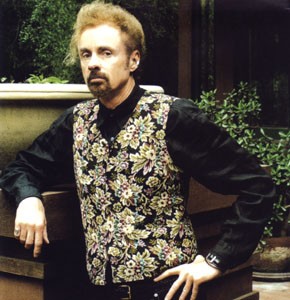
Chuck Prophet

0

Modern Prophet

Americana forerunner visits Santa Rosa festival

By Greg Cahill

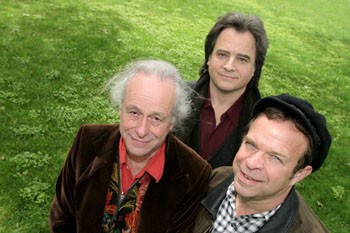
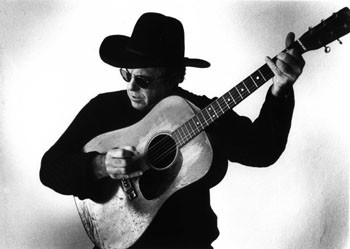
Chuck Prophet is exploring the Mason-Dixon Line of the mind. As a member of the long-defunct Green on Red–the Paisley Underground band that during the ’80s crafted a rustic roots-rock sound laden with punk sensibilities, and served as a precursor to the current crop of Americana artists–the San Francisco-based singer, songwriter, and guitarist often visited Memphis blues and blue-eyed Southern soul in his songs. A longtime associate of Memphis producer and keyboardist Jim Dickinson–who helped countrify the Rolling Stones’ Sticky Fingers sessions and produced landmark albums by Big Star, Jason and the Scorchers, and the Replacements–Prophet has delved deeply into the Southern regional music milieu.

“Jim was a huge influence on me when I was about 20 years old and we first started working together in Green on Red,” says Prophet over the phone from a truck stop outside Nashville. “He taught us so many things and had a profound affect on our approach to making records. He always encouraged us to wave our freak flag high and always be willing to offend ourselves.

“I mean, Jim Dickinson’s philosophy is that pop music shouldn’t be trusted and making records is a moral act. After all, you’re making something that’s good or bad. Yeah, I learned a lot of things from him: just those basic principles of space and time and physics.”

Prophet has applied those esoteric lessons well on his latest album, No Other Love (New West), with echoes of countrypolitan star Bobbie Gentry’s 1967 smash hit “Ode to Billie Joe” and Nashville guitarist Tony Joe White’s funky stylings.

Self-effacing and laid-back, the Whittier-born Prophet started playing alt-country right out of high school as a member of Green on Red, which also featured Dan Stuart and Chris Cacavas. Prophet eventually recorded one EP and eight albums with the band for both indie and major labels. The band became closely identified with the then burgeoning L.A.-based Paisley Underground, a loose-knit, neopsychedelic collective that also included the Dream Syndicate, the Three O’Clock, Rain Parade, and the Bangles (before their big-hair days).

“By the time 1981 had come around, hardcore punk had managed to alienate a lot of folks who had gotten into it when the vitality and the excitement and all the possibilities it seemed to offer initially were turned into a uniformed Nazi approach to things,” Prophet explains. “The Paisley Underground was a reaction to that. Also, it was inevitable that people who had grown up listening to the Beatles, the Mamas and the Papas, and all that kind of stuff coming out their car radios would create a musical movement that reflected that.”

Still, Prophet balks at the suggestion that the Paisley Underground was a real musical movement. “Everyone brought something different to the table,” he says. “Bands like Dream Syndicate, Three O’Clock, and Rain Parade all owned record collections and knew about Syd Barrett and other psychedelic minutia. We didn’t know shit about that. Green on Red was just a white-trash rock and roll band.”

Green on Red disbanded in 1992. Prophet has since released several critically acclaimed solo albums. Yet Prophet and his old cohorts are widely recognized these days as forerunners of the modern Americana movement, which has spawned the likes of Son Volt, Uncle Tupelo, and Wilco.

Despite critical acclaim for his role in such one-off projects as Raisins in the Sun (an all-star alt-country and blues lineup that set out a few years back to write and record an entire album in one day) and Go Go Market’s Hotel San Jose, which he likens to “a postmillennial, freaky frat-boy, Booker-T.-with-turntables sort of thing” created by his wife and musical partner Stephanie Finch, commercial success remains elusive.

“For better and mostly worse,” he says, “the approach has always been to make the records that we thought we would like. We figured that if we like it, then other people will.

“We were just way wrong,” he adds with a sly laugh. “Way wrong.”

Chuck Prophet and his band perform Saturday, Oct. 19, at the Rhythm and Roots Festival. Also appearing are Peter Case, Doyle Bramhall II and Smokestack, Michael Burks, Angela Strehli, and the Brass Monkey Band. The concert begins at noon. Luther Burbank Center, 50 Mark West Springs Road, Santa Rosa. Tickets are $22 advance or $25 at the gate. 707.546.3600.

From the October 10-16, 2002 issue of the North Bay Bohemian.

© Metro Publishing Inc.

ARTrails

0

Hitting the Trail

Get out those maps, it’s ARTrails time again

By Gretchen Giles

To get to the studio of veteran ARTrails exhibitors Gerald and Kelly Hong, park on their suburban Petaluma street, come down the side yard, resist the urge to pick a ripening tomato, admire their 20-month-old son’s colorful toys, step past the outdoor kilns, and at the end of the path, find their backyard workplace.

Certainly, it is no secret that the purpose of ARTrails, now in its 17th year, is to introduce the public directly to those who produce fine art and decorative pieces that enliven home, body, and spirit. But being able to walk around the spaces in which these items were created and ask all the questions that occur–both pertinent and idle–to the very people who made them does appeal very directly to the sweet, loving gawker within.

Sharing a home, a child, a career, and a studio might make some couples snarl. But ask longtime participating ARTrails ceramic artists Gerald and Kelly Hong about this and they just smile. “We’re both really easy-going people and have a really easy relationship,” Kelly says. “The cool thing about our collaborative work is that we’re able to make things that neither of us would have been able to make alone.

“Often when you’re a working artist and you know what sells and what you have to make to make a living, you tend to make the same stuff, but it’s been really great to be giving birth to all of these new ideas together.”

She uses porcelain; he does raku. She paints insects and flowers and animals onto their work; he airbrushes abstract shapes. Together they show nationally and expect to see some 300 people a weekend resisting their tomatoes during ARTrails. The number of high school art students forced by their instructors to seek extra credit through a quick tour particularly gratifies them. Kelly says, “It’s nice because it helps them to see that you can actually make a living as an artist.”

For sculptor and assemblagist Charles Churchill, this year’s ARTrails, his third, is a culmination of a life as an artist. “This [exhibit] is a complete representation of everything that I’ve done for 30 years,” he says. Working with glass, neon, wood scraps, and piano, motorcycle, and guitar parts, Churchill builds sculptures that play with the senses and with light, and are mesmerizingly beautiful. But in a sweet twist, Churchill’s doing more than just creating art–he’s become . . . a muse?

“Last summer I became a figure-drawing model and did so much that I lost my day job,” he says. “It’s given me a new appreciation for art in general. I’m a tubby, middle-aged guy–I’m not an Old Spice guy. All I can be is a good Charlie, and that’s what I am with my spare tire and the pain and fatigue in my face, and all of that has turned into art. I turn everything I can get my hands on into art: I teach art, I make art, and now I am the art.”

Alice Thibeau, who repaints salvaged furniture when she’s not creating life-sized oil portraits, is preparing for her fifth year of ARTrails exhibition, fully dressed. “The people who are coming around are getting much more sophisticated,” she assures. “They all used to ask the same question: ‘How long did that take you?’ It eventually got to be marvelously funny. But last year not a single person said it.”

Generating over $500,000 in direct sales last year, ARTrails prompts some 5,000 visitors. This year 152 artists are scheduled to throw open their doors to the public.

Liz Meyerhoff, the interim executive director of the Cultural Arts Council of Sonoma County, which spearheads ARTrails, explains that while the money and visitor numbers have grown, so has artist interest. “We had a lot more new applicants this year than we’ve had in the past several years–60 new people applied. I assume it’s because the program has become so well-known and well-regarded that people are more drawn to participate.”

Marta Shannon is among the newbies attracted to this event for its distinction and the fact that artists must undergo a jury process for admittance. “I don’t usually participate in anything that’s not juried,” she explains, standing among the colored threads and gold-wooded looms of her weaving studio. Four “secret” jurors, two of whom are participating ARTrails artists and two from outside the county, whose names Meyerhoff will presumably keep to the grave, decide who will participate. “We won’t tell you who they are,” she says firmly. “Jurors get very protective about their identities, especially when there’s a lot of money involved.”

That last phrase about money casts a certain spell, though the bottom line isn’t the only reason that artists join. For Shannon, making the commitment to ARTrails, with its ancillary fees, preparations, and time, is tantamount to making a commitment to herself. With 25 years of weaving experience enlivened by child rearing, Shannon chose ARTrails as a way to push herself back out of the home and into the professional world she loves. “It’s really a challenge to myself,” she says simply.

Thibeau declares herself “repulsed” by the notion of creating art with the end aim of creating money. “Of course I desperately want the money, give me all your money!” she jokes. “But if you start making art just to make money . . .” She trails off with a comical sigh. “It shows how old I am. I still think that Andy Warhol is the Antichrist.”

For photographer Rory McNamara, debuting with ARTrails is the end result of an unusual progression. “I had a show last year at [Santa Rosa’s] A Street Gallery that I was really delighted about,” he explains. “Then I was approached through the Cultural Arts Council to be one of the judges for ‘Zone of Focus,’ a high school photographic competition. Through that I got more familiar with the arts council. It seemed like a really good thing to support, and that led to ARTrails.”

But to hear McNamara–who is also a Bohemian contributor–tell it, these kinds of serendipitous connections are just a way of life. Born in London, McNamara came to the States as a young man with the intention of playing bluegrass guitar at every honky-tonk on the way to the Alaskan pipeline, then under construction. He got as far as San Francisco and was snagged by the beauty of the Bay Area.

Naturally anxious to earn some dosh, McNamara took publicity shots for other bands. “I got away with it by the skin of my teeth,” he laughs. “I had no training at all, but I thought it was a really cool way of earning a living so had the good sense to enroll in school at the San Francisco City College at a time when it had a really great photography department. I started working right away, and it almost never stopped.”

As well as his work for the Bohemian, McNamara earns his keep as a photojournalist for the San Francisco Examiner, doing the weekly food shots for the San Francisco Bay Guardian, and contributing to the Pacific Sun. McNamara works almost exclusively in black and white. “I’m interested in people’s relationships with each other and their surroundings, and how none of us are really totally at ease,” he says. “We’re all kind of aliens here in our own way because everyone’s approach to the world is so unique.”

And so it is with painter Mario Uribe, a first-time exhibitor who was born in Mexico to parents who ran a Japanese import business in a house wholly filled with Japanese art and artifacts. With his wife Liz, he now operates the nonprofit American School of Japanese Arts, offering study in everything from calligraphy to raku pottery to flower arrangement to the tea ceremony. “We are the only place in the entire world where you can come and have such an intensive experience with the Japanese arts,” he says.

The most basic of shapes–the circle–is the dominating symbol in Uribe’s work; he’s painted them almost exclusively for the last 12 years. This seemingly simple figure expresses exactly who he is at the moment that he’s made it, and Uribe’s been deconstructing them slowly, moving from ink to print making, as he’s evolved.

“It’s a discovery process,” he says of his own work, though he could be speaking for all the ARTrails artists. “It’s limitless. You’re simply never done.”

ARTrails runs throughout Sonoma County Saturday-Sunday, Oct. 12-13 and Oct. 19-20, 10am to 5pm at participating studios. Look for the distinctive ARTrails signs. All events free. To pick up a map or for more information, call 707.579.ARTS or visit www.artrails.org.

From the October 10-16, 2002 issue of the North Bay Bohemian.

© Metro Publishing Inc.

The Bioneers Conference

0

Each One Teach One

The Bioneers Conference spreads the good word

By Tara Treasurefield

On Sept. 22, Sebastopol held its first Sustainability Conference and Festival. Local exhibitors, speakers, and workshop leaders promoted permaculture, car sharing, solar energy, water revitalization, shamanic healing, green finances, and more.

It was a valiant effort that attracted a tiny audience.

Explaining the poor attendance, Sebastopol Mayor Sam Spooner says, “The sparse turnout was due to a large number of competing events and limited publicity. Despite the short turnout, many of the workshops were successful and community-building. I suspect there will be a second festival next year that will be made better from lessons learned this year.”

However small, the Sebastopol Sustainability Conference and Festival counts as one green shoot among many that are breaking through the asphalt and concrete of the status quo. Now in its fifth year, the Petaluma Progressives Festival drew 1,500 people in 2001; this year’s event, according to organizer Chuck Sher, drew at least 2,000. The Bioneers Conference, first held 13 years ago, had a capacity audience of 3,100 in 2001–only a few weeks after 9-11.

This year, Bioneers is set for Oct. 18-20 at the Marin Center in San Rafael, and is likely to be a sellout once again. In addition, five locations–Toronto, Michigan, New Hampshire, Arizona, and Caspar, Calif.–will each receive a satellite feed from the conference. Then in San Francisco on Nov. 10-11, Global Exchange will present the first of a series of global Green Festivals.

There’s no shortage of great ideas and great ideals at these festivals and conferences. But after all is said and done, do they amount to anything more than progressive-speak in a lonely vacuum? Responding to questions, Nina Simons, executive director of the Collective Heritage Institute, which produces the conference, explains why ecoconferences and festivals are not only inspiring but also practical and effective.

There’s been an alarming loss of civil liberties in this country since 9-11, and we’re on the brink of a full-scale war against Iraq. At a time like this, what’s the point of ecoconferences and festivals?

I think that an event like Bioneers is more important now than ever. I believe that the people in this country don’t want to go to war. Bioneers helps people gather in community so they can get their voices heard. . . . One of the most important things we can do is help mobilize the public toward taking action.

Aren’t speakers and workshop leaders at ecoconferences and festivals preaching to the choir?

When people ask [founder and president] Kenny [Ausubel] and me that question, we ask, “Do you really think there’s a choir?” Even within the narrow confines of the environmental movement, the people who are talking about rivers and oceans don’t even hear each other, much less sing together. It’s a false perception. Bioneers has many intentions. One of them is to bring diverse constituencies together to experience commonalities and work together more. We define the environment in broad terms. It includes the human environment as well as the nonhuman environment. Issues of social justice, fair trade, economics, green politics, ecopsychology, and spirituality all get woven into Bioneers. . . . There are few, if any, other venues that bring people from each of those constituencies together to experience their commonality.

Can you point to any concrete, real-world results that Bioneers has brought about?

One of my favorite stories was told by naturalist and science writer Janine Benyus, author of Biomimicry. Benyus shows that the current ways we have of designing– for industry, fabrication, building–are nonsustainable by their very nature. She’s teaching how we can learn from nature to live on this planet in a way that is fundamentally sustainable but also conducive to life. When she spoke at Bioneers two years ago, there was a woman in the audience who was a bookkeeper at a Bay Area engineering firm that has 300 engineers on staff. The bookkeeper said, “Janine, I have a dream. I’d like to set you up with some of our top engineers to go to the Galapagos Islands and teach them to rethink their design process.” This bookkeeper presented the idea to the boss, got approval, and Janine went to the Galapagos with 30 engineers and introduced them to a whole new orientation to design. They started out cynical. By the end of the week, they were saying, “Wow! We can reevaluate how to desalinate water by studying how mango trees do it!” They were like five-year-olds on the beach, running up to Janine with new ideas. The bookkeeper is now director of environment at her company. There are also some very important outcomes about how we transform content into media. In many ways, what we are facing right now is a crisis of perception. People are so overwhelmed and disempowered by the coverage in the mainstream media that they don’t know there are solutions that already exist to many of our most pressing problems. What the Bioneers show us is how much one person can make a difference. When we’re not producing the conference, we pitch stories and get media coverage for these amazing people who are the Bioneers. We reached over 9 million readers in print last year with stories about the Bioneers. We also produce an annual radio series with New Dimensions. Last year, we were on 120 radio stations in the U.S. and 500 stations globally.

What about at the local level? Can ecoconferences help communities fight against pesticides and other toxins, environmentally linked diseases like asthma and cancer, unbridled development, and the urgent need for affordable housing?

Piloting the satellite program is allowing us to both expand capacity and accelerate local organizing. Each [remote conference] site is going to get a satellite feed of four hours of plenary sessions from the conference, and program the rest of the day with local speakers discussing local issues. Each of these sites becomes a hub for organization about local issues, helping people organize.

The Bioneers Conference runs Oct. 18-20 at the Marin Center, 10 Avenue of the Flags, San Rafael. At press time, full access passes were sold out; limited access passes are available for $75 day; $68 for Bioneers members. 877.BIONEER or www.bioneers.org.

From the October 10-16, 2002 issue of the North Bay Bohemian.

© Metro Publishing Inc.

California Tiger Salamander

Homelessness Crisis: The California tiger salamander is in danger of losing its habitat to an office park.

Salamander Sorrows

Sonoma County’s California tiger salamander is at the center of a battle against development

By Joy Lanzendorfer

The California tiger salamander is a cute little guy, as amphibians go. It’s a thickset, fairly large animal–ranging six to eight inches–with a short snout and eyes like black beads on the top of its head. Its skin is slick and black with yellow spots on its sides, tail, and back; its legs stick out from its body at wayward angles, like some sort of windup bath toy.

But you aren’t likely to see one unless you’re out on a rainy night in early winter, when salamanders emerge from their underground burrows for mating season. And even then you would have to be near a body of water, like a vernal pond, which is dry in the summer and wet in the winter, or somewhere in the path between the pond and the salamander’s tunnel–a distance that can often span more than a mile.

And yet this shy creature is at the center of controversy in Sonoma County, thanks to its recent emergency listing by the U.S. Fish and Wildlife Service as an endangered species. The business community is up in arms about the possible effect this listing may have on future and proposed developments, while environmentalists claim that growth and economic impact always come second to the survival of a species. And even more troubling, some are saying that the salamander is being used as an excuse for antigrowth politics and that this issue is evidence that Sonoma County is becoming more of a target for new environmental regulations.

Small Scapegoat

On July 16, the FWS granted emergency protection to the Sonoma County population of the California tiger salamander under the Endangered Species Act. The emergency listing came after the Berkeley-based Center for Biological Diversity filed a petition and lawsuit against the FWS. As a result, the salamander has endangered status for 240 days while the FWS determines whether the creature warrants permanent protection. In most cases, emergency listings lead to permanent listings.

Until a decision on permanent listing is made, it is a crime to disturb or harm a tiger salamander, punishable by jail time and a fine. The emergency listing protects seven vernal ponds in Sonoma County, which are the only known breeding sites for the salamander.

The FWS has defined the salamander’s potential breeding sites as anywhere within the Santa Rosa Plain, which stretches from southwest Santa Rosa to Cotati. Any developments within that area must now go through the FWS. According to Jim Nickles, an FWS spokesperson, the critical habitats will be further defined assuming that the salamander is permanently listed.

Several specific sites near the former Santa Rosa Naval Air Station have already been identified. Two of these sites are already protected, but urban development has been proposed on or near three more of the known breeding sites, according to the FWS. It is unclear how these proposed developments will be influenced in the long run by the salamander.

“The U.S. Fish and Wildlife Service hasn’t communicated what they’re going to do yet,” says Victor Gonzalez of Monahan Pacific Construction in San Rafael. “That’s what everyone is asking. As many as 40 or 50 projects could be affected.”

At least one local construction project will be delayed by the emergency listing: the South Sonoma Business Park in Cotati. The 35-acre site, which is located along Highway 116 and can be seen off U.S. 101, is owned by Monahan Pacific. The park would provide Sonoma County with 583,000 square feet of office space and 45 new townhouses.

From the very beginning, the business park has been opposed by some Cotati residents who have been notoriously reluctant to embrace growth. In 2000, when the South Sonoma Business Park was first proposed, a group called the Citizens for a Sustainable Cotati formed. The group was outspoken in its efforts to stop the development, speaking at city council meetings, filing appeals, and circulating petitions. The group felt that the small town of Cotati, with only about 7,000 residents, would be unable to sustain the estimated 2,500 jobs the park would bring into the town, causing housing, water, and traffic problems.

“The park is so out of proportion with the town of Cotati, we thought it would split the town in two,” says Jenny Blaker, a Cotati citizen and former member of the group. “But not only does the growth induce potential sprawl in Cotati, it would push into other towns and cause sprawl in the entire county.”

The Cotati City Council, which in 2001 had newly elected “business friendly” members, approved the project. The park has been estimated to bring in more than $1 million in tax revenue.

Seeing that the city council was unresponsive to their demands, the Citizens for a Sustainable Cotati contacted the Center for Biological Diversity for help in stopping the business park.

“They did get us involved, partially for the tiger salamander and partially to help stop this big, ugly, sprawling development,” says Brendan Cummings, attorney for the Center for Biological Diversity. “Every state agency unwisely approved this project, even though they knew the status of the salamander.”

But even though the California tiger salamander issue came up through an antigrowth battle, state and federal agencies alike have ignored the Sonoma County population of the salamander for some years now. In fact, environmentalists have been concerned about the salamander for nearly 10 years.

In 1992 UC Davis professor Bradley Shaffer petitioned the federal government for statewide protection of the salamander. In 1994 the salamander was given “warranted, but precluded by higher priority listing” status, which means that the salamander should be listed but the service hasn’t gotten around to it yet. In 2000 the salamander was emergency listed in Santa Barbara County and was later given permanent endangered status for that area.

The Center for Biological Diversity filed the petition with the FWS for protection of the Sonoma County population. Upon receiving no response, the center filed a lawsuit in February accusing the FWS of ignoring their petition and of keeping the salamander in “warranted, but precluded purgatory,” explains Cummings.

Emergency listings are rare and are only given when a species is in serious jeopardy or their habitat risks irreparable damage. Aside from emergency listing for the California tiger salamander in Santa Barbara and Sonoma Counties, the only other emergency listings in recent memory were granted for the big horn sheep in the Sierra Nevada and the kangaroo rat in San Bernardino County.

The Sonoma County population received its own emergency listing because it is isolated from other salamanders, making it what the FWS calls a “distinct population segment.” Its closest brothers are separated by nearly 50 miles and are located in Contra Costa, Yolo, and Solano counties. Since there is no natural interchange among groups of salamanders, the Sonoma County population is genetically distinct from other groups.

Casualty of Growth

Scientists say it’s nearly impossible to estimate the number of tiger salamanders in Sonoma County, partly because they hide underground for most of the year and partly because their numbers are dependent on the climate. However, known populations have decreased, according to research used in the petition to the FWS, which was gathered by Sonoma State University professor Phil Northern and research biologist Dave Cook.

“Several populations of the salamander known by local and amateur scientists have disappeared,” says Northern. “Though it’s virtually impossible to get exact numbers, scientists are able to tell that there are less and less of them as time goes on.”

Urbanization is one of the largest threats to the California tiger salamander. Ideally, habitats are made up of reserves of multiple breeding ponds surrounded by 1,000 acres or more, according to the Center for Biological Diversity. In Sonoma County, four known breeding sites were lost within the last two years due to urbanization, according to Cook. Scientists determine loss of habitat by tracking the salamander’s historical territory.

“To estimate whether the population is depleting, you have to look at the salamander’s historic habitat, most of which has been eliminated,” says Cook. “Historically, vernal pools have occurred in the Santa Rosa Plain, which stretches from Windsor all the way to Petaluma. Now their habitat has been restricted to one slim strip of land.”

Other factors have affected the lives of the Sonoma County population as well. Because they roam so much during the breeding season, the salamanders are endangered by traffic. For example, according to the FWS, between Nov. 21 and Dec. 5, 2001, 26 California tiger salamanders were found dead on Stony Point Road.

The salamanders also have low birth rates. They typically live four to six years before they breed, so it’s estimated that half of adults only breed once in their lifetimes, which can last up to 11 years but normally lasts closer to five or six years. If there is a drought, the salamanders may not breed at all.

Scientists believe the loss of habitat, high death rates, and low birth rates are enough to warrant looking into protecting the population. Environmentalists claim they have a moral responsibility to protect species from extinction.

“It’s an extremely arrogant and unwise step to remove any portion of this planet,” says Cummings. “Every species on this planet has its own worth and value.”

Gone Salamandering

But some are saying that the science presented in the FWS petition is uneven at best. Because scientists were unable to estimate how many salamanders are in Sonoma County or by how much the population is decreasing, the FWS may be needlessly halting development by issuing an emergency listing, and, worse, they may be relying on what it called “junk science” or faulty data.

“Anytime you make decisions without hard data, you run the risk of making bad decisions,” says Mike Falasco of the Wine Institute, an industry lobby group in Sacramento. “The private land-owning community in Sonoma County is concerned because the listing was based on a spotty record with no hard data. The decisions the service makes will have a permanent effect on Sonoma County.”

Faulty data among environmental groups has been more of a concern lately in light of the recent spotted owl controversy. A report in 2000 by the FWS indicated that the original listing said there were fewer than 2,000 pairs of the spotted owl and that they could only live in old growth forest. Newer data suggested that there are well over 3,500 pairs of owls and that they flourish well within new growth forest as well as old growth.

According to a Washington Times article published in March, the U.S. Forest Service did not have a “rational basis” for halting timber sales to Wetsel-Oviatt Lumber Company or for halting timber sales to other lumber companies in the 1990s. The article indicates that the Forest Service knew their data was faulty but acted anyway. The federal government paid Wetsel-Oviatt $9.5 million and $15 million to other lumber companies for halting timber sales.

“Has a delisting process begun on the spotted owl? No,” says Falasco. “There are many elements of the environmental community that want whatever isn’t developed to remain that way forever, regardless of the economic impact.”

But Sonoma County has a greater chance of becoming like Santa Barbara than do areas in Oregon and Northern California affected by the spotted owl. After emergency listing of the tiger salamander in Santa Barbara, industries had a harder time getting development passed.

“A winery might apply for 1,000 acres and end up with only 11 approved acres,” says Falasco.

The business community fears that in addition to stronger antigrowth feelings, environmentalists are increasingly focusing on agriculture, which might have severe impact on Sonoma County’s second largest industry: wine.

In addition to the problems that may arise if a tiger salamander is found near a piece of potential land, vineyards are also seeing more restrictions on wetlands, water supply, tree preservation, and vineyard development fees.

“There have been a lot of environmental regulations for some time, but industries like agriculture and wineries are becoming the focus where they haven’t been before,” says Judy Davidoff, attorney at San Francisco’s Steefel, Levitt & Weiss. “It really depends on the project and the zoning involved, but in general it is becoming more of a problem.”

However, others feel that the tiger salamander won’t have a detrimental effect on Sonoma County development. Even projects directly affected, like the South Sonoma Business Park, were slowed more by the down economy than by environmentalists.

The FWS downplayed the outcome of a permanent listing on projects. “There is a concept that endangered species stop development, yet development is thriving in the Bay Area,” says FWS spokesperson Pat Foulk. “An endangered species doesn’t mean development will stop. It may slow it down, but it will eventually catch up. It just means there are more hoops that developers have to jump through.”

As it stands right now, owners of properties under the emergency listing must apply for a “take” permit, which is designed to prevent the killing, harming, or harassment of a federally listed species. Getting a take permit is a lengthy process. It includes filing an application, which is then followed by a formal consultation through the FWS, which writes a biological opinion on the proposed development and reviews if and how the project will move forward.

All of this means more red tape. The addition of the salamander to the endangered species list may become a costly and time-consuming problem for developers. It can mean delays in projects, costly permits, and a redesign of plans. Even worse, sometimes it can stop a project dead in its tracks.

“I think the salamander situation will negatively affect the economy,” says Davidoff. “The longer a project takes, the more expensive it is. It scares people away.”

An Oct. 1 public hearing on the listing in Santa Rosa “was well attended,” according to FWS’ Nickles, “with testimony from people on both sides of the issue. It was an opportunity for people to ask questions as part of the official record. We will have to answer those questions if we make the listing permanent.”

Prior to the listing, Monahan Pacific satisfied mitigation requirements from the Department of Fish and Game (the state agency) regarding the salamander and other environmental concerns about the business park, which included hiring a biologist to look for all endangered species on the property. Salamander larvae were found on the site but were moved under the guidance of the state. Monahan even purchased the new habitat for the salamander.

“We feel we’ve fully mitigated,” says Gonzalez. “The state feels the same way.”

The FWS has extended the formal comment period on the permanent listing of the Sonoma County California tiger salamander from Sept. 20 to Oct. 21. Written comments may be sent to Wayne S. White, Field Supervisor, Attn: CTS, Sacramento Fish and Wildlife Office, U.S. Fish and Wildlife Service, 2800 Cottage Way, Room W-2605, Sacramento, CA 95825. Comments can also be faxed to 916.414.6713 or e-mailed to fw******************@****ws.gov.

From the October 10-16, 2002 issue of the North Bay Bohemian.

© Metro Publishing Inc.

Cursive

0

You Can’t Keep a Good Band Down

Cursive heads up a mighty bill of noise at the Phoenix

By Sara Bir

The Omaha, Neb. band Cursive, whose name most likely rings unfamiliarly unless you are one of the legion of fans, was all set to embark on a West Coast tour this summer. They didn’t get too far: on June 8, the band’s lead singer and primary creative force Tim Kasher suffered from a collapsed lung, and they were forced to cancel all of their upcoming tour dates.

After spending nearly two weeks in the hospital recovering from surgery, Kasher did what any convalescant would do: He went into the studio with his band and recorded an album.

At first listen, Cursive has all the marks of an emo band: loud/soft/loud instrumentation, touches of punk and hardcore, and vocals that go from delicate to blisteringly raw in a matter of seconds. What sets Cursive apart is that even in their most menacing moments, there’s a fragility and humanity to the band’s songs that you don’t encounter often in the emo genre. From Kasher’s pen and throat, Cursive’s songs display emotional vulnerability not through mopey despair but with aggressive frustration.

Kasher’s lung is getting better every day, and Cursive is now back on the road, joining up with Thursday for the Plea for Peace/Take Action Tour. The Ugly Organ, the fruits of Cursive’s recent stint in the studio, will be out sometime in February. It will be their first full-length since 2000’s terse, poetic, and turbulent Domestica, a cycle of songs depicting the breakup of a marriage that paralleled Kasher’s own divorce, as well his dissolution of Cursive itself (the band obviously got back together).

Domestica so hauntingly painted the decay and implosion of a relationship through angular, jagged intersections of guitar and Kasher’s scream/sing/whisper vocals that fans and critics attached themselves to it to the point that the album became almost confining.

Since then, Cursive has overcome the obstacle of following up a masterpiece by breaking expectations. The band became a quintet with the addition of cellist Gretta Cohn and released two EPs. The forthcoming Ugly Organ will feature Cohn’s cello moving into a more prominent role in the mix and adding a darker, chamber-music feel that intensifies the internal drama of Cursive’s songs.

The band’s upcoming appearance at Petaluma’s Phoenix Theatre reflects the trusty venue’s recent spurt, after a scaled-down summer, of hosting more well-known underground touring acts such as Sevendust, Thrice, Hot Water Music, and Unwritten Law. The bands sharing the bill with Cursive–locals Velvet Teen and Benton Falls (who will be releasing their second CD, Guilt Beats Hate), and Richmond, Va.’s Engine Down–are more on the straight-ahead indie tip than the Phoenix’s usual punk fare.

If there have not been too many shows with more established local indie bands in the past year or so, the reason is twofold. First, there’s the obvious: the lack of an appropriate venue. But the second reason–that well-established local bands like the Velvet Teen and Benton Falls are simply not around as much because they are out touring–is a good sign, a testament to their dedication as well as their talent, and a reminder that it’s important to maintain a community that fosters and encourages that kind of creativity.

Cursive plays with the Velvet Teen, Benton Falls, and Engine Down on Friday, Oct. 11, at 8pm. Phoenix Theatre, 201 Washington St., Petaluma. $8. 707.762.3565 or www.sectionm.com.

From the October 10-16, 2002 issue of the North Bay Bohemian.

© Metro Publishing Inc.

Santa Rosa Junior College Area Dining

0

Not Just For Students: Leo Buc (left) and Sam Coble soak in the ambiance of Commie Market.

Starving Students

Are there any good places to eat around the JC? Now, yes.

By Sara Bir

Higher education is not synonymous with good eating. It seems to be a tradition that during the collegiate phase of life, one must fuel one’s fertile, studious brain with a parade of ramen noodles, burritos, sugary cereal, fried rice, and pizza. Cheap, convenient, and chock-full o’ fast-burning energy units, greasy starch is the way to go.

Down the block from my freshman dorm at Ohio State, there was a hole in the wall called Catfish Biff’s, which sold highly undistinguished pizza for a dollar a slice. Far into the early hours, ravenous young Buckeyes, their stomachs growling ferociously after pitchers and pitchers of piss-cheap beer, came to feed hangovers in the making.

We substituted key letters of Catfish Biff’s questionable moniker (they sold only pizza, not catfish) to create the less than loving nickname of Catshit Bits. For the very drunk or very broke, Catshit Bits was the place.

Such pizzerias, burrito joints, and coffee houses make up a sort of holy trinity of collegiate dining. With a junior college and a neighboring high school supplying hungry scholars both young and old, Santa Rosa’s JC area has multiples of all three, though notables are few.

For a pizza fix, Mombo’s, a relative newcomer, is in a class high above the Catfish Biff’s level. Mombo’s is prompt and efficient with its pies, which are New-York-by-way-of-Santa-Cruz (home of the first Mombo’s) style, meaning that the crust is thin and the topping options are eclectic.

I’m a purist and partial to plain cheese, which Mombo’s does well, maintaining a balanced cheese-to-sauce-to-crust ratio. Fans of more elaborate toppings have no shortage of choices, though. Mombo Vego with red onion, tomatoes, peppers, and mushrooms is tasty and colorful.

Mombo Blanco (fresh mozzarella, ricotta, and feta, with garlic, basil, and olive oil for good measure) has the sort of richness that very good homemade macaroni and cheese does. With fresh tomatoes, black olives, feta, artichoke hearts, and oregano, the Greco is more like dressed-up focaccia or flatbread and makes for a less filling (in a good way) change of pace.

What’s most killer about Mombo’s is its lunch special, which runs from the very liberal hours of 11am to 5pm. For five bucks, you get yourself one slice, a small green salad with an interesting celery seed vinaigrette, and a big ol’ soader. Plus tax, that’s a fairly wholesome lunch for $5.38–five times more than an emergency slice at Catfish Biff’s but five times more worth it.

Affordable and realistically portioned lunch specials aside, Mombo’s has a nice little atmosphere too, with hip, upbeat music, a bright and tidy eating area, and a friendly staff. I suppose if you’re not one to frequent JC haunts but do fancy a good pizza on a Friday night, it couldn’t hurt to give Mombo’s delivery a spin.

Of course, if you want atmosphere atmosphere, there is honestly only one place to go, and that is the Community Market Cafe–you know, where all of the hippy-gutterpunker-reggae-and-any-mixture-thereof kids hang out (or loiter, depending on your perspective). The place used to be Higher Grounds, and the interior has altered little since the switch over.

What has altered is that the worker-owned Community Market Cafe (affiliated with the worker-owned Community Market natural foods store, and heretofore good-naturedly referred to in this review as Commie) has gone beyond coffee drinks and ready-made pastries to serve a full breakfast and lunch menu that’s 100 percent vegetarian, very often vegan, and usually organic.

Commie offers the typical lunch fare: sandwiches and salads and soup. I tried an Italiano (avocado, basil, tomato, cucumber, romaine, “vegenaise,” and mustard on choice of bread with organic corn chips for $ 5.99), and while the Italian-ness of this particular combination eluded me, it was a satisfying (if slightly bland) sandwich.

The one thing about Commie is that the lunch menu there, which is beautifully well-intentioned, tends to fall very much into the tired and cruel cliché of lackluster hippy food.

Case in point: going out on a limb, I ordered the special, which happened to be samosas (tasty little fried, savory Indian pies with a potato and pea filling) on a bed of cabbage and carrots for $6.50. And that’s exactly what was on the plate: three lukewarm and too-chewy samosas on a gigantic but prettily arranged pile of roughly chopped cabbage and coarsely grated carrots–which were naked, as in undressed and unseasoned. On the side was a little cup of simple dressing that tasted like apple cider vinegar mixed with apple juice.

The samosas were OK–actually, they were better than the samosas you get at most Indian restaurants, because they did not sit in the stomach like lead, giving you that too-much-cheap-Indian-food feeling. The “slaw,” though, had some problems. You have to really, really love cabbage to eat a hunked-up mound of it with only the assistance of apple cider vinegar and a few carrots. It’s about as appetizing as sitting down to a halved raw potato.

I wanted to wrap up a copy of Deborah Madison’s Vegetarian Cooking for Everyone and give it to the kitchen staff and say, “Look! Deborah is a goddess, and she says it doesn’t have to be like this! Food can be vegan, whole-grain, wholesome, and full of flavor! You can have your oat cakes and eat them too!”

But some people, I realize, really do like to eat raw cabbage, and I suppose they are entitled to eat out too. Those of you who enjoy Diet for a Small Planet food circa 1974 can go to Commie and take the crapshoot with the lunch specials. Otherwise stick to the menu.

Soups over the summer have included a delicate, delightful melon soup–light and fruity, almost dessertlike–and a chunky gazpacho. The coming cold weather is sure to prompt some good, hearty options. Or go there for a stellar breakfast. After ordering the daily scramble special one recent morning, I looked at my plate and thought, “This is more like it.”

For $5.99 the Santa Cruz scramble has black beans, corn, onion, zucchini, peppers, and cumin, and a generous side of well-seasoned grilled potatoes. You can substitute tofu for the eggs, if you wanna. No toast, though. For $5.99 you figure you’d get a few slices of bread, but as is it’s still a wonderful breakfast that fills you up without leaving that greasy breakfast hangover feeling. Toast, which you can get on the side for $1.99, might be gilding the starchy lily.

Commie’s greatest asset, ultimately, is its laid-back, settled-in feel. There are very few nonrecord stores around here where you can regularly hear Tom Waits or the Smiths on the stereo. Unlike the vast majority of its franchised, cookie-cutter Mendocino Avenue kin, Commie has a true personality and sense of place. It is a hangout you actually want to hang out in.

With mismatched chairs and tables, the all-important coffeehouse velvet sofa, piles of good reading material, local artwork (of varying quality) on the walls, and huge windows to peer out at scenic Mendocino Avenue traffic, Commie is practically the only JC eatery that reflects its proximity to a college campus. A newly reinvigorated music schedule adds to the true hangout vibe.

Plus, it’s one of the few places where you can take solace in the fact that, no matter what, there will always be someone there whose outfit is worse than yours. It’s comforting in a scrappy kind of way. A nurturing way, not a Catfish Biff’s way.

Mombo’s Pizza. 1800 Mendocino Ave., Santa Rosa. Eat-in, takeout, and delivery. 11am-10pm daily.707.528.FAST. Community Market Cafe. 1899 Mendocino Ave., Santa Rosa. Breakfast and lunch daily. Monday-Saturday, 7am-9pm; Sunday, 9am-5pm.

From the October 10-16, 2002 issue of the North Bay Bohemian.

© Metro Publishing Inc.

Mill Valley Film Festival

0

On the Circuit

‘Personal Velocity’ embodies the film-festival zeitgeist

Rebecca Miller’s newest movie, Personal Velocity, is a small, dark, difficult film that is full of surprises, is highly literary, consistently brilliant, and pretty much impossible to shake off. As such, Personal Velocity is seemingly unmarketable as a major mainstream movie.

In other words, it’s the perfect film-festival film.

Which may be why the 25th annual Mill Valley Film Festival (running Oct. 3-13) has chosen Miller’s movie to close out this year’s 11-day movie-grazing event. Not only is it the work of a gifted writer-director with a prodigious pedigree–she’s the daughter of Pulitzer Prize-winning playwright Arthur Miller–Personal Velocity, based on the younger Miller’s award-winning book of short stories, stands up as a potent example of what is good, necessary, electrifying–and frequently frustrating–about that modern cinematic phenomenon that is the film festival.

“There are a lot of movies that are, for lack of a better term, film-festival films,” states Chris Gore, author of The Ultimate Film Festival Survival Guide. “These are films that may only work with a specific kind of audience, and that is an audience of avid moviegoers, the kind of audience who goes to film festivals and who just can’t get enough of nonmainstream stuff.”

Now it’s true that such movies do sometimes cross over to the cineplexes. The Blair Witch Project is one example, though no one’s saying it was literary or brilliant, just small, dark, and hard to shake off.

But it is rare in the extreme for that to happen, because it requires the efforts of a fully funded distributor with loads of vision, excitement, and energy, who also happens to believe that the film will make them a bundle of money out there on those mean, festival-free streets. When the big sale does not come, those inspired but unmarketable films are left as little more than a calling card–and example of what that filmmaker is capable of–to show future financiers and family members.

Or they remain the personal property, so to speak, of those festivalgoers with the stamina and courage to take a chance on an unknown quantity. Perhaps that film will develop good word of mouth, start some serious buzz. Maybe it will pick up a few awards along the way and end up leaping over, in spite of the odds against it.

“I always like to believe it can happen,” Gore says. “And it certainly could happen in the case of Personal Velocity.”

Then again, Gore is an admitted optimist who sees a lot of bad movies, so one can’t fault him for championing any film that smacks of quality and intelligence, both of which characterize Miller’s movie.

The More Things Change: The MVFF continues to impress.

Personal Velocity is stunning. And unpredictable, in spite of the fact that it sounds a lot like a Lifetime Channel movie of the week. It’s not.

The film has already accumulated some prestigious prizes, including the big one at last January’s Sundance Festival: the Grand Jury Prize for Drama. It doesn’t hurt that Miller’s previous film, 1995’s Angela, took that year’s awards for Best Director and Best Cinematography.

On the other hand, those honors didn’t exactly propel the edgy Angela into mainstream status. Still, it was enough to make United Artists open the old wallet, however cautiously. Personal Velocity is scheduled for a Nov. 22 art-house-only release, but good word of mouth could, one supposes, take the film even further.

Personal Velocity (“Everyone has their own personal velocity,” observes one of the film’s characters) is populated by a strong cast of truly fine actresses who’ve either got solid indie-film credits (Parker Posey, Fairuza Balk) or who stand to gain some of that with their performances in this film (chiefly the suddenly remarkable Kyra Sedgwick). The low-low-low-budget film is a trio of tales linked together by the merest of threads: the same radio newscast, reporting a slightly freaky traffic accident, is heard in the background of each story, in which a different woman faces a crossroads moment of crisis or decision.

It starts with Delia (Sedgwick), a physically abused wife and mother who falls back on her once formidable sexuality as a way of reclaiming some sense of power. Oscars have been given for the kind of performance Sedgwick gives, anchored by the scene in which she tries in vain to literally stifle a powerful flood of tears and wailing and almost terrifying grief.

The second story follows Greta (Posey), a happily married book editor whose latent ambition is awakened when she gets an unexpected promotion. At one point, she seriously considers leaving her husband when she reads his Ph.D. dissertation, and is horrified to discover that he’s an overly redundant writer.

In the final segment, a pregnant goth girl (Balk), on the run from a traumatic event in New York City, picks up a strange, silent hitchhiker and finds herself awakening to a sense of kindness and empathy she doubted she was even capable of.

Each segment is extensively narrated by the unseen John Ventimiglia, and it is this muscular and pitch-perfect commentary–taken almost verbatim from the book–that gives the film its extraordinary literary aura.

Fortunately, Miller (who is married to actor Daniel Day Lewis), finds plenty of images to match the power of the narration, yet the film feels all but baptized in well-scented prose, which helps carry the film into wholly unexpected waters.

“Those kinds of journeys are the most fun,” says Gore, “the moviegoing journeys in which you have no idea where you’re headed. Were not just talking about radical stories but radical ways of telling stories. Again, that’s what I love about film festivals and independent film.

“Hollywood may come along and mine a lot of that stuff, might end up turning out a mainstream version of some radical storytelling approach, but the film festivals are the places to catch this stuff in its purest, most original form.”

From the October 3-9, 2002 issue of the North Bay Bohemian.

© Metro Publishing Inc.

Lafferty Park

0

Can’t Get There From Here: Police cars line up at a Jan. 13 protest walk to the gate of Lafferty Ranch.

No Parking

Ten years later, the protracted battle over Lafferty Park continues

By M. V. Wood

It’s another hot, late summer day, and the housing developments around me look blanched and whitewashed under the stark afternoon sky. Almost all the mature trees have been cut down to make way for the neat, uniform grids. And the evenly spaced saplings lining Sonoma Mountain Parkway in Petaluma aren’t offering any relief.

The light and heat bounce off the concrete. I shield my eyes with sunglasses, shut my car windows tight against the world, and turn on the air conditioning. And I imagine sitting under the cool shade of oaks, their branches forming a canopy over a creek beside me.

Up on Sonoma Mountain, this place exists, just a few minutes away from here. And this place is owned by the people of Petaluma. Water flows in the stream up there, even during the height of summer when everything else is dry. This year-round water supply is why the city of Petaluma originally bought the property over 40 years ago. On a clear day, you can see San Francisco ahead of you, Mount Tamalpais to the side, and the countryside below.

I head west to Sonoma Mountain Road and up to this land, Lafferty Ranch. And up there, beyond the locked gates, I can see the 270 acres of community land before me. But I can’t walk onto it. I can’t sit by the creek. I can’t look at the view. And neither can you.

In 1959, the city of Petaluma bought Lafferty Ranch, located at the headwaters of Adobe Creek, to serve as a watershed. By the mid 1960s, the property was already designated as a nature park site in both the city and county general plans. Back then, residents of this agricultural community had little need to drive 15 minutes to a park when they already had plenty of open space just outside their doors. And so Lafferty remained closed.

A decade ago things began to change. The population was growing, land was becoming more expensive, and home lots were shrinking. In the new housing developments, there was enough room for a small manicured lawn and some flowers. The citizens of Petaluma wanted a nearby wilderness area so nature could be a part of their everyday lives instead of just some occasional weekend trip.

So the city budgeted about $200,000 for opening Lafferty Park (volunteers said their free labor would have slashed that figure in half). The funds would go toward building a parking lot, installing a couple of toilets, and building some trails, including a short handicap-accessible trail from the parking lot to the first knoll, which overlooks the valley below. But 10 years and close to $900,000 of city funds later, Lafferty Park is still not open.

In 1984, more than 20 years after Lafferty was designated a future park site, Peter Pfendler bought an 800-acre property adjacent to Lafferty Ranch. Pfendler is a very private multimillionaire (some say billionaire) with a team of skilled lawyers by his side. When the city started the process of opening the land to the public, Pfendler teamed up with some of his mountaintop neighbors to fight public access.

The reasons the opposing neighbors give for why the park should stay closed are many and varied. Here’s one example: The opposing neighbors claimed that sedimentation due to construction of a trail might negatively affect aquatic life in Adobe Creek. In response, the city spent thousands of dollars on studies.

Ironically, right around the same time, a bunch of dead fish started showing up in Washington Creek, which runs through Petaluma. It turned out that one of the mountain residents opposed to the park–someone presumably very worried about aquatic life–had dumped 732,000 gallons of concentrated cow manure and urine into the creek. He was fined.

Opposing neighbors also claim that Sonoma Mountain Road is too narrow and curvy for additional drivers. They say about $2 million worth of upgrades and widening and straightening of the road must be completed before the park can be opened. Yet under similar conditions throughout the county, the solution has been to put up signs reminding drivers to use caution and warning them of upcoming dangers.

Neighbors are also concerned for their personal safety. If Lafferty were to open, strangers, including potentially dangerous ones, could freely come up the mountain and park there.

For a man as private as Pfendler, the idea of having complete strangers milling about next to his own place must not sound very pleasant. When talks of opening Lafferty started a decade ago, Pfendler offered to buy the property, but the city declined. Pfendler then bought a larger parcel of land lower down the mountain and offered to trade this plot, called Moon Ranch, for Lafferty (the city would also have paid him an additional $1.4 million). The proposed deal became known as “the Swap.”

On paper, Moon Ranch sounded like a good deal, and many supported the Swap. But then those favoring Lafferty Park insisted that the public be allowed to view Lafferty and make an informed decision about which parcel it wanted.

Once that happened, the tide quickly changed. Not only did many of those who viewed the property become firm opponents of the Swap, but they also started volunteering to help save Lafferty Park. The “Citizens for Lafferty” began collecting signatures to pursue an initiative process and make sure that the Swap didn’t go through.

In response, the opposing mountain neighbors started their own signature drive to either push the Swap through or at least keep Lafferty Park accessible only to escorted tour groups. The neighbors hired the aides of two county supervisors to run the petition drive; they ended up forging over 3,000 signatures. The forgeries were discovered, and the aides were convicted in California’s largest voter fraud scam. In the end, the measure was disqualified and the Swap didn’t go through.

There were a lot of lessons to be learned from that fiasco. And one lesson that came through clearly is that if people see Lafferty Park, they will fight to keep it.

Interestingly, that fiasco was also the last time the public has been allowed onto Lafferty. Pfendler and another neighbor claim they own a strip of land located between Sonoma Mountain Road and Lafferty Ranch–which they won’t allow the public to cross.

But the city says the Lafferty property extends all the way down to the road and there are no strategically positioned private strips of land separating the county road from the city land. A professional land survey was conducted, and the results supported the city’s claim. Nevertheless, the two neighbors say they’ll sue if the city allows anyone to cross.

And that’s a battle the city can’t afford to enter. In light of the many worries and concerns of the opposing neighbors, the city had to provide an environmental impact report. Most of the nearly $900,000 the city has spent on trying to open the park was in some way connected to the report.

The report was finally approved in October of last year, but the battles over the supposed strip of land and upgrades to the road continue. The city is expecting–and has been threatened with–lawsuits at every turn.

The city is confident that the report is airtight and that it would win in court–as long as there is enough money for a defense. But if the city opens the park, is sued, and then doesn’t have enough money to defend the environmental impact report, there is the possibility that the entire report could be judged null and void. Because the city is so short on funds, it doesn’t dare make the first move.

The city has been pleading with the county to stand behind its little brother and flex some financial muscle. But the Sonoma County Board of Supervisors is none too eager to join the fray.

For the past decade, the citizens of Petaluma have been paying hundreds of thousands of dollars to open their park. Yet for the past seven years, they haven’t even gotten a peek at what they’re paying for. The memory of Lafferty is fading while other needs are growing.

Some residents are understandably tired of watching their tax money slip away while potholes widen. They’re tired of hearing about this whole expensive, convoluted mess surrounding Lafferty. And as long as there isn’t a united public outcry to open Lafferty Park, the supervisors have little incentive to get tangled up in a quagmire which they can just as easily avoid.

In the meantime, park supporters have organized monthly marches to the Lafferty property. The group meets at the parking garage on Keller Street in Petaluma, then marches through downtown and on to Prince Park. Some of the supporters stop there, while up to 50 are allowed to continue up the mountain. They finish at the Lafferty entrance and before turning back down the mountain, they sing:

“This land is your land, this land is my land From California to the New York Island, From the Redwood Forest, to the Gulf Stream waters, This land was made for you and me.”

But of course, this land doesn’t feel much like yours or mine right now. Today, I’m not allowed to sit in the shade of the oaks by the creek. I can’t see the view of San Francisco and Mount Tam. Instead, all I can see is a glimpse of Lafferty through locked gates. I make my way down the mountain and turn into yet another new housing development. The front yards have manicured lawns with flowers, just like those in the other development. The backyards are small too, just like the others.

I see four children riding scooters, snaking their way down the concrete sidewalk. They pass a driveway, a mailbox, a neat patch of grass, a small tree, then another driveway, mailbox, grass, tree, and so on, all the way down the street.

I wonder how they will someday feel about nature’s inherent wildness and seeming chaos. When it’s time to make decisions, will they vote in the same ways as the people who were raised with forts and frogs and old trees and weeds? Or by that time, will the entire notion of voting seem naive? Because I can’t help but wonder what all our children are now learning about democracy, wealth, and power.

From the October 3-9, 2002 issue of the North Bay Bohemian.

© Metro Publishing Inc.

Chefs in the Movies

0

There’s a Hair in My Soup: Four people, four plates of food, and approximately 10 million hairs.

Chefs on Film

There’s a fine line between reality kitchens and movie kitchens

By Sara Bir

Mostly Martha is a charming if clichéd romantic comedy, and its only major drawback is the awful smooth jazz saxophone that dominates the score. The other problem is that not once in the movie does chef Martha ever wear a hat.

Martha is supposedly a top chef in a swanky restaurant in Hamburg. Being German, Martha is efficient, exacting, controlling, and anal (“I’m not obsessive; I’m precise,” she says). What exactly does one of Germany’s top fictitious chefs thinks she is doing, however, presiding over her spotless, immaculately organized kitchen with no hat on?

In fact, throughout the whole movie, none of the kitchen staff even dons anything approximating a hairnet. For all we know, Martha is sending out precisely plated, succulent roasted pigeons unintentionally garnished with stray human hairs.

Considering that hairs are a constant enemy in the food-service world, it’s disappointing to scan over some of the best-loved of so-called food movies–such as Big Night and Babette’s Feast–and notice that nary one cinematic chef bothers to restrain his or her hair. This is not only a bad example (hairs, besides being unsightly, transmit staphylococcus), but incredibly inaccurate.

In the real world, Martha would probably be wearing a toque–one of those tall, cylindrical chef hats–because anal German chefs seem to have an affinity for toques. Toques, however, are not sexy; they are (tradition nonwithstanding) buffoonish. There is one big reason that Martha and her crew never wear hats: their kitchen exists in a movie, and in movies looking sexy is more important than looking real.

Food movies, therefore, can never be truly faithful to the experience of slaving away in a kitchen, be it a first-class, white-tablecloth establishment or a fast-food drive-in.

First, there’s the inconsistency of real time vs. movie time. In Big Night, two brothers prepare a detailed feast for bandleader Louie Prima in what appears to be one afternoon. One of the brothers even has time to test-drive a Cadillac and screw the wife of a rival restaurateur.

So in a matter of hours, three people churn out multiple pounds of fresh pasta, two timpano, three kinds of risotto, a roast suckling pig, soup, salmon, a few salads, and some crostini for good measure. Big Night probably communicates a devoted chef’s conflict between art and commerce better than any other movie–so much so, in fact, that you don’t notice its characters performing superhuman feats that challenge the space-time continuum.

Most real chefs don’t have time for real lives. A movie calls for a certain amount of action and plot development, requiring a bit of cheating when it comes to spare time. In reality, Big Night‘s Stanley Tucci and Isabella Rossellini (well, their characters, at least) would not have had time for sex, but the movie was richer for that twist.

Some critics regard food movies with an eyeball-rolling hostility, as if the entire genre is guilty of compensating for flaccid plots with a parade of sumptuously shot gastroporn. This is only sometimes the case, but it does bring up the interesting point of films fetishizing food rather than revering it.

What’s more interesting is that food movies of late have been fetishizing the chefs as well as the food, probably because chefs have risen in the public eye from working-class servants to alluring shamans and showpeople with the powers, via their Food Network show, to captivate with a mere flip of the sauté pan.

You know that chefs are bona fide cash-in material when you hear that the ol’ Fight Club team of Brad Pitt and gritty-slick director David Fincher are again joining up on a fictionalized adaptation of chef, Food Network personality, and bestselling writer Anthony Bourdain’s exposé, Kitchen Confidential. The movie version is tentatively titled Seared.

Seared‘s setup runs like an exaggeration of The New Yorker‘s recent Mario Batali profile: 30-year-old Luke Casdin is the executive chef at Horatio, Manhattan’s restaurant of the moment. New York City restaurants have the teeniest, tiniest kitchens in the entire world, and I wonder if Seared is going to be true to this–a claustrophobic kitchen version of Das Boot, which would be very David Fincher.

Casdin leads a life of hard-driving, flamboyant excess, like a young Iggy Pop but with better taste in food and fewer venereal diseases. Being young and played by Brad Pitt, Casdin is still hunky and virile enough to be balling a 17-year-old artist and a foxy, well-respected, middle-aged restaurant critic.

Maybe this sort of thing could really happen, though I’d like to think both restaurant critics and chefs have more noble ethics than that. It’s not too far-fetched a plot, perhaps. Cooks have always been a motley bunch, as Mötley as the Crüe. If Tommy Lee were a groundbreaking chef, I’m sure he’d behave the same way.

When did chefs’ thrilling yet tedious lives become so glamorous? Being a chef is a profession of antiglamour: You never see the light of day, you spend all of your time sweating away in a ridiculous outfit, and the physical and mental demand wear down your resistance, making drug, alcohol, and tobacco abuse a common thing–just like among rock stars. No wonder chefs garner little foodie groupies.

And just as we dote on rock stars, we dote on chefs. Both represent life on the edge. People want rock-star chefs, they’ll get rock-star chef movies: entertainment on the screen as well as the plate.

It would be refreshing for Hollywood to tackle a more enduring, less MTV’d chef movie, like a biopic of Ferdinand Point, a (literally) larger-than-life figure in 20th-century French gastronomy who tipped the scales at some 300 pounds. Point ran La Pyramide in Vienne, France, and legend has it that he commenced each day with a ritual shave out of doors, two roast chickens, and a magnum of Dom Perignon.

La Pyramide is still around today; Point, however, given his lust for (and generous intake of) life, died at 57. He’d go to bed in the wee hours of the morning, and, expectant for Dom Perignon and roast chicken, arise bright and early a few hours later at 4:30am.

Ferdinand Point’s life is fascinating but unfilmable; there seems to be a shortage of bankable 300-pound leading men, and Marlon Brando just does not seem right for the part. It’s also doubtful that a Miramax budget would have space for funding a Nutty Professor-type cosmetic transformation. For Eddie Murphy, yes; for a chef movie, no.

A chef with some personal bulk can be sexy, but it is tough for a camera to sex up a man whose frame overextends the lens. And chef movies, being movies for cultured adult foodies, must be sensual and therefore sexy.

Seared may, in fact, function as a hopped-up portrait of Point’s present-day culinary disciples. Point was one of the first chefs to bridge the gap between kitchen and dining room. He’d venture out into the front of the house and chat with his guests to deepen the connection between chef and diner, so that La Pyramide’s food could be as close to individual perfection as possible.

Celebrity chefs are now making out-of-kitchen appearances in spades–you can’t be a celebrity chef without leaving the kitchen–and those awed stares at the mysterious figure in white (“There’s the chef!”) bring with them a buzz that’s as lucrative as the power of pleasing the palate.

The allure of chefs is so powerful, in fact, that it’s drawn in Brad Pitt, who in Seared will hopefully at least bother to cover his hair.

From the October 3-9, 2002 issue of the North Bay Bohemian.

© Metro Publishing Inc.

Massage Therapy Regulation

Hands On

Massage therapy is a huge industry–and a regulation nightmare

By Kimberly Arnold

The slight Swedish lilt in Terry Jay’s voice adds charm to this feisty, rugged wrangler. At age 52, and at a petite 5’3″, she spends her days working with horses, routinely picking up 120-pound bales of hay. It takes a lot to set her back.

Then one day it happened. The young colt Jay was riding spooked. He bucked and bolted, causing Jay to twist her back: “I felt a sharp pain. I expected it to go away in a few days.” Two weeks of soaking in the hot tub and high levels of ibuprofen didn’t do any good.

True to Jay’s grit-yer-teeth-and-bear-it nature, she had no plans to seek help. Out of concern, a good friend introduced her to Bev Emery, a massage therapist. “She’s a miracle worker,” Jay says with unequivocal enthusiasm. “Bev said the muscle was practically torn and severed in places. It hurt like hell. She was pushing and pressing on the injury.” Jay went back for a second session. “This time the pain was gone. I mean gone, and I have never felt it since.”

Emery specializes in treating severe muscle injury. “I use a more clinical approach, not like most foo-foo massage, when you go for an hour to a spa,” says Emery. Most people who come to Emery come for a torn muscle, an injured shoulder, or damaged tissue. A lot of her patients are referred to her through the physical therapy department at Kaiser Permanente. These people are seeking a cure rather than momentary relief.

The chasm between healing and curing is but one of the issues that is up for debate among massage therapists. For years practitioners have argued for and against state licensure for certified massage therapists. California currently does not have a standard that massage therapists are required to meet in order to obtain their certificates, and as a result, training varies widely.

Certification is available through various nongovernment venues (such as one of California’s many institutes or vocational programs), but licenses are issued only from a government agency. There are 30 states that require practicing massage therapists to have a license. California is not one of them.

Bureaucratic Headaches

Over the past years, massage therapists, health spas, and massage shops have propagated across the country. According to a recent article in L.A. Vocational, massage therapy is one of the fastest growing healthcare fields in the country today.

There are presently 170 individual and group massage therapists and practices listed in the 2002 Sonoma County yellow pages, and that doesn’t include practitioners working for health spas, clubs, supervised medical institutes, and doctor or chiropractic offices. According to the records of the City of Santa Rosa Revenue and Collection Department, nearly 50 new massage therapists applied for business licenses in the last 15 months alone.

Individual schools, teachers, or workshop facilitators issue certificates; states issue licenses. Certificates are voluntary; essentially, certificates can be issued by anyone who decides to offer one. As a result, a certified massage therapist, or CMT, could be someone who has completed an 8-hour class or someone who has completed 1,000 hours of course work.

A certificate from a vocational school is no guarantee that the CMT has completed the minimum standard of 500 hours of training required for most state licenses. Proponents for licensing in California feel concerned by the lack of uniformity in the profession and the disparity in certification requirements from state to state.

Each state determines for itself whether or not it will require massage therapists to be licensed and the regulations for licensure. There is also an optional national certificate–the NCTMB–that individual practitioners from either licensed or nonlicensed states can obtain.

According to Dorothy Schwartzberg, NCTMB, the current president of the Redwood Empire unit of the California chapter of the American Massage Therapy Association, “There is no real title in California; there is no CMT. People put it there for legitimacy, but there isn’t a certifying agency. [People] are certified by the school they attended. But there are no set hours required by a governing body.”

To gain credibility, a school will seek the stamp of approval from a professional organization such as the AMTA or the International Massage Association to establish that they meet that organization’s particular requirements. A state license would guarantee that a CMT has completed a minimum of 500 hours of approved course work and passed a state exam.

Man against Machine

A growing organization with a powerful influence politically as well as professionally, the AMTA is the largest massage therapy professional association in the country, with over 18,000 members representing all 50 states, the District of Columbia, and the Virgin Islands. Without its backing, it is much harder to establish a practice or run a school. For the past decade, the AMTA has actively lobbied for state legislation, and if it gets its way, every state in the nation will require licensing.

The AMTA is an affiliate of the Commission on Massage Therapy Accreditation, which accredits schools in both licensed and unlicensed states. Accreditation is voluntary, although without the commission’s accreditation a school can’t provide courses that qualify for the NCTMB. According to the AMTA, “The National Certification Exam has become the standard for licensure used by most of the 30 states that regulate massage, to measure a competent and qualified practitioner.”

Hands-on Training

If California were to require a license for massage therapists, the level of required training would also come under scrutiny. If the state required a license, someone practicing stress-relief massage would be held to the same educational requirements as a muscle specialist like Emery. Her training in Britain included anatomy, physiology, aromatherapy, reflexology, deep tissue massage, lymphatic drainage, nutrition, iridology, kinesiology, and even psychotherapy. Most European students complete 1,000 hours of training for certification.

“Indian head massage is part of the basic training, but it is not used in the U.S.,” says Emery. “Here, everybody learns Swedish massage, and that’s about it.” In the end, Emery believes, “training does make a difference in quality.”

Not everyone agrees. “The truth of it is, there is absolutely no regulation about what goes into those hours,” says Schwartzberg. “There is no equality in the level of training [in the United States].”

Dionne Nelsen, CMT, is a graduate with 500 hours from the Western Institute of Science and Health in Rohnert Park. She chose the school because she felt they had one of the more comprehensive programs, with high standards for its students. Much of the curriculum is comparable to the course work in Europe.

Nelsen is a strong proponent for state licensing. She feels that it would improve the legitimacy of the profession, as well as assure a set standard that clients can count on. “I want to give the best care I can to my clients, and I can’t do that if I don’t have a basic understanding of anatomy and how the body works. You might get a really nice massage from someone with minimal hours, but they may miss some important health issues for each client,” says Nelsen. “It takes experience and training to know what to look for.”

But quality training isn’t necessary for the client’s sake alone, Nelsen argues; it is also important for the therapists’. “There is a high burnout rate in the profession, with practitioners staying an average of two and half years. One of the things I was taught . . . was how to take really good care of myself,” Nelsen explains. “How can I tell other people how to take care of themselves if I don’t practice that myself?”

Nelsen is careful to schedule time between clients to release any tension. She centers herself with meditation, getting a drink, and resting her body. During each treatment she is careful to use appropriate posture, leg support, and arm-stroke techniques to prevent injury to herself.

Emery is also vigilant about taking care of herself. “I never work on more than three people a day. I’m very careful and don’t want to damage myself. I have a massage every other week through trading with a friend who is also a massage therapist. I have seen therapists who have damaged shoulders or arms and can’t work any more.

“It happens a lot here [in the United States], more than in Britain,” Emery continues. “I know people who have worked for the past 15 years and are still going strong.”

Schwartzberg has been a practitioner for 22 years and considers herself to be a Swedish eclectic massage therapist. She has also taught infant massage at the Sebastopol Community Center for 10 years. “I have probably had just as much training as someone who is into remedial massage treatments. Doing a good healing, relaxing massage takes as much training as the other kind,” she says. “I am more into the healing aspect rather than curing. Why would that be less valuable?”

Measuring value based on training gets into a sticky area. Schwartzberg has her own set of questions and concerns, “How do you train to touch someone with healing energy? . . . You have to know when someone needs more and to be able to refer.”

While lack of training may cause problems for the practitioners themselves, there appears to be little data to support the idea that lack of training can cause any real damage to clients. Even if the quality of the massage may be less, there is no documentation of a client sustaining any long-term physical discomfort, let alone injury, from a poorly administered massage.

“It is difficult to injure somebody,” says Emery. “It isn’t like chiropractics where you are manipulating the spine and can cause damage. You may not help them if you are not getting it right, but I don’t know of any occasions where somebody has been damaged by massage.”

Patricia Oberg, MsT, director of the Sebastopol Massage Center and member of the International Massage Association, has trained hundreds of massage therapists in Sonoma County since 1985. She asserts that someone who has completed only 50 hours may give a better massage than someone who has done thousands of hours of massage. “A license doesn’t necessarily guarantee that the therapist will be sensitive to a client’s particular needs,” Oberg says.

Nelsen agrees, acknowledging that “even experienced therapists may lack a certain bedside manner or neglect to inquire into a client’s medical history.”

Clients are more likely to suffer from practitioner abuses of healer-client trust than from physical manipulations. Requiring further training could be a little like requiring lawyers to study elocution in order to make them better lawyers. It might help their style, but it will do nothing to stop unethical behavior.

Concern for client welfare is admirable but unfounded, according to Keith Eric Grant, Ph.D., NCTMB. Grant believes that those in favor of further regulations are doing so out of a noble desire to protect clients. But what is really at issue has more to do with professional ethics than with the qualifications and experience level of a particular practitioner.

According to Grant, licensing will do nothing to stop therapists who abuse the trust and vulnerability of the clients under their care. He compares the effectiveness of state occupational regulations to that imposed on physicians. A June 16, 1998, ABC News report stated that “40 percent of physicians punished for sex offenses continue to practice.”

If consumer protection is the goal, suggests Grant, then following up on complaints and enforcing disciplinary actions would do far more good than regulating training.

The Oldest Profession

Nelsen argues that state licensing will also help to elevate the reputation of massage therapists. Professional massage therapists still combat the public’s impression that they are simply providing a professional front for a business that is actually of less reputable nature. Many do not believe licensing itself will solve this problem.

The purpose of licensing from a local police perspective has to do with controlling prostitution. Schwartzberg considers what it would mean if state licensing were actually carried out. “Will they come and investigate me? See if I’m clean? Have the right shots? . . . A TB test, am wearing certain clothes, STD testing? People have really struggled with this.”

While the police involvement worries her, Schwartzberg says she “would like to have regulations so that we know what we can do and what we can’t do. How much should we charge for this or that?” Despite Schwartzberg’s heavy involvement with the AMTA, she has a few doubts about the desirability of state licensing. “I slightly lean towards regulation, only because I think it would clean up something that has been messy for a long time.”

Emery also has mixed feelings about regulation. “It is a difficult issue. For years people have looked at it as a sexual venue,” she says. “I’ve known girls–massage therapists–on cruise lines who have been propositioned. There will always be that kind of image to it until the public has been educated. I don’t know that licensing will change that.”

Paying the Price

At the conference in Roseville for owners of massage therapy schools last April, most of the school owners did not want to see state regulated licensing for individual massage therapists. Many feel there is already enough red tape in order to get a license from the local municipality and from the state for a business license to operate a school. The added expense for practitioners will undoubtedly be passed on to the consumer and there is little guarantee that the state will regulate the rates.

Some of the state’s resistance may have to do with the cost of administering the program. As Schwartzberg points out, “The fees might not cover the cost of overseeing it.”

Part of the rise in the popularity of massage as an alternative form of healthcare is due to the relative affordability of a session. Currently the cost for liability insurance, certification, and a business license is minimal.

According to Toni Knott, director of the organizational behavior program at the California School of Professional Psychology at Alliant International University in Fresno, “Annually, $26 billion [is] paid out in disability claims related to stress.” Massage is currently a quick, effective, and relatively low-cost way to reduce stress. Those supporting increased regulation insist that licensing is essential for consumer protection. It is this very argument that ironically may be the best reason not to regulate.

“Many clients on disability couldn’t afford to come to me as often as they do if I had my fees up,” says Emery, who only charges $50 a session. Further regulations will certainly increase costs and in so doing discourage the availability of massage.

No one is arguing for less training. “I’m very much for people learning as much as possible,” says Emery. “At the end of the day, you’ve got somebody’s health in your hands. It’s about making somebody better.”

From the October 3-9, 2002 issue of the North Bay Bohemian.

© Metro Publishing Inc.

Chuck Prophet

Modern Prophet Americana forerunner visits Santa Rosa festival By Greg Cahill Chuck Prophet is exploring the Mason-Dixon Line of the mind. As a member of the long-defunct Green on Red--the Paisley Underground band that during the '80s crafted a rustic roots-rock sound laden with punk sensibilities, and served as a precursor...

ARTrails

Hitting the Trail Get out those maps, it's ARTrails time again By Gretchen Giles To get to the studio of veteran ARTrails exhibitors Gerald and Kelly Hong, park on their suburban Petaluma street, come down the side yard, resist the urge to pick a ripening tomato, admire their 20-month-old son's colorful...

The Bioneers Conference

Each One Teach One The Bioneers Conference spreads the good word By Tara Treasurefield On Sept. 22, Sebastopol held its first Sustainability Conference and Festival. Local exhibitors, speakers, and workshop leaders promoted permaculture, car sharing, solar energy, water revitalization, shamanic healing, green finances, and more. It was a...

California Tiger Salamander

Homelessness Crisis: The California tiger salamander is in danger of losing its habitat to an office park. Salamander Sorrows Sonoma County's California tiger salamander is at the center of a battle against development By Joy Lanzendorfer The California tiger salamander is a cute little guy, as amphibians...

Cursive

You Can't Keep a Good Band Down Cursive heads up a mighty bill of noise at the Phoenix By Sara Bir The Omaha, Neb. band Cursive, whose name most likely rings unfamiliarly unless you are one of the legion of fans, was all set to embark on a West Coast tour...

Santa Rosa Junior College Area Dining

Not Just For Students: Leo Buc (left) and Sam Coble soak in the ambiance of Commie Market. Starving Students Are there any good places to eat around the JC? Now, yes. By Sara Bir Higher education is not synonymous with good eating. It seems to be a...

Mill Valley Film Festival

On the Circuit 'Personal Velocity' embodies the film-festival zeitgeist Rebecca Miller's newest movie, Personal Velocity, is a small, dark, difficult film that is full of surprises, is highly literary, consistently brilliant, and pretty much impossible to shake off. As such, Personal Velocity is seemingly unmarketable as a major mainstream movie....

Lafferty Park

Can't Get There From Here: Police cars line up at a Jan. 13 protest walk to the gate of Lafferty Ranch. No Parking Ten years later, the protracted battle over Lafferty Park continues By M. V. Wood It's another hot, late summer day, and the housing developments around...

Chefs in the Movies

There's a Hair in My Soup: Four people, four plates of food, and approximately 10 million hairs. Chefs on Film There's a fine line between reality kitchens and movie kitchens By Sara Bir Mostly Martha is a charming if clichéd romantic comedy, and its only major...

Massage Therapy Regulation

Hands On Massage therapy is a huge industry--and a regulation nightmare By Kimberly Arnold The slight Swedish lilt in Terry Jay's voice adds charm to this feisty, rugged wrangler. At age 52, and at a petite 5'3", she spends her days working with horses, routinely picking up 120-pound bales of hay....
11,084FansLike
4,446FollowersFollow
6,928FollowersFollow