Water Wars

0

10.24.07

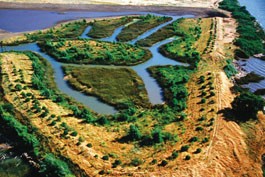
Arbitrary, capricious and contrary to law.” That’s what federal judge Oliver Wanger of Sacramento, in rulings on May 25 and Aug. 31, called state and federal agency plans to pump yet more water out of the state’s already overpumped giant northern Delta.

Wanger not only put a complete stop to these plans, he ordered such a massive cut in Delta pumping that the entire statewide water supply is now decreasing by somewhere between 14 percent and 35 percent, with San Diego losing as much as 30 percent of its supply and the Santa Clara Valley as much as 50 percent, a loss its water agency worries will deplete “our reserves for a major catastrophe.”

Noting that the Delta’s 738,000 acres make it the largest estuary on the West Coast and that California’s State Water Project, which pumps and distributes Delta water, is “among the world’s largest water-diversion projects,” Judge Wanger demanded that the system’s administrators stop destroying it in the quest to irrigate 5 million acres of farmland and provide drinking water for 23 million people. Specifically, he ordered that the federal and state agencies in charge stop killing off the Delta smelt, the once-teeming tiny red fish whose population serves as an aqueous version of the canary in the coal mine, and which is now nearly extinct.

What produced the ruling, and the lawsuit that triggered it, is classic early-21st-century bureaucratic willful blindness.

For years, the state of California overtapped rivers from other states until forced in 2003 to stop. At that point, the State Water Project, needing to fill its 600-mile system of dams, storage reservoirs and pipelines, simply turned to the Delta. And with federal agencies looking the other way, it pumped until the area’s islands began sinking, salt water began intruding, pollution increased, water quality dropped and fish began dying in droves.

In 2005, a number of sport-fishing groups teamed up with the National Resources Defense Council to take legal action, and virtually every state and federal agency involved weighed in to stop them. The Bureau of Reclamation, the U.S. Fish and Wildlife Service, the state Department of Water Resources, water contractors and the Farm Bureau all stepped up to quash the suit.

It is the arbitrariness of the Fish and Wildlife Service, which in 2005 issued an opinion that everything was just fine with the fish and with the Delta, that made up the core of the case. The agency claimed that no one can really tell whether the Delta smelt or other fish are reaching extinction because “not enough is known about the species” due to its two-year life span, which keeps the smelt from living long enough to study, and that therefore it was in “no jeopardy.” The fact that Delta smelt have, in fact, been studied and counted for decades and are at the lowest count ever was apparently an irrelevant detail.

Wanger was having none of it. “Although the process must be implemented by holding meetings and making recommendations, nothing” in the U.S. Fish and Wildlife Service’s policy “requires that any actions ever be taken,” he wrote in his ruling. And that’s not good enough. “The Endangered Species Act requires more.”

When state water agencies offered to cut pumping by a meager 7 percent, Wanger said they would need to cut severely—and hinted that they shouldn’t bother appealing to the Ninth Circuit, either. This, he appeared to say, stops here.

So throughout the state, water agencies are drawing up mandatory rationing plans. San Diego and Los Angeles officials are talking about moratoriums on construction, and Gov. Schwarzenegger has called for a double-topic special legislative session to deal with both statewide healthcare reform and now, as of Wanger’s ruling, the immediate water-supply crisis.

In the meantime, Schwarzenegger, who saw this coming long ago, has both been lobbying for a $5.9 billion plan for a statewide water infrastructure expansion plan that would, among other improvements, build two new reservoirs (with $1 billion solely dedicated to shoring up the Delta), and separately, appointed a Blue Ribbon Task Force on saving the Delta’s water quality, sinking islands, challenged levees and dying fish. Its recommendations are due in November.


Bad 13 Challenge

0

10.24.07

Last year, you sent us your sexy songs. The year before that, you sent us your sad songs. Now our third annual mix-CD contest crests upon the horizon like a phoenix ablaze, and we want your bad songs.

Let us tell you what the Bad 13 Challenge is not. This summer, the comedy troupe Human Giant produced a video in which two members challenged each other to make the worst five-song mix tape. The loser (I’m not sure if it was the person who made the best worst tape or the worst worst tape) had to walk around Manhattan blasting all 10 songs from a clunky old-school boom box.

The ruse was mildly amusing, but the songs they chose—Miami Sound Machine’s “Conga,” Paula Cole’s “I Don’t Want to Wait”—were merely dorky and annoying songs. If “Conga” is among our century’s worst songs, this world can’t be all so bad.

Ah, but the world is indeed rife with evil and hatred, and in the Bad 13 Challenge, we want you to plumb much, much deeper. While awful is a matter of taste, we’re not looking for pedestrian bad music; we want songs so uniquely bad they scar the soul, so bad their audio stench lingers cruelly like the putrid aroma of rotting meat.

We want our ears to cry for mercy.

Our lives are filled with mediocre music—we hear it on television commercials, at the grocery store, while on hold waiting to ask goddamn Sprint why they overcharged us on our last bill. But truly bad music usually does not make it very far to begin with and can be harder to come across. Those in possession of other people’s bad music tend to keep it at bay, like a wild animal, because lord knows what havoc may befall us if its awesome destructive power were set free.

Now is the time, friends. Set that bad music free. We only want the suckiest pieces of sucking suck.

Beyond that, it’s up to you. The bad music can be any bad music, as long as it complies with the below guidelines:

1. No artist may be represented more than twice on one entry.

2. Thirteen songs per entry. Not 12 songs, not 14 songs.

3. One entry per person, please, though if you are dedicated enough to bad music that creating a pseudonym in order to submit a second entry seems like a good idea, no one’s stopping you.

4. Though we live in an age of technological ease, and it would be so easy to send us an iTunes playlist, your entry must arrive in the form of a cassette tape or compact disc. Sound files will not be accepted.

5. Include a list of songs and their corresponding unfortunate artists with your entry.

6. Cover art is strictly optional, but appreciated. Please do not, however, send us scary items like garbage, animal excrement, amateur pornography and the like along with your entry. Let the music speak for its awful self.

7. Yes, we just said you should let the music speak for itself, but do know that liner notes are welcomed with open arms.

8. Entries must be received by Dec. 31, 2007, thus ending a fairly crappy year on a decidedly bad note.

In the weeks leading up to the announcing of the Bad 13 Challenge champion, we will post entrants’ track lists and liner notes at http://bad13challenge.blogspot.com. Our esteemed Bohemian arts staff will listen to every single song on every single CD, probably with a decent amount of grog in our bellies, and announce a winner early next year. That means you have months—months!—to suss out the worst of the worst. What a way to weather the gray days ahead of us.

We’ll send each entrant a pin reading “Ask Me About My Shitty Music.” The winner will receive a prize that we promise, despite the inherent badness of this contest, will be really cool.

Send your Bad 13 Challenge CD to the Bohemian, 847 Fifth St., Santa Rosa, CA 95404.


Sick Wax

0

music & nightlife |

By Brian Griffith

We have all heard how hard life is for record companies. Sales of CDs have steadily dropped for several years, while downloads are way up; iTunes sells more music than Wal-Mart. Collectively, the three remaining major labels are suing their own customers for sharing music. And now, Radiohead, one of the biggest bands on the planet, have bypassed the traditional distribution process by releasing their new product on the Internet, letting their fans set the price.

The web has also had a hand in one of the biggest hits of 2007. Colbie Caillat and her song “Bubbly” have been an online force for the last 18 months. Just 22, Caillat (rhymes with “ballet”) began writing songs three years ago after her very first guitar lesson. Inspired by the great singer-songwriters of the ’70s like Joni Mitchell and Bob Marley, Caillat collaborated with friends Mikal Blue and Jason Reeves to craft snappy and, yes, frothy tunes reminiscent of the music heard on the radio 30 years ago. No surprise, really, considering that her dad, Ken Caillat, co-produced the 1977 Grammy-winning Fleetwood Mac classic Rumours.

Growing up in Malibu, Caillat began singing in earnest at age 11 after hearing the Fugee’s Lauryn Hill. The youngster sang “Killing Me Softly” at a local talent show, and caught the performing bug. Although she was blessed with a sweet soprano, her father advised that she learn an instrument and develop the storytelling abilities needed for writing her own songs. It took a couple of years, but Caillat and her two cohorts began to shape a sound to match the lyrics of the fledgling songwriter.

Here is where the web comes in. Caillat put the new tunes on her Myspace page. For several months, not much happened. Then in the summer of 2006, she uploaded “Bubbly” to the social network. A huge response followed, with several thousand hits a day. She became the No. 1 unsigned artist on the site for four straight months, reaping an incredible 10 million plays. Needless to say, the record companies couldn’t deny this new paradigm and began to sniff around.

She signed with Universal, because they allowed her total creative control; after all, she had already developed a legion of fans on the web, and her sound was tried and tested. Caillat’s dad offered his expertise in the studio, and in July her debut, Coco, was released, immediately entering (and remaining on) not only Billboard‘s Top 10, but iTunes as well.

Here is a rare chance to see a young performer who stands at the edge of either being an effervescent one-hit wonder or a true developing talent.

Colbie Caillat and her band come to Petaluma’s Mystic Theatre on Thursday, Oct. 25. 23 Petaluma Blvd. N., Petaluma. 8pm. All ages; sold-out. 707.765.2121.


FIND A MUSIC REVIEW

No More Coal, Pt. II

10.24.07

The Step It Up 2007 website guides me through the process of sending an invitation to a politician of my choice. I choose Sen. Hilary Clinton, because she is the person I would most like to take out to lunch. I can either call her on the phone, post a letter or send an e-mail. I decide to try calling first. I have left a message for the president before, and it’s just an answering machine; as long as you know what you want to say, it’s not too stressful.

At Hillary’s office, however, things are obviously more bustling than at the White House, and I am given many different extensions to choose from, none of which are specifically for “invitations.” Petrified that a real person might pick up if I press the wrong extension, I hang up and decide to e-mail her instead.

“Dear Ms. Clinton: I would like to invite you to Step It Up 2007 in Santa Rosa, Calif. Step It Up calls for a moratorium on coal and an 80 percent lowering of CO2 levels by 2050.

“As a high school teacher, I can assure you that the next generation is concerned about our imminent doom, very concerned. The time to take action is now. Please come. I will take you out to lunch, on me. Best Wishes, Gianna De Persiis Vona.”

After sending my e-mail to the senator, I return to the Step It Up website, where I am instructed to add my invitation to the overall count. So far, 3,800 invitations have been sent out to our elected officials, inviting them to attend a Step It Up action, including 528 members of congress and 12 presidential candidates. Of those invited, 11 have accepted, including Dennis Kucinich and John Edwards. So far, Hillary Clinton and Barack Obama are conspicuously missing from the list. These gatherings are happening all across the country. In California alone, there are 27 different actions taking place.

Step It Up is a “citizens movement” that was launched April 14, 2007. This is a national day of climate action, and a chance for our politicians to prove whether or not they are climate leaders.

A few days before my adventures on the Step It Up website, I talk to Nabeel al-Shamma, a local activist and chairperson on the Climate and Energy Committee of the local Sierra Club. The Sierra Club, along with the Climate Protection Campaign, the city of Santa Rosa and others are sponsoring Santa Rosa’s Step It Up 2007 event Nov. 3 in Juilliard Park (there are events in Petaluma and Greenbrae, too; see below). Al-Shamma tells me that this is a largely unfunded event, and volunteers are welcomed and needed. This is a community gathering, and our chance to show up, en masse, to send a direct message to our leaders in Washington that the Step It Up demands must be met: 80 percent CO2 reduction by 2050, no more coal and the creation of green jobs for millions.

Al-Shamma, who says that he “pushes the boundaries of software” when he’s not pushing for species survival, considers climate change the biggest crisis we are currently facing, which is pretty scary if you think about the competition. According to al-Shamma, we have the technology, and now is the time to use it.

I never seem to have enough time, so attending events isn’t usually very high on my list of things to do unless there’s free food, and I can already feel my resolve fading as I search for an excuse to stay home. I have to keep reminding myself that if I care about the future of our planet, I’m going to have to go to Juilliard Park on Nov. 3, even if there’s nothing to eat there at all. I have to be strict. Not going is not an option. If all goes well, there will be media coverage and thousands of people, plus me, waving signs. We will send a message that can not be ignored. If all goes really well, Hillary will scroll through her mailbox see my invitation, and e-mail me back.

When she does, I think her message will say something like this: “Dear Gianna: It just so happens that I will be in your area around the first of November. I have decided to extend my stay for a few days, so that I can make it the Step It Up 2007 event. What fun! Why don’t we meet first for lunch? You pick the spot. Ciao, Hillary.”

Step It Up actions occur around the North Bay on Saturday, Nov. 3. In Juilliard Park, 227 Santa Rosa Ave., Santa Rosa from noon to 4pm. In Petaluma, it’s a locavore potluck from noon to 3pm at Helen Putnam Park; carpool from Walnut Park (D Street at Petaluma Boulevard South) at 11:30am. In Greenbrae, Step It Up hosts a slide presentation and action discussion at 9 Altamira Ave., Greenbrae. To RSVP, get more information on Step It Up 2007 or to send an invitation to an elected official, go to www.stepitup2007.org.


Conquering Portugal

0

10.24.07


The call came in late August, as I prepared for a five-week solo bicycle journey from Portugal to Spain. It seemed that the Portuguese Tourism Board demanded my assistance for an upcoming exploratory expedition through the eastern highlands of this small Mediterranean country. The plan: to travel with a dozen other journalists and cyclists for eight dangerous days through 12 historic villages and along 335 miles of farm roads, foot trails and cobbled Roman highways; to brave a wilderness shadowed by remnants of the Medieval, guarded in its many corners by castles. Our mission: to lift the veil of the centuries from this little-known nation and reveal its inner secrets to the wider world. Clearly, I was needed.

The expedition included a very remarkable feature in the form of Gary Fisher, inventor of the mountain bike and a Marin County native, who was riding along. Eager to meet the king of the trail and to be a part of this high-stakes assignment, I told the Board that I would gladly be waiting at the appointed meeting place, the first-rate Hotel Principe Beira in Fundao, eastern Portugal, on Sept. 3. I flew to Lisbon and from there cycled for a week north and east, over the Rio Tejo valley and up into the high Serra Estrella, where I spent several days riding in circles and swearing at the yapping dogs that shadowed me every foot of the way.

On the appointed day, I descended from the mountains into Fundao and to the hotel, where I waited in the lobby, chuckling over Twain’s Innocents Abroad for an hour before a van marked A2Z Adventures pulled up out front and disgorged a jetlagged gaggle of men and women who would become my friends and partners in the next week’s journey. We introduced ourselves and chatted at the hotel bar, a tall dapperly dressed gentleman named Gary slyly among us, as though he weren’t a superstar.

We checked into our rooms and then went by van to the town tourism agency for a brief conference with the local press. Our guides, A2Z owners Pedro Carvalho and Pedro Pedrosa, and a suited rep from the federal tourism board explained to us and the local newspaperwoman the trials of our challenge: a rough, bumpy week on the “Grande Rota das Aldeias Historicas”—the Grand Route of Historic Villages.

The trail, first routed in 2000, would take us in a counterclockwise circle from Castelo Novo around the Serra Estrella and back again to the starting point in eight days. We would see largely unvisited country, some nearly desert, some green and lush, and all of it brimming with historical antecedents of the Moors and Spaniards, as well as invincible castles and hungry packs of dogs.

“We’re trying to bring tourists to this part of the country, which really needs the economic boost,” said Carvalho, translating for the Tourism Board agent. “The beaches get an unfair share of the visitors.”

Matthew Kadey, journalist and photographer from Toronto, asked if there was any concern about spoiling the region by taking this fabulous free trip and then writing home about it. What’s Kadey trying to do, I thought, ruin our vacation? But then I glanced over at Fisher. He kept a heroic silence. I followed suit.

“We’ve thought about it,” said Pedrosa, a lean and muscular native of Leiria. “That’s why we’re using the bicycle. It’s inoffensive, quiet and takes people away again with almost no impact to the land.” Our team was fine with that.

Our perilous journey began bright and early at 10am the next morning, after native rations of fresh fruit, omelettes, sausage, granola, artisan cheeses, ham, warm bread, pastries, coffee and milk. Our destination was Monsanto, a Medieval village 38 miles to the west, set high on a hill with a castle on top. In our first kilometer, we had a casualty when Pedro Trindade, a Brazilian bike-shop owner, wiped out and skinned his knee. A pack of dark-eyed, scartchy-backed mongrels circled watchfully in the brush as Carvalho stopped the bleeding; his wounds were not quite fatal.

Under the hot, blue skies, I rode beside Fisher and chatted. A calm and meditative man, he said that now that he had conquered the world, it was his goal as a businessman to push the bicycle as a means of primary transportation, not just a toy for shredding trails.

“The mountain bike has become ironic,” he said with mild irritation. “First, it’s an SUV ornament. Second, our president loves his. This was not our original idea.”

I asked him how it felt to see his own name on every bike, bottle, shirt, sock, dog, child, tree and rock in sight, and he shrugged. “It’s like a third person now.”

I was crawling along on a skinny-tired, inadequate bike with no suspension, and Fisher soon tore ahead. Then Shannon Mominee of Dirt Rag magazine blasted past and dusted me, as did Alexandre Silva of BIKE magazine, Renata Falzoni, a television producer from Brazil, and Kadey and several assistant guides. It’s a lonely road the traveler wends when he has no magazine credentials and didn’t therefore receive a brand-new, smoking-hot mountain bike to review for the gear department.

The road meandered past scattered cork trees, olives, figs and groves of eucalyptus. We saw not a vehicle all day—just mean, mangy mutts that ran circles around us. Monsanto was splendid, a tiny stone village of miniature homes, huts and mules, plus a few old folks who peered out their doorways as our team of Spandexed aliens zipped about the streets and performed wheelies at the castle gate.

Day two was a 55-mile northward push to Sortelha with over 6,000 feet of climbing. Our guides drove along in the van with our luggage and met us at appointed spots along the way to feed us cookies and make sure no one got lost. After all, if there is one thing a team of adventurers does not wish to face, it’s misadventure. Yet one member of our expedition vanished that day: Gary Fisher. He did not show up at the village, and we eventually all went to the hotel without him while our guides went searching.

We checked in, showered, had drinks in the parlor, and at 8 o’clock, sat down to eat. We feasted on mounds of potatoes and venison, beef and soup, water and wine, and speculated upon where Gary might be and if he was cold and whether he could scrounge up something to eat and keep it from the animals. We wished him well, and were happy. We were enjoying dessert when the search party arrived with Gary. He’d had a flat tire and no water, but managed to find a phone and was now one big smile in a blazing white jumpsuit and bandana.

Each day grew longer and more difficult, and the team began to tire. Our Brazilian videographers showed up later and later each night as they skirmished for winning footage of each other barreling along the dusty roads with castles in the background. We could never get enough water; we were endlessly dehydrated, guzzling as fast as we could at each village fountain and sweating it all out again in the next few miles. I lost the route on day four, a scorcher, and wound up in a dusty, windswept desert ghost town on the Spanish border. My rations had expired and I had no water, but I found free Internet access at the town library. I Google-Earthed my approximate coordinates and managed to escape that blistering widlerness with the kind help of those good folks in Silicon Valley. A traveler must travel.

The next day, we journeyed along abandoned dirt roads in the Douro River region, a dry land saturated with a bittersweet beauty. Jumbled boulder piles lay strewn over the low hills, while long and winding stone walls snaked through centuries-old orchards of stubby olives and figs. At frequent intervals, we came through crumbling villages where the citizens sat in the square and waited for something to happen in a country beaten silent by the ever-present Portuguese sun.

We headed south into the Serra Estrella, and the land grew markedly greener with the elevation. It was a refreshing change of scenery, but the exhausting week had reduced us to a ragged troop of sunburns and bloody bandages, always thirsty, breathing dust, in fear of dogs and tiring by the day. Press junkets aren’t always just fresh cookies and prime beef. A glance at several passages from my journal aptly illustrates our heightening despair:

Sept. 6: The team grows weary. Have traveled 45 miles today, under a blistering sun and through swarms of yapping mutts. A wonder no one has been eaten. Water scarce. All parties report persistent fatigue and withering strength. Team Brazil arrived at hotel after 9pm. No festivities after dinner.

Sept. 7: Paolo took a dangerous header over his handlebars after hitting a rock. Ricardo sprained his ankle in a crash and has been left for the dogs. Hope all but lost.

Sept. 8: Cafe severely overcharged us at lunch. Spirits at rock bottom. The van was out of cookies when I arrived at the rest stop, but at last—the hotel! A warm contemporary space that “Deluxe Living Magazine” hails as being “a perfect balance of the rustic and regal.”

Sept. 9: The longest day—11,000 feet of elevation. Six of the party lost in avalanche, Shannon vanished over a cliff. Tortuous ascents on unrelenting shale roads while quaint traditional villages charm the eye. Buffet-style dinner in historic Piodao features ample portions of cod and beef. Fine vintage Porto, fruit forward with essence of passion fruit. Long, soft finish.

The horror!

In spite of such odds, our valiant A2Z guides rescued all stragglers, and we miraculously reached Fundao with a full head count. Only six of the group, however, managed the last day’s ride, a 60-mile ordeal in the Serra de Acor under gloomy gray skies and over nearly endless ridges and valleys, but thoughts of the multi-star hotel in Fundao beckoned us bravely forward, and by midafternoon, the journey was over. Bikes were disassembled, bags packed, e-mail addresses exchanged.

At our last supper, Gary delivered a toast to the courage of the team, commending spirits that never faltered and the journey’s accomplishments. We had dissolved a frontier and discovered an alluring Italy-like nation of quaint villages, wild dogs, grapevines and espresso machines certain to provide reams of glowing magazine copy and full minutes of TV airtime.

But at least one person at the table was crying inside: me. My own trip would go another three weeks, 2,000 kilometers farther. I would cycle up the length of Portugal, across many great rivers and into the green highlands of northern Spain. I had a whole world to ride but no one to share it with. Gone would be the grand banquets, the sense of direction, the social breakfasts and the midday beer stops that come with a free, guided press-group bicycle ride. In fact, I reasoned I would never see most of my comrades again, though I could still run into Fisher on the roads of Marin and perhaps stop in at Iron Springs Brewpub or Cafe Gratitude to revisit the days when we were heroes and conquered a wilderness together.

Or perhaps we never will. But darn it, Gary, we’ll always have Portugal.


Wine Tasting Room of the Week

0


I’ve heard many times that vines have to struggle to produce quality wine. This bit of French country wisdom must have lost something in its eventual translation to the florid prose of wine-marketing gothic. A Washington State winery’s recent full-page ad in a magazine takes it up a notch, bragging that their vines “are made to strain under extreme conditions and strict training. It is by teetering on this precipice between life and death [italics mine] that the best attributes are coaxed from our grapes.” It’s as if the love of good dead grape teeters toward a kind of leering sadism. Must the tastiest glass be squeezed from weather-beaten little vines clinging to a bare rock cliff face, their dry, cracked roots straining to lap up the last micron of water, while the taunting, firm hand of the vine-master dangles the hard, plastic nipple of drip-irrigation just out of reach? Must one always suffer to be beautiful?

The vineyards that surround Balletto and Dutton-Goldfield look to be anything but struggling. I see irrigated vine rows thick with green leaves along Occidental Road, sloping down in alternating ribbons of rich soil to the Laguna de Santa Rosa. These grapevines seem tidily managed and abundant. I don’t know, but they’re making some good stuff over at Dutton-Goldfield and Balletto. Between them, they farm 1,500 acres, but release their own wine from only a fraction of that acreage. They’re separate operations, but share a winemaking facility and tasting room, open since 2006. You can find it by the little clapboard sign, with some balloons most days, at the entrance to a long, pitted gravel vineyard road. In the midst of stacks of half-ton picking bins, loading docks and farm machinery, there’s a well-tended patio with seating, a fountain and adjacent tasting room. Being out of the touring loop, it’s generally a low-key place that picks up a bit on weekends.The Dutton-Goldfield 2006 Shop Blanc Pinot Blanc ($25) is barrel-fermented in old oak, so it’s rich and full on the tongue, while remaining buoyant and refreshing. Both fairly nice Chardonnays, the 2005 Balletto Estate Chardonnay ($18) has picked up a roasted hazelnut and hard cheese aromas, while the 2005 Dutton Ranch Chardonnay ($35) has more mineral notes, as well as citrus and apple-pear with light oak treatment.

Both Pinots are light or medium-bodied, flavorful, with gentle tannin and a hint of depth. I got cherry, vanilla and smoke out of the 2006 Balletto Estate Pinot Noir ($24), while finding that the highest priced 2005 Freestone Hill Vineyard Pinot Noir ($58) is unsurprisingly the finest, with candied cherry aromas, liqueur and lingering softness. For a pure expression of Russian River Zinfandel, one would do well to try the 2005 Balletto Zinfandel ($21), a juicy but not simple pot of brambleberry fruit and black pepper.

As for picking up a bottle to bring home? My wallet came out without a struggle.

Balletto & Dutton-Goldfield, 5700 Occidental Road, Santa Rosa. Tasting room open daily, 10am to 4pm. $5 tasting fee waived with purchase. 707.568.2455.


View All

Doll Face

10.24.07

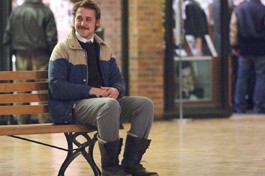
What do you think of critic David Denby’s comment in The New Yorker magazine that onscreen acting has never been better than now? Lars and the Real Girl, an indie film of great charm and not a little sappiness, is an example of the benefits and pitfalls of the kind of big acting Denby cherishes. It stars Ryan Gosling, one of the real hopes of his profession, in the title role.

Lars, a bottled-up bachelor living in the guesthouse behind his happily married brother, Gus (Paul Schneider, a redeeming factor in The Assassination of Jesse James), and his pregnant sister-in-law, Karin (Emily Mortimer). One evening, he presents to them his new girlfriend, a sex doll called Bianca, whom he adores and intends to marry. Gus, Karin and the rest of this far-north, Lutheran-Scandinavian Wisconsin town decide to treat Bianca as a human. The wise-woman of the town, Dr. Dagmar (Patricia Clarkson), insists that Lars needs to be indulged in his passion. This is one of those Frank Capra&–cum&–Northern Exposure small towns, where everyone pulls in the same direction.

Bianca is presentable enough; her face looks a little like Sally Fields, though the parted mouth is more Angelina Jolie. And we’re told, with all necessary discretion, that Bianca is anatomically correct. (There always has to be the possibility of consummation in a farce.) Soon, Bianca, swathed in donated hand-knitted clothes, is pushed around in a wheelchair to church and to volunteer work. She even gets a part time job in a boutique window.

Gus, the comic relief to this melancholy, doomed romance, is the one who is most worried—especially when Lars recruits him to board Bianca in his spare room. She’s a pious girl, Lars explains, and doesn’t want to spend the night with a man to whom she’s not married.

Working from Six Feet Under vet Nancy Oliver’s script, director Craig Gillespie spares this story of love and social discomfort from becoming a sour farce. It’s more than just an extended SNL skit. The winter light is right for this story of implicit sadness, especially when Bianca turns out to be too pure a spirit to survive.

Remember when Dustin Hoffman played an unsuccessful actor in Tootsie, fired from a job as a tomato in a TV commercial because he didn’t know what the tomato’s motivation was? Later, when Hoffman played an autistic in Rain Man, critic Pauline Kael cracked that Hoffman had finally got to play his tomato, a character free from the pressure of having to react.

The part of Lars in Lars and the Real Girl is a similar tomato, since no one aggressively confronts the deluded boy. I think what keeps me from falling in love, instead of mere like, with Lars and the Real Girl is that sense of stunt-performance-watching that keeps breaking out, as it often does, in this best of all possible acting eras. The problem with this kind of tomato acting is that it can be used for dramas that would make a visionary of Lars.

We’ve all seen the dreaded “sometimes when we touch, the feeling gets too much” movie, and Lars borders on it. This is especially evident in a scene where Clarkson tests Lars’ nerves; she can’t even lay a hand on the bottled-up young man without hurting him. The big “acting is better than ever” performance can, in lesser movies, end up as one long wince.

In one sense, Denby is right: everything else that’s going wrong with the movies—the writing; the limitless crassness of franchise-production; the commonness of poor visuals—is superceded by the willingness of the actors to make things real. Yet it’s the character-acting support that really make Lars more than a bizarre oddity.

This movie would be a dreadful male fantasy—starring a mute inert woman as a “real girl”—if it weren’t underpinned by three strong, caring women. Mortimer’s face warms this movie like an artificial sun, and this Scotch actress has a peerless Midwestern accent. “Are ya hungry?” she asks brightly, and you know she’s about to up-end a cornucopia. Clarkson brings every ounce of poise to this role, listening intently, bearing on her noble shoulders a huge French braid that makes her look like a Norsewoman.

I’d also mention the toothy, sweetly geeky girl that never gives up on Lars. As Margo, Kelli Garner might get overlooked, a slim girl unconscious of the fact that she wears stripes and plaids simultaneously, and who does this marvelous wiggly dance of triumph when she bowls a strike. There’s simply no substitute for the living.

‘Lars and the Real Girl’ opens Friday, Oct. 26, at the Rialto Lakeside Cinema, 551 Summerfield Road, Santa Rosa. 707.525.4840.


New and upcoming film releases.

Browse all movie reviews.

Letters to the Editor

10.24.07

Flat-out Endorsement

When Fifth District supervisor Mike Reilly first announced that he would not be running for re-election, we—like many longtime residents of western Sonoma County—immediately started thinking of the people we hoped would run. When the first few candidates threw their hats in the ring, there were no surprises; we knew those announced candidates as friends, neighbors and community activists.

But the person we hoped would join the race is the one we had known longest—before Guerneville had a sewer, before Santa Rosa’s infamous sewer spill into the Russian River, before the 1986 flood. We knew Rue Furch as a parent of children at Guerneville School, as a local businesswoman, as an environmentalist. We knew from experience that the issues and problems of concern to us were the same ones that absorbed her thinking.

As a veteran member of the Sonoma County Planning Commission, Rue has been actively involved in dealing with those issues for over 15 years. She knows the devil is in the details; she also knows which of those details count the most. If Rue is elected, she will change hats, but in a very real sense, she will be doing the same job from a different angle. She is well respected throughout the county as a person who listens and studies the facts before taking a position on a subject. We have no doubt that she will be an effective participant in board deliberations as well as an alert guardian of Fifth District interests.

Rue Furch is running as a citizen, not as a politician. When done being supervisor, she has made it clear that she will retire rather than seek another office. Because we think of the supervisor’s job as providing constituent service to fellow citizens more than as pursuing a political agenda, we believe Rue is the candidate who will best serve.

We thank all the other candidates for stepping forward to seek this office. They are aware that being supervisor of this diverse district is a demanding and sometimes monumentally frustrating job. But of all of the declared candidates, we think Rue Furch best understands what she’s getting into. We support her as the most effective steward of our beautiful area and of the way of life we have long treasured.

Wallie Kass, Alby Kass, Darlene Kersnar and Scott Kersnar, Guerneville

The Criminals in Charge

Lynn Woolsey is my Congressional representative, and Lynn has been a great rep on the issues that concern me. Even though I live in the Sixth Congressional District, I plan on working for the Cindy Sheehan campaign, in the Eighth Congressional district. Nancy Pelosi, speaker of the house and current representative for the Eighth District, needs to get the message loud and clear that the issue of “impeachment” of George Bus, and Dick Cheney must be put back on the table now!

I was in Washington, D.C., the week of Sept. 22, and while there, I sat in a Senate subcommittee on funding appropriations. The committee was hearing testimony on whether or not to approve more billions of dollars for the illegal, misguided wars in Iraq and Afghanistan.

How can anyone say that impeachment is not worth the time and energy or just shrug that he’ll be gone in a year anyhow? Impeachment is a critical issue. These two men are criminals, they have violated the Constitution, they have lied to the American people and they are aggressively planning an invasion of Iran!

Not only must they be impeached, they should also be tried for war crimes, crimes against humanity.

barry latham-ponneck, Sebastopol

Edwards for the Criminals’ Job

I support John Edwards’ candidacy because he strongly supports our troops. First, he wants to bring the troops home from Iraq as soon as possible. Second, he is very angry about the mistreatment the administration is dealing out to our returning medically disabled troops. The actions of the acting Surgeon General of the Army, Maj. Gen. Gale Pollock, parroting the administration’s efforts to save budget dollars by denying medical care, is unconscionable. No other candidate has stood up and as forcefully called on the administration to account for its actions.

Gerald W. Hunt, San Jose


Punkademics

0

10.24.07

All I want is for future generations to just go, ‘Fuck it. Had enough. Here’s the truth.’—Johnny Rotten, in the Sex Pistols documentary The Filth and the Fury

There are at least two exceptional things about Athena Kautsch. First, she not only teaches various English classes, including a rigorous honors class, at Casa Grande High School in Petaluma, but she also team-teaches “Rebels, Resistance and Revolution,” about history’s rabblerousers. A lot of students fail the course.

Second, Kautsch is also known as Athena Dread (or Athena Cochina) and moonlights playing bass in the thrash-punk band Vöetsek (pronounced “vote-sek”). Legendary and revered in thrash-punk circles, Vöetsek are known for furious, ultrafast, ultraloud songs like the 45-second “Tampons Should Be Free,” an indictment of the hypercommodification of a woman’s most basic and necessary helper. To experience Kautsch teaching English in the all-American, butter ‘n’ eggs town of Petaluma is one thing, but to see her onstage in a dingy venue, abusing a BC Rich Warlock bass guitar to the screams and fury of Vöetsek is quite another. Teachers play in bands, but how many play in punk bands?

It brings up philosophically rich questions. Is “Athena Dread” the alter ego of Athena Kautsch, mild-mannered yet edgy punk teacher, or is Ms. Kautsch the workaday alter ego of Dread, key component and founding member of Vöetsek? Can both identities coexist harmoniously? Aren’t all or most punks basically kind of like Sid Vicious?

With a few clicks of the mouse, anyone can find Vöetsek on the Internet. There are digital slide shows of Athena, smiling, with scruffy-looking musicians and Mohawked fans reveling in post-gig shenanigans. Onstage, Athena is pure concentration, laying down the bass on songs that are over before they begin, full of screamed lyrics and a primal yet evocative awareness.

Today’s teenagers are not surprised to find an aging boomer teacher in many a classroom; a Hendrix poster on the wall and a nostalgic fondness for late ’60s-style revolution is all too common and, with due respect, altogether blasé. In Athena’s classroom, however, one finds a sticker for punk band Capitali$t Casualties on her filing cabinet.

Contrary to the stereotype of the “gutterpunk”—an early 20s fuckup with a small, disoriented pet s/he can’t take care of, filthy hair and clothes and spiky jacket espousing any number of punk bands known or unknown—punk teachers are highly educated, gainfully employed, creatively critical of the American way and American dream. And they’re teaching the future, our children. They release workaday frustrations by playing in punk bands like Vöetsek, Holier Than Thou, Millions of Dead Cops (MDC).

It isn’t really news or noteworthy that teachers, be it high-school or post-secondary, play in bands, but playing in a punk band sets them apart, and with good reason. For why is it that no one bats an eye when the friendly local math teacher busts out a guitar for a sober sing-along of “Blowin’ in the Wind,” but someone like Kautsch has to work diligently to protect her punk identity in the interest of her professional career?

Her teaching side alone stirs up enough controversy with some of Petaluma’s more conservative parents. Casa Grande’s principal, Ron Everett, says that he sometimes receives a pissed-off phone call.

Kautsch isn’t alone. From Chuck Carlson, a Western civilizations lecturer at SSU who shows his students a PowerPoint slide presentation featuring the Clash’s famous London Calling album cover and plays them Clash music, to Casa Grande guidance counselor Brett Sklove, whose office is filled with posters and original flyers for seminal punk bands, there is a small yet vibrant number of academipunks in today’s learning institutions at all levels.

“Punk means to me a sharing of ideas,” says Kautsch, sipping a dark beer at a Cotati restaurant. “My students and I are growing and learning together. Punk rock is not the punk bands you see on MTV; it’s not what bands are playing this year’s Warped Tour. Punk is, however, about being an active member of the DIY community.”

Anarchy, despite what mainstream media say, does not mean chaos, disorder, violence. On the contrary, it works to prevent these things by establishing its own system—by lacking a system at all in the first place.

The connection between punk and academia is nothing new. Philosopher Paul Feyerabend advocated an “epistemological anarchism” in the scientific quest for knowledge. In other words, anything goes in the pursuit and acquisition of knowledge; it’s all fair game. Punks in everyday society can often fly under the radar with their nonpunk, professional lives. After all, one can cover up a Dayglo Abortions tattoo fairly easily with makeup or clothing, but the loosely organized academipunk community is nonetheless out there, a demographic to contend with.

As more baby boomers retire and fade into senior citizenship, Generation X’s general reputation for disaffection, cynicism and postmodernism will eclipse the boomers’ sunnier, modern, lysergic-birthed outlook. What the Summer of Love or Woodstock was to leftist boomers, the golden decade of punk (roughly 1975 to 1985) is to many a Gen X punkademic. This postboom marks a significant paradigm shift, and raises the question of what the current millennial generation will adopt as their own individual and collective philosophy. Until then, a growing number of academipunks are coming out of the woodwork.

Evidently, and thankfully, punk is far from dead.

Authority Figures
Here is a partial, and highly subjective, list of punk bands with highly educated members
Milo Auckerman, the Descendants PhD, biochemistry
Jello Biafra, Dead Kennedys Studied acting and history of Paraguay at UC Santa Cruz
Dave Dictor, MDC Special education teacher
Greg Graffin, Bad Religion PhD, zoology; life sciences professor at UCLA
Davey Havoc, AFI Double major (English and psychology), UC Berkeley
Dexter Holland, the Offspring PhD candidate, molecular biology
Jose Palafox, Yaphet Kotto UC Berkeley ethnic studies professor
Max Ward, Spazz, 625 Thrashcore (and formerly Capitali$t Casualties), PhD candidate at NYU


No Exit

0

the arts | stage |

Photograph by Jeff Thomas
Exile: Kristen Brown as Magda and William Neely as John co-star in ‘The Consul.’

By David Templeton

Composer Gian Carlo Menotti, who died earlier this year at the age of 95, was celebrated for much of his life as the spirited creator of entertainingly accessible American operas, winning numerous awards, including two Pulitzers (for 1951’s The Consul and 1955’s The Saint of Bleeker Street), along the way. As a young composer, he enthusiastically embraced the emerging technologies of radio and television, writing the first operas ever created for those forms of media. His most famous opera, the Christmas-themed Amahl and the Night Visitors, was created for television and first broadcast as a live holiday special on NBC in 1951.

For all his success, however, Menotti—born in Italy but raised in America—never won the hearts of the classical-music critics in his adopted country, where his works were viewed by the critical press as coarse, oversentimental and mawkishly cautious. To make matters worse, after a few initial compositions written in Italian, all of Menotti’s major libretti were written in English, which won him American audiences but lost the favor of the traditionalists.

“Basically, Menotti was too popular,” says Elly Lichenstein, executive director of Cinnabar Theater in Petaluma and director of The Consul, which opened Oct. 19 in conjunction with the countywide Performance Sonoma slate. “His music and the stories he told were designed to bring people to opera who had never been interested, and the purists thought this would only bring the art form down. And he wrote for Broadway, which was the worst crime of all from the point of view of musical classicists, who felt that opera was about inspiration and art, whereas musical theater was just vulgar and commercial.”

Menotti won some brownie points for founding and directing the annual Festival dei Due Mondi (“The Festival of Two Worlds”), held since 1958 in Spoleto, Italy, with its companion event, the Spoleto Festival, held in Charleston, N.C. Massive, multidisciplinary arts celebrations, the Spoleto fests feature all manner of concerts, opera, dance recitals, theatrical performances and visual-art displays, along with forums and roundtable discussions on music, the arts and science.

“The Festival of Two Worlds was designed by Menotti to make opera and classical music something that the average person could approach and get something from,” Lichenstein explains. “That was his goal, to bring this art form, not down to a lower level, but out to a broader audience, out to the people who had always believed opera was too difficult or too complicated.”

One could say the same thing about the intimate 90-seat Cinnabar Theater, founded in 1970 by the late Martin Klebe, who once performed at the Festival of Two Worlds, as a place where opera could be made available and accessible to nonclassical audiences. Over the years, Cinnabar has performed several of Menotti’s operas, a tradition that continues with the current production.

The Consul is a rich, riveting political thriller about the residents of an unspecified fascist country who are desperately awaiting papers to escape to freedom. The primary focus is Magda (Kristen Brown), wading through a nightmare of red tape and secret police dealings as she tries to win an exit visa before her freedom-fighting husband, John (William Neeley), who is in hiding at the border, is forced to return for her, thus putting his own life in peril. Much of the action takes place at the consulate, where an assortment of foreigners and oddballs also wait for exit papers. The music is alternately eerie and hopeful, with touches of fantasy that suggest a Twilight Zone alternate reality.

“It’s typical Menotti,” says Lichenstein, “in that it takes a subject that doesn’t seem like the stuff of typical opera, and tells that story using music that is beautiful and emotionally gripping. Menotti composed with the expectation that his works would appear in opera halls or on the Broadway stage, but he works very well in small houses like Cinnabar. I would say that in the case of The Consul, which takes place in offices and small apartments, Cinnabar is the perfect place to see this show.”

‘The Consul’ runs Friday–Saturday through Nov. 10; no show Nov. 3. Oct. 26–27 and Nov. 2 and 9–10 at 8pm; Nov. 4 at 2pm. In conjunction with Performance Sonoma. Cinnabar Theater, 3333 Petaluma Blvd. N., Petaluma. $32–$35. 707.763.8920.


View All


Museums and gallery notes.


Reviews of new book releases.


Reviews and previews of new plays, operas and symphony performances.


Reviews and previews of new dance performances and events.

Water Wars

10.24.07Arbitrary, capricious and contrary to law." That's what federal judge Oliver Wanger of Sacramento, in rulings on May 25 and Aug. 31, called state and federal agency plans to pump yet more water out of the state's already overpumped giant northern Delta.Wanger not only put a complete stop to these plans, he ordered such a massive cut in Delta...

Bad 13 Challenge

10.24.07Last year, you sent us your sexy songs. The year before that, you sent us your sad songs. Now our third annual mix-CD contest crests upon the horizon like a phoenix ablaze, and we want your bad songs.Let us tell you what the Bad 13 Challenge is not. This summer, the comedy troupe Human Giant produced a video in...

Sick Wax

music & nightlife | By...

No More Coal, Pt. II

10.24.07 The Step It Up 2007 website guides me through the process of sending an invitation to a politician of my choice. I choose Sen. Hilary Clinton, because she is the person I would most like to take out to lunch. I can either call her on the phone, post a letter or send an e-mail. I decide to try...

Conquering Portugal

10.24.07The call came in late August, as I prepared for a five-week solo bicycle journey from Portugal to Spain. It seemed that the Portuguese Tourism Board demanded my assistance for an upcoming exploratory expedition through the eastern highlands of this small Mediterranean country. The plan: to travel with a dozen other journalists and cyclists for eight dangerous days through...

Doll Face

10.24.07What do you think of critic David Denby's comment in The New Yorker magazine that onscreen acting has never been better than now? Lars and the Real Girl, an indie film of great charm and not a little sappiness, is an example of the benefits and pitfalls of the kind of big acting Denby cherishes. It stars Ryan Gosling,...

Letters to the Editor

10.24.07Flat-out EndorsementWhen Fifth District supervisor Mike Reilly first announced that he would not be running for re-election, we—like many longtime residents of western Sonoma County—immediately started thinking of the people we hoped would run. When the first few candidates threw their hats in the ring, there were no surprises; we knew those announced candidates as friends, neighbors and community...

Punkademics

10.24.07All I want is for future generations to just go, 'Fuck it. Had enough. Here's the truth.'—Johnny Rotten, in the Sex Pistols documentary The Filth and the FuryThere are at least two exceptional things about Athena Kautsch. First, she not only teaches various English classes, including a rigorous honors class, at Casa Grande High School in Petaluma, but she...

No Exit

the arts | stage | Photograph by Jeff Thomas Exile:...
11,084FansLike
4,606FollowersFollow
6,928FollowersFollow