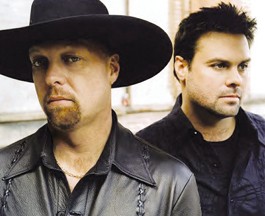
On the Stereo: The Dream ‘Love vs. Money’

0

Last December, in an article rounding up last year’s pop-music’s trend towards minimalist production, I mentioned that Terius Nash, a.k.a. The Dream, a producer behind many of last year’s hits, was releasing an album that could not help but make more of a splash than his overlooked debut. I bought the album a couple days ago, and I’m not alone—Love vs. Money debuted at No. 1 on the Billboard R&B / Hip Hop charts and No. 2 on the Billboard 200, selling 151,000 copies in the first week. That’s not just a splash, it’s a cannonball.
Nash is the songwriter and producer with a hand in Rihanna’s “Umbrella,” Mariah Carey’s “Touch My Body” and Beyonce’s “Single Ladies”—all huge hits that used razor-thin, super-sparse production to great effect. Though few guessed his album would be such a huge commercial hit, everyone agreed it could serve as a harbinger of pop-music production to come. Instead, it disappointingly looks backward and bigger instead of forward and flimsier, and it’s irrevocably marred by an overabundance of Atlanta party-style “Aaaayyy!” and “Oooohhh!” exhortations; it would be forgivable if this was a record made by a producer in 2006. As such, it is 2009, and “Aaaayyy!”s are dated as shit.
Love vs. Money has its moments, though, and they’re amazing. “Kelly’s 12 Play” tips the hat to an obvious influence, while “Sweat it Out” has the man ruminating on his girl’s appearance, advising her to book an appointment with her beautician in order to fix what’s about to get fucked up between the sheets. “Take U Home 2 My Mama” is a proper segue (all the songs overlap and blend hooks) into the album’s finest moment, “Love vs. Money,” layered with thick intermittent bursts of orchestration which sound like spools of magnetic tape pulled through Ampex heads at varying speeds. The sonic texture is as deep as his agony; it’s the antithesis of the razor-pop thinness that The Dream is known for, and it’s undeniable even if you don’t care about the ex-wife, Nivea, and the multi-millionaire rapper, Lil’ Wayne, who inspired it.

Letters to the Editor

03.25.09

We didn’t want your letter to end

This (Best of the North Bay, March 18) was by far your best of the BEST. It read like a novel with little vignettes, wonderful descriptions and photographs! Thank you for reintroducing our colorful little county in such a delightful way. I didn’t want it to end!

Karyn Lobley
Santa Rosa

Roar of the Moose

I have been a member of the Women of the Moose for 27 years (“The New Fraternals,” March 11). We have a great membership of loyal Moose members. In the last few years, we have had an administrator and his wife, Roger and Sally Burk, working very hard to upgrade the old building to what it is today, absolutely beautiful. This has brought in many new members, who volunteer their time to work.

Contrary to the remarks of John Crowley, we are not a bunch of “old men” doing nothing. As a woman member of the Moose, I resent his remark.

Cherie Gervais
Petaluma 

Gabe Meline responds: Thanks for writing, Cherie. The remarks you refer to are mine. What John said was that the Moose Lodge “used to be known as an old man’s drinking club,” which is true if you consider general public perception. I’m the one who said “the Moose Lodge in Petaluma was just a bunch of old men when John Crowley stumbled across it in 2005,” which is wrong. I blew it and regret the error.


Has-Been nation?

John Sakowicz (“The Next Big Bubble,” March 4) is spot on. Government employees get three times the pension benefits of nongovernment employees. We have created a class society among baby boomers—those who can afford to retire and the rest of us.

It pisses me off that the public officials who approved these excessive retirement benefits never got permission from taxpayers.

Oh, well. In the whole scheme of things, with trillion-dollar national budget deficits, I guess this bubble is just one of many. The U.S. is a has-been nation.

I’m packing my bags for Costa Rica for the expatriate life. Anyone interested in joining me?

Kitty Lewis
San Jose

An open missive

Dear West Sonoma County High School District Board Members:

My opinion is we have too many unnecessary positions in the district. We have a superintendent, and, I recently learned, an assistant superintendent, to oversee two mainstream high schools and two alternative high schools with a combined student population of less than 3,000.

Of the two mainstream high schools, Analy has a principal and two full-time assistant principals. The principal has a personal secretary. El Molino has two co-principals and an assistant principal.

Meanwhile, students have to pay money to play on sports teams and participate in music programs.

What is the dollar amount we would save if we eliminated the superintendent and assistant superintendent positions, the three assistant principal positions and the principal’s and superintendent’s secretary positions?

Ted Gross
Via email

Dept. of arrrgggh

Given the magnitude of last week’s crispy fry-out Best Of issue, that we are here to grovel over only two items is a splendid record of sorts, but that’s still not much to brag about.


Our first gross and insulting error was to the talented singer-songwriter Ms. Ash Reiter, whose surname is thus spelled and contains no ugly l or g consonants.

Our second lick of the forgiveness floor is extended to the fine folks at Bloom Creative Hair Salon in Napa, who—while they do welcome tots into the shop—are not specifically a children’s hair salon and do not wish to be known as such (we screwed up the Best Of Readers Poll on that one). Sophisticated hair for grownups is what best occupies their time. We regret both mistakes hugely and widely, for reals.

The Ed.
Uttering ‘mea’ and ‘culpa’ like she speaks latin


&–&–>

The Storytellers

0

03.25.09

DISTURBINGLY LOVELY: ‘Good Dick’ an offbeat love story.

Cevin Cathell has an interesting theory about movies.

“I think I can say with some confidence,” she remarks, “that films have replaced novels and short stories as our primary form of storytelling in this society.”

Credit (or blame) the constantly expanding accessibility and relative affordability of modern cinematic media. Novels, stories, poems, letters—they all took the place of the ancient story told ’round the campfire and the traveling troubadour with a head full of folktales. And now, a digital camera and a suite of editing tools have replaced, or at least partially replaced, the written word as the reigning force in the sharing of stories.

“The whole idea of words on a paper—as wonderful and important as that is—is gradually being shoved over by the visual mediums,” says Cathell, the programming director of the Sonoma International Film Festival (previously known as the Sonoma Valley Film Festival, or Cinema Epicuria, this year running April 1–5). “The storytellers of our present culture,” she says, moving through the noisy film festival office just two weeks before opening day, “are a new breed of story teller. I’m not the first person to have said this, but films are the folktales of the 21st century.”

And film festivals, especially regional ones like the Mill Valley Film Festival, the Sebastopol Documentary Festival, the Tiburon International Film Festival and the Sonoma International Film Festival, have become the great big fire around which the villagers gather. This year’s SIFF, under the leadership of Louisa Percudani (replacing outgoing executive director Marc Lohrmer), will be featuring a total of 65 cinematic stories culled from hundreds of international submissions. As one of the folks responsible for doing that culling, Cathell says that more than anything else, it is the quality of storytelling that she is looking for in choosing which films to include in the festival.

“The number one element that I am looking for is story,” she says. “A movie can have great acting, great directing, great cinematography, great special effects, but if it doesn’t have a great core story, then there is simply no film there.” For Cathell, a “good story” means a tale that speaks to people and enriches them, making them feel something while moving the film’s characters smoothly from beginning to middle to end across invisible threads that are all tied satisfactorily together in the end. Asked to illustrate this notion with examples from this year’s festival, Cathell consults an enormous board listing all of the 2009 offerings.

The first film she mentions is Spooner, starring Matthew Lillard (Scream, Finder’s Fee, Scooby-Doo), the opening-night film at the festival’s popular “lounge” venue in downtown Sonoma (screenings take place in several venues, most within walking distance of each other). Cathell describes Spooner as “a really sweet Office Space.” According to Cathell, Spooner, by director Drake Doremus, works because Doremus, who also wrote the film, knows how to use the plot to take viewers into the sheltered life of its titular character (Lillard), a socially awkward guy still living with his parents at the age of 30, emerging from his cocoon only after meeting the girl of his dreams.

As other examples of exceptional storytelling, Cathell also points to Punching the Clown by Gregori Viens. The winner of the Audience Favorite award at the recent Slamdance Film Festival in Utah, PTC is the tale of a road-weary singer-songwriter, whose songs, like Tom Lehrer’s, are brilliantly comical spoofs on modern society, and who is desperately trying to break into the L.A. music scene. Cathell likes the way the story gradually twists its hero into tighter and tighter knots of well-plotted complication.

Another trait of a good story, Cathell suggests, is innovation. Full Picture, about a Meet the Parents–type weekend made funnier by the depths of notorious scandal the family is trying to hide, is based on a stage play by Jon Bowden, who directs and stars in the film adaptation. According to Cathell, the film tells its story with very few shifts of scene, with a plot moved forward on a wave of expanding dialogue. “Even if you know where it’s all going,” Cathell says, “it’s really all about the ride.” The other element she looks for in a filmed story is a sense of surprise, which defines the Russian-made fantasy Mermaid (“The surprise is how fresh and light it is for a Russian film,” she says), and also the provocatively titled Good Dick, by Scottish-born writer-director-actress Marianna Palka.

“I love that film,” Cathell says, laughing. “What’s so great about it is that it takes what could have been a typical love story about two unusual people, and then it keeps changing the rules, subverting your expectations of what a love story is. It’s brilliant, and lovely, though in a rather disturbing way. That’s the way to describe Good Dick. It’s disturbingly lovely.”

Good Dick‘s Jill-of-all-trades filmmaker Palka, reached by phone at her home in New York, has her own answer to the question of why she tells stories using the medium of film.

“I grew up watching films,” she says, “so I suppose you could say I speak their language. I think someone could make a novel out of Good Dick and I think it would make a really good play, because it’s a good story, but the way I tell stories is through the reality of film.”

The film, about the relationship between a sexually scarred young woman (Palka) and a slightly obsessed video-store clerk (Jason Ritter, son of actor John Ritter), has been called unconventional, but Palka doesn’t see it that way.

“It’s an unconventional love story told in a fairly conventional way,” she laughs. “I’m not trying to figure out a new way to tell stories. I’m trying to tell this story in the best, most satisfying way I can.”

In defining what it is that makes a good story, Palka is very clear.

“I like plot,” she says. “The familiar framework of a plot, it’s a very comforting, effective invention, and I look for films that use that framework effectively. It’s important to think of the history of cinema and the power of cinema. A well-told story can change the world, it can shift the direction of a whole country. I think that, more than anything else, is important to realize when you are making a movie. You have a lot of power, and it’s your responsibility to use that power really well. A story is an extension of your voice, and as a filmmaker, you should use that voice to say something important.”

One of the other titles on Cathell’s big board is The Answer Man, written and directed by John Hindeman. The movie stars Jeff Daniels as the reclusive author of a bestselling book on spirituality called Me and God who happens to be the crankiest, least spiritual guy on the planet. As explained by Hindeman, a San Francisco native, the story is one he’d always conceived of as a film, and feels that it works best told with that art form.

“I’ve wanted to be a director my whole life,” he says. “When I think of any story, I see it in my mind as a screenplay, not as a novel or any other form. I like that filmic storytelling is heavy on dialogue and short on exposition. I like that movies are the marriage of all the art forms. With movies you have all the colors at your disposal—you have light and color and dance and movement and writing and music and photography. All of those tools can be used in telling your story, while in books you just have words. It gives a storyteller a shorthand, if you will, to tell their stories.”

The Answer Man, Hindeman says, is about many things.

“It’s about everyone’s pursuit of and answer to what might be informing our lives,” he says. “It’s about the lack of such answers, it’s about the silliness of New Age psychobabble, it’s about controlling parents and the people who are trying to overcome them.” To Hindeman, the biggest challenge in telling this story was finding a way to treat the subject of spirituality without making a “spiritual” movie. “If I’ve told the story well,” he says, “then this is a movie that should be entertaining to you whether you believe in God or not. A well-told story works because it’s a well-told story.


“A well-told story is a story that delights and surprises you,” he adds. “By surprise, I don’t mean it has to be The Sixth Sense or The Usual Suspects, but I think the expectation it should fulfill is the expectation that it will entertain you. A film, after all is said and done, is really just a story. We forget that because no one is reading it to you, but that’s what it is. In the end, a good story pulls you along, keeps you engaged, and then ends in a way that resolves all of its own issues. You give me that in a movie, and I’m a happy moviegoer!”

 The Sonoma Valley Film Festival runs Wednesday–Sunday, April 1–5, at various Sonoma venues. The entire schedule is online at www.sonomafilmfest.org. Daily passes, festival passes and single show tickets available. 707.933.2600.


Frank Family Vineyards

0

Touristy Napa Valley has been long been tagged with the epithet “wine Disneyland.” Ironic that when a Disney bigwig imagineered his own Napa winery, the result is a surprisingly no-frills experience modeled on the Napa of old.

As president of Disney Studios, Rich Frank oversaw such hits as Aladdin and The Lion King; no doubt, he’s tight with the Mouse. In 1990, all he wanted out of Napa was a weekend retreat, until a bottle of Rombauer Chardonnay began his enchantment. Sagely advised to keep his day job, Frank nevertheless purchased a rustic estate and began to grow a brand that exalts not the owner, but the historic Larkmead winery, the wine and, natch, the guest.

The original tasting room was in a dilapidated house so funky that everyone who describes it references a different era from 1920s bungalow to 1960s government office. Yet it was apparently a much-loved destination, and a top 10 recommendation in the wine glossies. It was demolished in 2008, and tasting was moved to the property’s newly remodeled craftsman farmhouse.

When I walked in, straightaway I was offered a complementary glass of sparkling Blanc de Noirs ($35). Pleasantly diverted by flavors of baked apple, pear and toasty-yeasty aromatics, I had a look around. The big old farmhouse rooms are furnished with a few curiosities from bygone days of wine and film, with a bar to each room. This, I was told, is so that no guest is found wanting behind a three-deep crowd. On my way past the bubbly bar, I was handed a flute of 1997 Signature Brut ($65). The bartender leaned easily back on his stool and crooned a few lines of a Rat Pack tune to no one in particular.

When I finally landed at a bar, it was actually tasting-room manager Dennis Zablosky’s desk. Back in the old shack, visitors became acquainted with the wryly amiable Napa native while squeezing through his office, situated as it was between two cramped tasting areas. A wall plastered with snapshots of visitors cheerfully sandwiching him attests to his rep as tasting-room legend. Even in Zablosky’s spacious new digs, of course, wayfarers old and new are welcome.

Another reason that people feel the love for this place: Frank’s no-fee tasting policy. It’s all free, from the bubbly welcome to the last complex and juicy sip of 2005 Napa Valley Cabernet Sauvignon ($45). Surely, that’s only because the movie mogul can afford such magnanimity? That was my thought, too—but the publicist swears that the winery operates on cash wine sales. Who would have thought that in Napa you could get by on charm and good wine alone?

Frank Family Vineyards, 1091 Larkmead Lane, Calistoga. Tasting daily, 10am–4pm. No fee. 707.942.0753.


View All

Talkin’ Tampons

0

03.25.09

Hey, Montgomery Gentry. Yeah, I’m lookin’ at you. Say, what’s with changing up Robert Earl Keen’s song? I flipped on CMT last December and saw you guys singin’ “Merry Christmas from the Family.” Man, I love that song! But instead of singin’ the line about having to go to the store to get “a box of tampons and some Marlboro lights,” you sang “a box of Pampers and some Marlboro lights.” Did it on the second chorus, too!

I know you wanna come off as all, like, down-home country boys, so why not sing about real down-home country life? Do you think your fans are, like, gonna be offended by tampons? Is it because women in country music don’t get periods or somethin’? Is a box of tampons really any more “offensive” than a box of Pampers, whose purpose is to contain human shit?

And yo, Robert Earl Keen. How d’you feel about these clowns? They’re not exactly mangling your song, and I know the royalties are plenty good, but don’t you ask yourself the same questions? “Merry Christmas from the Family,” man, you wrote that thing as a perfect portrait of the nothin’-fancy, white-trash, trailer-park experience during the holidays. You talk about alcoholism, about racist relatives, about family dysfunction, and these jerks change the friggin’ line about tampons? Like, that’s the one thing they just can’t, in their Copenhagen-dippin’, beer-gut-waddlin’, crappy-folded-baseball-cap-wearin’ souls bring themselves to sing about? Tampons?

Faith Hill has periods and Gretchen Wilson has periods and Carrie Underwood has periods and Taylor Swift has periods and Miranda Lambert has periods and Reba McEntire might not have periods but at least at one point she did and Jennifer Nettles has periods and LeAnn Rimes has periods and the Dixie Chicks have periods and Lee Ann Womack has periods and Shania Twain has periods, and brothers, all of these women need tampons.

Be sure to correct Montgomery Gentry when they sing “a box of Pampers” on the chorus of “Merry Christmas from the Family” on Saturday, March 30, at the Wells Fargo Center, 50 Mark West Springs Road, Santa Rosa. 8pm. $29.50&–$99.50. 707.546.2600. And go cheer Robert Earl Keen, the original songwriter of “Merry Christmas from the Family,” when he sings about the trials of Tampax on Thursday, March 26, at the Mystic Theatre, 23 Petaluma Blvd. N., Petaluma. 8pm. $27. 707.765.2121.


Springing into Action

0

03.25.09

Twenty-one-year-old Carl Patrick sounds slightly out of breath when he answers the phone. He’s at his day job, after all, working at an organic farm in Petaluma, something to occupy him when he’s not working on behalf of Impact!, a one-year-old organization that aims to bring together the good deeds done by the CopWatch and Food Not Bombs kids, as well as young activists involved in immigration rights, environmental fights and labor issues. Patrick is interrupted in the fields to discuss Impact!’s slate of upcoming events collectively called Spring into Action! and beginning April 1, no joke.

In Petaluma, expect to see the Impact! activists canvassing neighborhoods Monday, Wednesday and Thursday carrying petitions to end ICE raids and sporting questionnaires about citizen-peace officer interactions. Each Tuesday is an Impact! meeting and dinner to which all are welcome. Friday nights finds the activists conducting CopWatch efforts throughout Petaluma, and on Saturday mornings, Food Not Bombs serves at the corner of Howard and Washington streets at 11am.

In addition to these more “regular” activities, Impact! plans an April 5 noon meeting at the Peace and Justice Center to gather Sonoma County activists of all stripes to discuss how better to organize together. “This is really exciting,” Patrick says. “We really want to have an impact on facilitating efforts to work together.” April 19 in Petaluma’s Putnam Plaza is the Downtown Get Down event from noon to 6pm, with free food and music and plenty of literature and information for interested volunteers. A swap and barter of all goods and services is planned for April 26; May 1 is of course a May Day event with a continued focus on the Committee for Immigrants Rights.

The group is also looking into what it would take to form a labor center in Petaluma along the Graton model, possibly with the input and help of St. Vincent’s Catholic Church. “Our goals are to build our movement, expand our organization, strenghten our various projecsts and cultivate a radical consciousness in our community,” Patrick says. Not bad for a day’s—a week’s, a month’s, a lifetime’s—work.

Send your community alert, political notice, call for help or volunteer opportunity to us at bl***@******an.com.


Happy Meals

03.25.09

Years ago, I watched well-meaning friends start out trying to feed their kids healthy food only to see them crumble in the face of tantrums and hunger strikes. In the end, they gave in and served the foods of least resistance: macaroni and cheese, quesadillas and dinosaur-shaped chicken nuggets from Costco. When I had kids, I told myself it would be different.

I would make home-cooked meals and expose them to a variety of cuisines and cultures. Twinkies and soda pop would never be welcome in my kitchen. My kids would eat what my wife and I ate, and if they didn’t like it, too bad. They’d get another chance to eat at the next meal.

So when my son was born four years ago, I felt pretty smug when I took him out to his first restaurant, an Afghan place. True, he was only three months old and just drank his bottle, but somehow I expected that the experience of dining out in an exotic restaurant would predispose him to a lifetime of culinary adventure. For a while, my plan seemed to be working. I’d regale friends with lists of the foods he had eaten: raw oysters, asparagus, sardines, broccoli, guacamole. I was so proud. But then something happened. 

My little gourmet started to become a food critic, criticizing everything I made for him. It wasn’t supposed to be this way. I tried to be firm and tell him that if he didn’t like his roasted Brussels sprouts or pad Thai, he would go hungry. But his pleas and whines proved too much, and I’d get up from the table and throw together a peanut butter and jelly sandwich or scrambled egg burrito. It got to the point where one day I had to admit that the only food he would reliably eat was mac ‘n’ cheese. I felt like a failure. Where did I go wrong?

In time, I plotted a new strategy. I would involve him in the preparation of meals to get him interested in more foods. I’d take him shopping to select the ingredients for our meals (while studiously avoiding the macaroni and cheese aisle), and I’d take the pressure off. If he didn’t want to eat, fine. If he did eat, I wouldn’t make a big deal about that either.

My new approach is working. Sort of. He still turns up his nose at a lot of foods and holds out for the starchy and cheesy stuff, but as I try to lower my expectations and anxiety about his diet, he seems to be relaxing about eating, too.

Last month The New York Times reported that parents who preach to their children about the dangers of high-fructose corn syrup and trans fats as they thrust organically grown vegetables at them may be doing more harm than good. The articles cites Lisa Dorfman, a registered dietitian and the director of sports nutrition and performance at the University of Miami, who says that she often sees children terrified of foods that are deemed “bad” by their parents.

“It’s almost a fear of dying, a fear of illness, like a delusional view of foods in general,” she’s quoted as saying. “I see kids whose parents have hypnotized them. I have five-year-olds who speak like 40-year-olds. They can’t eat an Oreo cookie without being concerned about trans fats.”

I don’t want to be like that. I want my son to enjoy food as much as I do, but more than that, I want him to decide for himself what he likes and dislikes. As long as he takes a few bites of veggies now and then, I’ll let him have the occasional bowl of mac ‘n’ cheese. That way we can both get more enjoyment out of sitting down to dinner together.

Quick dining snapshots by Bohemian staffers.

Winery news and reviews.

Food-related comings and goings, openings and closings, and other essays for those who love the kitchen and what it produces.

Recipes for food that you can actually make.

Voices Parry

0

03.25.09

CURIOUSER AND CURIOUSER: In-fighting, accusations and legal difficulties appear to be KBBF’s only current guarantees.

Everyone involved with KBBF 89.1-FM is proud of the station’s groundbreaking past as the first bilingual noncommercial radio station in the nation. The Bilingual Broadcasting Foundation signed on with its Santa Rosa–based FM operation in 1971, but its more recent history has been fraught with dissent and divisiveness.

A tumultuous past year has seen a Superior Court judge order three reform-minded board members to be temporarily seated on the station’s board of directors; the suspension of key federal funding and a call for the return of some of that money; demands from the city of Santa Rosa that the station bring its dilapidated studios up to current code standards; and the revelation that KBBF’s interim general manager for the past three years, Jesus Lozano, was also a convicted methamphetamine dealer facing a federal prison term in Oregon.

Lozano, who was to begin serving his five-year sentence in January, drew headlines when his legal history came to light, but a potentially more critical event happened quietly months earlier, when an auditor from the Corporation for Public Broadcasting (CPB) arrived to review the station’s fiscal records for the years 2005–2007. That resulted in a report, finalized on Sept. 22, which identified a series of internal problems including misallocated funds, misstated revenues and failures to comply with federal regulations regarding transparency and community participation in station governance. The 22-page document called for KBBF to repay $66,276 to the federal government and to take “immediate corrective actions” to address the station’s governance problems. It also bluntly questioned whether KBBF “is sufficiently responsible to continue as a CPB grant recipient.”

During the three years covered in the audit, CPB had awarded KBBF grants totaling almost $307,000, a substantial share of an annual budget that is estimated by current general manager Joe Slali at $150,000 to $200,000.

Slali was president of KBBF’s board of directors when the draft CPB report was first delivered, and he signed off on the Aug. 21 response, a defense that mostly blamed the station’s difficulties on an ill-informed and dysfunctional prior board and the “private agendas” of some “disgruntled and alienated individuals,” including certain unnamed board members.

Perhaps coincidentally, KBBF had failed to hold a valid election of board members during the same two years covered by the audit. A group of would-be reformers, calling themselves Voces Cruzando Fronteras (“Voices Crossing Frontiers”), sued to force new, fair elections. In May 2008, Sonoma County Superior Court Judge Mark Tansil upheld their complaint and ordered the interim appointments of three Voces members—David Janda, Evelina Molino and Josue Lopez—to fill open seats on the station’s 14-member board until a new, court-monitored election could be conducted.

When that balloting was held last November, the slate of incumbents and their supporters dominated the results, thanks in part to heavy promotion of those candidates on the station’s air. “They used the airwaves to thoroughly poison the well,” Lopez complained. When Slali was disqualified as a result, one member of the rival Voces slate was seated in his place. The new board instead designated Slali as the new station manager after Lozano’s legal jeopardy become public knowledge.

And the disputes raged on.

Slali, a former accountant from Southern California, first came to KBBF as part of a three-person election monitoring team in 2005. Although that vote was halted, with Slali dissenting, when the team found widespread electoral irregularities, he subsequently joined the KBBF board with Lozano’s strong support. His detractors denounce Slali as Lozano’s puppet, a charge he vigorously rejects. Lozano “stopped speaking to me about a month before he left,” Slali says. “He probably thought I was going to carry on the way he did. I don’t know where he is; I haven’t heard from him.”

Slali’s critics dispute that claim, claiming public sightings of the two together last December. But Slali maintains an active distrust of the Voces faction, stating that Lopez, Molino and Janda “would have to have a genetic makeover for me to be able to work with them.”

Janda in turn says that Slali “has way more power than Lozano ever had in terms of the day-to-day running of the station. He just had to declare an emergency and he can pretty much do what he wants to do.”

 Josue Lopez offered a more conciliatory tone. “The needs of the station come above any personal animosities,” he says. “If we can possibly find a way to work with the rest of the board, we’ll do so. Our entire purpose has always been to bring openness and honesty and transparency to KBBF.”

For his part, Slali has twice called police to the KBBF studios in rural southwest Santa Rosa in recent months to disperse picketing protesters, including current and former board members. He has actively recruited new candidates for the board, recently adding “Big Man” Howard, a founding member of the Black Panthers who now hosts a Saturday night jazz show on the station. Meanwhile, without the CPB money, the station’s typically precarious financial position is worse than usual. A deal was struck with Sinclair Telecable, the parent company of Wine Country Radio and KRSH (not to be confused with the much larger and rabidly conservative Sinclair Broadcast Group), to exchange KBBF’s official “city of license” in Santa Rosa with Sinclair’s KSXY—now billed as Y100.9-FM—which was licensed to Calistoga, but wanted out, moving recently to Geyserville. The six-figure cash payoff for the exchange, which KBBF attorney Greg Wonderwheel observes “doesn’t change a thing about the broadcast footprint of the station,” provided the windfall income needed to bring the studios into compliance with city fire and sewer codes.

But the station’s standing with CPB remains in limbo. “I’ve been wanting to respond to that since November,” Slali said earlier this month, “but I haven’t had time to study all the allegations Voces sent,” an apparent reference to the dissenting board members’ unofficial six-page minority report sent to the CPG auditor in October.

In January, attorney Wonderwheel asserted that the Voces minority report”was the result of the suspension we did not expect,” even though that suspension had been urged in August and enacted in September, well before the Voces letter was sent.

“None of our group has ever called any of the regulatory agencies or the city,” retorted David Janda. “That’s not our style. If you have a problem, it will probably get worse if you call the cops.”

It’s all quite disheartening to the people who simply want to use the station as a vehicle to communicate with the local community, such as Camp Meeker activist Mary Moore, who has been part of the feminist collective hosting the “Women’s Voices” program on Saturday afternoons since 1993. “Most of the programmers I know there have been keeping quiet, trying not to add fuel to the fire,” she observes sadly. “I’m more in agreement with the Voces people, but not with the disrespect they’ve shown; it’s pushed a lot of us into defending Joe.

 “This needs to be mediated,” she concludes, “but at the moment, neither side is interested in doing that.” 

Bruce Robinson is the news director for KRCB public radio and television.


Rock ‘n’ Role Models

0

03.25.09

It’s one of those evocative names sometimes found among the small lettering, lower down on wildly colorful posters from San Francisco’s flower-powered concert venues. But the Ace of Cups weren’t just any band playing, writing, gigging and trying to make a name during the Summer of Love. They were forging a tiny slice of history, too.

“I feel like we were the pioneers, the first women’s rock group,” reflects drummer Diane Vitalich. “I think we really influenced other women who saw us and thought, ‘Wow, I wanna do that.’ Because that’s how it starts.”

A habitué of the city’s dance halls, the then-19-year-old Vitalich soon tracked the rhythms that moved her to their source and plunged into drum lessons, which led to frequent jam sessions. That was where bass player Mary Gannon first met her.

“She said, ‘Let’s start an all-girl band,'” Vitalich recalls. “I said, ‘That’s my dream, too.'” Gannon already knew keyboard player Marla Hunt, and Mary Ellen Simpson was soon recruited on lead guitar. They then found diminutive powerhouse Denise Kaufman blowing harp with Blue Cheer, and discovered she wrote songs and played guitar as well. “One of her songs just knocked us out, and we felt she’s gotta be in the band, too,” Vitalich recalls. “So there was the five.”

The group’s name, taken from a Tarot card, was supplied by their initial manager, Ambrose Hollingsworth. “It shows the hand of God holding the cup, and out of the cup are five streams of water—there were five of us—and that water comes back into the earth and up again. It was the fertility of infinity,” Vitalich explains. “So that was our name and we loved it.”

While their musical and personal chemistry was almost immediate, success as a band was not. The group was rehearsing seriously, but their manager, Vitalich says, “didn’t want us to be seen until we got better,” and accordingly booked their first public performance in a high school gym far north near the Oregon border.

“They didn’t know what to make of us,” Vitalich laughs now. “They were overwhelmed and didn’t know what to think.” A round of free Cokes and some explanations at intermission helped quell the confusion, and the date was considered a modest success, at least in hindsight. When they did make their eventual public debut in San Francisco, it was by opening a free show in the Golden Gate Park panhandle for a then-unknown out-of-town guitar player—a guy named Jimi Hendrix.

With all five Aces singing and sharing a command of their instruments that rivaled their male contemporaries, the group could and did do everything from social commentary to soul covers, exploratory rock to gentle balladry. Soon, they were regulars on the local circuit, playing the Straight Theater, Avalon Ballroom and occasionally the Fillmore, often opening for Quicksilver Messenger Service or the Sons of Champlin, with whom they shared management. Their career highlight may well have come in April 1969, when they shared the bill at Winterland for three nights supporting the Sons of Champlin and the Band.

The one thing that eluded the Ace of Cups was a record deal.

“We were offered a $40,000 contract with Warner Brothers,” Vitalich says wistfully, “and we were ready. We were young and we were excited, we had that thrill of really wanting to do it. But Ambrose decided that we were worth a lot more money and wanted to hold out.”

So they passed. Management held out again when a second offer came around a year later. By that time, their moment had passed. “Some of the ladies were starting to have babies, so that changes things,” Vitalich reflects. “But we did all feel like we missed something that could have been much bigger for us.” Around 1972, they quietly dissolved.

It wasn’t until 2003 that the band members assembled their various informal recordings from the group’s heyday—sound checks, live dates and rehearsal tapes—to compile the first and only Ace of Cups release, It’s Bad for You but Buy It. The five women still assemble occasionally, sharing news, memories and music.

“It’s like we were sisters,” Vitalich says. “Because we went through so much together, that bond is there, no matter what.”


On the Stereo: The Dream ‘Love vs. Money’

Last December, in an article rounding up last year’s pop-music’s trend towards minimalist production, I mentioned that Terius Nash, a.k.a. The Dream, a producer behind many of last year’s hits, was releasing an album that could not help but make more of a splash than his overlooked debut. I bought the album a couple days ago, and I’m not...

Letters to the Editor

03.25.09We didn't want your letter to endThis (Best of the North Bay, March 18) was by far your best of the BEST. It read like a novel with little vignettes, wonderful descriptions and photographs! Thank you for reintroducing our colorful little county in such a delightful way. I didn't want it to end!Karyn LobleySanta RosaRoar of the MooseI have...

The Storytellers

03.25.09 DISTURBINGLY LOVELY: 'Good Dick' an offbeat love story. Cevin Cathell has an interesting theory about movies. "I think I can say with some confidence," she remarks, "that films have replaced novels and short stories as our primary form of storytelling in this society."Credit (or blame) the constantly expanding accessibility and relative affordability of modern cinematic media. Novels, stories, poems,...

Talkin’ Tampons

03.25.09Hey, Montgomery Gentry. Yeah, I'm lookin' at you. Say, what's with changing up Robert Earl Keen's song? I flipped on CMT last December and saw you guys singin' "Merry Christmas from the Family." Man, I love that song! But instead of singin' the line about having to go to the store to get "a box of tampons and some...

Springing into Action

03.25.09 Twenty-one-year-old Carl Patrick sounds slightly out of breath when he answers the phone. He's at his day job, after all, working at an organic farm in Petaluma, something to occupy him when he's not working on behalf of Impact!, a one-year-old organization that aims to bring together the good deeds done by the CopWatch and Food Not Bombs kids,...

Happy Meals

03.25.09Years ago, I watched well-meaning friends start out trying to feed their kids healthy food only to see them crumble in the face of tantrums and hunger strikes. In the end, they gave in and served the foods of least resistance: macaroni and cheese, quesadillas and dinosaur-shaped chicken nuggets from Costco. When I had kids, I told myself it...

Voices Parry

03.25.09 CURIOUSER AND CURIOUSER: In-fighting, accusations and legal difficulties appear to be KBBF's only current guarantees. Everyone involved with KBBF 89.1-FM is proud of the station's groundbreaking past as the first bilingual noncommercial radio station in the nation. The Bilingual Broadcasting Foundation signed on with its Santa Rosa–based FM operation in 1971, but its more recent history has been fraught with...

Rock ‘n’ Role Models

03.25.09It's one of those evocative names sometimes found among the small lettering, lower down on wildly colorful posters from San Francisco's flower-powered concert venues. But the Ace of Cups weren't just any band playing, writing, gigging and trying to make a name during the Summer of Love. They were forging a tiny slice of history, too."I feel like we...
11,084FansLike
4,446FollowersFollow
6,928FollowersFollow