Turn of Tumult

Metaphors in film are rarely subtle. The lonely padre dying of stomach cancer in Diary of a Country Priest is an elegant symbol, a devout person corroding from the inside. On the other side of the ledger, legions of movie mothers have contracted breast cancer as punishment for not being nurturing enough.

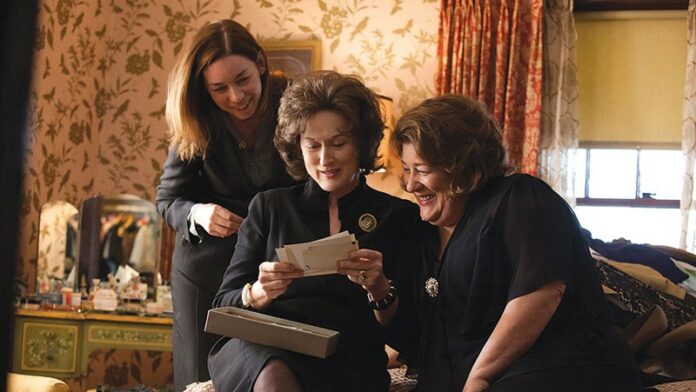
In August: Osage County, Meryl Streep’s Violet is afflicted with oral cancer: it scalds her mouth as payment for the acid she’s belched up on her family over the years. Her hair is patchy from chemo, but her tongue is in perfect working order, except when the pills (“my best friends!”) send her into a case of nigh-Pentecostal glossolalia. Violet’s husband (Sam Shepard), a sensitive academic drunk, has vanished, and she calls her angry family to her side, awaiting his return.

It’s a barely adapted adaptation of a much-laureled, long-winded play with a reputation as a black comedy. But I didn’t get the humor, and I don’t see how anyone other than a cast of drag queens could hit it home. And August has a stunning cast: Julia Roberts as an angry daughter, Benedict Cumberbatch as a cowed nephew and Abigail Breslin as a blasé granddaughter. (Though filmed in Oklahoma, the film lacks any visual sense and may as well have been shot in Bakersfield.)

Director John Wells, a TV vet smooth with transitions, does almost nothing with this theatrical source material except to watch Streep spellbound. But Streep is too forceful an actor to go for half measures. Such is her career: when she’s on, she’s brilliant, and when she’s bad, you need a gas mask. Streep has been in more difficult material, such as Ironweed, and that excellent Fred Schepisi film everybody mocks, A Cry in the Dark.

She’s tried harder, but in August: Osage County, she’s never been worse.

‘August: Osage County’ is in select theaters now.

Radical Radius

0

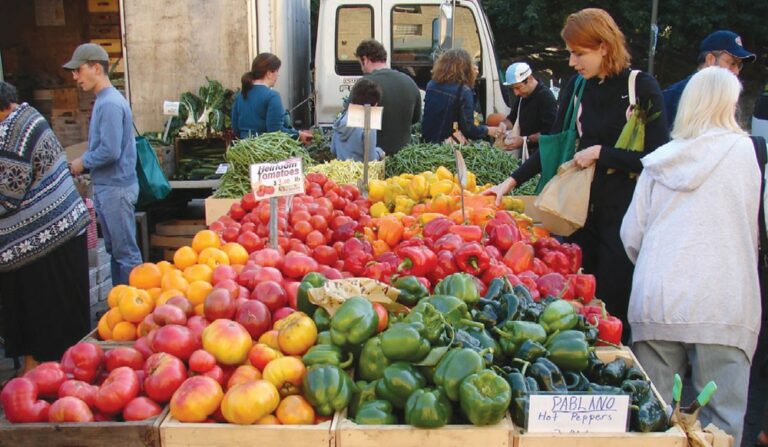
Imagine that nearly everything you ate for a straight month had to be grown within a 10-mile radius of your home. What would you eat? How much would you have to give up? What might you discover about the strength and weaknesses of your regional food system that you might never have realized before?

In September 2010, Vicki Robin, bestselling co-author of Your Money or Your Life, took on this very challenge in her hometown of Langley, Wash., a semi-rural hamlet on the south end of Whidbey Island, 30 miles north of Seattle.

“Doing this experiment was a huge eye-opener for me in terms of justice, politics, regulations, cooking and community,” Robin says on the phone from her home.

A serial yo-yo dieter and dedicated practitioner of “bedtime mini-gorges,” Robin writes with down-to-earth honesty and humor about her personal transformation through food awareness. Despite a long history of anti-consumerist activism, Robin says, she’d never been able to align her values with her own personal behavior. That is, not until a local farmer friend asked Robin to be a guinea pig in a simple-sounding but logistically challenging proposition: to test whether she could actually feed another human being for a full month entirely from produce grown on a half-acre farm. At the time, the only thing Robin could buy at her local grocery store that fit into the 10-mile limit was a bottle of local honey.

It wasn’t the first time Robin had dived into “sustainability as an extreme sport,” but nonetheless she began blogging about her 10-mile diet immediately. By the end of the month, she’d written 25,000 words—the ideas that came together to make up her new book Blessing the Hands That Feed Us: What Eating Closer to Home Can Teach Us About Food, Community and Our Place on Earth. Robin appears at Copperfield’s in Santa Rosa on Jan. 17 and Copperfield’s San Rafael on Jan. 18.

Early on, Robin and her friend Trina, the farmer, realized that the abundant vegetables from the farm wouldn’t provide enough nutrients for a woman in her late 60s to survive on healthily. So they allowed for a few exceptions, the exotics that would keep Robin going. These included olive oil, lemons and limes, a few Indian spices, salt and caffeine (in the form of tea).

The search began for meats and dairy sourced within a 10-mile radius, most of which Robin found without much trouble, and with the added bonus of developing new friendships. One friend makes her a fresh weekly tub of goat chèvre. Another neighbor with a dairy cow provides her with contraband raw milk. The eternally frugal Robin even buys a $25 local, organic whole chicken, leading to a fascinating breakdown of just why and how a chicken should cost so much, even if Foster Farms has factory-farmed chicken selling for $10 a pop at the local industrial food mart.

“Food in our culture is unnaturally cheap,” explains Robin. “We pay the smallest percentage for food than almost any country in the world. In giving our power over to the industrial food system, we’ve lost a sense of food as a precious part of existence, she adds.

“If you are a revolutionary, you need to cook and you need to teach other people to cook,” says Robin, readily acknowledging how she chafed against domesticity for years and at the prospect of “spending my life in a blowsy kimono cooking eggs” for a husband and two children. In fact, when the publisher asked for recipes to be included in Blessing the Hands, she initially balked. “This isn’t about recipes,” Robin told the publisher. “This is about systems thinking and spiritual transformation.”

These days, she’s seen the light.

“Cooking takes back your power,” Robin says. “If you can grow and cook your own food, you are freer.” A prime place to begin, she says, is learning to cook with whole ingredients, following something she calls “OWL”: organic, whole and local. It’s a luxury not just for hippies and yuppies. “Learning to cook with whole foods can nourish your family, and on a budget,” she adds.

In the book, Robin breaks down the cost of making a grass-fed burger at home with a side of fries made from organic, local potatoes, in comparison to driving to the local fast food joint for the same meal. The almost negligible difference in price is surprising.

An abiding passion for food-shed transformation, food democracy and restoring the vitality and prosperity of regional food chains has become a driving force in Robin’s life—that and how eating and preparing food can bring people together, a process she called “relational eating.”

All of this, in addition to becoming part of the Whidbey Island food web, has helped Robin to conquer a long time “bag lady fear,” she says.

“This sense of belonging is not only nice for my heart and soul, but also, I don’t think I’m going to starve,” she says. “As I get older, people will take care of me. And I entered that social safety net through food.”

Vicki Robin appears at Friday, Jan. 17, at Copperfield’s Santa Rosa (775 Village Court, Montgomery Village, Santa Rosa; 7pm; free) and Saturday,
Jan. 18, at Copperfield’s San Rafael (850 Fourth St., San Rafael; 1pm; free).

Jan. 12: J. Hanrahan Quartet performs ‘A Love Supreme’ at Sweetwater Music Hall

0

03-atlg.jpg

San Francisco is lucky enough to have the St. John Coltrane African Orthodox Church, where, every Sunday, devotees of Coltrane’s probing form of spiritual jazz gather to honor his music and spirit. Mill Valley, however, gets a little slice of Coltrane this week with Chicago’s J. Hanrahan Quartet performing the landmark album A Love Supreme in its entirety. Now together for over 20 years, Hanrahan’s quartet knows the album better than a saxophonist knows his spit valve; a second set promises Coltrane standards, while a third set is the audience’s choice. Sounds like a sermon from the mount, if you ask me; be there on Sunday, Jan. 12, at Sweetwater Music Hall. 19 Corte Madera Ave., Mill Valley. 7pm. $12—$14. 415.388.1100.

Jan. 11: Wu Man at the Green Music Center

0

index.jpg

The pipa is a four-stringed instrument looking somewhat like a lute, or an oud, and though you’ve likely never heard of the pipa, the stunning musician Wu Man plays the hell out of it. As a member of Yo-Yo Ma’s Silk Road Ensemble, Wu Man brings the traditional Chinese pipa to worldwide audiences with elegance and skill—she was named “Instrumentalist of the Year” at the 2013 Musical America awards. In an American premiere, the Santa Rosa Symphony performs Zhao Jiping’s “Concerto for Pipa and Orchestra” alongside Mozart’s Symphony No. 15 and Beethoven’s Pastorale symphony on Saturday, Jan. 11, at the Green Music Center. 1801 E. Cotati Ave., Rohnert Park. 8pm. $20—$80. 707.546.8742.

Jan. 9 -11: French Film Celebration at the Jarvis Conservatory

0

J-enrage-de-son-Absence-william-hurt-29726053-640-401.jpg

If the words “French Cinema” don’t make you salivate with anticipation, read no further. But if you’re one of the many who can’t get enough of the country’s pioneering styles, daring scripts and risqué plot twists, then settle in for three days of Francophile heaven at Jarvis Conservatory’s French Film Celebration. On offer are Mariage à Mendoza (dir. Edouard Deluc), about two brothers on a road trip; Au Galop (dir. Louis-Do de Lencquesaing), about a torrid affair; Comme un Lion (dir. Samuel Collardey), about a teenage footballer; and J’Enrage de Son Absence (dir. Sandrine Bonnaire), about an awkward family reunion. Films run Thursday—Friday, Jan 9-11, at the Jarvis Conservatory. 1711 Main St., Napa. Times vary. $10. 707.255.5445.

Jan. 10: Nipsey Hussle at the Phoenix Theater

0

NipseyHussle1.jpg

For a relatively underground rapper from Los Angeles, Nipsey Hussle has covered a lot of ground in the industry. His 2008 mixtape Bullets Ain’t Got No Name resulted in features with Drake and Snoop Dogg and a nod in XXL magazine. Unfortunately, his major-label Epic Records debut achieved “infinitely shelved” status, and now Mr. Hussle hustles for himself. In October, his mixtape Crenshaw was available in a limited editon of 1,000 copies, priced at $100 each. Twenty-four hours later, he’d sold them all—100 of them to Jay-Z. Needless to say, the buzz on this guy is huge. Catch him on Friday, Jan. 10, at the Phoenix Theater. 201 E. Washington St., Petaluma. 8pm. $20. 707.762.3565.

Future Days

0

Chang-Rae Lee’s latest novel may take place sometime in the future, in a world slightly more sinister than the world we inhabit now, but, bucking the Zeitgeist, there aren’t any zombies coming for dinner in On Such a Full Sea. Instead, the latest
book by the Pulitzer Prize finalist and one of The New Yorker‘s “20 Writers for the 21st century” has given us an aching, somber and beautifully written meditation on community, identity, class and love—with just a hint of cannibalism.

Similar to Cormac McCarthy’s The Road and Octavia Butler’s Parable of the Sower, Lee’s story centers around a protagonist who goes on a journey through a changed world in which the social norms and rules no longer apply, and where the human capacity for violence has run amok. Chang-Rae Lee appears at Copperfield’s Petaluma on Jan. 11.

On Such a Full Sea follows the journey of Fan, a 16-year-old resident of B-Mor who leaves her orderly and sheltered community for the “open counties,” where basic needs are met but not much else. It’s a hero’s journey through a chillingly prescient future world; Fan’s departure to search for her disappeared boyfriend Reg triggers hairline cracks in B-Mor’s complacent society, revealing how thin the line between prosperity and dissolution can be. Told by a collective narrator, the “we” of B-Mor, the story digs into the nuances of Fan’s journey and the ways her decision inspires those she left behind.

B-Mor is a walled community, built over the ruins of what was “once known as Baltimore,” which functions as a hive for a passive worker society of descendants of a people who were transported over from Xixu City in China years before—pushed out of their home after the water was fouled by farms, factories, power plants and mining operations into something beyond “all methods of treatment.”

B-Mor serves as one layer of a three-pronged society segregated by class status, with “open counties” residents at the bottom and the “Charters,” an exalted, wealthy, pampered and hypercompetitive society, at the top. (For further illustration, just look at the lifestyles of any of the current 1%.)

Reading Lee’s book brings to mind an anthropological study I was assigned to read in college. “Body Ritual of the Nacirema” details the odd and ridiculous behaviors of a cultural tribe that seems far removed from our own. It’s only at the end that you realize Nacirema is “American” spelled backwards.

Some of the behaviors of the B-Mor people seem strange, until the reader realizes that many of these behaviors and perversities are already common to the Western experience. A mindless consumption of media; the desire for highly curated temperature- and sound-modulated microenvironments (shopping centers, strip malls, department stores), where consumption is indulged with languid impassivity; sex trafficking; mass shootings of innocents—the list goes on.

Set in the future, Lee’s new book acts as a warning and a parable for what we might be, could be and already are, and the flashes of love, friendship, community and small heroic acts that we all need to employ to survive in a world gone mad.

Chang-Rae Lee appears Saturday, Jan. 11, at Copperfield’s Books. 140 Kentucky St., Petaluma. 7pm. 707.762.0563.

Swirling Script

0

Last year, actor-director Jacqueline Wells learned that the Raven Players were looking for directors, specifically encouraging female directors. After applying and interviewing, Wells was offered local playwright Jody Gehrman’s Taste, which was set for its debut staging at the Raven Performing Arts Theater.

“They sent me an email saying that because I’d expressed interest in directing new works, they wanted me to direct Taste,” Wells recalls. “And I wrote back, ‘Great! I can’t wait to read it!’ And luckily,” she laughs, “I liked it!”

Putting a modern, wine country spin on George Bernard Shaw’s Pygmalion, itself the inspiration for the musical My Fair Lady, Taste is the story of a debt-ridden Sonoma County winery whose owner has died. On the eve of an all-important winetasting competition, the deceased owner’s niece, Astrid (played by Raena Jones), arrives to inform the staff (Nick Charles, Saskia Baur and Matthew T. Witthaus) that she has inherited the winery and plans to sell it.

A New York activist hoping to use the winery money to build a shelter for homeless teens, Astrid—who knows nothing about wine and is regrettably fashion-challenged—agrees to let the winery’s head winemaker, Joe (Witthaus), try to transform her into an elegant, make-believe Duchess, whose presence at the upcoming gala will increase the price tag of the winery.

And wine isn’t the only thing that ferments as Astrid and Joe move from a not so cordial relationship into a something a bit steamier.

“It’s definitely a romantic comedy,” says Wells, who admits that the trickiest part of directing Taste is in accurately representing the environment of a Sonoma County winery. “Doing a wine play in wine country has its challenges,” she laughs. “I knew we would have to make sure the actors did things correctly. But not all of the actors were familiar with how to properly hold a wine glass or how to sip and swirl and spit. They had to learn how to pronounce certain wine industry words.

“We had experts come in and work with the cast,” Wells adds, “and we actually practiced spitting—using fake wine and real wine.”

Wells says that she has especially enjoyed working with Gehrman, best known for her popular YA novels (Audrey’s Guide to Witchcraft, Babe in Boyland), but also an experienced playwright.

“I’ve had a dream playwright and a dream cast,” she says. “Not only are they all excellent actors, but the chemistry between us all has been fantastic. I think audiences are going to see that.”

Long Way Home

There are no blues songs on Fight for My Soul, Jonny Lang’s first album in seven years.

Instead, it’s a mix of pop, rock and contemporary R&B that at times sounds more influenced by Michael Jackson than Buddy Guy.

“When I was younger, I thought, ‘I’ll always be a blues guy, so to speak,'” Lang says. “Things just change. You grow up. The songs I write myself have always been different from what people might expect, different from a guitar-centric rockin’ blues record. But I’m sure some people are going to say, ‘Dude, where are all the blues songs and guitar solos?'”

Lyrically, Lang’s making a similar jump, expressed in “Blew Up (The House),” a catchy stomp about a guy who’s hit bottom and is starting fresh. That’s not entirely autobiographical, but Lang says it captures something about him.

“The content is kind of all over the place, from being autobiographical to some stories that are completely fiction that get across a concept or just abstract things,” he said. “There’s a lot of me in it.”

Lang and wife Haylie, whom he married in 2001, have four children and are now at home in Southern California, where Lang puts a priority on being a husband and father rather than living anything resembling a wild life.

“All that has served to tame me,” he says. “It’s really helped me become a better person and maybe not being so self-destructive.’

Lang freely confesses that he headed for excess in the past, when he was a teenager living out the rock and roll dream.

A native of North Dakota, Lang started playing guitar at 12, released his first album at 14, got signed to A&M Records and put out his major label debut Lie to Me in 1997—when he was all of 16.

That record went multiplatinum and Lang was a young star, touring with his heroes, like the Rolling Stones and Buddy Guy, and playing a White House gig for President Clinton in 1999. Now, he says, he’s bringing his most personal music to fans who have followed him for 16 years the best way he knows how—by playing live shows.

Rest assured, Lang will be doing some of his old songs and cranking up the guitar at the shows as well.

“We’re going to do our best to try to span the years and play a little of each era,” he said. “If they let us, we’ll go two hours or more. You can cover a lot in that amount of time. If we have to go shorter than that, it gets a little more difficult. But we’ll try to cover everything.”

Jonny Lang plays Sunday, Jan. 12, at the Uptown Theatre. 1350 Third St., Napa. 8pm. $45–$55. 707.259.0123.

Mice Capades

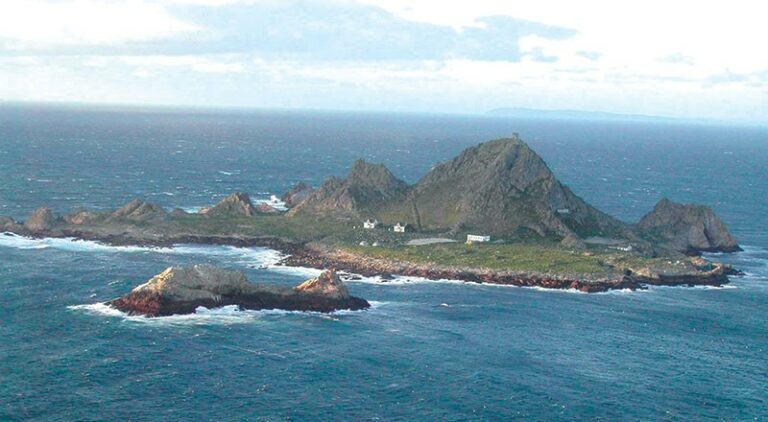
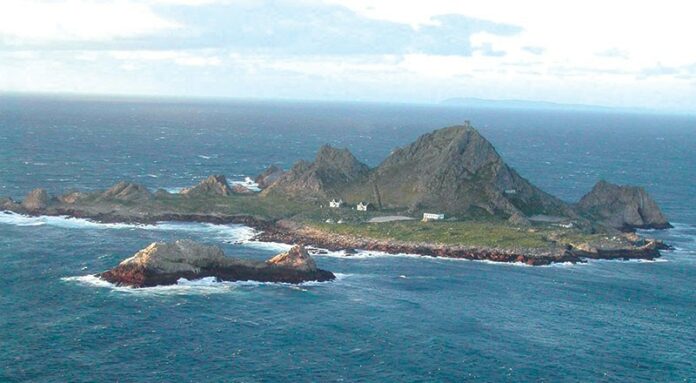
From 1980 through 2003, Peter Pyle worked at the Farallon Islands off the coast of Marin. The veteran bird researcher counted seabirds, observed them feeding their young during nesting time, and many times witnessed and recorded great white sharks attacking and killing pinnipeds in the ocean waters surrounding the legendary islands. Pyle worked for the Point Reyes Bird Observatory at the time, and with a rotating team of assistant scientists, he lived in a small house on Southeast Farallon Island, the 357-foot-high crag visible to landlubbers from 30 miles away but off-limits to the general public. They hiked about the rocky shores, received grocery deliveries twice a month, and often fished for lingcod from a small skiff in the hours before dinnertime.

Today, Pyle, now working with the Institute for Bird Populations in Point Reyes, remembers his many seasons at the islands with a strange blend of sweet nostalgia and dread that makes the skin crawl—for the islands, now as then, are crawling with house mice. The animals are non-native, introduced accidentally more than a century ago by boaters, and every summer and fall their population explodes to grotesque numbers on two of the islands—namely, Southeast Farallon Island and an abutting crag called West End that becomes separated from the bigger island at high tide.

“They’re just crawling around everywhere,” says Pyle, who was working with the Point Reyes Bird Observatory during his years of island research. “It’s like some invasion-of-the-rats movie.”

The resident scientists, he says, sometimes kept a small compost heap in back of the house where hundreds of mice could be seen at a glance. Walking about on the rocky landscape, mice peeked out from nearly every crack and burrow. Nights in the old Victorian house were especially unsettling, he recalls. The rodents swarmed though the old dwelling. They skittered about on the counters, knocked over dishes, defecated on the dinner table and tousled sleepers’ hair. Many individuals, Pyle says, have made attempts at controlling the animals using snap traps. Killing 50 a night can be easy, but it’s a futile effort on an island whose mouse population in high season may reach 60,000 to 100,000.

The main problem associated with the Farallon Islands’ mice is a complex of ecological imbalances. For one, the mice prey on two native species that live nowhere else: the camel cricket and the arboreal salamander. The rodents’ presence has also attracted a population of burrowing owls, predators that previously only used the island for brief migratory stopovers but who now, due to the abundance of mice, remain for long periods.

When the mouse population suddenly plummets early each winter, the owls abruptly find themselves with almost nothing to eat. This turns their attention to native birds, in particular the ashy storm-petrel, a rare species that nests on the islands every winter and spring. The owls, according to experts, are slowly whittling away the petrels’ population. But the owls prefer mice, and if only the rodents could be eliminated, the owls, too, might go away.

[page]

For many ecologists associated with the islands, the solution to the matter seems clear: poison the rodents.

“Nobody is happy about maybe having to use poison,” Pyle says. “Nobody wants to do it, but when you weigh the costs against the benefits, it’s probably worth doing.”

The idea is more than an informal conversation topic. In October, the federal Fish and Wildlife Service released a 700-page environmental impact statement discussing the Farallones’ mice and dozens of ways to potentially address the matter. Doug Cordell, a spokesman with the service, says his agency considered a total of 49 different solutions to the infestation, including releasing cats onto the islands, using traps to curb their numbers and checking their fertility using medicine-laced bait. Most of these proposed actions have been dismissed, he says, leaving on the table just three. Two involve poisoning the rodents. The other would be to do nothing at all.

“We wouldn’t move forward with any option that posed more risk to the environment than benefits,” Cordell says. “Our job as an agency is to serve and protect wild lands and wildlife.”

Cordell stresses that the Fish and Wildlife Service currently has “no preferred alternative.”

Yet he describes the mice at the islands as “plague-like” in numbers, and he tells the Bohemian that successful rodent eradication would require removing every single individual mouse from a population. Traps, he says, would likely fail to substantially dent the mice’s numbers. Cats, too, would not catch every last one, and would certainly prey on the Farallones’ birds.

It may sound like an unlikely prospect—eradicating invasive rodents from a place where the ground appears to crawl with them. Yet this has been successfully achieved on many small islands worldwide. For instance, Anacapa Island, off of Santa Barbara, was successfully cleared of rats in 2001 using grain-based pellets laced with a powerful rodenticide called brodifacoum.

This is likely the poison that would be used at the Farallones. A tiny amount would be applied, according to Cordell. He says the pellets under consideration contain just 0.005 percent rodenticide—such a low density, Cordell says, that any bait pellets that drift into the ocean would dissolve and be rendered virtually harmless.

The pellets would not be aimlessly scattered either, according to Jaime Jahncke, a researcher with Point Blue Conservation Science, formerly the Point Reyes Bird Observatory. Jahncke, who backs the poisoning plan, says the pellets would be dropped from a low-flying helicopter and directed away from the tidal zone via a deflector at the mouth of the dispenser. This, he says, would minimize the number of pellets that reach the water.

Even if some pellets do dissolve into the tide pools, it may be unlikely that the marine environment would be effected. Jahncke points to an accidental spill in New Zealand in 2001 that put 15,000 pounds of poison pellets—containing almost a pound of brodifacoum—into a tidal marsh. The event, he says, had virtually no lingering measurable effects. Harvesting of shellfish for consumption was temporarily banned after the accident but was soon green-lighted again by officials.

“And that case involved a closed waterway and a humungous amount of poison placed directly into the water,” says Jahncke, who is also a member of the five-person Gulf of the Farallones National Marine Sanctuary Advisory Council.

By comparison, the proposed poison drop at the Farallones would involve no more than about two tons of pellets containing 1.5 ounces of brodifacoum. If officials opt for another rodenticide called diphacinone—less potent than brodifacoum—they will use about 16,000 pounds of pellets containing up to about a pound of the poison.

Still, opposition to the effort is strong. Jared Huffman has made statements questioning the wisdom of the plan, and the Marin County pest-management company WildCare Solutions is a firm opponent. The general public seems also to be leaning against the idea. Hundreds of written objections to the poisoning plan have been submitted to the Fish and Wildlife Service through its website since August.

[page]

Sean Van Sommeran, a shark researcher based in Santa Cruz, believes rodenticides applied at the Farallones could remain in the environment for long periods.

“They’re pretending this won’t have residual impacts,” says Van Sommeran, the founder and director of the Pelagic Shark Research Foundation. “It’s going to affect seabirds and marine mammals. It’s just going to be one more addition to the contaminants already in the water.” He believes the rodenticide could migrate through the food web and eventually contaminate large predators—like great white sharks, the core of Van Sommeran’s research—much the way that heavy metals find their way into sharks, swordfish and tuna.

There is little doubt that some birds—especially omnivorous western gulls—will eat the pellets and die. But Cordell says casualties could be minimized by scaring away the birds during the poisoning effort. Hazing methods—like using loud explosives and laser pointers to scatter flocks of gulls—have been tested already and proven effective at the islands. Owls, liable to suffer the consequences of eating poisoned mice, would need to be trapped and relocated during the eradication effort, Cordell says.

Eliminating the mice will benefit more than just petrels, says Brad Keitt of Island Conservation, a group based in Santa Cruz. “Removing invasive species has had incredible benefits to islands around the world,” he says. At the Farallones, Keitt says, “the driving issue is to restore the balance of the ecosystem.”

The Farallon Islands have seen non-native species come and go before. The islands were first visited by Russian sailors in the early 1800s, but it’s believed by scientists who have genetically examined the islands’ mice that the rodents were brought later in the century, from mainland American stock. Around the same time, rabbits were released on Southeast Farallon Island. Hundreds of them were still living there in 1971, as were several feral cats, when a scientist named David Ainley first set foot on the island.

“There was a lot of junk out there—sheds and garbage and things,” says Ainley, a Marin City resident who previously worked for the Point Reyes Bird Observatory and, through the 1970s, spent about half his life living on the island. “We got that all cleaned out.”

Ainley helped direct a focused trapping and shooting effort that successfully eliminated the rabbits. Three cats, he says, were captured and sent to the mainland. The mice, however, remained. In fact, removing the rabbits meant more food for the mice, especially the seeds of the many grasses that consequently thrived unchecked. The mouse population soared higher than ever.

“Poisoning is the only chance to get rid of the mice,” Ainley says. But mice, he says, are not easy animals to eradicate, both because they are small and easily able to remain unseen and because they reproduce prolifically. Southeast Farallon Island, at high tide, is roughly 60 acres, Ainley says. “There are infinite cracks and holes that they can hide in.”

Every winter, the Farallones’ mouse population plummets. Pyle explains that the first rains cause millions of small seeds scattered about the islands to germinate. This leaves the mice with nothing to eat. On top of that, winter rainfall tends to flood out their burrows, driving tens of thousands of starving mice into the cold open air.

“They come out of their holes and go wandering around eating each other,” Pyle says.

He feels that eradicating the mice would not just benefit birds but would eliminate immeasurable rodent suffering. So many mice starve each winter on the Farallones that for several months, from March to June, resident researchers don’t see a sign of the animals. Pyle guesses the mouse population bottoms out at perhaps 100 scrawny survivors in the early spring.

“Then the numbers start climbing, and by October it’s mayhem again,” he says.

Any poisoning effort would take advantage of this population cycle by hitting the mice while their numbers are down. The Fish and Wildlife Service has proposed the poisoning to take place in November of 2014, although the service is still considering its options and will release a final environmental impact statement this spring.


Turn of Tumult

Metaphors in film are rarely subtle. The lonely padre dying of stomach cancer in Diary of a Country Priest is an elegant symbol, a devout person corroding from the inside. On the other side of the ledger, legions of movie mothers have contracted breast cancer as punishment for not being nurturing enough. In August: Osage County, Meryl Streep's Violet is...

Radical Radius

Imagine that nearly everything you ate for a straight month had to be grown within a 10-mile radius of your home. What would you eat? How much would you have to give up? What might you discover about the strength and weaknesses of your regional food system that you might never have realized before? In September 2010, Vicki Robin, bestselling...

Jan. 12: J. Hanrahan Quartet performs ‘A Love Supreme’ at Sweetwater Music Hall

San Francisco is lucky enough to have the St. John Coltrane African Orthodox Church, where, every Sunday, devotees of Coltrane’s probing form of spiritual jazz gather to honor his music and spirit. Mill Valley, however, gets a little slice of Coltrane this week with Chicago’s J. Hanrahan Quartet performing the landmark album A Love Supreme in its entirety. Now...

Jan. 11: Wu Man at the Green Music Center

The pipa is a four-stringed instrument looking somewhat like a lute, or an oud, and though you’ve likely never heard of the pipa, the stunning musician Wu Man plays the hell out of it. As a member of Yo-Yo Ma’s Silk Road Ensemble, Wu Man brings the traditional Chinese pipa to worldwide audiences with elegance and skill—she was named...

Jan. 9 -11: French Film Celebration at the Jarvis Conservatory

If the words “French Cinema” don’t make you salivate with anticipation, read no further. But if you’re one of the many who can’t get enough of the country’s pioneering styles, daring scripts and risqué plot twists, then settle in for three days of Francophile heaven at Jarvis Conservatory’s French Film Celebration. On offer are Mariage à Mendoza (dir. Edouard...

Jan. 10: Nipsey Hussle at the Phoenix Theater

For a relatively underground rapper from Los Angeles, Nipsey Hussle has covered a lot of ground in the industry. His 2008 mixtape Bullets Ain’t Got No Name resulted in features with Drake and Snoop Dogg and a nod in XXL magazine. Unfortunately, his major-label Epic Records debut achieved “infinitely shelved” status, and now Mr. Hussle hustles for himself. In...

Future Days

Chang-Rae Lee's latest novel may take place sometime in the future, in a world slightly more sinister than the world we inhabit now, but, bucking the Zeitgeist, there aren't any zombies coming for dinner in On Such a Full Sea. Instead, the latest book by the Pulitzer Prize finalist and one of The New Yorker's "20 Writers for the...

Swirling Script

Last year, actor-director Jacqueline Wells learned that the Raven Players were looking for directors, specifically encouraging female directors. After applying and interviewing, Wells was offered local playwright Jody Gehrman's Taste, which was set for its debut staging at the Raven Performing Arts Theater. "They sent me an email saying that because I'd expressed interest in directing new works, they wanted...

Long Way Home

There are no blues songs on Fight for My Soul, Jonny Lang's first album in seven years. Instead, it's a mix of pop, rock and contemporary R&B that at times sounds more influenced by Michael Jackson than Buddy Guy. "When I was younger, I thought, 'I'll always be a blues guy, so to speak,'" Lang says. "Things just change. You grow...

Mice Capades

From 1980 through 2003, Peter Pyle worked at the Farallon Islands off the coast of Marin. The veteran bird researcher counted seabirds, observed them feeding their young during nesting time, and many times witnessed and recorded great white sharks attacking and killing pinnipeds in the ocean waters surrounding the legendary islands. Pyle worked for the Point Reyes Bird Observatory...
12,117FansLike
4,907FollowersFollow
6,928FollowersFollow