Governor Sets Aside Properties For Homeless

Following his State of the State speech last week, Gov. Gavin Newsom’s staff released a list of 286 state properties that he will allow local government agencies to use for free to shelter the growing number of people struggling to find housing in the state.

Newsom selected the properties, many of which belong to CalTrans, the state agency in charge of constructing and maintaining much of the state’s transportation infrastructure, last month when he signed Executive Order N-23-20.

Also included are the Sonoma Developmental Center, a former state mental hospital surrounded by 1,670 acres of land. The Napa State Hospital, another state-run facility with a 138-acre campus, is also listed as a possibility.

In his address, Newsom reportedly said it is “a disgrace, that the richest state in the richest nation … is falling so far behind to properly house, heal and humanely treat so many of its own people.”

Black Success Panel and Event at SRJC

The Santa Rosa Junior College Black Student Union presents “Perception vs. Reality: Black Success Panel” from 6–9pm, Thursday, Feb. 27, at the Student Activity Center on the Santa Rosa Junior College campus, 1501 Mendocino Ave., Santa Rosa.

Among the participants and panelists are Emmy Award–winning musician Tony Saunders, actor Willie Hen (The Last Black Man of San Francisco), Faith Ross, cofounder of Petaluma Blacks for Community Development, Ted Keys of 100 Black Men of Sonoma County and D’Mitra Smith, vice-chair on the Sonoma County Commission for Human Rights. Ben Edwards, Evette Minor and Dianna Grayer are also participating, as are the North Bay Black Chamber of Commerce and the Sonoma County Black Forum.

“We want our community and students to walk out knowing that it doesn’t matter what perception is placed on them,” says organizer Delashay Benson. “The reality is that you can become anything that your heart desires.”

ICE Arrests
Spark Outrage

News that agents from a federal immigration agency showed up at the Sonoma County Superior Courthouse on Tuesday, Feb. 18, despite a lack of cooperation from local officials, sparked outrage among Sonoma County officials and immigration activists last week.

Agents from Immigration and Customs Enforcement (ICE) reportedly arrested at least two people at the courthouse in Santa Rosa.

In a joint statement released on the day of the arrests, Sonoma County District Attorney Jill Ravitch, Public Defender Kathleen Pozzi and County Counsel Bruce Goldstein all condemned the federal agency’s operation. In the same statement, Sonoma County Sheriff Mark Essick said that his agency had not coordinated with ICE officials.

In response, local activists organized a protest of the federal agency at the courthouse on the morning of Tuesday, Feb. 25.

“Our community will not tolerate these ICE raids, which terrorize and separate our families, especially when they happen at public service buildings like schools and court houses,” an unnamed immigrant’s rights leader said, according to a Graton Day Labor Center press release announcing the protest.

Witness to History

0

What she calls a need to bear witness is what drives fifth-generation North Bay–native Lynn Downey, whether in her previous work as the official archivist for Levi Strauss & Co. or as a journalist and author of several books.

“It informs everything I do as a historian,” she says.

The Sonoma-based Downey does just that in her new book, Arequipa Sanatorium: Life in California’s Lung Resort for Women, which covers the history of the Marin County tuberculosis health center opened in 1911 by San Francisco doctor Philip King Brown.

In the aftermath of the 1906 earthquake, dust and ash filled the city, leading to rising rates of tuberculosis among working-class people, especially women in factories and shops. At the time, bed rest, fresh air and lots of food were the only treatments for the lung disease.

Dr. Brown opened the institution for women after noticing the rising rates, and he and his all-female staff gave new life to hundreds of working-class patients.

One of those patients was Downey’s grandmother, Lois Downey, who arrived at Arequipa with a terminal tuberculosis diagnosis in 1927. Lois recovered and went on to live 102 years.

“All my life I grew up hearing stories about this place,” Downey says. “The fact that my grandmother was alive to tell those stories was due to Arequipa and Dr. Philip King Brown specifically.”

When telling these stories, Downey’s non-fiction writing reads like a novel, focusing on the characters and their motivations as much as the events of the story.

“I find Dr. Brown such a fascinating person, this male doctor who cared so much about women’s health,” Downey says.

Downey’s work on the novel dates back more than 30 years, when she first interviewed her grandmother about Arequipa.

Since then, Downey has collected interviews and profiles of several former patients, and draws on historical records and photographs she found stashed on the property decades after the sanatorium closed.

The book’s stories are interwoven to offer a day-in-the-life look at the center, highlighting how women hand-knitted clothes during the war and made sought-after pottery when they weren’t resting in the fresh, Marin air.

The book also provides a bit of a history lesson on the threat of tuberculosis and offers insight into medical practices of the time; like how Dr. Brown hired volunteers to run the X-ray machines.

Still, the women of Arequipa are the stars of the book, and Downey turns these mostly-forgotten names into real-word figures.

“For me, stories about people is what drives our interest, we’re hardwired for narratives as human beings,” she says. “The institution is just the place where it happened. I am writing about the people who shared their time in this institution, that’s what matters.”

Land Swap

Late on the night of Monday, Feb. 24, the Petaluma City Council narrowly approved a controversial, multi-part land deal in order to fund a second train station for the city.

Critics of the deal between Petaluma and Lomas Partners, LLC—a Southern California company businessman Todd Kurtin owns—say none of the parties involved have been responsive to criticism of the proposed designs, the process of approving the project and costs to the city.

Ultimately, the deal, which in part requires the city to contribute $2 million to cover some of the costs of the new train station, could leave the city with little leverage over the design of a downtown housing development and a related off-site affordable housing component, critics say.

After hours of discussion and public comment, almost unanimously against the current project proposal, the City Council voted 4 to 3 to support a development agreement with Lomas Partners and several related documents to greenlight Lomas’ interlocked housing development proposals.

There is at least one more significant hurdle for the project. The agreements approved by the City Council will be void if the city cannot secure a formal commitment from SMART to construct the Corona Road Station, which, if completed, will be the city’s second train station.

To that end, the Council directed staff to set up a meeting with SMART to reach an agreement.

Here are some of the details of the deal:

In August 2017, Lomas Partners, LLC, signed a deal with SMART to purchase 315 D St., a 4.48-acre piece of land next to Petaluma’s downtown station, for $5 million. In exchange, Lomas would donate 1.27 acres of land at 890 McDowell Blvd. and build a 150-space parking garage on it. Under plans filed with the city, Lomas would construct 110 homes on the remainder of the 890 McDowell Blvd. parcel.

According to a Petaluma staff report, SMART plans to use funds from the sale of the 315 D St. property to pay for work on the Corona Road Station. SMART has not set aside any other funds to complete the station, Petaluma city staff said Monday night.

Petaluma will contribute $2 million from its traffic abatement fund to cover some of the costs of constructing the Corona Road Station, according to the development agreement.

Once Lomas purchases 315 D St., it plans to sell development rights for the property to Hines, an international development company based in Houston. But before it does that, Lomas needs to meet the city’s affordable-housing requirements.

Generally, the required number of affordable units—or alternative fees paid if the developer gets permission to not build the affordable units themselves—are calculated as a percentage of the total proposed market-rate units.

However, Lomas has not submitted formal plans for the downtown development. To date, it has only filed “conceptual plans” calling for approximately 405 housing units, according to a city staff report.

If the final project does include 405 units as anticipated, the city will require the developer to construct 61 affordable units—approximately 15 percent of the total number.

Evidently Lomas does not want to build those units in its downtown project—presumably because that’s a less-profitable prospect, given that 315 D St. is in the heart of Petaluma.

Instead, at a Jan. 27 City Council meeting, Lomas proposed building all of the affordable units at 1601 Petaluma Blvd. S., a 2.5-acre piece of a former quarry located on the shore of the Petaluma River directly below Highway 101. Lomas will also contribute $862,208 to the city’s affordable-housing fund as part of the deal.

After complaints from community members and city councilors at the January Council meeting, Lomas agreed to build 11 of the affordable units downtown and 50 at the former quarry far from downtown.

According to a city staff report, affordable-housing developer Burbank Housing has said it will need an additional $2 million on top of Lomas’ $862,208 in fees to complete the proposed affordable-housing project.

In comments at the Feb. 24 Council meeting, Rich Wallach, Burbank Housing’s director of housing development, indicated that the developer is confident that it will secure outside funding to complete the project, pending a few recent changes to the funding program the developer is applying to.

What’s The Hurry?

With such a complicated project, a layperson might expect this kind of project to remain mired in city bureaucracy for years. Instead, Lomas was able to win approval of the project from the City Council, despite the fact that the Planning Commission voted against the development agreement and the proposed plans for the 890 McDowell Blvd. development at two meetings last year.

Several council members who voted for the deal acknowledged flaws with the project proposal, especially the affordable-housing aspect, but indicated that the deal might be the city’s last foreseeable chance to get a second SMART station.

Here are two of the factors at play:

First, the agreement SMART and Lomas signed in 2017 requires Lomas to close its purchase of 315 D St. by May 19, 2020.

Second, the development agreement between Petaluma and Lomas states that, “SMART indicates that construction work for the Second Petaluma Station [at Corona Road] must coincide with the completion of the construction work on the planned Windsor SMART station scheduled to commence in March, 2020 …”

Here’s the implication: If Petaluma doesn’t approve the agreement with Lomas now, Lomas won’t pay SMART for the 315 D St. property, SMART won’t begin work on the Corona Road Station after they complete the Windsor Station work and Petaluma will lose hundreds of new downtown housing units (read: tax dollars) in the process.

Although SMART’s 2017 deal with Lomas dictated much of the conversation around Petaluma’s development agreement—including the shortened timeline on the decision—SMART staff did not speak at the City Council meetings that included discussion of the Lomas deal, nor did SMART return a request for comment.

As part of their approval, the City Council directed city staff to arrange a meeting with SMART to hammer out a formal promise from the transit agency to construct Corona Station. If they cannot reach that agreement with SMART in the next few months, the convoluted Lomas deal may fall apart after all.


Compare/Contrast

0

On view on floor five as part of the “Pop, Minimal, and Figurative Art” exhibit at the San Francisco Museum of Modern Art is Andy Warhol’s Liz #6, an iconic work that we’ve all seen.

But have you seen it side by side with Tim Curry’s Dr. Frank N. Furter from The Rocky Horror Picture Show? See above—now you have. The resemblance is uncanny in that “separated at birth” kind of way. Surely, this sixth Liz Taylor was the inspiration for Curry’s make-up, right? Happy to debate this with you at a drinking establishment of your choice—just say when, where and the name on your tab. I see you shiver with antici……pation.

• • •

Starting Monday, Petaluma will be the scene of a massive arboreal apocalypse as the city fells trees along Highway 101 between Lakeville Street (Highway 116) and Corona Road (a name that makes you want to wear a face mask). Unless you’re a vampire, this shouldn’t affect your commute—the tree slaying will close northbound lanes from 10pm to 6am and southbound lanes from 7pm to 4am—for the next seven weeks. Alas, it never occurred to the powers-that-be to instead keep the trees and rip out the highway, as an act of civic healing. This particular leg of 101 has artificially divided Petaluma and fomented an intense East-West rivalry that’s led to calls to dam the Petaluma River and create Petaluma Bay to flood the side opposite their own.

Did English 101 teach us nothing? Being the “egg basket of the world” at the time F. Scott Fitzgerald was writing the Great Gatsby, surely Petaluma was the inspiration for East Egg and West Egg (aha!), the tony enclaves that indicated whether you come from old money or new money. I don’t know where Petaluma’s money is now, let alone its relative youth, but I do know that “mature trees” are showcased on every million-dollar-plus real estate listing (which is to say every listing at this point). Factor that into your nest egg, P-town.

• • •

Someone has vandalized undercover artist Banksy’s latest mural in Bristol, England, leading others to ask “Wait, isn’t Banksy’s art itself technically vandalism?” Armed with spray paint and stencils, the much-lauded Banksy surreptitiously appropriates city walls as his canvases, which can become worth millions—that is, until another artist scrawls “BCC Wankers” across it in an apparent critique of the “Bristol City Council.” Sure, beauty is in the eye of the beholder, but value in the art world starts with the holder of the spray can. A decade ago Banksy created six pieces during a San Francisco “residency”—surely Sonoma, Napa and Marin are next.

Nominate local targets for Banksy-treatment on our Facebook page (facebook.com/NorthBayBohemian) and we’ll pass them along (and, naturally, take a gallerist’s commission).

It Can’t Happen Here … Can It?

Most of us are simply horrified at the wholesale trashing of ethics, truth and the rule of law in Washington these days. We shake our heads in disbelief and mutter, “Well, it can’t happen here.” But maybe, just maybe, we’re just kidding ourselves.

It was revealed on Feb. 11 that 3rd District Supervisor Shirlee Zane didn’t have the mandatory zoning permit to allow her large re-election campaign signs, which were already posted all around town. Rival Chris Coursey noted, “Look, if you’re willing to break small rules, what rules aren’t you willing to break?”

The answer to that is already on the record, Chris. At the Nov. 19 Board of Supervisors meeting, options were discussed for resolving the Rodota Trail encampment crisis. The county is bound by the Martin v. Boise 9th Circuit decision along with agreed terms of a Federal injunction which protects certain rights of unsheltered individuals staying on publicly owned land in Sonoma County.

Shirlee Zane’s opinion on the matter? “I’m not in favor of allowing the courts to dictate our actions on this matter, I’m really not,” she declared, adding, “Too often we’re bound by these legal decisions … what would happen if we decided not to respect this injunction?”

What, I wonder, would happen if we are fools enough to re-elect yet another official who thinks that breaking the law is a good idea?

Santa Rosa

Pass the Pliny

Every year Sonoma County sees globe-trotting beer lovers pack the streets for a taste of the infamous Pliny the Younger. I have lived in Santa Rosa since long before The Russian River Brewing Company even opened its doors. We locals know a good thing, and are proud to call Pliny our own. We bring growlers out of town and pack bottles in our suitcases when visiting friends across the country and beyond. We love the beer and the pizza and the Drew bites year-round, not just for two weeks in February. We have helped The Russian River Brewing Company become what it is today.

Yet, for two weeks in February, RR forgets about us. To get even a taste of our favorite beer, we have to stand in line for hours. We have to take time off work, because unlike the globe-trotters, we are NOT on vacation. We are your teachers and doctors, roofers and checkout clerks. We deliver mail and pick up trash. We are the people that keep this community moving. It’s time Russian River showed us some love, and gave us a chance to try Pliny the Younger without needing to wait in line for 4 hours. A driver’s license swipe, a locals-only voucher or a day when only locals can visit—Sonoma County residents should get one time to go to the front of the line, as a “Thank You” for making you who you are.

Santa Rosa

Write to us at le*****@******an.com.

Hungry Hearts

0

There’s irony to be found in the fact that a guy with the surname “Coffin” wrote one of the liveliest theatrical productions I’ve attended in a while. Five Course Love by playwright/composer Greg Coffin is the show and it runs through March 1 at the Lucky Penny Community Arts Center in Napa.

The show consists of five comedic, love-themed vignettes, each set in a different restaurant and each involving three characters. Actors Sarah Lundstrom, F. James Raasch and Brian Watson take on the 15 roles, with Lundstrom and Raasch usually playing a couple and Watson handling server/chef duties.

The show opens at Dean’s Old-Fashioned All-American Down-Home Bar-B-Que Texas Eats where a nervous nerd (complete with pocket protector) awaits the arrival of his social media–arranged date. Her name is Barbie, and she’s looking for her Ken. Neither is really who they claim to be in their online profiles.

A quick change of tablecloth and we’re at Trattoria Pericolo, where a gangster’s moll is having a secret rendezvous with one of her boyfriend’s underlings. Things get dicey when the mob boss shows up.

Things get bawdy at Der Schlupfwinkel Speiseplatz after a body is carted off. A dominatrix discovers her server boyfriend is seeing someone on the side, as is she. In no time at all the three will be doing “Der Bumsen-Kratzentatz.”

After a brief intermission, it’s off to Ernesto’s Cantina where a señorita has to choose between two men’s affections.

The show closes at the Star-Lite Diner, where a greaser can’t see the forest for the trees when he seeks the help of a girl to find his one, true love. Things then neatly wrap around to one of the earlier characters.

Told in a very compact 95 minutes (including an intermission), Five Course Love resembles a series of musical comedy sketches from the old Carol Burnett Show. Lundstrom even resembles Burnett in both appearance and talent, and Raasch and Watson ably fill out the Harvey Korman and Tim Conway–type roles. They also can sing, which is good, because there are 23 original songs in the production.

Yes, it’s played over-the-top, with ridiculous wigs, quick costume changes, outrageously exaggerated accents and stereotypical characters that wouldn’t pass a cultural-sensitivity test, but the Heather Buck–directed cast is just so damn charming you can’t help but smile and laugh at their antics.

Five Course Love will satiate your appetite for silliness.

Rating (out of 5): ★★★★★

‘Five Course Love’ plays through March 1 at the Lucky Penny Community Arts Center, 1758 Industrial Way, Napa. Thursday, 7pm; Friday–Saturday, 8pm; Sunday, 2pm. $30–$40. 707.266.6305. luckypennynapa.com.

Sober Rover

0

Didn’t make it very far into “dry January” this year? Me neither.

Sober Diary, January 2: “This is fine, but what’s the point?” The point, says the doctor the following week at my free annual checkup (thanks to Covered California—Medicare for all it ain’t, but I’ll take it), is to give the liver a break. Doc says it can recuperate in just 21 days, and then it’s, “Hello again, cask-strength single malt!” He didn’t actually say that last bit.

So, the next calendar-assisted bout of sobriety coming up is Lent, the Catholic tradition of fasting and abstinence that starts on Ash Wednesday, this issue’s publication date. Being impatient to practice this newfound self-discipline, I did an earlybird, prequel version that’s half the time and ends on Fat Tuesday.

Looking to the non-alcoholic (NA) wine section, I find nothing new to tempt me. Turning to the beer aisle, a few smartly labeled packages of cans catch my eye. Look, it’s non-alcoholic craft beer. Finally! Did someone read my mind?

Hairless Dog Brewing Co. cofounders and friends Paul Pirner and Jeff Hollander were of the same mind when they ran into each other at a party and noticed neither was drinking.

“There’s no sob story or anything,” says Pirner. “We just decided we’d had enough.”

But they didn’t want the stigma that follows someone walking into a room with a bottle of O’Douls, “And people are like, ‘What happened to that guy?'”

With unapologetic style, Hairless Dog sports the tagline, “Party like there’s a tomorrow.” Their 0.0 percent alcohol coffee stout, made without fermentation, is robust and hop-forward, with not-too-sweet malt flavor and a warmth that replaces the alcohol of a regular stout.

Almost as good as it sounds, Bravus Brewing Company’s Guinness-like oatmeal stout relies on convincing tamari and molasses notes, but has a strong note of burnt malt that, in their amber ale version, is a little off-putting.

More floral and earthy, with caramel flavor, WellBeing Brewing Company’s Hellraiser dark amber ale is pretty good, once you stop laughing at the bad-ass, flaming hops-and-skull artwork on the can.

I also like Brooklyn Brewery’s light amber-tinted Special Effects, and Two Roots Brewing Co.’s New West IPA, a kind of “dry” juicy IPA with notes of Saltine and dried mango. I might just keep drinking Two Roots Drank, a “cannabis inspired” golden IPA with grain and mango-orange character, after my sojourn in sobriety is up. I mean, at least as a beer back to single malt.

Brooklyn Special Effects is available at Oliver’s Market; Hairless Dog at Beverages & More or drinkhairlessdog.com.

Cotati Goes Mardi Gras on Feb. 29

0

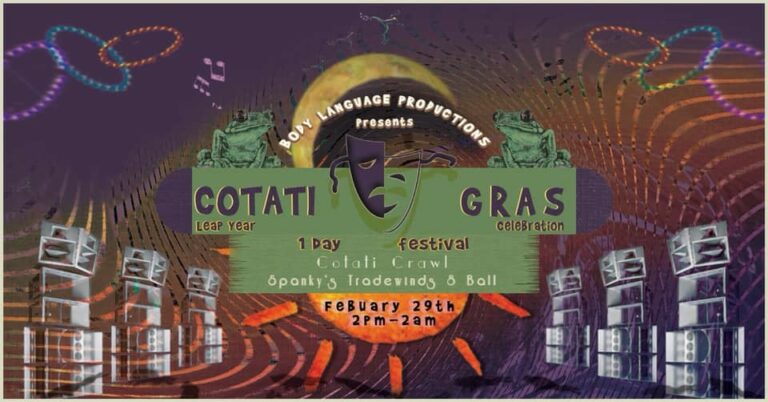
The Cotati Crawl, through the small downtown’s array of venues and drinking establishments, is a long-running tradition in Sonoma County—especially for Sonoma State students. This weekend, Leap Day offers a chance for a special daylong festival, the Cotati Gras, co-produced by Body Language Productions, in which 30-plus bands, DJs and artists take over spaces like Spancky’s Bar, with participating eateries and special offerings like a silent disco. Join in the festivities on Saturday, Feb. 29, along Old Redwood Highway in downtown Cotati. 2pm to 2am. Free. facebook.com/bodylanguageprod.

Family Brand

Hans Brand, 53, doesn’t smoke marijuana, but he’s the iconic CEO of an up-and-coming Santa Barbara–based cannabis company, Autumn Brands, that cultivates cannabis in greenhouses— hydroponically and without herbicides, pesticides or any machines. It’s all done by hand.

Born in Holland and a fifth-generation Dutch farmer, Hans came to the U.S at 18 and brought with him the Brand family’s centuries-old sustainable farming practices. His tulips were spectacular, but about five years ago he read the handwriting on the wall and realized that if he wanted to save the farm and provide for his son, Johnny, and his daughter, Hanna, he needed to convert from cut flowers to cannabis.

“We used to grow flowers to look at and now we grow flowers to smoke,” Hanna, 24, tells me on a warm winter day. She’s a Cal Poly graduate and partners with her pal, Autumn Shelton. Hence, Autumn Brands. Hans trained Hanna for sales and marketing, and passed on his farming lore to Johnny.

“Dad can’t retire,” Hanna says. “He’s getting us through the permitting process, running the business daily and he has the final word about all the big stuff.”

One day he might even smoke a joint.

“He’s open-minded,” Hanna says. “He’s learning good stuff about medicinal cannabis.”

The Brands face many of the same hurdles that Sonoma County pot farmers face. Sacramento has not made it easy for the fledgling legal California cannabis industry, especially not for the “legacy” growers who were cultivating on the q.t. before state laws went into effect.

In Santa Barbara, which had some of the richest soil in the state—until malls and housing developments arrived—a mere two-dozen companies have permits to cultivate cannabis. The process can take years.

“The only people who receive permits in a reasonable amount of time are new to the industry,” Hanna says. “We’ve been grandfathered-in so we can grow while we wait. Once a farm receives a permit, the anti-cannabis forces swing into action and appeal.”

Those anti-cannabis forces use many of the same fear tactics that Sonoma County pot foes use.

Autumns Brands is open to the public, but only by special arrangement. Hanna urges visitors to call and make an appointment, and also to stay awhile and enjoy Santa Barbara’s pristine beaches, craft beers, local wines, gourmet foods and eye-popping art. So far, Autumn Brands cannabis is only available in Northern California at Napa dispensary Harvest House.

Jonah Raskin is the author of “Dark Day, Dark Night: A Marijuana Murder Mystery.”

Barbara Baer Launches New Novel in Occidental on Mar. 1

0

Two early-20th century immigrant families, one a group of western pioneers and one a New York–socialite crowd, find their lives suddenly thrown together in Barbara Baer’s new novel, The Ice Palace Waltz. Stanford-educated Baer is the author of three previous novels, and The Ice Palace Waltz is a well-researched and timely tapestry that touches on mining towns and Manhattan speculators. Baer reads from the novel at a book launch event on Sunday, March 1, at Occidental Center for the Arts, 3850 Doris Murphy Court, Occidental. 2pm. Free admission. 707.874.9392.

Governor Sets Aside Properties For Homeless

Following his State of the State speech last week, Gov. Gavin Newsom's staff released a list of 286 state properties that he will allow local government agencies to use for free to shelter the growing number of people struggling to find housing in the state. Newsom selected the properties, many of which belong to CalTrans, the state agency in charge...

Witness to History

What she calls a need to bear witness is what drives fifth-generation North Bay–native Lynn Downey, whether in her previous work as the official archivist for Levi Strauss & Co. or as a journalist and author of several books. "It informs everything I do as a historian," she says. The Sonoma-based Downey does just that in her new book, Arequipa Sanatorium:...

Land Swap

Late on the night of Monday, Feb. 24, the Petaluma City Council narrowly approved a controversial, multi-part land deal in order to fund a second train station for the city. Critics of the deal between Petaluma and Lomas Partners, LLC—a Southern California company businessman Todd Kurtin owns—say none of the parties involved have been responsive to criticism of the proposed...

Compare/Contrast

On view on floor five as part of the "Pop, Minimal, and Figurative Art" exhibit at the San Francisco Museum of Modern Art is Andy Warhol's Liz #6, an iconic work that we've all seen. But have you seen it side by side with Tim Curry's Dr. Frank N. Furter from The Rocky Horror Picture Show? See above—now you have....

It Can’t Happen Here … Can It?

Most of us are simply horrified at the wholesale trashing of ethics, truth and the rule of law in Washington these days. We shake our heads in disbelief and mutter, "Well, it can't happen here." But maybe, just maybe, we're just kidding ourselves. It was revealed on Feb. 11 that 3rd District Supervisor Shirlee Zane didn't have the mandatory zoning...

Hungry Hearts

There's irony to be found in the fact that a guy with the surname "Coffin" wrote one of the liveliest theatrical productions I've attended in a while. Five Course Love by playwright/composer Greg Coffin is the show and it runs through March 1 at the Lucky Penny Community Arts Center in Napa. The show consists of five comedic, love-themed vignettes,...

Sober Rover

Didn't make it very far into "dry January" this year? Me neither. Sober Diary, January 2: "This is fine, but what's the point?" The point, says the doctor the following week at my free annual checkup (thanks to Covered California—Medicare for all it ain't, but I'll take it), is to give the liver a break. Doc says it can recuperate...

Cotati Goes Mardi Gras on Feb. 29

The Cotati Crawl, through the small downtown’s array of venues and drinking establishments, is a long-running tradition in Sonoma County—especially for Sonoma State students. This weekend, Leap Day offers a chance for a special daylong festival, the Cotati Gras, co-produced by Body Language Productions, in which 30-plus bands, DJs and artists take over spaces like Spancky’s Bar, with participating...

Family Brand

Hans Brand, 53, doesn't smoke marijuana, but he's the iconic CEO of an up-and-coming Santa Barbara–based cannabis company, Autumn Brands, that cultivates cannabis in greenhouses— hydroponically and without herbicides, pesticides or any machines. It's all done by hand. Born in Holland and a fifth-generation Dutch farmer, Hans came to the U.S at 18 and brought with him the Brand family's...

Barbara Baer Launches New Novel in Occidental on Mar. 1

Two early-20th century immigrant families, one a group of western pioneers and one a New York–socialite crowd, find their lives suddenly thrown together in Barbara Baer’s new novel, The Ice Palace Waltz. Stanford-educated Baer is the author of three previous novels, and The Ice Palace Waltz is a well-researched and timely tapestry that touches on mining towns and Manhattan...
11,084FansLike
4,606FollowersFollow
6,928FollowersFollow