We the People

Remember, the Constitution doesn’t begin with “I the President.” It begins with “We the People.”

Trump and Republicans: You can try to divide the country, but we will rise up and unify. All of us together. Women/men, black/white, gays/straight, disabled/young, old/Native American

We will not go quietly back to the 1950s. Love, not hate, makes America great. Are you listening white, anti-abortion, anti-gay, anti-immigrant Republicans? We the people: America is made great by immigrants, people of color, Muslims, women, gays. Real presidents pay their taxes.

Change the things that are unacceptable. We will not be silent. We will not play dead.

This is what patriotism looks like. Trump and Republicans: You work for all Americans, not white religious Republicans. This is what patriotism looks like.

Nevada City

Uncensored

Bohemian editors,

Thank you for publishing Project Censored’s top 10 deliberate omissions of and by the corporate media (“Censored 2020,” Jan. 1). Indeed many of these were covered in alternative media and blogs, such as The Real News, Counterpunch, Dissident Voice, The Intercept, Shadowproof, Common Dreams, Washington’s Blog, Popular Resistance, Wrong Kind of Green, and many others. While none are perfect, and some more reliably reporting facts than others, citizens have myriad opportunities to inform themselves. Start reading, people!

Whether “citizens” choose to inform themselves is a vital question for any hope for sustaining life on this Earth, as reliable information (not the kind the corporate media feeds you from the corporate-government-security state trough) merely represents a foundation for true resistance and effective actions to turn the tide against fascism, racism, militarism, imperialism, injustice, ecological annihilation, and other crimes against humanity and life. Every day, each of us should be writing letters, sending emails, making telephone calls, and then demonstrating your concerns in public as you choose. Sign petitions all you like, but they don’t amount to anything but cyberjunk, and are used by faux-progressive disaster profiteers to ensure their continued obeisance to illegitimate authority.

In my short lifetime, I’ve witnessed the complete submission of our rights and values to the sadistic, rapacious nature of capitalism and its minions, and without organized, widespread, and committed activism and civil disobedience, we’ve yet to see the ugliest from the psychopaths who’ve had their way for far too long. Start reading and watching from something other than corporate media outlets, and get involved as if your life depended on it. It does.

via bohemian.com

More Rialto Love

Ky Boyd has been a leader in Sonoma County, bringing art to the attention of many plus helping nonprofits along with his excellent staff (“Screen the World,” Dec. 18)! To be in business in such a competitive market takes skill, dedication and love for the process and end goals.

Via bohemian.com

Write to us at le*****@******an.com.

Cannabis Council

0

Though lawyering and judging rarely overlap, they do with Omar Figueroa—arguably the North Bay’s most flamboyant cannabis lawyer.

Last December, Figueroa served as a judge at the Emerald Cup. Is he worried about disbarment? Hell no!

“Judging was great fun,” he says.

It also added to the luster of his legend.

Born in Mexico and a graduate of Stanford and Yale, Figueroa initially made a name for himself as a criminal defense lawyer. Then, in 2018, after California began to regulate and tax cannabis, he reinvented himself as a business attorney. More recently, he focused his energy on the local hemp industry.

“Dairy farmers struggling financially, and even social conservatives, will cultivate hemp since it’s legal by federal law and because the local moratorium will be lifted,” Figueroa tells me over lunch at Fork Roadhouse on Bohemian Highway. He adds, “Judging cannabis at the Emerald Cup has to do with smelling, tasting and touching. Plus, you need stamina. It’s not for lightweights.”

For the annual competition, Figueroa traveled to a secret location in Mendocino County. There, he and a half-dozen other connoisseurs consumed and then debated the merits of the cannabis cartridges they sampled.

“The judges were like kids in a candy store,” Figueroa says. “They were also savvy smokers. After talking with them, I changed my mind and revised my ranking.”

After the New Year, Figueroa will join the board of the California Cannabis Tourism Association (CCTA) recently founded by Guerneville resident, Brian Applegarth. In 2020, CCTA will strive to legalize cannabis consumption at the same locations it’s sold. Right now that’s a no-no in Sonoma County.

Like a savvy judge before a hushed jury, Figueroa demolishes law-enforcement arguments against on-site consumption: there’s been no spike in cannabis-related DUIs and no “reefer madness” since legalization; because of easy access to Lyft or Uber, there’s no need for patrons to drive to dispensaries; and dispensaries can install air filters so no smoke escapes and inadvertently impacts innocent bystanders.

Lunch finished, Figueroa returns to the lessons he learned at the Emerald Cup.

“It was mind-expanding,” he says. “But I lost all enthusiasm for vape cartridges.”

Indeed, doctors urge medical marijuana patients and recreational users to avoid cartridges until scientists figure out the cause of Vaping-Associated Pulmonary Illness (VAPI). Last year, vaping harmed more than 1,000 people. Fifty people died.

No wonder Figueroa says, “I’ve switched to using flower in my Volcano.” That’s a sound judgment.

Jonah Raskin is the author of “Dark Day, Dark Night: A Marijuana Murder Mystery.”

Top Torn Tickets Take 2

0

Comedies and dramas occupied North Bay stages for the bulk of 2019. Here, in alphabetical order, are my Top Torn Tickets, the best and/or most interesting comedic and dramatic stage work done in Sonoma and Napa counties in the past year:

After Miss Julie (Main Stage West) One of several outstanding productions at this little theater dynamo, this tale of a love triangle set during political upheaval was brutal in its portrayal of what people are willing to do to get what they want.

Eureka Day (Spreckels
Theatre Company) This dark comedy about a charter school and the issue of vaccinations was hysterically funny but may have hit too close to home for some.

Faceless (6th Street Playhouse) Expatriate Craig Miller returned to direct this crackling courtroom drama whose combination of religious, political, personal and legal conflicts made for a gripping evening of theater.

Hamlet (Spreckels Theatre Company) Most theater companies try to contemporize Shakespeare to appeal to a modern audience. Director Sheri Lee Miller and company proved it works just fine as-is.

The Laramie Project (Raven Players) This beautifully staged documentation of a community’s reaction to a horrendous crime was a stern and too-oft-needed reminder to those who think “it can’t happen here” that it can.

Luna Gale (Cinnabar Theater)Liz Jahren’s towering performance as a social worker at the end of her rope and great ensemble work allowed this show to get past its directorial idiosyncrasies.

Miss Bennet: Christmas at Pemberley

(Spreckels Theatre Company) Who knew that an extension of Jane Austin’s Pride and Prejudice would turn out to be the best Christmas show of the season?

Of Mice and Men (Cloverdale Performing Arts Center) An American classic presented in a stripped-down version that retained all the power of Steinbeck’s original takedown of the American Dream.

Rapture, Blister, Burn (Lucky Penny Productions) Venturing out of their usual comfort zone of family-friendly musicals and boisterous comedies, this Napa company scored a hat trick with this contemporary look at gender roles—terrific script, strong direction and superb acting. They should produce more like this and audiences should go see it.

This Random World (Left Edge Theatre) This collection of vignettes about the randomness of human connections had everything from laugh-out-loud comedy to touching drama. Everything, that is, but an ending.

Congratulations to the entire North Bay theatre community for a great year on-stage and Happy New Year to all!

BottleRock 2020 Lineup Is Here

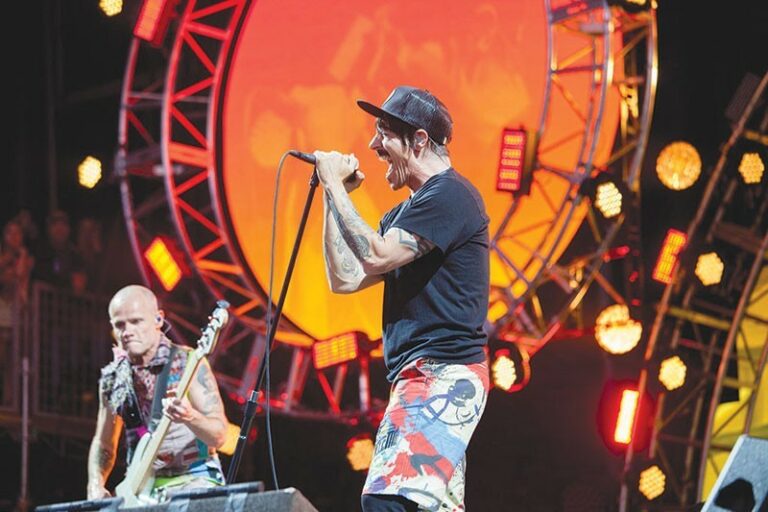
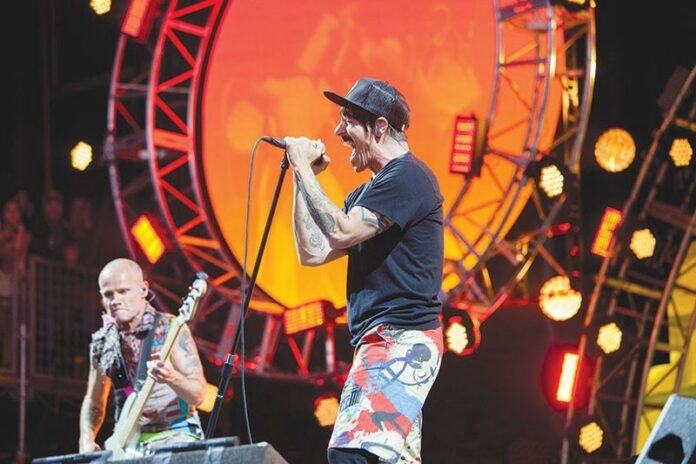
The 1990’s will be alive and well this Memorial Day weekend, May 22-24, 2020, at BottleRock Napa Valley, as the mega-sized music, food and wine festival returns for its eighth year with a musical lineup headed by the bygone decade’s biggest stars; the Red Hot Chili Peppers and Dave Matthews Band.
Fleetwood Mac vocalist and Rock & Roll Hall of Fame inductee Stevie Nicks rounds out the headlining spot for the three-day fest, which boasts over 75 bands and performers taking over the Napa Valley Expo in the heart of Napa.
The rest of the lineup, to date, includes Miley Cyrus, Khalid, Anderson .Paak & The Free Nationals, Zedd, Brandi Carlile, The Avett Brothers, Janelle Monáe, Maggie Rogers, Blondie, Of Monsters and Men, Maren Morris, Empire of the Sun, Foals, Tegan and Sara, Jimmy Eat World, Michael Franti & Spearhead, Local Natives, Finneas, Iration, Milky Chance, Jon Bellion, Matt Nathanson, Amos Lee, Trampled By Turtles, CAAMP, The Band CAMINO, Turkuaz w/ Jerry Harrison & Adrian Belew, Mandolin Orange, Grace VanderWaal, Village People, Eric B. & Rakim, MUNA, Hobo Johnson & the Lovemakers, Hamilton Leithauser, Ra Ra Riot, The Frights, MAX, Jack Harlow, Digable Planets, Big Freedia, Absofacto, Ripe, DJ Z-Trip, Meg Myers, TWIN XL, Atlas Genius, Oliver Riot, White Reaper, DeVotchKa, Reignwolf, slenderbodies, Eliza & The Delusionals, Tessa Violet, Evie Irie, KOTA The Friend, Uncle Blazer + DJ Ango from Workaholics, 99 Neighbors, Black Joe Lewis & The Honeybears, In The Valley Below, Madison Ryann Ward, JJ Wilde, Lily Meola, Full Moonalice: The THC Revue, The Alive, Smith and Thell, Hembree, Buffalo Gospel, Ryland James, almost monday, Chris Pierce, Peter Harper, Pacific Radio, The Haden Triplets, Obsidian Son, Grass Child, Sam Johnson, Silverado Pickups and the Napa Valley Youth Symphony.
Three-day festival passes go on sale at 10am tomorrow, Tuesday, Jan 7, at BottleRockNapaValley.com.

Best on Screen

The top 10 films of 2019, in alphabetical order: The Big Hack, Captive State, The Irishman, Jojo Rabbit, Joker, The Lighthouse, 1917, Once Upon a Time…in Hollywood, Parasite and Us.

“We’re Americans. Get the rope.”—Us

“You’re Americans. Just barge on in.”—Midsommar

Such is my country these days. We seem to be Rotvalla-pissers one and all, like the chump in Midsommar who wees on the sacred, dead ancestral tree of the Swedes.

This year’s cinema was heavy on stories of the immured (Parasite) and the entrenched (1917). In 2019, even Captain America said, “To hell with this, I’m heading for the past.”

In Jordan Peele’s eerie parable Us, America isn’t filled with just the rich and the poor, but with the influencers and the influenced. His story of the hordes in their government-funded Plato’s Cave isn’t easily picked apart. Yet it does merit space next to the business of the grateful, kowtowing subterranean lodger in Bong Joon-ho’s uproarious Parasite, a movie composed with Hitchcock-ian perfection.

Captive State demonstrates what a real occupation and a real resistance looks like, with alien overlords dwelling in their own cellars. The Great Hack was another type of horror story of rats in the walls, a terrifying documentary about the kind of manipulation of social media that overthrows governments.

An escape from the present, Once Upon a Time…in Hollywood is, on this list, not like the others. It’s not just edgeless nostalgia, but an irreplaceable vision of L.A. as a mecca that distingerates under people’s feet. It’s the glittery version of Scorsese’s masterful vision of the blandness and crookedness of mid-century America, The Irishman.

Jojo Rabbit took its own liberties with history, even with its own Anne Frank concealed in the attic—maybe it’s a measure of the shocks we’re enduring that the funniest movie of the year had the gallows in it.

By contrast, Robert Eggers’ glorious black-and-white The Lighthouse is lighter, in a dark and horrible way. It’s based on the lovely old Down East joke with the punchline, “Oh, don’t dress up. There’s only going to be the two of us.” Whether we like it or not, in the lighthouse America, there’s no “them or us,” there’s just “us.”

Top Torn Tickets

0

After attending over 100 Bay Area theatrical productions in 2019, it’s time to clear the theater programs out of the file cabinet and select my Top Torn Tickets. Here, in alphabetical order, is my list of the best and/or most interesting work done in the musical genre by Wine Country–theater artists in the past year:

Cinderella (Spreckels Theatre Company) I had a problem with the storyline (a bit too much Prince Charming for my taste), but this production had great voices and clever stagecraft.

Forever Plaid (Lucky Penny Productions) Get past the hokey pretense and you’ll find that as jukebox musicals go, this was a pretty darn entertaining one.

A Gentleman’s Guide to Love and Murder (Spreckels Theatre Company) This macabre musical ended up a casualty of the Kincade fire and PG&E Public Safety Power Shutoffs with its run cut short. A true shame that more folks didn’t get a chance to see it and Tim Setzer’s tour-de-force performance.

Jesus Christ Superstar (Santa Rosa Junior College) Thank God Andrew Lloyd Webber’s first musical was the last musical that the SRJC theater folk had to perform in a high school auditorium.

Little Shop of Horrors (Cinnabar Theater) One of the most entertaining musicals of the last half-century got a terrific staging in Petaluma and had audiences clamoring to see more Seymour, proving that you can’t keep a bad plant down.

Matilda the Musical (Napa Valley College) This delightful production showed that the youth-talent pool in Napa is deep.

Merman’s Apprentice (Sonoma Arts Live) This original musical featuring Dani Beem and Emma Sutherland as the title characters got its first full staging in Sonoma and, with a few rewrites, just might have legs.

Million Dollar Quartet (6th Street Playhouse) This fictional look at the gathering of four musical giants with an impressive set and imported talent was the closest thing to a touring production this area has seen in a while. And oh, that music.

My Fair Lady (Sonoma Arts Live) A charming lead performance from Sarah Wintermeyer anchored a luverly show with some stellar supporting work by Chad Yarish and the ubiquitous Tim Setzer.

The Sound of Music (Santa Rosa Junior College/Sonoma State University) The hills of Rohnert Park came alive with the sounds of this musical, a harbinger of good things to come when SRJC’s Burbank Auditorium reopens in the spring.

Next week: Top Torn Tickets: The Plays!

Meter Matters

Smart Meters and 5G towers—they may be smart at increasing the speed on computers and other devices, but at what cost? How smart is it to expose people, animals and the environment to strong, harmful radiation that makes us sick and can even kill?

According to many scientists, because of soft body tissue, infants and children—the most vulnerable among us—are absorbing the dangerous radiation at much deeper and faster rates than adults. The elderly are also more susceptible.

The poisonous radiation has no odor, color or sound. It is a sneak attack on humanity. The Smart Meters and 5G towers are being installed in communities around the world that have not been tested for safety. We, humans, are the guinea pigs.

The utility companies claim that they are perfectly safe but they are not tested for safety as it is too expensive. What is too expensive is the loss of health and life of humans. Where is the concern for humanity? The complete lack of concern for the citizens of the world is criminal. Fortunately, there are many courageous citizens and officials who have said no to the installation of Smart Meters and 5G towers in their homes, businesses and neighborhoods. There is much information on the internet regarding these positions. Check out “Smart Meter and 5G tower harm” in a search engine.

Citizens of the world need to awaken and become united against this devastating disaster. This is a holocaust of even more enormous proportions than we have seen before. It involves the whole world.

Please remember our children and grandchildren, who need a safe and healthy environment. Maybe some of you remember a brave, young schoolgirl, Kennedy Irwin, who spoke at a City of St. Helena meeting and pleaded with her elders to leave the earth in as healthy a place for her generation and those who come after as they had found it. Perhaps you read the Napa Valley Register recently where our same Kennedy Irwin spoke on behalf of the environment at the Youth March Worldwide.

Hurrah and many thanks to our courageous youth—steadfast stewards of our planet!

St. Helena

Perpetually Slanted

The only reason I bother with this New Age pander-rag is Daedalus Howell. Anyone who can write without a 40-pound cliche monkey hanging off his back has my attention. I got a bet with the Fates that the Bohemian will knee-jerk the “homelessness is about homes” meme. Let me smack you into the Age of Info—homelessness is an issue defined by drugs and mental health. Bridle your perpetual left-turn signal, or your Johannes Gutenberg certificate of authenticity will be revoked by the Union of Better Angels Local 777. 🙂

Santa Rosa

Write to us at le*****@******an.com.

Censored 2020

0

Editor’s note: Founded at Sonoma State University in 1976, Project Censored has spent the past several decades researching and publicizing “the news that didn’t make the news.” As we head into 2020 in an era of social-media overload and struggling print publications, we are highlighting the work of this longtime North Bay institution.

Every year, Project Censored scours the landscape for the most important stories that the mainstream corporate media somehow missed, and every year the task seems to get a bit stranger.

Or “curiouser and curiouser” as suggested in the subtitle of this year’s volume of their work, Censored 2020: Through The Looking Glass, which includes their full list of the top 25 censored stories and much, much more about the never-ending struggle to bring vitally important hidden truths to light.

In the foreword, “Down the Rabbit Hole of ‘Media Literacy’ by Decree,” Sharyl Attkisson, an Emmy Award-winning investigative journalist, highlights the absurdity of “so many well-organized, well-funded efforts to root out so-called “fake news,” which—as we’ll see below—have significantly impacted the kinds of journalists and outlets who historically produce the stories that make Project Censored’s list in the first place.

“The self-appointed curators, often wielding proprietary algorithms, summarily dispense with facts and ideas that they determine to be false—or maybe just dangerous to their agendas,” Attkisson notes. “Thanks to them, we will hardly have to do any of our own thinking. They’ll take care of it for us.”

Does that seem hyperbolic? Well, read on, dear reader, read on. In Project Censored’s No. 2 censored story this year, you’ll discover Facebook partnering with a NATO-sponsored think tank to “monitor for misinformation and foreign interference”—a think tank whose funders include the U.S. military, the United Arab Emirates, weapons contractors and oil companies. And whose board includes Henry Kissinger, the world’s most famous war criminal. Who better to tell you who to believe? Or better yet, decide who you’ll never even hear from?

Through The Looking Glass. Yes, indeed.

In the beginning, Project Censored’s founder, Carl Jensen, was partly motivated by the way that the early reporting on the Watergate scandal never crossed over from being a crime story to a political story until after the 1972 election coverage.

It wasn’t censorship in the classic sense practiced by church and state since time immemorial, but it was an example of something even more insidious, because no clear-cut act of censorship or all-powerful censor was needed to produce the same result of a public left in the dark.

Jensen defined censorship as “the suppression of information, whether purposeful or not, by any method—including bias, omission, underreporting or self-censorship—that prevents the public from fully knowing what is happening in its society.” And the most obvious way to start fighting it was to highlight the suppressed information in the form of the stories that didn’t get widely told. Thus Project Censored and its annual list of censored stories was born.

Jensen’s conception of censorship may be light-years away from how most media figures think of things. But while introducing this year’s list of stories, the volume’s co-editor Andy Lee Roth quotes media-legend Walter Lippmann echoing the same sensitivity in his 1920 book, Liberty and the News: “whether one aspect of the news or another appears in the center or at the periphery makes all the difference in the world.”

But Project Censored was never just about the individual stories, it was about the patterns of marginalization and suppression that could be seen through the lens of connecting them. In his introduction, Roth says, “identifying these unifying themes is one significant way to gauge the systemic blind spots, third rails and ‘no go’ zones in corporate news coverage.” He identifies several such patterns, which are stronger and more vivid in the full list of Project Censored’s top 25 stories, but still illuminating in terms of the top 10.

Stories 1 and 2 deal with press freedoms; stories 2, 4 and 9 deal with corporate misconduct; stories 2 and 10 deal with technology; stories 3 and 4 deal with the environment; stories 5, 6 and 8 deal with gender inequalities and stories 6, 7 and 8 deal with criminal justice, prisons and detention.

As you can see, these patterns overlap. Stories 2, 4, 6 and 8 are all part of at least two. And there may well be other patterns you discover for yourself. These patterns don’t just connect issues and problems those in power would rather neglect. They also connect people, communities and potential solutions, which those in power would rather see stay disconnected.

So don’t just read the following as a list of stories “out there.” Read it as an opportunity to connect:

1. Justice Department’s Secret FISA Rules for Targeting Journalists: The federal government can secretly monitor American journalists under the Foreign Intelligence Surveillance Act, or FISA, which allows invasive spying and operates outside the traditional court system, according to 2015 memos from then–Attorney General Eric Holder. The memos were obtained by The Knight First Amendment Institute at Columbia University and the Freedom of the Press Foundation through an ongoing Freedom of Information Act lawsuit, which was reported on by The Intercept, whose parent company provides funding for both organizations, but was virtually ignored by the corporate media.

The secret rules “apply to media entities or journalists who are thought to be agents of a foreign government, or, in some cases, are of interest under the broader standard that they possess foreign intelligence information,” The Intercept reported.

Project Censored cited three “concerning” questions the memos raise:

First, how many times have FISA court orders been used to target journalists, and are any currently under investigation?

Second, why did the Justice Department keep these rules secret when it updated its “media guidelines” in 2015?

Third, is the Justice Department using FISA court orders—along with the FBI’s similar rules for targeting journalists with National Security Letters (NSLs)—to “get around the stricter ‘media guidelines'”?

The corporate media virtually ignored these revelations when they occurred. The subsequent media interest in FISA warrants targeting Trump campaign adviser Carter Page “has done nothing at all to raise awareness of the threats posed by FISA warrants that target journalists and news organizations,” Project Censored observed.

Project Censored ended with a quote from Ramya Krishnan, a staff attorney for the Knight Institute, summarizing the stakes:

“National security surveillance authorities confer extraordinary powers. The government’s failure to share more information about them damages journalists’ ability to protect their sources and jeopardizes the news-gathering process.”

2. Think Tank Partnerships Establish Facebook as a Tool of U.S. Foreign Policy: In the name of fighting “fake news” to protect American democracy from “foreign influences,” Facebook formed a set of partnerships with three expert foreign influencers in 2018, augmenting its bias toward censorship of left/progressive voices.

In May 2018, Facebook announced its partnership with the Atlantic Council, a NATO-sponsored, Washington, D.C., think tank to “monitor for misinformation and foreign interference.”

“It’s funded by the U.S. Department of State and the U.S. Navy, Army and Air Force, along with NATO, various foreign powers and major Western corporations, including weapons contractors and oil companies (including Chevron, ExxonMobil, Royal Dutch Shell),” Adam Johnson, writing for the media watch group FAIR, noted.

It went on to note that the major news outlets covering the story said nothing about any of the above conflicts of interest.

In September, Facebook announced it would also partner with two Cold War–era U.S. government-funded propaganda organizations: the National Democratic Institute and the International Republican Institute.

In October 2018, Jonathan Sigrist, writing for Global Research, described one of the greatest Facebook account and page purges in its troubled history: “559 pages and 251 personal accounts were instantly removed from the platform… This is but one of similar yet smaller purges that have been unfolding in front of our eyes over the last year, all in the name of fighting ‘fake news’ and so called ‘Russian propaganda.'”

3. Indigenous Groups from Amazon Propose Creation of Largest Protected Area on Earth: When news of unprecedented wildfires in the Amazon grabbed headlines in late August, most Americans were ill-prepared to understand the story, in part because of systemic exclusion of indigenous voices and viewpoints, highlighted in Project Censored’s No. 3 story—the proposed creation of an Amazonian protected zone the size of Mexico, presented to the U.N. Conference on Biodiversity in November 2018.

The proposal, which Jonathan Watts, writing for the Guardian, described as “a 200m-hectare sanctuary for people, wildlife and climate stability that would stretch across borders from the Andes to the Atlantic,” was advanced by an alliance of some 500 indigenous groups from nine countries, known as COICA—the Coordinator of the Indigenous Organizations of the Amazon Basin, who called it, “a sacred corridor of life and culture.”

“We have come from the forest and we worry about what is happening,” declared Tuntiak Katan, vice president of COICA, who was quoted in the Guardian. “This space is the world’s last great sanctuary for biodiversity. It is there because we are there. Other places have been destroyed.”

The Guardian went on to note:

The organization does not recognise national boundaries, which were put in place by colonial settlers and their descendants without the consent of indigenous people who have lived in the Amazon for millennia. Katan said the group was willing to talk to anyone who was ready to protect not just biodiversity but the territorial rights of forest communities.

In contrast, the Guardian explained:

Colombia previously outlined a similar triple-A (Andes, Amazon and Atlantic) protection project that it planned to put forward with the support of Ecuador at next month’s climate talks. But the election of new rightwing leaders in Colombia and Brazil has thrown into doubt what would have been a major contribution by South American nations to reduce emissions.

4. U.S. Oil and Gas Industry Set to Unleash 120 Billion Tons of New Carbon Emissions: Three months after the United Nations’ Intergovernmental Panel on Climate Change warned that we have just 12 years to limit catastrophic climate change, Oil Change International released a report that went virtually ignored, warning that the United States was headed in exactly the wrong direction.

The report, “Drilling Towards Disaster,” warned that rather than cutting down carbon emissions, as required to avert catastrophe, the United States under Donald Trump was dramatically increasing fossil fuel production, with the United States on target to account for 60 percent of increased carbon emissions worldwide by 2030, expanding extraction at least four times more than any other country.

References to the report “have been limited to independent media outlets,” Project Censored noted.

“Corporate news outlets have not reported on the report’s release or its findings, including its prediction of 120 billion tons of new carbon pollution or its five-point checklist to overhaul fossil fuel production in the U.S.”

5. Modern Slavery in the United States, Around the World: An estimated 403,000 people in the United States were living in conditions of “modern slavery” in 2016, according to the 2018 Global Slavery Index, or GSI; about 1 percent of the global total. The GSI defines “modern slavery” broadly to include forced labor and forced marriage.

Because forced marriage accounts for 15 million people—more than a third of the global total—it’s not surprising that females form a majority of the victims (71 percent). The highest levels were found in North Korea, where an estimated 2.6 million people—10 percent of the population—are victims of modern slavery.

The GSI is produced by the Walk Free Foundation, whose founder, Andrew Forrest, called the U.S. figure “a truly staggering statistic, (which) is only possible through a tolerance of exploitation.”

“Walk Free’s methodology includes extrapolation using national surveys, databases of information of those who were assisted in trafficking cases and reports from other agencies like the U.N.’s International Labour Organization,” explained the Guardian.

There are problems with this, according to others working in the field, the Guardian noted. There’s no universal legal definition for slavery, and tabulation difficulties abound. But the GSI addresses this as an issue for governments to work on and offers specific proposals.

“The GSI noted that forced labor occurred ‘in many contexts’ in the U.S., including in agriculture, among traveling sales crews, and—as recent legal cases against GEO Group, Inc. have revealed—as the result of compulsory prison labor in privately owned and operated detention facilities contracted by the Department of Homeland Security,” Project Censored noted.

Newly restrictive immigration policies have further increased the vulnerability of undocumented persons and migrants to modern slavery.

6. Survivors of Sexual Abuse and Sex Trafficking Criminalized for Self-Defense: On Jan. 7, outgoing Tennessee Gov. Bill Haslam granted clemency to Cyntoia Brown, who had been sentenced to life in prison in 2004, at age 16, for killing a man who bought her for sex and raped her. Brown’s case gained prominence via the support of A-list celebrities and Haslam cited “the extraordinary steps Ms. Brown has taken to rebuild her life.” But despite public impressions, Brown’s case was far from unique.

“There are thousands of Cyntoia Browns in prison,” organizer Mariame Kaba, cofounder of Survived and Punished, told Democracy Now! the next day.

“We should really pay attention to the fact that we should be fighting for all of those to be free,” Kaba said. “When you look at women’s prisons, the overwhelming majority, up to 90 percent of the people in there, have had histories of sexual and physical violence prior to ending up in prison.”

“In contrast to the spate of news coverage from establishment outlets, which focused on Brown’s biography and the details of her case,” Project Censored wrote, “independent news organizations, including the Guardian, Democracy Now!, Rolling Stone and Mother Jones, stood out for reporting that cases like Brown’s are all too common.”

Later in January, Kellie Murphy’s Rolling Stone story quoted Alisa Bierria, another Survived and Punished co-founder, and highlighted several other cases prominent in alternative media coverage. In May, Mother Jones reported on the legislative progress that Survived and Punished and its allies had achieved in advancing state and federal legislation.

“Corporate news organizations provided considerable coverage of Cyntoia Brown’s clemency,” Project Censored noted. “However, many of these reports treated Brown’s case in isolation, emphasizing her biography or the advocacy on her behalf by celebrities such as Rihanna, Drake, LeBron James and Kim Kardashian West.”

It went on to cite examples from The New York Times and NBC News that did take a broader view, but failed to focus on sex trafficking or sexual violence.

7. Flawed Investigations of Sexual Assaults in Children’s Immigrant Shelters: “Over the past six months, ProPublica has gathered hundreds of police reports detailing allegations of sexual assaults in immigrant children’s shelters,” ProPublica reported in November 2018. “[The shelters] have received $4.5 billion for housing and other services since the surge of unaccompanied minors from Central America in 2014 [and the reports reveal that] both staff and other residents sometimes acted as predators.”

“Again and again, the reports show, the police were quickly—and with little investigation—closing the cases, often within days, or even hours,” ProPublica stated.

In the case of Alex (a 13-year-old from Honduras) used to highlight systemic problems, the police investigation lasted 72 minutes and resulted in a three-sentence report. There was surveillance video showing two older teenagers grabbing him, throwing him to the floor and dragging him into a bedroom. But ProPublica reported, “An examination of Alex’s case shows that almost every agency charged with helping Alex—with finding out the full extent of what happened in that room—had instead failed him.”

“Because immigrant children in detention are frequently moved, even when an investigator wanted to pursue a case, the child could be moved out of the investigating agency’s jurisdiction in just a few weeks, often without warning,” Project Censored noted. “When children are released, parents or relatives may be reluctant to seek justice, avoiding contact with law enforcement because they are undocumented or living with someone who is.”

8. U.S. Women Face Prison Sentences for Miscarriages: “There has to be some form of punishment” for women who have abortions, candidate Donald Trump said in early 2016, which led to a wave of denials from anti-abortion activists and politicians, who claimed it was not their position. These women were victims, too, they argued: That had always been their position. But that wasn’t true, as Rewire News reported at the time. Women were already in prison, not for abortions, but for miscarriages alleged to be covert abortions. And that could become much more widespread due to actions taken by the Trump administration, according to a 2019 Ms. Magazine blog post by Naomi Randolph on the 46th anniversary of the Roe v. Wade decision, especially if the decision is overturned.

“Pregnant women could face a higher risk of criminal charges for miscarriages or stillbirths, due to lawmakers in numerous states enacting laws that recognize fetuses as people, separate from the mother,” Project Censored explained, adding:

One example that Randolph provided is in Alabama, where voters recently passed a measure that “endows fetus’ with ‘personhood’ rights for the first time, potentially making any action that impacts a fetus a criminal behavior with potential for prosecution.” Collectively, these laws have resulted in hundreds of American women facing prosecution for the outcome of their pregnancies.

In fact, a 2015 joint ProPublica/AL.com investigation found that “at least 479 new and expecting mothers have been prosecuted across Alabama since 2006,” under an earlier child endangerment law, passed with methlab explosions in mind, which the “personhood movement” got repurposed to target stillbirths, miscarriages and suspected self-abortions.

9. Developing Countries’ Medical Needs Unfulfilled by Big Pharma: “The world’s biggest pharmaceutical firms have failed to develop two-thirds of the 139 urgently needed treatments in developing countries,” Julia Kollewe reported for the Guardian in November 2018, according to a report by Access to Medicine Foundation, which “found that most firms focus on infectious diseases such as HIV/Aids, malaria and tuberculosis but had failed to focus on other serious ailments. … In particular, the foundation called for an infants’ vaccine for cholera and a single-dose oral cure for syphilis.”

It’s not all bad news. “The foundation’s report also highlighted 45 best and innovative practices that could ‘help raise the level of standard practice’ and ‘achieve greater access to medicine,'” Project Censored noted. “The report highlights examples such as the development of a child-friendly chewable tablet for roundworm and whipworm, which infect an estimated 795 million people,” the Guardian reported. “Johnson & Johnson has pledged to donate 200m doses a year until 2020.” The possibilities underscore why attention is vital.

Attention makes a difference, Project Censored pointed out:

In an effort to mobilize investors to pressure pharmaceutical companies to make more medicines available to developing countries, the foundation presented the findings of its reports to 81 global investors at events in London, New York and Tokyo. As of April 2019, Access to Medicine reported that, since the release of the 2018 Access to Medicine Index in November 2018, 90 major investors had pledged support of its research and signed its investor statement.

But attention has been sorely lacking in the corporate media. “With the exception of a November 2018 article by Reuters, news of the Access to Medicine Index‘s findings appears to have gone unreported in the corporate press,” Project Censored concluded.

10. Pentagon Aims to Surveil Social Media to Predict Domestic Protests: “The United States government is accelerating efforts to monitor social media to preempt major anti-government protests in the U.S.,” Nafeez Ahmed reported for Motherboard in October 2018, drawing on “scientific research, official government documents and patent filings.” Specifically, “The social media posts of American citizens who don’t like President Donald Trump are the focus of the latest U.S. military-funded research,” which in turn “is part of a wider effort by the Trump administration to consolidate the U.S. military’s role and influence on domestic intelligence.”

The Pentagon had previously funded Big Data research into predicting mass population behavior, “specifically the outbreak of conflict, terrorism and civil unrest,” especially in the wake of the Arab Spring, via a program known as “Embers.” But such attention wasn’t solely focused abroad, Ahmed noted, calling attention to a U.S. Army-backed study on civil unrest within the U.S. homeland, titled “Social Network Structure as a Predictor of Social Behavior: The Case of Protest in the 2016 US Presidential Election.”

Ahmed discussed two specific patents which contribute to “a sophisticated technology suite capable of locating the ‘home’ position of users to within 10 kilometers for millions of Twitter accounts, and predicting thousands of incidents of civil unrest from micro-blogging streams on Tumblr.”

Project Censored made no mention of any coverage of this story by the corporate media.

Barber Shop Solo

0

Red, white and blue swirling barber pole out front,

my barber shop is classic, both old fashioned and

cutting-edge, with few scissors but many clippers,

straight razors, trimmers, edgers, fine or wide

combs, but no sink, no shampoo, no cream rinse.

Enter, and the place is throbbing with testosterone,

pulsing with vibrating yang, no soft humming yin

whatsoever, darkly masculine, not sunny feminine.

I am the only female in the place, and I can feel

how very few women have ever sat in this chair.

Your back is to the mirror here: like the barber,

I glance at silent TV football while boy-music plays

loud and unclear, so when the barber speaks to me,

maybe asking about my weekend, I just nod or grunt,

which seems to work, in our minimal conversation.

He names current bands, and I say I really dig Elvis.

It’s okay, though, since we cannot hear each other.

A foreign language is spoken by the young men in the

other three chairs and the buzzing barbers behind:

very very fast, with topsy-turvy adjectives, like

sick meaning cool or really good, modern male lingo.

I think they are trying to tone it down for me, not

dropping their usual load of pinup-girl boy-slang.

It’s okay, though: I can’t hear what they’re saying.

The dudes leave, sporting slick-backs, fades, bursts,

tight tapers, man buns, undercuts, line-ups,

french crops, bro flows, quiffs and pompadours.

When he spins me around to face the mirror, I see

John has actually heard me: he’s given me exactly

what I requested: fountain spilling neatly over

from top to sides and edgy curves curves curves.

We welcome your contribution. To have your topical essay of 350 words considered for publication, write op*****@******an.com.

Two North Bay productions keep the merriment going

0

North Bay theaters ring out the old and welcome in the New Year with music and comedy. The World Goes ‘Round to the beat of Broadway show tunes at Petaluma’s Cinnabar Theater while Santa Rosa’s 6th Street Playhouse is Fully Committed to bringing the laughs. Both shows run through Jan. 5.

You’re probably more familiar with the works of the songwriting team of John Kander and Fred Ebb than you realize. Responsible for the lyrics and music for Broadway hits like Cabaret and Chicago, The World Goes ‘Round is a musical revue featuring most of their best-known works.

There’s no plot, just five performers (Aja Gianola-Norris, Anna Joham, Adam Niemann, Brandy Noveh and Kevin Singer) and three musicians (Musical Director Mike Greensill, Steven Hoffman and John Shebalin) performing two dozen or so Kander and Ebb songs. Each song is a story unto itself, with director/choreographer Clark Sterling bringing a light touch and inventive movement to songs that range from the amusing “Sara Lee” to the melancholy “Mr. Cellophane” to the rousing “New York, New York.”

Delivered in an intimate, cabaret-style setting via a talented ensemble that’s fully committed to entertaining their audience, it’s a very pleasant evening of musical theater full of delightful characterizations and terrific vocals.

Fully Committed is also the high-falutin’ term a tony Manhattan restaurant prefers to use when telling potential patrons they’re totally booked.

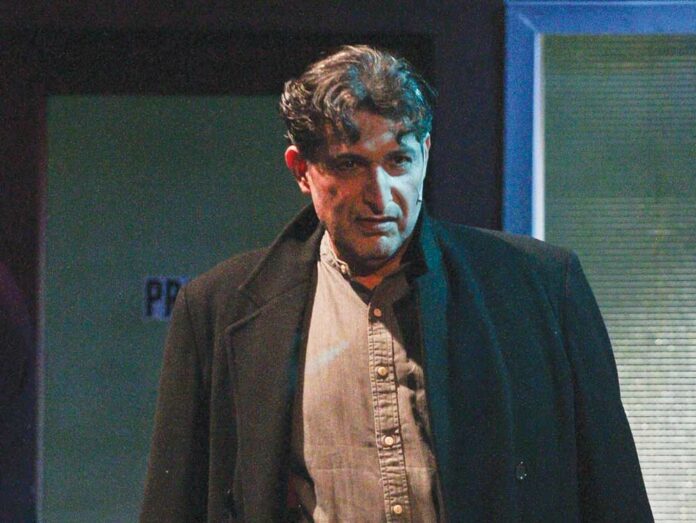
Meet Sam (Patrick Varner), a struggling New York actor whose daytime job consists of taking reservations from the hoi polloi hoping to get a good table at a New York eatery known for its “molecular gastronomy.” It’s the type of restaurant that serves “smoked cuttlefish risotto in a cloud of dry ice infused with pipe tobacco.”

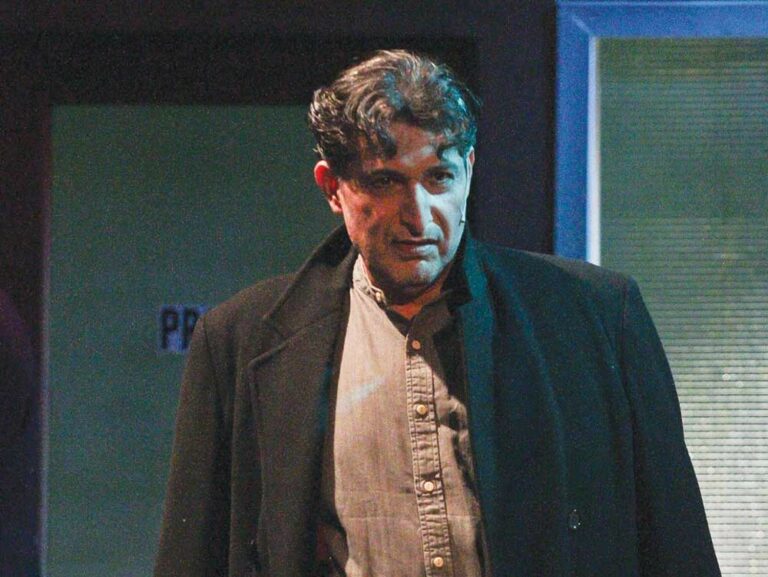
Tucked in the basement, Sam juggles the reservation lines, a staff intercom, a “hot” line to the chef and his cell phone while he engages in conversations with the crème-de-la-crème of New York society, his absent coworker, his demanding boss and his father (who’s hoping he can come home for Christmas).

Varner is a whirling dervish as he takes on 40-some characters and gives them each a personality and a voice. It takes a bit of getting used to visually, but buy into it and it’s a fun 90 minutes.

Rating for both (out of 5): ★★★★

‘The World Goes ‘Round’ runs through Jan. 5 at Cinnabar Theater, 3333 Petaluma Blvd. N., Petaluma. Fri–Sat, 7:30pm; Sun, 2pm. $30–$75. 707.763.8920. cinnabartheater.com

‘Fully Committed’ runs through Jan. 5 on the Monroe Stage at 6th Street Playhouse, 52 W. Sixth St., Santa Rosa. Thu–Sat, 7:30pm; Sat–Sun, 2pm. $18–$29. 707.523.4185. 6thstreetplayhouse.com

We the People

Remember, the Constitution doesn't begin with "I the President." It begins with "We the People." Trump and Republicans: You can try to divide the country, but we will rise up and unify. All of us together. Women/men, black/white, gays/straight, disabled/young, old/Native American We will not go quietly back to the 1950s. Love, not hate, makes America great. Are you listening white,...

Cannabis Council

Though lawyering and judging rarely overlap, they do with Omar Figueroa—arguably the North Bay's most flamboyant cannabis lawyer. Last December, Figueroa served as a judge at the Emerald Cup. Is he worried about disbarment? Hell no! "Judging was great fun," he says. It also added to the luster of his legend. Born in Mexico and a graduate of Stanford and Yale, Figueroa initially...

Top Torn Tickets Take 2

Comedies and dramas occupied North Bay stages for the bulk of 2019. Here, in alphabetical order, are my Top Torn Tickets, the best and/or most interesting comedic and dramatic stage work done in Sonoma and Napa counties in the past year: After Miss Julie (Main Stage West) One of several outstanding productions at this little theater dynamo, this tale of...

BottleRock 2020 Lineup Is Here

Red Hot Chili Peppers, Dave Matthews Band, Stevie Nicks top the festival's bill.

Best on Screen

The top 10 films of 2019, in alphabetical order: The Big Hack, Captive State, The Irishman, Jojo Rabbit, Joker, The Lighthouse, 1917, Once Upon a Time...in Hollywood, Parasite and Us. "We're Americans. Get the rope."—Us "You're Americans. Just barge on in."—Midsommar Such is my country these days. We seem to be Rotvalla-pissers one and all, like the chump in Midsommar who wees...

Top Torn Tickets

After attending over 100 Bay Area theatrical productions in 2019, it's time to clear the theater programs out of the file cabinet and select my Top Torn Tickets. Here, in alphabetical order, is my list of the best and/or most interesting work done in the musical genre by Wine Country–theater artists in the past year: Cinderella (Spreckels Theatre Company) I...

Meter Matters

Smart Meters and 5G towers—they may be smart at increasing the speed on computers and other devices, but at what cost? How smart is it to expose people, animals and the environment to strong, harmful radiation that makes us sick and can even kill? According to many scientists, because of soft body tissue, infants and children—the most vulnerable among us—are...

Censored 2020

Editor's note: Founded at Sonoma State University in 1976, Project Censored has spent the past several decades researching and publicizing "the news that didn't make the news." As we head into 2020 in an era of social-media overload and struggling print publications, we are highlighting the work of this longtime North Bay institution. Every year, Project Censored scours the landscape...

Barber Shop Solo

Red, white and blue swirling barber pole out front, my barber shop is classic, both old fashioned and cutting-edge, with few scissors but many clippers, straight razors, trimmers, edgers, fine or wide combs, but no sink, no shampoo, no cream rinse. Enter, and the place is throbbing with testosterone, pulsing with vibrating yang, no soft humming yin whatsoever, darkly masculine, not sunny feminine. I am the only...

Two North Bay productions keep the merriment going

North Bay theaters ring out the old and welcome in the New Year with music and comedy. The World Goes ‘Round to the beat of Broadway show tunes at Petaluma’s Cinnabar Theater while Santa Rosa’s 6th Street Playhouse is Fully Committed to bringing the laughs. Both shows run through Jan. 5. You’re probably more familiar with the works of the...
11,084FansLike
4,606FollowersFollow
6,928FollowersFollow