Doobie Nights

0

I have seen the future, and it works. Not only that—it’s fun. Doobie Nights is the brainchild of Damon Crain, a long-time cannabis cultivator who lost his crop to the 2017 Tubbs fire, and his partner, Brandon Levine, of Mercy Wellness in Cotati.

Crain and Levine are all in favor of mercy, wellness and medicinal cannabis, but they’re also advocates of the pleasure principle and want the holy herb to be used to enhance everything from making music and making love to walking in the woods and stargazing at night. The possibilities are endless.

Doobie Nights deconstructs the traditional brick-and-mortar pot shop. Now, on the cusp of a new decade, Crain and Levine have buried the familiar, all-too drab commercial cannabis space of yesterday and replaced it with an exhilarating space-time odyssey that appeals to all manner of cannabis users, whether they use the term marijuana cigarette, joint, doobie, j-bomb or spliff.

Located on Santa Rosa Avenue just within city limits, Doobie Nights is a portal to a sensory environment of sounds and interactive images that are projected onto gigantic walls and that may remind aging rock & rollers of the light shows of the 1960s and 1970s. As heads once said: seeing is believing.

Potheads may choose to get stoned before they arrive at 3011 Santa Rosa Ave., park their cars and enter what some are calling a “gigantic womb.” If they do that they’ll get the full effect of the lights, sounds and swirling images that appear to loom on giant computer screens. Then again, even the intrepid might want a clear head to carefully select from a variety
of products, including a great selection of gummies, before checking out the technology that makes Doobie Nights into a venue for the Wizards of Oz, the Alices of Wonderland and the pioneers of the video game revolution.

There will be food trucks, vendors of fine weed and giveaways at Doobie Nights’ grand opening. The event at the electrified cannabis haven is sure to push the envelope.

“This is a place where the imagination can grow wild,” Levine says. Half-jokingly, or maybe not, he adds, “We’ve set the bar so high that you don’t have to smoke weed to get high anymore. The only place like it is outer space.”

His bro, Damon Crain, looks him in the eye and calmly says, “We want to evoke memories.”

Ursa Born, who grew up in cannabis-centric Humboldt, speaks for the whole crew on the Doobie Nights’ spaceship when she says, “We’re pre-Millennials and the first adapters of computers and cell phones. We’re blazing a trail again.”

Doobie Nights Grand Opening Soirée is Friday and Saturday, Jan 17–18, at 3011 Santa Rosa Ave., Suite A, Santa Rosa. 10am to 7pm. 707.919.3222. doobienights.com.

Curious Couple

0

Santa Rosa’s Left Edge Theatre kicks off the New Year with Simon Stephens’ Heisenberg. The two-character dramedy about a May–December romance runs through Feb. 2.

The title does not refer to either character, but to German physicist Werner Heisenberg. The Nobel Prize winner is best known for his 1927 uncertainty principle that, in its simplest definition, states there’s a limit to what you can know with certainty about one thing at any one time.

What’s that got to do with a 42-year-old American single mother and a 75-year-old Irish butcher in London? Everything.

Alex Priest (John Craven) is sitting in a London railway station minding his own business when Georgie Burns (Shannon Rider) approaches him from behind and kisses him on the neck. She quickly apologizes to Alex and explains that he reminded her of someone she recently lost. The uber-extroverted Georgie then initiates a lengthy one-sided conversation in which she repeatedly contradicts herself. The ultra-introverted Alex finds himself caught like a deer in headlights, eventually sputtering “Why are you talking to me?”

It’s not giving too much away to say that these two disparate characters will end up together, but credit playwright Stephens (The Curious Incident of the Dog in the Night-Time) for never giving us any sense of certainty about their long-term prospects. Motormouth Georgie makes us wonder if the two have any prospects at all with her repeated verbal barrages of inconsistencies and outright lies about who she is, but she piques Alex’s and the audience’s interest in her for the show’s 85 intermission-less minutes.

The great leveler between these two is loneliness, and nobody plays a world-weary soul better than Craven. Rider’s challenge is to bring vulnerability to a character who comes on like a runaway train. She succeeds in letting us see what Alex sees. They venture into an uncertain future together, each on their own terms.

Some strong technical work complements the Carla Spindt-directed performances. Lighting by April George and sound by Joe Winkler allow Argo Thompson’s minimalist set to easily transform from a train station to a butcher shop to a bedroom to Hackensack, N.J.

At one point in the show Georgie asks Alex, “Do you find me exhausting, yet captivating?” The same question could be asked of this show, and the answer would be a resounding “yes.”

Rating (out of 5): ★★★★

‘Heisenberg’ runs through Feb. 2 at Left Edge Theatre. 50 Mark West Springs Rd., Santa Rosa. Thu–Sat, 8pm; Sun., 2pm. $15–$42. 707.546.3600. leftedgetheatre.com

Bloody Good

0

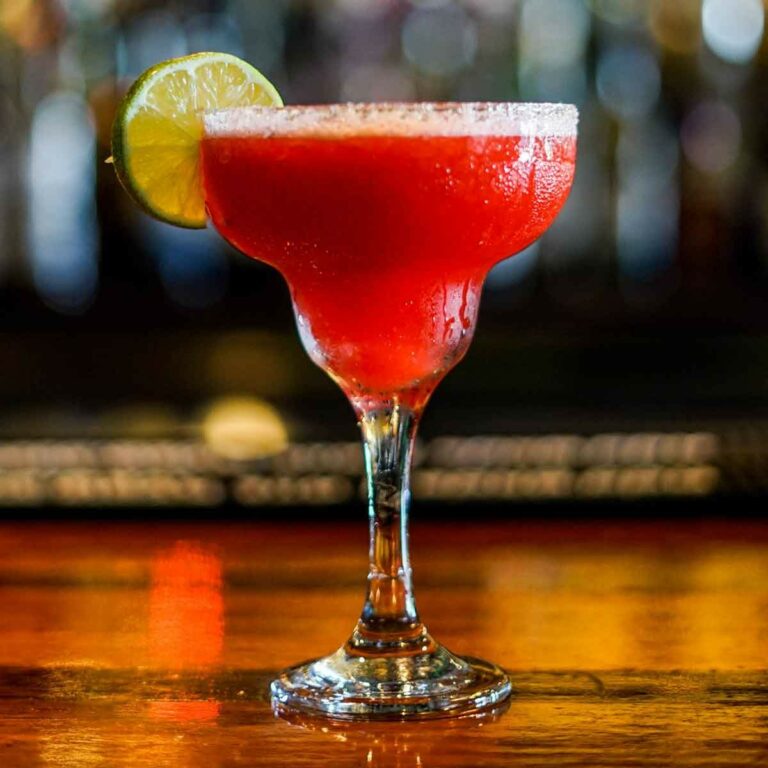
In 2020, I resolve to buy more organic products. I’ll support local farmers; at the farmers market. And, of course, I’ll cut back on the booze. Right after I drink this Bloody Mary that’s locally sourced with organic ingredients.

At the Santa Rosa Original Certified Farmers Market, at the Luther Burbank Center for the Arts, I spy a stand that still has tomatoes—however improbable—in late December. Growing just a stone’s throw or two across the freeway, the tomatoes at Hector’s Honey Farm go gently into these lately frosty nights with the help of row covers. True, some look a bit rough this late in the season—but so do I.

Funny thing about tomatoes in late December is, while they may be hardy, they are not so juicy. The good news is, no desperately hungover people are waiting on my tedious juicing attempt, which nets 2-plus fluid ounces from nine small, and ironic, Early Girls. I add freshly grated horseradish, a bit of Goodfellas-thin sliced garlic, a pinch of paprika-based spice from Sonoma County’s own J. Christopher Co., sea salt from Jordan Winery and foraged Meyer lemon juice. (If you can’t find a Meyer-lemon bush in the North Bay, take off those dark glasses).

Round one: Mixed 1-to-1 with an international brand of vodka, this pink cocktail looks like a Greyhound, but smells of fresh tomato. However, the ethanol lifts the horseradish aroma too far to the fore. Hanson of Sonoma habanero vodka ($28), made from organic grapes, cools the aroma and adds a spicy element, while Spirit Works vodka ($30), distilled from organic California wheat, introduces a vanilla aroma, and black pepper and garlic details. It’s kind of like gazpacho.

Round two: Bloody Bob’s “all natural” Bloody Mary mix ($6.50), produced in Healdsburg, has everything but the celery stick, and a bit of latent heat, too. But, mixed in equal parts with the international rotgut, only the tomato paste note stands out—like pizza sauce. With the Hanson’s, there’s an accent of pepper, while Spirit Works shows that sweet vanilla note.

But the revelation comes when I mix up a 2-to-1 ratio of vodka to Bloody Mary mix. Now, the mix can’t hide the character of the vodka. The international brand is characterless, leaving the tomato purée to still lay heavily on the palate—my main complaint with most iterations of this cocktail—with a cold metallic tinge, while the Hanson’s unflavored version (with a sweeter aroma than the habanero) and the Spirit Works add a welcome sense of “warmth” to what’s supposed to be a recovery tonic, after all.

Winter Wellness

0

During the wintertime when everyone around us is getting sick, it’s natural to begin asking ourselves “How can I stay healthy and well?”

But health and wellness is more than just a lack of disease. It’s an overall balance; something to strive for in every season. Movement, alternative therapies and common sense remedies can be very effective for achieving overall health and wellness.

“Wellness is having the right relationship between the internal and external environments,” says Sean Fannin, a practitioner of Chinese medicine since 1992.

Specializing in Chinese herbalism and Medical Qigong at The Center for Traditional Health Arts in Petaluma, Fannin has observed that achieving one’s health goals goes hand in hand with keeping them simple.

“People often make wellness goals too complicated,” Fannin says. “When you make goals, it’s good to go back to really fundamental things. For example, with diet: stick to local, whole foods, eat what’s in season, eat regularly, not have too many processed foods, and that’s basically it.”

Movement

Movement is more important to our overall health than we may realize. It turns out that we don’t need to work out at the gym 24/7 to be healthy—incorporating simple daily movement is all we need.

Increase Low-Intensity Movement

“Our life and health come from movement,” Fannin says. “Walking down the street, or picking up groceries and carrying them around—those are all movement. We didn’t adapt to sitting around for eight hours, then having high-intensity movement. It was mostly moderate to low-level activity, but all the time—we really do well with that. So we need to have a high level of low-intensity movement throughout our day and then short periods of high-intensity movement.”

Walk

Walking can increase your longevity and you don’t need special equipment. Bundle up and take a relaxing walk with your partner, children (bring scooters) or a friend. It can be at a nearby park or just around the neighborhood, but get out there every day.

Try Parkour

With parkour you use your immediate environment to get from one point to another in the most efficient way. It involves climbing, jumping and all kinds of movement.

“The goal is to move as fluidly as you can within the environment,” Fannin says. “I felt comfortable in nature, but I never felt very comfortable just walking down the street. And 90 percent of the time I’m walking down the street. We should be comfortable in our environment, wherever it is.”

Rest

So simple, but so hard to achieve. In the winter, it makes sense to take even more time to rest. Many of us were trained to believe that rest is lazy—but rest is necessary to our well-being. Everyone is different with how much rest or sleep they need, so discover your own needs and don’t compare yourself to others. Below are a few simple ways to rest besides actually sleeping.

Take a Bath

Take a warm bath. All you need to do is fill the tub. Make it more special by adding bubbles, bath salts or a few lighted candles. You can even read a good book while you soak. If you don’t have a tub, the Dhyana Center in Sebastopol offers a self-care sanctuary with soaking tubs, a cold plunge and a sauna. You can even bring your book there.

Reading

Speaking of books, schedule a time to read in the evening just before bedtime. An important part of this practice, however, is reading an actual book and not your glowing mobile device which can adversely affect your ability to snooze. You’ll look forward to the activity and it will help you achieve your chosen bedtime.

Food

Of course, we know that eating healthy is a good idea, but some foods in particular can act like tonics.

Garlic

Garlic is always beneficial, especially during cold season. But you need to chop it to combine the medicinal properties of alliin and alliinase into allicin. Once it’s chopped, wait 10 minutes for the allicin to develop before adding heat. According to Jo Robinson, in her book Eating on the Wild Side, “Heat destroys the alliinase and then you can’t get the allicin, which is the medicinal benefit. Further, she says, “garlic has so many healing properties that waiting those critical 10 minutes could reduce your risk of a number of worrisome diseases.”

Mushrooms

Mushrooms are powerhouses of nutrition and medicine. They support our bodies in various ways from increasing brain health to boosting the immune system. On the Fungi Perfecti website, Paul Stamets explains that cooking mushrooms is essential to releasing their nutrients:

“Proper heat treatment denatures toxins, softens fungal tissues, and allows our natural digestive enzymes to access and utilize the inherent benefits of both culinary mushrooms and mushroom supplements: Edible mushrooms should be tenderized by heating to at least 140 F—over many hours—more preferably over 180 F, most preferably above 200 F to release their nutrients and render them digestible and safe.”

Stamets even suggests putting mushrooms in the sun to increase their vitamin D content.

Herbs

Making a cup of herbal tea can be as therapeutic as the herbs you make it with. Try lemon balm, chamomile, rose, thyme, peppermint or lemon verbena. Inhale the aromas while you’re steeping the herbs.

Alternative therapies

Western and Eastern medicine are different approaches but both serve a function and work well together. Many people see Western doctors and specialists while also seeing Chinese medical practitioners.

Traditional
Chinese Medicine

Somewhere around the 1600s Chinese medicine became what it is today, but its roots go back thousands of years.

“One of the reasons why I think Chinese medicine works so well,” Fannin says, “is because it is the oldest tradition of medicine that has a continuous written history. You have this tremendous resource of written material. And you can go back and look at the source material yourself.”

In Traditional Chinese medicine, the study of health and disease began with observing living things.

“Chinese medicine studies the movement of life,” Fannin says. “If we have the right movement then we have the right health. It’s a complete system of medicine so we work with just about anything that any medical office would work with: from people with serious diseases to cultivating health and anything in between.”

Dr. Kim Peirano, a doctor of acupuncture & Chinese medicine and a licensed acupuncturist practicing in San Rafael at Lion’s Heart Wellness, adds, “Treatments can clear out the clutter of the mind and the body so we can make space, bring the body back into alignment and really find our path again.”

And if you aren’t a meditator, acupuncture can help achieve the same effect.

“Acupuncture and meditation have been shown to help our brains actually turn off our ‘fight or flight’ system, beta brainwaves and tune in to alpha and theta brainwave states,” Peirano says. “What’s that mean? It means the hour-long acupuncture treatment is actually affecting the way our brain works so that we can access the deep brainwave patterns that allow our body to naturally rejuvenate and heal itself.”

Massage

Who doesn’t love a massage? Different forms of massage, like shiatsu, hot stone, deep tissue or Swedish can be effective in dissolving muscle pain and can even help with the source of the pain or emotional issues. Kat Lilith, holistic health practitioner and certified massage therapist at The Healing Heart, says of her massage practices in Petaluma and Dorset, Vermont, “Relieving symptoms is not the goal. Relieving the cause of the symptom is the goal.”

The wellness activities above are not only healthy, but relaxing and enjoyable, and can be incorporated long-term into your routines for maximum health. So keep it simple, and just begin.

Napa Projects Art

0

If one can say that “all the world’s a stage” in a theatrical sense, then it should also be said that all the world is a canvas for visual artists—especially if those artists work in the medium of light, such as the projected works that adorn several historical buildings throughout downtown Napa during the nine-day Napa Lighted Art Festival, running Jan. 11–19.

Hosted by the City of Napa’s public arts division, the city-wide evening arts-walk event features original artwork created by local and international artists shown on buildings and in art installations at a dozen locations.

“There is a lot of spectacular work that we are gearing up for this year,” says Napa Public Art Coordinator Meredith Nevard. “The festival theme for this year is ‘Renew’ and the artwork represents or expresses concepts such as to restore and rehabilitate our physical world and re-establish and re-connect to each other.”

This year’s lineup of artists includes seven international artists and four U.S. artists; three of them returning artists and the rest chosen by an art committee from a pool of submissions.

Highlights of the Lighted Art Festival include Michigan-based laser artist Mike Gould’s installation “Lunchboxing with Lasers” at Napa River Inn and the Historic Napa Mill. The interactive art lets viewers direct the laser-light projections’ speed and brightness from control panels built into vintage lunch boxes. New Orleans-based artist David Sullivan’s installation at Native Sons Hall, “Chroma Current,” uses the viewer’s body movement to change the flow of colors projected on a wall.

At the First Presbyterian Church on Third Street, British artists Ross Ashton and Karen Monid present “First Light,” which visually represents a 24-hour day as seen through shades of natural light and accompanied by a contemplative soundscape. Nearby, at the Napa Square on Second and School streets, fellow U.K. multimedia artist Rebecca Smith and her group Urban Projections presents “Fault Line,” which uses bold patterns and moving color to explore the transfer of energy within the Earth’s geology.

From Israel, the OGE Group specializes in artistic architecture projects with creative light designs, such as the interactive light art installation “Angels of Freedom,” showing at the CIA at Copia on First Street. The installation invites participants to be visually turned into angels with the help of projected light.

The festival also includes several artist’s talks, historical tours and special events such as the Night Bloom hot-air-balloon display at Oxbow Commons on Jan. 12 and 19, and the Lantern Parade—where the public will create their own lanterns and parade through downtown—at Veterans Park on Jan. 17.

“One of our goals here is to make it known that Napa is an up-and-coming art scene and to push the boundaries of what kind of art we can house here,” says Nevard. “It’s a once-a-year festival, but a once-in-a-lifetime experience to see some of these artists.”

LandPaths purchases Ocean Song

0

Occidental’s Ocean Song, 421 beloved acres of wild, coastal hilltop land, already has a long history of ecological stewardship. And it’s about to write its next verse.

In October 2019, LandPaths, a conservation- and community-focused, Sonoma County-based nonprofit, acquired Ocean Song from Andrew Beath of Malibu, with 240 acres protected by a “forever wild” conservation easement.

One last land purchase finalizing this summer will create an uninterrupted path from the ocean to Coleman Valley Ridge. What this means is that people will be able to hike an eight-mile trail from Shell Beach through Sonoma Coast State Park up to Willow Creek State Park, then through the last land purchase and into Ocean Song, where breathtaking and inspiring views of the Farallon Islands, Point Reyes, Tomales, Mount Tam and Mount Diablo await them.

Established in 1996, LandPaths historically assists public access to preserved lands and nature education, particularly for youth—values also held by Ocean Song, through its various incarnations. LandPaths plans to amplify the location’s iconic legacy of wilderness, agriculture and environmental education.

A ridgetop jewel, Ocean Song’s grasslands, creeks, oaks, redwoods and acres of garden and farmland inspire connectivity with nature.

“You can’t spend time at that place and leave as the same person,” says LandPaths’ Executive Director Craig Anderson. “Something happens when you’re there. The most important aspects of LandPaths’ ownership and stewardship of Ocean Song are: protecting that landscape; not diminishing its capacity as a natural-functioning wildland; and allowing that place to change the people that go there but not have us change that place.”

The property—a former cattle ranch—was purchased in 1975 by Pieter and Marya Myers, friends of Bill Wheeler, the owner of the adjoining Wheeler’s Ranch commune which was home to hundreds during the 1970s hippie days. The Myerses created an organic farm and one of the first local community-supported agriculture programs.

Within a few years a small community called Centre of the Pumpkin and a partnership with the Ananda Spiritual Community developed, giving the place its name: Ocean Song. In 1995, they sold the western parcel to Eco-Corps, which turned out to be a rogue Hare Krishna group that they broke ties with in 2000 by selling to Earthways Foundation, run by Beath.

In 1999, the Ocean Song Farm and Wilderness Center officially became a nonprofit, eventually offering diverse environmental education programs, a farm and public access. This included Coyote Camp, the beloved nature camp founded in 2005 by naturalists/educators Annie Klein and Avo Anderson, along with Dan Spach and Irina Skoerie.

The inspiration was Discovery Day Camp, a former children’s camp active at Ocean Song in the ’80s and ’90s. In turn, Coyote Camp inspired LandPaths’ Owl Camp, which began a few years later; and Camp Bohemia, instigated in 2017 on the nearby 1,000 acres Bohemian Ecological Preserve—also preserved by LandPaths.

“When Coyote Camp ended at Ocean Song in 2017, LandPaths asked us to create another camp at the Bohemian Ecological Preserve called Camp Bohemia,” Klein says.

Stacy Lippincott, Klein’s assistant director at Coyote Camp, subsequently took over as director after the first year. Ocean Song’s programs, including Coyote Camp, closed in 2017 due to a lack of a use permit. LandPaths will apply for the permit, which will open the property to the public and will restart the legacy of Ocean Song’s cherished education programs.

As the current Ocean Song Farm and Wilderness Board of Directors said in a statement, “LandPaths is well-positioned to continue and expand upon [the tradition of environmental education] and provide the stewardship, program management, and the volunteers needed for the land to reach its full potential as a public resource and model of ecological health and diversity. We look forward to the unfolding of our shared future vision.” This vision includes connecting protected land.

“Conservation has been protecting postage-stamp pieces of land here and there, instead of connecting them all together,” Anderson says. “We have to connect these pieces.” Two local families made anonymous donations enabling the purchase from Beath and Earthways Foundation for just over $3.1 million, and LandPaths is currently fundraising to buy the last piece of the public trail: Pieter and Marya Myers’ adjoining property. The Myerses couldn’t be more supportive.

“LandPaths is about connecting people to natural, open-space areas for the experience, education and inspiration,” says Pieter Myers. “It was just a match. We don’t have to tell LandPaths what to do; they’ve got it figured out really well. Craig is completely committed to getting kids on the land—that’s the main event.”

Collaboration empowers the overarching vision to connect Shell Beach to Coleman Valley Ridge. District 5 Supervisor Lynda Hopkins says, “Our community will benefit from the efforts of LandPaths and private owners to protect and preserve this gem in perpetuity.”

Bought Up

0

Last week, the North Bay’s largest print media company announced it had purchased the Sonoma County Gazette, a monthly news magazine which grew in circulation drastically over the past 20 years thanks to its owner’s community connections and hard work.

Sonoma Media Investments (SMI), a company founded by a handful of business executives and political power brokers in 2011, already owns The Santa Rosa Press Democrat, the Petaluma Argus-Courier, the Sonoma Index-Tribune, the North Bay Business Journal, Sonoma Magazine and La Prensa.

With the purchase of the Gazette, the company will hold a near-monopoly on print media in Sonoma County.

The Gazette is very different from any of SMI’s current products and, in large part, a reflection of the business instincts and personality of Vesta Copestakes, the paper’s longtime owner, publisher, editor and designer.

“I’ve always felt that the Gazette is organic; a biological entity that has a life of its own … it doesn’t fit into a standard journalism format,” Copestakes wrote in a letter announcing the sale. “People tell me all the time that they feel it’s ‘our’ paper. Readers are the people who write the articles and columns. When I want to educate people on a topic, I find experts in their field willing to write what they know. It’s rare when a ‘real journalist’ writes for us.”

Disclosure: I worked part-time as a “real journalist” at the Gazette for about a year ending this August.

In an interview with the North Bay Bohemian, Copestakes said that, despite some concerns from readers and contributors that she sold the paper to the local media conglomerate, she believes SMI has the best of intentions. She says the Gazette interested SMI because of its strong connection to the community, something that the company’s other properties, which are mostly subscription-based, do not have.

Copestakes, who has been self-employed for the majority of her life, took over the Forestville Chamber of Commerce’s monthly newsletter in 2001. With Copestakes at the helm, the newsletter soon had a new voice. Copestakes says she first got attention by allowing readers to contribute articles to the newsletter in the wake of the Sept. 11, 2001 terrorist attacks.

In 2003, Copestakes purchased the newsletter from the chamber of commerce. Since then, she has expanded the publication’s reach throughout the county and rebranded it as the Sonoma County Gazette.

Currently, Copestakes and her team distribute 35,000 copies of the 72-page paper to approximately 1,000 locations throughout the county each month. Because the paper features a wide range of articles by locals who are often unrepresented in other publications, it has a sizable following of fond readers.

Since purchasing the paper, Copestakes, who regularly logs 80-plus-hour work weeks, filled the roles of publisher, editor, designer, ad sales director and distribution manager. She led a team of 20-odd part-time contractors who helped with billing, design and distribution; in addition to numerous contributors around the county.

Copestakes says that on her 70th birthday, after several years of considering her options, she decided to sign an agreement with a brokerage firm to sell the paper. The sale, which will allow her to retire, was a birthday present to herself.

Copestakes says there were six interested parties, all told—including Gannett, one of the largest newspaper chains in the country. Ultimately, SMI was the only bidder with the proper combination of local connections and adequate financial and institutional backing, she says.

In a Press Democrat article about the purchase, representatives of SMI implied that they intend to keep Gazette‘s content largely the same while expanding the paper’s online presence.

“We will continue the fine tradition of local community content that Vesta [Copestakes] has nurtured for many years,” Darius Anderson, SMI’s lead investor, told the Press Democrat.

Copestakes, who will retain editorial control of the paper for the rest of the year, is very hopeful that the new owners will continue the paper in its current format.

“The whole thing feels really good,” she says. “And it’s a whole lot better than just letting the Gazette end after I retire.”

However, Teri Shore, North Bay regional director of the Greenbelt Alliance, a nonprofit that fights urban sprawl, is skeptical about whether the new owners will give as much space to certain political causes.

This month, Shore has a front-cover article in the Gazette about the future of the City of Sonoma’s Urban Growth Boundary, the invisible line around the city which restricts development. Shore says she will be “very surprised” if the paper continues to publish as many articles from environmental groups once SMI fully takes over.

“I hope it goes well, but I don’t have a lot of faith,” Shore said of the purchase.

Shore suspects the paper will become more partial to business interests, developers and other parties that often populate the pages of SMI publications.

Sonoma County and the North Bay have avoided the worst of the local-newspaper massacre that has swept the country in recent years.

Recent research from the University of North Carolina confirms what most everyone already suspected: across the country, local newspapers are closing at a rapid rate. A few massive chains own many of the survivors.

Since 2004, the number of journalists employed in the country has dropped by 45 percent and “between 1,300 and 1,400 communities that had newspapers of their own in 2004 now have no news coverage at all,” according to the UNC report.

That lack of local media will have long-lasting impacts on local politics across the country, the report states. And, with the start of a new decade, most industry analysts agree the situation is unlikely to get better anytime soon.

But, while there is good reason to be grateful to have a local newspaper at all, local ownership poses its own problems, particularly when media owners are deeply involved in politics.

When SMI took over the Press Democrat in late 2012, Anderson “repeatedly promised to steer clear of the newsroom, despite concern that his partnership of local ‘power brokers’ may try to turn Press Democrat journalists into their own PR machine,” according to an online report by the Pacific Media Workers Guild, the union which represents the Press Democrat’s journalists.

But, as the Bohemian reported last year, there is reason for concern about what does and doesn’t make it into SMI publications.

Anderson is CEO of Platinum Advisors, a lobbying firm with dozens of clients in Sacramento. However, SMI articles about Platinum Advisors’ clients, including, until last November, PG&E, do not mention that Anderson is a lobbyist.

The Society of Professional Journalists recommendation for such situations is simple: “Avoid conflicts of interest, real or perceived. Disclose unavoidable conflicts.”

Stacked Line Up for BottleRock

0

For many music lovers, the 1990s will be alive and well this Memorial Day weekend, May 22–24, 2020, at BottleRock Napa Valley, when the mega-sized music, food and wine festival returns for its eighth year with a musical lineup headed by the bygone decade’s biggest stars— the Red Hot Chili Peppers and Dave Matthews Band.

Two-time Rock & Roll Hall of Fame–inductee Stevie Nicks, who was recently instated as a solo artist after already being in the hall as a member of Fleetwood Mac, rounds out the final headlining spot for the three-day fest, which boasts over 75 bands and performers taking over the Napa Valley Expo in the heart of Napa.

In addition to the platinum-selling music veterans, BottleRock’s lineup includes younger pop stars, from Miley Cyrus to Brandi Carlile, and global superstars like Russian/German DJ and producer Zedd, Australian electronic duo Empire of the Sun and Grammy-winning R&B musician Khalid, recently named one of

Time’s Most Influential People of 2019.

“Our lineup once again features a wide variety of genres, combining legendary performers, up-and-coming bands and some of the most talked-about artists in the world,” said Dave Graham, CEO of BottleRock Napa Valley, in a statement. “Our goal each year is to book the best acts available that fit our audience profile, and we’re very happy that it resulted in such a deep lineup.”

Other notable performers coming to Napa Valley include sibling folk-pop groups the Avett Brothers and Tegan and Sara, multi-faceted singer-songwriters and performers Janelle Monáe and Maggie Rogers, the iconic Debbie Harry leading Blondie, fast-rising country star Maren Morris, indie-rockers Jimmy Eat World, local favorites Michael Franti & Spearhead and many more.

Alongside the chart-toppers and internationally-touring acts, BottleRock always features a handful of North Bay and Bay Area acts, and this year’s lineup includes regional artists such as San Francisco singer-songwriter Sam Johnson, Bay Area collective Full Moonalice—comprised of jam-band Moonalice, Oakland folk-group T Sisters and North Bay outfit the New Chambers Brothers—and Napa-based bands Obsidian Son and the Silverado Pickups, whose members each have winemaking history in their blood.

BottleRock also embraces the region’s winemaking and culinary history with an array of local food and wine, craft beer and spirits and the popular Williams Sonoma Culinary Stage, which hosts live cooking demonstrations that pair renowned chefs with celebrities, performers and rock stars.

BottleRock Napa Valley takes place Friday–Sunday, May 22–24, at Napa Valley Expo, 575 Third St., Napa. Three-day tickets start at $390. bottlerocknapavalley.com.

January madness

0

It’s January—the month named for the Roman god Janus who was simultaneously able to face both the past and future. This is impressive to me since I can’t face either without Lexapro. Janus had it easy, though; he had two faces, which makes him the only god suitable for a sideline in politics.

The beginning of the year hasn’t always been January. It’s bobbed around a bit thanks to Julius Caesar who changed the names of some months and added some mystery months for good measure. Ergo, the erstwhile month of Quintillis. You would think that Caesar’s invention was a newfangled fifth month (“quint” being a numerical prefix for five and all) but surprise, it was a new seventh month. Because—why not? When Caesar died they changed it to July in his honor, apparently having missed his “Ides of March” memo.

Later, Pope Gregory did a partial rebrand of the calendar. In the Gregorian calendar, Janus is more of a middle month and Martius (now March) was first. In the “Gregorian Brady” edition of this factoid, a jealous Janus would thus lament “Martius, Martius, Martius.” And, yes, in a past life, I was the warm-up act at the Coliseum.

Calendar reform is a perennial topic in some circles (ironically, those circles never have dates). Among them is the Hanke-Henry Permanent Calendar, which has the peculiar feature of every date always falling on the same day of the week. Besides ruining the Friday the 13th film franchise, Hanke-Henry would also lock your birthday down to the same day for eternity. A whole new kind of astrology would emerge. Monday people would be the worst. Friday and Saturday people would be permanently cool. Wednesday people would suggestively drop “Hump Day” comments to gin up their sex appeal.

When it comes to calendars, the only thing worse than a Roman overlord is a corporate overlord. Consider Kodak founder George Eastman, who, in 1928, mandated the use of a 13-month company calendar just to let his employees know who was boss. Based on the International Fixed Calendar devised by Moses B. Cotsworth 26 years prior, Kodak divided his year into 13 months of 28 days apiece. This leaves a couple of days each year not belonging to any month (they’re probably in a vault somewhere). He also added a bonus month between June and July he called “Sol,” thus continuing a bizarre trend amongst powerful men to shoehorn in a new seventh month.

Kodak’s calendar surely went out with radium watch hands, right? Wrong. Kodak used it in-house until 1989. Fortunately, powerful men are less likely to exhibit such random and arbitrary behaviors these days. Then again, it’s only January. I’ll make a note in my calendar to check back on the Fourth of Trump.

Hollow Be Thy Name

Our grifter whose art of the Fox-spun spiel

loaded with ego overloaded with id

out of context without conscience

whose aggrieved entitlement whose flatulent fraudulence

became our American Tragedy

hollow be thy name hateful is thy kingdom

of racist misogynist xenophobic homophobic

ranting raving trumped-up anger

here & everywhere on earth where

your knee-jerk anti-science arrogant ignorance

as public policy shamefully mining misery & corruption

cruelty your credo confining children in cages

you give us each day our daily dread

of bullying bravado of denying or ignoring facts

of flaunting acts of mendacity high & low

oh forgive us for in the future near & far

you’ll be reduced to trivia in every bar:

who’s the “populist” who lost the popular vote?

who’s the subject of Commander-in-Cheat?

who’s the only prez in pro rasslin’s hall of fame?

Lead us no more after 2020 and deliver us

from your narcissism your pathology

go away retreat retire go back

under the rocks of unreality tv & steal estate deals

from which you floated bloated like a toxic beach ball

deceptively at first appearing harmless even perversely playful

cartoonish buffoonish idiotic patriotic pompous ass

your neck red with resentment your klan-white face your gas-flame
blue eyes

let’s not forget your swept-back combed-over orange-yellow mane

as lame as your qualifications such as they are

limited to your masterful mimicking of Il Duce gesticulation
manipulation

& your demonizing morally cracked compass

your compassion-clogged con

your junk fool mentality.

May our American Tragedy end

the sooner the better. Amen.

Robert Eugene Rubino worked 28 years in daily journalism in
Sonoma County. Since retiring in 2013 he has published prose and
poetry in various literary journals.

Doobie Nights

I have seen the future, and it works. Not only that—it's fun. Doobie Nights is the brainchild of Damon Crain, a long-time cannabis cultivator who lost his crop to the 2017 Tubbs fire, and his partner, Brandon Levine, of Mercy Wellness in Cotati. Crain and Levine are all in favor of mercy, wellness and medicinal cannabis, but they're also advocates...

Curious Couple

Santa Rosa's Left Edge Theatre kicks off the New Year with Simon Stephens' Heisenberg. The two-character dramedy about a May–December romance runs through Feb. 2. The title does not refer to either character, but to German physicist Werner Heisenberg. The Nobel Prize winner is best known for his 1927 uncertainty principle that, in its simplest definition, states there's a limit...

Bloody Good

In 2020, I resolve to buy more organic products. I'll support local farmers; at the farmers market. And, of course, I'll cut back on the booze. Right after I drink this Bloody Mary that's locally sourced with organic ingredients. At the Santa Rosa Original Certified Farmers Market, at the Luther Burbank Center for the Arts, I spy a stand that...

Winter Wellness

During the wintertime when everyone around us is getting sick, it’s natural to begin asking ourselves “How can I stay healthy and well?”

Napa Projects Art

If one can say that "all the world's a stage" in a theatrical sense, then it should also be said that all the world is a canvas for visual artists—especially if those artists work in the medium of light, such as the projected works that adorn several historical buildings throughout downtown Napa during the nine-day Napa Lighted Art Festival,...

LandPaths purchases Ocean Song

In October 2019, LandPaths, a conservation- and community-focused, Sonoma County-based nonprofit, acquired Ocean Song.

Bought Up

Last week, the North Bay's largest print media company announced it had purchased the Sonoma County Gazette, a monthly news magazine which grew in circulation drastically over the past 20 years thanks to its owner's community connections and hard work. Sonoma Media Investments (SMI), a company founded by a handful of business executives and political...

Stacked Line Up for BottleRock

For many music lovers, the 1990s will be alive and well this Memorial Day weekend, May 22–24, 2020, at BottleRock Napa Valley, when the mega-sized music, food and wine festival returns for its eighth year with a musical lineup headed by the bygone decade's biggest stars— the Red Hot Chili Peppers and Dave Matthews Band. Two-time Rock & Roll Hall...

January madness

It's January—the month named for the Roman god Janus who was simultaneously able to face both the past and future. This is impressive to me since I can't face either without Lexapro. Janus had it easy, though; he had two faces, which makes him the only god suitable for a sideline in politics. The beginning of the year hasn't always...

Hollow Be Thy Name

Our grifter whose art of the Fox-spun spiel loaded with ego overloaded with id out of context without conscience whose aggrieved entitlement whose flatulent fraudulence became our American Tragedy hollow be thy name hateful is thy kingdom of racist misogynist xenophobic homophobic ranting raving trumped-up anger here & everywhere on earth where your knee-jerk anti-science arrogant ignorance as public policy shamefully mining misery & corruption cruelty your credo confining children...
11,084FansLike
4,606FollowersFollow
6,928FollowersFollow