
Cat on a Hot Tin Roof

0

Feisty Feline


MIchael Amsler

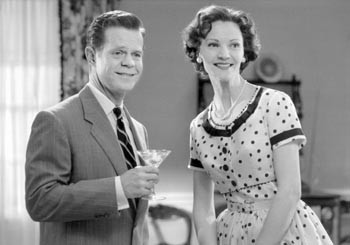
Southern discomfort: Tim Hayes and Laurie Work find that death threatens to put an end to their relationship problems in Cat on a Hot Tin Roof.

‘Cat on a Hot Tin Roof’ slinks to success at Actors’ Theatre

By Daedalus Howell

THERE’S MORE than one way to skin the proverbial cat, as Actors’ Theatre’s production of Tennessee Williams’ psychosexual chestnut Cat on a Hot Tin Roof deftly proves. Lightened and enlivened by expert direction from Joe Winkler and subtle performances from a talented cast, the show lands gracefully on its feet.

Set in the Mississippi Delta circa 1955, Cat on a Hot Tin Roof is a portrait of a wealthy Southern family stricken by calamity and avarice. Firebrand patriarch Big Daddy (in a bang-up performance by Tim Hayes) is celebrating his 65th birthday blithely unaware that his recent spate of cancer tests has proved his case terminal. His family has withheld the bad news from him to preserve his fleeting happiness and to better compete for his considerable fortune.

Framing Big Daddy’s story are the verbal pyrotechnics of ex-football star and alcoholic son Brick (an affable Argo Thompson) and his hot-to-trot, bottle-blond wife, Maggie (an electrifying Danielle Cain), who are going at it tooth and nail over Brick’s possible past homosexuality and resolute avoidance of sex with her. To complicate matters, Brick’s lawyer brother, Gooper (Robert Conrad), and his perpetually pregnant wife, Mae (Libby Lee), are doing their damnedest to ingratiate their way into the dying man’s will.

Cain steals the show with her spry Maggie–an incredibly well-drawn, intelligent, sexy, and (of course) catlike study of a belle-gone-bad. Cain invests Maggie with a complexity often overlooked in the character. Lesser actresses are waylaid by Southern stereotypes and trick accents, but Cain cleverly shades her portrayal with subtle gestures–a wry smile here, a batted lash there. This Maggie nears perfection.

Trading quips quid pro quo with Maggie is Thompson’s adroitly conceived malcontent Brick. Like Cain, Thompson also steers free of reductive Southern caricature and extracts a compelling character from the Williams text. The chemistry between these two is as combustible as it is alluring, especially when Maggie begins to claw at the house of cards that is Brick’s psyche with increasingly aggressive swipes at his heterosexual self-image.

Hayes’ blustering Big Daddy is a stunning portrait of male power in slow fade, a sauntering, wheezy machine blathering toward inevitable demise. Laurie Work makes an appealing stage debut with her warm, understated portrayal of Big Daddy’s compulsively adoring wife.

Cat on a Hot Tin Roof is a successful opener for Actors’ Theatre’s 15th season and certainly bodes well for the company’s upcoming shows. Let this Cat cross your path.

Actors’ Theatre’s production of Cat on a Hot Tin Roof plays through Aug. 29 at the Luther Burbank Center for the Arts, 50 Mark West Springs Road, Santa Rosa. Thursdays, Fridays, and Saturdays at 8 p.m.; Sunday matinees at 2 p.m. Tickets are $6-$12. 523-4185.

From the July 30-Aug. 5, 1998 issue of the Sonoma County Independent.

© Metro Publishing Inc.
The Scoop

JFK on Tape

By Bob Harris

IS IT HISTORY, or just the world’s most famous snuff film? By now you’ve heard that an enhanced version of Abraham Zapruder’s film of the assassination of John F. Kennedy has hit video store shelves. Some folks think it’s just peachy that the American public can finally study a clear copy of the film for themselves.

Gee, it only took 35 years.

Others, notably including former Life executives, are going on TV and accusing the video’s distributor of dealing in snuff, claiming it’s objectionably tweaky for anyone to rent a video specifically to watch an actual murder.

Well, yeah, obviously the film has a lurid appeal. It’s like driving past a car wreck, or a plane crash, or the Detroit Tigers’ middle relief. It’s hard not to look.

But it’s also hard to see how the Kennedy assassination shouldn’t be something people can see if they so desire. Yes, it’s an ugly, traumatic film. But it’s also as much a part of our visual history as the Challenger explosion, the L.A. riots, or Roseanne Arnold’s film career, footages of which are equally grim and mortifying.

The cries of media executives about decency and decorum here have absolutely no credibility. The Zapruder film is shocking, but no more than many typical newscasts. Ironically, much the criticism of the new tape is coming from writers and reporters who make much of their living by pimping police chases and hostage situations to the exclusion of actual news.

It’s also argued that the Zapruder film is special not for the graphic violence, but for the recipient of that violence. Strange then, that nobody’s trying to quash the footage of the two attempts on Gerald Ford, censor the film of blood pouring out of Bobby Kennedy’s head onto the Ambassador Hotel’s pantry floor, or pull the video of Reagan, James Brady, and two other guys getting shot off the market.

But let’s remember: The special handling of the Zapruder film, in which JFK is driven backwards by what at least looks like a shot from the front–where over 50 witnesses believed at least one shot originated–is one of the main pieces of weirdness that makes people think Oliver Stone wasn’t entirely wrong.

Immediately after the shooting, Life magazine, which had more spooks hanging around their office than Madame Blavatsky, acquired the film and refused to release it to the rest of the media. And Life printed the key frames (and only the key frames) out of sequence, making the pivotal sequence appear to look like a shot from the rear.

Less than a year later, the Warren Report’s first printing also printed the key frames (and only the key frames) out of sequence, creating the exact same effect.

Life also printed a description of the film that in no way resembles the one we now see, reporting that Kennedy actually turned to face the rear, which he never did. Life‘s control of the film prevented the public from seeing the film broadcast until a bootleg was smuggled onto late night TV–12 years later.

Imagine for a second that CNN acquired a video of Nicole Simpson’s front stoop during the time of her murder. Imagine that the footage–shockingly–seemed to indicate that there were at least two killers. And now imagine that, in spite of widespread public demand to see the film, CNN would choose to successfully suppress that footage, releasing only selected frames–out of order–while reporting falsely on the rest of the video, thus consistently buttressing the prosecution’s case.

Is it possible you wouldn’t have seen that footage for 12 years after the murder? Or do you suppose you would have seen it in roughly 12 minutes?

Would you consider CNN a credible news organization ever again?

Keeping the film away from the public serves absolutely no one. Except, of course, the CIA, the Mafia, the Cubans, LBJ, the FBI, Oswald’s clone, the saucer Nazis, and everyone else who killed JFK.

I’m kidding, of course.

Oswald was never cloned.

Probably.

From the July 30-Aug. 5, 1998 issue of the Sonoma County Independent.

© Metro Publishing Inc.
Sex Books

Sexy Journeys

Drive Thru America takes a bumpy, low-octane spin across this Sweet Land of Liberty.


New literature hits the road

By Patrick Sullivan

DON’T WORRY: You still have two precious months to make for distant horizons before summer ends and the gray skies of autumn close in over your sunburned head. If you’re planning on taking off for exotic locales–Botswana or South Carolina–chances are fair that you’ll find yourself grabbing a travel guide from Lonely Planet Publications. What you may not know is that, in addition to compiling tips for wayward wayfarers, Lonely Planet also publishes literature, albeit literature related to travel.

That could be a good thing, or it could be very bad indeed. After all, while few people may know more about travel than a travel guide publisher, you will be forgiven for wondering just how much these folks know about the art of writing.

In the case of Brief Encounters: Stories of Love, Sex & Travel (Lonely Planet; $12.95), your fears are mostly misplaced. Editor Michelle de Krester has managed to round up a luminous collection of short works about romance in locations ranging from Martha’s Vineyard to Peru. There are even contributions from such accomplished authors as Paul Theroux, Peter Ho Davies, and Sara Wheeler.

Steamy romances between tourists and natives are the rule here, as the writers explore with a keen eye the complications of love on the run.

Don’t, however, get the wrong idea from the title or the racy cover art: The emphasis in Brief Encounters is more on love and travel than on sex, which is rendered in terms tasteful or euphemistic (depending on your point of view) in all but a few stories. There are exceptions: Tom Whalen’s “In the Restrooms of Europe” is a poetic, elegantly graphic story about the persistence of desire that rises far above mere erotica.

Many stories involve romantic encounters between relatively wealthy tourists and citizens of such Third World countries as Peru and Egypt. It’s hard to imagine a situation more fraught with complications: Race and power form an inevitable subtext. Brief Encounters usually features a woman as the libidinous tourist, which raises an interesting question: Does the editor think stories about men waving a crisp “See ya” to their Third World lovers are more likely to cross the line into sexual imperialism?

To their credit, many of the writers confront this head-on. Mona Simpson’s American heroine in “Ramadan” has a brief romance with a young Egyptian man who speaks very little but who still manages to leave the reader with the distinct feeling that it is his American lover who has utterly misunderstood the encounter. Other stories are not as satisfying in this regard, but on the whole, Brief Encounters delivers deftly drawn portraits of cross-cultural romance.

Alas, would that all of Lonely Planet’s forays into the literary world went as smoothly. Drive Thru America (Lonely Planet; $12.95), by Australian author Sean Condon, is many things–tedious, self-indulgent, unrelentingly unrewarding–but most of all, it is a cautionary example of exactly how not to write a book about a road trip across the United States.

The key to this difficult genre–which has been dominated by the likes of Jack Kerouac, William Least Heat Moon, and Charles Kuralt–is to talk more about the road than about yourself. That axiom has utterly escaped Condon, who is still happily prattling on about what a bad boy he was in the second grade long after the reader has quietly turned the page and skipped ahead in search of more interesting topics.

Condon may well have written this entire book on a huge pile of Post-its: The vignettes are short and choppy to the point of inducing nausea. Just when we start to sink into one of his less than thrilling tales about scoring coke in New Orleans or being disgusted by gutter punks in Santa Cruz, the story is abruptly over and we’re back on the highway.

This effect is exacerbated by the book’s irritating mix of fact and fiction. The author gleefully admits that he has fabricated part or all of many of these stories. The trouble is that even his fictions rarely succeed at being either convincing or amusing. In the end, Condon has merely managed to relay a random series of grubby experiences in a country that he clearly regards as dirty and dangerous.

“I’m in America. I’m very excited,” the author tells us. Great, we’re tempted to reply: Now go home, and take your book with you.

From the July 30-Aug. 5, 1998 issue of the Sonoma County Independent.

© Metro Publishing Inc.
Talking Pictures

0

Fallen Idol

By David Templeton

Writer David Templeton takes interesting people to interesting movies in his ongoing quest for the ultimate post-film conversation. This time out, he stands by as Caroline Casey–Washington D.C.’s renowned author/speaker/talk-show host and “Visionary Activist Astrologer”–makes her mark on the latest big-budget appropriation of pop-cultural iconography: The Mask of Zorro.

The excited and murmuring crowd begins to settle down, as a mask-wearing DJ from a local rock station rises to welcome us to this special advance-screening of The Mask of Zorro. Starring Antonio Banderas and Anthony Hopkins, the film is being screened this evening to a few film critics and an audience of radio listeners, all of whom have won free tickets to tonight’s show.

“But first,” the DJ exclaims, “let me introduce you to the producer of The Mask of Zorro.” Before naming the producer’s name–Doug Claybourne–he reads a list of the guy’s previous films, Jack, Money Train, D2: The Mighty Ducks, Drop Zone, and The Serpent and the Rainbow being some of them.

“Ouch!” observes my guest, author and astrologer Caroline Casey. “Every single one of those was a dog!” Her critique–loud enough to be heard by those around us–incites a smiling flurry of concurring nods from the journalists to our left.

A few seconds later, the DJ asks Claybourne to stand up and say a few words. He does, revealing himself to be the large, bearded fellow who’s been sitting directly in front of Casey.

“I felt kind of bad about that,” Casey confesses after the movie. “But only until the movie started. As soon as Zorro’s great big ‘Z’ –that childhood icon of justice and playfulness–came on screen and then exploded into flames, I thought, ‘Oh no! This isn’t going to be my Zorro. Not with all this kapow! kapow! kapow! and rockets’ red blare and stuff. That’s not what Zorro is about.”

By the time the credits had rolled around, in fact, Casey was ready to say even more to the bearded man. As the words ‘The End’ burst onto the screen, she announced, loudly and clearly, “What a horrible, cynical, commercial piece of crap!”

“That felt pretty good,” Casey laughs merrily. ‘I mean, how often do we get the chance to tell some producers what we think of their movies? I was just so horrified with what they did to Zorro, I couldn’t pass up the opportunity to rant a little.”

And Caroline Casey–as a growing number of spiritual seekers have come to appreciate–believes in taking the opportunities that the universe offers.

Her unique, decidedly political approach to the stars and planets–she calls it “Visionary Activist Astrology”–has found a fitting forum on the legendary progressive Pacifica Radio Network [her one-of-a-kind call-in show can be heard in the Bay Area on KPFA 94.1-FM, Thursday afternoons at 2]. The initial acclaim she won with her best-selling audiocassette series Inner and Outer Space (Sounds True, 1996) has reached new heights with the release of her new book Making the Gods Work for You: The Astrological Language of the Psyche. Unique, insightful, and surprisingly funny, the latter is a compassionate self-help book, a step-by-step political action guide, and a neo-pagan celebration of the wonder of nature, all rolled into one and disguised as a book about astrology.

A student of semiotics (the systems of symbols) and mythologies from around the world, Casey recognizes the human psyche’s need for icons and heroes, be they gods or animals or mortals … or Zorro, the masked protector of the poor and powerless.

“Growing up, I loved Zorro,” she reiterates. “He was a powerful icon of goodness. He was the trickster. He’s Uranus–the coyote, the trickster, the rascal, the court jester who always brings the tyrants down by revealing the truth. And he never killed anyone, or seldom did.”

Zorro, in the famous 1950s TV show, only killed only once or twice–and then with remorse so great he’d kneel and pray for the souls of the tragically departed. The new Zorro, as his very first act of derring-do, does in a soldier by lassoing the rifles of a firing squad and directing the blast at their leader. Within his first minute on screen, Zorro has killed–and seems pretty pleased with himself.

“There should be a special hell for people who rip off cultural images and distort them and trivialize them and take all the magic out of them, purely for commercial gain,” Casey says. “The abuse of magical totems, even unto the ‘Z’ of Zorro, is nothing less than spiritual harassment. ‘Z’ is a sufficient enough totem. Sure it represents a diminished form of the rascal God, but it was lovable and sufficient to get us through the ’50s and ’60s.”

She suddenly breaks into a laugh.

“Sorry,” she says. “I seem to have lost my sense of humor. I haven’t been this riled up since Clinton killed the needle-exchange bill.”

Casey becomes animated.

Brandishing an imaginary sword as we stand on the sidewalk, Casey becomes animated. “Now, the real Zorro,” she says, “would have turned on the evil makers of this movie, as being the oppressors of the people. He’d playfully reveal himself as the real Zorro, saying, ‘This movie … sucks!’ With a swish swish swish”–she draws a letter in the air–“he’d carve a giant ‘S’ on the front of the theater. He’d say, ‘And these people are … cynical!’ ” Swish swish swish–she makes a big ‘C’ for Cynical. “‘And this movie gets a great big … zero!’ “

Swish swish swish.

“It’s poignant,” she explains, putting away her weapon, “because it will be a long time before anyone touches the Zorro myth again, and it could have been beautifully and lovingly done.

“Ah well,” Casey sighs. “There are many other good stories to be told.”

Web extra to the July 30-Aug. 5, 1998 issue of the Sonoma County Independent.

© Metro Publishing Inc.
The Human Race

0

New Wave

At the wheel: Crewmen Richard Bartol (left) and Mike Burrelle help pilot a vessel with a divided crew across the stormy Pacific Ocean in The Human Race.


‘The Human Race’ sails into Wine Country Film Festival

By David Templeton

THE STARTING LINE was only inches away. Robert Hudson–perched on the deck of the tiny sailing vessel he was about to race across the Pacific Ocean–was beginning to forget how utterly exhausted he was, to forget how much effort it had taken just to get this far.

A mere 90 days before, all of this had been only a dream. That Hudson had managed in so short a time to find a sailing vessel, a captain, a crew of 11 and enough provisions to feed everyone was nothing short of a miracle. Never mind that the boat was seriously underequipped for the 2,200-mile voyage, or that half the crew had little or no sailing experience, or that the race they were about to begin–the legendary transpacific race from Los Angeles to Hawaii–has for nine decades been considered one of the toughest, most grueling oceanographic competitions in the world.

Never mind, even, that many of the crew–all of whom were HIV positive–had been at death’s proverbial door less than 12 months ago.

For one moment, Hudson forgot all that, as the gun went off and The Survivor–the aptly chosen name of their vessel–sailed smoothly across the starting line.

“I felt this incredible, exhilarating feeling,” the former stockbroker explains. “I was thinking, ‘Wow, I’m here. We’re on our way. We’ve done it.'”

“That feeling lasted about one minute,” he laughs. “It lasted until I realized, ‘Oh my God! Now I have to actually do this.'”

What followed was a 10-day voyage in which Hudson learned that exhaustion was a relative term. Sailing day and night, the crew seldom had more than two hours sleep at a time, enduring some of the roughest seas in the 90-year history of the transpacific race, due to the surprise arrival of Hurricane Dolores. As problems mounted, including a rapidly deteriorating vessel and several narrowly averted capsizings, the crew became rapidly divided between the experienced sailors–who, led by Capt. John Plander, were growing confident that they might actually win the race–and the rest of the men, who were increasingly alarmed at the risks being taken, risks that Hudson feared might drown them all.

Fortunately, all of this real-life action adventure in July of last year was captured on film by director Bobby Houston, who, after surviving the race relatively unscathed, ended up with the daunting task of cutting 100 hours of footage down to a mere 88 minutes. The result is The Human Race, a stunning, stirring documentary that has been taking film festival audiences by surprise as it works its way across the country. Houston, a veteran director of such low-budget films as the cult-hit Shogun Assassin and the art-world satire Trust Me, had retired from filmmaking following the AIDS-related death of his partner, Stuart Kaplan.

Wine Country Film Festival schedule.

Now, with the critical success of The Human Race–championed by Oliver Stone and recently purchased by HBO–Houston is sifting through numerous offers to return full-time to making movies. The film will be screened locally as part of the eclectic lineup of the 12th annual Wine Country Film Festival.

“I invited Bobby to come along and film the voyage because it’s important for people to have role models, and people with HIV need to see that a positive diagnosis doesn’t mean you have to sit around waiting to die,” explains Hudson, who will attend the Sonoma screening with Houston and other members of the crew. “This is not just a movie about a band of HIV-positive sailors. It’s a movie about a band of just-guys, all behaving like themselves, all pulled together for a wild misadventure.”

As for the race itself–with all of its inherent dangers–Hudson says he didn’t have room for everyone who wanted to be a part of it.

“I figured, we’d already gone through the hellish task of being diagnosed with AIDS or HIV,” he says. “Sailing across the Pacific was pretty much secondary to that.”

Asked what he learned from his transpacific experience, Hudson takes a long pause.

“I’ll never stop believing,” he finally says. “I’ll never stop dreaming. I learned that there’s always hope. I learned anything is possible.”

The Human Race plays Saturday, Aug. 8, at 3:15 p.m., at the Sebastiani Theatre, 476 First St. E., Sonoma. Tickets are $5. For details, call 996-2536.

link sidebar or web pages here

From the July 30-Aug. 5, 1998 issue of the Sonoma County Independent.

© Metro Publishing Inc.
Johnnie Johnson

0

Unsung Hero


MARC NORBERG

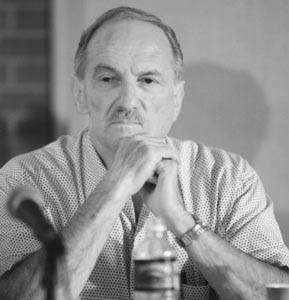
He’s got rhythm: Johnnie Johnson performs Aug. 8 at the Sonoma County Fair.

Chuck Berry sideman shines

By Greg Cahill

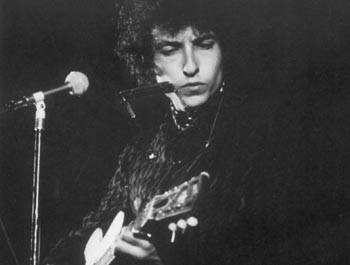
THOSE TWO have a strange thing,” says Rolling Stone guitarist Keith Richards, describing the relationship between rock legend Chuck Berry and pianoman Johnnie Johnson in a scene from the 1987 documentary Hail! Hail! Rock ‘n’ Roll. “Chuck just walked in on Johnnie’s band in a little club in East St. Louis one day and took it over, you know.”

The cadaverous-looking Richards–who served as music director for the film and butted heads with the temperamental star–goes on to slight Berry in several scenes, not for shanghaiing Johnson’s band, but for snagging a fair share of musical ideas from his sideman without giving Johnson songwriting credits.

“[Johnson] ain’t copying Chuck’s riffs on piano,” Richards mumbles. “Chuck adapted them to guitar and put those great lyrics behind them. But without somebody to give him those riffs, voila!, no song, just a lot of words on paper.”

The film helped bring Johnson to the attention of the general public, and led in 1991 to a pair of hot albums released within weeks of each other: Johnnie B. Bad (Elektra/Nonesuch) and Rockin’ Eighty-Eights (Modern Blues), which helped set the record straight once and for all that Johnson, 73, is one of the great unsung heroes of rock ‘n’ roll.

More recently, Johnson–who performs at the upcoming Sonoma County Blues Festival–can be heard on the North Bay band Rhythmtown Jive’s On the Main Stem (Globe Records), on which he performs on seven tracks.

Johnson, a West Virginia native, is a natural. He’s been playing piano since age 7, shortly after his mother bought him an old upright. “The moment the movers brought it into the house, I sat down and started playing,” he recalls, during a phone call from his St. Louis home.

From the beginning, Johnson emulated the percussive boogie-woogie and stride piano styles of Count Basie, Earl “Fatha” Hines, Duke Ellington, and others whose music was beamed into the Johnson household from nearby Pittsburgh on a late-night radio show called “Dawn Patrol.”

“I found out that I had a heck of an ear and could pick up things,” he says. “You know, go back and play the sounds that I could discern in my ear.”

In 1941, the then-teenage musician traveled to Detroit and took a job at a Ford Motor defense plant. Two years later, he joined the Marines, only to return to Detroit after the war to work at an auto plant and to play casual weekend gigs. In 1950, he migrated to Chicago, the center of the postwar blues renaissance. There he met and played with blues legends Muddy Waters, Howlin’ Wolf, Little Walter Jacobs, and Jimmy Reed, among others.

“Wherever you went in those days it was wall-to-wall people,” he says. “That’s when I really started taking a notion to play blues like this.”

Three years later, he moved to East St. Louis and took a day job with the Pennsylvania Railroad. The evenings, however, were spent performing with his own trio at local clubs. By year’s end, Johnson had met a promising young guitarist named Chuck Berry. “He was playing at a place called Hough’s Garden and I was playing at the Cosmopolitan,” Johnson explains. “I went up to check him out and kind of took a liking to the type of music he was playing because it was what I was raised up around in West Virginia–hillbilly music.”

JOHNSON HIRED Berry to fill in for his usual singer-guitarist at a New Year’s Eve party. Berry stayed on and began honing the flamboyant stage act that would one day earn him a place in the Hall of Fame. Yet, if Berry gets at least as much credit as an individual for inventing what would come to be called rock ‘n’ roll (after all, where would the genre be without those famous three-chord progressions and patented Chuck Berry riffs?), then Johnson served as midwife to the birth of the genre. Indeed, it was Johnson’s friend Muddy Waters who introduced Berry to Chess Records label chief Leonard Chess, paving the way in 1955 for Berry’s first recordings, “Maybelline” and “Wee Wee Hours.”

And it was the pianoman’s distinctive rhythmic flair that lent those early records so much vitality.

“Chuck and I get along very well,” says Johnson, who toured extensively during rock’s infancy with deejay Alan Freed’s package shows.

These days, Johnson is reluctant to criticize his old cohort for not sharing the fame or the royalties. “All of the work that Chuck did was his own,” Johnson says modestly. “All I did was help provide the music. The lyrics were strictly Chuck’s–I had nothing to do with that.”

Still, Johnson is enthusiastic about his new role as a frontman and bandleader, and it’s clear that a solo career suits him just fine. “Yeah, this is news,” he concludes with a hearty laugh. “And it’s great, except that I have to carry the responsibility now for keeping track of income taxes and all that stuff that I didn’t have to put up with as a sideman.

“I’m just hoping that these albums will help me go much further because this is all mine now.”

Johnnie Johnson performs, with members of Rhythmtown Jive, at the Sonoma County Blues Festival, on Saturday, Aug. 8, from 2 to 9 p.m. The show, which is free with admission to the Sonoma County Fair, will be held at the Redwood Theater. Also performing are Lavay Smith and her Red Hot Skillet Lickers, W. C. Clark, James Armstrong, Terry Evans, and the Michael Barclay Blues Band. Sonoma County Fairgrounds, 1350 Bennett Valley Road, Santa Rosa. Admission is $5, ages 13 to 60; $2 children, ages 7 to 12; and free, ages up to 6. For info, call 545-4200.

From the July 30-Aug. 5, 1998 issue of the Sonoma County Independent.

© Metro Publishing Inc.
Lafferty Ranch

0

No Access


Michael Amsler

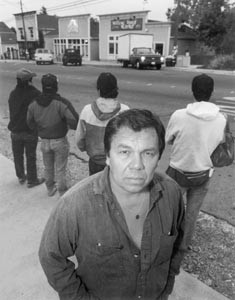
Eye on the prize: Lafferty Access Committee members Laurel Hagan, James Mobley, and Robert Ramirez at the disputed entrance to Lafferty Ranch, a city-owned parcel that remains a civic battleground.

Road to Lafferty Ranch fraught with trouble

By Paula Harris

IT WAS A MILD SUMMER evening around 8:30 as Petaluma City Councilman David Keller and his wife, Allison, negotiated their car up the steep, winding road to Lafferty Ranch last month. As an elected official, Keller planned to assess the city-owned property atop Sonoma Mountain–which the city is planning to turn into a public park–for potential fire danger, pending an environmental impact report.

He didn’t get very far.

Just after the Kellers pulled into a turnout in front of the 270-acre ridgetop property–the subject of a five-year civic battle–rancher Peter Pfendler, a Lafferty Ranch neighbor, reportedly halted his car in the middle of Sonoma Mountain Road, jumped out of the vehicle, and began demanding to know who the Kellers were and what they were doing.

Although Keller identified himself that June evening, Pfendler reportedly threatened to have the councilman’s car towed and snapped photos. He was joined by a second neighbor, and a verbal skirmish ensued.

While city officials have a right to access Lafferty, a 433-square-foot strip of land leading to the ranch is still under ownership dispute, and mountain residents are not giving in. Pfendler, who led the battle to purchase Lafferty Ranch, heads the exclusive Sonoma Mountain Conservancy, a group of mostly anonymous landowners fighting to keep the public off the mountain property. The group has hired a cadre of consultants and has threatened litigation if the public access is instituted.

These days, Keller won’t go near Lafferty Ranch. “The situation is too dangerous,” he says.

The Keller confrontation is just the latest chapter in the long, heated struggle among Sonoma Mountain landowners, city officials, and residents who have fought for public access to an area some call the city’s crown jewel. In the latest round, members of a city-appointed committee say they have developed “the least-impacted public park in the history of the world.” Conservancy members argue that public use, with all its attendant problems (real or imagined), will destroy the pristine nature to which advocates of a Lafferty Ranch park are drawn. “How can you enhance wilderness by injecting it with public access?” asked conservancy representative Keith Gurnee in a recently published report.

It all began with a controversial land-swap proposed by the wealthy Pfendler, who owns the less desirable Moon Ranch, which he wanted to exchange for Lafferty Ranch plus $1.4 million. Pfendler did receive $1.2 million for development rights to Moon Ranch, but the rest of the swap was thwarted in 1996 by voters after a divisive debate. Public opinion polls ran 3-1 against the swap, and the Petaluma City Council eventually endorsed a plan to let voters decide Lafferty’s fate. In three days, swap opponents gathered enough signatures to place the measure on the 1996 ballot. Meanwhile, swap proponents prepared two countermeasures. City and county officials later discovered that more than 2,000 signatures on the pro-swap initiatives had been forged.

City officials have spent the past two years developing a park plan, and the conservancy has become increasingly vocal in its opposition. The group has protested steadfastly that public access would create fire hazards, traffic congestion, and other problems; and a Sonoma County judge recently refused to allow limited public tours of the property that would enable people to comment on the project’s draft environmental impact report. The EIR found that such concerns as increased fire hazards, traffic, crime, and geological and wildlife disturbances could be adequately addressed through precautionary measures. But it also noted that the narrow, undulating rural road, which is owned by the county, needs major improvements because it does not adhere to national standards.

“The EIR is an inch thick,” says Hank Zucker, spokesman for the ad hoc Citizens for Lafferty committee. “The experts disproved just about all the objections, but we know we’re going to get sued regardless.”

“Safety is the biggest issue,” says Sonoma Mountain resident Anna Arntz. “The city can’t answer a number of questions. How will the park be supervised, how will it be staffed, and who is going to close the gate? The city is asking us to put a park here and it’s asking us to police it.”

She adds that the road to Lafferty is hazardous. “It’s winding and very bumpy and there’s poor visibility,” she says. A couple of years ago, Arntz had to call 911 after a car full of teenagers crashed, shearing a telephone pole and killing one boy, she notes.

“Maybe the city shouldn’t have built so many houses in the city limits and left more green in town,” Arntz muses. “Why can’t people just drive up to the Lafferty gate, see how far they can see from there, and then go home?

“Do people really have to walk the property to enjoy the view?”

Robert Ramirez of the Lafferty Access Committee, which is helping to design the park, says the public has a right to enjoy the open space and the sweeping views afforded by Lafferty Ranch. “This is an incredible piece of land. You can be above everything literally 10 minutes away from your house,” he says. “You can’t find that elsewhere without doing some driving. Up there, you can be a much calmer person in this high-anxiety lifestyle.”

Under the Lafferty access plan, the city proposes to install a parking lot, fencing, trails, and a 20,000- gallon water tank, Ramirez says. The park would be maintained by the city’s Parks and Recreation Department, and police would patrol the park regularly.

“The park would be open from dusk to dawn, and the gates would be locked at night,” Ramirez explains.

The Petaluma Planning Commis-sion could forward the issue to the City Council for a vote on Aug. 24. If the council approves the EIR, Ramirez says, the park improvements could begin immediately.

Meanwhile, residents shut out by the conservancy will have to settle for a virtual tour of Lafferty Ranch via a new website at www.laffertyranch.org, which includes photos and a history of the property.

“People can ‘walk through’ even if they can’t actually step on the land,” says Ramirez.

No doubt Sonoma Mountain landowners would like to keep it that way.

From the July 23-29, 1998 issue of the Sonoma County Independent.

© Metro Publishing Inc.
Pagan Kennedy

Punk Passion

‘The Exes’ cheats readers with a quicky tale of rock-star love

By Jessica Feinstein

WE’LL CALL ourselves the Exes,” says Lilly, one of the four voices in Pagan Kennedy’s latest novel, The Exes (Simon & Schuster; $22). “And the thing is, we will be exes–everyone in the band will have gone out with someone else in the band.”

Hank, Lilly’s ex-boyfriend who still has indention marks on his body from sleeping in her art supply- infested bed, wonders what he ever saw in her as a lover, but realizes they have a better, purer kind of connection through music. Now all they need is another ex-couple to fill in on bass and drums.

Enter bass prodigy Shazia, a “good Muslim girl” turned bisexual rock star, and her ex, Walt, a manic- depressive scientist who spends his free time hammering on the walls and working at the post office. This prefab foursome rises to local fame in Boston’s musical underground with whip-smart grungy songs about dismemberment and Band-Aids. Lilly leads the band onstage, while Hank acts as manager, evoking more and more resentment within the ranks as the Exes charm college audiences along the East Coast. Each finds love with non-bandmates, but of course there’s the inevitable sexual tension on tour and plenty of nasty in-fighting.

Kennedy has separated the story in The Exes into four parts–each character gets a long chapter to move the tale along. At some point in the chapter, its respective character gives the reason for staying close to a former lover: “At this point, we’re like family.” Unfortunately, while each voice is well crafted with details and background, they all sound relatively the same.

Hank and Lilly come first, but by the time Shazia and Walt have a go at the action, ex-couple No. 1 become less sympathetic rather than more developed. The novel leaves off without truly resolving anything about the band’s future, and for its expensive price tag, the reader doesn’t get much more than a few hours’ worth of story.

That’s not to say The Exes isn’t entertaining. Kennedy knows her subject–after all, she first rocketed to Gen-X glory by publishing her quirky but deeply hip personal ‘zine, Pagan. In Exes, she deftly captures the feel of the punk rock scene with allusions to great bands gone bad and the sights and smells of it all (the heady odor of a freshly unwrapped CD is compared to “sugar dissolved in brake fluid” and “an acid trip coming on”). Lilly’s hyperactive megalomania is amusing, and the descriptions of her dreadlocks and striped stockings summon images of every Haight Street wannabe this side of the Mississippi. Shazia proves to be by far the most interesting Ex, as she works to conceal her religious origins from the rest of the band and obscure her own intriguing reasons for not wanting to be famous. Walt gets the short shrift by having to finish up the Exes’ story; Kennedy saddles her weakest character with this task while revealing his thoughts last.

The hardest part of succeeding with a multiple-voiced book is not invalidating each version of “reality” with every new character (Russell Banks pulls this off masterfully in The Sweet Hereafter.) The Exes is certainly sexy, with all the pseudo-incestuous affairs designed to titillate cynical 20-something minds. And, c’mon, we all wish we were hip enough to be in an indie band on the brink of stardom. But while Kennedy deftly captures that mood, in the end she leaves a reader wishing she had gotten more for her money.

Book Bits

CHECK OUT the Aug. 2 interview with English playwright Tom Stoppard at 8 p.m. on “A Novel Idea,” the on-air book club at KRCB 91.1FM. Host Janine Sternlieb will also host a discussion of Stoppard’s play Arcadia. Those who find the playwright’s work challenging (or even impenetrable) can call the station at 585-6284 to obtain a reader’s guide.

Cooperfield’s Books is still booking authors for its fall events schedule, but a sneak peak at the rough draft reveals some exciting names: Gualala writer J. California Cooper will appear Sept. 29 to promote a soon-to-be released novel; former Santa Rosa resident Greg Sarris (author of Watermelon Nights) will appear Oct. 17; and farmer/poet David Mas Masumoto will appear Oct. 19. No word yet about which Copperfield’s location will host which authors. This is by no means a complete list: Copperfield’s expects the full fall schedule to be available in late August.

From the July 23-29, 1998 issue of the Sonoma County Independent.

© Metro Publishing Inc.

Talking Pictures

0

Catfight


Nancy Bennett Evelyn

Nature lover: Author Barry Lopez turns an critical eye on ‘Passion in the Desert.’

Author Barry Lopez gets passionately angry about ‘Passion in the Desert’

By David Templeton

David Templeton takes interesting people to interesting movies in his ongoing quest for the ultimate post-film conversation. This time out, he teams up with esteemed nature writer Barry Lopez to see the adventure film Passion in the Desert.

BARRY LOPEZ pushes through the swinging double doors, which close behind us with a reverberating thwap-thwap-thwap as we stand blinking in the bright light of the sunny afternoon. Glancing back in the direction of the little dark screening room we’ve just escaped, Lopez shudders perceptibly, as if to shake off the memory of the film we’ve just seen.

“I found it tremendously offensive,” he says of Passion in the Desert, an adaptation of Honoré de Balzac’s 19th-century novella about a despicable French soldier–lost in the Egyptian desert and pursued by evil, bumbling Bedouins–who develops a dysfunctional, semi-erotic bond with a female leopard. Lopez, whose award-winning work (Arctic Dreams, Of Wolves and Men) has for years offered poetic and keenly focused insights into the natural world–and humankind’s disturbing love-hate relationship with that world–has no problem with the idea of the film or, at least, the idea of Balzac’s original work. It was merely the film’s simple-minded execution of that idea–and what my guest detected as its unsettling underlying message–that has provoked his considerable moral outrage.

“Briefly,” he calmly declares, taking a seat at a nearby cafe and pulling his undoctored mug of coffee even closer, “this film was a complete adolescent fantasy, a piece of psychotic European racist rubbish.”

That’s the brief version.

But Lopez is hardly finished. In fact, throughout the next half hour, while seldom raising his baritone above the soft volume of casual conversation, this esteemed adventurer–a man who’s visited both the Moab region of Utah and the mysterious deserts of Jordan, those two very different locations that were made to stand in for Egypt in the film–repeatedly finds himself searching for the best words with which to sum up the essential baseness of Passion in the Desert.

“It’s all about white power,” he observes at one point. “It’s about the ineptitude of indigenous people, the interchangeability of landscapes–it doesn’t make a damn bit of difference whether you’re in Utah or Jordan–it’s all crap.” Later, he says, “It’s all the notion that nature is window dressing for human ideas. It’s a film made outdoors by people who live indoors and have never been outdoors in their lives.”

In reference to a scene in which the soldier, driven to jealousy by the intrusion of a frisky male leopard, weaves a rope and ties up the female, he says, “The whole thing was patently misogynist. Why in God’s name did he tie her up? I’ll tell you why. Because ‘The bitch wouldn’t do what she was told.’ I’m telling you, this stuff is at the heart of modern pornography. Some bad films you just let go of afterwards because they’re silly, but this–this thing has a component of evil in it.”

Ultimately, debating the film’s comparison to old Tarzan movies, Lopez offers, with a hint of chuckle, “Oh, I think Tarzan is a cut above this. I’d rather have seen two hours of Johnny Weissmuller,” followed by, “I just want to go home and take a shower to get this film off of my skin,” and finally, “Frankly, I was embarrassed for the animals.”

But back to the idea of the film.

What about the notion that “civilized” people, cut off from society and lost in the wild, might end up discovering a bit of ancient wildness within themselves, might be altered forever by the enormity of that experience? These are thoughts that have always intrigued human beings, including such authors as Rudyard Kipling, Jack London, Louise Erdrich, Walt Whitman, and Gretel Erlich. In Lopez’s own work, especially his stunning new collection of essays–About This Life: Journeys on the Threshold of Memory–an open-eyed and open-minded observance of the natural world always results in profound emotional transformation.

“It’s the great European longing for reunion with nature,” Lopez nods. Extending his left hand, he tightens it into a grasp, explaining, “We’re always trying to find a way to hold on to our highly technological suburban lives, and yet still–” (here he sets his right hand, palm open upward, on the table) “–and yet still stay in touch with nature. But nobody wants to say that the cause of this,” raising the left hand, “is the death of that,” raising the right. “Or at least it’s the death of segments of it.”

Above all, Lopez’s strong reaction seems based in his awareness that many of us tend to unquestioningly accept what we see on television and in films. Because most people are denied the globe-hopping close contact with nature that Lopez has been fortunate to experience, our ideas of that world are formed by secondhand means, be they accurate depictions or not.

“It’s analogous to the problem in nature photography today,” he elaborates, “in that you can no longer trust anything you see photographed in a magazine. You take an animal and photograph it at the zoo, then you take a landscape and photograph it over here, and you just glue them together–whether the animal ever lived in that landscape or whether it behaved like that, we don’t know anymore.”

Pausing again, he sips thoughtfully at his cup.

“You know, no one can figure all this stuff out for themselves–that’s why we have neighbors,” he says. “But in a country such as ours we are made to feel isolated. That’s the only way that consumerism will work–to split everybody up, and to make sure that nobody shares, either things or ideas. We’re each sitting alone in the theater, separate from one another, consuming puerile fantasy.”

“But if you have a neighbor, you can ask them what they thought, and they might say, ‘Well, you know, I’ve been to Egypt and I’m familiar with the history of ideas in France at the time Balzac was writing, and I can offer these insights.’ So in that way, everyone can pool what they know, and then turn to the charlatan and say, ‘We don’t want you in here. You can’t come in here again. You are a danger to our children.'”

“As far as Passion in the Desert goes, I’d prefer that we never have to explain this film to a child, to explain what’s wrong with it, to explain how it cheats us of nature’s true beauty. I’d prefer,” he concludes, the hint of a chuckle returning, “that it just dried up and drifted away.”

From the July 23-29, 1998 issue of the Sonoma County Independent.

© Metro Publishing Inc.

Chez Marie

0

Country Comfort

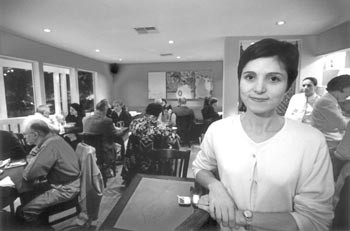
Love that country pie: Angie Lewis and Shirley Palmisano have created a festive west county restaurant with all the flair of a Mardi Gras celebration.

Chez Marie owners find the good life in Forestville

By Marina Wolf

THE AFTERNOON air on Forestville’s main drag is hazy with the last overcast day of early summer. A glance through the screen door leading to Chez Marie’s dining room reveals only a roomful of sturdy chairs and on the wall old-time photos of somber children. But a knock on the screen and a timid halloo bring forth a bustle of activity from two smiling women, who set a piece of pecan pie and a cup of coffee in front of their visitor faster than you can say “cream, please.” The pie perfumes the room with bourbon. Though alcohol in cooking usually isn’t supposed to have an intoxicating effect–“it carries the flavor,” explains Shirley Palmisano in a characteristic outburst of cooking wisdom–this humble dessert gives up a pleasantly warm buzz after the third bite.

All the better to appreciate that mysterious blend of atmosphere and cuisine–hearty Cajun and heartfelt country French–that Palmisano, and Angie Lewis, her partner of 35 years, have created for almost a decade at the simple wooden storefront wedged between a rug store and a liquor purveyor.

Palmisano and Lewis fell in love with the area after years of venturing forth from an unsatisfying urban habitat–in their case, San Francisco–for canoe trips and Christmas trees. When Palmisano’s midlife crisis/Saturn return kicked in and she decided to quit her job as a clinical lab technician, Forestville was the undisputed choice.

What the two women would do once they landed was never in doubt either. “We knew from the get-go, from the time she decided to change careers,” says Lewis, who continued putting in hours as a nurse in San Francisco hospitals until her retirement three years ago. “I said, ‘That’s fine, but you gotta go and get some education. I want you to go to school somewhere, so we know what you have and what you don’t.'”

As it turned out, Palmisano had plenty: she began teaching classes at the California Culinary Academy right after graduating from that prestigious school. She is careful not to say a word against the institution or its faculty, but that teaching gig must have felt good after 18 months of condescension and grunt-work. At one point, the academy instructors were even directing Palmisano and classmates on the finer points of peeling an onion. “The idea, you see, is to make you feel as though you’re a little apprentice back in the old country,” says Palmisano with a smirk. “That’s difficult to do to a 40-year-old woman.”

Especially a 40-year-old French-Italian-American who simmered in New Orleans cooking and culture longer than a rabbit in a stew pot. Anything less than fluent mastery of the basics of good cooking could almost be considered a genetic mutation.

“I didn’t appreciate the home that I came from,” says Palmisano between sips of good strong coffee. “The French side of my family did all the classical French, but they were little bastard dishes. Instead of it being court bouillon [a fine fish stock], I grew up knowing it as coo-bee-yong.” Her jaw swings sweet and low to accommodate the Cajun twang. “Cajuns used the same techniques as classical French, and added the fresh things that were around them.”

PALMISANO continues this tradition today, preparing almost everything on-site–bread and all–and procuring most of it from surrounding farms. The women grow crowded half-barrels of sorrel and other herbs in the smallish backyard behind the restaurant and occasionally offer some homegrown lettuce or tomatoes to lucky diners.

Even the purple and green beaded necklaces spilling over the tables for their Tuesday-through-Thursday Cajun cafe were hand-harvested by the two women over the past couple of years at New Orlean’s Mardi Gras celebration.

This gathering instinct might explain some other things, like the battery of copper pans along the ceiling and the 1,500 cookbooks that line the walls of the cozy apartment off the dining room (“I read them like novels,” Lewis admits). The two women even seem to collect customers. Chez Marie draws in a steady stream from both local folk and devoted travelers, one of whom dropped in during an SSU conference on the advice of her neighbor in Ithaca, N.Y.

OTHER THAN by word of mouth, the restaurant isn’t advertised and is rarely reviewed; the only text coming out of the kitchen is the simple menu and an occasional newsletter.

But with Palmisano the sole kitchen worker and Lewis greeting and waiting on tables, the two don’t have time to put a lot of work into outreach. They don’t need to.

“When you come through our door, Angie’s incredible,” says Palmisano. “She knows everybody.”

Lewis accepts the praise rather shyly, but answers readily when asked how things have changed for them as a couple since taking on the restaurant, which is named for their mothers May and Mary. “We’re learning new and different things,” she says as she rests her hands in her lap. “I’m learning how to not always be in control, and she’s learning how to step on me gracefully.”

“That was nicely put,” chuckles Palmisano, who is carefully forking into a piece of pie.

Lewis forges on: “We’re in different roles.”

“And we have fun,” says Palmisano. “We don’t work any more.” Then she reconsiders. “Well, no, we work our butts off sometimes, we work hard physically, but we’ve never enjoyed work as much as we do now.”

“And,” interjects Lewis into her partner’s interjection, “I get to do what I went into nursing for. It’s all about taking care of people.”

Indeed. “Ministering angel” doesn’t begin to describe the person who serves up such a pie.

Southern Pecan Pie

A splash from the bottle makes this treat something to eat slowly, with many pauses to sniff appreciatively. The only thing that could stand up better than coffee to the aromatic sweetness would be coffee with another slug of liquor.

3 eggs 1 cup light corn syrup 1 cup white sugar 1/3 cup melted unsalted butter 1 1/2 tsp. vanilla 1 tbsp. good Southern whiskey or bourbon 1/2 pound shelled pecans 9-inch deep-dish pie shell

Preheat oven to 350 degrees. In a bowl, break and lightly beat eggs. Add corn syrup, sugar, butter, vanilla, and liquor. Mix well and set aside. Place pecans in pie shell and gently pour liquid mixture over them. Bake for approximately 50 minutes.

From the July 23-29, 1998 issue of the Sonoma County Independent.

© Metro Publishing Inc.

Cat on a Hot Tin Roof

Feisty FelineMIchael AmslerSouthern discomfort: Tim Hayes and Laurie Work find that death threatens to put an end to their relationship problems in Cat on a Hot Tin Roof.'Cat on a Hot Tin Roof' slinks to success at Actors' Theatre By Daedalus HowellTHERE'S MORE than one way to skin the proverbial cat, as Actors' Theatre's production of Tennessee Williams'...

The Scoop

JFK on TapeBy Bob HarrisIS IT HISTORY, or just the world's most famous snuff film? By now you've heard that an enhanced version of Abraham Zapruder's film of the assassination of John F. Kennedy has hit video store shelves. Some folks think it's just peachy that the American public can finally study a clear copy of the film for...

Sex Books

Sexy JourneysDrive Thru America takes a bumpy, low-octane spin across this Sweet Land of Liberty.New literature hits the roadBy Patrick SullivanDON'T WORRY: You still have two precious months to make for distant horizons before summer ends and the gray skies of autumn close in over your sunburned head. If you're planning on taking off for exotic locales--Botswana or South...

Talking Pictures

Fallen IdolBy David TempletonWriter David Templeton takes interesting people to interesting movies in his ongoing quest for the ultimate post-film conversation. This time out, he stands by as Caroline Casey--Washington D.C.'s renowned author/speaker/talk-show host and "Visionary Activist Astrologer"--makes her mark on the latest big-budget appropriation of pop-cultural iconography: The Mask of Zorro.The excited and murmuring crowd begins to settle...

The Human Race

New WaveAt the wheel: Crewmen Richard Bartol (left) and Mike Burrelle help pilot a vessel with a divided crew across the stormy Pacific Ocean in The Human Race.'The Human Race' sails into Wine Country Film FestivalBy David TempletonTHE STARTING LINE was only inches away. Robert Hudson--perched on the deck of the tiny sailing vessel he was about to...

Johnnie Johnson

Unsung HeroMARC NORBERGHe's got rhythm: Johnnie Johnson performs Aug. 8 at the Sonoma County Fair.Chuck Berry sideman shinesBy Greg CahillTHOSE TWO have a strange thing," says Rolling Stone guitarist Keith Richards, describing the relationship between rock legend Chuck Berry and pianoman Johnnie Johnson in a scene from the 1987 documentary Hail! Hail! Rock 'n' Roll. "Chuck just walked in...

Lafferty Ranch

No AccessMichael AmslerEye on the prize: Lafferty Access Committee members Laurel Hagan, James Mobley, and Robert Ramirez at the disputed entrance to Lafferty Ranch, a city-owned parcel that remains a civic battleground. Road to Lafferty Ranch fraught with troubleBy Paula Harris IT WAS A MILD SUMMER evening around 8:30 as Petaluma City Councilman David Keller and his wife, Allison,...

Pagan Kennedy

Punk Passion'The Exes' cheats readers with a quicky tale of rock-star loveBy Jessica FeinsteinWE'LL CALL ourselves the Exes," says Lilly, one of the four voices in Pagan Kennedy's latest novel, The Exes (Simon & Schuster; $22). "And the thing is, we will be exes--everyone in the band will have gone out with someone else in the band."Hank, Lilly's...

Talking Pictures

CatfightNancy Bennett EvelynNature lover: Author Barry Lopez turns an critical eye on 'Passion in the Desert.'Author Barry Lopez gets passionately angry about 'Passion in the Desert'By David TempletonDavid Templeton takes interesting people to interesting movies in his ongoing quest for the ultimate post-film conversation. This time out, he teams up with esteemed nature writer Barry Lopez to see the...

Chez Marie

Country Comfort Love that country pie: Angie Lewis and Shirley Palmisano have created a festive west county restaurant with all the flair of a Mardi Gras celebration. Chez Marie owners find the good life in Forestville By Marina Wolf THE AFTERNOON air on Forestville's main drag is hazy with the last overcast day of early...
11,084FansLike
4,606FollowersFollow
6,928FollowersFollow