

Renaissance Pleasure Faire

0

Sex in the Shire

MICHAEL AMSLER


Debauchery a lost art at the Renaissance Pleasure Faire

By David Templeton

SEX, as anyone who’s attended the Renaissance Pleasure Faire over the years has no doubt concluded, was quite a happening thing during the reign of Good Queen Elizabeth. It was a time of optimism, when a freedom-loving populace was securely in touch with their libidos. The “wine, women, and song” of post-medieval England were every bit the match, evidently, of America’s post-1950s embrace for “sex, drugs, and rock ‘n’ roll!”

The legendary faire–an annual re-creation of 16th- century small-town life–is now in its 32nd and (purportedly) final year at Blackpoint Forest in Novato, and if the event has even an ounce of historical accuracy, it goes a long way toward explaining why those lusty Elizabethans were so all-fired lusty. From the colorful garb (low-cut, bosom-enhancing dresses for the women and flamboyant, strap-on penis packages known as cod-pieces for the men) to the bawdy songs of the peasants, a walk down the streets of the Renaissance Pleasure Faire is a stroll through a world of randy exhibitionists and horny Dionysian sensualists.

Or so it was, once upon a time. The faire isn’t quite like that anymore, is it? These days, it seems that the great god Dionysus has been tamed by the unsmiling lords of common sense, commerciality, and fear of litigation. The very bawdiness that gave the faire its reputation as the hottest party in town has been cropped back, censored, and tamed. Even a casual survey of faire workers–who prefer to remain anonymous– elicits a glum confirmation of the new Puritanism,

“No more sex. No more drugs,” whispers one veteran peasant. “This is now Disneyland.”

In 1979, I first entered the magical mystery of the Renaissance Pleasure Faire–working as a hawker– when it was in Southern California. I followed the faire north in 1981 to encounter a slightly mellower (not as many drunken brawls) but distinctly sexier environment. For the next 10 years I worked at the faire every summer, managing various attractions.

Remember the Merry Mire, where patrons could purchase buckets of mud to sling at foul-mouthed wenches and uncouth louts perched over a pond of muddy water? That was mine, a popular hot spot until rising insurance costs shut us down.

Many are the tales I could tell: There was the polite young woman who showed up, her therapist by her side, while I was taking my turn on the seat. She purchased a bucket of mud and called out to me, “Nothing personal, but I was abused as a child. So for the next five minutes, you’re my father.” She left a big tip. After that day I always remembered to wear an athletic cup. Then there was the time one of our hard-working “Mud Puppies” was injured during his shift, while the young lady who was on call to take the seat in such emergencies was amorously entwined in the private living quarters of the game booth next door. Hearing our shouts of “Mud Puppy down!” she discreetly disengaged herself, dressed quickly, and was ready to help within 90 seconds; successfully dodging the mud for the remainder of her shift, she soon returned to her patient partner.

Not that the faire isn’t fun anymore. It is.

But it’s hard not to become wistful while wandering down the dusty mile from the front gate to the “end of the world.” Gone are the rude double-entendres of the street hawkers, who, according to numerous faire workers, must now submit scripts in advance. All hawking must be “appropriate.” That’s a far cry from the days when rascally rogues and wenches at the ball-toss game booths would shout, “Show us how you handle your balls!”

Also verboten are the “peasant fairy rings,” in which playful actors, holding hands, surround two wide-eyed customers and recite a rhyme explaining that the couple will be released from the circle only after exchanging a kiss. Threats of sexual harassment suits have put an end to the practice. Gone also are the near-mythic “Drench-a-Wench” and “Soak-a-Bloke” games, in which customers shot a wet sponge at an array of buff and/or busty actors, receiving in return an eye-popping kiss from the target. That vanished in the ’80s, another casualty of AIDS phobia and a growing cultural intolerance toward lighthearted sexual expression.

MICHAEL AMSLER


More alarming than what is missing, however, is what has replaced it. If the early faires were an embodiment of the free-loving ’60s, the new faire is a perfect reflection of the hyper-commercialized ’90s. Customers are now met by banners proclaiming the joys of Miller Beer. ATMs are never far away, and even the street musicians are peddling their tapes and CDs.

“I take Visa, Mastercard, and Discover,” pleads one bold harpist to a small crowd of listeners.

The hay bales that were once omnipresent throughout the faire–offering a place to park oneself and watch the spectacle–have been drastically reduced in number.

“With fewer places to sit, people just keep moving,” explains another veteran faire worker. “Keep the customer moving, keep the customer spending. That’s the idea.”

I am admittedly nostalgic for the days when the faire was a sensual playground, where the smells of food and ale mingled with the heart-stopping promise of an amorous encounter. But everything changes. And not all change is bad.

“There’s new management now,” agrees one 20-year veteran street actor. “The employees get paid on time and the checks don’t bounce. We can’t complain about that.”

The faire itself, at least in its current incarnation amid the ancient oaks at Black Point Forest, will soon be buried under concrete and turf, after the long-threatened housing development and golf course construction finally begins this August. The faire will move elsewhere, taking its ATMs and corporate sponsors with it.

WALKING the streets on opening day, I take mental note of the memories attached to various sites: Over there is the tree from which a large, bearded fellow used to sell rainbow-colored shirts, offering to share a joint with anyone who stopped to chat. I stop near the corporate-sponsored Red Barrel Stage, where, rumor has it, a water truck once almost ran over a couple of lovers copulating in their sleeping bag in the middle of the road on Saturday night (the bag slid down from a nearby hill, but they were too involved to notice). The spot is now the sight of a booth offering “Final Farewell Medallions–to remember the Faire by.”

But with so many memories, who needs a medallion?

I like to think that, years from now, various workers and satisfied patrons from throughout the faire’s history will make the pilgrimage to what could by then be the ninth hole at the Renaissance Greens Golf Course. These pilgrims might bring their children along, saying, “There. Right there was the tree under which you were conceived. Right here was the place where people used to kiss strangers in public, without fear. It was called the Renaissance Pleasure Faire. It’s moved on, but for a while, it was a wonderful, lusty, unpredictable, and one-of-a-kind place.

“It sure was great while it lasted.”

From the August 6-12, 1998 issue of the Sonoma County Independent.

© Metro Publishing Inc.

Spins

0

Rock-O-Rama


NEAL PRESTON

Stray Cat strut: Brian Setzer cruises into LBC this month.


Brian Setzer Orchestra
The Dirty Boogie (Interscope)

AFTER A PROMISING debut and a sophomore slump, the Brian Setzer Orchestra cuts a serious and sizzling groove on its third release. Forget all the contrivances and prattle about America’s resurgent swing culture. One spin of this disk testifies that hardcore swing music–not to mention jump blues and retrofitted rockabilly–can still invoke timelessness over trendiness.

Setzer, former frontman for ’80s rockabilly sensation the Stray Cats, launched his big-band persona six years ago, hardly the hippest move during the grunge era. The orchestra’s self-titled debut recording in 1994 found Setzer testing the sonic waters, crooning and rocking his way through an innovative but ultimately indistinct endeavor. On Guitar Slinger, the band’s follow-up release, Setzer rocked even harder, with the results verging on uncomfortable.

But on The Dirty Boogie, Setzer achieves an epiphany that is consistent, versatile, and inspired. His red-hot guitar licks, which frequently seemed orphaned on past arrangements, now enjoy seamless integration with his 17-piece band, which swings in the Luther Burbank Center on Aug. 16. His vocals meander from rasp to warble with efficient poise. And his songwriting is simply ascendant. The Dirty Boogie blasts off with the high-octane “This Cat’s on a Hot Tin Roof,” followed by the title track, a brilliant, innuendo-riddled romp that, if written 40 years ago, would likely be considered a classic. Other standouts include Setzer’s sultry duet with No Doubt’s Gwen Stefani on a cover of “You’re the Boss” and a blistering–and entirely justified– treatment of the Stray Cats’ “Rock This Town.” Meriting special mention is “Hollywood Nocturne,” an exquisitely spectral lounge tune with Setzer’s disembodied, compression-filtered narrative evoking the essence of noir.

Ultimately, Setzer celebrates his genre without pandering to the postmodern martini crowd’s tired trump card: irony. Perhaps Setzer’s greatest retrieval from the musical past is an intrinsic aura of honesty. And on The Dirty Boogie–retro without mimicry, traditional but not derivative–he has crafted nothing less than a benchmark for the neo-swing movement.
CHRIS WEIR

The Murmurs
Blender (MCA)

THE CD IS PALE PINK checked gingham with a matching case. The two Murmurs themselves are dressed in the height of grunge chic, not quite Spice Girl, but they certainly don’t look comfortable. Six of 12 photos of the girls are chest shots, and the music is exactly what you’d expected from a glance at the CD. Sorry, simple chords reminiscent of a 1980s chick band and high, breathy vocals just don’t do it. Would anyone be touched by such profound lyrics as “You’re such a lah-dee-dah-dee / You’re such a lah-dee-dah-dee-dah” and “I’m a mess/ I’m a mess”? Nearly every refrain is full of pitiful, howling “ah-ie-ah-ie’s” or “ooh-ee-ooh-ee’s.” Yawn.
SHELLEY LAWRENCE

The Kirby Grips
The Celery Stalks at Night(Late Bloomers)

NONSENSICAL at times, this spunky girl-group delivers quirky power pop spritzed with punk, grunge, folk, and metal. Innocent little girl voices in “My Doll” sing, “Red dye number 19 in my lipstick/ Cancer mouth, don’t you wanna kiss it?” “Liar” combines some Courtney Love­styled vocals (“Hit and run for fun but don’t tell Gary”) with whisper-sweet echoes before seguing into the slow-driving line “We should buy some good wine, bread and cheese, blueberries and cream, a little coffee.” Slightly obscure bits of narrative are interjected between the songs, pulling together the kitschy theme of the album’s title. Although not overwhelmingly inspired, this fresh, breathy trio from San Francisco is peculiarly catchy.
SARAH QUELLAND

Brian Jonestown Massacre
Strung out in Heaven (TVT)

DESPITE ITS BAD-BOY reputation, the Brian Jonestown Massacre has released an album that is full of fairly innocuous Britpop by way of L.A. That’s not to disparage Strung out in Heaven; it’s just that the album’s jangly, modish melodies are hardly what one would expect from a band that lists percussionist Joel Gion’s stint working in “SF’s biggest speed and acid lab” in its press bio. Brian Jones, of course, was the Rolling Stones’ guitarist who drowned in 1969, and the influence of the early Stones is evident throughout, from the lazy, easy glamour to the shiny white-boy guitars touched with a bit of rough, sultry blues. But though the vibes and tambourines sound retro, they don’t sound dated. The Brian Jonestown Massacre makes youthquake psyche-delia sound fabulous all over again.
MICHELLE GOLDBERG

The Revenants
Artists and Whores (Epiphany!)

THIS FOURSOME from Arizona, formerly known as the Suicide Kings, delivers vintage country at its finest. Rip-roaring, toe-tapping honky-tonk tunes like “Light at the End of the Bottle,” “Flower on My Grave,” and “Even Hookers Say Good-bye” draw the listener into the lonely Western desert in ways that would make Johnny Cash proud. The Revenants’ songs beg for shooting pool and slamming back whiskey shots in the smokiest dives. With help from guitarist and former Gin Blossom Deke Taylor, vocalist Bruce Connole cries out in a delightfully nasal twang, “You and all your glamorous friends got your uptown scene/ Talking through your cigarettes you don’t even know what you mean.” All 14 tracks are cleverly written fragments of reckless lives haunted by eerie harmonies.
S.Q.

From the August 6-12, 1998 issue of the Sonoma County Independent.

© Metro Publishing Inc.
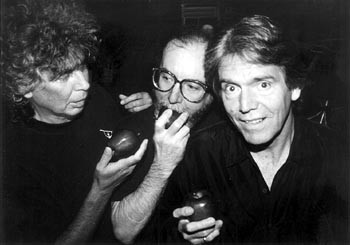
Homemade Jam

0

In a Jam

A moral tale about going too far back to basics

By Marina Wolf

THERE’S A SECRET I keep in my closet, not because I’m ashamed, but because it’s the only place to put it. There sits a monument of culinary hubris: 42 pints of homemade strawberry jam. To dispose of it properly would require a more durable toaster than mine.

And unfortunately the stuff is too thick to flush.

Before the fateful batch, I had been preserving food for a couple years with an intensity that astonished everyone, even me. I dabbled in other areas of doing-it-from-scratch, baking bread for a while from sourdough starter, and sun-drying homegrown tomatoes on homemade screens. Tattered tomes about obscure smoking equipment and long-term egg storage lined the bookshelf and cluttered the kitchen. But canning was where it was at.

Visitors boggled at the sight of 30 quarts of applesauce sitting solidly on the floor of the linen closet, and were gratefully astonished by my regular gifts of food (I had run out of room in the kitchen cupboards). When asked, which was frequently, I said canning was fun, that we knew where our food came from, that I was getting back in touch with old foodways that were in danger of dying out. The truth was less pretty:

I was berserk.

A summer kitchen, made swamp-hot by a violently boiling vat of water, was almost a magnetic force to me. I scanned newspapers and visitor brochures for harvest festivals, and spent hours with pencil and paper, calculating pounds of produce per quart of finished product. At one point I was even designing a new shelving system to bear the weight of the abundant harvest.

This passion turned out to be a lonely one. Sales clerks were invariably surprised by a 20-something woman with a lip ring asking for jar clamps and half-pint jars, and the aisle to the canning supplies was always a long and dusty one, populated by a few joyless matrons getting ready for another season of string beans. Friends called me Martha Stewart–the implication being to get a life–even as they scooped out yet another spoonful of green tomato pickles that went so well with curried chickpeas. Regular fixes from the rec.food.preserving newsgroup kept me from feeling too irredeemably old-fashioned; there cutting-edge urban anarchists posted side by side with blue-ribbon jellymakers from Wisconsin. But a few times I still had to turn to my mother for advice.

Oh, shame of shames!

All jibes to the contrary, I was never a Martha Stewart. That paragon of personal planning did her work for entertainment or showing off, or at least to get the viewing audience to buy the book. My motives only seemed more sensible: I was stocking up. Fueled by deeply ingrained memories of the self-sufficient Mormon ideals of my childhood and a 14-month stay in an Eastern European country, I craved reassurance that we would always be fed, even if the diet would be rather strange: apple pie filling, pickled garlic, stewed tomatoes.

But jam? Why stock up on a product that has less nutritional value than an equal weight of Spam? The last foodstuff we’ll need when the bomb drops is something that has to be washed down.

It’s right out of a “got milk” commercial, for chrissakes.

THE APPEAL back then of making my own jam remains a mystery, something about jam prices and the saccharine sludge that comes out of Smuckers jars. I could do better, I thought, and drove out the very next day to a u-pick farm near Santa Cruz. Five minutes into the row, my hands clicked into berry overdrive, stripping the bushes methodically, twisting and dropping the berries carefully into the bucket. My less experienced girlfriend moved more slowly, the bend in her back saying, “Are we there yet?” as plainly as a 7-year-old in the back seat. Not yet, not yet … OK, 80 pounds was enough.

(For those who are preserving impaired, 80 pounds of strawberries is, like, 320 strawberry shortcakes. Put that on your plate and eat it.)

Back home the flats stood in a triumphant tower on the front porch, while the capacious gas range soon grew crowded with a speckled enamel vat of simmering water, a smaller kettle of bubbling jam. We hulled and chopped and stirred and poured as fast as we could–miraculously, no jars exploded–and by 2 a.m. we were able to go to sleep with the plink-plink of the sealing lids ringing in our ears.

The kitchen next morning was a landscape of scorched sugar and rotting berry stems that hadn’t made it out to the compost heap (all right, there’s a bit of Martha in me). I slid a toasted slice of crusty homemade bread out of the toaster, buttered it lavishly, and carefully opened one of the few jars that hadn’t sealed. The moment of truth had arrived.

Ah, glorious self-reliance!

THE KNIFE slid easily into the jam, but the wanly red paste that emerged stiffly on the blade of the knife resembled pink grout more than any kind of home-crafted fruit spread. Any fruit that survived the pectinized cauldron on top of the stove had been finished off with 25 minutes in the mandated boiling water bath (scared of botulism, I had added another 10 minutes to the time).

I spread the jam with some difficulty on the waiting piece of toast and bit in, hoping for redemption in the flavor department, at least. Alas, what pectin had done for the texture, sugar had done to the taste. The bland sticky paste bore as much resemblance to those aromatic fruits of the field as a squirt-can of Cheez-Whiz does to a good hunk of Cheddar.

A couple of years have passed since that humbling bite, which appears to have cured me of my compulsive canning behavior. Oh, I still linger over the jewel-like pages of those gifts-from-the-kitchen books, and even threw some Bing cherries in brandy last month with the idea of giving it to friends come the holidays. But the darkening jars of ersatz jam, reproachful as the picture of Dorian Gray, stand as grim sentinels in my closet.

There’s no more room, they say. Just buy it one damn jar at a time.

From the August 6-12, 1998 issue of the Sonoma County Independent.

© Metro Publishing Inc.
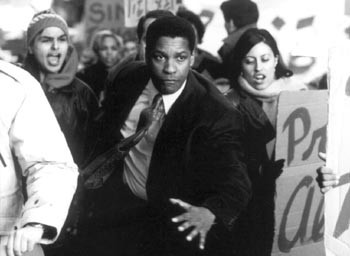
The Scoop

War Story

Saving Private Ryan–For what?

By Bob Harris

Warning: If you haven’t seen Saving Private Ryan, this column has more spoilers than the Grand Prix of Monaco. Read on only if (a) you’ve seen it, (b) you’re not gonna, or (c) you’ve already had so much of the damn thing ruined by the hype that you figure what the hell, there can’t be that many surprises left anyway.

THERE’S A LOT of brilliant stuff in this film. The direction and cinematography are powerful and creative, the actors are generally marvelous, and the rest of the praise you read every time you open the arts section of your local daily is deserved.

There’s a lot of annoying stuff, too. For example, the soldiers have remarkably perfect teeth for guys in the middle of a war. Apparently Omaha Beach was fluoridated. The soundtrack intrudes with John Williams’ signature Star Wars bombast often enough that you half-expect the Germans to show up wearing white Storm Trooper outfits and firing laser beams. None of this article is about any of that stuff.

It’s about the difference between what the movie (and, thanks to the suspension of disbelief, most of the audience) thinks it says about America, and what it does.

Everybody agrees: Freedom is really neat.

OK. But what’s it for, anyway? Lincoln said at Gettysburg that the point of that whole shebang was so “that this nation, under God, shall have a new birth of freedom; and that government of the people, by the people, for the people, shall not perish from the earth.” Works for me.

Freedom is what we use to make a better society. Freedom is how we exchange ideas and act on them. Freedom is how we find out what’s wrong and change it.

Freedom is not merely an end unto itself. It’s a tool. You use it or lose it. Ownership of that tool is what brave men have fought and died for. Leaving a tool unused gets the same result as not owning the tool at all.

Leaving a tool unused that men have died to protect does not honor their sacrifice.

SO, HOW does Spielberg define patriotism? How does he define a life well lived? What, in Saving Private Ryan, is freedom for? Tom Hanks’ last words before dying and getting an Oscar are said ostensibly to Matt Damon, although he’s really speaking directly to the audience. He tells our Aryan hero–and us–on behalf of all of the brave men who died:

“Earn this.”

Close-up on Damon, as Private Ryan is transformed into an old man via the best damn morph money can buy. It’s now the present day. Ryan is weeping at his captain’s grave, mumbling about how desperately he has wanted to live up to the sacrifice.

So. Taking some three hours to set up this moment, Spielberg has given himself a singular opportunity to tell us what the hell democracy and liberty are really all about. This is–clearly–a frame for the moral of the whole kaboodle.

Tell us what the sacrifice was for, Steven. Tell us how Ryan earned this. Has the old man devoted his life to fighting injustice? Has he committed himself passionately to the defense of our freedom? Has he perhaps taken Captain Tom’s place back home as a schoolteacher, and taught the next generations about the noble sacrifices made on their behalf? Has he even joined the freakin’ 4-H?

Nope.

All the guy does is wonder if he was worth it. He has no idea. In an unintended connection between scenes, the old Ryan’s hands visibly tremble as he struggles with his indecision and powerlessness.

Just like one of his mortally wounded squad mates.

Finally, Ryan asks his wife if he’s a good guy. She says yeah. His family, who could live next door to Robert Redford’s “Ordinary People,” attends respectfully. That’s it!

Whoa. You mean all those guys who gave their lives at Normandy, and Anzio, and Guadalcanal, and countless other engagements, fought and died to protect … our right to have no idea what they died for, exactly, but to be kinda glad they did? As far as we are allowed to see, this Private Ryan has done nothing since the war to earn what those men died for.

Other than sort of feel like he should do something.

The audience, two thirds of whom will not even vote in November, applauds.

Curtain.

From the August 6-12, 1998 issue of the Sonoma County Independent.

© Metro Publishing Inc.
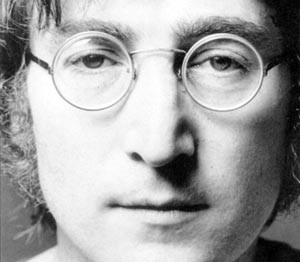
Ellen Miller

Kiss of the Needle

JERRY BAUER


Addiction gets real in ‘Like Being Killed’

By Patrick Sullivan

WHO DEPENDS more on heroin than junkies? Contemporary fiction writers, of course. The past few years have seen enough books and movies made from books about the hip thrill of hopeless addiction to make even the late William Burroughs head for a 12-step program. Just a pinch of the deadly powder seems to add instant chic, compelling pathos, a dependable slab of raw emotional flesh to cover a story that might otherwise be bare bones.

But, as more than one addict has discovered, heroin is tricky stuff. Even strong, capable writers with something interesting to say often come to grief under the kiss of that sharp needle.

So, what are we to make of the latest entry in this questionable genre, Ellen Miller’s Like Being Killed (Dutton; $23.95)? On the one hand, this tale of an intelligent but self-destructive young woman taking a nose dive into addiction contains plenty of hip nihilism, gleeful squalor, and other elements of which we’ve already had an overdose from the literary smack pack. But some powerful ideas and excellent writing are also on display here. Ambition and talent combine to make this a first novel that demands to be taken seriously.

One thing that attracts writers to heroin is that the drug packs a transgressive wallop that’s hard to beat. Heroin appears to be an utter rejection of suburban values (or is it the ultimate manifestation of rampant consumerism?). Everyone from parents to politicians is telling us (quite sensibly) not to stick that needle in our arm. So what could be more hip than giving them all the finger by turning yourself into a drug-crazed zombie?

On the surface, Like Being Killed seems determined to exploit our thirst for that chemical cool. But then comes the punch line: The author has been laughing at the reader the whole time. Smack addicts think they’re the coolest people on earth, she points out, but the truth is that, for the junkie, heroin is “unromantic, neither sacred or satanic … simply inevitable.” Miller underscores that quotidian reality with her main character.

Ilyana Meyervich describes herself as a “suicidal, strung-out, psychotic Jew under thirty.” For years she has seen heroin as a likely destination in her desperate search for oblivion. But she’s the antithesis of the big-screen smack fiend: She’s more clumsy than cool, and even after she succumbs to the white line, one friend calls her a “chunky junkie.” The plump, highly intellectual Ilyana is radically different from those Hollywood images of emaciated model types with too much eye makeup who seem to have embraced heroin as a diet aid.

You know there’s going to be trouble when this ticking time bomb becomes the roommate of the one person who might be capable of penetrating her thick shield of cynicism. Susannah Lyons is pure suburbia, raised in a loving family, happy, confident, deeply empathic. She is also a woman so straight that she doesn’t even keep caffeinated tea in the house.

“Have you, by any chance, read [Jean Paul Sartre’s] No Exit?” Ilyana asks her.

“No, it sounds scary,” replies Susannah.

But Susannah is not stupid–just sweetly naive. That innocence is both deeply appealing and profoundly appalling to Ilyana, and it doesn’t take long for tension to build, secrets to accumulate, and the situation to explode into betrayal and recrimination.

Like an addict, Like Being Killed suffers from excess. It is some 50 pages too long, and in places, seems to be simply spinning its wheels. At times, Miller’s prose labors mightily to prove just how darn clever both she and her character are: “AnnaMaria said porn with such exaggerated Brooklynite disgust that I could almost see the circumflex, weighing down the word’s terrible vocalic nucleus, in the phonetic key of AnnaMaria’s lexicon.”

But you won’t have to wade through too many such passages. The book has a compelling tale to tell, and for the most part, it is told well. Heroin is put to clever use here, both a grim reality and a perfect metaphor for fundamental human alienation.

Vivid images, fascinating characters, and graceful writing make this a powerful tale of transgression, transformation, and redemption. By the last page, Like Being Killed has wrung our assumptions inside out and left us wondering what we really know–about drugs and about life.

From the August 6-12, 1998 issue of the Sonoma County Independent.

© Metro Publishing Inc.
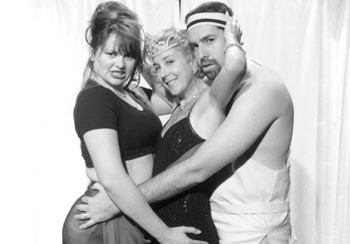
Talking Pictures

0

Scheming Toys

By David Templeton

Writer David Templeton takes interesting people to interesting movies in his ongoing quest for the ultimate post-film conversation. This time out, his planned rendezvous with Noah Hawley–author of the acclaimed novel A Conspiracy of Tall Men–runs into a few unanticipated snags. Who smells a plot?

Outside the theater, a large, stocky fellow holds a wrinkled cardboard sign, proclaiming his willingness to “work for food.” Under that Magic-Markered phrase is another: “Advertising space available; Please ask for details.”

Inside the cavernous lobby, I am surrounded by a fluttering swarm of amped-up entertainment seekers. It’s not quite noon, and this place is already packed. I glance about for author Noah Hawley, whom I am to meet here, presumably to see Disturbing Behavior, a thriller in which authority-questioning teens discover their parents’ evil plot to surgically turn them all into happy, smiling automatons.

After examining Hawley’s picture on the cover of his sensational new book, A Conspiracy of Tall Men (Harmony, 1998), I scan the faces of the crowd as they assemble into neat, obedient lines in front of the multi-windowed box office. A big digital signboard proclaims that a number of movies are already sold out: Saving Private Ryan, Something About Mary, Zorro–everything but Disturbing Behavior and Small Soldiers. The latter is a noisy fantasy about G.I. Joe-ish action toys secretly armed with high-tech military munitions chips.

I’d better get in line. Oops. Too late. “Disturbing Behavior Sold Out,” taunts the blinking sign as I arrive at the little window.

“You can still see Small Soldiers,” suggests the happy, smiling automaton behind the glass. At this point Hawley arrives. He looks even younger than he does in the picture (he’s actually 31). Quickly sizing up the situation–“Sold Out? Go figure,” he says–the author votes to go along with the toy flick.

Hawley’s been receiving a lot of attention lately. The book, his first, began generating a buzz long before publication last month. A surprisingly intelligent, refreshingly literate thriller, it breaks all the rules of the genre with its tale of Felix, a professor of conspiracy theory who is faced with a real-life conspiracy (or is it?) when his wife is killed in a plane crash–on a flight to Rio that Felix didn’t know she was planning to take. A Conspiracy of Tall Men has been optioned by actor Patrick Stewart, who plans to play the professor in the movie. Good word of mouth on the novel–it may turn out to be the best new novel of the year–has turned Hawley into an overnight celebrity, a situation he views with characteristic suspicion.

“It’s incredibly odd to wake up one morning,” he shrugs, “and realize that your name has become a commodity.”

And speaking of commodities.

“I kept thinking about the paradox of Small Soldiers,” he relates later, after the movie, as he bites into a turkey sandwich at a café down the street. “Here’s a movie about toys, a movie that satirizes mindless consumerism of violence, that was a product placement for itself, an advertisement for the toys that would be spawned by the toys the movie was about.

“This is what corporate America is now giving us,” he says. “This idea of synergy, of mixing all these different types of media together. A movie is no longer just a movie, it’s also a set of action figures, a paperback novelization, a Happy Meal.”

“An A&E biography of the filmmaker,” I add to the list. “A T.V. special on the making of the movie, broadcast by the station that is owned by the movie company that also owns the toy company.”

“Exactly,” Hawley laughs. “With tiny advertisements stuck to pieces of fruit in the grocery store.”

Not to mention the cardboard signs of homeless panhandlers.

“In the movie, the toy company truck driver talked about this a little. He had a very anti-globalization bent in him. He said, ‘Pretty soon everything is going to be one big corporation.’ I think that’s true.” He sips his water.

“It’s not just with kids’ movies either,” he observes. “There’s this whole World War II thing going on now. Saving Private Ryan–a World War II movie. Have you seen those Gap ads with the people dancing to Big Band songs? Ever wonder why Swing Dancing is so popular now? I even read somewhere that they’ve now discovered all this color footage from the second World War, that no one had ever seen before. It’s sort of amazing to me.”

“Not to be conspiratorial or anything,” he continues, “but you have to wonder what sort of meetings are going on. It all seems a bit sinister to me. It seems deliberate–and the hallmark of any good conspiracy is seeing the pattern within the chaos, right?”

At this point Hawley sounds more than a little like one of the colorful conspiracists from his book. Not so, he insists. “I became very familiar with the mindset of conspiracy theorists while writing the book,” he explains, “which I see less as a thriller than as a story about an academic grieving for his dead wife.”

Even so, he’s grown to appreciate the logic of being paranoid.

“I think this whole Earth basically operates to move money around,” he theorizes. “I really believe that. People make products, people buy products, people are products.”

“When people ask me if I’m worried about all this Apocalypse stuff, with some evil New World Order about to descend upon us, I always say, “Well, this is a world based on consumerism, right? So what good would it do to put the population in camps?’ No one could buy leisure wear, or VCRs, or go to the movies, or buy action figures.”

“As long as we continue to shop,” Noah Hawley wryly concludes, “I think maybe we’ll be okay.”

Web extra to the August 6-12, 1998 issue of the Sonoma County Independent.

© Metro Publishing Inc.
Wine Country Film Festival

0

Festival Info

THE WINE COUNTRY Film Festival screens films in Sonoma County Aug. 5 through Aug. 16 at two locations: the Sebastiani Theatre, 476 First St. E., Sonoma; and Valley of the Moon Cinema, Jack London State Park, Glen Ellen.

For more information, call the festival hotline at 935-3456.

Dozens of films from all over the world fill the big screen during the festival. So how in the world are you going to pick which ones to see?

Start by checking out these two hot picks:

Midnight Mambo
Here is a lighthearted movie about a painful truth: Sometimes, no matter how hard you try, you lose. Carlos (played by Vicente Ramos Bermudez) is a Guatemalan immigrant who has washed dishes 12 hours a day for two long years to send money back to his wife, Luisa, in Guatemala. As the film opens, Carlos is finishing his last day of work and preparing to return home to enjoy the good life his Herculean effort has made possible. But, naturally, things go awry: Fickle Luisa (Wendy Latta) has grown tired of waiting and run off to Texas with an American lover and the hard-earned money. Carlos–torn between love and outrage–goes after her, accompanied by his 20-something Anglo waiter friend Tony (Philip Marino). As a road movie, buddy flick, and exploration of racial tensions, Midnight Mambo is unabashedly ambitious. The pleasant surprise is that, despite a few rough spots,writer/director/actor Philip Marino has foiled fate to deliver a winning story. Midnight Mambo screens Thursday, Aug. 6, at 5 p.m. at the Sebastiani Theatre in Sonoma.
PATRICK SULLIVAN

Nowheresville
Slacker comedies–including Slackers and Clerks–are cynical by nature, right? Not in the hands of the writer/director team of Alex Mindt and Randall Harvey. Their engaging romantic comedy Nowheresville–which makes its world premiere at the 1998 Wine Country Film Festival–is warm and funny, tough and tender, as it explores the madness of love. The film follows Tom (Henry Lubatti), a hapless Seattle ferryboat worker who drifts in an emotional limbo while trying to summon the courage to propose marriage to his live-in girlfriend. Love triangle? You bet. Unexpected twists prevail. Forget everything you know about slacker comedies–this is a low-budget indie film with a lot of heart. Nowheresville screens Thursday, Aug. 6, at 9 p.m. (under a full moon) at Jack London State Park in Glen Ellen.
GREG CAHILL

From the July 30-Aug. 5, 1998 issue of the Sonoma County Independent.

© Metro Publishing Inc.

Tourism in Sonoma County

0

Sights Unseen


MIchael Amsler

Rollin’ on the river: Don Test, executive director of the Russian River Region Visitors Bureau, says his organization is taking a 27 percent budget cut and gambling that the countywide tourism campaign will succeed.

Local tourism industry retools for the future. Is everybody happy?

By Paula Harris

A PROPOSED PLAN to limit funding to popular tourism destinations, such as the Russian River and Sonoma Valley, and instead funnel money into promoting the entire county as a tourist hot spot, is causing worries among local tourism groups who fear a loss of money, jobs, and regional representation.

Chris Finlay, director of the Sonoma Valley Visitors Bureau, says that creating and advertising a county image could be detrimental to local offices. “We do have some concerns [about the proposal],” she says. “Regional representation is important in promoting tourism in the county. When people make their travel plans, they don’t say ‘Sonoma County’ is their destination, they have specific destinations within the county. We think in terms of Sonoma County because we live here.”

Don Test, executive director of the Russian River Region Visitors Bureau, agrees. He says that for the radical plan to be successful, areas must preserve their regional characteristics and continue to promote them. “Visitors come to the area for various experiences, such as business, wineries, recreation, hiking, or the beach,” he explains. “We have that diversity in Sonoma County and we want to retain that.”

Even so, the Russian River Region board supports the final study of the plan “in concept,” Test says, adding that the board has offered to accept a 27 percent downsizing in next year’s budget. “Sonoma County is taking an extremely big step in recognizing tourism as a major industry,” he says.

But he adds that it’s too soon to tell whether the Russian River Region Visitors Bureau, established in 1953, will continue as the same entity with the same office space and staff.

The proposed five-year Sonoma County Tourism Strategic Plan, prepared by Lance and Associates of Lafayette and Strategic Marketing Group of South Lake Tahoe, aims to “guide the future tourism efforts in Sonoma County” and squelch years of conflict between competing tourist destinations. Experts say tourism is an $800 million-a-year industry, contributing to one in every four jobs

Last year, because of infighting among several local promotional agencies, county supervisors withheld $770,000 in transient occupancy funds raised from hotel taxes and earmarked for those organizations. The new plan hinges on the creation of a new umbrella tourism agency for the entire county.

“The objective is to make the county competitive,” says county consultant Jack Lance of Lance and Associates, which took four months to come up with the new strategy, currently under review by Sonoma County supervisors.

“The first draft [of the plan] met with tremendous opposition,” recalls Finlay. “But after a lot of feedback from the community, the plan has been modified to satisfy many of those concerns.” She says regional promoters are “cautiously optimistic” about the revised plan. “But there are still many details to be worked out,” she warns. “We’re not sure how big a role we will play, or what the funding levels will be. At least we’re sure there will be a role [for regional offices]–in the initial plan there wasn’t.”

The first draft suggested that all regional bureaus be de-funded and become nonexistent. “They’ve come to realize that getting rid of the regional bureau would be throwing the baby out with the bath water,” says Jenny Carroll, president of the Russian River Region Visitors Bureau. Carroll and others from that bureau have sent a letter to the Board of Supervisors stating that the initial option of de-funding the four major visitor promotion organizations was “unwise, imprudent, and, actually, unnecessary.”

However, Sonoma County Supervisor Mike Reilly sees the plan as a fresh start for a competitive industry. “There’s a new level of cooperation in Sonoma County we haven’t seen before,” he says. “Countywide tourism efforts will be a unified approach to create a county image.”

Linda Johnson, executive director of the Sonoma County Wineries Association, agrees. “We need to do something countywide,” she says. “We’ve jumped ahead with promoting regions rather than making a countywide statement.”

Ben Stone, executive director for Sonoma County’s Economic Develop-ment Board, which will initially help oversee the new group, says the goal is to take Sonoma County into larger markets. “A coordinated effort will bring everyone forward–it will be a rising tide that lifts everybody,” he says, adding that regional diversity will be preserved and enhanced.

Regional tourism offices will maintain their funding for the next six months; then, says Stone, the focus will be to enhance the retail section in local offices and reduce local public relations and advertising in favor of a collaborative effort under a countywide umbrella organization.

“We see no major reduction in jobs,” he says. “But we do see a reallocation of resources that will bring more yield into the county.”

Santa Rosa this month agreed to give $91,000 annual funding, originally earmarked for the Sonoma County Convention and Visitors Bureau, to the nine-member Sonoma County Tourism Advisory Council that will be created by the Board of Supervisors under the new tourism plan.

Funding for the 14-year-old Sonoma County Convention and Visitors Bureau funding will be maintained for six months and then reduced, Stone says. Eventually the new group will take over the bureau.

Meanwhile, some regional representatives say their reaction to the proposed overhaul “fluctuates daily” as more details are hammered out. “Change is always difficult,” muses Carroll. “I don’t care how good it may be.”

From the July 30-Aug. 5, 1998 issue of the Sonoma County Independent.

© Metro Publishing Inc.

Wines by Mail

0

Wines by Mail

The Windsor Vineyards wines that follow are available through the winery’s catalog (800/ 333-9987) or its tasting room in Healdsburg (308-B Center St.). Prices vary based on quantity ordered. Wines are rated on a scale of one to four corks: one cork, no flaws; two corks, good; three corks, excellent; four corks, world-class.

Windsor 1995 Merlot
(Signature Series)
A medium-bodied wine with toasted oak, black olive, black cherry, geranium, and woodspice characteristics. 2.5 corks.

Windsor 1996 Carignane
(Private Reserve)
A multilayered spicy and dusty nose leading to flavors of blackberry and anise in a light, fruity style. A red wine that’s chillable. 3 corks.

Windsor 1997 Semillon
(North Coast)
Fresh hay in the nose, with pineapple, citrus, peach, and floral notes. Clean, crisp and refreshing. 3.5 corks.

Windsor 1995 Zinfandel
(Signature Series, Alexander Valley)
A big wine with luscious, jammy blackberry and raspberry fruit, alluring spice, and a deft touch of vanillin oak. 4 corks.

From the July 30-Aug. 5, 1998 issue of the Sonoma County Independent.

© Metro Publishing Inc.

Windsor Vineyards

0

Grape Express


MIchael Amsler

Special delivery: Winemaker Carol Shelton and her colleagues at Windsor Vineyards have tapped a national market.

Windsor Vineyard excels at mail-order wine

By Bob Johnson

TRUE STORY: Some years ago, a man in Los Angeles named Rhett was partaking in some inappropriate extramarital activity. He knew of Windsor Vineyards’ personalized label program, and with Valentine’s Day approaching, ordered two cases of wine–one for his wife and one for his girlfriend.

This Romeo was no prolific poet. For his wife, the labels were to read: “With all my love to Barbara. Forever and ever, Rhett.” For his girlfriend, the labels were to read: “With all my love to Jennifer. Forever and ever, Rhett.”

After the sentiments–whether sincere or not–had been duly inscribed, Romeo … er, Rhett … then completed the order form. Only one problem: He transposed the shipping addresses. Barbara got Jennifer’s bottles and Jennifer got Barbara’s.

It’s not known whether Rhett survived this faux pas, or had to leave town in a hurry, gone with the wind, as it were. You see, that was his last order on record with the winery.

Of course, Windsor Vineyards’ fulfillment folks did nothing wrong. They produced the labels and shipped the wine exactly as ordered. That is why the winery has been able to forge a near-monopoly in the mail-order wine business for some three and a half decades. Providing outstanding, accurate customer service isn’t merely a policy; it’s an obsession.

But then, it had better be. After all, Windsor isn’t merely in the highly competitive wine business; it’s also in the mail-order catalog business, a sector of retailing that is constantly under scrutiny by the public as well as government regulatory agencies.

According to the Directory of Mail Order Catalogs, Windsor mails its full-color, 32-page catalog to 850,000 people four times per year. The average order placed by Windsor catalog recipients, the directory says, amounts to $95.

That’s a healthy order size in the $290 billion catalog industry, which last year encompassed some 9,000 companies, hawking everything from non-certified organic-produced Amish cheese to antique ranges and parlor stoves, and from Old West badges to new and used accordions and concertinas. Hell, there’s even a catalog of catalogs.

Been drooling and dreaming about Armenian cracker bread? Valley Bakery in Fresno publishes a catalog on the doughy delectable. Run out of materials for your favorite elective class at school? Go-Cart Shop in Fairhaven, Mass., publishes a catalog jam-packed with basket-weaving supplies.

Close to 40 catalogs offer a wide array of home wine- and beer-making supplies, wine racks, and other wine-related accessories. Dozens of wine shops across the country–including several here in Sonoma County–publish monthly newsletters that also function as mail-order catalogs, including comprehensive lists of nearly every bottling in stock. A couple of wineries sell a good percentage of their wares through direct-mail brochures.

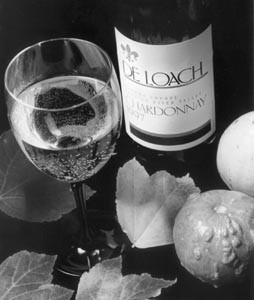
Which Windsor wine are available by mail.

But Windsor Vineyards remains the only winery to distribute its wines almost exclusively via mail-order catalogs. We say “almost” because Windsor does operate a tasting room just off the downtown square in Healdsburg. Where you won’t find Windsor bottlings is on supermarket shelves or wine-shop racks.

Windsor formerly was viewed as a broken-down Chevy on a wine freeway jammed with shiny Beamers. It made some wine of average quality and a whole lot of schlock, but its personalized labels made the wines ideal corporate and personal gifts.

Happily, in recent years, its reputation has changed for the better. At one of the Sonoma County Farmlands Group winetasting events last summer, a Windsor cabernet sauvignon stood head and shoulders above all the other cabs poured by all the other wineries in attendance. It was rich, spicy, and memorable.

Across the board, Windsor wines–especially the Private Reserve and Signature Series lines–are high-quality bottlings that no longer take a back seat to any of their Sonoma County counterparts. Winemaker Carol Shelton gets the credit for that.Even Windsor’s gift catalog, spotlighting more than 200 wine and food items, is earning rave reviews these days. In five of the last six years, it has been an American Catalog Award finalist.

So if you’re a wine lover and a catalog connoisseur, Windsor Vineyards just may be for you. One word of warning: If you use the catalog for gift giving, double check the addresses, OK?

From the July 30-Aug. 5, 1998 issue of the Sonoma County Independent.

© Metro Publishing Inc.

Renaissance Pleasure Faire

Sex in the ShireMICHAEL AMSLERDebauchery a lost art at the Renaissance Pleasure FaireBy David TempletonSEX, as anyone who's attended the Renaissance Pleasure Faire over the years has no doubt concluded, was quite a happening thing during the reign of Good Queen Elizabeth. It was a time of optimism, when a freedom-loving populace was securely in touch with their libidos....

Spins

Rock-O-Rama NEAL PRESTONStray Cat strut: Brian Setzer cruises into LBC this month.Brian Setzer OrchestraThe Dirty Boogie (Interscope)AFTER A PROMISING debut and a sophomore slump, the Brian Setzer Orchestra cuts a serious and sizzling groove on its third release. Forget all the contrivances and prattle about America's resurgent swing culture. One spin of this disk testifies that hardcore swing music--not...

Homemade Jam

In a JamA moral tale about going too far back to basicsBy Marina WolfTHERE'S A SECRET I keep in my closet, not because I'm ashamed, but because it's the only place to put it. There sits a monument of culinary hubris: 42 pints of homemade strawberry jam. To dispose of it properly would require a more durable toaster than...

The Scoop

War Story Saving Private Ryan--For what? By Bob Harris Warning: If you haven't seen Saving Private Ryan, this column has more spoilers than the Grand Prix of Monaco. Read on only if (a) you've seen it, (b) you're not gonna, or (c) you've already had so much of the damn thing ruined by...

Ellen Miller

Kiss of the NeedleJERRY BAUERAddiction gets real in 'Like Being Killed'By Patrick SullivanWHO DEPENDS more on heroin than junkies? Contemporary fiction writers, of course. The past few years have seen enough books and movies made from books about the hip thrill of hopeless addiction to make even the late William Burroughs head for a 12-step program. Just a pinch...

Talking Pictures

Scheming ToysBy David TempletonWriter David Templeton takes interesting people to interesting movies in his ongoing quest for the ultimate post-film conversation. This time out, his planned rendezvous with Noah Hawley--author of the acclaimed novel A Conspiracy of Tall Men--runs into a few unanticipated snags. Who smells a plot?Outside the theater, a large, stocky fellow holds a wrinkled cardboard...

Wine Country Film Festival

Festival InfoTHE WINE COUNTRY Film Festival screens films in Sonoma County Aug. 5 through Aug. 16 at two locations: the Sebastiani Theatre, 476 First St. E., Sonoma; and Valley of the Moon Cinema, Jack London State Park, Glen Ellen.For more information, call the festival hotline at 935-3456.Dozens of films from all over the world fill the big screen during...

Tourism in Sonoma County

Sights UnseenMIchael AmslerRollin' on the river: Don Test, executive director of the Russian River Region Visitors Bureau, says his organization is taking a 27 percent budget cut and gambling that the countywide tourism campaign will succeed.Local tourism industry retools for the future. Is everybody happy?By Paula HarrisA PROPOSED PLAN to limit funding to popular tourism destinations, such...

Wines by Mail

Wines by MailThe Windsor Vineyards wines that follow are available through the winery's catalog (800/ 333-9987) or its tasting room in Healdsburg (308-B Center St.). Prices vary based on quantity ordered. Wines are rated on a scale of one to four corks: one cork, no flaws; two corks, good; three corks, excellent; four corks, world-class.Windsor 1995 Merlot(Signature Series)A medium-bodied...

Windsor Vineyards

Grape ExpressMIchael AmslerSpecial delivery: Winemaker Carol Shelton and her colleagues at Windsor Vineyards have tapped a national market.Windsor Vineyard excels at mail-order wineBy Bob JohnsonTRUE STORY: Some years ago, a man in Los Angeles named Rhett was partaking in some inappropriate extramarital activity. He knew of Windsor Vineyards' personalized label program, and with Valentine's Day approaching, ordered two cases...
11,084FansLike
4,606FollowersFollow
6,928FollowersFollow