
Recipe

0

A Recipe from Manuel Azevedo

The original “too-much-good-stuff,” this homey pork and seafood stew is redolent with loads of garlic, a haunting spice blend (which is also great for other dishes and marinades), and the best part of our latesummer harvest–juicy ripe tomatoes and sweet bell peppers. Serve with pinot noir or Chianti, and forget what your mother and Miss Manners say about wiping your dish with bread.

1 tbsp. olive oil 1/2 cup smoked bacon, diced 2 links linguisa, diagonally sliced 1/2 inch thick 1/2 pound pork loin, cubed 1 medium yellow onion, diced 2 red bell peppers, diced 1/4 cup garlic cloves, thinly sliced 3 cups tomato juice Portuguese spice blend: 1 tsp. paprika, 1/4 tsp. powdered cumin, pinch each of nutmeg, allspice, cloves, and cinnamon 1/4 tsp. red chili flakes 2 bay leaves 2 pounds mussels, scrubbed and bearded 3 medium tomatoes, diced 1 cup white wine or fish stock Salt and pepper to taste 1/3 cup chopped cilantro

In a large sauté pan, brown bacon and linguisa in oil over medium heat. Add pork and sauté until light brown. Add onions and bell peppers and sauté for 5 minutes on low heat, stirring often. Add garlic, tomato juice, Portuguese spice blend, red chili flakes, and bay leaves, and simmer covered for 20 minutes. Layer mussels on top of stewed mixture. Sprinkle diced tomato over mussels and add white wine or stock. Bring mixture to a boil. When mussels are open, salt and pepper to taste, sprinkle with chopped cilantro, and serve. Serves six.

From the October 15-21, 1998 issue of the Sonoma County Independent.

© Metro Publishing Inc.

Local Rail Service

0

Rail Thin

Train time: In 1996, passengers inspected a self-propelled, diesel-powered Regio Sprinter like the one rail proponents would like to see offering local rail service.

How much train can you buy for $175 million? Not much.

By Janet Wells

WHEN COMMUTERS think about taking the train to work, they fantasize fast, convenient, and environmentally friendly coaches. Like Bay Area Rapid Transit. But BART, at an estimated cost of $115 million per mile, is a bit out of Sonoma County’s price range. With $175 million proposed in a pair of Nov. 3 transit-tax ballot measures to cover a 60-mile rail system, what can residents and commuters expect to get for their tax dollars?

Small and slow.

Measure B, the transportation advisory companion to the Measure C proposal to raise the county’s sales tax by 1/2 cent, doesn’t provide a detailed passenger rail plan. But the Transportation and Land Use Study that served as the basis for Measure B recommended making do by adding a bit of spit and polish to the current freight rail system: a single-track standard-gauge rail line that can handle a maximum speed of 40 mph, with 14 stations between Healdsburg and San Rafael.

Under that plan, the diesel-powered passenger rolling stock, as train cars are called, would run every half hour during peak commute hours and drop to 60-minute intervals until 10 p.m., when freight trains would get the right-of-way through the night.

“If you’re going to have commuter rail that’s really going to get people out of their cars, it has to be high-speed, comfortable, and get them from where they are to where they want to go. This system will do none of these. It takes an electric train like BART to move people,” says Richard Gaines, with the Campaign Against Wasting Millions. “I’m all for a real railroad, but I want something that’s up-to-date technology. There’s no point in putting good money after bad into a system that goes nowhere.”

Settling for a somewhat antiquated system that will likely attract a low ridership (a public opinion poll last year found that only 14 percent of rail supporters would actually use the trains) doesn’t bother proponents of the rail portion of Measure B. In fact, they consider it good business sense to start slow and build. “The beauty of it is that because we own it, we can repair it and buy rolling stock,” says Bill Kortum, board chairman of Sonoma County Conservation Action, which has endorsed both transportation measures. “It’s not like putting in an electrical system with huge up-front capital. You work your way into it.”

Dick Day, also an SCCA board member, agrees, “We’re looking at this for the long term. Rail will develop slowly. What we want is the cities to put their growth in areas close to the rail stations. It’s important that rail is available for Sonoma County residents.”

Suzanne Wilford, executive director of the Sonoma County Transportation Authority, says sources of funding for the $175 million rail system over 15 years include $20 million from ticket fares, $17 million from state transportation bond measure Prop. 116, and $138 million from increased sales tax revenues. Sonoma County also is in line to compete for additional federal funds for rail that could replace funds from sales taxes.

Overall, $92 million of the budget would be spent on upgrading tracks, signals, control systems, station platforms, communications, ticket vending machines, a maintenance facility, sidings, communications, and 25 diesel-electric rail cars. Those cars would likely be akin to a European-style Diesel Light-Rail Vehicle, which has diesel engines generating electrical power.

The $5.5 million annual operating costs, which include train operators, fuel, maintenance, sales, fare collections, insurance, and administration, deplete the remainder of the $175 million proposed budget over 15 years.

BUT CRITICS SAY that’s simply not enough to construct an efficient rail system that will lure drivers off of the freeway. A report released this week by the Environmental Defense Fund–an organization that boasts 1,200 members locally and opposes the transit tax measures–concludes that the rail line and proposed freeway improvements will fail to curb traffic congestion and sprawl. The report, prepared by EDF transportation program manager Michael Cameron, points out that the transit plan fails to list detailed capital or the operating plan for the proposed rail system. “The information that is available ignores altogether, or seriously underestimates, several costs,” the report notes. “For example, the plan does not account for a southern storage yard for rail cars, yet most functioning rail systems need storage capacity at both ends of the line.

“Additionally,” the report continues, “to operate trains at the frequency proposed, the rail system would need an automated control system to manage trains traveling in opposite directions on a single track to prevent them from colliding, yet the proposed rail funding falls $27 million to $40 million short of the full cost of this system.”

In the final report of the three-part series, scheduled for release Oct. 27, EDF will contend that any rail plan in Sonoma County would face considerable obstacles to success.

Still, part of EDF’s complaint is that the existing plan fails to state precise financial details that should be ascertained before the public commits to such a lofty project. “It makes no sense to make a down payment on a rail system if the rest of the financial needs have not been thought through and if there is no clear source of matching funds,” the report concludes. “The county simply cannot afford to gamble 20 years of transit funds on a system that has not been carefully designed and which has not been demonstrated to have a credible chance of successfully attracting riders.

“Other counties in California, notably in Los Angeles, have pursued similar strategies only to see total transit ridership decline even though total investments in transit more than doubled.”

In a recent interview, Cameron estimated that the rail project will experience major cost overruns that will lead either to a decision by county officials to issue pricey bonds or to drop parts of plan altogether.

Supporters of the rail system most often point to the South Bay when describing a passenger train service that is desirable, though that rail system is yet to be tested.

Sonoma County’s proposed rail system is comparable to the Stockton-San Jose line scheduled to start Oct. 19, says Arthur Lloyd, a board member of CalTrain (a commuter rail service on the Peninsula) and a retired Amtrak director. The line was going to have two trains in each direction daily, with a capacity of 3,200 passengers, but orders for more trains have been made before the trains have even started rolling.

“They went out to sell passes in advance and they are already oversold,” says Lloyd, a San Mateo County resident. “They started modestly and it’s just gone ape.”

“Incremental is the best way to start,” Lloyd adds. “I am absolutely horrified that some people say you can’t run a commute line on a single track. That’s what everyone starts with. Nobody will ride it? That’s pure unadulterated what-will-make-your-lawns-turn-green.” Lloyd throws in the caveat that the key to Sonoma County rail success may be convenient links with San Francisco, and even under the best scenario links from Santa Rosa to Larkspur are a long way down the line.

“[Rail planners] should talk about Larkspur if they have any brains,” he says. “The real market is San Francisco, and the best way to serve it is the ferry.”

Even if Measure B wins at the ballot box, rail advocates will face an uphill battle getting the passenger rail system implemented anytime soon. Sonoma County Conservation Action, which joined a coalition of business leaders and public officials to push the transit tax, is insisting that the rail system be given a priority. SCCA made significant concessions in its support of the sales tax measures, since thousands of tons of gravel for the extra freeway lanes will come from the Russian River, where gravel mining already has depleted the riverbed. It made that concession in the frim belief that Measures B and C offer the last chance for construction of a rail line in the county.

But the business community, which agreed to inclusion of the rail line, wants the extra freeway lanes built first. In the end, transit tax opponents say, the freeway expansion, with its predicted cost overruns, will use up a lion’s share of the sales tax funds, leaving the railway underfunded and too impractical ever to attract a signiicant share of riders.

Under the currently planned pay-as-you-go sales tax option, EDF estimates, the train won’t be on line until 2010.

Editor Greg Cahill contributed to this article.

From the October 15-21, 1998 issue of the Sonoma County Independent.

© Metro Publishing Inc.

The Turn of the Screw

0

Fright Night

Turn of the Screw.

Michael Amsler


‘Turn of the Screw’ delivers campy chills

By Daedalus Howell

REMEMBER that kid in sixth grade who thought he had devised the perfect visual pun when he showed you a cylindrical rod incised with helical threads and asked, “You wanna screw?” That kid now writes theater criticism and cannot forgo the sundry puns and innuendo lurking in the title of Main Street Theatre’s Halloween production, The Turn of the Screw (a gaunt retelling of the Henry James story by playwright Jeffrey Hatcher). Simply put, audiences are advised to “go get screwed.” You’ll like it.

A heap of gothic ballyhoo prime for Halloween consumption, The Turn of the Screw depicts a 19th-century governess (deftly portrayed by Jennifer King) embarking on her first gig at–where else?–a haunted manor. In her charge are the recently orphaned Flora and Miles, two troubled kids who are both apparently receiving tutelage in the black arts from the specters of two deceased domestics.

The new governess fixates on uncovering the manor’s back-story, which chiefly concerns the amorous foibles of a dead valet and the governess’ drowned predecessor. The spirits of these doomed lovers seem dead-set on evicting the children’s souls so that they may inhabit their bodies–a plan the new governess is determined to thwart.

Director Diane Bailey invigorates Hatcher’s bland script by investing the production with an interesting self-consciousness. The players fool subtly with the work’s tendency toward overt melodrama without undermining what is a genuinely freaky work. Campy asides are adeptly interjected throughout (most sound effects are comically produced by an offstage actor, and strobe-lighting abounds), which lightens what might otherwise be a brooding production. Hatcher’s script is the real ghost here, a pale shadow of James’ original work that relies too much on anecdotes, as characters recount events instead of enacting them. So be it. The two-person cast still succeeds in making it creepy.

King’s governess is joined onstage by Scott Phillips, who undertakes the schizoid task of portraying the play’s remaining characters, including a weirdo uncle, a nattering housekeeper, and the demon-child Miles.

Phillips particularly shines in his portrayal of young Miles. It’s no easy task for a grown man to play a little boy, but Phillips is convincing as he prances about the stage, flinging dollops of irreverence at the audience from his silver spoon.

King portrays the governess’ innumerable flights into hysteria with chilling mastery. Her frenzies increase naturally until she’s completely unhinged and flooding the stage with convulsing sobs. Her palpable fear inspires vicarious feeling. This is what makes the show scary: not the ragged thews of Hatcher’s plot, but the contagious horror transmitted by the players.

Beware: The Turn of the Screw will go home with you and weave itself into the fabric of your dreams, inspiring nightmares. To quell these nasty aftereffects, it is suggested audiences take some medicinal spirits. You might try some vodka and orange juice.

Main Street Theatre’s The Turn of the Screw plays through Oct. 31 at 104 Main St., Sebastopol. Thursdays-Saturdays at 8 p.m.; Sunday, Oct. 18, at 2 p.m., and Sunday, Oct. 25, at 7 p.m. Tickets are $12. 823-0177.

From the October 15-21, 1998 issue of the Sonoma County Independent.

© Metro Publishing Inc.

Chef Manuel Azevedo

0

Pot Pluck

Michael Amsler


LaSalette chef relies on roots

By Marina Wolf

HE NAMED his restaurant after his mother, but when Manuel Azevedo is pressed to name a specific food memory, his father’s fall-back favorite comes to mind. “This summer we had smelt, and I was trying to think of what would be a good use for them,” recalls Azevedo, the chef/owner of LaSalette in Sonoma. “Ding! I remembered my dad always used to do this dish. It’s almost something you forget because he ate it all the time. But it makes perfect sense. You lay out the nice black-eyed peas and put the freshly sautéed fish over them, a little drizzle of olive oil and handmade vinegar, and you slice up an onion really thin. It all clicked together, and it was a beautiful dish.”

He pauses and thinks. “But there’s a lot I go back to that my mom did,” he adds dutifully.

If Azevedo has a hard time picking out a single moment of culinary influence, it’s only because he’s been steeping in it from birth. Born in the Azores, Azevedo and family came to Sonoma from Portugal when he was 2 years old. His parents still live nearby and drop in regularly to keep an eye on what their son is doing with the Old World recipes. His mom even teases him by bringing over dishes that Azevedo hasn’t been able to figure out yet. “She kind of likes the fact that I’m some big-time chef, or trying to be, and she’s still got some little secrets,” he says.

But the soft-spoken 32-year-old brings to his restaurant work some traits that are peculiarly American, peculiarly his own.

That whole self-made-man thing, for example. After his first few jobs in restaurants (his very first, in fact, was a barbecue place that was once housed in the compact little building that is now LaSalette), Azevedo broke out into a series of typical early-20s jobs that culminated in his own auto detailing business.

But then, at age 27, Azevedo was given what he calls the “get-a-grip speech” by his fiancée, and he decided he’d rather spend his life cooking than doing anything else. His return to the restaurant biz was anything but triumphant: He had to start all over as a bus boy at the Kenwood Restaurant. Over the course of five years, he worked his way up to sous-chef, all while holding second jobs in catering. And studying. On his own.

Azevedo accumulated a library of cookbooks, and ate out as often as possible to get a sense of presentation and flavor from the other side of the stove. Four years into his autodidactic adventure, Azevedo almost purchased his own place. But the deal fell through, for which he has been appreciative ever since. “Having an extra year to put everything together made all the difference in the world,” he explains.

Azevedo’s travels added the final finish to his restaurant’s concept. He’s been all over the world, with most of his destinations either in Portugal proper or in one of its former colonies, not looking for specific ingredients, but for a feeling: What motivates the creators of dishes from certain regions? What are those people like?

“I’m looking to get the subconscious experience of dining and bringing it here,” he adds.

BY WAY of illustration, Azevedo points at two polar opposites on his menu: stuffed squid and cataplana. Stuffed squid, he says, is a typical dish from the Portuguese capitol, Lisbon; therefore it gets the sophisticated treatment: delicate garnish, small portions, china plate. Cataplana, on the other hand, is from a coastal region of southern Portugal, and feels much more relaxed in presentation. The fragrant tomato, meat, and mussel stew gets served to the table in its pan, with some slices of bread stuck on the side to soak in the juices. “It reminds people that this is peasant food, it’s just something thrown together in a pot,” he explains, “You let it cook and you put bread in it and you eat it. …

“Even the name ca-ta-plan-a“–Azevedo’s voice shifts momentarily into explosive, liquid Portuguese–“sounds like fun.”

Recipe for Cataplana à Algarvia.

Fun, yes. Frivolous, no. Azevedo has put a lot of research into his food. His readings are what led him to include more than continental food on the menu. “I wanted to incorporate former colonies into it, because it reminds people that Portuguese food is not just what you see in Portugal. Sometimes you have to search for it a little, because through time some of it’s been lost.

“But if you understand the depth of Portuguese history, then it ties in perfectly.”

AZEVEDO’S historical approach to food fits right in with his close cultural ties, and he has no qualms about claiming the cataplana, a more rustic dish, as representative of his heritage. “Definitely my family is more cataplana,” he says. “A good analogy might be, my wife’s from North Dakota–I don’t know if you want to mention this, it might get a lot of North Dakotans pissed off–well, the islands are like that. We’re considered the boonies, which we are, we’re out in the middle of nowhere, for crying out loud. So we’re very limited in a lot of things, technology, ingredients for food,” Azevedo says.

“The cuisine I grew up with was very simple, even simpler than anything you’d find on the mainland. So I grew up with that meat-and-potatoes kind of eating, everything in a big pot. I don’t think I’d have had a successful restaurant doing just the meat and potatoes, though. It would be like opening a North Dakota restaurant.”

From the October 15-21, 1998 issue of the Sonoma County Independent.

© Metro Publishing Inc.
Spins

0

Retro Grade

Robert Ascroft


New CDs showcase classic rock, bluegrass

Monster Magnet
Powertrip
(A&M)

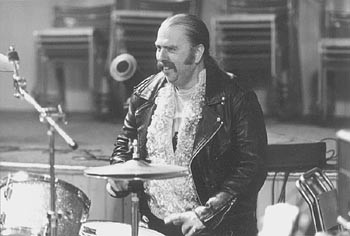
MONSTER MAGNET has a simple idea: mix chicks, hot rods, revolution, and hell. What makes their slice of heavy metal special is that it’s retro as an act of defiance; they grandstand arena-rock values as if to stomp post-rock’s nondescript reductionism into ashes. They aim for the sound of pre-metal forefathers like Steppenwolf, the MC5, and Iron Butterfly; so as classic-rock revivalism, Powertrip is all Judas Priest and no Journey–that is, all gnarly biker anthems and no fake ballads. Monster Magnet seizes and squeezes metal’s time-honored male hyperbole, and while there’s a forest of comical god-myth obsession in lines like “I started humping volcanoes, baby, when I was too young,” there’s also the working-class grounding of lines like “I’ve paid all the goddamn dues that I wanna pay.” So crank the guitar solos up to 11 and march on to Valhalla!

KARL BYRN

Steppenwolf
Steppenwolf
(ABC Dunhill/Mobile Fidelity)

IT’S BEEN 30 years since the debut of this influential disc, which spawned the hit “Born to Be Wild” (which in turn spawned the term “heavy metal”), the anthemic anti-drug song “The Pusher,” and a handful of damned-fine bluesy biker-rock songs and white-eyed soul tunes laced with West Coast psychedelia and plenty of bad-boy attitude. (And there’re a couple of genuine clunkers to boot.) This time around, Steppenwolf’s debut album gets the 24k audiophile treatment from Sebastopol-based Mobile Fidelity. A bona fide classic rock album just got a whole lot better.

GREG CAHILL

Hank Williams Jr.
Your Cheatin’ Heart
(Rhino)

THROUGHOUT his career, Hank Williams Jr., has paid homage to his late, great father, country legend Hank Williams. In 1965, as a teen, he recorded this soundtrack of Hank’s hits to a biopic that starred (gulp!) the eternally tanned George Hamilton as his troubled dad. All in all, not a bad effort, though very rough in places. This new reissue, from Turner Classic Movies Music, adds 11 acoustic versions. Not essential, but a nifty curiosity.

G.C.

Doc & Merle Watson
Home Sweet Home
(Sugar Hill)

THANK GOD nobody turned this project over to Daniel Lanois or any other producer who would have left an indelible mark. It’s hard to believe that the late Merle Watson (killed in a tragic tractor accident a few years back) was just a kid and had been playing bluegrass banjo only five months when he and his famous flat-pickin’ guitarist dad, Doc Watson, laid down these tracks. But these duet recordings lay fallow for 30 years until bassist T. Michael Coleman called up Doc and asked if he’d like to overdub some new tracks onto that master tape featuring the next generation of pickers–Coleman, fiddler and mandolinist Sam Bush, mandolinist (and country star) Marty Stuart, and vocalist Alan O’Bryant on harmonies. The result is one helluva ghost band that brings Merle back to the front porch for some of the jaw-droppin’ bluegrass breakdowns. Simplicity and an unpretentious honesty come through the mix. What a tribute to a fallen backwoods hero. Highly recommended.

G.C.

Joshua Redman
Timeless Tales (for Changing Times)
(Warner Bros.)

IN RECENT YEARS, everyone from the Art Ensemble of Chicago to Herbie Hancock has been searching for a new set of jazz standards. Bay Area saxophonist Joshua Redman, 29, slips easily into this set of classic pop, R&B, and folk-rock songs, ranging from the Beatles (“Eleanor Rigby”) to Bob Dylan (“The Times They Are A-Changin'”) to Stevie Wonder (“Yesterdays”). The result is smooth yet remarkably satisfying, featuring strong improvisational solos–organic and fluid–that reveal a maturing player who continues to show great promise.

G.C.

From the October 8-14, 1998 issue of the Sonoma County Independent.

© Metro Publishing Inc.
The Scoop

Full-Metal Racket

By Bob Harris

Someday soon, your MedicAlert bracelet may itself be hazardous to your health. You’re probably already familiar with the disposal problems of nuclear waste. There’s not much you can do with it, other than bury it, burn it, or maybe someday launch it into space, each of which poses different serious hazards.

And there’s an enormous amount of this stuff. The Department of Energy’s database reportedly includes over a million tons of stockpiled radioactive metals like nickel, copper, and aluminum.

Some of which is actually reusable. When the radiation is only at the surface, it’s pretty much almost possible to chemically scrub the hot spots off.

However, when the radiation goes deep into the metal, there’s no way to clean that out. But the metal companies see gold in all the metal that right now they can’t use. So they’re pushing for–and the Department of Energy is actually supporting–a new, relaxed standard for how much radiation is OK in a batch of metal.

As this month’s issue of The Progressive reports, the new public exposure standard they want is 10 millirems a year. What that means in terms of physics takes a while to explain, but what it means in human terms is simple.

The Nuclear Regulatory Commission has already done a study on the effects of a 10-millirem standard–and come up with figures representing almost 100,000 additional cancer deaths per year. That’s a million dead Americans every decade, just so some smelting barons can make a fortune.

If the new level becomes standard, apparently there will be no way of knowing, short of a Geiger counter, what metal in your life is radioactive–that includes the change in your pocket, the silverware in a restaurant, and even your zipper.

Y’know, I would think the administration would put a stop to this. They’ve already got enough problems with hot zippers.


Are you now, or have you ever been, a member of an enjoyable party? In the wake of this whole Fornigate thing, a person’s sexual past and future are now actually treated like a legitimate campaign issue. As if fooling around is any way to choose a leader: FDR and Thomas Jefferson had lovers, and Ben Franklin had entire harems, but Bonnie and Clyde were monogamous, so apparently the Barker gang was most qualified to lead America.

Y’know, the word congress itself is a synonym for sexual relations, which means that every time anyone ever uses the phrase “candidates for Congress” I always think of people cruising a singles joint for their next big score. The only difference being that, unlike our representatives, the folks in a nightclub at least paid their own way in.

Anyway, Republican Gary Muller in Indiana last week actually started making a big fuss over himself because he went out and signed a Fidelity Oath, swearing that he has never cheated on his wife, seduced an intern, or had a fling with a gay guy.

Well, bully for him.

Although you notice he left out houseplants and hamsters. Look, I’m not saying anything here, but maybe there ought to be an investigation …

And so this candidate for one kind of Congress–whose main qualification seems to be that he isn’t a candidate for the other kind of congress– is daring his opponent to sign a similar oath. It’s nothing less than a sexual version of 1950s redbaiting.

Call it Jenny McCarthyism.

So is this really where things are now–that upholding your zipper is actually more important than upholding the Constitution?

Is this the pledge every married guy seeking office will soon be forced to take?

I pledge allegiance to the bag
I won’t try and escape, it’s imperative
Cause she will go public, the witch is bad
And warn the nation
Of my Bod
I’ll be miserable
But she’ll deliver me busted
before all.

From the October 8-14, 1998 issue of the Sonoma County Independent.

© Metro Publishing Inc.
Mexican Immigrants

Border Line


Art by Eduardo Tenedu and Ray Patlan

The art of living: A mural near the tank farm at the Gundlach-Bundshu Winery in Sonoma honors the labor of Mexican farmworkers, and helps maintain a sense of culture and self.


The high cost of becoming a gringo

By Richard Rodriguez

Maybe we need to put a sign at the border: Warning–America May be Dangerous to Your Health. It has never been easy to be an immigrant. Imagine those 19th-century immigrants, leaving certainty behind, abandoning Ireland and Italy and Russia, to travel to America. What bravery, what recklessness the journey to Ellis Island required. And what a price there was to pay for leaving certain poverty.

A new study, headed by Professor William Vega of UC Berkeley, has found that Mexican immigrants suffer increased mental stress the longer they stay in this country. Rates of mental illness and social disorders, like drug use and divorce, rise after immigration. Within a generation, Vega’s researchers saw the breakdown of immigrant families, on a scale comparable to that of other Americans.

These findings are, at least, ironic. For generations, Americans have assumed moral superiority toward Latin America–for example, citizens of San Diego once traveled south into Tijuana whenever they wanted to sin. Today, Americans like to imagine Mexican drug lords contaminating our “innocent” youth.

Immigrants. I see them all the time in California, their eyes filled with terror and wonder. Their jogging shoes have transported them from villages in Mexico or Central America into the postmodern city of freeways and peroxide and neon. How will they find their way?

Vega and his team of researchers studied the problems of Mexican immigrants in Fresno County, but would, I suspect, have come up with similar findings had they talked with young Mexicans in Tijuana. The poor are in movement, all over the world, from village to city, from tradition toward change.

Recently, in the boomtown of Monterrey, Mexico, I met teenagers, poor alongside rich, busy consuming drugs. Cocaine was evidence of their modernity, a habit that made them just like the Americans on TV and the movies.

Monterrey has not yet turned as violent as Mexico City, but the women in the new factories, on the outskirts of town, know divorce.

All over the world, from Andean villages to Southeast Asia, America advertises the “I.” You can drink America from a Coke bottle; you can dance America. America is seducing the young all over the world with the idea of individual freedom. Change. Movement. Dollars.

Between Tijuana and San Diego tonight, you can meet kids waiting for dark to run into the United States. They say they do not want to become Americans. They do not speak of Thomas Jefferson or the Bill of Rights. There is, they say, a job waiting for them in Glendale or Fresno. A job in a pizza parlor or a job as a roofer that will keep them and their families from going hungry.

The U.S. professors fret. The panelists for the National Research Council advise against attempts “to push immigrant youth toward assimilation.” But they might as well bemoan the jet engine or the bicycle.

Movement. America is not an easy country for the native-born or the immigrant. Everything keeps changing. In small towns in Arkansas, Mexican immigrants pluck dead chickens because no one else will do it. They paint their houses gaudy colors, speak Spanish at the post office. Native-born Americans bemoan the change. They become foreigners in their own town.

The kid from Oaxaca ends up making pizzas in Santa Monica. He learns English by hearing “Hold the pepperoni!” Day after day, he breathes America. America goes into his ears–California slang, the thump of rap. There is no resisting it.

Assimilation is more a biological process than a matter of choice. When you approach the counter at McDonald’s, you buy more than a burger–you buy an American spirit of impatience. Immigrants end up walking like the native-born, assuming the same nervous slouch.

Drugs. Divorce. Anonymity. The religions of the world that are growing are those that address the sadness of the migrating poor and their longing for the lost village.

Immigrants chose to leave Mexico, so they imagine their American-born kids can choose to absent themselves from Los Angeles, “remain” Mexican despite the heaving and throbbing city around them. Papa grumbles that the kids are becoming disrespectful U.S. teenagers. Mama says everyone was happier–poorer, yes, but happier–in the Mexican village.

America is a most remarkable country, the model of modernity. It offers people all over the world the possibility of individual life–the freeway on-ramp, the separate bedroom, the terrible loneliness, the range of choices on a TV remote.

The Mexican kid from Oaxaca will not go back. His dollars and maybe something more he cannot describe will keep him making pizzas in Santa Monica. Yes, he will regret the disrespect of his American children. Perhaps he will even send them back to Mexico, during–that most American of seasons–adolescence.

But the village of Mexico is not what it used to be. There are blond soap operas blaring from the television in the kitchen. And everyone in the village talks of jobs in Dallas and Guadalajara.

The guilt. The terrible guilt of becoming an American remains. Every child of immigrant parents knows it. It is as old as America. The scorn of a grandmother–her black dress and her face at the window. Her mutterings in Yiddish or Chinese or Swedish. You are turning into a gringo, a goy, a stranger to her.

Dear Nana. Forgive us! Forgive us our love of America, this very strange country, the envy of the world. Look! Look at the fresh fruits at Ralph’s Market. The meats and the cheeses, dear abuelita. Forgive us for taking the 18th-century pronoun, the “I,” all the way to Fresno. It has driven us mad. But it has gotten us a washer and dryer.

It has made your grandchildren so tall and so straight, like movie stars. Look! Who would have guessed, dear Nana, you would have grandchildren so beautiful!

Pacifica News Service editor Richard Rodriguez, author of Hunger of Memory, writes on culture for Harper’s, the Los Angeles Times, and the News Hour with Jim Lehrer.

From the October 8-14, 1998 issue of the Sonoma County Independent.

© Metro Publishing Inc.
SoFo2 Gallery

0

Tropical Turmoil


Big sound: Orquesta La Moderna Tradición brings its dance sounds to New College Oct. 11 as part of SoFo2’s “Beyond Barriers” exhibit of Cuban art.

SoFo2 breaks barriers with new Cuban art exhibit

By Patrick Sullivan

ART, LIKE LOVE, conquers all. It skips lightly over national borders, bridging the gaping holes in cultural understanding left by mere verbal communication. Indeed, as an international language, art seems to have almost cornered the market: How many more people around the globe recognize a Van Gogh or a Warhol than speak one word of Esperanto? Art just might be our only global cultural currency.

Or so we like to think. But the course of art doesn’t always run so smoothly. What happens when something blocks the path of cross-cultural communication–something like the formidable political bulk of Jesse Helms and a big bundle of embargo laws? Point the finger at the intransigent senator from North Carolina or blame that stubborn bearded fellow in Havana, but either way, we don’t often get a chance to see much art from Cuba.

That will change if Joel Bennett has his way. The Forestville artist is the organizing force behind “Beyond Barriers: From Cuba with Love,” a new exhibit opening Oct. 9 at the SoFo2 Gallery in Santa Rosa. The show includes artwork by five printmakers and six ceramists affiliated with a cultural center in Santiago, as well as a mixed-media piece by Bennett himself, who works primarily in ceramics. The exhibit even has a musical component: a performance on Oct. 11 by Orquesta La Moderna Tradición, a Bay Area Cuban dance band.

All told, “Beyond Barriers” might be the best chance many folks in Sonoma County have ever had to see a substantial amount of Cuban art.

“That’s why I’m really excited at the chance to have the exhibit here,” Bennett says. “I think it offers a good cross section of styles that demonstrates the blending of African and European heritage that’s so important in the country.”

Still, Bennett makes no bones about the fact that he wants “Beyond Barriers” to do more than simply introduce people to Cuban art. He speaks with earnest intensity about his desire to educate people about the U.S. laws that have restricted travel to and commerce with Cuba for decades.

“The idea for the show really came about from my desire to express my political feelings about the embargo,” he says. “After making trips to Cuba and really seeing what the embargo is doing to the island, the terrible impact it’s having, I wanted to come back and share my feelings with an art piece.”

But is Sonoma County ready to discuss this touchy subject, which elsewhere has been known to set off firestorms of debate? Barbara Thoulion, curator of the SoFo2 Gallery, says she believes the time is right.

“I think there is a growing interest among both Americans and Cubans in repairing our relationship,” Thoulion says. “Here we have this incredibly close neighbor with this rich artistic history. I think it would be foolish of the United States not to try to understand Cuba better.”

Still, “Beyond Barriers” has already aroused a bit of controversy, according to Thoulion.

“When we presented the idea to our board, they said, ‘We don’t want to have pickets out in front of the museum, so don’t make this whole show about politics. Let’s make the show about the art and not politics,'” she recalls. “I think we’ve made it a marriage of the two.”

For his part, Bennett thinks it’s unlikely that anyone will be angered by the show.

“I haven’t thought much about it,” he says. “My feeling is that, in this country in general, people would like to see things change in Cuba, and I think there is a large portion of the Cuban American population that doesn’t support the embargo. … It’s really hurting the Cuban people.”

Bennett’s strong views on the embargo spring from his own experiences on the island, which began with a trip he took to Cuba four years ago.

“I’d been reading about changes that had been happening there since the collapse of the Soviet Union, and I wanted to really see Cuba before it changed,” Bennett says. “My second visit was really with the idea of researching what’s going on there in ceramics.”

Rum Containers, shown above) to Sonoma County.

Michael Amsler


After his trip, Bennett penned an article for Ceramics Monthly about his experiences, whimsically titled, “Rum, Salsa, and the Clay Experience.” The artist has returned several times, building a close relationship with artists at the El Taller Cultural, a government supported art center in Santiago. Bennett even introduced local artists to pit firing.

“They were really intrigued by that,” he remembers. “They’d never seen that type of firing and the kind of work I did, so I led a whole experience in burnishing and pit firing on a beach outside the city.”

In turn, Bennett was impressed by the Cuban art scene, which he says is flourishing despite economic hardships. That’s thanks in part to the Cuban government’s financial support for the arts, which Bennett calls “amazing” in light of the country’s troubled economy. But Cuban artists are also increasingly supported by tourist money, which is a double-edged sword.

“Actually, for visual artists, it’s a good time, because the Cuban economy now is really based on tourism,” Bennett says. “Anybody who can tap into that is going to do pretty well, because they’re earning dollars. … But the change in the work, especially with the ceramic artists, is that they are producing many more small pieces that can be easily carried by tourists.”

On the whole, however, Bennett thinks the growing global appetite for Cuban art is positive. That’s why he was so pleased when artists at the Taller Cultural first suggested to Bennett that he bring back artwork from the center for “Beyond Barriers.” It wasn’t easy, but he did just that, hand-carrying all the pieces, since shipping is outrageously expensive. But transporting the art was child’s play compared to Bennett’s attempt to invite two Cuban artists to Sonoma County for the exhibit, given the daunting maze of bureaucracy involved.

Perhaps it’s a sign of the growing international appreciation for Cuban art that, in the end, the two invited artists could not make it to the United States, for reasons that apparently had more to do with their busy travel schedules than any roadblocks thrown up by either the Cuban government or our own State Department.

“It had nothing to do with the U.S. government,” Bennett says. “We didn’t even get to the point of applying for a visa.”

But the show will go on, complete with art, music, and gallery talks by Tony White, an SSU professor of Latin American history, and by Bennett himself. All this, Bennett hopes, will help focus attention back on the Cuban embargo. But is there really much hope for renewed discussion about our relationship with our Caribbean neighbor?

“It’s hard to say, with things the way they are in Washington right now,” Bennett says. “Maybe once this election period is over, we’ll get back to focusing on the issues. Maybe then we can discuss the embargo.”

“Beyond Barriers: From Cuba with Love” runs from Oct. 9 to Nov. 15 at the SoFo2 Gallery, 602 Wilson St., Santa Rosa. A reception on Oct. 11, from 3 to 5 p.m., will be followed by a dance featuring Orquesta La Moderna Tradición, at New College of California, 99 Sixth St., Santa Rosa. Two gallery talks are scheduled: SSU professor Tony White will speak on Oct. 14, and Joel Bennett on Oct. 21. Both events start at 7:30 p.m. Normal viewing hours are Monday through Friday, 12 to 5 p.m. 579-ARTS.

From the October 8-14, 1998 issue of the Sonoma County Independent.

© Metro Publishing Inc.

The Green Panthers

0

The Bong and the Rifle

Not all stoners are passive in their loathing of the War on Drugs–the pot-loving Green Panthers are preparing for armed struggle and the possibility of a seperate stoner nation. Sound like the plot of Kurt Russel’s next post-apocalyptic flick? Read on

By Cletus Nelson

The tactics used by activists to voice their dissent against the prohibition of marijuana have changed very little since the 1960s. Despite the fact that the drive to legalize cannabis began in an environment that spawned such violent, armed groups as the Weather Underground and the Symbionese Liberation Army (SLA), today’s hemp advocates are firm adherents to the peaceful protest.

Each year a myriad of non-threatening marches, candle-light vigils, demonstrations, and sit-ins are held in the hope of ending the herb’s illegal status. Although the tireless efforts of these many tie-dyed warriors are to be commended, the war against America’s pot smokers keeps escalating.

Casualties of war

The government’s own statistics betray this fact. Consider the FBI’s 1995 Uniform Crime Report, which shows a record 600,000 Americans arrested on marijuana charges. Of these, 86 percent were charged with the simple possession of a substance that has caused far fewer fatalities–zero, to be exact–than alcohol, tobacco, prescription medications, or aspirin.

Will Foster is a living example of a victim of the hysterical anti-pot crusade popular among politicians. The father of three and successful owner of his own software company sits in an Oklahoma prison after being handed a 93-year sentence for the “crime” of growing a few plants to help assuage his painful arthritic condition. High Times magazine reports that over 25 percent of the 1,630,000 prisoners in America’s prisons and jails are doing time for drug crimes, with the majority of these non-violent offenders serving sentences for growing or possessing marijuana.

“In 1994, at least 25 marijuana users were killed by police officers or died while in custody,” hemp activist Ed Rosenthal notes in “Why Marijuana Should be Legal.” This statistic alone gives evidence that these laws which were originally intended to protect the health of the public have long since strayed from their dubious goal. As the criminal prohibition of a herb that has yet to be linked to a single death continues, those who aren’t arrested (or dead) often live in constant fear of anonymous tips, urine tests, asset forfeiture, and other components of the “zero tolerance” juggernaut that continues to victimize law-abiding citizens.

Fighting the police state

Today, many a casual smoker must fearfully wonder if a paramilitary team of black clad “no-knock ninjas” brandishing semi-automatic weapons will break down their door in a dramatic pre-dawn raid. Out of this miasma of fear, oppression, and intolerance emerge the Green Panthers.

Shifting their focus from protest to resistance, the Panthers–referred to as the “fanged mouthpiece” of the hemp movement–are adjusting their tactics to a drug policy they predict will one day devolve into outright bloodshed on the cannabis using community. They openly reject the posture of non-violence and pacifism adopted by their ideological peers and have given up trying to “change the system.” This loosely based cadre of activists is boldly choosing to move in a different direction.

When a militia … isn’t a militia

Fiercely asserting their Second Amendment right to bear arms, the Panthers represent an interesting social phenomenon: They are the first marijuana group preparing to openly espouse armed rebellion against federal drug policy. Their strong defensive position is not unlike today’s burgeoning patriot movement. Although the two may share a common mistrust of the federal government and a firm belief in the right to own and bear arms, Terry Mitchell, one of the founding members of the Panthers, finds the comparison inaccurate.

“We found with very few exceptions–[members of] the militia movement think the drug war is a good idea,” he scoffs. The WACO siege, a rallying cry for militia groups, registers little with these new-model pot heads who have a strident dislike of drug war supporters. “As a group the Panthers have very little sympathy for them [Branch Davidians] because they were anti-druggies–Heaven’s Gate, too,” Mitchell says. Opinions such as these have not endeared him to local patriot groups and he says they have threatened his life on four different occasions.

However, they aren’t dealing with your typical bong-toking peacenik. “I can shoot the asshole out of a rat at a thousand miles and you can print that,” snaps the native Texan.

Pipe bombers?

Headquartered in Cincinnati, OH, these hard-liners are mainly recognized by drug policy activists for their incendiary publication Revolutionary Times. However, if events occur as they predict, they may be the forward guard in a revolution among the nation’s tokers. The Panthers foresee a time when stoners will be forced to take up arms for their right to use what they call the holy herb.

“The actual dynamics of an armed struggle haven’t formed up yet,” says the 47-year-old activist. Articulate, well-read, and politically astute, Mitchell is emblematic of a growing segment of society who at one time “played by the rules,” but now view the Washington establishment as corrupt, and any attempts to change the system futile. Far from a backwoods political neophyte, the ex-’60s radical carries extensive experience with the Libertarian party of Texas and in 1988 served as Interim-Director for the Washington, D.C. office of the National Association to Reform Marijuana Laws (NORML).

Armed pot-riots

The Panther finds no ethical dilemma in activists arming themselves. “We think an armed society is a polite society,” he says in his rich Texas twang which crackles over the phone like machine-gun fire. Mitchell believes the virulent anti-gun stance found among the modern left is unrealistic in the post-WACO 1990s.

“That actually is some hangover politics from the ’60s,” he observes. Above all, Mitchell says the Panthers hope to sound a much needed wake-up call to those who still believe these pernicious laws can be reformed.

“What we’re trying to convey to the pot movement is that the system isn’t the one we grew up with. ..the Tenth Amendment is a myth,” he says bitterly.

Birth of a movement

The genesis of the Panther weltanschaung began ironically in the backyard of the nation’s most powerful drug war hawks. Some eight years ago, a small core of firebrands gathered in Washington, D.C., hoping to provide a “new wrinkle” to end the senseless criminalization and harassment of America’s estimated 10,000,000 pot smokers.

Seeking to provide tools, strategy and political focus to other groups across the nation, they began to study the tactics used by fellow dissidents with other agendas.

“We had to get out the narrow focus of the pot movement,” Mitchell says. Analyzing the methods of such successful political factions as Aids Coalition to Unleash Power (ACT-UP), Queer Nation, and Earth First!, Panther experts came to an interesting conclusion: The entrenched powers had quickly learned how to nullify these confrontational tactics, which the Panthers are convinced have become obsolete.

“Our enemies learn real fast–you try these methods of direct action now and you’ll get zilch,” he says heatedly.

Birth of a nation?

Their continued studies led the Panthers to come upon what Mitchell calls an “endgame strategy”: secession. “Once the US starts to rumble like the old Soviet Union did, that is when our people have the biggest opportunity in our cultural history,” Mitchell says enthusiastically.

He envisions a day when a repressive federal government will declare martial law, and the nation will be plunged into civil war–not unlike the post-Cold War conflicts that arose in many nations, such as the former Yugoslavia. When this time comes, the Panthers plan to be prepared.

The armed pot smokers and their supporters hope to stake out a coastal strip of land 20 miles from the Pacific Ocean beginning due north of San Francisco and extending 10 miles south of Portland. If they succeed, they will create what they call the first “Stoner Homeland.”

The nation will be based on libertarian values, community-based government and the Gross National Product will be high quality marijuana, and the many other products which can be produced with the versatile Cannabis sativa plant. Mitchell is a fatalist who is convinced this is the only choice left for the pot community.

“If we don’t win, nothing is lost. We were marked for extermination anyway,” he says.

A trend toward secession

Today’s post-modern mindset may find such an idea laughable, but a number of similar movements already dot the national landscape. The Nation of Islam, the Aryan Nations, and the well-publicized Republic of Texas are the most visible examples of the many divergent factions who view secession within America’s borders as the only antidote to an oppressive federal government.

The national Libertarian Party has noted this growing trend; their 1998 platform includes a plank calling for the “right to political secession–by political entities, private groups, or individuals.”

The Panther’s designated homeland was chosen for a number of reasons other than the high-quality buds indigenous to the region. Mitchell’s previous experience with NORML and the Libertarian party gave him insight into the marijuana-sympathetic demographics of the Pacific Northwest. While examining databases for both organizations, he found that the majority of the nation’s libertarians and card-carrying members of the pot legalization lobby reside in this small section of the country.

There is already a steady flow of bud smokers who have been relocating to the Pacific Northwest since the 1960s to escape draconian marijuana laws in their respective states. Terry believes the recent increase in arrests has exacerbated this trend.

“According to our sources in the areas, the migration has sped up considerably over the past five years due to the Drug War–with property seizures being the way they are, they have fewer things to move anyway,” he comments.

The new prospective country already has its own set of by-laws based on the U.S. Constitution, the Articles of Confederation, and other landmark documents.

“Some of the best forward thinking minds came up with the by-laws,” he says.

Will the armed Panthers expect resistance from the government when they declare their sovereignty? Mitchell doesn’t expect it to be an obstacle.

“When our roadblocks go up on the highways and our voices start coming over the radios and televisions …we expect most of the cops and National Guard will have left their non-paying jobs and there won’t be much trouble with them,” he says optimistically. Those who choose to remain and possibly obstruct the new homeland will be promptly asked to leave.

“This will probably not be pretty,” Mitchell says. “But it is a political imperative. This calls for leadership that has nerves of steel and an iron determination not to be stopped,” he adds.

Maintaining the network

Currently, the Panthers believe the first step in achieving their homeland is providing vital intelligence to other dissident groups who stand opposed to the War on Pot. Their efforts include their unique “diagram of the war on drugs.”

Posted on their website, the chart tracks major anti-drug policy from the United Nations Office of Drug Control Policy in Vienna, Austria all the way down to what they term “snitch groups,” like the Girl Scouts of America and Drug Abuse Resistance Education (D.A.R.E.) Mitchell says the schematic that alleges the United Nation micro-manages US anti-narcotic policy was originally met with skepticism by the reform community.

However, Terry points out that Global Days, a series of demonstrations held worldwide in June to protest the UN’s role in drug prohibition, was directly influenced by their efforts. “

“A lot of people thought we had made it up–now were starting to see a real focus,” he says.

The information war

Gleaning information from teachers, scientists, police officers, military veterans, prisoners, and others, the Panthers publish Revolutionary Times (formerly the Revolutionary Toker), providing excellent coverage of the drug war. The small periodical scooped Time magazine and their non-mainstream competition last year when it reported on experiments conducted on behalf of law enforcement in the use of allegedly “non lethal” weapons, such as infra-sound technology.

Their publishing house, Panther Press, sells important survival materials for the ’90s pot smoker. Like a pot-focused Paladin Press, the Panthers distribute publications on building resistance groups, surviving police encounters, “guerrilla growing,” cold weather survival, and other vital resources for renegade bud smokers. They also furnish free legal referrals for busted potheads, and their POW support project raises the awareness of the prison population by sending free copies of Revolutionary Times to inmates.

On toward a “stoner homeland”

These many activities lend credibility to a group of activists who appear to take themselves and their mission seriously. Could we one day see a stoner homeland enriched by hemp-related commerce flying their own flag–a white field bearing a large green pot leaf?

Mitchell hopes that if enough people get involved, America’s “last outcasts” will join them in fighting for their “light at the end of the tunnel.”

“I believe that the odds for the pot culture are better now than they ever have been for the formation of an independent Homeland,” he says. Mitchell grimly foretells a day when many will be faced with the choice of joining the Panthers or death.

“It’s either gonna be a stoner homeland or a stoner last stand,” he warns.

The Green Panthers website outlines the group’s agenda.

Web extra to the October 8-14, 1998 issue of the Sonoma County Independent.

© Metro Publishing Inc.

California Museum of Art

0

Name Change


A ROSE BY ANY other name might smell as sweet, but what about an art museum? The California Museum of Art has been known as such since it was founded in 1982, but come this December, the facility will be baptized anew. Why mess with success after 14 years? Because, says CMA director Gay Shelton, new growth and new directions require a new, more accurate moniker.

“My best metaphor is that the name ‘California Museum of Art’ is like an ill-fitting shoe,” Shelton says with a laugh. “For one thing, it’s too big. For another, it’s not shaped quite right. … It creates this impression that we’re a huge organization with many galleries and an enormous collection of art. It sets us up to disappoint people’s expectations.”

For the record, the CMA has 2,250 feet of exhibition space. That’s not bad for a regional art museum, but it doesn’t compare to the cavernous halls of the Oakland Museum or SF MOMA. Shelton offers both those facilities as examples of organizations that could really deliver on the comprehensive collection of work that the name California Museum of Art seems to promise. So, as of December 22, the CMA will become known as the Sonoma Museum of Visual Art (or Sonoma MOVA). But don’t forget the old name just yet, because it’s still in use until the changeover date.

A new name is not the only change in store at the museum, according to Shelton. The CMA may soon acquire more gallery space and a larger budget.

“I hope that within the next five years there will be some major changes,” Shelton says.

From the October 8-14, 1998 issue of the Sonoma County Independent.

© Metro Publishing Inc.

Recipe

A Recipe from Manuel Azevedo The original "too-much-good-stuff," this homey pork and seafood stew is redolent with loads of garlic, a haunting spice blend (which is also great for other dishes and marinades), and the best part of our latesummer harvest--juicy ripe tomatoes and sweet bell peppers. Serve with pinot noir or Chianti, and forget what your...

Local Rail Service

Rail Thin Train time: In 1996, passengers inspected a self-propelled, diesel-powered Regio Sprinter like the one rail proponents would like to see offering local rail service. How much train can you buy for $175 million? Not much. By Janet Wells WHEN COMMUTERS think about taking the train to work,...

The Turn of the Screw

Fright Night Turn of the Screw. Michael Amsler 'Turn of the Screw' delivers campy chills By Daedalus Howell REMEMBER that kid in sixth grade who thought he had devised the perfect visual pun when he showed you a cylindrical rod incised with helical threads and asked, "You wanna screw?" That kid now...

Chef Manuel Azevedo

Pot PluckMichael AmslerLaSalette chef relies on rootsBy Marina WolfHE NAMED his restaurant after his mother, but when Manuel Azevedo is pressed to name a specific food memory, his father's fall-back favorite comes to mind. "This summer we had smelt, and I was trying to think of what would be a good use for them," recalls Azevedo, the chef/owner of...

Spins

Retro GradeRobert AscroftNew CDs showcase classic rock, bluegrassMonster Magnet Powertrip (A&M)MONSTER MAGNET has a simple idea: mix chicks, hot rods, revolution, and hell. What makes their slice of heavy metal special is that it's retro as an act of defiance; they grandstand arena-rock values as if to stomp post-rock's nondescript reductionism into ashes. They aim for the sound of...

The Scoop

Full-Metal RacketBy Bob HarrisSomeday soon, your MedicAlert bracelet may itself be hazardous to your health. You're probably already familiar with the disposal problems of nuclear waste. There's not much you can do with it, other than bury it, burn it, or maybe someday launch it into space, each of which poses different serious hazards.And there's an enormous amount of...

Mexican Immigrants

Border LineArt by Eduardo Tenedu and Ray PatlanThe art of living: A mural near the tank farm at the Gundlach-Bundshu Winery in Sonoma honors the labor of Mexican farmworkers, and helps maintain a sense of culture and self.The high cost of becoming a gringoBy Richard RodriguezMaybe we need to put a sign at the border: Warning--America May be Dangerous...

SoFo2 Gallery

Tropical TurmoilBig sound: Orquesta La Moderna Tradición brings its dance sounds to New College Oct. 11 as part of SoFo2's "Beyond Barriers" exhibit of Cuban art.SoFo2 breaks barriers with new Cuban art exhibit By Patrick Sullivan ART, LIKE LOVE, conquers all. It skips lightly over national borders, bridging the gaping holes in cultural understanding left by mere...

The Green Panthers

The Bong and the RifleNot all stoners are passive in their loathing of the War on Drugs--the pot-loving Green Panthers are preparing for armed struggle and the possibility of a seperate stoner nation. Sound like the plot of Kurt Russel's next post-apocalyptic flick? Read onBy Cletus NelsonThe tactics used by activists to voice their dissent against the prohibition of...

California Museum of Art

Name ChangeA ROSE BY ANY other name might smell as sweet, but what about an art museum? The California Museum of Art has been known as such since it was founded in 1982, but come this December, the facility will be baptized anew. Why mess with success after 14 years? Because, says CMA director Gay Shelton, new growth and...
11,084FansLike
4,606FollowersFollow
6,928FollowersFollow