The Deftones

0

Sonic Fury

Ed Colver


The Deftones do it their way

By Alan Sculley

THE DEFTONES spent two years touring behind their 1995 debut CD, Adrenaline, and received virtually no airplay from mainstream radio or MTV. Meanwhile, groups like Marilyn Manson and White Zombie, who both play a heavy style of rock that’s not that far removed from the Deftones’ dense sound, burned up the charts behind heavy airplay.

But instead of being bitter over the airplay snub, Deftones’ singer Chino Moreno thinks it might have been a blessing for his band. “I think it’s good. I’m pretty proud of that, to know we’ve done it on our own,” Moreno says, noting that Adrenaline sold about 250,000 copies.

“Sometimes it’s kind of frustrating to think we don’t get a lot of radio play and video play and stuff. But I mean we don’t really have a gimmick. We don’t have anything other than what our music is.

“I mean, it kind of speaks for itself.”

The Deftones’ second CD, Around the Fur, hasn’t made the band radio or MTV darlings, but it has helped solidify and increase the group’s audience. The new disc represents a solid step forward. Their sound remains intense, with plenty of serrated guitar chords, pounding beats, and thick bass lines. But the new CD hits harder melodically and offers a wider range of moods that shift powerfully from an eerie quiet to a roaring gale.

“Our last record, we liked it, but even when we were done with it, I was ‘OK, it is what it is,'” Moreno says. “But when we were done with this record, it was like a whole different feeling. I was like ‘Damn, we created something that is special.’

“I’m thinking it’s going to trip people out a little bit.”

Moreno feels one big difference between the two records is immediacy. The four members of the Deftones have been friends and bandmates since they were high school students in Sacramento, about 10 years ago. Adrenaline featured material that had been written throughout the Deftones’ formative years as a band.

Exactly what events and feelings inspired the new songs is a subject Moreno addresses only in generalities. “A lot of things have changed over the last two years since I started touring,” Moreno says. “Yeah, a lot of stuff went down, and it’s hard. You’ve got to think about that when you’re on tour, like if your mate at home is all tripped out about you being gone, you have that stress. But you also have all your band stress, your everyday things going on.

“So you’re sort of hit from both sides on things. I mean, it’s not the best thing to do, but what I ended up doing was just staying drunk the whole damn tour. It’s not good. It affects your life, like hardcore. These last few years, I’ve changed a lot for the worse, I think, a lot of the time just from stress. But I think I’m lucky that I’m at least able to write about it and talk about it in songs, get it all out.

“On this record, instead of attacking all the time or being pissed off, I kind of put myself in more of a vulnerable position,” Moreno adds. “This time I’m receiving a lot more of the anger.”

The Deftones perform Tuesday, Nov. 3, at 8 p.m. at the Phoenix Theatre, 201 Washington St., Petaluma. Tickets are $15. Call 415/974-0634 for info.

From the October 22-28, 1998 issue of the Sonoma County Independent.

© Metro Publishing Inc.

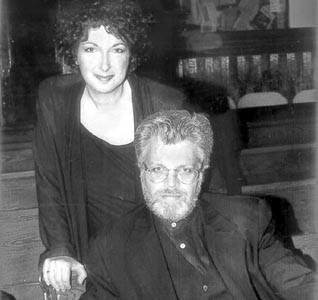
Barbara Kingsolver

New Testament

Steven L. Hopp


‘Poisonwood Bible’ marks a departure

By Patrick Sullivan

EVEN AS YE SOW, so shall ye reap. Or so claims the good book, but we’d better hope it’s not true, because for hundreds of years Europe and America have sown a terrible seed in the soil of Africa. Slavery and colonialism, assassination and apartheid: With murderous intent or a careless hand, the nations of the West have let fall the seeds of sorrow from the Ivory Coast to the Cape of Good Hope. Africa has been reaping the whirlwind ever since.

It’s squarely in the center of that grim harvest that Barbara Kingsolver sets her ambitious new novel, The Poisonwood Bible (HarperCollins; $26). The author of The Bean Trees and Animal Dreams, who made her name writing stories set in the American Southwest, has focused this time on the landscape of the Congo.

This novel–her first in five years–marks a departure for Kingsolver in other ways too. Her previous works have been warmly intimate stories about fairly ordinary people. But The Poisonwood Bible assembles a huge cast of characters to tell an epic story of hubris and tragedy played out under the shadows of world history.

The year is 1959, and Baptist missionary Nathan Price has just shanghaied his family from Georgia to accompany him on a mission of faith to the Belgian Congo. Price is fiercely determined to bring the word of God to heathen Africa. Somewhat less enthusiastic about this globetrotting gospel spreading are the missionary’s wife, Orleanna, and their four daughters, who leave their home in reluctant compliance with their father’s missionary zeal. (“I married a man who could never love me, probably,” says Orleanna. “It would have trespassed on his devotion to all mankind.”)

All six family members arrive in Africa only to discover that they are woefully unprepared for even the most ordinary challenges of their new home in the village of Kilanga. Every bedrock truth by which they live–from the power of evangelism to the correct way to plant crops–seems to turn to quicksand in this new land.

Moreover, the family’s arrival coincides with a bitter, turbulent time in the history of the Congo. After decades of ruthless exploitation, Belgium is reluctantly preparing to concede independence to the colony in response to a campaign led by populist leader Patrice Lumumba.

That struggle seems almost tame, however, compared to the battles raging within the family itself. Crisis turns mother against daughter, sister against sister, and the tyrannical Herr Price against everyone.

The Poisonwood Bible‘s greatest strengths are the book’s richly realized female characters and its creative use of language. Kingsolver has succeeded beautifully in the difficult task of narrating her story through the voices of five distinctly different women.

The twin sisters of the family stand at the story’s center. Leah is an intellectual tomboy whose regard for her father is slowly crumbling under his misogynistic criticism and physical abuse. Her twin sister, Adah, has been disabled from birth, but her lame and asymmetrical body masks a powerful intelligence that is one part playful and two parts morbid. “I have a strong sympathy for Dr. Jekyll’s dark desires and for Mr. Hyde’s crooked body,” she explains. Adah tells her own story with witty wordplay, packed with palindromes and ironic biblical quotes.

The book is less successful in its portrayal of the girls’ father. Nathan Price is violent, sexist, and rather stupid. So afraid is he to be called a coward that he keeps his family in the Congo even as the country crumbles into chaos while the CIA conspires to replace the newly elected Lumumba with Mobutu’s brutal dictatorship. Nathan’s behavior leaves us wondering how he impressed his old congregation or attracted his wife in the first place. At times, he seems almost cartoonish in his unrelieved villainy.

Still, that minor flaw stands in sharp contrast to the novel’s overall success. The vivid descriptions, the perfect pace of this epic story, the complex emotional relationships between the female characters: They all leave us hoping that Kingsolver writes on a continental scale more often.

Barbara Kingsolver will appear at a benefit reading and book signing on Oct. 29 at 7 p.m. at the Santa Rosa Veterans Building, 1351 Maple Ave., Santa Rosa. The event benefits Sonoma County Conservation Action. Admission is $10 in advance, $12 at the door, or free with purchase of the book. 823-8991.

From the October 22-28, 1998 issue of the Sonoma County Independent.

© Metro Publishing Inc.
Spins

0

Sabbath Rules!

Black Sabbath Reunion Epic

RIFF MONGERS’ special. They’re the band that launched a thousand death-metal bands. In the early 1970s, Black Sabbath melded brain and brawn, becoming a premier heavy-metal outfit that earned a showy reputation as blood-crazed Nazi satanists. The band’s December 1997 reunion at a Birmingham, England, arena was captured for posterity on this two-CD set as vocalist Ozzy Osbourne, guitarist Tony Iommi, bassist Terry “Geezer” Butler, and drummer Bill Ward dished up such Sab favorites as “War Pigs,” “Iron Man,” and “Paranoid” to the delight of shrieking fans spurred on by Ozzy’s cries of “Louder! C’mon, you know you can yell fookin’ louder than that!” It’s a safe bet nobody could hear much of anything as they filed out of the show, but ain’t that what great arena rock is all about? Sab rules. Buy it. Annoy the neighbors. SAL HEPATICA

Herbie Hancock Gershwin’s World Verve

AFTER A 40-YEAR CAREER in which keyboardist Herbie Hancock helped pioneer jazz-rock fusion (as a member of the Miles Davis Quintet and with his own soul-laden Headhunters) and in 1983 racked up a hip-hop hit (“Rockit”), pianist Herbie Hancock settles into a very comfortable groove with this Gershwin tribute. There’s some stunning straight-ahead jazz (check out Joni Mitchell’s haunting vocal on the Billie Holiday chestnut “The Man I Love”) and a refreshingly progressive spin to “Here Come Da Honeyman” (laced with African drum extrapolations and featuring trumpeter Eddie Henderson and saxophonists James Carter and Kenney Garrett). Other high-profile friends lending their talents to this project include opera diva Kathleen Battle, soul legend Stevie Wonder, jazz great Wayne Shorter, pianist Chick Corea, and the Orpheus Chamber Orchestra. The result is a fittingly stylish yet adventurous homage to one of America’s all-time great composers from one of America’s all-time great innovators. GREG CAHILL

Booker T. & the MGs Time Is Tight Stax

FORGET EVERYTHING you know about Gen-X soul-jazz progenitors (Medeski, Martin, and Wood, et al.) and dip your toes into the funky well of their inspiration. This three-CD box set spans the career of soul giant keyboardist Booker T. Jones, who along with his uptight, outta-sight rhythm section (bassist Duck Dunn and guitarist Steve Cropper later became famous as the backup band for the Blues Brothers), recorded a spate of soulful instrumental singles on the famed Stax label, starting with 1962’s “Green Onions.” Tasteful licks and hip-shakin’ riffs abound. Let this sly soul tonic sooth ya and groove ya. G.C.

From the October 22-28, 1998 issue of the Sonoma County Independent.

© Metro Publishing Inc.

Sonoma County Election ’98 Guide

0

A Quick and Dirty Election Guide

OK, on the surface, the local elections look lackluster, the candidates often indistinguishable in their positions. But don’t be deceived. You have a chance to depose those SRJC Board of Trustees members who have helped foster a climate of hostility on campus and often exhibited utter contempt for staff and faculty. And several local communities, from Windsor to Petaluma, are facing a host of important growth-related issues. Of course, the proposed transit sales tax increases, Measures B and C, are getting all the attention, but those are only part of the story.

The following select endorsements represent state, county, and local candidates with strong environmental qualifications and a willingness to be responsive to the public (an especially desirable quality in the SRJC Board of Trustees and Windsor Fire Protection District races). Listed as well are the growth-curbing measures that will be needed to lead the region sanely through the initial stages of the proposed transit plan should Measures B and C pass.

U.S. Senate: Barbara Boxer

House of Representatives, 1st District: Mike Thompson

House of Representatives, 6th District: Lynn Woolsey

Governor: Gray Davis

State Senate, 2nd District: Wes Chesbro

State Assembly, 1st District: Virginia Strom-Martin

State Assembly, 6th District: Kerry Mazzoni

State Assembly, 7th District: Pat Wiggins

Board of Supervisors, 2nd District: Jane Hamilton

Cotati City Council: John Eder, Bob Jones

Healdsburg City Council: Kent Mitchell, Jason Liles

Petaluma Mayor: David Glass

Petaluma City Council: Matt Maguire, Mike Healy, Janice Cader-Thompson

Rohnert Park City Council: Paul Stutrud, Jim Reilly

Santa Rosa City Council:

Marsha Vas Dupre, Sue Carrell, Steve Rabinowitsh

Sebastopol City Council:

Bob Anderson, Andrea Ponticello, Larry Robinson

Sonoma City Council:

Larry Barnett, Ken Brown

Windsor City Council:

Lynn Morehouse, Sam Salmon, Bill Patterson

Windsor Fire Protection District:

Sean Cahill, Henry Lankford

Santa Rosa Junior College Board of Trustees: Richard Wasson, Mike Smith, Alan Sandy, Charles Collum

Measure B and C (County transit package and tax advisory): Yes

Measure D (Protects open space along Highway 101 south of Petaluma): Yes

Measure E (Cotati UGB): Yes

Measure I (Petaluma UGB): Yes

From the October 22-28, 1998 issue of the Sonoma County Independent.

© Metro Publishing Inc.
Learning Wines

0

A Must Read

Grape expectations: Who says education has to be uninspiring? Our recommendation: Skip right to a glass of zin.

Wine primer: A-to-Z guide for fledgling oenologists

By Bob Johnson

KIDS are back in the swing of things at school, moms and dads are sipping vino for pure pleasure rather than parental escape … so what better time to take an educational A-to-Z swing through the wonderful world of wine? Sonoma County-style, of course …

Armida–A winery on Westside Road in Healdsburg that is perhaps the county’s best-kept secret. Its hillside location provides a breathtaking view. Its mascot, a friendly mutt aptly named Wino, greets all visitors in the parking area and escorts them to the tasting room (assuming he’s not snoozing). A friendly staff is happy to either educate or entertain. And the wines … well, let’s just say that for across-the-board quality, Armida is tough to beat.

Bordeaux–A word that, when printed on a wine label, typically adds several dollars to the price.

Cooperage–A fancy name for the oak barrels in which many wines are aged. Can also add several dollars to the price.

Dry–Describes a wine with no perceptible sweetness. You’ll never see “dry” and “white zinfandel” in the same sentence. Add the word Creek, and you’re describing one of the great places on earth for growing grapes to make “real” zinfandel.

Everett Ridge–The Healdsburg winery formerly known as Bellerose. (Not to be confused with the artist formerly known as Prince.)

Fighting Varietals–Low-priced supermarket wines generally made in huge quantities by huge wineries.

Geyser Peak–In its early years, this winery in Geyserville was affectionately referred to as “Geyser Plonk” by wine snobs. Then came the Aussie winemaker invasion of Daryl Groom, followed a few years later by Mick Schroeter, and everything changed. The wines got better and better, and several of the bottlings attained “world-class” status. This created considerable congestion in Geyser Peak’s tiny tasting room. Now, even that minor annoyance has been addressed with the opening of the winery’s brand-new, sparkling, 4,000-square-foot hospitality center. Visit. Sample. Then try to keep your wallet in your pocket or purse.

Harvest–A magical time of year (delayed several weeks this year by El Niño) when the world’s entire population of fruit flies descends upon the world’s vineyards. The Capistrano swallows have nothin’ on these guys.

Isinglass–Like sturgeon? Good. This is a protein derived from sturgeon bladders that chemically reacts with excess tannins to help clarify, or “uncloud,” a wine. As Paul Harvey would say at a time like this, “Now you know the rest of the story!”

Johnson’s Alexander Valley Wines (no relation to the writer–Ed.)–Even if you don’t like wine, a visit to this Healdsburg winery is worthwhile just to view the gorgeous Robert Morton theater pipe organ that’s on display. Not sure whether 1925 was a great year for Sonoma County wines, but it certainly was a marvelous vintage for organs.

Kenwood–A winery in the town of the same name that this year is celebrating the 20th anniversary release of its acclaimed Artist Series Cabernet Sauvignon. The 1994 bottling features the latest collectible Artist Series label, of course, and the juice inside ain’t bad, either.

Lauscha–A community in Germany that currently is housing what is believed to be the world’s largest champagne bottle. In just a few weeks, the 4-foot-6, 350-pound behemoth will arrive at the headquarters of Korbel Champagne Cellars in Guerneville. From there, this “millennium bottle,” as the winery has dubbed it, will embark on a nationwide tour. In case you’re wondering, the bottle is 120 times the size of a standard, 750-ml. wine bottle, and could serve 1,000 glasses of bubbly. Do the folks at Korbel know how to party or what?

Must–The mixture of juice, skins, seeds, pulp, and stem fragments produced when grapes are first crushed.

Napa–A word spoken in hushed, reverent tones by wine lovers who don’t reside in Sonoma County.

Oenology–The study of wine. (Also a favorite word of wine scribes compiling A-to-Z lists.)

Punt–The indentation found in the bottom of some wine bottles, where the thumb is placed when pouring the wine. (Also a good thing to do on fourth-and-long when you’re deep in your own territory. Hey, football fans drink wine, too!)

Quivira–Like zinfandel? Like Rhone-style wines? You’ll love this Healdsburg winery.

Residual sugar–Unfermented sugars in a finished wine that add sweetness to the flavor. You’ll almost always find a residual sugar listing–usually abbreviated “R.S.”–on white zinfandel bottlings.

Stainless steel–Another material, like oak, used for making enclosures for aging wine. Unlike oak barrels, stainless steel tanks add no flavor components to the wine; they are said to be “neutral.”

Terroir–A French term that describes the total environment associated with any grape-growing site (soil, weather, etc.).

Ull de Llebre–Catalonian name for the tempranillo grape.

Valley of the Moon Winery–After being closed for a few years, this winery in Glen Ellen is back and better than ever. For proof, try its first release of sangiovese, which will be unveiled this Saturday at the winery’s “Festa Italiana.” (For info on the festival, call 996-6941.)

Wein–German word for wine, pronounced “vine.” (Use “terroir,” “ull de llebre,” and “wein” in the same sentence at your next wine party and impress your friends!)

Xeres–Another favorite among A-to-Z compilers, this is the French name for sherry.

Yield–The quantity of grapes in tonnage, or wine in gallons, that a vineyard or harvest produces. Because of the weather extremes created by El Niño, this year’s yield is expected to be short by anywhere from 10 to 50 percent, depending on the vineyard.

Zinfandel–Perhaps the most versatile of all grapes because it can be made into so many different styles of wine. See: Dry.

Thanks for your attention. Class dismissed.

From the October 22-28, 1998 issue of the Sonoma County Independent.

© Metro Publishing Inc.

The Scoop

Weird Science

By Bob Harris

IT TURNS OUT that being poor can be a genuine pain in the rear. A new study from the University of Manchester and some other English school called the University of Keele in Stoke on Trent says that dissatisfaction with your economic situation can actually double or even triple your likelihood of lower back pain.

(And isn’t that “Keele in Stoke on Trent” deal just so preciously Scepter’d Isle you could squeal? Whenever I watch the BBC evening news via http://news.bbc.co.uk/, the best part is usually the closing credits of the preceding movie, invariably listing actors with names like Sir Ian Nigel Clive Percy Ian Finch Ian Maneater of Bratwurst on Sourdough. The other cool part is you can also hear the same BBC report translated into Welsh, which is like hearing the evening news done by a chorus of gargling gerbils. But I digress.)

The results of the new study are in the current issue of the journal Annals of the Rheumatic Diseases, which I mostly read for the centerfold.

It turns out it’s not necessarily whether or not you have a job that’s the key factor–just whether or not you enjoy what you’re doing and feel economically secure while doing it.

Quoting: “Regardless of employment status, perception of income as inadequate is associated with a threefold risk … of back pain.”

Which means if you’re a boss and your workers are complaining about their backs, the answer probably isn’t to invest in new office furniture, but to invest in the workers themselves.

Support their lumbar regions all you want, but their hip pocket is where the support really counts.

That’s not a political view, it’s a medical fact–now supported by hard research done by Lord Ian Cecil Tracy Ian Robin Ian Ian McNugget of Flipturn on Backstroke, the Third, at the University of Hedgehog in Wheelbarrow.

I PROMISE YOU, people–this is an actual headline from a genuine Reuters news story: “Sleep Deprivation Affects Surgical Skill.”

Dateline: Planet Obvious. According to British investigators at the Imperial College School of Medicine at St. Mary’s in London, “Lack of sleep may affect performance in the operating theatre.”

I assume they mean for the surgeon. Although if you’re a patient, not getting to sleep would seem like just as big a problem. The research was done by messing with a bunch of doctors’ sleep schedules and then having them do a virtual-reality simulation of a surgical procedure called “laparoscopic cholecystectomy.”

I’m not sure what that is either, but if I remember my Latin prefixes, it has something to do with grafting a rabbit onto your buttocks. And–ta-da! –surgeons who had no sleep the night before made 20 percent more errors than the rested ones. Not to mention all the deep grooves they cut in the operating table itself.

So why waste this time documenting the self-evident? It turns out there’s actually a sane reason for doing research into whether complete exhaustion might be a bad idea when playing mumblety-peg with somebody’s innards.

Thanks to the demands of both government and private managed-care programs in the United Kingdom and the United States, surgeons are being required to work longer and longer shifts.

Which patients don’t like much, seeing how they usually like to survive and all. Picky, picky.

However, before some bureaucrat can decide that maybe Night of the Living Dead doesn’t belong in the operating theater, he needs something on paper to show his idiot boss and shareholders.

So there you are. Conclusive proof that doctors are, indeed, human. Great.

Now if only I can get someone to remove this rabbit.

From the October 22-28, 1998 issue of the Sonoma County Independent.

© Metro Publishing Inc.
Sonoma County Elections

0

Where We Stand

Vote for Hamilton: Petaluma City Councilmember Jane Hamilton wins our endorsement for the 2nd Supervisorial District. Hamilton has the experience the south county needs to help implement complicated transit improvements and nurture the region’s fast-growing economy.

A select list of local endorsements

Edited by Greg Cahill

THE PUNDITS, in their infinite arrogance, say you are a faded, jaded electorate. They say you’re too dazed by the glare of the presidential sex scandal to recognize that some of the most important decisions about the future of the North Bay will be made Nov. 3 at the ballot box. They predict you’ll sit at home that day and watch Melrose Place reruns.

We don’t buy that.

Be smart. Get out and vote. Here is a select list of endorsements to help sort through the issues. (For more endorsements, see “A Quick and Dirty Election Guide“).

Measures B and C

Reality check. In a perfect world, you’d get public policy and planning processes that please everyone–something that would be all things to all people.

In the real world, you get back-room deals and compromises that often leave a bitter taste in your mouth.

Meet Measures B and C.

A recent public opinion poll found that 79 percent of respondents support Measure B, which calls for construction of two extra freeway lanes, a passenger-rail line, freeway interchange upgrades, bike lanes, and a few other bells and whistles. Yet respondents are just about evenly split over Measure C, an advisory measure authorizing a 1/2-cent sales tax increase over the next 20 years and requesting, but not requiring, that county officials spend the money on the aforementioned transit package. The sales tax measure is expected to raise about $627 million toward $950 worth of transit improvements (federal funds and other revenue sources will cover the rest).

The measures are the culmination of a decade of planning. Most recently, the proposed transit plan was crafted by a coalition of local conservationists (mostly the leadership of Sonoma County Conservation Action), business leaders, and public officials based on recommendations issued in a report by respected transportation consultant Peter Calthorpe.

Even Calthorpe’s report shows that the plan is flawed–expect to shave only about 1/10 of the time off your commute after we taxpayers have spent a billion dollars. And opponents, namely the Environmental Defense Fund, argue that the plan is fiscally flawed as well–it underestimates costs and fails to take into account expected cost overruns.

The supes say there’s plenty of funding in the tax measures.

Under the pay-as-you-go plan (in which projects are completed as the sales tax revenue accumulates), the EDF estimates, rail operations would not begin until 2015 and the highway widening would not be completed until 2016. If cost overruns occur, or if the public demands faster action, they say, the county may be forced to defer all other improvements and issue costly transit bonds to begin rail service by 2003 and get the extra freeway lanes built by 2005.

And what about that passenger-rail line? Only about a quarter of the increased sales tax revenue has been set aside for the train–about $175 million, barely enough to make one commute run per hour between Santa Rosa and San Rafael–and the plan doesn’t accommodate expensive southern storage facilities and other pricey items.

Indeed, the train is a weak link in the transit plan, since a public opinion poll earlier this year showed that while a majority of respondents favor a passenger-rail service, only 40 percent say they will actually use it and then only if it reaches Larkspur. Here’s the problem: At 40 mph, the train will require nearly an hour to travel from Santa Rosa to San Rafael (the proposed rail system won’t extend to the Larkspur Ferry to make a San Francisco connection because there’s not enough money to fund that stretch), the number of feeder buses from outlying areas will be minimal, and the buses will run infrequently at rush hour.

Not much of a deal, huh?

That said, after a lot of blood, sweat, and tears, Measures B and C still constitute the best plan. For instance, without the money these measures provide it is likely that the existing railway, whose freight operations keep nearly 40,000 trucks a year off Highway 101, will shut down. Even limited rail service is better than none. Also, defeat of the transit plan will deprive the region of $51 million for sorely needed bus improvements and $18 million for bikeways.

We agree with Sonoma County Conservation Action that the rail service should be built first to take advantage of $28 million in state funds that must be used for rail within three years and to lure commuters off the freeway, and we hope that the limited runs are just the first phase of a more complete rail service in the North Bay. We also applaud those conservationists–including members of the EDF, Friends of the River, Greenbelt Alliance, and the Sierra Club–who have either taken a stand against the transit plan or remained neutral (as is the case of the latter two organizations). Their energy and expertise will be needed to fight the bid to mine 6 million tons of gravel from the already damaged Russian River to be used in the freeway paving project, and to find ways to make this plan more workable.

Quite simply, commuters and the private sector need to recognize that the transit plan alone is not going to fix the North Bay’s commuter mess. Other steps are needed, and ultimately commuters must accept responsibility for altering their driving habits by embracing car pools and public transit.

And there are other low-cost options that should be considered to augment Measures B and C. For instance, how about better transportation system management plans that feature such incentives as staggered work shifts, telecommuting, or subsidized bonuses for employees who car-pool? And shouldn’t regulators fast-track a proposed ferry service from Petaluma to Larkspur? The list goes on.

Most important, Sonoma County residents should acknowledge that extra freeway lanes may help fuel suburban sprawl. Part of the key to the transit plan’s success is a campaign to focus growth in transit-oriented, mixed-use developments in downtown areas. In 1996, a majority of voters backed five urban growth boundaries, reining in development to what residents hope will be manageable levels. (Measure I would restrict development south of Petaluma to the Sonoma/Marin county line, and establish a UGB around the River City.) These are powerful land-use tools that must be guarded at all costs if the county is to exhibit economic growth while retaining its pastoral charm.

Vote Yes on Measures B and C.

2nd Supervisorial District

In a crowded field in June, Petaluma City Councilwoman Jane Hamilton stood out as the brightest candidate. However, a close race with Petaluma Police Sgt. Mike Kerns, a virtual political neophyte, forced a runoff election.

Hamilton remains a bright, thoughtful, and able candidate.

Favored by the local environmental community and backed by most of the City Council, this two-term City Council member and telecommunications manager gained kudos a couple of years ago for helping open the public dialogue during the divisive Lafferty Ranch swap debate. While she has been cautious in her support of Measures B and C, Hamilton backs the transit plan and has pledged to make sure that the county Board of Supervisors lives up to the intent of Measure C, if it passes, advising but not requiring supes to spend all funds from the sales tax increase on the transit fixes.

Her opponent is a 25-year veteran of the local police force who rose to prominence as the department’s spokesman during the Polly Klaas kidnap/murder case. He has twice been elected as a trustee to the Waugh School District and recently picked up the endorsement of retiring Supervisor Jim Harberson.

Kerns has never been involved in any significant planning decision, and that’s a serious shortcoming, considering that the Board of Supervisors is going to make crucial decisions in the next couple of years about the future of the region’s transportation and economy.

Those decisions should not be placed in the hands of a rookie.

Vote for Jane Hamilton.

From the October 22-28, 1998 issue of the Sonoma County Independent.

© Metro Publishing Inc.

Talking Pictures

0

Stairway to Heaven

By David Templeton

For over five years, writer David Templeton has been taking interesting people to interesting movies in his ongoing quest for the ultimate post-film conversation. His guests have included Joan Baez, Larry King, Suzie Bright, Barry Lopez, and Ram Dass. This week, he ventures through heaven and hell with award-winning Seattle author Bruce Barcott, with whom he views the mystical epic What Dreams May Come.

I already knew that Bruce Barcott was an excellent writer, an award-winning author with a knack for describing the natural world so vividly that readers can all but smell, taste, and touch it. I also knew–from reading his book The Measure of a Mountain–that he’s a former philosophy major, holds a keen awareness of various schools of intellectual thought, is an accomplished backpacker, and knows all the words to the theme song from The Flintstones.

So, I was already pretty impressed.

But Bruce Barcott, I am further delighted to discover, also does a first-rate Max von Sydow impression.

Yes! We are going to hell now,” rumbles Barcott, adopting von Sydow’s thickly articulated baritone growl. “You want to go to hell, we’ll go to hell. Get in the boat. Don’t stand up.”

What has inspired this spontaneous homage is the film What Dreams May Come, which we have just seen, and in which von Sydow has a ripe little role as the surly “tracker” who leads a newly dead doctor (Robin Williams) across heaven and into hell in search of the doctor’s doomed wife. The film–a visually astonishing work with mind-blowing visions of the afterlife–was a bit gloomy and morose for my taste, and the character of an out-of-focus, heavenly “greeter” (Cuba Gooding Jr.) who spouts so many pop-psych aphorisms–“Your house has no windows; what is it you do not wish to see?”–that Barcott felt he’d wandered into a bad therapy session.

“Or a Deepak Chopra seminar,” he laughs. “After all that stale, New Age, Buddha-in-the-field stuff, Max von Sydow was a breath of fresh of fresh air. I couldn’t wait to go to Hell with him.”

There is plenty of hell–of a different kind–and of heaven too, in The Measure of a Mountain: Beauty and Terror on Mount Rainier. In Barcott’s award-winning exploration of Washington State’s mighty and majestic marvel, the Seattle-based author–a confessed acrophobic whose growing obsession with Rainier took him from its lush, low-lying meadows to the terrifying top of its icy summit–has written the eccentric biography of a passive-aggressive mountain, a mountain Barcott calls “the largest and most dangerous volcano in the United States of America.” In terms both geologic and poetic–with lots of personal insight and a double-dose of sharp-edged humor–Barcott lays into the monumental arrogance of the vast majority of mountain-climbers, but never denies the powerful draw of Rainier itself, a mountain so seductive and beautiful that many would give up their lives–and annually do–just to partake of its secrets.

Barcott, who admits to having thought a great deal about death while scaling Rainier, confesses to a somewhat utilitarian belief system when it comes to the afterlife.

“Yeah, well, I guess I’m a wimpy bet-hedger,” he shrugs. “I do think there’s someplace you go afterwards, and it appeals to the logical side of me–or maybe it’s just the Seattle side–that you would recycle souls, reincarnating back into someone else. That seems like a wise use of energy.”

“I’ve never thought it an unwise use of energy,” I counter, “to think that we might just become worm food and mulch, fertilizing the earth with our remains. Seems like a reasonable recycling of energy to me.”

He nods. “There’s that great Wallace Stegner quote,” he says. ” ‘The only thing I owe the earth is about three pounds of chemicals.’ “

“Three pounds?” I repeat. “Is that all?”

“Give or take a few ounces,” Barcott affirms.

In Dreams, the hereafter isn’t all that different, in its basic functions, from the bet-hedging Great Beyond that Barcott has described. There is reincarnation for anyone who signs up, and there is also heaven. In fact, there are countless heavens, one for each resident, custom-made to fit that person’s specific wishes and desires: Williams’ heaven is an impressionist landscape, still dripping wet with paint when he arrives. Max von Sydow’s heaven is an immense floating city with endless shelves all crammed with books.

As for hell, it’s the place for tormented souls and tragic suicides, people in such despair that, even in death, they can’t give up their unhappiness, and have fashioned their own tragic worlds in which to spend eternity.

“That whole suicide thing seemed a bit creepy to me,” Barcott notes. “What about someone who’s 67 years old and dying of cancer, and they decide to hasten their death by three weeks instead of lying there in a hospital dosed up on morphine? ‘Sorry. You’re off to hell. Should have waited three more weeks.’ It seems like an awful trick to play on someone in pain or despair.

“The whole other can of worms to open,” he goes on, “is the question: Who’s the line? Where’s the line between who gets into heaven and who doesn’t?”

Good question. In the film, God is pretty much just a rumor, kind of like on Earth; he’s “up there somewhere,” looking down, even in heaven, and there seems to be no so-called Judgment Day vibe going on; if you think you’re in heaven, you are.

Barcott once heard someone describe a way to determine if a movie is good or bad.

“The dividing line is the film The Truth about Cats and Dogs,” he explains. “Precisely neither good nor bad. So you’d say about a movie, ‘Gee, was it better than Cats and Dogs? Yeah? Well, than it’s a good movie. Was it worse? Then it’s a bad movie.’ So, using that system, what person, what life, would stand as dead center between heaven and hell?”

“Michael Milken,” I venture a guess.

“What about the normal person who leads a normal life, finally dies, and has an obituary three lines long?” he wonders. “He never did anything great, but never did anything especially bad. So does he simply pass on through because he doesn’t come close to Hitler or Pol Pot? Or is he judged according to little things, weighing every time he kicked a dog against every time he helped a little old lady across the street?”

Ah. The big questions.

“According to the movie,” I reply, “I guess it would depend on how happy he was during his ordinary, run-of-the-mill life.”

“Maybe his heaven will be Shopping Mall U.S.A. or something,” he observes.

“Which would serve as hell for other people,” I note. “They could save space that way.”

“Not everyone in Heaven is going to have good taste, you know,” Barcott warns. “My own hell,” he further remarks, “would probably be the first day of elementary school in a brand-new school where I didn’t know anyone. That was my childhood. We moved a lot. Every school year, I wanted to die.”

“Good hell,” I nod approvingly. “What about your heaven?”

“My heaven would be Max von Sydow’s library,” he answers. “That would be the main room in heaven house. The house would be a library, a bookstore, one room with eight or 10 of my best friends at a dinner party, and another with no one in it at all. Then there’d be a backyard, with mountains that came down to the ocean–but it would be an ocean with good waves and warm water.

“Would Mount Rainier be one of those mountains?”

“Sure, Why not?”

“And Max von Sydow? Would he be there in heaven?”

“Oh, absolutely,” Bruce Barcott is certain. “He’d be the librarian.”

Web extra to the October 15-21, 1998 issue of the Sonoma County Independent.

© Metro Publishing Inc.
Jive 4

Jive Time

1) The Second Coming By Ashley Bowline

MOMMA SAYS the devil comes down on children that don’t eat their green beans. I keep five cans under my bed and put back more when I’m down to two. I eat one green bean a day, and it keeps me holy. I ain’t going to hell–even though I steal gum from Nanny’s purse on Sundays and sometimes only eat half a bean. Momma says Jesus is coming again, so I’ve decided that I have a good chance of being him. Sometimes when I look in the mirror, I see the light all around me; I think my holy glow is beginning.

Yep, at 10, I will start to save the world, and I’ll tell everyone the good news that I’m here.

The first thing I’d do as Jesus is get momma a house that don’t leak. Dad always promised to buy her a new house, but he lies. He’d be the next person I’d find, the bastard, and hit him with some lightning or use my halo to bind his arms and legs and throw him to a pool of sharks.

That’s if I could find him. We haven’t heard from him since he got out.

I’d probably make my sister an angel, that’s if she keeps sharing her tape recorder. When she’s selfish, acting like a sinner, I say I’ll call the demons on her. Anyway, she’d make an all right-looking angel. She’s got these crazy blonde curls that would fit right in on all those silly Christmas cards. She wouldn’t be holding a stupid harp though. She’d have a harmonica. She loves that damned thing, the one dad gave her ‘fore he left.

The LOVE: DADDY sticker is still there but smeared from her fingers.

Next, I’d make momma an Archangel. She’s good with the scraped knees and can pull a Band-Aid off without a hurt. Maybe she’d take care of all the kids that get killed and go to heaven, like my brother, Sidney. If I’d known I was Jesus last year, then I coulda saved him, but I’ve only been eating my beans for seven months.

Momma’d be real happy to see Sidney. We all miss him because he was so nice to everyone. If he was still alive, then he’d a made a better Jesus than me. Everyone would still think so ’cause he use to wave at everyone, and they waved back. You can always tell you’re popular by the number of waves you get. I don’t wave. It don’t matter ’cause Jesus is the most fucking popular guy in the world anyway.

Who woulda guessed he’d show up today. When I saw his ugly face at the door I ran for the gun. Momma saves it for burglars, but I figured he was worse than that. Anyway, I did it. He bled a lot. Momma won’t like having to clean it up, and it’ll probably stain. I’m waiting till she gets home, but I’m not worried much–I had my green bean this morning.

2) Skin Trade By Lynn Watson

A COPY of Playboy magazine dangles from his hand. He’s fallen asleep, his naked body half-covered by the cowboy blanket–all spurs and rope. His member is hidden, luckily, from view. Because I’m not supposed to be here in his room. I’m not supposed to be waking him up for school. He’s my older brother and tall enough to be popular, big enough to play high school football. I am the short kid sister, still unkissable, the imprint of braces making me untouchable. I’ve done my best solitary snake-in-the-grass trick of inching the doorknob open so quietly he hasn’t heard me. He’s making love to the naked body of the woman falling off the right side of his bed. Her thighs bulge over the edge of the mattress, her legs rolling towards the floor. He’s made love to her before. There’s not an inch of her body he hasn’t touched.

I’m in trouble. I’m in as much trouble as if she were his sweetheart and I’d walked in on them kissing on the couch. My only hope is to shut the door as silently as I opened it. Otherwise, I’m dog food. I’m a welterweight punching bag. He’ll pound me into ground round, sure I won’t keep my mouth shut. I tiptoe on the linoleum, a diagonal pattern of fleur-de-lis. The floor creaks. I freeze, then take another step. I’ll never walk into his room again, unannounced.

Behind the bedroom door, behind the barn, my brother conducts his secret rituals, dealing shares in the skin trade. It’s better than algebra or conversational French. He makes sure the knife is sharp, the blade thin, so the marks he makes won’t be noticed in gym class or football practice. Under the arms, inside the thighs, he carves himself, editing out the pieces of his life that don’t work. No one sees him cry.

The nude woman completes her descent as I close his bedroom door, her head flopping forward to meet her feet. She’s whole again, unexposed. She’ll be good for another ride, tonight.

3) Jeremy By Nan Rad

I MET HIM at a party at the grange on an extremely cold Humboldt night, given by an activist group in that Christmas spirit of only caring about your common man once a year. There were mounds of crab, chicken wings, French bread. But for some reason no one was eating. Maybe they were on acid.

I saw drums. That’s always scary because that could only mean one thing–drum circle. And to me, that means to get the hell out. I could tell it would be hard to pull Zoe away from the party, but I did carry a gun for those special occasions.

“Hey–aren’t you going to at least stay and smoke pot with me?”

It was one of those charming, housing-challenged men. He looked like Keanu Reeves, except dirtier, fewer teeth, and sores all over his arms. His name was Jeremy. I was dumbfoundedly smitten. God knows what attracts people, maybe it was that smell of garbage around him … but I’m sure it was his brown eyes. They reminded me of a wild animal’s. They were the eyes of someone who had been to the edge and back, then back to the edge for some more. Wolf eyes.

Wow.

Face cast toward the clear December sky, Jeremy explained in a sort of Jim Morrison immaculately stoned way, “I’m a nomad. I prefer to be called nomad rather than homeless. I’m so free.”

I want him. Fleeting thought.

I gave him my number when the dope was gone.

“Thanks,” Jeremy shouted.

“Are you nuts?” said Zoe, the one who has a boyfriend who is a bisexual heroin addict with a pierced tongue.

When I arrived home Jeremy called to meet him up at Moonstone Beach. I grabbed my sleeping bag and Mexican backpack and headed out the door.

My mind was devoid of all thoughts as I arrived at the beach, because if I had any thoughts, like the logical Vulcan types, I wouldn’t have been doing this.

I spotted the lone campfire. My hormones caught the scent of the wolf.

We mated that night. Wolfstyle.

He told me his tale, as I clung to his long, elegant, and filthy body. He did a “little” speed and he owned no socks.

After that night, I encountered Jeremy once more, hitchhiking on Highway 101. I pulled over, recognizing his loping walk. His thumb wasn’t out, but I knew he needed a ride.

He wanted a ride to a motel in downwardly mobile Eureka to “save” one of his many girlfriends. It was reassuring to know that I wasn’t the only woman that was unwittingly drawn to him. I was definitely the only one with a job.

We looked at each other, held each other. I had gotten used to the smell by now. We kissed. Jeremy took off the brown beaded necklace he had on. “Merry Christmas.” He put the necklace over my neck and tumbled toward the hotel.

His fur was still entangled on the clasp of the beads.

Coincidences and strange encounters.

Honorable mention Gator Hole By Marty Hamburger

THE SMELL OF ROT was thick and sweet; she gulped her breath. She gagged and vomited, recognizing the noise that awoke her. She opened her eyes, but the dark was thicker than the stench.

She panicked, struggled, and screamed as a nightmare became reality. She felt the mud, heard it sucking on her arms and chest. Her stomach seized in a wave of claustrophobia. It was the same feeling she had when she was little, trying to get the kittens from the big pipe under Grandmother’s driveway. Stuck to the waist, her arms at her sides, she wriggled herself free that time. Now the movement only stirred up the fumes, fresh stink, and another wave of vomiting. She rested her face in the bile and remembered having lunch with the cute boy from work.

She became aware of water. The rushing sound filling her head began making sense. It was the river, but now she was 10 years old at the family reunion. Diving in the murky water, she could hold her breath longer than any of the cousins. She reached the bottom and held on to a rock to stay in place. The sounds of boat motors and splashing swimmers surrounded her in that dark place. When her head broke the surface, the entire family had gathered at the shore to look for her drowned body. She got a good whipping for “pulling that stunt.”

The sudden throbbing of her leg ripped the nostalgia from her mind. She gasped, but the air was a rancid sock shoved in her mouth. She had nothing left to puke, but the retching didn’t stop for a long time. When it did, she remembered walking with the boy along the bank of the river.

Terror instead of bile jumped into her throat this time. Her mouth opened in the gape of a horrible sob that never came, just convulsed her body.

There hadn’t been enough time to react as the alligator lunged from the water. The boy grabbed her hand to run, but she slipped on the grass. The alligator bit her leg to the bone, then dragged her scuttling backwards towards the river. The boy came back, reached for her too late.

She spun in a death roll; the alligator pirouetted to kill her. She held her breath as the flesh tore from her leg. She was dragged to the bottom. She remembered the twisting and shoving, being pushed into dark space. She knew the habits of alligators. She was stored away under the water, left to rot and become easier to eat later.

In the pitch black, she didn’t know how long she had been in that putrid hole, but the terror shook her to life. With a final breath of foul air, she kicked and pushed.

The mud tried to hold her, but relented with a doleful sucking sound; she floated free.

Honorable mention The Little Metamorphosis By Jeff Elder

MR. MAN AWAKENED one morning and discovered that one part of his body had turned into a microphone.

He went to the bathroom to pee. It made a very loud sound.

Curious, and oddly stimulated, he touched himself. Such an ear-splitting screech of amplified feedback wailed through his apartment that he threw his hands up as though he were being held at gun point. He looked warily around, blushing deeply.

Mr. Man got dressed for work and walked out onto the street. A theater technician walked up to him, unzipped Mr. Man’s pants, tapped on the microphone several times, and said, “TESTING.”

The technician looked at someone in the distance and jerked his thumb up several times, calling for an increase in something. Then the technician left.

A smirky stand-up comedian approached Mr. Man, pulled the microphone from his pants, and began telling jokes.

“Is it just me,” the comedian asked passersby, “or is this microphone a little bit Freudian? I’ll tell you one thing–it’s more of a microphone than a megaphone, if you know what I mean.”

Mr. Man stood by, uncomfortable. He was afraid that if he objected, the comedian might make more fun of him.

Next, Mr. Man did a news break with an anchorman. “Very professional,” the anchorman intoned after the broadcast. “Good acoustics and a tidy circumcision.”

Mr. Man did a dance mix with a rap group, which made him feel macho and excited. And he did a radio show with a shock jock. That show was low key and bawdy, so Mr. Man just relaxed and hung loose.

After his big day of amplified and private exposure, Mr. Man returned home tired and went to bed early. He entertained notions of braving the feedback, of playing a whole screeching Jimi Hendrix national anthem. But instead he left the microphone alone and went to sleep.

He dreamed that a mute woman was talking to him in sign language. Silently she spoke with hands, which at times fluttered like doves and at times struck like hammers. This is what she said:

“Mr. Man, you have disappointed me sexually, not by doing too little as you always feared but by doing far too much. Sex should be a hummingbird, a purple rose, a single drop of honey. You have made it a nauseating professional wrestling match of absurd tauntings, corporeal hurtlings, and counterfeit results.

“I am changing you back now, because we have much to do. But I expect you to go slowly, to go carefully, and with the delicate humility of a pardoned prisoner on his very first morning of liberty.”

When Mr. Man awoke, his private parts had returned to normal. But throughout his life, on this very same day, sometimes he would awaken to find that his feet were cars, or that his hands were telephones, or that his body was a shopping mall, or his head a television.

From the October 15-21, 1998 issue of the Sonoma County Independent.

© Metro Publishing Inc.

Cybersex

Sexy Ways

By H. B. Koplowitz

THE PRESIDENT isn’t the only one having trouble defining sex lately. With all the hanky-panky going on in cyberspace, who knows what constitutes infidelity anymore? Happily married person meets who knows what in a chat room. Chat leads to private messages, which leads to intimate e-mails, which leads to tumescent phone calls. Even if it doesn’t culminate at the Shady Inn, there comes a point at which the argument that cybersex isn’t sex begins to melt down.

The extent to which cybersex is affecting real sex, along with real marriages, families, and other relationships, has become a subject of hot speculation, but mostly anecdotal evidence, much of which can be found online.

At Self-Help & Psychology Magazine, Marlene M. Maheu and Kristin Levine are conducting a survey on “CyberRomance: CyberRelationships and CyberSex” for a forthcoming book. Of the thousand people who have filled out their online survey so far, about half answered “yes” to “Are cyber-sexual affairs safer than physical ones?” Seventy percent said they knew someone who has had a “cyber affair,” and 70 percent agreed that cybersex is a threat to traditional relationships.

What is this thing called cyber love? According to “Cyber Romance 101“, there is no one answer. But the site is a primer for cyber relationships, with links to books, articles, advice columnists, psychologists, studies, fiction, and first-person accounts of cyber lust.

The Center for Online Addiction claims to be “the World’s First Consultation Firm and Virtual Clinic for Cyber-Related Issues.” It is run by Kimberly S. Young, a clinical psychologist and self-described “cyberpsychologist” who has also written a book, Caught in the Net: How to Recognize the Signs of Internet Addiction and a Winning Strategy for Recovery. Young estimates that “1 in 5 Internet addicts are engaged in some form of on-line sexual activity,” and that while men are more likely to look at cyberporn, women are more likely to engage in cybersex.

The site has tests you can take to find out whether you have an Internet or cybersexual addiction. Symptoms include “hiding your on-line interactions from your significant other,” “feeling guilt or shame from your on-line use,” and “frequently using anonymous communication to engage in sexual fantasies not typically carried out in real-life.”

THE THEME “Cybersex and Cyber-Romance” takes up the first issue of Cybersociology Magazine. Some of the articles are scholarly, such as “Researching Cybersex in Online Chat Rooms: The Ethnographic Approach,” by site editor Robin Hamman. But there’s also a personal account of an e-mail romance and cybersex by a woman with a physical disability, and “Cyber-Charade,” by “Cara”, who describes the feelings and emotions of cybersex participants.

One of her poems, “Intimate Strangers,” begins: “Whirling through endless electronic realms/ You launched your lust upon electric currents/ Of cresting cybercircuits, wanting a fantasy,/ A lover who would create a magic moment,/ A mystery-space in time, oblivious as to why,/ Escape into a virtual world of intimacy.” Finally, there’s “Lust in Cyberspace“, “for those intrigued, fascinated, lured, and otherwise ‘hooked’ on the interdimensional relationships that evolve on this new horizon of cyberspace.” It is operated by “PlatypusMan” and “Looseal,” who met in a chat room, and Looseal’s best friend, “Vixen,” who enjoys computer role-playing games. The three also produce an online magazine called Art and Love on the Net.

The site addresses such questions as “Am I going crazy?” and “Is this addictive behavior?” As for “How can I ever explain this to family and friends?” it counsels, “Quite simply … you can’t. … So, don’t try. They will send you for therapy.”

The site presents two schools of thought on whether having an online relationship is cheating on your spouse. One is that it’s not cheating because there is no physical relationship. The other is that “if you give your mind to another, then you have given more of yourself than if you had physical contact. Giving your love and emotions to another can be viewed as the ultimate act of cheating. Take your choice. Whatever works for you.”

Cyber relationships can affect real-life relationships and threaten even the most stable of marriages. But cyber affairs don’t always work out either. First, there’s “cyber infidelity,” which is when someone in a cyber relationship begins cybering with someone new. “Oddly enough,” according to the site, “most people in a cyber relationship whose online love has a Real World significant other, don’t get jealous of the Real World relationship. It is the cyber cheating that causes the pain.” And cyber lovers who become real-world lovers often get suspicious if their partners still go online. “It’s no different than people who meet in the Real World. Trust is the key issue.”

From the October 15-21, 1998 issue of the Sonoma County Independent.

© Metro Publishing Inc.

The Deftones

Sonic Fury Ed Colver The Deftones do it their way By Alan Sculley THE DEFTONES spent two years touring behind their 1995 debut CD, Adrenaline, and received virtually no airplay from mainstream radio or MTV. Meanwhile, groups like Marilyn Manson and White Zombie, who both play a heavy style of rock...

Barbara Kingsolver

New Testament Steven L. Hopp 'Poisonwood Bible' marks a departure By Patrick Sullivan EVEN AS YE SOW, so shall ye reap. Or so claims the good book, but we'd better hope it's not true, because for hundreds of years Europe and America have sown a terrible seed in the soil of...

Spins

Sabbath Rules! Black Sabbath Reunion Epic RIFF MONGERS' special. They're the band that launched a thousand death-metal bands. In the early 1970s, Black Sabbath melded brain and brawn, becoming a premier heavy-metal outfit that earned a showy reputation as blood-crazed Nazi satanists. The band's December 1997 reunion at a Birmingham, England, arena was captured for...

Sonoma County Election ’98 Guide

A Quick and Dirty Election Guide OK, on the surface, the local elections look lackluster, the candidates often indistinguishable in their positions. But don't be deceived. You have a chance to depose those SRJC Board of Trustees members who have helped foster a climate of hostility on campus and often exhibited utter contempt for staff and...

Learning Wines

A Must Read Grape expectations: Who says education has to be uninspiring? Our recommendation: Skip right to a glass of zin. Wine primer: A-to-Z guide for fledgling oenologists By Bob Johnson KIDS are back in the swing of things at school, moms and dads are sipping vino for pure...

The Scoop

Weird Science By Bob Harris IT TURNS OUT that being poor can be a genuine pain in the rear. A new study from the University of Manchester and some other English school called the University of Keele in Stoke on Trent says that dissatisfaction with your economic situation can actually double or even triple your...

Sonoma County Elections

Where We Stand Vote for Hamilton: Petaluma City Councilmember Jane Hamilton wins our endorsement for the 2nd Supervisorial District. Hamilton has the experience the south county needs to help implement complicated transit improvements and nurture the region's fast-growing economy. A select list of local endorsements Edited by Greg Cahill THE...

Talking Pictures

Stairway to Heaven By David Templeton For over five years, writer David Templeton has been taking interesting people to interesting movies in his ongoing quest for the ultimate post-film conversation. His guests have included Joan Baez, Larry King, Suzie Bright, Barry Lopez, and Ram Dass. This week, he ventures through heaven and hell with award-winning Seattle author...

Jive 4

Jive Time 1) The Second Coming By Ashley Bowline MOMMA SAYS the devil comes down on children that don't eat their green beans. I keep five cans under my bed and put back more when I'm down to two. I eat one green bean a day, and it keeps me holy. I ain't going...

Cybersex

Sexy WaysBy H. B. KoplowitzTHE PRESIDENT isn't the only one having trouble defining sex lately. With all the hanky-panky going on in cyberspace, who knows what constitutes infidelity anymore? Happily married person meets who knows what in a chat room. Chat leads to private messages, which leads to intimate e-mails, which leads to tumescent phone calls. Even if it...
11,084FansLike
4,606FollowersFollow
6,928FollowersFollow
