
A Christmas Story

0

Echo & the Music Machine

Editor’s note: A year ago, the Independent began what we hope will be an annual tradition: our presentation of an original children’s Christmas story. Though we don’t presume that this year’s offbeat, Roald Dahl-inspired tale stands up to such classics as The Night Before Christmas or A Christmas Carol, we think you’ll like it. Read this tale aloud to loved ones: Perhaps it will help make your season merrier and brighter. Happy holidays.

THIS IS A STORY of Christmas, and of music, and of a very small boy. His name was Echo Echinacea Smith, and he had the worst family in the whole wide world.

The Smiths, you see, were not nice people. They owned a wrecking company–Smith Smashing Inc. They drove bulldozers and pushed over buildings. They always carried sledgehammers, in case they discovered things that needed breaking. They lived in a horrible house with a horrible yard. It had once been a nice house, but the Smiths were always hammering holes in it. They smashed up all their furniture and all their dishes and all their beds and all their bric-a-brac–just to keep in practice.

Mr. Smith and Mrs. Smith were not at all fond of their children, and showed it by giving them nasty names like Bugaboo Bugbane, Cactus Cacophony, Doohickey Doom–and Echo Echinacea–because those were the first words the terrible Smiths pointed to in the dictionary. After Echo, the Smiths decided that even this method took too much time. The next Smith children, therefore, were named merely Five, Six, and Seven.

It shall come as no surprise to you that the Smiths–with the exception of poor Echo, who was kind and goodhearted–grew to be as horrible as their horrible parents. When not being snarly and contemptible and selfish and crude, they were petty and mean and loathsome and rude. They feared soap. They never bathed.

Instead of talking, they howled. Instead of playing, they fought. Instead of caring for each other, they loathed one another. And, like their parents, the Smith children were fond of breaking things. As for poor Echo, he was saddened by all the smashing and fighting and noise that went on in the Smith household. He preferred quiet conversation, friendly games, and beautiful music. He never carried a sledgehammer. In fact, he couldn’t even lift one.

Now, as you might guess, Echo did not fit in well with the rest of his frightful family. So he was teased and tormented, bullied and bothered, pestered and picked on. The Smiths made a sport out of making Echo unhappy.

And because their odd little Echo loved music, all of the Smiths despised it.

Which was very bad for Echo. But very good for our story. As you shall see.

ECHO was desperately lonely. He had only one unbroken possession–a tiny silvery flute. He’d discovered it beneath his broken bed one Christmas morning, several years earlier. It was the most wonderful thing he’d ever seen. He hid it from his family, of course, to save it from certain demolition. Late at night, he’d creep from the house and onto the cold lawn, where he would play soft, sad songs till the sun came up.

Echo never knew who might have left such a glorious gift for him. So, he simply guessed that the flute was a gift from Santa Claus. This was a good guess. But it was not a correct guess, as he would one day discover.

It did not take Echo long to master this new instrument. The little boy was soon inventing his very own melodies, making up a tune for everything he saw around him, everything he dreamed about, and everything he wished for: slow, sad minuets to accompany stray cats in the alley; light and lovely waltzes in which to imagine taking hot soapy baths; frisky little fox trots to play while dreaming of warm picnics among daisies and butterflies.

Best of all, Echo had a secret song, a Wishing Song, full of lullabies and tangos and rhythm and blues. It was a song that made him feel a little guilty–because of the desperate wish that inspired it–but he really couldn’t help himself. What Echo wished for, more than anything else, was to be given a whole new family.

That’s right. A different father, a different mother, different sisters, and different brothers. No more sledgehammers. No more breaking and bashing. No more noise. No more sneaking out in the cold of night to play his music, in constant fear of being found out.

What he wished for was a family that he could love, a family that would love him back, a family that loved music and melody as much as he.

ECHO went on wishing his wish, and playing his song, until one Christmas morning when something wonderful happened, then something horrible happened–and then something different happened.

It was very early, while all the Smiths were asleep. Echo was outside in the dark with his flute. He was playing softly, for fear that somewhere would hear him, when all of a sudden he heard a voice in the dark. It made him jump.

“There you are,” whispered the voice, both young and old. “Follow me, Echo Echinacea Smith.” Peering into the gloom, Echo saw a person dressed in red–with a red hat covered in little bells–vanishing around the corner of the house.

“Santa,” whispered Echo, clutching his flute and rushing to follow.

Suddenly, he stopped. There, on the snow-covered lawn, was an old woman, wiry and thin. She jingled as she danced up and down.

Beside her stood a strange object. It was an enormous, outlandish, singularly odd machine, all full of knobs and lights and buttons, with reels and ribbons and microphones on one end–and a strange pair of slots and chutes on the top. One of these slots was marked in, and one of them marked out.

“It’s a Music Machine,” said the old woman, who was quite obviously not Santa, but Mrs. Claus herself. “The Music Machine’s a little thing I thought up myself. I’ve been working on it for years now! Santa likes building his boats and trains and dolls and bicycles, but I enjoy a toy with a little more oomph to it.

“Something like this,” she crowed merrily. “Since you’ve done so well with that flute I left you, I’ve decided that I want you, Echo, to test the machine for me.”

WITH THE PUSH of a button, the Music Machine whirled to life. It blinked and winked. It whirred and purred. It twirled and flashed. The microphones waved about like eels.

Showing him where to stand and what to do, Mrs. Claus encouraged Echo to play something on his flute. He took a breath and began one of his light-and-lovely waltzes.

Immediately, the machine chugged and glugged and shook and shimmied, as it absorbed Echo’s music. From the chute marked out, at the back of the machine, a bright fountain of bubbles suddenly erupted into the air.

“Marvelous,” Mrs. Claus sang, skipping and spinning. “Magnificent! It makes bubbles out of a tune about baths. Play another!” Echo played the frisky little fox trot, his picnic song. Out of the machine came a stream of warm summer sunlight, a cloud of butterflies, a blast of daisies, and a ham sandwich. Finally, he played the slow and sad minuet, and a fat furry cat leaped from the machine and bounded off over the fence.

“I’m a genius!” exclaimed Mrs. Claus, spinning in circles. “You’re a genius!”

Then she stopped. All of a sudden, she began to glow all over. “I have a few errands to do, dear,” she announced. “Would you mind keeping an eye on the machine till I come back?”

Before his eyes, Mrs. Claus began to fade away.

“But please be careful … ,” she warned. “And remember! Anything the machine can do forward it can also do backward.”

Then, with a sparkle and glimmer, she vanished.

ECHO LOOKED in wonder at the place where Mrs. Claus had been standing. Then he gazed in amazement at the Music Machine. After a moment, he played again, this time a happy marching tune. The microphone eels bobbed. The machine chugged and chunked, and a bright blast of confetti and ticker tape exploded into the sky.

Echo was enthralled. He was enchanted. He wondered what this magic miracle looked like up close. Forgetting Mrs. Claus’ words, he clambered onto the machine and stood up, peering into the mysterious slots.

Then, with a shuddering jolt, the Music Machine stopped.

Echo lost his balance and pitched forward. He tried to stop himself, but was too late. Head first he tumbled, directly down the slot marked in.

Oh my! You must be thinking. Poor Echo. He’ll be turned into music!

Sure enough, the machine whirred and purred. The reels and ribbons spun. The lights flashed. Then, up out of the machine rose a melody that was so sweet and so sad it could only have been made from Echo himself.

So the little boy who loved to music had become music itself.

But wait. There’s more. The Echo Song rose up and washed over the grubby little house where Echo’s frightful family were all still sleeping. They awoke with a start “What is that horrible noise?” they wailed.

As for Echo, being turned into music by the Music Machine was not one bit unpleasant, as you might have worried. To Echo, it felt like falling asleep in a soft bed with warm sheets. It felt like being gently tickled back awake after a night of glorious dreams. The truth is, he’d never felt better in his life.

Then, suddenly, the machine began to do something new. Other lights flashed. The reels and ribbons spun in reverse, stopped, and spun again. Once more, that sweet and fine melody that was Echo began to play through the night. What was happening? Well, the answer is very technical.

Putting it simply, the machine–programmed to do so by Mrs. Claus–automatically made a tape recording of anything or anyone that went in through the in slot, and it was now playing him back the other way. The microphone eels dipped and bobbed. The machine whirred and purred. And with a soft kerplunk, Echo bounced from the out slot and rolled gently to the ground.

He shook himself all over, and looked up. There were the Horrible Smiths, sledgehammers in tow, looking oh-so-terrifyingly down at him. Echo knew that something bad was about to happen.

I WISH I could avoid telling you what happened next. I wish I could report that Echo’s family, transformed by the beautiful music that was Echo, gave up all their nastiness and went back inside for a nice, hot breakfast.

But they did not.

Therefore I must tell you that the Smiths, so alarmed at finding a Music Machine in their yard–and so appalled at the sounds they’d heard it make–began to circle warily around the machine. When they were certain it was not about to attack them, they attacked it. Echo begged them not to, but they ignored him, raising their hammers high.

Crunch! went the knobs and buttons as their hammering began.

Munch! went the reels and ribbons as their hammering continued.

They smacked and whacked and crushed and crashed until, finally, all of the machine’s lights had gone dim, all the reels and ribbons were broken, all but one of the microphone eels were snapped in half.

Victorious, the entire family clambered to the top of the machine, where they stood, sledgehammers waving, cheering in triumph.

It was a horrible sight.

It must be noted, though, that this awful moment was also the closest that this group of people–this contemptible, selfish, crude, nasty, mean, and loathsome family–had ever felt toward one another. For a moment, they almost liked one another.

The moment lasted eight seconds.

With an enormous twitch, the machine switched back on.

With a jolt and a jerk Mr. and Mrs. Smith tottered and fell into the machine, followed–one, two, three, four, five, and six–by each of the horrible Smith children, sledgehammers and all. The machine chugged and glugged. It would be unfair and misleading to tell you that the Smiths were turned into music, since the unspeakably ugly, discordant squawking that now floated out from the machine could not truly be called music. It sounded like a thousand aluminum can tumbling down a mountainside, like an army of rubber tires being torn into pieces by angry walruses, like a 10-ton woolly mammoth hurtling through a plate-glass window. It was a foul and disagreeable sound. The Smiths had certainly made a terrible family, but they made even worse music.

Now, at this point I’m sure you’re thinking about the machine’s recording system, the one that taped Echo’s transformation and then played him back into a little boy. If only they had not smashed the reels and ribbons to bits, the machine might have returned them to the world. But alas for them, their sledgehammering had been too precise. So the detestable noise faded away into the cold, clear dawn. And that was the last anyone ever heard of the horrible Smiths.

WHEN Mrs. Claus returned for the machine, she inspected the damage. It was nothing she couldn’t fix, she declared, once she got the machine back to her workshop. Poor Echo, however–for he was a good boy and never wished that real harm would come to his family–was feeling lonelier than he’d ever felt before.

“Well then, dear,” encouraged Mrs. Claus, starting up the Music Machine one more time, “You’ll have to choose this next tune very carefully, won’t you?”

Now, which song do you think Echo chose to play?

As Christmas morning grew bright and warm around him, Echo stood before the Machine and played his Wishing Song–the song he’d been practicing all of his life. He played the melody with all of its lullabies and tangos and rhythm and blues, and then, holding his breath, he stopped and waited. The machine chugged and glugged and shook and shimmied, as Mrs. Claus danced gleefully on the lawn.

THAT EVENING, Echo had Christmas dinner with his brand-new family. He had a new father, a new mother, three new brothers, and three new sisters.

They were instantly fond of Echo–and he of them. Whereas that other family had been loud and unpleasant and rough and rude, Echo’s new family was kind and friendly and playful and good.

None of them had names at first–it would take weeks before the right ones were chosen for each child–but, as Echo’s new father said, “A person’s name is not the sort of thing you can decide too quickly.”

As for the family’s last name, it was a matter of much discussion throughout the day–and it was eventually decided that they would take the name Christmas.

So it was that Mr. and Mrs. Christmas, having no interest in sledgehammers or bulldozers, informed Echo Echinacea Christmas and all the other Christmas children that Smith Smashing Inc. was no more. From now on, the family business would be– well, it would be something closer to all of their hearts. Can you guess what it was?

Here is a hint: When Echo played his Wishing Song that morning, and when the Music Machine chugged and glugged and shook and shimmied, and when the yet-to-be-named Christmas family tumbled happily to the ground, every one of them was clutching–what do you think?

If you guessed, “A musical instrument,” you are right!

There were oboes and clarinets and saxophones, trombones, and trumpets and fluegelhorns, and a snappy snare drum for extra good measure.So Echo’s new family was everything he’d ever wanted–and more.

And what could be more natural–or make a better ending to this story–than for Echo’s new family to form their very own marching band? If you can think of a better ending, let me know.

Till then, the story ends like this:

After a day full of laughter and songs and warmth and hugs and smiles and kisses and music, Echo finally brought out his flute and, surrounded by his loved ones, began to play a brand-new song.

Then, raising their own instruments, the Christmas Family Band joined in.

From the December 17-23, 1998 issue of the Sonoma County Independent.

© Metro Publishing Inc.
Spins

0

River Dance

Various Artists River of Song: A Musical Journey down the Mississippi Smithsonian/Folkways

GET READY for a multicultural transfusion. For three centuries, the mighty Mississippi has provided the life’s blood of the nation, a rolling artery winding its way through America’s midsection from Minnesota to the Gulf Coast. It’s a major transportation route, but, just as important, the river is a conduit for a host of cultural influences that began with the native American tribes living along this wild waterway and extended through the 19th-century white European settlers and the teeming Minneapolis funk and post-punk scene that spawned the Replace-ments and the Artist Formerly Known as Prince. An upcoming four-part PBS-TV documentary series–airing in January and narrated by neo-folkie Ani DeFranco–pays tribute to that heritage. Of course, the series will get the full treatment: a seven-hour public radio series, a companion book, and this two-CD collection featuring 36 performances by a diverse selection of American artists.

To say that River of Song is eclectic is an understatement–sure, you’ll get some blues and a dash of Dixieland, but the Mississippi is awash with musical styles. The first disc alone features a Chippewa Nation “Powwow Song,” followed by female punkers Babes in Toyland’s defiant 22, followed by legendary folk-blues artist “Spider” John Koerner’s rendition of the chestnut “Sail Away, Ladies,” followed by Soul Asylum’s punkish “I Did My Best,” followed by the Skal Club Spelmanslag’s vaudevillian “Red-Headed Swede,” replete with singing saw and goofy humor. You get the idea. Black spirituals, jazz, a Mexican ranchera, bluegrass, folk, blues, rockabilly, Cajun–a marvelous musical mélange that throughout the life of the nation has helped replenish our thirsty souls.

River of Song gives new meaning to the term Americana: more than a radio format, it’s the very essence of our collective core. GREG CAHILL

Various Artists Slam: The Soundtrack Immortal/Epic

AS HIP-HOP evolves in response to both Euro-electro and Ameri-acoustic trends, even critical advocates of gansta-rap have noted a creeping staleness to the genre. So it’s in the 11th hour of a dry 1998 that Slam: The Soundtrack emerges to reclaim hardcore rap’s birthright as the most humanist and dynamic edge of pop music. Even halfway through the disc, it’s clear that this is a soundtrack that means to matter, not a mere cross-marketing collection. Echoing the film’s theme of poetry as a beacon in the poorhouse-to-jailhouse cycle, Slam: The Soundtrack asserts hip-hop’s status as revolutionary art, from the two jaw-dropping spoken-word pieces in the disc’s second half, to Noreaga’s use of a Charlie Daniels Band sample to simulate Wu-Tang-style production, to Brand Nubian’s displaced veteran cry: “Damn, I wish the government didn’t have my real name.” The disc’s real mark is in its unified sense of looking beyond ghetto darkness. From the film, the character Ron recites, “As I sit here in my jail cell/ About to cry/ I’m thinkin’/ I shot three motherfuckers and I don’t know why,” but the hope that spins beyond that rock-bottom reflection is a strong sense of bringing government back to the people, heard in personal-discovery moments like Tekitha’s “I Can See” and KRS-One’s “Ocean Within.” So don’t believe the hype–hardcore rap can still move mountains. KARL BYRN

Various Artists Lounge, Live from the Mountain Stage Blue Plate Music

Various Artists Louisiana 2, Live from the Mountain Stage Blue Plate Music

Various Artists Celtic Music, Live from the Mountain Stage Blue Plate Music

AMERICAN Public Radio for several years has presented one of the airwaves’ most entertaining live music shows, heard on 120 stations nationwide (none of which are in the Bay Area) and highlighting roots music–blues, folk, rock, and world beat. Blue Plate Music Records, a series of genre-specific recordings distributed by folkie John Prine’s Oh Boy! label, is your chance to get in on the action. Some of these new releases tend to be a bit uneven, but all contain real gems–for instance, the Lounge selection alone dishes up a delightfully wry rendition of North Bay performer Dan Hicks’ wistful “Bottom’s Up,” and a track by sassy septuagenarian Hadda Brooks, a West Coast 1940s R&B artist who revived her career a decade ago and won a prestigious Pioneer Award in 1993. Meanwhile, the line-ups read like a Who’s Who of the various genres, with top artists giving their all in live performances. G.C.

Various Artists Beleza Tropical 2 Luaka Bop/Warner

TALKING HEADS head honcho David Byrne gathers tracks by 15 contemporary Brazilian musicians, whom Byrne hails as “the original masters of the mix.” True to his word–and has David Byrne ever lied to you?–these artists (including such mainstream acts as Gilberto Gil, Marisa Monte, and Sergio Mendes alternating with the quirkier Tom Zé, Daniela Mercury, and Chico Science é Nacao Zumbi) blend a dizzying array of styles, sounds, rhythms, and textures–sambas and funk; sitars and bossa; death metal and African drumming. All in all, a strong case for Brazil as the great South American melting pot. And it kicks! SAL HEPATICA

Pick of the Week

Geoff Muldaur The Secret Handshake Hightone

YOU MIGHT remember Geoff Muldaur, the ex-husband of Maria Muldaur, as a ’60s folkie. After a long recording hiatus, he’s back with a stunning set of traditional folk and blues songs, including a handful of roots-inspired originals. He’s backed by an impressive list of red-hot session players that includes David Grisman, Richard Greene, and Stephen Bruton, among others. It’s obvious from this release that Muldaur has a great record collection, and that’s good news for the rest of us, since he also possesses an uncanny ability to infuse each of these tunes with a rich blend of warmth and down-home vitality. Muldaur’s own “Got to Find Blind Lemon” is an instant classic, a spiritual road trip beckoning hardcore blues fans to come along for the ride. One of the year’s best. G.C.

From the December 17-23, 1998 issue of the Sonoma County Independent.

© Metro Publishing Inc.
California Milk Market

0

Milk Money

Michael Amsler


Arizona ranchers put the squeeze on state dairies

By David Templeton

HOW WOULD YOU define the word milk? Most likely, you would stand alongside Webster’s Dictionary, which defines milk as “a whitish liquid produced by the mammary glands of a mature female mammal,” and as “the milk of animals, especially cows, used as food by humans.” On the surface, milk would seem a simple thing to define, offering little opportunity for argument. In fact, if you put 100 people in a room and asked them all to offer a succinct definition of the aforementioned “whitish liquid,” chances are good that all 100 people would agree that milk is, well, milk.

On the other hand, if some of those people are local dairy farmers or representatives of the California Department of Food and Agriculture, and the rest are the vociferous members of a certain well-funded coalition called Mad about Milk (MAM), you can pretty much count on a lively argument–if not a full-on brawl–over the exact scientific and legal definition of milk, and of low-fat milk in particular.

Such a brawl has been taking place out in the open, in recent months, as MAM–a feisty lobbying group that is being funded by Arizona business interests–throws accusation after accusation against the state of California, and seeks to pave the way for out-of-state dairies to compete without restriction in the Golden State’s lucrative retail milk market. It’s a high-stakes battle, with much to gain or lose, depending on which side you listen to. California’s high nutritional standards for milk–the highest in the nation, according to the CDFA–either are in jeopardy of being degraded by MAM’s antics, or–as MAM claims–are merely a nefarious charade intended to keep California’s billion-dollar dairy industry in the chips, and everybody else out.

Is it the CDFA’s intention to make sure that every cup of California milk is higher in protein, calcium, and vitamins than in any other state in the country, as California dairies insist, or are they only playing secret police in the state’s underhanded economic scheme to artificially inflate milk prices, force unnecessary overproduction, and build protectionist barriers? Is the MAM group truly a consumer coalition interested in lowering milk prices for the benefit of the poor and elderly, as they claim, or is it the handcrafted tool of Arizona’s Shamrock Dairy Corp.–forced last year to pay $696,000 in fines for importing substandard milk to California–now desirous of dismantling California’s nutritional standards in order to sell milk without taking on the extra cost of meeting the state’s requirements? Are there any good guys here? Are there any real bad guys?

And what does any of this have to do with the definition of milk?

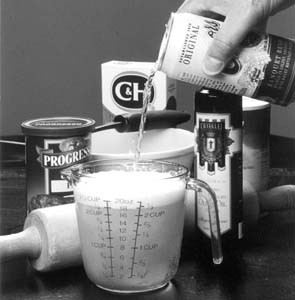
It seems that California, ever since 1962, has enforced a different legal definition of milk than the one used by the U.S. Department of Agriculture in all the 49 other states. According the USDA, all milk must maintain certain levels of fat and a substance they call “solids non-fat,” or SNF, in order to be defined as milk; dairies are prohibited from producing and selling milk with a SNF content below that level. This covers whole milk, skim milk, and the increasingly popular low-fat varieties: 1 percent and 2 percent low-fat milk.

In California, the standards are considerably higher, particularly when it comes to the low-fat products. According to state law, producers must add additional non-fat milk solids after removing the cream and fat. Only then is it legally milk.

Though not incredibly costly–roughly 15 cents per gallon–compliance with the tougher state standards is certainly more costly than simply going along with the federal standards; the standard can be met by adding powdered non-fat milk, but most California producers use wet SNF, derived from fresh milk. In short, more cows have to be milked for a gallon of California moo juice than in, say, Arizona.

SO WHY DO THIS? According to Dan Benedetti, president of Clover-Stornetta Farms, “All the good stuff in milk–the protein, the calcium, the vitamins, the minerals–is found in the SNF. We add back additional solids to our low-fat milk, and that’s what gives the texture, the flavor, the taste, and the protein and vitamins and all that. So you’re getting a better glass of milk in California.”

Not so, says Audrey Krause of MAM.

“We’re getting a more expensive glass of milk in California,” she says, “but there’s no proof it’s any better for you than the federally approved milk.”

She brushes off a recent CDFA report that an 8-oz. glass of California milk has 33 percent more calcium and protein than federal standard milk. “The only reason that California raised its SNF content was to increase the demand for milk production, to keep prices high, and to keep competition out,” she says.

Such claims are at the heart of MAM’s cause. The organization’s numerous faxes routinely include graphs showing the difference between milk prices in California and milk prices in Arizona; depending on which cities are being used as examples, the price difference can be as much as a dollar. Such comparisons have raised the eyebrows of various city council members across the state, who–persuaded that the higher prices here can be traced to the higher milk standards–have joined in to demand changes.

“If the prohibition against federal standard milk were lifted,” Krause insists, “it would increase competition, and this would have a downward effect on prices.”

Such remarks rankle Jim Tillison of the Dairy Institute of California.

“As far as 1 percent and 2 percent non-fat milk in California is concerned,” he says, “our standards exist to provide the taste and mouth feel of whole milk, but with less fat and more nutritional content. There’s no prohibition.”

TO KRAUSE’S CHARGE that our milk is more expensive because of the state standards, Tillison retorts, “I was at a press conference in San Diego recently, where Krause was complaining that the price of milk had gone up 14 cents in San Diego, and was saying that this was because of California’s milk standards. She didn’t bother to mention that the price of milk had just gone up 13 cents in Arizona. Prices go up and prices go down all around the country. And yes, milk is more expensive in California, but so are bread and eggs and housing costs and just about everything else.”

It is no accident that California is constantly being compared to Arizona in these discussions. According to Tillison–along with Benedetti, the CDFA, and a host of organizations including the Consumers’ Union and the California Dairy Issues Forum–MAM was founded, not by a consumer coalition, but by Norm McClellan, CEO of Shamrock Dairies in Arizona.

“Shamrock wants to come in and sell milk in California with standards that are not as high as ours,” says Benedetti. “Plenty of out-of-state dairies are competing in California, and they meet the California standards and there is no problem at all. At least we are competing with dairies that are willing to rise to our level.”

“The state of California has vigorously enforced its standards for over 30 years,” says Tillison, “and then Shamrock comes in, is fined for illegally selling milk that did not meet our standards, and out of that rose this so-called consumer coalition Mad about Milk.”

TO THE CHARGE that MAM is a front for Shamrock, Krause replies, “We’ve never made a secret of the fact that our funding comes from out-of-state dairies. But we are a coalition.” She cites several allied organizations, including Waste Watchers, Seniors for Action, and the Customer Co. (operator of the Super Cheaper Stores).

Tillison doesn’t care about those extra names on the MAM stationery. Whoever else has lent their support to MAM, it started with Shamrock. “They are professional lobbyists for hire, in the business of distorting information,” he says. “And they are unnecessarily raising consumers’ concerns.”

To that end, the California dairy industry is beginning to launch a counterattack, attempting to reach consumers with its own message.

“Because of our standards, we in California have superior milk to [that] anywhere else in the country,” says Benedetti. “I think the California consumer has not only become used to it, but would prefer those standards and, if given a choice, would demand it.”

“Fine. Let’s give the consumers a choice,” Krause says. “We’re not asking for California’s SNF standards to be eliminated. Only that the state should also allow milk to be sold that meets the federal standard. So why not put both kinds on the shelf, label them, and let the consumers decide?”

As for Shamrock Dairies–which Krause does not deny would benefit tremendously from such a reversal of the law–Benedetti insists that he and Clover-Stornetta would welcome the added competition, but only as long as the Arizona conglomerate plays by California rules.

“Competition is a good thing,’ Benedetti says. “We need competition. But no one should be allowed to come in here and demand to be excluded from the same rules the rest of us are following.”

Adds Tillison, “In fact, if you look into the money that Shamrock has put into this, not only by funding MAM, but in all the fines and attorneys fees they’ve had to pay for breaking the law, they could be fortifying tens of millions of gallons of milk.

“Let them put their money into that.”

From the December 17-23, 1998 issue of the Sonoma County Independent.

© Metro Publishing Inc.

Holiday Gifts for the Hard-to-Please

0

Gift Options

Alternative gifts for that extremely hard-to-please person in your life

By David Templeton

TWAS THE NIGHT before Christmas and all through the house, not a creature was stirring, …” except for those sad, sorry souls who are up wrapping presents, and those other modern Americans whose heads are bowed in repetition of the age-old prayer, “Jesus Christ! Why didn’t we start shopping earlier?”

That’s not a bad question at this time of year. Why do we wait so long to wrap up our Christmas shopping every year? Do we crave the frantic hustle and bustle of extended shopping hours? Have we become adrenaline junkies, addicted to rushing around at the last minute? The answer, of course, is a multi-faceted one; there are many reasons our shopping chores take so long to complete.

But one reason, and one alone, is the subject of this gift guide.

It’s this: Some people are harder to shop for than others. Heck, some people are impossible to shop for. Perhaps these “problem recipients” don’t really need anything, or want anything, or have any place to put anything. Maybe they have no known hobbies or occupations or personality from which to discern a workable purchasing scenario. Maybe they’re the proverbial “guy/gal who has everything.”

At any rate, if you’re not careful, you’ll use up all your precious shopping hours wandering the malls, frantically muttering, “Maybe they’ll like that! Maybe they’ll like that!” This, needless to say, is unfair, not only to you but also to those poor folks on your list who’ve actually told you what they want.

To help, we’ve assembled a few basic hard-to-shop-for character types–described in detail for easy identification–with a list of practical, sure-fire gift suggestions that correspond to each type. May it fuel the fire of your gift-giving imagination.

The person who really does have everything, either because they are independently wealthy–and have already acquired everything they could possibly think of–or because they have lived long, full lives of careful investing and thrifty consumerism and have already acquired everything they could possibly want.

WE RECOMMEND food, a game, a film, a book. It doesn’t take up much space, and even if they already have some, they’ll probably need more soon. We’re serious. And no, we are not suggesting you leave a bag of groceries on their front doorstep–though that’s an excellent idea for any struggling college student you may have on your list–rather, that you give unusual, one-of-a-kind treats, maybe something of a foreign origin or with a gourmet orientation. Cost Plus World Market is a good source for such edible oddities, as are many of our local, independent grocery stores.

But let’s assume that your friend’s pantry is already packed to the rafters with King’s Pantry hand-made Chocolate Sauce ($7.95 per jar; available at Circle of Friends in Petaluma) and bottles of spicy, festive Norfolk Punch ($4.95; available at Petaluma Market, Pacific Market, and Oliver’s Market). Your friend also possesses an abundance of attractive gift packages featuring fresh-roasted coffee beans (available in various prices at numerous coffeehouses throughout the county).

May we then suggest a gift of The Great Dalmuti (Wizards of the Coast, $7.95)? The perfect gift for those who have everything, this compact card game takes up little space and is tremendous fun to play around the dinner table. Based on medieval feudal systems and the notion that “life isn’t fair,” the game allows “peasants” to attempt an overthrow of the ruling “Great Dalmuti.”

You could give your well-to-do companion a video of the classic film, You Can’t Take It With You , Frank Capra’s 1938 Oscar-winner about an odd family with a healthy philosophy, starring James Stewart, Jean Arthur, and Lionel Barrymore (available on video, retails for $19.99). Continuing in that theme, what about a copy of Die Broke: A Radical 4-Part Personal Finance Plan (HarperBusiness, $14)? Written by Stephen M. Pollan and Mark Levine, this much-talked-about guide is based on the boat-rocking notion that we should all leave this world with the same amount of stuff that we came in with. An excellent gift for the person who has everything, don’t you think?

The person who never likes anything you give them, or already has one, or insists they know a place where you probably could have gotten the same thing, only better and cheaper.

GIFT CERTIFICATES were made for these kind of people. They are available everywhere, and can be redeemed for everything from merchandise to dinner out at a restaurant to a makeover and facial at a nearby spa. Money, also, works well in such cases. Yes, it can be a little awkward to hand someone a twenty and say, “Merry Christmas,” and even a few dollars in a Christmas card might seem a bit abrupt for some of the people on your list. We recommend that you dress up the cash in some way. For example, roll the bills into tight little packets and stuff them into large gelatin capsules (inexpensive and available at any pharmacy or drug store), then put them in a pill bottle and write your friend a “prescription for the Holiday Blues.” Another approach is to give a copy of How to Make a Paper Airplane (Klutz Books; $4.95), along with a few 10-dollar bills already folded into aeronautical shapes.

The struggling writer who has never actually written anything because, you know, they’re still dealing with that really bad case of writer’s block.

AND HAVEN’T WE all been there? For such cases we have but one recommendation. Short of a copy of Writer’s Market, the ultimate gift for writers, whether they are “blocked” or not, is The Observation Deck (Chronicle Books, $19.95), by Naomi Epel. The Observation Deck is an ingenious kit for inspiring creativity in writers. Consisting of a slender book and a deck of specially designed cards, the kit is a collection of observations, gleaned from hundreds of authors, on how they kick their own creative butts into gear while writing. Each card contains one suggestion, to be drawn by random whenever your writer needs a little kick of their own.

The person who has no spare time whatsoever, works overtime every day, never takes vacations, has no friends, no hobbies, and no apparent interest in having fun of any kind.

FOR SUCH an individual, a grave site and a shovel would be the obvious choice (call any local cemetery for price information; shovels go for around $15 at Yardbirds)–but the recipient probably has no sense of humor, so we don’t recommend that approach. Instead, how about The Lessons of St. Francis of Assisi: How to Bring Simplicity and Spirituality into your Daily Life (Plume, $11.95) by John Michael Talbot? This is a simple, slender, poetic book that draws on the teachings of the famous friar to point out a way to introduce a little peace and quiet into a hectic lifestyle.

As a strikingly unexpected companion volume, toss in a copy of The Millionaire Next Door: The Surprising Secrets of America’s Wealthy (Pocket Books, $14) by Thomas Stanley and William Danko. It offers a surprising look at the majority of millionaires in this country, who achieved their fortune the same way St. Francis achieved his sainthood: by living frugal lives not wasted in pursuit of luxury.

How about one of those Alien Popping Things, you know, the little rubber toys whose eyes pop out when you squeeze them? They’re ugly, but the manufacturers claim they do relieve stress (available at novelty shops and toy stores for about $4.95, or at House of Humor in Santa Rosa). As a symbol of your recipient’s impending mortality, we suggest an ornamental pewter sculpture of the mythic Charon, boatman of the dead, piloting his dragon-headed craft over the River Styxx ($90 from Legends of Fantasy Gifts; call 800-322-6040 or check online).

From the December 17-23, 1998 issue of the Sonoma County Independent.

© Metro Publishing Inc.

Vic Chesnutt

0

Bitter Sweet

Amongst the mountain: Vic Chesnutt pens long ballads of doubt and loss.

Vic Chesnutt lets some light shine on his dark, pained lyrics

By Gina Arnold

FOR SOME STRANGE reason, tokenism is generally considered a bad thing. The only gay cast member of a sitcom, the only Asian in the election, the only woman at the top of the masthead–these distinctions, though necessary, often imply a type of favoritism that reflects poorly on the unwitting object.

Take Vic Chesnutt, who is a member of a minority himself, one that is seldom represented in rock and roll. He is a paraplegic. Happily, you could see him sing–and certainly you could listen to his records–and though you’d definitely think, “Wow, this guy’s on a bum trip,” you’d probably never suspect that he is, as they say, “differently abled.”

The Salesman and Bernadette (Capricorn Records) is Chesnutt’s sixth and most accomplished record to date. Chesnutt’s previous albums have been unrelenting downers, full of long, sad, slow ballads about doubt, loss, and disaster. They have their occasional humorous moments, but in general they are emotionally and texturally similar to the work of ex-American Music Club frontman Mark Eitzel.

Chesnutt’s new CD, however, is more upbeat. The overall tenor is not exactly sunny (“quirky” is about as good as it gets), but Chesnutt’s songs are no longer quite as painful to listen to as they have been in the past.

Of course, Chesnutt’s pain is all too easy to understand. Unlike most of the white-boy whiners of rock, he speaks from a place of literal, rather than mental, suffering. A native of Athens, Ga, he was in a drunken-driving accident at the age of 18 that left him without the use of his lower limbs.

Onstage, he sits in his wheelchair, head askew, muttering cynical remarks between songs. He has been known to abuse alcohol during concerts, making his shows somewhat uneven. He sings, plays guitar, and, on record, piano. On The Salesman and Bernadette, he is backed by members of the Tennessee-based band Lambchop.

Chesnutt was discovered by R.E.M.’s Michael Stipe and recorded for the Stipe-affiliated label Texas Hotel before gaining wider notice. (He’s now on Capricorn, a Capitol affiliate.) Although his voice is not particularly memorable, he does have an unusual presence–part Southern Gothic, part Tom Waits, part Victoria Williams (another artist who has benefited from Sweet Relief, an organization that supports musicians with no health insurance). He has been covered by artists like R.E.M., the Smashing Pumpkins, Madonna, and Live, who did his song “Supernatural” when it appeared on MTV Unplugged.

Perhaps because of his chronic health problems, Chesnutt has created an oeuvre–drunk, despondent–that is pretty much the rock equivalent of Malcolm Lowry’s dipsomaniacal novel Under the Volcano. Although Chesnutt’s songs are sad and pretty, earlier records like Drunk, Little, and About to Choke were also unbelievably bitter. The Salesman and Bernadette contains some similarly grim moments, but the mood has lightened perceptibly from earlier days. “Until the Led,” for example, is downright jaunty. Only “Square Room” degenerates into the kind of self-pity and self-absorption that characterized his early work.

CHESNUTT’S forte is his lyrics, which are compelling enough to read like novelistic prose. Indeed, he has much in common with minimalist writers like Raymond Carver. “Duty Free” is a brief portrait of a business traveler caught up in the dullness of an airport wait, where “he beats a stampede toward the duty-free/ Using up all his old currency.” “Scratch, Scratch, Scratch” depicts a day of jury duty in cold, unerring detail: “The crowd at the courthouse passed around the flu … then we were dismissed.”

As those example indicate, mere snippets of his songs will make you want to read the rest: “She said her father looked like Woodrow Wilson, presiding from behind prescription lenses”; “Remember the time you took me to see Harold and Maude because I didn’t know the meaning of ‘catharsis’?”; “I could see there in the sun-room, the growing storm of disapproval”; “You’re up there amongst the mountains, and I am drinking from this nasty water fountain.”

Any one of these lines could serve as the lead sentence to a gripping short story. Allied as they are to Chesnutt’s quiet folky music–the kind that was once aptly described as “difficult country”–they are quite haunting.

Now that Chesnutt has rid himself of all that bitterness, there’s no need to even mention his disability in a review. Nevertheless, I think it’s important, because to me, Chesnutt really exemplifies how a truly committed artist, even one with severe impairments, can take advantage of the power of music and its lack of limitations.

Vic Chesnutt’s songs don’t shy from life’s tragedies, but his very existence is a blow against the harshness of reality.

From the December 17-23, 1998 issue of the Sonoma County Independent.

© Metro Publishing Inc.

Talking Pictures

0

Kiddie Flick

By David Templeton

Writer David Templeton takes interesting people to interesting movies in his ongoing quest for the ultimate post-film conversation. This time out, he attends an advance screening of the animated The Rugrats Movie, along with a pair of highly experienced Rugrats “experts”–his two daughters, Amber and Jenna.

“No one knows the Rugrats better than I do,” proclaims Amber at the outset of our 50-mile trek to San Francisco, where we’ll be checking out The Rugrats Movie, the much-anticipated big-screen version of Nickelodeon’s phenomenally popular T.V. cartoon.

My daughter, clutching her barking Spike toy–he’s the Rugrats’ beloved dog–and her miniature Phil doll–he’s one of “The Twins,” the other being sister Lil; they’re the bug-eating buddies of fellow rugrats Tommy Pickles, Chuckie, and Angelica–has been a fan of the show since its debut when she was four. She’s now eleven.

“I’m the number one Rugrats fan,” she happily crows. And she’s got a whole roomful of Rugrats paraphernalia–the accumulated treasures of seven years of faithful, consumer-based fandom (aided by the gleeful generosity of grandparents, aunts, and uncles)–to prove it.

“I guess I’m the Number Two Rugrats fan,” murmurs Jenna, age 12, tagging along for this evening’s big event. “I like the Rugrats a lot! But I like The X-Files better.”

So there.

My appreciative progeny are not alone in their pop-cultural attachment to Rugrats; the movie–now in theaters everywhere–has amassed over $50 million in its first two weeks of release. Tommy Pickles & Co. must have a lot of fans out there.

During our drive, the conversation is electric, an unending barrage of excited banter and unexpected questions. I have to work fast, coming up with reasonable answers to everything from “How does a projector work?” and “What keeps the Golden Gate Bridge from falling down?” to “How long would it take for a jumper to hit the water?” and “What does ‘male bonding’ mean?”

“Geez,” I think, “where did that one come from?”

No matter. These are good questions, whatever their free-associated origins may be. And it so happens that they are only a warm up for the questions I’ll be getting on our way back home, questions no one could have guessed would be inspired by a G-rated feature-length cartoon about five noisy babies.

“The twins didn’t eat enough bugs,” yawns Amber, shortly after the film. “In the T.V. show, they eat worms and spiders all the time.” Comfortably ensconced in the back seat, a suddenly sleepy Amber ticks off a handful of items that bothered her about the film: it was occasionally violent, the Rugrats were frequently mean to one another (something that never happens in the regular show), and the humor was uncharacteristically packed with, um, how shall we say it?

“Yucky stuff,” Amber boldly names it. “On T.V., the rugrats are a little bit gross, but they’re always sweet and nice to each other. I think the people at Paramount [the distributor of the film] said, ‘Oh, kids won’t like that enough. If we’re going to make big bucks we’ll have to put in a lot of fart jokes and private-part jokes. Kids love that kind of thing.’

“It really upset me,” she sighs.

“Um,” I reply, “Don’t you both laugh at fart jokes?”

“No,” Amber retorts.

“Yes,” admits Jenna, shooting Amber a silent sibling stare. “We do when we’re in a stupid mood. Farting is funny.”

“What’s so funny about farting?” Amber demands. “That’s what people do! It’s really just like, you know, burping.”

“Yeah, burping out of your butt,” replies Jenna.

“So what did you like about the movie?” I ask, attempting to redirect.

Jenna liked an early scene in a hospital nursery, wherein a chorus of newborns perform a Busby Berkeley-like song-and-dance routine, complete with jokes about umbilical cords, circumcisions, and post-partum depression–“I miss my old womb,” cries one insecure infant–and concluding with a synchronized, multi-streamed, overhead arch of, um, baby fluid. For her part, Amber liked a scene where the Rugrats, lost in the woods, float down river singing pirate songs. She especially liked Dil. The newest member of the rugrats, Dil is Tommy’s newborn brother, a kid with loud lungs and an incessant, all-night-long wail that brings his parents to the verge of mental and physical exhaustion.

“If that’s what babies are like,” Amber remarks, “I don’t know if I want to have kids. In the movie, after Dil was born, his dad was so tired he started crying! That doesn’t really happen, does it?”

“Absolutely,” I answer. “After each of you were born, we went months without getting a full night’s sleep.”

“How many months?” Amber presses.

“About six or seven,” I tell her.

“Half a year? How could you stand it?” she exclaims.

“Wow. Good question,” I nod, diplomatically. My answer takes several minutes. I explain that no matter how tired or exhausted a parent becomes, no matter how near the brink of sanity they become, they find so many endearing things in their children’s behavior that it makes it all worth while. I talk about responsibility, and parental pride, and indescribable love.

I lie through my teeth.

“The truth is,” I tell them, honestly, “I only vaguely remember the exhaustion and the long nights of crying. But I do remember how much I loved holding you and making up songs to sing to you, and …”

“Dad,” Jenna gently interrupts. “Amber’s asleep.”

I glance into the back seat. Sure enough, she’s zonked out, still clutching Spike.

“I was kind of wondering,” Jenna muses, “about that scene in the nursery, and the one baby who talks about her umbilical cord being cut. Does it hurt the baby when the doctor cuts the umbilical cord?”

Good question. My answer–that I was allowed to cut the cord myself, and that as far as I could tell, no, it didn’t hurt her a bit–leads the savvy seventh-grader to other questions: if one end of the umbilical cord is attached to the baby, what’s the other end attached to? What does a placenta look like? How big is it? Do whales have placentas? How can doctors tell when a baby is due? What determines when a woman gets pregnant from sex and when she doesn’t?

“Golly,” I think to myself, “I knew we’d be having this conversation some day, but I wasn’t exactly prepared to be having it right after watching the Rugrats.”

Then again, why not now? Ten miles later, we’ve discussed ovulation, menstruation, abortion, and birth control.

“What exactly is birth control?” she asks. “In health class, they mention birth control, and they mention condoms, but that’s about it. Are there other kinds of birth control besides a condom?”

In simple terms, I describe the pill, and diaphragms, and contraceptive foam.

“Oh no!” Jenna laughs at the latter. “That is so gross!”

A road sign tells me that we’re almost home. But Jenna has one last question. “What kind of birth control do you use?” she asks.

Oh Christ. Now I have to explain vasectomies.

I carefully describe the concept, using plumbing analogies where possible.

“So,” she nods quietly when I finish the explanation, “the little sperms are just stuck in the testicles and they can’t get out?”

“Um, pretty much, yeah,” I shrug.

“Don’t worry about them, Dad,” she smiles, reassuringly. “Just imagine that your sperms are male bonding. They’re in there singing, ‘YMCA’ or something.”

We’re home. As Jenna heads off to her room, she smiles, “Pretty good conversation.”

Amber wakes up as I carry her from the car. Over her bed, bedecked with Rugrats sheets and Rugrats pillowcases, is a giant poster of Tommy Pickles, smiling down at her. I tuck her in and kiss her goodnight.

“I guess I liked the movie,” Amber mumbles, dreamily. “But I wish they’d have asked me for suggestions first. I could have told them how to make a Rugrats movie that’s really worth talking about.”

Web extra to the December 10-16, 1998 issue of the Sonoma County Independent.

© Metro Publishing Inc.
West Side Story

0

Modern Love

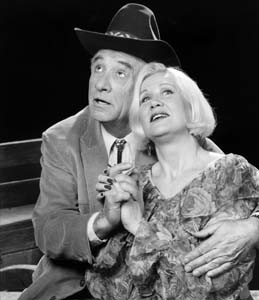
West Side Story.


‘West Side Story’ still entertains

By Daedalus Howell

MANY BELIEVE that community theaters, when under critical scrutiny, deserve special coddling on the part of the reviewer. No such indulgence is necessary, however, for the Santa Rosa Players’ production of West Side Story, a show so hot you gotta upgrade the kid gloves to oven mitts.

Created by Broadway behemoths Leonard Bernstein and Stephen Sondheim in the late 1950s, West Side Story is this century’s pre-eminent retelling of Shakespeare’s Romeo and Juliet. Updated with all the trappings of rank-and-file urban life, West Side Story pits native New Yorker street thugs the Jets against Puerto Rican émigrés the Sharks in a tragic dance to the death for turf. In the balance hang ill-starred lovers Tony (an ex-Jet adeptly played by Ryan Brady) and Maria (Alyssa Zainer deftly portraying this sister of a Shark).

Directorial duo Gene Abravaya and Bob Rom take a skilled and energized cast and forge a production that is surprisingly entertaining and vital. Electric from the get-go, the show opens with a combustible dance sequence bordering on the acrobatic–these guys are practically gymnasts, and their physical agility alone is worth the ticket price.

The Jets, a wisecracking ragtag company of hyenas and cut-ups led by de facto alpha-male Riff (Austin Meisel’s edgy portrayal rings true down to his New York pronunciation of Sharks as “Shocks”) are so synchronized in their aerial stage antics that they recall a circus act. These performers particularly shine during the musical’s signature “Officer Krupke” routine, a crowd-pleasing paean to juvenile delinquency delivered here with vim and hilarity.

The well-cast Sharks also cut imperturbably cool characters. Though they have less comic dialogue than their counterparts, their sinister finesse often pitches ironic, as when their svelte honcho Bernardo (sympathetically portrayed by Josh Salsberg) voices his socioeconomic grievances with America to the tune of “Everything free in America–for a small fee in America!”

Bernardo’s chief bantermate and foil is the acidic Anita, played with comic alacrity by an on-the-money Casey Giordano, flanked by an arsenal of sexy, high-kicking sisters-in-arms.

As the lovers, Brady and Zainer (both wonderful singers) excel at portraying the zealous nature of adolescent ardor (remember, the entire story is compressed into a 24-hour tempest of love and death). The players ably depict Tony and Maria’s urgent love without slogging in schmaltz or slowing the play’s expeditious clip.

The cast’s strong vocal abilities are complemented by the Players’ crackerjack orchestra, led by musical director Jane Ludwig Crowley. Its robust playing sounds larger than the sum of its six-piece personnel.

As one Shark wryly quips in the early part of the musical, “In America, nothing is impossible.” The Santa Rosa Players proves the adage true for community theater as well.

West Side Story plays through Dec. 20 at the Lincoln Arts Center, 709 Davis St., Santa Rosa. Showtimes are at 8 p.m., Fridays and Saturdays, and 2 p.m. on Sundays. $10-$12. 544-7827.

From the December 10-16, 1998 issue of the Sonoma County Independent.

© Metro Publishing Inc.
Illustrator James Avati

0

Full Color


Michael Amsler

Classic Art: Petaluma illustrator James Avati’s work has graced the covers of paperbacks by America’s finest authors.

Illustrator James Avati paints into the future

By David Templeton

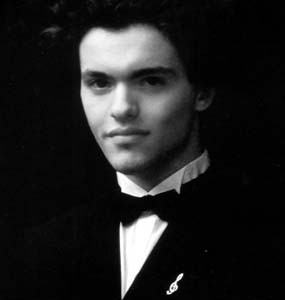
INCREASING MACULAR degeneration. James Avati speaks the phrase carefully, pronouncing the name of his recent diagnosis–“Increasing. Macular. Degeneration”–as if each word were a separate and undeniable fact, just as his deteriorating eyesight–the macula is the part of the eye that distinguishes fine detail at the center of our field of vision–is undeniably a fact. His tone of voice, however (one might call it cordial annoyance), reveals none of the gloom or self-pity one might expect from a renowned artist whose vision is in decline.

James Avati, known as “the King of the Paperbacks” for his pioneering cover illustrations in the ’40s and ’50s, and internationally lauded as one of America’s greatest artistic treasures, is too philosophical–and still too full of plans–to waste time feeling sorry for himself.

Just as he dismisses the enormous housing complex now being rooted into the hill above his cozy Petaluma house–“None of us can control the details of our lives,” he grins, waving an arm at the active construction site beyond his fence–Avati is matter-of-fact about his eyesight.

“I can’t see well anymore,” he shrugs, filing through a stack of vivid illustrations he’s brought out from his studio. “I’ve already lost my depth of vision. It’s hard for me to tell when my brush touches the painting.” But philosophy or no, he admits that the adjustment is a frustrating one. “I’m at the end of my tether, man,” he laughs. “Gee whiz! It is frustrating. I hate having to slow down.”

James Sante Avati, now 86, was 34 years old when he began illustrating paperback book covers. A graduate of Princeton, where he studied architecture, he had already dabbled in a number of occupations: laborer, department store window designer, and–having taught himself how to paint–magazine illustrator. After serving in Europe during World War II, Avati returned to his home in Red Bank, N.J., and found an agent. His illustration work for such magazines as Collier’s and The Ladies’ Home Journal helped him land a job with New American Library Publishers, where he was introduced to a brand-new literary product–the paperback book.

Borrowing a low-cost production concept from the mostly execrable “pulp” novels, paperbacks were intended to be make true literature easily available to the postwar masses. To sell the books, publishers counted on a snappy cover illustration to grab the eye of potential readers. Enter Avati, who immediately recognized that an illustrator’s job was to serve the author’s story. He stood out from the majority of other illustrators of the time by insisting on actually reading every book before designing its cover.

As a result, he read some very good books. Among Avati’s thousand-plus illustrations are those for Erskine Caldwell’s Tobacco Road, C. S. Forester’s The African Queen, Ralph Ellison’s The Invisible Man, Grace Metalious’ Peyton Place, Pearl S. Buck’s The Good Earth, Theodore Dreiser’s An American Tragedy, J. D. Salinger’s Catcher in the Rye, and Robert Anderson’s Tea and Sympathy.

Avati’s approach–to capture the book’s overall theme, rather than a specific scene, by employing gritty, boldly realistic characters placed in a sharply detailed setting–immediately proved to have the desired effect: It sold books. He used non-professional models, often out-of-work citizens of Red Bank, photographing them in their all-too-natural anti-glory. He took pictures of dilapidated buildings, such as the crumbling sharecropper’s shack on which he based his famous illustration for Tobacco Road. Such messy detail helped create Avati’s reputation for rendering the dark side of Norman Rockwell’s innocent optimism. As fellow illustrator Stanley Metzoff put it, Avati showed “what the world was actually like after the bullshit was over.”

Whatever he did, it worked. By 1949, he was firmly established. Working for $200 dollars or so per illustration, Avati–firmly focused on his work–was unaware of his growing reputation. “I still thought of myself as a struggling artist,” he says. “Whatever reputation I was building grew up around me. I wasn’t even aware of it, thank God. I certainly wasn’t trying to influence anyone.”

Whether intentional or not, Avati’s innovations are widely accepted among collectors of early paperbacks as having influenced a generation of illustrators. By the early ’50s, his earthy, provocatively honest style was being emulated throughout the industry, giving weight to the connoisseurs’ assertion that Avati, essentially, invented the art of paperback illustration.

TODAY, such claims make him uncomfortable. After listening to an excerpt from one overseas critic–who asserts that Europeans in the postwar years received their notion of what an American was by absorbing Avati’s evocative images–the artist cringes.

“That’s a bit overwhelming, don’t you think?” he demands. “I don’t know whether I want that kind of responsibility. I certainly wasn’t trying to tell Europe how to look at America. I was just trying to represent the stories in the book. No doubt, my attitudes and visions of America were an ingredient of that, but … God! It would have been terrifying to have been told I was interpreting one nation for another.

“I don’t believe it for a minute, by the way,” he adds.

After the heyday of the ’50s, Avati’s work–and the paperback industry in general–began to be edged out by other forms of entertainment. He continued illustrating, although, as he says, “the quality of the books wasn’t as good anymore.” In 1989, he relocated to Petaluma, where he lives with his son, an accomplished sculptor. He still occasionally accepts an illustrating job, but these days he usually works on personal projects: His paintings of his adopted home are often on view at Petaluma’s Gallery One art dealership. In recent years, his paperback work has gained him a certain amount of recaptured fame. In 1994 he was inducted into the Illustrator’s Hall of Fame, the only living artist ever to receive the honor. A documentary team from Amsterdam recently spent a week in his home, shooting a film on Avati’s life and work.

“To be honest,” he says, smiling wickedly, “all this attention is getting kind of old.” He gazes toward his studio, where an unfinished landscape awaits. It is in the painting of such personal works that Avati has found a deeper satisfaction, illustrating his own world for his own pleasure.

“A part of me was never interested in being an illustrator,” he now confesses. “That was the part that wanted to be a fine artist, a creative artist. And that part was always in control, to some degree–and I couldn’t always satisfy it. I still feel there’s a part of me that’s never been expressed.”

Which brings him back to the subject of his eyes.

“I may have to give some thought to changing my whole approach,” he allows. “But I’ve invested my whole life into developing this particular way of painting, I don’t know if I want to change it.

“Then again,” he says, chuckling (philosophically of course), “there’s a lot I still want to do. So I’ll most likely find some way to keep on doing it. The planets formed from the elements because it was implicit in those elements to be planets, and I paint because it is implicit in me to paint. So what the hell–as long as I can, I probably will.”

From the December 10-16, 1998 issue of the Sonoma County Independent.

© Metro Publishing Inc.
Leslie Brody

Crimson Memories

By Patrick Sullivan


The story of the 1960s has been told so many times, in so many ways, that it has attained the cultural status of a fairy tale. Whatever the ideological stance or literary talent of the teller, the tale tends to be full of the same fantastic clichés: Either Richard Nixon or Abbie Hoffman winds up wearing the black pointy hat, commanding squads of nasty flying monkeys (with the face of Henry Kissinger), and cackling “I’ll get you, my pretty.” History flattens out like a pancake, and whatever insights (political, historical, or literary) the period has to offer are buried in simple-minded moralism and grotesque self-indulgence.

To its great credit, Red Star Sister (Hungry Mind Press; $16) avoids that trap by offering readers an astonishing amount of honest self-reflection.

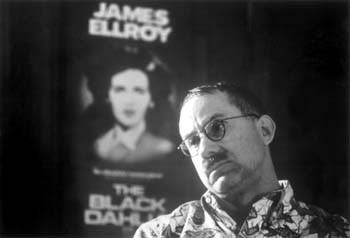
Leslie Brody’s autobiographical account of coming of age in the vanguard of the ’60s counterculture covers a lot of ground: Brody was a high school anti-war activist in suburban Long Island, underwent paramilitary training with the radical White Panther Party (where she earned the moniker “Red Star Sister”), got her head bashed in by San Francisco cops, forged a name for herself as an alternative journalist, and journeyed to the Paris Peace Talks in a quixotic effort to end the war by meeting with the Vietnamese diplomatic delegation. Along the way, she even managed to find time to attend Woodstock.

Early on in this ambitious account, the author serves notice that she has no plans to handle her youthful self with kid gloves: “‘Perhaps it was instructive that my goals were not unsimilar to those of a Miss America contestant whose sappy calls for ‘world peace’ were an embarrassing annual cliché. Miss America wanna-bes could smile thousand-watt smiles, but they were fuzzy on how to achieve peace for humanity. I suffered no such doubts.”

On the other hand, she’s not apologizing either. Her mistakes and misadventures are legion as she hopscotches across the country carrying her red suitcase and negotiating the cultural minefield of the turbulent decade. She joins a radical Ann Arbor commune and gets a bitter taste of conformity and group-think. She experiences firsthand the machismo and paranoia that were the toxic bproducts of the long war between U.S. leftist paramilitaries and the FBI.

But she never finds a good reason to endorse the conservative condemnation of her generation: “I’m sure brats abounded, as they do in every age. They disturb people with new scientific and political theories, compose symphonies, and write poetry of staggering beauty and vision. I admit brats can be annoying, but I’d always rather be on their side.”

The book renders many of Brody’s experiences in wonderfully vivid terms. Her account of participating in an anti-war demonstration and being beaten to a pulp by the police is hair-raising and provocative. The claustrophobia of her classrooms on Long Island is also conveyed with subtle power: The independent-minded little Jewish girl was rarely out of trouble with disapproving WASPy teachers determined to hold back the ethnic tide. Brody’s relationship with her widowed father is also portrayed with thoughtful complexity.

Unfortunately, in other cases, the reader is left hanging, waiting for a denouement or explanation that never comes. Brody took LSD and lost her virginity while experiencing Woodstock, all in one fell swoop. Perhaps the whole thing was simply too intense to fully convey, but the author seems not even to try, content instead to sum up in a few flat details. In this, and a few other cases, her account is curiously lacking a climax, leaving us wondering what the hell really happened.

On the whole, however, Red Star Sister takes care to keep the reader involved and interested in Brody’s tumultuous quest to find a good place to make her stand as an activist, poet, and free-thinker. Particularly compelling is the author’s slow evolution as a feminist in the very male world of the revolutionary counterculture. Brody is far from a knee-jerk male-basher, but her deft account of the prevailing sexism still at work at the dawn of modern feminism is priceless (and often very funny).

In the end, Brody–who now teaches at California’s University of the Redwoods–leaves us with an intriguing, if incomplete, view of a fascinating period. With Red Star Sister, she has opened up her red suitcase of mementos just wide enough to give us a glimpse of a life lived with relentless determination, a good dose of foolhardiness, and a deep thirst for real meaning.

Leslie Brody appears Saturday, Dec. 12, at 7 p.m. at North Light Books, 550 E Cotati Ave, Cotati. For more information, call 792-4300.

Web extra to the December 10-16, 1998 issue of the Sonoma County Independent.

© Metro Publishing Inc.

Spins

0

Jazz Notes

Made in Cuba: Roy Hargrove’s Habana is one of the year’s best jazz CDs.

1998: Nothing fancy, but plenty to cheer

By Greg Cahill

THE DEBATE over the future of jazz rages on. Are the young jazz lions of the past the saviors of the genre, or just a pack of fly-by-night retro phenoms? With little airplay outside of public radio and few small, scattered venues, how will the public experience the cutting-edge sounds of the Art Ensemble of Chicago or trombonist Roswell Rudd? Time will tell. After all it’s true that, as East Bay Express music critic Andrew Gilbert recently opined, “with the major labels owned by entertainment behemoths, the jazz business increasingly resembles a bottom-line-driven corporate enterprise.”

Not much room in that marketplace for the experimentation that has propelled this improvisational art form over the last century.

On the other hand, even though jazz superstar and Lincoln Center Jazz Orchestra director Wynton Marsalis–who is most responsible for drawing the entertainment media and a mainstream audience to traditional jazz–turned in a tame The Midnight Blues: Standard Time, Vol. 5 (Columbia) this year, he also laid the groundwork for construction of an 1,100-seat concert hall at the Lincoln Center–the first concert hall designed acoustically for jazz.

That fact underscores the recognition of jazz as America’s classical music, and hopefully signals a respect not only for the genre’s past glories, but also for its future development (let’s hope the Lincoln Center makes room for the John Adamses of the genre).

Certainly the past is always present in the jazz world. This year saw plenty of recorded homages to the jazz legends, including such sterling reissues as the Miles Davis Quintet, 1965-68, The Complete Studio Recordings (Columbia/Legacy), Thelonious Monk’s stunning Live at the It Club (Columbia/Legacy), the underrated post-bop Ellingtonia of Rahsaan Roland Kirk’s four-CD set Aces Back to Back (32 Jazz), and a slew of augmented gems by John Coltrane, Charles Mingus, and Ornette Coleman on the Atlantic/Rhino reissue series.

There also were a trio of noteworthy new Davis tributes–Bill Laswell’s haunting cut-and-paste project Panthalassa: The Music of Miles Davis, 1969-1974 (Columbia), vocalist Shirley Horn’s sultry, ballad-heavy I Remember Miles (Verve), and the World Saxophone Quartet’s criminally overlooked African drum-driven Selim Sivad, A Tribute to Miles Davis (Justin Time).

And fans are quite comfortable with this fixation on the past. T. S. Monk, the brash young drumming progeny of jazz great Thelonious Monk, won Jazz Album of the Year honors for his swinging Monk on Monk (N2K) in the prestigious 1998 Downbeat Readers’ Poll. Yet, three more adventurous runners-up in this category–Tom Harrell’s ambitious The Art of Rhythm (RCA Victor), Bill Holman’s soulful Brilliant Corners (JVC), and Brad Mehldau’s The Art of the Trio, Vol. II: Live at the Village Vanguard (Warner Bros.)–stretched the creative envelope but slipped off the commercial and critical radar.

Meanwhile, the soul jazz of the ’60s continues to inform young players. Probably the best expression of that trend can be found in Medeski, Martin & Wood’s recent psychedelic Combustication (Blue Note), with its soulful Hammond B-3 organ solos, drop-dead funk beats, and playful postmodern scratching. Unfortunately, the trio failed earlier this year to bring that magic to A Go Go (Verve), their long-anticipated collaboration with fusion jazz guitarist John Scofield.

For a heavy dose of soul jazz in all its groovy glory, check out the recent reissues of Hank Crawford’s out-of-print ’60s Atlantic LP’s More Soul, From the Heart, Soul of the Ballad, and Dig These Blues, all digitally remastered and repackaged in the two-CD set Memphis, Ray & a Touch of Moody (32 Jazz); as well as the super three-CD Yusef Lateef compilation The Man with the Big Front Yard (32 Jazz).

The revived Latin music scene–centered around the recent emergence of long-stymied Cuban musicians–is blazing hot, thanks in part to pianist Chucho Valdes’ incendiary Bele Bele en la Habana (Blue Note), Roy Hargrove’s percussive Habana (Verve)–which features Valdes on keyboards–and the spicy all-star Cal Tjader tribute Tjaderized! (Verve).

INDEED, any discussion about jazz on the cusp of the 20th century has to end with a mention of Verve Records. This longtime champion of the genre–which Downbeat readers have declared Record Label of the Year–has virtually come to define the genre (only Blue Note rivals it for depth and focus). Over the years, the label, under ex-chief and producer Norman Granz, nurtured the careers of Billie Holiday, Oscar Peterson, Bill Evans, Duke Ellington, and Ella Fitzgerald. The current Verve roster reads like a Who’s Who of Modern Jazz, from seasoned veterans like Shirley Horn to such relative newcomers as trumpet wiz Nicholas Payton.

Other Verve artists include Randy Weston, Geri Allen, John Scofield, Courtney Pine, Herbie Hancock, Charlie Haden, Abbey Lincoln, Joe Henderson, and a host of top blues artists like Joe Louis Walker, Clarence “Gatemouth” Brown, and ex-Roomful of Blues guitarist Ronnie Earl (his recent The Colour of Love, while uneven, contains some of his most tasteful licks).

Certainly, many of these artists–who often record on other labels as well–do some of their best work for Verve. For example, while fusion guitarist Pat Metheny records more rock-oriented material for Geffen Records, he has in the past two years recorded a pair of knock-out CDs on Verve: last year’s Grammy-winning Beyond the Missouri Sky (with bassist Charlie Haden), and as a sideman with downtown-scene guitarist Bill Frisell on bassist Marc Johnson’s aptly titled The Sound of Summer Running.

For his part, Haden has released a steady torrent of stunning CDs, each one topping the next. His latest, the wonderfully luminous Night and the City (a duet recorded live in a small L.A. club with pianist Kenny Barron), draws its inspiration from nighttime urban landscapes, and leaves you wishing that the dawn would never come.

Not cutting edge, but still …

From the December 10-16, 1998 issue of the Sonoma County Independent.

© Metro Publishing Inc.

A Christmas Story

Echo & the Music Machine Editor's note: A year ago, the Independent began what we hope will be an annual tradition: our presentation of an original children's Christmas story. Though we don't presume that this year's offbeat, Roald Dahl-inspired tale stands up to such classics as The Night Before Christmas or A Christmas Carol, we think...

Spins

River Dance Various Artists River of Song: A Musical Journey down the Mississippi Smithsonian/Folkways GET READY for a multicultural transfusion. For three centuries, the mighty Mississippi has provided the life's blood of the nation, a rolling artery winding its way through America's midsection from Minnesota to the Gulf Coast. It's a major transportation route, but, just...

California Milk Market

Milk Money Michael Amsler Arizona ranchers put the squeeze on state dairies By David Templeton HOW WOULD YOU define the word milk? Most likely, you would stand alongside Webster's Dictionary, which defines milk as "a whitish liquid produced by the mammary glands of a mature female mammal," and as "the milk of animals, especially...

Holiday Gifts for the Hard-to-Please

Gift Options Alternative gifts for that extremely hard-to-please person in your life By David Templeton TWAS THE NIGHT before Christmas and all through the house, not a creature was stirring, ..." except for those sad, sorry souls who are up wrapping presents, and those other modern Americans whose heads are bowed in repetition of the age-old prayer,...

Vic Chesnutt

Bitter Sweet Amongst the mountain: Vic Chesnutt pens long ballads of doubt and loss. Vic Chesnutt lets some light shine on his dark, pained lyrics By Gina Arnold FOR SOME STRANGE reason, tokenism is generally considered a bad thing. The only gay cast member of a sitcom, the only Asian in the election, the...

Talking Pictures

Kiddie Flick By David Templeton Writer David Templeton takes interesting people to interesting movies in his ongoing quest for the ultimate post-film conversation. This time out, he attends an advance screening of the animated The Rugrats Movie, along with a pair of highly experienced Rugrats "experts"--his two daughters, Amber and Jenna. "No one knows the Rugrats...

West Side Story

Modern Love West Side Story. 'West Side Story' still entertains By Daedalus Howell MANY BELIEVE that community theaters, when under critical scrutiny, deserve special coddling on the part of the reviewer. No such indulgence is necessary, however, for the Santa Rosa Players' production of West Side Story, a show so hot you gotta upgrade the...

Illustrator James Avati

Full ColorMichael AmslerClassic Art: Petaluma illustrator James Avati's work has graced the covers of paperbacks by America's finest authors.Illustrator James Avati paints into the future By David TempletonINCREASING MACULAR degeneration. James Avati speaks the phrase carefully, pronouncing the name of his recent diagnosis--"Increasing. Macular. Degeneration"--as if each word were a separate and undeniable fact, just as his deteriorating eyesight--the...

Leslie Brody

Crimson Memories By Patrick Sullivan The story of the 1960s has been told so many times, in so many ways, that it has attained the cultural status of a fairy tale. Whatever the ideological stance or literary talent of the teller, the tale tends to be full of the same fantastic clichés: Either Richard Nixon or...

Spins

Jazz Notes Made in Cuba: Roy Hargrove's Habana is one of the year's best jazz CDs. 1998: Nothing fancy, but plenty to cheer By Greg Cahill THE DEBATE over the future of jazz rages on. Are the young jazz lions of the past the saviors of the genre, or just a pack of fly-by-night retro...
11,084FansLike
4,606FollowersFollow
6,928FollowersFollow

