Book Picks

On the Road

By Patrick Sullivan and Marina Wolf


Journey of the Wild Geese
Intentional Productions; $17.95
By Madeline Yaude Stephenson and Edwin “Red” Stephenson

THE WRITTEN WORD is yesterday’s news. Aaron Spelling and Bill Gates agree: At the dawn of the new millennium, image is king. But there are still a few recalcitrants who insist that words have power. To prove it, they point to books like Journey of the Wild Geese.

In 1946, a group of young men and women affiliated with the American Friends Service Committee (also known as the Quakers) crossed the Atlantic Ocean, eager to help rebuild a Europe shattered by war. Among these were Madeline and Red, the authors of Wild Geese. During the voyage, the two formed a friendship that blossomed into romance. But for 17 months, as they took different assignments that plunged them into the chaos of war-torn France and Poland, they had to rely on an exchange of letters to sustain their relationship. The letters make up most of this book.

Long-distance relationships don’t work, we’re often told. But the passionate exchanges captured here match the intensity of many face-to-face relationships. In an age of quickie e-mails, it’s thrilling to read the work of two intelligent people writing at length about their lives.

Some of this is deeply personal stuff: When the couple decides to consummate their relationship, Madeline writes with delicate wit about searching for birth control. But the letters also open a wide window onto post-war Europe. The authors’ words paint a vivid picture of the continent’s struggle to recover from devastation.

Wild Geese is by no means a quick read. Some of the letters, it must be said, bog down in the repetitive details of relief work. But, on the whole, the book entertains in a way that many today will find remarkable. The authors have left us with a rich record of their experiences, a book that is both a contribution to history and a damn fine read.
Patrick Sullivan


Safety and Security for Women Who Travel
Travelers’ Tales; 1998
By Sheila Swan and Peter Laufer

MOST TRAVELERS would admit that there’s a fine line between preparedness and paranoia, between being ready for whatever comes and just being nuts. Safety and Security for Women Who Travel, the newest release from Travelers’ Tales, may cross that line, but you wouldn’t want to be caught out, would you?

Travelers’ Tales, an imprint of Sebastopol’s O’Reilly press, is becoming an established leader in the field of intensely personal travel anthologies and guidebooks. The books are very thorough, offering 30 or 40 different perspectives on a travel-related subject. But when applied to the already touchy issues of women’s safety and security, that thoroughness can be almost overwhelming. The details of self-protection are mind-boggling in scope and detail. Airports, traffic stops, dating–all go under the X-ray.

Authors Sheila Swan and Peter Laufer capture Travelers’ Tales’ trademark you-are-there feel, even though they are essentially writing a series of bulleted lists, perfect for checking off before you leave. The pages are sprinkled liberally with hints from other women travelers, and the resource section is extensive.

Even so, this book should be read in conjunction with one of Travelers’ Tales anthologies, such as Women in the Wild, A Mother’s World, or A Woman’s World. All that danger, real or imagined, is a bitter pill, and these more literary selections will make it easier to swallow.
Marina Wolf

From the December 24-30, 1998 issue of the Sonoma County Independent.

© Metro Publishing Inc.

European Holiday Breads

0

Festive Fare

Rising hopes, golden dreams: Holiday breads from Europe follow one basic formula–some flour, some fruit, and great expectations for the year to come.

A sugar-coated tradition for the New Year

By Marina Wolf

EVERY CULTURE has its special-occasion foods, the ones prepared at certain holidays to ensure that happiness and good fortune will enter the dwelling and stay for a while. In Europe these foods are often breads of some kind, studded with fruit and spices, enriched with eggs and as much fat as the flour will hold. Italian panettone, Russian kulich, German stollen, even the unjustly maligned fruitcake … these are all richness incarnate, a prayer for prosperity rendered in dough and baked for an hour at 350 degrees.

In my family, the festivity of choice was New Year’s Eve, and the food that went with it was oliebollen. These humble, knobby little cakes, deep fried until golden, then tossed with sugar, epitomize the spendthrift nature of holiday fare: they require ingredients that must have taken my Dutch peasant ancestors a year to save for. And like other holiday dishes, oliebollen are complicated and sensitive to skill, so that the maker really does appear to be weaving a spell for the year to come.

My father was the unlikely spellweaver in our family. He brought the memories of oliebollen to America, along with an accent and libertarian tendencies, when his family left the war-shattered Netherlands more than 40 years ago. My mother, a WASPily eager woman from Utah, found a recipe to match the memories, and the tradition of New Year’s Eve oliebollen was reborn in our house.

We mixed the stiff dough in a vast Tupperware bowl, breaking a wooden spoon on it at least every other year. After the thick batter had risen twice, filling the stuffy-warm house with its yeasty burps, my father dropped bits of it into the seething amber oil, where the sticky lumps of dough bloomed into puffy golden balls that bobbed lightly to the surface, and even rolled over sometimes on their own when one side was done.

We children never got to see that part, being barred from the kitchen before the first dollop hit the oil. We did get the run of the rest of the house, though, which, in the absence of adults, became cavernous and thrilling, like a cave or somebody else’s church. After the four “little kids” went to bed, we three older children hunkered down for desultory Monopoly games that often ended prematurely in an angry hail of red plastic houses if somebody was losing too badly. The loser stomped off to watch bad New Year’s Eve countdown shows on TV, and the other players shrugged.

The outcome wasn’t important. We were just killing time until the first platter of hissing-hot oliebollen was borne out to the table.

We took eager turns at shaking the paper bag full of powdered sugar and oliebollen: the person holding the bag got first crack at the contents. The sizzling oil stained the brown paper, and eventually wore holes in the bag for the sugar to sift out in a nose-tickling haze. We laid out the still-hot cakes on layers of newspapers or paper towels on the broad dining room table, snitching a few as we went.

OF COURSE, part of the thrill of making oliebollen was staying up so late. Usually we went to bed at 3 or 4 a.m., and still the adults bustled in and out of the kitchen, or sat at the table telling stories about people we didn’t know. When we staggered out of bed the next morning, Oma (Grandma) and Dad still sat there, and the table was covered with the little bollen, in some places layered two or three thick.

No matter how many we ate, there were always more than enough to wrap up a platter of 30 or 40 oliebollen for each child’s classroom (7 classrooms getting 40 oliebollen each!), one platter for my dad’s work, if he was working, plus a big bag to keep on top of the refrigerator for the next few days. The sharing was the point, said Oma, who told tales of the old country, where happy, chatting people held open houses under windmills and stuffed themselves silly on one another’s food.

Not so here. Here the other children sniffed at our offerings–which smelled like doughnuts but looked so weird! And who knows what our neighbors did with the foil-wrapped packages we left on their doorsteps on New Year’s Day morning. But the indifference of our suburban environs never stopped my dad, who every year stood over the stove for hours on end, his usually stern face rosy from the heat.

Of the seven children, all grown now, I’m the only one who makes oliebollen. I’m not the only one who celebrates the New Year, of course. Three of my brothers married Japanese women, who make mounds of Japanese festive food for days before Dec. 31. They have friends over; they have a lot of fun. But there’s no room or time to make the oliebollen. Every December my older brother asks me, with just the faintest hint of envy in his voice, “Are you making oliebollen this year?”

The answer has almost always been “yes,” ever since I’ve had my own kitchen and people to cook for. Over electric or gas stoves, in cramped galleys or spacious country rooms, I’ve learned to listen to the dangerous whispers of the seething oil, to feel the rhythms of the dough. The first New Year’s after we met, my girlfriend and I invited all our friends to her cramped apartment and fed them oliebollen fresh from the powdering bag: there wasn’t room to set them out on the table. Once in Russia I spent tens of thousands of rubles on the phone call to my mother to get the recipe, and two hours on tracking down yeast in the bare stores.

Here finding ingredients is much, much easier. But I find myself already planning the production, marshaling my resources: the yeast, the fruitcake fruit, good light oil, thank God!, instead of the rancid sunflower seed oil we had in Russia. Our cupboard is full. Our life is good. As generations before me have done, I make ready to wish the same for all of us, in the language that I know best.

From the December 24-30, 1998 issue of the Sonoma County Independent.

© Metro Publishing Inc.
The Scoop

Life ‘n’ Stuff

By Bob Harris

SHOULD REPORTERS at national newspapers bother to read their own stories? Or is that too much to ask? As you probably know by now, as a source of news I consider the Murdoch press one notch above bathroom graffiti, and USA Today just a few levels down from the Teletubbie Songbook.

Even so, sometimes I’m still shocked.

The Dec. 14 issue of USA Today carried an instructively bizarre and self-contradictory piece. Written by Daniela Deane, it hailed the “free market” imposed in Chile by Augusto Pinochet, that Grinchy-looking Eichmanna-be dictator dude who’s about to go down for the small matter of killing off his opponents, which, let’s face it, is rude.

You could conceivably argue that creating one of the world’s most inequitable economies is worth the dismantling of a democratic society, the creation of death squads, decades of terror, thousands of disappearances, and the odd car bombing here and there. Of course, that would make you scum, but it’s your call.

And make no mistake, the business press thinks that’s a fair trade.

Anyhow, let’s leave that argument aside. I’m cranky and I could use a hug.

Let’s just get back to the USA Today thing.

The story in question offered these illustrations of Chile’s Pinochet-inspired free-market success: (a) strict government control over banking, including constant audits and fines to keep bankers from getting greedy and making bad loans and going out of business; (b) a social security system where a 10 percent investment is mandatory for all; and (c) laws requiring all investors to hold 30 percent of their assets in Chile for a year.

Excuse me? We can argue about whether these are good ideas. But one thing you can’t argue: Not one of these examples has anything to do with a free market.

In fact, they’re all the exact opposite–government limitations and regulations precisely to prevent the abuses inherent in free markets. What Ms. Deane has done here is like pointing to Baywatch babe Pam Anderson as an example of natural beauty. It just ain’t so.

Did the reporter even bother to think about what she was writing? It’s hard to say. But for most business writers, it’s a matter of faith that free markets are always good, that Chile’s economy is good, and that Chile’s economy is good because it has a free market.

All of which are ludicrous oversimplifications.

Most Wall Street reporting is thickly dusted with similarly unhealthy bromides. But you don’t have to be a University of Chicago economist to see the blatant contradictions in a lot of business news. You just have to be able to read and think for yourself.

Which are two traits apparently not essential to writing for USA Today.

IT SEEMS like the only thing Congress members do these days is frown about oral sex and denounce one another. That’s because these days that is all they do. But only because nobody believes in witches anymore. Then they’d really be busy.

Surprisingly, however, a couple months ago, they actually passed a federal budget. How they accomplished this when there are still 10 minutes of Monica Lewinsky’s preteen years that haven’t yet been broadcast to Fiji we’ll never know.

But somehow they managed.

You remember this Congress was elected largely on a platform of streamlining government and eliminating waste, right? Well, as the Los Angeles Times, much to its credit, recently pointed out, this year’s budget includes literally hundreds of millions of dollars for things that are, to put it gently, psychotic.

There’s stuff here the Firesign Theatre comedy troupe wouldn’t try to make up.

A few examples:

$700,000 of your money is building a pedestrian overpass in a town with a population of 306.

$15 million of your money is renovating a gravel airstrip in a town with a population of 451. (Yes, I said $15 million. It’s in Alaska. There’s oil.)

$1 million of your money is even going to something called the Thad Cochran National Warmwater Aquaculture Center. Which is at Mississippi State University. Where they grow catfish.

And who is Thad Cochran, you ask? He’s a senator from Mississippi who sits on the Appropriations Committee that approved the funding for the Thad Cochran National Warmwater Aquaculture Center at Mississippi State.

Oh. Of course.

How did this happen? Simple: by the time all the pork was added on, the final budget was over 4,000 pages long. Few, if any, of the congressmembers who signed it even read the whole thing. But (just asking):

How many of these same congresspeople do you suppose can recite much of the Linda Tripp tapes by heart?

From the December 24-30, 1998 issue of the Sonoma County Independent.

© Metro Publishing Inc.
Talking Pictures

0

Serving the Pig

Babe: Pig in the City

By David Templeton

Writer David Templeton takes interesting people to interesting movies in his ongoing quest for the ultimate post-film conversation. This time around, he finds author Susan Chernak McElroy at home in her Wyoming ranchhouse, revved up and ready to discuss the lively but disappointing sequel Babe: Pig in the City.

It is a cold, windy and miserable afternoon in Jackson, Wyoming–and Susan Chernak McElroy is annoyed by the weather. Sort of.

“It’s awful,” she laughs. “It’s terrible. It’s so bitter and cold out. The least it could be doing is snowing. It should be snowing. I want to have a white Christmas.” This is Brightstar Farm. Actually, it’s “Three acres of sagebrush”–as McElroy describes it–that is being transformed into a reincarnation of the other Brightstar Farm that this best-selling author recently left behind in upstate Oregon. Her chickens, for the moment, are in the care of a friend in New York, until the chicken house can be built. The donkeys currently reside outside on the deck, and occasionally–when someone leaves the door ajar–they come inside the house for a visit.

McElroy, a former Humane Society educator and vetrinarian’s assistant, is the author of two bestselling books: Animals as Teachers and Healers (Ballantine, 1997) and the recent Animals as Guides for the Soul: True Stories and Reflections (Ballantine, 1998). Both are collections of stories from around the world. The first book primarilly explores the role animals have played in the recovery and rehabilitation of people with serious illnesses. The second gives examples of ways that people can learn from their pets, using the natural characteristics of animals as models of srength, determination and general good behaviour. Since publishing her first book, McElroy has been receiving hundreds of letters a week from people with stories to tell, people whose lives have been enriched, and whose hearts have been humbled, by the deeds and attitudes of animals.

Which brings us to Babe. The kindhearted pig from the Oscar nominated movie is back in a sequel, which McElroy journeyed out to see last night. She was, it is fair to say, disappointed.

Babe, I want you to know, is the first and only movie I ever actually bought to have at home,” she explains. “It’s one of the most wonderful films I’ve ever seen.”

In the first film, a quiet sheep farmer named Hoggett recognizes that his new pig has greater potential than merely to star as Christmas dinner. By the end of that movie, Babe has overcome the prejudiced attitudes of the barnyard animals–and all the neighboring humans, as well–and has risen to become a champion sheep herder. As winning a character as was Babe, whose unfailing politeness to his sheep was the secret of his success, it was the farmer that most impressed McElroy.

“I was in love with Farmer Hoggett. I was smitten,” she confesses with a laugh. “Here’s this person from this incredibly conservative, staid, traditional community–who was nevertheless a very original thinker. He was so open to the possibilities. At the beginning of that movie the narrator says, ‘This is the story of an unprejudiced heart, and how it changed our valley forever.’ And I always think, ‘Whose heart do they mean? Is it Babe or is it Farmer Hoggett?

“When the farmer sings and dances for the sick pig– I weep every time I see that,” she continues. “Farmer Hoggett was willing to come out of his ‘Comfort Zone,’ if you will. He was willing to look silly, in that scene and later when he leads the pig out compete in the sheepdog trials. When I first saw Babe, I remember turning to my husband–who doesn’t get any of this animal stuff–and I said, ‘That’s the bravest man I’ve ever seen.’ Everytime I watch it, when he says to Babe, ‘That’ll do pig. That’ll do,’ I start weeping.

“So, yes, I loved, loved, the first movie.”

And the sequel, in which Babe and Mrs. Hoggett travel to the big city for two hours of non-stop pratfalls and noisy commotion?

“Well, it’s a visual treat for the eye,” McElroy allows. “But …”

Exactly. The simple pleasures and plotting of the original are wiped away in the follow-up, replacing them with a much busier, far less appealing series of chases and escapes. Still, even though I preferred the first film, I found enough in the sequel to entertain me. McElroy, on the other hand, couldn’t quite forgive it for abandoning the spirit of the original.

“Babe, the pig, has so much to say to us,” she explains, “so much to offer, and so much to bring us. He’s wonderful and he’s wise and fantastic role model–for children or adults. Unfortunately, this movie didn’t serve the pig very well. It was all about weirdness and slapstick. It became too clownish. And the ending–with the farmer’s wife bungee jumping in an inflatable circus clown suit–was two tilts over the top. All that bizarre clownish stuff ultimately fails the pig.”

Not that Babe isn’t given opportunities to display his characteristic goodness–there just aren’t as many of them as before. The narrator does suggest the moral of the film, that “A kind and steady heart can change the world,” but after its all over, the real motivation of the filmmakers seems to be, “Bigger and bolder must be better.”

As we talk, I can’t help but wonder if Babe–so good hearted and loyal–has any precedent in the real life world of pigs.

“Do I have any pig stories?” McElroy muses. “Actually, yes. I stumbled on this one story once–in USA Today, I think–about a pot-bellied pig who brought help to her owner when the owner was having a heart attack.

“The pig only knew one trick,” she says. “It was called “Dead Piggie,” where she’d roll over on her back and stick her feet up in the air to get a treat. So when her owner was on the floor with the heart attack, the pig kept running out through a tiny dog door, scraping herself up to get out, then, whenever a car was coming, she’d flop down in the middle of the road, with her feet up, trying to get the car to stop. But for 40 minutes, people kept driving around her.

“Finally, some guy came, knocked on the door, and called, ‘Hey do you own a pig? There’s a pig in distress out here.’ And the woman called out to him, ‘Call the hospital. I’m having a heart attack.’ According to the paper, the doctors said she’d probably have been dead if another 15 minutes had gone by. Meanwhile, her dog never did anything except to run around and look excited.

“So. Like Babe, the pig showed persistence and determination,” McElroy concludes happily. “And that’s plenty, right? I mean, that’ll do, pig. That’ll do.”

Web extra to the December 24-30, 1998 issue of the Sonoma County Independent.

© Metro Publishing Inc.
Kid Street Theatre

0

Miracle Factory

Text by David Templeton
Photos by Michael Amsler


BEN IS NOT HIMSELF TODAY. He looks the same as ever–tall for his age, lanky and lean. But as Ben steps from the van that will return him and several of his 20 brothers and sisters to the homeless shelter in a few hours, the 12-year-old is sullen, withdrawn, clearly preoccupied. His million-dollar smile is gone; there’s little sign of the enthusiastic and energetic young man that Ben has been carefully, cautiously evolving into over the last eight months.

Trailed by his various siblings, the boy trudges up the concrete steps leading to Kid Street Theatre, the one-of-a-kind youth crisis center headquartered in a long, low, red brick building near Santa Rosa’s Railroad Square. Ben pulls open the door and crosses the threshold, where he spies Linda Conklin, the founder and executive director of KST, waiting for him with outstretched arms. Ben’s face gives way to a quick, shy grin. His gaze focused firmly on his shoes, he ambles over to receive the hug that Conklin is offering.


Million-dollar smile: Ben, a homeless child who first came to Kid Street Theatre eight months ago, has blossomed, thanks to the unconditional love of the KST staff.

“I’m really happy to see you today,” she tells him. Ben is not eager to end the hug, and, sensing the darkness of Ben’s mood, Conklin is quick to intuit the cause. “Have you seen your mother?” she inquires. He nods. With practiced brevity, he mumbles a few words. He did see his mother, briefly, only yesterday.

A recovering addict, Ben’s mother has been in a residential treatment center for six months, and has been allowed only recently to make brief day trips to visit her children.


A new beginning: The creation and presentation of a new play at Kid Street is an eight-or nine-week process that will demand incredible levels of commitment from the kids involved, already facing unimagin-ably harsh challenges in their lives. A powerful process of guided expressive therapy and straightforward group discussion begins and ends every day at KST, allowing the kids to identify and work through some of their darkest feelings. The result–as hidden feelings are brought to the surface–is often intense.

“Are you missing her a lot?” Conklin asks softly. He nods again–a slight bob of his head. “Would you like to make her a card to tell her you’re thinking about her?” He would, and so, teamed up with Jesse, an older boy who’s just arrived, Ben heads out to the art tables in the main auditorium, while Conklin turns to hug the next person through the door.

That’s the drill at Kid Street Theatre. Anyone who wants a hug gets a hug, and every kid who walks in hears the words “I’m glad you’re here today.”

Because to Linda Conklin, that’s absolutely true.


KID STREET was founded six and a half years ago, on little more than a whim. Seeking to meet the needs of at-risk youth she’d met while volunteering at a Santa Rosa homeless shelter, Conklin–a former teacher with no theater background beyond owning a season pass at the American Conservatory Theater, and recovering from severe brain damage she suffered in a near-fatal car crash–wangled the use of an old warehouse, offering the kids at the shelter a safe place to spend the long summer months. To give the summer some focus, she proposed that the kids put on a full-scale musical show and used up her remaining savings to make it happen.

Eventually other kids from the neighborhood were introduced to the project–some with horrific family backgrounds and bleak prospects for the future. In the process of creating the show, they blossomed; when the day of the performance came–and the seats filled up with appreciative theater-goers–they learned for the first time what it felt like to be a star; and when the summer was over, no one wanted it to end.


During “circle time” the boys and girls, many of them in their teens, will decide the theme of this year’s play. From an open-hearted discussion of how much many of them dislike Christmas–already a difficult time for the haves of the world, and often nightmarish for those who have nothing. After a group exploration of the things they’d truly like for Christmas– a house with a chimney, a sister, to be safely off the streets, a long-absent parent to be returned to the family–the title of the play is decided: A Christmas Wish.

“What I learned that summer,” Conklin explains, “is that we all need that kind of a break. We all need a chance to feel special. Sometimes getting that break makes all the difference in how we decide to live our lives.”

The owner of the warehouse, Hal Musco, agreed. Having observed the kids’ remarkable transformations, he generously granted rent-free use of the building so Conklin could continue what she’d started.

Kid Street Theatre was born.


NOW an established private non-profit agency with a small full-time staff and concrete plans to become a chartered school in the near future, KST has expanded significantly on Conklin’s original vision. Though the central focus is still on using theater arts as a builder of self-esteem and a door-opener for the hopes of at-risk kids, KST programs now include night-time parenting classes for the parents of participating children, martial arts self-defense training for kids, bilingual tutoring in various subjects, art therapy, and organized music and singing lessons.

Though many of the kids here are homeless, KST is open to anyone at risk of falling short of their potential. Some of the youngsters are from local women’s shelters, where they are living with their moms; some are sent by the public school system–where they may be considered “problems”–as a condition of avoiding expulsion; some are referred by the juvenile court systems.


Transition: During a group-therapy art project on the theme of “safety,” Daniel, alternates between sweet-spirited gentleness and sometimes startling displays of anger and self-destructiveness. He is asked to draw a picture of what he might do to feel safe. Safety is a core issue for Daniel, who resides with his mother in a Sonoma County shelter for abused women. “He is in constant survival mode,” says Linda Conklin.

In many cases, these are kids who’ve met incredible hardship, from sleeping in a cardboard box to living out of a car. One child was forced to witness his sister’s death at the hands of their father.

More often than not, KST is the first place these kids have ever felt truly safe.

The theater itself–since moved to another former warehouse, across the tracks on Sixth Street–features a stage, dressing rooms, sound and lighting systems, all donated or built with volunteer labor. There is a junglelike garden next door, and a vast auditorium space that serves as art studio, recreation area, library, and living room, all rolled into one.


Rather than using the markers to color his paper, Daniel draws bright-red gashes–a “superhero mask,” he says–across his face. When a therapist shows Daniel his reflection in the mirror, the child shakes his fist defiantly; the process has tapped a deep well of emotion in the boy. Before the day is over, he’s found a lap to cry in, and then returned to his formerly buoyant self.

The atmosphere is positive and decidedly casual: daily staff meetings are held on “the lawn,” the grass-green carpet in the main office on which staff members stretch out, often barefoot, in a loose circle. As assistant director Laurie Kaufman works the phone to ask for donations–KST needs everything from money and volunteer hours to food and juice and things like duct tape–she laughs often, an infectious sound that often sets the kids to smiling themselves.

But the work done here is serious business. Everyone is expected to pull his or her weight, to function as part of a team. That’s not as easy as it sounds for some of these boys and girls. Teamwork is not a concept that has been valued out on the streets, where survival often depends on maintaining a distrustful and suspicious nature.


Meanwhile, Billy–Ben’s younger brother–chooses to sit by himself after learning that he will not be playing the part he’d hoped for in the upcoming play.

Since the kids come from such unstable backgrounds, every day at KST is a potential roller coaster of emotion, for the children as well as the staff and volunteers. The effort pays off in the miraculous transformations that routinely take place within these walls, as kids who’ve been taught, by the circumstances of their lives, that they are expendable, begin to realize that their lives do, in fact, have value, that their futures still hold incredible promise.

“The truth is, there’s drama here every day,” Conklin says, “but it’s usually not on the stage. I’ve seen it over and over. And I’m not exaggerating when I say that Kid Street Theatre is a miracle factory.

“I heard someone say, not too long ago, ‘Imagine if the world worked.’ And I thought to myself, I can’t imagine it not working. Because I live inside a world that works every single day.”


Laying the ground rules: During rehearsal, Ben can’t seem to concentrate.”You made a comitment to be in this play, remember?” says program director Chandra Larsen (left with Linda Conklin). “When you make a commitment, you have to work hard to keep it.”

EACH SPRING and at Christmas, the miracles begin to multiply exponentially at KST, as the kids’ energies and imaginations are poured into the creation and presentation of a brand-new show. Written by a group of kids and staff members, the shows are developed from ideas shared during “circle time,” KST’s daily group-therapy sessions in the auditorium.

This year’s show is The Christmas Wish, based on several conversations about Christmas–how “left out” the kids feel, how empty is a donated Barbie or Tonka truck on Christmas, when the child’s truest needs are for a house, a safe home, a mother released from jail, the return of a father who has run off or been killed, or a family in which to feel loved and protected. To illustrate that point, the kids came up with a story of a Santa Claus obsessed with giving toys, whose elves go on strike to protest Santa’s refusal to read the children’s letters anymore. With the help of his guardian angel, Santa comes to realize that some people have needs far deeper that anything that can be pulled from a shopping bag.

Thinking up the story, though, is just the easy part.


As the performance nears, the process is producing the anticipated emotional upheavals in the kids. Before it’s over, a handful of the kids, including Ben, will be cut from the show–all part of KST’s tough-love approach. “This is no welfare system,” Conklin says. “In here you get what you work for.”

What will follow is two months of often grueling work, in which emotions and already fragile self-images will sometimes be pushed to their growing edge. The kids will be asked to communicate and cooperate at a high level, to make a series of commitments and honor them, and finally, to put themselves in front of an audience of strangers. These are complicated requirements for some of the KST kids, requiring them to tap into deep inner resources that, until then, few people–including themselves–ever believed they possessed.

After three weeks of rewrites and brainstorming, the script is complete, and casting has begun. Chandra Larsen, KST’s program director, is going over the parts with a circle of kids and volunteers, as the play’s director, Lois Codding, looks on.


When Ben’s mother–out on a day pass from the rehab center at which she lives–visited Kid Street, she couldn’t stop crying. “I’m so ashamed,” she said. Conklin responded by telling her that everyone at KST was proud of her. “There are kids here who say, ‘I wish my mom or dad would go into rehab.’ Your children are proud of you,” she softly added. “In their eyes, you’re a hero.”

Conklin drops in to give everyone a pep talk. Every seat in the house will be full, she tells them, come “curtain time” on Dec. 12. “Those people are coming to see you,” she says. “Because they know how special you are. They know that all of you are stars.”

She turns her attention to Jack, a teen who’s been at KST since the beginning and is in charge of the lighting crew this time out. Jack lives where he can, since his mother, a working prostitute with a drug addiction, is seldom in the picture. His story stands as a perfect representation of Kid Street’s many success stories. When Conklin first encountered him, he was angry and defensive, suffering from severe emotional damage, and failing in school. On top of that, Jack was diagnosed with a debilitating eye disease that often results in blindness.


Crunch time: Emotions are in a state of upheaval by the time of the “parents only” dress rehearsal: Shelby, diagnosed with attention deficit disorder, arrives at the theater in an advanced state of agitation, having earlier been given a double dose of ritalin.

A fierce child advocate, Conklin personally meets the teachers of all the KST kids. When a school counselor once referred to Jack as “a waste of human life,” Conklin wasted no time in reporting her. “I can’t tell you how angry that made me,” Conklin says. “No kid is a waste of human life.”

For several years Jack came to KST refusing to lower his defenses. Finally, during a round of the box game–in which half-completed statements are randomly drawn from a box and the participant must complete the thought–Jack pulled the phrase “One thing I’ve realized is …” Conklin remembers bursting into tears when he answered, “I realize I’ve been a jerk. Opportunity has been knocking on my door for four and a half years. I think I’m ready to answer the door.”


Ellen, 9 years old, tells Conklin that her mother is in jail and her custody will be transferring to her father. Diane, whose 16th birthday is tomorrow, has just been informed by her father that he plans to give her up for adoption. In spite of the unimaginable stress they are under, the cast–minus a few members who dropped out at the last minute–manages to maintain a remarkable sense of focus. By the time they’ve reached the play’s end–and each child stands center stage to inform the audience of his or her most earnest Christmas wish–they’ve pulled it together and put on a magnificent show.

Asked what changed for him, Jack replied, “I finally believe that you really do love me.” For the last two years, Conklin has arranged for Jack to attend a camp for the blind and has worked out the details for him to receive medical care. Conklin reveals there is even hope now that Jack’s eyesight can be saved.

FORMAL REHEARSALS for this holiday season’s show begin, and volunteers start to show up to construct scenery. The kids repeatedly practice the song that will close the show, Burt Bacharach’s “That’s What Friends Are For.” As the weeks and days count down to show day–and the excitement and pressure continue to build–many of the kids experience some intense feelings, as their fears and frailties, their hidden hopes and expectations, rise ever closer to the surface. Then, during the final dress rehearsals, a kind of therapeutic release occurs. There are tear-filled events every few minutes. When Joe–staying with his mom and sister at a halfway house for abused women–cannot remember his lines, the frustration reaches deep into his fear-filled young life. Jane, fully dressed as a tiger, suddenly refuses to go on stage.

Another kid, playing a lion, freezes up just before his big entrance and, frozen, cannot move on or off the stage.


On the rebound: Billy, after bouncing back from his disappointment at having to play an elf, likes what he sees after visiting the makeup table, and throws himself into the part. His enthusiastic recital of “Let’s go on strike!” and “Let’s go to Hawaii!” will end up warming the hearts of the audience on show day.

A visitor, observing the volatile eruptions of genuine emotion, remarks that it seems unlikely a show can ever be pulled together in time. But this is all part of the Kid Street process. And no matter how chaotic the situation may seem, there is never a lack of hugs and warm guidance whenever tears begin to fall or sudden fears arise.

An underlying philosophy–that every breakdown is a potential breakthrough–seems to be proving itself true all through the room.

And it’s not over yet.


Christmas wishes: After weeks of hard work, the kids of Kid Street–some homeless, some abused–have reached the big day.

ON THE DAY of the performance, the kids are excited, but incredibly focused. Hundreds of paying guests have arrived–many of them having attended every KST show since the beginning–and the room is buzzing with electricity.

“I wouldn’t miss this for anything,” says Joan Betts, a longtime KST supporter. “I’ve watched these kids for years. I’ve watched the changes happen, and I’m telling you, coming out of this program, these kids will be leaders.”

When Conklin breezes in to announce that the play is about to begin, Betts adds, “She’s a powerhouse. She knows how to get the right people together. But most important–she knows what love is. She knows how to love these kids.”

Backstage, it appears that the previous days’ emotions have given way to a profound combination of peacefulness and a hard-earned sense of pride. Given a cue, the cast files calmly out front to take seats of honor–as Conklin makes opening remarks. She turns first to the kids.


“Remember when I told you guys how special you were?” She asks with a grin. “Remember that I said we would fill this place up? Well, look around you. This is all because of you.” Turning to the standing-room-only audience, she says, “When these kids walk through the door, they are all considered geniuses. They are reminded that they are capable of great things. They’re so excited to be treated that way.

“It’s amazing how many of them have risen to the occasion in putting together today’s show.”

With that, The Christmas Wish begins.


When Conklin later joins the kids onstage, she tells the deeply moved crowd, “When I first asked these amazing kids what they wanted, it was incredible to hear the things they wished for. I didn’t hear a lot of toys and stuff mentioned. What they asked for are things we all take for granted every day.” Then, surrounded by the remarkable family of Kid Street Theatre, she adds, “We’ve shown you today that it’s possible to make miracles. Now it’s up to you to go out and make some miracles of your own.”

By the time the performers each have come out to announce their own wish, there are few dry eyes in the house. The few holdouts have an even harder time resisting tears when the entire cast and crew join hands to sing: “Well, you came in loving me,/ and now there’s so much more to see,/ and so by the way I thank you./ Keep smiling, keep shining,/ knowing you can always count on me, for sure,/ that’s what friends are for, for good times and bad times,/ I’ll be on your side for ever more,/ that’s what friends are for.”

As applause thunders through the room, Conklin gleefully shouts to the others onstage, “You earned this applause, guys. So take your bows. You deserve it.”

It’s been a tough couple of months. And no one is kidding anyone–the tough days for these kids are far from over. But once again, under the gaze Linda Conklin’s unconditional high-esteem, they’ve learned they can surmount difficult circumstances to create a thing of beauty. They’ve learned that anything is possible.

Still holding hands and now beaming, the kids of Kid Street Theatre take their bows.

Kid Street Theatre, a non-profit agency located at 54 West 6th St., Santa Rosa, is accepting donations ranging from cash to duct tape. Volunteers are welcome. For details, call 525-9223.

From the December 24-30, 1998 issue of the Sonoma County Independent.

© Metro Publishing Inc.
Holiday Beers

0

Holiday Brews

Michael Amsler


Sizing up seasonal suds

By Tom Butler

FOR THE LAST FOUR YEARS, during the week of Thanksgiving, I have hosted a holiday beer tasting at the Sonoma Wine Exchange on the plaza in Sonoma, home to what just might be the best selection of beers in Northern California. It is certainly home to some of the most knowledgeable beer enthusiasts (as they say, it takes a lot of beer to make good wine), and manager Dan Noreen always surprises this crowd of hard-to-please homebrewers, winemakers, and beer maniacs with new and delightful selections that range well beyond the ordinary.

This year we sampled 22 beers and came up with a list of stellar top 10 and a list of remainders that are at least improvements over years past. The biggest complaint was that most of the offerings from the California micros were nearly identical, with only slight differences in color and nose, but not much interesting going on in the glass. They offer, in the words of vineyard manager Jim Taylor, “what a Budweiser drinker would like for Christmas.”

The top-rated beer in the tasting isn’t really a “holiday” beer at all. It’s North Coast Brewing’s fabulous Anniversary X, released as a celebration of the growth and maturity of this Northern California micro. It’s a rich, full-bodied, beautifully balanced, strong ale, truly competitive with some of the best beers in the world. It immediately begs the question why California micros don’t make more of this topnotch style. Anniversary X harkens back to the original tradition of Anchor Brewing’s holiday ales when founder Fritz Maytag took the opportunity to experiment and explore, serving up a sort of reward for all the dedicated Anchor fans.

North Coast is followed in the ratings by an international roster beginning with Harvey’s Elizabethan Ale, a slightly syrupy, almost portlike ale, possessing lots of body and good balance. This is a beer you could have after dinner, but you wouldn’t want to be quaffing several bottles during the football game (then again, maybe you would). A classic Belgian, Scaldis Noël, joins the top three for the third year in a row with a crisp fruitiness that is completely different from, yet just as satisfying as, the Harvey’s. Rich and complex, with a bottle wrapped like a Christmas present–all blue foil and snow flakes–Scaldis Noël would make a perfect gift for any Belgian beer lover, as well as anyone looking for a special brewer’s treat during the wintertime.

The next three selections are strong ales of the classic European tradition, brews designed to carry you through the long dark winter and leave you smiling in the spring. J.W. Lee’s Harvest Ale and Fuller’s Vintage Ale are both classic, full-bodied English strong ales, while Sammichlaus Brown Ale possesses a smoky flavor and syrupy body. More than any of the other ales at the top of the list, Sammichlaus is for the die-hard strong-ale drinker, a big beer with an Alpine punch.

The tasting returned to the West Coast with Sierra Nevada’s Celebration Draft pulling seventh place. The bottled version of this beer was universally voted lower on the scale (coming in at No. 11) but at the end of the tasting a straw poll of favorites led to a third-place finish for Celebration right behind North Coast and Scaldis. Year after year, Sierra Nevada Celebration proves to be the perfect bridge between the European ales and the lighter American stylings offered by most of the micros.

Alaskan Brewing’s Smoked Porter, an alder-smoked beer with definite hints of smoked-salmon flavor–came in at No. 8. This dark brew had several people raving about its distinctive flavor (sculptor Jim Callahan’s comment: “I love this beer!”). Ninth place went to the 24th annual release of Anchor’s Our Special Ale. This brew was a little more mellow and approachable than in recent years while still maintaining its now traditional “Christmas” flavorings. Tenth place returned to Belgium with Noël, from the monks at Abbey Affligem. Noël garnered its share of praise for its full, creamy body, beautiful nose, and crisp taste.

As you consider the results, be sure to take your own taste into account. The second half of the tasting left very little to be raved about, but plenty to enjoy if you’re looking for a holiday treat without the punch of a true wintertime ale.

The complete list of seasonal beers and their respective ratings.

IF YOU’RE A FAN of big flavorful and full-bodied ales, go for the beers at the top of the list. On the other hand, if your preference–and the preference of your holiday guests–leans toward lighter fare with a seasonal flourish, you’ll find the micros from North Coast, Anderson Valley, Full Sail, Portland, and Healdsburg’s own Bear Republic to be suitable interpretations of this classic brewing style. In fact, the Bear Republic brew was actually quite nice for the lighter category beers. It did not have the strength and body one expects from “winter ales,” but it was generally well received.

You can find all of these beers at the Sonoma Wine Exchange on the plaza and at other specialty beer stores throughout the area, so even if your tastes run toward the less than daring, try one of those special beers at the top of the list and see what great beer is really all about.

One cold dark night in December you might discover that you’ve found a new friend.

From the December 17-23, 1998 issue of the Sonoma County Independent.

© Metro Publishing Inc.
Furbies Online

Cyber Furby

Nuke a furball in virtual space

By H. B. Koplowitz

IT WALKS, it talks, it sings, dances, eats, burps, and farts. If you can find it. It is Furby, the interactive plush virtual pet from Hasbro subsidiary Tiger Electronics, heir to the Cabbage Patch Doll, Beanie Baby, and Tickle Me Elmo. It’s the can’t-get-it gift of the holiday season. There are places online, some of them even legitimate, offering to sell you Furbies, but at many times the suggested retail price of $29.95. There are also websites documenting every aspect of the Furby phenomenon, and some anti-Furby websites as well.

Furby has been variously described as a hideously homely stuffed animal, a Mogwai too ugly to make it out of the Gremlins prop room, and a cross between Chucky and an Ewok, or Urkel and RuPaul. As cuddly as a squat, furry flashlight, the cantaloupe-sized virtual pet is stuffed with enough sensors and switches to work on an auto assembly line. A motion sensor causes it to “wake up” when it is handled, a microphone enables it to respond to sounds, and a light sensor lets it get “sleepy” if you turn off the lights. If it hears music it might say “Dance! Boogie! Do-do-do!” and do a jig, and buttons under its nappy fur make it giggle when tickled and purr when petted.

A motor animates its ears, eyes, legs, beak, and annoying voice. And a computer chip coordinates its actions and enables it to “learn,” or at least be programmed to speak 800 words, plus its own insipid language called Furbish. And if you pet Furby whenever it sings a bar from “Strangers in the Night,” it “learns” to murmur “dooby-dooby-doo” in eerie homage to the Bud Ice penguin.

The official Furby website, Furby–The Interactive Pet!, has a Furbish-to-English dictionary, plus the story of Furby, which makes as much sense as Furbish. There are also hints, tips, and interactive instructions for getting your Furby to perform its full array of tricks, and how to turn the damn thing off.

Furby and Friends Unofficial Fan Page is a non-commercial site “devoted to the FIRST Interactive Furball!” It claims to be the largest Furby site, with a list of stores carrying Furbies, Furby tricks and tips, sound and pictures, online postcards, message boards, pen pals, and a mailing list (“FurbyFriends”). It also has a link to the online auction website eBay, which has sold more than 6,000 assorted rare, new, and used Furbies and accessories since the craze began this fall.

Furby World has Furby stories and pictures, Furby names and colors, Furby accessories, and a list of “Easter eggs,” or undocumented features built into the toys. For example, according to “Mark and Bill,” if you feed your Furby three times and rub its back, it will burp eight times.

TAKING A MORE cerebral approach is The Fabulous Furby Fan Page, which provides a history of “Audio-Animatronics, Androids, and Robots” back to 1738, when Jacques de Vaucanson created a duck that could walk, flap its wings, chew and swallow food, and even poop. It also examines the similarities between Furbies and the movie Gremlins, lists new interactive toys deemed to be “Furby Wanna-Bes,” and discusses the relative merits of Furbies and Beanie Babies.

Furby may be the most technologically advanced toy on the planet, providing a glimpse into our Jetsons future, where robot pets, robot maids, and robot party dolls will become as commonplace as the real thing. For now, however, the Furby seems to have less in common with Blade Runner than Chatty Cathy and Betsy Wetsy, and there’s a brewing backlash of Barney proportions.

Exhibit A is Furby Autopsy, in which one Furby owner describes the strokelike symptoms of a Furby named Toh-Loo-Ka: “After replacing the batteries, he no longer acted like the happy Furby we’d been accustomed to being mildly annoyed by. He would get stuck with his eyes half open and emit a mild buzzing noise. … So we did what any bereaved Furby owner would do … we cut him up and took pictures.”

In lurid detail, the website describes how to skin, remove the ears, and breach the carapace of a Furby, then shows the inner “guts and stuff,” and finally attributes the “cause of death” to a broken gear arm. Scariest of all, there is a Frankenstein-like vow to “reconstruct this function in an effort to bring Toh-Loo-Kah back into our lives.”

Finally there’s Mission Briefing: FUBAR Furby, which puts Shockwave software to good use, allowing you to nuke a Furby in a virtual microwave oven. Using a variety of deadly weapons, at the “Assassin” website you can also take out Leonardo DiCaprio, the Spice Girls, Jenny McCarthy, Snoop Doggy Dogg, and Tupac Shakur.

From the December 17-23, 1998 issue of the Sonoma County Independent.

© Metro Publishing Inc.
The Scoop

House of Blues

By Bob Harris

DEFYING ALL REASON–like most of pop culture–the collective recovered memory (with all the accuracy that implies) of Diana Spencer has become something of a touchstone for the democratic impulse. And partly as a result, Great Britain’s House of Lords is suddenly becoming the House of Blues.

Diana’s tragic end–coming when Death accidentally confused her with Ted Kennedy, who now gets to drift away gently in a canopy bed–and even more tragic interspecies coupling with Charles have somehow converted the princess into a symbol of the common touch.

As usual, it approaches sacrilege to point out that the obvious–in this case, that the Empress in fact had very New Clothes. What you and I both remember is that in life Diana’s conspicuous appetite for travel, glamour, and fashion displayed the proletarian restraint of a Fabergé egg and caused the family treasury to slough off more pounds than Rush Limbaugh on a Slim-Fast IV drip. Not that the royals are suddenly gonna show up hawking costume jewelry and silk jogging suits on QVC. Other than Fergie.

Which isn’t to say Diana was any worse than most folks. Or better. Precisely my point. They auctioned off $3 million worth of her clothes and gave the money to charity. That’s great. That Diana felt the need to wear $3 million around town, when the money was just as badly needed, isn’t. Good and bad. Human. That’s all I’m saying here.

Don’t hit me.

But thanks to last year’s full week of elite media Two-Minute Grief, overshadowing even the passing of the actual Mother Teresa (whose relatively anonymous demise can only be attributed to an inability to wear Dior with panache), Diana’s normal human desire not to see children maimed by land mines has somehow been received as an almost revolutionary level of compassion.

Which means, inevitably, that many Britons intuitively expect their aristocracy to reside firmly in the pro-maiming camp. Egad.

Maybe that says something about the humanity of a system literally founded on privilege. At least the English know their leaders’ dark sides better than we do. One hundred and thirty five nations have signed the Ottawa Mine Ban treaty, including Britain.

The United States, which has a full stockpile, has not. Surprised?

SO NOW, after years of the royals nosediving into more muck than Valujet, the mere legitimacy of regal authority is open to question, and constitutional monarchy itself just might face a shorter life expectancy than Dennis Rodman. So Britain’s first family is trying to figure out how better to understand the common people.

Gee, maybe if they’d start sleeping with people they aren’t related to. … But what do I know.

The shake-up even extends to Britain’s bicameral legislature, which includes (a) the House of Commons, where Britain’s leaders shout things about each other’s ancestry, and (b) the House of Lords, where they have the paperwork to prove it. Seats in the House of Lords have been passed by heredity among the gentry for almost as many centuries as insanity and venereal disease, but last week, QE II broke her moorings and declared that birthright and wealth, by themselves, should not be sufficient to qualify for membership.

The irony that Grammy Windsor should be able to decree such a thing–purely because of her wealth and birthright–wasn’t even mentioned in the wire reports.

In turn, the assembly of ermine-and-scarlet-bedecked lords broke from their traditional silence in the presence of the queen, by–this is true–emitting a series of audible growls.

No report yet on how many Lords pawed the ground, snorted, and waved their forelegs in the air.

So let’s hear it for the United Kingdom, as they take this important (if almost entirely symbolic) step toward representative democracy. And thank goodness we in the United States have no such hereditary, class-based claims on our leadership.

Whichever of America’s three leading presidential candidates wins in 2000–whether it’s Al Gore (son of a senator), George W. Bush (son of a president and grandson of a senator), or Steve Forbes (son of one of the richest men on Earth)–we can be sure democracy has been served.

From the December 17-23, 1998 issue of the Sonoma County Independent.

© Metro Publishing Inc.

Tibetan Mandala

0

Sifting Spirit

Crowd scene: Large audiences flocked to the Tibetan mandala created last January by the Buddhist monks of the Segyu Lineage. That sand painting was ritually destroyed, but the monks return Dec. 22 to the Sonoma Museum of Visual Art.

Tibetan monks deliver ephemeral art

By Patrick Sullivan

GRAIN BY GRAIN and inch by inch it will come to life, slowly taking shape atop a sturdy wooden platform in the main gallery of the Sonoma Museum of Visual Art. Leonardo da Vinci took some four years of sporadic work to complete the Mona Lisa. A devout Catholic can say the rosary in roughly 45 minutes. But the creation of this 5-by-5-foot sand painting, which falls somewhere between the rituals of art and religion, will take three weeks of steady, painstaking labor.

On Dec. 22, monks associated with the Segyu Lineage of Tibetan Buddhism will begin their careful work, using short copper tubes, fine brushes, and colored sand to create the planned sand mandala. It won’t be the first time such a creation has graced the museum’s gallery: Last January, Sonoma County audiences watched in awe as tigers and flames and elegant Tibetan words sprouted in circles of sugary sand. The museum goers gasped and groaned as the monks performed the traditional dissolution ceremony, wiping away what had taken weeks to create.

This time around, SMOVA (known until recently as the California Museum of Art) will also host the creation of several “tormas” (religious icons traditionally sculpted out of yak butter) and the painting of ceremonial “thangkas” (religious tapestries) by A. Tsherin, a secular Tibetan artist. Not surprisingly, organizers expect public interest to be intense.

In recent years, American pop culture has fallen hard for Tibetan spirituality. Movies such as Kundun and Seven Years in Tibet have spun gorgeous Hollywood stories out of the country’s tragic history and fascinating religious rituals. But it’s one thing to catch a glimpse of a sand mandala up on the big screen, and quite another to be in the same room while one is being created. That experience is special, and it seems to hold a profound fascination for people in Sonoma County, according to Maria Hess, a Sebastopol Buddhist and Sonoma State University psychology professor who has been instrumental in organizing the mandala exhibitions.

“People know that there’s something mysterious and wonderful about the process,” says Hess. “The mandala is very, very intricate, and there’s a whole story that plays out as you watch it being created. Every time you come visit, a different piece of the story has been revealed.”

But, she says, while it’s fine to enjoy the sand painting on that level, there’s much more going on than meets the eye of the casual observer.

“What you see is not necessarily what the story really is,” Hess says with a gentle smile. “There are many levels to the mandala. There’s the exoteric level–that which you see: ‘Oh, what pretty colors!’ and ‘Look at the beautiful sand.’ But underneath is the story that the deity who resides in the center of the mandala is the reflection of the Buddha nature in each of us. How we access that nature is the story of the mandala.”

Buddhism tends to giggle gleefully at glib explanations. But, approximately speaking, mandalas are visual representations of certain religious practices. As Catholics appeal to St. Jude for help in finding lost objects, so Buddhists practice rituals like the mandala to reflect certain aspects of themselves that, as Hess puts it, “you are trying to eliminate, or move through, or magnify.” At the center of every sand painting sits a deity, and this year’s is no exception: It is titled “Amithayus: Long-Life Deity.” If you want to know more, the exhibit will feature explanatory classes (see sidebar for information).

Not that you have to be a practicing Buddhist to appreciate the spiritual nature of the mandala. As an example of the ritual’s ecumenical appeal, Hess cites an episode from last January’s exhibit that still fills her with obvious satisfaction. It was a quiet Sunday at the museum until the Christian church that was then located at the Luther Burbank Center (where SMOVA is housed) had just finished its services.

“We had 350 people come in, right out of church, and it was like there was no difference,” Hess recalls. “I knew that what they had experienced in church was still right there on the table in front of them. I didn’t see it separated out, like they had a sense of Buddhist spirituality. It was more like there was a general sense of spirituality, whatever the form may be. That’s what was so wonderful: No matter who they were, people resonated with it.”

Indeed, they resonated so strongly that the exhibit attracted record crowds to the museum–more than 2,000 visitors in all. This year, SMOVA director Gay Shelton says she expects even greater attendance.

SO HOW DID this rare cultural opportunity end up in Sonoma County? The mandalas are actually a gift to local people, bestowed in appreciation by the monks of the Segyu Lineage; the story of the sand paintings’ arrival in Santa Rosa is just the latest chapter in the sect’s ancient story.

Founded some 500 years ago in Tibet, the sect and its special spiritual teachings flourished for generations. Then the Chinese came. In 1959, Tibet was invaded, and Chinese troops destroyed the Segyu monastery. The holy scriptures were burned, the sacred artifacts were destroyed, and many of the monks were killed. The survivors fled across the Himalayas to India.

Today, only a handful of senior Segyu monks remain alive (mostly in Nepal), and the spiritual wisdom of hundreds of years is dangerously close to vanishing. Still, the lineage has begun to experience a revival here in the United States, and the head of the order–Lama Segyu Choepel Rinpoche–now lives in Sebastopol. The monks are now working to renovate and expand their dilapidated monastery in Katmandu, an endeavor that has received generous assistance locally.

Grateful for the help and warm welcome they have received, the monks have twice offered their unique artwork to our area. But this may be your last crack at it: They will not be back at SMOVA next year. Instead, the museum plans to offer a new exhibit of multicultural art.

Of course, for many Americans, the complex history and spirituality behind the sand paintings run a close second to another burning question. All that spiritual power, all that rich symbolism, all that hard work: In the end, it’s all gone. What motivates someone to spend long hours tapping out sand a few grains at a time, only to wipe the whole wonderful creation away? Why not, we wonder, simply preserve the whole thing under Plexiglas for eternity? It’s a familiar question to Maria Hess, and she meets it with a smile.

“That’s actually a really important part of the mandala,” says Hess. “One reason it’s created in sand is because Buddhists believe that everything is impermanent, everything changes, nothing lasts. … Sand is used and then washed away to remind us of that impermanence. Only Buddha nature is indestructible.”

Amithayus: Long-Life Deity opens Tuesday, Dec. 22, and continues through Sunday, Jan. 10, at Sonoma Museum of Visual Art, Luther Burbank Center for the Arts, East Mall, 50 Mark West Springs Road, Santa Rosa. The dissolution ceremony will take place from 2 to 5 p.m. on Jan. 10. Museum hours are 1 to 4 p.m. on Wednesdays and Fridays;1 to 8 p.m. on Thursdays; and 11 a.m. to 4 p.m. on weekends. Admission to the mandala exhibit is $5. For details, call 527-0297.

From the December 17-23, 1998 issue of the Sonoma County Independent.

© Metro Publishing Inc.

Talking Pictures

0

Love Letters

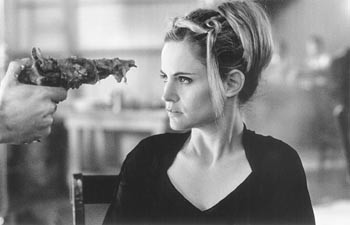
Screen sizzle: Tom Hanks and Meg Ryan interface in You’ve Got Mail.

Cyber-sexpert Deb Levine chats up the online romance ‘You’ve Got Mail’

By David Templeton

Writer David Templeton takes interesting people to interesting movies in his ongoing quest for the ultimate post-film conversation. The time out, he meets Deb Levine–renowned online sex expert and author of The Joy of Cybersex–to scope out the new romantic cyber-comedy You’ve Got Mail.

I WATCHED The Shop Around the Corner last night,” Deb Levine informs me when we meet outside a packed San Francisco movie house. “I love that movie. I wanted it to be fresh in my mind tonight.” Her enthusiasm is appreciated. In fact, it’s downright contagious. In no time, we’re comparing notes on our favorite romantic movies.

The film to which Levine has referred is the classic 1940 Jimmy Stewart/Margaret Sullavan farce, in which two feuding department store employees unwittingly fall in love through an anonymous exchange of Lonely Hearts Club letters. The Shop around the Corner, reportedly, was the basis of the brand-new romanceYou’ve Got Mail, starring Tom Hanks and Meg Ryan as two feuding book-store owners who unwittingly fall in love through an anonymous exchange of … e-mails.

Which is why I am here with Deb Levine. She’s the author of The Joy of Cybersex: A Guide for Creative Lovers, the fast-selling new how-to book in which the art of fooling around and falling in love on the Internet is humorously explained, explored, and demystified.

The San Francisco-based author has herself only recently emerged from the domain of the anonymous; for years Levine has been something of a legend in cyberspace, though never before under her own name. Several years ago, using the pseudonym Alice, she created the award-winning sex-and-health website Go Ask Alice at Columbia University. Later, she became Delilah–“the Dr. Ruth of cyberspace”–on the health-oriented website thriveonline.com, still one of the most highly regarded informational sites on the Internet.

Would that Joe Fox (Tom Hanks) and Kathleen Kelly (Meg Ryan) had consulted Levine (or Alice or Delilah) during the initial days of their secretive online courtship. She could have made a few pertinent suggestions to ease the couple’s rocky transition from e-mail flirtation to actual, in-the-flesh love.

“So which did you like better?” I ask, after the show. “You’ve Got Mail or The Shop around the Corner?”

Shop around the Corner,” she admits. “Don’t you think it was much more romantic? But tonight’s movie did have a lot of good things to say about Internet relationships.

“One of the best things it does,” she goes on, “is to make cybersex seem more or less normal. By cybersex I mean the entire spectrum of sexual relationships on the Internet, from actual mutual sexual experiences, to all the sex information available on the Web, to online friendships and even lasting love. I like the way the movie shows that two normal, attractive, professional people can go online and develop a decent relationship. Because you wouldn’t believe how many people think that all you’ll meet on the Internet are geeks and losers and strange, dangerous people.

“Or that we’re all teenagers, ” she shudders. “The truth is, most users of the online chat rooms and meeting places are in their 30s, 40s, or 50s.”

“Not that people in their 30s, 40s, and 50s can’t be losers and geeks, of course,” I feel inclined to point out.

“Well, of course,” Levine laughs. “And I’m not saying that there aren’t losers and geeks on the Internet. There are. But there are also people like Joe Fox and Kathleen Kelly.”

ANOTHER THING Levine feels was demonstrated especially well was the sense of excitement that can come from an online correspondence. Joe and Kathleen each demonstrate a wild, unchecked glee, a breathless anticipation every time they turn on their computers and hear that bubbly computer-voice announce, “You’ve Got Mail.”

“Actually,” Levine remarks with a laugh, “the little voice doesn’t say, ‘You’ve got mail.’ It says, ‘You have mail.’ That was weird. I want to point that out in the interest of accuracy.

“But the movie did capture that sense of mystery and excitement you feel, getting that e-mail from someone you’ve been flirting with but don’t really know,” she says. “The idea that, sometimes, waiting for that e-mail to show up in your box is the most exciting part of your day. You can’t wait to come home. Then you sit in front of your computer and you turn it on and–you have mail!

“The anticipation can make it great,” she laughs.

“You know the other thing that was weird?” Levine continues. “Their relationship didn’t escalate the way these relationships usually do–from e-mail, to telephone, to that first meeting in person. In the movie they just set up the meeting by e-mail. But I’ve never seen an e-mail relationship go directly from an online correspondence to a meeting.

“There’s always the phone in between,” she insists. “For very good reasons. For one thing, it allows you to make sure what gender the other person is.”

“This sounds important,” I agree. “I take it there have been cases of gender misrepresentation during some online relationships?”

“Ha. I could tell you stories,” she says with a nod. “But basically, the best thing about this movie is that it shows what a positive and healthy and wonderful force the Internet can be in bringing people together who would otherwise never meet.”

“So this wasn’t a fantasy?” I reply. “People are going to see this and believe that the possibility does exist of finding a relationship online like the one Tom Hanks and Meg Ryan find. You’re telling me it really happens?”

“Oh, David, David!” Deb Levine laughs. “It happens a million, billion times a day!”

From the December 17-23, 1998 issue of the Sonoma County Independent.

© Metro Publishing Inc.

Book Picks

On the Road By Patrick Sullivan and Marina Wolf Journey of the Wild Geese Intentional Productions; $17.95 By Madeline Yaude Stephenson and Edwin "Red" Stephenson THE WRITTEN WORD is yesterday's news. Aaron Spelling and Bill Gates agree: At the dawn of the new millennium, image is king. But there are still a few recalcitrants...

European Holiday Breads

Festive Fare Rising hopes, golden dreams: Holiday breads from Europe follow one basic formula--some flour, some fruit, and great expectations for the year to come. A sugar-coated tradition for the New Year By Marina Wolf EVERY CULTURE has its special-occasion foods, the ones prepared at certain holidays to ensure that happiness and good fortune...

The Scoop

Life 'n' Stuff By Bob Harris SHOULD REPORTERS at national newspapers bother to read their own stories? Or is that too much to ask? As you probably know by now, as a source of news I consider the Murdoch press one notch above bathroom graffiti, and USA Today just a few levels down from the Teletubbie...

Talking Pictures

Serving the Pig Babe: Pig in the City By David Templeton Writer David Templeton takes interesting people to interesting movies in his ongoing quest for the ultimate post-film conversation. This time around, he finds author Susan Chernak McElroy at home in her Wyoming ranchhouse, revved up and ready to discuss the lively but disappointing sequel Babe: Pig in...

Kid Street Theatre

Miracle Factory Text by David Templeton Photos by Michael Amsler BEN IS NOT HIMSELF TODAY. He looks the same as ever--tall for his age, lanky and lean. But as Ben steps from the van that will return him and several of his 20 brothers and sisters to the homeless shelter in a few hours,...

Holiday Beers

Holiday Brews Michael Amsler Sizing up seasonal suds By Tom Butler FOR THE LAST FOUR YEARS, during the week of Thanksgiving, I have hosted a holiday beer tasting at the Sonoma Wine Exchange on the plaza in Sonoma, home to what just might be the best selection of beers in Northern California. It...

Furbies Online

Cyber FurbyNuke a furball in virtual spaceBy H. B. KoplowitzIT WALKS, it talks, it sings, dances, eats, burps, and farts. If you can find it. It is Furby, the interactive plush virtual pet from Hasbro subsidiary Tiger Electronics, heir to the Cabbage Patch Doll, Beanie Baby, and Tickle Me Elmo. It's the can't-get-it gift of the holiday season. There...

The Scoop

House of Blues By Bob Harris DEFYING ALL REASON--like most of pop culture--the collective recovered memory (with all the accuracy that implies) of Diana Spencer has become something of a touchstone for the democratic impulse. And partly as a result, Great Britain's House of Lords is suddenly becoming the House of Blues. ...

Tibetan Mandala

Sifting Spirit Crowd scene: Large audiences flocked to the Tibetan mandala created last January by the Buddhist monks of the Segyu Lineage. That sand painting was ritually destroyed, but the monks return Dec. 22 to the Sonoma Museum of Visual Art. Tibetan monks deliver ephemeral art By Patrick Sullivan GRAIN BY GRAIN and...

Talking Pictures

Love Letters Screen sizzle: Tom Hanks and Meg Ryan interface in You've Got Mail. Cyber-sexpert Deb Levine chats up the online romance 'You've Got Mail' By David Templeton Writer David Templeton takes interesting people to interesting movies in his ongoing quest for the ultimate post-film conversation. The time out, he meets Deb Levine--renowned online...
11,084FansLike
4,606FollowersFollow
6,928FollowersFollow

