
America’s Wetlands

0

Paradise Lost


Michael Amsler

Despite strict regulations, we’re losing America’s wetlands

By Sally Deneen

SHE-CRAB SOUP arrives at restaurant tables on North Carolina’s Outer Banks as a rich, sweet concoction, delighting tourists and new residents whose cars still boast license plates from their old states: Florida, Ohio, New York. As the ocean breezes sweep away the day-to-day worries of beach-bound visitors, Environmental Defense Fund scientist Doug Rader realizes the days of the regional soup may be numbered. It’s a simple axiom: No wetlands, no seafood.

Across San Francisco Bay from the Golden Gate Bridge, the salty bay waters mingle with the melting snowcaps of the Sierra Mountains to form the largest estuary on the west coast of North and South America. Yet, almost all of the freshwater marshes in this California delta are gone. Half of the tidal marshes have been destroyed, while others have been transformed into surreal, sunken farmlands. From the Gulf of Mexico’s salt marshes to North Dakota’s “prairie potholes,” America’s wetlands are disappearing rapidly, according to U.S. Fish & Wildlife Service statistics comparing the Colonial 1780s to the 1980s.

The rate: an acre a minute.

California has lost the greatest percentage (91 percent), but 21 other states have paved over or tilled at least half of their original wetlands. Fast-growing Florida has filled in the most acreage–a land size bigger than all of Massachusetts, Delaware, and Rhode Island combined. Add the entire land size of California to that, and you can mentally picture the amount of wetlands lost since the Revolutionary War.

In cold, hard, economic terms, each acre of wetland is worth 58 times more money than an acre of ocean in the benefits it provides, according to Science. Wetlands act like sponges: The porous, jet-black peat helps soak up heavy rains and melting snow that otherwise may flood suburban yards. They also function like kidneys, filtering out dirt, pesticides, and fertilizers before the unwanted runoff reaches lakes and streams. Without wetlands, excessive sediment can smother fish-spawning areas and fertilizers can kill the prized fish sought by anglers.

Some of these soggy lands also serve as broad water-storage areas, allowing people to later enjoy these waters for iced tea and showers. And wetlands are a smorgasbord for frogs and migratory birds, and home to America’s ducks. According to the National Audubon Society, wetlands compare to tropical rainforests in the diversity of species they support.

Yet which is more valuable to humans? According to Science, an acre of tropical forest is worth $817 for its ecosystem benefits. An acre of open ocean is worth $103. An acre of wetlands: $6,017.

Yet they continue to vanish.


Michael Amsler

Morning on the Laguna de Santa Rosa: The 22-square-mile waterway in Sebastopol faces the same threats as wetlands across the nation–namely, fragmentation, or broken habitat–and decreasing biological diversity. “The key is not just protecting what we have left, because we’ve gone way beyond that,” says Laguna Foundation executive director Kim Cordell. “We need to reassemble and re-establish a sustainable habitat. That takes more than laws–it requires a real community effort.”

Permit Panacea?

RIGHT NOW, Vice President Al Gore’s office is fielding phone calls from concerned environmentalists and wildlife lovers who hope he will stave off “the biggest challenge to wetlands protection,” says Robin Mann, an outraged member of the Sierra Club’s Wetlands and Clean Water Campaign Steering Committee.

Shopping centers and riverfront homes conceivably could sprout up on soggy land without the usual requirements: notifying the public or asking for permission from the U.S. Army Corps of Engineers, the agency in charge of regulating the use or destruction of wetlands. The new “quick permits” would allow up to three acres of non-tidal wetlands to be developed or farmed, and up to 10 acres of any non-tidal wetlands to be destroyed as part of a “master planned development,” notes Julie Sibbing, assistant director for wetlands and wildlife refuge policy at the National Audubon Society.

In some cases, a builder wouldn’t have to notify the Corps at all. And the traditional requirement that wetlands be avoided where possible wouldn’t apply–a crucial failing, say environmentalists and wildlife specialists. Don’t like what’s being built next door? Sorry. No public input would be allowed either, Sibbing adds.

Ironically, these “rubber-stamp permits,” as Clean Water Network’s Kathy Nemsick calls them, are meant to quell public outcry, not rekindle it. They would replace the controversial and apparently more protective Nationwide Permit 26, which allows up to three acres of isolated or headwater wetlands to be destroyed. The Corps has promised to ditch the more stringent permit by year’s end.

It’s no surprise the oil and gas industry want the current permitting system changed.

But this would’ve been a welcome innovation for retirees Bob and Mary McMacken, too. Their case is an example of how the old wetlands law was used badly: They received permits to build a house on less than an acre in a still-developing subdivision in Pennsylvania’s Poconos, and lived there four years before a letter arrived in the mailbox telling them to cease and desist. Their property was a wetland, the Corps wrote. The message: Get out.

“This was a real emotional process to go through,” says Nancie G. Marzulla, president of Defenders of Property Rights, the nation’s only public-interest legal foundation dedicated exclusively to protecting property rights. “It took us two years to work with the Corps to get them absolved of all liability.”

Trouble is, government scientists say the Corps’ new proposal would destroy more wetlands and streams than the current dredge-and-fill permits. It also expands the scope of waters that could be filled in, and the Corps hasn’t gathered data on the resulting environmental impacts either, writes a concerned Jamie Clark, director of the U.S. Fish & Wildlife Service. And what about endangered species? It could take two to three years to consult with Clark’s agency and the National Marine Fisheries Service to hash out the possible impact. But that’s too late: Some of the 16 new permits could be the law of the land as early as March.

And, the proposal “may not be consistent with” the Clean Water Act, which requires only “minimal adverse environmental impact,” Clark wrote in a letter to Michael Davis, deputy assistant secretary of the Army, representing the Corps of Engineers.

“What we’re demanding is that they withdraw the package,” says environmentalist Mann, who is encouraging the public to write to Vice President Gore.

RADER, the EDF scientist, speaks quickly, matter-of-factly. Rader can mentally connect the dots between the tasty sea creatures on dinner tables–softshell crab, blue crab, and flounder–and the health of local wetlands. “All of those fish are directly linked to brackish-water estuaries that are girdled by wetlands,” notes Rader.

Only four states have more wetlands than the popular resort destination of North Carolina, which has lost about half of its original soggy lands–transformed into homes for new retirees, developments, and farms. Time was when the state’s two-legged population doubled just every 50 years. But as resort towns and cities grow, residents in some counties may quadruple in 50 years, Rader says: “We’re looking at a huge increase–particularly in the northern Outer Banks. It means all bets are off in terms of estuarine environments.

“In 20 years, will all the fish here come from fish farms and foreign waters? I think that’s a possibility.”

That may be surprising, since some of the nation’s largest fish nurseries are found along North Carolina’s Pamlico Sound. The estuaries also have been rocked by headline-grabbing outbreaks of a fish-killing neurotoxin called Pfiesteria piscicida, believed to be caused by a chain reaction that occurs when waste draining off farms enters the rivers. The puzzling toxin causes a variety of symptoms in anglers, including wheezing and nervous and respiratory system ailments. So people are advised not to eat fish when outbreaks occur.

Such suggestions aren’t good for business: Commercial and sport fishing each year add at least $152 billion to the U.S. economy and provide about 2 million jobs, and three fourths of the nation’s fish production depends on marshes, estuaries, and other wetlands, according to the Izaak Walton League of America.

Though Rader feels a sense of optimism after the August announcement that about $221 million in federal money is on the way to restore local watersheds, and a 1997 state Marine Fisheries Reform Act now requires “no net loss” of wetlands, that doesn’t mean all is well. For one thing, pigs outnumber people in North Carolina, and some of the fecal waste of the 10 to 12 million swine end up in rivers. Meanwhile, farms and other development continue to eliminate wetlands and riparian buffer vegetation. So “the kidneys of these landscapes are being eliminated,” Rader explains.

In trendy Portland, Ore., about 40 percent of area wetlands have vanished in a decade, even though protective regulations were in place, according to wetland ecologist Mary Kentula of Oregon State University. The lesson, Kentula determined, was the need for better monitoring and protection in fast-growing areas around the United States.


Michael Amsler

Waddling in the wetlands: Migratory geese forage at Chanslor ranch, Bodega Bay.

Down South, almost three quarters of Louisiana’s bottomland hardwood swamps have vanished as farmers till land drained long ago by the U.S. Army Corps of Engineers. Such swamps have always been the most common type of wetland in the United States, claims the EDF. They’re in the floodplains of rivers, such as the Mississippi, and they’re found along slow-moving southern streams.

Draining the swamps of Louisiana has left the state’s estimated 80 remaining black bears stranded in carved-up patches of land too small to support significant numbers of bruins, and is linked to the decline of at least 80 other threatened or endangered species, according to an EDF and World Wildlife Fund study. Residents took the unusual step of passing a constitutional amendment to start a wetlands conservation fund a decade ago, and other anecdotal successes can be pointed out. Still, the EDF claims, “The expectation that public funds will become available for drainage continues to encourage destruction of bottomland hardwoods today.”

In the willow wetlands of the sky-high Rocky Mountains, where moose delight hikers and 51 percent of the Southwest’s birds depend on plants for some meals, estimates place wetland loss at 90 to 95 percent.

The reasons: Cattle grazing, housing developments, ski resorts, and conversion to agriculture.

That’s not good news for anglers in what may be the nation’s best trout fishery. “These streamside wetlands play a vital role by trapping and detaining large quantities of sediment, keeping it out of streams where it could otherwise obstruct spawning,” reports the EDF.

Plus, for the anglers to eat trout, the trout need to eat invertebrates, which need to eat leaves. And those leaves drop from the wetlands’ alder and willow around this time of year.

The Clinton administration aims for a net increase of 100,000 acres of wetlands per year by encouraging the building of artificial wetlands. Yet, studies have shown that artificially created wetlands often dry up or die because scientists don’t fully understand how to re-create the original soggy lands. In some cases, homeowners’ associations or commercial developers are left to tend the puzzling marshes, with decidedly checkered results.

That hasn’t stopped a new trend toward “mitigation banking,” which allows developers to destroy wetlands if they, in turn, give money to a mitigation bank such as Fort Lauderdale-based Florida WetlandsBank. The banks use the money to restore wetlands elsewhere–measures like restoring drainage or killing invasive exotic plants. The banks promise to maintain the restored wetlands forever. Their value is, instead of having postage-stamp-sized wetlands dotting the landscape, you’ll end up with a bigger stand of wetlands in an ecologically sound place, such as at the edge of the Everglades. The problem is, original wetlands function better.

“We still understand wetland functions relatively poorly. This hampers our ability to properly restore wetlands or create new ones to replace those lost to developmental pressures or erosion,” says Ed Proffitt, chief of the Wetland Ecology Branch of the U.S. Geological Survey in Lafayette, La.

Northwestern University civil engineering professor Kimberly Gray is creating wetlands in the unlikely industrial setting of Chicago’s South Side, but she cautions that re-created marshes “aren’t the same thing.”

“It’s important for us to try to restore them, but I don’t think we have in our power yet to go destroy one and re-create one that is comparable in substance and structure. When we create wetlands, they’re usually not as diverse or robust,” Gray says.

The struggle to meet the needs of people while recovering diminished wetlands has set up a curious dichotomy: Every day, permission to build new homes, businesses, and farms in original wetlands continues to be granted by local or regional governments. Meanwhile, billions of tax dollars or private dollars are earmarked to restore other wetlands. Consider the ongoing restoration of Chesapeake Bay, where the fresh waters of 48 rivers mix with saltwater to produce the nation’s largest estuary.

The splashing sound of fish breaking the watery surface and the harsh, noisy squawks of rails flying overhead make the Chesapeake’s wetlands among Michael Weinstein’s favorite spots. Weinstein, director of the Sea Grant Program in New Jersey and an expert on wetlands and marsh habitats, is optimistic about the makeover: Fish immediately began using previously off-limits areas after a dike was intentionally breached. Yet, years of draining and damming destroyed nearly 60 percent of the wetlands in the three main bay states, sparking a goal of not just maintaining what’s left, but adding even more wetlands.

More than 13 million people from six states live in the bay’s watershed, and the next 25 years are expected to bring enough people to populate two more Baltimores and two Districts of Columbia, adding to area pollution. “Just one year of stormwater from the Washington, D.C., metropolitan area alone dumped between 1 and 5 million gallons of oil, 400,000 pounds of zinc, 64,000 pounds of copper, and 22,100 pounds of lead into the bay,” the EDF reports.

More than one in two Americans now lives on or near the coast, requiring an average of one-half acre of land apiece for new schools, post offices, and other public services, Weinstein notes, and by 2050, 70 percent of Americans are expected to live on the coast. “So the pressures are ever increasing,” he adds.


Michael Amsler

Sign of the times: A rusted relic at the Chanslor ranch.

Uneasy Neighbors

THAT PEOPLE and wetlands make uneasy neighbors is nothing new to Burkett Neely. A woman called him to complain that an endangered wood stork had relieved itself in her backyard pool in tony Boca Raton, Fla. What could Neely say? At the time, Neely tended the northern Everglades as manager of the Loxahatchee National Wildlife Refuge west of Boca Raton. He knew the stork was–and is–an endangered species. You can’t kill it, or even bother it, he says. As urban sprawl marches closer to the marshy refuge, “I think you’re going to see all kinds of conflicts,” adds Neely. Neighbors already pine for mosquito-spraying, which is only marginally effective, since it isn’t allowed in the refuge. “Living next to a swamp, you deal with swamp creatures,” Neely replies.

The Everglades are close to the largest wetlands in the nation, despite being reduced to half their original size. Restoring the “River of Grass” is expected to become the largest freshwater wetlands restoration project in the world: It will take at least 20 years and an estimated $1 billion. It’s also overseen by the U.S. Army Corps of Engineers–the same agency that did most of the swamp drainage a half century ago.

But already, the Everglades may be losing some of their luster with politicians who favor the restoration. Last year, Congress provided $76 million for buying land as a buffer between the Everglades and urban sprawl. This year, a Senate bill slashed that to $40 million for fiscal year 1999, and a House bill provided even less–$20 million. Buying land is widely recognized as crucial in restoring the Everglades, contends the National Audubon Society. Expect more homes and businesses to move in otherwise, the organization warns.

As south Florida adds a new resident every 12 minutes through the year 2020, geographers contend the population center of the region won’t be the coastal cities of Miami or Fort Lauderdale–but farther west, near the wetlands of the Everglades. Four out of five new residents are expected to live in or fairly near suburban Sunrise, home to the new arena of the Florida Panthers professional hockey team.

“For the most part, we have come a long way from the old view that wetlands were mosquito-plagued swamp wastelands full of snakes and alligators, and that their only worth was to be drained or filled for construction or agriculture,” Proffitt says.

In its simplest form, the threats to wetlands seem to boil down to a curious circle. People need a place to live, work, shop. They look for affordable, attractive choices–which may be in former wetlands. Developers build homes where demand indicates people want to live. So more people move into new ranch houses in the former wetlands. More builders build there. Soon, you have a suburb where herons once stood like statues, waiting silently for a meal to float by.

At any point, people could stop buying homes or doing business in former wetlands, encouraging developers and businesses to stay in centralized cities. Or developers could stop building in wetlands–that would force homebuyers and businesses to look elsewhere. And government agencies could stop granting permits to develop them.

Maybe the cycle can be stopped by the folks in Washington, D.C. But don’t bet on it. That city itself is the site of a former wetland.

This article, here slightly abridged, originally appeared in E magazine.

From the January 7-13, 1999 issue of the Sonoma County Independent.

© Metro Publishing Inc.

New Century Chamber Orchestra

0

New Moves

New Century Chamber Orchestra starts ’98-’99 season–and a farewell tour

By Greg Cahill

NINETEEN-ninety-seven proved a banner year for the New Century Chamber Orchestra and its brilliant musical director, Stuart Canin. The Marin-based conductorless ensemble’s second CD, Written with the Heart’s Blood (New Albion), garnered a coveted Grammy nomination, NCCO’s concert audience nearly doubled, and Canin–who has served as concertmaster to such big-name Hollywood films as Forrest Gump and Schindler’s List–contributed a violin track to the film Titanic (you can hear him during the climactic “and the band played on” scene).

But unlike the director of the ill-fated band depicted in James Cameron’s Oscar-winning blockbuster, Canin is moving on from his current post this spring while he’s on top, so to speak. “There are a lot of forces moving one through life … ,” says Canin, 72, “and there comes a time when you want to be, in a sense, your own boss.”

That’s a sentiment that underlies the innovative orchestra itself, which just released its third CD, Echoes of Argentina (d’Note). The 15-member ensemble often performs standing in a semi-circle around the audience and gives its players artistic freedom unheard of before NCCO was formed, springing from a desire to break away from the regimented, “punch-the-clock” music-making that symbolizes most classical groups.

“I’m not in any sense retiring from the violin,” Canin explains, “but the position is quite time-consuming–I do a lot of administrative work and the programming itself takes a lot of time,” Canin explains, “so it’s become a nine- or 10-month position rather than the three or four months that we actually perform.”

Indeed, Canin’s new job–as guest concertmaster of the New Japan Philharmonic in Tokyo, under the guidance of music director and longtime collaborator Seiji Ozawa–will give him a high profile and a chance to perform without the constraints of administrative work.

“This has been a difficult decision to make,” says Canin. “The New Century Chamber Orchestra has been a great source of joy for me over the last six years. It has kept me more active than I had ever anticipated. But I feel that the time has come to pass our ‘invisible baton’ and allow myself the opportunity to spend time with my family, my grandchildren, and to do some of the traveling my wife and I have talked about for years.

“I also feel that by the end of the season it will be appropriate for me to let the orchestra try new ideas and explore new paths. Wait until you see this year’s program [which begins Jan. 14 in Berkeley]. I’m going out with a bang, not a whimper.”

The opening program of the new season, which brings the NCCO to Osher Marin Jewish Community Center in San Rafael on Jan. 17, features a reprise of Shostakovich’s “Octet” from Written with the Heart’s Blood, an obscure piece by Russian composer Alfred Schnittke, and Tchaikovsky’s seldom performed “Serenade.”

ASK CANIN the greatest challenge of directing a conductorless ensemble and he laughs gently. “Well, you’ve hit on it right there–directing a conductorless ensemble,” he says. “Since it’s a pretty free-wheeling organization, and everyone comes on board knowing that there are no constraints–you can contribute what you feel in terms of how fast or how slow, or how loud or how soft you can play a certain piece–everyone has their own idea of how things should be done. As music director, I have to sort through those ideas and decide how everything will go. That process is nonexistent in a full-size symphony in which a conductor says things will go a certain way and that’s that.

“So the challenge is to put together an interpretation that has a certain point of view musically and doesn’t resemble the camel, which is a horse put together by a committee,” he adds with a laugh.

Co-founded in 1992 with Mill Valley resident Miriam Perkoff–who later left the NCCO to create her own Stratas ensemble–the conductorless format at the time of its inception was an entirely unique concept. “I liked the idea of a string orchestra,” Canin adds, “because there is a whole body of literature that hasn’t been played and is ignored by the big orchestras–apparently the boards of governors only like to see 100 people onstage.”

This year, the NCCO is experimenting with that all-string format by adding one or two non-string players for select pieces. For instance, in February the ensemble will give several performances of Britten’s “Serenade for Tenor, Horn, and Strings,” featuring David Krehbiel, principal French horn player in the San Francisco Symphony, and Norman Shankle, rising star at the San Francisco Opera.

Canin hopes those performances will signal a continuing commitment to the spirit of experimentation that is the foundation of the NCCO. “I’d hope that the orchestra will continue to be innovative and display a good balance of music that will last forever,” he says, “your Tchaikovsky ‘Serenade’ or Bartók ‘Divertimento,’ great pieces that are never heard in full symphony concerts, and that should be heard. And I hope that whatever is in the mind of some younger musical director, innovation is always there.

“I think the future looks pretty bright.”

The New Century Chamber Orchestra performs Sunday, Jan. 17, at Osher Marin JCC, 200 N. San Pedro Road, San Rafael. For ticket information, call 415/479-2000. For programming and subscription ticket information about NCCO’s 1998-99 season, call 415/381-6226.

From the January 7-13, 1999 issue of the Sonoma County Independent.

© Metro Publishing Inc.
Wine Predictions

0

Glass Ball

Wine predictions for 1999

By Bob Johnson

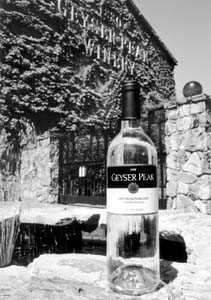
A NEW YEAR has dawned, and with it much speculation, consternation, and anticipation over what lies ahead. Little wonder: In the year just concluded, the most “challenging” grape-growing season of the decade resulted in much lower yields than the record-breaking crush of 1997; one of Sonoma County’s top wineries–Geyser Peak–was gobbled up by a giant spirits conglomerate; and new housing tracts contributed to the clogging of the county’s primary transportation artery, Highway 101, further stripping the region of its historic agricultural atmosphere.

What can Sonoma County wine lovers expect from the world of vino in 1999? A glimpse into the trusty Wine Lines crystal ball reveals the following likely developments:

Commemorative wines. Since a new millennium comes around only once every thousand years, expect numerous wineries to release special millennial bottlings during the year ahead. These releases will feature artsy labels and appropriate verbiage, and because of their caché with collectors, undoubtedly will cost a few bucks more than “regular” bottlings.

An example would be the 1990 Cuvée Dom Perignon, scheduled for a March release. This special bottling of arguably the world’s most acclaimed sparkling wine will include a keepsake cork designed by Cristofle, the renowned French silversmiths. The cork is hinged to open side to side, includes the inscription “31 Decembre 1999,” and is suitable for additional engraving.

The suggested retail price for this commemorative bottling is $200. The keepsake cork is available separately by mail for $65. Also look for Sonoma County’s sparkling-wine producers to unveil millennial packages, and don’t be surprised if a number of high-end winemakers come up with commemorative releases of cabernet sauvignon, chardonnay, and other varietals.

Steady, and perhaps even lower, prices on many red wines. Because of the record-setting California crush of ’97, numerous white wines released in 1998–particularly chardonnays–saw their prices remain unchanged from the year before, with some even going down. As an example, in recent weeks the 1997 vintage of one of California’s more popular chardonnays, the Meridian bottling from Santa Barbara County, has been seen in supermarkets for as low as $6 (the wine normally sells for around $10).

In 1999, the market will be flooded with red wines from the 1997 vintage, and for one of the few times in recent history, the law of supply and demand may actually work in favor of the consumer. Wines that in the past have sold for $20 or less are the most likely to see stable prices or possibly even decreases, especially if the glut remains after July.

Growing demand for syrah. Just as the popularity of merlot exploded a few years ago, expect sales of syrah (aka shiraz among local Aussie vintners) to skyrocket in 1999. There are two reasons for this: Syrah is a tasty alternative to more traditional red varietals, and record tonnage of California syrah grapes was harvested in 1997. A vast majority of the resulting wines will gain wide distribution in the months ahead.

Meanwhile, local corporate giant Kendall-Jackson has released three syrahs from previous vintages, each with unique aroma and flavor characteristics, and all including grapes grown in Sonoma County:

Kendall-Jackson 1996 Vintner’s Reserve possesses a touch of terroir in the nose, leading to bright, sweet red fruit flavors. Featuring grapes from two vineyards in Sonoma County and one in San Luis Obispo, this is a serviceable syrah. $16. 2.5 corks.

Kendall-Jackson 1995 Grand Reserve Grapes from Sonoma County’s Durell Vineyard make up 95 percent of this jammy, mouth-filling wine, which has an aroma and flavor of mild blackberries, complemented by a hint of pepper. Though just $4 more than the Vintner’s Reserve, it’s light years ahead on the enjoyment scale. $20. 3.5 corks.

Kendall-Jackson 1995 Durell Vineyard is an excellent example of what talented winemakers can accomplish with exceptional grapes. The Durell Vineyard is situated on an eastern hillside in the Carneros growing region near San Pablo Bay. Unlike many vineyards in this area, where cooler climes dictate the planting of chardonnay, pinot noir, and merlot, the Durell Vineyard receives full sun exposure, making it ideal for syrah grapes. This wine oozes aromas and flavors of blackberries, plums, blueberries, and pepper, finishing with tongue-tingling spices and a hint of chocolate. Better still, it’s an outstanding value. $16. 4 corks.

(Wines are rated on a scale of 1 to 4 corks: 1 cork, commercially sound; 2 corks, good; 3 corks, very good; and 4 corks, outstanding.)

From the January 7-13, 1999 issue of the Sonoma County Independent.

© Metro Publishing Inc.
Talking Pictures

0

Star Crossed

By David Templeton

For over five years, writer David Templeton has been taking interesting people to interesting movies in his ongoing quest for the ultimate post-film conversation. This time out, he does the dinner-and-a-movie thing with Naomi Epel, famed San Francisco author and “media escort.” The movie in discussion is the hit comedy Shakespeare In Love, in which the star-crossed Bard wrangles with love, poverty and a bad case of writer’s block.

“David! It’s Naomi,” announces Naomi Epel. “Clara and I are going to a movie tonight. We’re thinking of seeing Shakespeare in Love. Shall I still save that one for you?” Epel is calling, a few days before the New Year, to remind me that I’d once suggested we see S.I.L together–whenever the film was finally released.

Save it. Save it,” I plead, aware that, should she see the film tonight–and it turned out to be awful–she’d be unlikely to want to see it again with me. “You’re the perfect person to see this one with,” I add, quite honestly (knowing full well that she’s not, um, especially fond of Shakespeare’s plays). “It’s a film about writer’s block–and these days, Naomi, you’re the expert on that subject. How about Wednesday night? I’ll bring Susan.”

“Wednesday’s fine,” Epel affirms. “I’ll bring Clara. We’ll make it a double date.”

This chatty little exchange is the result of years of professional association with Ms. Naomi Epel. As a respected “media escort,” this long-time Berkeley resident has been a secret, unofficial Talking Pictures guest more times than either of us can remember. You see, it’s Epel’s job to schlep visiting authors around town–from the airport to the hotel to any scheduled book-readings or interviews–and occasionally to the movies to scarf popcorn and to wax philosophical with someone like me.

So we’ve gotten to know each other fairly well.

In the course of Epel’s literary chauferism, she’s had happy access to the minds and psyches of our greatest living writers and thinkers. Her first book Writers Dreaming was an exploration of how some of these authors are inspired by their own nocturnal visions. In addition to quizzing writers about their dreams, she’s also been picking their brains for hints on how they retain their creative powers, what methods they use to focus on their work–and what they do whenever they’re blocked. Ray Bradbury and William Saroyan, she learned, take long walks to get the ideas moving; others, like Stephen King, observe peculiar rituals before writing; Maya Angelou copies lists of rhymes whenever she’s stuck.

Now, Epel has pulled all of these ideas together in The Observation Deck (Chronicle, 1998). A kind of “creativity kit,” it consists of an absorbing, 160 page book describing hundreds of writers’ suggestions, and a deck of 50 cards, each one stamped with a different block-busting idea. Feeling blocked? Close your eyes and pick a card. Try the suggestion in question and see what happens. It’s not surprising that The Observation Deck, released last October, has been an instant hit among struggling writers–and looks to be propelling Naomi to a kind of “writer’s block guru” status.

So what does Epel have to say about William Shakespeare’s little problem?

“Gee, it wasn’t much of a block, was it? Shakespeare got through it pretty fast, didn’t he?” We’ve just seen the movie, and the four of us are now sampling the cuisine of Singapore at a bustling San Francisco restaurant. In the movie, a young, fictionalized Shakespeare (Joseph Fiennes), struggling with his latest comedy, Romeo and Ethel the Pirate’s Daughter, is smitten with the beautiful Viola (Gwyneth Paltrow)–the soon-to-be-married daughter of a wealthy merchant–and, suddenly unblocked, creatively and emotionally, snatching plot ideas and character names from everyone around him, is profoundly compelled to write the increasingly tragic Romeo and Juliet.

“My blocks should be so short, and end so favorably,” I remark. Tapping my copy of The Observation Deck, I ask, “You don’t have ‘falling in love’ in here, do you? Didn’t any author ever say that falling in love started their literary juices flowing again?”

“No. No. Not one,” Epel says, laughing. “I think falling in love is bad for the creative process. It distracts you from your work for at least a year.”

“And yet love inspired Shakespeare’s sonnets, probably,” I argue. “Love inspires reams of poetry, good and bad.”

“That’s true. That’s true,” she nods. “But what kind of literature–what kind of novels–do we know about that came from someone falling in love? While they were still in love? I think the novels come around after love is over, don’t they?”

As for the entertainment value of the film, we are divided. Naomi gives it a six. Clara concedes that it’s pretty, but far-fetched. I loved every minute of it. And Susan, whom also enjoyed the film, was especially taken by how much the film stole from other sources, down to the colors and posing of the Romeo and Juliet death scene, which she points out was modeled on Gustav Klimt’s 1908 painting The Kiss.

Which leads us to the film’s comic notion that Shakespeare’s creative process was partly fueled by, um, stealing anything he could from other writers.

“I have a whole chapter in the deck about that,” Epel points out, laughing. “It’s called Learn from the Masters. It’s one of my favorites.” She reaches over to pick up the book. “There’s a great quote in there from Voltaire. Let’s see. ‘Originality is nothing but judicious imitation.’

“The most original writers borrowed from one another,” she says, “and in so doing they developed their own craft. This is all about imitating. Joan Didion used to copy, line by line, whole stories from Hemingway, to learn how he made sentences. And–who was it? Somerset Maugham I think–who used to copy out a page of Jonathan Swift every day. I think you have to be willing to take from other people, because stories don’t come from nowhere.”

“Well,” I interject, “Don’t some people writers believe its unethical to borrow ideas from others?”

“Maybe they do,” she replies, “but then they’re not real artists. Borrowing, changing, using, adapting, It’s what true artists do.

“And I’m not talking about plagiarism,” Epel continues. “These people use other people’s work to explore and to learn something for themselves. They’re using the bones of the story with which to discover and explore the issues that they are wanting to deal with.”

Romeo and Juliet,” I have to admit, “wasn’t original to Shakespeare. But he didn’t piece it together from bits stolen from Marlowe and friends, like in the movie. It was actually an adaptation of a William Paynter novel, Palace of Pleasure–which was based on a poem that was inspired by a short story that was derived from an old Italian folktale.”

“So there you are,” Epel answers. “But we really do take ideas from the events and people around us. And that’s fine. There’s another quote that I love.” She reaches again for the book. “Tony Kushner, the playwright, says, “The fiction that artistic labor happens in isolation, and that artistic accomplishment is exclusively the provenance of individual talent is … in my case at least, repudiated by the facts.’ He goes on to say that Angels in America, without the input of two dozen people, ‘would have been entirely different–would, in fact, have never come to be.’

“So a play could go from Romeo and Ethel to Romeo and Juliet, because we don’t create on our own, all by ourselves in a vacuum. I think so many people suffer because they think that they have to act solely on their own–that every idea must leap up from our own little pea brains, as opposed to just being open to whatever ideas and inspirations happen to arise.

“And speaking of Romeo and Ethel, there’s another point,” she goes on. “He wrote badly at first. That’s also part of some writers’ process. Because, face it, Romeo and Ethel was really stupid, but if he hadn’t started with that, he might not have written anything at all. He had to put something on paper. That’s the essence of the writer’s craft, I think. You have to dare to write stupid ideas, and to slowly make them your own as you discover what it is you are trying to learn.

“I think what stops a lot of people from being truly creative,” she adds with a grin, “is that they aren’t daring enough to start out being stupid.”

Web extra to the January 7-13, 1999 issue of the Sonoma County Independent.

© Metro Publishing Inc.

The Scoop

Liar, Liar

By Bob Harris

I DON’T KNOW what’s more doomed to failure: the Senate trial of Clinton or my love life. And let’s start here with the important stuff that’s really affecting our nation: my personal life. (Which, I might add, has roughly as much to do with the national interest as Clinton’s.)

I’m not complaining, but I’m probably the only guy in the world who went to see Saving Private Ryan to cheer myself up. I’m not saying there aren’t people you can trust in L.A. I’m just saying there are only 11 of them, and they’re all in that Hindu temple in Malibu.

And I just don’t have the wardrobe.

So while my hopes for true love narrow faster than Ellen DeGeneres’ career options, at least I can pick up a newspaper and see I have a kindred spirit in the world: the Republican Party.

There has never been the slightest hope of removing Clinton from office at any point in this process. The GOP doesn’t have the votes, never did, and never hoped to win that many in the last election. But that didn’t stop this sad parade of sanctimonious adulterers and liars from trying.

A man’s gotta dream, y’know?

You almost feel sorry for the poor guys. They finally get an impeachment and Clinton’s approval ratings go up, to a level 18 points ahead of Reagan. It’s like getting a girl to meet you at the movies, and she brings a date.

Can’t win for losing.

The latest sad flail comes from GOP Majority Whip Tom DeLay, who says the Senate should consider the reams of uncorroborated evidence even Ken Starr wouldn’t publish. Never mind due process. The guy thinks the reason the public likes Clinton is because they still haven’t seen a sufficient amount of dirt.

Which is a lot like when an obsessed stalker thinks the reason that cute weather girl won’t go out with him is that he’s not calling enough.

Put the phone down, Tom. Stop with all the drawings of Paula Jones in red lipstick.

Give it up.

Most Americans know our politicians are liars, thieves, and whoremongers. We made our peace with that long ago. What Americans really can’t stand is when the lying, thieving, and whoremongering turns mean.

At least that’s what most people think at the singles mixer under this giant statue of Ganesh.

HERE’S SOME good news: You guys are a lot less likely to kill me this year. The Justice Department says the violent crime rate is now at its lowest level since they started the index 25 years ago. Now, they’re really only talking about 1997’s data, since the FBI takes longer to transfer files than AOL. But in 1997, there were only 39 violent crimes per 1,000 U.S. residents.

And if you don’t count the Jerry Springer show, the number is less than half that.

When the survey was started in the 1970s, the number was 25 percent higher. And it proceeded to go up drastically throughout the 1980s before turning down sharply at the beginning of the 1990s.

Experts attribute this to everything from the economy to changing demographics. Personally, I think it has more to do with the band Journey, whose record sales track the national crime rate almost perfectly. (Look it up. I’m not kidding.) Coincidence?

I think not.

Look, Journey singer Steve Perry’s voice could make anybody a little nuts. So, for the good of the country, I hereby suggest we round up the members of Journey, Styx, and REO Speedwagon, take away their instruments, and prohibit them from playing anything besides klezmer.

The statistics also show that you’re far more likely to be killed by someone you know than by a total stranger. Which means your best chance to reach retirement age is simply not to have any friends.

In a related story, GE President Jack Welch is 62 this year.

Finally, the bad news: Other data show that only 44 percent of violent crimes are ever reported to the police. Which means there’s still more crime out there than the Justice Department can keep track of. Of course, Journey is reportedly planning a reunion tour.

This blight on our nation must be stopped.

From the December 31, 1998-January 6, 1999 issue of the Sonoma County Independent.

© Metro Publishing Inc.
North Bay Rave Scene

0

Rave Up

Text by Shelley Lawrence
Photos by Brian Gaberman


NO, BABY, I don’t sell drugs!” Waldo says when asked for a comment on what it’s like being a drug dealer. “I just help my friends out. So, Shellacious, are you documenting everything, like, even the pre-rave trip to Safeway for power snacks?”

Waldo–a friend of mine whom I’ve chosen to follow around all night at the Harmony rave party–opens a plastic bag to reveal an air-sealed packet of Beer Nuts, an apple-cinnamon-oat PowerBar, a bottle of ginseng pills, three BlowPops, and a package of gum.

Gregarious and highly sought after, not for his snacks but for his illegal wares, the ever-grinning Waldo wears a red-and-white striped ski hat (as in the “Where’s Waldo?” kids’ book series), a bright-red polyester shirt peppered with large white polka-dots, a lime-green soccer jersey, and huge, tubelike jeans. His shoes remain a mystery because the elephantine pants cover his feet completely. He’s bedecked with sweet-colored plastic jewelry on all limbs, and peers at me through pink sunglasses that cover fully half his face.

Tonight, we’re on our way to a rave–a clandestine dance party characterized by ear-splitting electronic music at a location kept secret until hours before the event is announced on a voice-mail message. A blurb, printed on the back of the shiny, pocket-sized flyer that sports a picture of a baby swimming in a computer-generated star, lures ravers with visions of ecstatic experiences. The flyer reads like an advertisement for a New Agey self-help forum, promoting the event and setting the tone for the all-night happening: “On Saturday, Oct. 24, the Harmony Family will collectively go on a journey. A journey deep into our inner selves. We will connect not only with ourselves, but with our family as a whole. We will find the positivity and love inside that drives us all, and share it with our sisters and brothers. By dancing to celebrate life, love, and harmony, we will center ourselves and return to our INNERCENSE.”


It’s another episode in the scene that–with its big pants, funky dancing, electronic music, oddly shaped tennis shoes, and sparkly barrettes–first entered Sonoma County in 1992. Raves originated in London and northern Germany as huge (sometimes over 100,000 people), all-night, underground warehouse parties with live techno DJs galore, and spread from there into most of northwestern Europe, making the transition to America’s East and West coasts in the late ’80s.

These days, ravers are being chased out of the Bay Area urban centers where they were spawned. Greg Sandler, rave promoter and founder of the Santa Rosa-based Harmony party production company, claims that, owing to the intervention of San Francisco mayor Willie Brown, all Bay Area cities (excepting Oakland) have stopped issuing permits for the parties and shut their doors to DJs and drugs. Raves now are often held in out-of-the-way sites in the ‘burbs, but even there they are not free from hassle. Sandler claims that a recent Harmony party, held on private land in Vacaville, was broken up by Vacaville police. A lawsuit against the police department is planned, Sandler contending that the officers acted abusively and without provocation. Sandler refused comment on the lawsuit.

“Our job is to make these people trip out, and have an awesome experience. [A rave is] people all striving for the same thing. We all want to be loved and to have a community … . [For] a lot of kids we are there as their family–if they need help, we’re there; if they need love, we’re there; if they just wanna dance, we’re there,” says Sandler.

After a set, teenagers in bright yellow vests boredly usher us into a parking spot with green glow sticks. We enter Santa Rosa Armory’s rhythmically thudding hallway, which is hung with flowery, blacklit-glowing banners reading “We Are the Givers of Life.” We are patted down by same-sex bouncers and move into the main room.

Waldo’s glasses immediately fog over with the condensed sweat that hangs in the moist air.

“Groovy, baby!” he shouts in a nearly perfect Austin Powers impersonation, before bouncing toward the dance floor. “Sensory overload! Sensory overload!” screams my neocortex.

Once inside, I take stock of my surroundings. The decoration crew has done an impressive job with the armory’s austere interior. Suspended above a sea of wildly undulating, sweaty, glow-in-the-dark dancers, an enormous TV screen flashes computer-generated stars swooping over various landscapes. The ceiling is covered with drooping white veils, and on it brightly colored lights are projected from the corners and walls, casting quickly swirling threads of mesmerizing fluorescent green light. Large pink and blue stars appear occasionally around three huge disco balls.

The music isn’t at all the headache trance I’d expected. It’s intricate and, well, musical, and it’s hard to keep my feet still. The DJ, surrounded by scads of expensive equipment on the raised stage, intently mixes and spins loud techno-beat records. He’s doing a good job of matching the different bass beats perfectly and keeping the crowd’s mood high. I shuffle and bounce a little as I try to keep up with Waldo, who stops and chats with every second or third person we pass.

One of the main fashion themes is aliens: People are swinging plush alien backpacks, stuffed aliens are tied to the kids’ belts, and alien jewelry and clothing abound. The bathroom is filled with a swarm of girls (I’d guess their average age at about 14), wearing lots of makeup and practicing dance moves in the mirror–glitter covering their skin, pants hanging low, bright-colored shirts cropped right below their breasts, hair in kiddie pigtails.

As I wait in line, I’m given the once-over by several girls who appear to dismiss me, probably because of my now bland-looking street clothes: jeans, sneakers, and a tank top (maybe I would’ve been thought cooler if they’d seen my pierced tongue). But I feel less invisible when someone kindly hands me toilet paper over the stall as they hear my exclamations of dismay upon discovering the lack of supplies.

As I’m exiting, a young man wanders through the girls’ line. “Hey, Happy, what are you doing here?!” a beglittered and multicolored girlie shrieks. Happy grins vacantly and affirms that he always goes into girls’ bathrooms because the conversations there are much better.

I emerge from the restroom to find Waldo sitting on the floor, surrounded by a group of seven or eight girls (older than their counterparts in the bathroom, they look about 16), busily pasting him over with stickers. One reads “Hello, my name is Sasparilla Sweetcheeks.” He obligingly poses for a few photographs, kneeling among the girls, who look adoringly up at him.

It’s odd to see kids I went to high school with at this rave. A girl I knew is wandering around in running pants and a leopard-skin bra, sucking on a baby pacifier (to keep her teeth from breaking when her jaw starts to clench and chatter–symptoms that appear about two hours after taking the popular hallucinatory drug Ecstasy). She keeps tripping over her feet.

Many kids are wearing paper surgical masks that I find out have been soaked in Vicks VapoRub or eucalyptus oil, which is supposed to enhance any kind of high.

I consider borrowing a pacifier to keep my teeth from being jolted out of my head by the shaking bass that permeates every corner, even outside.

Waldo ambles over to a group of guys and begins removing his stickers and talking about what he did last weekend. The conversation revolves around drugs and parties past, the logistics of warehouse renting, and the designing of glossy fliers.

“Listen, you can take it or not,” he says to a dubious-looking young man. “You can have it, man. Put it in a bowl and smoke it–do whatever you need.”

Waldo hands the pill over and accepts in return a free capsule of “prescription speed,” whose donor recalls, “Uh, I can’t remember what it’s called, but it will get you a helluva high. My ex-girlfriend used to take it.” Waldo swallows it cheerfully with a gulp of water from his industrial-sized bottle. He sells two hits of Ecstasy (at $20 each, the standard price) from a full sandwich bag and then pulls out another baggie.

“This is St. John’s wort, baby! It’s a mood enhancer. Just try it and see.”

He turns quickly to a few people who have congregated on his other side. “You want some pills? The best, baby, the very best. I have zee best pills.” He sells another three hits of “E,” “pills,” or “candy,” depending on whom you ask. Waldo’s giving away free ginseng and St. John’s wort. My theory is that when he gives potential buyers free “drugs,” it makes him more popular, thus making it easier to sell more of the real McCoy. I notice that the eyes of the people who are milling about with pacifiers in their mouths are growing notably wider. One teenaged girl, overhearing Waldo’s conversation, gazes at him and then says emphatically, “Life is not reality. Reality is not life.” She takes a drag of her cigarette.

“What do you mean by that, baby?” asks Waldo.

She thinks hard, takes a few more ecstatic drags, and says, “You know? Reality isn’t life! And life isn’t reality! Think about it, man, just think.”

A friend nods sagely, and they wander off together amid the muttered cries of “Doses, speed, crystal meth. Crystal, doses, speed.”

A wiry, bleached-blonde boy runs by, shouting loudly, “Does anybody know where I can get some crank?”

I wonder, do all these mind-altering substances create an illusion of community that isn’t really there? When asked about the use of drugs at his parties and the “friendship bonds” that they form, Sandler answers, “Is it an illusion or is it a reality? If you have that experience, then it’s reality. If kids come to do drugs, to experiment with their consciousness, then they need to experiment. Through raving, I learned how to be a good person here on earth, and I try to spread the word. Our main force is to give the kids a safe place to be with their friends.”

But others disagree with that assessment. A friend of mine named Jennifer, who used to rave but has since become disillusioned with the scene, sums it up this way: “It’s too synthetic. Synthetic lights, synthetic music, synthetic drugs, synthetic feelings … I just can’t be around it for too long anymore. Plus, it’s scary to see all those 15-year-olds running around with pacifiers in their mouths, all high on drugs.”

My own night of rave ends early. After two hours, this “safe place” is starting to drain me. I’ve been asked three times if I want to buy drugs, twice if I have any to spare. I’m sweaty; my head hurts from speedy music, gyrating lights, and too many spinning dancers with glow-sticks. I walk quietly home, thankful to be inhaling deep breaths of smoke-free air.

From the December 31, 1998-January 6, 1999 issue of the Sonoma County Independent.

© Metro Publishing Inc.

Spins

0

Found Sound

Orbitones.

Opening the eyes of the ears

Bart Hopkin Orbitones, Spoon Harps & Bellowphones Ellipsis Arts

THE RECENT POPULARITY of Stomp–the raucous theater piece in which performers use such commonplace objects as trash-can lids, push brooms, and kitchen utensils to create irresistible dance rhythms–has mainstreamed the art of experimental musical instruments, which boasts among its major figures Bart Hopkin, a Nicasio resident and local musician who has arisen as this crazy genre’s keeper of the archives.

Orbitones is the second volume of experimental sounds from Hopkin–1997’s critically acclaimed Gravikords, Whirlies & Pyrophones was hailed by Billboard (the trade industry magazine that curiously does not include gravikord music on its charts) as “singularly eclectic … an enlightening look at the myriad of ways in which music can be made.”

Like its predecessor, Orbitones is an amazing journey, meticulously documented and compiling tracks from most of the genre’s most creative minds. The release includes a single 16-track CD tucked into a 96-page full-color hardbound book with a foreword by synthesizer pioneer Robert Moog and featuring an exhaustively researched series of essays on the anthology’s contributors, including avant-classical composer John Cage and Aphex Twin synthesist Richard James. The tracks veer wildly from the fanciful tonal complexity of the Latvian group ZGA’s “Back to the East” (performed on their wonderfully odd zgamoniums) to the innovative industrial noise of local musician Tom Waits’ “Sewing Machines, Squeaky Doors, and the Spin Cycle,” replete with Waits chanting the Singer-inspired “Babbachichiuija” throughout.

These strange sounds demand that we question our tired concepts of what comprises music, and force the listener to open up to the music that is all around us–not always celestial, but often strangely satisfying. As Waits says, this music has “opened up the eyes of my ears.” Who could ask for more? GREG CAHILL

Dale Watson and His Lone Stars The Truckin’ Sessions Koch

WHILE NASHVILLE gazes at its collective navel and trots out a parade of confused pretenders, Austin-based Dale Watson looms over popular country music as a man among pretty boys, a cutting-edge throwback, a maestro of supersonic honky tonk. In a more sensible era, he would be recognized as a legend in the making. Regardless, he remains the only emergent artist who could get away with singing, “I’m too country now for country/ just like Johnny Cash.”

Watson’s fourth release, The Truckin’ Sessions, finds him in signature form: a thunderous baritone, red-hot six strings, and a collection of songs that roam from diners to interstates, heartaches to temptations. The twist this time is that, as the album’s title implies, all of the tunes orbit a truck-driving theme. Lesser artists would implode amid such a seemingly narrow parameter. Watson, however, seems to thrive on the challenge, cranking out 14 diverse numbers that engage flat tires, roadside lust, trucker ethics, caffeine addiction, engine trouble, radio banter, and even an “everyday knuckleclutchin’, gearjammin’, supertruckin’ loose nut behind the wheel.”

In some ways, releasing a theme album that appeals to such a specific subculture seems like a bizarre career move for a performer struggling to establish himself in the public’s listening consciousness. On the other hand, it’s rather refreshing to hear an artist so blatantly follow his heart and inspirations. If career moves were all that Watson worried about, he’d be in Nashville hanging out with all those gutless purveyors of the “crossover effect” that is turning country into some sort of bastard child of pop.

Newcomers to the Watson oeuvre might find The Truckin’ Sessions a little overwhelming, sort of like a shot of homemade whiskey on an empty stomach. It can never hurt to acclimate oneself to the artist through his stunning debut album, Cheatin’ Heart Attack, or last year’s masterful I Hate These Songs. But when the road beckons, when the Pink Poodle Coffee Shop glows amid an endless highway night, soundtracks don’t get any better than The Truckin’ Sessions. CHRISTOPHER WEIR

Plaid Not for Threes Nothing

FEATURING guest appearances by two of electronic music’s premier divas, Plaid’s latest album is at once sophisticated and exuberantly whimsical. From the vertiginous tempo changes in the breakbeat-based “Headspin” to the marimba-spiked island sounds of “Myopia,” most of the tracks on Not for Threes have a relaxed playfulness–they’re downtempo but upbeat. But there are also moments of passionate, sad beauty, including the sinister “Extort,” with snaky, sublime vocals provided by former Massive Attack guest chanteuse Nicolette. Pixie queen Björk sings on “Lilith,” the strange, sultry otherworldliness of her voice perfectly matched to the hypnotic tattoo of exotic, organic bass and crystalline bells. It’s a fortuitous collaboration, since both Björk and Plaid match their abundant quirkiness with bold, nearly delirious musical inventiveness. MICHELLE GOLDBERG

From the December 31, 1998-January 6, 1999 issue of the Sonoma County Independent.

© Metro Publishing Inc.
Talking Pictures

0

Rushes Hour

real Moses please stand up?

Bible scholar thrashes Spielbergian epic

By David Templeton

Writer David Templeton takes interesting people to interesting movies in his ongoing quest for the ultimate post-film conversation. This time out, he discusses Dreamworks’ ultra-reverent animated Moses movie The Prince of Egypt with the infamous and unflinching Bible scholar Jonathan Kirsch.

THE PRINCE OF EGYPT,” begins the eloquent, soft-spoken gentleman on the other end of the line, “is a visually stunning movie, a very successful work of animation. I must first say that. But the other thing I have to say is that it is a children’s movie. They have therefore chosen to leave out the awkward and embarrassing and sometimes shocking details of the life of Moses that actually appear in the Bible, details that make Moses a much more interesting figure than he is in Sunday School Bible stories or in the Charlton Heston movie–or for that matter in The Prince of Egypt.”

Jonathan Kirsch is speaking to me from the L.A. office in which he practices “intellectual property law,” a subject he has written about in various volumes. His best-selling book, 1977’s The Harlot by the Side of the Road: Forbidden Tales of the Bible–an exploration of seven biblical stories that are routinely left out of sermons and Sunday School lessons because of their graphic sex and violence–achieved a certain level of widespread infamy, as has his latest book, Moses: A Life.

In his new book, Kirsch shows his fascination with scriptural trouble spots by revealing the numerous foibles and contradictions that make Moses one of the most fascinating figures in religious literature: a non-heroic hero who broke many of the same commandments he brought to the Hebrews; a man who, according to Kirsch, showed signs of mental illness; an angry, defiant man who hid a facial disfigurement behind a veil for most of his life; a man who dreamed of entering the promised land but was denied that dream after committing a petty offense–he brought water to the Hebrews by hitting a rock with his staff, instead of ordering the rock to give water, as God had told him to–a crime so small as to call God’s own sanity and reason into question.

Above all, Moses was a man who stood up to God, sometimes even forcing God to back down. Though he later punished all those who did not respect God, Moses stood before the burning bush and demanded that God tell him his name. “I am that I am” was God’s cryptic answer.

The Prince of Egypt, of course–which had input from Jerry Falwell and hundreds of other religious leaders and others with a stake in protecting Moses’ saintly image–shows us none of Moses’ more troubling aspects. Not that it’s all fun and games: the 10 plagues–condensed into a single musical number–are rather malevolent, and the Angel of Death claiming the lives of thousands of children is certainly going to inspire some discussion on the way home from the theater. “There are things in the film that are difficult to deal with, no question about it,” Kirsch affirms. “But there is still much more bloodshed and violence and divine cruelty in the Bible than ever got into The Prince of Egypt.

“I’m not condemning the filmmakers, I want to make this very clear. The Prince of Egypt is not meant to be for an R-rated audience. The book I wrote is an R-rated book–it is for grown-ups.”

I MENTION a review of the film that began by saying–tongue-in-cheek, I suspect–that kids are never too young to learn that God will gleefully kill off the children of his enemies.

A merry burst of laughter spills out from the phone.

“I have to credit Dreamworks for that,” Kirsch relies. “They did show the Angel of Death taking the lives of little children. Because when you ‘pretty up’ God in Sunday School class, and make him into a big benign grandfather in the sky, you’re really straying far, far from the vision of God that actually appears in the Bible. The truth is, there are things in the Bible that would scare the wits out of any child.”

For instance, Kirsch notes those troubling passages in Exodus–explored in both of his own books–in which God sets out to kill Moses, but fails when Moses’ wife performs a circumcision. And no, that’s not in the movie.

“Reading this, you begin to ask yourself, ‘Why does God want to kill Moses? Why does he want to kill little babies in Egypt? Why does he want to kill the men, women, and children of Midean, which he does later in the Bible? Why does he threaten to kill the chosen people?’ This is a very deeply troubling, challenging question: ‘Why is God so bloodthirsty?’ It is perhaps the most important and crucial question you can ask about God.

“One of the defining moments in the life of Moses,” he adds, “is the point at which God says, ‘I’m sick and tired of the chosen people. I want to get some new chosen people. So I’m going to exterminate them. I’m going to carry out a genocide of the chosen people, Me, God.’ And Moses stands up to God, and argues with him, ‘Don’t do it. It’s the wrong thing to do. Keep the faith.’ And God backs down.

“So you have a human telling God what to do, and changing God’s mind. The all-knowing, all-seeing, all-powerful God, who we are told has a divine plan, of which we are part, is talked out of doing something by a mere human being.

“And that to me is one of the great defining moments of the Bible, period. Because it teaches us that meek compliance with God’s will is not always the appropriate stance. Sometimes we should talk back to God.”

Try to teach that in Sunday school.

From the December 31, 1998-January 6, 1999 issue of the Sonoma County Independent.

© Metro Publishing Inc.

Sonoma County Steep-Slope Ordinance

0

Uphill Battle

Eye on the prize: Cazadero resident Tom Kelley, with his wife, Susan, and daughter Anna Marie, says that the pristine wilderness that drew him to the west county is being destroyed by irresponsible vineyard practices.

Local vineyard boom raises hackles in backwoods areas

By Dylan Bennett

THE FERTILE HILLS of western Sonoma County yield a prime climate for the prosperous vineyard industry. Yet the growth of grapes has jarred the environmental sensibilities of many country folks and recently has aroused legal and social conflict in two pristine rural neighborhoods. The incidents are just the latest in a string of similar encounters that have led to the demand for a county steep-slope ordinance to regulate the conversion of woodlands to vineyards.

Most recently, Sonoma County Deputy District Attorney Jeffrey Holtzman has filed criminal misdemeanor charges against the Peter Michael Winery and logging operator Ken Parmeter allegedly for clear-cutting 30 acres of forestland at 1,200 feet of elevation in Cazadero in late October without the required timberland conversion permit.

“It’s really shocking,” says neighbor Tom Kelly, noting that the devastation has harmed the views and caused increased erosion. “Picture in your mind the prettiest hills you’ve ever seen. Now picture a large swath bulldozed off. The topsoil is now in the south fork of the Gualala River.”

Any penalty handed down from the court in the case will likely pale in comparison to the lingering ill will generated in the rural community. “There are still major erosion issues and conversion issues,” says Cazadero resident Annie Creswell. “Where are they going to get the water? They buried a huge pile of logs in the canyon in seasonal streams above the river. That’s a breeding ground for salmon. There’s going to be an effect on the river regardless of what they do.”

Bill Vyenielo, general manager of the Peter Michael Winery, says that his company didn’t know it was required to get a permit and that the logging operator now openly says he gave false information regarding permits. “We are working with all resource agencies following the letter of the law. We are reasonable, experienced people and want to work with our neighbors.”

On Bones Lane, a narrow, tree-lined dirt road near Graton, concerns about water supply, pesticides, and corporate behavior have residents along the lane anxious about Kendall-Jackson Winery’s plan to expand its vineyards–part of nearly 8,000 acres the company has under cultivation in the state. The huge Santa Rosa-based international wine company plans to cultivate a new 127-acre vineyard for pinot noir and chardonnay grapes on a 189-acre parcel there. Forty-three acres of the spread have been cleared of an old apple orchard, and plans call for cutting 84 acres of timber.

Large amounts of winter runoff collected in ponds will irrigate the Bones Lane grapes in summer, but locals say the watershed features unique, water-scarce, “serpentine” geology, and such water collection plus the removal of trees could reduce the well-water supply for neighboring houses.

The best effort thus far to curb the harmful effects of erosion into the beleaguered Russian River and threatened salmon- and steelhead-supporting streams is the proposed hillside vineyard ordinance conceived by the Watershed Protection Alliance, a committee of environmentalists and grape growers, and submitted to the county supervisors for approval.

The basic provisions of the proposed ordinance prohibit vineyards on slopes over 50 percent, and stipulate a tiered system of stream setbacks that starts at 15 percent.

Whether the ordinance is a positive step or an empty political gesture is a bone of contention among environmentalists. Negotiations began a year ago under the leadership of Sonoma County Conservation Action, but as the provisions were finalized in September, committee members Farm Bureau president Richard Mounts and environmental attorney Kimberly Burr of Forestville both refused to sign them. Mounts says the Farm Bureau’s local board couldn’t accept a 50-foot riparian no-touch zone.

Burr charges the provisions will fail to protect wildlife habitat. He points to criteria from the National Marine Fisheries Service that call for 300-foot-wide no-touch zones around streams.

“The main reason we were there was to protect habitat, and that got taken off the table,” Burr laments. “The growers will play this ordinance like a violin. It’s just fake, a big facade.”

Rick Theis, executive director of the Sonoma County Grape Growers Association, a non-elected post he’s leaving at the end of January, disagrees. “It’s a tremendous environmental victory in terms of soil conservation and protection of streams and fisheries,” he asserts. “If you need to put wildlife habitat on the scoreboard, that game is not over.

“For those who wanted wildlife habitat to be a part, I’m certain they’re disappointed.”

ATTORNEY BURR says the proposed county ordinance, which is expected to regulate vineyard development on steep slopes by next growing season, has lent a sense of urgency to the region’s $300 million wine-grape industry to develop as much as possible before regulations take effect. In Cazadero, some residents of this heavily forested rural community say they have received letters from a winery offering to buy their property in lots as small as 10 acres.

The new county law that will prohibit vineyards on slopes over 50 percent–45 degrees equals 100 percent–also stipulates the width of no-touch zones along environmentally sensitive streams and rivers. Even if the ordinance were in force already, it would not affect the Kendall-Jackson project, so the new rules won’t provide an easy answer to the ongoing collision of residential and agricultural rights.

Part of the Graton fight centers on Kendall-Jackson’s ownership of a 1,500-foot strip that contains Bones Lane, which residents want kept at its current width. If strictly enforced, K-J’s ownership of the lane entitles the company to several yards of each neighbor’s property along the lane. “Our position is we own it because we bought it,” says K-J’s director of real estate, Tony Korman, who adds that his company has no plans to widen Bones Lane.

But residents like Edgar Castellini, a Santa Rosa Junior College English literature professor, don’t trust the large wine company not to extensively expand its operation beyond a vineyard to include a processing facility, a wider road, and increased traffic. In an ongoing lawsuit from 1994, Castellini and four other neighbors have asserted that any right-of-way on Bones Lane is limited to the existing lane.

Last year, Castellini says, the neighbors hired a hydrologist who found that the proposed K-J vineyard conversion would lower the water table in the area. Now the Bones Lane project awaits the result of an anxiously awaited environmental impact report expected to be released shortly.

The picturesque vista at the end of Bones Lane overlooks the K-J property. In the distance, the rolling symmetry of the vineyards blankets the valley floor and appears to creep into the hills. Relevant to the conflict in the west county is the environmental awareness of residents who won’t accept pesticides or further damage to the Russian River and fear the relentless push for more vineyards while the county lacks a plan to balance the vineyard growth with other considerations. “We are becoming a one-crop area,” says Bones Lane resident Ann Maurice, a local wastewater-policy watchdog. “Monoculture is bad news.”

Vineyards are indeed increasing at a dramatic rate in Sonoma County. Deputy County Agricultural Commissioner Pierre Gadd says that, because of the rapid growth, the county “doesn’t have a handle on all the acres” under vineyard cultivation beyond the rough count of 40,000 acres. That figure, up from 31,000 acres in 1987, could easily be higher. Gadd says his office will attempt a solid count this winter.

But there’s no question that Kendall-Jackson is at the forefront of this viticultural expansion. On Dec. 10, the company won county approval for its $18 million, 164,000-square-foot Stonestreet wine production facility in Alexander Valley, over the expressed opposition of neighbors and some small grape growers who don’t want the industry to change the area’s quiet rural setting.

Kendall-Jackson, which hopes to increase yield and cultivate another 1,000 acres in Sonoma County in the next two years, is pushing ahead with its expansion plans, despite opposition. “Anywhere there’s good land, we’ll be looking at it,” says K-J spokesman Mike Winters.

That’s disheartening for local conservationists who feel the company is changing the landscape to the detriment of the community. “I would love Kendall-Jackson to take an innovative stance,” muses Maurice, who adds that if she could “wave a magic wand” the wine company would plant deep-root vines that don’t require irrigation, cultivate organically, and plant only in existing open space without cutting trees or scraping hillsides. “Be like the west county, for God’s sake,” she says. “Get in step with the neighborhood.”

Such a magic wand, Korman says, isn’t realistic.

In Cazadero, neighbor Tom Kelly echoes Maurice’s position: “Think of win-win solutions,” he suggests. “Leave out the mega-spraying and the methyl bromide, and put in a world-class organic vineyard, and I think 90 percent of the community opposition would vanish.”

Paul Jaffe, owner of Copperfield’s Books, lives immediately downhill from K-J’s Bones Lane property: “It’s really a bigger environmental issue around a watershed that affects Atascadero Creek, into the bigger watershed of the Russian River, and they are all connected,” he says. “I’m sorry to see everything done on a piecemeal basis and nothing done on cumulative impacts.”

From the December 31, 1998-January 6, 1999 issue of the Sonoma County Independent.

© Metro Publishing Inc.

Diet Resolutions

0

Resolved

New twists on an old list

By Marina Wolf

WHAT IS IT about the beginning of a new year that brings on such a plethora of self-imposed demands for dietary discipline? “I will lose 20 pounds, eat no more than two grams of fat a day, and masticate each mouthful until it slips down my throat by force of gravity alone.” It’s almost as though we are trying to convince others–and ourselves–about how good we are, or how good we want to be, the thought being the thing that counts. Or perhaps it’s that every year brings us closer to death, and by bargaining with the fates or God or the universe–I will be better, I promise–we can stave off that fateful day for another year.

The truth is, such rituals of deprivation are intrinsic to the moral relationship our society has with food; every person who participates, privately or otherwise, feeds the machine. If you manage, for example, to eat every meal at the table with no TV interruptions, you might miss some great X-Files reruns, and you’ll probably start hating your kids, but at least you’ll get a big gold star on your personal chart. You’ve become a better person. And even if–when!–you slip, you still play an essential part in the paradigm, providing moral illustration for others and fuel for your own renewed struggles.

This year, subvert the system instead of buying into it. Make your resolutions as expansive as you can. Reach out for the goodies. Get your hand stuck in the cookie jar. Be casual and curious and compassionate with yourself and all of your food desires and habits. Be bold in the face of a paradigm of deprival and scarcity.

TO HELP YOU on your way, here are ideas for some New Year’s food resolutions. Take what you like and toss the rest, as freely and easily as you might toss that bag of prunes at the back of the cupboard that you bought in a fit of resolve two Januarys ago.

Don’t hold it against yourself that you ate nuked Spaghetti-Os and scarfed on M&Ms every night for a week during deadlines. During times of stress, and the times when you feel like it, fuel is just fuel.

Experiment with one new food a month, and use it at least three times to expand your food vocabulary. Here are a few things to head the list: okra, spelt, pheasant, crispy onions out of a can.

Raise something in your kitchen windowsill other than black mold–something useful, like sprouts or parsley or oregano. Grow a Chia head if you don’t have enough sun.

Learn how to sharpen your knives with a blade and steel the way the cooks do on TV. You are the kitchen warrior. Know your weapons!

Buy a new wok to replace the one you got at Cost Plus years ago. That non-stick coating has long since flaked off and vanished down your digestive system. And no, it definitely doesn’t count as dietary fiber.

This one’s especially for poor students and other lusty but low-income types: Get out of your garret and eat out at one sit-down restaurant a month, budgeting appropriately so that an evening exploring the finer side of the gastronomic world does not come back to haunt you on your credit cards.

Put a chair in your kitchen, one that you don’t care about destroying with spills or cooking fumes. Every cook needs a place to sit down, to flip through cookbooks and rest the feet between steps in the recipe. If you can arrange it with a view, so much the better. Sprawled on a dusty purple half-chaise, even next to prosaic shelves of dried beans and canned tomatoes, you’ll feel like royalty.

Use different utensils to eat with: chopsticks, a ladle at each plate, two butter knives, fingers.

Go for a week doing your meal-planning differently than you’re used to. If you ordinarily just eat whatever you can find in the fridge or on the take-out menu, try planning menus, listing ingredients, and shopping with that list. If you normally always plan ahead, experiment with randomness by going to the store, buying only products with the letter Y on the label or only those items that come in 3-oz. cans, and see what you can make of it.

Go to a store where you’d never think of going: an Asian market, a Mexican carniceria, an up-market wine shop, an Italian deli. Buy something you’ve never seen before. If you can’t read the label and can’t tell what it is by looking at it, you get bonus points! Ask the shopkeeper what it is and how to use it, or look it up in a book. Then go home and try it.

Learn about and order the wines that you truly love, good taste and food-pairing principles be damned. Hell, spend a year investigating the relative merits of only those wines with raffia wrapped around the necks of the bottles. The research might be a challenge. But you’re up for it! Hic.

From the December 31, 1998-January 6, 1999 issue of the Sonoma County Independent.

© Metro Publishing Inc.

America’s Wetlands

Paradise Lost Michael Amsler Despite strict regulations, we're losing America's wetlands By Sally Deneen SHE-CRAB SOUP arrives at restaurant tables on North Carolina's Outer Banks as a rich, sweet concoction, delighting tourists and new residents whose cars still boast license plates from their old states: Florida, Ohio, New York. As the ocean breezes...

New Century Chamber Orchestra

New Moves New Century Chamber Orchestra starts '98-'99 season--and a farewell tour By Greg Cahill NINETEEN-ninety-seven proved a banner year for the New Century Chamber Orchestra and its brilliant musical director, Stuart Canin. The Marin-based conductorless ensemble's second CD, Written with the Heart's Blood (New Albion), garnered a coveted Grammy nomination, NCCO's concert audience nearly doubled,...

Wine Predictions

Glass Ball Wine predictions for 1999 By Bob Johnson A NEW YEAR has dawned, and with it much speculation, consternation, and anticipation over what lies ahead. Little wonder: In the year just concluded, the most "challenging" grape-growing season of the decade resulted in much lower yields than the record-breaking crush of 1997; one of Sonoma...

Talking Pictures

Star Crossed By David Templeton For over five years, writer David Templeton has been taking interesting people to interesting movies in his ongoing quest for the ultimate post-film conversation. This time out, he does the dinner-and-a-movie thing with Naomi Epel, famed San Francisco author and "media escort." The movie in discussion is the hit comedy Shakespeare In...

The Scoop

Liar, Liar By Bob Harris I DON'T KNOW what's more doomed to failure: the Senate trial of Clinton or my love life. And let's start here with the important stuff that's really affecting our nation: my personal life. (Which, I might add, has roughly as much to do with the national interest as Clinton's.) ...

North Bay Rave Scene

Rave Up Text by Shelley Lawrence Photos by Brian Gaberman NO, BABY, I don't sell drugs!" Waldo says when asked for a comment on what it's like being a drug dealer. "I just help my friends out. So, Shellacious, are you documenting everything, like, even the pre-rave trip to Safeway for power snacks?" ...

Spins

Found Sound Orbitones. Opening the eyes of the ears Bart Hopkin Orbitones, Spoon Harps & Bellowphones Ellipsis Arts THE RECENT POPULARITY of Stomp--the raucous theater piece in which performers use such commonplace objects as trash-can lids, push brooms, and kitchen utensils to create irresistible dance rhythms--has mainstreamed the art of experimental musical instruments, which...

Talking Pictures

Rushes Hour real Moses please stand up? Bible scholar thrashes Spielbergian epic By David Templeton Writer David Templeton takes interesting people to interesting movies in his ongoing quest for the ultimate post-film conversation. This time out, he discusses Dreamworks' ultra-reverent animated Moses movie The Prince of Egypt with the infamous and unflinching Bible scholar Jonathan Kirsch....

Sonoma County Steep-Slope Ordinance

Uphill Battle Eye on the prize: Cazadero resident Tom Kelley, with his wife, Susan, and daughter Anna Marie, says that the pristine wilderness that drew him to the west county is being destroyed by irresponsible vineyard practices. Local vineyard boom raises hackles in backwoods areas By Dylan Bennett THE FERTILE HILLS of western...

Diet Resolutions

Resolved New twists on an old list By Marina Wolf WHAT IS IT about the beginning of a new year that brings on such a plethora of self-imposed demands for dietary discipline? "I will lose 20 pounds, eat no more than two grams of fat a day, and masticate each mouthful until it slips down...
11,084FansLike
4,606FollowersFollow
6,928FollowersFollow