
Spins

0

Heart Songs

Solid gold: Tony Bennett gets royal treatment on new ultradisc reissue.

Trio of country, rap, and lounge classics

Chris Wall Tainted Angel Cold Spring Records

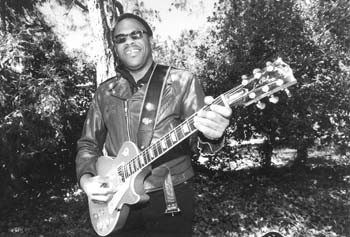
IT’S ONLY FEBRUARY, but Chris Wall’s Tainted Angel is already making a strong pitch for country album of the year. Austin-based Wall may not be a mainstream radio star, but he is no stranger to masterpieces. After scoring a major songwriting hit with the uncharacteristically whimsical “Trashy Women” (as recorded by Confederate Railroad), he used his royalties to establish Cold Spring Records and recorded 1994’s Cowboy Nation, an astonishingly creative tapestry of hardcore honky-tonk. Now, after a four-year studio hiatus, Wall returns with an entirely different, but similarly potent, collection. Gone is the polished production of Cowboy Nation, replaced with a stripped-down sound that is perfectly calibrated to the album’s collective mood. But one thing remains unchanged: Wall’s subliminal intellectualism. No, we’re not talking the sort of self-conscious smarts brokered by tea-drinking folksters, but rather a sort of easygoing highway literacy that deciphers truth in whiskey shots and broken hearts. For instance, the fiddle-saturated “Big Blue Teardrops” is a gorgeously crafted swing number that explores the lighter side of regret, while Wall’s hardboiled baritone roams the atmospheric parallels between taverns and churches on “God’s Own Jukebox.” And “Dylan Montana’s Last Ride” is simply one of the most moving country tunes ever recorded. Pack this album on your next road trip: wherever you’re headed, it’ll get you there faster. Chris Weir

The RZA As Bobby Digital Gee Street

MASTER P and Puff Daddy have been reigning over hip-hop’s recent chart successes, but a more iconoclastic and influential wellspring has been the Wu-Tang Clan. From their two classic group efforts (1993’s Enter the Wu-Tang and 1997’s Wu-Tang Forever) to consistently strong solo works by rappers like Raekwon and Method Man, the group has set the high standard for MC skills and has shaken hip-hop with a dry, haunting minimalism. The sonic mastermind behind Wu-Tang Productions is the group member known as the RZA, and he’s finally released his own solo work after producing an endless stream of Wu-Tang spinoffs. Packaging himself as a high-tech blaxploitation hero on As Bobby Digital, the RZA finds more dramatic humor but less desperate focus than usual. Not a great rapper himself, he rallies fine guest support from around the Wu-Tang camp, and though he uses other producers, the sound is all his–eerie loops of stark piano riffs, rough vocal tracks, sparse beats, and the displacement of even sparser samples. Behind his comic-book Bobby Digital character, the RZA has a disc that’s compellingly uneasy–the sounds that lurch and the songs that fade abruptly make it clear that this ain’t no disco. Karl Byrn

Tony Bennett with Count Basie & His Orchestra In Person! Sony/Mobile Fidelity

FORGET ALL THOSE shabby-chopped, pink martini-swilling swing posers. Before he became an unlikely unplugged MTV icon, America’s quintessential lounge singer teamed up with the Kansas City swing king at Latin Casino in Philadelphia for a classic 1958 dinner-club set. On a newly released reissue, Sebastopol-based audiophile company Mobile Fidelity gives this dynamic live concert recording the 24-kt-gold ultradisc treatment. And once the annoying crowd noises die down, you’re left with a sonically superior chronicle of Bennett, with his captivating bel canto, at his peak. Bennett’s belting vocal on “Without a Song,” from the musical Great Day!, will blow you away. But his haunting reading of the Ellington chestnut “Solitude” is the icing on the cake. And you can bet he silences the noisy drunks at the front tables. Ah, Tony! Greg Cahill

From the February 18-24, 1999 issue of the Sonoma County Independent.

© Metro Publishing Inc.
Cottage Recording Industry

0

Grizzly Bare

By Charles McDermid

IT’S NOT UNCOMMON to find a disheveled Roger Tschann working behind the mixing desk at his Grizzly Studio in a bathrobe and slippers. Tschann’s commute consists of rolling out of bed at his Petaluma home/studio, so his disheveled ‘bedhead’ has become somewhat legendary.

The Grizzly Studio experience is what studio owner and Flying Harald Records chief Tschann, 28, describes as ‘the seedy underbelly’ of the recording industry. Yet one cannot argue with his success. Having engineered CDs for such local bands as the Conspiracy, Cropduster, Eric Lindell & the Reds, the Burdens, Dieselhead, Little Tin Frog, and most recently Royal Pine, Grizzly ranks as the pre-eminent studio for a wide range of local talent.

“Roger’s methods are a little unorthodox, but the bottom line is the job,” says Michael Houghton, managing editor of a local music magazine. “The truth is that every local band in the know goes to Roger. He’s someone you relate to.”

It’s no problem relating to Tschann’s equable manner and grassroots bohemianism. After all, Grizzly has recorded everything from gangsta rap to country.

“My studio is a party, so I’ve got no problem with bands that do whatever they need to get their groove on,” explains Tschann. “Part of what a recording studio is about is going to somebody who knows how the band sounds. We’re going to have to rock if we want to find what puts a band in its best light.”

Self-taught, Tschann began recording bands in 1993 as a Santa Rosa Junior College student. The Conspiracy’s “Too Far Gone” became Grizzly Studio’s first finalized product later the same year.

“I got into it by buying one of the first ADATs [Alesis Digital Audio Tape, a professional and affordable VCR-sized recording device that democratized the industry] and building a one-room studio in my mom’s garage. It even had some closets to stick amps in,” Tschann recalls. “It was cramped and stinky, hot and miserable. It’s amazing that anyone would put themselves through that. It was pretty rock ‘n’ roll, though.”

Tschann ultimately left the confines of mom’s garage for The Ranch, a converted farmhouse, now a multiroom facility with several isolation booths and, most important, air conditioning. “A large part of what I do is technical, but it is equally creative as well,” Tschann says. “[Making a record] is like directing a film: you must bring certain things into focus and know what to leave in the background.”

From the February 18-24, 1999 issue of the Sonoma County Independent.

© Metro Publishing Inc.

Prairie Sun Recording Studio

0

Dream Maker

Music man: For more than two decades, Prairie Sun owner Mark Rennick has attracted world-class musicians to his Cotati recording studio.

Prairie Sun Recording Studio chief Mark Rennick is a musician’s best friend

By Charles McDermid

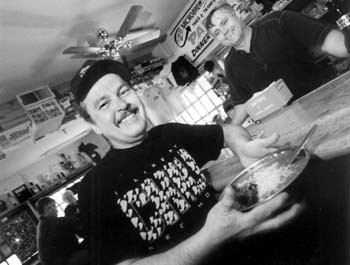
I’LL TELL YOU TWO THINGS,” says recording studio owner Mark Rennick, who is known almost exclusively by his nickname, Mooka. “First, the best thing about what I do is the cool people I meet. The second thing is that I call everybody Bubba.”

Fair warning for an interview session that proves to be an exercise in loquacity. Touring Rennick’s sprawling Prairie Sun Recording Studio compound for even a brief stretch finds the 46-year-old displaying the range of interests required of an owner, manager, engineer, producer, and, most important, musician. One moment Rennick is addressing the pros and cons of digital recording equipment, the next he’s picking up a nearby stand-up bass and plucking the strings reflectively.

“I want to be an artist. Period,” says Rennick, who in his limited spare time performs in a politically charged spoken-word ensemble, the Abolitionists, and plays bass in the local Kay Irvine Band. “The recording-studio business is really just a means to an end. I run an artist’s colony that sometimes I’m forced to approach as a business.”

As such, Rennick and his wife, Cherrie, are immersed in the innumerable responsibilities inherent in running an operation that is open 24 hours a day, 365 days a year.

“If people want to record, we have to be there. It doesn’t matter if it’s 2 in the morning on Christmas Eve, we’ll have an engineer in there,” says Rennick, whose workday starts at 7 a.m. and invariably ends between 10 p.m. and 2 a.m. “We have to cram sometimes, so it can be high pressure. People snap and lose it all the time.”

“It’s a competitive business, and with the trend today of buying equipment and doing it at home, a studio must have its own niche.”

THE ROAR OF A CHAIN SAW marked the genesis of Prairie Sun, founded in 1978 when Rennick bored a tremendous hole through the living room wall of his rental house in Cotati. “We needed a control-room window,” recalls Rennick, who at the time was studying East Indian music at Sonoma State.

From that spontaneous beginning, Prairie Sun has evolved into one of Sonoma County’s best-kept cultural secrets, a place where art and science meet. Along with thousands of other musicians, Van Morrison, Primus, Faith No More, the Melvins, and surf music creator Dick Dale all have recorded at Prairie Sun or used its post-production facilities. Producer and engineer Steve Albini (Nirvana, Pixies, Led Zeppelin) does work at PSR, as does Sonoma County artist Tom Waits, whose Bone Machine CD, winner of the 1992 Grammy for Best Alternative release, was co-produced by Waits and his wife, Kathleen Brennan, entirely at Prairie Sun.

In an industry overrun with power lunches, cell-phone palaver, and high-tech sterility, Rennick has managed to maintain a “middle-class, mom-and-pop honesty.” Perhaps because of this, Prairie Sun, named for the Prairie Grass Restoration Project in Rennick’s native Illinois, has accomplished the difficult task of appealing to local bands with small budgets and little experience while garnering established national acts via industry word-of-mouth.

Down ‘n’ dirty in the cottage recording industry

The studio is known as a residential recording facility with a technical bent toward vintage analog-recording equipment as well as state-of-the-art digital technology. “We have a strong blend of old and new. We emphasize unique acoustical environments,” says Rennick.

Take it as a testament to the rolling hills of the west county that a further aspect of Prairie Sun’s niche is location. “It’s a real gem,” says Jeff Sloan, a former studio manager at Prairie Sun for seven years who recently oversaw all production for Waits’ newly completed album set for release this spring on Epitaph Records. “Sonoma County has a lot of little places like that tucked away. [But] it’s a real music retreat–no phone calls or worry about where you’re staying, and you’re 10 feet from the studio.”

IN 1981, after being “encouraged” to relocate by beleaguered neighbors in Cotati, Rennick teamed with Clifton Buck-Kaufman, an art collector and co-founder of the annual Cotati Accordion Festival, and moved Prairie Sun to an old 12-acre chicken ranch just off west Highway 116.

Over the last two decades the sprawling compound where Buck-Kaufman’s family had lived for more than 75 years has evolved into “a full turnkey, multifaceted recording facility.” But the bucolic exterior hardly suggests the high-tech setup within. Cows and horses plod about aimlessly. The grounds, which hold a commanding view of the windswept and cypress-encrusted countryside, are most notable for a pen of Shetland ponies, an enormous garden, and a well-used basketball hoop. The personality of the place could not be more laid-back.

Alongside the half-dozen converted barns, sheds, and cottages that accommodate record-making are three guest houses where musicians often make extended stays with family or entourage.

“A ‘turnkey’ studio means you can do a full-tilt project there,” Sloan says. “You can complete the whole process in one location.”

Briefly, the steps involved in recording begin with rehearsal and pre-production, move to tracking and overdubbing, and end with mixing and mastering. Prairie Sun has three actual studios, each suited for specific needs.

Studio A is the primary mixing room, containing a 48-track mixing board and an overdubbing isolation booth. Studio B is the main tracking, or recording, room: “It’s acousticized and has no parallel walls to eliminate sound trapping,” Sloan explains.

Studio X and the live areas are down in the old cement hatchery rooms, one of which, now called the Waiting Room, is Tom Waits’ preferred acoustic environment.

“[Waits] gravitated toward these ‘echo’ rooms and created the ‘Bone Machine’ aural landscape,” Rennick says.

On this day, occupying a full corner of the cavernous main room of Studio X is an enormous pile of exotic instruments used by Waits while recently recording his yet-to-be-titled new album. The array runs the gamut from the gauche to the ramshackle, the most identifiable objects being huge, old wooden drums, antique carnival pianos, guitars of all shapes and sizes, and a heap of rusty yard tools.

“What we like about Tom is that he is a musicologist. And he has a tremendous ear,” Rennick says. “His talent is a national treasure.”

But in addition to the big names that frequent Prairie Sun, notable local bands such as the Sorentinos, Tarnation, Bracket, Dixie Star, Jumbo, Woodbine, Skatz 007, and even local R&B legend Johnny Otis also have recorded at the Cotati studio.

“If somebody works his day job and has a part-time job, saves every penny that he’s got to come to my studio, I must be as responsible to him as I would want someone to be for me,” Rennick says. “I have the ultimate respect for any artist willing to work on realizing his dreams.”

From the February 18-24, 1999 issue of the Sonoma County Independent.

© Metro Publishing Inc.

Heirloom Restaurant

0

Rare Gem

Crown jewel: Heirloom Restaurant on the Sonoma Plaza offers Old World charm and fine food to rival the region’s best established eateries.

Heirloom inherits locale, collects culinary kudos

By Paula Harris

IT’S A RARE TREAT to discover a restaurant that not only consistently delivers quality dishes but also includes a generous dollop of verve and imagination. Such a find is the aptly named Heirloom Restaurant & Lounge in the historic Sonoma Hotel on Sonoma Plaza. The venerable old corner building, built in 1880, may have had a checkered Wild West past and many incarnations, but for the past couple of months it’s been home to Heirloom.

Inside Heirloom’s dining room, a huge, wonderfully preserved wooden and mirrored Italian bar (built in 1909) is a charming centerpiece. The well-trodden, ancient wooden floor and the butterscotch-colored glass lamps hanging from the high ceiling add to the stately but cozy ambiance.

We tried lunch and then returned to sample dinner. The lunch menu is moderately priced and quite varied. We nibbled on warm crusty bread while soulful Italian vocals from the soundtrack of the movie Big Night flowed from the sound system.

The winter vegetable torte ($7.75) with herbed farmer cheese and market greens was a pretty picture. The generous slab had a brioche-style crust, exposing colorful layers of puréed sweet potatoes, turnips, celery root, and roasted red onion. Also on the lunch menu was grilled sterling salmon ($11.75), a moist, perfectly cooked fish accompanied by fresh baby dandelion greens and a serving of plump appaloosa beans with slivers of green picholine olives and flecks of thyme.

Ready for more, we returned the following evening to find tea lights flickering on the tables. Big Night had been replaced by the slinky-voiced Sade.

We launched into the spinach and frisée salad ($7.25), a tumble of fresh greens in a very light white balsamic vinaigrette with some delicious additions: wafer-thin slices of red d’anjou pears, toasted slivered almonds, and slender triangles of creamy carmody cheese. A winning combo.

The roasted Wolfe Ranch quail ($9.50) was another highly imaginative melange of tastes and textures. A perfectly gold roasted quail was stuffed with bread, leeks, and sage. It was served hot and crisp atop a bed of fresh watercress and garnished with pink, delicately flavored chioggia beets, tangy kumquat slices, and sweet toasted walnuts. The tastes “pinged” and played off each other like some celestial pinball machine of flavors.

The simply titled “egg noodles” ($11.25) turned out to be a rich-tasting pasta concoction with broccoli rabe, toasted garlic, and pancetta. These distinct but harmonizing flavors were heightened with chicken stock, marjoram, and a touch of pumpkin seed oil. The dish was garnished with slivers of aged Parmesan.

The roasted sea bass ($16.50) won further praise. The thick, soft flesh was a luminous white, tender, and moist. The fish rested on a pile of finely shredded cooked cabbage and was garnished with a trio of airy oval-shaped salt cod and parsnip dumplings. The entire dish seemed to be infused with the concentrated brine of the ocean, yet didn’t taste overly salty, perhaps because it was balanced by a sweet onion broth.

Chef Michael Dotson, formerly of Plumpjack restaurant in San Francisco, manages to amplify flavors by layers, depths, and contrasts. He’s obviously not scared to experiment, as most of the dishes are elevated by inspired touches. If we had one quibble, it would be that there are no vegetarian entrées available for dinner, but that could change as we’re told the menu will rotate.

THE DESSERTS ARE delightful. A hazelnut crème brûlée ($5) had an intense nutty flavor augmented by a pair of buttery hazelnut cookies. A warm chocolate soufflé cake ($5) with pieces of candied oranges and a cappuccino crème anglais was a chocoholic’s heaven. And the warm pear crisp ($5) with huckleberry ice cream was short on crumbly topping but long on orange zest aromas.

The fresh farmer cheese ($6) reminded me of restaurants in Lyons that routinely insert a cheese course between the entrée and the dessert. The cheese selection almost always includes fromage blanc (a smooth soft cheese served with sugar and thick cream). I’ve never forgotten the taste.

The farmer cheese used at Heirloom was a bit chalkier in texture, and it included honey instead of sugar, but still had that tangy sweetness and was a close approximation of the French version. The drizzles of thick wildflower honey and warm slices of grilled walnut bread were delicious additions.

The restaurant has a midsize wine list. The Kunde Sonoma Valley viognier ($28) we selected was light and fresh, with a slight floral quality that paired happily with our various courses.

As for the service, everyone we encountered was personable and efficient without being obtrusive–another reason to seek out this fresh new treasure and prepare to feast.

Heirloom Restaurant & Lounge 110 West Spain St., Sonoma; 939-6955 Hours: Lunch, from11:30 a.m. to 2:30 p.m. daily; dinner, from 5:30 to 9:30 p.m. daily Food: “American prepared with a French hand,” says the chef. Ambiance: Cozy 19th-century elegance Price: Moderate to expensive Wine list: Adequate selection Overall: ***1/2 (out of 4)

From the February 18-24, 1999 issue of the Sonoma County Independent.

© Metro Publishing Inc.

Susie Bright

Suddenly Susie


Michael Amsler

Bad attitude: Sexpert Susie Bright gets down and dirty with her wildly eclectic Best American Erotica 1999.

Susie Bright surfs the erotica tidal wave

By Patrick Sullivan

THIS TIME OF YEAR I get inundated with these books about how to be a hot babe in bed,” says Susie Bright, voice dripping with amused contempt. “I’ve got this thing; it’s so funny. It’s a beautifully packaged box that claims to have everything you need in it, from stories to playthings. In fact, I’m going to open it up while I talk to you. I just can’t wait to see this junk.”

With that, the noted author and sexpert, on the phone from her home in Santa Cruz, begins enthusiastically ripping into one of the many offerings of erotica filling up bookstore shelves in time for Valentine’s Day. It’s quickly apparent that this particular item is not up to Bright’s standards. The candle is “cheesy,” the feather “looks like a pigeon dropped it outside,” the scented body oil is “really stinky.” Even the silken cord–included as a naughty nod to light bondage–doesn’t pass muster.

“These things are almost designed to make you fail,” she says. “You know what this silken cord is? It’s like one of those things you tie curtains back with. It’s a drapery accessory. One of these days, I’d like to do a documentary where I take people into an average hardware store and show them how you can get really high-quality S&M equipment for cheaper than anything you can find in a sex-toy shop.”

Bright, who speaks Feb. 23 in Sebastopol, does have a certain amount of self-interest at stake here. The series she edits–The Best American Erotica–is also out on those crowded shelves, fighting for visibility.

The irony is that this explosion of New Wave erotica, much of it written by and for women, might not exist if it weren’t for the work Bright did as a pioneer in the field. The Herotica series she began editing in the late ’80s blazed a trail that has since become a six-lane interstate. Not that Bright is really complaining–she’s pleased as punch that sexy stories have gone mainstream. And she’s not worried about the fate of The Best American Erotica 1999 (Simon & Schuster; $13).

“I have no shame about my book, because my book is not cheesy,” she says with a laugh. “It is not insinuating that if you follow these instructions or techniques that something’s going to happen. I’ve become very anti-technique over the years. I finally realized that the people who are the hottest in bed were hot because they just got so turned on and let their body go with what was motivating them.”

Sex in all its wild variety has long been the focus of Bright’s attention. Of course, that’s true of many of us, but the woman the press has dubbed America’s premiere “X-rated intellectual” has been on a crusade since she was a teenager, fighting with an evangelistic fervor against what she views as puritanism, intolerance, and hypocrisy.

She edited the audacious lesbian magazine On Our Backs and toured the country with her presentation How to Read a Dirty Movie, but she is best known as a provocative writer. Her 1997 bestseller, The Sexual State of the Union, was a withering attack on a rouge’s gallery of anti-pleasure villains, taking on both the “homophobic right wing” and the “sexaphobic left wing.”

Bright has made a career out of defying labels and reconciling apparent contradictions: She’s a pro-porn feminist and a lesbian who sleeps with men, among other things. Above all, she’s committed to frank discussion of human sexuality–which can make her a bit disconcerting to talk to.

In fact, Bright is chock full of advice about how to spend the most romantic (and, for some, the most anxious) holiday of the year, even if you’re spending it alone.

“Why should single people give love up to the yuppies in the hot-air balloon with the champagne flutes?” Bright says. “Maybe you want to get into celebrating the platonic love in your life. Or, like I told one friend of mine who was crying in her soup about being dumped, ‘You’ve always said you wanted to have all these sexual adventures that you couldn’t have when you were with what’s-his-name. Now’s your chance.’ “

Or you could just curl up with a good collection of erotica. But that begs the question of where you find the really good stuff, a problem Bright confronts every year when she pulls together Best American Erotica, which she has edited since its inception in 1993.

“In some ways, as a certain style of stroke book, it’s a failure,” Bright says with a laugh. “I mean, I know what my little favorite turn-ons are, and I can go and pick up those plain brown wrappers and turn to my favorite section and Jill off. I know exactly what will press the button every time. But for sustained reading, you need something that gets to you on emotional, intellectual, soulful levels.”

From the beginning, her series has attracted big-name writers such as vampire queen Ann Rice, Pulitzer Prize-winner Robert Olen Butler, and Nick Baker (author of Vox). But Bright values unknown authors just as much, as long as they can deliver a well-written story with a compelling erotic quality that pulls in the readers, regardless of taste or sexual orientation.

The new book’s 21 eclectic tales offer a bit of everything. There is Anne Tourney giving tips on “How to Come on a Bus.” There is a frustrated Robin superheroically lusting after a deeply repressed Batman. There is gay sex, straight sex, Internet sex, men getting spanked for having Internet sex, first-time sex, sex with razors, and more.

“It’s a bit like travel writing,” Bright says. “You don’t write stories about the beauty and wonder of Hawaii or India just for people who’ve already been there and love it. It’s to let people feel like they’re the armchair traveler, that they get to go to all these places without actually having to do anything and feel some of the thrill, feel the attraction, feel the sympathy.”

In this era of Oval Office trysts, you might think that real life offers erotica some pretty stiff competition. But at the mention of Ken Starr’s infamous tome, Bright merely sniffs in disdain.

“The Meese report was much more sexy,” she says. “One of my favorite sayings was that I masturbated to the Meese report until I passed out. They used real pornography to make their case. They quoted things liberally. But the Starr report was trying to be original, and it stinks..”

So, what’s next for the one-woman sexual revolution? Bright, now 40, admits she’s uneasy about being an aging sexpert in a culture obsessed with youth. But a recent weekend with a group of older nudists reassured her.

“When they had their clothes on, they looked like a bunch of old biddies. When they took them off, it was like, ‘Wow, you’re good looking!’ ” she says with a laugh. “In another 30 years, I’m probably going to be a full-time nudist.”

Susie Bright appears at 7 p.m. on Tuesday, Feb. 23, at Copperfield’s Books, 138 N. Main St., Sebastopol. For more information, call 823-2618.

From the February 11-17, 1999 issue of the Sonoma County Independent.

© Metro Publishing Inc.
Anne Lamott

All about Anne

By Patrick Sullivan


THERE ARE, it’s now clear, two Anne Lamotts. The first we know very well: She’s the acclaimed author of such finely crafted novels as Rosie and Crooked Little Heart–fiction that sears, soothes, and surprises with its keen eye and wry sympathy for human weakness. This Lamott has also graced the world with Bird by Bird, one of the better books on the shelves about the art of writing.

And then there’s the other Anne Lamott, the author of the new Traveling Mercies: Some Thoughts on Faith (Random House; $23).

The book, Lamott’s third autobiographical work, chronicles the author’s long journey toward religion. Raised in a profoundly secular Marin County household, tempted by a number of belief systems during her troubled life, Lamott at last found a home for her spiritual longings at a small interracial Christian church. Traveling Mercies is the story of how she washed ashore in that unlikely place.

The trouble is, this rambling, self-absorbed book is much more about Lamott than it is about spirituality, religious community, or anything else. Like Woody Allen, Lamott is well known for a certain brand of lovable narcissism, but here she has concentrated so obsessively on herself that all else fades into the background.

Early on, Lamott sets us up for disappointment by writing well. The powerful introductory chapter paints a vivid picture of her childhood, her relationship with her atheistic, leftist parents, and her small steps toward faith. The compelling climax comes when she describes how, in the fearful grip of drug and alcohol addiction, she stumbled in a hangover fog into St. Andrew Presbyterian Church, where she was slowly won over by the raw spiritual power of the congregation. The reader is hooked: We’re ready for a thoughtful exploration of the ramifications of religious faith in a secular age.

We don’t get it. Instead, if this book were a broken mirror, shards of glass scattered on the ground, God’s left eye would be reflected in one tiny sliver, and Lamott’s face would be staring out of every other piece.

Now, granted, this is a deeply personal subject. But do we need an entire chapter on one of Anne’s moles, which she thought might be cancerous (it wasn’t)? Do we need another on Anne’s decision to get dreadlocks? Maybe there is a book that could make this material relevant and compelling, but Traveling Mercies isn’t it.

Again and again, the Almighty steps in to save Lamott from such grim disasters as the day her son lost a swim flipper while snorkeling and had to go sit dejectedly on the boat. But Lamott begs God for help, and sure enough–zazaam!–an entertaining mob of seals appears. Then heaven strikes again, though not with a repetitive seal display: “Instead–God must have been in one of her show-offy moods–the next thing we knew, the boat was surrounded on both sides by dolphins, literally hundreds of dolphins leaping out of the waves everywhere you looked. …”

This is a witty book, and we’re never allowed to forget it. Here’s the drill: Someone around Lamott does one of those annoying things–like acting superior or voting Republican–that make up so large a part of life’s rich tapestry. Then the author details her uncensored inner reaction–usually psychotic rage. Finally, the relentless punch line: “I realize I may be a little sensitive on this topic.”

The biggest problem, though, is that Lamott has toured this territory before and done it better. Her relationship with her father, her experiences with dying friends, the difficulty some folks apparently had with her conversion: It all showed up in a different form in Crooked Little Heart. There, through the insulating device of fiction, the reader could focus more on the emotion and less on the writer.

Still, buried deep in Traveling Mercies are some gems: The author’s gift shines through in such places as the devastating scene of her father’s death. It’s enough to give hope to fans of the old Lamott. True talent doesn’t fade this quickly. When the author is ready, she’ll dazzle us again.

Anne Lamott appears at 7 p.m. on Wednesday, Feb. 17, at the Veterans Building, 282 S. High St., Sebastopol. Proceeds benefit Western Sonoma County Rural Alliance. Tickets are $8 in advance from Copperfield’s Books, $10 at the door. 874-3029.

From the February 11-17, 1999 issue of the Sonoma County Independent.

© Metro Publishing Inc.
Three Tall Women/Tartuffe

0

Hit and Miss

Tartuffe.

Mixed results at ‘Three Tall Women’ and ‘Tartuffe’

By Daedalus Howell

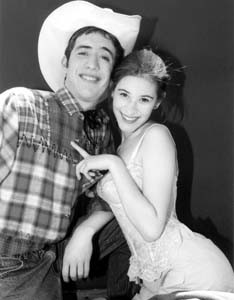
THREE CHEERS are in order for the cast of Cinnabar Theater’s production of Three Tall Women–brava, brava, brava! Director Deborah Eubanks’ tiptop troika of actresses is a smashing complement to Edward Albee’s Pulitzer Prize-winning vivisection of an old woman’s psyche, making for some of the finest theater this season. A seriocomic exploration of love, death, and myriad existential conundrums, Three Tall Women has a first act that’s as simple as ABC–literally. In an interesting stylistic turn, Albee shirks the notion of proper nouns, opting instead for alphabetic appellations.

Enter capricious 92-year-old widow, “A” (Laura Jorgensen), whose finances are being sorted out by young attorney “C” (Kate Sheehan), both of them trading wry banter with “A”‘s middle-aged, live-in caregiver, “B” (Joan Hawley). The mordant trio lathers on the blather as a century’s worth of emotional experience comes tumbling forth from “A” in an avalanche of anecdotes and confessions–some comic, others cheerless, but all expertly conveyed by Hawley’s faultless characterization (she is generations younger than her elderly character, but she plays age with aplomb).

Resentful, cagey, and unhinged by encroaching senility, “A” has a particularly painful recollection that plunges her into an act-closing coma. When the play begins again, the acerbic grande dame is portrayed by all three actresses in three life stages (think Edvard Munch’s painting Girls on a Jetty), parsing out her experience, awaiting the inevitable.

Sheehan shines here as the spritely and pugnacious young woman–her innocence is as beguiling as it is endearing. Likewise, Jorgensen’s dry-martini performance as the middle-aged “A” perfectly bridges the chronologically and spiritually disparate younger and older “A”‘s. These characters aren’t simply sounding boards for old “A”‘s many monologues; they’re whole people deftly brought to life by stellar performances.

Throughout, “A” schools her youthful selves with the portentous line “You’ll see.” This also applies to any self-respecting theatergoer. You’ll see Cinnabar’s Three Tall Women.

Three Tall Women plays Feb. 12-13 and 18-20 at 8 p.m., and Feb. 14 at 3, at Cinnabar Theater, 3333 Petaluma Blvd. N., Petaluma. Tickets are $9-$14. 763-8920.

SHAKESPEARE HURLED countless neologisms into the English language, so why not French dramatist Molière? The playwright managed a crossover with tartuffe, a noun describing a hypocrite who affects religious piety–traits embodied by the title character of Molière’s masterpiece, Tartuffe, now playing at Sonoma County Repertory Theatre.

Directed by Jim DePriest from a singsongy English verse translation, Tartuffe details the misadventures of a mock-pious charlatan who insinuates himself into the wealthy graces of guileless Orgon (Tom McIntyre). The hapless mark believes that Tartuffe is the epitome of humility and a moral example for his reproving family, who see through the manipulator’s shenanigans. Hanging in the balance is the hand of Orgon’s daughter Mariane (a plucky and animated Sheeka Arbuthnot), the fidelity of Orgon’s wife, Elmire (crisply played by Caroline McKinnion), and the family estate, the deed to which Orgon signs over to Tartuffe in a fit of brotherly love.

Crucial to the play’s success is the transparency of the con man’s pious veneer. Like Orgon’s family, the audience must ask the question “How could Orgon be such a sucker?” Interestingly, Kesser plays Tartuffe opaquely, his piety seemingly genuine, with nary a nod or a wink to indicate his deception. His Tartuffe is eminently likable until his nefarious plans are revealed, and even then you still would loan the guy bus fare.

Though novel, Kesser’s about-face is not supported by Molière’s text, which relies on Tartuffe’s diaphanous persona. The result is an interesting but uneven production.

Tartuffe plays through Feb. 28. Thursdays-Saturdays at 8 p.m.; Sundays, Feb. 14 and 28 at 7, and Feb. 21 at 2. Sonoma County Repertory Theatre, 415 Humboldt St., Santa Rosa. Tickets are $10-$12. 544-7278.

From the February 11-17, 1999 issue of the Sonoma County Independent.

© Metro Publishing Inc.
Viagra & the Military

Stand & Deliver

By Cecil L. Bothwell III

THE JANUARY 1999 issue of Harper’s magazine reports that the Pentagon will spend $50 million on Viagra this year. While I guess this must be regarded as a necessary expense for maintenance of a standing army, it sure seems like a bad omen for civilian Viagra users. Systems adopted by our armed forces have a decidedly mixed success rate and inevitably get more expensive with each failure.

Depression often decreases libido, so it could be that the military’s Viagra budget signals a normal reaction to technological failure, rather than an abnormal physiological condition. But either way you have to wonder who’s in need of a lift.

Perhaps the medicine is destined for the Army’s attack helicopter wing, which seems to be having trouble getting its birds up lately. The General Accounting Office reports that the new AH-64D Apache Longbow, from Boeing, can either fly or carry weapons, but not both. When fully loaded with fuel and missiles these high-ticket whirly birds exhibit a negative vertical rate of climb, or VROC. This means they will not rise.

While that tiny glitch doesn’t seem to bother the bosses who are shelling out $4.9 billion for 758 of these babies, you’ve got to think that pilots will be worried. Apparently the only way they will be able to fly the Longbow into battle is unarmed, which is enough to make any soldier reach for a little picker-upper.

Meanwhile, I can’t help wondering what military women think of the Viagra budget. The evidence from the Tailhook affair tells me that sex is the problem, not the solution. “Down boy” is more of an issue than VROC. On the other hand, we hear of women officers facing courts-martial for fraternizing with the troops. If an enlisted man were taking the military-issue performance enhancement drug, could an accused officer claim that she was engaged in Systems Evaluation rather than an affair?

“I was investigating troop readiness, General.”

“And … ?”

“Locked and loaded, General. Locked and loaded.”

Then too, there is the fairness issue. This isn’t like those pricey but unisex toilet seats and hammers we hear about. This is a guy thing. It has been widely reported that insurance companies quickly stepped in to fund Viagra prescriptions when it hit the market, while one in three health plans still refuses to pay for birth control pills. Such obvious sexism is indefensible on anything except monetary grounds (The contraceptive pill would cost insurers a bundle), and in the broader view it is totally nuts.

LIKE FERTILITY nostrums that now allow humans to have litters, financing of erections without funding of family planning works against society’s best interests. “We’ll make more” is OK for potato chips. People? We already have too many.

Now, it’s obvious that, when used as directed, a lot of military gear does work toward reducing population. But I don’t think anyone would argue that bullets and tanks offer the same benefit to women in uniform that Viagra presumably does to men. The rules against fraternizing indicate that there is no legal way for military women to get subsidiary benefit of the drug. So, what will it be?

Maybe the Pentagon should set up a massage program for the girls. At fifty bucks a shot, equal funding would cover a million masseuse hours. There wouldn’t even be a need for new training!

Staffers in the military’s procurement divisions have been massaging figures for years.

From the February 11-17, 1999 issue of the Sonoma County Independent.

© Metro Publishing Inc.

Tuvan Throat-Singers

0

Tuva Time

The Wild East: Kongar-ool Ondar lands major label deal.

Music of Central Asia piques Western ears

By Greg Cahill

CALL IT AN EPIPHANY. Looking for a way to keep his mind off his wife’s debilitating illness, Paul Pena in 1984 turned to searching short-wave radio broadcasts for foreign-language lessons. “Rather than crawl into a bottle for the rest of my life, I wanted something to occupy my mind,” says Pena, noting that his wife’s long illness and subsequent death had left him severely depressed. One night he encountered eerie, oscillating whistles that immediately caught his ear. “At first, I thought the radio’s diode had blown out,” says Pena, a blind bluesman who penned the 1977 Steve Miller hit “Jet Airliner,” “but then I realized there was a discernible melody. So I listened some more and discovered it was Radio Moscow and the sound was a guy singing two notes at once.

“Oh, man, all my training told me that was impossible, but I became determined to learn it!”

It took years to track down (the announcer had given the wrong pronunciation of the singer’s origin), but Pena eventually traced the strange sounds he heard that night to a polyphonic throat-singer from the isolated Republic of Tuva in Central Asia.

And, most remarkably, he even mastered the difficult technique.

The rest is history, thanks to a recent film documentary by Roko Belic. His Genghis Blues–which premiered last fall at the Mill Valley Film Festival–chronicles the amazing journey that in 1995 took Pena from urban San Francisco to a remote region of the Asian continent, where he became the first Westerner to participate in a rigorous throat-singing symposium.

The documentary is one a several recent projects to put the remote Central Asian republic in the spotlight. Once all but forgotten, the Tuvans–including Huun-Huur-Tu, a group of Tuvan throat-singers who will perform Feb. 16 at the Luther Burbank Center for the Arts–rode into town on the hems of the Gyuto Monks of Tibet. Those purveyors of guttural polytonal chanting were “discovered” in the mid-’60s by Huston Smith, UC Berkeley professor of comparative religion, during a trip to Nepal. The monks’ art–the ability of one person to sing multinote chords–was considered a physical impossibility by Westerners.

THE MONKS ARRIVED in the States through the back door, so to speak, when Windham Hill Records founder Will Ackerman recorded them in the mid-’80’s. The monks, in turn, found a receptive audience among fans of New Age music in the then-emerging world music scene.

But neighboring Tuva–a simple horse culture on the Asian steppes that was the home of Genghis Khan and was under iron-fisted Soviet rule since Joseph Stalin’s 1936 invasion–remained shrouded in mystery and closed to travelers. In 1990, the Smithsonian Institution through its newly acquired Folkways Records subsidiary released Tuva: Voices from the Center of Asia, a collection of short tracks–including a 15-second imitation of a reindeer–demonstrating various Tuvan throat-singing techniques, but offering few full songs. However, these haunting sounds got a further boost in 1994 when PBS-TV’s Nova science series profiled Nobel Prize-winning physicist Richard Feynman, who had developed a fascination with Tuva. Feynman’s plans to travel there were cut short by his 1988 death. Ironically, permission to travel to Tuva arrived at his home just weeks after the physicist’s funeral.

Still, even in death Feynman introduced millions of TV viewers to polyphonic singing. By 1992, Tuva became a free nation of 300,000, mostly practicing Buddhists with a strong shamanic orientation. In 1994, a group of Tuvan throat-singers–led by the legendary Kongar-ool Ondar–journeyed to San Francisco’s Palace of the Legion of Honor, where they met Paul Pena and later invited him to their homeland.

At that point, things began moving fast–at least in terms of Tuvan musical history. Huun-Huur-Tu followed in Ondar’s footsteps with a series of Bay Area appearances. In 1996, the New Jersey-based Ellipsis Arts label released the definitive Deep in the Heart of Tuva: Cowboy Music from the Wild East, a single-CD and book set that included tracks from a variety of Tuvan throat-singers–including Ondar, Pena, and Huun-Huur-Tu–and a full-color booklet that traces the history of this faraway land and even offers recipes for the native blood sausage.

That was followed by Huun-Huur-Tu’s 1997 release If I’d Been Born an Eagle (Shanachie), a blend of Tuvan throat singing and haunting Russian melodies.

This year already has seen a double whammy. Tuva, Among the Spirits: Sound, Music, and Nature in Sakha and Tuva (Smithsonian Folkways) offers unprecedented field recordings of songs and nature sounds from the southern Siberian region that serves as a musical wellspring for Tuva. And Ondar gets the glittering Hollywood treatment on the newly released Back Tuva Future: The Adventure Continues (Warner Bros.), a collection of remixes that teams Ondar with the likes of country stars Willie Nelson and Randy Scruggs (a couple of tracks even feature samples of Richard Feynman), all cloaked in beat-heavy techno arrangements tailor-made for the rave dance set.

The strange thing is, it worksÑthough world music purists may want to run for cover.

Meanwhile, with Genghis Blues playing the film festival circuit nationwide and destined for home video release, expect the Tuvan cultural expedition to the West to thrive. Indeed, Pena believes that Genghis Blues and the recent CD releases could open a whole new world for Western audiences. “I think this is an important musical technology that for the most part we haven’t been made aware of,” he says. “I’d like to see someone who is well known use it to make more people aware of it.

“For all intents and purposes, this is a wholly new instrument. I’d like to see it develop.”

Huun-Huur-Tu, the throat-singers of Tuva, perform Tuesday, Feb. 16, at 8 p.m. at the Luther Burbank Center for the Arts, 50 Mark West Springs Road, Santa Rosa. Tickets are $15 adult/ $10 students. 546-3600.

From the February 11-17, 1999 issue of Metro.

© Metro Publishing Inc.

Christina Ricci

0

Curvy and Nervy

The Opposite of Sex.

Bob Akestar


In praise of Christina Ricci

By Gretchen Giles

THIS IS A SONG of breasts and thighs, peachy upper arms and a bubble butt. This is a hymn to the hint of a double chin, to a stomach that puffs up from under belts, to legs–as Scott Fitzgerald once wrote–that sink into shoes without the benefit of ankles. This is a heterosexual love poem to Christina Ricci, a young actress who proves that a blonde bombshell still has the right to explode. (Here’s hoping that her suddenly svelte form on a recent cover of Premiere is just a passing fancy.)

Anchored by a sweet smile and custardy breasts, Ricci is a kidnapped girl who play-acts the role of wife to Vincent Gallo’s more-than-just-troubled husband in the recently released-to-video Buffalo 66. The trailer to this film neglects Ricci’s cherub face altogether and shows only her bosom, her name slung across the breasts like a Miss America swag, giving the viewer a clue to how Ricci will be seen for the duration of the film: as tits that can talk.

Clad for Buffalo 66 with the innocence of a baby doll in a baby-doll nightie masquerading as a dress, Ricci moves with a jiggly purity that never allows her character unseemly carnality, refuses to suggest sluttishness, and defies such smears of whoredom as silver high heels, sparkly blue eyeshadow, and slip straps seek to bestow. Instead she is an overfilled angel, a cream cake with sugary thighs who shows no hint of a clavicle and has nary a muscle that isn’t smoothly encased in flesh. Nothing on Ricci bristles when it can undulate, no ripples appear that aren’t caused by exhaling, and her rear could never be described as less than ample.

How in Hollywood’s gym-culture has this woman gotten job after job as a sex queen? And who’d have guessed from watching the dour eyes and dark braids displayed in The Addams Family that Wednesday’s child would be so full of grace? Whether sweater-shrugging the seduction of a gay man in The Opposite of Sex or juggling down the pants of a frightened pubescent in The Ice Storm or rolling like a tube of cookie dough toward Gallo’s intense angularity on a motel bed in Buffalo 66, Ricci has nothing whatsoever in common with today’s notion of strained muscular beauty. She doesn’t even match the perfect size 12 waist of Marilyn Monroe in The Seven-Year Itch.

Like Drew Barrymore, Ricci displays a voluptuous milkshake beauty that must drive other actresses crazy. Surely she pays homage to the Stairmaster, but it’s hard not to imagine a plate of profiteroles sitting where the Evian should be. Yet there is nothing overfed about Ricci. Rather, she has the sturdy girl-next-door bounty of real girls–plus those custardy breasts. And it is her repeat portrayals of real-girl wickedness and real-girl sexuality that keep one riveted to the screen after the allure of breast and hip and impossibly round thigh begin to fade.

Ricci’s wan hitchhiker camping out in Johnny Depp’s nightmare hotel room in Fear and Loathing in Las Vegas gives the parent-chills to any who watch her. Her need to be returned immediately home to a five-food-group meal is shockingly apparent. In The Ice Storm, Ricci’s portrayal of sexual awakening lasts longer than Sigourney Weaver’s triumph at a key party, leveled as it is by Ricci’s head resting childishly on film-dad Kevin Kline’s shoulder as he carries her home. Even her black-bra’d flauntings in The Opposite of Sex eventually make some sense of why anyone would wish to ruin the life of her perfectly nice half-brother. And in Buffalo 66, Ricci gives meaning and rhythm to a role that should only provoke us to ask why the hell such a pretty young thing would hang out with a gaunt creep like Gallo.

In all these films, there is an inevitable moment when the viewer wants to scream “Run!” at Ricci’s pouting visage. But she’s stubborn and never does. Rather, she scowls at the Watergate hearings, tans her tummy by the pool, or sits on a mound of filthy Vegas carpet to wait it out. And with her sits enough creamy-silk real-girl flesh to make two of Parker Posey.

As most actresses seem to consist of little more than what’s left of a chicken after a barbecue–bones and a bit of skin–it’s heartening to see that someone as heroically built as Christina Ricci still gets to fill out a role, because she’s certainly got the talent to do it.

From the February 11-17, 1999 issue of the Sonoma County Independent.

© Metro Publishing Inc.

Spins

Heart Songs Solid gold: Tony Bennett gets royal treatment on new ultradisc reissue. Trio of country, rap, and lounge classics Chris Wall Tainted Angel Cold Spring Records IT'S ONLY FEBRUARY, but Chris Wall's Tainted Angel is already making a strong pitch for country album of the year. Austin-based Wall may not be a mainstream...

Cottage Recording Industry

Grizzly Bare By Charles McDermid IT'S NOT UNCOMMON to find a disheveled Roger Tschann working behind the mixing desk at his Grizzly Studio in a bathrobe and slippers. Tschann's commute consists of rolling out of bed at his Petaluma home/studio, so his disheveled 'bedhead' has become somewhat legendary. The Grizzly Studio experience is what studio...

Prairie Sun Recording Studio

Dream Maker Music man: For more than two decades, Prairie Sun owner Mark Rennick has attracted world-class musicians to his Cotati recording studio. Prairie Sun Recording Studio chief Mark Rennick is a musician's best friend By Charles McDermid I'LL TELL YOU TWO THINGS," says recording studio owner Mark Rennick, who is known almost exclusively...

Heirloom Restaurant

Rare Gem Crown jewel: Heirloom Restaurant on the Sonoma Plaza offers Old World charm and fine food to rival the region's best established eateries. Heirloom inherits locale, collects culinary kudos By Paula Harris IT'S A RARE TREAT to discover a restaurant that not only consistently delivers quality dishes but also includes a generous dollop...

Susie Bright

Suddenly Susie Michael Amsler Bad attitude: Sexpert Susie Bright gets down and dirty with her wildly eclectic Best American Erotica 1999. Susie Bright surfs the erotica tidal wave By Patrick Sullivan THIS TIME OF YEAR I get inundated with these books about how to be a hot babe in bed," says Susie Bright,...

Anne Lamott

All about Anne By Patrick Sullivan THERE ARE, it's now clear, two Anne Lamotts. The first we know very well: She's the acclaimed author of such finely crafted novels as Rosie and Crooked Little Heart--fiction that sears, soothes, and surprises with its keen eye and wry sympathy for human weakness. This Lamott has also graced...

Three Tall Women/Tartuffe

Hit and Miss Tartuffe. Mixed results at 'Three Tall Women' and 'Tartuffe' By Daedalus Howell THREE CHEERS are in order for the cast of Cinnabar Theater's production of Three Tall Women--brava, brava, brava! Director Deborah Eubanks' tiptop troika of actresses is a smashing complement to Edward Albee's Pulitzer Prize-winning vivisection of an old woman's psyche, making...

Viagra & the Military

Stand & Deliver By Cecil L. Bothwell III THE JANUARY 1999 issue of Harper's magazine reports that the Pentagon will spend $50 million on Viagra this year. While I guess this must be regarded as a necessary expense for maintenance of a standing army, it sure seems like a bad omen for civilian Viagra users. Systems...

Tuvan Throat-Singers

Tuva Time The Wild East: Kongar-ool Ondar lands major label deal. Music of Central Asia piques Western ears By Greg Cahill CALL IT AN EPIPHANY. Looking for a way to keep his mind off his wife's debilitating illness, Paul Pena in 1984 turned to searching short-wave radio broadcasts for foreign-language lessons. "Rather than crawl into...

Christina Ricci

Curvy and Nervy The Opposite of Sex. Bob Akestar In praise of Christina Ricci By Gretchen Giles THIS IS A SONG of breasts and thighs, peachy upper arms and a bubble butt. This is a hymn to the hint of a double chin, to a stomach that puffs up from under belts, to legs--as...
11,084FansLike
4,606FollowersFollow
6,928FollowersFollow

