
Online Gambling

0

High Rollers

Rise in Internet gambling reveals secret economy of online sports books

By Joab Jackson

LAST FALL, members of the All Star Sportsbook website experienced a rude shock when attempting to place online wagers. They had found that All Star’s servers had crashed from the wave of bettors wanting to get in on the N.F.L. action. “We apologize for the series of system failures during this past weekend,” read an e-mail sent out to account holders on Sept. 22 by All Star. “We had earlier upgraded our servers in an effort to prepare for football season; unfortunately, despite this upgrade, we were overwhelmed by volume reaching over 30 times our previous peak.”

All Star’s crush of users is a good indicator of the sudden popularity of online sports books. Here are websites where you can bet on anything, from football to the 2000 presidential election. Most of the wagering, however, is on sports, at least at sites like Sports Interaction, Bowman International, and others listed by Bettorsworld, the unofficial watchdog website of the industry. Fearing fluctuations in U.S. law, most of these businesses are based outside the country, usually in the Caribbean. Last January, the Washington Post estimated that there were about 30 sites accepting online bets.

IN MANY WAYS, international online sports books are the old street-corner bookie gone electronic. Once upon a time, you’d do your betting through a bookie. You could always catch him at a bar, or he’d come around to your job site once a week or so to take bets on upcoming games–football, baseball, whatever. If you were a bit short, he’d spot you. He kept all the numbers in his head. If you had an unusual idea for a wager, he’d ponder a bit and come up with some odds to accommodate you.

What was righteous about the street-corner bookie was that he wasn’t playing against his customers, as do casinos that profit by keeping the odds in their favor. The bookmaker was just the guy who kept the odds for the neighborhood. He held everyone’s bets and skimmed the top. You weren’t playing against your bookie; you were playing against his other customers. If you were really studious about the games, you could actually come out ahead–theoretically, anyway.

What Internet sports wagering does is press the secret economy of the bookie into the mainstream. It can’t be ignored as easily.

It is this proliferation of online betting that has prompted the U.S. Senate’s Internet Gambling Prohibition Act of 1999 (S692) that, if passed, would do just what the title says: prohibit online gambling. It’s the convenience of Internet wagering that spurred the bill’s proponents to action.

“We don’t want to see America’s living rooms turned into betting parlors,” Sen. Richard Bryan, D-Nev., told Wired magazine. While you have to wonder about the motivations of a senator from Nevada–where in-state phone-based sports books are legal–he does have a point. Last June, the congressionally mandated National Gambling Impact Study Commission (NGISC) warned that gambling in the United States had already reached epidemic proportions. The country has experienced a 1,600 percent increase in legal wagering revenues–money made by casinos, state lotteries, race tracks, etc.–from 1976 to 1997. And, as NGISC notes, online betting will take convenience gambling to new levels. Many states already have slot machines and keno games in bars and supermarkets; with the Internet, you don’t even have to leave home.

IN TERMS of convenience, however, not all online gambling is the same. Downloaded casino-connected slot machines, with algorithms calculated to pay out a certain percentage, might very well be the crack cocaine of the gambling world. Like those zombified old folks with the buckets of quarters you see haunting casinos at 4 a.m., home gamblers can get a hit of their chosen excitement every few seconds.

Sports betting spreads the entertainment dollar out over a few hours. You’re wagering on God’s own algorithm. A quarterback might twist an ankle, a race-car driver might blow a carburetor. Who knows what’ll happen? The Man moves slowly. You have to sit and watch. For many, gambling makes events more entertaining, a fact major sports leagues probably recognize if not publicly admit.

Certainly, I wouldn’t have tuned in to NASCAR’s Winston 500 on Oct. 17 if I hadn’t put $20 on driver Jeff Gordon. I figured to latch on to Gordon’s recent winning streak, so I registered and wagered at Sports Interaction, using a credit card. It took me all of five minutes. Microsoft’s site should be so user-friendly.

While listening to the race on the NASCAR site, I rummaged through Sports Interaction. Golf, cricket, tennis, snooker, horse racing, rugby, cricket, and even “Gaelic games” could be wagered on, as could the upcoming presidential election and the Booker Prize, an annually bestowed U.K. literary award.

Naturally, Gordon limped in at 12th place that afternoon. My $20, which I never saw, vanished effortlessly into cyberspace. The NGISC was right. Never before has it been so easy to bet money–or to lose it.

From the December 9-15, 1999 issue of the Sonoma County Independent.

© Metro Publishing Inc.
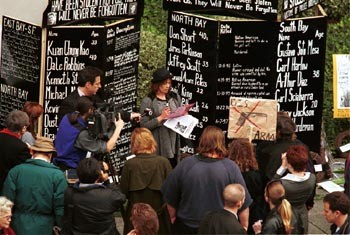
Napa Environmental Lawsuit

0

Man with the plan: Napa County planner Jeff Redding says that a landmark erosion ordinance implemented in 1991 has led to a marked increase in environmental protection. The Sierra Club has filed a suit claiming it doesn’t go far enough.

Chill Factor

Napa environmental lawsuit is having a chilling effect on local lawmakers

By Janet Wells

A SIERRA CLUB lawsuit lambasting Napa County’s vineyard conservation regulations is reverberating against Sonoma County’s own hard-fought and highly controversial vineyard ordinance, spurring a scramble by county administrators to avoid similar legal pitfalls.

After eight years of administering Napa’s vineyard conservation regulations, planning director Jeff Redding was floored, and not a little frustrated, when the Sierra Club filed suit in September, naming the county, and him personally, for allegedly failing to provide the necessary environmental reviews for vineyard development, and thereby endangering wildlife habitat and water quality.

The lawsuit, which reflects the concerns of those North Coast residents and environmentalists struggling to ease the impacts of burgeoning vineyard development, will “severely affect” Napa’s program, and could have a chilling effect on similar regulations throughout the state, including Sonoma County, Redding warns.

“In conversation with my colleagues in counties that are bigger in agriculture–Santa Barbara County, San Luis Obispo County–these folks are scared to death that unless they do something that’s absolutely non-discretionary or have enormous amounts of resources . . . they’re not even going to propose any rules at all,” Redding says. “I think that that is a severe problem.”

Redding is convinced that the regulations have been crucial to conservation efforts in Napa, subjecting more than 7,000 acres of previously unregulated vineyard acreage to scrutiny, and reducing potential erosion from 14 tons per acre annually to a more manageable 2.5 tons per acre.

The Sonoma County supervisors approved the vineyard planting and replanting ordinance in May, after almost two years of negotiations between growers and environmentalists. Initially, the law was scheduled to go into effect Oct. 1, but the board has yet to agree on several critical components, and, curiously, the issue dropped from view soon after the Napa suit was filed.

“I would be surprised if the ordinance gets done, frankly, unless Sonoma County has a lot of resources, or [the Board of Supervisors] makes it so non-regulating that it truly is ministerial,” Redding says. “And I’m not sure that’s what the Sierra Club intended.”

Revisions covering the guts of Sonoma County’s the law–erosion control standards and slope determination–now are scheduled to go before the board on Dec. 14, and if the changes are approved, county officials say they are optimistic that the county will have a final ordinance sometime in January.

“The lawsuit got people’s attention, that’s for sure,” Sonoma County Deputy County Counsel David Hurst says. “It’s instructive to us in how to draft our ordinance.”

The board’s instructions to staff, interestingly, have not been to tweak the ordinance so that it comes up to the Sierra Club’s environmental standards. Instead, the goal seems to be to create a document that repels lawsuits.

While both ordinances seek to reduce damage caused by soil runoff, there are crucial differences between the two. For instance, the Napa ordinance regulates all development, while the Sonoma County version–hammered out by local conservationists and grape growers–targets only vineyards. Also, Sonoma County’s ordinance will be regulated by the county agricultural commissioner, which will require growers to obtain and pay for permits for all planting and replanting of grapevines. In Napa, the Resource Conservation Department works with vineyard owners to develop an erosion-reduction plan, sending growers to the county Planning Department for a permit only if the vineyard site has a slope of more than 30 percent.

Such projects must undergo review based on the tougher California Environmental Quality Act.

The challenger: Sierra Club member Chris Malan spurred on a suit filed last month in Napa County Superior Court and now having a ripple effect statewide.

THE CEQA REVIEW standard is where things get sticky for Napa. The Sierra Club argues that all projects should undergo CEQA review because the county inappropriately uses discretion to determine the appropriate erosion-control plan for projects under 30 percent slope. “The county hasn’t been actively involved in pursuing the environmental quality of the projects,” says Tom Davis, a member of the Napa Sierra Club’s executive committee. “It’s basically rubber-stamped.”

The lawsuit asks for injunctions against several projects, naming Pahlmeyer Vineyards, Chateau Potelle, the Best Cellar, and Vineyard Properties West.

“One of the Pahlmeyer vineyards, somebody called [the owner] the poster boy for erosion,” Davis says. “These projects should be stopped.”

The suit also asks for a declaration that Napa’s erosion-control plans unlawfully fails to review the potential environmental effects, as well as an injunction prohibiting the county from approving erosion-control plans on slopes under 30 percent until the county complies with the CEQA.

“The level of discretion in our ordinance, we put there on purpose,” Redding counters. “The ability to use discretion–what I call common sense–is what made passage of the ordinance possible. Farming isn’t done by rote. . . . If you come to land that is too rocky or too steep, you want people to change the project.

“There are a number of counties and local governments at crossroads,” Redding continues. “When they see an ordinance like the county’s–which has been successful in reducing soil erosion–get attacked by an environmental group, then what is the incentive?”

Indeed, in Sonoma County, the incentive for the Board of Supervisors seems to be avoidance of Napa’s situation. Sonoma County officials steadfastly maintain that agriculture is not subject to CEQA review. According to Deputy County Counsel Hurst, the board wants as finely tuned an ordinance as possible that maintains the status quo of leaving the CEQA out of the process while creating standards that foreclose the possibility of the Agricultural Commission using discretion–and potentially getting hammered.

Even if the Sierra Club doesn’t sue, it looks as though the vineyard ordinance may put Sonoma County in the hot seat anyway.

At a recent lunchtime gathering in Santa Rosa with Redding and Sonoma County Assistant Agricultural Commissioner Mike Smith, Sebastopol architect Craig Williams raised questions about the Sonoma County ordinance applying only to vineyard development, whereas the Napa ordinance covers all development that affects erosion.

“It really shouldn’t matter whether I’m growing grapes, or growing a building, or growing a refinery or a gravel pit. If there’s no equal protection under the law, I think Sonoma County is leaving itself wide open to litigation.”

In fact, Williams said, he is considering putting together an ad hoc committee that would “try to sink teeth into” just that issue through legal action.

“If you don’t want to be proactive and responsive to this need to protect public health, safety, and environmental quality,” he told Smith, “we will file a suit essentially alleging that there is a breach of trust or lack of responsiveness to establish those basic standards of protection.”

From the December 2-8, 1999 issue of the Sonoma County Independent.

© Metro Publishing Inc.
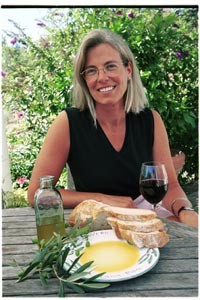
Anders Corr

‘No Trespassing’ makes the case for do-it-yourself housing

By Patrick Sullivan

IN A WORLD full of uncertainties, there is one thing you can count on: Throughout the gloriously compassionate holiday season, an army of TV reporters will converge on homeless shelters around the nation, eager to shed a few prime-time tears over the plight of those who can’t afford a room of their own.

We watch all this with a mixture of pity and apprehension. As rental rates and housing prices reach towering new heights across the Bay Area, it’s easy to imagine that only a few paychecks stand between us and life on the street–or at least life with our parents.

If we were turned out of our cozy little digs, perhaps we could take some comfort in the fact that we would be far from alone. Or maybe not. In any case, around the world, some 100 million people are homeless and 1 billion endure inadequate housing. Very sad: but what can anyone do? Anders Corr, author of No Trespassing (South End Press; $17), has an answer, but it’s not one landlords are going to like much.

The book, subtitled Squatting, Rent Strikes, and Land Struggles Worldwide, makes no secret of its sympathies. The Santa Cruz-based author, who was himself briefly a squatter, takes a wide-ranging look at people who take over vacant buildings and unused land, from punks to peasants, from poor farm workers in Honduras who squat on an unused banana plantation to advocacy groups in San Francisco who open abandoned buildings to the homeless, to some guy who builds a teepee on a winery in Sonoma.

Corr’s conclusion? Squatting is usually a darned good idea.

There will be some, of course, who object to squatting on moral principle, reasoning that lazy losers shouldn’t violate the rights of those who have worked hard to own property. For them, Corr has assembled an impressively reasoned answer. In part, he argues that squatters are often hard-working people driven to the margins by a ruthlessly competitive (and often illogical) world economy and left homeless by societies that would rather leave buildings empty than give someone a roof over his or her head.

It’s an especially compelling argument when it’s applied to the Third World, where land can literally mean the difference between life and death. Corr tells the monstrous story of how United Fruit, now Chiquita, amassed a huge portion of the arable land in Honduras, the quintessential banana republic. The company employed all kinds of chicanery, twice engineering the overthrow of the national government to get and keep land. In the face of that, it’s hard to condemn the efforts of laid-off banana workers to set up farms on company land.

But Corr does more than argue in favor of squatting. In this impressive piece of radical scholarship, he shows what makes squatters tick, why they win, and why they lose.

You’re guaranteed to read about events that were somehow overlooked in history class, including the astounding tale of the largest rent strike in U.S. history. In 1975, most of the 80,000 residents of Co-Op City, a huge public housing project in the Bronx, collectively stopped paying their rent to force their landlord, the Riverbay Corp., to roll back a huge rent increase. After a 13-month struggle, the tenants won major concessions.

Then there’s the astonishing case of an African-American farmer named Oscar Lorick, who faced eviction from his Georgia farm in the mid-’80s. With nowhere else to turn, Corr explains, Lorick crafted an unlikely alliance with a group of Christian Identity-style racists, who showed up with semiautomatic weapons to defend the man’s farm from the evicting sheriff. For these white supremacists, the all-too-familiar plight of a man being thrown off his land by a bank mattered more than their racist beliefs.

A word of warning: No Trespassing is often painfully earnest. At times, you’ll want to take this book by the lapels, give it a shake, and beg it to tell a joke or throw in some color.

Still, there is more than enough compelling drama and astute analysis here to reward the patient reader. And, of course, Corr would probably argue that a serious subject demands serious treatment. After all, what’s more important than good housekeeping–especially if you’re making do without a house?

From the December 2-8, 1999 issue of the Sonoma County Independent.

© Metro Publishing Inc.
Gift Guide

0

Natural high: Rosemary’s Garden assistant manager Annalisa Ruff and owner Lena Shaboon offer soothing herbal treatments that make great gifts.

Made in Sonoma

Our fifth annual guide to great gifts created close to home

THINK GLOBALLY, shop locally–and support the artists, designers, craftspeople, and manufacturers who share this patch of paradise. From fanciful ceramic art for the kids to cushy handmade moccasins, handcrafted couches to electric scooters, there’s something for everyone under the Sonoma sun. Here is a selective guide to help your holiday shopping. Listings contributed by Greg Cahill, Paula Harris, David Templeton, and Marina Wolf.

Art for Life

Bells and Whistles Art and All That Jazz on the Healdsburg Plaza has always been a reliable repository of wearable art. This season, owner-jeweler Jessica Felix is filling her cases with her new lines of musical trinkets, such as sterling silver whistles with totemic imagery from Pacific Northwest and Alaskan Indian cultures. My favorite is the lean, sly, toothy wolf that emits a low, haunting howl ($150). Another new contrivance of Felix’s is her African-inspired bells, just right as a melodious accent to your favorite ethno-funky outfit. Sounds good to us! 119 Plaza St., Healdsburg. Her website: www.artandallthatjazz.com. For details, call 433-7900.–M.W.

Ceramic Critters Petaluma sculptor David Furger has created a fanciful world filled with ceramic critters that act as tiny ocarinas. Brightly glazed and wonderfully whimsical, these affordable (mostly $20)–and interactive–sculptures are a real hit with kids. A great way to buy your children one-of-a-kind knick-knacks while teaching them that fine art can be fun. For adults, Furger also offers a variety of sculptures–including clay, metals, wood, and stone–and custom pieces. 762-8916.–G.C.

Body & Soul

Rosemary’s Garden When you’re shopping for stocking stuffers, remember this fragrant little store, which is packed with herbal goodies from talented herb workers around the county. Owner Lena Shaboon mentions a lavender-scented wrist rest from Sonoma Lavender Barn ($18) and Sailor’s Salve from Annalisa’s Herbals ($11). While the new website will show you a lot, we recommend an in-person visit. A picture may be worth a thousand words, but it doesn’t come close to one good sniff. Hours: Monday through Saturday, 10 a.m. to 6 p.m.; call for special hours in December. 132 N. Main, Sebastopol. 829-2539.–M.W.

Snug and warm: Osmosis spa will bury you in warm wood enzymes.

Osmosis Some folks just relish being packed up to their chins in hot wood chips and enzymes. This unique Japanese heat treatment offered at Osmosis keeps ’em rushing back for more. The relaxing dry bath uses fragrant cedar fiber, rice bran, and enzymes. The unusual body treatment may be just what your boss needs to unwind. Osmosis–which Travel & Leisure magazine recently named one of the best day spas in America–also offers full-body massages, either indoors or outside in Japanese-style pagodas at the facility’s location in Freestone. It’s like receiving a massage–Swedish/Esalen, shiatsu, polarity, acupressure, or deep-tissue massage–in your own private greenhouse. The 75-minute outdoor massage takes place in one of two fully enclosed light-filled pagodas. An enzyme bath and outdoor pagoda massage is $140. Gift certificates are available for individual treatments and combinations. 209 Bohemian Hwy., Freestone. 823-8231.–P.H.

B&B Guide In harried times that can turn cell phones and celibacy into a way of life, the gift of getting away is sometimes the most valued of all. If you’re short of ideas, here’s a tip: the Valley of the Moon region, one of the most popular tourist areas in the county, becomes much more affordable during the winter months. Some 70 bed & breakfasts, inns, motels, and hotels are participating in the Sonoma Valley Visitors Bureau’s Super Saver program. Among the participating establishments are the tony Sonoma Mission Inn, the historic Jack London Lodge, and the charming Victorian Garden Inn. Lodgings may also include discounted activity packages. For more information, a free 57-page Visitor’s Guide, and Super Saver rates, call 996-1090.–P.H.

Fashion

Knee Highs You’ve seen them on well-clad legs at the Ren Faire. You’ve admired the flames of red leather, the lovingly polished metal fasteners, the rippling fringe that makes that software engineer look so damn rugged. The fee starts at $600 for the ones up to your Robin Hood-to-be’s knobby little knees. But remember, these are custom-made boots, with the sole–conveyer belt rubber, hiking soles, or a Birkie footbed-being just the first of many choices recipients need to make when they go into the Forestville storefront (6450 First St., #J) to get measured. There is no catalog; everything is made for your legs only. Call to find out how and why. 887-1167.–M.W.

Mishi Apparel Is there a woman on your gift list who loves warm, comfortable cotton clothing that feels good, looks stylish, and wears well? Silly question. So, get thee to Petaluma’s Mishi Apparel, the local outlet with the great window displays that is still producing the simple, well-priced natural cotton garments that have earned the store a nationwide reputation. Mishi Apparel started with a simple “Field of Dreams”-type idea in 1981: create comfortable women’s cotton clothing with a stylish edge and buyers will follow. They sure did. All of Mishi’s cotton clothing, including jackets, pants, tops, and dresses, is designed and hand-dyed in an abundance of colors in Petaluma. Designs are cut from shrink-to-fit patterns. Most of Mishi’s clothing is sewn locally in Sonoma County. The local outlet features the latest designs plus past-season discounted merchandise. Mishi is also a terrific place to pick up accessories–the selection of earrings alone is worth the trip. 201 Western Ave., Petaluma. 778-1441.–P.H.

Comfort

Basso If you harbor visions of sinking into a plump, inviting custom-made chair as a comforting antidote to holiday mania, read on. At R.S. Basso you can order an overstuffed chair or sofa for yourself or a loved one for half of what you’d normally pay elsewhere in the Bay Area. Founded by the husband-and-wife team of Mary Li and Ron Basso, the showcase stores are filled with handsome finished furniture in all styles. It’s all here: resplendent throw pillows, lush fabrics, and elegant living-room fixtures. With stores in Sebastopol (186 N. Main St.) and Healdsburg (115 Plaza St.)–along with others in St. Helena, Corte Madera, and Palo Alto–Basso’s has come a long way from its simple beginnings as a reupholstering business. A sofa has a base price of $1,500, and customers pick the fabric, modify the depth and height, and vary the firmness with the amount of down and feathers they choose. 829-1373.–P.H.

Scrapulence Some end tables look as though they couldn’t support more than a half-empty wine glass. But a structure from Urban Rubble appears as if it could hold up an entire cocktail party. Rich Anderson uses new rock and recycled rusty girders (begged from construction sites) to make what might understatedly be called “sturdy” tables of all sizes; a few can be seen at A’Roma Roasters and Sonoma Coffee Co. Prize for missing the point: people who ask him to make stuff out of wood. “We don’t need to be cutting down trees,” Anderson says. “We can make our furniture from what’s already here.” Custom-designed Urban Rubble tables cost $300 and up, not counting any retrofitting of your floor. Anderson’s workshop at 9482 Lazy Creek Drive in Windsor is so small that he’s appreciate your scheduling a viewing by calling 837-9025.–M.W.

Randolph Johnson Designs Forestville artist and designer Randolph Johnson and a cadre of skilled workers and local artisans have converted a vacant storefront in downtown Santa Rosa into a spectacular interior-design studio and gift emporium. Browse and see. It’s a unique source for anyone looking for fine gifts from handmade heirloom furniture to fine decorative objects and artwork. The most affordable gift ideas include handblown glass vessels, bronze sculptures, rugs, handcrafted wooden lamps, and a variety of other handmade items and antiquities from around the world. 608 Fifth St., Santa Rosa. 577 8196. –P.H.

Wild and Wooly Eliana Jantz has moved her natural bedding showroom away from Sebastopol, but she’s still making her lightweight, snuggly warm bedwear from pure-grown Sonoma County wool. Of course, wool is perfect for winter, but since it breathes well and doesn’t overheat like down, wool is actually a great year-round bedding material. Hendriksen Natürlich Flooring and Interiors stocks a full line of Jantz’s pillows, comforters, and mattress toppers. And the cream-colored, unbleached muslin covers make you feel so, well, natürlich. Comforters and toppers range in price from approximately $200 to $375, while the standard-size pillows are $36. 7120 Keating Ave., Sebastopol. 829-3959.–M.W.

Twisted Logic There is more than one way to enter a yard. You can walk through a plain, bare hole in the fence, or you can have Stephen Fitz-Gerald wring art out of cool, heavy steel rods for a gate that you’ll never forget. Fitz-Gerald’s custom metalwork frames entryways all over the Bay Area, while his home furnishings truly “transcend their function.” Whether your whim is a Celtic knot candlestick or a shallow, simply polished bowl (around $350), a glass-topped coffee table (starting at $500), or a sea-swirl fantasy of bed frames (approximately $2,000), Fitz-Gerald is the one to bend metal to your will. To schedule a viewing at Fitz-Gerald’s Rohnert Park studio, call 584-0182.–M.W.

Just for Kids

Cubbyhouse Former Healdsburg Mayor Carla Howell, longtime owner of Cubbyhouse children’s store in Healdsburg, opened her second Cubbyhouse (this time in Santa Rosa) last year. The stores serve as unofficial outlets for handmade baby quilts. The heirloom-quality embroidered, pieced, or tied quilts, backed with cotton flannel, are a must for that special infant on your holiday gift list. Prices range from $50 for a wall hanging quilt on up. Call ahead for availability. Cubbyhouse also offers a selection of baby blankets, bibs, festive kid’s clothing for the holidays and baby’s first Christmas ornament. Stores are at 107 Plaza St., Healdsburg (433-6861); and 2410 Magowan Drive, Santa Rosa (568-6568).–P.H.

Whimsy Elizabeth Flynn of Whimsy imports from China strong, durable, and supple white silk, which she then dyes to make children’s dress-up clothes and other comforting, imaginative items. Kids love to swathe themselves in her capes and fantasy skirts–and adults love that the silk is machine-washable. Flynn also designs headbands and silk gauze hair veils for mini brides and angels. For adults there are solid and hand-painted scarves ($8 to $10); and silky eye pillows filled with soothing aromatic herbs for pooped peepers. Capes run $14-$18; headbands, $6-$8; play skirts, $10-$12. Flynn does a thriving mail-order business. To arrange an appointment, call 829-8446.–P.H.

Pipsqueaks Why make your kids wait until their student loans are paid off to get their own set of decent furniture? Get them hooked on the habit now with Pipsqueaks’ line of children’s furniture. Pipsqueakers Eric and Tina Marston now have an outlet store in Petaluma at 260 Water St., where they sell such items as their car-themed, chalkboard-finished Beep Beep table and matching chair ($299), and a Little Miss Eva vanity and chair ($399)–much sturdier than any Barbie play set, and not at all froufrou, says Tina Marston. “We don’t paint for adults, we paint for children.” 766-9373.–M.W.

Food Stuff

Fun with Fungi Sure, you can wrap up shiny, store-bought gewgaws and stick them under a tree, but the little gifts that appear magically under trees in the forest are far more fun to find. Take it from local mushroom expert Charmoon Richardson, whose Wild About Mushrooms field trips are an adventure for any gourmet. Richardson offers private forays to edible wild mushroom sites around the county for a mere $15 per person ($75 minimum), and an introduction to the fungi in your backyard for $75. Check out the web site at http://trruw21.metro.net/~charmoon/home.html, or call 887-1888. For something tamer, but still tasty, order a gift basket from Gourmet Mushrooms Inc., in Sebastopol. The folks who gave North America its first commercially grown shiitake gather some of their finest cultivated mushrooms into one big basket for holiday gift-giving. The selection includes your basic shiitake, oyster, and clamshell mushroom, as well as certain wild varieties in season. The baskets come in two- and four-pound versions for $45.85 and $67.85, respectively, or you can save $20 in overnight shipping charges by arranging to pick up the basket yourself by calling 823-1743.–M.W.

Photograph by Michael Amsler

La Dolce V Fine Chocolates “These aren’t hulking great truffles that you need a knife and fork to eat, but petite, demure European chocolates,” says Veronica Bowers of her exquisite confections. The owner and artisan chocolatier at La Dolce V calls herself “a one-woman show” that creates and markets Harvest Fair double gold-medal winners such as hazelnut pralines and vanilla bean caramels. She uses all natural flavorings and infusions that include many local ingredients. Some holiday delights: chocolate angels, chocolate ginger people, and assorted gift boxes wrapped in sage green and gold with ivory ribbons. Prices range from $2 for a chocolate bar to $48.50 for a pound of sweet decadence. Mail-order or come to her Santa Rosa salesroom (by appointment only). Visit the website at www.ladolcev.com or call 781-9866.–P.H.

You Say Tomato . . . . . . I say Timber Crest Farms for some of the tastiest tomato tidbits–unsalted, unsulfured, and sometimes organic–on the market. You could put together a fine gift basket of your own from Sonoma-brand dried and canned goods, but if you’re short on time, the Timber Crest ready-made gift packs are a real bargain. A pack of dried-tomato pesto, salsa, and chutney is about $19, while an assortment of fruit butters is about $22, and a box of marinated dried tomatoes, pesto, tapenade, and caponata is an easy choice at $26. Fill your shopping cart at the website at www.timbercrest.com, or call 433-8251.–M.W.

Gourmet Goat What else embodies Sonoma County better than a festive gift basket full of local organic packaged foodstuffs and beverages? Not much, we think. At Gourmet Goat (a small retail biz run by the Bodega Goat Cheese clan) you can pick up a gift basket and fill it to the brim with such tasty local items as Rainbow’s End Jam, Affi’s Aubergine eggplant pesto, Bustelo’s Backyard hot sauces, Taylor Maid teas, Papa Gonis’ garlic dip, and, of course, Bodega Goat Cheese mellow Peruvian-style cheeses. You may want to round out your selection by tucking in a bottle of organic wine or beer from the small but carefully chosen collection. Gourmet Goat will add the raffia, wrapping, and card. Prices are $20 and up. 17190 Bodega Hwy., Bodega. Call 876-3483.–P.H.

Cap’n Mike’s Holy Smoke “Captain Mike” is Cotati businessman Michael Hiebert, and “Holy Smoke” refers jointly to the fact that he used to be a Methodist minister and is now a purveyor of smoked fish. In his Cotati shop, Hiebert smokes his succulent salmon over alderwood coals in true Northwest tradition without chemicals and preservatives. Selections include the original recipe; smoked salmon with black pepper and garlic; honey-basted smoked salmon; cold-smoked lox; smoked salmon “candy” (a traditional Native American recipe in which strips of salmon are cured in honey and smoked for three days); smoked salmon sticks (like pepperoni); and other seasonal smoked fish. Gift boxes, featuring a good selection of the items, are available from $35 to $150. 442B Houser St., Cotati. Call for an appointment at 792-0531.–P.H.

Home Cookin’ Sure, those big holiday banquets are nice. But what happens to hot meals the rest of the year? If your friends run out of steam easily, maybe you should get them a gift certificate from Santa Rosa’s Sundance Pantry. The weekly dinner delivery service emphasizes organic and/or range-fed food, from meaty meats to very vegan, with a contemporary-casual flavor: salmon with mustard and tarragon, North African vegetable stew with couscous, and even comfort foods such as meat loaf and pot roast. Entrées range from $9.50 to $13.50 per generous portion; senior prices are slightly less. To put a little sun in somebody else’s kitchen, call 523-9006.–M.W.

Miscellany

Mesa Boogie Since 1971, Petaluma-based Mesa Boogie/Mesa Engineering has been producing some of the finest guitar amplifiers around. Mesa/Boogie’s niche is vacuum-tube amps. The company never wavered from this fundamental technology as solid-state electronics became standard in the amplifier industry. The reason is pure sound. Tube amps deliver a full-‘n’-fat sonic texture that is unmatched, say fans. Mesa Boogie users range from big stars to amateurs. Entry-level amplifiers from Mesa/Boogie start at $400, and full-on, blasting, professional-level amplifiers available at $1,600. If you’re on a budget, the company also has Mesa/Boogie logo hats at $19, T-shirts at $18, sweatshirts at $35, and leather jackets at $299. Mesa/Boogie amplifiers and garments are available in Sonoma County at Zone Music in Cotati. Mesa Engineering is located at 1317 Ross St., Petaluma. 778-6565.–P.H.

Feeling the heat: Leo Autori welds a new Ibis Cycle at the Santa Rosa workshop.

Ibis Cycles Inc. This Santa Rosa operation is a veritable Santa’s workshop for cycling fanatics. It’s here that a team of seven manufacture about 1,500 steel- or titanium-framed road and mountain bicycles per year. But not just any old bikes, mind you: these are sexy, high-tech, lightweight dreams on wheels that are “beyond Ferraris.” Ibis bikes are not cheap, but they’re known as some of the very best machines you can ride. Prices range from $1,600 to $8,000 for the titanium Bow-Ti, a mountain two-wheeler that’s been featured (inside an SUV) in the Lexus catalog and in the TV show Once and Again. Customers for the 125 built last year range from regular riders to movies stars. A more realistic choice for mountain-bike fans is the steel-framed Ibis Mojo ($2,200). A new model called Silk-Ti ($4,000) will debut in January. Ibis Cycles are available in Santa Rosa at Dave’s Bike-Sport (353 College Ave.) and at the Bike Peddler (605 College Ave.). 523-1919.–P.H.

Get Zapped Fan the flames of obsession for the Star Wars freak on your list with ZAPWORLD.COM‘s newest scooter, a sleek little job that was designed under special license from LucasFilms to resemble the Battle Droid STAP (Single Troop Aerial Platform) scooter from The Phantom Menace. Visit the F.A.O. Schwarz website at www.faoschwarz.com to see what you’ll be getting for $999. A plain scooter–it goes just as fast!–is $599, or you can get your gearhead a kit for $359 that will electrify a non-wired bike. Visit the Zap Power System, the electric-vehicle maker formerly known as Zap, at 117 Morris St., in Sebastopol, or at www.zapbikes.com; or call 800/251-4555.–M.W.

Right-on Women Since its inception in 1980, the National Women’s History Project in Windsor has helped establish women’s history programs in every state and in countries around the world. All that good work–or 90 percent of it–is funded with the proceeds from sales out of its holiday catalog, which is an outstanding source of inspirational books, posters, and other products celebrating women’s history. Many items are produced in Sonoma County, including some awesome Rosie the Riveter propaganda pieces that every girl needs on her bedroom wall. Order from the NWHP website at www.nwhp.org; or call 838-6000 to request a catalog.–M.W.

Photograph by Michael Amsler

Modern Artifacts

ARTIST GERALD HONG, asked to describe the work for which he and wife Kelly have received worldwide, somewhat awestruck acclaim, is left more or less speechless. “I should be able to answer that question,” he says, with a disarming chuckle, “but our work is, um, a bit tough to describe.”

So how would others describe it?

“Others might say our pieces are thrown and hand-built sculptural vessels and wall pieces, with aesthetic influences taken from the natural world and from classical Asian art.”

To those who’ve seen Hong’s work–created in Kelly and Gerald Hong’s spacious backyard studio in west Petaluma–such a description doesn’t begin to reflect the startling beauty and intricate craft of their luminous, justifiably pricey (between $200 and $1,000) inventions, from Kelly’s ornate, sought-after teapots bedecked with flowers, fish, lizards, and the like, to Gerald’s stunning “ceremonial vessels,” which look like something Star Trek‘s Mr. Spock would have in his home on the planet Vulcan.

Speaking of Star Trek, one of Hong’s creations–a rounded, gold-leaf-covered ceramic geode with multiple spikes that he calls Gold Mines–was featured in a recent episode of Star Trek Voyager. “It was a strange cultural artifact that Neelix [one of the show’s characters] had just acquired. Unfortunately, he was rather disappointed with it,” Hong says with a laugh.

It is certain that no one on your gift list will be disappointed to unwrap one of Hong’s magnificent works of art.

To arrange a visit to the Hong studio at 716 Keokuk St. in Petaluma, call 765-1637.–David Templeton

From the December 2-8, 1999 issue of the Sonoma County Independent.

© Metro Publishing Inc.

Lesbian and Gay Film Festival

Shame No More, with Pete Barker, screens Dec. 4 at film fest.

Short & Sweet

Lesbian and Gay Film Festival offers quick flicks for everyone

By Diane Anderson-Minshall

JODI SELENE made the mistake of stepping out of the theater with the projectors still rolling. It was the second year of the annual lesbian and gay film festival, and the event’s founder couldn’t afford to pre-screen the short films before the moviegoers at Healdsburg’s Raven Theater saw them. When she returned to the theater moments later, most spectators were hissing angrily.

“Turns out there was a scene where one woman raped another,” recalls Selene. “Everybody left the theater talking about it. I just wanted to put a paper bag over my head.”

Selene, who withstood a barrage of criticism, did have one supporter.

“A woman from Europe came up to me and said, ‘I thought it was a good film. She died in the end. American women are so PC.’ ” Selene says with a laugh. “So I tried to hang on to that as I was receiving all these complaints.”

Pick your films carefully: It’s a lesson Selene has learned well in her years of programming what may be the country’s only gay and lesbian short film festival.

“You walk a fine line in Sonoma County,” she admits.

Of course, as Selene puts the finishing touches on the upcoming fifth annual Lesbian and Gay Film Festival–held this year on Saturday, Dec. 4–she admits Sonoma County has come a long way. Besides her own Harmony Network, which is the official producer, grassroots sponsors like We the People, the local gay newspaper, have come on board this year. In addition, she’s gotten unexpected help from the Clois du Bois Winery and Healdsburg Arts Council. While Selene’s friends still might take tickets at the door, community members have begun to rally around the fledgling festival.

That progress is great news to director Carl Pfirman, who is coming up to the festival to watch the screening of his film Boy Next Door.

“I think that it would be much harder to find an appreciative audience without the gay and lesbian film festivals,” he says.

The L.A.-based Pfirman should know. Boy Next Door–a dark teen comedy about sibling rivalry–has screened at nearly 60 film festivals (including Budapest, Tokyo, and London) and won awards at eight of them. It was even shown as an in-flight movie on Northwest Airlines last summer.

But he still wants to meet the people. In that, he’s not alone: Audiences seem to want to meet filmmakers too, which is why this year Selene is holding a pre-festival fundraising event that will feature an as-yet-unconfirmed lineup of filmmakers talking about their work. Selene hopes to raise enough to start a film-completion fund for filmmakers, particularly women, who can’t get enough money to finish their projects.

“I think people really want to talk with filmmakers about the process,” Selene says.

Twenty-something filmmakers Erin Greenwell and Samantha Farinella–makers of Somewhere Along the Way, a film set in a ’50s-era factory town at the height of the red scare–are hoping the exposure in Sonoma will help their own guerrilla fundraising efforts. They’ve already cobbled together $20,000, a 10th of their goal, by involving gay-friendly businesses and lesbian entertainers.

“Who owns the movie?” asks Greenwell. “Not some fickle producer who can yank funding at any time. The community owns it!”

Boasting rave reviews and two hot lesbian performers, stand-up comic Julie Goldman and slam poet Alix Olson, Somewhere may still be too political for Hollywood–and some gay viewers.

“Any lesbian piece is political because it levels the playing field of what is acceptable in mainstream media,” Greenwell says urgently. “A reality of this time was that there are alcoholism, racism, domestic abuse, unemployment, etc. Why expose something ugly about the community? We don’t want to sanitize the time.”

Pfirman, whose film boasts a Power Ranger (actor Danny Slavin) among his cast agrees with Greenwell that gay films are inherently political.

“The film is political in the sense that it attempts to equalize the struggles of a heterosexual teenager and a gay teenager,” he says. “It’s perfectly normal to grow up gay and to want the same things that straight kids do. I am encouraging gay teenagers to stop seeing themselves as freaks and to fight for what they really want. I hope that older audiences are able look back and laugh at their own excruciatingly painful adolescent experiences.”

SELENE ADMITS she’s taken risks on films this year.”One of the films, Kore Cara Mia, is about S&M and safer sex and . . . a woman [with] AIDS,” she says. “You’re never gonna see that in the movie houses. I thought it was a very creatively made film.”

But viewers looking for merely sex and politics may be disappointed. While some films explore weighty subjects, such as religion (Absolution of Anthony) and racism (Yellow Fever), a vast majority are slice-of- life vignettes.

“My film is in no way political,” says filmmaker Steve Salinaro.

A 41-year-old off-Broadway actor turned filmmaker, Salinaro calls The Rinse Cycle–the story of a man who dyes his hair for the first time and finds the results are more in his head than on it–“purely a sociological study of ageism in Chelsea.”

Despite a new distribution deal from Forefront Films, Salinaro is quick to admit, “I don’t believe my films would be seen if it weren’t for the gay festivals.”

The fifth annual Lesbian and Gay Film Festival will be held Saturday, Dec. 4, at The Raven Theater, 415 Center St., Healdsburg. Women’s films begin at 6:30 p.m.; men’s at 8:30 p.m. Tickets are $7 at the door and $6 in advance (from Milk and Honey in Sebastopol, Community Market in Santa Rosa, and Levin & Co. in Healdsburg) and include all 12 films. A pre-festival fundraiser will be held on Dec. 4 at 5 p.m. at a private home in Healdsburg. Admission to the fundraiser is $15-$20 (sliding scale; proceeds benefit indie filmmakers). For details, call 823-9377.

From the December 2-8, 1999 issue of the Sonoma County Independent.

© Metro Publishing Inc.

Martha’s Old Mexico

0

Martha y Martha: Martha Lobato and Martha Lopez are cousins now having success with Martha’s Old Mexico.

Family Affair

New Sebastopol Mexican restaurant fast becoming a family favorite

By Paula Harris

“CHEE-LAY,” the young jean-clad mom at the next table carefully enunciates, attempting to instruct her young daughter on the intricacies of authentic Mexican cuisine. “Chee-lay!” She repeats the word louder, pinching a whole pickled jalapeño between her thumb and forefinger like a dripping green minnow. She dangles it in front of the child’s face and waits. She continues to wait.

The kid, a blonde, moon-faced toddler, who looks barely old enough to lisp “Pokémon,” is duly unimpressed. She merely grunts before slamming a small fistful of crumbling tortilla chips into her tiny mouth. Avocado sauce dribbles down her chin. The jean-clad mom shrugs wearily, exchanges an eyes-to-heaven look across the table with the jean-clad dad and continues assembling her chicken fajita.

Welcome to Martha’s Old Mexico, a recently opened restaurant in downtown Sebastopol. It’s a bright, bustling place with a row of pale wooden tables opposite a noisy open-kitchen area. The dining room is crowded with families.

The place really seems to be a bit of a kid magnet, with its carved wooden chairs painted in primary colors and brightly decorated with flowers, toucans, and suns, and its walls filled with framed posters of colorful chili peppers. The sound system emits middle-of-the-road Latino pop music, the type with that happy, repetitive, cantering beat.

The kids love it.

The extensive menu, billed as “gourmet Mexican cuisine,” features familiar favorites, such as enchiladas and chimichangas, along with regional house specialties like the carnitas Michoacanas (pork marinated in fresh orange juice and spices) and the mouth-searing “Demon Delight” (prawns, steak, pork, or chicken cooked with red chilies, herbs, peanuts, pistachios, and cashew nuts.)

Appetizers include black bean and cheese taquitos ($5.95)–warm greaseless rolls filled with whole beans and topped with strong-tasting grated Cotija cheese, which resembles Parmesan. A satisfying lentil soup, with whole lentils and pieces of carrot in a rich broth, is included with the entrées.

At one point, the dining experience became a little confusing. The elegant woman who showed us to our table (a Chanel-type figure in her black velvet hair band and gold earrings) came by, and we asked whether she was “the Martha” of the restaurant’s moniker. She replied that indeed she was. But moments later another woman appeared from the kitchen and introduced herself as Martha. Huh? What’s going on here? we wondered. Staff identity crisis? Consumer fraud?

Turns out the two woman are business partners, cousins, and yes, both are named Martha.

MARTHA’S OLD MEXICO is an offshoot of the Old Mexico restaurant, a longtime family business in Santa Rosa, where the two cousins worked for many years before deciding to branch out into their own place. Both women are relaxed and friendly, quick with a wink and smile for dinner patrons even as the pace grew more rushed as the evening wore on and customers crowded into the small dining room waiting for vacant tables.

Martha Two rushed back to the kitchen and brought out bowls of her pickled jalapeños, house-made mole sauce, and a seriously hot chile paste for us to sample. The mole was an especially pleasing accompaniment to the chunks of pork in the carnitas dish, since the meat tended to be tender and flavorful but a bit dry.

Vegetarians will be more than satisfied with the enormous gourmet veggie burrito ($6.95), a fat monster crammed with black beans, broccoli, carrots, tomatoes, and sweet corn. Another veggie choice is the al pastor filling, a creamy sauce made from soybean curd,. for enchiladas or tostadas,

The restaurant offered only one dessert on the night we visited: a house-made flan ($2.25) that we thought was a very good value for this smooth sweet in its pool of caramel sauce.

The restaurant’s hidden attraction is a gorgeous tiered outdoor patio in the back of the building. It was completely deserted at this time of year, but it holds the promise of wonderful al fresco summertime meals under the looming trees. Downtown Sebastopol seemed a world away from this quiet oasis.

For their summertime customers, the Marthas say they plan to concoct huge bowls of sangria, to be shared with several straws, and may also offer a selection of margaritas. Right now, the restaurant offers only a small selection of beers and wines.

All in all, a well-received addition to Sebastopol’s restaurant scene with prices, service, and atmosphere that attract families.

Martha’s Old Mexico Restaurant Address: 305 N. Main St., Sebastopol; 823-4458 Hours: Wednesday through Monday, 11 a.m. to 3 p.m.; and 5 to 9 p.m.; Saturday and Sunday, dinner only Food: Freshly prepared Mexican Service: They make you feel at home Ambiance: Lively, family-style inside; rustic patio out back Price: Moderate Wine list: Minimal Overall: 3 stars (out of 4)

From the December 2-8, 1999 issue of the Sonoma County Independent.

© Metro Publishing Inc.

Stacey Earle

0

Stacey Earle follows in footsteps of her famous brother Steve

By Alan Sculley

STACEY EARLE may have a brother, Steve Earle, who is one of country music’s most gifted and distinctive talents. But don’t get the idea that she intended to follow in her sibling’s footsteps when she arrived in Nashville in 1990. At the time, brother Earle–who performs at the Luther Burbank Center on Dec. 2 as part of an all-star country Landmine Free benefit concert–was going through a divorce and trying to figure out how she would build a new life for herself and her two sons. She was broke and more than a little desperate.

“It didn’t even cross my mind,” Earle says of the notion of playing music. “That’s not what I came here [Nashville] for. I came to be a nanny. I was really in a bind. I called Steve up and asked to borrow money for a car. He sent it to me–it was $500. You can imagine what kind of car it was. But as bad of a car as it was, somebody stole it the next morning. So I called him back up to tell him what happened. He said ‘Well, come to Nashville, bring the kids.’ He was leaving on the Copperhead Road tour and needed someone to stay with his boys. He was getting a divorce. I went to Nashville to be a nanny, not a star.”

IN NASHVILLE, Earle landed a job at a local cafeteria and eventually joined her brother on tour as a back-up guitarist. Since then, she has built a viable do-it-yourself career. Taking to the road on a series of solo tours that eventually took her around the United States and to Europe, Earle began building a following. She really wasn’t thinking about doing a CD–until popular demand dictated otherwise. So she recorded Simple Gearle, taking just three days to finish the project.

“When I made the record it was strictly to sell on the road because I’d been playing these shows and people would go home disappointed. At the end of the night they didn’t have anything to take home,” Earle says of the CD, originally self-released in October 1998 and recently reissued. “That’s what it was about. Next thing you know I sent it to radio stations and they started playing it, and then distribution people started getting wind of it. And I was selling it over the Internet.”

After a few months, record labels began contacting her to release the record, but Earle declined, choosing to keep Simple Gearle on her own record label and distribute it through E-Squared Records, an independent label co-owned by her brother.

The reason for Earle’s success comes back to her songs. The Simple Gearle CD proves that songwriting talent runs in her family. But unlike her brother’s music, which has often been as hard-rocking as it is country, the songs on Simple Gearle fall much closer to acoustic folk. What helps set Earle’s music apart from artists working a similar terrain are her conversational, emotionally direct lyrics (a strong example is “Losers Weep,” which recounts the emotional struggles of a teenage mother), and, even more to the point, her gift for indelible melodies. Such Simple Gearle songs as “Wedding Night,” “Next Door Down,” and the title track are among the album’s more striking musical moments.

“To me, the melody is half the song,” Earle says. “If you don’t have a melody, then you don’t have a song. I love melodies. I love good, good melodies. I love the pretty melodies. And some of it might be pop-influenced because of my generation. It’s what’s fed to you all along. Like right now, I’m wanting to tamper a little bit with the blues, but [I’m told] I can’t do it unless I quit smiling while I sing it. And I loved Motown growing up. That was one of my favorites.”

Because of the acoustic instrumentation and Earle’s clear, homespun voice, she frequently draws comparisons to folk artists Nanci Griffith and Iris Dement. Earle is flattered to be mentioned alongside those critically acclaimed artists, but feels her music doesn’t really fit the folk–or any other–genre.

“I call it Stacey Earle music,” she says. “There’s something there for everyone. And that’s where the industry has a little trouble with it. They loved what I did, but didn’t know how to categorize it. There’s something there for everyone. I was raised on a big variety of music. So it’s just whatever the melody is for me that day, what [I play] on my guitar, whatever’s going on in my life. I pretty much tell on myself. Those are the stories. I’m not the kind of writer who’s a storyteller. Steve’s great at telling stories. He’s a storyteller. He’s an avid reader; he researches, and he loves to tell stories. And my dad’s like that. I wasn’t a big reader.

“But I just kind of tell on myself, and in turn, people in the audience relate because everybody goes through the same old stuff.

“AND YOU CAN hear on the record when I’m sad; you can hear when I’m happy or just when something silly is going on,” Earle says. “It’s always got a positive [side], because that’s how I always survived. I really had a rough time in raising two kids by myself and turning things around. And that’s how the songs always end up. I’m going to turn it around positive somehow. That’s basically where the music comes from. It wasn’t influenced by anybody. I couldn’t afford records, so I couldn’t be influenced.

“That’s why I tend to break the rules. I didn’t know any better.”

Stacey Earle performs Sunday, Dec. 5, at 7:30 p.m. at the Powerhouse Brewing Co., 268 Petaluma Blvd., Sebastopol. The show is a benefit for KRCB-FM. Tickets are $15. 585-8522.

From the December 2-8, 1999 issue of the Sonoma County Independent.

© Metro Publishing Inc.

Anime Film Festival

Blackjack, playing on Sunday, Dec. 12, at 6:30 and 8:55 p.m. at the Rafael Film Center’s anime festival.

Rising Sun

Trailblazing producer Fred Ladd kicks off an anime festival at the Rafael Film Center

By

LIKE RADIOS, cars, and cameras, Japanese animation–or anime–was first imported to America because of its inexpensiveness but stayed because of its inventiveness and style. At this point, however, American children don’t seem very interested in the difference between an American cartoon and a Japanese one.

This November, the depressingly successful Pokémon: The Movie had the biggest weekend opening of any animated film in history, despite its paralyzingly dumb plot and stagnant animation. Meanwhile Miramax released Hayao Miyazaki’s superb 1997 film Princess Mononoke to more critical renown and far less loot. The most popular animated film in the history of Japan, Princess Mononoke was everything Pokémon isn’t–subtle, beautifully animated, and intelligent.

The two films–one a relentlessly marketed spinoff of a video game, the other a genuine work of art–reflect the two facets of Japanese animation. Both those facets are on display at the Rafael Film Center in San Rafael, which is hosting an impressive festival of anime from the roots up.

Opening the fest on Friday, Dec. 10, is a program of the television episodes that began the story of anime in America: episodes of the 1960s programs Astro Boy, Gigantor, and Kimba the White Lion. Introducing the cartoons will be Fred Ladd, the producer who brought the shows to the United States in the early 1960s.

Before Ladd began his fateful partnership with Astro Boy, he was a writer and animator who packaged European cartoons for America, including the full-length animated film Pinocchio in Outer Space. An NBC executive had seen an episode of Tezuka’s Tetsuan Atomu (“Mighty Atom”) on television while on a trip to Tokyo, and Ladd believes that he was called in to look at an episode on the grounds that the show, which he retitled Astro Boy, was a Pinocchio story. It’s the tale of a robot who wants to be a real boy, built by a lonely professor whose human son had been killed.

“These executives didn’t speak Japanese any more than I do,” says Ladd, speaking from his office in the San Fernando Valley. He acquired a literal translation of the episodes from which his scripts were derived.

At his appearances at the Rafael, Ladd will show his own prints, talk about the early years of anime, and discuss his relationship with the talented Osamu Tezuka. Astro Boy and Kimba were the work of the great Tezuka–called “the Walt Disney of Japan”–and Mushi studios.

Younger readers, who grew up with a Sony in their living room and a Toyota in their driveway, won’t remember how hot the memory of World War II still burned nearly 40 years ago, or how commonly the phrase “made in Japan” was used as a joke about gimcrack quality. In bringing Japanese animation to America, Ladd was building a bridge. He never could have anticipated the huge amount of traffic that bridge would one day carry.

Those who can’t remember Astro Boy’s oddly angled hair–which perplexed most second graders who tried to draw it–may remember the jaunty march “Astro Boy Here We Go.” Ladd added this theme to the show.

“It wasn’t a Japanese custom to have theme songs with lyrics,” Ladd says. “They’d never contemplated it. But the theme proved popular in Japan, too.”

After Astro Boy, Ladd brought out Gigantor, a tale of a boy and his giant robot based on Mitsuteru Yokoyama’s comics.

Ladd also imported Kimba the White Lion, the first color animation made in Japan. You know the story–Kimba is a lion cub whose father dies and who tries to fill his place as king of the jungle. Just as Gigantor seems to have been the source for The Iron Giant, so Kimba seemed to spawn The Lion King. But Ladd is more amused than disgusted at the coincidences.

“There was a lot of outrage among the otaku [Japanese animation fans] when The Lion King came out,” he recalls. “I was at a screening of The Lion King, and when it came to the point of bringing the camera up the side of the cliff, I said, ‘Don’t tell me–we’re going to see his father in the clouds’ . . . and sure enough . . . the similarities are unmistakable, I think. They deny ever having seen Kimba the White Lion at Disney–so all I can do is say is good luck and wish them a nice life.”

THE RAFAEL’S program includes Kiki’s Delivery Service, a coming-of-age story starring the apprentice witch Kiki (screening Saturday, Dec. 11, at 4 p.m., and Sunday, Dec. 12 at 1:30 and 4 p.m.). The 1989 film is by director Hayao Miyazaki, who also directed Princess Mononoke and My Neighbor Totoro. Also on hand for the children is a night of Sailor Moon episodes starring the fetching, half-dressed astronaut (Friday, Dec. 19, at 5:30 and 7:45 p.m.).

The intricately plotted Wings of Honneamise, which follows the adventures of an ambitious space cadet, plays Tuesday, Dec. 14, at 6:40 and 9:15 p.m., and there are episodes of various Japanese animated television shows. including Tenchi Muyo (Saturday, Dec. 18, at 6:45 and 9:15 p.m.), the adventures of a high school boy enchanted into multidimensional adventures by a 700-year-old demon. For the kids, Gundam Wing (Saturday, Dec. 11, at 6:40 and 9:15 p.m.) is about to make its March debut on the Cartoon Network.

There’s plenty for adults, too. The visually innovative Ghost in the Shell tells a futuristic tale of a cyborg spy weapon that develops a mind of its own (Monday, Dec. 13, at 6:45 and 9 p.m.). Cowboy Bebop (Friday, Dec. 17, at 6:45 and 9 p.m.) is a space-adventure tale set in a slummy space colony.

Cowboy Bebop is screened with the cult anime Perfect Blue, which has been compared to Silence of the Lambs by some critics. But the film’s clever tricks with narrative and the nature of reality don’t disguise its salient features. Boiled down, it’s yet another story of a half-naked chick being chased by a bulging-eyed maniac.

From the enigmas of Princess Mononoke to the highly marketable Pokémon, anime ranges from the most plot-free spinoffs of video games to serious meditations on human life. This series at the Rafael is a broad sampling, and yet it’s only an introduction.

From the December 2-8, 1999 issue of the Sonoma County Independent.

© Metro Publishing Inc.

California Cabernet

0

King Cab

You can’t beat a good California cabernet

By Bob Johnson

CABERNET Sauvignon grapes have been planted in the Bordeaux region of France for nearly a century longer than in California. So it’s easy to understand why California winemaking pioneers looked to the French for direction and guidance with this most noble of grapes.

In the early 1980s, however, the pendulum started to swing the other way. California cabernets, for a variety of reasons, began to gain in richness and ripeness, and French vintners took note. In a number of blind tastings–wine evaluation sessions during which the identities of the wines are revealed only after they’ve been rated–French winemakers actually gave higher marks to California cabernets than to their own Bordeaux bottlings. It was embarrassing for the French–much more so than the whole Jerry Lewis-idol worship thing–and eye-opening for the wine-drinking world.

Today, winemakers and wine writers who taste a great many California cabernets and French Bordeaux wines each year generally agree that the advantage enjoyed by the French for so many years has all but disappeared. The French may still possess an edge in history and lore, but when it comes to what’s in the bottle, crafters of California cabernet take a back seat to nobody.

According to journalist James Laube, who literally wrote the book on California cabernets, what sets the Golden State’s wines apart from many other fine wines of the world is their “incredible complexity of aroma and flavor, and amazing longevity.” Many cabernets of the 1990s have earned acclaim for their versatility; they not only can age gracefully, but are delicious and satisfying upon release.

In other words, one need not wait a decade before opening a bottle of California cabernet.

THE CABERNET sauvignon grape is hearty and durable, grows vigorously in many climates, and is relatively easy to harvest. Viticulturists have found that employing techniques to limit their vigor can yield wines of great depth, richness, intensity, concentration, and structure. While some grapes are one-dimensional or otherwise fairly “simple,” cabernet sauvignon grapes–when planted in the right place, maintained properly, and smiled upon by Mother Nature–produce wines with layer upon layer of aromas and flavors.

This is why California cabernets today are so sought-after, and why some bottlings are sold as “futures,” never making it to the mass market.

Perhaps the most symbolic event in the evolution of California cabernet came just two decades ago when Baron Philippe de Rothschild, owner of Mouton-Rothschild, teamed up with California wine pioneer Robert Mondavi to create Opus One–a marriage of both French and California winemaking technologies applied to California cabernet sauvignon grapes. The partnership generated a surge of foreign investment in the California wine industry, and the bubble of French superiority was burst forever.

While the Napa Valley produces a vast majority of California’s “high-end” cabernet sauvignon, Sonoma County vintners slowly but surely are gaining on their neighbors to the east.

For instance, take Chateau St. Jean’s Cinq Cepages, a cabernet-based blend that also includes the four other classic Bordeaux blending varietals: cabernet franc, merlot, malbec, and petit verdot. Representing the bounty of the county, its grapes were sourced from no less than three appellations within county lines–Alexander Valley, Knights Valley, and Sonoma Valley–and the resulting wine satiates the senses.

The Cinq Cepages, which earns four corks on our four-cork scale, is every bit as rich and complex as Napa Valley cabs that command $100 or more. This means the $33 suggested retail price is well worth the investment.

Other local four-cork cabernets that could be considered underpriced in today’s inflation-infected wine market include Benziger’s 1996 Sonoma Mountain Reserve and B.R. Cohn’s 1996 Olive Hill Estate, each priced at $35.

If that’s still too stiff a tariff, be informed that a handful of local cabs–each boasting “Sonoma County” on the label and earning a 3.5-cork rating–can be had for $15 or less. These include the 1996 Sebastiani ($15), the 1997 Sonoma Creek ($12), and the 1996 Gallo of Sonoma ($10).

Two popular bumper stickers of our time urge us to “think globally and act locally,” and to “kiss French, but drink Californian.” When it comes to cabernet sauvignon, an admittedly twisted morphing of these sentiments would be apropos: Drink locally, and kiss off the French.

Do the Math

WINE SPECTATOR magazine recently rated California cabernets currently in release, and Chateau St. Jean’s 1996 Cinq Cepages was outranked by only five wines.

Those five bottlings have three things in common: all are from the 1996 vintage; all hail from the Napa Valley: all have three-figure price tags.

The magazine’s ratings: Bryant Family, $120, 99 points; Dalla Valle (Maya), $100, 98 points; Harlan Estate, $125, 97; Opus One, $125, 96 points; and Screaming Eagle, $125, 96 points.

Of this quintet, only the Opus One is readily available in the marketplace; the others are highly allocated and often difficult to find.

Which brings up the question: Why bother?

The Chateau St. Jean Cinq Cepages retails for around $33, and there’s plenty of it to go around; more than 11,000 cases were made.

From the December 2-8, 1999 issue of the Sonoma County Independent.

© Metro Publishing Inc.

Spins

0

Midnite mover: Beck Hansen.

In the Mix

Postmodern pastiche reigns on new CDs

Beck Midnite Vultures DGC

HE’S BIG. He’s bad. He’s back. He’s Beck. Over the past decade, singer/songwriter Beck Hansen, 29, earned his rep as a major celebrant of junk culture. Armed with a portastudio, drum machine, keyboard, guitar, and a suitcase filled with samples, Beck has drawn from hip-hop, folk, experimental rock, psychedelia, rock and roll, and soul to create what the All Music Guide has aptly dubbed “a colorful, messy, and willfully diverse brand of post-modern rock filled with warped satiric imagery and clumsy poetry.”

His ironic 1994 hit “Loser” vaulted him out of the underground and onto MTV, and last year’s highly accessible acoustic-oriented Mutations made him a worldwide critics darling. The newly released follow-up, Midnite Vultures, is a hi-tech, beat-heavy, horn-laden dance extravaganza that owes a debt to the artist formerly known as The Artist Formerly Known as Prince.

The new disc is rife with the trashy, disposable quality–hey, he’s even recycling his own songs, or does “Broken Train” not sound like “New Pollution”?–that inhabits so much of Beck’s previous work. And that’s exactly what gives it so much charm.

All in all, this is a mixmaster’s wet dream, veering wildly from Parliament-style R&B to country-flavored pedal steel guitar to cheesy pocket calculators.

Korn, Limp Bizket, and Rage Against the Machine may be re-establishing the dominance of guitar rock on the cusp of the 21st century, but Beck continues to make a strong case for the viability of the postmodern pastiche.

The trashman cometh . . . Greg Cahill

Material Intonarumori Palm/Rykodisc

STYLISTICALLY, Material take a similar approach to Beck, but with far less rewarding results. Ubiquitous producer/bassist Bill Laswell (doesn’t this guy ever sleep?) anchors this loose-knit, long-lived coalition of rappers and beat gurus that once featured the debut recording by a young songstress named Whitney Houston.

This time out, the perennially strange Kool Keith teams up with Kut Masta Kurt to set the tone with “Conspiracies,” an apocalyptic vision of environmental disaster bolstered by eerie sci-fi sound effects, assorted samples, and brain-searing guitar feedback.

Unfortunately, Laswell and his crew take themselves entirely too seriously; material that would be funny or ironic in Beck’s hands simply comes across as cliché and glib here. Other tracks feature Flavor Flav of Public Enemy (who delivers some of the most lame-o lines in recording history), Parliament/Funkadelic keyboardist Bernie Worrell, rappers Ramm Ell Zee, and the Ghetto Prophets.

This Material is severely lacking in substance. G.C.

Breakbeat Era Ultra-Obscene XL/1500/A&M

TALK ABOUT hyphenated genres: the only accurate category for Breakbeat Era’s Ultra-Obscene is drum ‘n’ bass/Euro-pop/techno-jazz/punk-funk/ambient-rock. Acclaimed British DJ Roni Size steered the nascent drum-‘n’-bass genre into jazz on his aptly titled 1997 debut New Forms, and his new project again jumps where no electronica has gone before.

Jazz touches like vibraphone abound, but the focus is split between a dense barrage of ultramodern hyper rhythms and the icy Bjork-like vocals of Leonie Laws. The idea of a frontperson for a techno act is novel, and Size stretches the drum-‘n’-bass model–snare and cymbal skittering double-time over dublike bass–into more conventional beats and riffs.

Despite the aggressive clutter, Ultra-Obscene is cerebrally reflective, with barely an ounce of memorable melody or lyric but tons of a striking sonic whole opening the door to pop’s future. Karl Byrn

From the December 2-8, 1999 issue of the Sonoma County Independent.

© Metro Publishing Inc.

Online Gambling

High Rollers Rise in Internet gambling reveals secret economy of online sports books By Joab Jackson LAST FALL, members of the All Star Sportsbook website experienced a rude shock when attempting to place online wagers. They had found that All Star's servers had crashed from the wave of bettors wanting to get in...

Napa Environmental Lawsuit

Man with the plan: Napa County planner Jeff Redding says that a landmark erosion ordinance implemented in 1991 has led to a marked increase in environmental protection. The Sierra Club has filed a suit claiming it doesn't go far enough. Chill Factor Napa environmental lawsuit is having a chilling effect on...

Anders Corr

'No Trespassing' makes the case for do-it-yourself housing By Patrick Sullivan IN A WORLD full of uncertainties, there is one thing you can count on: Throughout the gloriously compassionate holiday season, an army of TV reporters will converge on homeless shelters around the nation, eager to shed a few prime-time tears over the...

Gift Guide

Natural high: Rosemary's Garden assistant manager Annalisa Ruff and owner Lena Shaboon offer soothing herbal treatments that make great gifts. Made in Sonoma Our fifth annual guide to great gifts created close to home THINK GLOBALLY, shop locally--and support the artists, designers, craftspeople, and manufacturers who share this patch...

Lesbian and Gay Film Festival

Shame No More, with Pete Barker, screens Dec. 4 at film fest. Short & Sweet Lesbian and Gay Film Festival offers quick flicks for everyone By Diane Anderson-Minshall JODI SELENE made the mistake of stepping out of the theater with the projectors still rolling. It was the second year of...

Martha’s Old Mexico

Martha y Martha: Martha Lobato and Martha Lopez are cousins now having success with Martha's Old Mexico. Family Affair New Sebastopol Mexican restaurant fast becoming a family favorite By Paula Harris "CHEE-LAY," the young jean-clad mom at the next table carefully enunciates, attempting to instruct her young daughter...

Stacey Earle

Stacey Earle follows in footsteps of her famous brother Steve By Alan Sculley STACEY EARLE may have a brother, Steve Earle, who is one of country music's most gifted and distinctive talents. But don't get the idea that she intended to follow in her sibling's footsteps when she arrived in Nashville in 1990. At the...

Anime Film Festival

Blackjack, playing on Sunday, Dec. 12, at 6:30 and 8:55 p.m. at the Rafael Film Center's anime festival. Rising Sun Trailblazing producer Fred Ladd kicks off an anime festival at the Rafael Film Center By LIKE RADIOS, cars, and cameras, Japanese animation--or anime--was first imported to America because of its...

California Cabernet

King Cab You can't beat a good California cabernet By Bob Johnson CABERNET Sauvignon grapes have been planted in the Bordeaux region of France for nearly a century longer than in California. So it's easy to understand why California winemaking pioneers looked to the French for direction and guidance with this...

Spins

Midnite mover: Beck Hansen. In the Mix Postmodern pastiche reigns on new CDs Beck Midnite Vultures DGC HE'S BIG. He's bad. He's back. He's Beck. Over the past decade, singer/songwriter Beck Hansen, 29, earned his rep as a major celebrant of junk culture. Armed with a...
11,084FansLike
4,446FollowersFollow
6,928FollowersFollow

