
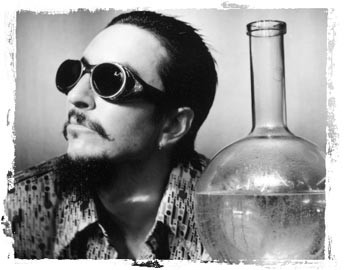
Britt Galler

0

Photograph by Michael Amsler

True Britt

Britt Galler spreads the word, one Acre at a time

By Marina Wolf

LIKE MOST restaurants, Acre Cafe comes alive at night. The fireplace casts its glow across the room and on the couples courting on the green velvet couch, a spot that chef-owner Britt Galler calls “the most romantic seat in town.”

During the day, though, this former bagel shop, one block off the main plaza in Healdsburg, is less inviting. The room is chilly, the fireplace exudes only a smell of stale smoke, and the couch loses its evening glamour to become just another piece of stiff furniture. It creaks slightly as Galler sits down with a sigh. The 30-year-old chef is still getting used to the non-stop pace of her first restaurant. She tugs at the wrists of her wool cardigan, the same color as the couch. But on this cool winter afternoon, the only source of warmth in the room is in Galler’s hazel eyes when she speaks of her home in Healdsburg and her experiments in community.

She lives on some property outside of town with her boyfriend and business partner, Steve DeCosse, and some chickens. Her best friend and other business partner, Marci Ellison, lives next door. While the garden there doesn’t supply all or even most of the produce for the seasonally inspired menus at Acre, just getting out to the farmers’ market and talking to the local farmers is more than enough.

“Even though I don’t have the luxury of stepping outside and harvesting our own produce, I do get to support our local farmers and create community there, which was one of the main reasons I got involved in the restaurant business,” says Galler earnestly.

“Restaurants are integral to community. You’re supporting the community and feeding it at the same time.”

THE ROOT of Galler’s obsession with community and good food is fairly close to the surface. Raised an only child by her divorced mother, she was encouraged to choose her own food at an early age.

“I started off with grilled cheese sandwiches and canned soup, but I was always interested in serving,” recalls Galler. “I invited my girlfriend over and I served that soup.”

The food/feeding motif continued to play out through her years at Reed College in Portland, Ore., where the young Galler cooked in collective households and provided under-the-table baked goods to the student cafe. After ditching the rigid academia at Reed, Galler proceeded to eat her way around Asia, went to cooking school in Portland, and landed a few prime cafe gigs in San Francisco.

But her interest bloomed into full-blown love during an apprenticeship at the Center for Agroecology and Sustainable Food Systems at UC Santa Cruz, where Galler and 34 other residents worked the 20-some-acre farm and lived in tents for six months.

“I really got off on that,” she says, a slight grin quirking the corners of her mouth. “We did everything together, whether cooking or cleaning the bathroom. I found that to be a really gratifying experience.”

After completing the program in 1994, Galler opened an all-vegetarian, all-organic catering business and dinner-delivery service in Santa Cruz. The market there was welcoming of vegetarian offerings, but after three years, Galler found other reasons to get out. For starters, there wasn’t a lot of money among the large student population, which put a ceiling on which menus–and price ranges–would fly.

There were personal factors as well. “I like the fine things. I like good wine and nice clothes, though you can’t tell today,” she says with a rueful glance at her Sunday casual clothes. “Anyway, I have a taste for those things, and it wasn’t a supportive place for that.”

So Galler took to traveling again. She apprenticed at a restaurant in Oaxaca, Mexico, for five months and went farther south–to Chile–to cook for river-rafting expeditions for a while. But something about moving on all the time wore her down. “I got tired of feeling that I wasn’t committed to anything,” she explains.

At that point, Marci, a friend from “the Farm,” invited her to come and check out Healdsburg. “I fell in love with it,” Galler says simply. “It’s just the right size. . . . Living in a small town is much more appealing to me than living in a city, primarily because people are really accountable for their behavior in a small community. You can’t cut someone off when you’re driving, because you’re going to see them at the bakery later.”

Or at the restaurant.

BY GALLER’S figuring, the restaurant is a repository for several communities: the workers, the suppliers, and the customers. The three owners are planning more community-building events, such as dinners with winemakers and farmers, where diners can meet the folks who produced their meal. Galler is particularly looking forward to hosting community dinners this month, when they’ll push all the tables together.

“So many people already know each other, so it should be fun.”

Other equally dramatic innovations will hit Acre in mid-January, when the restaurant will close for a month for a complete remodeling of the bagel-era kitchen, which has two electric burners and two ovens, but no gas burners–“It’s a testament to our abilities that people don’t realize that,” Galler says.

She’s excited about the new culinary possibilities the remodeling will open, but to her the community and ecology of the place are even more important. “For me, the restaurant is a vehicle toward the larger goal of educating people about sustainable food,” says this enthusiastic young woman whose inspiration is, fittingly, seasonal-food guru Alice Waters.

“I don’t think people are having epiphanies here. But if people are having a really good meal and they’re cognizant of the fact that it’s organic, local, seasonal, and they feel good after they eat it, which I think they do, then that’s an accomplishment.”

The first community dinners at Acre Cafe will be held on Monday, Dec. 20, and Monday, Dec. 27, with seatings at 6 and 8 p.m. both nights. The prix fixe menu will cost $20 per person. For reservations, call 431-1302.

From the December 16-22, 1999 issue of the Sonoma County Independent.

© Metro Publishing Inc.
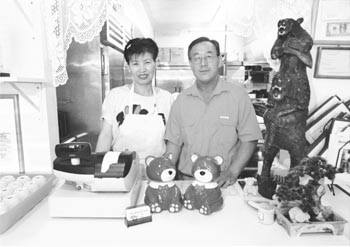
CD Box Sets

0

Photograph by Michael Amsler

Boxing Day

An avalanche of CD sets hits the stores

By Greg Cahill

PRAY FOR CASH–holiday cash, that is. It’s box-set season, and record companies are flooding the market with sometimes silly, usually pricey CD packages that anthologize the deserving (the Grateful Dead) and, well, the forgettable (i.e., Alice in Chains).

This year, there are some worthy entries in the box-set bash, ranging from avant-rocker Captain Beefheart and Top 40 hitmakers the Doobie Brothers to crossover queen Linda Ronstadt and reggae superstar Bob Marley.

So be kind to your favorite rich uncle, pray for cash (you’ll need it, along with a second mortgage, if you plan to buy the 26-disc Soundtrack for a Century at $330), and treat yourself to one of these sensational offerings:

Bob Marley Songs of Freedom Island

THIS FOUR-CD collection of material, from the reggae great who rose to international stardom before succumbing in 1981 to cancer at age 36, is one of the most sought-after sets in recording history. First issued in 1992 as a limited-edition, hardbound book, Songs of Freedom quickly went out of print after a worldwide run of just a million copies–hardly enough to whet the appetite of Marley’s far-flung fans. Copies of the original box set still sell for up to $300 on Internet auction sites–you can now buy this modified version–lacking the hardbound jacket and ambitious packaging–for one sixth that cost. You still get 77 tracks chronicling Marley’s rise from a doo-wop-inspired ska/soul singer to frontman for the Wailers. And Marley’s greatness is underscored by the sheer soul and immense power of his songwriting and singing.

Sammy Davis Jr. Yes I Can: The Sammy Davis Jr. Story Warner Archives

THE COMMENSURATE showman. At the short-lived Rat Pack reunion back in the late ’80s (I was too dazzled by all the rhinestones, blue hair, and mothball-scented furs to now recollect the exact year), Sammy Davis Jr. stole the show from Frank Sinatra and ran rings around an ailing Dean Martin. The king of big finishes, indeed. Here he is on four CDs and in all his bombastic glory–the hard-knock kid who worked harder to make it farther.

Captain Beefheart Grow Fins: Rarities, 1965-82 Revenant

The Dust Blows Forward: An Anthology Warner Archives/Rhino

HE NEVER had a hit record and barely even cracked the Top 100 album chart, but avant rocker Don Van Vliet (aka Captain Beefheart) cast a long shadow over the rock world. His influence can be heard in the work of Tom Waits, the Red Hot Chili Peppers, the Violent Femmes, and a legion of underground rockers. Now retired in Northern California and living the life of a reclusive painter, Beefheart started his musical career in 1963 as a collaborator of longtime friend Frank Zappa (who later produced sides for Beefheart). Working in Los Angeles, he scored a regional hit in 1965 with a garagey cover of Bo Diddley’s “Diddy Wah Diddy” (produced by David Gates, who later went on to fame as the white-bread visionary behind the ’70s pop band Bread). But he’s best known for his avant rock forays grounded in blues-drenched psy-chedelia and plenty of strange antics. The four-CD box set Grow Fins, described by Entertainment Weekly as “a fan’s wet dream,” gathers rarities, outtakes, and demos for Beefheart cultists. The Dust Blows Forward culls the best of Beefheart and his Magic Band (which once featured an 18-year-old Ry Cooder on guitar), and includes some surprisingly accessible blues.

Various Artists Loud, Fast & Out of Control Rhino

OK, THE ’50s and early ’60s have been packaged and repackaged ad nauseam, but this four-CD set–replete with 84-page full-color booklet emblazoned with cheesy pulp fiction artwork–from the reissue kings at Rhino Records manages to capture the raw excitement and timeless teen angst that has earned rock ‘n’ roll a place at the top of the planet’s cultural heap in this century. All the rockabilly and vintage rock greats are here: from Little Richard’s bop-bop-a-lu-boppin’ scat singin’ hits to the twangy instrumental guitar attack of Link Wray & the Wraymen. And so are less well known giants, like Joe Clay, Johnny Burnette, and Screamin’ Jay Hawkins. R&B pioneer, producer, and talent scout–and Sonoma County transplant–Johnny Otis even pops up (and most deservedly so) with his “Crazy Country Hop.” And if that doesn’t get your blood flowin’, don’t bother to check your pulse, buddy, you’re already stone-cold dead. Missing in action: Dale Hawkins of “Susie Q” fame.

Various Artists Central Avenue Sounds: Jazz in Los Angeles, 1921-56 Rhino

THE CITY of the Angels has long been a haven for wayward jazz musicians. Over the years, it hosted everything from a New Orleans jazz revival to a vital West Coast jazz scene. This four-CD companion to jazz writer Clora Bryant’s 1998 book of the same name (published by the University of California Press) bristles with hot jazz and smokin’ R&B heard in and around an often overlooked artistic mecca that attracted the likes of Art Tatum, T-Bone Walker, Lionel Hampton, Benny Carter, Charles Mingus, and Charlie Parker. The set includes rare recordings of New Orleans great Kid Ory, Joe Liggin’s seminal R&B hit “The Honeydripper, Pts. 1 & 2,” and Big Jay McNeely’s electrifying “Nervous Man Nervous.” And it just doesn’t get any better than the frenetic piano duel between Hampton and Nat King Cole on 1940’s “Central Avenue Breakdown.”

Various Artists Testify! The Gospel Box Rhino

WHEN THEY hand out the Grammy Award next year for best CD packaging, this clever item should be on the receiving end–a three-CD and booklet tucked into a red hymnal decorated with stained-glass graphic and dangling a satin-ribbon bookmark. Inside are 50 tracks of heavenly inspiration, ranging from the small-group soul of the Swan Silvertones (featuring vocalist Claude Jeter, who served as a role model for soul singer Al Green) to the dynamic choir Sounds of Blackness. Most of the big names in classic and contemporary gospel are included–Clara Ward & the Ward Singers (featuring Marion Williams, arguably America’s greatest singer of all time), the Edwin Hawkins Singers, Dorothy Love Coates, the Golden Gate Jubilee Quartet, the original Five Blind Boys of Alabama–though the Soul Stirrers with Sam Cook are conspicuously absent. Still, Aretha Franklin’s soaring triumph “Mary Don’t You Weep” alone is worth the price of admission.

The Grateful Dead So Many Roads Arista

WITH SO MANY great live Dick’s Picks series–compiled by the late Dick Latvala of Petaluma–on the market (not to mention a million bootlegs), this could have been anti-climactic. But the tireless efforts of Dead documenters David Gans, Blair Jackson, and Steve Silberman–who jointly compiled these five discs–have resulted in a comprehensive look at a band that spanned four decades. Culled from live concert dates (and, yes, there are plenty of missed notes and off-key vocals), the set includes many of the band’s best-known tunes and a lot of obscure tracks that include sound-check jams and the like. More than just a token to a counterculture icon.

From the December 16-22, 1999 issue of the Sonoma County Independent.

© Metro Publishing Inc.
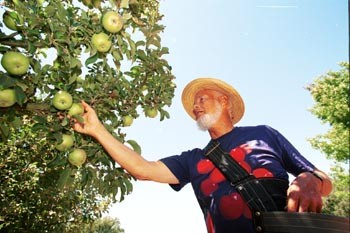
‘End of Days’

0

End of Days.

Raising Heck

Heaven-and-Hell expert Miriam Van Scott on the ups and downs of ‘End of Days’

Writer David Templeton takes interesting people to interesting movies in his ongoing quest for the ultimate post-film conversation. This is not a review; rather, it’s a freewheeling, tangential discussion of life, alternative ideas, and popular culture.

“I’M BACK from Hell, ” laughs author Miriam Van Scott, grabbing her notes and heading for a quiet corner of her home in Manassas, Va. The “hell” from which she’s so recently returned was in the form of a new film: End of Days, starring a surprisingly seedy-looking Arnold Schwarzenegger as a suicidal, alcoholic ex-cop duking it out with the Devil (nicely played by Gabriel Byrne) in New York City on New Year’s Eve.

The plot involves an unwitting 20-year-old woman marked from birth as the future mother of Satan’s baby, the conception of which must take place between 11 p.m. and midnight, Eastern Standard Time, on the edge of the year 2000, an event that will somehow bring about the end of life on Earth. It’s all ludicrous, to say the least, and gory–see Arnold spraying bullets at an army of devil worshippers! see Arnold crucified to the side of a church! see Lucifer ram a crucifix into a priest’s forehead!–to the point of being offensive. It is, in other words, a bad film.

At least, that’s my opinion.

“I didn’t think it was as bad as everyone said it was,” Van Scott confesses. “And believe me, I’ve watched so many really, really, really bad Devil movies. I can say that this was far from the worst of them.”

Well, if not exactly the highest of praise, it’s certainly authoritative. Miriam Van Scott knows her Devil movies.

As the author of the informative and oddly charming Encyclopedia of Hell (Thomas Dunne Books; $16.95) and the just-released Encyclopedia of Heaven (St. Martin’s Press; $25.95), Van Scott has–in the interest of research, of course–viewed enough movies about Heaven and Hell to last most of us for an eternity. Scholarly and richly entertaining, the encyclopedias are nicely crammed with nifty netherworld info, pulling examples from the worlds of literature, music, theater, art, and film, and from numerous cultures and religions. Imaginatively compiled, each volume contains references to everything from the Hell’s Angels, heavy-metal music, Faust, and the exact acreage of Hell itself to angels, saints, collectible Heaven plates, and of course, the legendary Pearly Gates.

There are also scads of references to plays and films, with mentions of Heaven Can Wait, Ghost, Hellraiser, Our Town, Don Giovanni, and even Monty Python’s the Meaning of Life .

It seems certain that End of Days will one day end up with a mention of future editions of the Encyclopedia of Hell, if only for its imaginative uses of standard religious icons.

“Though if you didn’t already know an awful lot about Christian iconography, you would have missed a lot of those references,” Van Scott remarks. “They kept flashing the omega symbol–the last letter in the Greek alphabet–but never explained what it was. When Arnold goes into the church at the end, there’s this big statue of St. Michael, who, of course, in the Bible is the one who drove the rebel angels into Hell–but they never tell you it’s St. Michael.”

Or why the Devil might be a little bit pissed off at that particular icon.

Speaking of which, “There’s nothing in your encyclopedia about demonic combustible urine, is there?” I ask, referencing the whimsical moment when Gabriel Byrne relieves himself in the street, then lights a match to the voluminous puddle, thereby blowing up a bevy of interfering police cars.

“That was a first,” she laughs. “Even in New York.”

It certainly gives new meaning the phrase “Lake of Fire.”

Van Scott, who admits to a fondness for “strange, creepy things,” points out that Hell–metaphorically hinted at in the movie by numerous scenes in underground lairs and eerie subway tunnels–is a universally accepted concept, showing up in different forms, in most of the world’s religions.

“The Chinese Buddhists believe in a place of suffering,” she says. “Even religions that teach reincarnation hold the idea of a place where you go and are tormented and punished before being reincarnated. It’s most familiar, obviously, in Judeo-Christian beliefs. In Christianity, it’s central. It’s in all the literature.

“But strangely, in a lot of the world’s religions, the idea of what happens to souls in the afterlife is really almost an afterthought. It’s like, ‘Oh, and then when you die this other stuff happens. . . .’ It’s not the main event.

“But in Christianity,” she adds, “Heaven and Hell are really the basis of the religion.”

“So then,” I am compelled to ask, “as the author books about Heaven and Hell, which place is your favorite?”

“Hell was more interesting to write about, that’s for sure,” she says. “Hell is sensual, and fascinating, and packed with forbiddenness. Heaven is fun too, but it’s so . . . I don’t know. In movies, there’s always something annoying about Heaven. I’ve seen dozens of Heaven movies, but I can’t think of one that made it look really appealing, like something that I’d actually like to do for millions of years.

“Let’s just put it this way,” Van Scott concludes. “Not that I ever want to actually go to Hell or anything, but to me, between Heaven and Hell, Hell would definitely make the better ride at Disneyland. Know what I mean?”

From the December 9-15, 1999 issue of the Sonoma County Independent.

© Metro Publishing Inc.
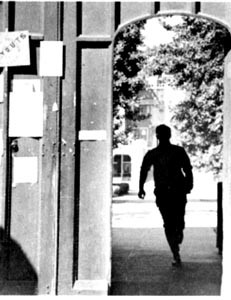
Kitchen Gifts

0

Photograph by Michael Amsler

Haute Stuff

Cruise by the kitchen supply store for your holiday gifts

By Marina Wolf

GETTING A GIFT list for gourmets is almost as difficult as picking the 50 most influential people of the millennium. Stalin or Gandhi? Cuisinart or Calphalon? Who makes the cut? Price and context are also a question. You’re gonna get different lists, depending on whether you’ve got a Visa platinum card and the Williams-Sonoma catalog, or a $10 bill and the local five-and-dime.

Here, we strive for the middle course, just keeping our eyes open to the stream of the universe for things new or refreshingly perennial. Think of us as Santa’s little helpers, checking the shelves and making a list. No, not that list. That one’s out of our hands.

From Santa, Mitt Love. Maybe it’s been a long time since these elves were on the lookout for new potholder technology, but there have been a couple of developments that, frankly, put the old Holly Hobby quilted sets to shame. First up, felted-wool mitts and potholders by Woolwerk. Sturdily stitched, doubled up where it counts, these boldly colored creations are as fun as a Baby Gap store, and at $16 to $19, they’re a lot more practical, too.

If we call Woolwerk’s approach neo-Scandinavian, the leather gauntlets by American are practically Shakespearean. Leather, as a shop person was quick to inform me, is non-flammable–blacksmiths use leather aprons, and anyway, have you ever seen a cow on fire? There are plain squares to use as potholders ($11), but for $21 the long ones look much more elegant. You could almost land a falcon on them at the Ren Faire.

High-Tech Tastes. Up until recently, cooking was often considered an art, perhaps because science hadn’t caught up with the subject matter. Now we have fission-powered convection ovens, and food processors with enough blades to fill a jukebox. These can be a little spendy, but there are other ways to bring high tech to the cook.

Take silicon. The same property that makes it so key to the computer and sex-toy industries–total non-porousness–makes it the ultimate non-stick surface for the kitchen. Look for the remarkable sheet that fits inside your scratched-up “non-stick” model, lifts out to slide the cookies off, and rolls up again until the next baking session ($18.95). Makes those gingerbread people so much less clingy.

Speaking of cookies, scraping the bowl with your finger may be a time-honored part of the process, but that dough is precious, so bakers need good spatulas. The old-style white ones just don’t cut it; they seem to be part of a conspiracy, deteriorating upon exposure to air and any heat above room temperature. Enter a new line of sturdy spatulas and spoonulas, heat resistant up to 600 degrees, in yummy, gummy, iMac-like colors ($2.75 to $5.95). Stylin’!

Plugged. The vertical handmixer is the new appliance this season, combining the whip-to-itiveness of a stationary blender with the mobility and control of your standard metal whisk. Most major lines, from Cuisinart to Krups, have their own version. But the smaller ones are perfectly functional, such as Bonjour’s Coffee Froth Turbo ($19.95). It’s a tiny cordless beater, with enough power to emulsify dressing, whip up sauce, or froth that foam. And at $19.95, it’ll help you save enough to get that expensive espresso maker.

Something to help the health-conscious is a rice cooker. A good rice cooker removes blind faith from the rice-cooking process and gets it right every time. Zojirushi makes a good model, in 6- or 10-cup sizes, for $59.95 and $66.95, respectively, or check out other Asian-made brands in Asian grocery stores. The instructions may be less comprehensible, but the price’ll probably be even lower.

Unplugged. The above-mentioned items notwithstanding, some of the best things in the kitchen don’t require outlets, things like wooden spoons and beautiful flat French rolling pins and simple drip filters for coffee.

Add to that list a mandoline. No, this is not something you pluck with your fingers, unless you want very bloody fingertips. A mandoline is simply a cutting blade on a track that makes short shrift of cutting things evenly and fast. Braun makes a gleaming, Bauhaus-model of a mandoline for $180 (sometimes on sale for as low as $150). But there is a sneaky plastic upstart contender for $35 from Benriner that does everything that the German model does, except crinkle cuts. And who needs crinkle cuts?

Boy Toys. Maybe someday when our society has become fully self-actualized, the X Show is defunct, and women and men are finally cooking on a level stovetop, we’ll stop thinking about kitchen equipment in gendered terms. Until then, we must confess that there are always a few things in kitchen stores that we look at and think immediately: great for a guy.

One is a meat fork that has a timer and thermometer built into it. If Sharper Image doesn’t have this gizmo yet, it soon will. You can set your meat type and preferred doneness on the little screen, and the readout will spit back the necessary temperature and compare it with the actual meat’s temperature. Not that guys need any excuse to poke the meat on a barbecue, but this cements the ritual by adding a digital screen.

Can we expect a scoring system next?

These items are available at one or more of the following stores: Hardisty’s Homewares, 710 Farmers Lane, Santa Rosa (545-0534); McCoy’s Cookware, 2759 Fourth St., Santa Rosa (526-3856); Pots and Pans, 107 Fourth St., Santa Rosa (566-7155); Food for Thought Housewares, 6906 McKinley St., Sebastopol (829-9801).

From the December 9-15, 1999 issue of the Sonoma County Independent.

© Metro Publishing Inc.
Great CDs of the ’90s

0

Ice-T time: The rapper’s 1991 tracks are among the bravest ever on a major label.

Wake-up Call

Great sleeper discs of the ’90s

By Karl Byrn

THE DECADE’S crucial pop music? Nirvana’s Nevermind, Dr. Dre’s The Chronic, Bob Dylan’s Time out of Mind, Beck’s Odelay–these and works by artists like Lauryn Hill, Lucinda Williams, the Chemical Brothers, and Nine Inch Nails are well-known Billboard breakout performances, yet there are dozens of discs of equal vision, craft, and power that have escaped notice. Here are a dozen that stuck with me.

Ice-T O.G. Original Gangster (1991)

HIP-HOP has outdistanced indie-rock on the charts, and its footprints are now shared by every pop genre except country. Hardcore rap has remained essential to hip-hop’s success. On this fierce, funky, funny, and relentless old-school ride, Ice-T really was the O.G., echoing Public Enemy’s sonic assault and inviting a decade of controversy with his smart topical outrage. His spoken-word closer, “Ya Shoulda Killed Me Last Year,” may be the bravest track ever released on a major label.

Warrior Soul Drugs, God and the New Republic (1991)

THIS PERFECT punk-metal hybrid was more a political-psychedelic Guns ‘N Roses than anything related to the decade’s punk and metal trends (i.e., Green Day and grunge). Yet their early ’90s discs sustained a smoldering, sci-fi-meets-the-gutter apocalyptic vision that hard rock wouldn’t hear again until Radiohead’s OK Computer.

Marty Stuart This One’s Gonna Hurt You (1992)

DIDN’T the Rolling Stones used to sound like this? Perhaps I’m thinking that Stuart, country’s most non-clichéd act, could have been included on the recent tribute to country-rock icon Gam Parsons.

Iggy Pop American Caesar (1993)

AS THIS ERA ENDED, this decade found many old pop icons still kicking. Iggy’s deeper than the punks he inspired, and on this disc full of love and hate, he still came up with the second-best version of “Louie Louie” of all time.

Patty Loveless The Trouble with the Truth (1995)

POST-GARTH commercial country-pop with a purpose. Loveless started with a Cajun-flavored cover of English folk-rocker Richard Thompson, and from his line “Cry, cry, if it makes you feel better” she focused excellent hit material into determined self-awareness that’s free from bitterness and blame.

Everclear Sparkle and Fade (1995)

THE BEST of the post-Nirvana grunge-pop hitmakers. Bandleader Art Alexakis showed a gift for both confessional songwriting and emotion-laden big rock, and the anthemic shout “I don’t want to be the . . . baaaaad guy” from the single “Santa Monica” cued this flushed, brittle effort to grow up.

Sepultura Roots (1996)

A SURPRISING triumph of minimalism, Roots reduced thrash/ death/speed metal’s low-end blast to its basic building blocks, where the band then began rebuilding with the tribal drum-‘n’-chant rhythms of its native Brazil. Ferocious as hell and widely imitated.

Patty Griffin Living with Ghosts (1996)

GRIFFIN DEBUTED with just her voice and acoustic guitar at a time when female singer/songwriters favored a thick-‘n’-groovy rock sheen. But Ghosts was more about sweet and self-assured passion than folky bravery, as she filled her detailed, weary portraits with stories of religion, bravado, and whispers.

Nuyorican Soul Nuyorican Soul (1997)

THE WORLD-FUSION field mixed ancient and modern music, breeding dance hits for varied acts like New Agers Enigma and alt-rockers Cornershop. This NYC collective effort married Latin/Cuban jazz to house, diva disco, and hip-hop and scored a home run of fresh, seamless world-pop grooves.

Steve Earle El Corazon (1997)

THE PEAK in a series of bluegrass-based roots-rock discs that established Earle as both the comeback artist of the ’90s and the O.G. of the alt-country crowd. Loose but edgy, clear, compassionate, and humorous, Earle packed a rocking center between two now-classic plaintive folk ballads, “Christmastime in Washington” and “Fort Worth Blues.”

The Coup Steal This Album (1998)

OAKLAND has been a wellspring for ’90s hip-hop talent. These indie-label revolutionaries are street-level but not gangsta, jazzy and poetic but not alt-rap, and their latest effort paints gritty ghetto narratives with creative, dramatic funk.

Anthrax Vol. 8: The Threat Is Real (1998)

THE DECLINE of metal and the shrinking role of guitar in late ’90s pop is a myth. Sharp and punchy dynamics, thoughtful lyrics, and a classic hard crunch that superseded style still left these ’80s rock survivors room to flirt with techno and alt-country.

From the December 9-15, 1999 issue of the Sonoma County Independent.

© Metro Publishing Inc.
Wine

0

Photograph by Michael Amsler

Estate grown: The lavender gardens at the Matanzas Creek Winery nurture a variety of fine products, ranging from herbal satchets to handcrafted paper cookbooks.

Wine Lines

Gifts for that wine connoisseur in your life

By Bob Johnson

The stockings were hung by the chimney with care . . . And since it’s your job to play Santa, you likely have a lot of shopping to do. Sonoma County has more than its share of wine lovers among its populace, and these vino aficionados love to receive both wine and wine-related paraphernalia as holiday presents. Since we live so close to the source, it makes good sense to shop locally for such gifts of the grape. Think of the dozens of nearby wineries not merely as tasting rooms, but also as gift shops.

Stow your least-maxed credit card, clear some space in the family jalopy, and let’s go. . . .

Stop and Smell the Lavender

Matanzas Creek Winery has become almost as well known for its lavender gardens as its $95 Estate Merlot (no, we didn’t miss a decimal point in that price). Among the lavender-inspired products it sells is an estate-grown culinary line that includes Lavender Tea ($12), Garam Masala Spice Mix ($9.50-$12.50), and Herbs de Provence ($9.50-$30). Matanzas Creek Winery, 6097 Bennett Valley Road, Santa Rosa. 528-6464.

I Love It When You Speak French

Even as Walter Schug was gaining global acclaim for the cabernet-based blends he was making for Joseph Phelps Vineyards, he longed to work with pinot noir. Now he does at his Schug Carneros Estate Winery, where he also makes a sparkling pinot noir based on the Spatburgunder Sekt his father made in their native Germany. Schug’s 1997 Rouge de Noir ($25) is vivid red (not pink) in hue, very fruity, and as refreshing as a spring shower. Schug also continues to do wonderful things with Bordeaux varietals, and his 1996 Sonoma Valley Heritage Reserve Cabernet Sauvignon ($40) is big, bold, and exotic, boasting aromas and flavors of chocolate, mint, black cherry, toasty oak, and spice. Schug Carneros Estate Winery, 602 Bonneau Road, Sonoma. 939-9363.

Jennifer Aniston Not Included

Ross Carron is Navarro Vineyards’ go-to graphics guy. He’s had a hand in every Navarro design project from the first label to the latest newsletter. Now he has assembled a cloth-bound address and birthday book ($17.50), and sprinkled it with photos of winery personnel and quotes about wine. On the cover, an elegant grape leaf drawing is accompanied by a single word: “Friends.” Navarro Vineyards, 5601 Hwy. 128, Philo. 895-3686.

For the second consecutive year, Windsor Vineyards has produced a limited-edition holiday label, this year depicting a turn-of-the-century (from the 1800s to the 1900s, that is) holiday celebration. Windsor’s 1995 River West Vineyard Cabernet Sauvignon ($18) is one of the bottlings on which this label appears, and this wine offers a floral nose and flavors of cherry, chocolate, coffee, tobacco, and spice. Windsor also has adorned its Signature Series wines with a limited-edition millennium label sporting a bold MM insignia. As with all Windsor labels, both the holiday and millennium labels can be personalized, making each bottle a truly unique gift. Windsor Vineyards Tasting Room, 308-B Center St., Healdsburg. 433-2822.

I Wish I Were an Oscar Meyer Wiener . . .

David Stare has been making world-class sauvignon blanc at Dry Creek Vineyard for eons, and now that savory flavor can also be found in the winery’s Fumé Blanc Mustard ($2.95). Hot dogs never had it so good. The winery’s holiday offerings also include a high-octane (40 percent alcohol) Old Vines Grappa ($45 per 375-ml. bottle). If your previous experience with grappa beverage made from the pulp, skin, stem, and seed residue of wine grapes brings back throat-burning memories, you’re in for a surprise with this bottling. Made from grapes grown on century-old Dry Creek Valley zinfandel vines, it offers a creamy raspberry aroma, good mouth feel, and a smooth finish that doesn’t burn. Dry Creek Vineyard, 3770 Lambert Bridge Road, Healdsburg. 433-1000.

One Man’s Art Is Another’s Coaster

Ever since the Benziger family began putting the family name on their bottlings, the wines have been tremendous. If there’s a Benziger fan on your shopping list, he or she would probably love to receive marble coasters adorned with Benziger labels ($9.99) or perhaps a poster of a past or present label ($15). Limited quantities of posters signed by the artist ($25) also are available. Benziger Family Winery, 1883 London Ranch Road, Glen Ellen. 935-3000.

Etch-a-Sketch for Adults

Cline Cellars has hopped on the millennium express and commissioned special etched bottles for three of its 1997 vintage wines: Los Carneros Syrah, Ancient Vines Mourvedre, and Ancient Vines Zinfandel ($35 each). Cline Cellars, 24737 Arnold Drive, Sonoma. 935-4310.

Hands-on Approach

Speaking of commemorative bottlings, the Meeker Vineyard has released its 1997 Winemaker’s Handprint Collection Merlot ($30). Each bottle is unique, since the color splashes are created by the winemaker grabbing a bottle with his paint-covered hands. Even so, a member of the Wine Lines tasting panel swears he saw a rendering of a holiday turkey on the bottle that the panel sampled. Check it out, and see if you have a similarly weird Rorschach experience. The Meeker Vineyard, 21035 Geyserville Ave., Geyserville. 431-2148.

All Dressed up and Somewhere to Go

Whether you’re dressing a holiday tree or wrapping a special bottle of wine, Pezzi King Vineyards offers attractive solutions. For the tree: colorful holiday ornaments ($4.95-$50). For the bottle: velvet wine totes ($15). Pezzi King Vineyards, 3805 Lambert Bridge Road, Healdsburg. 800/411-4758.

From the December 9-15, 1999 issue of the Sonoma County Independent.

© Metro Publishing Inc.

‘My Three Angels’

Strange gift: Mark VanDerBeets and Kristen Greer star in My Three Angels.

Fallen Angels

‘My Three Angels’ is bloody but boring

By Daedalus Howell

CHRISTMAS IS the season of giving, but for theatergoers it’s often the season of “take what you can get.” To wit, Pacific Alliance Stage Company offers Bella and Sam Spewack’s retread of French playwright Albert Husson’s La Cuisine des Anges–the hit-and-miss My Three Angels.

Directed by Wendy Wisely, the seasonally themed comedy is set in French Guiana (a small South American country) of 1910, where the hastily transplanted Ducotel family operates a failing general store.

Three convicts on work furlough are dispatched to reroof the family’s crumbling digs while curmudgeonly Uncle Henri is en route from France, set on wresting away control of the business. The uncle is accompanied by his pantywaist nephew Paul (the object of daughter Marie Louise’s affections), who generally makes a nuisance of himself and the plot. Thankfully, the three convicts (qua angels) are on hand to deal out their own brand of justice, poetic and otherwise.

At times, it’s difficult to tell if Angels is a French attempt at the well-made play or was simply pounded into one by the Spewacks. Either way, the material ultimately suffers from director Wisely’s decidedly broad interpretation. A subtler approach would have yielded stronger characterization and consequently more laughs. As it stands, Angels plays as black comedy lite–which is to say, it’s banally gray. It’s gallow’s humor that isn’t well hung.

Veteran local actress Kristen Greer gives a steady performance as agreeable matron Emilie Ducotel, a one-note character out of which Greer manages to squeeze a little melody. Likewise, Rebecca Stow turns in a competent performance as the lovesick Marie Louise, though she too runs up against the part’s limitations.

The trio of convicts, a sort of Frenchified nod to the Marx Brothers, comically perpetrate such antics as cooking their employer’s books, swindling store patrons, and loosing a poisonous snake upon unsuspecting (but arguably deserving) victims.

The convicts move from regret to redemption, finding absolution in the adoring Ducotels, as each ruminates about the nature of their crime while preparing a Yuletide supper.

Joseph (Eliot Fintushel) is the soulful con artist on the make (tee-hee), the philosophical Jules (Steven Patterson) strangled his wife in a jealous rage (ha-ha), and Alfred (Mark VanDerBeets) bludgeoned his stepfather to death (ho, ho, ho, merry Christmas).

After a bumbling first act that drags more often than bored high school hot rodders in the Central Valley, the play offers a hopeful second act and a mysteriously healthy finish. It’s as if the players must wade through two acts of laborious setups before bounding to shore with a triumphant payoff.

Chris Ayles turns in a boo-and hiss-worthy performance with the Scrooge-like Uncle Henri. But what makes Ayles’ hard-nosed financier most joyful to watch is the vicarious thrill of seeing him insult the other characters onstage. Lagging a bit in the toady department is Garth Petal’s Paul. A by-the-book sycophant, Paul, with his romantic dawdling with Marie Louise and other machinations, could be slimier.

Predictably, the play leads to the comeuppance of the avaricious uncle and nephew, barely steering free of a throwuppance with an uncharacteristic turn for holiday fare–they’re murdered. ‘Tis the season, eh?

My Three Angels plays Thursday, Dec. 9, at 7:30 p.m., Friday and Saturday, Dec. 10-11, at 8 p.m., and Sunday, Dec. 12, at 2:30 p.m. at the Spreckels Performing Arts Center, 5409 Snyder Lane, Rohnert Park. $14. 588-3434.

From the December 9-15, 1999 issue of the Sonoma County Independent.

© Metro Publishing Inc.

Cruel Presents

Sincerely, Anonymous

Christmas gifts you’d hate to get, but secretly love to give

SANTA’S GOT guts–if nothing else. You’ve got to give him credit for that. Historically speaking, when the jolly large man decides to leave a big old lump of coal in some poor fella’s Christmas stocking, it’s usually pretty obvious that St. Nick was the bold perpetrator of what can only be perceived as a sooty carbonaceous wake-up call.

When Santa Claus gives a gift–even a nasty one–he stands by it.

Fortunately, there’s only one Santa Claus. The rest of us can avail ourselves of a certain oh-so-pragmatic option that Santa Claus would never stoop to.

It’s called anonymity.

In the workplace, potent anonymous gifts are especially useful:

“Dear Joe: Please accept this bar of soap. Now that you have it, you might want to take a shower, say once a week or so. Frankly, I haven’t breathed in months. Sincerely, Anonymous.”

Sure, it’s more virtuous, more ethical–and a whole lot braver–to simply tell a person, right upfront, what you think of him or her. But even card-carrying tough guys occasionally take the option of anonymity. Think of The Godfather. Was there an autographed greeting card accompanying that bloody horse head or that big fish wrapped in Luca Brazzi’s bulletproof vest? Of course not.

Anonymity is practical. Furthermore, you might say that anonymity is the gateway to creativity, since we’re likely to devise a really interesting gift–a one-way bus ticket to Elko, Nev., for instance, or a case of antiperspirant–if we’re sure our identity will remain unknown. Besides, the anonymity makes the message much more powerful: that personalized toothbrush might have been sent by anyone. Or everyone.

It should be pointed out also that the horse head and the fish were delivered only after all the civilized, straightforward methods had failed; anonymous gifts should be used only as a last resort.

With that in mind, a number of creative services have sprouted up over the last few years, tailor-made to the specific needs of the modern frustrated anonymous gift-giver. The brainchildren of insightful–and twisted–Internet entrepreneurs, these services are, in effect, the demented Christmas elves of anonymous correspondence, the tooth fairies of delicious revenge. For your consideration:

The people at DeadRoses.com specialize in exactly that: dead roses, a dozen of them ($28, plus $4 shipping), delivered ceremoniously–with an anonymous note of your devising–via U.S. Postal Priority Mail. It’s a poetic way to end a once-budding relationship or to let someone know his or her reputation has wilted. DeadRoses.com will not send vulgar or threatening messages, so use a little tact and restraint; the roses themselves will pack the required punch. For budget-minded avengers, a half dozen roses cost only $18, plus shipping, and a single dead rose will run you 10 bucks.

If want your unwelcome gift to pack more of a, shall we say, pungent form of poetry, you might want to check out the unique service offered by Dogdoo.com. Based in Sacramento, DogDoo.com will gladly package and deliver a certified canine bowel movement to the recipient of your choice. The unexpected doggie logs are vacuum packed in plastic and sent cradled in a nest of tissue paper. The entertaining website offers a sneak-peek–including stats and photos–of Teddy, Jessie, and Buster, the happy doo-producing canines in question, the last of which is described as “a 110-pound powerhouse,” creating “mountains of the most robust bowel movements you’ve ever had the pleasure to experience.” Prices range from Teddy’s $15 “Econo-poop” package to the aforementioned Buster’s $25 “Poo Poo Grande,” and for $16 more you can even order an attractive T-shirt to accompany your gift.

Want something a little less classy–and not so pricey? Rats2U.com will send full-color, sound-accompanied greeting cards to anyone with an e-mail address. They will receive a note from Rats2U, with an identity number they can use to access their specialized card on the Rats2U website. Upon accessing their card–which might open with a loud “Go to hell!” or other straightforward remark–your recipient will experience a multimedia butt-whipping. Some of the suggested messages are down-right insulting, with none of the poetry suggested in the previously suggested gifts, but they are effective–and free.

BUT HOW effective are any of these gifts at truly getting across your message in a way that might, you know, make a real difference in your recipients’ life? At mysterymessenger.com–with the slogan “Thoughtful gifts for thoughtless people”–the advertised goal is to achieve some positive results after the shock of your decidedly negative bequest wears off. Mysterymessenger will anonymously send an elaborately packaged “trophy”–your choice between two appropriately profane, gender-specific award categories–complete with an eloquent description of all the offender’s shortcomings, with instructions on how to make amends. If sufficiently embarrassed, the recipient can use mysterymessenger to contact you–still entirely anonymous–with a written apology. Mysterymessenger will even encourage the chastised person to include a thoughtful gift! The cost is $29.95, and can be delivered anywhere in the U.S.A.

Though we steadfastly suggest that such gifts are mainly satisfying to simply think about giving, and we do not in anyway encourage this sort of antagonistic gift-giving, we do hope it’s opened your eyes to the vastly inventive alternatives that exist to rival that timeworn lump of coal, which, if you think of it, isn’t that far removed from a gift-wrapped puppy poop.

Though Santa, guts or no guts, would never dream of putting that in a stocking.

From the December 9-15, 1999 issue of the Sonoma County Independent.

© Metro Publishing Inc.

Online Gambling

0

High Rollers

Rise in Internet gambling reveals secret economy of online sports books

By Joab Jackson

LAST FALL, members of the All Star Sportsbook website experienced a rude shock when attempting to place online wagers. They had found that All Star’s servers had crashed from the wave of bettors wanting to get in on the N.F.L. action. “We apologize for the series of system failures during this past weekend,” read an e-mail sent out to account holders on Sept. 22 by All Star. “We had earlier upgraded our servers in an effort to prepare for football season; unfortunately, despite this upgrade, we were overwhelmed by volume reaching over 30 times our previous peak.”

All Star’s crush of users is a good indicator of the sudden popularity of online sports books. Here are websites where you can bet on anything, from football to the 2000 presidential election. Most of the wagering, however, is on sports, at least at sites like Sports Interaction, Bowman International, and others listed by Bettorsworld, the unofficial watchdog website of the industry. Fearing fluctuations in U.S. law, most of these businesses are based outside the country, usually in the Caribbean. Last January, the Washington Post estimated that there were about 30 sites accepting online bets.

IN MANY WAYS, international online sports books are the old street-corner bookie gone electronic. Once upon a time, you’d do your betting through a bookie. You could always catch him at a bar, or he’d come around to your job site once a week or so to take bets on upcoming games–football, baseball, whatever. If you were a bit short, he’d spot you. He kept all the numbers in his head. If you had an unusual idea for a wager, he’d ponder a bit and come up with some odds to accommodate you.

What was righteous about the street-corner bookie was that he wasn’t playing against his customers, as do casinos that profit by keeping the odds in their favor. The bookmaker was just the guy who kept the odds for the neighborhood. He held everyone’s bets and skimmed the top. You weren’t playing against your bookie; you were playing against his other customers. If you were really studious about the games, you could actually come out ahead–theoretically, anyway.

What Internet sports wagering does is press the secret economy of the bookie into the mainstream. It can’t be ignored as easily.

It is this proliferation of online betting that has prompted the U.S. Senate’s Internet Gambling Prohibition Act of 1999 (S692) that, if passed, would do just what the title says: prohibit online gambling. It’s the convenience of Internet wagering that spurred the bill’s proponents to action.

“We don’t want to see America’s living rooms turned into betting parlors,” Sen. Richard Bryan, D-Nev., told Wired magazine. While you have to wonder about the motivations of a senator from Nevada–where in-state phone-based sports books are legal–he does have a point. Last June, the congressionally mandated National Gambling Impact Study Commission (NGISC) warned that gambling in the United States had already reached epidemic proportions. The country has experienced a 1,600 percent increase in legal wagering revenues–money made by casinos, state lotteries, race tracks, etc.–from 1976 to 1997. And, as NGISC notes, online betting will take convenience gambling to new levels. Many states already have slot machines and keno games in bars and supermarkets; with the Internet, you don’t even have to leave home.

IN TERMS of convenience, however, not all online gambling is the same. Downloaded casino-connected slot machines, with algorithms calculated to pay out a certain percentage, might very well be the crack cocaine of the gambling world. Like those zombified old folks with the buckets of quarters you see haunting casinos at 4 a.m., home gamblers can get a hit of their chosen excitement every few seconds.

Sports betting spreads the entertainment dollar out over a few hours. You’re wagering on God’s own algorithm. A quarterback might twist an ankle, a race-car driver might blow a carburetor. Who knows what’ll happen? The Man moves slowly. You have to sit and watch. For many, gambling makes events more entertaining, a fact major sports leagues probably recognize if not publicly admit.

Certainly, I wouldn’t have tuned in to NASCAR’s Winston 500 on Oct. 17 if I hadn’t put $20 on driver Jeff Gordon. I figured to latch on to Gordon’s recent winning streak, so I registered and wagered at Sports Interaction, using a credit card. It took me all of five minutes. Microsoft’s site should be so user-friendly.

While listening to the race on the NASCAR site, I rummaged through Sports Interaction. Golf, cricket, tennis, snooker, horse racing, rugby, cricket, and even “Gaelic games” could be wagered on, as could the upcoming presidential election and the Booker Prize, an annually bestowed U.K. literary award.

Naturally, Gordon limped in at 12th place that afternoon. My $20, which I never saw, vanished effortlessly into cyberspace. The NGISC was right. Never before has it been so easy to bet money–or to lose it.

From the December 9-15, 1999 issue of the Sonoma County Independent.

© Metro Publishing Inc.

Eggnog

0

Yolk Lore

Its ingredients can be lethal. But eggnog is still a favorite

ASK JONATHAN Panttaja how he came to be his family’s designated eggnog maker, and he will give you a simple answer. “Um, I like eggnog,” says Panttaja (pronounced pan-tay-ya; it’s Finnish). “Unfortunately, there aren’t a lot of eggnog fans in the family.”

Most of his relatives, it turns out, are Tom & Jerry drinkers (gasp), a tradition firmly established on his father’s side of the family, and indicative of that vast percentage of Americans who, while recognizing eggnog as the vital, historically entrenched holiday tradition that it is, can honestly not stomach the stuff.

“When I was 12 or 13,” explains Panttaja, “I realized that if I wanted eggnog at the holidays, I would have to be the one who makes it.”

Armed with a good, simple recipe–his mom, Mary Panttaja, helpfully adapted one from the Joy of Cooking cookbook–the recently married UC Santa Cruz grad student went on to perfect his nog-making skills over the course of numerous Thanksgiving dinners at his folks’ home in Healdsburg. The result–an ultra-tasty, smooth-as-silk non-alcoholic confection, topped with a dusting of nutmeg, that is as sweet and rich as it is light and frothy–has since become a certified family tradition, running neck and neck, popularity-wise, against that other family favorite.

As to why eggnog–a weird mixture of eggs, cow juice, and sugar that really ought to taste like a runny, candied omelet–is as popular as it is . . . well, the jury’s been out on that one for over 300 years.

Eggnog, in its earliest forms, can be traced back to the 17th century, though no one can agree on when it began to be called eggnog, or even why. While the “egg” part of “eggnog” is beyond argument, some claim that “nog”–an old English word for ale–was applied to the drink because of its warm, comforting nature (early eggnogs probably were made with ale and/or red Spanish wine). Others argue that “nog” was simply a shortened version of the slang word noggin, used to describe the short, heavy mugs that were used in drinking ale, beer–and something called “sack posset.”

Originated in Staffordshire, England, sack posset was a hot wintry drink, popular in ale houses, that was made with egg, milk, and strong ale. It is similar to a European peasant drink called “syllabub” (made by squirting milk, fresh from the cow, into a pail of strong ale) and akin to the Italian zabaglione (a sweet egg-cream dessert flavored with Marsala wine and sometimes used as pastry filling), the German biersuppe (a beer-based eggnog, with currants and raisins thrown in for good measure), and the fabled English “egg flip” (hot eggs and cream, spiked with brandy).

At some point, the stuff became known as eggnog, perhaps around the time it arrived in America.

IN HIS EXHAUSTIVE tome The Dictionary of American Food and Drink, John F. Mariani reveals that the word eggnog did not show up in print until it appeared in an American broadside in the year 1775.

According to Mariani, the American colonists–in a fit of anti-English anarchism–had also taken to drinking their eggnog (or whatever) with rum and whisky, abandoning the ale or wine variations being consumed by the poor monarchists back home in England. Eventually, families developed their own, highly protected eggnog recipes, a tradition that still continues today, with some folks throwing annual eggnog parties
to show off their nog-making skills.

It was somewhere after the invention of the refrigerator, that eggnog evolved from the hot drink it had always been–it was the cooking that thickened the eggs, creating eggnog’s trademark creamy texture–and became the sticky, gooey, artificially thickened, very cold substance we find today in grocery store cases; nothing like the hot, custardy, nourishing beverage that gently nudged our ancestors through their long wintry nights.

In fact, though eggnog is closely associated with holiday parties, historically it was often used medicinally, as a “restorative,” a protein-rich dietary supplement for children and elderly folk. Ironically, the mighty eggnog–and face it, at 500 calories per serving (including the booze) it’s a calorie-laden, cholesterol-drenched, dietary nightmare–was once considered a health drink.

Baseball great Joe DiMaggio swore by the stuff, praising its energy-giving qualities. Claiming that nothing worked better to put some power back in his swing, Joltin’ Joe would often guzzle eggnog–laced with chocolate and sprinkled with nutmeg–in the Yankees dugout, to ward off batting slumps.

And did someone mention nutmeg?

when nutmeg became so intimately connected to the eggnog tradition, it’s even less clear why. Sure, a smattering of nutmeg tastes good, but the powdery spice is pure poison. Really. Originally grown in Indonesia, the oil of the nutmeg tree contains myristicin and elemicin, two dangerously powerful substances that, in sufficient quantities (one to three whole seeds, about half an ounce) will cause feelings of euphoria, flushed skin, a floating sensation, visual and auditory hallucinations, vomiting, complete circulatory collapse, and painful death.

Merry Christmas.

Nutmeg aside, the trickiest thing about eggnog, from a health department point of view, is the egg itself, since most family recipes, Panttaja’s included, call for uncooked eggs. Notoriously susceptible to bacterial infestation, eggs should be cooked to definitively rid the things of salmonella and other bacterial bummers. Though many will claim that adding alcohol to eggnog will murder any uninvited microscopic party-poopers, medical experts say only cooking the egg, to 160 degrees, will render it safe for consumption.

Even so, according to the Centers for Disease Control in Atlanta, the chances of getting food poisoning from uncooked eggnog are only about 10,000 to 1.

Those seem like good odds to Panttaja, who says he’s never gotten sick from eggnog, and worries that cooking would change its distinctive texture. “Ten thousand to one,” he shrugs, “those are pretty good odds. Besides, this particular eggnog is so good,

“I’m willing to take my chances.”

Jonathan Panttaja’s Eggnog Recipe

NOTE: To those sufficiently spooked by egg-contamination worries, this recipe can be prepared safely by microwaving the eggs, after separation but before whipping, to a slow boil; it will alter the texture of the drink, but might make you feel better.

6 eggs, separated
2 cups sugar
1 tbsp. vanilla
1 pint cream
Milk (as needed)
Nutmeg

Beat egg whites to a froth; set aside. Beat yolks with sugar until thick and creamy. Add vanilla, then stir in whites. Whip cream until very thick, and stir into mixture. The result will be too thick, so dilute with milk until it’s liquid enough to drink. If desired, spike nog with liquor (about a shot per serving) of your choice. Garnish with nutmeg, if you dare. Makes 10 to 12 small servings.

Happy holidays!

From the December 9-15, 1999 issue of the Sonoma County Independent.

© Metro Publishing Inc.

Britt Galler

Photograph by Michael Amsler True Britt Britt Galler spreads the word, one Acre at a time By Marina Wolf LIKE MOST restaurants, Acre Cafe comes alive at night. The fireplace casts its glow across the room and on the couples courting on the green velvet couch, a spot that...

CD Box Sets

Photograph by Michael Amsler Boxing Day An avalanche of CD sets hits the stores By Greg Cahill PRAY FOR CASH--holiday cash, that is. It's box-set season, and record companies are flooding the market with sometimes silly, usually pricey CD packages that anthologize the deserving (the Grateful Dead) and, well,...

‘End of Days’

End of Days. Raising Heck Heaven-and-Hell expert Miriam Van Scott on the ups and downs of 'End of Days' Writer David Templeton takes interesting people to interesting movies in his ongoing quest for the ultimate post-film conversation. This is not a review; rather, it's a freewheeling, tangential discussion...

Kitchen Gifts

Photograph by Michael AmslerHaute StuffCruise by the kitchen supply store for your holiday giftsBy Marina WolfGETTING A GIFT list for gourmets is almost as difficult as picking the 50 most influential people of the millennium. Stalin or Gandhi? Cuisinart or Calphalon? Who makes the cut? Price and context are also a question. You're gonna get different lists, depending on...

Great CDs of the ’90s

Ice-T time: The rapper's 1991 tracks are among the bravest ever on a major label. Wake-up Call Great sleeper discs of the '90s By Karl Byrn THE DECADE'S crucial pop music? Nirvana's Nevermind, Dr. Dre's The Chronic, Bob Dylan's Time out of Mind, Beck's Odelay--these and works by...

Wine

Photograph by Michael AmslerEstate grown: The lavender gardens at the Matanzas Creek Winery nurture a variety of fine products, ranging from herbal satchets to handcrafted paper cookbooks. Wine LinesGifts for that wine connoisseur in your lifeBy Bob JohnsonThe stockings were hung by the chimney with care . . . And since it's your job to play...

‘My Three Angels’

Strange gift: Mark VanDerBeets and Kristen Greer star in My Three Angels. Fallen Angels 'My Three Angels' is bloody but boring By Daedalus Howell CHRISTMAS IS the season of giving, but for theatergoers it's often the season of "take what you can get." To wit, Pacific Alliance Stage...

Cruel Presents

Sincerely, AnonymousChristmas gifts you'd hate to get, but secretly love to give SANTA'S GOT guts--if nothing else. You've got to give him credit for that. Historically speaking, when the jolly large man decides to leave a big old lump of coal in some poor fella's Christmas stocking, it's usually pretty obvious that St. Nick was the bold perpetrator of...

Online Gambling

High Rollers Rise in Internet gambling reveals secret economy of online sports books By Joab Jackson LAST FALL, members of the All Star Sportsbook website experienced a rude shock when attempting to place online wagers. They had found that All Star's servers had crashed from the wave of bettors wanting to get in...

Eggnog

Yolk Lore Its ingredients can be lethal. But eggnog is still a favorite ASK JONATHAN Panttaja how he came to be his family's designated eggnog maker, and he will give you a simple answer. "Um, I like eggnog," says Panttaja (pronounced pan-tay-ya; it's Finnish). "Unfortunately, there aren't a lot of...
11,084FansLike
4,446FollowersFollow
6,928FollowersFollow