Playwright Tony Kushner

0

Earth Angel

Tony Kushner speaks on art and politics

By Greg Cahill

“I DIDN’T SET OUT to write a play about AIDS,” playwright Tony Kushner once said. “I set out to write a play about what it was like to be a gay, Jewish, leftist man in New York City in mid-’80s Reagan America.”

For his effort, Kushner won the Pulitzer Prize and two Tony Awards for his two-part seven-hour 1993 Broadway masterwork, Angels in America: A Gay Fantasia on National Themes. The production made Kushner something of a lightning rod in the post-Reagan era and also set the playwright up as a highly sought-after lecturer on human sexuality, society, and politics.

That last role brings Kushner, 44, to the Luther Burbank Center in Santa Rosa on Feb. 5 when he will be interviewed onstage by KQED radio host Michael Krasny. In addition, Kushner may read from Henry Box Brown, an as-yet-unproduced play about a Virginia slave who shipped himself to freedom inside a custom-made crate.

The appearance is a benefit for Actors Theatre, the Santa Rosa-based theater company that is staging Angels in America (Part II runs through Feb. 10). Expect a lively conversation focused on the nexus of art and politics.

Kushner’s works–including 1994’s Slavs (Thinking about the Longstanding Problems of Virtue and Happiness), a short play about the USSR under former president Mikhail Gorbachev–reflect an interest in political activism and the writings of German political philosopher Karl Marx, Austrian psychoanalyst Sigmund Freud, and German dramatist Bertolt Brecht.

Like Angels in America, his other plays–including 1985’s A Bright Room Called Day, 1987’s Hydrotaphia, and 1990’s The Illusion, the tragicomic adaptation of 17th-century neo-French classical dramatist Pierre Corneille’s L’Illusion Comique, staged last month at the Marin Theatre Company by foolsFURY–are also concerned with the moral responsibilities of people in politically repressive times.

FOR HIS PART, Kushner sees his plays as part of a political movement.

“What I found in the audience response is a huge hunger for political issues and political discussion,” Kushner once told Mother Jones. “So I always wonder: Is it that Americans don’t like politics, or is it that so much theater that is political isn’t well-done?

“. . . I would hate to write anything that wasn’t [political]. I would like my plays to be of use to progressive people. I think preaching to the converted is exactly what art ought to do.

“I am happiest,” he continued, “when people who are politically engaged in the world say, ‘Your play meant a lot to me; it helped me think about something, or made me feel like I wasn’t the only person who felt this way.’

“It’s the way you feel when you go to a demo, which is the only way to keep sane a lot of the time. You need to remind yourself there are many bodies who are as angry about something as you are.

“When I teach writing, I always tell my students you should assume that the audience you’re writing for is smarter than you. You can’t write if you don’t think they’re on your side, because then you start to yell at them or preach down to them.”

Tony Kushner will speak Monday, Feb. 5, at 8 p.m. at the Luther Burbank Center, 50 Mark West Springs Road, Santa Rosa. Tickets are $25/general, $20/balcony, and $16/students. 707/546-3600.

From the February 1-7, 2001 issue of the Northern California Bohemian.

© Metro Publishing Inc.

Bruce Johnson

0

Chain-Saw Magic

Sculptor Bruce Johnson creates art from salvaged old-growth redwoods

By Paula Harris

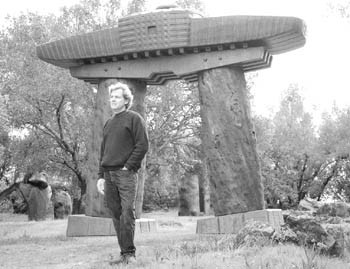
SCULPTOR Bruce Johnson isn’t interested in lounging inside, huddled in front of the television set this chilly Super Bowl Sunday afternoon. He’s where he loves to be–outside in the bracing January air roaming among the living oak trees and the giant chunks and columns of redwood that form his bold art pieces.

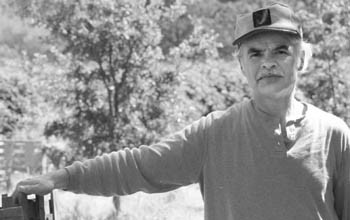
Striding in his blue jeans and work boots across the mossy rocks at the sculpture garden at Santa Rosa’s Paradise Ridge Winery, Johnson, 53, is the quintessential outdoorsman with his rosy-tanned face and unruly fair hair. He bends to remove some leaves from one sculpture and runs his weathered hand along the deeply ridged monolith.

“These ancient chunks of wood contain spirit and bear centuries’ witness,” he says. “I peel away the dirt and rot and look to the mass, form, and texture to inspire and inform the sculpture.”

Johnson is an artist and craftsman who uses a chain saw and other tools to create sculptures from salvaged old-growth redwood stumps abandoned by loggers decades ago. His work can be found at the Oakland Museum and in private collections from Italy to Taiwan. But this afternoon he’s inspecting his “Old Growth–New Life” exhibition at Paradise Wood Sculpture Grove.

The outdoor exhibit is the culmination of 25 years of experience, 18 months of labor, and 200 tons of raw materials. Described as an interplay of the forces of art and nature, it features a trickling fountain, a Zen garden, an Asian-inspired gate, a round bell tower, and more–all fashioned from redwood and copper.

This month Johnson will participate in a three-day artist-in-residence program at Santa Rosa Junior College. During all three days, he will use his chain saw to sculpt a huge piece of redwood in front of Analy Hall, the college’s art building. The artist will present two lectures: “The Chain-saw Lecture” and a slide-show presentation titled “Discussion on Redwood Aesthetics and Ethics.” And he will lead a tour of the Sculpture Grove exhibit.

For the SRJC demo, Johnson will employ a number of different tools. “There’s one just right for each move,” he enthuses, rattling off names of various trimmers and sanders–names like “Log Wizard.”

Chain-saw art has its dangers. With a wry grin, Johnson holds up his left hand–half of the left pinkie finger is missing. The bloody result of a run-in with a joiner in Fort Ross, he explains with a shrug. To him the end result is worth any physical pain.

Johnson says his sculptures are “small acts of preservation,” because he salvages the large scraps and chunks of old growth that aren’t of much value. “The logs really aren’t worth anything,” he says. “Some have too much rot in the middle or have too many knots.” For the bulk of this show he has used pieces from 200 blocks of redwood salvaged from Crescent City.

The Timber Cove-based artist adds he has no set design in mind when he begins to work on a piece of redwood. “Part of the process is cleaning up the material,” he explains. “You don’t know what you have until it’s cleaned up.”

He describes his work as a cross between Shinto shrines and Stonehenge–metaphors for man’s impulse to mark a place and for the human being’s mystical connection with nature.

Indeed, the looming wooden sculptures here with their happily married tones of redwood and copper seem to radiate a strange combination of pagan and futuristic energy that resonates with their outdoor setting.

There’s a curved monolith crowned with copperlike fish scales along its top and water trickling below. Another large piece is reminiscent of an ancient flying machine with a seat from which you can peer through a hole and view the North Star. And there’s a bell tower carved from a burned-out tree truck.

The pieces–which sell for around $50,000–have already attracted some buyers. A 16-foot-tall sculpture titled Wood Henge will be going to a private collection in Italy. And local Telecom Valley millionaire Don Green has bought Understanding Matter–a Map of the Cosmos, a modern redwood sculpture entirely encased in hammered copper, for his Santa Rosa home.

In addition, Johnson says, the Asian-inspired Sacred Portal may be eventually donated to the $43 million Don and Maureen Green Music Center at Sonoma State University, currently under construction.

Johnson says his work is ultimately about natural instinct. “I need to measure with my arms as well as with my mind,” he explains, “and ask myself how I feel about a piece rather than how I think about it.”

From the February 1-7, 2001 issue of the Northern California Bohemian.

© Metro Publishing Inc.

‘Finding Forrester’

0

Finding Forrester.

Write Turn

North Bay poet Terry Ehret critiques ‘Finding Forrester’

Writer David Templeton takes interesting people to interesting movies in his ongoing quest for the ultimate post-film conversation. This is not a review; rather, it’s a freewheeling, tangential discussion of art, alternative ideas, and popular culture.

“I HAVE THIS very superstitious notion that talent doesn’t really belong to people,” states the talented Terry Ehret, her elbows resting on my dining room table, a cup of hot tea cradled in her hands. “I don’t think we own our talent,” she says. “I think we only borrow it.”

Ehret speaks these words in a soft, expressive voice that only rarely rises above a murmur–though it always does so whenever she laughs. And she’s laughing now.

“This all sounds silly,” she continues. “But I truly think talent is something that only comes along for the ride during a person’s life. If you’re talented, then you are merely the chosen vehicle for that talent for as long as you live, and your only job as an artist is to be a good steward of that talent, to nurture it and make it bigger. Just a little bit. Then you die, and the talent is reborn into somebody else so they can get a running start. This is how we end up with child prodigies, people like Mozart.

“This is how you get Jamal Wallace,” she continues, “a brilliant writer who’s only 16 years old.”

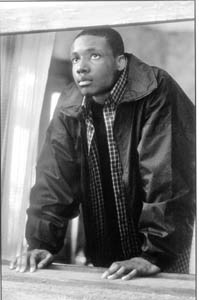
Jamal–the brilliant writer of whom Ehret speaks–is the fictional star of director Gus Van Sant’s inspiring new film Finding Forrester. Played by Robert Brown, he’s an African-American high-schooler who hides his desire to write from his friends, but accidentally becomes the pupil of a reclusive writer named William Forrester (Sean Connery). A cranky, agoraphobic author who once wrote the Great American Novel, Forrester long ago dropped out of sight, never to publish again.

When Jamal, acting on a dare, breaks into Forrester’s prisonlike Bronx apartment, the boy accidentally drops the backpack that contains a number of his personal writing journals.

When Jamal finally retrieves his books, he finds that the mysterious old man has proofread every word, filling the books with corrections and underlinings and pithy critical notations like “This is constipated writing!” and “What do you want me to feel by this sentence?” and “Great passage! You should write more like this!” Before long, the boy is back in Forrester’s home, on the receiving end of a first-rate writer’s education.

Ehret enjoyed the movie. To put it mildly.

“It was thrilling,” she says. “I’m thrilled anytime a movie happens to be about writing.”

Ehret is the author of two poetry collections: Lost Body (Copper Canyon Press, 1993) and Suspensions (now out of print). In 1995, she won the coveted Pablo Neruda Prize for poetry for her poem series The Thought She Might: Picasso Portraits, selected out of hundreds of entries by the prestigious literary journal Nimrod.

Ehret is also a founding member of the 16 Rivers writers’ collective, a small group of women writers who have taught themselves the ins and outs of publishing with the goal of producing their own high-quality volumes of poetry and short stories. The first two volumes–including a collection of poems by Ehret–are due out this fall.

She teaches, too. For several years, Ehret had worked with California’s Poets in the Schools program, bringing her expertise to budding elementary-school poets throughout the North Bay. After teaching at the high school level for many years, Ehret now teaches her craft at both Sonoma State University and Santa Rosa Junior College.

Which brings us back to Finding Forrester.

“I loved the scenes where Jamal was sitting on his bed, hearing the next-door neighbors going at it, writing in his journal with his back against the wall,” Ehret says. “That was so much like my own high school years: my back against my bedroom wall, my journal in my lap, writing, writing, writing.

“I identified with his sense that there just has to be something more than what he had,” she continues, “that writing was the way to bring something better into being, to invent a world where he’d be more at home than the one he was physically stuck in. That was me.”

So how would Ehret, as a writer who teaches writing, rate the teaching style of William Forrester? Was he any good?

“He kept telling Jamal, ‘No thinking! No thinking! Just write!’ ” I mention. “Is this good advice?”

“It’s dead-on,” she replies. “Absolutely the right thing to say. I used those same words this morning, talking to a bunch of fifth graders. I was teaching them to warm up by ‘free writing,’ where you write as fast as your thoughts, faster if possible, with no censoring, no editing, no stopping, and no going back.”

Forrester demonstrates that technique in the film when he sits down at a typewriter and pounds out a page in a minute flat.

“I was sitting there thinking, ‘Yes! yes! Good advice, Forrester,’ ” Ehret says. “Don’t think. That part comes later.”

“What about the little remarks he wrote in Jamal’s journal?” I interject. “What exactly is ‘constipated writing’?”

“Oh. Well. constipated writing,” Ehret explains with a grin, “is labored, self-indulgent writing, writing that is almost masturbatory. Writing that doesn’t go anywhere.”

“Have you ever written that on some poor kid’s work?”

Ehret laughs. “Oh God, yes.”

A few seconds tick by before Ehret makes another observation.

“What I saw going on between Jamal and Forrester was not the way my mentors worked with me,” she says. “My mentors have mostly been women. They never messed with my writing like Forrester did. Instead, they’d talk to me. They’d talk about the things that matter in writing, and then they’d trust me to figure out what should stay and what should go.”

Ehret’s mentors did share another trait with Forrester: they believed in their protégé’s writing.

“That’s a very powerful thing,” Ehret says. “To know that someone out there in the world has absolute faith in you, has absolutely faith that you will write something good.

“That,” Ehret says, “is how you help someone to make their talent grow.”

From the February 1-7, 2001 issue of the Northern California Bohemian.

© Metro Publishing Inc.

Virtual Insanity

0

Head Case

Exploring the virtual-reality shrink

By Damien Cave

I’M EXPERIENCING schizophrenia for the first time. While spiders climb all over the room, the psychiatrist leans over his desk and shoves his face close to mine, his eyes squinty, red, and evil. He keeps asking me questions, but it’s impossible to pay attention. The voices won’t let me. “Loser, loser, loser,” screams one. “You’ll never make anything of yourself,” says another. A third goads me to “run, run away.”

Instead of taking the voices’ advice to flee, I simply stop the madness. I remove the virtual-reality goggles and place them by the Apple PowerBook running the simulation. My tour is over. I don’t necessarily feel more empathy for schizophrenics–the five-minute program’s goal, according to its sponsor Janssen, a pharmaceutical company–but it’s hard not to be a bit intrigued by the unexpectedness of virtual insanity.

Virtual reality’s original prophets saw their technology as a holodeck of pleasure, not pain. Pioneers like Jaron Lanier and Char Davies aimed for beauty, art, and emotional rapture. They created computer-generated amusement parks where people floated through objects and lost track of time. Even now, during an era when virtual reality no longer commands the regular headlines it did in the early ’90s, veteran visionaries like novelist Richard Powers remain obsessed with the ecstatic promise of the unreal world.

The virtual-schizophrenia booth looks nothing like such dreams. It’s a nightmare–only the latest example of a much larger trend toward building environments that frighten rather than fascinate. Call it real therapy through virtual means: In the name of mental health, scientists are exposing people to virtual Vietnam battles, tarantulas, and, for those who fear public speaking, raucous crowds. Hell on earth has been transferred to hell in a head mount. And with 20 million Americans suffering from mental problems that some therapists believe could be solved with VR–now cheaper and more accessible than ever before–many researchers believe that psychiatry will soon do what the VR pioneers have not, and introduce virtual reality to the masses.

“It’s going to go beyond the university to private practice and to the arena of public health,” says Ken Graap, CEO of VirtuallyBetter, an Atlanta company spun out of research at Georgia Tech that sells VR therapy tools. “This could be one of the first applications that brings low-cost VR to a broad base of users.”

Not everyone agrees that VR’s technological sleight of hand is the answer to mental illness, but proponents are increasingly enthusiastic. VR therapy should be welcomed, they say, because it’s safer and cheaper than “in vivo” options–and because it works. Patients overcome their fears, moving on to mental health in part because they experience the computer-generated world as completely real. Isn’t that what VR was supposed to be all about to begin with?

VIRTUAL REALITY and mental health first started to merge about seven years ago. Inspired by the possibility of creating a new therapeutic and technological tool, two researchers –Larry Hodges, a computer science professor at Georgia Tech, and Dr. Barbara Rothbaum, a psychiatry professor at Emory–joined forces. First, they built a virtual elevator shaft for use with people who have a fear of heights.

“It was a perfect problem for virtual reality to solve,” says Albert Rizzo, a VR therapy expert who teaches at the University of Southern California’s Integrated Media Systems Center and School of Gerontology. “At the time, VR was new and tended to work best with straight lines–perfect for simulating heights. And all the patients require is exposure. Over time, they see that nothing bad happens, so they get over [their fear].”

Experimentation didn’t stop with the fear of falling, though. Indeed, after Rothbaum and Hodges published a groundbreaking study in 1995, arguing that VR therapy was effective, research sprouted all over the world. In Italy, Giuseppe Riva, a communications psychologist, began using VR to assess neurobiological activity, such as eye movement after a stroke. Hunter Hoffman at the University of Washington’s Human Interface Technology Laboratory cured a woman of her phobia of spiders in 1997 with VR therapy.

And Rizzo–after spending 1994 and 1995 writing papers about the potential for psychological simulations–became a hands-on developer in the mid-’90s, beginning work on a virtual classroom in 1997 that now studies and diagnoses attention-deficit disorder.

And Rothbaum and Hodges have extended their work to new areas, including Virtual Vietnam, a Huey-filled Platoon for veterans with post-traumatic stress disorder.

Yet, even as VR therapy was gaining scientific legitimacy, VR technology remained primitive. Experts argue that the VR hype of the early ’90s deserves part of the blame. By the time psychiatry transformed VR “from an expensive toy to a useful tool,” Rizzo says, users had fallen into “a trough of disillusionment” with the technology. Scientists, the press, and everyday users turned off and tuned out, wanting nothing more to do with what Newsweek called “the most barfogenic invention since the tilt-a-whirl.”

CRUSHING costs didn’t help the cause either. The initial environments run by Rothbaum, Hodges, Rizzo, and others ran on $250,000 Silicon Graphics workstations and often used $50,000 head mounts and tracking sensors. Even as recently as two years ago, prices remained prohibitively high, says Graap of VirtuallyBetter. The PCs needed to run a simulation cost at least $5,000, and the head-mount tracking systems cost about the same. “We didn’t even bother trying to convince therapists to buy them,” he says. “We only did research.”

Then, about a year ago, price declines accelerated to a turning point. With the rollout of Pentium III processors, generic PCs became capable of running VR applications, and dropping prices for optical equipment cut head-mount costs by more than half. The result is that therapists can now start treating patients after laying out only about $3,500: $1,500 for a run-of-the-mill PC and $2,000 for a head-mount tracking combo like the VFX3D.

As is the case with most technologies, the lower prices have inspired rising interest. Janssen, for example, introduced a second virtual-schizophrenia experience this year. The company aims to demonstrate it to hundreds of doctors and law enforcement officials in an attempt to heighten their empathy for the mentally ill. And when VirtuallyBetter brought its suite of applications–for treating the fear of heights, audiences, airplanes, storms, and Vietnam–to the American Psychological Association’s conference this year, lines snaked around its booth all four days. Graap gave more than 700 demonstrations and says that more than 200 clinics have since called to inquire about buying the necessary equipment and software.

The “novelty factor” may have played a role, Graap concedes, but therapists are generally not a techno-friendly lot. Give them a couch and a patient and that’s all they usually need. But the promise of VR has stirred them from their Freudian slumber, says Page Anderson, a therapist who has treated more than 100 patients using VR. The technology isn’t just cool, it’s therapeutically compelling, she says. And it gives therapists almost complete control. They can heighten or minimize exposure to heights or other mental catalysts, repeating experiences that work, discarding those that fail.

They can track eye movements and heart rates while preserving confidentiality because patients remain in the office. There are some health concerns–Rothbaum warns that patients and therapists must not rely on technology at the expense of real-world, human interaction–but overall, “the advantages far outweigh the disadvantages,” Rizzo says.

What’s more, many patients prefer VR therapy, which lets them simultaneously avoid and overcome their greatest fears. When Anderson started a phobia study recently, she asked 15 people whether they’d prefer real-life exposure or VR therapy. All but one chose the latter. “It’s a new, useful tool,” says Anderson. “It’s a steppingstone to helping people.”

But VR therapy is also a weak application of a revolutionary advance, says VR pioneer Lanier, a longtime Sausalito resident. Using immersion techniques to frighten people–especially phobics–requires far less idealism, innovation, and passion than just about any other type of VR in use or imagined, he says.

GRAAP ADMITS that phobics are already “programmed” to react. And Janssen’s hallucination-filled schizophrenia program doesn’t just increase empathy; it also advertises the company’s latest schizophrenia medication in bold letters at both the beginning and the end.

Of course, the push toward fear and marketing in virtual reality “shouldn’t come as a surprise,” Lanier says. “Our art and culture are always trying to evoke primal fears.”

But the trend remains disappointing to Lanier–a sign, he says, of “our society’s weird take on life right now, where our higher priority is coming up with some way to deal with our primal fears, instead of a way to improve life and art. Maybe it’s the cult of victimhood, but what a curious priority to set.”

Perhaps there’s room for VR therapy and the aesthetics that Lanier longs for to coexist. Anderson and Graap contend that VR therapy may not be the escape that its pioneers initially envisioned, and that their applications represent a transition. The virtual-schizophrenia booth may not feel real to people without the disease–I sure wasn’t all that impressed–but the sweats and high heart rates of phobics show that full psychological immersion is possible. With ever-improving technologies, the lessons learned in therapy–about what works and what doesn’t, for example-could open up new avenues of VR research and reveal new models for immersion. Soon people may be helping themselves to over-the-counter VR devices at pharmacies while the dreamers and pioneers code cultural epiphanies that reach the masses.

With the mix of psychology and more advanced, cheaper processing power, “the sky’s the limit,” Rizzo says. “The only limitation is software. Whatever we can code, we’ll be able to do.”

From the February 1-7, 2001 issue of the Northern California Bohemian.

© Metro Publishing Inc.

Geek Girl

A glossary for those in and out of the loop

By Annalee Newitz

FOR YOUR edification, consternation, and bathroom reading, I’ve compiled a list of the most egregiously overused phrases and concepts in the tech industry. Drink information–things go better with a cliché.

Bricks and Mortar: A phrase often used in the multimedia biz to designate anything that isn’t virtual. “People used to build businesses out of bricks and mortar,” an overexcited sales rep will say, “but now they use websites.” What’s weird is the idea that everyday life is actually made out of bricks and mortar–it’s as if everywhere outside of cyberspace is supposed to look like a New England town full of quaint old building materials. Personally, I live in the corrugated iron and drywall world.

Skill Set: All the abilities a particular job requires or all the abilities a person possesses. “Skill set” is often used euphemistically to explain why someone hasn’t gotten a job: “Her skill set didn’t entirely overlap with the position of engineer.” Also can be used comically: “My skill set includes UNIX administration, Perl scripting, and interior design with empty Coke cans.”

Sticky: Of course you want your website to be sticky, just like the Macromedia ads say. Why? Because you want eyeballs to stick to them, to stay awhile. I understand the concept perfectly, but not the metaphor. Why combine eyeballs with the idea of stickiness? It’s too Sam Raimi, as if your company’s goal were to suck people’s faces off instead of merely selling them something. But maybe that’s the point.

IT: Like the word “cool,” IT describes so much that it has become meaningless. I saw a company website the other day which actually advertised itself as dealing in “IT products,” possibly the vaguest business plan in the history of creation. I’m ready for a wave of IT jokes, in which IT is said to stand for Incarcerated Testicles, Internet Torture, or Information Trash.

Robert Cringely: Robert Cringely popularized the stereotype of the valley’s heroic, virginal nerd with his book Accidental Empires. The whole nerd-boy thing is prehistoric in our era of webgrrls, immigrant entrepreneurs, and shagadelic, pierced geeks who code by day and go to San Francisco sex parties at night. Let’s get with the program here: The story of the late ’90s isn’t celibate nerds who strike it rich, but the astronomical number of geeks who blow their giant salaries on call girls.

Suck.com: Everybody knows that Wired‘s little e-zine Suck.com used to be the shit with its jangly prose, retro graphics, and up-to-the-nanosecond ironic commentary. But reading it today is like hearing yet another David Letterman monologue. It’s comfortingly familiar but not really funny anymore. Anyone who claims Suck.com is the only online content they read needs to be taken out and re-skilled. Try these URLs instead: Slashdot, Salon, and The Onion.

e: Remember when “e” meant something that made you feel like doing the happy dance? And for those who didn’t pop pills, e was a prefix for e-mail and nothing else. Now we have companies like eTrade, TrustE, and eBay; and hundreds of firms have come to specialize in e-whatever: e-commerce, e-business, e-publishing, e-schooling. Since e stands for electronic, we might as well rename everything. Could you turn on the e-lights so I can find the e-coffeemaker and get some milk out of the e-refrigerator? Every action can be an e-transaction!

The Internet Index: Why are Microsoft, Amazon.com, and Sun all listed in the same index? Because Wall Streeters can’t wrap their minds around the idea that the Internet is a medium, not a type of commodity or product.

Company T-shirts: Company T-shirts are a combination of two high school impulses that never should have been combined: the urge to wear school colors patriotically and the desire to wear Marilyn Manson T-shirts that say “I am the God of fuck.” Sorry, but you can’t be a zippy little code monster and still wear T-shirts that advertise tech companies (especially ones where you work). The only T-shirts worth having are those that promote ephemera: companies that died, products no one remembers, and obscure conferences held in places other than Las Vegas. It pains me to say this, because I yearn tragically for an Inktomi T-shirt. But do you really want to hear the “It’s not just a company, it’s a wardrobe” joke one more time?

Yes, I’m sure there are a bazillion things I’ve left out. f

This nostalgia column originally ran in 1999 as a handy Internet primer.

From the February 1-7, 2001 issue of the Northern California Bohemian.

© Metro Publishing Inc.
North Bay Theater

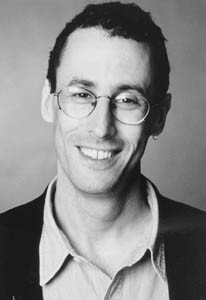
Who Loves You, Jimmy Orrio?, a new theater piece on stage at Marin Theatre Company. (center) plays an up-Stacy Ross and Jimmie Orrio played by Chad Fisk

Photograph by Rory MacNamara

Play Time

Original theater sweeps North Bay stages

By Daedalus Howell

“THEATER DIES if there aren’t new playwrights,” says Danielle Cain, associate artistic director with Actors Theatre in Santa Rosa. “Writers are what keep theater alive and important to society right now.

“What are people responding to right now?” Cain continues. “What are they afraid of? What do they care about? That’s what today’s playwrights are writing about.”

Fair enough. But let the playwrights labor all they want; if they can’t find a theater to stage their works, they might as well be scribbling in their diaries.

And finding an outlet for original theater works can be tough. Indeed, repertory is the rule in the North Bay, where some companies have been known to restage the same well-known play two or three years in a row.

But some local companies are beginning to support new plays and playwrights.

Veteran Sonoma County theater impresario Lennie Dean’s Studio Be has spent the last nine months retooling her organization with an eye toward new works.

“We’re creating an environment where the creation itself, the process, is what is most important,” says Dean, who has instituted a three-part program incorporating the disciplines of writing, directing, and acting.

Santa Rosa’s Studio Be offers member writers its Center Stage Write program, where three Sundays out of the month, writers bring in scenes, have them read, and receive feedback from their peers.

“The goal is to eventually produce full-length plays by our writers,” says Dean, who foresees Studio Be projects graduating through the collective’s various labs and workshops to become full-blown productions.

On a somewhat larger scale, Mill Valley’s Marin Theatre Company is also taking the plunge into original theater with the inaugural season of its Second Stage Series. Starting in February, MTC will offer two never-before-staged works in its newly refurbished Sali Lieberman Studio Theatre.

The ambitious goal, according to MTC artistic director Lee Sankowich, is to discover new works that could become an important part of American theater.

“The idea isn’t to make money. The idea is to put new shows on and find new writers,” says Sankowich. “I’ve always thought that to be a vital, regional theater, you’ve got to not only do plays that have been around before, but to be in on the forefront of creating new works.”

Such works are apparently in abundance: “I can’t tell you how many plays arrive in my mailbox,” Sankowich says with a laugh.

Likewise, the prospect of wading hip-deep through a pile of unproven scripts has not rattled Actors Theatre’s commitment to new theater works. Out of 55 submissions, a committee chose four plays for its third annual New Theatre Works Festival–a series of staged readings that could potentially lead to full productions as part of the Santa Rosa company’s Bare Stage Series.

“We say over and over again when we meet in the reading committee, ‘Oh my god, these people are so brave,'” says Cain. “And we really mean it. People sat down and put huge chunks of themselves on paper and sent it in. We think it’s phenomenal that they’re doing it.”

INDEED, in an era when many would-be scribes would just as soon knock out a feature film with a digital video camera, the notion of writing a play seems a little quaint.

Sankowich witnessed a playwright brain drain firsthand when he taught theater at Carnegie Mellon University. Writers he worked with were frequently poached by Hollywood studios to work in film and television.

“That’s where the money is,” Sankowich laments. “Hollywood does get a hold of a lot of the best writers. But there are some playwrights coming out of the universities who are committed to theater and are very good, as well as some in the Bay Area who are very good.”

Among those regional talents is Cheryldee Huddleston, an East Bay playwright whose Who Loves You, Jimmy Orrio? hits the boards at the Marin Theatre Company in February. This will be Huddleston’s first major regional production.

“I’ve tried my hand at screenwriting, prose, and poetry, but for me playwrighting fits the two sides of my personality,” Huddleston says. “One part is reclusive and the other part loves company. I adore the time that I’m writing the play by myself, and I adore the time that it’s in rehearsal.”

Huddleston’s play features a swaggering cowboy returning from a prison stint to a Tennessee trailer park and the women who have been waiting for him.

Attending rehearsals of her play helped elucidate themes in Huddleston’s work she hadn’t recognized.

“It’s been an incredibly concentrated process,” she says. “Since rehearsals began, the rewrites and tweaking that I have done have been significant. There’s something to be said about watching your characters move around. It’s part of some kind of final process for clarifying what’s going on with them.”

Similarly, Richard Switzer, whose Joy Boys was selected for a staged-reading at Actors Theatre, looks forward to his participation in the AT staged-reading series.

“I think it will be good for me to hear real human beings speak the dialogue so that I can weed out the clunky stuff and keep the superior and superb material–of which there is quite a bit, I might add,” Switzer says drolly.

Joy Boys explores the complicated conflict between career and sexuality experienced by a group of Roman Catholic seminarians on the eve of being ordained.

“The reading is going to be absolutely terrifying,” Switzer says. “I anticipate hiding during most of the reading underneath my seat or pacing the lobby smoking cigarette after cigarette. I don’t even smoke cigarettes.”

APPREHENSION aside, ultimately playwrights have to relinquish control over their work and trust its fate to those who convey it to an audience.

“You have this sense of your play having its own life, but then it belongs to directors, designers; and then, once it goes up, it belongs to the actors and ultimately the audience,” Huddleston says. “The audience is the fourth dimension of it. Otherwise, what’s the point?”

This process also provides actors with unique opportunities, as Cain explains.

“Working directly with a playwright is a very different experience for actors than working on a Shakespeare, Stoppard, or a Kushner,” Cain says. “The playwright is right there, and you can ask that person, ‘What are you talking about?’ or ‘That’s so cool, what made you think of that?’ ”

Says Switzer, “My play is like a child I’ve sent off to college and he’s joining a fraternity. Isn’t that wonderful?”

Who Loves You, Jimmy Orrio? (Feb. 1-25) and Moving Bodies (May 17-June 10) play Thursdays-Saturdays at 8:15 p.m. and Sundays at 7:15 at the Marin Theatre Company, 397 Miller Ave., Mill Valley. Tickets are $20. 415/388-5200.

Actors Theatre’s third annual New Theatre Works Festival features staged readings of Barclay Bates’ Giving Up on Feb. 12; Richard Switzer’s Joy Boys on Feb. 19; Amy Forlan’s A Better Place on Feb. 26; and William Waxman’s Timon’s Retreat on March 5. All readings are at 7:30 p.m. at Actors Theatre, Luther Burbank Center, 50 Mark West Springs Road., Santa Rosa. Tickets are $5. 707/523-4185.

From the February 1-7, 2001 issue of the Northern California Bohemian.

© Metro Publishing Inc.

Alan Moore

Comix creator Alan Moore hits his peak in America’s Best series

By

A ONE-MAN alternate universe, the British writer Alan Moore has been creating world after world full of comic-book heroes since his stint writing the adventures of future-cop Judge Dread.

As head writer for the La Jolla-based America’s Best comics, distributed by DC, Moore seems finally to have complete creative control. Moore’s newest comics are collected in hardback, published in good-looking editions complete with ribbon bookmarks for added swankness. In these three “America’s Best” anthologies, Moore explores various styles of heroic stories, from the lore of the British Empire to the life of inner-city cops.

Moore’s The League of Extraordinary Gentlemen ($24.95) is an inspired variation on the X-Men template. It follows an uneasy partnership of characters appropriated from the fiction of Bram Stoker, H. G. Wells, Robert Louis Stevenson, Arthur Conan Doyle, and Jules Verne.

If I’m being vague, it’s because discovering the identities of these Extraodinaries is part of the surprise of reading. I will note that artist Kevin O’Neill’s arresting depiction of the terrible Mr. Hyde as a skinned man-gorilla seems to be taken from a famous World War I propaganda poster, caricaturing a soldier of the Kaiser as a killer ape.

While The League of Extraordinary Gentleman is Moore in a Victorian mood, Tom Strong ($24.95) is based on 1930s pulp. Strong is Moore’s answer to the Man of Bronze, Doc Savage. Savage (created by Kenneth Robeson) was the original dime-novel hyphenate, an athlete-scientist-explorer-millionaire-detective. Strong has all of Savage’s talents. Like Savage, he’s extravagantly wholesome and remote.

In the interest of superior eugenics, Strong’s parents raised him in a pressurized glass bubble, with a robot butler named Pneumann as nanny. Tell me it’s stranger than making a fetus listen to Mozart tapes.

Of these three America’s Best collections, Top Ten ($24.95) is probably the easiest entry into Moore’s new work. Victorian adventure and manly-chap stuff like Tom Strong may be a bit arcane compared to the easily followed (if warped) cop story Moore has written here.

The city of Neopolis is full of costumed superheroes of all economic classes–superhero bums, superhero CPAs, superhero Joe Lunchpails. Neopolis’ bad part of town is the Tenth Precinct, nicknamed Top Ten. The slum is patrolled by more-than-human police officers who can’t afford to live there and have to commute in from the suburbs.

The largest, toughest cop at the precinct is Smax, but he’s not the hero. It’s the women in the series who are of more interest: the lesbian Jack Phantom, who can walk through walls; the nine-foot-tall red-light-district boss Large Marge; police pathologist Sally-Joe Jessell, a.k.a. Micro-Maid, who shrinks to a few inches high to examine cadavers.

Our point of entry into the story is the rookie cop–a shy girl with very minor talents. She has a toy box of fully armed miniature helicopters and robots built for her by her father, an ex-cop afflicted with Alzheimer’s disease.

Moore follows a week in the Top Ten’s business. As in an episode of Hill Street Blues or Homicide, there’s a serious murder investigation, alternating with the everyday time-wasters a cop-shop is heir to. One typically futile case: Top Ten deals with a drunken, pathetic, and yet dangerous Godzillaoid named Gograh, who breaks his restraining order, leaving Monster Island when his punk son Ernesto has a minor scuffle with the law.

This volume of Top Ten leaves you ready for more, and the annual anthology 64-Page Giant America’s Best Comics ($6.95) provides it. Here’s Moore at his loosest, with inside-jokey stories illustrated by talents like Dame Darcy and Kyle Baker.

Moore shows his usual gift for taking the boredom out of political correctness. The 64-Page Giant reaches its peak in the Top Ten adventure “DeadFellas.” Here’s testimony from the selective memory of one of Neopolis’ premier team of crooked lawyers, Metavac, Fischmann, and Goebbels. The report describes the aftermath of a near-massacre between families of Transylvanian organized criminals with a “hereditary skin condition” that makes them sensitive to sunlight.

“Cosa Nosferatu–that’s an offensive term,” the vampire-mafia’s hired mouthpiece protests. “It’s an insult to the thousands of decent Hungarian-Americans who don’t rise from the dead to feast on the living.”

From the February 1-7, 2001 issue of the Northern California Bohemian.

© Metro Publishing Inc.
‘Chocolat’

0

Chocolat.

Sweet Jesus

Comic Reed Martin on God, vinegar, and ‘Chocolat’

Writer David Templeton takes interesting people to interesting movies in his ongoing quest for the ultimate post-film conversation. This is not a review; rather, it’s a freewheeling, tangential discussion of art, alternative ideas, and popular culture.

“IT’S WEIRD that I’m not hungrier than I am,” notes a wide-eyed Reed Martin, working his way through the bustling lobby of the Sequoia Theater in downtown Mill Valley. We’ve just seen Lasse Halström’s Chocolat, a charming little fantasy about a sexy sweet-maker who stirs up appetites in a deeply religious village in 1959 France. Now we’re headed outside into the face-slapping cold of the night.

By happy coincidence, it is the feast of St. Macarius, the patron saint of chefs. Presumably these chefs include chocolate makers, whose sweet craft was on prominent display in the film.

“All those close-ups of dripping chocolate, of mugs of hot chocolate, of those ‘Nipples of Venus,’ ” marvels Martin, the amiable actor-author-comedian-circus clown best known for his years of inspired literary lunacy with the infamous Reduced Shakespeare Company. “You’d think it would have made me want some chocolate.”

What Martin does want on this icy evening is a nice hot cup of coffee. And maybe some soup. Perhaps a warm fire to sit beside. It takes us 10 minutes to find all three inside a cheery cafe just down the street from the theater.

The Reduced Shakespeare Company is known for its irreverently condensed staged versions of great works of art and literature. The troupe first made its name with The Compleat Works of Wllm Shkspr. Then, with longtime members Adam Long and Austin Tichenor, it went on to shrink the history of the United States and the Bible.

Last year, while Long maintained a London-based RSC troupe in the West End–where The Compleat Works has now become the longest-running show in West End history–Martin and Tichenor toured The Compleat Millennium Musical–1000 Years in 100 Minutes.

They also collaborated on a new book, The Greatest Story Ever Sold: A Considered and Whimsical Illumination of the Really Good Parts of Holy Writ. In the typically farcical book, Martin and Tichenor trade chapters, describing and arguing over their favorite Bible stories, until Tichenor develops leprosy and dies, only to rise from the dead and start a brand-new religion–an act that, frankly put, pisses Martin off. Sounds like fun.

Most recently, Martin, Tichenor, and Long reunited in Vancouver to tape the legendary Shakespeare Show before a live audience, the results of which are scheduled to air on PBS this March. Martin–a former circus clown–has only just returned to his home in Sonoma, where he routinely recuperates with his wife, Jane, and their two children. He’s a busy, and understandably exhausted, man.

To tell the truth, why Martin ever agreed to leave home and head out to the movies tonight is rather beyond me. And yet, here we are.

“I enjoyed the movie. It was sweet,” he says. “No pun intended.”

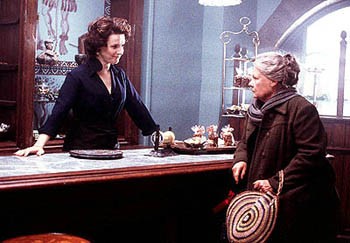
Especially appealing to Martin was the conflict between Vianne, the chocolate maker (played by Juliette Binoche) and the town’s pious mayor, the Comte de Reynaud (Alfred Molina). When the film starts, it is Lent, a season of sacrifice and self-denial. That anyone would open a candy shop at such a time–right across from the church, in fact–provokes de Reynaud into increasingly desperate fits of comic frustration. It doesn’t help that the villagers, gradually tempted to try Vianne’s creations, find themselves becoming strangely desirous of, well, all physical pleasures.

“You know, chocolate and religion can work nicely together,” Martin points out. “Look at Advent calendars.

“I think it’s the church’s job to be intolerant,” he suggests. “That’s the service they provide, to be the vinegar to life’s honey. It’s a tough job, but someone’s got to do it, or we wouldn’t all appreciate the honey.”

My guest has met his share of Religious Vinegaristas.

“There was this religious zealot in England,” he recalls. “His name was Tony Bennett. Not that Tony Bennett. He got a bee in his bonnet and started calling the Bible show names. He said it was Godless.” Godless? What the hell was that guy talking about? God must be mentioned in the show at least a hundred times!

“Well,” Martin continues, “it turns out there are blasphemy laws in England and Ireland. So he took the show to court. There were organized protests, with protesters and everything, sometimes several dozen of them, out in front of the theater waving signs.

“Then word started spreading that, in the show, I come out and play Jesus dressed as a Teletubby. I do come out as the Easter bunny and talk about Jesus, but I never do Jesus as a Teletubby. I kind of wish we’d thought of that, though.”

The court case was eventually dismissed when local lawmakers attended the show and proclaimed it “rather juvenile”–but not blasphemous. It should not be said that Martin, who confesses to regularly attending Mass, feels that morals are always bad things.

“I think people like rules,” he says. “The gray areas are uncomfortable. But sometimes people become too addicted to rules and start ruling things out that are genuinely wonderful and good, things that God might actually enjoy.”

Like the Reduced Shakespeare Company?

“Sure. I think God would get a real kick out of the Bible show.”

And chocolate?

“Definitely,” Martin says. “I’m pretty sure Jesus would have loved chocolate.”

One thing’s for sure. If Jesus really didn’t approve of such treats, old St. Macarius would be out of a job.

From the January 25-31, 2001 issue of the Northern California Bohemian.

© Metro Publishing Inc.
Forced Pesticide Spraying and the No Spray Movement

Spray Not

Why I plan to resist forced pesticide spraying

By Shepherd Bliss

The last time I put my body in the way of the government was to stop the Vietnam War. I was a young officer in the U.S. Army and chose jail over killing people. Though it took years, we ended that war. As I prepare to defend my home and organic farm from chemical assault by the government in its attempt to control a tiny bug–the glassy-winged sharpshooter–that threatens grapevines, it feels similar. If put into practice, we will end forced pesticide spraying, as approved in November by the Sonoma County Board of Supervisors.

Civil disobedience is very American–going back to pioneering religious groups, such as the Quakers and Amish, which are both part of my own personal tradition. Martin Luther King Jr. and the struggle for racial justice continued that legacy. I met Dr. King during the l960s and was deeply inspired by him; he stimulated me to leave the military. But going to Cook County Jail during my 20s with hundreds of others after our direct action at the National Democratic Convention in Chicago is different from prison as a mature man in my mid-50s.

That struggle was in the streets, but this would be here at my home.

Outrage at the killing of other humans inspired my action against the Vietnam War. This time I feel sadness that people I know personally and have liked–including Sonoma County Supervisors Mike Reilly and Mike Kerns–would authorize the end of my livelihood as an organic farmer and threaten my health. At one hearing alone they heard testimony from over 60 people at a meeting of 300 people pleading with them not to spray. But they decided to protect the wine industry at all costs.

There was something very wrong with the Vietnam War, which Americans eventually came to realize. There is also something very wrong with the government coming to our homes and spraying deadly chemicals without our permission, which a growing number of people are coming to realize. The chemicals proposed to be used were developed as nerve toxins for wartime use against human enemies and are now used to fight insects.

The Sonoma County Board of Supervisors has made a terrible mistake by authorizing such an assault to defend the luxury wine industry. That mistake is mobilizing a large number of people to prepare to resist chemical assault. The long-term consequences of forced pesticide spraying in terms of human health and damage to the environment are far more serious than any possible short-term benefit to a single industry.

Fortunately, I do not feel alone.

The growing No Spray movement encourages me. At the end of last summer, as my berry harvest was winding down, I joined the No Spray Action Network. During six months we have spent hours testifying to the Board of Supervisors and other officials, including Rep. Lynn Woolsey, D-Petaluma; state Sen. Wes Chesbro, D-Arcata; Assemblywoman Pat Wiggins, D-Santa Rosa; and various city council members. We have patiently pled our case in whatever forum we could find. The mayors and council members of Sebastopol and Sonoma have been the most supportive. Sebastopol Mayor Larry Robinson and then Sonoma Mayor Larry Barnett testified with us before the supervisors. They have been joined by Sonoma’s current Mayor Ken Brown and Sebastopol council members Bill Roventini, Craig Litwin, and Sam Spooner.

Now we are left with direct action.

On the Line: Inside the nonviolent direct-action training sessions.

Having tried for half a year to dissuade the government from its ill-conceived plan to invade my home and end my livelihood as an organic farmer, I now see no other choice than putting my body on line. I cannot in good conscience cooperate with what would be the destruction of my pollinating bees and other beneficial insects, the damage to my good soil, and the threats to my asthma and thyroid conditions. I feel backed into the corner, needing to defend my home and the work I have done to protect my health and provide healthy food to people.

Psychologists describe a flight-or-fight response to such a threat.

I tried the flight response. Go north, something inside me prompted. So I visited Humboldt County. I liked it. I checked out Mendocino County. It’s nice there, too. But each time I returned to the rural road that leads to my farm south of Sebastopol, I knew that I was coming home. Some things are worth fighting for. I am simply too old to move again and too committed to this particular ground, these particular trees, and this wind that I feel, as well as the territorial chickens that would resist moving. Perhaps I am not so unlike that other biped creature that walks this land each day.

Dozens of customers, friends, and even strangers have said, “We’ll come to your farm to help defend it.” I have an image of many people with cameras willing to document any attempt by a sheriff and his deputies to drag organic farmers, gardeners, and other residents off our lands and away from our homes to open the way for moon-suited poison sprayers.

It usually takes a couple of minutes to drive the short length of the narrow rural road to get to the end where my farms rests. With hundreds and perhaps thousands of people blocking the path of trucks loaded with pesticides, while letting the cars of neighbors through, it would take authorities a long time and many arrests to make it to my farm and to properties alongside such narrow country roads. Our nonviolent direct-action trainings have filled up fast. Our four January trainings have been virtually full, so we already plan to add four February trainings.

When the government targets our yards and lands, it crosses a line and violates our basic civil and constitutional rights. Just as the Vietnam War became unpopular, the $2 billion wine industry is becoming increasingly so among some west county residents.

The days of the mandatory spraying of pesticides by agribusiness are numbered.

For information on the No Spray Action Network, visit www.freestone.com/nospray or no*********@***oo.com; write to or P.O. Box 1317, Occidental, CA 95465,; or call 707/874-3119.

From the January 25-31, 2001 issue of the Northern California Bohemian.

© Metro Publishing Inc.

‘Indiscretions’

Bleak House

‘Indiscretions’ delves into sticky secrets of a dysfunctional family

By Patrick Sullivan

“I KNOW WE all have our flaws, but that goes beyond human decency,” complains one outraged character to another in Indiscretions. But it’s hard to know why she’s so surprised: decency is a very rare commodity in Jean Cocteau’s 1938 play about the sticky secrets of a deeply dysfunctional middle-class family.

Most plays content themselves with one love triangle. Indiscretions (Les Parents Terribles), now on stage in a Marin Theater Company production directed by Amy Glazer, offers four–all anchored in one very twisted household.

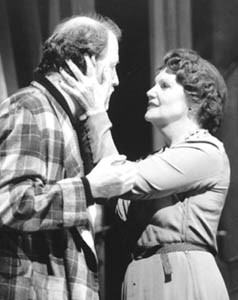
Warren David Keith plays George, the father of the family, an eccentric inventor perfecting his weird plans for an underwater submachine gun. His wife, Yvonne (Deborah Offner), is a semi-permanent invalid who lies around in her darkened bedroom all day playing Patience in her dressing gown. Their son, Michael (David Agranov), is a 22-year-old child whose relationship with his doting mother has more incestuous overtones than a month’s worth of Jerry Springer episodes.

This bizarre household–nicknamed “the Gypsy Camp” by its occupants–is ruled by Yvonne’s sister, Leonie (Frances Lee McCain). Blessed with brains and control of the family fortune, Leonie is determined to save her family from “chaos, collapse, and cholera.” She was once engaged to George, before he broke it off to chase her sister.

Such dysfunctional arrangements often prove surprisingly durable. But life at the Gypsy Camp is thrown into upheaval when Michael falls for a beautiful young woman. Madeline (Jenny Lord) is tidy and ambitious, and her love for Michael could be his ticket to a normal life.

The only problem? Madeline has also been conducting an affair with George, though she doesn’t know he’s Michael’s father. Oh, and the other problem is that Yvonne sees her son’s new romance as a threat to her own “special” relationship with her boy. Oops–and the third problem is that Leonie is working frantically behind the scenes, pulling strings in pursuit of an agenda of her own.

Unfortunately, this complicated tragicomedy gets off to a bit of a slow start at the Marin Theater Company. Cocteau’s plot offers actors ample ingredients for onstage chemistry–the dangerous kind that blows up college laboratories. But this production’s cast offers a strange paradox. The individual performances are excellent, and Offner and McCain are especially strong as the twisted sisters whose ruthless hunger for love lies at the heart of the plot. But in Act 1, the interactions between characters lack the spark that would set this material on fire.

The pace picks up, though, and the cast begins to mine the play for both its dramatic and its comic potential. Especially noteworthy is Offner, an accomplished physical comedian who is also quite good at playing a mother. In the middle of a jealous tantrum over her son’s new love, she suddenly stops to deliver a note-perfect version of a line all children have heard: “Michael, for the umpteenth time, are you trying to break that chair?”

Most of these events unfold in Yvonne’s bedroom, which set designer Peter Crompton has filled with slanted doorways and strange colors, lending an Alice in Wonderland quality to the play. Both the bedroom setting and the off-kilter set are deeply appropriate. At heart, Indiscretions is a Freudian dreamscape–until it descends into a nightmare.

‘Indiscretions’ runs through Feb. 4 at the Marin Theater Company, 397 Miller Ave., Mill Valley. Tickets are $24-$40. For details, call 415/388-5200.

From the January 25-31, 2001 issue of the Northern California Bohemian.

© Metro Publishing Inc.
Playwright Tony Kushner

Earth Angel Tony Kushner speaks on art and politics By Greg Cahill "I DIDN'T SET OUT to write a play about AIDS," playwright Tony Kushner once said. "I set out to write a play about what it was like to be a gay, Jewish, leftist man in New York City in mid-'80s...

Bruce Johnson

Chain-Saw Magic Sculptor Bruce Johnson creates art from salvaged old-growth redwoods By Paula Harris SCULPTOR Bruce Johnson isn't interested in lounging inside, huddled in front of the television set this chilly Super Bowl Sunday afternoon. He's where he loves to be--outside in the bracing January air roaming among the living oak...

‘Finding Forrester’

Finding Forrester. Write Turn North Bay poet Terry Ehret critiques 'Finding Forrester' Writer David Templeton takes interesting people to interesting movies in his ongoing quest for the ultimate post-film conversation. This is not a review; rather, it's a freewheeling, tangential discussion of art, alternative ideas, and popular culture. ...

Virtual Insanity

Head Case Exploring the virtual-reality shrink By Damien Cave I'M EXPERIENCING schizophrenia for the first time. While spiders climb all over the room, the psychiatrist leans over his desk and shoves his face close to mine, his eyes squinty, red, and evil. He keeps asking me questions, but it's impossible to...

Geek Girl

A glossary for those in and out of the loop By Annalee Newitz FOR YOUR edification, consternation, and bathroom reading, I've compiled a list of the most egregiously overused phrases and concepts in the tech industry. Drink information--things go better with a cliché. Bricks and Mortar: A phrase often used in the...

North Bay Theater

Who Loves You, Jimmy Orrio?, a new theater piece on stage at Marin Theatre Company. (center) plays an up-Stacy Ross and Jimmie Orrio played by Chad Fisk Photograph by Rory MacNamara Play Time Original theater sweeps North Bay stages By Daedalus Howell "THEATER DIES if there aren't new playwrights,"...

Alan Moore

Comix creator Alan Moore hits his peak in America's Best series By A ONE-MAN alternate universe, the British writer Alan Moore has been creating world after world full of comic-book heroes since his stint writing the adventures of future-cop Judge Dread. As head writer for the La Jolla-based America's Best comics,...

‘Chocolat’

Chocolat. Sweet Jesus Comic Reed Martin on God, vinegar, and 'Chocolat' Writer David Templeton takes interesting people to interesting movies in his ongoing quest for the ultimate post-film conversation. This is not a review; rather, it's a freewheeling, tangential discussion of art, alternative ideas, and popular culture. ...

Forced Pesticide Spraying and the No Spray Movement

Spray Not Why I plan to resist forced pesticide spraying By Shepherd Bliss The last time I put my body in the way of the government was to stop the Vietnam War. I was a young officer in the U.S. Army and chose jail over killing people. Though it took...

‘Indiscretions’

Bleak House 'Indiscretions' delves into sticky secrets of a dysfunctional family By Patrick Sullivan "I KNOW WE all have our flaws, but that goes beyond human decency," complains one outraged character to another in Indiscretions. But it's hard to know why she's so surprised: decency is a very rare commodity in...
11,084FansLike
4,606FollowersFollow
6,928FollowersFollow