

Best Kids’ Stuff

Best Kids’ Stuff

Child’s Play


“The world is/not with us enough. / O taste and see.”

–from “O Taste and See” by Denise Levertov


Photograph by Michael Amsler

Best Drug-Free Alternative to Ritalin

OK, no more poking fun at the recent ADD flurry. Kid Street Theatre, a nonprofit agency dedicated to teaching kids important life skills, is now in its 10th year. The after-school program serves youth at risk, kids without homes, and other disregarded children in our community through its innovatively therapeutic arts program. The program keeps growing through support from its volunteers and benefactors. Activities include painting, acting, singing, and other artistic endeavors, but Kid Street’s main focus is theater productions written, directed, and acted in solely by the kid participants.

54 West Sixth St., Santa Rosa. 707/525-9223. –E.L.


Best Way to Raise a Star-Struck Kid

Laser blasters. Moon bases. Alien abductions. Invaders from Mars. Images that pervade the media and creep into the pliable minds of young children, most of whom are amazed to discover that real-life astronauts are still struggling to learn how to manipulate a space wrench while constructing the International Space Station and not–and now this will come as a real shock to a lot of kids–fending off venomous green space bugs from the Andromeda galaxy. Let Ed Megill put things into perspective for those little tikes at the Santa Rosa Junior College planetarium–no previous knowledge of trigonometry needed; Ed will provide that at the show. Get in touch with the cosmos. Fill those little heads with wonder while seated in an almost totally darkened room as the facility’s super-projector (which looks a bit like, well, a venomous bug from outer space) replicate a starry night sky on the magnificent domed roof. Marvel at the breathtaking slides from the Hubble Space Telescope (worth every red cent–and there have been billions of them–that American taxpayers have pumped into that baby). And, yes, they’ll even learn to identify the neighboring Andromeda galaxy–just in case they want to keep a watchful eye out for those blasted space bugs. Open weekends only. No children under age 5.

SRJC, Lark Hall, Room 2001, 1501 Mendocino Ave., Santa Rosa. For show times, call 707/527-4371. –G.C.


Best Place to Unveil Your Kid’s Invention

Has little Johnny reinvented the wheel or devised a better mode for Internet access? Then maybe he’s ready for the Marin County Fair’s “Invention Convention.” Sponsored by the Marin County Office of Education as part of the Logitech Inventor’s Lab, the Invention Convention is open to kids from kindergarten to high school. Each child is required to invent a unique product and create a booth to demonstrate that product to a panel of judges. Judges come from such prestigious companies as Sharper Image and Autodesk. In addition, a company from Ideas To Market (ITM) reviews the kid’s products and offers suggestions for improvements and marketing. More than 20 kids took part last year, with inventions ranging from the Compact Portable Bike Trailer to the Hands-Off Page Turner. The Invention Convention offers kids a great opportunity to use their imaginations and follow through with a marketing strategy. The event is held on the Marin County Fairgrounds in early July.

Avenue of the Flags, San Rafael. 415/499-6400. –B.E.


Photograph by Michael Amsler

Best Place to Get in Touch with Nature

Armstrong Woods is famous for many things, those enormous groves of giant redwoods being the grandest of the state reserve’s many glories. Unfortunately, Mother Nature’s calm and magnificent grandeur is seldom as captivating to youngsters as it is to the stressed-out adult types you routinely see at the reserve, standing with their eyes closed, taking slow therapeutic breaths of cool, shadowy air. Fortunately, the park features a neat, interactive “display” that, even though it was not designed with children as its main focus, manages to appeal to kids’ most playful, hide-and-seekish inclinations. The Tactile Trail is a hands-on self-guided tour that meanders up and down through a quarter mile of forest. The cool part is that you can take the tour with your eyes closed. Created for the use of sight-impaired visitors, the trail ingeniously employs a length of smooth cable, suspended about waist high from a railing. By following the cable, you are taken through the trees up onto a porchlike platform where you can caress or embrace one especially large, moss-covered redwood and step in and out of dappled sunlight. At regular intervals are information stations, where you can read, in Braille and in print, about the surrounding flora and fauna, and even pick up a few historical tidbits–and yes, kids will get to open their eyes at these little “reading intervals,” which makes the whole experience a little less scary and a bit more educational. It is not unusual, at the end of the trail, to hear the excited voices of children saying, “Let’s do it again!” Fortunately, the trail ends where it begins, so repeat trips are easy.

Armstrong Redwoods State Reserve, 17000 Armstrong Woods Road, Guerneville. 869-2958. –D.T.


Best Place to Skip Rocks

You need two things to skip rocks: flat rocks and a smooth bit of water on which to skip them. Well, rock skippers, take note. China Beach, at San Rafael’s China Camp State Historical Park, has both in abundance. The beach is strewn with hand-sized, geologic bits and pieces, and the water–a quiet cove off of San Pablo Bay–is the calmest aquatic expanse this side of my brother-in-law’s swimming pool. With a little practice, your kids will be throwing triple-skippers in no time. Also, the gentle shoreline is a great place for toddlers and young children, the tidal pools provide hours of discoveries, and the museum (telling the tale of the thousands of Chinese fishermen who once lived at this shrimpery) is a real eye-opener.

North San Pedro Road, San Rafael (off Hwy. 101, 5 1/2 miles from Marin Civic Center). 415/456-0766. –D.T.


Best Place for Impressionable Youths to Watch Overdressed Adults Pretend to Stab Each Other with Swords

En garde! On the first Saturday of every month, the Rafael Film Center presents a rip-roaring big-screen adventure. As part of its ongoing Family Classics series, the RFC screens the same kind of amazing old-time swashbucklers that our parents and grandparents used to go see every Saturday afternoon. Recent films have included Treasure Island, The Mark of Zorro, and Gene Kelly’s The Pirate. Take that, kiddies.

1118 Fourth St., San Rafael. 415/454-1222 . –D.T.


Best Place to Take the Kids Back in Time

Let’s do the Alley Oop, sauntering back to, oh, say, 3 million years ago. No laser tag. No malls. No Sharon Wright. No chichi wineries. And absolutely no suburban sprawl. Now imagine that this bygone era is rocked by a massive volcano, spewing hot ash and roiling gases all over the front lawn of your nifty caveman/cavewoman digs (OK, in real life there were no people around to witness this, but let’s just pretend). Ashes everywhere–ashes in your hair (and not a Paul Mitchell salon in sight), ashes in your food (roasted bison intestines or some other gloppy caveman/cavewoman delicacy), ashes in the kids’ pool. Yech. Now imagine that you get burned to a crisp (hey, I said it was hot stuff spewing from this volcano), and everything gets coated in a carpet of fine ash–trees, plants, the future home of the Mondavis, the whole nine yards. Now flash forward to modern times. You’re still a caveman (or at least author John Gray wants to think of your Neanderthal alter ego that way, thank you very much), and those 3 million-year-old trees that used to provide shelter from marauding saber-toothed cats are still there–only now they’re petrified, owing to a mineralization process that is too complicated to explain in a Best of the North Bay issue. And it costs you five bucks to go visit those trees. Welcome to the Petrified Forest, a state landmark on the Sonoma/Napa border. It’s a great place to give kids a sense of the scale of things–big things, old things. It also boasts a way-cool gift shop, where, for just a few bucks, you can purchase a 60 million-year-old fish fossil, guaranteed to amaze classmates at your kids’ show-and-tell for many years to come. And like all good petrified forests, the place is filthy with history: In 1870, the site was discovered by Petrified Charlie Evans (and we don’t want to know how he earned that nickname). That same year, it was visited by author Robert Louis Stevenson and immortalized in the book Silverado Squatters. A little more than 100 years after that, the first petrified log was power washed–stay awake, this is important. Check it out for yourself. Drive north or south (depending on the location of your modern-day caveman/cavewoman digs) on Hwy. 101. Take the River Road/Guerneville exit to Mark West Springs Road (wave to the Northern California Bohemian office as you drive past). Continue driving on Mark West Springs Road until it becomes Porter Creek Road. Continue driving on Porter Creek Road until it ends at Petrified Forest Road. Make a left turn onto Petrified Forest Road. You will see the entrance to the Petrified Forest 1/2 mile down the road on your left. It’s open every day except Christmas.

Admission is $5 for adults, $4 for seniors and juniors (ages 12 to 17), and $2 for children ages 11 and under. 707/942-6667. –G.C.


Photograph by Michael Amsler

Best Place to Let Your Kids Express Their Creative Self

OK, it might not be the ultimate best place (there are many dynamite kids’ arts programs in the North Bay), but it is outstanding. Studio Be’s Creation Conservatory offers a wide range of fabulous classes that allow young children and teens to just be themselves. Spring classes–which started this week and run through May–feature a bunch of old favorites (classes in storytelling, playwriting, and solo performance) and a slew of new favorites (classes in improv comedy, modern dance, tumbling, vocal improvisation, and creative expression–and we’re all for that). The program’s director is Michelle Pelletier (above, back row), whose teaching and direction credits include the American Conservatory Theatre in San Francisco and the San Francisco Shakespeare Festival. Summer classes begin June 18 and include the ever-popular Shake & Bake: Shakespeare in the Heat of the Summer, where kids can learn the fine art of throwing Shakespearean insults and a bit of handy stage fighting.

Studio Be, 206 Fifth St., Santa Rosa. 707/569-8206, ext. 2. –G.C.


Best Place to Not Get in Trouble

Don’t touch anything or you’ll regret it! How often do kids hear some uptight adult barking that threat? At the Bay Area Discovery Museum, children–up to age 10 or so–are actually encouraged to touch the exhibits. Required to touch the exhibits. Indeed, hands-on is the order of the day here. Create a self-portrait. Learn how to fingerprint someone. Use computers to fuse pictures of your family members–even those nervous nellies who are always yelling at you. Or just work on those gross motor skills, er, play. There is an ever-changing array of exhibits and activities at this unique North Bay resource, from art workshops and theater arts that help kids cope with bullies and intolerance to spring break activities camps and preschooler science labs. Reach out and touch it.

Bay Area Discovery Museum, Fort Baker, 557 McReynolds Road, Sausalito. Admission is $7 for adults and children ages 2 and up. Children under 1 and members are free. Group rates are available to schools, day-care centers, and community organizations. 415/289-7266. –G.C.

Readers’ Poll Results


Staff Picks


From the March 22-28, 2001 issue of the Northern California Bohemian.
© Maintained by .


‘It All Starts Today’

0

It All Starts Today.

Newfound Glory

Hope gets sneaky in ‘It All Starts Today’

SOME FILMS sneak up on you. For two hours, you sit there in the dark, staring up at the screen, having a certain kind of experience–sometimes enjoyable, sometimes not. And then, in the last few moments of the film, everything turns upside down and you learn that what you’ve been experiencing is not what you thought it was.

Think of The Sixth Sense.

It All Starts Today, the new film by French director Bertrand Tavernier (Round Midnight), pulls off a similar, though far superior trick. For 100 minutes, Tavernier makes us think we’re watching a film about frustration and hopelessness, a harrowing examination of the frustration of preschool teachers fighting for the futures of their students in the midst of hopeless poverty and abuse. And then, with nothing trickier than a slight shift of focus, he shows us that what we’ve been watching is, in fact, a lesson in the power of hope.

Daniel Lefebvre (Philippe Torreton, in a flawless, open-hearted performance) runs a publicly funded preschool in Hernaing, a small town in northern France where the unemployment level is rising fast along with the rates of alcoholism, crime, and violence. Though the French government offers low-cost education to children as young as 2 years old–an alternative to babysitting and more costly forms of child care–the program is poorly funded.

The system is also subject to absurd rules and regulations that routinely force the teachers to break the law, as when the teachers pool their own money to buy lunch for the children barred from the school lunch program–their parents didn’t turn in the proper paperwork– or when Lefebvre gives a ride home to a 5-year-old girl whose drunken mother has abandoned her, along with her little brother in a baby carriage, in the schoolyard.

Lefebvre is a good man, and his mounting despair and irrational outbursts of anger are a direct result of the remarkable dedication he has toward the children under his care. His main emotional ally is his resourceful live-in sculptor girlfriend Valeria (Maria Pitaressi), who’s overcome her own harrowing childhood in becoming a creator of “beauty from nothing.”

By immersing us, for the majority of the film, in the unendingly bleak details of the students’ lives, by demonstrating the insurmountable obstacles faced by the teachers, Tavernier brings us to the unbearable conclusion that there is no hope for these children.

When, in the last 15 minutes or so, tiny glimmers of goodness arise–a deaf child finally gets the medical help she needs, Valeria creates a neighborhood celebration using little more than plastic bottles and sand, a trembling parent thanks Lefebvre for his efforts–the effect is astoundingly emotional. After so much sadness and hopelessness, we watch as the teachers and the children gobble up the light as if they’d been starving. We in the seats gobble it up right along with them.

Though the film is French, the situation is not so different from that of many American schools. Few films in any language have so powerfully shown the gargantuan task our teachers face every day. When, at the end, Lefebvre describes the work of his miner father, whose legacy “is a pile of stones and the courage to lift them,” we know the words also speak for those who teach, protect, and fight for the futures of our children.

You may leave the theater wanting to give every teacher in sight a great big raise.

‘It All Starts Today’ opens Friday, March 16, at the Rafael Film Center, 1118 Fourth St., San Rafael. For details, see or call 415/454-1222.

From the March 15-21, 2001 issue of the Northern California Bohemian.

© Metro Publishing Inc.

The Wide-Eyed Gourmet

On an aversion to cake doughnuts. Or frittering away one’s childhood

By Marina Wolf

FOR YEARS I’ve hated cake doughnuts (some people call them old-fashioneds) without really knowing why. My dislike has the unwavering focus of a childhood distaste, all out of proportion with the obvious facts of their sharp aftertaste and dry, stiff crumb. It was only recently that my family once ate cake doughnuts every Saturday for two years. That much exposure can make you sick of anything.

The doughnuts were one of my dad’s get-rich-quick schemes that he picked up to supplement his recession-level income. His other home-business ventures–Amway and Watkins were two of his favorites–depended heavily on charisma and gullible buyers, none of which he had in steady supply.

Doughnuts, on the other hand, required only a few gallons of hot oil and the stubbornness of a much-whipped mule. It was right up my dad’s alley. And considering that he was an electrical engineer, his idea was a pretty good one: Fry ’em up fresh and ferry them around to folks looking for a bit of a treat on Saturday mornings.

Of course, anyone in food service will tell you it’s a hell of a lot of work, and I don’t think Dad figured on how much. Every Friday night he lugged the equipment and heavy sacks of mix out from the laundry room, and every Saturday at 3 or 4 a.m. he fired up the fryer. We got used to the sounds of the enormous mixer, its clanging blades muted by a churning pale mess of dough, but the smell of the frying was unavoidable, oily and verging too close to burnt. By 8 a.m. the fumes had settled on every curtain in the house, there to linger until the following week.

At the beginning, Dad burned himself fairly often as he dropped the doughnuts in and fished them out, four or six at a time. After they cooled, he painted a thick coat of chocolate or vanilla frosting over the top, which settled in drops all over the table, no matter how carefully he laid down the paper towels.

There was no room in the kitchen to make a real breakfast, so we kids fed ourselves on the more obvious mistakes–the gnarled ones or the ones that stuck together. Then we washed our greasy hands and struggled to put together the pink cardboard boxes, which my father filled according to last week’s orders: one dozen plain, six each of plain and chocolate. He scrawled the name on each box, stacked them carefully in the bus, and yelled at us to hurry up. We could help deliver to houses of people we knew well, but that didn’t mean we could be late.

At first it was exciting to ring the doorbells, carefully present the plain pink boxes, and run back to the car clutching a few dollars. But in time I began to feel a certain resentment toward my dad’s customers, the ones I knew from church, especially. Their fathers had real jobs, one job each. They could get doughnuts from Dunkin’ Donuts if they wanted to, and fancy ones, too, maple bars and apple fritters and jelly donuts.

Why were they buying ours, our weird little crumbly cake donuts?

I can’t explain, then or now, the source of my distrust, except in the simplest of metaphors–cake doughnuts, apple fritters. What’s to explain? But even then I sensed the slight disdain in the smiles of my Sunday school classmates as they handed over the money, $1.50 per box.

Their fathers were sleeping in bed.

My father was sleeping in the car, his head lolling back, his mouth slightly open, and a trace of white dusting his brow.

From the March 15-21, 2001 issue of the Northern California Bohemian.
© Metro Publishing Inc.

Living Wage Coalition of Sonoma County

Wage Wars

Sonoma County coalition: Share the wealth

By Paula Harris

MARTY BENNETT wants payback. And so do many others. They call themselves the Living Wage Coalition of Sonoma County, and they’ll soon be coming to a city council near you. The coalition, which includes various local organizations, such as labor, religion, and nonprofit groups, says the time has come for Sonoma County to work toward an increasingly visible nationwide issue: obtaining a living-wage ordinance.

Next week, the coalition–two years in the making and boasting a membership that includes the Sonoma County Council on Aging, Sonoma County Peace and Justice Center, North Bay Labor Council, and Women in Action–holds its first general meeting to drum up support for a new push to implement living-wage laws in the county government and every city in Sonoma County.

The ordinance will be similar to measures adopted in San Francisco and Santa Cruz, which now require contractors and subcontractors doing business with those cities to pay workers $11 an hour, plus benefits.

As a member of the coalition organizing committee, Bennett–a history instructor at Santa Rosa Junior College–says the upcoming meeting aims to educate the public about the movement and invite new organizations to join the coalition.

“We’re in the process of crafting living-wage ordinances for Petaluma and Santa Rosa and will be working with those two city councils as we proceed,” says Bennett. “Over time, we will go from one municipality to the next, and ultimately we’ll go to the county Board of Supervisors.”

Petaluma Vice Mayor Janice Cader-Thompson says that while she is concerned the new council majority will not support such an ordinance, she fully embraces it. “If we just look at the cost of living in Sonoma County, we should see it’s something we need to address–it’s not possible to live and work in this county at a minimal wage,” she says. “I think it’s important for this issue to come to the forefront.”

Bennett believes the time is ripe for building a local living-wage movement at the grassroots level for several reasons. “This movement is sweeping the country,” he says, noting that more than 50 cities and counties in the nation have passed similar ordinances since the movement began in the 1990s.

Another reason, Bennett says, is what he calls “the siliconization of Sonoma County.”

He points to the rampant wage inequality, skyrocketing house prices, and the “gold rush” of the high-tech industry. According to Bennett, the burgeoning North Bay telecom industry, while creating a considerable number of high-end jobs, also generates an extraordinary number of low-end jobs in the service sector.

The situation in Sonoma County, he adds, is beginning to mirror Silicon Valley’s.

WAGE DATA published by the California Employment Development Department tend to support that notion. The figures show that 45 percent of all the new jobs created in Sonoma County between 1995 and 2002 are expected to pay less than $10 per hour.

In addition, Bennett points out, only 17 percent of households in the county can afford the median-price home, which is hovering around $330,000. The national Low-Income Housing Coalition calculates that a renter must earn $15.94 an hour just to afford a typical two-bedroom apartment here.

Yet the local coalition has yet to propose an hourly living-wage figure. “As part of our ordinance, we’ll come up with a calculation of what we believe a living wage to be,” Bennett explains. “But there’s not a one-size-fits-all solution. So how the ordinance is crafted may differ somewhat from one municipality to the next.”

Organizers say the living-wage ordinance will definitely cover any city contractors or subcontractors and could cover firms that lease property from the city, as well as firms that receive public subsidies, of any form, particularly redevelopment funds.

Representatives from labor, religious organizations, nonprofits, youth, and the Latino community are expected to speak at the first meeting. Members of each city council, and possibly a county supervisor or two, are scheduled to attend. The keynote speaker will be Stephanie Luce, professor of Labor Studies at the University of Massachusetts-Amherst and co-author of the book The Living Wage: Building a Fair Economy.

These days, Bennett is particularly buoyed up because the living-wage movement could gain even more momentum locally owing to the current national political climate.

“At the federal level, with what I would call a very hostile Republican administration that is certainly going to be very resistant to any further increases in the minimum wage, we could make a real difference with the living wage,” he says.

“By having local government model something and by having local government and citizens really make a firm statement that no one who works full time for a living should be in poverty, this movement could really begin to impact public opinion.”

The Sonoma County Living Wage Coalition meeting will be held Saturday, March 24, from 10 a.m. to 12:30 p.m., in the Santa Rosa City Council chambers, 100 Santa Rosa Ave., Santa Rosa.

For details, call 707/545-7349, ext. 48.

From the March 15-21, 2001 issue of the Northern California Bohemian.
© Metro Publishing Inc.

‘Pollock’

Portrait of an Artist

Striking ‘Pollock’ never quite penetrates the riddle of artist’s life

By

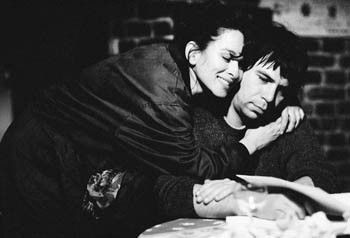
NOW THAT everyone worships him as a dead art saint, no one will connect Jack the Dripper’s penchant for public urination with his talent for splashing paint. In Pollock, director/title star Ed Harris re-creates the way action painter Jackson Pollock spread drips and splatters onto canvases of still-breathtaking harmony.

The paintings themselves often exonerate Pollock’s turbulent, self-destructive life. He was not just the most celebrated American artist of his age; he was also the most self-hating: a corrosive, battling drunk who acted like a rock star on a bender.

What the fictional film Pollock (now showing at the UA 5 in Santa Rosa and the Sequoia in Mill Valley, and up for two Academy Awards, including a Best Actor nod to Harris) describes well is the mid-1940s art scene: backstabbing, hardscrabbling, the audience barely existent, the market practically nil. This film vividly portrays the way the ruthlessness of this scene turned inward on the artists. But it doesn’t go far enough in showing us what tormented Jackson Pollock.

Pollock makes the artist’s long-suffering wife, Lee Krasner, into a saint, too. Marcia Gay Harden’s performance (which scored her a Oscar nomination for Best Supporting Actress) is so strong that the film ought to have been called Pollock and Krasner.

Harden sought the feminist notes in this artist–note that two women, Barbara Turner and Susan Emshwiller, collaborated on the screenplay. Harden has one especially powerful scene–her furious reaction to Pollock’s suggestion that they have a baby. She’s smart enough to understand she’s already burping and diapering her husband full time.

But was Krasner–who sacrificed herself so utterly, who forced an unwell man into marriage–really a feminist hero?

Amid the conflict between Pollock and Krasner the other performers seem incidental.

Harris’ real-life wife, Amy Madigan, plays Peggy Guggenheim in a visual range from Mrs. Nosferatu to Lady Bird Johnson. It is only after reading about Guggenheim’s treatment of her stable of artists that you learn why someone might want to pee in her fireplace, as Pollock did. Guggenheim pioneered the financial advance that needed to be paid off in profits or repaid–the same technique that the recording industry has used to break down so many musicians. She was also essentially the only game in town for abstract artists during the mid-1940s.

An easy laugh is reaped from Guggenheim’s long-suffering assistant, Howard Putzel. Bud Cort reputedly gained 100 pounds for the Wayland Smithers-style part of Putzel. The question is, Why? He’s onscreen for only minutes.

By contrast, Harris has well-treated Clement Greenberg (Jeffrey Tambor), the first critic to recognize Pollock’s qualities as an artist, back when others were deriding his art as “baked macaroni.” Tambor, who excels at acting stout stuffed shirts, inflames Pollock with a trifling comment. When Greenberg says a particular painting has failed, Harris’ Pollock growls, “I’ll go back and fix it for you.”

Critics are generally portrayed in the movies as parasites. They hang around “like a passionate gambler without any money,” as Chekhov wrote. But Harris gives Greenberg his due. In the end Greenberg has the guts to tell Pollock that he’s losing his talent. Few critics have the integrity to face down their targets without any consoling words.

There’s a smaller role for Pollock’s last lover, Ruth Kligman, played by Jennifer Connelly. I was sorry to see Harris relegating Connelly to the background. Harris considered the lissome Connelly, in her fetching array of bathing suits and summer clothes, less fascinating than the pain of a blocked, raging artist on the warpath.

MUCH of the film is spent waiting for Mt. Pollock to blow up, though the lyrical moments hold your attention. Early in the film, Harden’s Krasner lures Pollock into her bedroom. Not since the film Crush have we seen the sensual side of Harden, who looks like a plumper version of pinup queen Betty Page. Her Lee undresses in shadow at the end of a hallway. You can’t see her body, just her silhouette. You can hear the different clicks and snaps of her clothing coming undone.

Listening to these little sounds, I remembered the story in Isak Dinesen’s Seven Gothic Tales, where the old seducer remembers how differently women undressed 50 years previously, in the days when their flesh was held in by metal and stays and laces. Perhaps it’s immaterial that the real Lee Krasner looked less like Marcia Gay Harden and more like Chico Marx.

The painting scenes are Harris at his best. Individual scenes of Pollock are in the league of H. G. Clouzot’s documentary The Mystery of Picasso, which showed the artist at work. Early on, as Pollock constructs the mural for Peggy Guggenheim’s apartment, there’s a me-and-my-shadow scene of him in front of a monster canvas, with the artist pacing in front of this blank space he proposes to fill.

Similarly exhilarating (though its exact occurrence will never be proven) is the Eureka moment, after Pollock trudges off to his studio in the snow. He heads out wordlessly into the unheated studio like a man on his way to the coal mine. After stocking a pitifully small potbellied stove and putting on some music, Pollock studies and studies his canvas. He lays down a crooked stripe of silver radiator paint as broad as duct tape and suddenly notes a curlicue drip of paint on the floor. Later, Krasner’s congrats (“You’ve done it, Pollock. You’ve cracked it wide open”) gives the vicarious pleasure of hitting pay dirt.

Harris’ Pollock is both virile and terrified, a stag in the headlights. He’s compelling, but he’s too much: there’s too much calculation of the mesmerizing gesture. We see Harris’ Pollock lighting a cigarette in the time it would take most people to go out for a pack of smokes.

One scene exposes the limits of Harris’ Sam Shepard-style look at Pollock, an Arizona artist gone east. Pollock is doing a radio interview and comes close to explaining his method. “I defy the accident,” Pollock says, meaning that he doesn’t believe in randomness when he’s painting. (And yet there doesn’t seem much that’s accidental in either Pollock or Harris’ performance.)

The interviewer and the artist pass a heavy old-fashioned microphone back and forth, putting silence between the questions. In this scene, Harris’ Pollock is communicating for a change. Why does he sound so different here than from the rest of the movie? Because he’s supposed to be stiff with fear from being on the spot? I’d suggest that maybe, in re-creating Pollock’s tones from tapes or transcriptions of the interview, a different type of Pollock than Harris’ character emerged.

While Pollock never goes wrong in the usual ways of an artist’s biography, there’s something missing and baffling in this movie. You try to read between the lines, and there’s not always material there. Harris feels so much sympathy for Pollock’s silences that he never goes up against them. The mystery of the artist is never peeled.

There’s something significant about his mother, who keeps turning up; but what is it? Read the source for this film, Jackson Pollock: An American Saga (Woodward/White; 1998) the definitive biography by Steven Naifeh and Gregory White Smith, and you find a better idea of what was eating him.

THE AUTHORS decided that his mother emasculated Pollock, and that she drove the artist’s father away. It seems a simplistic argument–if it hadn’t been for Stella Pollock’s striving and culture-vulturism, how would two of her sons have grown up to be artists?

But the film tiptoes around this relationship between Pollock and his mother. Family dinners set him off, as we see. When Pollock starts drinking one Thanksgiving, he flips over the table. No one tries to calm him down–it’s Harris’ view of the artist’s torment, understood by none.

In the interests of machismo, however, Harris left out one very strong reason for Pollock’s incredible booze consumption and self-hatred. Introducing Pollock’s mentor Thomas Hart Benton into the film might have spelled the matter out.

Benton was a great denouncer of the New York sissiness that was draining the vital juices from art. All this raillery was interrupted by Benson’s suspiciously extended camping trips with younger men. From Benton, Pollock inherited fears of the unmanliness of doing art that was abstract instead of social realist.

Pollock’s bisexuality, with which he wrestled all his life, may have been reason for his drinking and bullying. Pollock’s trysts with men is one part of the story Harris banned. Why? Because modern movie audiences couldn’t deal with it?

We’ve seen rock musicians, writers, and more than a few artists tearing up the screen in the throes of their creative torment. Here was the opportunity to show a different kind of torment: the story of how a macho artist–married, Schlitz-drinking, kind to his pet raven and his pet dog–felt that he wasn’t really straight and couldn’t stand it.

Harris is a commanding actor, serious and intense, but as a director he backed off from the most unusual part of the story. As a result, his often striking movie is a lock without a key.

From the March 15-21, 2001 issue of the Northern California Bohemian.
© Metro Publishing Inc.

Paul Pena

0

Deep Blues

Bluesman Paul Pena’s amazing journey

By Greg Cahill

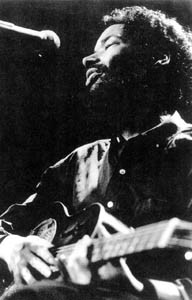
CALL IT AN EPIPHANY. Looking for a way to keep his mind off his depression that accompanied his wife’s debilitating illness, Paul Pena in 1984 turned to searching short-wave radio broadcasts for foreign-language lessons. “Rather than crawl into a bottle for the rest of my life, I wanted something to occupy my mind,” says Pena, noting that his wife’s long illness and subsequent death had left him severely depressed. One night he encountered eerie, oscillating whistles that immediately caught his attention. “At first, I thought the radio’s diode had blown out,” says Pena, a blind bluesman who penned the 1977 Steve Miller hit “Jet Airliner” and whose 1973 “lost” album New Train (Hybrid) was released last month to critical acclaim, “but then I realized there was a discernible melody. So I listened some more and discovered it was Radio Moscow and the sound was a guy singing two notes at once.

“Oh, man, all my training told me that was impossible, but I became determined to learn it!”

It took years to track down (the radio announcer had given the wrong pronunciation of the singer’s origin), but Pena eventually figured out that the strange sounds he heard that night were the work of a polyphonic throat-singer from the isolated Republic of Tuva in Central Asia.

And, most remarkably, Pena eventually mastered the difficult technique.

The rest is history, thanks to a film documentary by Roko Belic. His Genghis Blues chronicles the amazing journey that in 1995 took Pena from urban San Francisco to a remote region of the Asian continent, where he became the first Westerner to participate in a rigorous throat-singing symposium. He befriended the legendary Tuvan throat-singer Kongar-ol Ondar. Pena, who mastered the low resonant kargyraa throat-singing style, was dubbed “The Earthquake” by the Tuvans.

The documentary had its world premiere at the 1998 Mill Valley Film Festival and screened last month on the Sundance Channel (the long-awaited soundtrack finally was released in February on the San Francisco-based Six Degrees label). The film makes a poignant statement about the impact cross-pollination is having on these deeply held musical traditions while revealing the wealth of musical knowledge the world possesses.

Pena, who also contributed to the critically acclaimed 1997 CD compilation Deep in the Heart of Tuva: Cowboy Music from the Wild East (Ellipsis Arts), is helping spread the gospel about the arcane vocal technique he mastered, which until recently had been deemed impossible by most musicologists.

He believes that Genghis Blues could open a whole new world for Western audiences. “I think this is an important musical technology that for the most part we haven’t been made aware of,” he says. “I’d like to see someone who is well known use it to make more people aware of it. You don’t have to just do Tuvan traditional music with it. Our CD is a combination of Tuvan traditional, blues, and Cape Verdean morna.

“For all intents and purposes, this is a wholly new instrument. I’d like to see it develop.”

Paul Pena performs Saturday, March 17, at 9 p.m. at the Powerhouse Brewing Co., 268 Petaluma Blvd., Sebastopol. Tickets are $12. 707/829-9171.

From the March 15-21, 2001 issue of the Northern California Bohemian.
© Metro Publishing Inc.

Open Mic

0

Open Mic

Ripe Pickin’

By John Amodeo

MATURITY? Oh no, not that. Who wants to be mature? It sounds stiff, stuffy, and old! No one wants to be accused of that in our youth-crazed culture. A mature relationship? Sounds like no fun at all! If we were mature, we might have to look at ourselves when a relationship flounders. Why take any responsibility for conflicts or difficulties? Why consider that we may have played a part in a relationship’s demise or give even a fleeting glance to the legacy of broken hearts we may have left behind? It’s more satisfying to blame, accuse, and complain: “There are just no good men around!” “Women are so bitchy and unreasonable!”

There’s no surplus of psychologically healthy, love-ready human beings without emotional baggage. But it’s unpleasant to consider that we may be among the wounded souls who push away the very love we want. It’s easier to see others’ flaws than perceive our own, to notice how we’ve been hurt rather than recognize how we’ve hurt others, even if unintentionally.

“Mature” evolved from the word meaning “ripe.” It implies a full glow–sweet, full of flavor, ready to be enjoyed. Entering our 30s, 40s, 50s, and beyond is an especially ripe time to enter a path toward deeper love because we can draw from a wealth of life experience. Maturity means finding the courage to look at our own dark side and how it plays itself out in the arena of our relationships. It means taking responsibility to heal our own wounds and defensiveness so that we become more safe, approachable. It means developing the skills and awareness necessary to connect with our own authentic heart, while simultaneously connecting with the hearts of others. It means learning how to create an environment that invites love toward us and allows new depths of intimacy to unfold. Moving toward maturity may also mean seeking help that’s available in our community–perhaps therapy, workshops, or groups.

Before we can find true love, we may need to abandon hope–not in love itself, but in love’s alluring cousin: naive, romantic love. Rather than lament that something we’ve always longed for has never happened, we can commit ourselves to learning how to have a more intimate relationship with ourselves as a prelude to having one with others. We may then delight in the rich and vital partnerships and friendships available to those who’ve examined themselves deeply enough to know how to dance in the light and in the darkness.


John Amodeo, Ph.D. , is author of the new book ‘The Authentic Heart: An Eightfold Path to Midlife Love.’ He practices psychotherapy in the Sebastopol area and San Rafael.


From the March 15-21, 2001 issue of the Northern California Bohemian.
© Maintained by .


New Century Chamber Orchestra

0

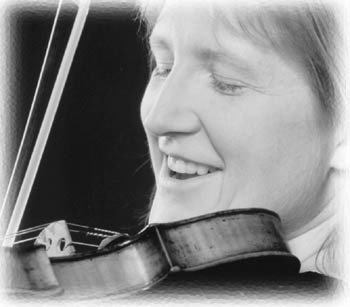
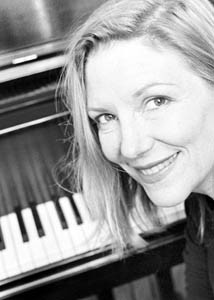
Young blood: Krista Bennion Feeney steps up as new music director for the Grammy-nominated New Century Chamber Orchestra.

String Fever

NCCO’s new director has passion for innovation

“RELAX, close your eyes, and just let go,” suggests Krista Bennion Feeney, her voice growing soft and hypnotic. “Close your eyes,” she repeats. “Wherever the music takes you, go there. Let your left brain drop away, and let the music sink in. Don’t think about it. Just relax.

“And keep your eyes closed.”

This might sound like some New Age guided-visualization tape. But actually it’s the way Feeney–an accomplished violinist and the recently appointed music director and concertmaster of the New Century Chamber Orchestra–believes an audience should prepare itself for the music of the late John Cage.

“I usually close my eyes when I listen to music,” Feeney explains. “Especially with Cage, because he requires a concentration that is intense. There’s a lot of stillness in his work that is very Eastern. It puts me into a trance.”

Cage, of course, is the pioneering American composer who shattered musical conventions with his rule-breaking experiments. His compositions challenge ears and expectations, inspiring audiences and musicians alike to reconsider their relationship to music–and almost sparking a few concert hall riots along the way.

“Some people hate it,” Feeney admits with a laugh. “It’s so different from what people expect to hear in a concert hall.

“Western classical music is heard in a very different way,” she says. “With Western music, you sit in the audience, and it’s like you go on a little journey. You leave from your home and you travel to beautiful places. By the end, you’ve come safely back to where you started. Home again.

“With the music of John Cage, though,” she concludes, “you never leave home. You’re just there.”

IF FEENEY seems slightly unconventional–both conversationally and musically–it only goes to illustrate why the 40-year-old virtuoso is a perfect fit with the New Century Chamber Orchestra. After all, this Grammy-nominated ensemble has a reputation for pushing the envelope.

Founded by former Bay Area violinist Stuart Canin, the San Francisco-based company boasts 17 members–and no conductor. During live performances, the musicians take their cues from one another, performing standing up. The informality of this arrangement creates a remarkable sense of intimacy and allows an unprecedented level of spontaneity. Feeney joined the NCCO last year, replacing the outgoing Canin after a national search for an artistic director with collaborative inclinations and very creative ideas.

How creative? Consider the New Century Chamber Orchestra’s March program.

“Time Past and Time Present”–to be presented just four times over four days at four Bay Area locations–is an interweaving of Antonio Vivaldi’s popular masterpiece The Four Seasons with Cage’s lesser-known Quartet in Four, itself a meditation on the seasons of the year.

Feeney has devised an innovative program, alternating between Vivaldi and Cage to contrast the composers’ musical styles and broaden the meditative experience. The program will begin with Cage’s “Summer,” then move into Vivaldi’s “Autumn,” spinning through the year until it all cycles back to Vivaldi’s “Summer.”

Of particular importance to Feeney is the fact that each musician has an opportunity to shine. “You’ll have a chance,” she explains, “to hear every single person in the orchestra play at least one solo.”

Adding spice to the event, the musicians will take turns reading the rarely mentioned lyrical poems that Vivaldi wrote to accompany The Four Seasons. Each poem will be read in its original Italian, then in English, accompanied by performances of corresponding musical “scenes”–orchestral re-creations of gnats and biting flies, the strike of lightning, the lonely crying of a shepherd boy.

“I’m curious to see what will happen,” Feeney remarks gleefully, adding that the unusual structure of the program was designed, in part, to allow audiences to experience Cage in smaller doses. “I love the introspection of Cage, and there’s a lot of outwardly joyful playing in the Vivaldi that will be calmed by the Cage.

“I don’t think Cage would be uptight about our doing that,” she adds, laughing. “It’s not a sin or anything. He was a pretty flexible guy.”

FLEXIBILITY seems to be a guiding principle for Feeney. A native of Menlo Park, she’s performed as a member of the Orchestra of St. Luke’s and the San Francisco Symphony, and with the New York String Orchestra in performances at Carnegie Hall and the Lincoln Arts Center.

With St. Luke’s Chamber Ensemble, she played on 10,000 Maniacs’ 1989 song “Jubilee.” With the renowned Loma Mar Quartet, she performed at Linda McCartney’s 1998 memorial service, playing original quartet arrangements that Paul McCartney composed for his wife. Feeney and Loma Mar recorded those and other McCartney pieces as part of the former Beatle’s 1999 CD Working Classical.

“There was never a conscious choice about becoming a musician,” Feeney explains. “When I was growing up, we lived with my grandmother in a big house with three pianos. We were surrounded by music all day long, European folk music, classical music, some popular music. It was a very important part of my life.

“I can’t imagine living without it,” she adds.

Joining the NCCO has been a delight, Feeney readily remarks, even though the commute–she now lives in upstate New York–is a killer.

“I’ve benefited so much from being a part of this group,” Feeney says, “It’s been good for my playing. It’s been good in so many ways.”

Future programs include one that Feeney can only hint at. She plans to take a particular rock-and-roll album and reinterpret the songs for the NCCO. “It won’t be like the Boston Pops,” she promises. “We won’t be doing orchestral versions of rock songs. We’ll be doing real rock and roll, as a 17-piece orchestra.”

Just talking about it makes Feeney laugh.

“We are programming things knowing that certain people are going to take objection,” Feeney admits. “We do it anyway. New Century is committed to doing something daring on every program. That’s our reputation, and that’s what we’re striving for. In this Cage and Vivaldi program, it is a bit daring, but it will also be fun.

“I think it’s obvious,” Feeney says, “that I like concerts to be fun.”

From the March 15-21, 2001 issue of the Northern California Bohemian.

© Metro Publishing Inc.

Bonnie Hayes

0

Raw Energy

Local songstress Bonnie Hayes is back with a vengeance

By Paula Harris

“IN A WAY I’m more of a rock ‘n’ roller than I ever was,” huskily declares Marin County singer-songwriter Bonnie Hayes, clad in jeans and boots and hanging out in her San Anselmo home-cum-recording studio one recent Sunday morning.

“I always used to want to polish things up,” she continues. “But I just think that as I got older I figured out how important it is to not take the rough edges off things.”

The self-described “40-something” Hayes was well known around these parts more than a decade ago when her band Wild Combo was hot on the local club circuit. When she grew weary of lugging her keyboard and equipment to various venues, Hayes turned to songwriting for others. She found fame penning such hits as “Have a Heart,” “Love Letter,” and “Slow Ride” for another Bonnie–last name Raitt–and writing pop songs for other artists.

After a stint living in Los Angeles, Hayes has returned to Marin County, and she’s going back to her wilder roots. Always a keyboard player, Hayes has found renewed power in the (infinitely more portable) guitar, which she took up a couple of years ago.

Hayes is planning to show off her freshly inspired raw music with local appearances and a new record, currently in the works.

On Saturday, March 17, Hayes will strut onstage at the Luther Burbank Center and play her latest love, a classic 1966 Fender Mustang guitar. She’ll also be accompanied by her younger brothers–Santa Rosa resident Chris Hayes (former guitarist for Huey Lewis & the News) and Novato resident Kevin Hayes (drummer with the Robert Cray Band).

They will play a set of three songs (including a new one written by Bonnie) as part of the Music for Kids at Risk Celebrity Concert II .

“I didn’t know much about [the benefit concert], but when I found out what the deal was, I agreed to it,” Hayes explains. “And partly why I agreed to do it is so that I could play with my brothers. I don’t get to play with them very much.”

On April 16, Hayes will play a full-length gig at the Sweetwater of Mill Valley.

Hayes explains she moved back to Marin County to provide a better sense of community for her 7-year-old daughter. She has continued to write, she teaches songwriting courses throughout the Bay Area, and she has also begun producing for other artists in her home recording studio.

Her biggest project is a record that’s currently very much in progress. Hayes and brother Kevin were recording drum tracks this week. “We set up the drums and the mikes in the bedroom,” she says. “We’re really having fun.”

The as-yet-untitled album should be out by the end of the year.

“The new record will be very stripped-down, rough-sounding guitar music because that’s what I’m into,” Hayes says. “It will be quite rowdy, that I can promise!”

Bonnie Hayes will perform Saturday, March 17, at the Music for Kids at Risk Celebrity Concert II, from 7 to 11 p.m. Les Claypool of Primus, members of the Doobie Brothers, the Santana Band, and others also will appear. Luther Burbank Center, 50 Mark West Springs Road. Tickets are $35-$100. 707/546-3600.

From the March 15-21, 2001 issue of the Northern California Bohemian.

© Metro Publishing Inc.

‘One Flea Spare’

0

One Flea Spare.

‘Flea’ Circus

The plague’s the thing in perplexing psychodrama at AT

IT’S A TIME-HONORED, peculiarly theatrical formula: you take a handful of strangers, a colorful assortment of types, and toss them into a confined environment for a long period. After they bicker and flirt and form alliances, they will ultimately (hopefully) tear one another to pieces.

Naomi Wallace’s Obie-winning play One Flea Spare sets up the same Survivor-esque scenario–four people quarantined together in a boarded-up London house during the plague of 1665. But the playwright is clearly not interested in formulaic storytelling. Wallace uses the familiar setup as a launching pad for something loftier, simultaneously deconstructing the play’s premise as she turns it into a series of lyrical and brutal Rorschach tests that seem certain to suggest different things to different people.

The result, currently onstage in Santa Rosa in an Actors Theatre’s production directed by Brian Newberg, is both poetic and perplexing, often exhilarating–especially in the unconventional beauty of Wallace’s dialogue–and frequently repellent.

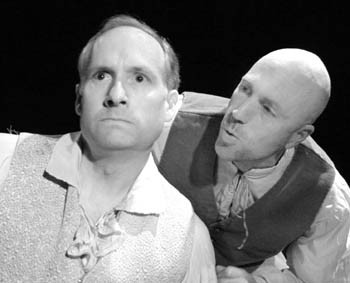
William and Darcy Snelgrave (played by Allan Armstrong and Kimberly Kalember) are wealthy Londoners who’ve just been released from a 28-day quarantine of their home after their servants died of the plague. Before they have a chance to flee the city, however, their house is invaded by two intruders: Bunce, a foul-mouthed sailor (energetically embodied by Argo Thompson), and Morse, a beautifully dressed 12-year-old girl (Veronica Pesek and Rose Kleiner, alternately) who says she’s the daughter of dead aristocrats.

The introduction of newcomers into the Snelgrave residence brings down the quarantine police, and the house is boarded up once more. Everyone has a story to tell and secrets to hide, and before the boards on those doors are lifted, some of these people will be dead–and not necessarily of the plague.

Actors Theatre’s matter-of-fact staging of the play, like the play itself, has its strengths and weaknesses. A hard show for any cast, Flea is emotionally demanding and jaw-droppingly brutal, subjecting its actors to a whole catalog of onstage humiliations, including masturbation, urination, and one pivotal episode of drooling. The Actors Theatre cast, uniformly good at playing out the story’s icky extremes, seems, on the other hand, to be oddly overwhelmed at other times, as if still unsure of some of the material.

Not at all subdued is Steve Howes in the play’s smallest role of the bullyish Kabe, a loutish, half-demented ruffian recruited to guard the houses in the Snelgrave’s neighborhood. Whether singing, flashing, or prancing half-naked with a plate of coals on his head (yes, you read that right), Howes is mesmerizing.

In the part of Morse, Kleiner (who handled the part the night I saw it) shines whenever called upon to be eerily precocious, as when Kabe crudely exposes himself to the girl and she brilliantly stares him down. “So you’re a man, then,” she wryly observes. During her narrative moments, however, Kleiner seems overwhelmed and fails to believably give life to Wallace’s words.

As Mr. Snelgrave, Armstrong has a masterful way with a withering stare and an expressive voice that he uses to layer on emotions, burying the sound of rising panic just beneath a cracking crust of snide condescension. Kalember plays the wounded Mrs. Snelgrave with a different kind of crust–a bitter hardness that melts spectacularly during one movingly manic-depressive sex scene.

‘One Flea Spare’ continues through April 7 at Actors Theatre, Luther Burbank Center, 50 Mark West Springs Road, Santa Rosa. For details, call 707/523-4185.

From the March 15-21, 2001 issue of the Northern California Bohemian.

© Metro Publishing Inc.

Best Kids’ Stuff

Best Kids' StuffChild's Play"The world is/not with us enough. / O taste and see."--from "O Taste and See" by Denise LevertovPhotograph by Michael AmslerBest Drug-Free Alternative to RitalinOK, no more poking fun at the recent ADD flurry. Kid Street Theatre, a nonprofit agency dedicated to teaching kids important life skills, is now in its 10th year. The after-school program...

‘It All Starts Today’

It All Starts Today. Newfound Glory Hope gets sneaky in 'It All Starts Today' SOME FILMS sneak up on you. For two hours, you sit there in the dark, staring up at the screen, having a certain kind of experience--sometimes enjoyable, sometimes not. And then, in the last few...

The Wide-Eyed Gourmet

On an aversion to cake doughnuts. Or frittering away one's childhood By Marina Wolf FOR YEARS I've hated cake doughnuts (some people call them old-fashioneds) without really knowing why. My dislike has the unwavering focus of a childhood distaste, all out of proportion with the obvious facts of their sharp aftertaste and dry, stiff crumb....

Living Wage Coalition of Sonoma County

Wage Wars Sonoma County coalition: Share the wealth By Paula Harris MARTY BENNETT wants payback. And so do many others. They call themselves the Living Wage Coalition of Sonoma County, and they'll soon be coming to a city council near you. The coalition, which includes various local organizations, such as labor,...

‘Pollock’

Portrait of an Artist Striking 'Pollock' never quite penetrates the riddle of artist's life By NOW THAT everyone worships him as a dead art saint, no one will connect Jack the Dripper's penchant for public urination with his talent for splashing paint. In Pollock, director/title star Ed Harris re-creates...

Paul Pena

Deep Blues Bluesman Paul Pena's amazing journey By Greg Cahill CALL IT AN EPIPHANY. Looking for a way to keep his mind off his depression that accompanied his wife's debilitating illness, Paul Pena in 1984 turned to searching short-wave radio broadcasts for foreign-language lessons. "Rather than crawl into a bottle for the...

Open Mic

Open MicRipe Pickin'By John AmodeoMATURITY? Oh no, not that. Who wants to be mature? It sounds stiff, stuffy, and old! No one wants to be accused of that in our youth-crazed culture. A mature relationship? Sounds like no fun at all! If we were mature, we might have to look at ourselves when a relationship ...

New Century Chamber Orchestra

Young blood: Krista Bennion Feeney steps up as new music director for the Grammy-nominated New Century Chamber Orchestra. String Fever NCCO's new director has passion for innovation "RELAX, close your eyes, and just let go," suggests Krista Bennion Feeney, her voice growing soft and hypnotic....

Bonnie Hayes

Raw Energy Local songstress Bonnie Hayes is back with a vengeance By Paula Harris "IN A WAY I'm more of a rock 'n' roller than I ever was," huskily declares Marin County singer-songwriter Bonnie Hayes, clad in jeans and boots and hanging out in her San Anselmo home-cum-recording studio one recent...

‘One Flea Spare’

One Flea Spare. 'Flea' Circus The plague's the thing in perplexing psychodrama at AT IT'S A TIME-HONORED, peculiarly theatrical formula: you take a handful of strangers, a colorful assortment of types, and toss them into a confined environment for a long period. After they bicker and flirt and...
11,084FansLike
4,606FollowersFollow
6,928FollowersFollow