’15 Minutes’

0

Washington media critic takes on sleazy newscasters–and the film ’15 Minutes’

Writer David Templeton takes interesting people to interesting movies in his ongoing quest for the ultimate post-film conversation. This is not a review; rather, it’s a freewheeling, tangential discussion of art, alternative ideas, and popular culture.

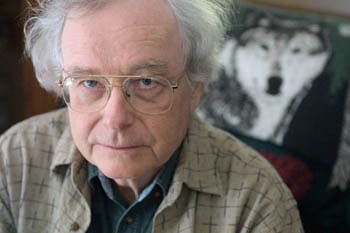
It’s lunch-time in Washington D.C. Tom Rosenstiel–director of the Project for Excellence in Journalism, an influential Washington think tank–is taking a break from his directorial duties, munching on what sounds like a celery stick as he takes my call to discuss the semi-satirical thriller 15 Minutes.

“I saw the movie. Yesterday,” Rosenstiel affirms, with a sigh and a crunch, uttering these words with the same level of enthusiasm one might use in saying, “I’ve just had my spleen removed.”

15 minutes stars Robert De Niro, Edward Burns and Kelsey Grammer. De Niro is a media-savvy cop. Burns is a shy arson investigator. Kelsey Grammer runs a sensational TV news show that strongly resembles Hard Copy.

In the course of the film, these characters each encounter a pair of psychotic Russians out on a murderous Big Apple crime spree, video camera in hand. On a quest for fame and fortune, American style, the bad guys–with the cop and the fireman hot on their trail–film their nasty little crimes, then attempt to sell the tapes to Grammer, who huffs about spouting stuff like, “Image is everything!” and “If it bleeds, it leads!” When he’s offered graphic footage of a beloved celebrity being beaten to death, Grammer forks over a million George Washingtons and runs the murder smack in the middle of dinner hour.

The message of 15 Minutes is obvious: we are a violent society and the news only feeds our appetite for blood. Ouch. Take that, Tom Brokaw. Or maybe it’s saying that being famous will get you killed.

Or, actually, I don’t know what the point was, other than to lure innocent people to the theater to pay good money to sit in the dark watching mindless violence–and maybe that is the point.

To help out, I’ve asked Rosenstiel to provide a little context.

Rosenstiel knows the treacherous terrain through which 15 Minutes crawls. A journalist since the late ’70s, he’s served as media critic for the Los Angeles Times and MSNBC, and 1996 founded the aforementioned Project for Excellence in Journalism. WIth Bill Kovach–himself an award-winning journalist and editor–Rosenstiel is the author of the much-anticipated new book Elements of Journalism: What Newspeople Should Know and the Public Should Expect (Crown; $20.00), a sharp, entertaining romp through the ethical crises inherent in the today’s deeply-conflicted News Biz. Or is that the Advertising-and-Entertainment Biz? It’s hard to tell the difference sometimes–but maybe that’s also the point.

First things first.

“So. If you were the news guy in the movie,” I ask, “would you have made the call to run the murder on TV?”

I am answered with a few seconds of thoughtful munching before Rosenstiel responds that he might show some of the killing–but not all of it.

“We’ve defined ‘sensationalism’ as the moment that you are no longer imparting any information,” he explains. “So I think that at a certain point, once you’ve communicated that [the victim in question] is being killed, you don’t have to actually show the murder itself. You do have a responsibility to kids who might be watching.”

As if kids actually watch the news. But more on that later.

Next question.

“Does anybody in the journalism ever really say, ‘If it bleeds, it leads?'”

“They may think it, but they never say it,” Rosenstiel tells me. “And nobody also says, ‘Image is everything,’ or ‘Perception is reality.’ Those clichés undermine the reality of the film, which could have been good. It has pretensions of being a movie with a serious message, but it’s basically just a big, violent, cop thriller.”

He munches thoughtfully for a few seconds. “But does what bleeds truly lead in a lot of cities, on a lot of newscasts? Yes. Is that because people think murder and gore are good for ratings? It’s not that simple.”

Crime and slime have, at various times, been very good for ratings. But it’s not a foolproof formula, as evidenced by the fact that 15 Minutes itself dropped out of the top ten faster than the two psycho Russians start killing people. Sometimes, indulging in such voyeurism does make us feel dirty–and a bit guilty.

“As evidenced in the movie by the scene where Edward Burns punched Kelsey Grammer, and all the cops cheer,” Rosentiel says. He goes on to point out that many newscasts are getting the picture, realizing that a strategy of “all crime all the time” is not the solidly dependable cash cow it once was. Or at least not as effective among the increasingly attractive advertising demographic of women.

Still, the news we watch, when we do watch–and our level of news consumption is definitely down–is decidedly more harrowing than it once was.

“When I was little, my parents used to insist that I watch the news with them,” recalls Rosenstiel. ‘They’d tell me, ‘This is important. You need to see this.’ Today though, because of the character of local television, the news is something I feel I need to shield my kids from.”

Isn’t that ironic? Because of the desire of some broadcasters to treat the news so sensationally in order to drive up viewership, the next generation of potential news-watchers are not being allowed to acquire an appreciation for watching or reading the news.

“We’ve effectively destroyed the news habit in this country,” says Rosenstiel. “We’ve broken the cycle. By becoming too graphic and crime-addicted in our coverage of the news, we’ve all but killed the Golden Goose.”

There is hope, however, he says, and it comes in taking a careful look at the history of journalism. When we trace today’s news programs all the way back to the first journalists–brave lads with strong legs who could run over the hill and back, then relate what was going on over there in a succinct, accurate, and entertaining fashion–we see that cycles of journalistic sensationalism always tend to burn themselves out. Sometimes at the stake.

“Styles go in and out and up and down and change all around,” Rosenstiel reports. “But the thing that makes journalism exist is the human need for information. ‘Is it going to snow? Will the roads be closed?’ That’s what people want from journalism. The business end of news flows out of that, and if you get too far away from serving that need . . . you go out of business. Those who continue to pander to the lowest common denominator will one day end up the way Kelsey Grammer does–flat on their backs.”

From the March 29-April 4, 2001 issue of the Northern California Bohemian.

© Metro Publishing Inc.

The Sitting Room

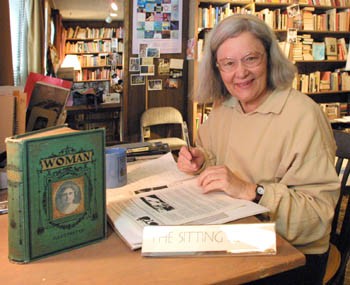
A woman’s place: J. J. Wilson, an SSU instructor, co-founded the Sitting Room in 1981 as a place for those interested in books “by, about, and of interest to women.” Today, the Cotati storefront is a quiet haven for women’s lit buffs.

Sitting Pretty

Sitting Room celebrates 20 years as book nook

By Guy Biederman

TELLING the world about the Sitting Room is like telling everyone about your favorite fishing hole, then drawing them a map. But that’s part of what makes the Sitting Room, a woman’s lending library in Cotati that celebrates its 20th birthday on April 1, a special place.

Open to anyone who is genuinely interested in books “by, about, and of interest” to women, it is a haven for individuals seeking a quiet place to read, as well as a lively venue for literary workshops, book discussion groups, and other artistic events.

I first heard about the Sitting Room from a student of mine a few years back. I was in-between teaching classes at Santa Rosa Junior College, holding short-story workshops in the living room of a woman named Virginia. My student told me about this “feminist reading room” filled with books and overstuffed chairs–a cozy place where anyone could read or write or take a writing workshop. Best of all, she said, you could just ask for a key at this little bar up the road.

I was intrigued. At the time I was living in Marin, dashing up and down 101 to teach wherever I could–a tenure-track member of the Freeway Faculty. I didn’t know many people in Sonoma County, and few knew me. Not only was I a stranger, I also happened to be a man. I had no idea whether I would be welcomed or feel comfortable in this place that sounded almost too good to be true.

So I didn’t know what to expect when I walked into the Sitting Room one weekend and met co-founders J. J. Wilson and Karen Petersen working away. They were friendly and open, and even offered me a bowl of hearty soup and a cup of tea on that blustery day. They listened as I explained what I was doing and what I was looking for–namely, a clean, well-lighted place to teach my short-fiction classes. Wilson immediately checked the calendar and, just like that, penciled me in for Tuesday evenings.

On the night of my first class, we sat in comfy chairs, surrounded by books, writing furiously in our notebooks. My eye wandered to a book on the top shelf: MANKILLER. I had to laugh (turned out Mankiller was the last name of a Native American author).

AS A LIBRARY with over 6,000 books, the Sitting Room has some delightfully unusual policies. You can talk without raising the disapproving eyebrows of some silent, stuffy scholar. And you can even eat while you read. In back is a kitchenette and a small frig for snacks and coffee and tea. Potluck meals are held to plan events and celebrate literary accomplishments. Perhaps best of all, there is no dreaded telephone to yank you away from a good read or thoughtful conversation.

One bookcase is devoted to literary magazines, chapbooks, and books by small presses. A bulletin board posts notices for contests and other literary events. The Sitting Room’s own newsletter announces community events at Sonoma State University and Santa Rosa Junior College, as well in-house events and other literary and artistic happenings in the community.

Started by Wilson, a Sonoma State English professor, and Petersen, a Santa Rosa Junior College librarian, the Sitting Room began as an idea for a reading room. Wilson and Petersen had written a book called Women’s Art, and when the book proved successful beyond their expectations, they decided to literally give back to the local literary community.

With the help of other founders and countless friends, the Sitting Room was born in two ordinary office rooms in Cotati. It has expanded to include a third, secluded room for quiet study and writing, and over time it’s been transformed into an inviting, cozy literary space. Help also came from outside sources such as Clairelight Books, and continues today with ongoing support provided by North Light Books in Cotati and the Sonoma County monthly newspaper Women’s Voices.

The roots of this marvelous place go all the way back to Wilson’s childhood, when as a young girl she opened her own lending library on her back porch to the other kids in the neighborhood. As she puts it, “I had so many books, others so few, and with no public library nearby, it seemed a natural.”

As an 11-year-old girl, she too employed an informal but effective honor system, keeping a sign-out notebook with a pencil attached by a string next to the books.

Today the Sitting Room has its own “blue dot” version of this system. Designated books can be checked out, while others are for reading on the premises only. It all seems to work. There is an easy, almost fragile quality to the Sitting Room that is based upon trust and goodwill and community spirit. It’s a refreshing example of what can be done when caring, dedicated individuals work (but not too hard) toward a common dream.

For two decades now, the Sitting Room has grown and thrived without the help of government assistance–an amazing concept when you think of the difficulties our own public schools always seem to encounter when it comes to funding art, libraries, and literary activities. Relying on donations of books, financial contributions, and the volunteer work effort of many, the Sitting Room has evolved into a supportive community for readers, writers, and people interested in the arts. It has become, to quote Virginia Wolfe, ” a house that fits us all.”

I doubt that J. J. Wilson or Karen Petersen would wish to be singled out for all the work they’ve done over the years to create, promote, and maintain the Sitting Room because, indeed, there have been many, many supporters–often anonymous–along the way.

But these two women, with their generosity and their plethora of skills, from cataloging of books to their knowledge of women’s history and literature, have truly made the Sitting Room what it is today.

The Sitting Room at 170 E. Cotati Ave., Cotati, celebrates its 20th birthday on Sunday, April 1, with a party and public readings by local writers from 2:30 to 5 p.m. Everyone is welcome. Feel free to bring a present–“anything made of paper.” For details, call 707/795-9028.

From the March 29-April 4, 2001 issue of the Northern California Bohemian.

© Metro Publishing Inc.
‘L’Atalante’

L’Atalante.

Modern Love

Classic ‘L’Atalante’: gritty fairy tale with contemporary feel

By

IN GREEK MYTH, Atalanta was a girl who “could outrun all human kind/ or girls or men,” as the poet Ovid describes her. When it came time for her to marry, she made a bargain with her suitors: each one could challenge her to a race. If one of them won, she’d marry him; if not, she’d kill him.

And how does this legend apply to the barge named L’Atalante, the setting for a 1934 film by Jean Vigo? Could it be a mock-heroic French joke? Barges aren’t known for their speed. In a larger sense, Vigo was like one of Atalanta’s doomed suitors, succumbing because he relentlessly pursued his desire to make films. Dead at 29 of tuberculosis, Vigo left behind three short films and one full-length classic: L’Atalante.

The story is fairy-tale simple, yet told with implications that are absolutely modern: this combination of magical and social realism is what Wong Kar-Wai and Lars von Trier are groping for.

L’Atalante (which opens Friday, March 30, at the Rafael Film Center in conjunction with its retrospective on Vigo on March 31 and April 1) is a romance set against the iron and smoke of an industrial corridor, on the banks of a canal between the poky, forlorn French villages in the north and the river Seine’s mouth at Le Havre.

Jean (Jean Daste), the newly married barge captain, takes his bride Juliette (Dita Parlo) aboard L’Atalante to join the rest of the crew–a jocular, rowdy second mate named Father Jules (Michel Simon, France’s answer to Charles Laughton) and his assistant, apparently a half-wit. At first, the voyage is as happy as can be, considering the grimy surroundings. But as the barge approaches Paris, Juliette begins to be bored, and she runs off. Jean breaks down; it’s up to old Jules, as uncouth a sailor as you’ve seen in a movie, to round up the strayed wife.

It’s a commercial tale, not too different in outline from the 1938 French hit The Baker’s Wife. Directing it was a bid for money; Vigo’s previous short film, Zero for Conduct, a banned political outrage about a rebellion at a boarding school, is just as surreal and troubling; the barge is sleepwalking as much as floating, covered in a cold silver fog.

The characters on the boat also seem masked, as if in a Melville story. Even Father Jules’ pet cats, which infest the barge, aren’t completely cute or tame; they scratch their way through the picture. At times, Jules’ compassionate interest in the captain’s wife seems gloating, even bullying, in the way he shows his tattoos and trinkets to her. Juliette is played by the 28-year-old Parlo–later the gentle, bereaved German widow in Grand Illusion. Yet here she’s very much the child-wife, most delighted in toys and by the monkey-mannish tumbling of a peddler (Gilles Margaritis) who beguiles her away from the boat.

Vigo’s subversion of a sentimental plot is complete in such moments where the captain becomes a moon-calf, licking a block of ice in his sadness or sticking his head into the oily water to try the superstition that one can see the face of a lover in the dim light underneath the surface.

L’Atalante‘s voyage proves the utter necessity of love in surroundings where all is ruined and blighted. The film shows how romance, like a shaft of light, brings out hidden beauty in the least likely scenery. Though created at an early stage of film history, it’s a stunningly confident and developed work. In his short run as a filmmaker, Vigo passed many artists, proving that the race is not always won by those who endure it.

‘L’ Atalante’ opens Friday, March 30, at the Rafael Film Center, which also screens Jean Vigo’s three other films–‘A Propos de Nice,’ ‘Taris,’ and ‘Zero for Conduct’–on Saturday and Sunday, March 31 and April 1, at 1118 Fourth St., San Rafael. For details, see or call 415/454-1222.

From the March 29-April 4, 2001 issue of the Northern California Bohemian.

© Metro Publishing Inc.

Ayahuasca

0

Exotic battleground: Ralph Metzner, editor of Ayahuasca, an anthology of scholarly and first-person accounts of the yagé experience, says there are anecdotal reports of the complete remission of some cancers after one or two ayahuasca sessions. Yet the drug is at the heart of the anti-drug wars.

Vision Quest

Shamanism vs. capitalism: The politics of ayahuasca

By Martin A. Lee

WANDER long enough through the bustling passageways of any crowded village marketplace in the northwest Amazon and you’ll come upon herbalist stands with dried plants, hanging animal parts, and lots of bottled medicines. Among the local offerings you’ll inevitably find “ayahuasca,” a fearsome, foul-tasting, jungle brew sold by the liter.

Pronounced “ah-yah-waska,” the word is from the Quechua language; it means “vine of the soul,” “vine of the dead,” or “the vision vine.” Known by various names among 72 native ayahuasca-ingesting cultures in Peru, Colombia, and Ecuador, this legendary, industrial-strength hallucinogen is used by curanderos, or witch doctors, to heal the sick and communicate with spirits. Many rainforest shamans simply refer to ayahuasca as el remedio, “the remedy.”

Revered by indigenous people as a sacred medicine, a master cure for all diseases, it is without a doubt the most celebrated hallucinogenic plant concoction of the Amazon. But it’s also under threat from both anti-narcotics agencies and corporations that want to patent it and corner the market on its use.

Plant Teachers

Long ago, South American Indian medicine men and medicine women became adept at manipulating an array of ingredients that were mixed and boiled into ayahuasca, or “yagé,” as it is often called. An elaborate set of rituals governed every step of the process, from gathering leaves, roots, and bark to cooking and administering the intoxicant.

Ayahuasca is unique in that its powerful psychopharmacological effect is dependent on a synergistic combination of active alkaloids from at least two plants–the Banisteriopsis caapi vine containing the crucial harmala alkaloids, along with the leafy plant Psychotria viridis or some other hallucinogenic admixture that contains dimethyltryptamine (DMT) alkaloids.

Most curious is the fact that when taken orally, DMT is metabolized and deactivated by a particular gastric enzyme. But certain chemicals in the yagé vine counter the action of this stomach enzyme, thereby allowing the DMT to circulate through the bloodstream and into the brain, where it triggers intense visions and supernatural experiences.

Contemporary researchers marvel at what chemist J. C. Callaway describes as “one of the most sophisticated drug delivery systems in existence.” Just how the Amazon Indians managed to figure out this amazing bit of synergistic alchemy is one of the many mysteries of yagé.

The ayahuasqueros, the native healers who use yagé, will tell you that their knowledge comes directly from “the plant teachers” themselves. Hallucinogenic botanicals are viewed as the embodiments of intelligent beings who become visible only in special states of consciousness and who function as spirit guides and sources of healing power and knowledge.

According to indigenous folklore, ayahuasca is the fount of all understanding, the ultimate medium that reveals the mythological origins of life. To drink yagé, anthropologist Gerardo Reichel-Dolmatoff once wrote, is to return to the cosmic uterus, the primordial womb of existence, “where the individual ‘sees’ the tribal divinities, the creation of the universe and humanity, the first couple, the creation of the animals, and the establishment of the social order.”

The Great Cleansing

Ayahuasca was never used casually or for recreational purposes in traditional societies. Only a ritually clean person who maintained a strict dietary regimen (low on spices, sugars, and animal fat) for several weeks or months was deemed ready to partake of the experience. Shamanic initiation rites entailed a lengthy period of preparation, which included social isolation and sexual abstinence, before novices got to ingest yagé with the curandero.

A connoisseur of the chemically induced trance state, the curandero provides guidance to those who wish to embark upon a “vision quest.” But rainforest shamans typically “resist the heroic mold into which current Western image-making would pour them,” says anthropologist Michael Taussig. Instead, they often exude a bawdy vitality and a funny, unpretentious, down-to-earth manner.

More of a trickster than a guru or saint, the curandero is unquestionably the master of ceremonies, the key figure in the ayahuasca drama. After nightfall, the bitter brew is passed around a circle from mouth to mouth, and the shaman starts to sing about the visions they will see. Listening to his chant, the novices feel some numbness on their lips and warmth in their guts.

A vertiginous surge of energy envelops them. And then all hell breaks loose: retching, vomiting, diarrhea–an unstoppable high colonic that penetrates the innards, sweeping through the intestinal coils like liquid Drano of the soul, cleansing the body of parasites, emotional blockages, long-held resentments. It is for good reason that Amazonian natives refer to la purga when speaking of yagé.

“One cannot help being impressed by the remarkable health-enhancing effects attributed to the purging action of the vine,” writes Sonoma-based psychologist Ralph Metzner, editor of Ayahuasca, an anthology of scholarly and first-person accounts of the yagé experience. Metzner notes that there have been anecdotal reports of the complete remission of some cancers after one or two ayahuasca sessions. The rejuvenating impact of la purga would help explain the exceptional health of the ayahuasqueros, even those of advanced ages.

“Space/Time Travel”

After the unavoidable episode of purging, the senses liven up and the initiate experiences a kind of “magnetic release from the world,” as Wade Davis, author and explorer in residence with the National Geographic Society, puts it. This is followed by an onslaught of spectacular visions, a swirling pandemonium of kaleidoscopic imagery that changes faster than the speed of thought.

While under the influence of ayahuasca, it is not uncommon for people to feel as though they have been lifted out of their bodies and catapulted into a strange, aerial excursion. During this voyage to far-off realms, they see gorgeous vistas and enchanted landscapes that suddenly give way to harrowing encounters with fierce jaguars, huge iridescent snakes, and other predatory beasts intent on devouring the novice.

William Burroughs described the sensation of long-distance flying when he took ayahuasca during an expedition in South America in 1953. “Yagé is space time travel,” he wrote in a letter to Allen Ginsberg. “The blood and substance of many races, Negro, Polynesian, Mountain Mongol, Desert Nomad, Polyglot Near East, Indian–new races as yet unconceived and unborn, combinations not yet realized pass through your body. Migrations, incredible journeys through deserts and jungles and mountains . . . A place where the unknown past and the emergent future meet in a vibrating soundless hum.”

It is not known why the visions provoked by ayahuasca often involve Amazon jungle animals, even when people from other continents swallow the acrid tonic. Stories of anacondas the length of rivers and electric eels that light up the night sky are classical elements of the yagé experience. Heinz Kusel, a trader living among the Chama natives of northeastern Peru in the late 1940s, recounted how an Indian once told him that whenever he drank ayahuasca, he had such beautiful visions that he “put his hands over his eyes for fear that someone might steal them.”

Drug Wars in the New World

Indeed, there was a time when people did try to steal the visions. Ever since the European invaders came to the New World more than 500 years ago, they scorned and demonized ayahuasca and other hallucinogenic substances that were employed by native peoples in their healing rituals.

Western knowledge of yagé ceremonies was first recorded in the 17th century by Jesuit missionaries who condemned the use of “diabolical potions” prepared from jungle vines. The ruthless attempt to eradicate such practices among the colonized inhabitants of the Americas was part of an imperialist effort to impose a new social order that stigmatized the ayahuasca experience as a form of devil worship or possession by evil spirits. But the ingestion of yagé for religious and medicinal purposes continued, despite the genocidal campaigns of the conquistadors.

It wasn’t until the 1930s that Richard Evans Schultes, director of Harvard University’s Botanical Museum, provided a scientific analysis of the complex ethnobotany of yagé and many other psychoactive plants in the Amazon region. By this time, the shamanic use of ayahuasca had spread from remote jungle areas to South American urban centers, where mestizo curanderos added a Christian gloss to archaic Indian ceremonies. Several Brazilian churches started to administer ayahuasca as a sacrament in a syncretic fusion of Catholicism and shamanism.

The two largest of these church movements–Santo Daime and União de Vegetal–utilized yagé in their religious services without interference by the Brazilian government until the mid-1980s, when U.S. officials pressured Brazil’s Federal Council on Narcotics to put the Banisteriopsis caapi vine on a list of controlled substances. The ayahuasca churches protested, and a government committee was appointed to investigate the matter. After examining the churches’ use of yagé and testing it on themselves, the members of this committee recommended that the ban on ayahuasca be lifted.

The Brazilian government acted upon this recommendation and legalized the sacramental use of yagé in 1987, much to the dismay of the U.S. Embassy.

Resurgent Shamanism

The revival of shamanic rituals found a fertile ground, particularly in areas where wealthy plantation owners and multinational corporations displaced peasants from the land. For these poor and desperate people, ayahuasca was a gift that helped them cope with the expansion of the market economy into the frontier. As their subsistence society unraveled, so, too, did their sense of sanity and well-being.

Consequently, a growing number of mentally ill individuals and uprooted wage laborers sought out curanderos, who were forced into a new role. In addition to curing the sick and communicating with the spirit world, many witch doctors began using ayahuasca to mediate class conflict. As one Putumayo medicine man told Michael Taussig, “I have been teaching people revolution through my work with plants.”

The more big business encroached upon native turf, the greater the resurgence of shamanism. And in another ironic twist of globalization, the sacred beverage of the Amazon made its way to Europe and the United States, sending law enforcement into a tizzy.

The Santo Daime religion has taken root in Hawaii and the Bay Area, where yagé sessions are held in secret. This ayahuasca church also has branches in several other countries, including Great Britain, Belgium, France, Germany, Spain, the Netherlands, the Czech Republic, and Japan.

In October 1999, successive police raids targeted Santo Daime members in the Netherlands, France, and Germany. The crackdown prompted church representatives throughout Europe to mobilize. They are seeking official recognition of their religion, and they want the sacramental use of ayahuasca to be legalized.

Predictably, U.S. narcotics control officials are opposed to ending the prohibition against yagé, despite Peruvian medical studies that indicate ayahuasca can be an effective treatment for cocaine addiction. The fact that yagé tastes so awful–to the point where some people can’t even bring themselves to swallow it–provides an additional safeguard against those who might use it in a cavalier fashion.

Who Owns Yagé?

The U.S. pharmaceutical industry has also taken an interest in ayahuasca. Loren Miller of the International Plant Medicine Corporation received a sample of the yagé vine from a tribal elder in Ecuador. In 1986, Miller obtained a U.S. patent for a specific type of banisteriopsis caapi with the hope of profiting from the plant’s medicinal properties. The patent, which gave Miller’s company exclusive rights in the United States to breed and sell a new variety of the plant, is due to expire in 2003.

Upon learning what had transpired, the Ecuador-based Coordinating Committee of Native Organizations of the Amazon Basin (COICA) accused Miller of committing “an offense against indigenous peoples” by patenting a sacred plant for his own benefit. “Commercializing an ingredient of the religious ceremonies and of healing for our people is a real affront for the over four hundred cultures that populate the Amazon basin,” declared COICA General Coordinator Antonio Jacanamijoy. COICA proclaimed that Miller and his company were unwelcome in indigenous territories. The State Department considered this warning a death threat against Miller and interceded on his behalf.

The controversy over ayahuasca spilled into the diplomatic arena when the Ecuadorian government refused to sign a bilateral agreement on intellectual property rights with the United States in 1996. Washington countered by threatening Ecuador with economic sanctions. Thus far, the U.S. Senate has refused to ratify the United Nations Convention on Biological Diversity that recognizes the property rights of native people. More than 100 countries have signed this treaty, including Ecuador.

While multinational corporations seek to exploit the natural treasures of the Amazon, the destruction of the rainforest continues at an accelerated pace and indigenous ways of life are being threatened. “I feel a great sorrow when trees are burned, when the forest is destroyed,” explained Peruvian shaman and painter Pablo Cesar Amaringo, co-author of Ayahuasca Visions. “I feel sorrow because I know that human beings are doing something very wrong. When one takes ayahuasca, one can sometimes hear how the trees cry when they are going to be cut down. They know beforehand, and they cry. And the spirits have to go to other places, because their physical part, their house, is destroyed.”

Martin A. Lee is the author of ‘The Beast Reawakens’ and ‘Acid Dreams: The CIA, LSD, and the Sixties Rebellion.’ He can be reached at ma***********@***oo.com.

Addendum

In an earlier version of this article, Martin Lee wrote that Loren Miller of the International Plant Medicine Corporation “had pulled out a yagé plant from the garden of an Ecuadorian family without asking permission, hurried back to the United States with the vine, and then applied to the U.S. Patent and Trademark Office.” This statement, which was based on previously published sources, is incorrect. Mr. Miller was given a sample of the yagé vine in 1974 by a tribal leader in the Ecuadoran Amazon. In 1981 he applied for a patent on a particular variety of banisteriopsis caapi. Mr. Lee erred in stating that Miller’s patent was denied by the U.S. Patent and Trademark Office. The patent was granted by the U.S. Patent and Trademark Office (PTO) in 1986, but was challenged in 1999 by the Washington-based Center for International Environmental Law on behalf of COICA. This triggered a see-saw legal battle that culminated in a decision by the PTO to confirm Miller’s patent on January 26, 2001. Mr. Miller maintains that the International Plant Medicine Corporation, which engages in pharmaceutical research, has never commercialized or profited from the yagé vine or the patent. He states that “this patent has been sitting harmlessly in a drawer gathering dust, and that it does not affect the natives’ use of their plants in any way, shape or form.” Mr. Lee apologizes to Mr. Miller and his company for any errors in the original version of this article and regrets any problems that this may have caused.

From the March 29-April 4, 2001 issue of the Northern California Bohemian.

© Metro Publishing Inc.
‘The Unknown’

The Unknown.

Creep Show

‘The Unknown’ screens at Sonoma Valley Film Festival

By

IN THE 1920 movie The Penalty, Lon Chaney Sr. plays a legless villain named Blizzard with a bit of an agenda. He’s (1) using sweatshop labor to equip a socialist army to take over San Francisco, (2) preparing an underground surgery room to deal out biblical justice to the bungling doctor who cost him his legs, and (3) in the meantime posing for a life-sized statue of Satan. Top that, Gary Oldman.

Chaney’s later film The Unknown–in a restored print–will be screened as part of the Sonoma Valley Film Festival (see sidebar). The 1927 silent film, approximately 50 minutes long, was directed by Tod Browning, who did the Lugosi Dracula and the infamous horror tale Freaks. Indeed, The Unknown is an hors d’oeuvre for the latter film, Browning’s later much-censored piece about a caravan of vengeful sideshow performers.

Chaney himself is mostly remembered as a horror-film actor for his roles: his bad clowns, his Phantom of the Opera, his Hunchback of Notre Dame, the top-hatted, hollow-eyed, filed-toothed vampire he played in London after Midnight. But there was another side to Chaney’s career, now being reawakened thanks to Kevin Brownlow’s recent documentary on the once popular actor. “Chaney never got the tribute he deserved,” Orson Welles is quoted there.

Not that the actor was unappreciated. Supposedly, MGM studios had to hire extra telephone operators to handle the flood of calls from blood donor volunteers when Chaney had his final crisis in the hospital; the actor was a passionate smoker, and this killed him at age 47.

What Welles meant was that the measure of Chaney as an actor has never really been taken since his death. The flamboyant and macabre roles eclipsed the art of the performer who played them. Chaney was an actor of tremendous range and broad appeal.

In the 1926 hit Tell It to the Marines, Chaney dispensed with makeup to play a brass-balled, gold-hearted sergeant. In my experience, this has been the only time the dubious old plot about the military molding a wise-guy boy into a man has worked; it’s all owing to Chaney’s mute eloquence in the role of the grimly self-amused leatherneck.

The Unknown is one of Chaney’s most lurid tales, and yet his immaculate acting gives it realistic, tangible pain.

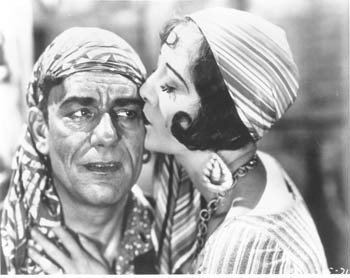
Chaney’s Alonzo the Armless–Chaney’s name “Lon” is short for “Alonso”–knows how to throw knives with his feet. His act, very popular at Circus Zanzi, involves clipping the clothes off his human target, Nanon (Joan Crawford.)

What Nanon doesn’t know is that Alonzo is actually in possession of both arms, which he conceals with a corset. He’s disguising himself from the police, who would be able to pin unguessable crimes on the knife-thrower, thanks to the singular two-pronged thumb on his right hand.

Nanon likes Alonzo armless, though, since she hates the touch of men: “Hands, men’s hands! God would show wisdom if he took the hands off of all of them.”

Alonzo’s mad love leads him into a spectacular gesture of renunciation. But in the end, Chaney’s Alonzo realizes how he’s been tricked by fate–or rather how he tricked himself.

His hysterical laughter echoes all the louder for being silent.

From the March 29-April 4, 2001 issue of the Northern California Bohemian.

© Metro Publishing Inc.
American Center for Wine, Food & the Arts

0

Hammer time: Daphne L. Derven, assistant director for programs and curator of food, at the site of Copia.

Food Bash

Grandiose gourmet affair benefits American Center for Wine, Food & the Arts

By Paula Harris

LOCATING the semi-complete $70 million American Center for Wine, Food & the Arts in Napa is a bit like looking for a hole-in-the-wall restaurant on the seamy side of town. The trek requires turning your back on the city’s freshly rejuvenated and bustling central hub and tooling along First Street away from Napa’s shiny downtown into a less exciting neighborhood, bordering on dilapidated, on the shallow banks of the dark Napa River.

On the left is an immense chained-off area where the torn ground is populated by a hulking army of construction equipment–as still as shadows on this quiet Sunday morning. At the back of the construction site is the beginning of a massive undulating-roofed building. It seems odd to think that this quiet road will become the gateway to the one-of-a-kind world-class wine, food, and arts mecca, slated to attract an estimated 300,000 visitors each year.

“Yeah, that’s it,” confirms a woman, in a noncommittal tone, working at the cut-price liquor store next door as she wheels a cart laden with cases of beer toward the shelf. “That’s Mondavi.”

And Mondavi it is.

The American Center for Wine, Food & the Arts (also known as Copia and named for the goddess of abundance) is the brainchild of Robert Mondavi, the venerable vino Granddaddy of the Napa Valley, and his wife, Margrit. Back in 1988, the pair envisioned creating a nonprofit cultural institution devoted to exploring the interrelationships of food, wine, and the arts, and their role in American culture.

Over the years, the idea for the center took root, attracting such key partners as the University of California at Davis, the Cornell University School of Restaurant and Hotel Management, and the American Institute of Wine and Food. It has since exploded into the ambitious concept Copia: The American Center for Wine, Food & the Arts.

The idea got off the ground in 1995 when Mondavi purchased 12 acres of land on the oxbow of the Napa River and donated it to the center for its new home. The weathly vintner also forked out $20 million to fund the project.

The following year a group of supporters drawn from around the Bay Area made substantial donations to help make Copia a reality.

CELEBRITY experts in the fields of wine, food, and the arts–including such heavy-hitters as Julia Child, Hugh Johnson, Alice Waters, Robert Parker, Martha Stewart, Eleanor Coppola, and Wayne Thiebaud–have agreed to serve as honorary trustees.

Now both in their 80s, the Mondavis await the opening on Nov. 18 of their ambitious dream. But the events and programs will kick off this week in a big way.

A Feast Fit for a King, a March 31 benefit for the center, featuring the King Midas Banquet (named for the fabled king whose golden touch led him to starve to death), will attempt to re-create a sumptuous 2,700-year-old funerary feast believed to have been in honor of the legendary Midas when he finally kicked the golden bucket.

Dr. Patrick McGovern, an archeochemist with the University of Pennsylvania, has taken scrapings from vessels discovered in a tomb in Turkey thought to have been that of King Midas, and analyzed the contents so that chefs can replicate the traditional dishes.

“We are re-creating the meal eaten at the wake,” says Daphne Derven, the center’s assistant director for programs and curator of food. “We’re taking science and turning it into enjoyment and education.”

Using McGovern’s analysis, chef Mark Dommen–a Windsor native who nabbed the plum job of running Copia’s showcase Julia’s Kitchen (the main restaurant named for gourmet grand dame Julia Child)–and former Mustards pastry chef Brigid Callinan (now the center’s program coordinator) will re-create the ancient Midas meal.

Of course, they will use a pinch of culinary creative license.

“We know that 2,700 years ago they had lamb and lentil stew, and there was saffron, which we are using to flavor the broth; plus we’re making dates stuffed with goat cheese–we’re not sure they did that exactly–but we know they had both those things,” explains Derven.

“We interpreted and created the dishes from what combinations were in each old vessel. It’s like putting together a jigsaw puzzle when you have no idea what the final picture is going to look like.”

For the Midas meal, Callinan will prepare a dessert using dried figs, muscat wine, and a panna cotta-style custard incorporating goat’s milk, which will be flavored with coriander and anise.

In addition, a Delaware-based brewery has come up with an interpretation of the unusual fermented beverage–a blend of wine, beer, and mead–found at the tomb.

“It’s a combination of grapes, grain, and honey,” explains Derven. The potent brew, aptly dubbed the Midas Touch, will be served at the banquet. McGovern will be on hand to describe the Turkish archeological discovery that led to the re-creation of the ancient dishes.

“This is exactly the kind of thing we’ll be doing when Copia opens,” adds Derven, of the Midas Banquet. When complete, the center will host an array of sensory-geared public programs, including seminars, lectures, culinary demonstrations, winetasting, and workshops.

WHEN completed, the American Market Cafe will serve as the center’s casual dining room, while Julia’s Kitchen will be the premier restaurant. Chef Dommen, who worked for two years at San Francisco’s four-star Fleur de Lys, among other gigs, intends to create the “freshest and finest” ingredient-based dishes, which will change regularly to reflect the center’s programming and the season.

“We will use some of Julia Child’s recipes, but more than that–we see her legacy as an ongoing exploration of food and flavor,” says Derven. “The restaurant will be more about the spirit of education than about a specific recipe.”

In addition, the center will feature more than 13,000 square feet of exhibition space, a 280-seat auditorium, an 80-seat demonstration kitchen, and a gift shop. Three and a half acres of working and decorative public gardens and a 500-seat outdoor concert terrace for live music and theater performances will grace the center’s grounds.

New York architect James Polshek is developing the 80,000-square-foot main building using native stone, metal, polished concrete, and large expanses of glass. And those with too much time on their hands can even monitor the project’s progress by logging onto a webcam at Copia’s website, which updates pictures of the construction site every 15 minutes.

Ultimately, Copia’s grandiose goals are as heady as the Midas Touch elixir that will help fund them. “Our mission is to explore food, wine, and art and to look at areas of intersection of the three,” concludes Derven.

“We’re the only institution in the world to be doing this.”

The King Midas Banquet will be held Saturday, March 31, at 7 p.m. at Ledson Winery and Vineyards, 7335 Hwy. 12, Kenwood. Admission is $175 per person. 707/257-3606.

From the March 29-April 4, 2001 issue of the Northern California Bohemian.

© Metro Publishing Inc.

‘Black Goo’

Glassy-winged sharpshooters grab all the headlines, but local vineyard owners face yet another–perhaps even more insidious–threat

By John Nagiecki

MILK CARTONS stand like small tombstones in Bill Lerner’s Santa Rosa vineyard. From within the open cartons grow young chardonnay vines, whose thin crooked trunks rely on rebar stakes for support. To the untrained eye, the field looks like any other new vineyard in the county, with its small plants and forest of tall posts strung with trellis wire and irrigation tubing. But Lerner says his vines are diseased. He complains that, since he planted the vineyard in 1999, he has had to rip dead vines out and that others have grown spindly and weak. He has recently had to prune some of his vines back, giving them another chance to develop needed girth.

Lerner cuts open two vines to show why they are growing poorly. Tiny black specks dot the inner wood of the first vine. The second has a darkened core. Lerner says it is black goo.

Black goo is the nickname given to a type of vine ailment known as young-vine decline. It is associated with a group of fungi that live in the woody part of the plant. The black or brown gooey substance produced in the wood is the vine’s response to the pathogens’ injurious effects. But goo is not the only product of this disease. It has generated about as much, if not more, acrimony within the wine industry as it has dead wood.

Young-vine decline, according to some, is an insidious problem, threatening to cripple the region’s $2 billion grape-growing industry. Though it is not a new problem, it has become more prevalent recently because some nurseries allegedly have been selling diseased vines to unsuspecting growers. Others claim that young-vine decline is a nonissue, which affects only a tiny fraction of the vineyards in the county. They say it exists mainly in fields managed by growers who don’t know how to properly care for their vines. This latter group asserts that the disease continues to attract attention because small but outspoken vineyard owners are trying to indict nurseries for losses that are actually owing to their own mistakes.

Young-vine decline was among the topics discussed at last month’s meeting of the Sonoma Valley Vintners & Growers Alliance. The event featured scientific experts, vineyard consultants, and nursery representatives who offered their views and responded to questions regarding the problem.

The controversy surrounding the disease centers, in part, on whether the fungi–one of which goes by the name Phaeoacrimonium–will necessarily harm a young plant, or whether poor vineyard management is to blame.

According to Dr. Douglas Gubler, head of the plant pathology department at the University of California at Davis, “Stress is the key to this whole big picture.” Gubler, whose department has been studying the disease, defines stress in terms of restrictions on root system growth, including poor planting, water deficits, or even the production of fruit on the vines too early in their life, all of which can trigger a pathogenic response.

But Michael Porter, a viticultural consultant based in Forestville, disagrees. “Everything is called stress,” he says. The problem as Porter sees it is not whether a plant is mistreated, but whether it’s carrying a pathogen. He invokes the findings of international researchers who view stress not as a cause but as a catalyst of an infected vine’s decline. “The fact is,” he says, “that an infected vine is much more sensitive to stress. If it were not infected, it would be much more tolerant of stress.”

Along with the feud over the role of stress and infection in a young vine’s decline is a divide regarding the extent of the disease.

Gubler says that the whole problem has been grossly exaggerated. “This thing is being trumpeted as a huge problem,” he says. “For the guys who have the problem, it’s a problem. But industrywide it’s not.”

He adds that young-vine decline is confined largely to Sonoma County, estimating that no more than 1 percent of the acreage is affected. “Where we see this problem occurring most frequently,” says Gubler, “is in vineyards, usually small vineyards . . . that are not owned by traditional vineyardists that have been growing grapes for years and years.”

Porter thinks that Sonoma County may indeed have seen more than its share of young-vine decline. He first came across the problem at a Russian River Valley vineyard in the summer of 1991. He describes it as a vineyard “with wonderful soil and very experienced management.” Since 1991, he indicates, more than half of the vineyard’s vines have been replanted.

But Porter also sees the problem reaching beyond the county’s borders. “I’ve got lots of clients in Napa Valley who have a huge problem,” he says, adding that the problem also exists in South Africa, Australia, Chile, France, Italy, and Portugal.

He emphasizes that the fungi-induced disease is likely far more widespread locally than officially reported because vineyard managers often don’t know they have the problem and are not curious. “They’ll pull out vines that are sick and replant,” he says, “but don’t send the sick vines in for testing. They just throw them away and say, ‘Ah, must have been gophers.’ ”

Porter also believes that some managers are reluctant to say that their vineyards are diseased because they don’t want to scare the bank.

Gubler strongly disagrees with Porter on these issues. “I can’t imagine why somebody wouldn’t want to know that they’ve got a problem,” he says. “That doesn’t make sense.”

Nevertheless, Gubler agrees that lenders are part of the picture. The difference is that he sees bank loans stressing out growers who, in turn, stress out their vines. “Growers are finding themselves in a situation to produce a crop on those vines very early to start repaying the bank, and the vines can’t take it. So there’s predisposition stress.”

Again, Porter disagrees. He blames sloppy propagation practices at some nurseries as the reason young vines are becoming infected by pathogens. “It’s really your source that’s most important,” he says.

Gubler agrees that nurseries may be selling vines that harbor fungi. “There’s no doubt that some of the wood coming out of nurseries have these fungi in them,” he says. “But just because they have fungi in them doesn’t make it bad wood.”

WHATEVER the criteria, separating the good wood from the bad is something some growers worry more about these days. Some now hire experts to help them identify and plant good vines. James A. Stamp, a plant biologist and viticulture consultant based in Sebastopol, assists growers from coast to coast with young-vine decline problems. “Bad vines are shipped everywhere,” he says, “and you see signs of poor vineyard performance in many different places.”

Stamp, who completed a post-doc fellowship at UC Davis and has since started two nurseries, helps prevent weak vines from getting into a grower’s field by carefully inspecting a nursery’s practices in advance of delivery. He also provides the nursery with specific procedures and protocols to follow in the preparation of his clients’ grafted vines, and he checks on their condition until planting time.

For other clients who have already ordered vines, he ensures that what gets delivered is, in fact, worthy of being planted.

“We’ve rejected a lot of vines,” says Stamp. “I’ve rejected whole batches of 50,000 or 100,000 vines in particular cases.” He indicates that in any given shipment about 20 percent of the vines are sent back. In very good cases, only 5 percent will be bad. Overall, he estimates he’s rejected about 40 percent of the vines shipped to his clients.

In a recent issue of Wine Business Monthly, Stamp states that, until recently, the surge in demand for new vines had contributed to a corresponding drop in nursery-stock quality. The thirst for new vines has been so intense, he observes, that many nurseries had sold their entire crop two years prior to delivery. Stamp concludes that “vine quality is perhaps one of the biggest casualties of the recent California vineyard expansion.”

In the future, Stamp expects California grape prices to fall, which should lead to more competition among nurseries, along with a corresponding drop in prices and improved quality. In the meantime, those who have weak vines are either replanting parts of their fields or waiting to see whether their plants will regain some vitality.

MITCH PATIN manages 750 acres of vineyard in northern Sonoma County. Patin, who has been in the business since 1977, has been surprised by the failure of some of his young vines. “We never had this kind of problem 10 years ago as we have now,” he says. Over the last five years, Patin has had to remove 60 acres of vines. He recently pulled out an entire 12-acre block. Overall, he estimates it cost approximately $30,000 to $40,000 per acre in lost production and redevelopment expenses.

Patin is reluctant to point any fingers; he just wants the problem solved.

Bill Lerner says he would like his money back for vines he bought in 1999 from Sunridge Nursery in Bakersfield. Though the nursery has offered to replace all of his vines, Lerner has refused, claiming the replacements would not be healthy. Visiting the facility in December of 1999, he had the opportunity to cut open some nursery vines. “I wanted clean vines,” says Lerner, who claims he saw the same discoloration there that he saw in the vines delivered to his field.

Glen Stoller, founder of Sunridge Nurseries, says his plants are not diseased. He indicates that Sunridge, a family-owned nursery that’s been in business since 1977, sells up to 10 million vines a year. “How long do you think we’d stay in business,” he says, “if we were shipping diseased plants?”

Stoller says that “the same lot of plants that we shipped [to Lerner], we shipped to other growers. And we went and checked all those other vines, and everything was doing beautifully.” He adds that a company representative and consultant looked at Lerner’s vineyard. They determined that Lerner had waited too long to remove the mounds of dirt that had been piled around his vines, something that is initially required to protect the fledgling plants.

Stoller also says that Lerner planted in the latter part of June, which was too late in the season. “This is dormant material,” says Stoller, “he should have planted in February or March.”

He also cites Lerner’s inexperience, noting that “this is his first attempt at a vineyard.”

FROM WHERE he stands, Lerner believes Sunridge sold him stock that no one else wanted. He complains that the plants he received were sprouting, which is not what a dormant vine should be doing. “I spoke to one expert that’s farmed here for many years,” says Lerner. “I showed him the shooting, and he shook his head and said that shouldn’t be.”

Lerner explains that the tender shoots were unavoidably lost during the planting process, causing the vines to channel their limited energy stores into yet another set of new shoots. Nevertheless, he believes that had the vines not harbored a fungus, they could have withstood the stress imposed by the lost shoots.

Though frustrated, Lerner says he’s not going to give up. Last year, he decided to remove and replant the field of 5,600 pinot noir plants from Sunridge, using stock that he bought from another nursery. He would like to replace all of his chardonnay vines as well, but is constrained by the cost and the inability to find what he considers acceptable vines.

Research efforts around the world are under way to solve the young-vine decline problem, focusing both on the pathogenic agents and on their means of transmission. For example, UC Davis researchers recently discovered a new latent virus that is responsible for the disease. Other research is focusing on chemical treatments that can be applied to vines during propagation.

Porter is optimistic that international efforts will find a way out of the problem. “We should be able to get it out of the plants before they go into the ground,” he says.

Gubler states that considerable progress in understanding the disease has been made in the last few years. He also believes that research is under way to find out what triggers the fungi to become pathogenic in the plant.

Stamp believes that in the wine industry’s hierarchy of concerns, young-vine decline has already fallen off the radar. He believes that it has been displaced, in part, by concerns over Pierce’s disease transmitted by the glassy-winged sharpshooter. Nevertheless, writing in Wine Business Monthly, he still advises everyone to “take a close look at your new vines.”

John Nagiecki is co-author of ‘California’s Wine Country’ (Falcon Press, 2001).

From the March 29-April 4, 2001 issue of the Northern California Bohemian.

© Metro Publishing Inc.
Spins

0

Key Figure

Organist Jimmy Smith shows both sides

By Greg Cahill

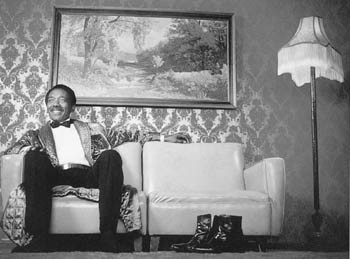
JAZZ TRUMPET legend Miles Davis once called organist Jimmy Smith the greatest musician he knew. Indeed, a short-lived 1955 Smith trio once featured sax god John Coltrane, and Smith revolutionized the jazz keyboard with his way-cool Hammond B-3 sound. And while Smith has lingered on the fringe of popular music after making his name in the jazz world with such classic Blue Note albums as 1957’s The Sermon and 1960’s Back to the Chicken Shack, this stellar organist has remained a major influence. A new generation of soul-jazz devotees–including Medeski, Martin, and Wood; Galactic; John Scofield; Will Bernard; and especially hipster icon John Lurie (during his Get Shorty soundtrack period)–have tapped the master’s grooves for inspiration. In 1994, the Beastie Boys sampled Smith’s “Root Down.”

Now, after a five-year layoff, a pair of great new discs–the trendily titled Dot Com Blues (Verve/Bluethumb) and Fourmost Return (Fantasy/Milestone), a newly released live set recorded in 1990–spotlight the incredible talent of this 76-year-old musical giant.

Dot Com Blues provides Smith with a crack trio of backup jazz musicians–guitarist Russell Malone, bassist Reggie McBride, and drummer Harvey Mason–and then pairs the keyboardist on a series of tracks with an all-star lineup of guest blues performers that includes Etta James, Dr. John, B.B. King, Taj Mahal, and Keb’ Mo’, as well as the Texacali Horns. The result is one of the best jazz-soul/blues albums of the year, although at times Smith is relegated to little more than a support role for his guests–for instance, this version of Taj Mahal’s “Strut,” with Taj on lead vocals, is virtually identical to the one released on Taj’s recent studio album.

Thankfully, Smith and his band get plenty of elbow room on a handful of unaccompanied tracks, including Smith’s own “Eight Counts for Rita,” the chestnut “C.C. Rider,” and a glorious almost nine-minute version of Duke Ellington’s “Mood Indigo.”

That last track also appears on Fourmost Return, recorded in 1990 at Fat Tuesday’s in New York (a seven-track set, Fourmost, from the same session was released a decade ago). This swinging little set glides along easily and reunites Smith with tenor saxophonist Stanley Turrentine, guitarist Kenny Burrell (both veterans of Smith’s successful ’60s quartets), and drummer Grady Tate. The band once again tools up “Back to the Chicken Shack,” which first paired Turrentine and Smith nearly 30 years earlier.

Absolutely amazing stuff and a must-have for any soul-jazz fan.

Spin du Jour

Various Artists Have You Had Your Vitamin B-3 Today? (Label M)

Organ jazz, once maligned by critics, has gone on to stand the test of time, veteran producer Joel Dorn rightly declares in the liner notes of this nine-track soul-jazz primer. Jimmy Smith is showcased on “Jumpin’ the Blues” from his classic 1960 Blue Note album Midnight Special, as are celebrated organists Jack McDuff, Shirley Scott (teamed here with longtime collaborator Stanley Turrentine), John Patton, and Carl Wilson. The illustrious sidemen include Grant Green, Ike Quebec, Gene Ammons, Lou Donaldson, Sonny Stitt, and Yusef Lateef. You simply can’t go wrong with this bracing collection.–G.C.

From the March 29-April 4, 2001 issue of the Northern California Bohemian.

© Metro Publishing Inc.

Open Mic

0

Open Mic

Let’s Talk

By Judy Helfand

MOST OF US who check “white” when filling out forms walk through this world without letting the full meaning of our “whiteness” enter our conscious mind. We don’t talk about race, telling ourselves that being colorblind is the best antidote to racism. But deep within we know that this conversation about race is one we need to have. No white person is truly unaware of the racial divide in this country, but we try to believe we live in a just society where things will even out eventually.

The spectacle of the presidential election last November illustrated just how far we have to go. Most white Americans still remain unaware that a large proportion of the uncounted and disputed ballots came from counties with over 90 percent African-American populations. Black Americans were harassed on their way to the polls, and many were denied their right to vote because they were erroneously listed as felons. While the media focused on chad and legal challenges, the racial angle–though mentioned here and there–was largely overlooked.

The media also highlighted the synchronicity of an election controversy happening in Florida, which had hosted a similar situation in 1876, when a political stalemate over who would become president was resolved after the Democrats and Republicans reached a compromise.

But we didn’t hear much about the details.

That compromise pulled thousands of Union troops, who were protecting freed slaves from white violence in the South, and mandated that the principle of states’ rights would determine the future legal and political status of African Americans. This paved the way for white Southerners to roll back the gains of Reconstruction, using violence, terrorism, and then segregation to prevent blacks from voting, holding public office, or receiving land as promised earlier.

This may be ancient history, and the 2000 election is over and done with, but we are still living with the legacy of these (and many other) injustices. Denial or avoidance won’t open up the path to resolving the problems of racial inequality. Those of us who are white need to do more than worry about changing demographics that may put us in the minority in the United States (as we are already the minority in the world). We need to have those conversations about race, starting with each other, to talk about our fears, our guilt, and our responsibility for building a country where the coming generation can truly blossom in all its diversity. Sit down with white friends and family and ask the question, “What does it mean to be white in the United States today?”

Then really listen to what you all have to say.


Judy Helfand is in a longtime resident of Occidental. She can be reached at .


From the March 29-April 4, 2001 issue of the Northern California Bohemian.

© Maintained by .


The Wide-Eyed Gourmet

Exploring the spectrum of vegetable possibilities

By Marina Wolf

THE WEATHER may not have settled yet, but I’m already thinking about my spring and summer plantings, spurred on by memories of last year’s harvest. My collaborator and I had a grand ol’ time, shouting with glee at each new discovery: perky little peppers, green buds of tomatoes, summer squash that grew big enough to scare a cat. Under a jungle layer of bean leaves, we found quite a few slender pods. Grinning, my friend crunched her teeth into one and offered me another.

I accepted the bean with some bemusement. I was supposed to eat this raw? My gardening companion didn’t notice the pause when I discovered yet another childhood food prejudice.

In my childhood, see, the choice of vegetable was canned or frozen. You can’t do it any other way in a large suburban family. We had a garden, but the vegetables inevitably came out of the pressure cooker dull and overdone (now that I’m grown, I understand that pressure cookers are tricky, but at the time I blamed it on my mother).

Then, of course, there were the church potlucks, with countless vegetable dishes whose only claim to crunchiness lay in their crumb or potato-chip toppings. It was hammered into me from the baby-food beginning: salads and celery stalks are crisp. Everything else must be boiled into oblivion.

As I grew older and ventured out into the world, I encountered exceptions to the rule. Raw spinach, it turned out, makes a perfectly acceptable salad and tastes way better than cooked. Broccoli was fine on the crudité tray, with enough ranch dressing. Even raw onions were OK, if the burger was hot enough to warm them up. Through college and beyond, the vegetable kingdom continued to surprise me, with sweet, milky corn that needed no cooking, or peas that could be eaten both raw and in their entirety.

I also learned the corollary: some vegetables supposedly meant by God and nature to be eaten raw can actually be cooked. Lettuce, for example, frequently appears in green creamed soups. And if Jane Austen films can be considered historically accurate, then at one point celery was cooked and eaten by itself. Hmmm. . . .

WHY DIDN’T I find out about these things sooner? Well, exploring the spectrum of vegetable possibilities takes time and money that some families just don’t have. Produce has to be truly excellent to warrant any treatment–or lack of treatment–that depends entirely on the flavor alone. Corn needs to be fresh, picked just a few hours before at most. To eat it raw, you pretty much have to be standing in the cornfield. Peas ought to be newborn, barely big enough to notice between twice-daily visits to the garden.

For people who shop once a week, as my mother did, this sort of on-the-spotness just isn’t possible.

Above all, adherence to the raw/cooked dualism makes meal preparation easier for harried housewives and otherwise too-busy-to-care people. It draws boundaries, limits the possibilities that can both inspire and intimidate. Of course, crispness must be relegated to the salad bowl and the fried chicken, or else who knows what kind of alien anarchy might ensue! Why, you might get blanched young asparagus, marinated and served at room temperature, or wilted salad with warm drippings, or fava beans served raw and dipped in saucers of salt, or chopped raw tomatoes tossed with hot spaghetti. Or, say, raw string beans in the garden, crisp and green-tasting and untouched by anything but your fingers and a splash of sunlight.

Call the produce police. It’s spring, and another vegetable outlaw is on the loose.

From the March 29-April 4, 2001 issue of the Northern California Bohemian.

© Metro Publishing Inc.

’15 Minutes’

Washington media critic takes on sleazy newscasters--and the film '15 Minutes' Writer David Templeton takes interesting people to interesting movies in his ongoing quest for the ultimate post-film conversation. This is not a review; rather, it's a freewheeling, tangential discussion of art, alternative ideas, and popular culture. It's lunch-time in Washington...

The Sitting Room

A woman's place: J. J. Wilson, an SSU instructor, co-founded the Sitting Room in 1981 as a place for those interested in books "by, about, and of interest to women." Today, the Cotati storefront is a quiet haven for women's lit buffs. Sitting Pretty Sitting Room celebrates 20 years as...

‘L’Atalante’

L'Atalante. Modern Love Classic 'L'Atalante': gritty fairy tale with contemporary feel By IN GREEK MYTH, Atalanta was a girl who "could outrun all human kind/ or girls or men," as the poet Ovid describes her. When it came time for her to marry, she made a bargain...

Ayahuasca

Exotic battleground: Ralph Metzner, editor of Ayahuasca, an anthology of scholarly and first-person accounts of the yagé experience, says there are anecdotal reports of the complete remission of some cancers after one or two ayahuasca sessions. Yet the drug is at the heart of the anti-drug wars. Vision Quest Shamanism...

‘The Unknown’

The Unknown. Creep Show 'The Unknown' screens at Sonoma Valley Film Festival By IN THE 1920 movie The Penalty, Lon Chaney Sr. plays a legless villain named Blizzard with a bit of an agenda. He's (1) using sweatshop labor to equip a socialist army to take over San Francisco, (2)...

American Center for Wine, Food & the Arts

Hammer time: Daphne L. Derven, assistant director for programs and curator of food, at the site of Copia. Food Bash Grandiose gourmet affair benefits American Center for Wine, Food & the Arts By Paula Harris LOCATING the semi-complete $70 million American Center for Wine, Food & the Arts...

‘Black Goo’

Glassy-winged sharpshooters grab all the headlines, but local vineyard owners face yet another--perhaps even more insidious--threat By John Nagiecki MILK CARTONS stand like small tombstones in Bill Lerner's Santa Rosa vineyard. From within the open cartons grow young chardonnay vines, whose thin crooked trunks rely on rebar stakes for support. To the untrained eye, the...

Spins

Key Figure Organist Jimmy Smith shows both sides By Greg Cahill JAZZ TRUMPET legend Miles Davis once called organist Jimmy Smith the greatest musician he knew. Indeed, a short-lived 1955 Smith trio once featured sax god John Coltrane, and Smith revolutionized the jazz keyboard with his way-cool Hammond B-3 sound. And while...

Open Mic

Open MicLet's TalkBy Judy HelfandMOST OF US who check "white" when filling out forms walk through this world without letting the full meaning of our "whiteness" enter our conscious mind. We don't talk about race, telling ourselves that being colorblind is the best antidote to racism. But deep within we know that this conversation about race is one...

The Wide-Eyed Gourmet

Exploring the spectrum of vegetable possibilities By Marina Wolf THE WEATHER may not have settled yet, but I'm already thinking about my spring and summer plantings, spurred on by memories of last year's harvest. My collaborator and I had a grand ol' time, shouting with glee at each new discovery: perky little peppers, green buds...
11,084FansLike
4,606FollowersFollow
6,928FollowersFollow
