

Prescription Drug Advertisements

Industry ads an Rx for trouble

By Chris Lydgate

THEY SOUND like superheroes in some postmodern comic book: Claritin; Propecia; Viagra; Prozac. Like comic-book heroes, they can produce miraculous effects. And like comic-book heroes, they often create as many problems as they solve.

How does an allergy drug (or an anti-impotency pill) become a household name? The answer is as close as your TV screen. The pharmaceutical industry spent an estimated $1.8 billion last year on advertising aimed squarely at consumers, not doctors. These so-called direct-to-consumer, or DTC, marketing efforts have had a “tremendous impact” on prescription drug costs, says Dr. J. Bart McMullan, senior vice president for health services at Regence BlueCross/BlueShield. “It really does affect demand.”

DTC marketing has long been a source of frustration for HMOs, but the smoldering resentment burst into flame last month with an article in the Oregon Health Forum, which reported some harsh criticism of drug companies.

Why the palaver? HMO execs say the pharmaceutical marketing machine is the driving force behind a phenomenal surge in prescription-drug costs: most HMOs report that drug expenditures are rising roughly 15 percent per year. “We’re just seeing the beginning,” says Sheela Andrews, regional director of pharmacy services for PacifiCare Oregon.

To be sure, there are other factors at work, including the proliferation of expensive drugs for previously untreatable conditions, a wave of consolidation among generic drug-makers, and a rising number of patent disputes that have kept cheaper generic drugs out of the marketplace. But there is little doubt that drug-makers’ new emphasis on bringing their messages directly to consumers is having far-reaching effects on the business of medicine.

In the past, the question of which drug to prescribe was considered the exclusive domain of the physician. No longer. “Now [patients] are coming in armed and ready for a prescription drug they believe will make their lives better,” says Jack Friedman, president of Providence Health Plans.

Because most insurance plans cover prescription drugs, patients are typically insulated from the true cost of their medication. Instead, the tab is picked up by insurance companies, which pass along the cost in their premiums. Providence Health Plans spends more money on prescription drugs than on primary care.

Popular name-brand drugs put doctors in a bind. In many cases, the new drugs represent significant medical advantages. But often there are cheaper alternative or generic medications that might be just as effective. These often go unprescribed, doctors say, because patients prefer the marquee-name drug–especially when they don’t have to pay for it.

TAKE A DRUG like Prilosec, a new medication commonly used to treat a painful condition known as gastrointestinal esophageal reflux disorder. “For people with this disorder, this is a godsend,” says Dr. Jim Norris, chairman of Kaiser Permanente’s Formulary Committee. But thanks to an aggressive marketing campaign by the drug’s manufacturer, many patients with mild heartburn or dyspepsia are now asking their doctors for Prilosec (cost: $3 a day) instead of similar, cheaper drugs (cost: 55 cents a day) that would be just as effective in treating their milder conditions.

To combat this crippling inflation, Oregon’s HMOs are increasingly shifting the cost to consumers, turning to a solution known as a three-tiered pricing structure. Here’s how it works: Patients shell out a sliding co-pay for all their prescriptions. The co-pay is minimal for generic drugs, larger for older, name-brand drugs, and highest for the marquee drugs.

At PacifiCare, for example, the co-pay for Accupril, a brand-name blood-pressure medication, is $28 a bottle. But an older, similar drug, Zestril, is available for $13, and a generic version, Captopril, costs just $8, says Andrews of PacifiCare. (Members have access to several other blood-pressure medications as well, she adds.)

Although graduated co-pays do help to keep costs low, they are not popular with consumers. “You’re getting a lot of angry members out there,” says Chris Palmedo, public relations manager for PacifiCare, which adopted the new structure in January. “We got a huge influx of calls.”

The situation looks as though it will get worse before it gets better. As pharmaceutical companies continue their aggressive marketing efforts, drug costs are projected to outstrip hospital costs in the next decade, which is certain to leave HMO executives feeling down in the dumps.

Maybe they should take a look at some of those cheery antidepressant ads in the glossy magazines.

From the August 23-29, 2001 issue of the Northern California Bohemian.

© Metro Publishing Inc.

Arts Etc.

0

Birth of an Installation

By Patrick Sullivan

WHAT’S 26 FEET WIDE, 30 feet long, and 15 feet high? Here’s another clue: it incorporates 200 prom dresses, a bunch of yoga balls, and several walk-in fiberglass vaginas. If you guessed The Cradle, the Burning Man installation project created by Sonoma State University art professor Jann Nunn and collaborator Deirdre de Franceaux, you’re half right. That’s what the piece will look like–when it’s done, which is theoretically going to be Thursday, Aug. 16. But like any newborn, this one may or may not arrive on schedule.

“Oh my god, we certainly hope so,” says Nunn, who is doing the steelwork on the piece. “It’s a huge, huge project.”

The Cradle was commissioned by Burning Man, the annual Nevada festival of radical self-expression, as the entry piece to the festival’s “Seven Ages of Man” installation series. If you’re not planning to hit the Black Rock Desert, you’ve got one chance to walk through The Cradle’ s version of the wonder of birth. After completion, the piece will be on exhibit Thursday afternoon and evening only in the courtyard of the SSU sculpture department.

From the August 16-22, 2001 issue of the Northern California Bohemian.

© Metro Publishing Inc.

Jill Watts

New bio highlights sex symbol’s racial ambiguities

By Patrick Sullivan

BEFORE there was Madonna, before there was Angelina Jolie, there was Mae West. Indeed, without West, the first two might not be where they are today.

A working-class girl who went from burlesque dancer to Hollywood’s top box-office draw in such movies as I’m No Angel, West used her bold sexuality like a pair of pliers, tweaking the prim little nose of America’s prudish establishment so hard that she once went to jail for obscenity. “When I’m good, I’m very good,” went her most famous line, “but when I’m bad, I’m better.”

West had plenty of sex appeal. But don’t confuse her with baby-doll sex objects like Marilyn Monroe. There was far more to West’s persona than, as The Chicago Daily Tribune once put it, “hips, hips, hurrah.” What really rocketed West to stardom (and made her a perennial target for social conservatives) was her sly subversion on stage and screen of the rigid rules of behavior laid down for white women in early-20th-century America.

Or so argues California State University history professor Jill Watts. In her new biography, Mae West: An Icon in Black and White (Oxford University Press; $35), Watts puts West’s life under a scholarly microscope and examines “the major themes that long dominated her work: critiques of the dominant culture’s assumptions about class, gender, and race.”

Watts makes a persuasive case that West was, essentially, a talented mimic who appropriated African-American cultural forms to satirize and subvert sexism and racism. Borrowing from the likes of vaudeville performer Bert Williams and female blues singers, West put together a provocative persona that entertained the masses and scared the crap out of way-too-decent types everywhere.

Like Elvis Presley after her, West made her fame and fortune from this cultural appropriation. But unlike Presley, Watts argues, West acknowledged her debt to black culture and generally supported–in her art and in real life–the struggle for civil rights.

There’s even some cause to believe that West may have been racially mixed herself. Some confused critics have taken issue with Watts for overstating the evidence for this. But in fact, the author is careful to indicate that one of West’s grandparents may or may not have been a light-skinned black passing for white.

There are weaknesses in Watts’ work. She is certainly no master stylist. While better than that of 90 percent of academic authors, her prose ranges from serviceable to tedious to torturously convoluted. The first chapter, which describes West’s family life in turn-of-the-century Brooklyn, is especially slow, but the narrative picks up speed.

Of course, the author has great material to work with–West’s colorful, incredibly dramatic life, from her strange childhood growing up in a family connected to New York’s criminal underworld to a late-in-life appearance on Mister Ed.

Some of the funniest passages in the book describe West’s wrangles with the Hollywood censorship office over risqué scenes in I’m No Angel. Paramount tried to dodge the censor, a man named Will Hayes, by submitting incomplete scripts.

Watts describes what happened next: “But the Hayes office held its ground. Receiving only the title to a song called “No One Does It Like That Dallas Man,” it immediately declared the number unacceptable. The studio appealed and sent lyrics. Discovering such lines as “He’s a wild horse trainer, with a special whip; gals, you’ll go insaner,” the censors refused to reconsider. Studio executives persisted, claiming that all “the Dallas man does is kiss, hug the ladies, and ride a horse.”

West lost that battle. But, as Madonna can attest, she won the war. There’s no question that, by the time she died at the age of 87 in 1980, she’d helped make America a rather different place.

From the August 16-22, 2001 issue of the Northern California Bohemian.

© Metro Publishing Inc.

Thelonious Sphere Monk

0

Music in Monk Time

New CD collections capture jazz pianist in his prime

By Greg Cahill

MILES DAVIS has managed to steal the jazz-world limelight this year, thanks to a series of festival tributes, as well as impressive CD anthologies, reissues, and extended editions marking the 75th anniversary of the legendary trumpeter’s birthday.

But pianist Thelonious Monk–whose oddly angular chordal patterns and jumpy melodies were canonized in the hard bop and post-bop era, and were heralded again this week in a San Francisco Chronicle critics’ poll as “the essence of cool”–is the subject of several equally impressive new CD sets that are essential recordings for any serious jazz fan.

Earlier this year, the Berkeley-based Fantasy label, which controls Monk’s breakthrough Riverside and Prestige recordings, released three expanded, limited-edition 20-bit digitally remastered reissues: Monk’s Music with saxophonists John Coltrane and Coleman Hawkins; the eponymous Thelonious Monk Trio disc; and Thelonious Monk/Sonny Rollins (evidently album titles were a simple affair in those halcyon days), a red-hot set with hard-bop giant Rollins in sharp contrast to the cool sax accompaniment of longtime Monk collaborator Charlie Rouse.

Last month, Sony Records released to great acclaim Thelonious Monk: The Columbia Years: 1962-1968, compiled by Bay Area producer Orrin Keepnews, who helped guide Monk through his formidable years at the Riverside label during the 1950s. That three-CD collection of concert and studio sessions showcases Monk as a soloist, in a trio, in a quartet, and in a big-band format, and includes several glorious nuggets mined from the vaults. As the All Music Guide has noted, that set also spotlights Monk “as not only an instinctual presence on the keyboard, but as a craftsman of timeless melody, harmony, and rhythmic counterpoint.”

Yet the proverbial icing on the cake is a pair of newly released two-CD sets featuring live material recorded at the peak of Monk’s long career: Live at the Jazz Workshop–Complete and Monk in Tokyo (released for the first time on CD in the United States and vastly superior to the import version), both on the Columbia/Legacy label.

The complete 26-track version of the legendary Jazz Workshop sessions, recorded in San Francisco in 1963 with Rouse and the rhythm section of bassist Larry Gales and drummer Ben Riley, is a jazz juggernaut. It now features 13 previously unreleased tracks and three newly restored tracks. The 24-bit digital remastering alone is enough to recommend this set–the sound just booms from the speakers, revealing every nuance of the players right down to Riley’s light-handed brushwork.

Monk in Tokyo, recorded that same year with a different rhythm section (bassist Butch Warren and drummer Frankie Dunlop), includes some of the same material but interpreted in radically different ways. For instance, the Monk composition “Blue Monk” gets an unusually up-tempo treatment on the Jazz Workshop sessions until Monk deconstructs this blues-based number and throws a series of artistic curve balls at his accompanists, including a rhythm section that had only recently joined with Monk. On the Tokyo sessions, that same melody starts out as a wistful solo piano piece that gives way to an explosive tenor sax solo by Rouse.

More evidence that you could listen to Monk for a lifetime and never fail to be amazed by his creativity. On track after track, Monk’s inventive genius–a seemingly inexhaustible swirl of ideas–is showcased on these collections.

From the August 16-22, 2001 issue of the Northern California Bohemian.
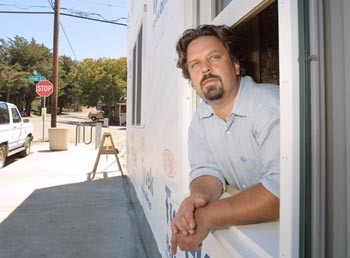
© Metro Publishing Inc.

Kenneth Cleaver

Consumer Correspondent

Ms. Margaret E. Kozan Holland & Knight Consulting 200 South Orange Avenue, Suite 2600 Orlando, FL 32801

Dear Ms. Kozan:

A dear friend is slated to be wed this fall, and while arrangements are set to her satisfaction, she finds herself ensconced in an unusual crisis. The maid of honor, one Sarah R. Dinffler, has staged a highly effective coup d’état amongst the bride’s party. What started as an overbearing personality asserting her self-professed expertise on floral decoration, table setting, and limousine service has now mutated into an unfounded demand for a “producer credit.” While not previously known as an upstart, Ms. Dinffler has used her political cunning to recruit three of the four bridesmaids into her camp, voicing their newfound demands for union representation.

I have advised the bride not to concede the credit. To my knowledge, a title credit of this significance sets lifelong precedence. Should it be granted to Ms. Dinffler, it may prohibit the bride from attaining it in future nuptials. In any event, legal counsel appears inevitable, and on the bride’s behalf I would be most grateful if you could promptly respond with a summary proposal of your firm’s services.

Sincerely, Kenneth Cleaver

Dear Mr. Cleaver:

Thank you for your inquiry. Holland & Knight LLP is not able to provide legal assistance to you at this time. Please be advised that my receipt of your letter and this response has not established an attorney-client relationship between you and Holland & Knight and that you should not consider yourself a client of the firm.

We wish you well in your search for an attorney to represent you!

Very truly yours, HOLLAND & KNIGHT LLP Margaret E. Kozan

From the August 16-22, 2001 issue of the Northern California Bohemian.
© Metro Publishing Inc.

Sustainable Agriculture

0

Root Stock

Sustainable ag movement blossoms in the North Bay

By Paula Harris

IMAGINE some not-too-distant future in which American agriculture is vibrant and profitable, and it’s thriving without abandoning environmental and social responsibility and ethics. Imagine how this would translate into a myriad of small farms at which growers are happily serving the consumer, responsive to customers’ needs, and producing flavorful, healthy, locally grown food without toxic chemicals. And imagine consumers who are demanding good food and totally supporting these farmers.

This is sustainable agriculture.

A dream? Maybe, in these times of corporate agriculture, with its rapaciousness and industrial-strength doses of chemicals, fertilizers, pesticides, and preservatives. But not too farfetched, say the supporters of the concept, who are presenting two forums on sustainable agriculture on Aug. 21 and 22 in Sonoma and Napa counties.

“The idea is to bring the processor, the producer, and the consumer together in common cause,” says forum organizer Ann Maurice, a Sebastopol activist who founded the Ad Hoc Committee for Clean Water 15 years ago and remains committed to supporting local environmental issues.

Maurice is bringing in keynote speaker Dr. John Ikerd, professor emeritus of agricultural economics at the University of Missouri, who grew up on a dairy farm and runs a sustainable-agriculture program for the state of Missouri.

“I call sustainable agriculture common-sense agriculture,” replies Ikerd when asked to define a term that often gets lost among such other buzzwords as organic and permaculture. “Economic viability is necessary, but it’s not enough to sustain agriculture over the long run–it goes beyond profits,” Ikerd continues. “It must be socially responsible and provide people with opportunities to be productive and be ecologically sound enough to sustain productivity in the future.”

Ikerd adds that sustainable agriculture is a long-term concept and an idea that’s gaining momentum across society, into such related possibilities as sustainable communities, sustainable fisheries, and sustainable forestry. “People are thinking beyond short-run self-interest and are looking at the broader interest of society in the long term,” he adds. “Consumers are making choices as to how land and people are to be treated and learning that anything that is degrading to society as a whole is not sustainable.”

THERE’S DEFINITELY a certain attitude involved with the concept of sustainable ag–just buying or growing organic produce doesn’t cut it, according to Maurice. “It’s not good just because it’s organic, because people can be hostile in their pursuit of organic,” she claims. “The idea here is that it includes sustaining the farmer. There’s no point in proselytizing about organic if the farmers are out of business and our food is being imported from Mexico and China.”

But, she adds, the increasing popularity of organic produce is helping some of the concepts of sustainable agriculture to sink in. “Organic used to be kind of a ‘radical’ concept associated with a ‘hippie’ fringe, and it’s taken some years but the concept is becoming increasingly mainstream,” she explains. “Americans are tired of produce that doesn’t taste good; tomatoes that have no flavor, fruit that looks like it came out of a photograph from Gourmet magazine but has no aroma or flavor. People are demanding more flavorful, more nutritious produce.”

Maurice touts Petaluma-based dairy Clover-Stornetta Farms as exemplifying the principles of sustainable agriculture. “In response to consumer demand, Clover-Stornetta was one of the first to produce milk free of the artificial bovine growth hormone, and they’ve developed a loyal customer base, and now they even put out an organic line,” she explains. The dairy also brings in individuals who are following a San Francisco drug rehabilitation program into Sonoma County to work in the dairy at St. Anthony’s Farm, a rehabilitation facility just outside Petaluma. “This is a perfect example of bringing together social, environmental, and ethical responsibility,” she says.

There’s a growing movement to promote the principles of sustainable agriculture, but at the same time some wine-grape growers have co-opted the term while implementing practices that fly in the face of the basic concept. Even those growers who have hacked down vintage oaks, ripped out other crops (such as apple trees), planted vineyards on steep hillsides that cause erosion and degradation of streams, or upped their use of pesticides have laid claims to being practitioners of sustainable agriculture.

Indeed, it’s not uncommon for some of the most irresponsible grape growers in the North Bay to portray themselves as stewards of the land and belonging to an environment-friendly industry.

Yet some local grape growers are following the sustainable-ag creed. “We have some excellent organic wines produced here, but they are the minority, though it is growing,” says Maurice, citing Forestville’s Russian River Vineyards and Hopland’s Fetzer (Bonterra brand) as examples. “Even Kendall-Jackson, even Kendall-Jackson, decided to no longer use methyl bromide on any of their acreage. But we want all of these producers, including the corporate moguls, to be responding to educated consumers who are sick of the overapplication of toxic chemicals.”

THE TWO FORUMS come at a time when growers, environmentalists, and county officials (at least in Sonoma County) are cooperating more than ever; the Sonoma County Board of Supervisors last week signed a broad-based agreement to end forced pesticide spraying of the vineyard pest the glassy-winged sharpshooter. However, Maurice says resistance to the concept of sustainable agriculture is great.

“The opposition [comprises] any individuals, politicians, and corporations who are obsessed with money as the bottom line,” she seethes, “whether it’s stockholders obsessed with the monetary value of their portfolio, politicians obsessed with their campaign contributions, or nonprofits who are just looking to see where their next corporate donation is coming from.”

The biggest challenge to the movement, she says, is greed. “If you’re in pursuit of money as your bottom line, we’ve got a problem because that’s what causes degradation of the environment and ethical irresponsibility.”

American agriculture, she adds, is under siege by bad international trade deals. “In exchange for our intellectual property exports, foreign agricultural produce is being dumped in this country,” she avers. “For example, in local supermarkets we have Chinese dried apples–how is it possible for these to be shipped here that great distance when they can be produced across the street from the market? A certain amount of exotic imported produce is one thing, but people need to seriously support local agriculture.”

While there are no specific plans to label locally produced sustainable-ag products or to accredit facilities producing food this way, Maurice suggests consumers demand a “locally produced” section in their supermarket and learn about what’s in season. “People have been so alienated from agriculture we don’t even know what’s in season anymore,” she says. “People aren’t aware fruit has been in storage or been flown in from somewhere else and the hold of the airplane has been sprayed with fumigants.”

Maurice also suggests that interested individuals seek more information at farmers’ markets and natural food supermarkets. There is evidence that the movement is growing: A group in Sebastopol has recently created “Sustainable Sebastopol” and is touting Maurice’s upcoming forums.

Maurice hopes the forums will further increase consumer awareness. With a free five-hour program that includes food, live music, a demonstration of a bio-diesel Jetta that is partially fueled by soybean oil, and insect-controlling tame bats up close, the events promise to take any potential dryness out of the topic.

“I want people to be motivated, not to just sit there and clap and go home, but to actually see how we can apply this locally,” says Maurice. “The people need to lead, and the politicians will follow. That’s how I believe real social change happens.”

The Ad Hoc Committee for Clean Water, the city of Santa Rosa, Clover-Stornetta Farms, and Whole Foods Markets present a forum on sustainable agriculture with various guest speakers and demonstrations, Tuesday, Aug. 21, from 4 to 9 p.m. at Finley Center at Stony Point Road and West College Avenue, Santa Rosa. The forum also will be presented Wednesday, Aug. 22, from 6 to 9 p.m. at the Napa Masonic Hall, 4125 Solano Ave. Admission is free. 707/874-3855.

From the August 16-22, 2001 issue of the Northern California Bohemian.

© Metro Publishing Inc.

Matthew Greenbaum

0

Birth of a Bistro

Matthew Greenbaum’s ongoing gastronomy in Graton

By Jonah Raskin

BEYOND A DOUBT, the best bistro food I ever ate was in the unpretentious proletarian restaurants around Les Halles, the gargantuan Parisian market–the “belly” of Paris, the novelist Emile Zola called it. Unfortunately, Les Halles closed in 1969, and with it a chapter of French cuisine came to an end. I was a student in Europe at the tail end of that era and I can still remember the stupendous onion soup, the fantastic bifteck and pomme frites, the baguettes, the red wine, and the company of the robust French workers. The food was incredibly good and incredibly cheap. Never again will anyone find bistros that inexpensive, but like many Americans–and like the French themselves, who are notoriously nostalgic–I’ve never given up hope of eating in a bistro that takes me back, gastronomically speaking, to those halcyon days at Les Halles.

Now at last, a bistro and bar will open soon, practically in my own backyard. The French workers who packed the bistros around Les Halles might not find the food familiar, but they’d probably recognize the ambiance.

The Underwood, as it’s called, is meant to be a cozy culinary home away from home, and it’s almost certainly guaranteed to draw large crowds and to inspire great expectations. Matthew Greenbaum, who has Rabelaisian appetities and who was raised in restaurant-rich Manhattan, has already made a reputation–among the cognoscenti–as the master chef at the Willow Wood Market. For years, he’s been preparing, perhaps, the best polenta in Sonoma County, as well as gourmet sandwiches, flavorful fish stews, and my favorite–roast chicken with mashed potatoes and greens.

Why Greenbaum is so eager to open a bistro and bar in Graton is puzzling.

For one thing, bistros are so commonplace in Northern California they’re practically a public nuisance. (Californians often want to one-up the French, whether in food or in wine, and the current bistro explosion seems to be yet another California attempt to out-French the French.) Greenbaum’s bistro is also puzzling because Graton, his hometown, is off the well-beaten restaurant track. Then, too, the Underwood will open directly across the street from the Willow Wood Market. Greenbaum and his partner, Sally Spittles, who is British, will be competing with themselves.

If the Underwood turns out to be as successful as they both suggest, it might undermine the Willow Wood.

AFTER COOKING passionately since he was 17, Greenbaum obviously needs a new venue and new cuisines to conquer. He’s always daydreaming about dishes to serve the world, and apparently the only real way to make his dreams come true is to open another restaurant. Perhaps, too, he needs more recognition than he’s had so far. Last spring, when the Willow Wood received a rave review in a major San Francisco newspaper, Greenbaum wasn’t mentioned. Undoubtedly, he’s one of most invisible gourmet chefs in Northern California, but that seems likely to change once the Underwood gets under way.

Greenbaum plans to do the lion’s share of the cooking, which will be a change from the Willow Wood, where the sous-chefs play a major role. The menu for the Underwood isn’t carved in stone, but Greenbaum’s head is already bursting with creative ideas. You can expect to enjoy dishes like roast lamb with white beans, pancetta, and Roma tomatoes; pan-seared sea bass with green peppercorn vinaigrette and garlic mashed potatoes; pizza with fresh figs and goat cheese. When he won’t be standing over a hot stove, Greenbaum expects to sit at the old-fashioned, full-service bistro-style bar and schmooze with friends. If he’s lucky he’ll get to go home after only 12-14 hours on the job.

The Underwood promises to be less folksy than the Willow Wood Market, which doubles as a kind of convenience store that sells milk, eggs, and bread. Unlike the Willow Wood, the Underwood will be dark, swanky, and sexy. It’ll serve food and drink until late–at least that’s the idea. Whether Sonoma County folk are prepared to eat, drink, and be merry at 10 or 11 p.m. on a weekday night remains to be seen. The Underwood will even have an outside patio designated for cigarette smokers, an idea that might not go over well with west county citizens offended by even a hint of nicotine. But Parisians will probably appreciate it.

Greenbaum has never eaten in a bistro on French soil, but he’s made it his business to eat in as many bistros–from Balthazar to Bouchon–as possible. Not long ago, he went bistro-hopping in Napa, and came back to Graton singing the praises of Jeanty, a small restaurant that made him feel very much at home and very well fed. He’s also made it his business to devour cookbooks about bistro food–Linda Dannenberg’s Paris Bistro Cooking and Daniel Young’s The Paris Café Cookbook. If you’re curious, Greenbaum will explain the differences between a brasserie and a bistro, or complain about the fact that in some towns bistros have gone corporate, thereby betraying their roots. Still, he hasn’t become academic or tradition-bound. Over the last year or so, he’s been experimenting with recipes, aiming for a cuisine that fuses the best of France and California.

Of course, you can count on me to be on hand opening day. I can see myself sitting at the bar drinking a Negroni or maybe a Martini. Chances are–I’ve had a peak at the menu–I’ll order the fried artichoke with fennel aïoli as a starter, and the grilled ahi tuna niçoise–a classic French dish–as an entrée. Granted, I won’t be transported back to Les Halles in the mid-1960s. But Greenbaum’s bistro cooking will be nearly impossible to resist. I don’t think I’ll even try.

From the August 16-22, 2001 issue of the Northern California Bohemian.

© Metro Publishing Inc.

Open Mic

0

Sucking Sound

By Atticus Hart

DO YOU HEAR that sucking sound? Thwooooooop! There it is again. Thwoooooooooop! Shhhhhhhhuuuuuuump! Like a great chrome Hoovermatic slurping up every pebble of dignity left in this teeming asphalt-and-mini-mall landscape. Do you hear it? Thwoooooooop! Brrrrrrrr! Up north, up there, breaking the peaceful calm, up there near the gilded hamlet of Healdsburg. Up there, along the Russian River

Do you wonder what it is?

It’s the sound of money, the sound of enterprise, the sound of the North Bay’s lifeblood being sucked dry.

In case you missed it, on July 25, the Sonoma County Board of Supervisors by a 4-1 vote (with Mike Reilly in dissension) rejected a challenge by environmentalists opposed to a plan that will allow Shamrock Materials Inc. to “skim” 150,000 tons of gravel from the Russian River bed over the next 10 years.

That’s 300 million pounds of gravel that now serves as the filtration system for much of the water running out of your tap. Does that sound like a drop in the bucket?

“We have to look at the facts,” Supervisor Mike Kerns told the local daily when asked about his support of the mining. “The facts show me this is not going to damage the river, jeopardize water quality, or jeopardize the fish.” Yeah, even the county’s own “expert” said scraping 300 million pounds of rock out of the riverbed would be a simple matter with no repercussions.

Environmentalists disagree. They point out–to no avail–that years of deep-pit mining, which is supposed to be suspended in 2004, has left an indelible scar on the beleaguered Russian River. Decades of mining, they argue have lowered the water level, damaged fish-spawning grounds, undermined bridges, threatened the quality of the North Bay’s already limited drinking water, muddied the river, and destroyed natural vegetation.

Of course, the gravel-mining companies are hefty campaign contributors to four fifths of the Sonoma County Board of Supervisors. The seat of power in this county rests squarely on the ability of Shamrock Materials Inc. and similar companies to exploit one of the region’s most valuable natural resources, even if to the detriment of the North Bay’s future health and well-being–but as long as the cash keeps flowing.

Do you hear it now? That’s the sound of your future–that ethereal quality of life for which you pay top dollar on the real estate market and in the marketplace of the soul–going down the drain.

Atticus Hart of Bodega Bay has an uncontrollable urge to consume only clean drinking water.

From the August 16-22, 2001 issue of the Northern California Bohemian.

© Metro Publishing Inc.

Zakir Hussain

0

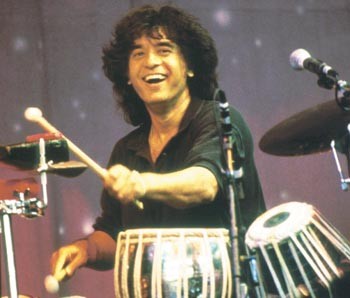
The world at his fingertips: Marin County percussionist Zakir Hussain has a career that ranges from touring with jazz fusionist John McLaughlin to performing classical concerts in his own homeland of India.

King of Rhythm

Zakir Hussain taps a world of sound

By Greg Cahill

“IN INDIA, we were always taught that we’d been playing music for the past 5,000 years, so we arrived in this country thinking, “We’re the ones whom people should learn from. We never thought of ourselves as people who should also be learning from others,” says Zakir Hussain, 50, a world-class tabla player and San Anselmo resident. “That’s why it was so great to go to the University of Washington in Seattle [on his first trip to the States in 1969] to teach because I came in contact with all these great masters of African, Middle Eastern, and Indonesian music who also taught at the school’s ethnomusicology department.

“It just opened my eyes that we in India have to keep learning to expand further, and we can’t do that without opening up to the world of sounds around us.”

He’s learned that lesson well. Hussain–an energetic fireball with lightning-fast hands, boyish good looks, deep-set brown eyes, and charm galore–still spends at least six months each year performing classical North Indian music in his native land and throughout the world while releasing top Indian classical acts on his own Moment! record label. But he also has earned a reputation in the West as a savvy fusionist and “the hottest crossover figure to emerge from India since Ravi Shankar jammed with the Beatles,” as one enthusiastic music writer once opined.

Since his 1969 U.S. concert debut at the Fillmore East in New York (replacing his father, the late Indian tabla master Ustad Allah Rakha, as accompanist for sitarist Shankar), Hussain has racked up an impressive list of credits, playing with Grateful Dead percussionist Mickey Hart (the two shared a 1992 Grammy Award for the evocative Planet Drum CD), jazz fusion guitarist and longtime collaborator John McLaughlin (with whom he performs as part of the acoustic-based group Shakti), jazz saxophonist Joe Henderson, rocker Van Morrison, and dozens of others.

Most recently, Hussain recorded Saturday Night in Bombay (Verve), a newly released reunion album with Shakti, featuring McLaughlin and a cast of other Indian musical heavyweights. Earlier this month, Hussain–who performs a rare North Bay concert Aug. 25 at the Marin Center with sarode master Ali Akbar Khan–wrapped up a whirlwind world tour with Shakti, breezed into town for a pair of San Francisco shows with Tabla Beat Science–producer/bassist Bill Laswell’s eclectic all-star world-beat ensemble–and even managed a couple of well-deserved days off before jetting to Japan for a show with the acclaimed Kodo taiko drummers.

“It is a dizzying schedule,” he admits. “It’s quite a lot of different things, and that is what is exciting about my life at this moment. I’m getting so many different venues to explore. I feel lucky that all this has come my way.”

THAT’S A BIT of an understatement. Hussain–who himself was the subject of a recent documentary film screened at the Mill Valley Film Festival–just finished recording the soundtrack for the latest Merchant-Ivory production, The Mystic Masseur, which will take him next week to the film’s premiere at the 2001 Telluride Film Festival in Colorado; he’s completed recent scores for the Alvin Ailey Dance Company and Lines Contemporary Ballet, and is now composing a new dance piece for New York choreographer Mark Morris that will team up Hussain in April with classical cellist Yo-Yo Ma; he’s preparing for a North American tour next month with the phenomenal L. Shankar, the Indian 10-string double-violin player; and, in November, Hussain returns to his native homeland for another series of classical Indian concerts.

“I don’t consciously go out and look for all these different projects,” Hussain explains modestly, “but people call me up and ask if I’m interested. And, of course, I am. To some extent, it all got started when I did a solo performance for Alonzo King’s dance company in San Francisco–a piece called, ‘Who Dressed You like a Foreigner?’ It got rave reviews and moved to New York, Boston, and other places. That sort of opened the door for some of these other venues.”

Of course, Hussain is no stranger to film scores. In 1976, he collaborated, with Hart, to the soundtracks of the Francis Ford Coppola masterpiece Apocalypse Now (released last week in movie theaters as the expanded Apocalypse Now Redux edition), and later worked on the acclaimed PBS-TV documentary series Vietnam: A Television History. Since then, he’s composed film scores for Ismail Merchant’s film debut In Custody and Bernardo Bertolucci’s Little Buddha, as well a several documentaries and Indian films.

“You know, the bug bit then,” he says of the acclaimed Apocalypse Now score. “It’s fun doing film scores.”

YOU COULD SAY that Hussain has led a charmed life, though that would belie the extraordinarily hard work he has put into his art. But he did get started while still in utero. His father started tapping out the complex tabla beats on his then-pregnant wife’s tummy while Hussain was still in the womb. Hussain’s lessons continued into a childhood that was blessed by contact with many of the world’s greatest musicians. At age 13, he met George Harrison, when the famous Beatle first visited India to study sitar with Ravi Shankar–a pivotal event that led to the introduction of Indian classical music to mainstream Western audiences.

In Mickey Hart’s 1998 book Drumming at the edge of Magic: A Journey into the Spirit of Percussion, Hart describes the marathon chillas: a 40-day ritual retreat during which Hussain locked himself away with his instrument, playing night and day with only short breaks to eat and sleep. During one such event, Hussain drove himself so hard that he hallucinated that his drums were ominous beasts.

On his first trip to the States, Hussain hooked up with Hart and formed the Diga Rhythm Band, a vast lineup of percussionists modeled after the gamelan orchestras of Bali.

In the intervening years, whether jamming with the Dead in a west Sonoma County barn or trading licks with McLaughlin at a North Beach rock club a world away from the concert halls of Bombay, Hussain has learned aspects of drumming to which he was never exposed in his homeland. “There is a certain way we play music in India,” he explains. “We tend to lean toward the perfect execution of a phrase–a tal, or complicated rhythmic cycle. But we don’t necessarily pay attention to what the instrument can do in its range of melodic tone. And that’s what I’ve learned by watching Puerto Rican conga players or the African talking drum or the various subtle ways a jazz drummer places the beat on symbols.

“Playing with groups like Shakti has allowed me to look at my instrument from a different point of view and has shown me what more [the] tabla as an instrument can do.”

That doesn’t mean Hussain isn’t still learning from the Indian masters. For instance, he reveres the venerable Ali Akbar Khan, recipient of a MacArthur genius grant and San Anselmo resident whose longtime San Rafael school is the leading Indian music institute of its kind in the United States. “With Khansahib, you are sitting in front of a master, you go for a ride with the master. With someone like Mickey Hart or John McLaughlin, you are more like a friend and you can play with each other, jump on each other’s back, or roll in the field, but with Khansahib, you are in the presence of a musical godhead and you treat your musical experience in that manner.

“You never know what’s going to come at you or what you’re going to learn, but you keep your eyes and ears open and he will provide the kind of inspiration you need to get another musical lesson. It’s an incredible thing.”

Zakir Hussain will perform Aug. 25, at 8 p.m. with Ali Akbar Khan and Sri Alam Khan on Saturday, at the Marin Center, Avenue of the Flags, San Rafael. Tickets are $40 and $25. 415/472-3500.

From the August 16-22, 2001 issue of the Northern California Bohemian.

© Metro Publishing Inc.

Roommates

0

Surviving the roommate crisis

By Sal Hepatica

BOXES ARE SCATTERED all over the floor, contents spilling out. The closet is packed with clothes, and the rest are hanging on the bathroom shower rod. Stereos, TVs, CD storage boxes, and computers crowd desktops, dressers, and even the beds. A futon, piled with boxes and clothes, blocks the door open. Four college freshmen survey the utter confusion, each thinking, “Now what do we do?”

The months of college preparation are over and it’s finally moving day! This fall, 75 percent of college freshmen will move into dorms, the majority living with roommates for the first time in their lives. Strangers thrown together from different worlds, they need to adjust to each other’s quirks, habits, and schedules without driving each other crazy.

Adjusting to roommates and dorm life is easier when expectations are realistic, explains Paul Bradley, dean of residence life at Northwestern College in Saint Paul, Minn. “So many times we’ve seen students come into the dorm believing their roommates will be their friends for life, their best buddies. The roommates, on the other hand, may see the room only as a place to sleep, since they already have a social network. Then it’s a mess; there’s hurt, confusion, and tension.”

While some colleges attempt to match roommates based on information gathered on housing forms (majors, hobbies, regions of the country), a match is never guaranteed. It’s not unusual to end up with roommates who are stiff and structured, social butterflies, and nose-in-the-book academics–all in one room.

A key to successful adjustment is communication, Bradley says. “Communication is vital to any relationship, even roommates. They need to share openly on such issues as cleanliness, visitation, music, study time, and lights out.”

“It’s best to talk about issues early,” says Joy Santee, a 2000 Northwestern graduate who lived in residence halls for two years. “Agree on perimeters and talk through issues before they become problems and get out of control.”

A big part of the college experience is learning effective confrontational skills and initiating communication when there are problems. Bradley says most students don’t like to confront others. “Often they try to live with the problem or ignore it, but it can go too far and usually someone gets hurt,” he says.

Common aggravations include sloppiness, division of provisions, visitors, personal space, music tastes, and quiet time. When problems arise, try to solve them as a room first, Bradley explains. “Don’t beat around the bush or drop hints. Talk as a room, not belittling or ganging up on anyone. Be factual. Set or reiterate policies. But if problems persist, you may need to ask the residence assistant to act as a liaison.”

However, incompatibility does happen. Be honest, yet tactful, with your roommates as to why you are leaving. “Ask what their plans are, because others could be thinking the same thing, which could eliminate the problem and you won’t have to move,” Bradley says. “Give some advance notice. It’s rude to announce at the last minute you’re moving out. It leaves others with guilt, confusion, and a feeling of failure.”

WHETHER it’s your first roommate arrangement or your fifth, Bradley and Santee do have practical advice to make dorm life harmonious.

1. Practice common courtesy when it comes to visitation. Establish policies or schedules, setting aside nights for quiet and study time. “This is where having a calendar on the message board really comes in handy,” Bradley emphasizes. “It minimizes surprising the roommate who comes home at midnight after a full day of classes and work wanting to get some sleep only to find a party going on. Planning ahead makes it possible for arranging other places to study or spend the night.”

2. Keep a balance of rights and compromise. Be flexible, but not at the expense of your studies or health. Honor your roommates’ rights to guests and socializing; after all, they are paying for the room, too.

3. Express issues and develop tactful, effective confrontation skills. Such skills will pay off in the future.

4. When you or a roommate has a car, set policies on borrowing the car or giving rides, taking into consideration gas, mechanical expenses, and scheduling.

5. Set a policy about borrowing each other’s clothes to avoid problems when clothing is borrowed without asking.

6. Try not to get caught in the middle of roommates’ family issues.

AS FOR THE STATE of confusion and bulging dorm room on moving day, avoid this by contacting your roommates ahead of time to see who is bringing what (furniture, electronic equipment, recreational items).

Contact the college to determine the size of the room, what furnishings are provided, and the number of electrical outlets. Wait to bring seasonal items such as winter clothes and skis until holiday breaks to avoid overcrowding.

And remember, you aren’t the only one who is homesick, disoriented, or undergoing roommate conflict. There is help available, so seek it through your RA, housing coordinator, or, better yet, your roommates!

From the August 16-22, 2001 issue of the Northern California Bohemian.

© Metro Publishing Inc.

Prescription Drug Advertisements

Industry ads an Rx for trouble By Chris Lydgate THEY SOUND like superheroes in some postmodern comic book: Claritin; Propecia; Viagra; Prozac. Like comic-book heroes, they can produce miraculous effects. And like comic-book heroes, they often create as many problems as they solve. How does an allergy drug (or an...

Arts Etc.

Birth of an Installation By Patrick Sullivan WHAT'S 26 FEET WIDE, 30 feet long, and 15 feet high? Here's another clue: it incorporates 200 prom dresses, a bunch of yoga balls, and several walk-in fiberglass vaginas. If you guessed The Cradle, the Burning Man installation project created by Sonoma State University art professor Jann...

Jill Watts

New bio highlights sex symbol's racial ambiguities By Patrick Sullivan BEFORE there was Madonna, before there was Angelina Jolie, there was Mae West. Indeed, without West, the first two might not be where they are today. A working-class girl who went from burlesque dancer to Hollywood's top box-office draw in...

Thelonious Sphere Monk

Music in Monk Time New CD collections capture jazz pianist in his prime By Greg Cahill MILES DAVIS has managed to steal the jazz-world limelight this year, thanks to a series of festival tributes, as well as impressive CD anthologies, reissues, and extended editions marking the 75th anniversary of the legendary trumpeter's...

Kenneth Cleaver

Consumer Correspondent Ms. Margaret E. Kozan Holland & Knight Consulting 200 South Orange Avenue, Suite 2600 Orlando, FL 32801 Dear Ms. Kozan: A dear friend is slated to be wed this fall, and while arrangements are set to her satisfaction, she finds herself ensconced in an unusual...

Sustainable Agriculture

Root Stock Sustainable ag movement blossoms in the North Bay By Paula Harris IMAGINE some not-too-distant future in which American agriculture is vibrant and profitable, and it's thriving without abandoning environmental and social responsibility and ethics. Imagine how this would translate into a myriad of small farms at which growers are...

Matthew Greenbaum

Birth of a Bistro Matthew Greenbaum's ongoing gastronomy in Graton By Jonah Raskin BEYOND A DOUBT, the best bistro food I ever ate was in the unpretentious proletarian restaurants around Les Halles, the gargantuan Parisian market--the "belly" of Paris, the novelist Emile Zola called it. Unfortunately, Les Halles closed in 1969,...

Open Mic

Sucking Sound By Atticus Hart DO YOU HEAR that sucking sound? Thwooooooop! There it is again. Thwoooooooooop! Shhhhhhhhuuuuuuump! Like a great chrome Hoovermatic slurping up every pebble of dignity left in this teeming asphalt-and-mini-mall landscape. Do you hear it? Thwoooooooop! Brrrrrrrr! Up north, up there, breaking the peaceful calm, up there near the gilded...

Zakir Hussain

The world at his fingertips: Marin County percussionist Zakir Hussain has a career that ranges from touring with jazz fusionist John McLaughlin to performing classical concerts in his own homeland of India. King of Rhythm Zakir Hussain taps a world of sound By Greg Cahill "IN INDIA,...

Roommates

Surviving the roommate crisis By Sal Hepatica BOXES ARE SCATTERED all over the floor, contents spilling out. The closet is packed with clothes, and the rest are hanging on the bathroom shower rod. Stereos, TVs, CD storage boxes, and computers crowd desktops, dressers, and even the beds. A futon, piled with boxes and clothes, blocks...
11,084FansLike
4,606FollowersFollow
6,928FollowersFollow