Peter Coyote

0

Apostle of grooviness explores the politics of fear

By David Templeton

THERE’S A TRAUMA of fear that has suddenly descended on the United States,” says Peter Coyote. “A fear we’ve been feeling ever since the terrorist attacks. But I don’t think it’s about what people think it’s about.”

With the mention of Sept. 11, the actor-author-activist’s raspy voice takes on a passionate tone.

“The only thing that’s changed is that Americans now realize the ways in which we’ve always been vulnerable,” Coyote says. “Americans, previous to this, were allowed to believe they weren’t vulnerable, and I think the fear we’re feeling really is the fear that the ruling class, the political class, has been attending to other business, other than the protection of American lives.”

Peter Coyote–once dubbed an “apostle of grooviness,” by the Village Voice–can pack more words and ideas into a 20-minute chat than most politicians.

That should come as no surprise. Anyone who has read Coyote’s 1997 memoir, Sleeping Where I Fall (Counterpoint; $14), knows that politics–radically progressive politics–are a big part of Coyote’s personal history.

Of course, Coyote is most famous for his 50-plus movie roles, including E.T.’s sympathetic scientist, the sinister sexual predator in Roman Polanski’s Bitter Moon, the double-talking bureaucrat in Sphere, and the love-struck defense attorney in Sissy Spacek’s Midwives.

But politics came first.

Peter Coyote–originally named Peter Cohon, he adopted the canine surname after a powerful peyote trip in which he experienced being transformed into a free-roaming coyote–was an early member of that counter-cultural shit-disturbance known as the San Francisco Mime Troupe.

In the ’60s and ’70s, he was a certified revolutionary, first working among the Diggers, a band of Haight-Ashbury anarchists that prophesied the end of capitalism and gave away free food and clothes. He then started a commune with some free spirits from the loose-knit Free Family movement.

Even when Coyote was post-hippy, his political roots continued to show. After the last of the communes disintegrated, he ended up being appointed by then Gov. Jerry Brown to head California’s Council of the Arts, which managed to appropriate $13 million for the promotion of the arts and art education. Today, as a full-fledged movie and television star, the Emmy Award-winning Coyote–now a practicing Buddhist–routinely cashes in his famous-guy chips for opportunities to shift the spotlight toward progressive issues.

The North Bay will get an enlightening earful of Coyote’s oratory when he brings the politics of the personal to Santa Rosa Junior College on Monday, Oct. 22, for a free noontime lecture titled “Living Resistance.”

“I’m not really sure what ‘Living Resistance’ means,” Coyote admits with a laugh. “I didn’t pick that title, and I don’t really like it because it suggests taking a defensive action, a rear-guard action. It means that somebody else has initiated the activities that you are in a position of responding to. It doesn’t allow you a lot of impetus to go out and start things on your own.”

That objection aside, Coyote says he’s looking forward to the talk, made all the more important by current circumstances.

“I’ll try to fill an hour with my philosophy of citizenship,” he says. “I’ll try and give a coherent philosophy of what I’m all about, and what being a citizen means.”

A word of warning: To Coyote, citizenship means something besides hanging a flag over your door and having a real hankering to spend American dollars so we can “rid the world of evil.”

(Coyote admits, by the way, that he does not have a flag flying from his house: he says he doesn’t want his patriotic support of rescue workers being misinterpreted as “some jingoistic demand for war.”)

“A citizen,” says Coyote, “is a person who is engaged in the daily life of his locality, his state, and his nation. A citizen is someone who takes the premises of the Constitution and the Bill of Rights seriously. A citizen is a person who takes a watchdog action over the government, which has become, more or less, the handmaiden of the corporate sector.”

Coyote is quick to say that there’s nothing inherently bad about corporations. “But when the corporate sector influences the civic sector by controlling the political process, that’s a very dangerous state of affairs,” he says, “because there’s nothing in the corporate charter that says they must look after the best interests of the people.”

As an example, Coyote points to the terrorist attacks themselves. He describes in detail the safety precautions–reinforced doors, state-of-the-art security measures–that might have prevented the hijackings from occurring. The alarming part, Coyote insists, is that such dramatic (and expensive) measures, initially recommended by Congress to the airline industry after the Lockerbie and Pan Am 103 disasters, were never put into law.

“[That’s] because the airline industry lobbied Congress,” Coyote explains, “and our elected representatives, Democrats and Republicans, colluded in softening those laws.”

All of this, Coyote says, is not as alarming as what those elected officials have done since Sept. 11.

“Suddenly,” he says, “our attorney general is passing all sorts of laws, under the guise of combating terrorism–laws that will allow him to eavesdrop on every American, laws that will give him enhanced political powers.

“Well, if suddenly these laws are necessary to protect us, then how were we being protected heretofore?” he asks. “Does this mean the entire political class has never given thought to the possibility of terrorist attacks in the United States?

“Well, if so, they’re morons–and the people are rightfully afraid. And if these elected officials did think about it, and they misled the people, then they are duplicitous–and the people are rightfully afraid.”

So, whatever “Living Resistance” turns out to mean, Coyote’s discussion will be powered in part by his concerns about the aftermath of Sept. 11 in our country.

“It will certainly have an influence on whatever I say,” he agrees. “Unless we look at this stuff, we are going to keep perpetuating the same dilemmas . . . over and over and over again.”

Peter Coyote speaks on Monday, Oct. 22, at 12:15 p.m. at Santa Rosa Junior College’s Burbank Auditorium, 1501 Mendocino Ave., Santa Rosa. Admission is free, but parking is $2. For details, call 707/527-4372.

From the October 18-24, 2001 issue of the Northern California Bohemian.

© Metro Publishing Inc.

Georgia Kelly

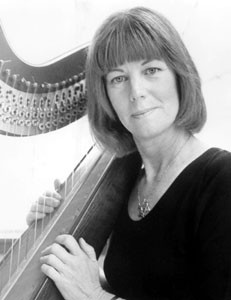
Political Science: North Bay musician Georgia Kelly.


Photograph by Tony Lane


Grace Note

Harpist works for peace in the Balkans

By Tara Treasurefield

Georgia Kelly learned about war and peace the hard way. She lived in Yugoslavia in 1991 when war broke out and literally tore that Balkan nation apart. Kelly’s experiences during that time–which included a massive U.S. air campaign–prompted her to begin studying what she describes as “the cycles that we seem doomed to repeat, unless we learn the lessons of history and actively create alternatives.”

Best known as a composer and harpist, Kelly also is president and executive director of the Praxis Peace Institute in Sonoma, which she founded last year. These days, she spends most of her time nurturing her new nonprofit, with breaks to drink Earl Grey tea, eat Belgian chocolate, and feed peanuts to the blue jays that visit her back deck and, on occasion, her den. “The point of Praxis is to identify conditions that lead to war and conditions that lead to peace,” she says. “We ask questions that are not being asked, expose inconsistencies between rhetoric and action, and link spiritual consciousness with responsible citizenship.”

Praxis offers many ways to prepare for responsible citizenship, through forums, workshops, and local and international conferences. These events bring together leading facilitators and thinkers in conflict resolution, psychology, sociology, political science, economics, history, philosophy, religion, feminist studies, and the arts and sciences.

The next Praxis event, scheduled for Oct. 28, will be a gourmet dinner in Oakville with a talk on the Collective Shadow.

In August, Sebastopol Mayor Larry Robinson, a well-known activist, spoke at a Praxis luncheon. He had just returned the night before from Japan, where he attended the World Conference of Mayors for Peace. “Visiting Hiroshima, listening to survivors, and seeing the exhibits in the museum dispels the fantasy that war can be won,” he says.

Other speakers at Praxis events have included Daniel Sheehan (of Christic Institute fame), Riane Eisler, Angeles Arrien, Sam Keen, Sherry Anderson, and Paul Ray.

The heart and soul of Praxis, and of Kelly’s work, is a biannual conference in Dubrovnik, Croatia. Topics for the next conference, set for June 4-11, 2002, include gender issues, economics, sustainability, media, and propaganda–all in the context of what furthers or hinders peace. “We’ll also learn from people who have experienced war directly,” Kelly says, “and who are now engaged in peace building.”

Stressing that “radical” means “getting to the roots,” Kelly takes every opportunity to practice political radicalism. At a reception for Roots of Peace, a group of Sonoma County vintners that replaces land mines with grape vines, she asked a State Department official, “Why hasn’t the United States signed the International Land Mines Treaty [which has been signed by 133 other nations]?” He replied that when he was a soldier in Vietnam, he was grateful for land mines. She retorted, “We had no business being in Vietnam in the first place!”

Still dumbfounded by the exchange, Kelly says, “He was trying to defend the inhumane use of land mines by invoking an illegal and unjust war. Such disconnected thinking begs for examination.” Meanwhile, U.S. ground troops sent to Afghanistan will find themselves in a country that has been described as “the world’s biggest mine field.”

Commenting on the brutal terrorist attacks of Sept. 11, Kelly says, “Our lives are rapidly changing. We must not be observers. We must have courage and speak out for clarity, for successful solutions, and for a world of cooperation, tolerance, and peace. Empathy is probably the link between spiritual consciousness and responsible citizenship–and we’re coming out of a society that’s very narcissistic.

“That’s not a judgment so much as a statement of fact. In order to be responsible citizens, we have to grow out of the narcissism that makes us consumers instead of citizens. We need to educate ourselves about the issues, discuss them with others, and become actively engaged in creating the changes we wish to see.”

For details about Praxis events, call 707/939-2973 or visit www.praxispeace.org.

From the October 18-24, 2001 issue of the Northern California Bohemian.

© Metro Publishing Inc.

Mulholland Drive


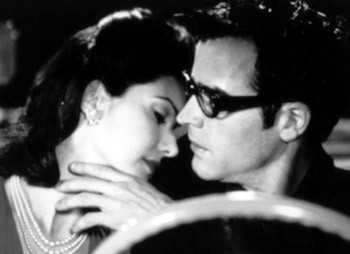
Touch of evil: Laura Harring and Justin Theroux delve into depravity.

Hell’s Highway

Demons take wheel on ‘Mulholland Drive’

By Richard von Busack

NO WONDER David Lynch called his last movie The Straight Story–it presented a total contrast to the director’s usual curlicue plotting. Apart from The Straight Story and 1990’s Wild at Heart, Lynch has spent his last 10 years or so creating a continuing and convoluted epic of demonic interference in human life.

His newest, Mulholland Drive, an erotic horror comedy/ tragedy, features Lynch’s usual blindfold-and-spin method of storytelling, made all the more disorienting through his heavily saturated colors and the hypnotism of Angelo Badalamenti’s music. “There is another world, but it’s in this one,” French director Jean Cocteau wrote. In divining this Other World, Lynch resorts to the ancient idea of humans being the prey of supernatural beings.

In Blue Velvet (1986), the gang members (sexually twisted outlaws led by Dennis Hopper) are so evil that they dwell on the fringes of the supernatural. Lynch’s Lost Highway (1997) also features a devilish “Mystery Man” (Robert Blake) with the ability to be in two places at once. His character fit perfectly with the plot of Lost Highway, a film that turned itself inside out, having neither beginning nor end.

Mulholland Drive is more Q-shaped, a circular narrative with a short epilogue. The film is salvage work, put together from a TV pilot rejected by two networks. In the newer additions, Lynch has changed the story from a kind of Nancy Drew investigation into a tale of the fatal betrayal of two lovers.

Mulholland Drive opens with a frenzied jitterbug contest, sampled, repeated, and projected on a blank violet background. From a spreading haze at the bottom of the screen, two misty faces materialize: a pair of grimacing elderly henchmen in Mr. Roque’s employ, spying on the dancers and selecting a girl for their use.

Like most demons you read about, Roque–a mute creature (played by Michael J. Anderson) who lives in a huge glass tank–prefers virgins. This one is named Betty Elms (Naomi Watts), from Deep River, Ontario, who wins the contest and comes to Hollywood to become a star.

House-sitting her aunt’s Hollywood apartment, Betty encounters a nude woman (Laura Elena Harring) in the bathroom. The woman, who calls herself “Rita,” is the amnesiac survivor of a botched murder attempt. The two–one a complete naive, the other without memory–try to solve the mystery of Rita’s identity.

The most factual parts of Mulholland Drive seem to be supernatural. We can’t tell what the demons are doing, but at least we know they’re doing it. Roque’s men are everywhere: they include a homeless troll behind a coffee shop, who possesses a blue box that’s an interdimensional worm hole; and a frightening albino named Cowboy (Monty Montgomery), who threatens violence with a little speech about attitude.

Perhaps in its complete form as a TV series, Mulholland Drive was intended to be a surreal meditation on the movies themselves. For example, Lynch has cast a living piece of MGM’s golden age, dancer Ann Miller, as Betty’s salty landlady, Coco. Perhaps in the longer version, Adam, a film director on the run, would have been more than the red herring he is in this version of the story.

Even retooled from pilot to movie, with characters jutting out like sawn-off timbers, Mulholland Drive is as sensual, elusive, and abruptly funny as a filmed dream-journal. That the mysteries of Lynch, our corn-fed Cocteau, are insoluble just make them all the more ravishing.

From the October 11-17, 2001 issue of the Northern California Bohemian.

© Metro Publishing Inc.

Second City

0


Block party: Second City comics mix classic material with new routines.

City Slickers

Second City troupe delivers comic relief

By David Templeton

“SORRY if I’m out of . . . breath,” gasps Kevin McGeehan, answering his phone after several rings. “I was just doing some pushups.”

Pushups? Wow. Sorry to interrupt.

But, hey–good for you. In these troubled times, we should all endeavor to remain in peak mental and physical form. That’s especially true of folks like McGeehan, whose occupations carry such a high potential for danger, trained professionals whose daily mission involves working with crowds of stressed-out people under unpredictably volatile conditions. Yes, the physically fit fellow on the phone holds what is, these days, one of the toughest jobs in America.

Kevin McGeehan is a comedian.

“Comedy is at a weird point right now,” he says. “Nobody’s sure what’s funny anymore. There’s been a very weird vibe since the attacks, where anything a comedian says can be misconstrued. People really do want to laugh again–there is an audience for comedy–but we really have to be on our toes.”

And they have to know which toes can be stepped on–and how hard.

A member of the legendary Second City comedy troupe–based in Chicago, with theaters in Toronto, Detroit, and Cleveland–the red-haired McGeehan has been slogging knee-deep through the wounded American psyche, traveling the country with one of Second City’s three six-person touring companies.

Today he’s back home in Chicago, winding down (and bulking up) in preparation for a brand-new, West Coast road-tour that will begin with a two-act retrospective show–it’s ‘The Best of Second City”–on Oct. 18 at Analy High School in Sebastopol.

Second City–for those who’ve been living in totalitarian states where laughing isn’t allowed–is the comedy institution that’s produced such superstars as John Belushi, Joan Rivers, Bill Murray, Gilda Radner, Andrea Martin, Dan Castalanetta, Martin Short, and Dan Aykroyd.

According to McGeehan, the current show is an 80/20 blend of classic sketches and songs–tapping into Second City’s 40-plus years’ worth of archival material–and brand-new routines that boast a heavy dose of on-the-spot improvisation.

“It’s part tried-and-true and part anything goes,” McGeehan says.

Representing the tried-and-true is one sketch–an old favorite–in which a boy at a baseball game tries to get the attention of his sports-obsessed dad with increasingly outrageous behavior. An example of something new–a piece written by McGeehan–shows what happens when a Christian rock band is accidentally booked to perform for students at a public high school and is forced to rethink its songs, replacing the word God with the principal’s name, Frank.

“If you take the word God out of a song about God,” says McGeehan, “It makes the song a whole lot funnier.”

Sounds like something that might still qualify as toe stepping.

“Sure, but you can’t avoid it,” he says. “What makes one person laugh makes someone else boo. The point is, people need to allow themselves to have fun, to get their minds on something else–at least for one evening.”

To that end, McGeehan and company are prepared to help.

“We’re ready to start taking some chances,” he says.

From the October 11-17, 2001 issue of the Northern California Bohemian.

© Metro Publishing Inc.

North Bay Public Transit

0

By Greg Cahill

Fasten your seatbelt. The merry-go-round that is North Bay public transit is coming back around, and elected officials hoping to grab that elusive brass ring are telling us to prepare for a November 2002 ballot measure aimed at levying a transportation sales tax to help cope with the region’s worsening traffic.

Last week, at a joint meeting of the Marin and Sonoma County Boards of Supervisors the consensus was that ballot measures will pop up in both communities. Similar measures have a long history of defeat, and were quashed most recently by Marin voters in 1998 and Sonoma County voters just last year.

The difference this time around is that North Bay rail service most likely will be the prominent item on the measures.The boards have agreed to merge authority over the old Northwestern Pacific Railroad right of way–running from Willits to Larkspur–creating one regulatory entity to replace the four agencies that currently control the rail line.

Other items on the proposed ballot measures would include Highway 101 improvements, and ferry service from Port Sonoma and Gnoss Field in Novato (and possibly Petaluma).

Expect a proposed half-cent sales tax hike, requiring two-thirds approval by voters, and a bumpy ride.

From the October 11-17, 2001 issue of the Northern California Bohemian.

© Metro Publishing Inc.

Sculpture Jam

0


Photograph by Michael Amsler

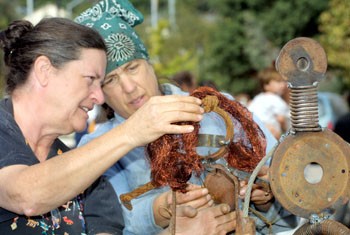
Jam band: Arleen Place and Virginia Harrison work with scrap metal at Sculpture Jam 2001.

Piece Process

Sculpture Jam transforms Sebastopol

By Gretchen Giles

PUNCTUATED by the loud whine of chain saws, the burr of marble-cutters, the hiss of welding torches, and the rhythmic, measured, metallic twang of pounding hammer heads, the recent three-day Sculpture Jam in Sebastopol was anything but quiet–though peace was the point.

The intensely physical action of making sculpture was evident in all its messy glory as the defunct lumberyard adjacent to the Sebastopol Center for the Arts became an ad hoc outdoor studio for some 23 artists for the fourth year in a row.

Literally shadowed by Running Fence–whose silky white car air-bag panels draped a shade for those working in the center of the yard–the Sculpture Jam was planned and organized long before the events of Sept. 11 changed all our lives.

Originally envisioned by coordinators Warren Arnold and Daniel Oberti as a way for artists to collaborate in a setting less lonely than the private studio, Sculpture Jam went off in a new direction after the World Trade Center and Pentagon disasters of last month. Based as it is in Sebastopol, a city that recently debated an official referendum to inform President Bush of its opposition to retaliatory attacks, the event took on a new tone as works that might have been merely artful became politically charged.

Most dramatically altered was Oberti’s contribution. A sculptor of international renown, Oberti lugged pounds of wet clay to the Jam, exhorting visitors and fellow artists to create weapons of mass destruction from the damp stuff. PVC piping outlined the small, cordoned square established for the “exhibit,” phallic missile shapes arising unsteadily from the dirt in its middle, clay guns pointing blindly at the sky.

On Sunday afternoon, the piping was transformed into a sprinkler system, its cool waters melting the beautiful wickedness as surely as Dorothy dumping a bucket. “It will be,” Oberti gaily predicted on Saturday, “a big mess!”

COMPLETELY COVERED in a fine film of limestone dust, stone sculptor Warren Arnold pulled off his earmuffs and goggles. “Where’s my red crayon?” he asked. Once it was retrieved from the rubble below his saw table, Arnold deftly drew fast upward strokes on the limestone flame he had just released from its block. “My goal is to make readable imagery as you walk by quickly,” he explained.

This flame was added to a growing pile of stone, metal, wood, and glass objects jumbled together near Arnold’s workstation. An impromptu shrine to the attack victims, this physical thought-process is destined to find a place in town.

In fact, the Sebastopol City Council has pledged to find sites to install most of the works created at this year’s event. The new pieces, which will be installed for a two-year period, will join works from previous Jams, including last year’s controversial “Door,” which now graces the town’s plaza. After this year’s additions, the town’s public places will be playing host to 16 Jam-created sculptures, according to Linda Galetta, Sebastopol Center for the Arts director.

Acknowledging the council’s commitment to public art, Arnold gestured across the street to another Jam alumnus, the “Split Rock.” Two imperfect halves of one whole, the “Rock” was fashioned during a previous year’s art confab and also stands in the plaza. “It’s become an instant shrine,” Arnold explained. “A place for the community to gather.”

And indeed, sun-warmed candle wax scents the ground around the “Rock,” piles of fresh loam are scattered at its base, orchard apples rot gently among pine needles and gourds and bits of homemade collage. “Peace,” anonymous hands have written on torn bits of notebook scrap, paper-clipped to a stand of dead oak branches. “Peace.”

From the October 11-17, 2001 issue of the Northern California Bohemian.

© Metro Publishing Inc.

High Speed Rail For California

0

Ticket to Ride

High-speed rail is the answer to California’s clogged roads and airports, but will the politicians get it?

By Jeff Kearns

ON A HOT, smoggy Monday afternoon in August, Gov. Gray Davis quietly forecast the end of freeway building in California. Standing on a freshly built eight-lane roadway in Southern California’s Inland Empire, he was surrounded by orange Caltrans trucks, TV cameras, and a passel of state and local officials sweating in their suits. The noon ribbon-cutting ceremony in the middle of farmland attracted about 2,000 onlookers, who gathered beneath the new green highway signs pointing the way east to San Bernadino and Barstow.

The opening of the first phase of a 28-mile, $1.6 billion extension of Interstate 210 from La Verne to San Bernadino isn’t exactly big news, except to frustrated Inland Empire commuters and Vegas-bound Angelenos. But in his remarks, Davis said this freeway will be one of the state’s last for the foreseeable future, because California’s transportation spending policies have been changed by economic necessity. On a cost-per-mile basis, freeways don’t pencil out.

Instead, in the March primary, Davis will ask voters to back a proposition that would redirect state gas tax revenues to other kinds of transportation projects. If it passes, the state would raise $36 billion over 20 years. This is a sum of money that could, if the state gets its act together, build an environmentally clean and viable alternative to today’s gridlock–high-speed steel rail.

A modern version of a nearly 200-year-old technology, high-speed rail runs through almost all of the major cities in Europe and Japan. The United States has managed to ignore the idea for decades. The state of California may change that.

Proponents are working on a 10-year, $25 billion plan to link population centers in San Jose, San Francisco, Los Angeles, San Diego, and Sacramento with a 220-mph train, redirecting millions of travelers away from clogged freeways and airports. The trains could be up and running within a decade–if our elected officials ever get on board.

The barrier to high-speed rail in the United States isn’t, as some might assume, technology–it’s politics. State-of-the-art rail systems are there for the taking, but elected leaders generally won’t support anything on rails.

Choo on This

The California High-Speed Rail Authority is a tiny agency that can’t get the time of day from state lawmakers, who created the agancy in 1998 and never gave it the power inherent in its name. It remains in the embryonic stage, with four employees and nine appointed board members.

This year, Gov. Davis axed the authority’s entire $14 million budget request for environmental studies, leaving just the $1 million operating budget intact. Although the energy crisis zapped the budget surplus, what should be an important policy initiative wound up with crumbs: less than a hundredth of 1 percent of the state’s $80 billion budget.

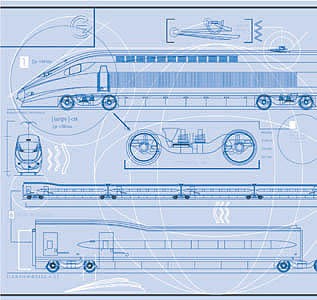
Where It Will (and Won’t) Go: Although a final route hasn’t been selected yet, the high-speed rail line would serve all of the state’s major population centers.

Local Motion: Fasten your seatbelt. The merry-go-round that is North Bay public transit is coming back around.

Because it is still struggling to obtain even small amounts of state funding, the High-Speed Rail Authority employs just a handful of workers who, to cut costs, oversee a hired army of environmental and engineering consultants. So far, much of the early work has been contracted out to six teams, five of which are concentrating on a specific region. They have spent the last few years working on the extensive $25 million environmental impact report that the authority needs to complete before it secures funding.

And while Sacramento and Washington both lack the political will to support the high-speed rail effort, even one that could pay off in decades instead of months–politicians don’t like to look down the road past their next election–the choking off of its small budget risks major setbacks for the efforts already under way.

At the same time, the state continues to grow: The U.S. Census Bureau predicts that the state’s 34 million residents will number nearly 50 million by 2025–close to the current population of Italy.

And all of them won’t fit on freeways.

Speed Freaks

California’s high-speed train proponents, on the other hand, offer up a vision of quick, easy travel. In their alternate future, North Bay residents could board a train in San Francisco and find themselves at Los Angeles’ Union Station just two hours later–faster, in total trip time, than any airline flight. On express trains, there would be no advance ticket purchase needed, no check-in, no seat assignment, no baggage check, and no FAA restrictions. The highly automated, lightweight trains would run on dedicated tracks, fenced off, with no at-grade crossings. Because of safety and track maintenance, high-speed trains would not use the same tracks as existing passenger and freight trains. High-speed trains use continuously welded rails that are precisely aligned by laser equipment.

Planners forecast that the system could be carrying 42 million passengers a year by 2020, and even as many as 60 million a year. Segments of track could be carrying passengers–and producing revenue–by as early as 2011. Longer segments could be up and running in 10 years, with the entire 700-mile system open by 2016. Their vision is that in about 14 years, a bullet train will be solving California commuters’ woes and addressing a critical environmental and quality-of-life issue: helping Californians travel to work from the places they can afford to live.

Further down the tracks, if the system proves successful, profits could be used to extend service to other parts of the state.

Sounds great, right? So what’s the holdup?

The first holdup is: getting someone to notice.

“Unless we kill a busload of nuns, we don’t get network airtime,” rail advocate James RePass said in a speech last year. At the authority’s Aug. 1 meeting in San Jose, board members complained that the media were ignoring the issue. As Executive Director Mehdi Morshed updated board members on the authority’s near-empty bank account, one fed-up board member interrupted.

“Those of us who have been serving on this board are extremely frustrated,” fumed board member Jerry Epstein, a Los Angeles developer and Pete Wilson appointee. “It is absolutely a travesty that we have already spent so many millions of dollars, and for them to cut us off now is unbelievable.

“We should invest money in a proper PR firm that will force the legislators to come up with some money,” Epstein proposed. “We are absolutely living in the dark ages here. We must do something to wake up the people of California. Unless we have a rail system, we are going to be just mired in traffic.”

This, of course, is the understatement of the century so far.

Board members are scheduled to take some big steps forward at their November meeting in Bakersfield, when they will eliminate many of the routes under study and get significantly closer to choosing the final alignment that the system will use. “This is a critical milestone for the authority,” Deputy Director Dan Leavitt says.

But at the same time, the authority is staring down a funding crisis that could halt progress on the environmental studies unless state or federal lawmakers can come through with a new source of funding.

Not Amtrak

Perhaps in part fostered by the lack of media coverage on rail and mass-transit issues, the other hurdle for high-speed rail backers is the public perception that rail isn’t profitable because it isn’t popular–and vice versa.

Actually, extensive marketing studies commissioned by the authority show that not only is the potential ridership higher than first thought, but these riders are willing to put their wallets where their butts would go. According to Morshed, two thirds of the respondents polled said they would support the train and would be willing to support a quarter-cent or half-cent sales tax to finance its construction.

But the dismal reality of the issue is that government transportation dollars in the United States go to subsidize expensive highway and airport projects, not rail, and that lack of support from shortsighted elected officials is one of the main reasons that rail hasn’t caught on. In turn, U.S. rail service is generally slow, infrequent, expensive, and decades behind.

Ask most people about rail, and they’ll think of Amtrak, the company that gives trains a bad name. Amtrak’s new Acela (the name’s supposed to sound like acceleration and excellence–talk about unintended irony) connects Boston, New York, Philadelphia, and Washington at speeds up to 135 mph. However, unimproved tracks limit Acela to slower speeds for many of those miles, and it continues to disappoint. Acela’s on-time record is poor, barely better than the shuttle flights it competes against, and ridership and revenue both sag below target levels. Nonstop service from Washington to New York was dropped, and a nonstop from New York to Boston never started.

Morshed wants to emphasize that what California has planned isn’t something like a clunky Amtrak upgrade.

“The main thing that is important to know is that when we talk of high-speed rail, we are not talking about anything that we have in this country,” he says. “This is a very fast train that’s comfortable and luxurious and safe and as fast as an airplane.”

Meanwhile, Amtrak flounders.

Nationwide, service is slow, often slower than driving. The trip from San Francisco to Los Angeles takes 12 hours, and costs more than airfare. Trains can cruise at 79 mph, but unimproved track (owned by freight train companies) often forces them to creep along at slower speeds. The rail network got a boost in ridership after the terrorist attacks, but will likely lose it again.

The heavily subsidized rail network is a private corporation that was formed when the federal government merged four dying passenger rail companies in 1971. Congress has demanded that it start operating in the black by 2003 or face big cuts or even defunding. Amtrak has pocketed $23 billion in federal funds since its creation. According to its 2000 Annual Report, even with ridership and revenues on the rise, Amtrak operated at a loss of $944 million.

But while Congress continues to push Amtrak to get its act together, lawmakers won’t give it the money it needs to succeed.

Amtrak Chairman and CEO George Warrington, quoted in the National Journal, grumbled that the United States, ranked by rail capital spending as a percentage of total transportation spending, is somewhere between “Estonia and Tunisia.”

Tokyo Go Go

Contrast Japan: The country unveiled its first 125-mph Shinkansen just before the opening games of the 1964 Olympics in Tokyo. Since then, the national rail system has been privatized, and the network continues to expand.

A few blocks from the Imperial Palace, Tokyo Station is the hub of the network. White and blue trains glide into the station on tracks elevated above the streets of the Ginza District every couple of minutes. They sidle up to the platform almost silently, with an electric hum and a whoosh of air. Delays are nearly nonexistent, and the average deviation from schedule can be measured in seconds, not minutes. Except for the large seats and abundant legroom, the interior resembles a plane. Cruising at 186 mph, the train sways only slightly.

The technology evolves through continual research and development. The Japanese have tested Shinkansen at 300 mph. In Europe, France opened its first TGV (Train à Grande Vitesse) line in 1981, and is also continuing to expand service. Germany’s ICE (Inter-City Express) trains kicked off service in 1991. Spain, Italy, and Sweden have also followed. A handful of other European countries, plus South Korea, Taiwan, China, and Australia, are in various stages of planning or building fast trains. Even cash-strapped Russia is building a high-speed line from Moscow to St. Petersburg.

But while high-speed rail has been unquestionably successful in Europe and Japan, where it connects almost every major city, those parts of the world have much higher population densities–Japan’s is about four times California’s–and also have governments willing to fund development and expansion. Japanese and European motorists also pay big bucks–$3 to $4 a gallon–for gas, which generates tax revenues used to fund mass transit.

Still, California’s growing pains have begun to push transportation planning into the public consciousness, and voters are becoming more receptive to using tax dollars to fund transit solutions. Sales tax increases passed last year in Santa Clara and Alameda counties would support this. Presumably, the greatest support for the system would come not from transportation planners and rail advocates but rather from L.A.-to-Bay Area travelers who have endured delays longer than the flight itself, or made the drive on I-5 without air conditioning in summer.

If We Build It . . .

From a small office on the top floor of a tall building across the street from the Capitol, Dan Leavitt points to the Sacramento train station, near the river. That’s where the northernmost terminus of the high-speed rail system will probably be built. According to projections, it will serve 7 million passengers a year, depositing them a short walk from the Capitol. (The station is in roughly the same location as the original terminus of the Transcontinental Railroad, which was completed in 1869. Ironically, though the Irish and Chinese immigrants who built that first cross-country rail link worked only with hand tools and dynamite, construction took just six years.)

In phrases honed from hundreds of presentations, Leavitt drops facts and explains background as if he’s reading off a printed paper placemat.

Planners are currently officially considering two technologies: Steel wheel on steel rail (the same as conventional trains and the bullet trains in Europe and Japan), and maglev, which uses electric currents to propel trains that levitate about an inch above a track.

Though both options are under study, maglev almost certainly won’t get the nod. Japan and Germany have built test tracks, and Japanese tests have hit 340 mph, but maglev still hasn’t carried paying passengers. On the other hand, high-speed rail technology has been available for decades and continues to improve.

Leavitt predicts the system could carry 32 million intercity passengers a year, plus 10 million commuters, while operating at a surplus–a boast almost no existing public transportation system in the United States can make. In addition to passengers, rail planners believe a statewide high-speed rail network could make additional money by carrying high-value and time-sensitive freight at night.

Morshed says the authority expects to operate at a surplus of more than $300 million a year, at a conservative estimate, and potentially as much as $1 billion a year. The hard part, however, is funding the $25 billion initial capital investment, especially after the electricity crisis deflated the state’s budget surplus. It may sound like a lot, but that’s only about a tenth of how much local, state, and federal cash will go to fund transportation projects in the state over the next 20 years. (To put the cost in perspective, Los Angeles city officials are planning a $12 billion expansion of LAX. SFO is proposing a $3 billion runway expansion.)

Former Santa Clara County Supervisor Rod Diridon Sr., a longtime rail evangelist, recently became a key figure in the drive to create the rail network, a move that may bode well for the project.

Diridon was appointed to the High-Speed Rail Authority board by Gov. Davis in June, and elected chair by board members in August. The son of a Southern Pacific engineer, Diridon himself worked as an SP brakeman in college. After a long career in politics, Diridon was named director of the Mineta Transportation Institute, a publicly funded transit think-tank at San Jose State. He was also a member of the state high-speed rail commissions that preceded the formal creation of the authority. (As perhaps further proof of the longevity of his obsession, Diridon is the only board member with a train station named after him.) Diridon’s appointment to the board could be an important shot in the arm for the program because of his political connections in Sacramento.

It doesn’t take much to get Diridon started on the subject of how the United States trails Europe and Japan in the mass transit department. “Europe spent $11 trillion upgrading an already superior transit system, and most of that was spent on high-speed rail,” he says. “We’re all bogged down in our commitment to outdated technology. They’re more advanced in using transit tools than we are. We’re developing transit systems that are bound by petroleum.”

But Diridon is confident that, although Americans lag, California’s system is far from doomed. “When it’s built, it will undoubtedly pay for itself,” he says, “and if we build it, I know that the public will embrace it.”

From the October 11-17, 2001 issue of the Northern California Bohemian.

© Metro Publishing Inc.

Bob Dylan

0

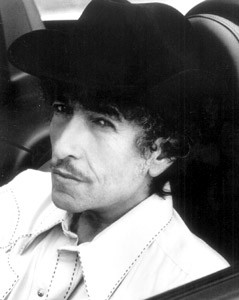
Big Wheel Bob Dylan: Driven to distraction?


Photograph by David Gahr


American Pie

Dylan’s new album preaches to the choir

By Gina Arnold

BOB DYLAN’S career has had its unfortunate anomalies, but with two good albums in a row, could it be too much to hope that he’s back in a groove? Time out of Mind, his last record, sold more than any of the last 20, suggesting that–despite evidence to the contrary–quality is still recognizable, and crap is shunned. While it wasn’t the greatest record since Highway 61 Revisited, it was the best “new” Dylan album in decades, leading one to believe that if Aerosmith or the Rolling Stones–or R.E.M. for that matter–actually put out a good album it would sell by the trainload.

It’s a heartening realization–and even better news is the fact that Dylan’s latest record, Love and Theft, is another good one. Like Time out of Mind, it contains strong songwriting and good playing–by a crack band led by young guitar whiz Charlie Sexton–as well as Dylan’s trademark voice and unique take on American folk music.

If you’re a Dylan fan, you’ll definitely want to get this one. If not–well, if you’re not a Dylan fan, then this record won’t turn you into one.

And therein lies the rub. At this point in his career, what could Bob Dylan do to win over new listeners? Nothing short of another generational anthem–and we sort of need one right now–would reinstate him in our good graces, and though this is a fine record, it doesn’t carry that sort of strength.

That said, these days Love and Theft seems like a good title for a record about America: what is capitalism, after all, if not the ultimate outcome of both?

This record is about America, although not the America I know, with its jet-setting young people, its bellbottoms and hip-hop and high-tech and extreme sports. This is an older America, the one that folksingers like to sing about, full of mysterious highways and noxious nighttime alleys and sleepy Southern landscapes and summer days. It is an America that people like Dylan have been romanticizing for years–and it is one that, dare I say, is totally irrelevant.

That doesn’t mean it isn’t musically dynamic, however. On this album, Dylan fools around with every possible musical style–from blues (“Lonesome Days Blues”) to vaudeville (“Bye and Bye”) to ballad (“Mississippi”) to, for lack of a better word, Dylanesque cynicism (“Tweedledum and Tweedledee”). On all these songs, Dylan’s voice is the same braying horn it’s ever been, but if it doesn’t bug you by now, it never will.

Love and Theft is the 60-year-old Dylan’s 43rd album. With that amount of tunes and words under his belt, it’s hard to believe he could pull off something unique–and indeed, there is something strangely familiar about everything on here.

Part of the familiarity should be attributed to his voice, which is as cozy and as easy to caricature as that of Homer Simpson. But it’s also something embedded in every other aspect of his work: the way he phrases a lyric, for example, and the point of view he brings to life, which is inevitably cranky rather than sweet (“Poor boy in a hotel called the Palace of Gloom/ Called down to room service, says, ‘Send up a room’ “).

STILL, although it may not be a fair expectation to have about any artist, the question that comes up with every new Bob Dylan release is not “Is it good?” but “Is it relevant?”

Perhaps more to the point: is anyone relevant anymore? Relevancy in rock music is, after all, the currency that Dylan invented with his early works of laser-sharp social critique, but he hasn’t really dealt in it in years. Dylan’s records, with their emphasis on Americana, are perhaps even more inward than most. That doesn’t make them bad records, but they’re not exactly where I’d go to look for understanding or relevance in times of crisis anymore.

From the October 11-17, 2001 issue of the Northern California Bohemian.

© Metro Publishing Inc.
Proprosed Rout For California High-Speed Rail

0

Where It Will (and Won’t) Go

By Jeff Kearns

Although a final route hasn’t been selected yet, the high-speed rail line would serve all of the state’s major population centers.

From San Diego, trains will speed north to Los Angeles and Bakersfield and Fresno. Near Merced, the route will split: One track will continue north through Stockton to Sacramento, the other to San Jose and a downtown San Francisco terminus.

Though Oakland lobbied extensively for service, if the East Bay does get a high-speed line, it is likely to come only later in the development of the system, or in the form of a faster conventional rail line. Orange County is in the same boat.

However, on top of dedicated high-speed rail, the authority also hopes to upgrade service on two other busy corridors by helping to plan and finance faster, more frequent service. The conventional rail service on the San Jose-Oakland-Sacramento line and the coastal Los Angeles-San Diego route, both busy and growing today, would be targeted for upgrades under the plan.

The busiest high-speed rail station, Los Angeles Union Station, would serve 9 million passengers per year, and may be connected to Los Angeles International Airport. Today, LAX is the third busiest airport in the world, serving 68 million passengers a year, and may hit 100 million by 2010. Though SFO would be served by a high-speed rail stop in Millbrae, LAX is miles away from downtown LA and nowhere near Union Station.

While it’s essential that Union Station and LAX be linked, and governmental and business groups are already studying how to make it happen, the link will likely be eliminated from the study in November. Local agencies may instead build their own cross-town links.

From the October 11-17, 2001 issue of the Northern California Bohemian.

© Metro Publishing Inc.
Give War A Chance

0

Yesiree, I say, bombs away! Rockets red glare! We are all white with foam!

By Michael Moore

Oh, don’t get me wrong–I deplore war and killing and violence. But, hey, I’m a pragmatist, I know where I live, this is America and dammit, somebody’s ass had to get kicked!

Our Leader, a former baseball club owner, could have at least had the decency to wait one more day until the baseball season was over. Poor Barry Bonds–will anyone even remember what he did a month from now? At least Fox had the good grace to get the football game back on the tube within an hour of the war’s start! They KNEW none of us could stomach looking at Stepford Drones from Fox News for the rest of the day.

Fellow liberals, lefties, Greens, workers, and even you loveable Gore voters and recovering Democrats–let me tell you why I think this war on Afghanistan is good for all of us:

1. Network unanimity in naming the war.

It has been so confusing the past four weeks, what with all the networks calling this thing we are in by so many names: “America’s New War,” “America Under Attack,” America Fights Back,” “War on Terrorism,” etc. Now, nearly every network has settled on “America Strikes Back.”

I like this because, first of all, it honors George Lucas. We’re a humble people, we Americans, so we can’t quite bring ourselves to call it “The Empire Strikes Back.” “Empire” sounds a little scary, and there’s no use reminding the rest of the world that we call all the shots now. So “America Strikes Back” is appropriate (and, as Sunday was the last day of baseball, “strikes” has the necessary sports metaphor we like to use when bombing other countries).

2. The citizenry can now go back to what they were doing.

I don’t know about you, but nearly four weeks of anxious and tense anticipation of what would happen next was starting to wear me down. I thought nothing could top what spending the whole summer agonizing over whose baby it was on “Friends” did to me.

But the last four weeks was worse than a bad classic rock extended drum solo. NOW we have resolution. NOW we know the ending–the bombing to smithereens of a country so advanced it has, to date, laid a total of 18 miles of railroad tracks throughout the entire country! How very 19th century of them! I hope our missiles were able to take them out. I don’t want this thing going on forever. Best that we obliterate them before they come up with some smart idea like the telegraph.

3. Dick Cheney has been moved into hiding again.

This can only help. The farther this mastermind can be kept from young Bush, the better. He’s like that creepy friend of your dad’s who has taken a bit too much of a shine to you. Wait–he is that creepy friend of his dad’s! Anytime I hear they have transported Cheney out of town and into a bunker in the woods, I feel safe. And don’t worry about him having any workable form of communications with Bush–remember, this is a government which discovers that a known terrorist is taking flying lessons in Florida and does nothing.

4. Rush Limbaugh, Bill O’Reilly, Orrin Hatch will all be fighting this war for us!

These are all honorable men, men of their word, men who would not expect someone else to fight their battles for them. They have all called for war, revenge, blood–and, by God, it is blood I want them to have! Now that we are at war, let us insist that those who have cried the loudest for the killing be the first to go and do just that!

I would like to see, by the end of the day, Rush and Bill, Orrin and the rest of their colleagues down at the recruiting station signing up to join the U.S. Army. Sure, I know they are no longer young, but there are many jobs they will be able to do once they get through the Khyber Pass. Surely these men would not expect our sons and daughters to die for something that they themselves would not be willing to die for.

Get your butts over there to Afghan-istan and defend a way of life that allows companies like Boeing to get rid of 30,000 people while using the tragedy in New York as their shameful excuse.

5. Really cool war footage.

It’s been way too long since we’ve been able to watch those cruise missiles and smart bombs with their little cameras on them sail in and blow the crap out of a bunch of human beings. This time, let’s hope the video is in color and that it’s attached with a miniature set of Dolby speaker microphones so we can hear the screams and wails of those Afghanis as our shrapnel guts them into strips of bacon. Oh, and let’s pray the video can be loaded into my Sony Playstation!!

6. Better a quickie war than a permanent war.

Orwell warned us about this one. Big Brother, in order to control the population, knew that it was necessary for the people to always believe they were in a state of siege, that the enemy was getting closer and closer, and that the war would take a very long time.

That is EXACTLY what George W. Bush said in his speech to Congress, and the reason he said it is because he and his buddies want us all in such a state of fear and panic that we would gladly give up the cherished freedoms that our fathers and those before them fought and died for. Who wouldn’t submit to searches, restrictions of movement, and the rounding up of anyone who looks suspicious if it would prevent another September 11?

In order to get these laws passed that will strip us of our rights, they have been telling us that we are in a LONG and PROTRACTED war that has no end in sight. Don’t buy it! We are bombing Afghanistan, and THAT is the only war in progress. It should be over anywhere from a few days from now or in about nine years (Soviet-style). Either way, it will end. The good guys will win. And, if George II is anything like George I, then the bad guy will win, too, getting to live and go on doing what he enjoys doing (what were we, like, 40 miles from Baghdad?) while we continue to bomb the innocents (540,000 Iraqi children killed by U.S. in the last 10 years from bombs and sanctions).

As I’m sure you must agree, there are many upsides to this war. Sure, The Emmys got cancelled again, and, as a nominee this year, I already found out that I wasn’t getting one of those little gold people so who cares if I can’t walk down the red carpet in my Bob Mackie gown? I don’t even wear a gown–I wear pants, ill-fitting pants at that! Yesiree, I say, BOMBS AWAY! Rockets red glare! We are all WHITE WITH FOAM!

And please, let’s look at the bright side for once: The last time a Bush took us to war and got a 90 percent approval rating, he was toast and a ghost the following year. You can’t get better than that.

Author and filmmaker Michael Moore is the creator of ‘The Awful Truth’ and ‘Roger and Me.’

From the October 11-17, 2001 issue of the Northern California Bohemian.

© Metro Publishing Inc.

Peter Coyote

Apostle of grooviness explores the politics of fearBy David TempletonTHERE'S A TRAUMA of fear that has suddenly descended on the United States," says Peter Coyote. "A fear we've been feeling ever since the terrorist attacks. But I don't think it's about what people think it's about."With the mention of Sept. 11, the actor-author-activist's raspy voice takes on a...

Georgia Kelly

Political Science: North Bay musician Georgia Kelly.Photograph by Tony LaneGrace NoteHarpist works for peace in the BalkansBy Tara TreasurefieldGeorgia Kelly learned about war and peace the hard way. She lived in Yugoslavia in 1991 when war broke out and literally tore that Balkan nation apart. Kelly's experiences during that time--which included a massive U.S. air campaign--prompted her...

Mulholland Drive

Touch of evil: Laura Harring and Justin Theroux delve into depravity. Hell's HighwayDemons take wheel on 'Mulholland Drive' By Richard von BusackNO WONDER David Lynch called his last movie The Straight Story--it presented a total contrast to the director's usual curlicue plotting. Apart from The Straight Story and 1990's Wild at Heart, Lynch has spent his last 10 years...

Second City

Block party: Second City comics mix classic material with new routines.City SlickersSecond City troupe delivers comic relief By David Templeton"SORRY if I'm out of . . . breath," gasps Kevin McGeehan, answering his phone after several rings. "I was just doing some pushups." Pushups? Wow. Sorry to interrupt. But, hey--good for you. In these troubled times, we should...

North Bay Public Transit

By Greg CahillFasten your seatbelt. The merry-go-round that is North Bay public transit is coming back around, and elected officials hoping to grab that elusive brass ring are telling us to prepare for a November 2002 ballot measure aimed at levying a transportation sales tax to help cope with the region's worsening traffic. Last week, at a joint...

Sculpture Jam

Photograph by Michael AmslerJam band: Arleen Place and Virginia Harrison work with scrap metal at Sculpture Jam 2001.Piece ProcessSculpture Jam transforms SebastopolBy Gretchen GilesPUNCTUATED by the loud whine of chain saws, the burr of marble-cutters, the hiss of welding torches, and the rhythmic, measured, metallic twang of pounding hammer heads, the recent three-day Sculpture Jam in...

High Speed Rail For California

Ticket to RideHigh-speed rail is the answer to California's clogged roads and airports, but will the politicians get it? By Jeff Kearns ON A HOT, smoggy Monday afternoon in August, Gov. Gray Davis quietly forecast the end of freeway building in California. Standing on a freshly built eight-lane roadway in Southern California's Inland Empire, he was surrounded by...

Bob Dylan

Big Wheel Bob Dylan: Driven to distraction?Photograph by David GahrAmerican Pie Dylan's new album preaches to the choir By Gina Arnold BOB DYLAN'S career has had its unfortunate anomalies, but with two good albums in a row, could it be too much to hope that he's back in a groove? Time out of Mind, his last record, sold more...

Proprosed Rout For California High-Speed Rail

Where It Will (and Won't) GoBy Jeff KearnsAlthough a final route hasn't been selected yet, the high-speed rail line would serve all of the state's major population centers.From San Diego, trains will speed north to Los Angeles and Bakersfield and Fresno. Near Merced, the route will split: One track will continue north through Stockton to Sacramento, the other...

Give War A Chance

Yesiree, I say, bombs away! Rockets red glare! We are all white with foam! By Michael MooreOh, don't get me wrong--I deplore war and killing and violence. But, hey, I'm a pragmatist, I know where I live, this is America and dammit, somebody's ass had to get kicked! Our Leader, a former baseball club owner, could have at...
11,084FansLike
4,606FollowersFollow
6,928FollowersFollow