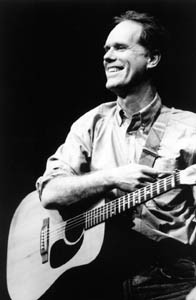
The Flatlanders

0

Cow-Pie Serenade

The Flatlanders ride again

By Greg Cahill

“I’M A DUAL personality,” says singer-songwriter Jimmie Dale Gilmore with a quiet laugh during a phone interview last year. “You know, I’m sort of the new kid on the block–enjoying a newfound success–and I’m the jaded veteran. I guess you could say I’m watching it unfold through both sets of eyes.”

It’s an unusual situation, to be sure.

Nearly 35 years ago, Gilmore’s now-defunct band, the legendary Flatlanders–Gilmore, Joe Ely, and Butch Hancock–helped pave the way for today’s trendy retro- and alt-country sound with an innovative blend of old-timey country, folk, blues, and rock styles. Shunned by the Nashville establishment, this talented trio of Texas troubadours has long enjoyed the dubious status of critics’ darlings. Unlike many of today’s cafe cowboys, these hombres have credentials: Gilmore, born and raised in Lubbock, Texas, had his first demos in 1965 financed by Buddy Holly’s father; Ely, a high school dropout, rambled around the globe as a rock minstrel, and eventually settled back in Lubbock, where he worked as a fruit picker, circus hand, dishwasher, and itinerant musician; and Hancock, also a Lubbock native, spent hours listening to music on border radio stations when he wasn’t driving the tractor on his father’s farm.

In 1971, the Flatlanders–a band that combined modern lyrics and traditional instrumentation, including a musical saw–was, well, big in Lubbock. Their sole 1972 recording (released only on eight-track tape) quickly vanished but became an instant cult classic. In 1990, Rounder Records reissued the album as More a Legend than a Band. Gilmore, Ely, and Hancock became cult heroes, getting the spotlight on Austin City Limits, sometimes making guest appearances on each other’s albums, and, occasionally, to the delight of Americana fans, getting back together for a Flatlanders reunion.

A thousand honky-tonks later, the Flatlanders reunite one more time on Saturday, May 26, at the Mystic Theater in Petaluma.

OF THE THREE, Gilmore probably has enjoyed the widest success. He resurfaced in the mid-’80s on the Oakland-based Hightone label. In 1991, Rolling Stone selected Gilmore as country artist of the year in its prestigious annual rock critics’ poll. And USA Today–and another 100 or so newspapers–named Gilmore’s 1991 major label debut, After Awhile (Elektra), country album of the year. The All Music Guide has noted that he now represents the renegade Austin music scene, in the same way that Willie Nelson once personified the cosmic cowboy.

Ely–who bolstered his career after opening a 1981 British tour for the Clash–found himself locked him out of the Nashville mainstream long before “alt-country” became a commercial option. In a review of his electrifying Live at Antone’s (Rounder) CD last year, Bohemian music critic Karl Byrn opined that “from the opening epic, ‘The Road Goes on Forever,’ to the closing rave-up, ‘Oh Boy!,’ Ely’s originals and covers are spiced with tastefully dueling guitar and pedal steel leads, images of dusty drifters and sweaty roadhouses, and the cheers of hardcore fans who at one point yell out, ‘We love you, Joe!’ ”

Meanwhile, Hancock has languished on the pages of obscure Americana music magazines like No Depression and Dirty Linen. He has released a string of small label CDs–including and self-produced cassettes, including No Two Alike, a 14-tape series recorded during one glorious week at the Cactus Cafe in Austin. He also has penned hit songs for Emmylou Harris and the Texas Tornadoes, but his solo albums–including acoustic-based material that would do Bob Dylan proud–are well worth searching out.

The Flatlanders perform Saturday, May 26, at 8 p.m. at the Mystic Theater, 23 Petaluma Blvd. N., Petaluma. 707/765-2121.

From the May 17-23, 2001 issue of the Northern California Bohemian.

© Metro Publishing Inc.
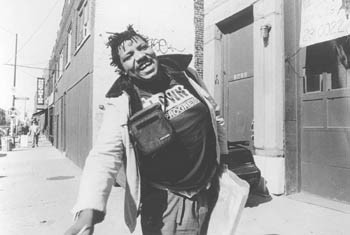
Gerald Nicosia

Winds of change: Marin author Gerald Nicosia chronicles the battles that Vietnam vets had to fight, on the inside and in the world.

The War at Home

Gerald Nicosia chronicles struggles of Viet vets

By Jonah Raskin

GERALD NICOSIA never set foot in Vietnam and never served a single day in the military. But after spending much of the last 12 years of his life in the company of volatile Vietnam veterans, he often feels that he’s one of them.

“I feel like I fought in the war,” he says, as we talk in the cozy house on a quiet residential street in Corte Madera, where he lives with his wife and two children.

It’s here that Nicosia wrote Home to War (Crown; $30), a big, heartfelt book that chronicles the battles veterans had to fight–for peace, for health care, for their own dignity–when they returned to the states from the jungles of Southeast Asia.

More than 600 pages long and packed with poignant narratives about the veterans themselves, often in their own explosive words, Home to War is a beautifully told work of contemporary history and a lyrical anti-war epic.

Nicosia is the author of four previous books, including Memory Babe, his award-winning biography of Jack Kerouac. But Home to War feels like his masterwork, the book he had to write to be at peace with himself and with the veterans who brought the war, willy-nilly, into his own life as a teacher and biographer.

“I started it in 1988,” Nicosia says as he sits in the cramped study that boasts photos of Jack London and Jack Kerouac, his long-time literary heroes.

“I interviewed hundreds of people, many of whom have since died of drug overdoses, agent-orange cancers, and suicide,” he recalls. “I’ve been through four publishers–Norton, Grove, Holt, and Crown. If I had known it was going to be this difficult, I might not have started it in the first place.”

In fact, Home to War has been a lot longer in the making than just 12 years. You might say that Nicosia began his journey in 1965, when he was a bright high school student in Berwyn, Ill.–“a redneck, racist place” he calls it–where boys were raised to fight and die for their country.

“I went to a Catholic church where the priest told us it was our moral duty to go to Vietnam and kill Communists,” Nicosia says. “In those days and in that place, you weren’t supposed to read the Bible yourself. The priest was supposed to interpret it for you. But I bought my own Bible, and discovered that St. Matthew says we’re supposed to love our enemies, a sermon I never heard in church.”

Henry David Thoreau’s essay “Civil Disobedience” also inspired him, much as it inspired the civil rights protesters of the 1960s. But it was Walden–and Thoreau’s message to heed a “different drummer”–that made Nicosia a pacifist and impelled him to resist the war in Vietnam.

Walden blew me away,” he says. “It was a liberating book that taught me to make my own declaration of independence. From Thoreau, I learned the political power of books. I decided I was going to be a writer one day, too.”

In 1967, when he turned 18 and became eligible for the draft, Nicosia followed the dictates of his own conscience and joined the ranks of the anti-war movement at the University of Illinois in Chicago, though he never became a visible leader or a spokesman.

His own father urged him to enlist and find a safe job far from the front, but even that option seemed like collaborating with the war-makers, and Nicosia made plans to go into exile in Canada.

Then, in 1971, the draft ended and, like thousands of other young men ripe for military service, Nicosia was off the hook, and finally able to sleep at night. Following graduation, he taught rhetoric at his alma mater and began to learn about Vietnam by meeting veterans face to face.

“One of my best students was a black GI named Al Nellums,” Nicosia says. “In my English class he wrote an essay titled ‘The First Man I Ever Killed,’ in which he describes how he pulled out a pistol and shot, at point-blank range, a Viet Cong guerrilla who was trying to kill him. ‘How do I live with that?’ he wanted to know.

“It was a question I couldn’t answer,” Nicosia continues. “But I began to see how the war had followed the men home, and how they couldn’t shake it.”

Other veterans, including Bill Troutman–who served in Vietnam during the traumatic Tet offensive of 1968–opened Nicosia’s eyes to a war that continued to rage inside.

“My own youth had been traumatized by Vietnam,” Nicosia says. “I had been angry and then I cooled, but for the vets the anger was still red-hot and that was a revelation.”

In 1984, a year after the publication of his monumental biography of Jack Kerouac, Nicosia met Ron Kovic, and though they had taken very different paths in life, they fast became the closest of friends. The author of Born on the Fourth of July (the memoir that Oliver Stone made into a movie), Kovic was then, and probably is still today, the best-known Vietnam veteran–aside from former Nebraska Sen. Bob Kerrey, who made headlines last month with controversial revelations about his military record.

Kovic is also probably the most vocal anti-war soldier of his generation. Wounded in battle in 1968, and a paraplegic ever since, Kovic has spent more than half his life in a wheelchair.

“I hung out with Ron when he lived in a cottage in Sausalito,” Nicosia says. “In public he put up a good front, but in private I got to see his wounds, his withered legs, his gloom and hatred. ‘I wish I could put all of you in chairs so that you’d suffer like I suffer,’ he once said. It was only a moment and it passed, but it was real, too.”

OVER THE YEARS, there were other vets who touched Nicosia, including Bobby Waddell, who became a heroin addict while serving in the Air Force in Vietnam and who later spent four years in prison in California on drug charges.

“I’d visit him in Tehachapi, and he’d say, ‘You’ve got to tell our story. Please write our story,’ ” Nicosia recalls. “After he practically begged me to write the book I couldn’t refuse.”

In Home to War, Nicosia tells heartbreaking stories about Bobby Waddell, Ron Kovic, and a platoon-sized outfit of other soldiers–without either patronizing them or idealizing them.

He also describes the veterans’ fragile organizations, including Vietnam Veterans Against the War and the vets’ ongoing efforts to heal their own wounds and the wounds of the nation itself.

Reading Home to War reminded me how much the veterans had in common with other activists from that era. Like the yippies, the Black Panthers, and radical feminist groups, activist veterans developed a knack for creative guerrilla theater that attracted the attention of the media and aroused the moral conscience of the country. Descending on Washington, D.C., in 1971 and returning their military medals was as dramatic an anti-war gesture as any in the history of the American anti-war movement, and Nicosia describes it in vivid detail.

Moreover, like other radical groups of the 1960s and 1970s, the vets were targets of U.S. government harassment and persecution. FBI agents spied on them, the Department of Justice indicted them on charges of conspiracy–there was a major trial in Gainsville, Fla.–and the White House treated them as pawns in the game of politics.

Still, if there’s a main villain in Nicosia’s book, it’s the Veterans Administration, the bureaucratic agency that ought to have served as a staunch advocate for the veterans, but that often ignored them, neglected them, shipped them off to living deaths in “miserably dirty, understaffed hospitals.” For many of the men who appear in this disturbing book, coming home from Vietnam proved to be a lot more horrible an experience than fighting in the war itself.

At 52, Nicosia is still a pacifist, and still listening to the different drummer that Thoreau describes in Walden.

“I hope that by remembering Vietnam and the vets, we’ll realize that we shouldn’t make war ever again,” he says. “In Vietnam, we never tried to win the hearts and the minds of the people. We weren’t there to save a democracy, but to destroy a country. The vets brought that lesson home from the front. They were inspirational.

“The best of them showed us that you can turn trauma around, cope with pain, and live productive lives.”

Jonah Raskin is a communications professor at Sonoma State University and the author of ‘For the Hell of It: The Life and Times of Abbie Hoffman.’

From the May 17-23, 2001 issue of the Northern California Bohemian.

© Metro Publishing Inc.
Summer Guide: North Bay Camping

0

Turn that gas-guzzling SUV into a summer home

GET AWAY from it all on less than a tank of gas. Sound pretty good? Turn that gas-guzzling, global-warming-inducing SUV into a spacious summer home. Why not? The North Bay is a great destination point, as thousands of tourists from outside the region discover each year. Now, with gasoline prices veering toward the $3-a-gallon mark, and that SUV starting to look like a dinosaur, think about postponing that Yosemite summer getaway to explore your own backyard, and just find out what all the fuss is about. After all, you spend hours stuck in gridlock traffic. You might want to relax for a change and enjoy those nearby things that lure so many to the North Bay in the first place.

Here are some of the best natural hideaways in which to pitch a tent, sleep under the stars, and listen to the crickets, for less than a tank of gas, plus all the information for getting a reservation. And, hey, a few nights under the stars and you can shed all that SUV guilt.

How sporting of you.

Sonoma County

Austin Creek State Recreation Area This rugged and natural setting composed of 4,230 acres and scads of towering redwoods, has just 24 primitive hike-in campsites. Trailers and campers of more than 20 feet are prohibited. Armstrong Woods Road, Guerneville. 707/869-2015.

Salt Point State Park There are 130 developed campsites (no showers), 20 hike-in tent sites, and 30 en-route sites on 6,000 acres–all close to one of the coast’s most unusual and beautiful natural rock formations. Trailers and campers of more than 31 feet are prohibited. 25050 Hwy. 1, Jenner. 707/865-2391.

Sugarloaf Ridge State Park This 2,500-acre state park has 50 developed campsites, an excellent astronomical observatory, 25 miles of nature trails, hiking, horseback-riding trails, and exhibits. 2650 Adobe Canyon Road, Kenwood. 707/833-5712.

Bodega Dunes Campground A state beach campground with 98 developed campsites that accommodate trailers and campers up to 28 feet. This site also has a sanitation station. Picnicking, hiking, fishing, horseback riding, and exhibits. Most facilities are wheelchair-accessible. Six miles north of Bodega Bay on Hwy. 1, Bodega Bay. 707/875-3483.

Willowcreek Campground It’s just a small hike from the car to 11 undeveloped camping sites. Picnic tables and fire rings. No showers. Chemical toilets. Willowcreek Road, 1 1/2 miles north of Hwy. 1, Bodega Bay. 707/875-3483.

Pomo Environmental Campground This facility contains 20 undeveloped camping sites, a short hike away from parking. Picnic tables and fire rings. No showers. Chemical toilets. First come, first served; no reservations. Willowcreek Road, three miles off Hwy. 1, Bodega Bay. 707/857-3483.

Marin County

Angel Island State Park Located on Angel Island, surrounded by the waters of San Francisco Bay, this park is for campers willing to do a little work for great rewards. It requires a ferryboat ride from the city, followed by a two-mile hike into one of nine tent sites. But they offer privacy, and the views can be exquisite (if the fog doesn’t become a wet blanket), not to mention the peace and quiet of having the island to yourself at night. Plus, who else can say they’ve gone island hopping without getting on a plane? Info about ferries from San Francisco, Vallejo, and Oakland/ Alameda, 415/705-5555; about Angel Island State Park: 415/435-1915; reservations, 800/444-PARK.

Samuel P. Taylor State Park A beautiful setting tucked deep in the redwoods between San Rafael and the Point Reyes National Seashore, this campground has 25 sites exclusively for tents and 35 others for tents or RVs. There’s a babbling creek, pint-sized wildlife, plenty of shade, and about 20 miles of hiking/biking trails. For a great day trip, the Point Reyes Seashore and surrounding towns are a short and scenic drive away. From Hwy. 101 in Marin County, take the Sir Francis Drake Boulevard exit and head west for 15 miles; the park is on the left. General info, 415/488-9897; reservations, 800/444-PARK.

Steep Ravine Environmental Campsites Located in Mt. Tamalpais State Park, overlooking the wind-swept ocean from Rocky Point, this campground is a real gem. Small, with only six tent sites and 10 primitive cabins, it requires campers to do a little walking, but it’s well worth it. Hikes, ocean views, no RVs, and a real feeling of isolation–and did we mention the wind? From U.S. 101, take the Stinson Beach/ Hwy. 1 exit, turn left at Hwy. 1, and drive north 11 miles to the campground gate on the left. Reservations required. General info, 415/388-2070; reservations, 800/444-PARK.

China Camp State Park Some great hiking surrounds this beautifully wooded and wildlife-rich park adjacent to Pablo Bay. It has 30 walk-in sites for tents, with showers available. From San Francisco head north on Hwy. 101 toward San Rafael. Take the North San Pedro Road exit and head east for five miles to the park entrance at Back Ranch Meadows. The road leading to the campground veers off to the right. Campers will have to park and walk in to their sites, but only a short distance. General info, 415/456-0766; reservations, 800/444-PARK.

Napa County

Bothe-Napa Valley State Park This 1,920-acre state park has 50 developed campsites. Campers up to 31 feet and trailers to 24 feet can be accommodated. No sanitation station. Horseback riding, hiking, swimming, and picnicking. Handicap-accessible in all areas. 3801 St. Helena Hwy. N., Calistoga. 707/942-4575.

Calistoga Ranch Campground In this 167-acre wooded park with 150 campsites for tents, RVs (full hookups), and trailers, amenities include an Olympic-size swimming pool, a fishing lake, hiking trails, picnic areas, restrooms with showers, a laundry, and a snack bar. 580 Lommel Road, Calistoga (southeast of Calistoga off the Silverado Trail on Lommel Road). 707/942-6565.

From the May 17-23, 2001 issue of the Northern California Bohemian.

© Metro Publishing Inc.

Summer Guide: The Vineman Triathlon

0

An amateur triathlete challenges the Vineman

By Ella Lawrence

I’M A PSEUDO-JOCK. I have many friends of many different persuasions: student friends, artist friends, winemaker friends, DJ friends. All of them are highly impressed with my level of athletic prowess. I have other friends, too: state record-breaking swimmer friends, pro-cyclist friends, world-class kickboxing friends, dancer friends who’ve been on MTV, and marathon-runner friends. They are highly amused by my level of athletic prowess.

My winemaker friends believe I’m being modest when I insist I’m the slowest swimmer on the JC’s team. My friends from the swim team, however, know this to be no exaggeration. My artist friends are wowed to hear of this morning’s 40-mile bike ride; my biker friends think my snail’s pace is sort of endearing.

I excel at being average.

I have gotten moderately good at volleyball, distance running, swimming, road biking, ballet, swing and hip-hop dancing, kickboxing, and Polynesian fire dancing. I’m good enough at whatever sport it is I’m sampling at the moment to impress people who don’t do that sport, but anyone who’s an actual athlete sees through my jock facade and dismissively commends me for “trying.”

Then a bike-racer friend of mine haughtily told me that triathletes are “athletes who aren’t any good at one particular sport, so they get halfway decent at three and turn it into an event.” I knew triathlon was for me. Training for the Vineman would keep my interest, I rationalized, because I wouldn’t be doing the same sport day after day–I’d be cross-training in three different sports. So this spring, after realizing that swimming was yet another sport I’d never shine in, I decided I was going to do it. I was going to train for, and compete in, the Vineman, a competitive triathlon held each year in Sonoma County that’s been an Ironman qualifier since 1994. (The Ironman is Hawaii’s annual triathlon, 2.6-mile swim, 120-mile bike ride, with a 26.2-mile marathon run to wrap it up.)

This year’s Vineman is on July 8, so I have four months to train. I won’t expect to place well for my age group, but when I’ve done it, I’ll really be able to call myself a triathlete–I’ll have my sport. (Cymbals crashing.) I will have accomplished something.

Although the Vineman is only a half-triathlon, the 1.2-mile swim, 56-mile bike ride, and 13.1-mile run will take all day, and all the endurance that I have yet to build up.

I SPEND the month of March swimming every day, biking slowly twice a week, not running at all, and telling everyone about how I’m going to do the Vineman. I also spend a lot of time going out to have fun. I’m having a hard time drawing the line between serious athlete and fun-loving college student.

On April 1, I realize that the Vineman is a month closer and I’m not a whole lot fitter. I drop swimming down to three days a week (the team spends a lot of time splashing each other and water-wrestling anyway), and start biking three days a week; longer rides. I also begin to run two miles after each ride, to get my legs used to the feeling of running and biking.

The first day I do this, I collapse on the corner and sprain my ankle. “Hey, are you OK?” shout some guys who’ve been watching from across the street. I give them a thumbs-up and limp home, completely mortified.

The next two weeks are spent in the JC’s training room, receiving ultrasound, ice massage, and stem (electric shocks to the muscle surrounding an injury). The sports technicians ask, “How did you sprain your ankle? Aren’t you a swimmer?” I cringe, giving the answer, “I was running, and I fell down.” End of story.

I fell down.

The dichotomy between party girl and triathlete-in-training still holds. I find myself riding out to a friend’s house in Forestville and enjoying a cigarette and a beer on her front porch before riding home again. But this month I’m berating myself about it, instead of finding it as hilarious as I did in March. May rolls around, and I’m beginning to get nervous about the triathlon.

I’ve sent in my registration form and fee, and I’m realizing that in just a few weeks I’ll be competing with over 2,000 other athletes. Luckily, the same cyclist friend who finds it amusing to make disparaging comments about triathletes has decided to be my personal trainer. He puts me through a longer bike ride each week, yelling at me to sprint on climbs. Twice a week is a torture session at the gym, where I practice saying “Dude!” during my bench presses. I’m supposed to have one day per week of complete recovery, but since I’ve given up drinking and clubbing, I’ve got too much energy to sit around for a whole day. And the closer to July 8, the more I think about the fact that lots of people are going to be watching me swim, bike, and run. What if I’m the last one out of the water? What if I fall off my bike? What if I run like a dork?

Maybe I can take up African dance.

From the May 17-23, 2001 issue of the Northern California Bohemian.

© Metro Publishing Inc.

Mark Salzman

‘Lying Awake’ offers simple story of faith tested to the limit

IMAGINE BEING handed a gift–something life-changing, something you’ve hoped for and craved for years. Then imagine being told, not long after what you wanted was finally placed in your hands, that a mistake was made. The gift wasn’t meant for you. You have to give it back.

This, simply put, is the predicament that faces Sister John of the Cross–a long-cloistered modern-day Carmelite nun with a terrible choice to make–in author Mark Salzman’s elegantly stunning short novel Lying Awake (Knopf; $21).

The slim volume, weighing in at a brisk 187 pages, was released last year with little fanfare, but has since become a word-of-mouth phenomenon, hand-sold by independent booksellers around the country. In the Bay Area, the book found itself on The Chronicle’s bestseller list for 20 remarkable weeks.

Knopf representatives say that Salzman (Iron & Silk, Lost in Place, The Laughing Sutra, The Soloist) has become increasingly in demand as the book’s fame spreads, receiving numerous requests each week for personal appearances. That such attention should come to a book so spare and so simple, a book as ambiguous as a Zen koan, is rather remarkable.

But Lying Awake is a remarkable book.

For 28 years, Sister John of the Cross–her nun’s name borrowed from that of a Spanish poet and mystic–has been cloistered within the walls of small Carmelite monastery on the outskirts of Los Angeles. Despite her dedication to God, Sister John has not found them to be happy years. The first quarter of a century was spent in strict religious service, during which Sister John earnestly sought a sense of God’s grace but was only rewarded, in Salzman’s words, with “a heart squeezed dry.”

Just when she feels she can bear it no longer, Sister John’s despair is shattered. She begins experiencing dazzling visions so powerful, so intense, they leave her physically wrecked but spiritually aflame.

Here is how Salzman describes one of Sister John’s visions: “Pure awareness stripped her of everything. She became an ember carried upward by the heat of an invisible flame. Higher and higher she rose, away from all she knew, Powerless to save herself, she drifted upward toward infinity until the vacuum sucked the feeble light out of her. . . . In this radiance, she could see forever, and everywhere she looked, she saw God’s love.”

Radically transformed by these experiences, Sister John is suddenly seen as a spiritual master by the other nuns. She begins writing about her experiences, penning volumes of poetry and essays, one of which becomes a modest bestseller. But the headaches that accompany her visions grow worse, and Sister John is ordered to see a physician, who discovers a small tumor in the nun’s brain. The tumor has been triggering epileptic seizures–the source of her visions, as well as her voluminous writing sprees. And it will kill her if it is not immediately removed.

Will Sister John refuse the surgery, choosing death but retaining the soul-stirring visions? Or will she make an even more devastating choice: to save her life and return to the spiritual desert of those unbearable 25 years?

Lying Awake, at its core, is a story of faith colliding with reason. But this is no cynical exercise in agnosticism. On the contrary, Salzman’s book stands in awe of faith, and in Sister John of the Cross, that’s a faith that is most luminous when it is tested to its limit.

From the May 17-23, 2001 issue of the Northern California Bohemian.

© Metro Publishing Inc.

Summer Guide: Baseball

0

Report to the commissioner

By C.D. Payne

WE THE MEMBERS of the Investigating Committee would like to begin by expressing our appreciation to the Commissioner and his staff–especially Mr. Finch, who found the wiretap in the coffee urn, and Miss Needham, who sat at her stenography machine throughout the long ordeal of our investigations, never losing her composure despite the bad language and her neuralgia. Also, we would like to thank club owner Mr. Brinkerhoffer for answering our questions so forthrightly and for removing Mrs. Brinkerhoffer from the room when she became hysterical. Finally, we would like to express our gratitude to those coaches and players on the team who had the maturity to understand that we were not conducting a witch-hunt, but were acting to preserve the dignity and traditions of a great sport and grand pastime. To those four men go our special thanks.

Based on our investigations, we believe we can now reconstruct the series of unfortunate incidents that took place on the field during the fifth inning on July 22. It is not our intention to minimize the severity of these offenses–they were reprehensible and have no place in professional sports. But we feel it is only proper to note for the record the special circumstances that the team found itself in at the commencement of play that day.

As you know it is the nature of competitive sports that in every contest one side must win and one side must lose. Sometimes a team will win more games than it loses, sometimes it will lose more games than it wins, and once in a while it will lose 31 straight games, setting a new major league record in futility. This does not necessarily make the players on that team “losers” even if a photo of the team appears on the cover of a national sports periodical under the headline “Losing Incorporated.” A prolonged losing streak can be distressing, especially when 35,000 hometown fans show up at the stadium wearing clothespins on their noses. Nor is it pleasant when an opposing team sends in a 37-year-old pitcher to pinch-hit and the gimpy veteran powers a rising line drive over the 355 sign, scoring three runs; or when seven minor league players refuse to report to the team, stating they prefer to remain in Double-A ball “where the opportunities for career advancement are better.”

Extensive research by sports psychologists has shown that aside from victories, a positive mental outlook is all that really separates the “winners” from the “losers.” Unfortunately, the team allowed its anemic hitting, execrable pitching, inept fielding, and girlish base-running to defuse its will to win. Rather than finding fresh inspiration in each setback, team members gave way to petulance, self-loathing, and mass hysteria.

We know from the videotapes that the July 22 fracas began when right-fielder Murphy dropped a routine pop fly, allowing two runs to score. Although this error was not critical to the outcome of the game–the team being 13 runs in the hole at this time–it appeared to upset Bixby, the pitcher, who directed a comment at the bungling right-fielder. Bixby testified that he merely shouted “words of encouragement,” but Murphy contends the comments were “profoundly insulting” to his “manhood, way of life, and grandmother.” Incensed by these “unfair criticisms,” Murphy threw the ball at the pitcher, striking him in the groin and causing him “intense discomfort and embarrassment on national TV.”

While “coming to the aid” of the fallen pitcher, Murphy was accosted by center-fielder Pozinski and “rudely slapped.” Pozinski admits “chastising” Murphy, but asserts he did so under “extreme provocation.” It seems Pozinski has a skin condition from the fertilizer used on the center-field grass and must wipe his hands and “other areas” with a clean towel after every inning. This towel, Pozinski alleges, Murphy used surreptitiously in cleaning mud off his spikes despite continued “expostulations of protest” from the allergic center-fielder.

Responding to this assault upon his person, Murphy struck Pozinski in the nose, breaking his “oversize beak” and, Pozinski alleges, “ruining my looks” and “costing me millions in future product endorsements.” For his part, Murphy denies using Pozinski’s towel–not wishing to be “contaminated by his cooties”–and questions how many companies would hire as their spokesman “a .105 hitter with zits.”

After Murphy struck Pozinski, the errant right-fielder was “subdued” by players Tompkins, Gomez, and Jackson, during the course of which Murphy was partially disrobed, causing “great distress and confusion” among the female fans in attendance. While attempting to cover Murphy with a section of ground tarp, Manager Granger was punched in the stomach by someone, possibly third-base coach Dooley, causing him to swallow a “heavy, chrome-plated” police whistle. Manager Granger subsequently underwent abdominal surgery for removal of the whistle and is no longer in baseball. Coach Dooley himself sustained numerous lacerations and a concussion from the “forceful impact of his head” with a bat wielded by media personality and team publicist Melanie Baker. Ms. Baker, who has been linked romantically with right-fielder Murphy, testified she “saw red” and “lost her head” when it appeared “her man” was in danger.

AT THIS POINT the donnybrook became general and it is impossible to know for certain who did what to whom and how much of it was in the region of the groin. We do know that several players received black eyes, Trainer Panetta lost part of an ear and his St. Christopher medal, and third-baseman Collins was “forced to ingest” the business end of an athletic supporter. This last act we find especially distasteful.

Violence, except as required in the course of the game, has no place in competitive sports. Fighting is especially objectionable when, as in this case, so much of it took the form of biting and pinching. The image of baseball can only suffer if such acts are tolerated. The guilty must be punished. Therefore, Mr. Commissioner, it is our recommendation that the suspended coaches and players be recalled from their homes and be compelled to finish out the balance of the season–no matter how distasteful this may be for them. As our old coach used to say, “Strike a man and you make him smart, humble him and you make him wise.”

Yours for a better baseball, The Committee

C. D. Payne is an author residing in Sonoma County, where he crusades for better baseball. This essay is from his forthcoming book ‘Cut to the Twisp: The Lost Parts of Youth in Revolt and Other Stories’ (AIVIA; $12.95).

From the May 17-23, 2001 issue of the Northern California Bohemian.

© Metro Publishing Inc.

Children’s Cookbooks

0

Kids’ Menu

Making meals with your own mini-chefs

By Marina Wolf

IN THE MOVIE Jack, Robin Williams’ character gets together with a group of boys in a treehouse, where they squish all kinds of food together and dare each other to eat the disgusting result. That, says celebrated cookbook author Mollie Katzen of Moosewood Cookbook fame, is what most adults think kids want to do with food, but it’s not true. “If they’re helping you cook, they don’t want to make a mess, and if they do, they want to clean it up,” says Katzen. “They really want to do right by food. They feel really honored to be included in an adult activity.”

These days there are many ways for children to get involved. Katzen herself has contributed two books, Pretend Soup (for preschoolers) and Honest Pretzels (for ages 8 to 13), to the new breed of children’s cookbooks, which put the child in charge and pushing blender buttons at an early age.

At the same time, individuals (like Linda Welch of Sonoma), cooking schools (e.g, Ramekins Sonoma Valley Culinary School), and community centers teach classes that target children but often focus on much the same foods as adult classes. The recipes that Kelly-Ann Hargrove and her instructors teach at Central Market in Austin, Texas, are a far cry from the pseudo-recipes of my youth. Her junior chefs (ages 9 to 12) learn roasted chicken, egg rolls, pesto, and tamales. And even her mini-chef courses, for ages 5 to 8, cover French toast, latkes, and spaghetti and meatballs.

“I only have to tweak the recipes a little bit. Say I have a Hungarian goulash recipe. I’ll change the title and call it cheeseburger casserole, so that they’ll be more willing to try it,” she says. “But as far as the actual things we learn about, and the techniques they have to use to cook the meal, I treat the children as though they have a lot of intelligence, which they do.”

Intelligence there may be, but what about motor skills? It’s been driven home to generations of parents that children and kitchen implements are a recipe for disaster. Instructors and cookbook authors agree that certain developmental facts have to be considered, and certain guidelines enforced, when working with children in the kitchen.

HARGROVE does the cooking for the younger set at the front of the classroom and stands nearby while older children do a minute or two of stir-fry. She only recently began allowing her students to use paring knives in the classroom. She’s had to develop trust that the children can concentrate, and she’s also developed a really good cautionary tale. “I tell them about the time that I cut my thumb off,” she says with a laugh. “It’s true. I mean, just the tip of my thumb. But that always gets to them.”

Joel Olson of the Wisconsin-based HemmaChef, goes through the same basic safety lecture, but he is more inclined to a laissez-faire approach. “The only difference between teaching adults and kids is that the adults are just taller,” he says. “It’s true, because adults do the same stupid things. Kids love it when I tell them the dumb things adults have done in past classes. They know that if they make mistakes, it’s not any worse than what adults have done. So it takes the pressure off.”

Obviously, children are not the only ones who may feel some pressure during a parent-child cooking adventure. Parents often have to slow way down to deal with their children’s cookery. “As adults we often cook to eat, but for children the main event is the process of cooking–not the product,” writes Mollie Katzen in the introduction to Pretend Soup. Even if they make it through a whole cooking session, Katzen has found that parents often slip back into food pressures afterward, when children don’t always want to eat their own food. “Sometime they just want to feed their teacher, their parents,” says Katzen. “I just tell parents not to worry, to sit back, and let them take pride in feeding you.”

Pride in accomplishment is by far not the only thing that children learn from working in the kitchen. Measurements illustrate counting and basic fractions; popovers are an exciting chemistry lesson; decorating bagels with cream cheese and vegetable bits is all about developing a personal aesthetic; and just about everything has to do with hand-eye coordination.

Above all, say the instructors, learning to cook gives children self-confidence. “Cooking gives them a sense of control over part of their life,” says Olson. “Before, they had to ask, ‘When are we gonna eat?’ Now they know.”

The immediate effect of kitchen independence is often startling to parents, report the teachers. Children can actually assist with meal preparations and do some meals by themselves. Olson for one is thinking longer term than Sunday brunch. “I give them things that they can use for the rest of their lives,” he says proudly. “Later in life, when they go on a date, or cook for themselves in college or for roommates, when they’re out on their own, they’re going to eat well.”

From the May 17-23, 2001 issue of the Northern California Bohemian.

© Metro Publishing Inc.

Mike Reiss

0

Laughing Stock

Mike Reiss explores brave new worlds of satire

By

A LITTLE OLD lady once told animator Chuck Jones that she didn’t see why Bugs Bunny needed writers when the rabbit was funny enough as he was. I’d be surprised if writers for The Simpsons don’t hear the same thing.

Mike Reiss is a writer/producer on The Only Show That Matters, and he’s coming to Sonoma State University on May 15 to discuss how to write for television. Though, as he says, “why would you want to?”

Reiss’ long career in comedy stretches through three different media. In the early 1980s, Reiss was a writer on the dangerously funny satirical magazine National Lampoon. From there he helped script such programs as The Larry Sanders Show and ALF.

Did writing for ALF entail watching Jerry Stahl shoot up? (Ex-ALF writer Stahl’s book Permanent Midnight recounted his heroin use on a thinly veiled version of that puppet show).

“Believe me, you had more to do with the writing for ALF than that man did,” Reiss told me. “Stahl wrote two very bad freelance scripts, and the first script was rewritten from top to bottom.”

In addition to his TV jobs, Reiss is also a dotcommer. He wrote a capital piece of Simpsonsesque jackassery on icebox.com: , chronicling the boozy misadventures of Honest Abe. This scurrilous Internet cartoon was democracy at its best: let there be no man in this country too great to be hauled through the mud.

“I actually studied up, ” Reiss says. “Lincoln was quite a character. Clinton-like. Not as amoral, but a devilish politician. One episode was close to history–Lincoln actually took Frederick Douglass to the theater and said a lot of tactless, terribly patronizing things about black people.”

In Reiss’ version, Lincoln tries to ingratiate himself with Douglass, the famous black abolitionist, by talking like a nigga: “Go OJ on that bee-at-tch!” he yells at John Wilkes Booth doing a performance of Othello.

Reiss seems to prefer his other icebox.com feature, Queer Duck, featuring a fey mallard (soon to be roosting at show.com with his funny animal friends Oscar Wildecat and Openly Gator).

Though straight himself, Reiss wanted to do a gay sitcom because he’d heard that HBO’s Sex in the City had a core audience of gay men who enjoyed pretending that the heroines were all really drag queens. (They aren’t?) Queer Duck was icebox.com’s first and only hit before it folded, a victim of the Internet bust.

I was rabid to find out how The Simpsons is concocted, but Reiss assured me it was a boring story.

“Nobody’s really interested in the nuts and bolts of it,” he says. “These lectures of mine used to be pure information, and now they’re pure entertainment. I guarantee you’ll laugh for an hour and won’t learn a thing.”

Writing, Reiss explains, is just a job–and a job done very quickly.

“Someone will have an idea, it’s rewritten collectively by about eight people, and given eight different rewrites,” he says. “We go meticulously over line after line. The staff’s very affable. However, you do need to get used to the idea that nine out of 10 gags will not be used, so never be wedded to a joke. I

“f someone’s turned in a great script, maybe 60 percent of it will make it to the show.”

Reiss says the biggest challenge in working on The Simpsons is the search for new story ideas. After all, the show has been on the air for 12 seasons.

“We do get complaints that the newest episodes are weird, but we’ve done all the normal premises already,” he says. “You have the constant question of what do you do with Bart, who’s done everything a 10-year-old boy can do, including working in a brothel.”

The common remark made about The Simpsons writers is that they were more like Lisa than Bart as kids. Reiss agrees: “Half the staff are Harvard people,” he says.

The cerebral humor of these Ivy Leaguers (Reiss edited the Harvard Lampoon) turns up in a composty mix with slapstick. Thus Homer’s recent tangle with a frenzied badger might be back to back with satires of esoteric movies like Run Lola Run and Go.

“The show would be a dismal flop if the audience was nothing but people tuning in for the smart satire,” Reiss says. “We’re guaranteed an audience because of the kids.”

That was the case, too, with a show Reiss created called The Critic, which was not a success.

“Whether ABC or Fox broadcast it, it was moved all over the TV schedule,” Reiss explains. “But wherever it was moved, it was the No. 1 show with kids because they watch cartoons.”

Reiss seems like a remarkably happy man, considering that he once endured writing for Johnny Carson.

“When I got that job,” Reiss remembers, “I was told that everyone was routinely fired after three months. I made it 18 months, and then got fired. It was like working for an insurance company. You had a quota of 60 jokes a day. At the end of the day, you were a spent, serious man.”

As hard-boiled fans might have guessed, the grim office life in the “Itchy and Scratchy” headquarters on The Simpsons is actually based on a TV writer’s life. “Those scenes are our only indulgences as writers, ” Reiss says.

His own experience in TV is mirrored in Krusty the Klown’s frequent battle with executives, laced with made-up Yiddish profanity: “them and their farkakta ‘network notes!’ . . . I don’t need 12 suits telling me which way to pee!”

In real life, these were exactly the kind of situations that drove Reiss out of TV writing. His last project before he quit was to create and develop a show called Teen Angel for ABC.

“It was getting worse all the time.” Reiss said. “There were 11 network people, and they all had to have their input on the script. When it was finally broadcast, I couldn’t stand to watch it.”

But Reiss is staying with The Simpsons. The show has signed on its cast for another three years.

Whether it’s going uphill or downhill or in both directions at once, The Simpsons is still the funniest show in the history of TV–and a collective work of art in which Mike Reiss continues to participate.

Mike Reiss speaks on Tuesday, May 15, at 7 p.m. at Sonoma State University’s Person Theater, 1801 E. Cotati Ave., Rohnert Park. Tickets are $10, with discounts for SSU students. For details, call 707/664-2382.

From the May 10-16, 2001 issue of the Northern California Bohemian.

© Metro Publishing Inc.

John Hockenberry

Write Stuff

John Hockenberry is on a roll

THERE SHOULD be a law against multitalented people. If one person weren’t allowed to be so brilliant in so many different things, then maybe there’d be enough talent left over for the rest of us. Take John Hockenberry.

As the original host of NPR’s groundbreaking Talk of the Nation show, Hockenberry inarguably ruled the public radio roost for several years. When he ditched NPR to ply his journalistic trade in new ways–as NBC-TV Dateline correspondent, as reporter on ABC-TV’s Day One news magazine, as the host of MSNBC’s prime-time, self-titled cable news show Hockenberry–he proved himself again and again, racking up a mantle full of awards, including three Emmys and two Peabodys. Then he wrote a bestselling book–Moving Violations: War Zones, Wheelchairs, and Declarations of Independence–and showed himself to be a damn fine memoirist as well.

So now the guy comes out with a novel–a fast-paced nail-biter about murder, water rights, Indian culture wars, right-wing militias, nuclear terrorists, marine biology, and geological destiny–and damned if it isn’t just as well done and thought-provoking as his previous ventures. Yes, with the release of A River out of Eden (Doubleday; $24.95), we are forced to acknowledge that as a novelist, Hockenberry rocks.

“I deliberately wanted to not do something that was related to my other work,” he says–contacted by phone at his office in New York–admitting that he is no fan of what he calls “these thinly disguised autobiographical journalist-as-central-character books.” Instead, Hockenberry used his reporter’s skills in assembling the details that support his tale of half-Indian marine biologist Francine Smohalla and her investigation of a string of murders along the Columbia River, killings that might precipitate a cataclysmic event foretold in Indian prophecy: the destruction of the vast dam system that buried the once Eden-like Celilo Falls beneath a million gallons of water. Meticulously researched right down to the geological events that created the Columbia Basin 15,000 years ago, the book needs no reporter character but its author.

“If there is a place for me, as journalist, in the book,” Hockenberry says, “it’s in those details.”

FOR HOCKENBERRY, the book began 20 years ago with an eye-opening practical joke, when an elderly Indian man told him about the beauty of the Celilo Falls and then sent him to find it, pinpointing the exact location on a map. When he tried to go there, Hockenberry realized that the dams had obliterated the falls long ago.

“The other important part was the old Indian prophecy called Coyote Frees the Fishes,” he explains, describing the story of how Coyote finds that all the salmon are being kept behind a dam, guarded by a woman. Coyote destroys the dam, freeing the fishes and returning the river to the Indian people. “For me, that prophecy and that ancient geology were just dying to come together in some way,” he says. “God forbid that such a flood would happen, but when I was out in the Pacific Northwest, reporting on some of these water-rights issues, I saw a gleam in the eyes of almost everyone I interviewed along the river, particularly the Indians, who dream of a river like the one before the dams.

“People do root for the apocalypse,” he continues. “People want it. And it’s not because they’re evil people, they don’t all have to be Timothy McVeighs–though I’ve got one of those in my book–but people do have somewhere in their gut, this feeling, this thought. ‘Let’s just throw the marbles in the air and see how they come down.’

“I don’t know where that comes from,” Hockenberry says, “but as a reporter and a novelist, I think it’s an incredibly fascinating thing.”

John Hockenberry reads from his new novel Friday, May 11, at 7:30 p.m., at the First Congregational Church, 252 W. Spain St., Sonoma ($7) and Saturday, May 12, at 5 p.m. at Book Passage, 51 Tamal Vista Plaza, Corte Madera (free).

From the May 10-16, 2001 issue of the Northern California Bohemian.

© Metro Publishing Inc.

Carneros at the Lodge

0

The grape is king: Executive chef Brian Whitmer is doing some great things at the newly opened Carneros restaurant, offering terrific wines and intriguing dishes.

Wine & Dine

Carneros serves up artisan-inspired fare

By Paula Harris

JUST ACROSS the street from Sonoma’s kid’s haven on Broadway–AKA Train Town–a grand new resort has sprung up in recent weeks. It’s hard to miss the new mission-style Lodge at Sonoma, owned by Renaissance Hotels, with its imposing courtyard complete with oversize fountain and enormous Canary Island date palms.

The facility is going coifed head-to-head with nearby millionaire and celeb hangout the Sonoma Mission Inn and Spa. This newest facility boasts a 182-room hotel, a natural mineral water spa called Raindance, and a restaurant called Carneros.

The airy restaurant is filled with French glass doors and pale neutral tones. It’s upscale without being stuffy.

The staff all flit about in semi-shiny copper-colored shirts. Not an entirely popular uniform choice, it seems. “Hey, I like your shirt,” we hear one diner gush to her waiter. “Yeah, I’m going to be dealing blackjack after work,” he dryly responds. Oh, well, can’t win ’em all.

Service is a little hit and miss. Our waiter forgets several items. The service low point comes when our ravenous companion is served his Liberty duck breast with toasted faro and pistachio pilaf with beet sauce (a $20 plate). The promised duck dinner arrives–three measly slices of meat. “Where’s the rest of it?” asks our disappointed companion. “It flew away” is the tart comment from our waiter (and not the blackjack guy, either, another fellow).

Hey, maybe the metallic shirts are getting to them.

Other dishes are more successful. An appetizer of wood-fired mussels with caggiano sausage, elephant garlic, and saffron-lobster tomato sauce ($9.50) is delicious, with just a touch of spice from the sausage.

We rave over the seared foie gras ($14), a meltingly rich slab accompanied by sweetish roasted pear, blackberry-zinfandel gastrique, and warm brioche.

A fresh-tasting golden and red beet salad ($9.50), containing fennel, wild greens, and toasted pine nuts, is good–although we think the dish is quite pricy.

Also in the wallet-busting leagues is the wood-oven-roasted whole fish for one with baby artichokes and fingerling potatoes. The menu lists market price, but both times we’ve asked, the plate is $30 (for one, remember!). This evening they’re serving roasted tai snapper, which looks and smells wonderful, but we pass.

The rotisserie chicken ($19) is very succulent and tasty, but, like the duck dish, is on the small side. It’s served with comforting crème fraîche potato purée, local baby vegetables, and herb jus.

And a grilled pork chop ($21) is perfectly cooked, arriving with a flavorful potato-chive latke, braised chard, and a little bite of green apple relish.

Carneros (yet another grape/wine varietal/terroir-inspired restaurant name) not surprisingly boasts a comprehensive wine list, with several very good offerings (such as the terrific Mayo Family chardonnay) by the glass.

For dessert, the Tahitian vanilla crème brûlée with fragrant herbs ($7) is creamy and dreamy–and almost the best part are the two little accompanying lemon drop cookies. But the rhubarb-filled turnovers with minted strawberry salad ($7) fare less well because the pastry is too dense and overpowering.

As we leave at the end of the evening, several servers are congregating near the door like a handful of shiny new pennies.

We imagine they’re discussing how quickly they can lose the shirts.

Carneros at the Lodge Address: 1325 Broadway, Sonoma; 707/935-6600 Hours: Breakfast, 7 to 11:30 a.m.; lunch, 11:30 a.m. to 2:30 p.m.; and dinner, 5:30 to 10 p.m., daily Food: Wine country cuisine Service: Variable Ambiance: Serene decor, but can be busy Price: Expensive Wine list: Expansive selection Overall: 2 1/2 stars (out of 4)

From the May 10-16, 2001 issue of the Northern California Bohemian.

© Metro Publishing Inc.

The Flatlanders

Cow-Pie Serenade The Flatlanders ride again By Greg Cahill "I'M A DUAL personality," says singer-songwriter Jimmie Dale Gilmore with a quiet laugh during a phone interview last year. "You know, I'm sort of the new kid on the block--enjoying a newfound success--and I'm the jaded veteran. I guess you could say I'm...

Gerald Nicosia

Winds of change: Marin author Gerald Nicosia chronicles the battles that Vietnam vets had to fight, on the inside and in the world. The War at Home Gerald Nicosia chronicles struggles of Viet vets By Jonah Raskin GERALD NICOSIA never set foot in Vietnam and never served a...

Summer Guide: North Bay Camping

Turn that gas-guzzling SUV into a summer home GET AWAY from it all on less than a tank of gas. Sound pretty good? Turn that gas-guzzling, global-warming-inducing SUV into a spacious summer home. Why not? The North Bay is a great destination point, as thousands of tourists from outside the region discover each year. Now,...

Summer Guide: The Vineman Triathlon

An amateur triathlete challenges the Vineman By Ella Lawrence I'M A PSEUDO-JOCK. I have many friends of many different persuasions: student friends, artist friends, winemaker friends, DJ friends. All of them are highly impressed with my level of athletic prowess. I have other friends, too: state record-breaking swimmer friends, pro-cyclist friends, world-class kickboxing...

Mark Salzman

'Lying Awake' offers simple story of faith tested to the limit IMAGINE BEING handed a gift--something life-changing, something you've hoped for and craved for years. Then imagine being told, not long after what you wanted was finally placed in your hands, that a mistake was made. The gift wasn't meant for...

Summer Guide: Baseball

Report to the commissioner By C.D. Payne WE THE MEMBERS of the Investigating Committee would like to begin by expressing our appreciation to the Commissioner and his staff--especially Mr. Finch, who found the wiretap in the coffee urn, and Miss Needham, who sat at her stenography machine throughout the long ordeal...

Children’s Cookbooks

Kids' Menu Making meals with your own mini-chefs By Marina Wolf IN THE MOVIE Jack, Robin Williams' character gets together with a group of boys in a treehouse, where they squish all kinds of food together and dare each other to eat the disgusting result. That, says celebrated cookbook author Mollie...

Mike Reiss

Laughing Stock Mike Reiss explores brave new worlds of satire By A LITTLE OLD lady once told animator Chuck Jones that she didn't see why Bugs Bunny needed writers when the rabbit was funny enough as he was. I'd be surprised if writers for The Simpsons don't hear the same thing....

John Hockenberry

Write Stuff John Hockenberry is on a roll THERE SHOULD be a law against multitalented people. If one person weren't allowed to be so brilliant in so many different things, then maybe there'd be enough talent left over for the rest of us. Take John Hockenberry. As...

Carneros at the Lodge

The grape is king: Executive chef Brian Whitmer is doing some great things at the newly opened Carneros restaurant, offering terrific wines and intriguing dishes. Wine & Dine Carneros serves up artisan-inspired fare By Paula Harris JUST ACROSS the street from Sonoma's kid's haven on Broadway--AKA...
11,084FansLike
4,446FollowersFollow
6,928FollowersFollow