Ella Jenkins

0

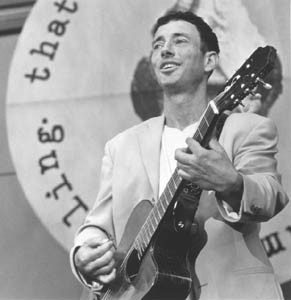
Photograph by Rory Macnamara

Children’s Choice

Ella Jenkins makes magical music for kids

By Greg Cahill

“I CALL MYSELF a natural musician,” says singer and composer Ella Jenkins, hailed as the first lady of children’s folk songs. “You know, I was always into singing la-la, lu-lu, humming, and whistling–even when it wasn’t considered proper for young ladies to whistle,” she adds with a hearty laugh. “As a kid, I simply had to go see tap dancers because there was something so very special in the staccato sound of their footsteps.”

For 45 years, this portly, gentle performer has been drawing on the rhythms of life to create some of the recording industry’s most magical–and widely imitated–children’s songs. In that time, Jenkins, 77, has taken two generations of tykes on a musical journey bristling with playful rhythms, exotic sounds, and tales of faraway places. Since the release of her acclaimed 1957 debut, Call and Response: Rhythmic Group Singing (Folkways), the St. Louis native (who lives part of the year in Marin County) has recorded two dozen albums of children’s music (all digitally remastered and reissued on the Smithsonian/Folkways label), four teachers’ manuals, and two performance videos.

Her classic recording You’ll Sing a Song and I’ll Sing a Song, released 35 years ago, is the bestselling album in the history of the acclaimed Folkways label.

On Oct. 14, in recognition of her achievements on behalf of children, Jenkins will receive the Children’s Music Network’s Magic Penny Award at a ceremony at Walker Creek Ranch in Marshall. The CMN is an international network of teachers, librarians, broadcasters, performers, parents, and children formed in 1986 to communicate songs and ideas about children’s music.

It is the latest of a long series of similar awards for this humble performer. In 1999, Jenkins became the first woman and the first African American to receive the prestigious ASCAP Lifetime Achievement Award. In 1991, Jenkins earned a Parents’ Choice Award for her album Come Play by My Ocean, a wonderful collection of songs about caring for the environment and appreciating other cultures, languages, and places.

THESE DAYS, some children’s performers (like Shelley Duvall) tend to be flashy, but Jenkins still takes a simple, no-nonsense approach, playing gentle tunes and accompanying herself on a baritone ukulele or tambourine. “There are a lot more people in the field nowadays–some good and others just coming along for the ride because they think it’s child-mania,” she muses, during a phone interview from her Chicago home. “I guess a lot of performers think children are a pushover. But you should never underestimate young people; they are your strongest critics.”

A former YMCA teen program director and sociology graduate from San Francisco State University, Jenkins started her own musical odyssey in the rough-and-tumble southside district of Chicago, home to many famous blues musicians. In the early ’50s, she began performing in local folk clubs. It wasn’t long before the host of a local public-TV show invited Jenkins to create her own musical segment on the children’s program. Jenkins brought young students into the studio and featured everything from the sounds of office equipment to the rhythms of the streets (skipping, hopping, and jumping rope) to guest appearances by such folk-blues heavyweights as Big Bill Broonzy and Josh White.

Yet it was the innovative use of the call-and-response technique–which she’d first heard in the black churches and the songs of big-band leader Cab Calloway–that brought Jenkins praise from early childhood educators. “I thought it would be a really good way to get across an idea to children, using rhyme to connect with an idea,” she says. “The whole idea is that to repeat the sounds, the child has to listen, And for them to listen, of course, you have to fill the song with something interesting. If you really want to capture a child’s attention, a song has to be adventuresome, interesting, or maybe a little bit funny.”

For Jenkins, those songs–often inspired by her travels and the children themselves–are a springboard for the imagination that sparks the curiosity with everything from Dixieland jazz to Maori battle chants. “I share those experiences [of faraway lands] with the children because many of them will never travel beyond their own community,” she explains. “But I can help them travel through my songs.”

And what does she get in return? “Oh, my goodness,” she says with a laugh, “I feel youthful, excited, and alive because even though the children change over the years, there’s something very basic in their innocence. And so long as you play it square with them and show real interest, they’ll give you their undivided love and trust.

“And that’s kept me going.”

To register for the Children’s Music Network gathering, visit their website at CMNonline.org or call 707/878-2415.

From the October 4-10, 2001 issue of the Northern California Bohemian.

© Metro Publishing Inc.
Garden Variety

0

Photograph by Michael Amsler

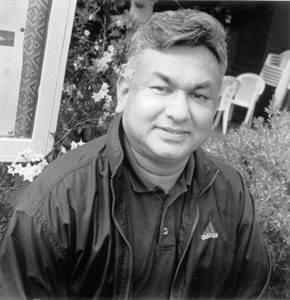
Garden variety: Doug Gosling– head gardener and exectutive chef of the Occidental Arts and Ecology Center–says weeds are good for the garden and the soul.

Something Wild

Nature’s supermarket at your back door

By Marina Wolf

PICK ANY STRETCH of railroad track in any city of moderate size and you’ll find it to be a short, bleak hike–10 minutes if you stay on the packed gravel and move at a brisk clip. But walk a little slower, take some time to really look at the plants peeking out from the edges of gravel and concrete. See those spiky flowered weeds, the sprawling clumps of what looks like grass? Some of it’s good eatin’, and it’s all up for grabs.

Welcome to nature’s supermarket, open 24 hours, self-service only.

Most of us have plucked a dusty berry from a brambly ditch, or pulled apart a head of clover for the bits of nectar within, or bitten into the sour, juicy stems of sorrel. Such furtive encounters tap into our collective heritage from the earliest days of humanity, when foraging was the way we survived. Now we pay top dollar for gourmet greens while wielding a wrathful hoe at the bounty that pops up in our front yard. Oblivious to the irony, we may even plant domesticated produce in the exact same location where we uprooted its wild cousin.

There are still a few people who maintain the original “weed” connection, in one way or another. In rural Sonoma County, the Occidental Arts and Ecology Center grounds its “weed policies” in very practical principles. “Weeds are good for the garden,” states head gardener Doug Gosling firmly. Gosling oversees the two acres of bio- intensive beds, and the thriving “volunteers” (“I have a hard time with the definition of ‘weed,’ ” he chuckles) are a crucial part of the garden’s ecosystem. They keep the center’s seed bank diverse, and they also make an excellent living mulch, holding down the soil and retaining nutrients. And, of course, they’re good, dependable eating, as the menu-makers at the OAEC can attest.

“I’d say that well over 50 percent of the salads we eat, all year round, are made of so-called weeds,” says Gosling.

And why shouldn’t the weeds take center stage? These brazen green marauders are frequently more nutritious than any froufrou cultivated green stuff. Early-spring favorites–dandelion, lamb’s-quarters, curled dock–have exceptionally high levels of vitamins A and C, which would explain why people of yore placed a great deal of faith in these greens as “spring tonics” after a long winter of poor provisions.

Even into the first part of this century, New York City opened Central Park each spring to the rummagings of Italian immigrants, who loved the tender young leaves of the radichielle (dandelion).

Nowadays you don’t want to do that: most civic lawns suffer from a liberal hand with the herbicides. Fortunately, the urban landscape still abounds with foraging opportunities for those who are willing to stray from the beaten path. This has less to do with iconoclasm than with self-preservation: the beaten path has more cars and fewer buffers against them.

A road might be lined with wild food to feed an army, but without a curb, surface pollutants wash off that road right into the soil.

“There is no formula of feet away from the road to substitute for common sense,” says John Kallas, a wild-foods consultant who has been leading expeditions in Portland, Ore., since 1978.


LIKE GOSLING, Kallas expresses a certain antipathy to the term “weed.” “I get a much higher response when I call them ‘wild gourmet garden vegetables,’ ” he says laughingly. At any rate, most of his classes and field trips extend beyond weeds into the underexplored realm of eating the neighbor’s landscaping. “A lot of people plant things as ornamentals,” says Kallas, “and they either don’t know or don’t want to bother with the edible aspects.” Some varieties of roses, for example, drop their petals to reveal huge rose hips. And ornamental kale is quite edible, though you probably wouldn’t want to harvest it from a gas station, its typical North American habitat.

Foraging in any neighborhood demands that you ask permission; not only is it courteous, but it gives you a chance to inquire–nonjudgmentally, of course–about past and present gardening practices. You won’t always be able to find out, as in the case of abandoned sites and for-sale lots. But, as both experts say, unless you’ve been gardening your own land for years, there is never any way to know for sure what’s in the soil.

So with all these concerns about safety, why bother to eat wild or semi-wild foods at all? Wouldn’t it be safer and more convenient to go to the store?

Maybe. Or maybe not. As a forager, you will end up getting prickly things in your socks and biting into a lot of bitter leaves. Studying up on edible wild plants and making your first harvest in the company of an expert is a good idea, in any case. But reach beyond the thorns and you might find a a handful of greens or a hatful of blackberries more intensely flavored than any cultivated equivalent.

DOES IT FEEL STRANGE to step off the sidewalk to gather a few sweet petals from that clump of early spring violets on someone else’s lawn? It should. That’s the first step off the gastronomic “grid,” the inexorable chain of supply and demand that gives us all access to the same plastic-wrapped packages of precleaned produce.

Go on. Get your feet wet. Take the muddy ditch less traveled. Find your own food.

From the October 4-10, 2001 issue of the Northern California Bohemian.

© Metro Publishing Inc.
Cover Story

0

The Sonoma Land Trust became the country’s first land-saving organization of its kind

Land Grab

Sonoma Land Trust is 25 years old–and 13,000 acres strong

By David Templeton

A QUARTER CENTURY ago, in 1976, smack in the middle of America’s yearlong bicentennial celebrations, a spirited assortment of Sonoma County visionaries–activists and property owners alike–banded together to attempt something truly revolutionary. Amid all the speeches and poetry contests and related hoopla, with its chorus of voices warbling songs like This Land Is Your Land and This Is MY Country, the founding members of the Sonoma Land Trust were dreaming up a plan that would honor and protect the land that they love–in a truly literal sense. The Sonoma Land Trust became the country’s first land-saving organization of its kind by acquiring parcels of land under threat of development and by holding conservation easements that would permanently limit development on that land.

Twenty-five years later, the organization has evolved from a small cadre of activists, persuading property owners to donate land for tax advatages, to an amassment of 1,500 contributing members, with a small, committed full-ltime staff and the resources to purchase threatened properties. The Sonoma Land Trust has, to date, permanently protected over 13,000 acres of North Bay earth, currently holds 27 conservation easements, owns and manages 11 properties, and has transfered 11 properties to public agencies.

“The Sonoma Land Trust,” explains David Katz, executive director, “has matured as an organization. Since those first days, when the focus was mainly on survival, we’ve become more professional, more stable and solid. We’ve been thrown out of our infancy, and now have the broad support of all sections of the community.”

That said, it’s party time.

On Oct. 10, the SLT will be celebrating its 25 years in the land-saving business with an afternoon of story-swapping, music, food, wine, and birthday cake–two cakes, actually, each to be decorated with the icing-painted landscape of properties under the protection of the SLT–and a keynote speech by essayist Fred Euphrat.

In attendance will be members and Land Trust volunteers–who assist in various restoration projects and act as environmental monitors of the Land Trust’s properties–as well as folks from the community eager to say thank you (and, just maybe, take the opportunity to become more involved).

Says Karen d’Or, development director of the trust, “The party is a great opportunity for members of the community who’d like to have a stronger relationship with our lands to become familiar with the opportunities available through the Sonoma Land Trust.”

Opportunity is a word the SLT people use often, and with particular enthusiasm. As when d’Or describes the trust’s members-only “hiking tour” series, explaining that it offers land lovers “the opportunity to see beautiful, unknown parts of the county.” Or the way Katz describes the close-to-the-soil contact enjoyed by the SLT’s many volunteer “Land Stewards,” who “adopt” a piece of property, monitoring the land and documenting its conditions over time.

“It’s an opportunity,” he says, “for anyone who wants to have a more direct relationship to the land, not only in the broader landscape but in developing a relationship with a specific place.”

And even after 25 years of work, he adds, the land-saving opportunities in the North Bay are endless.

Says Katz, “There’s still plenty of work to be done.”

The Sonoma Land Trust Silver Anniversary celebration will be held Oct.10, from 4 to 6:30 p.m., at the Friedman Center, 4676 Mayette Ave., Santa Rosa. Cost is $20 per person. Advance reservations must be confirmed by Oct.5. Call 707/526-6930.

From the October 4-10, 2001 issue of the Northern California Bohemian.

© Metro Publishing Inc.

Tiger

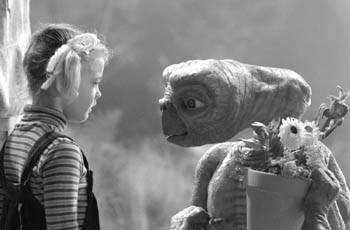
Touchdown Town: Football is god in Massillon, Ohio.

Got Game

‘Go Tigers!’ scores with examination of high school football

By Patrick Sullivan

IN THIS TOWN, every baby boy gets a football put in his hospital crib at birth. In this town, the local funeral home offers a line of coffins adorned with the high school football team’s mascot–a grinning tiger cub. And in this town, voters decide the school district’s financial future on the basis of who wins the big game.

Welcome to Massillon, Ohio, where touchdowns trump textbooks–and just about everything else.

Folks who’ve never lived in towns like Massillon may find all this hard to believe, let alone understand. But truth is stranger than fiction, as is made clear by Go Tigers!, a documentary screening Oct. 6 at the Mill Valley Film Festival.

Directed by Kenneth A Carlson (formerly a producer on America’s Most Wanted), Go Tigers! offers a subversive exploration of this small town’s obsession with the performance of the Massillon Tigers. But this is also one of those rare documentaries that’s packed with enough drama, tension, and exciting visuals to engage even those utterly indifferent to its social message.

High school football has dominated life in Massillon for about a hundred years. Go Tigers! jumps into the story at the start of the Tigers’ recent 106th season. A new crop of players has just taken charge of the team, which suffered a losing season the year before. With a tax levy to rescue the school district’s ailing finances about to come before the fickle voters, these kids have one simple task: win every game.

“I think there’s a lot of pressure on our kids to win,” blithely explains the quarterback’s mom. “They know that’s their job. That’s your job. You do it.”

Football resembles ritualized combat in the film’s bone-crunching action scenes. Blood is shed. Heads are bashed. War is the dominant metaphor. “We’re gonna come out there and kick their fucking asses,” shrieks one player to his teammates. “I’m gonna kill somebody out there.”

Yet Go Tigers! is more compelling when it quietly explores the private lives of these young players. “Football saved my life,” explains defensive end Ellery Moore, who went from being jailed for rape to becoming one of the team’s biggest stars. Moore, who lives in a rundown house in Massillon’s black neighborhood, hopes to parley prowess on the field into a college career.

Interviews with other team members reveal that these teens have both a canny assessment of how important football could be to their future and a fairly clear idea of how absurd the town’s preoccupation with the sport is.

For if football is important to the players, it’s absolutely everything to many adults.

Go Tigers! offers no moralistic narrative voice to hammer home its message. But it’s hard to escape the point of a scene demonstrating that even religion can’t escape football’s grasp.

Before the team’s all-important contest with the McKinley Bulldogs, a priest visiting the Tigers’ locker room discusses the Jewish Passover tradition in which the family’s youngest child asks the father why this night is different from all other nights.

“Why is this day different from all other days?” the priest asks the players. “We say this is the day in which rivalry reaches its summit. This is the game of games.”

‘Go Tigers!’ screens Saturday, Oct. 6, at 4 p.m. at the Sequoia, 25 Throckmorton Ave., Mill Valley. Admission is $9. The Mill Valley Film Festival continues through Oct. 14 at various Marin County venues. For details, log on to www.mvff.com or call 925/866-9559.

From the October 4-10, 2001 issue of the Northern California Bohemian.

© Metro Publishing Inc.

Bully

Bad seeds: Brad Renfro and Nick Stahl play wicked teens in ‘Bully.’

Kids Today

Avant-garde sheen can’t hide exploitative heart of ‘Bully’

By Richard von Busack

IF LARRY CLARK had only been a little faster, he might have gotten away with it. Clark’s new film, Bully, repeats the bid for art-house fame he achieved in 1995 with Kids. But Clark won’t be so lucky this time.

Bully is based on the true-life murder, in 1993, of Bobby Kent in a Florida suburb. The crime was novelized in the book of the same title by Jim Schutze of the Houston Chronicle. No one would call the Kent case a thrill killing, because the participants (seven of whom were eventually imprisoned) didn’t derive much pleasure from it.

The victim was a would-be thug, a steroid user, and a fancier of that bully-boy urban music that sounds like pit bulls singing in chorus. The ring leader of the killing, Marty Puccio, claimed that Kent had been tormenting him since he was a child, though others noted the two seemed close enough to be lovers.

On the whole, scriptwriters David McKenna and Roger Pulis followed Schutze’s account closely. However, Schutze’s book didn’t have a single attractive character, so the makers of Bully changed two of the principals into tender lovers.

Lisa Connelly, a pudge in real life, is played by the svelte Rachel Miner as a dreamy girl who hopes to have Marty’s child (though the real Lisa panhandled to get money for an abortion). Marty is her sensitive lover, played by Brad Renfro in the best achingly post-James Dean style, though according to Schutze, Marty sometimes slugged Lisa and called her a fat bitch.

The victim, Bobby, is white, though in real life he was of Iranian parentage. Bobby is played by Nick Stahl, less a bruiser than a twerp. In one typical scene, Stahl lets the mirror have it with a mouthful of spit. Mistreating a mirror is the hallmark of the overcompensating actor.

The film starts out with two girls at the mall. Lisa and her promiscuous pal Ali (Bijou Phillips) pick up Marty and Bobby, the couples park, and Ali presents her barely covered ass to the camera as she buries her head in Bobby’s lap. It’s effortless coupling, a teenage dream of the way things work. It’s not a bad way to open a movie. But Clark seeks more tension, more argument, and the film sputters.

Bully unfolds in terms of an old drive-in movie about juvenile delinquents: it’s a protest against toxic culture. The video games, the porn, and that bitch-bitch-bitch music turned this gang crazy, just as juvenile delinquents of yore were inflamed to crime by Fats Domino.

Updating the old so-young-so-bad-so-what theme could have provided some cheap thrills. But that enjoyment is impeded by Clark’s pretense at avant-garde filmmaking–his floppy camera work, his lunch-disrupting merry-go-round cam.

There’s something cheap and exploitative in Larry Clark, and I urge him to let it out: his seriousness just invites derision. At its best Bully is dirty fun. A few may consider this flick profound–which it profoundly isn’t.

‘Bully’ opens Friday, Oct.5, at Rialto Cinemas Lakeside, 551 Summerfield Road, Santa Rosa. For details, see Movie Times, page 31, or call 707/525-4840.

From the October 4-10, 2001 issue of the Northern California Bohemian.

© Metro Publishing Inc.

Lara Riscol

0

Fighting for faith, family & freedom

By Lara Riscol

TO LIVE AND LOVE, then love no more. I’m not talking about the feeling, but the act of love. To wake up in the middle of the night and turn over to hold your sweetie, your baby, and find cold emptiness. To give anything, any thing, to just once more touch your loved one’s face and taste his lips, breathe his sweet smell. Feel his warmth. Look deep and long into his eyes and say, I love you.

Desperate calls from the doomed planes and crumbling towers carried variations of the same message, “I just want you to know I love you.” Surviving hearts will continue to break, and break again with fresh intensity, as each day belches remnants of loss from Terror Tuesday. Worldwide, deadly hate has too often forced lovers to salvage an amputated will-to-live from the ashes of war. Now, that same hate–blinded by Otherness–has crashed into American soil, ravaging American souls.

While mourning, the nation bursts with unity, sacrifice, and strength to rebuild. Aside from some asinine thuggery against Arab-looking innocents in the name of patriotism, most Americans feel humanity’s preciousness like never before.

So, “as we attempt to reconstruct our world,” the Family Research Council writes the day after The Attack, “let us resolve not to be swept up in partisan political bickering, petty offenses, and meaningless trivialities. Let us resolve to keep our minds focused on the things that draw us together, on the things that endure, on the things that count–faith, family, and freedom.”

How could I not be touched by the FRC’s commitment to move beyond their modus operandi of divisiveness to embrace core American values of inclusion?

Warriors have died for family: the one they were born to, married into, collected, extended, blended, or simply one of brotherhood, sisterhood. Ah, and freedom. Much blood has been spilled to protect this most cherished of American values.

But before the first funerals could be held, the FRC e-mailed another Washington Update praising the courage of fellow citizens, adding, “Americans are not rising up to defend the right to slaughter the unborn. They are not sacrificing their lives so homosexuals can marry. They are not paying the ultimate price so pornographers can peddle their smut. In such difficult days, Americans are sacrificing for those things that promote the common good–faith, family, freedom.”

No, the FRC didn’t go as extreme as fellow fundie Jerry Falwell, blaming America’s vulnerability on pagans, abortionists, feminists, gays and lesbians, and civil liberty groups. Still, Bush’s pet Religious Righters reached through dust and rubble to jab at those sitting on the opposite side of America’s policy table. As if those fighting for social justice on sociosexual issues are somehow less valiant and less affected by from the worst day in American history. As if those defending safe and legal abortion haven’t sacrificed their lives to Christian terrorists here in the United States.

Right now, the only struggle that seems worthy is helping the devastated heal, and encouraging our political leaders to prevent another apocalypse through calculated wisdom. Right now, it’s hard to do much more than mourn, but that doesn’t make living irrelevant. Walking my dog and drinking wine with a friend seemed horribly indulgent. Making love to my husband seemed, well, almost wrong when America’s suffering is still so raw.

But truly loving each other–and I’m talking about the act and the feeling–is what can draw us together and unveil the humanity of Others. We owe that to those who have lost their loved ones to hate.

From the September 27-October 3, 2001 issue of the Northern California Bohemian.

© Metro Publishing Inc.

Housing Prices

Sticker Shock

Oh, give me a home …

By Christian M. Chensvold

SHUFFLING BACK and forth down 101, it’s easy to forget the rural fields and forests that comprise most of Sonoma County. And yet despite the miles of open spaces, the price of housing keeps many hopeful homebuyers perhaps permanently priced out of the market.

Let’s face reality: You don’t have to leave the area (although I am), but the truth is that barring any major intervention by local government or massive recession affecting everyone but you, Sonoma County will continue to require above-average income in order to buy a safe home. Only 17 percent of Sonoma County households can now afford a median-priced home, leading a lot of folks to look northward for affordability.

Can you say, “Lake County”?

Sandra Geary of Re/Max’s Rohnert Park office says Sonoma County–which in recent years has seen a huge influx of homebuyers from Marin County and beyond–is in a declining market. Of course, coming down from space-shuttle heights means things are still pretty stellar. Geary says you’ll have a hard time finding a suitable home under $250,000. According to MLS statistics, there were 2,072 units priced under $350,000 that sold in the county through mid-September, for an average price of $264,763. This includes condos, by the way. Even one-bedroom condos.

The median price of a home in Sonoma County is $365,000, up from $313,000 a year ago.

How about Shasta County?

Even if you get lucky and find something for $250,000, with 3 percent down and financing at just under 7 percent, with property taxes and insurance you’re looking at an $1,860 monthly house payment. Lenders like to see three-and-a-half times that in gross income, or about $6,500 per month, before they’ll talk shop.

Many prospective homebuyers can afford this monthly payment, but don’t have 10s of thousands stuffed in their mattresses for the hefty down payment. Fortunately, Geary says, there are many lenders offering 100-percent financing programs. Here you essentially get a loan for the down payment as well as the mortgage and make two payments per month. As long as you make three-and-a-half times that, you can qualify. And you won’t even pay a higher interest rate. Of course, that still leaves a lot of folks priced out of the market.


SPEAKING of interest rates, they’ve dropped yet again as a result of the terrorist attack, making now a very good time to buy if you can afford it. The market has gone from the multiple-offer mayhem of last year to an environment in which sellers are willing to assume closing costs or grant a lease option, allowing buyers to defray the down payment if they know they are going to be coming into some money soon. Houses are also staying on the market 60-90 days.

But again, be realistic: You’re not going to buy your dream home as your first house: You’re probably looking at a condo.

Some municipalities even offer assistance for first-time homebuyers. Rohnert Park has a public fund that provides a gift of up to $30,000 for qualified applicants. Unfortunately, Santa Rosa does not. Geary warns buyers of looking to outlying areas such as Forestville or the Russian River area as many of these houses, often former cabins, have been upgraded but don’t always comply with county regulations. A new buyer could face a nightmare of violations and structural damage from floods and termites. “People love that area for the trees and privacy,” she says, “but pay attention to what you’re buying or you’ll open up a can of worms.”

If you’d rather eat bugs, worms, and pig parts on the TV reality show Fear Factor than leave the area, here are some possible solutions. One is to band together, either two couples or a group of single people, and buy a property through a joint-tenancy.

Another is so-called “granny units” or guest houses. “I totally believe you should be allowed to add a second unit to your home,” says Geary. “Why not have the county lighten up on this so that there’s more housing?” Guest houses would not only create more rental properties, they could also help first-time homeowners defray the costs of their purchase with income from a rental unit. But Geary says getting a permit to build a guest unit is “almost impossible.”

Meanwhile, the Burbank Housing Development Corporation is a Santa Rosa-based non-profit that seeks to solve the county’s affordable housing shortage with programs such as “sweat equity,” in which new homebuyers actually help build their (and their neighbor’s) home. This takes a commitment of 30 hours per week for six to 12 months and the buyers get the value of their labor in equity.

And if you’re going to sweat anyway, there’s always the desert. “I just moved my daughter to Las Vegas,” offers Geary. “I bought her a condo for $61,000.”

the current marketclimate as well as his peak income, and reduces his mortgage for his coming retirement years.

Then there’s the case of a young couple who bought a home through Cogbill last year at 8.5 percent. Since the rates have come down, he worked out a no-cost refinancing loan with no points, title, escrow, appraisal, underwriting processing–in short, no nothing. “We got them an above-market rate, but it was still less than 8.5,” he explains. “We lowered their monthly payment and they didn’t have to pay a dime.”

Then just five months later, when rates came down again, the couple refinanced yet again.

So while the gentleman paid more up-front to get a rock-bottom loan, the couple paid nothing to get an above-market loan that was still less than what they were previously paying.

So with low rates and peak properties, are you a fool not to run out today, get the groceries, pick up the dry cleaning, and refinance your home? “It needs to make sense,” says Cogbill. “You compare the amount of the points–closing costs and everything–to the payment savings.”

So let’s say you’re looking at a deal to pay $4,500 up-front in fees to save $100 a month on your payment. Since it’ll take you 45 months to break even, don’t do it if you plan on moving–to Bali, for example. If your home isn’t going to be home-sweet-home much longer, talk to a broker about the Young Couple Option mentioned above, and get yourself a no-cost loan. Even at an above-market rate, it still could save on what you’re paying now.

There’s one more piece of the planetary alignment. Refinancing means verifying your income all over again. So with the rate planet and property-value planet already in place, you’d better strike now if there’s any chance you may be laid off, as you’d have a hard time refinancing to lower your mortgage payment just when you need it most.

From the September 27-October 3, 2001 issue of the Northern California Bohemian.

© Metro Publishing Inc.

Kenneth Cleaver

Consumer Correspondent

Church of Scientology International 6331 Hollywood Blvd., Suite 1200 Los Angeles, CA 90028-6329

Dear Church of Scientology International:

I am shopping for religion. Perhaps this is an inappropriate metaphor, but for my generation consumerism is the dominant frame of reference for all social interaction. I see little point in pretending otherwise simply because religious bodies perpetuate a notion that there is something out there more joyous, more profound, than a banana-republic sale rack.

I am not the least bit curious about God, eternal life, or inner peace. I was raised on Happy Days and Little House on the Prairie reruns. Ontological questions offer no irony or camp appeal to me, unlike their effect on the pathetic and tortured lives of child celebrities. I require the smug satisfaction of condescending to the popular culture I passively feast on each day. I do not anticipate finding this in any religion.

But I could be wrong. I am willing to adhere to religious dictums and will humbly serve the earthly representatives of the supreme godhead without question. I will live an ascetic life, forgoing all material niceties. What I hope to gain, the spiritual payoff, is too tantalizing to dismiss. It is nothing less than an unabridged, chronological listing of each and every individual who has thought about me, Kenneth H. Cleaver, while masturbating.

Please let me know if your organization can help me.

Sincerely, Kenneth H. Cleaver

Church of Scientology Office of Special Affairs

Dear Kenneth,

Thank you very much for your very interesting letter, which was sent to my office. I do understand your situation. I have included here a booklet on the fundamentals of the Scientology religion. Its funder [sic], L. Ron Hubbard, wrote a great deal of books on the subject and I will not try to cover the whole subject with this one letter.

You should visit your local Church of Scientology or visit www.scientology.org for more information.

Sincerely, Marina Garvin Assistant

From the September 27-October 3, 2001 issue of the Northern California Bohemian.

© Metro Publishing Inc.

The American Flag

Long May It Wave

A new patriotism: Why I fly the flag

By Michael M. Smith

IN THE AFTERMATH of the attack on the World Trade Center people all across the nation are displaying the red, white, and blue. Out of patriotism, pain, and frustration they are showing the flag to proclaim their solidarity and love for this great nation. I am one of those people. An American flag hangs from the front of my house and another on the antenna of my truck. I am an American, born in Michigan 51 years ago. I am an ex-Marine of the Vietnam era. My country has been attacked. We are at war and I want to help fight the enemy.

I want justice and I want the real enemy, when found, to pay dearly.

However, in rooting out the terrorists we must also root out the truth about our own contributions to terrorism. We must ask why we were once the allies, of Osama Bin Laden and Saddam Hussein. And we should remember we are the only nation to have subjected another to atomic terror. We dropped the bombs on Hiroshima and Nagasaki, killing thousands of women, children, and old men, and just as with the World Trade Center killings, no distinction was made between young and old, combatant and noncombatant, innocent or guilty.

At the same time we should remember what has made us great. We are a nation of religious freedom. We rescued Europe from the Nazis. We are the nation that exposed the intellectual bankruptcy of communism, the nation that gave and continues to give haven to the hungry and persecuted. We are the nation whose science and medicine have saved millions of lives and made life better for countless peoples. We have much to be proud of and thankful for. But we should never forget that “pride goeth before a fall.”

In this time of sorrow and anger, we must not allow wounded pride and self-righteousness to motivate our actions. If we hope to rise above our reptilian impulses and not be blinded by our own unexamined theistic and political sureties, we must question everything we believe to be true.

Such questioning will be discomforting, but the alternatives of ignorance, unquestioned obedience, and zealous surety can lead only to the kind of fanaticism we have just been the victims of.

There are reasons that many people throughout the world hate the United States and it behooves us to ask why. Not all of those who despise us are ignorant, crazy, or envious. We would be wise to really listen to what these folks are telling us. And we would be even wiser to let humility, honesty, and love become the cornerstones of our learning, healing, and future.

IN THE WAKE of this attack, it is apparent we can be hit and hit massively. In fact, we have no way to know what form future attacks may take. And there is simply no way to prepare for every possibility. So in our quest for security it is essential we not forego the principles of democracy and the very rights that have made this nation the envy of the world.

Now is the time for every citizen of the United States to read and re-read the Constitution so they will truly understand what is at risk. Suffering some inconvenience for increased security is one thing. Giving up any of the rights guaranteed us by our Constitution is tantamount to surrender.

I fervently hope our leaders realize that all that may be inferred from seeing so many star-spangled banners flying across this land and throughout the world is that many, many people love this nation. It would be a mistake to interpret this display of love and patriotism as tacit approval for any particular response to terrorism or the curtailment of any constitutional rights.

The war we are entering will not be a neat and tidy affair. There will be regrettable accidents and mistakes. Innocent people will be hurt and killed. That is the way of war. It is always brutal, ugly, and inhumane. But the perpetrators of the atrocity in New York cannot go unpunished. To allow that would dishonor those who were killed, their families, the people of this great nation, and freedom-loving people everywhere.

We are morally obligated to respond, and we will. And our actions should be as powerful and painful to the enemy as is necessary. But when we respond, we must make every effort to do nothing that will dishonor the people of this great nation, the Constitution, or the principles on which our nation is founded.

The United States of America has never been perfect, but more often than not it has tried to do the good and honorable thing. In the end our good has substantially exceeded our bad. And this is why the American flag remains the world’s leading symbol of honor, decency, hope, courage, and human rights.

And it is why I will continue to fly Old Glory.

From the September 27-October 3, 2001 issue of the Northern California Bohemian.

© Metro Publishing Inc.

Open Mic

0

Used Goods

By Atticus Hart

REMEMBER the New Millennium? Or, more precisely, all the speculation, anticipation, and nervous jitters that hung in the air in 1999 as the world contemplated the turn of the century. All those stories about a brave new world, a world awash in wondrous things, a world waiting for a bright, shining future–stories filtered through the luster of a booming economy and the hi-tech miracle. In our naiveté, we were so hungry for the future that the media convinced us the New Millennium would start on Jan. 1, 2000, one whole year ahead of schedule.

We craved change. We bought the story. Start the party, we chimed.

And then there were the doomsayers. Get ready, they warned, Armageddon is coming. The reckoning is just around the corner. Hear the bell toll. It’s Judgment Day.

We all heaved a collective sigh of relief when the year 2000 rolled around, our computers were free of apocalyptic viruses, and the stock market was rising faster than Bill Clinton’s crotch at the sight of a fresh-faced young intern.

And then came the long, slow slide and the Sept 11 reality check at the World Trade Center and the Pentagon. It’s not so new anymore, this century of ours. Now it’s the Used Millennium–already covered in a thick layer of debris and despair. Consumer confidence has crashed (although ostentatiousness abounds in the North Bay)and all around us the empire is crumbling, the barbarians are at the gate.

It’s a wicked world, my grandmother used to say as she sat up late at night, huddled in front of the oven, hunched over a cup of strong black tea, and munching burned toast and dried seaweed. Yeah, it’s a wicked world. Lighten up, Granny, my friends used to tell her. What the hell did she know anyway?

But how right she was–the cranky cynic with the vocabulary of a dockworker, suddenly elevated to the status of a wise sage. Now I see that we can deceive ourselves into believing anything, into believing that the future holds hope, hope for national security, hope for job security, hope for safe passage through a world spinning out of control.

The wickedness is everywhere. And it’s another 99 years before the turn of the next century, before the next batch of fools convince themselves that it’ll get better, that mankind will find a way to set aside ancient blood feuds, that the world holds a bright, shining future–someday.

Ninety-nine years–and already it’s time to find a way to get rid of this torn-and-frayed epoch, sweep it aside, sell it to the highest eBay bidder, alongside the broken pieces of the World Trade Center that went online within moments of America’s tragic hour.

Any takers? One century, slightly used, as is, in need of repair.

Send your spare meds to Atticus Hart, c/o the Northern California Bohemian.

From the September 27-October 3, 2001 issue of the Northern California Bohemian.

© Metro Publishing Inc.

Ella Jenkins

Photograph by Rory Macnamara Children's Choice Ella Jenkins makes magical music for kids By Greg Cahill "I CALL MYSELF a natural musician," says singer and composer Ella Jenkins, hailed as the first lady of children's folk songs. "You know, I was always into singing la-la, lu-lu, humming, and...

Garden Variety

Photograph by Michael AmslerGarden variety: Doug Gosling-- head gardener and exectutive chef of the Occidental Arts and Ecology Center--says weeds are good for the garden and the soul.Something WildNature's supermarket at your back doorBy Marina WolfPICK ANY STRETCH of railroad track in any city of moderate size and you'll find it to be a short,...

Cover Story

The Sonoma Land Trust became the country's first land-saving organization of its kind Land GrabSonoma Land Trust is 25 years old--and 13,000 acres strongBy David TempletonA QUARTER CENTURY ago, in 1976, smack in the middle of America's yearlong bicentennial celebrations, a spirited assortment of Sonoma County visionaries--activists and property owners alike--banded together to attempt something truly revolutionary. Amid all...

Tiger

Touchdown Town: Football is god in Massillon, Ohio.Got Game'Go Tigers!' scores with examination of high school footballBy Patrick SullivanIN THIS TOWN, every baby boy gets a football put in his hospital crib at birth. In this town, the local funeral home offers a line of coffins adorned with the high school football team's mascot--a grinning tiger cub....

Bully

Bad seeds: Brad Renfro and Nick Stahl play wicked teens in 'Bully.'Kids Today Avant-garde sheen can't hide exploitative heart of 'Bully' By Richard von BusackIF LARRY CLARK had only been a little faster, he might have gotten away with it. Clark's new film, Bully, repeats the bid for art-house fame he achieved in 1995 with Kids. But Clark...

Lara Riscol

Fighting for faith, family & freedom By Lara Riscol TO LIVE AND LOVE, then love no more. I'm not talking about the feeling, but the act of love. To wake up in the middle of the night and turn over to hold your sweetie, your baby, and find cold emptiness. To give anything, any thing,...

Housing Prices

Sticker Shock Oh, give me a home ... By Christian M. Chensvold SHUFFLING BACK and forth down 101, it's easy to forget the rural fields and forests that comprise most of Sonoma County. And yet despite the miles of open spaces, the price of housing keeps many hopeful homebuyers perhaps...

Kenneth Cleaver

Consumer Correspondent Church of Scientology International 6331 Hollywood Blvd., Suite 1200 Los Angeles, CA 90028-6329 Dear Church of Scientology International: I am shopping for religion. Perhaps this is an inappropriate metaphor, but for my generation consumerism is the dominant frame of reference for all social interaction. ...

The American Flag

Long May It Wave A new patriotism: Why I fly the flag By Michael M. Smith IN THE AFTERMATH of the attack on the World Trade Center people all across the nation are displaying the red, white, and blue. Out of patriotism, pain, and frustration they are showing the flag to...

Open Mic

Used Goods By Atticus Hart REMEMBER the New Millennium? Or, more precisely, all the speculation, anticipation, and nervous jitters that hung in the air in 1999 as the world contemplated the turn of the century. All those stories about a brave new world, a world awash in wondrous things, a world waiting for a...
11,084FansLike
4,446FollowersFollow
6,928FollowersFollow