
Asparagus

0

Spearhead This

Asparagus offers all this and purple rubber bands too

By Sara Bir

The moment that asparagus fans have been waiting for all year has arrived. It’s asparagus season now, and the little green bundles of joy plummet in price from $3.99 a pound to “buy one, get one free.” Get it while it’s hot, because when asparagus comes around, you gotta eat it up.

Distinctive, versatile, and luxurious, asparagus holds a treasured spot worldwide. Americans favor thinner stalks of green asparagus, whereas it is the thicker, white asparagus of southern Germany that many Europeans treasure. Ancient Romans coveted asparagus, serving it with a pungent sauce of fermented fish. In China, asparagus spears are candied and served as special treats.

California leads the nation’s asparagus production with more than 50,000 metric tons harvested annually. Although it is available year-round, asparagus tastes best during its natural growing season: late March through June. Since asparagus begins to lose its flavor as soon as it’s picked, it’s important to buy the freshest spears you can find (local, if possible). Look for firm, smooth stalks and closed tips when buying, and take a peek at the cut ends of the stem: The drier they are, the more time has passed since they were picked. If you’re going to keep asparagus around for a few days before cooking it, store the bunch in the refrigerator, upright in a few inches of water, just like flowers.

There’s no consensus on what the best type of asparagus is–thick or thin, green, white, or purple; it sort of depends on the purpose. White asparagus, a subtly earthy delicacy, is grown under mounds of dirt to prevent its exposure to light, a labor-intensive process that creates a less grassy, slightly bitter flavor. Purple asparagus looks exotic, but–alas!–turns green when cooked.

Thinner, pencil-sized stalks are more tender and don’t need to be peeled. Their dainty size makes them ideal for a crudité platter, slaw, or salad; if the asparagus is especially sweet, you can even serve it raw.

Thicker spears have a tough skin that may need to be peeled from the bottom end to just under the tip; a heavy-duty vegetable peeler is perfect for this task. Even though it requires extra work, thicker asparagus is found by some to have more flavor and a more succulent texture.

Thick or thin, the lower third of the stalk is tough and woody, and needs to be removed. Some just take the bunch and cut straight through, but you can snap the bottom of the stalk off, which will naturally break right at the woody part. And save the bottoms, which are excellent for stock. You can also infuse canned stock with asparagus tips if you are making risotto.

You don’t want to cook asparagus al dente, but you also don’t want to boil it to a limp, slimy mess. When you can easily insert a knife into the thickest part of the stalk, it’s done. My favorite method is pan-steaming, a fast and effortless way to cook a pound of spears (perfect for omelets or a small dinner). Simply lay the prepared raw asparagus in a skillet and add about a quarter inch of water. Cook over high heat; if it looks like most of the water has evaporated, add a little more. After five minutes or so, it’s done, and you don’t have to wait for any water to boil.

Another easy way to steam asparagus is to stand the whole bunch–tied with kitchen twine, if you want to be tidy about it–upright in an inch or two of salted, boiling water in a large saucepan, and cover. If you boil or pan-steam asparagus for a pasta, reserve some of the flavorful cooking water and add it to your sauce.

Asparagus stands up to bold flavors and rich sauces, so it’s great as an element in more complex dishes–stir-fries, savory bread puddings, sandwiches, omelets, and even curries–but for a simple treat, all it needs is a quick dressing. A squirt of lemon, a dip in bagna cauda, a drizzle with sesame oil, or a kiss of browned butter will make asparagus’ flavor shine. In England, thick asparagus is served as its own course, often with hollandaise.

One thing asparagus does not go well with is wine; a member of the lily family (along with onions and leeks), its sulfur compounds make wine taste bitter. This has never deterred me from indulging, to be honest, but just make sure that you don’t waste a good Chablis by serving it with asparagus. If you insist on pouring wine, stick to a light Sauvignon Blanc or a Riesling.

Or, you can put the asparagus in the drink: At the upcoming Stockton Asparagus Festival (April 26-28), a (hopefully small) percentage of the 20,000 pounds of asparagus served will go into aspara-ritas, yet another twist on the classic margarita–which is, even for the versatile asparagus, a stretch. Luckily, you need not resort to putting it in mixed drinks: Asparagus is perhaps best when cooked simply and eaten with your fingers, just as the Romans did.

Now, for that distinctive after-dinner smell: Eighty percent of the population will develop an odor in their urine after eating asparagus. The majority cannot metabolize aspartic acid, a natural chemical that creates the odor, so it goes straight through our system, making our urine stink. Another theory has it that only certain people have a gene for smelling the pungent chemicals, while others believe that the gene for producing the chemical in the first place is the missing link. In any case, you’re the only one who has to know if asparagus makes your pee smell or not, so what difference does it make? Eat, eat!

Roasted Asparagus with Parmesan, Olives, and Lemon

Preheat oven to 450 degrees. Trim and peel a pound of asparagus; place in a roasting pan and drizzle with a scant tablespoon of olive oil. Sprinkle with salt and the zest of half a lemon; toss and roast, turning asparagus every few minutes. When the asparagus is almost ready but not quite done (10-20 minutes, depending on thickness of the stalks), scatter with 4 or 5 pitted, slivered black olives and enough shaved parmesan cheese to suit your taste. Continue roasting until cheese just starts to brown, and serve.

From the April 25-May 1, 2002 issue of the North Bay Bohemian.

© Metro Publishing Inc.

Healdsburg Arts Council

0

Pride and Joy: Council president Janet Norton shows off Healdsburg’s new creative home. At right: Pam Sibley.

Blooming Art

Healdsburg Arts Council sets up shop downtown

By Sara Bir

Downtown Healdsburg, on a sunny spring day, buzzes with the quaint energy of a small, tourist-driven town: Storefronts display boutique items, clothing hung on racks flutters in the breeze, straw-hatted pedestrians pass over the sidewalks.

And now the Healdsburg Arts Council joins them with a new 2,350 square foot facility just off the plaza named–fittingly enough–Plaza Arts. “We feel we are providing a home in the heart of Healdsburg for creative activity and learning,” says Janet Norton, the council’s president. “It’s a wonderful opportunity to be in the community.”

Mingling scents of paint and drywall filter through the spacious, high-ceilinged interior of Plaza Arts, a work-in-progress dotted with tarps, ladders, and other signs of industrious improvement. The council signed a three-year lease for Plaza Arts in the beginning of March and has since been busy converting the space. “Every time I go by here there are people hammering, volunteers sanding and painting,” says Norton. “We spend almost seven days a week working.” About 25 volunteers have been doing all the work, with the exception of electric wiring and putting up studs. Plaza Arts celebrated its grand opening on April 24 with the gallery’s premier show, “Healdsburg: Our Town.”

“We’re for our member artists, to benefit people who want to learn more about art,” says board member Donna Schaffer. “This community has amazing art potential.”

Plaza Arts represents a big step ahead for the council, whose goal is to strengthen the community through art programs such as the annual Healdsburg Jazz Festival, juried art shows, literary salons, and student scholarships. Since their inception in 1993, the council has made do with a small office and no permanent gallery space. “We have been looking at something like this for a number of years,” says Norton. “We did a Community Cultural Plan in 1999, and the most universal request was for an arts facility.”

Previously, the council used donated spaces for art shows. “We did ‘Art on the Move’ for the first five to seven years. We had three or four locations around town and would literally bus people around to view art for a day,” Schaffer says. “The thing about a one-day event is that it takes so much work to set it all up, and then it’s all over in a day. We really needed a long-term commitment on a space. Now we can plan things into the future, and there’s a chance we can raise our hands for traveling exhibitions.”

In addition to gallery space for exhibits, Plaza Arts will house a cooperative gallery for artists. Hidden in the back is a workshop area where local and visiting instructors will hold classes for painting, sculpting, and drawing. Participants will have the freedom to really get into the art and not worry about mucking things up. “This is for people to come and make a mess,” assures Schaffer. “We’re hoping school groups can tour through that gallery and then come back here and do an art project.”

Plaza Arts’ workshop will also allow the council to offer more intensive classes. “Now that we have a permanent space, it is much easier to get on the calendars for well-known instructors,” Norton says.

“We are an all-volunteer organization,” says Schaffer. “We don’t have an executive director, we’re not paying anybody a big salary, and that’s why I think that we can afford this facility. I only want to do one fundraiser, and that’s the fundraiser that’s coming up.” After a benefit silent auction of the items in “Healdsburg: Our Town,” the council plans to fund Plaza Arts with fees paid by artists submitting their works for display, tuition for workshops, and commissions on artworks sold.

“It is meant to be a facility that benefits everybody,” says Schaffer. “We want to benefit the 3-year-old kid to the 98-year-old woman.”

‘Healdsburg: Our Town’ is open until Saturday, April 27, when there will be a gala and a silent auction of the pieces to benefit Plaza Arts. There will be wine, light food, and a performance by the Healdsburg High School Jazz Combo from 4 to 6pm. Plaza Arts will be open daily from 10am to 8pm. 130 Plaza St., Healdsburg. 707.431.1970.

From the April 25-May 1, 2002 issue of the North Bay Bohemian.
© Metro Publishing Inc.

‘Panic Room’

0


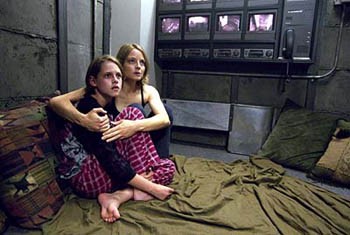
Fear Factor: Jodie Foster (right) and Kristen Stewart huddle behind closed doors.

Steel Trap

Mr. Fix-It deconstructs ‘Panic Room’

Writer David Templeton takes interesting people to interesting movies in his ongoing quest for the ultimate postfilm conversation. This is not a review; rather, it’s a freewheeling, tangential discussion of art, alternative ideas, and popular culture.

Homebuilder Lou Manfredini doesn’t like to waste materials–or words. As the straight-shooting host of Chicago’s long-running Mr. Fix-It radio show–finally enjoying national syndication after a seven-year run on WGN-AM–Manfredini, renowned construction expert and master of household tools, has earned a reputation as a knowledgeable guy who speaks his mind and gets right to the point.

For example: Having finally caught up to the hit Jodie Foster thriller Panic Room–about a newly divorced mom (Foster) trapped in her new home’s self-contained, steel-reinforced “panic room” as sledgehammering burglars try desperately to get to the safe that’s hidden there–Manfredini does not squander his time with pleasant postfilm chitchat.

“That,” he succinctly pronounces, “was the worst movie I’ve ever seen in my life!” He’s laughing as he says it, but I suspect he means every word. “Oh, I hated it,” he reasserts. “Though Jodie Foster is always a delight to watch. I’d like to meet her some day. But the movie drove me crazy. Remember when they were first breaking into the wall? That wall was drywall, not plaster. There’s no way an old building like that would have had drywall in it. It would have been plaster. I notice things like that. But, hey, at least the popcorn was good.” Myself, I liked Panic Room, and I tell him so. But then, I don’t know anything about drywall.

Manfredini is crisscrossing the country this week, promoting his new book, Mr. Fix-It Introduces You to Your Home, a room-by-room guide to how a modern house functions and what steps to take should it stop functioning. While out on the road, Manfredini, a proud father of four school-age kids, pretty much jumped at the chance to see a film that doesn’t revolve around talking animals. That Panic Room is in part a movie about home-security construction is just gravy on the meatloaf.

Speaking of food, Manfredini’s colorful critique of the film begins with what wasn’t in the panic room, supposedly built and stocked by the paranoid millionaire who’d previously owned the house and who, evidently, did not enjoy eating.

“Some food would have been good,” Manfredini states. “Think about it. They had everything else in there. They had fire blankets and shaving kits. So obviously, the mindset behind the panic room is that I could lock myself in there for X amount of days. So how about a Snickers bar? How about a bag of chips? Maybe a Pepsi. Would that be so bad? Here’s my advice for those out there who are going to be building panic rooms because of this movie: A little food goes a long way.”

“Supposedly,” I interject, “in the few weeks since this movie has come out, there has been a sharp increase in requests for these kinds of safe rooms.”

“Well, when it comes to your home and wanting it to be safe, some people go a little overboard,” Manfredini replies, “which, in my opinion, describes wanting a panic room in your house. If anything, this movie proves the adage about safety and security in the home: If someone really wants to get in, they can get in. There are ways to breach any type of security system if someone wants to badly enough.”

I resist the sudden urge to call home and make sure my wife and kids are safe; instead, I pose a question that should be right up Mr. Fix-It’s alley.

“The bad guys have bags of tools,” I remind him, “but they seem to have no clue how to use them. What advice could you give that could help these guys get into the panic room?”

“OK, here’s the thing,” he replies. “In their defense, they didn’t think anybody had occupied the house yet, so the panic room was supposed to be unlocked. But there’s Jodie and her kid, they’re in the room, the door is made of steel, and they won’t come out. So if I were their leader, I’d have said, ‘Hey, I’ll be right back.’ I’d have gone to my apartment and gotten a torch, and just cut the door open with the torch. It would have been done in about, I don’t know, 10 minutes, 15 at the most. Instead, they spend the whole movie whacking at it with a sledgehammer.”

“Maybe they should’ve read your book first,” I chime in.

“At least,” he agrees. “And here’s another thing, another little flaw in the movie. Remember the propane tank the burglars use? When they’re trying to pump gas into the panic room? It had a quick-connect fitting on the end of it, which means that they couldn’t have put that garden hose on it and gotten any gas out of it. It had to have had a male-female connection, one that pierces a ball inside, like an air hose at a gas station.”

“You’re really trying to ruin this movie for me, aren’t you?” I reply.

“Hey, don’t mess with Mr. Fix-It when it comes to truth in construction supplies,” Manfredini laughs. “I don’t even want to hear about it.”

“I’m afraid to ask, but is there anything else?” I query.

“Yeah. Plenty,” he says. “When the guy is standing there trying to break through the ceiling with that same sledgehammer, he never has a speck of dust on him. Right? I’ve knocked down more plaster ceilings than I can count, and I’m telling you, you look like Casper the Ghost when you’re done, but this guy was clean as a whistle.”

“Maybe he’s neater than you are,” I suggest.

“Not likely,” Manfredini retorts with a chuckle. “They’d have been coughing and gasping. There was only a little sprinkle of plaster on the floor. It would have been everywhere. I really can’t believe you liked this.

“And here’s another thing,” he goes on. “In this movie, Jodie Foster has just been dumped by her husband. How is that possible? Look at how good she looks. What is she, 40 years old? She looks fantastic! How could he leave her? And may I add that she’s also a fine actress and an excellent director. If she ever wants to do a remake of Little Man Tate, I’d be happy to play the bald, fat guy.”

“You’re not bald,” I remark.

“Yeah, but someday I will be,” Manfredini laughs. “By the time Jodie Foster casts me in a movie, I’ll definitely be bald. And by the way, I noticed you didn’t say I wasn’t fat. What’s with that?”

From the April 25-May 1, 2002 issue of the North Bay Bohemian.
© Metro Publishing Inc.

Buddha Bar – Six Degrees

0

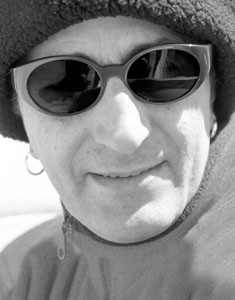
California Masala: DJ Cheb i Sabbah mixes up the Asian grooves.


Photograph by Chris Woodcock


Just Chillin’

Buddha Bar fizzles; Six Degrees sizzles

By Greg Cahill

The Buddha Bar in Paris has emerged as one of the landmarks of the global musical bazaar that is contemporary electronica, particularly the growing chill-out scene comprised of mostly relaxing music that provides a backdrop for cocktails and conversation. The Buddha Bar, an ultrahip nightspot created out of a vast warehouse, is to the vibrant Parisian world-music community what Studio 54 was to New York’s disco world: a stylish cocktail, dinner, and dance palace, this one replete with carefully crafted soundscapes and dominated by a majestic 20-foot-tall golden Buddha. It also is a trendsetting musical mecca in its own right, the modern hot club of France.

For the past two years, the French import label George V has been bringing the sounds of the Buddha Bar to the American masses. The earlier releases, including last year’s Amnesty International 40th anniversary tribute, ranged from Egyptian star Amr Diab’s sha’bi stylings to a spoken-word piece by Demi Moore.

Now readily available at such huge retail chains as Borders Books (the San Rafael outlet boasts an extensive chill-out and groove section), the Buddha Bar release and its ilk are making their way into the musical mainstream. With the release of Buddha Bar IV, the latest multidisc collection of studio-tweaked tunes from resident producer and arranger David Visan (the child of a Romanian father and a Vietnamese mother), the Buddha Bar builds on its reputation as a brand name while simultaneously underscoring the strengths and weaknesses of this music.

Buddha Bar IV is a mixed bag that can be dramatically uplifting and frustratingly flat. This latest two-CD set (selling for a hefty 40 bucks) is split into companion Dinner and Drinks discs. In general, it follows the pattern of its predecessors, compilations of Far Eastern spirituality, bubbly European electronica, and Mediterranean musical potpourri. You might assume that these discs would possess their own energy levels, but the emotional range on the second disc runs from the utterly infectious Spanish brass instrumental “Loco” by Loving Paris (the highlight of the set) to a reflective solo classical piano piece.

The problem, as critics have noted in the past, is that while this music has a hip edge and occasionally transcends exotic regional sounds set to insipid 4/4 dance beats, it also can be annoyingly anonymous.

Not so over at the San Francisco-based Six Degrees label, where a series of new chill-out and groove releases shows that electronica can be distinctive and much more than mere background music for a boomer supper party. Recline: A Six Degrees Collection of Chilled Grooves is an intriguing 11-track compilation that serves as a good sampler for some of the label’s more laid-back tracks, including “Skin on the Drum” by politico rapper Michael Franti and Spearhead, and a remix of “Mais Feliz” by Brazilian samba queen Bebel Gilberto.

The more danceable Asian Travels 2 dishes up Indian and Pakistani vibes mixed with ambient, electronic, and dance grooves with new tracks and remixes of songs by DJ Cheb i Sabbah, Banco de Gaia, Karsh Kale (whose 2001 Six Degrees CD Realize was one of the year’s best electronica releases), and Govinda, among others. The crème de la crème of the new Six Degrees material, however, is Sabbah’s own Krishna Lila (in stores June 4), the long-awaited follow-up to 2000’s acclaimed Maha Maya. And it’s a gem.

Sabbah is an Algerian-born magic man whose work is awash in serious classical Indian music and who deftly blends modern elements–like thunderous sub-bass beats and Blade Runneresque sound montages–without sounding trendy or succumbing to cheesy electronic effects. Where 1999’s phenomenal Shri Durga drew on classical Indian ragas, bagra, mantras, and hip-hop beats, Krishna Lila also includes five devotional bhajans (both Northern Hindustani and Southern Carnatic traditions) and features top Indian musicians (sarodist K. Sridhar, violinist K. Shivakumar, and vocalist Radhika Rajiv, to name a few), as well as bassist Bill Laswell and percussionist Karsh Kale.

The result is a complex cultural blend that will stand up for years to come and already represents the best of the genre.

From the April 25-May 1, 2002 issue of the North Bay Bohemian.
© Metro Publishing Inc.

Selective Service

0

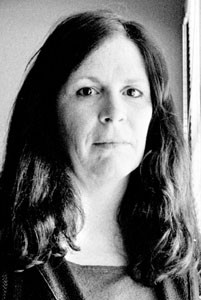
A Model For Peace: Elizabeth Stinson opposes giving the Selective Service the right to register people at the DMV.


Photograph by Rory Mcnamara


Licensed for War

Should the Department of Motor Vehicles promote Selective Service registration?

By Tara Treasurefield

Before registering with the Selective Service System, 18-year-old Kevin Smith of Sebastopol thought long and hard about how it would feel to kill someone. Now a committed pacifist, Smith is carefully documenting his conscientious objector status.

Senator Jackie Speier introduced SB 1276 in the California State Legislature in February. Smith worries that if SB 1276 becomes law, it will make Selective Service System registration so easy that other young men won’t be nearly so thoughtful as he has been. The current version outlines a program modeled after Motor Voter, the National Voter Registration Act of 1993, which allowed people to register to vote while renewing or applying for a driver’s license. Similarly, SB 1276 would allow men to register with Selective Service when they apply for a driver’s license. Will they call it Motor Soldier?

Whatever they call it, Speier plans to make the idea a reality by changing the state’s driver’s license application. To sign up with Selective Service, draft-age men would simply sign their names to the front of the application. The DMV would forward their names and addresses to the SSS, who would then register them. A statement on the back of the application would alert young men that federal law requires them to register with the SSS and list the consequences of their failing to do so.

This plan is Speier’s inspired attempt to save her bill from an otherwise certain death. The original version authorized the Selective Service to register male drivers without their permission. That would have forced young men to either give up their right to refuse to register with the SSS or give up their right to apply for a driver’s license.

Valerie Small-Navarro, an attorney with the American Civil Liberties Union in Sacramento, says the amended bill is far better than the original. But she’s concerned that it would encourage men to register without knowing what Selective Service is or does.

The Senate Transportation Committee will consider the amended bill on April 25, and it may not pass. A key issue is that some members of the committee oppose using the driver’s license for purposes unrelated to driving.

Defending the practice, Richard Steffen, Speier’s chief of staff, says, “We’ve done that with child support. If you’re in arrears with child support, you can have your driver’s license denied.” And of course, Californians can register to vote at the DMV.

In any case, it seems odd that two liberal Democrats, Senator Speier and Assemblywoman Strom-Martin, are backing SB 1276. Strom-Martin explains that she wants to make it easy and convenient for young men to register with Selective Service and stresses that she’s not interested in tracking young men for SSS.

Speaking for Speier, Steffen says, “She’s a firm believer that everybody should be in the pool. Even disabled people, quadriplegics, have to register.” In addition, he says, “Some people who drop out of school aren’t aware of the registration requirement. [Providing this information through the DMV] would be a way to protect them from the penalties.”

Over the last three years, 16,000 draft-eligible Californians have failed to register with Selective Service. Those who don’t register before the age of 26 are permanently ineligible for federal employment and federal student aid, prohibited from practicing law, can’t take certain law enforcement jobs, and could be sentenced to five years in prison and a $250,000 fine.

The federal government knows which California drivers do and do not register with Selective Service. Since 1990, the DMV has been sending the SSS quarterly reports of drivers between the ages of 17 and 21. The SSS compares the reports to the information in its database, notes the names that aren’t there, contacts the missing young men, and urges them to register. It also forwards the names and addresses of nonregistrants to the U.S. Department of Justice.

Elizabeth Stinson, director of the Sonoma County Peace and Justice Center, challenges links between the DMV and Selective Service. She asks, “Why should the military have access to kids who apply for a driver’s license?”

The real issue, says Stinson, is how to handle conflict. “We’re opposed to violent solutions. We have to find ways to deal with conflict nonviolently, to dialog, to look at different sides of every situation. We have to model peace to our children.”

From the April 25-May 1, 2002 issue of the North Bay Bohemian.
© Metro Publishing Inc.

The Patriot Act & Reading Habits

0


Book ‘Em

North Bay libraries and bookstores may be little help to FBI

By Tara Treasurefield

Whoever would have thought that librarians would have a cult following?” asked maverick author and filmmaker Michael Moore. The audience responded with intensified applause, hoots, and yells. Moore had just credited the nation’s librarians with shaming censors at Regan Books into releasing his new book, Stupid White Men. If librarians hadn’t stepped in, says Moore, Stupid White Men would still be in Regan’s warehouse.

Chalk one up for book lovers. But there are endless challenges to intellectual freedom, including the Patriot Act, which became law last year. This new law makes it easier than ever before for the FBI to search the records of libraries and bookstores. It also prohibits librarians, booksellers, and their attorneys from objecting to court orders to produce documents, and from revealing to anyone that they have received such an order.

“If someone comes in and hands you a search warrant, they are authorized to search for whatever they want to search for immediately,” says Judith Krug, director of the Office for Intellectual Freedom at the American Library Association in Chicago. “However, you do have the right to have your lawyer present. He in turn can check the search warrant to make sure that it is in proper form and shows proper cause.”

Hut Landon, executive director of the Northern California Independent Booksellers Association, says that government requests for customer records is a growing problem. “Over the past 5 to 10 years, independent bookstores have become more sophisticated and computer savvy. We’re keeping records of customer purchases, and didn’t before. The police have figured that out.”

Nonetheless, North Bay libraries and bookstores may be slim pickings for the FBI. California legal statues, like statutes in 48 other states and the District of Colombia, protect the privacy and confidentiality of library records that identify individual uses of materials, programs or activities, books, and facilities. To comply with state law and the U.S. Constitution, and also to avoid information overload, many libraries and bookstores minimize record keeping.

Tom Trice, director of the Sonoma County Library System, says, “We protect our patrons’ privacy. The information about what a person reads is erased when the materials are returned.” The Sausalito Public Library and the Napa City and County Library have the same policy. Sausalito’s head librarian, Mary Richardson, says, “The function of our database is to track what goes out and to make sure we get books back. Once the book is returned, that information is no longer attached to that person’s record.”

Similarly, Andy Weinberger of Readers’ Books in Sonoma doesn’t expect the Patriot Act to have much effect on his store, as Readers’ doesn’t track customer purchases. However, like other stores, Readers’ is required by law to retain charge card slips for several years, so that information would be available. “There’s nothing they’d be able to find in the computer except special orders,” says co-owner Lilla Weinberger, and Readers’ deletes special order information every 14 days.

Copperfield’s Books takes the same approach. Rosa Herrington, manager at the Petaluma Copperfield’s, says that her store doesn’t retain customer records, partly in order to protect their privacy. “We have nothing to give them [the FBI]. . . . We’re very concerned about the individual’s privacy and for information to flow freely,” she says.

Barnes & Noble and Borders bookstores also protect customer privacy. Lex Olson, community relations manager at the Barnes & Noble store in Santa Rosa, says, “The only time a person’s name is associated with a book in our computer is when they place a special order.” Special order information is deleted every 14 days, and Olson says that some customers further protect their own privacy by placing special orders under the name “Nobody” or a number or some other anonymous identifier.

This is good news for people who believe that what they read is no one’s business but their own. But the FBI may go straight to the source if they want to. The Patriot Act empowers the government to enter your house, apartment, or office with a search warrant when you are away, conduct a search, seize or copy materials, and not tell you until months later.

From the April 18-24, 2002 issue of the North Bay Bohemian.

© Metro Publishing Inc.

Murder By Numbers


Channeling Clint Eastwood: Sandra Bullock, crime fighter, has murderous high schoolers to find.


Thrill Kill Cult

Sandra Bullock stars as a troubled cop in the satisfying ‘Murder by Numbers’

By

San Benito (read Morro Bay) homicide detective Cassie Mayweather (read Sandra Bullock) has a bad reputation for promiscuity and knife scars she doesn’t talk about. Her newest case is the apparently random slaying of a middle-aged woman. But we’re already ahead of her: We know that the culprits are a pair of high-school thrill-killers. One is a brainy Peter Lorre type named Richard (Ryan Gosling) whose misreadings of Nietzsche and Rimbaud have lead him to the usual homicidal precipice. His best friend (and perhaps lover), the mocking rich boy Justin (Michael Pitt, recently seen as Tommy Gnosis, the boy who drove Hedwig around the bend in Hedwig and the Angry Inch), helps him match philosophy to deeds.

The title makes it clear that this film’s ambitions are modest. Bullock, also listed as executive producer, relieved some of the expense with her usual careful product placement. Still, Murder by Numbers is a satisfying police story, with the personal life of Bullock’s Mayweather counterpointing the scheming of the two killers. The alert, handsome Bullock does what Clint Eastwood is usually credited with: She takes a basic portrait of a cop and turns it into a study of wounded remoteness.

In a clever switch, Murder by Numbers has its female detective lead play the sexual aggressor; Mayweather’s partner, Sam–Ben Chaplin as a nice, polite guy who’s perhaps a little inexperienced, perhaps a little wimpy–is unwilling to remain simply Mayweather’s sex partner. And he gets miffed when she prefers to sleep alone, kicking him out of bed. Thanks to Bullock’s craft and Chaplin’s patient, slightly comic dignity, Mayweather’s line “Don’t worry, I’ll still respect you” gets a laugh, even though our concerns for this bottled-up woman grow.

Director Barbet Schroeder (Our Lady of the Assassins) has the humanity to tell a story of a murdered woman without getting off on it. He also has the style to bring out sympathy for the villains, to make a joke out of the things meant as seriously scary in Tony Gayton’s script. Justin is an appealing creep, showing off, playing the Satanist, blaring Iron Maiden’s “The Number of the Beast” from his car stereo. There’s even pathos in Richard’s chance for sanity–a doomed affair with a girl he likes, Lisa (Agnes Brucker), who has a baby face and burnt-out eyes. Their romance is one of Murder by Numbers‘ crafty thematic borrowings from Dostoyevsky’s Crime and Punishment.

The pace of Murder by Numbers flags at times, and the ending has the too-traditional shootout and too-traditional twist. But it’s been a while since we’ve had a Leopold-Loeb story; that now legendary tale is retold well here, and Bullock is compelling throughout.

You don’t want this deft actress typecast, but she really is at her best as a cop. Maybe, somewhere down the line, she should remake Nicholas Ray’s On Dangerous Ground. You could just see her in the Robert Ryan part, beating up a suspect and crying, “See what you made me do?”

‘Murder by Numbers’ opens in North Bay theaters on Friday, April 19.

From the April 18-24, 2002 issue of the North Bay Bohemian.
© Metro Publishing Inc.

Hank Williams III

0


Photograph by Jean Laughton


Hellbilly Hank

Country singer wrestles with a family legacy

By Greg Cahill

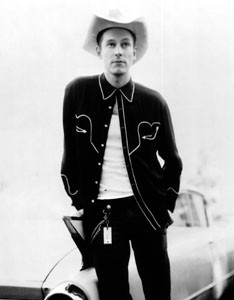
He’s a walking contradiction. Hank Williams III –born Shelton Hank Williams–is the grandson of country legend Hank Williams and son of country rocker and hellraiser Hank Williams Jr. He sports honky-tonk genes that any alt-country wannabe would give his left nut for. His cover of “Long Gone Daddy” on Timeless, last year’s Grammy-nominated tribute to Hank Sr., gave that all-star project some much-needed authenticity. But Hank III, who makes his North Bay debut on April 24 at the Mystic Theatre, is also a diehard Black Sabbath fan who used to play drums in a punk-thrash band called Buzzkill and whose musical heroes run closer to Kurt Cobain than Roy Acuff. These days, Hank III is promoting his new country album, Lovesick, Broke, & Driftin’, while battling Curb Records to release a rock album that’s been languishing in the can for months.

Country. Punk. To Hank III, whose three albums salute the whiskey-soaked boundaries of honky-tonk Americana, it’s all the same. “I was lucky enough to start hanging out with guys like [alternative country singers] Wayne ‘The Train’ Hancock and Dale Watson,” he told MSNBC in a recent interview. “They were showing me you can still be punk rock and hardcore [country] in a more old-school way.”

Still, being the grandson of a music legend who has been hailed as “the most important voice in country music history” can be a mixed blessing. In a recent review of Lovesick, the Fort Worth Star-Telegram pondered “the burden of being Hank III” and wondered if Williams isn’t too distracted “trying to fit himself into those notions of what he should be singing about” instead of finding his own voice.

No doubt about it, 29-year-old Hank III walks a fine line. Tall and lanky, he’s the spitting image of his grandfather, who died in 1953 after a life of alcohol and drug abuse–at age 29–in the back seat of a Cadillac on his way to a concert in Canton, Ohio. Hank Sr.’s hit single at the time: “I’ll Never Get Out of this World Alive.”

As the son of Hank Jr. and his second wife, Gwen Yeargin Williams, Hank III grew up in Atlanta and Nashville, often not seeing his father for years at a time. Cursed with a learning disability, Hank III fared poorly in school. When his father’s band passed through town, his young son would sit in on drums and was quick to learn the benefits of life as a musician. “Growing up and going to my dad’s shows and seeing the excitement of all these people, the cigarette smoke and all the drinking, girls running around with their shirts off,” he told MSNBC, “at 12 years old, 11 years old, that was like, ‘Wow, look at that!'”

As a teen, it didn’t take long to realize that he could either struggle financially in a punk band or cash in on his famous name. He moved to Branson, Mo., the country-music theme park, and started playing Hank Sr. songs for two shows a day at a local theater.

Eventually his punk sensibilities kicked in and Hank III started pumping up his sets with hardcore honky-tonk à la the Texas-born Wayne Hancock. In 1996, Curb Records released Hank III’s solo debut, Three Hanks: Men with Broken Hearts, which paired him with his father and used some of Hank Sr.’s recordings. But it was 1999’s solo album Risin’ Outlaw, which included two honky-tonk classics by Hancock, that heralded Hank III’s arrival.

Lovesick, produced by Williams with no regard for country radio, signals his intention to handle the family business with twangy, hard-rockin’ vengeance. “I finally got to do it predominantly my way,” he told Country Standard Time. “I’m pretty stoked about it. At least I’m proud of it. It makes you feel more like you’re doing what you’re supposed to do and not like a puppet. I’m here to be kind of creative and not to be told what to do.”

Hank Williams III performs on Wednesday, April 24, at 8pm, at the Mystic Theatre, 23 Petaluma Blvd. N., Petaluma. The Mother Truckers open the show. Tickets are $18. 707.765.2121.

From the April 18-24, 2002 issue of the North Bay Bohemian.
© Metro Publishing Inc.

Jacob Needleman

A book looks to great minds of the past to illuminate the present

By Shepherd Bliss

Prompted by grief, fear, and anger, I have been trying to make meaning from events surrounding the Sept. 11 terrorist attack for over half a year. I have consumed hundreds of newspaper and magazine articles, columns, analyses, and commentaries by journalists, pundits, political scientists, and others.

None has helped me discern meaning as much as The American Soul, a book written before that fateful day-and about events that took place before airplanes and skyscrapers even existed. Author Jacob Needleman, a professor of philosophy at San Francisco State University, paints a larger picture. Subtitled Rediscovering the Wisdom of the Founders, this readable book has enabled me to imagine a positive postÐSept. 11 future for a renewed America.

An admirer of America, its traditions, and possibilities, Needleman ponders the greatness of Washington and Jefferson and honors Frederick Douglass, Harriet Tubman, Crazy Horse, and Martin Luther King Jr. He seeks to “neither revile nor to romanticize the actions and actors of America’s past.” But he adds, “Real reflection throws dazzling light on the disappointments, mistakes, failures and even crimes of America.” He laments “the disease of materialism” and “the affliction visited upon us by our successes.”

“Nations, as such, come and go,” Needleman observes. “Persia, Rome, Byzantium all sunk into the ocean of time.” Needleman calls Americans to recover “the inner meaning of democracy,” or lose it. He affirms America’s promises of freedom, equality, and social opportunity. Specific American virtues and their “shadows” are detailed: liberty, which can degenerate into self-gratification; independence, which can decline into individualism; practicality, which can regress into blind materialism; the rule of law, which can become an usurper; hard work, which can enslave; freedom of speech, which can deteriorate into empty talk.

Needleman cautions that unless we think about America in a new way, “it will be an outer empire alone, an empire only of money or military power or empty promises. And such an empire will soon die.” Perhaps that is what is happening now. The U.S. empire, at least as we have known it, may be declining, despite its current apparent military successes. Or as the ancient saying goes, “The king is dead. Long live the king!”

The vicious Sept. 11 attack caught most Americans by surprise. Others were not as surprised. Many nations had experienced such deadly attacks, sometimes even by the U.S. military. The U.S. government chose a full spectrum military response to the Sept. 11 crime, thus compounding the crisis. Its first targets were the violent al Qaida and the fundamentalist Taliban. After their apparent rout-in which mainly innocent civilians were killed-the United States has threatened to widen its attack to the “evil axis of Iraq, Iran, and North Korea,” even with first-strike nuclear weapons.

As the great American pacifist A. J. Muste observed after World War I, postwar problems can be greater for the victor than for the defeated. Full of its power, the United States has already expanded military activities in the Philippines and Colombia. Other countries at risk include Yemen, the Sudan, Georgia, and Somalia. How might the rest of the world feel as it hears about U.S. plans for nuclear attacks?

“Democracy is under attack in America,” declares Sebastopol City Council member Larry Robinson. “But the greatest threats are not from foreign terrorists.” They come from inside and from our own behavior. Needleman warns that “America needs the goodwill of the world for its survival.” Such goodwill is rapidly eroding as the U.S. military expands its deadly reach.

The United States may be acting like a wounded beast, particularly in its vengeful military responses to Sept. 11. The current administration seems to want to go it alone against perceived enemies. As the United States escalates its threats and attacks, it loses any moral claim, strengthens its so-called enemies, and becomes increasingly isolated in the world. The Bush administration may achieve what no one else has been able to do: unite the Arab and Muslim worlds against a common enemy.

Walt Whitman is an American hero whom Needleman praises, noting, “To Whitman, who was emerging as America’s greatest visionary poet, Lincoln incarnated the essence of American democracy: the harmonious blending of the mystical and the pragmatic within the individual soul.” Whitman wrote about the great ideas of America: independence, freedom, equality, the people, and the individual.

In his final chapter, “Toward a Community of Conscience,” Needleman turns to America’s future: “We need to discover how to look impartially at both the inner greatness that calls to us and the profound weaknesses that determine the life we actually live-with all its self-deception, arrogance, and betrayal.” Whereas some are quick to condemn America, others rush to excuse it and tolerate no faultfinding. We need to find a balanced posture from which to allow appropriate self-criticism and comments from outside.

Some may find this book too abstract, too critical, or even too hopeful. The author, after all, is a philosopher, not a historian or political scientist. The survival of American democracy requires the soul-searching that Needleman advocates.

The American Soul concludes with a call to “both raise our heads in the vision of authentic human dignity and lower our heads in the vision of authentic remorse.” With such a posture, we can step “into the future of the new America.”

From the April 18-24, 2002 issue of the North Bay Bohemian.

© Metro Publishing Inc.

Spring Literary Guide

Introduction by Davina Baum

Books seep and surge into every aspect of life, as if they were liquid rather than solid. Like a slow-moving oil spill-with a more lively bouquet than black sludge-literature coats our feathers and anchors us to some place other than the ground, some place in the imagination.

But literature lives in other places than the mind. It lives in our fingers, in our eyes, in our ears.

This week’s April Lit feature seeks to explore the many aspects of books. From the criteria that lead us to pluck a book off the shelves-sight unseen-and take it to the register; to the transformation from the written word to the musical note; to the philosophical ruminations engendered by a historical biography, this is to remind you that a book is alive. Treat it well.

Best Looking, Best Selling: Are contemporary book covers fashion over function, or function as fashion?

Reading Music: Music and books perform a duet with ‘Songs Inspired by Literature’

Imagined Realities: Kevin Brockmeier’s ‘Things that Fall from the Sky’ reveals mysteries

Soul Searching: A book looks to great minds of the past to illuminate the present

War and Remembrance: Petaluma author captures the manic-depressive weirdness of WWII Hollywood

From the April 18-24, 2002 issue of the North Bay Bohemian.

© Metro Publishing Inc.

Asparagus

Spearhead ThisAsparagus offers all this and purple rubber bands tooBy Sara Bir The moment that asparagus fans have been waiting for all year has arrived. It's asparagus season now, and the little green bundles of joy plummet in price from $3.99 a pound to "buy one, get one free." Get it while it's hot, because when asparagus comes...

Healdsburg Arts Council

Pride and Joy: Council president Janet Norton shows off Healdsburg's new creative home. At right: Pam Sibley. Blooming Art Healdsburg Arts Council sets up shop downtown By Sara Bir Downtown Healdsburg, on a sunny spring day, buzzes with the quaint energy of a small, tourist-driven town: Storefronts...

‘Panic Room’

Fear Factor: Jodie Foster (right) and Kristen Stewart huddle behind closed doors.Steel TrapMr. Fix-It deconstructs 'Panic Room' Writer David Templeton takes interesting people to interesting movies in his ongoing quest for the ultimate postfilm conversation. This is not a review; rather, it's a freewheeling, tangential discussion of art, alternative ideas, and popular culture.Homebuilder Lou Manfredini doesn't like to...

Buddha Bar – Six Degrees

California Masala: DJ Cheb i Sabbah mixes up the Asian grooves. Photograph by Chris WoodcockJust Chillin'Buddha Bar fizzles; Six Degrees sizzlesBy Greg CahillThe Buddha Bar in Paris has emerged as one of the landmarks of the global musical bazaar that is contemporary electronica, particularly the growing chill-out scene comprised of mostly relaxing music that provides a backdrop for...

Selective Service

A Model For Peace: Elizabeth Stinson opposes giving the Selective Service the right to register people at the DMV. Photograph by Rory McnamaraLicensed for WarShould the Department of Motor Vehicles promote Selective Service registration?By Tara TreasurefieldBefore registering with the Selective Service System, 18-year-old Kevin Smith of Sebastopol thought long and hard about how it would feel to kill...

The Patriot Act & Reading Habits

Book 'EmNorth Bay libraries and bookstores may be little help to FBIBy Tara TreasurefieldWhoever would have thought that librarians would have a cult following?" asked maverick author and filmmaker Michael Moore. The audience responded with intensified applause, hoots, and yells. Moore had just credited the nation's librarians with shaming censors at Regan Books into releasing his new book, Stupid...

Murder By Numbers

Channeling Clint Eastwood: Sandra Bullock, crime fighter, has murderous high schoolers to find. Thrill Kill CultSandra Bullock stars as a troubled cop in the satisfying 'Murder by Numbers'By San Benito (read Morro Bay) homicide detective Cassie Mayweather (read Sandra Bullock) has a bad reputation for promiscuity and knife scars she doesn't talk about. Her newest case is the...

Hank Williams III

Photograph by Jean LaughtonHellbilly HankCountry singer wrestles with a family legacyBy Greg CahillHe's a walking contradiction. Hank Williams III --born Shelton Hank Williams--is the grandson of country legend Hank Williams and son of country rocker and hellraiser Hank Williams Jr. He sports honky-tonk genes that any alt-country wannabe would give his left nut for. His cover of ...

Jacob Needleman

A book looks to great minds of the past to illuminate the present By Shepherd Bliss Prompted by grief, fear, and anger, I have been trying to make meaning from events surrounding the Sept. 11 terrorist attack for over half a year. I have consumed hundreds of newspaper and magazine articles, columns, analyses, and commentaries by...

Spring Literary Guide

Introduction by Davina Baum Books seep and surge into every aspect of life, as if they were liquid rather than solid. Like a slow-moving oil spill-with a more lively bouquet than black sludge-literature coats our feathers and anchors us to some place other than the ground, some place in the imagination. But literature lives in...
11,084FansLike
4,606FollowersFollow
6,928FollowersFollow
